Mechanical Properties of Copper Tailings Cemented Paste Backfill Incorporating Thermally and Mechanically Treated Saudi Natural Pozzolan



Abstract
1. Introduction
2. Materials and Methods
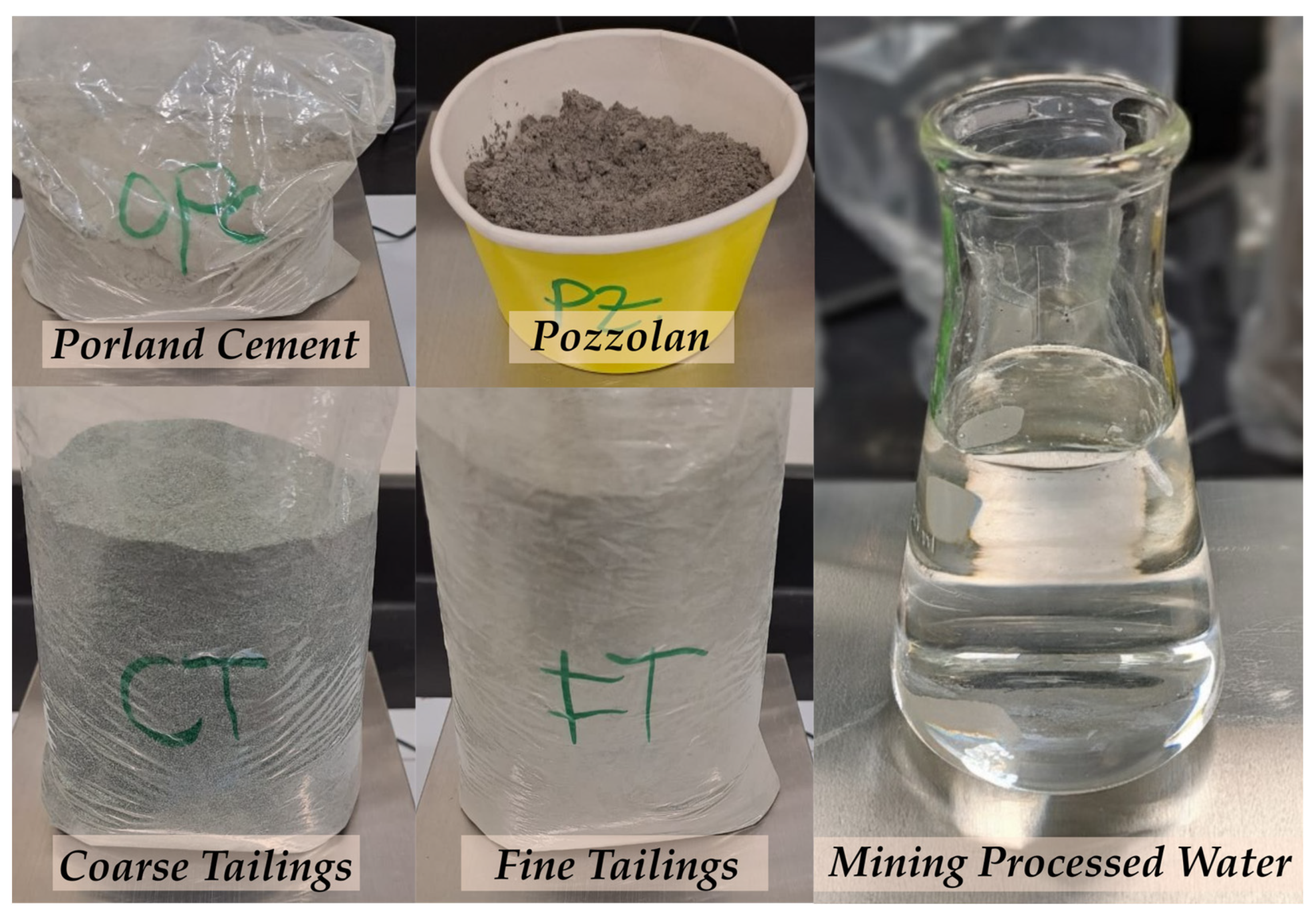
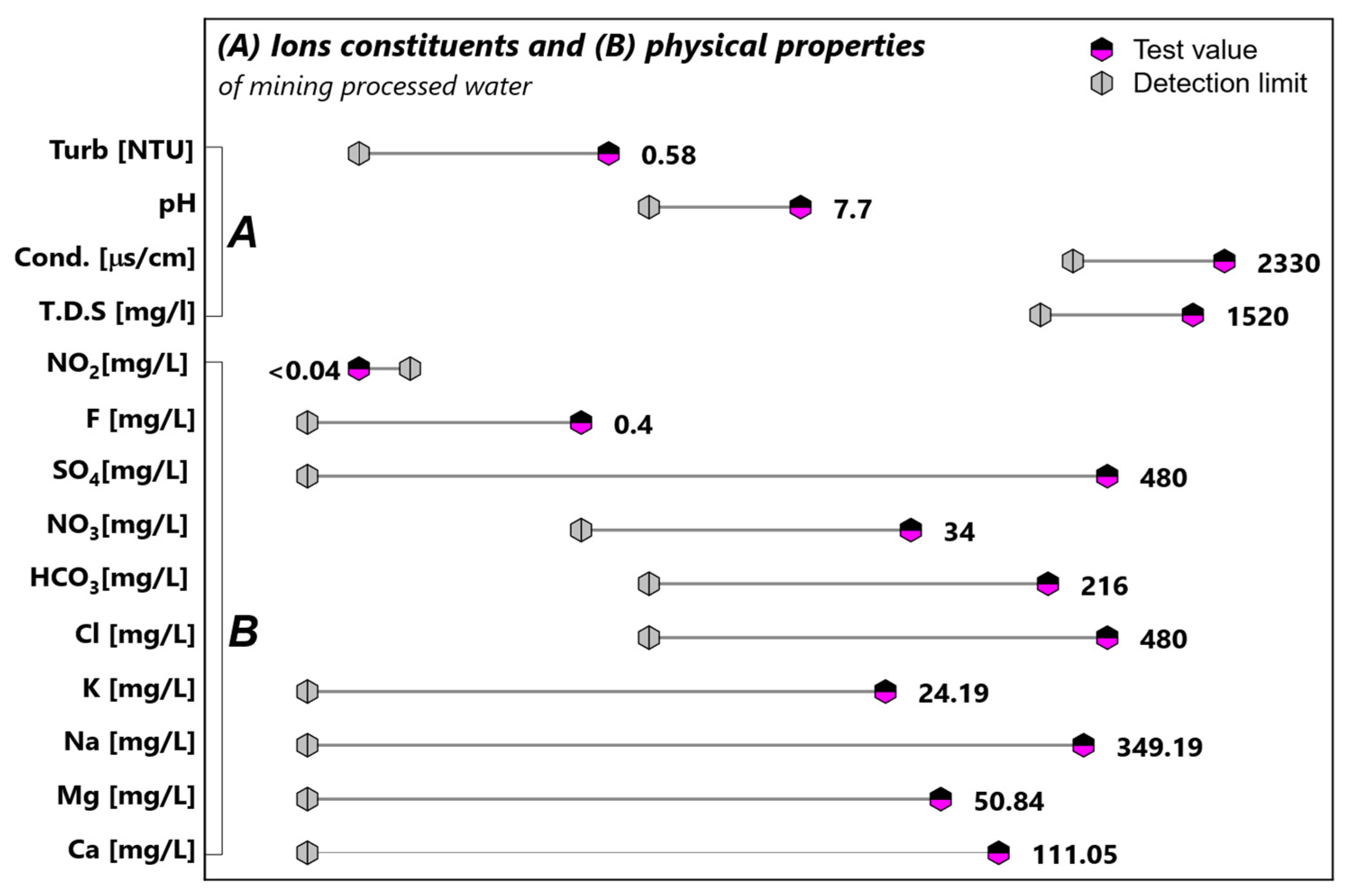
2.1. Raw Materials
2.2. Activated Saudi Natural Pozzolan
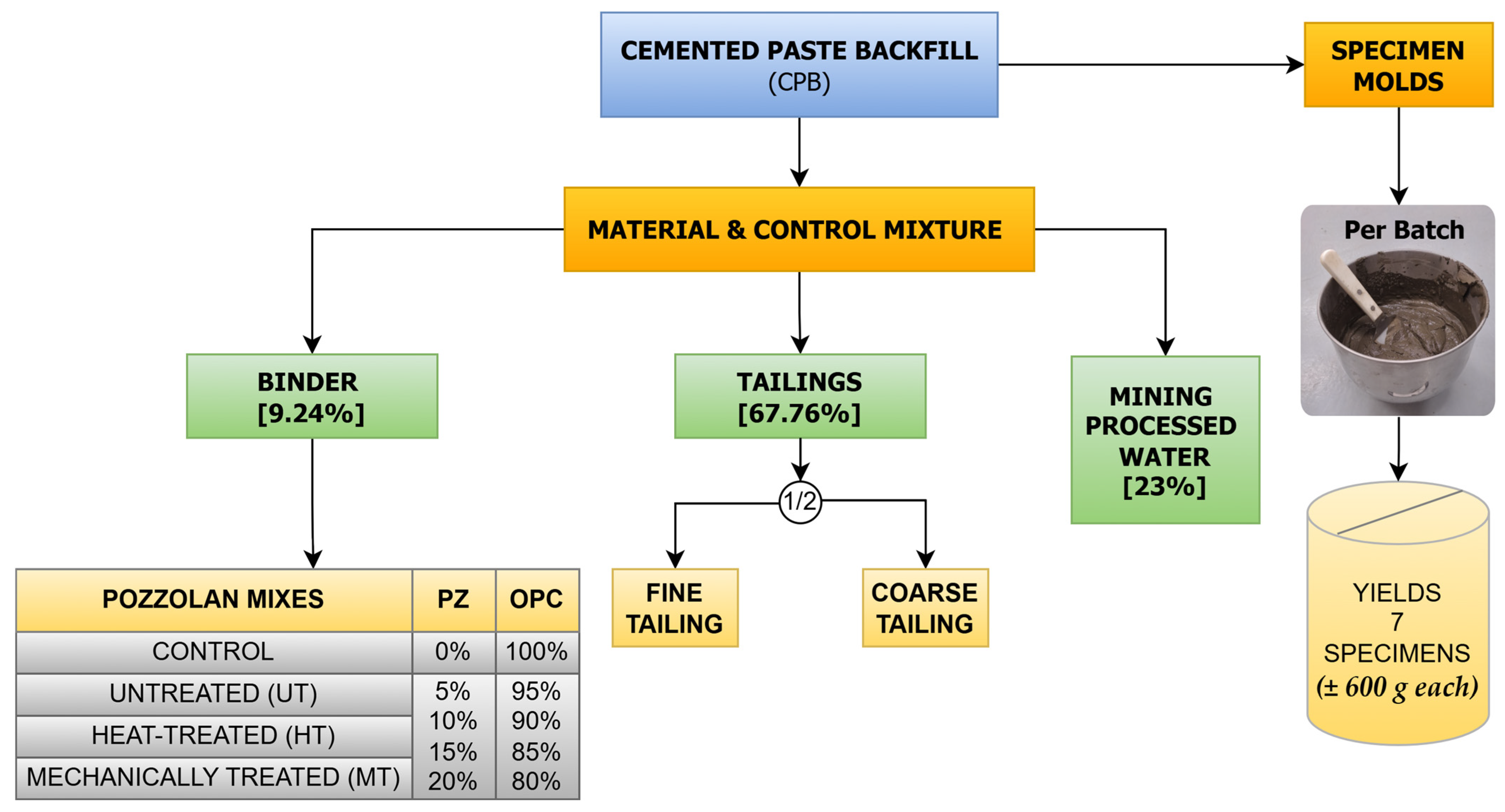
2.3. Mixture Design and Sample Preparation
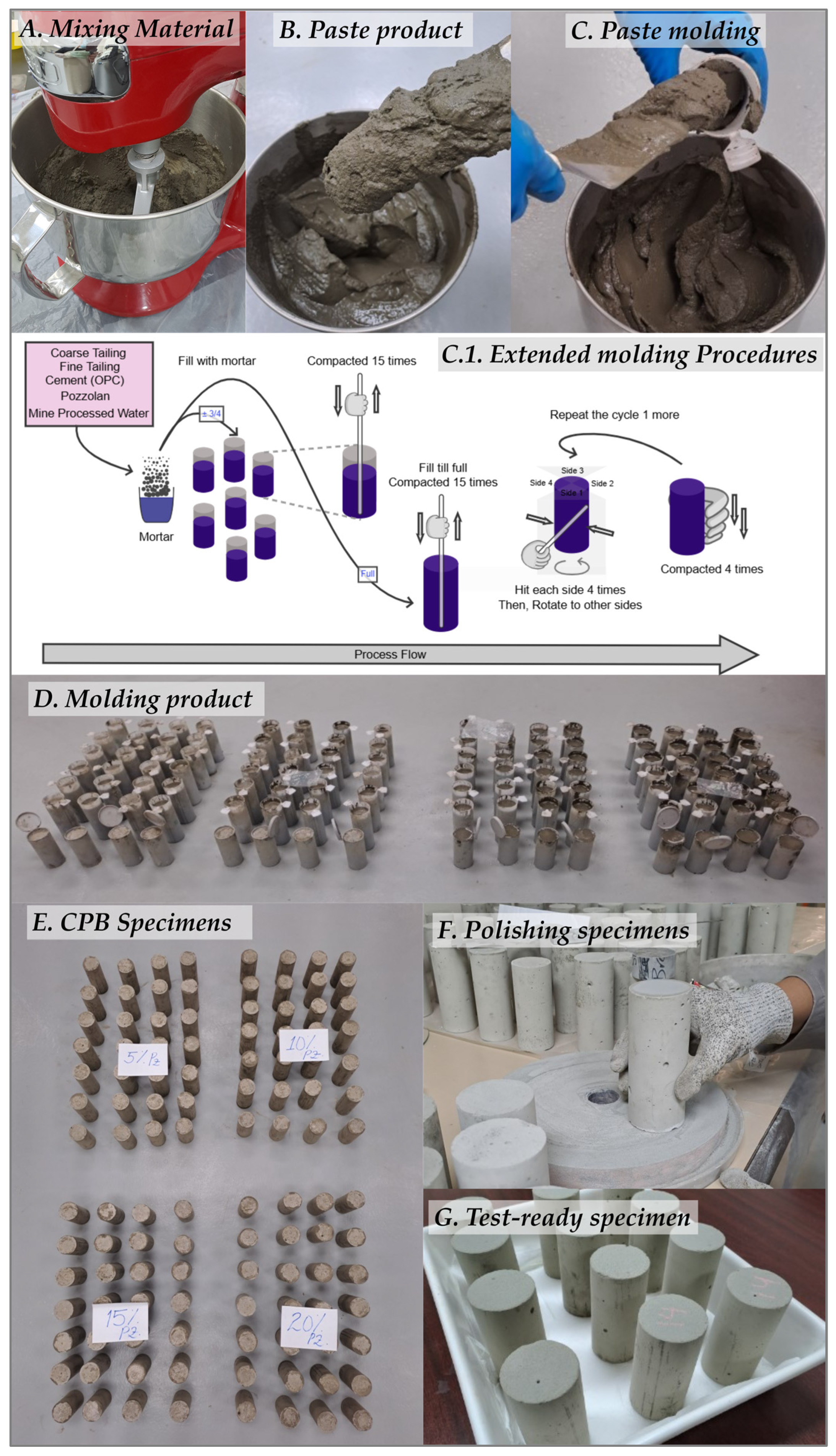
2.4. Mixing and Specimen Casting Procedures
- Dry mixing: The solid components, including cement, pozzolan, and tailings, were placed into the mixing bowl. The mixer was then operated for 60 s, with the speed gradually increasing from 1 to 3 to achieve a homogeneous dry blend.
- Wet mixing: Following the dry mixing stage, the mixer was resumed, and the speed was gradually increased from 5 to 7. The pre-measured mining-processed water was then added slowly over 60 s to minimize splashing. The mixer was then paused for approximately one minute, during which the sides and bottom of the bowl were scraped manually with a spatula to incorporate any adhered material back into the mixture.
- Final Homogenization: the mixture was blended at high speed (speed 7) for an additional 60 s to achieve a consistent and homogeneous paste. The mixing process was then ended, and the resulting fresh paste was ready for molding (Figure 5B).
- Paste Molding and Compaction: Before placing mortar into the cylindrical mold, the inner surface of the mold was lightly oiled to facilitate demolding. Each mixing batch was sufficient to prepare seven cylindrical specimens. Initially, each mold was filled to approximately three-quarters of its volume, and then completely. After each filling stage, the mortar was compacted with 15 strokes using an iron rod. Afterward, each mold was gently tapped four times on the side and compacted again with four strokes to release entrapped air. This entire tapping and compaction cycle was repeated once more to ensure complete compaction and the removal of entrapped air (Figure 5C).
2.5. Experimental Testing
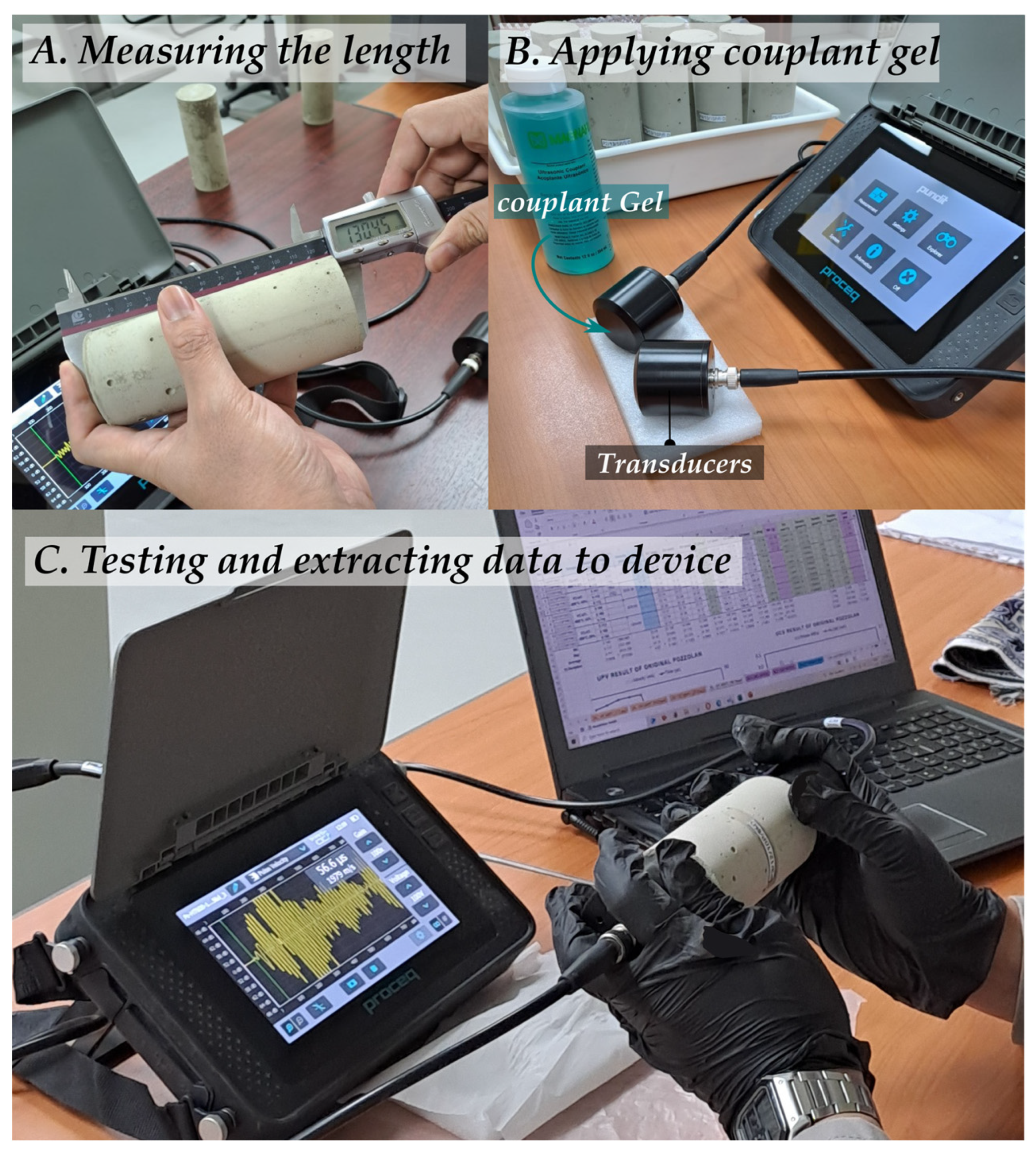
2.5.1. Ultrasonic Pulse Velocity (UPV)
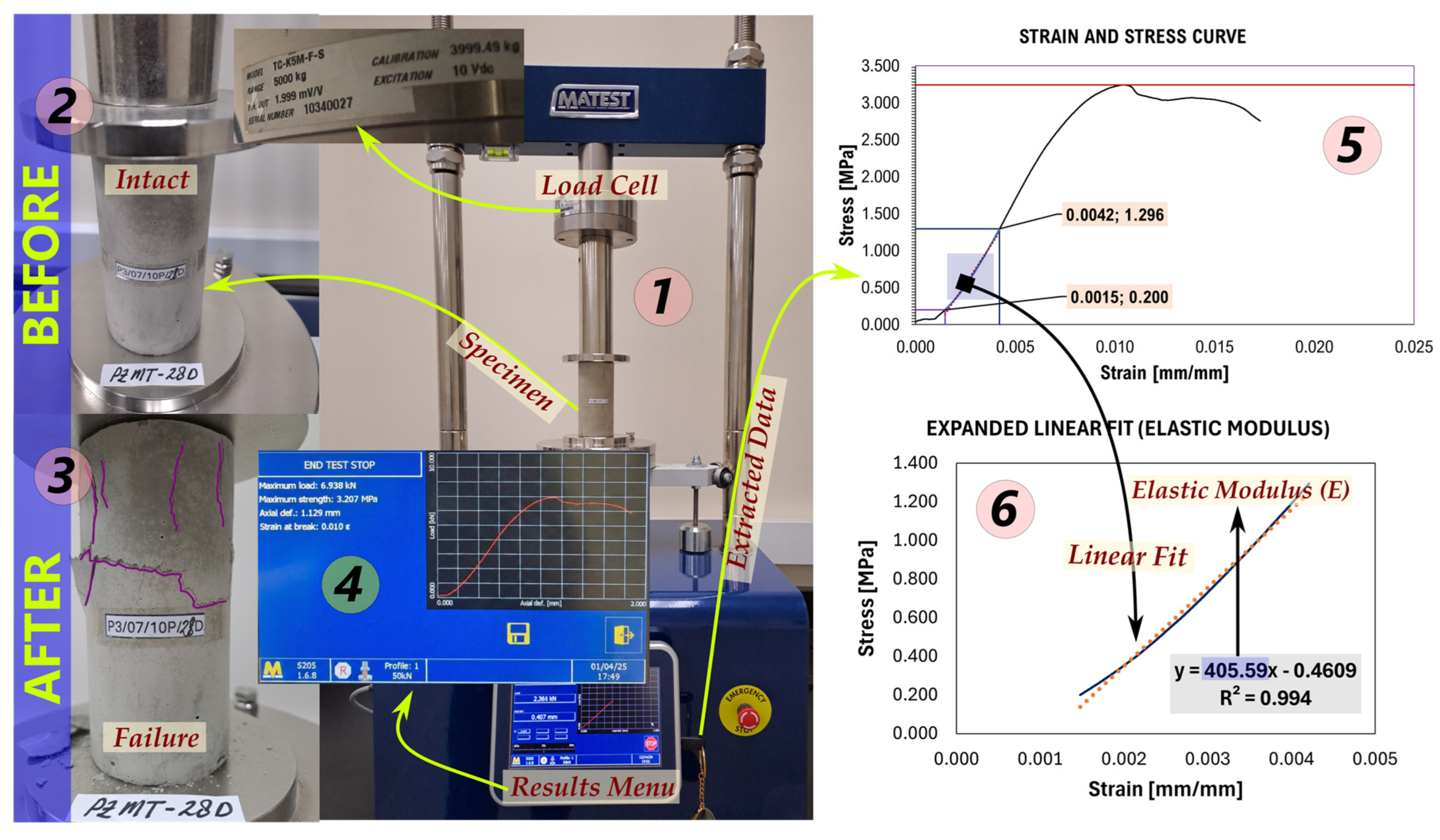
2.5.2. Uniaxial Compressive Strength (UCS)
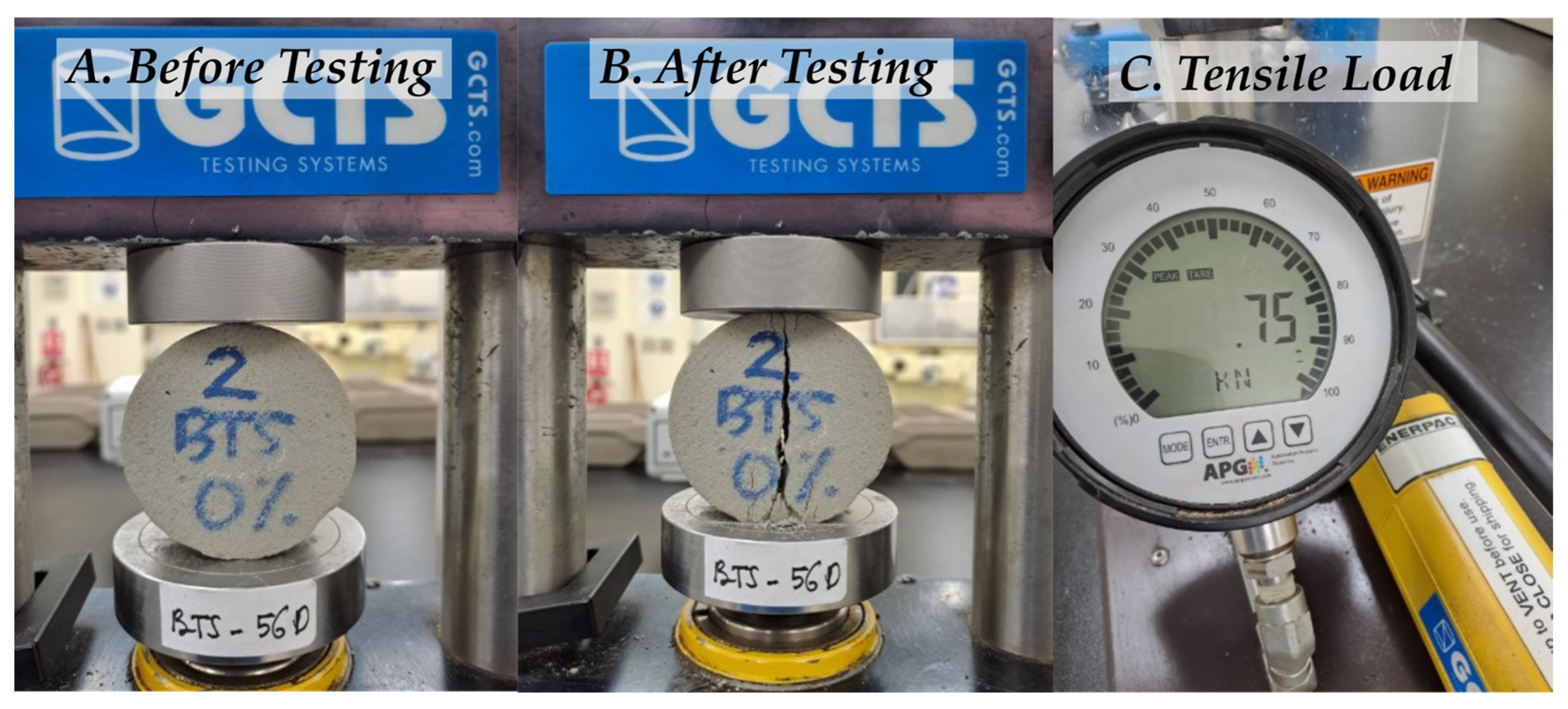
2.5.3. Indirect Tensile Strength (ITS)
3. Results and Discussion
3.1. Bulk Density
3.2. Strain-Stress Curves and Elastic Moduli
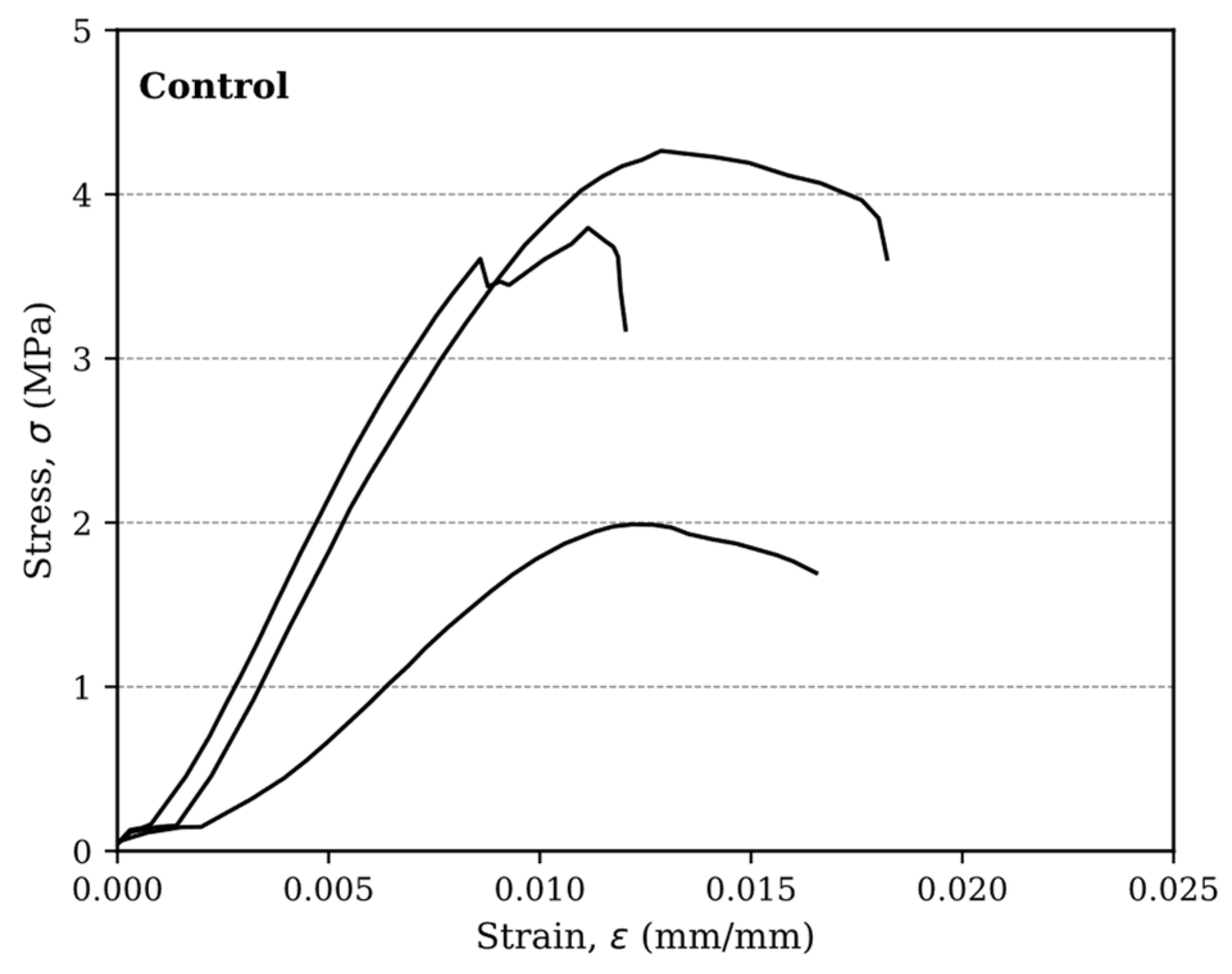
3.2.1. Elastic Moduli of the Control Specimens
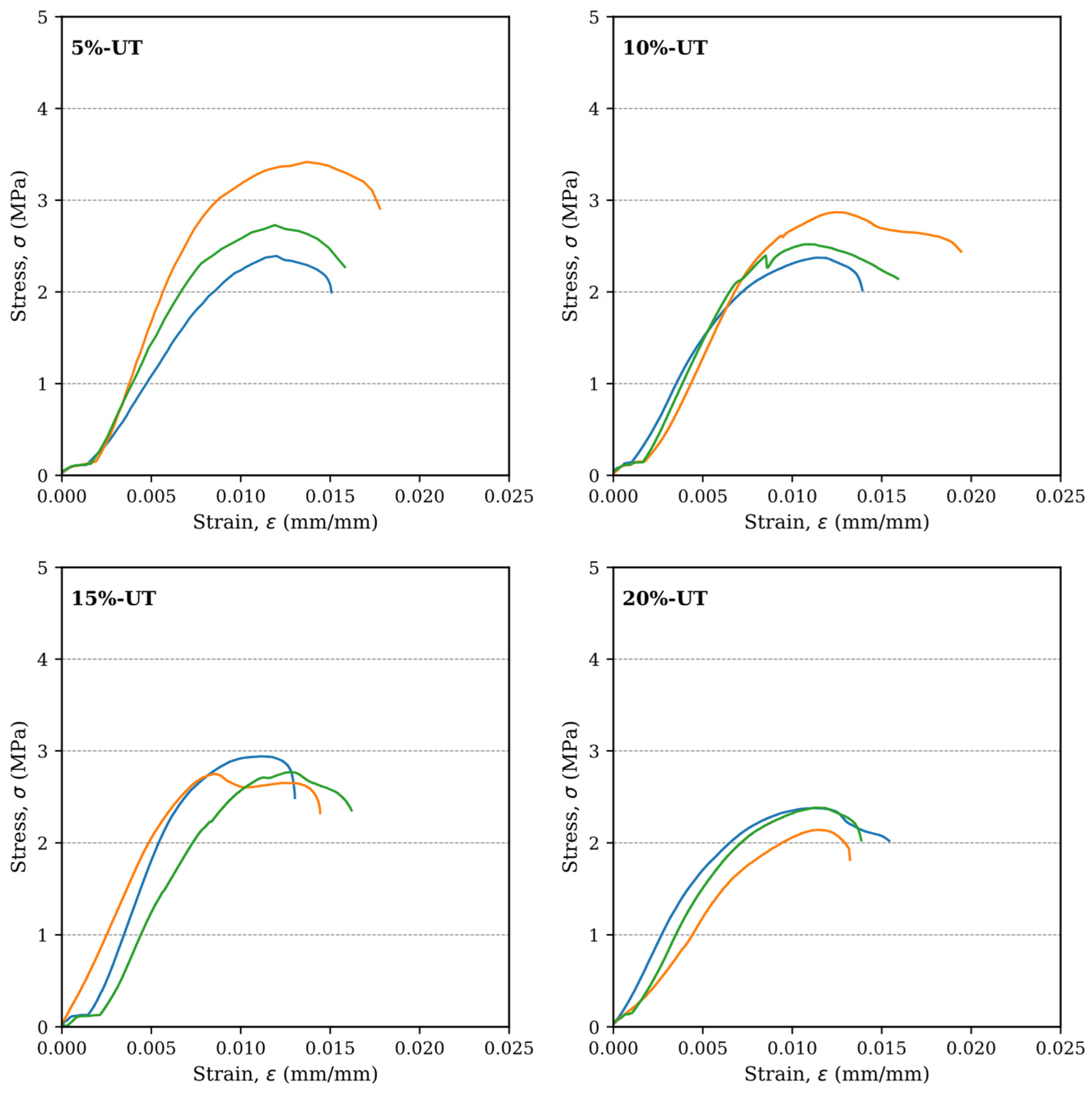
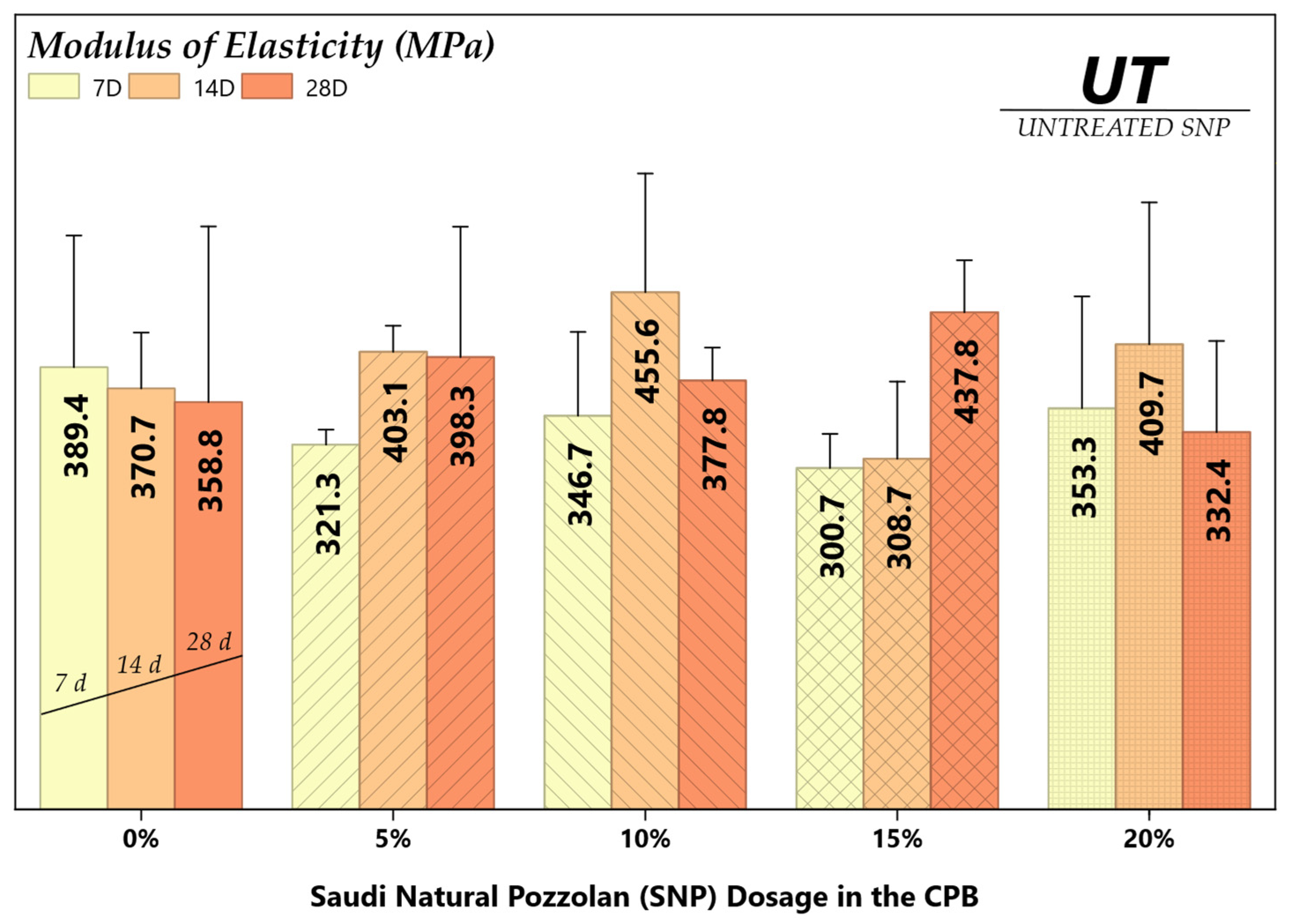
3.2.2. Elastic Moduli of the Untreated (UT) Scenario
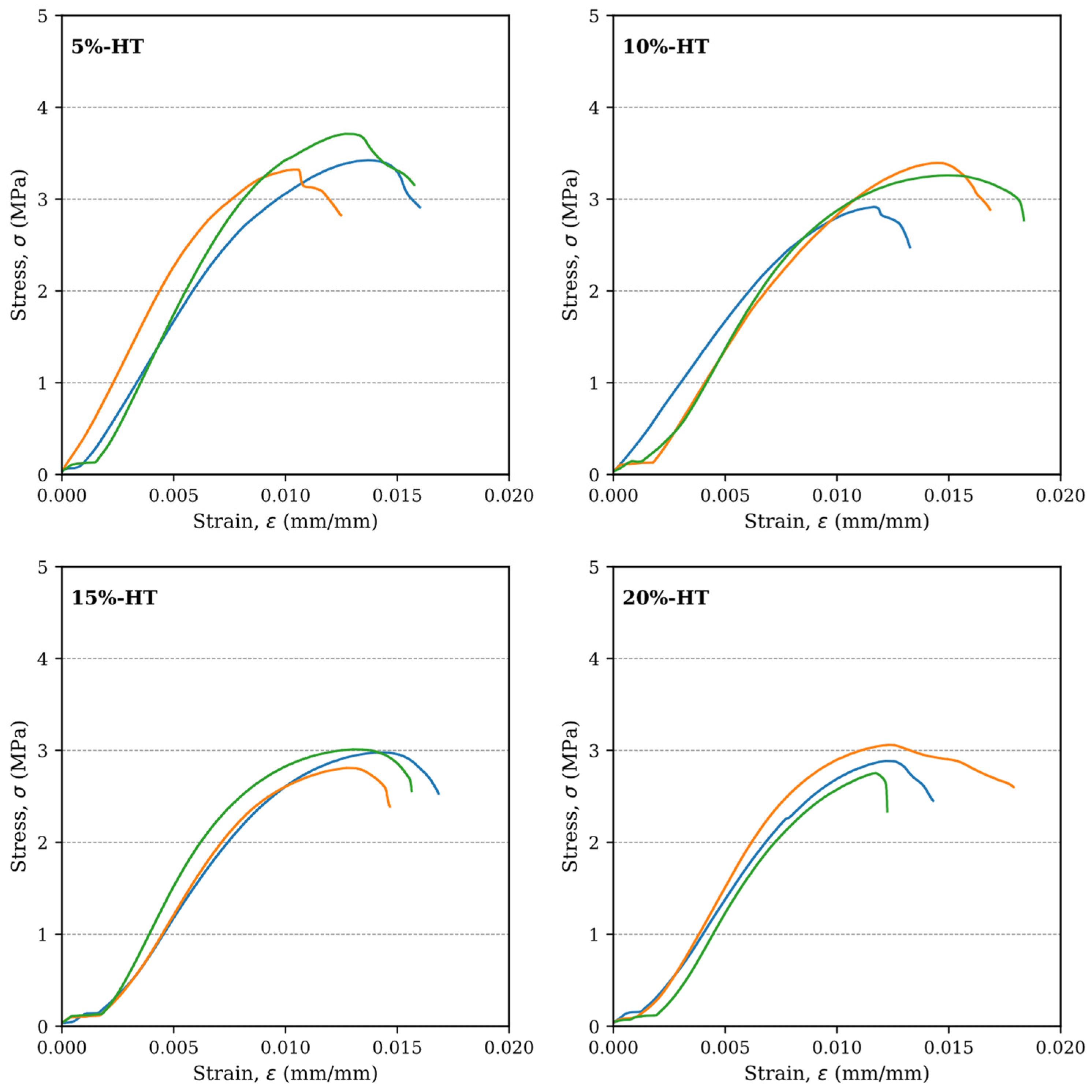
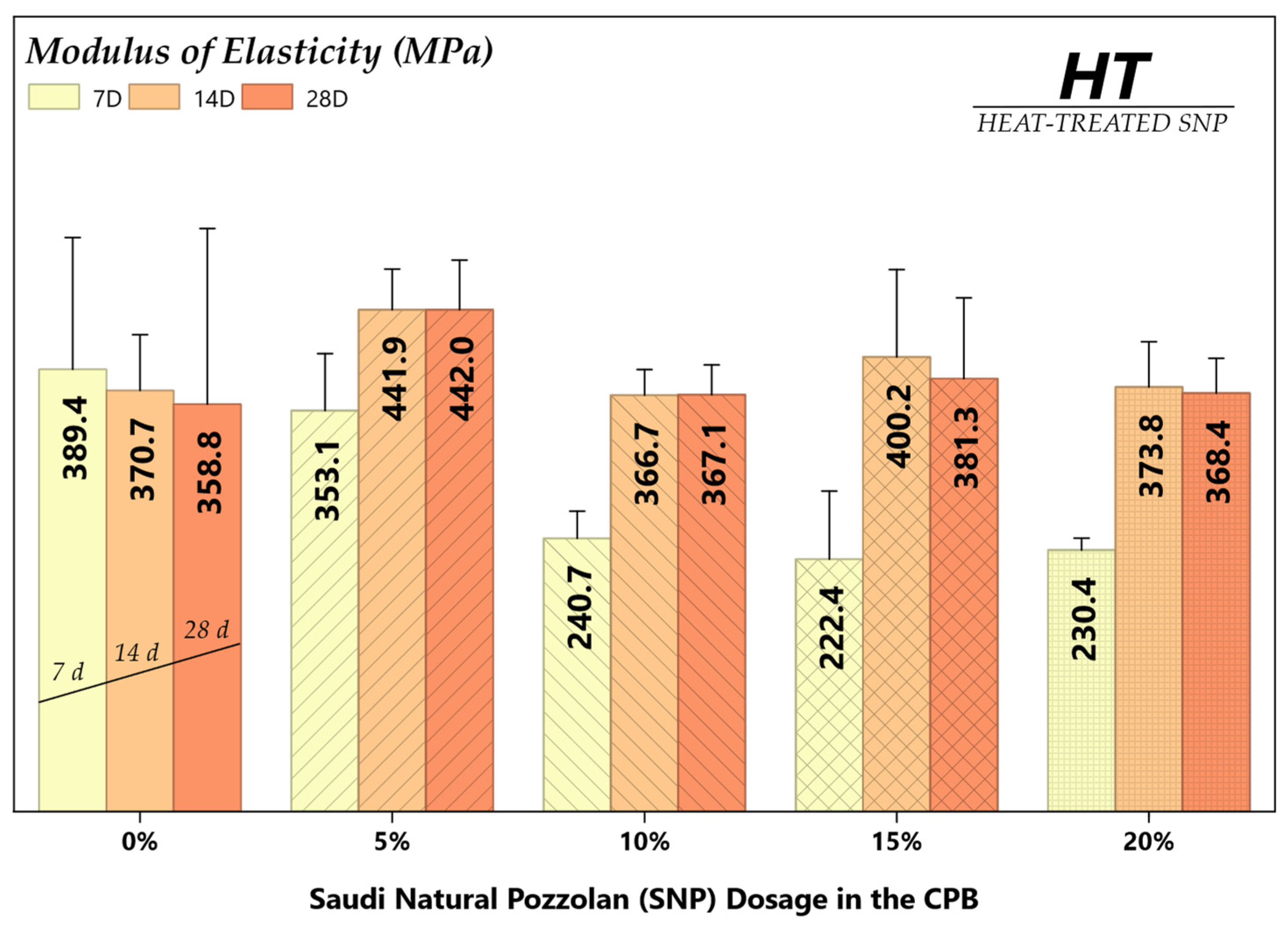
3.2.3. Elastic Moduli of the Heat-Treated (HT) Scenario
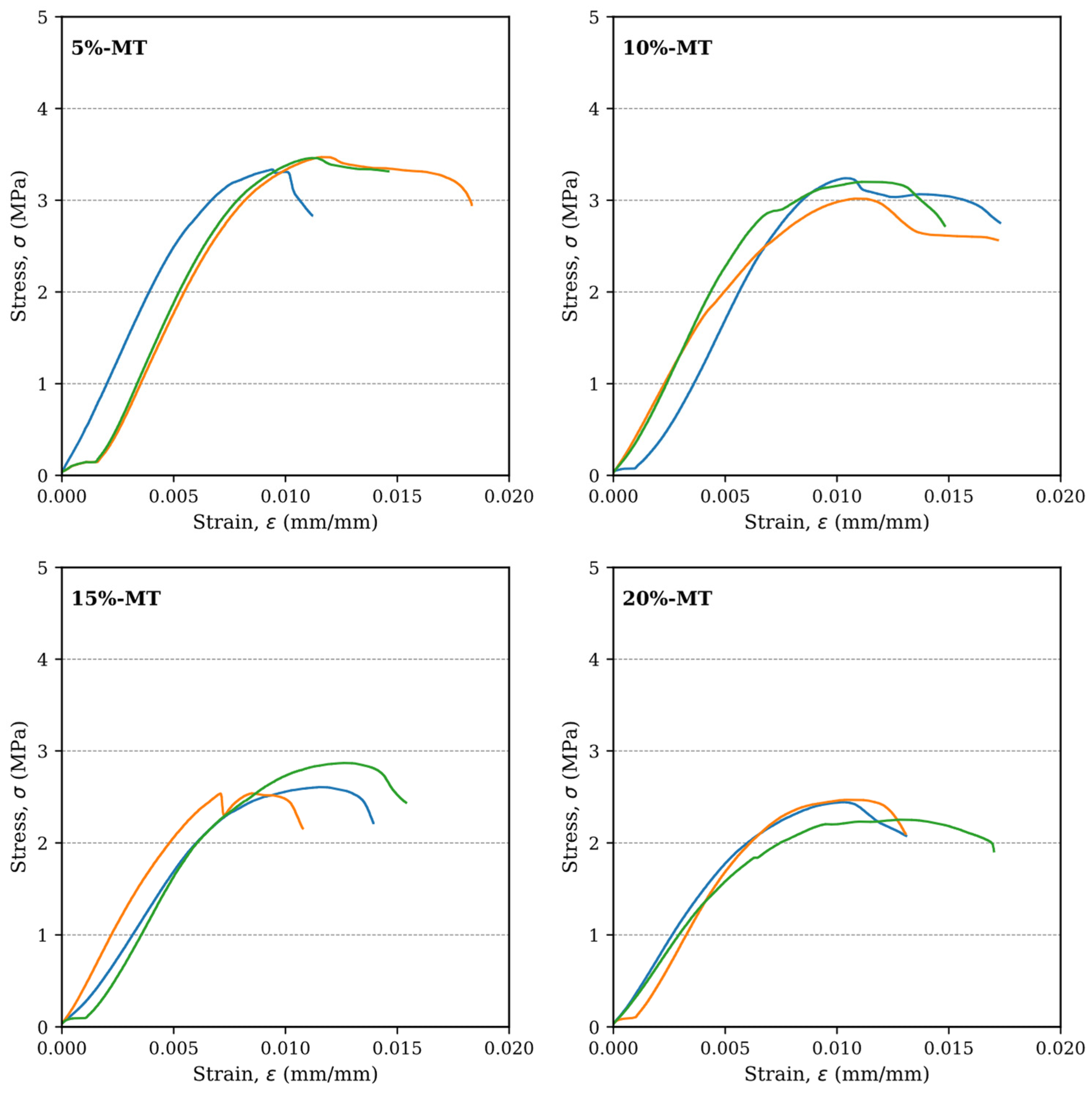
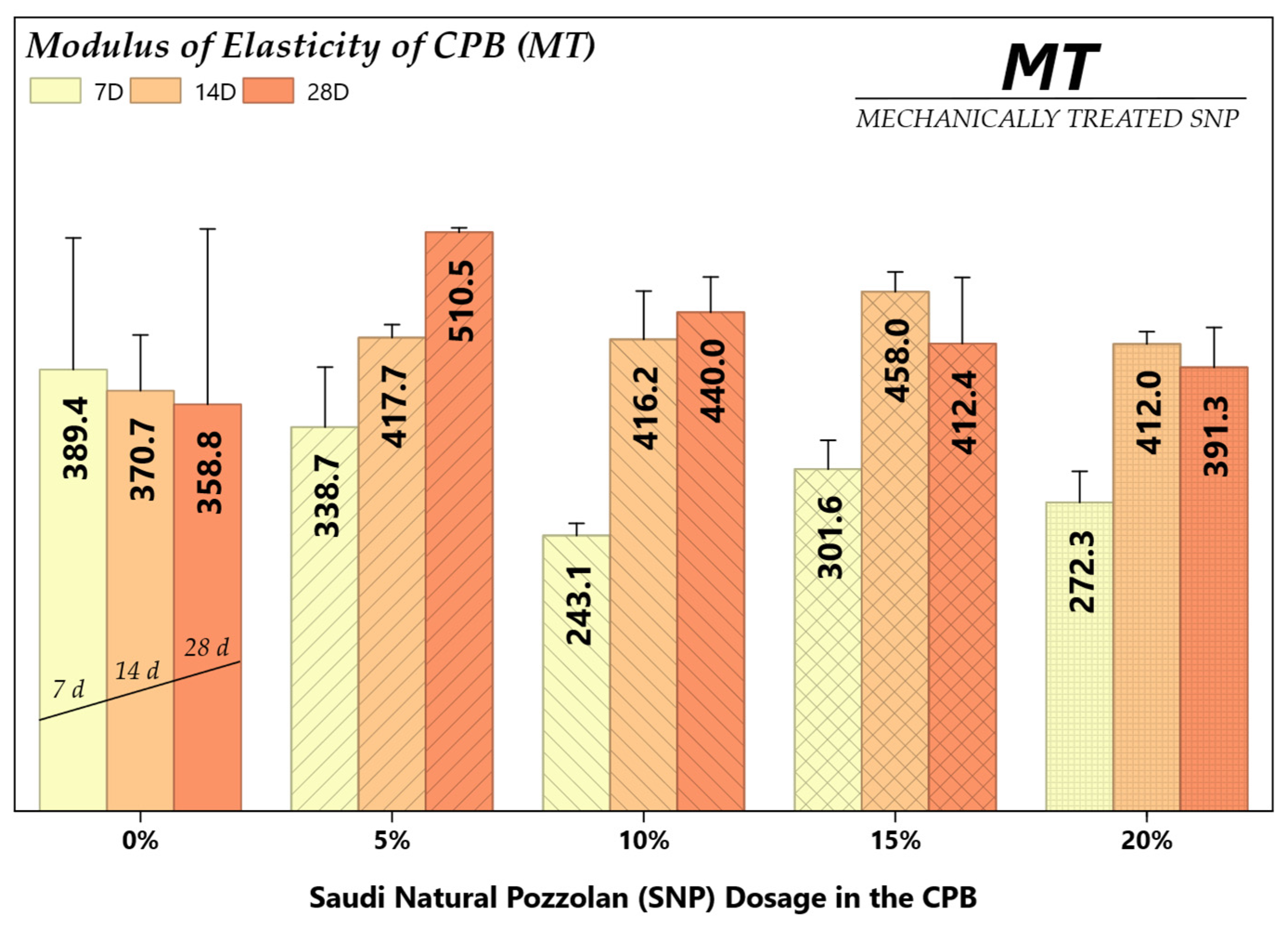
3.2.4. Elastic Moduli of the Mechanically Treated (MT) Scenario
3.3. Uniaxial Compressive Strength (UCS)
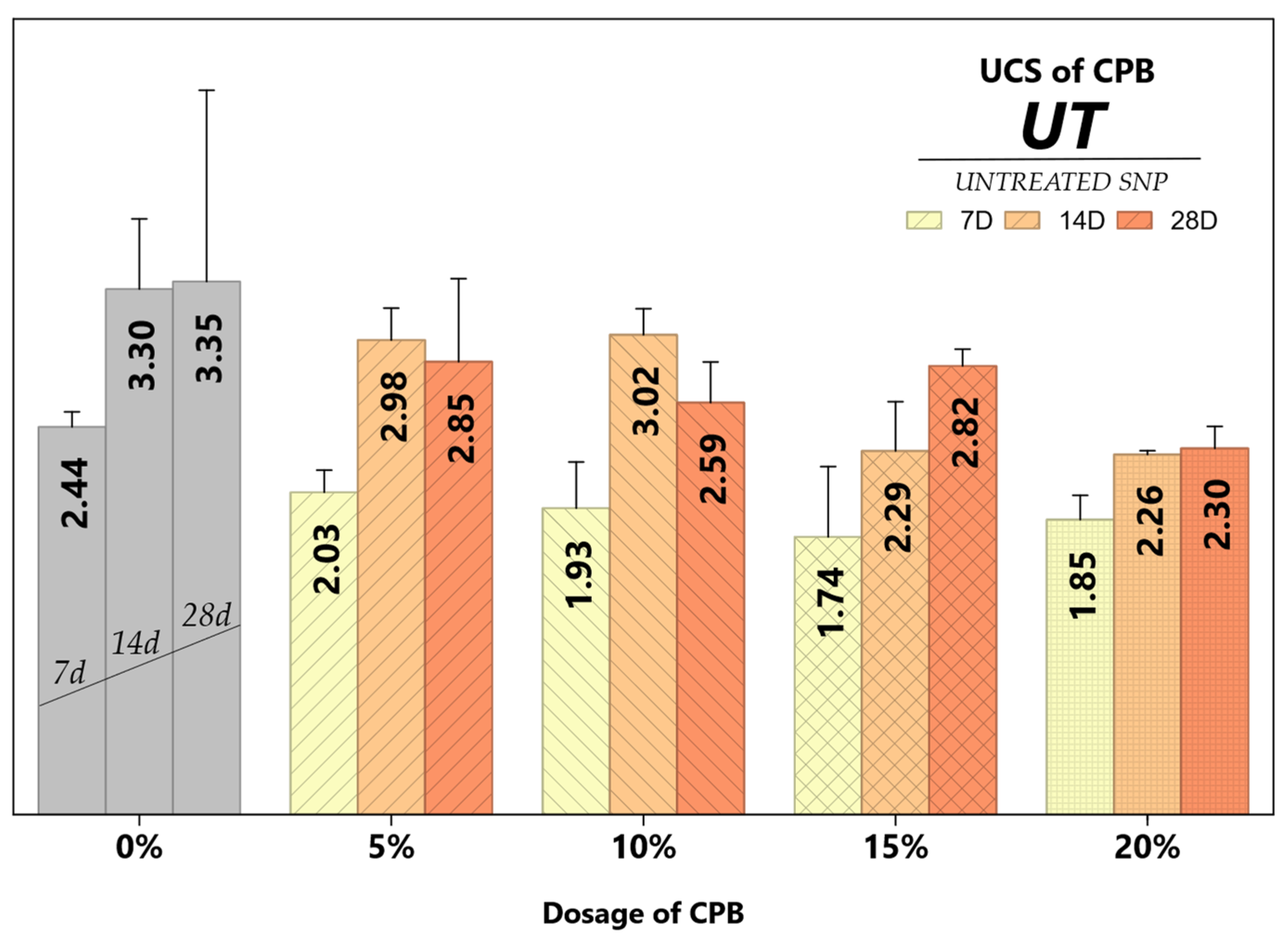
3.3.1. UCS of the Untreated (UT) Scenario
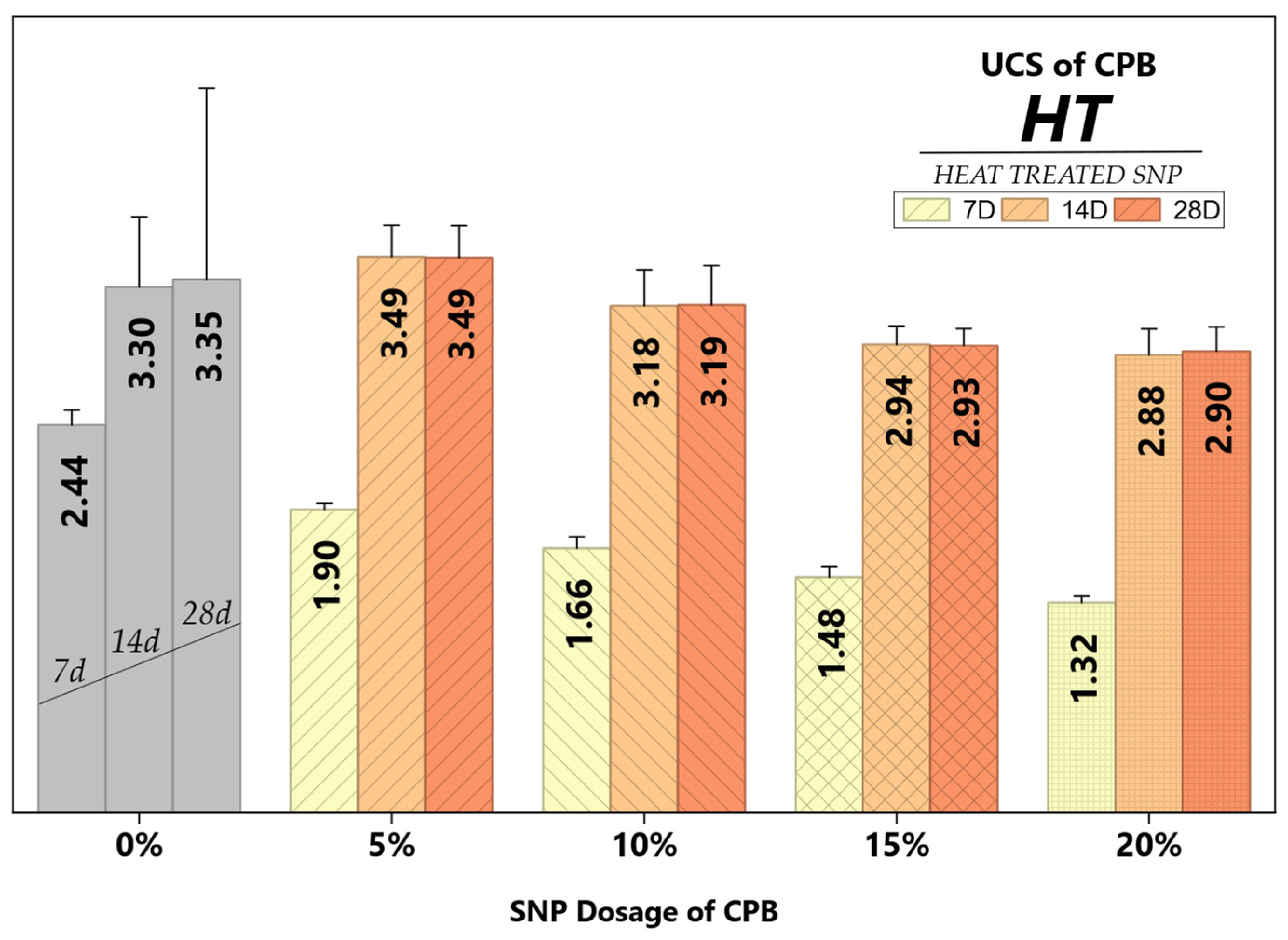
3.3.2. UCS of the Heat-Treated (HT) Scenario
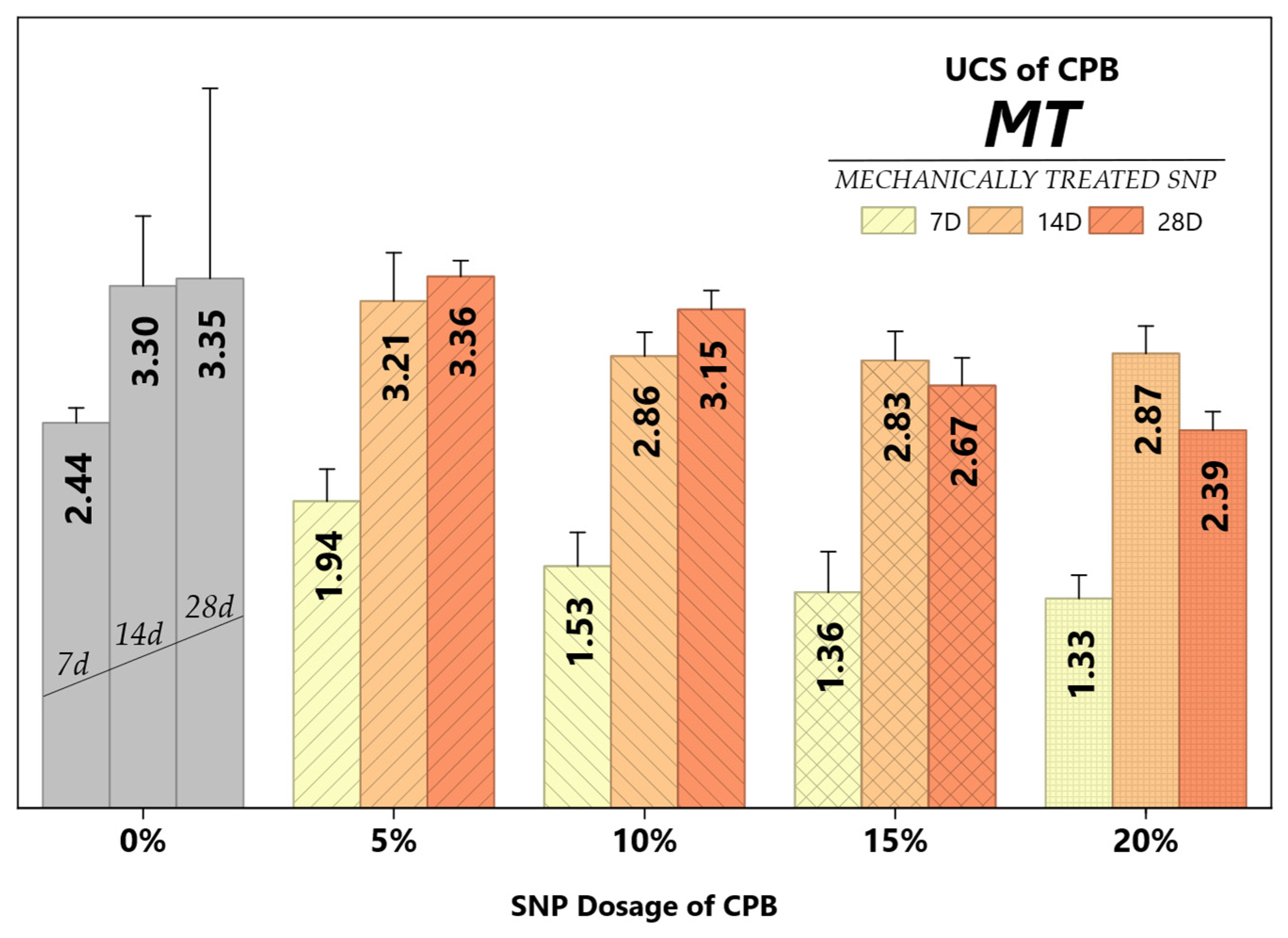
3.3.3. UCS of the Mechanically Treated (MT) Scenario
3.4. Relationship Between Vp, UCS, and E
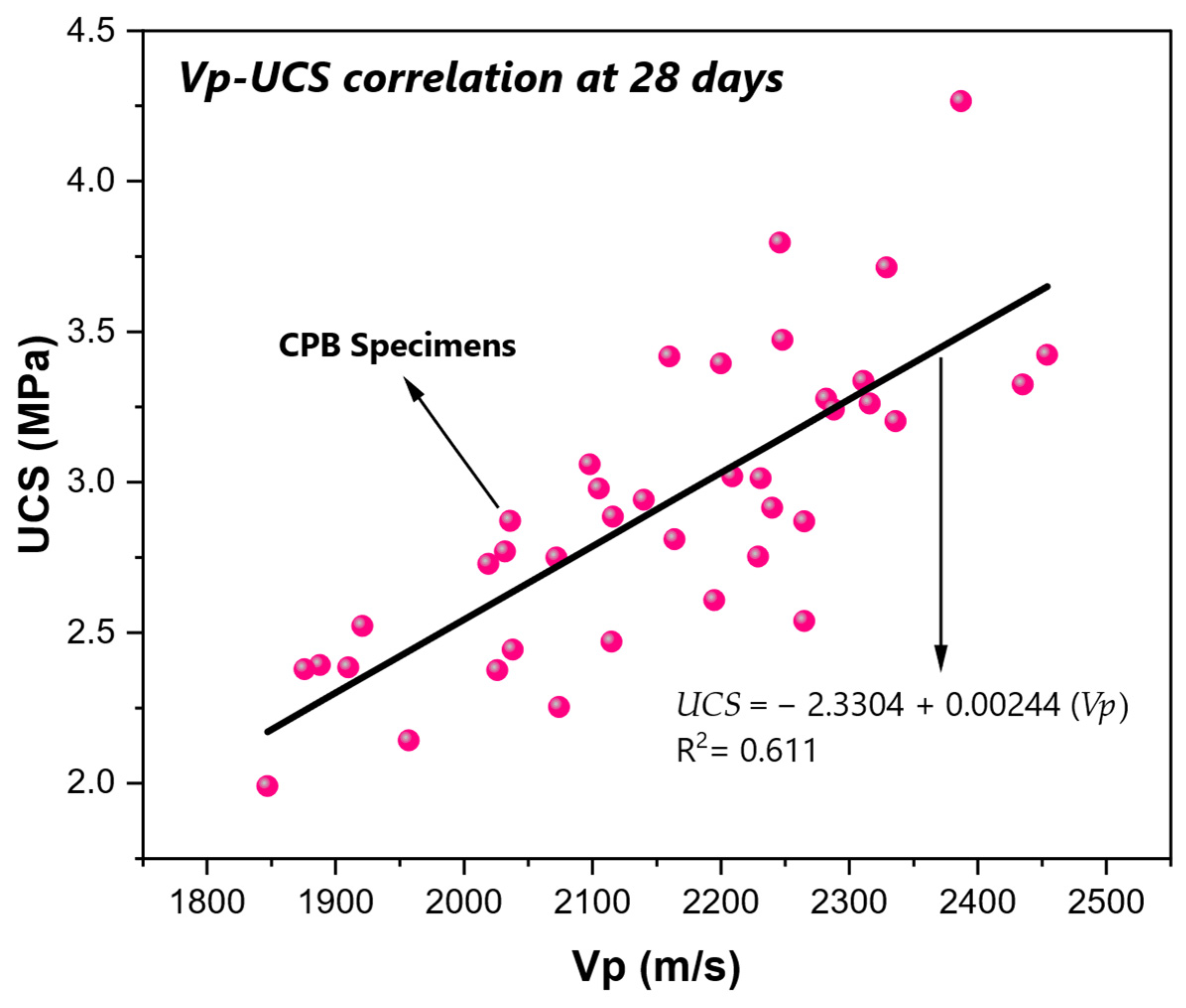
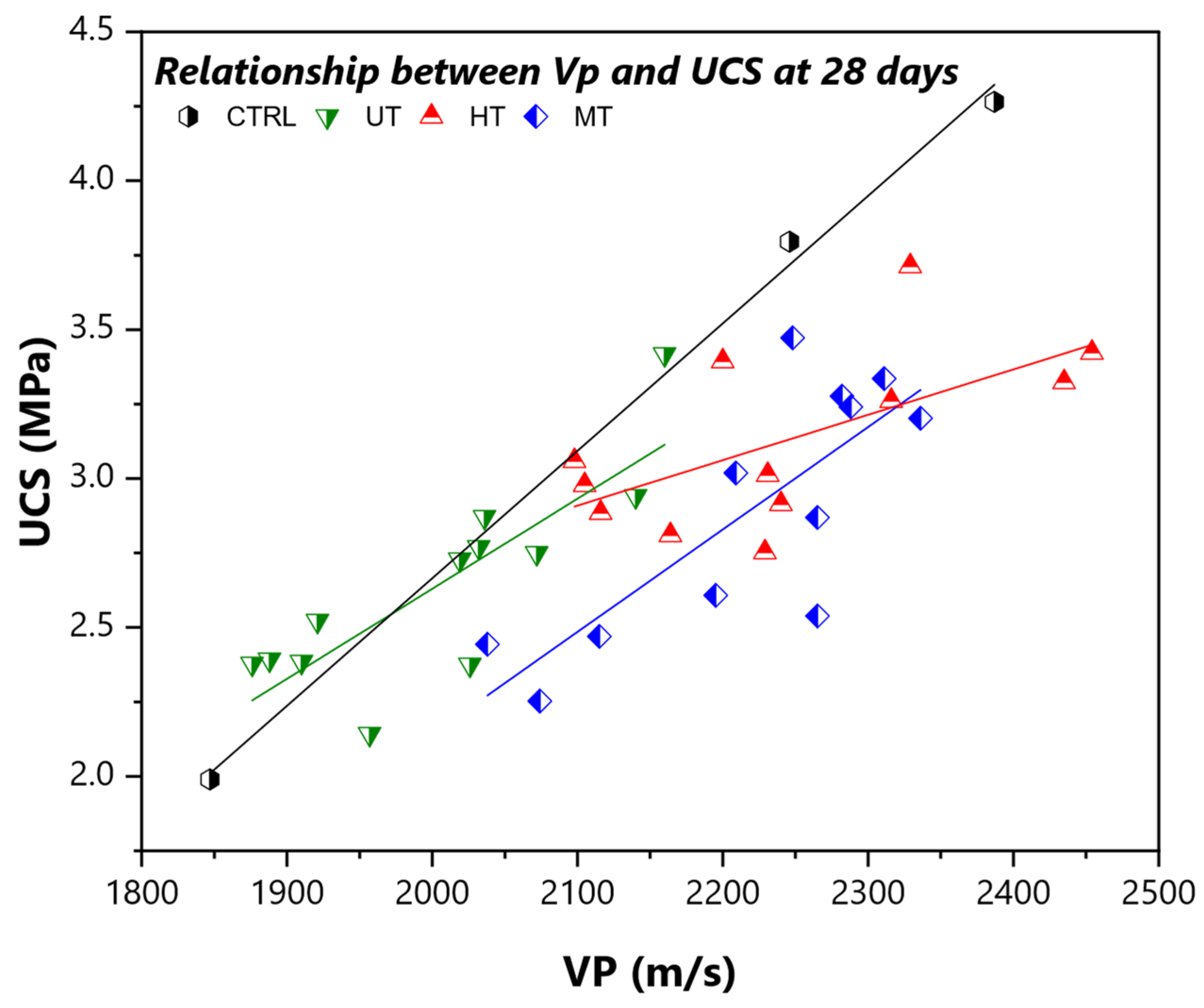
3.4.1. Relationship Between Vp and UCS at 28 Days
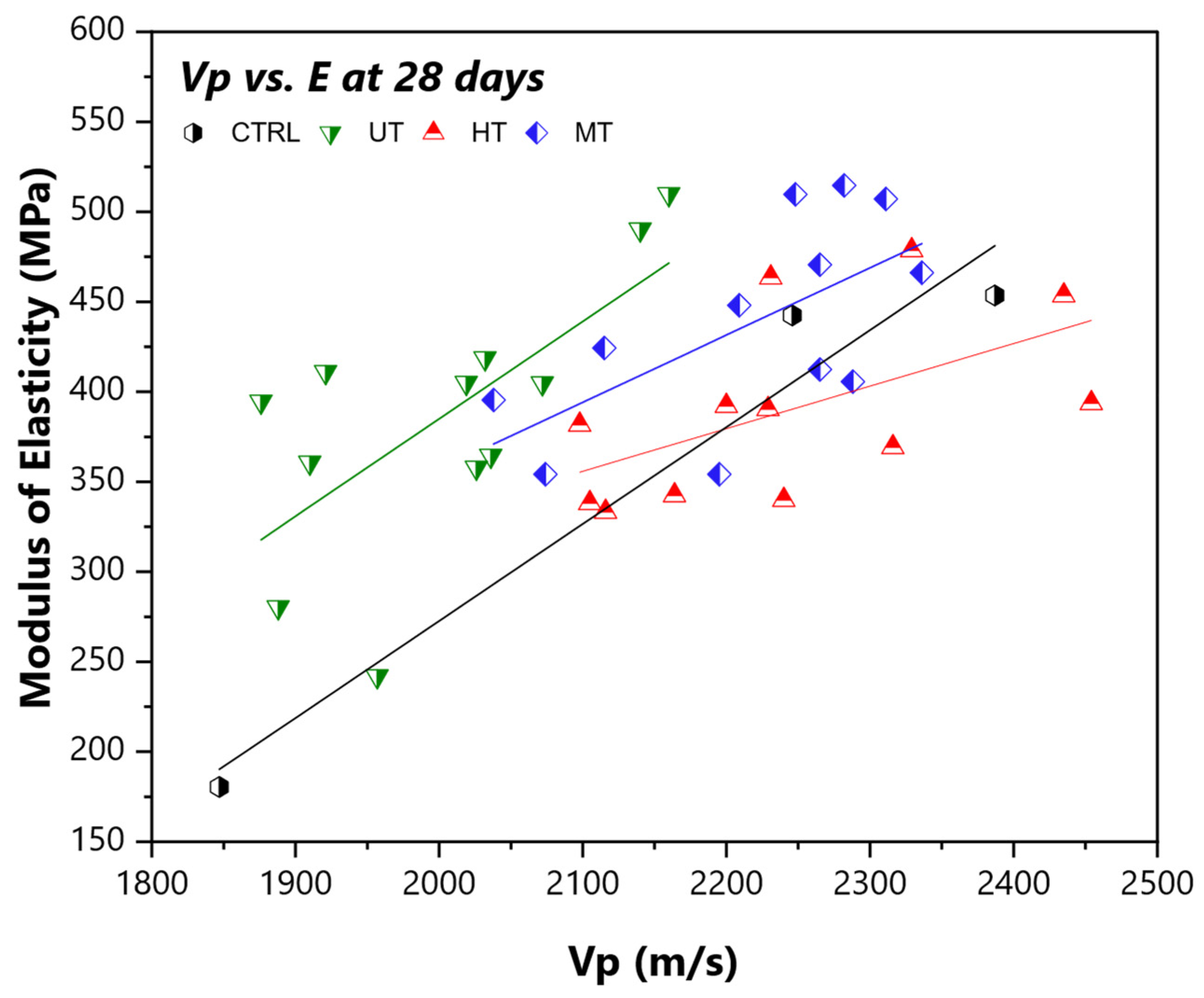
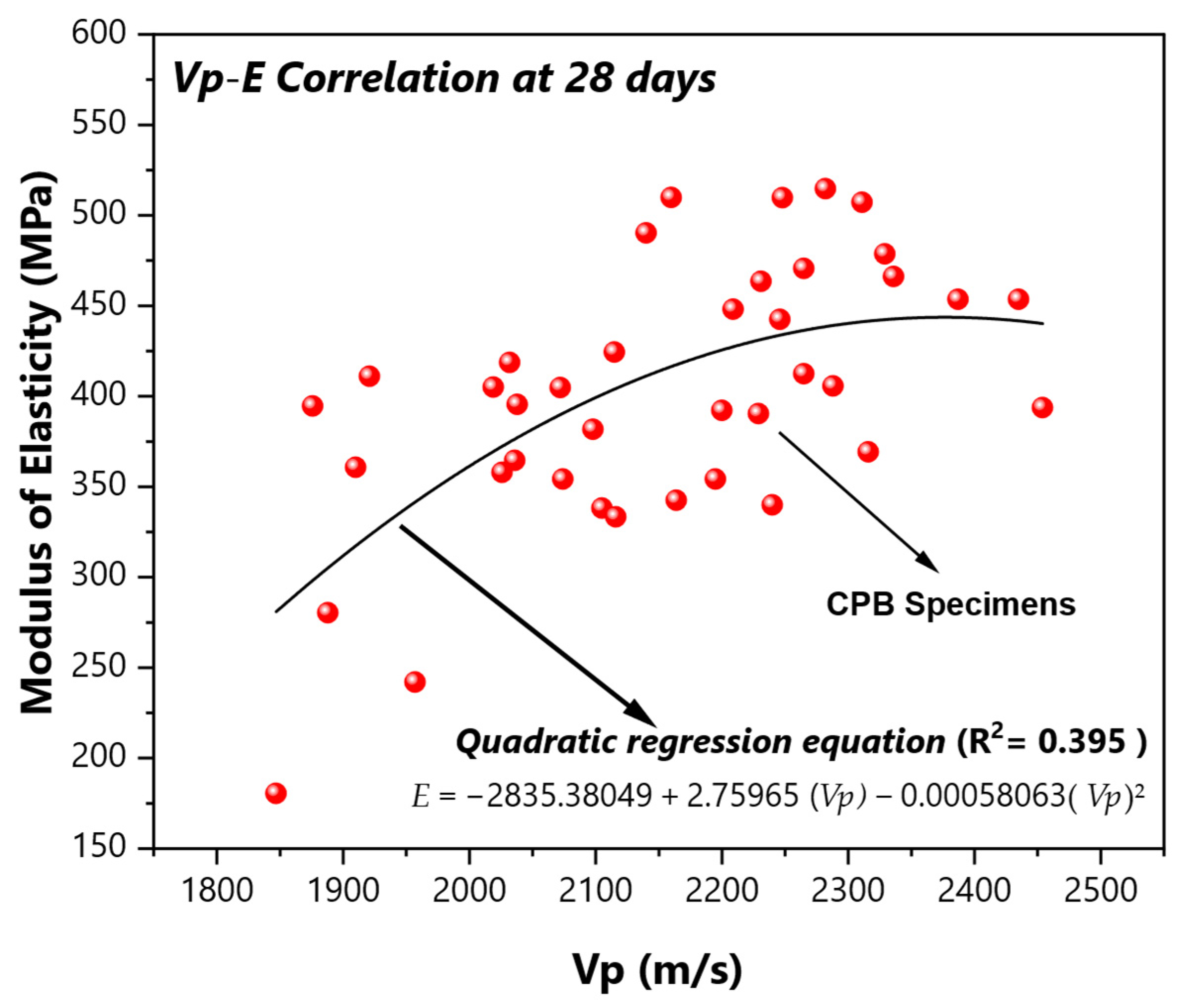
3.4.2. Relationship Between Vp and Modulus of Elasticity (E) at 28 Days
- Microstructure and Porosity: Pore size, distribution, and connectivity waves strongly influence both wave velocity and compressive strength [60].
- Moisture content/Drying: the amount of free and bound water in a specimen influences Vp; drying can decrease Vp due to microcracking and increased porosity [60].
- Heterogeneity: the mixing of diverse materials can lead to incomplete hydration and the existence of voids, which affect wave propagation and mechanical properties, reducing the reliability of empirical correlations [61].
3.5. Indirect Tensile Strength (ITS/BTS)
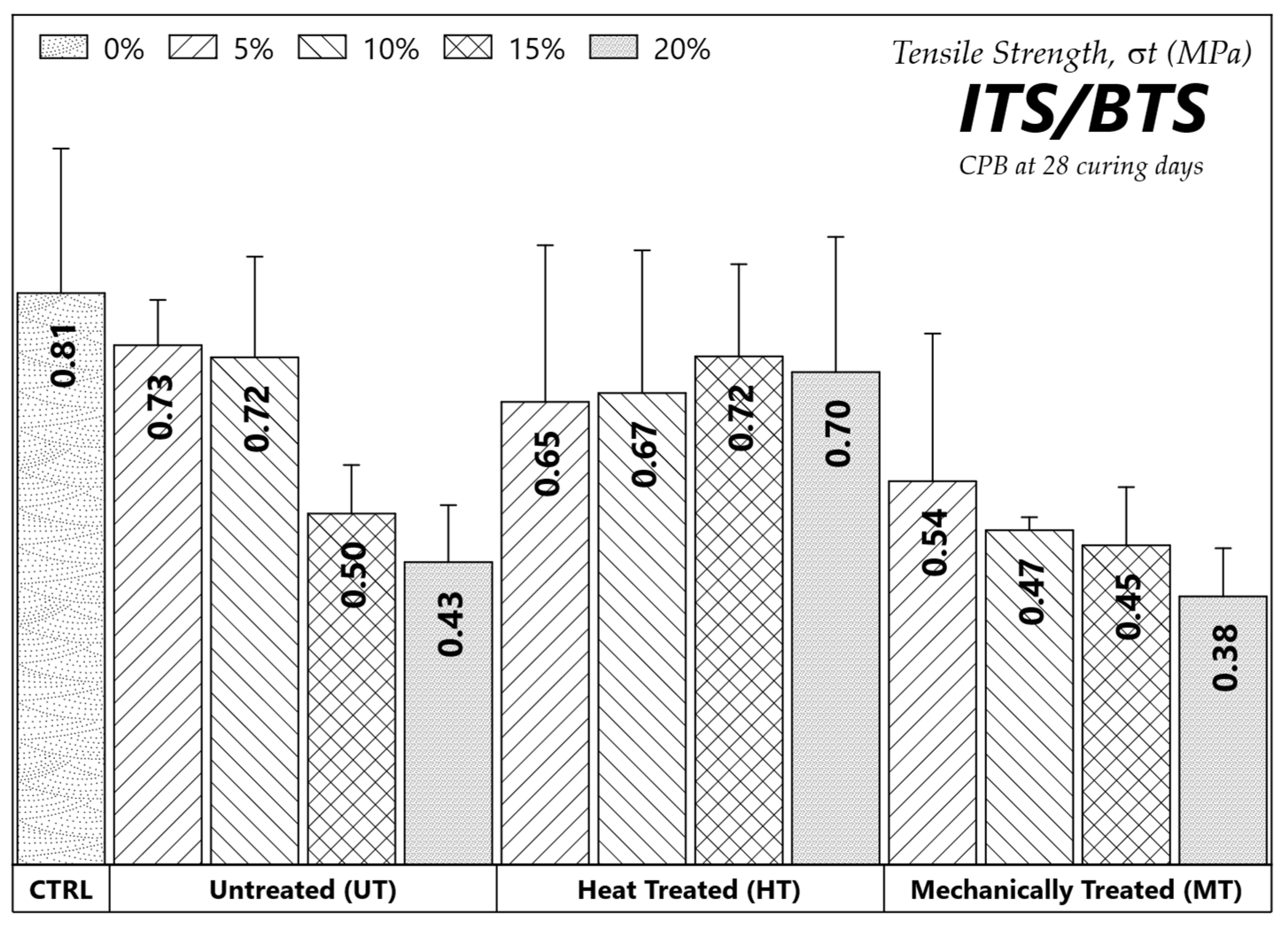
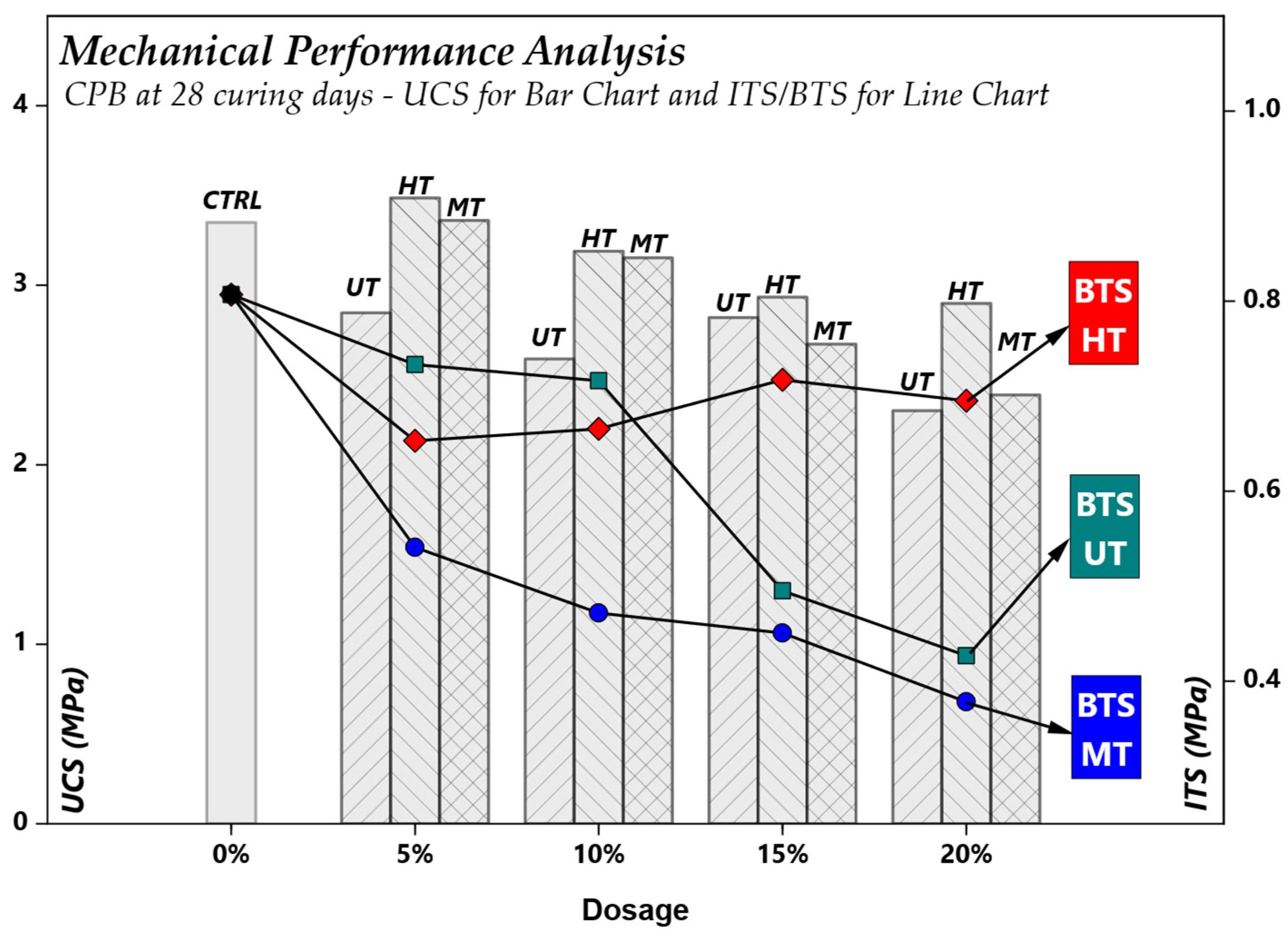
- CTRL specimens exhibited the highest mechanical performance in both compressive and tensile strength.
- Among the treated Saudi Natural Pozzolan (SNP) mixtures, HT CPB showed the best UCS at all dosages, while its tensile strength is slightly lower at 5% and 10%. Increasing the dosage to 15% or 20% yields better compressive and tensile strength than MT and UT, indicating better bonding and matrix cohesion.
- Untreated pozzolan showed good tensile strength at 5% and 10%, despite a lower compressive strength than that of CTRL, HT, and MT.
- MT CPB exhibited competitive compressive strength at 5% dosage but demonstrated the lowest tensile strength among all treatments.
3.6. Microstructural Analysis
4. Conclusions
- Evaluations of Uniaxial Compressive Strength (UCS) indicated that the HT scenario was higher than that of other materials with a 5% cement replacement dosage.
- Indirect Tensile Strength (ITS/BTS) indicated that HT (5%) has the second-highest tensile strength, after the control samples.
- Elastic modulus (E) at 28 curing days indicated that MT (5%) and HT (5%) were stiffer than UT and CTRL CPB.
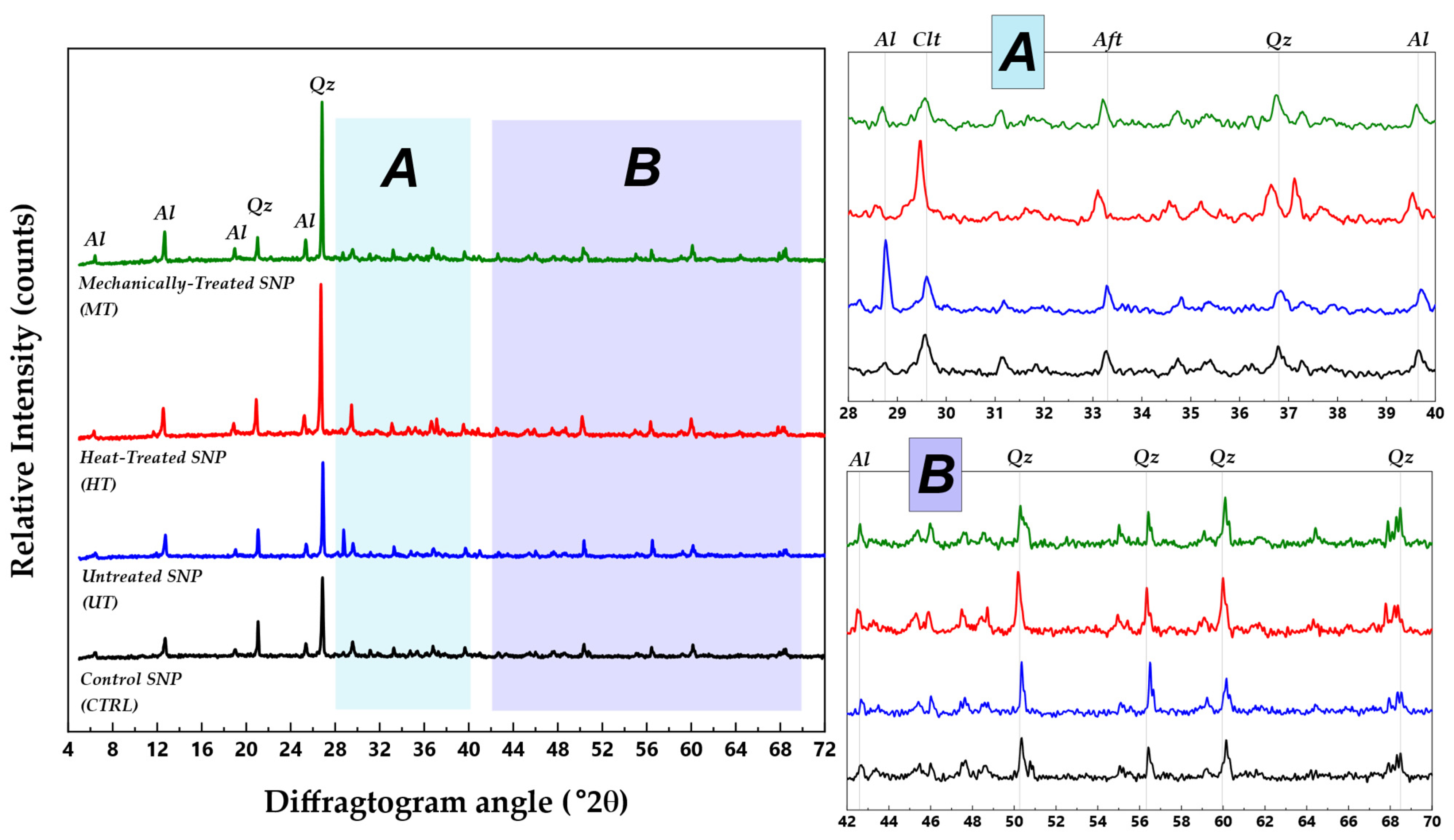
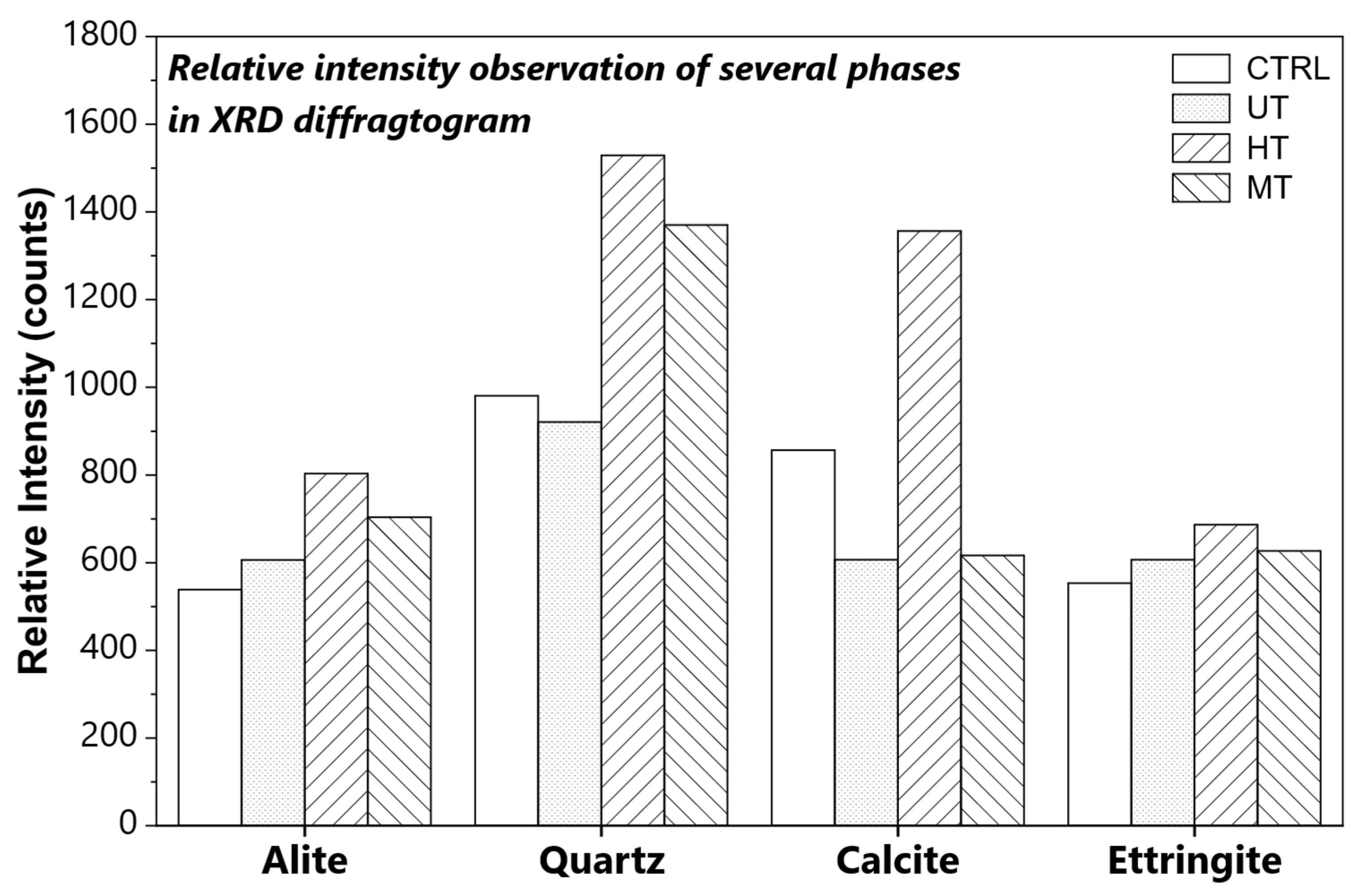
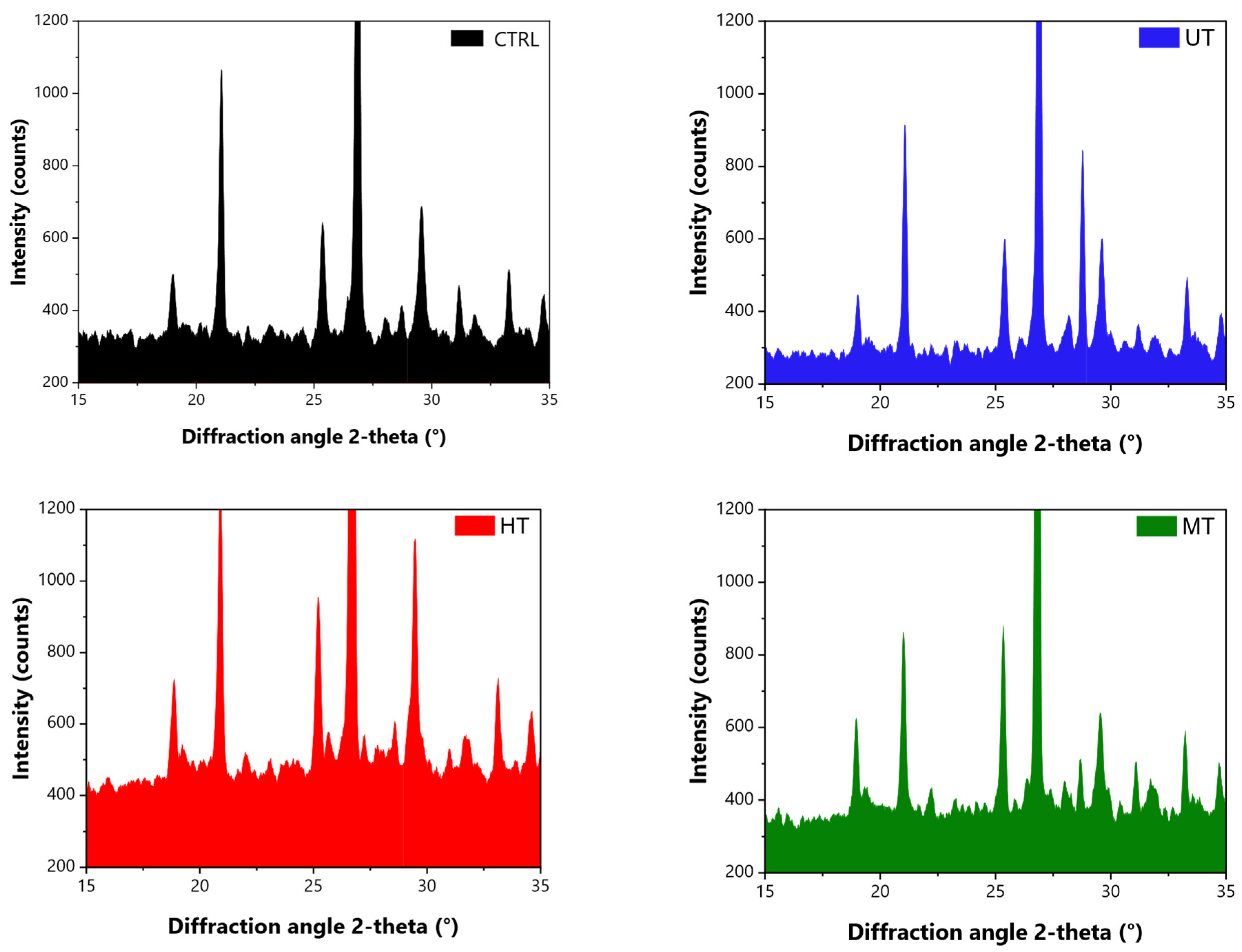
- Microstructural analysis through XRD has demonstrated that the high strength of the HT SNP paste is attributed to the high intensities of Alite, Quartz, and Calcite, along with a suitable amount of Ettringite (AFt). Another support comes from a high amorphous hump in the HT diffractogram.
Author Contributions
Funding
Data Availability Statement
Acknowledgments
Conflicts of Interest
Abbreviations
| SNP | Saudi Natural Pozzolan |
| CTRL | Control mixes |
| HT | Heat-treated SNP |
| MT | Mechanical Treated SNP |
| UT | Untreated SNP |
| CPB | Cemented Paste Backfill |
References
- Obenaus-Emler, R.; Falah, M.; Illikainen, M. Assessment of mine tailings as precursors for alkali-activated materials for on-site applications. Constr. Build. Mater. 2020, 246, 118470. [Google Scholar] [CrossRef]
- Hudson-Edwards, K.A.; Kemp, D.; Torres-Cruz, L.A.; Macklin, M.G.; Brewer, P.A.; Owen, J.R.; Franks, D.M.; Marquis, E.; Thomas, C.J. Tailings storage facilities, failures and disaster risk. Nat. Rev. Earth Environ. 2024, 5, 612–630. [Google Scholar] [CrossRef]
- Tayebi-Khorami, M.; Edraki, M.; Corder, G.; Golev, A. Re-Thinking Mining Waste through an Integrative Approach Led by Circular Economy Aspirations. Minerals 2019, 9, 286. [Google Scholar] [CrossRef]
- Asif, Z.; Chen, Z. Environmental management in North American mining sector. Environ. Sci. Pollut. Res. Int. 2016, 23, 167–179. [Google Scholar] [CrossRef]
- Kossoff, D.; Dubbin, W.; Alfredsson, M.; Edwards, S.; Macklin, M.; Hudson-Edwards, K. Mine Tailings Dams: Characteristics, Failure, Environmental Impacts, and Remediation. Appl. Geochem. 2014, 51, 229–245. [Google Scholar] [CrossRef]
- Li, L. Generalized Solution for Mining Backfill Design. Int. J. Geomech. 2014, 14, 04014006. [Google Scholar] [CrossRef]
- Williams, D.J. Lessons from Tailings Dam Failures—Where to Go from Here? Minerals 2021, 11, 853. [Google Scholar] [CrossRef]
- Ercikdi, B.; Külekci, G.; Yılmaz, T. Utilization of granulated marble wastes and waste bricks as mineral admixture in cemented paste backfill of sulphide-rich tailings. Constr. Build. Mater. 2015, 93, 573–583. [Google Scholar] [CrossRef]
- Hefni, M.A. Investigating the basic properties of basalt fiber reinforced cemented paste backfill as a sustainable material for mine backfilling. Sci. Rep. 2025, 15, 10073. [Google Scholar] [CrossRef]
- Huang, S.; Xia, K.; Qiao, L. Dynamic tests of cemented paste backfill: Effects of strain rate, curing time, and cement content on compressive strength. J. Mater. Sci. 2011, 46, 5165–5170. [Google Scholar] [CrossRef]
- Li, W.; Fall, M. Sulphate effect on the early age strength and self-desiccation of cemented paste backfill. Constr. Build. Mater. 2016, 106, 296–304. [Google Scholar] [CrossRef]
- Ouattara, D.; Mbonimpa, M.; Yahia, A.; Belem, T. Assessment of rheological parameters of high density cemented paste backfill mixtures incorporating superplasticizers. Constr. Build. Mater. 2018, 190, 294–307. [Google Scholar] [CrossRef]
- Tuylu, S. Effect of different particle size distribution of zeolite on the strength of cemented paste backfill. Int. J. Environ. Sci. Technol. 2022, 19, 131–140. [Google Scholar] [CrossRef]
- Adiguzel Tuylu, A.N.; Tuylu, S.; Adiguzel, D.; Namli, E.; Gungoren, C.; Demir, I. Optimizing Strength Prediction for Cemented Paste Backfills with Various Fly Ash Substitution: Computational Approach with Machine Learning Algorithms. Minerals 2025, 15, 234. [Google Scholar] [CrossRef]
- Ghosh, C.; Singh, P.; Behera, S.; Mishra, K.; Kumar, D.; Buragohain, J.; Mandal, P. Optimisation of binder alternative for cemented paste fill in underground metal mines. Arab. J. Geosci. 2019, 12, 462. [Google Scholar] [CrossRef]
- Panchal, S.; Deb, D.; Sreenivas, T. Variability in rheology of cemented paste backfill with hydration age, binder and superplasticizer dosages. Adv. Powder Technol. 2018, 29, 2211–2220. [Google Scholar] [CrossRef]
- Ahmed, H.M.; Hefni, M.A.; Ahmed, H.A.M.; Saleem, H.A. Cement Kiln Dust (CKD) as a Partial Substitute for Cement in Pozzolanic Concrete Blocks. Buildings 2023, 13, 568. [Google Scholar] [CrossRef]
- Al-Bakri, A.Y.; Ahmed, H.M.; Hefni, M.A. Cement Kiln Dust (CKD): Potential Beneficial Applications and Eco-Sustainable Solutions. Sustainability 2022, 14, 7022. [Google Scholar] [CrossRef]
- Antunes, M.; Santos, R.L.; Pereira, J.; Rocha, P.; Horta, R.B.; Colaço, R. Alternative Clinker Technologies for Reducing Carbon Emissions in Cement Industry: A Critical Review. Materials 2022, 15, 209. [Google Scholar] [CrossRef]
- Meng, Y.; Ling, T.-C.; Mo, K.H.; Tian, W. Enhancement of high temperature performance of cement blocks via CO2 curing. Sci. Total Environ. 2019, 671, 827–837. [Google Scholar] [CrossRef]
- Dedeloudis, C.; Zervaki, M.; Sideris, K.; Juenger, M.; Alderete, N.; Kamali-Bernard, S.; Villagrán, Y.; Snellings, R. Natural Pozzolans. In Properties of Fresh and Hardened Concrete Containing Supplementary Cementitious Materials: State-of-the-Art Report of the RILEM Technical Committee 238-SCM, Working Group 4; RILEM State-of-the-Art Reports; De Belie, N., Soutsos, M., Gruyaert, E., Eds.; Springer International Publishing: Cham, Switzerland, 2018; pp. 181–231. [Google Scholar] [CrossRef]
- Li, G.; Zhou, C.; Ahmad, W.; Usanova, K.; Karelina, M.; Mohamed, A.; Khallaf, R. Fly Ash Application as Supplementary Cementitious Material: A Review. Materials 2022, 15, 2664. [Google Scholar] [CrossRef] [PubMed]
- Scrivener, K.; Martirena, F.; Bishnoi, S.; Maity, S. Calcined clay limestone cements (LC3). Cem. Concr. Res. 2018, 114, 49–56. [Google Scholar] [CrossRef]
- Cao, Y.; Wang, Y.; Zhang, Z.; Ma, Y.; Wang, H. Recent progress of utilization of activated kaolinitic clay in cementitious construction materials. Compos. Part B Eng. 2021, 211, 108636. [Google Scholar] [CrossRef]
- Amin, M.N.; Khan, K. Mechanical Performance of High-Strength Sustainable Concrete under Fire Incorporating Locally Available Volcanic Ash in Central Harrat Rahat, Saudi Arabia. Materials 2021, 14, 21. [Google Scholar] [CrossRef] [PubMed]
- Celik, K.; Jackson, M.D.; Mancio, M.; Meral, C.; Emwas, A.-H.; Mehta, P.K.; Monteiro, P.J.M. High-volume natural volcanic pozzolan and limestone powder as partial replacements for portland cement in self-compacting and sustainable concrete. Cem. Concr. Compos. 2014, 45, 136–147. [Google Scholar] [CrossRef]
- Downs, D.T.; Robinson, J.E.; Stelten, M.E.; Champion, D.E.; Dietterich, H.R.; Sisson, T.W.; Zahran, H.; Hassan, K.; Shawali, J. Geologic Map of the Northern Harrat Rahat Volcanic Field, Kingdom of Saudi Arabia; US Department of the Interior, US Geological Survey: Reston, VA, USA, 2019.
- Ercikdi, B.; Cihangir, F.; Kesimal, A.; Deveci, H.; Alp, Ì. Effect of natural pozzolans as mineral admixture on the performance of cemented-paste backfill of sulphide-rich tailings. Waste Manag. Res. 2010, 28, 430–435. [Google Scholar] [CrossRef]
- Senhadji, Y.; Escadeillas, G.; Mouli, M.; Khelafi, H. Influence of natural pozzolan, silica fume and limestone fine on strength, acid resistance and microstructure of mortar. Powder Technol. 2014, 254, 314–323. [Google Scholar] [CrossRef]
- Roobol, M.J.; Simsim, M.; Tayeb, O.; Abdul-Hafaz, K. Basalt as an Industrial Rock-1 Al-Madinah Area: Quarry Sites for Al-Madinah Al-Mukarramah; BRGM: Jeddah, Saudi Arabia, 1998.
- Roobol, M.J.; Simsim, M.; Tayeb, O.; Abdul-Hafaz, K. Basalt as an Industrial Rock-2 Central Harrat Rahat: Quarry Sites for Jeddah and Makkah Al-Mukarramah; BRGM: Jeddah, Saudi Arabia, 1998.
- Roobol, M.J.; Simsim, M.; Tayeb, O.; Abdul-Hafaz, K. Basalt as an Industrial Rock-3 Harrat Kishb: Quarry Sites for At’ Taif, Ar Riyadh and Ad Dammam; BRGM: Jeddah, Saudi Arabia, 1998.
- Khan, K.; Amin, M.N.; Saleem, M.U.; Qureshi, H.J.; Al-Faiad, M.A.; Qadir, M.G. Effect of Fineness of Basaltic Volcanic Ash on Pozzolanic Reactivity, ASR Expansion and Drying Shrinkage of Blended Cement Mortars. Materials 2019, 12, 2603. [Google Scholar] [CrossRef]
- Khan, K.; Amin, M.N.; Usman, M.; Imran, M.; Al-Faiad, M.A.; Shalabi, F.I. Effect of Fineness and Heat Treatment on the Pozzolanic Activity of Natural Volcanic Ash for Its Utilization as Supplementary Cementitious Materials. Crystals 2022, 12, 302. [Google Scholar] [CrossRef]
- Eker, H.; Bascetin, A. The study of strength behaviour of zeolite in cemented paste backfill. Geomech. Eng. 2022, 29, 421–434. [Google Scholar] [CrossRef]
- Hefni, M.A. The potential use of pumice in mine backfill. Exp. Results 2020, 1, e56. [Google Scholar] [CrossRef]
- Yowa, G.G.; Sivakugan, N.; Tuladhar, R.; Arpa, G. Strength and Rheology of Cemented Pastefill Using Waste Pitchstone Fines and Common Pozzolans Compared to Using Portland Cement. Int. J. Geosynth. Ground Eng. 2022, 8, 56. [Google Scholar] [CrossRef]
- Sun, Q.; Li, T.; Liang, B. Preparation of a New Type of Cemented Paste Backfill with an Alkali-Activated Silica Fume and Slag Composite Binder. Materials 2020, 13, 372. [Google Scholar] [CrossRef]
- Hu, M.; Dong, T.; Cui, Z. Effects of composite alkaline activator on mechanical properties and hydration mechanism of cemented paste backfill with cement kiln dust. Sci. Rep. 2024, 14, 28979. [Google Scholar] [CrossRef] [PubMed]
- Gao, L.; Zhao, H.; Guo, N.; Jiang, X.; Zhang, Y. Mechanical and Environmental Properties of Cemented Paste Backfill Prepared with Bayer Red Mud as an Alkali-Activator Substitute. Materials 2025, 18, 4712. [Google Scholar] [CrossRef] [PubMed]
- Al-Amoudi, O.S.B.; Ahmad, S.; Khan, S.; Maslehuddin, M. Durability performance of concrete containing Saudi natural pozzolans as supplementary cementitious material. Adv. Concr. Constr. 2019, 8, 119–126. [Google Scholar] [CrossRef]
- Fares, G.; Alhozaimy, A.; Al-Negheimish, A.; Abdalla Alawad, O. Characterization of scoria rock from Arabian lava fields as natural pozzolan for use in concrete. Eur. J. Environ. Civ. Eng. 2022, 26, 39–57. [Google Scholar] [CrossRef]
- Moufti, M.R.; Sabtan, A.A.; El-Mahdy, O.R.; Shehata, W.M. Assessment of the industrial utilization of scoria materials in central Harrat Rahat, Saudi Arabia. Eng. Geol. 2000, 57, 155–162. [Google Scholar] [CrossRef]
- Surour, A.; Moufti, M.R.; Nassief, M.O.; Saeda, Y. Chemical characteristics of black scoria and their influence on economic use as industrial rock: A case study from Harrat Rahat, Saudi Arabia. ISESCO J. Sci. Tech. 2017, 13, 48–59. [Google Scholar]
- ASTM-C311; Standard Test Methods for Sampling and Testing Fly Ash or Natural Pozzolans for Use in Portland-Cement Concrete. ASTM: West Conshohocken, PA, USA, 2022. [CrossRef]
- ASTM C39/C39M; Standard Test Method for Compressive Strength of Cylindrical Concrete Specimens. ASTM: West Conshohocken, PA, USA, 2021. [CrossRef]
- ASTM D3967; Standard Test Method for Splitting Tensile Strength of Intact Rock Core Specimens with Flat Loading Platens. ASTM: West Conshohocken, PA, USA, 2023. [CrossRef]
- ASTM C642; Standard Test Method for Density, Absorption, and Voids in Hardened Concrete. ASTM: West Conshohocken, PA, USA, 2021. [CrossRef]
- Zoz, H.; Jaramillo, D.; Tian, Z.; Trindade, B.; Ren, H.; Chimal-V, O.; de la Torre, S.D. High Performance cements and advanced Ordinary Portland cement manufacturing by HEM-Refinement and activation. ZKG Int. 2004, 57, 60–70. [Google Scholar]
- Castaño-Cardoza, T.; Linsel, S.; Alujas-Diaz, A.; Orozco-Morales, R.; Martirena-Hernández, J.F. Influence of very fine fraction of mixed recycled aggregates on the mechanical properties and durability of mortars and concretes. Rev. Fac. Ing. Univ. Antioq. 2016, 81, 81–92. [Google Scholar] [CrossRef]
- Korouzhdeh, T.; Eskandari-Naddaf, H.; Kazemi, R. The ITZ microstructure, thickness, porosity and its relation with compressive and flexural strength of cement mortar; influence of cement fineness and water/cement ratio. Front. Struct. Civ. Eng. 2022, 16, 191–201. [Google Scholar] [CrossRef]
- Meng, T.; Ying, K.; Hong, Y.; Xu, Q. Effect of different particle sizes of nano-SiO2 on the properties and microstructure of cement paste. Nanotechnol. Rev. 2020, 9, 833–842. [Google Scholar] [CrossRef]
- Korouzhdeh, T.; Eskandari-Naddaf, H. Evolution of different microstructure and influence on the characterization of pore structure and mechanical properties of cement mortar exposed to freezing-thawing: The role of cement fineness. Eng. Fail. Anal. 2022, 140, 106588. [Google Scholar] [CrossRef]
- Pinheiro, V.D.; de Abreu, R.F.; Alexandre, J.; Xavier, G.d.C.; Marvila, M.T.; de Azevedo, A.R.G. Pozzolanic Potential of Calcined Clays at Medium Temperature as Supplementary Cementitious Material. Sustainability 2024, 16, 7508. [Google Scholar] [CrossRef]
- Kosmatka, S.; Kerkhoff, B.; Panarese, W. Design and Control of Concrete Mixtures; Portland Cement Association (PCA): Washington, DC, USA, 2002. [Google Scholar]
- Nassif, H.H.; Najm, H.; Suksawang, N. Effect of pozzolanic materials and curing methods on the elastic modulus of HPC. Cem. Concr. Compos. 2005, 27, 661–670. [Google Scholar] [CrossRef]
- Elyasigorji, F.; Farajiani, F.; Hajipour Manjili, M.; Lin, Q.; Elyasigorji, S.; Farhangi, V.; Tabatabai, H. Comprehensive Review of Direct and Indirect Pozzolanic Reactivity Testing Methods. Buildings 2023, 13, 2789. [Google Scholar] [CrossRef]
- Ercikdi, B.; Yılmaz, T.; Külekci, G. Strength and ultrasonic properties of cemented paste backfill. Ultrasonics 2014, 54, 195–204. [Google Scholar] [CrossRef] [PubMed]
- Abdulkadir, S.B.; Chen, Q.; Yilmaz, E.; Wang, D. Comparative and Meta-Analysis Evaluation of Non-Destructive Testing Methods for Strength Assessment of Cemented Paste Backfill: Implications for Sustainable Pavement and Concrete Materials. Materials 2025, 18, 2888. [Google Scholar] [CrossRef] [PubMed]
- Liqiang, M.; Ahmad, Q.A.; Islam, M.M.; Khan, N.; Mangi, H.N.; Golsanami, N. Rock physics-based approach to assess the effectiveness of cement-based backfill materials in coal mining. PLoS ONE 2025, 20, e0333364. [Google Scholar] [CrossRef] [PubMed]
- Sainsbury, B.L.; Harty, D.; Felipe, F.; Ruest, M.; McLoughney, D.; Sainsbury, D. Characterisation of the geomechanical properties of cemented paste backfill for design. In Proceedings of the Paste 2024: 26th International Conference on Paste, Thickened and Filtered Tailings, Melbourne, Australia, 16–18 April 2024; pp. 385–394. [Google Scholar] [CrossRef]
- Fu, J.-X.; Song, W.-D.; Tan, Y.-Y. Study on Microstructural Evolution and Strength Growth and Fracture Mechanism of Cemented Paste Backfill. Adv. Mater. Sci. Eng. 2016, 2016, 8792817. [Google Scholar] [CrossRef]
- Xiong, S.; Liu, Z.; Min, C.; Shi, Y.; Zhang, S.; Liu, W. Compressive strength prediction of cemented backfill containing phosphate tailings using extreme gradient boosting optimized by whale optimization algorithm. Materials 2022, 16, 308. [Google Scholar] [CrossRef] [PubMed]
- Guo, L.; Peng, X.; Zhao, Y.; Liu, G.; Tang, G.; Pan, A. Experimental Study on Direct Tensile Properties of Cemented Paste Backfill. Front. Mater. 2022, 9, 864264. [Google Scholar] [CrossRef]
- Ma, S.; Li, W.; Shen, X. Study on the physical and chemical properties of Portland cement with THEED. Constr. Build. Mater. 2019, 213, 617–626. [Google Scholar] [CrossRef]
- Aziz, I.H.A.; Abdullah, M.M.A.B.; Razak, R.A.; Yahya, Z.; Salleh, M.A.A.M.; Chaiprapa, J.; Rojviriya, C.; Vizureanu, P.; Sandu, A.V.; Tahir, M.F.; et al. Mechanical Performance, Microstructure, and Porosity Evolution of Fly Ash Geopolymer after Ten Years of Curing Age. Materials 2023, 16, 1096. [Google Scholar] [CrossRef]
- Yang, B.; Liu, Y.; Wang, X.-Y. A Hydration Model to Evaluate the Properties of Cement–Quartz Powder Hybrid Concrete. Materials 2024, 17, 2769. [Google Scholar] [CrossRef]
- Tavares, L.R.C.; Tavares, J.F.T., Jr.; Costa, L.M.; da Silva Bezerra, A.C.; Cetlin, P.R.; Aguilar, M.T.P. Influence of quartz powder and silica fume on the performance of Portland cement. Sci. Rep. 2020, 10, 21461. [Google Scholar] [CrossRef] [PubMed]
- Lin, R.-S.; Wang, X.-Y.; Zhang, G.-Y. Effects of Quartz Powder on the Microstructure and Key Properties of Cement Paste. Sustainability 2018, 10, 3369. [Google Scholar] [CrossRef]
- Bazán, I.; Ainsworth, P.; Salvoldi, B.; Cano, R.; López, D. Reduction of strength losses in paste backfill with sludge cake. In Proceedings of the Paste 2023: 25th International Conference on Paste, Thickened and Filtered Tailings, Banff, AB, Canada, 1–3 May 2023; pp. 187–198. [Google Scholar] [CrossRef]
- Pokharel, M.; Fall, M. Combined influence of sulphate and temperature on the saturated hydraulic conductivity of hardened cemented paste backfill. Cem. Concr. Compos. 2013, 38, 21–28. [Google Scholar] [CrossRef]
- Akkaya, U.G.; Cinku, K.; Yilmaz, E. Characterization of Strength and Quality of Cemented Mine Backfill Made up of Lead-Zinc Processing Tailings. Front. Mater. 2021, 8, 740116. [Google Scholar] [CrossRef]










| Material [%] | Al2O3 | CO2 | CaO | Fe2O3 | K2O | MgO | Na2O | SO3 | SiO2 | TiO2 |
|---|---|---|---|---|---|---|---|---|---|---|
| OPC | 0.98 | 26.42 | 50.2 | NA | NA | 1.29 | 0.78 | 0.92 | 17.31 | NA |
| Natural Pozzolan | 13.18 | NA | 5.59 | 17.1 | 3.26 | 2.38 | 4.53 | NA | 50.38 | 3.27 |
| Fine Tailing | 14.28 | 11.22 | NA | 37.8 | NA | 13.7 | NA | 2.19 | 20.81 | NA |
| Coarse Tailing | 1.03 | 12.86 | NA | 10.89 | NA | 1.43 | NA | NA | 73.79 | NA |
| Heat Treated | 14.25 | 13.91 | 6.67 | 10.59 | 1.78 | 2.36 | 5.12 | NA | 45.33 | NA |
| Mechanical Treated | 14.18 | 23.95 | 6.81 | NA | 2.47 | 2.72 | 3.40 | NA | 46.46 | NA |
| MIX | Mixed Ingredients (wt.%) | Total Parts (wt.%) | Curing days (CD) (7, 14 and 28) | Samples Curing Days | Samples Amount | ||||
|---|---|---|---|---|---|---|---|---|---|
| Binder (9.24%) | Tailings (67.76%) | Process Water (23%) | |||||||
| PZ | OPC | FT | CT | ||||||
| CTRL (0%) | 0 | 9.24 | 33.88 | 33.88 | 23 | 100 | 3 | 3 | 9 |
| UT (5%) | 0.46 | 8.78 | 33.88 | 33.88 | 23 | 100 | 3 | 3 | 36 |
| UT (10%) | 0.92 | 8.32 | 33.88 | 33.88 | 23 | 100 | 3 | 3 | |
| UT (15%) | 1.39 | 7.85 | 33.88 | 33.88 | 23 | 100 | 3 | 3 | |
| UT (20%) | 1.85 | 7.39 | 33.88 | 33.88 | 23 | 100 | 3 | 3 | |
| HT (5%) | 0.37 | 8.87 | 33.88 | 33.88 | 23 | 100 | 3 | 3 | 36 |
| HT (10%) | 0.92 | 8.32 | 33.88 | 33.88 | 23 | 100 | 3 | 3 | |
| HT (15%) | 1.39 | 7.85 | 33.88 | 33.88 | 23 | 100 | 3 | 3 | |
| HT (20%) | 1.85 | 7.39 | 33.88 | 33.88 | 23 | 100 | 3 | 3 | |
| MT (5%) | 0.37 | 8.87 | 33.88 | 33.88 | 23 | 100 | 3 | 3 | 36 |
| MT (10%) | 0.92 | 8.32 | 33.88 | 33.88 | 23 | 100 | 3 | 3 | |
| MT (15%) | 1.39 | 7.85 | 33.88 | 33.88 | 23 | 100 | 3 | 3 | |
| MT (20%) | 1.85 | 7.39 | 33.88 | 33.88 | 23 | 100 | 3 | 3 | |
| Total | 117 | ||||||||
| Test (Control) | Curing Days | ||
|---|---|---|---|
| 7 | 14 | 28 | |
| 1 | 513 * | 389 | 443 |
| 2 | 283 | 408 | 454 |
| 3 | 373 | 315 | 181 * |
| Average | 389 | 371 | 359 |
| Standard Deviation | 116 | 49 | 155 |
| Test (UT) | 7 Curing Days | 14 Curing Days | 28 Curing Days | ||||||||||||
|---|---|---|---|---|---|---|---|---|---|---|---|---|---|---|---|
| 0% | 5% | 10% | 15% | 20% | 0% | 5% | 10% | 15% | 20% | 0% | 5% | 10% | 15% | 20% | |
| 1 | 513 | 309 | 267 | 285 | 328 | 389 | 393 | 375 | 271 | 311 | 443 | 280 | 358 | 490 | 395 |
| 2 | 283 | 335 | 360 | 335 | 270 | 408 | 429 | 498 | 268 | 550 | 454 | 510 | 365 | 405 | 242 |
| 3 | 373 | 319 | 413 | 328 | 462 | 315 | 387 | 452 | 387 | 369 | 181 | 405 | 411 | 419 | 361 |
| Average | 389 | 321 | 347 | 316 | 353 | 371 | 403 | 442 | 309 | 410 | 359 | 398 | 378 | 438 | 332 |
| Std.Dev | 116 | 13 | 74 | 27 | 99 | 49 | 23 | 62 | 68 | 125 | 155 | 115 | 29 | 46 | 80 |
| Test (HT) | 7 Curing Days | 14 Curing Days | 28 Curing Days | ||||||||||||
|---|---|---|---|---|---|---|---|---|---|---|---|---|---|---|---|
| 0% | 5% | 10% | 15% | 20% | 0% | 5% | 10% | 15% | 20% | 0% | 5% | 10% | 15% | 20% | |
| 1 | 513 | 307 | 218 | 173 | 236 | 389 | 426 | 350 | 347 | 328 | 443 | 394 | 340 | 338 | 333 |
| 2 | 283 | 407 | 238 | 205 | 237 | 408 | 417 | 392 | 366 | 399 | 454 | 454 | 392 | 342 | 382 |
| 3 | 373 | 346 | 266 | 289 | 218 | 315 | 483 | 358 | 489 | 395 | 181 | 479 | 369 | 464 | 390 |
| Average | 389 | 353 | 241 | 222 | 230 | 371 | 442 | 367 | 400 | 374 | 359 | 442 | 367 | 381 | 368 |
| Std.Dev | 116 | 50 | 24 | 60 | 10 | 49 | 36 | 22 | 77 | 40 | 155 | 44 | 26 | 71 | 31 |
| Test (MT) | 7 Curing Days | 14 Curing Days | 28 Curing Days | ||||||||||||
|---|---|---|---|---|---|---|---|---|---|---|---|---|---|---|---|
| 0% | 5% | 10% | 15% | 20% | 0% | 5% | 10% | 15% | 20% | 0% | 5% | 10% | 15% | 20% | |
| 1 | 513 | 296 | 255 | 296 | 247 | 389 | 394 | 340 | 338 | 333 | 443 | 507 | 406 | 354 | 395 |
| 2 | 283 | 322 | 236 | 329 | 269 | 408 | 454 | 392 | 342 | 382 | 454 | 510 | 448 | 471 | 424 |
| 3 | 373 | 398 | 238 | 279 | 301 | 315 | 479 | 369 | 464 | 390 | 181 | 515 | 466 | 412 | 354 |
| Average | 389 | 339 | 243 | 302 | 272 | 371 | 442 | 367 | 381 | 368 | 359 | 511 | 440 | 412 | 391 |
| Std.Dev | 116 | 53 | 11 | 26 | 27 | 49 | 44 | 26 | 71 | 31 | 155 | 4 | 31 | 58 | 35 |
| Material | Equation | R2 |
|---|---|---|
| Control | UCS = −5.90005 + 0.00428 (Vp) | 0.99665 |
| Untreated (UT) | UCS = −3.41815 + 0.00302 (Vp) | 0.68192 |
| Heat-treated (HT) | UCS = −0.29407 + 0.00153 (Vp) | 0.39181 |
| Mechanically treated (MT) | UCS = −4.73956 + 0.00344 (Vp) | 0.62755 |
| Material | Equation | R2 |
|---|---|---|
| Control | E = −804.91767 + 0.53877 (Vp) | 0.95293 |
| Untreated (UT) | E = −697.53514 + 0.54123 (Vp) | 0.45828 |
| Heat-treated (HT) | E = −141.28755 + 0.23672 (Vp) | 0.31223 |
| Mechanically treated (MT) | E = −390.8259 + 0.37379 (Vp) | 0.39827 |
Disclaimer/Publisher’s Note: The statements, opinions and data contained in all publications are solely those of the individual author(s) and contributor(s) and not of MDPI and/or the editor(s). MDPI and/or the editor(s) disclaim responsibility for any injury to people or property resulting from any ideas, methods, instructions or products referred to in the content. |
© 2025 by the authors. Licensee MDPI, Basel, Switzerland. This article is an open access article distributed under the terms and conditions of the Creative Commons Attribution (CC BY) license (https://creativecommons.org/licenses/by/4.0/).
Share and Cite
Tanjung, A.A.; Ahmed, H.M.; Ahmed, H.A.M. Mechanical Properties of Copper Tailings Cemented Paste Backfill Incorporating Thermally and Mechanically Treated Saudi Natural Pozzolan. Appl. Sci. 2025, 15, 13205. https://doi.org/10.3390/app152413205
Tanjung AA, Ahmed HM, Ahmed HAM. Mechanical Properties of Copper Tailings Cemented Paste Backfill Incorporating Thermally and Mechanically Treated Saudi Natural Pozzolan. Applied Sciences. 2025; 15(24):13205. https://doi.org/10.3390/app152413205
Chicago/Turabian StyleTanjung, Ardhymanto Am, Haitham M. Ahmed, and Hussin A. M. Ahmed. 2025. "Mechanical Properties of Copper Tailings Cemented Paste Backfill Incorporating Thermally and Mechanically Treated Saudi Natural Pozzolan" Applied Sciences 15, no. 24: 13205. https://doi.org/10.3390/app152413205
APA StyleTanjung, A. A., Ahmed, H. M., & Ahmed, H. A. M. (2025). Mechanical Properties of Copper Tailings Cemented Paste Backfill Incorporating Thermally and Mechanically Treated Saudi Natural Pozzolan. Applied Sciences, 15(24), 13205. https://doi.org/10.3390/app152413205