1. Introduction
In recent years, the large-scale development of renewable energy and rapid advancements in underground storage technologies have heightened the demand for dynamic temperature monitoring of reservoirs and wellbores throughout their entire operational cycles. In applications such as compressed air energy storage, aquifer storage, and deep geothermal reservoirs, temperature variations directly impact energy storage efficiency, fluid migration characteristics, and wellbore structural integrity. Although numerical simulations can predict wellbore-reservoir heat exchange behavior, they often lack sufficient effective measured data to validate model reliability and convective heat transfer coefficients [
1,
2,
3]. Current downhole temperature measurement methods, such as distributed optical fiber sensors and fixed sensors, are primarily suited for long-term monitoring after well completion, yet they struggle to capture full wellbore dynamic temperature profiles during drilling or cyclic injection-production processes. This limitation introduces uncertainties in temperature field models when characterizing transient thermal processes.
Accurate characterization of wellbore temperature fields is critical for the design and evaluation of underground energy storage systems, and the industry has long sought to measure full wellbore temperature distributions directly [
4]. Early methods relied on temperature-sensitive spheres that changed color or melting state to estimate bottomhole circulation temperature (BHCT), but these approaches suffered from poor accuracy and an inability to determine temperatures at specific depths. Currently, wellbore temperature measurement technologies are mainly categorized into two types: dynamic temperature measurement (e.g., directional tools such as Logging While Drilling (LWD) for temperature measurement and Rotary Steerable System (RSS) with temperature sensing functions) and static temperature measurement (e.g., Distributed Temperature Sensing (DTS) system) [
5,
6]. Taking oil and gas development in the Sichuan Basin of China as an example, ultra-deep vertical wells generally do not carry directional tools (a simplified bottomhole assembly is adopted to facilitate the handling of complex downhole accidents), making temperature measurement unavailable. For ultra-deep directional wells or horizontal wells, the directional tools can only measure the temperature near the drill bit. These measurement results are not only affected by axial heat conduction generated by high-temperature rock breaking at the drill bit but also exhibit a delayed response to downhole temperature changes, as the sensors are usually built into the instruments. The location of the maximum temperature (hot spot) in the wellbore is not at the bottomhole but at a certain distance above it [
7], and this hot spot fails to be captured by the directional tools. The fiber core of the Distributed Temperature Sensing (DTS) technology [
8] is wrapped with multiple layers of tensile-resistant and bending-resistant protective layers, which reduces the measurement response speed and accuracy, thereby limiting its application in dynamic operational conditions. Directional tools transmit downhole temperature measurement data through drilling fluid flow; when the fluid in the wellbore is stationary, the data cannot be transmitted out of the wellbore. Therefore, developing a measurement technology that can flow back with fluid circulation and dynamically record the full wellbore temperature profile under both fluid flowing and static states is of great significance for clarifying the heat transfer mechanism between the wellbore and the formation during the injection-production process.
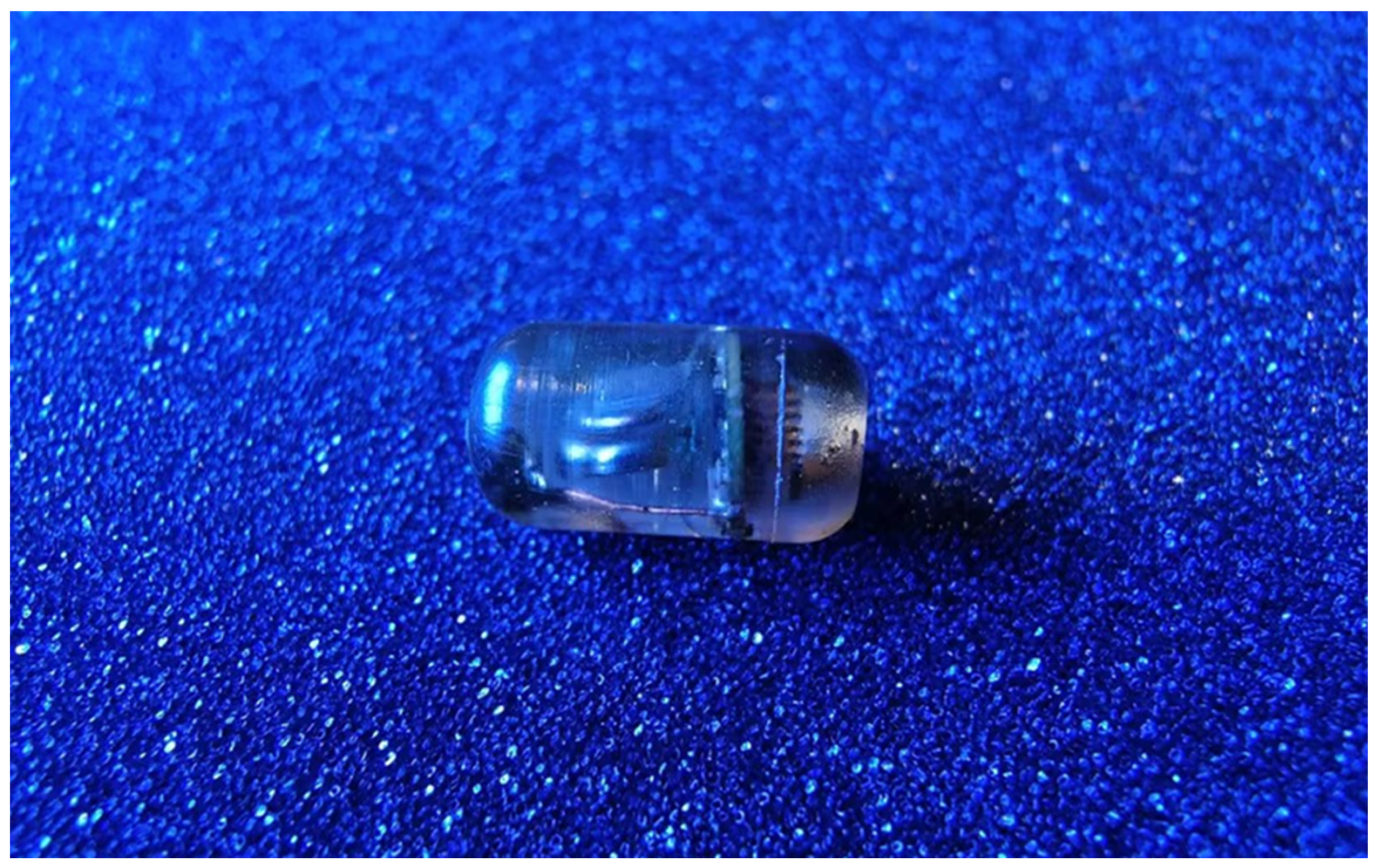
Microchip logging technology has emerged as an innovative solution, gradually applied in downhole parameter acquisition within the petroleum industry since 2010. The first-generation spherical microchip system, collaboratively developed by the University of Tulsa and Saudi Aramco [
9], features a diameter of approximately 7.5 mm, a density of about 1.5 g/cm
3, and a maximum temperature tolerance of 100 °C. Subsequent second-generation products achieved upgrades in storage capacity, power consumption, and measurement accuracy, with the maximum operating temperature increased to 120 °C [
10] and an accuracy of ±1 °C [
11]. Field trials demonstrate that this technology can acquire fluid temperature data at different times, enabling the inversion of longitudinal wellbore temperature profiles and providing valuable inputs for temperature field modeling. However, due to thermal insulation of the chip casing, heat dissipation during upward return is slow, resulting in elevated temperature measurements in the upper wellbore sections that require model-based correction [
10]. Despite this, the technology has recorded parameters such as well depth, circulation flow rate, and microchip flow time in multiple wells, facilitating integrated interpretation with transient temperature field models [
12,
13] and validating its applicability in wellbore thermal dynamic analysis.
The research on mathematical models of temperature fields represents the most crucial interpretation method for wellbore temperature distribution. Since the 1960s, relevant studies have been continuously evolving. Based on heat transfer theory, Edwardson [
14] proposed a one-dimensional transient temperature field model and a numerical calculation method, and, for the first time, calculated the temperature disturbance curves of the formation around the wellbore under different circulation times. Assuming that the heat exchange between the formation and the fluid in the wellbore is quasi-steady radial linear heat transfer, Holmes [
15] established a mathematical temperature model and derived analytical expressions for the fluid temperatures in the wellbore string and annulus. Building upon Bird’s heat flux equation [
16], Raymond [
17] developed a temperature field model. His research indicated that with the circulation of fluid in the wellbore, both the temperature of the bottom-hole formation and the fluid decreases, and the radial disturbance radius is approximately 3 m, which laid an important foundation for the development of subsequent transient models. Arnold [
18] assumed that the wellbore temperature is in a quasi-steady state while the formation temperature is transient. Ignoring heat sources such as viscous dissipation energy and the influence of the wellbore string, he constructed a set of wellbore-formation thermal equilibrium equations and presented analytical solutions for the fluid temperature distribution in the tubing and annulus. Yang [
1] developed a transient heat transfer model capable of calculating the temperature variation characteristics of the wellbore and formation under kick conditions. Abdelhafiz [
19,
20,
21] established a two-dimensional transient wellbore model and performed comparative verification using a three-dimensional simulation model in ANSYS 2009, with slight differences between the temperature calculation results of the two models. Over the past few decades, most studies on temperature field models have adopted the 4572 m vertical well and operational conditions initially proposed by Holmes et al. to compare bottom-hole temperature research results, thereby verifying the reliability or applicability of model calculations [
22,
23,
24]. A temperature measurement case from a new directional well is of great significance for advancing the improvement of temperature field models. Meanwhile, numerous scholars have proposed calculation equations for convective heat transfer coefficients under different conditions. To promote the research on temperature fields, it is also necessary to verify the values of key heat transfer coefficients based on the latest temperature measurement technologies.
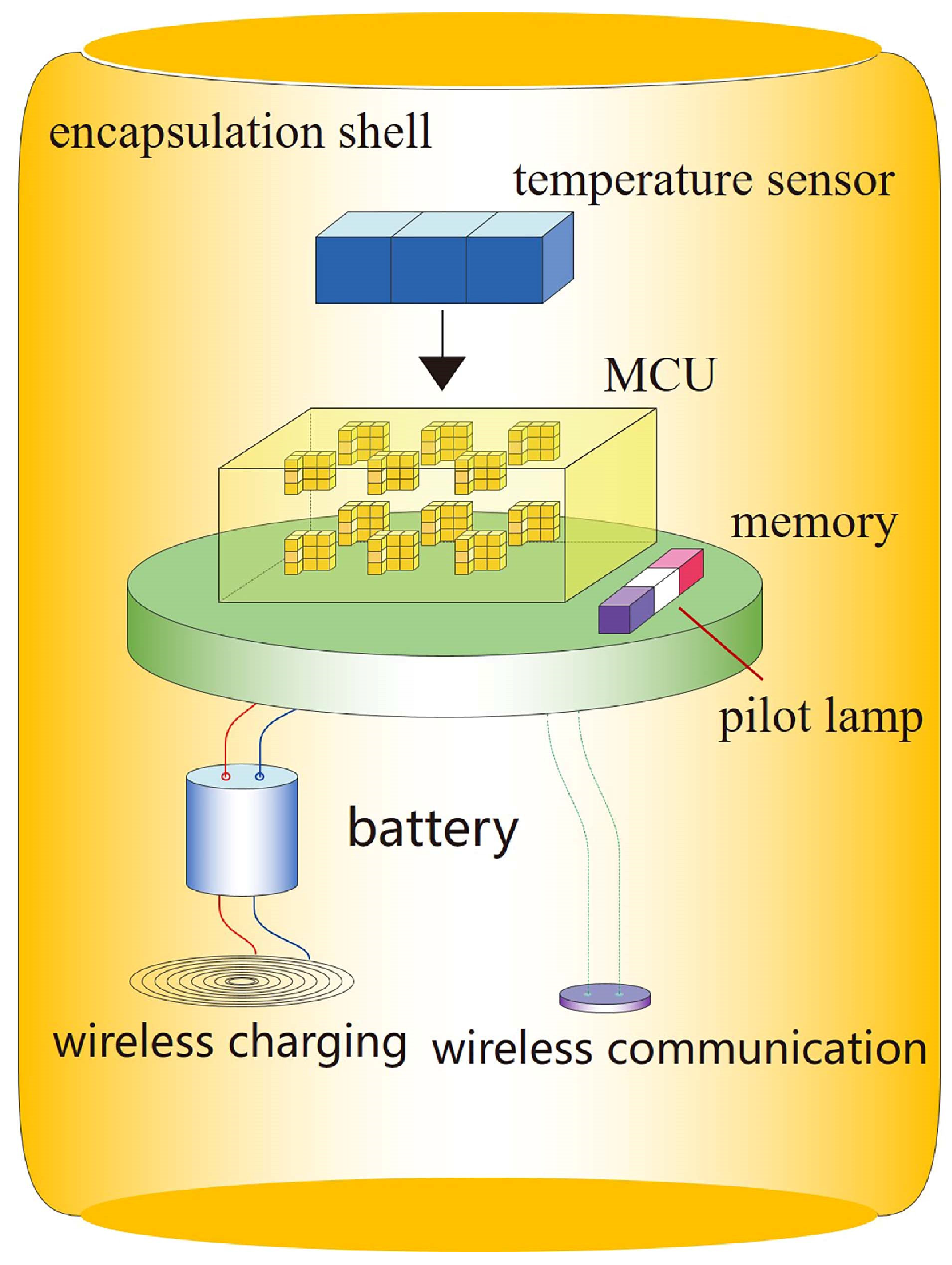
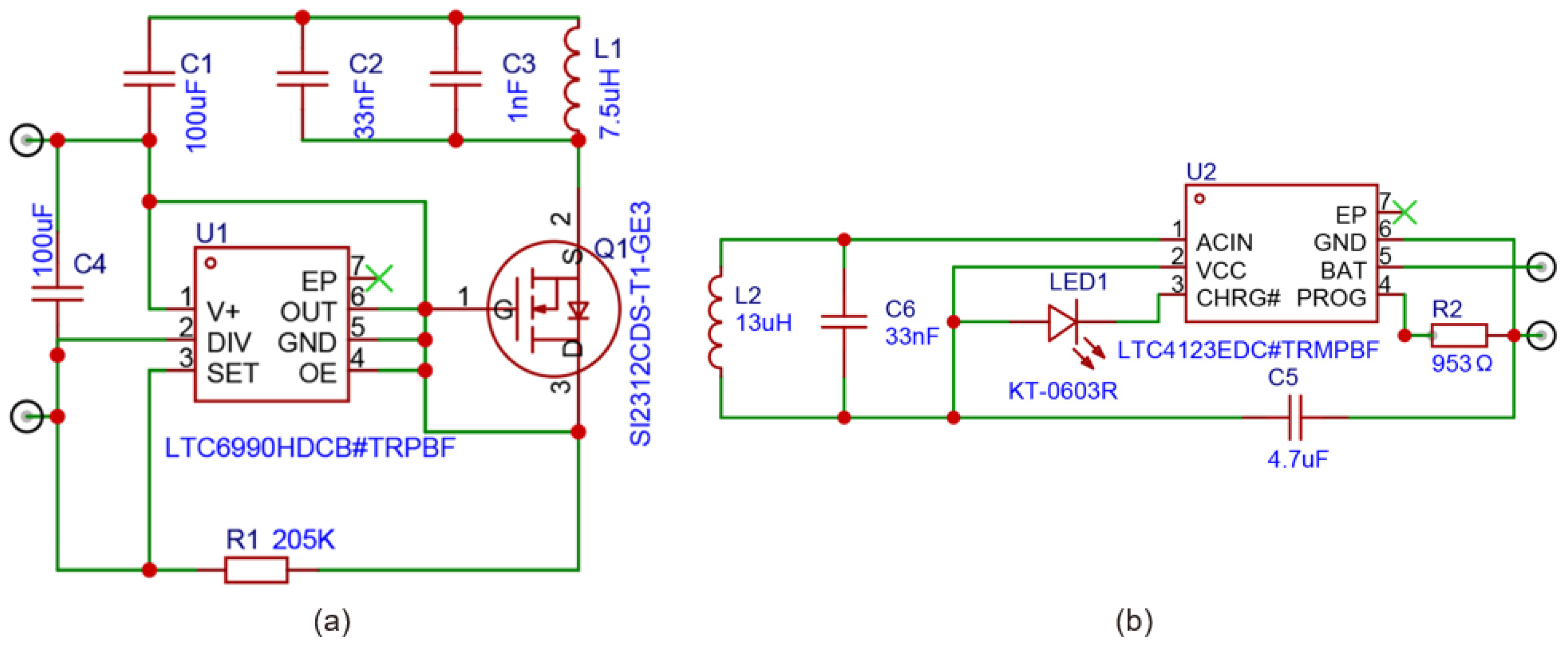
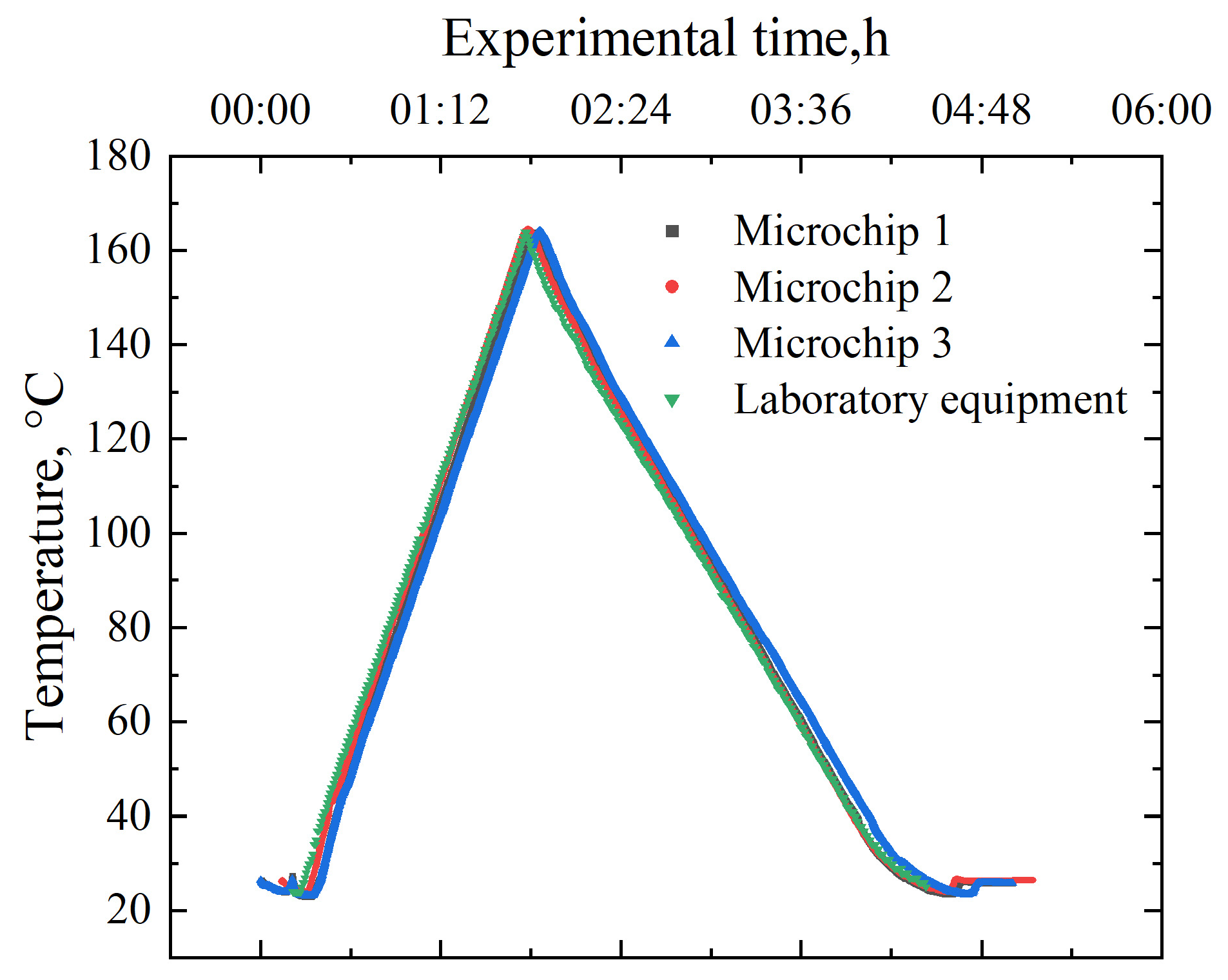
This paper, based on a new-generation microchip system, outlines key technological breakthroughs in power management, high-temperature resistance, and temperature sensing. Taking drilling fluid circulation as a case study, it systematically elaborates on the field testing method and workflow for monitoring wellbore temperature profiles. A temperature field model was established. This model was compared with representative transient temperature field numerical solution models and quasi-steady-state temperature field analytical models. Additionally, the microchip temperature measurement data were applied to the model improvement. Finally, the temperature evolution laws throughout the entire process, including bottomhole circulation, wellbore reaming, and microchip deployment, were analyzed. This approach provides high-precision empirical evidence and a foundation for model validation in the study of wellbore thermal dynamics during cyclic injection-production processes in underground energy storage systems.
3. Microchip Field Test—A Case Study of Drilling Fluid Circulation
This study conducted a downhole temperature measurement trial in the Ziyang area of the Sichuan Basin, China. Prior to the test, the bottomhole temperature was roughly calculated based on the well depth and operation parameters of the test well to ensure that the dynamic temperature did not exceed the microchips’ temperature measurement upper limit. The test was scheduled after drilling completion, the first wellbore clearout operation, and electric logging. During the second wellbore clearout, the bit was lowered to the planned depth (into the target formation) to deploy microchips for measuring the dynamic temperature of circulating drilling fluid. Prior to the test, the passability of the bottomhole assembly (BHA) used in wellbore clearout was verified, with specific focus on check valve clearances and bit nozzle dimensions.
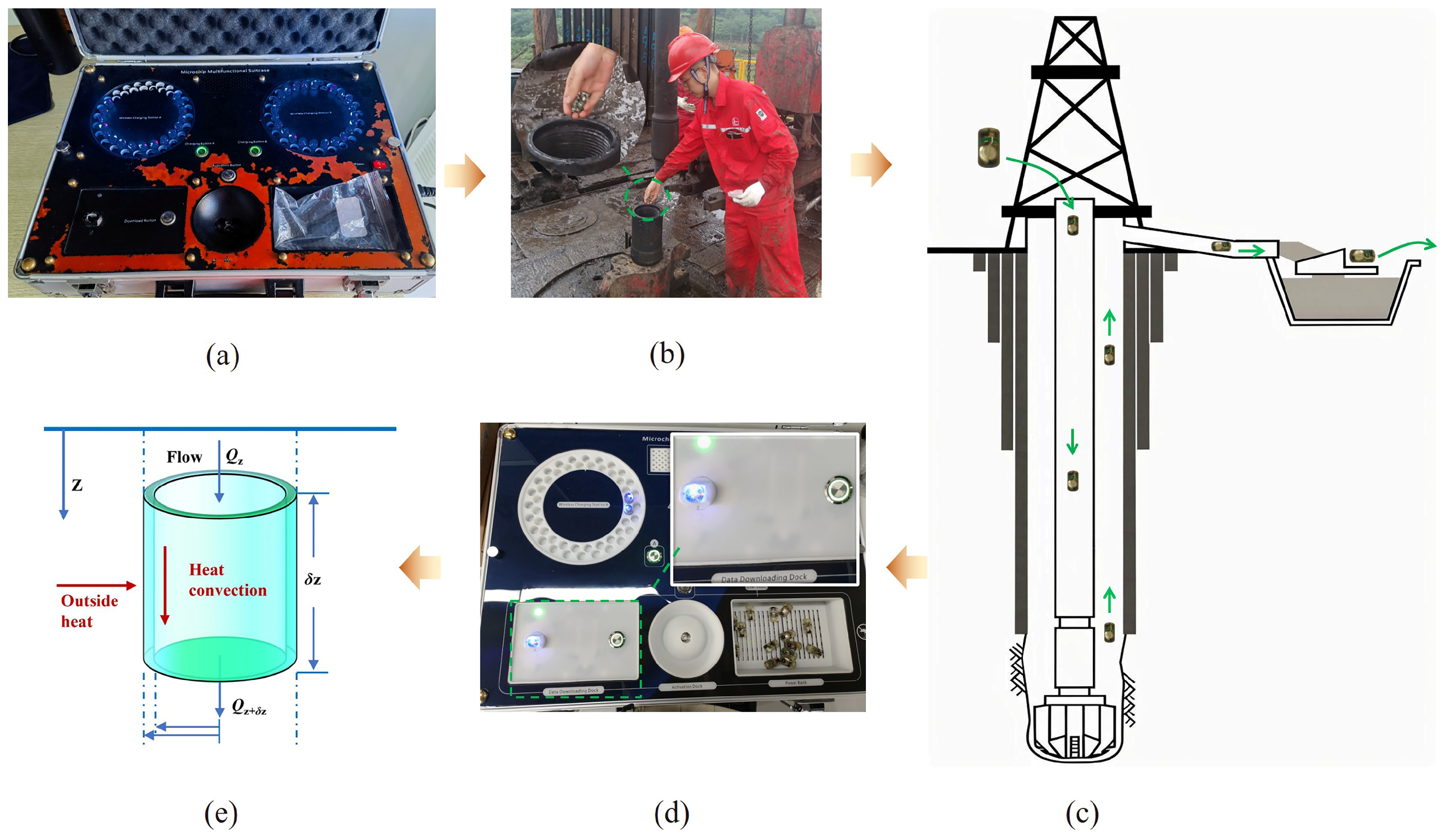
The operation commenced by disassembling a section of the drill string to deploy microchips into the wellbore. For large quantities of chips, batch release was employed. The flow time inside the pipe was calculated based on fluid velocity. Five minutes before the chips reached the bit, the drill pipe rotation speed was reduced to 10 rpm until the chips reached the bottomhole and passed through the deviated section via the annulus, after which the rotation speed was restored to the conventional value of 60 rpm. Reducing the rotation speed when passing through the bit minimized physical damage to the chips from the bit, while slowing the speed in the deviated section alleviated the risk of chips being squeezed into soft formations and failing to return. Twenty minutes after the chips entered the annulus through the bit nozzles, drilling fluid pumping was halted, the drill string was lowered by 100 m, and circulation was resumed to carry chips that had been washed away by the fluid and could not normally participate in the circulation. These technical measures helped further improve chip recovery rates. The test parameters are listed in
Table 2.
A total of four microchips (denoted as Microchips 1–4) were deployed in the field trial of this study to collect downhole temperature data. All four microchips are identical units of the aforementioned new-generation microchip, with consistent specifications and parameters across the board. The use of multiple identical microchips enables cross-validation of temperature data from multiple groups, thereby ensuring the reliability of the temperature measurement results.
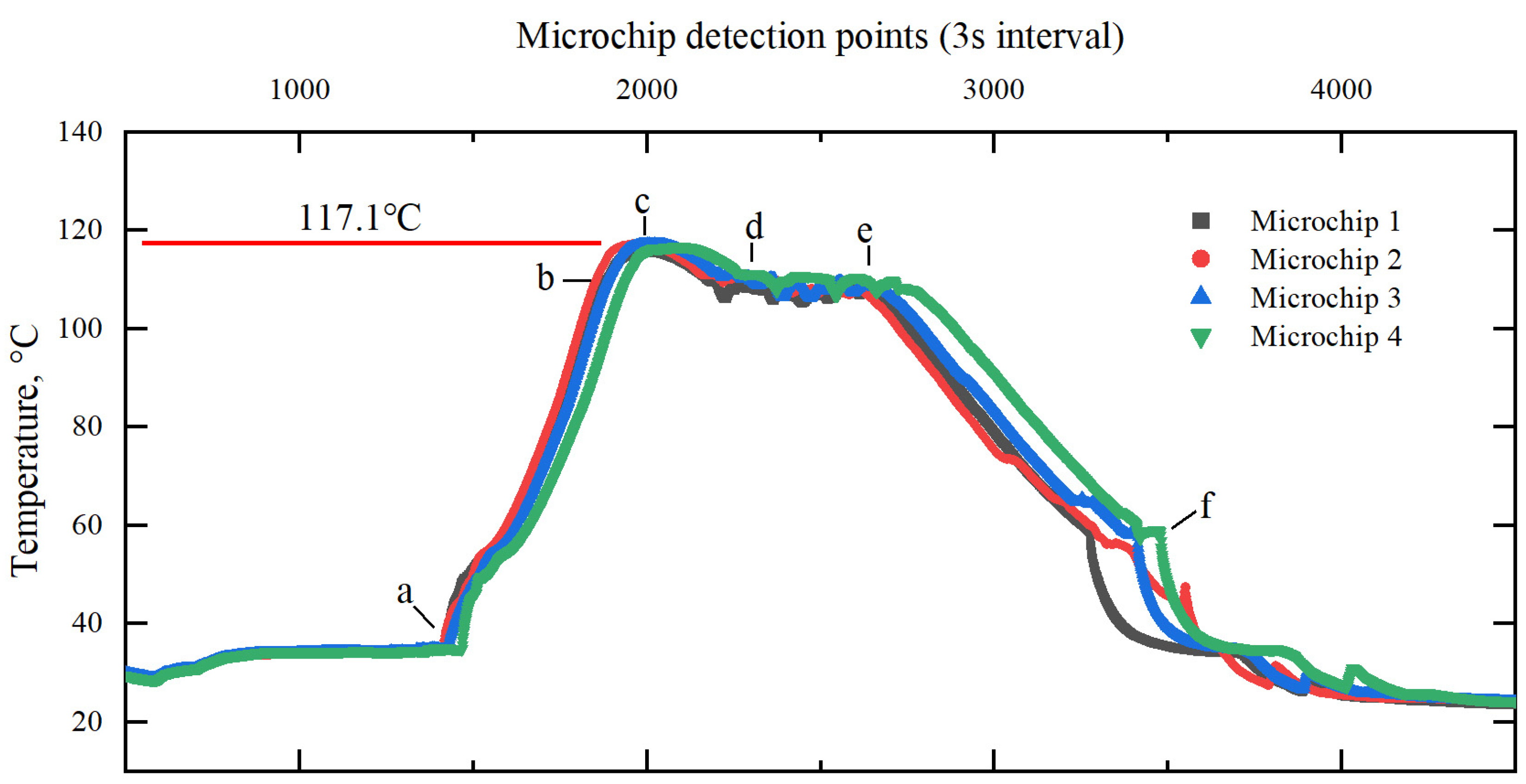
Figure 6 shows the temperature measurement data curves of four microchips. Point a in the figure denotes the initial temperature of measurement; Point b represents the bottomhole temperature; Point c indicates the hot spot temperature of the wellbore fluid; Point d corresponds to the temperature and time when drilling fluid pumping was stopped and the drill string began to be run in hole; Point e signifies the temperature when pumping resumed after the drill string was lowered by 100 m; and Point f stands for the temperature when the microchips were collected at the shale shaker. Before Point a, the microchips measured their internal temperature after activation, which is the surface ambient temperature. During the period from Point a to Point b, the temperature gradually increased to reach the bottomhole temperature, which is not the maximum circulating temperature. Studies have shown that the maximum fluid circulating temperature occurs in the annulus region, 1/10 to 1/6 of the total well depth above the bottomhole [
25], and the temperature rises slowly toward the hot spot. From Point b to Point c, the microchips rose with the annulus fluid, and the temperature increased gradually to reach the hot spot temperature. From Point c to Point d, the microchips continued to flow back upward, with the temperature decreasing gradually. During the period from Point d to Point e, fluid circulation in the wellbore ceased as the drill string was being lowered. From Point e to Point f, the microchips entered the annulus flowback phase. The entire process from Point a to Point f lasted approximately 90 min. Due to the low fluid velocity and the tortuous migration path of the microchips, their measurement duration in the annulus was extended, thereby achieving sufficient heat exchange and obtaining accurate temperature data. Aggregated data show an average maximum wellbore temperature of 117.1 °C, 32.1 °C lower than the original bottomhole formation temperature of 149.2 °C.
During the period from Point d to Point e, the processes of pumping cessation, three-stage lowering of the drill string to the deep wellbore, and subsequent resumption of pumping circulation were undergone. Corresponding to these operations, four data fluctuations were recorded in the temperature measurements by the microchips. This is because when the drill string was lowered after pumping stopped, the microchips were already located at a well depth far from the bottomhole. Once the drilling fluid circulation ceased, the fluid temperature decreased. However, during the lowering of the drill string, the drilling fluid with a higher temperature was displaced upward and flowed back. After several rounds of temperature reduction, the high-temperature drilling fluid continued to flow back upward, ultimately forming the temperature fluctuation curve between Point d and Point e.
4. Temperature Field Model Calculation Results
The microchip downhole temperature measurement technology enables real-time temperature measurement at any moment after deployment. However, temperature data obtained at different times cannot directly reveal the temperature distribution of drilling fluid at varying well depths inside and outside the drill pipe. Field tests often encounter various special conditions, requiring temporary changes to operational parameters during construction to ensure smooth execution. Additionally, chips generally do not flow straight upward in the annulus. For instance, in this test, to improve chip recovery, operations involved shutting down the pump for drill string lowering followed by resuming pump circulation, during which chips may have briefly sunk toward the wellbore bottom. Therefore, to more accurately characterize the fluid temperature distribution in the wellbore, it is necessary to analyze the evolution law of wellbore temperature within the entire well depth range using a wellbore temperature field model based on microchip test data. Notably, the change in the wellbore temperature field under static fluid conditions is difficult to obtain via measurement-while-drilling (MWD) technology—a limitation of previous microchip temperature measurement technologies—and this approach also helps to further improve the existing understanding of temperature field research.
4.1. Establishment of the Temperature Field Model
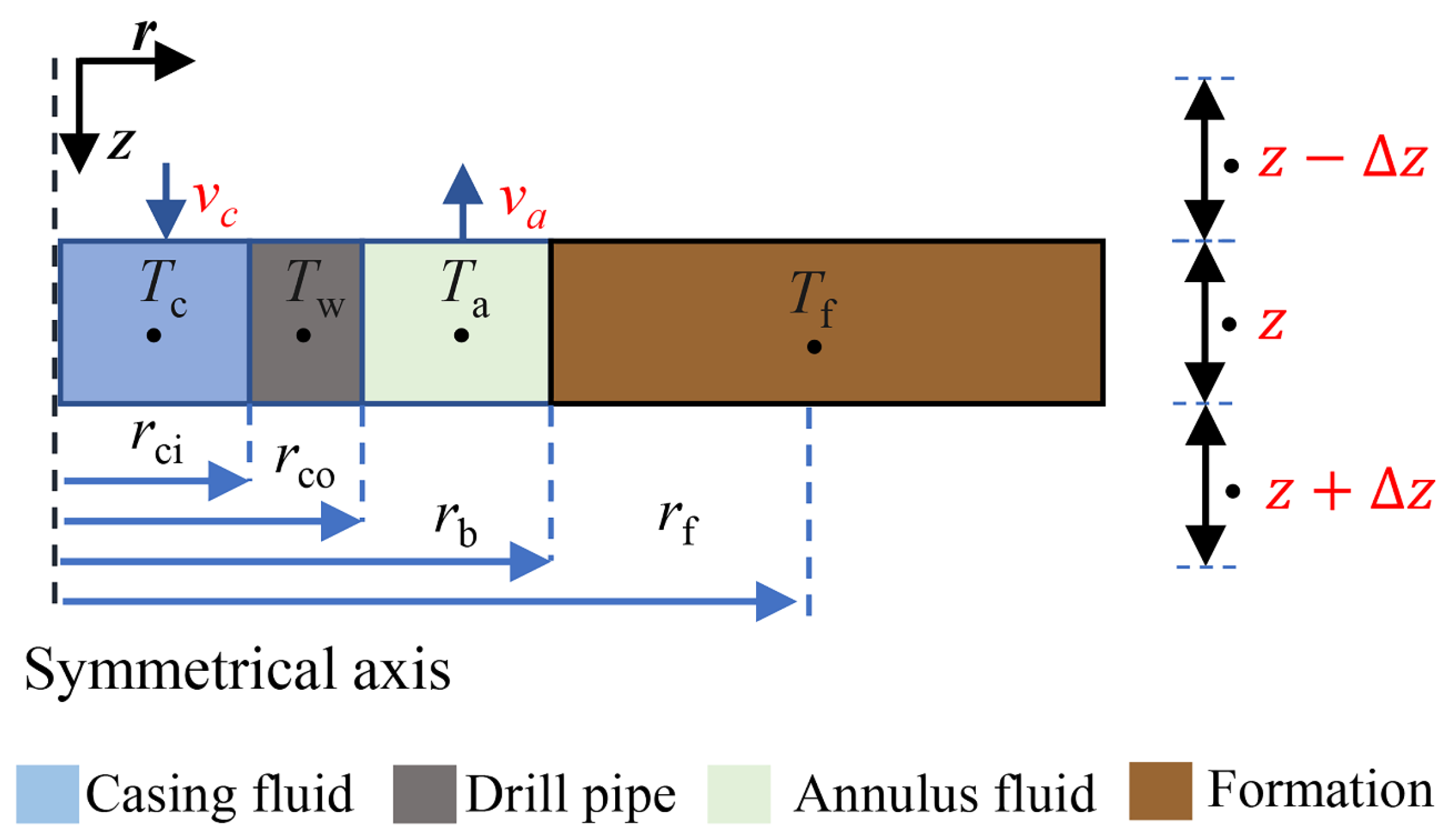
The physical structure of the wellbore is simplified into a two-dimensional axisymmetric geometric structure. The research system for the temperature fields of the wellbore and formation can be divided into four regions, as illustrated in
Figure 7. The first region is the tubing fluid with a temperature of
Tc; the second is the wellbore string (
Tw); the third is the annulus fluid (
Ta); and the fourth is the formation (
Tf). Coordinate z denotes the axial direction of the wellbore, r represents the radial direction, and t stands for time.
This study focuses primarily on the thermal energy of fluids, and the momentum and mass equations are simplified accordingly. It is assumed that the fluid velocity in the tubing and annulus is uniform, with uniform and constant density and thermophysical properties. Energy balance equations for the four regions are established separately.
Energy balance equation for tubing fluid:
On the left-hand side of Equation (1), it represents the heat accumulation of the fluid over time. The first term on the right-hand side denotes the advective heat transfer of the fluid, i.e., the rate of heat transfer downward along the flow in the tubing. The second term signifies the radial heat transfer between the drill pipe and the fluid in the form of thermal convection. The last term indicates the heat generated by the flow friction of the fluid inside the tubing. In the equation, denotes the density of the drilling fluid, represents the specific heat capacity of the drilling fluid, stands for the inner radius of the tubing, denotes the convective heat transfer coefficient between the fluid in the tubing and the inner wall of the wellbore string, and represents the heat source of the fluid in the tubing.
Energy balance equation for drill pipe string:
On the left-hand side of Equation (2), it represents the heat accumulation of the drill pipe string over time. The first term on the right-hand side denotes the heat transferred through radial thermal convection between the drill pipe string and the annulus fluid. The second term signifies the radial thermal convection between the drill pipe string and the tubing fluid. The last term indicates the heat transferred via axial heat conduction. In the equation, denotes the density of the drill pipe string, represents the specific heat capacity of the drill pipe string, stands for the outer radius of the drill pipe string, denotes the convective heat transfer coefficient between the annulus fluid and the outer wall of the drill pipe string, and represents the thermal conductivity of the drill pipe string.
Energy balance equation for annulus fluid:
On the left-hand side of Equation (3), it represents the heat accumulation of the annulus fluid over time. The first term on the right-hand side denotes the advective heat transfer of the fluid. The second term signifies the heat transferred through radial thermal convection between the wellbore wall and the annulus fluid. The third term indicates the radial thermal convection between the drill pipe string and the annulus fluid. The last term stands for the heat generated by the flow friction of the fluid inside the tubing. In the equation, denotes the wellbore radius, represents the convective heat transfer coefficient between the annulus fluid and the formation, and denotes the heat source of the annulus fluid.
Energy balance equation for formation:
On the left-hand side of Equation (4), it represents the heat accumulation of the formation over time. The first term on the right-hand side denotes the radial heat conduction in the formation, and the second term signifies the axial heat conduction in the formation. In the equation, denotes the distance from the axis of symmetry to the center of the formation control volume, and represents the thermal conductivity of the formation.
4.2. Application of Microchip Temperature Measurement Data in Temperature Field Models
The discretization of the system of equations into an algebraic system is performed. By combining the common initial and boundary conditions for wellbore temperature fields, numerical solutions are conducted for each subdivided unit, and the wellbore temperature distribution is thereby obtained [
26].
4.2.1. Operational Parameters for Model Calculation
It has been demonstrated that drilling operations conducted prior to the implementation of microchips within the wellbore can exert an influence on the accuracy of temperature measurement results. In the event that the wellbore undergoes an extended period of inactivity prior to microchip release, bottomhole temperature measurements will exceed actual values. Conversely, prolonged high-displacement circulation will result in lower-than-actual readings. In numerical calculations of temperature fields, initial conditions directly influence solution outcomes. Consequently, precise temperature field model calculations must encompass a comprehensive consideration of drilling procedures and operational parameters prior to microchip deployment, along with any alterations in operational conditions during the testing phase. To this end, variations in wellbore operational conditions before and after the test are tabulated in
Table 3, and the temperature field model was used to simulate the entire test process.
Thermophysical property tests, including density, thermal conductivity, and specific heat capacity, are shown in
Table 4. The thermophysical properties of drilling fluid were sampled and tested from the same well after completion. The thermophysical properties of rocks were obtained from reservoir rock samples taken from offset wells in the same block from the core library. Thermal properties of the string were taken as those of plain carbon steel. Rheological parameters of the drilling fluid are listed in
Table 2.
4.2.2. Comparative Analysis of Multiple Models
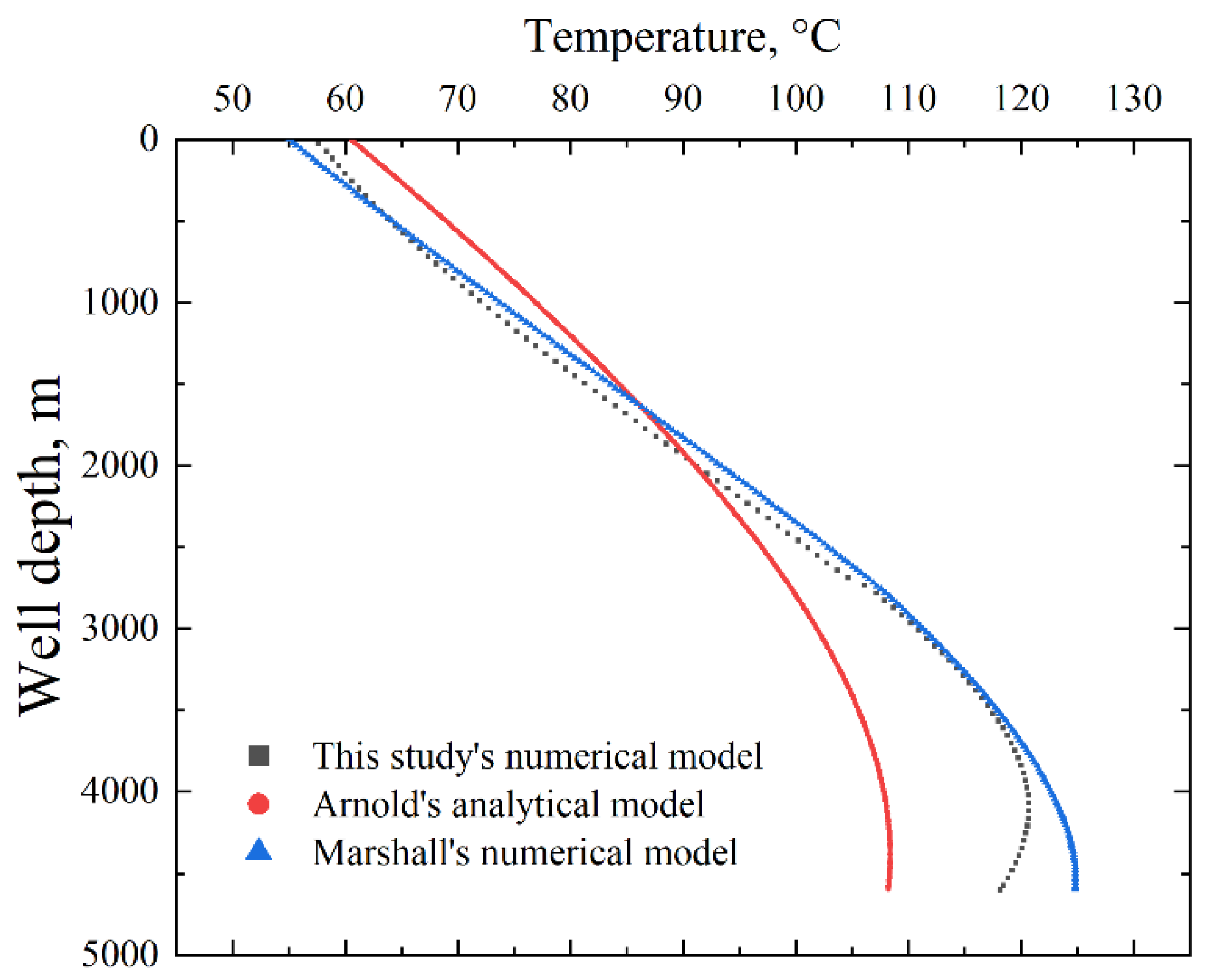
Wellbore temperature field models are mainly categorized into two types: transient temperature field numerical solution models and quasi-steady-state temperature field analytical solution models. Among these, the models proposed by Marshall and Arnold [
18] are the most representative. Using the same calculation condition parameters and thermophysical parameters, the model established in this study is compared with these two models, and the results are illustrated in
Figure 8.
As can be seen from the temperature distribution of the annulus drilling fluid calculated by different models in
Figure 8, the results obtained by the model proposed in this study fall between those of the two representative models, indicating certain reliability. The maximum bottom-hole circulating temperature calculated by the model in this study is 120.7 °C, while the numerical solution from Marshall’s transient model is 124.9 °C, and the analytical result from Arnold’s quasi-steady-state model is 108.4 °C. Additionally, the wellhead drilling fluid return temperature computed by the model in this study also lies between the values from the two comparative models, with the temperature being 57.6 °C for the proposed model, 55.0 °C for Marshall’s model, and 60.5 °C for Arnold’s model.
4.2.3. Improvement of the Temperature Field Model Using Microchip Temperature Measurement Values
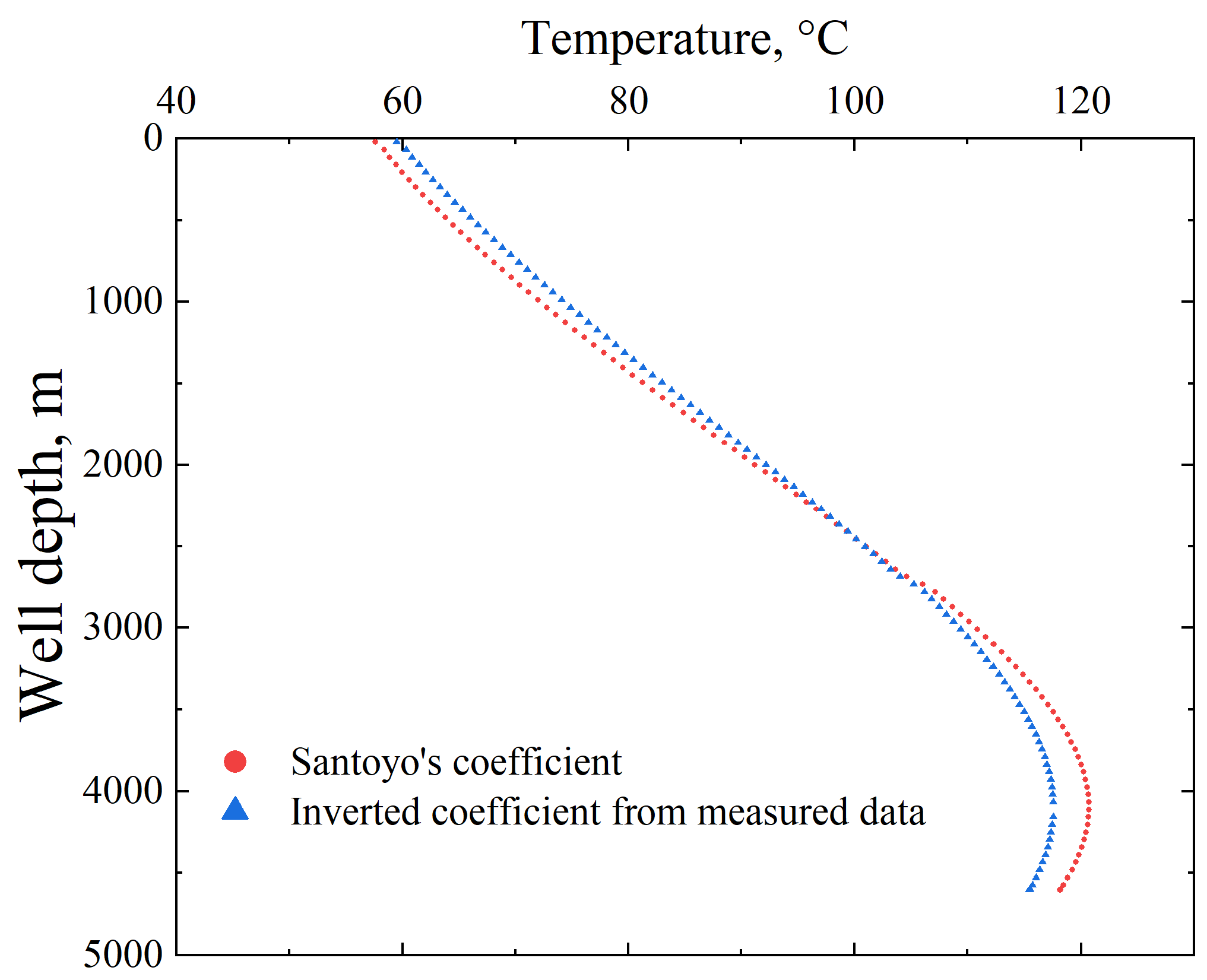
The maximum circulating temperature of the wellbore measured by the microchip is 117.1 °C, while the temperature calculated by the model proposed in this study is 120.7 °C, which is 3.6 °C higher than the measured value. The average outlet temperature measured by the temperature sensor installed at the wellhead is 60.7 °C, and the model-calculated temperature is 57.6 °C, approximately 3.1 °C lower. Through analysis, it is found that this type of temperature calculation error is mainly caused by the excessively high value of the convective heat transfer coefficient between the formation and the annulus fluid. The convective heat transfer coefficient adopted in this study’s model is based on the calculation method recommended by Santoyo [
27]. On this basis, combined with the actual microchip measurement values, the calculated value of the convective heat transfer coefficient between the formation and the annulus fluid is inverted and optimized, with the results illustrated in
Figure 9.
By comparing the temperature distributions calculated with the two types of convective heat transfer coefficients, it can be seen that after appropriately optimizing the convective heat transfer coefficient based on the actual measurement data from the microchip, the results calculated by the model are more consistent with the measured values. The maximum bottom-hole circulating temperature of the drilling fluid computed by the model decreases from 120.7 °C to 117.6 °C (measured value: 117.1 °C), and the wellhead return temperature increases from 57.6 °C to 59.4 °C (measured value: 60.7 °C), with the calculation error further reduced. Adopting this inverted convective heat transfer coefficient, the model in this study calculates the temperature field evolution of the entire process test.
4.3. Temperature Field Calculations for the Full-Process Test
To calculate bottomhole temperature using microchip test data and a temperature field model, reasonable initial conditions must be set. During logging and wellbore clearout, drilling fluid in the wellbore remained largely static except for occasional fluid circulation, with bottomhole drilling fluid completely unengaged in circulation. After 49 h of static conditions and heat exchange due to temperature differences, temperatures in all wellbore regions and surrounding formation rocks had essentially stabilized. Consequently, it is hypothesized that when the bit is operated to the planned test depth, the longitudinal temperature distribution in the wellbore and formation is consistent with that of the original formation, and there is no radial geothermal gradient. Model calculations based on these initial conditions will exhibit minimal errors [
28]. The full-process test procedure comprises three steps: first, bottomhole circulation; second, Wellbore reaming; third, microchip deployment, as referenced in
Table 3.
The wellbore temperature distributions for each stage are calculated sequentially according to the operation procedure. Initially, the temperature fluctuations subsequent to drilling fluid circulation are calculated. Subsequently, an analysis of temperature recovery during wellbore reaming, wherein the drilling fluid remains stationary, is conducted. Subsequently, the temperature variations within the wellbore post-microchip deployment are determined.
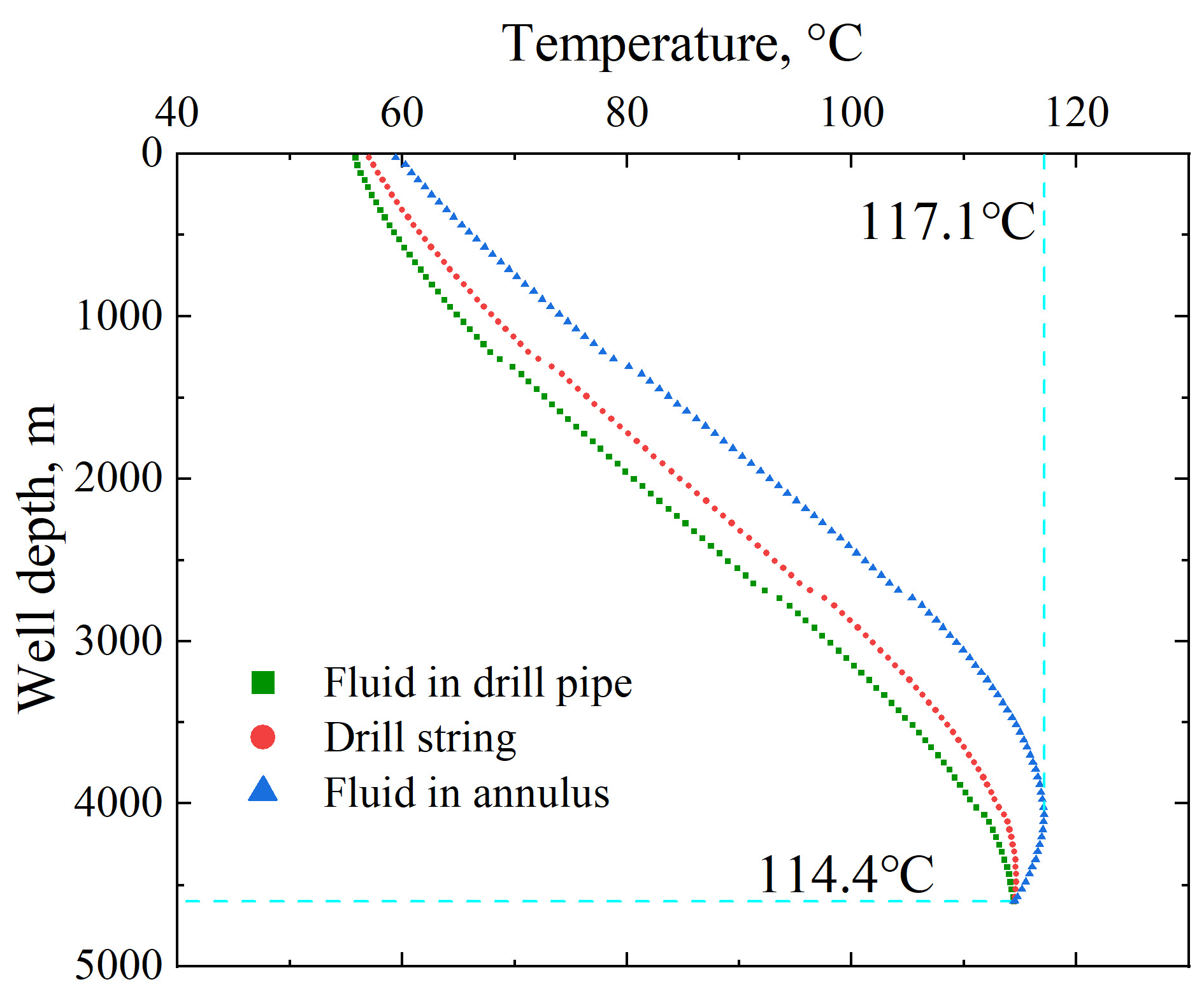
After reaming the wellbore to the bottomhole, circulation for sand cleaning was conducted at a displacement of 31.2 L/s for 2 h and 40 min. The calculated results of the wellbore temperature distribution are shown in
Figure 10. Wellbore temperature encompasses the fluid within the drill pipe, the drill string, and the annular fluid. In the radial direction, the annular fluid exhibits the highest temperature, followed by the drill string, with the lowest temperature observed in the internal pipe fluid. In the longitudinal direction, the model assumes equal temperatures for the three regions at the bottomhole; moving upward from the bottom, temperature differences gradually increase with decreasing well depth in the lower wellbore, then diminish again in the upper wellbore. At the end of drilling fluid circulation, the bottomhole temperature measures 114.4 °C, with a hotspot temperature of 117.1 °C occurring at a well depth of 4066 m.
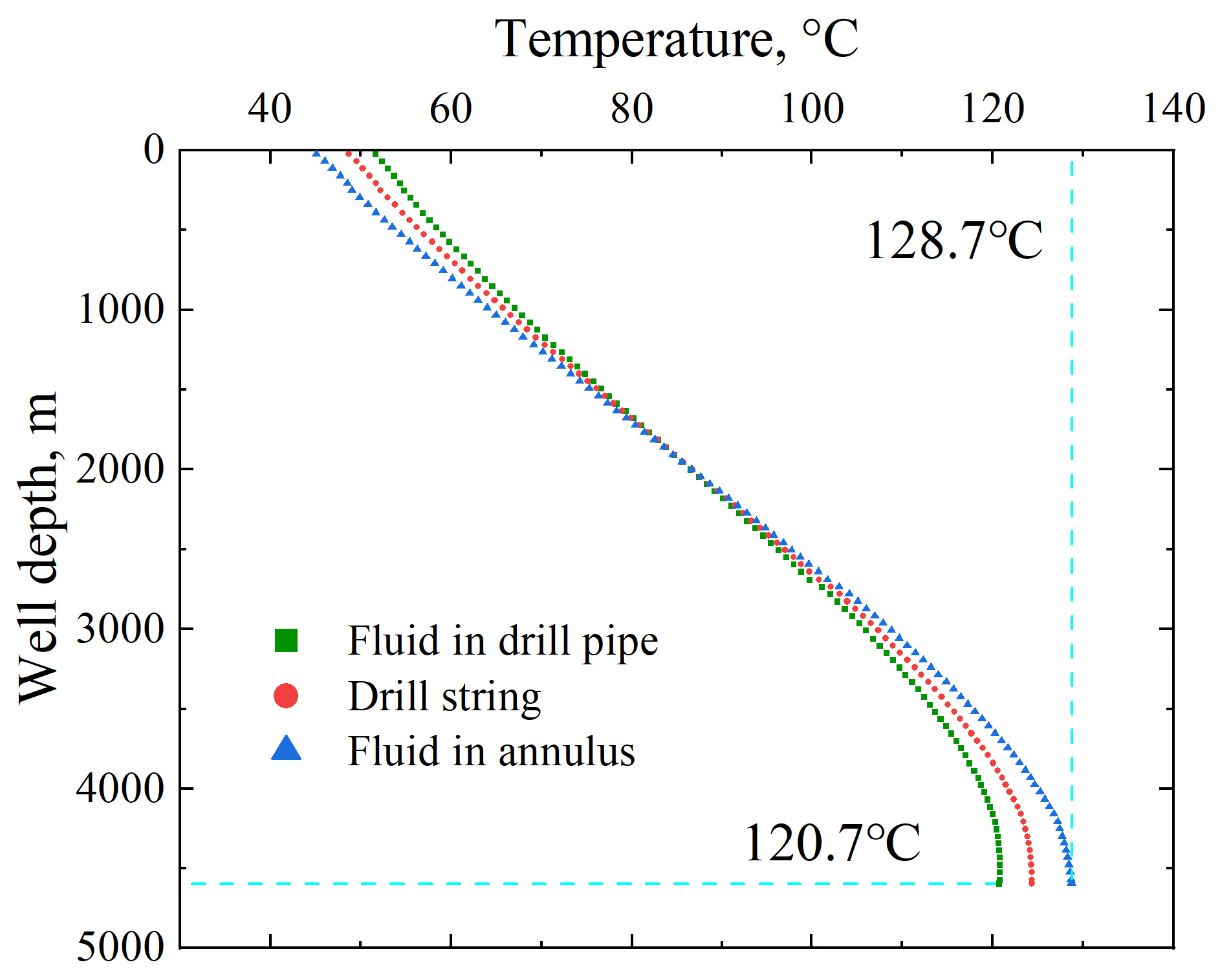
Subsequent to the cessation of circulation, the process of wellbore reaming persisted, accompanied by the maintenance of drilling fluid in a static state for a duration of two hours and 20 min. The calculations pertaining to the temperature changes within the wellbore are illustrated in
Figure 11. During the static period, the exchange of heat within the wellbore was predominantly governed by radial heat conduction, with axial heat conduction playing a supplementary role. The phenomenon of spontaneous heat transfer from high-temperature to low-temperature objects is driven by radial temperature differences. A comparison of
Figure 10 with
Figure 11 reveals that, in the longitudinal direction of well depth, the bottomhole exhibited an increase in temperature, the middle interval demonstrated negligible temperature fluctuations, and the wellhead experienced a decrease in temperature. At the bottomhole, the annular fluid, drill string, and fluid within the drill pipe exhibit a distinct temperature gradient.
During the stationary period, bottomhole temperature increased: the annular fluid rose from 117.1 °C to 128.7 °C (an increase of 11.6 °C), and the fluid within the drill pipe rose from 114.4 °C to 120.7 °C (an increase of 6.3 °C). Heat transfers from the formation to the annular fluid, which then conducts heat to the drill string and internal pipe fluid—hence the differential temperature increases. With an annual average surface temperature of approximately 17 °C in the Sichuan Basin, once drilling fluid circulation stops, the wellhead temperature rapidly cools: annular fluid temperature is quickly cooled by the formation, decreasing from 59.4 °C to 45.1 °C (a decrease of 14.3 °C).
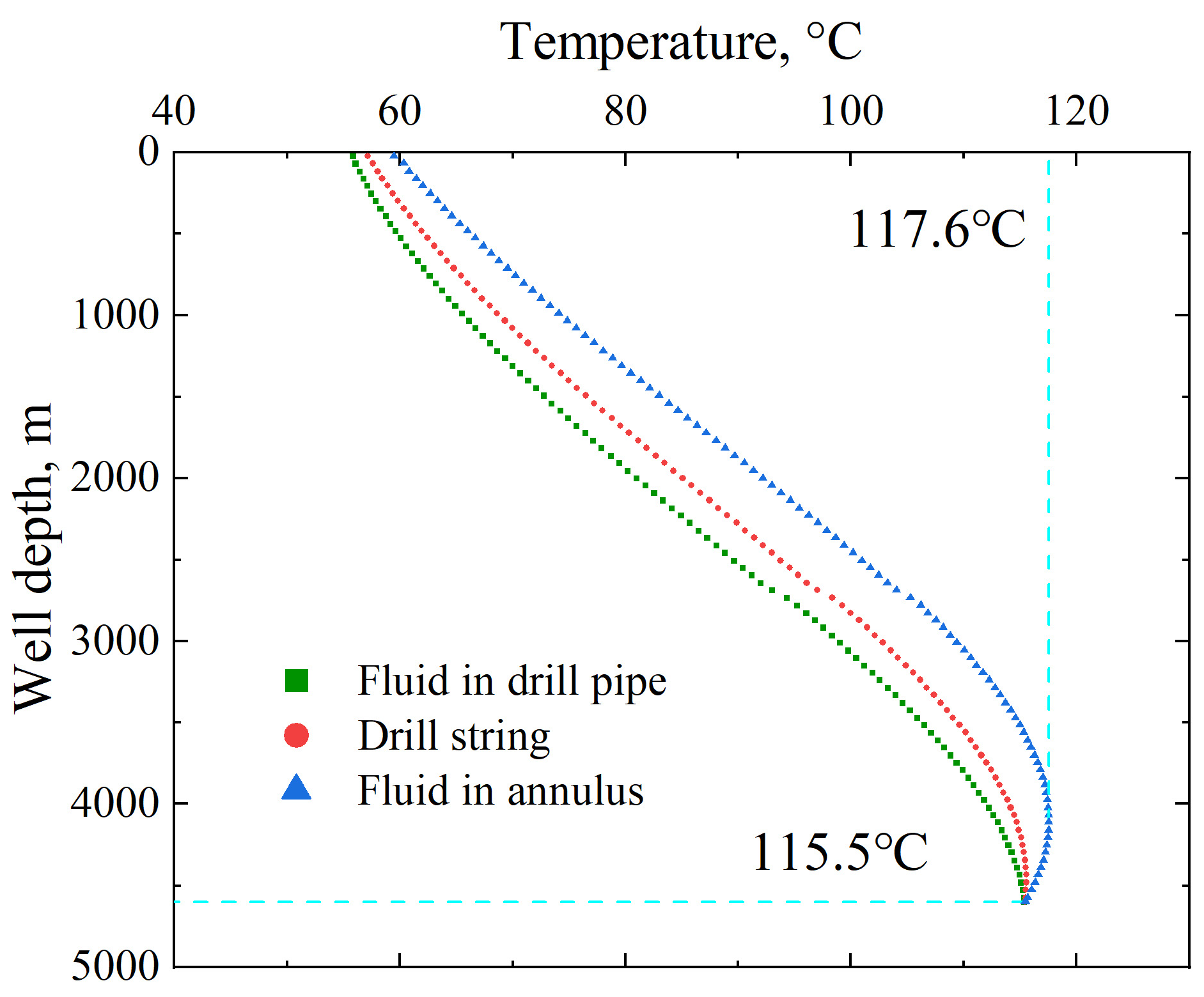
After deploying the microchips into the wellbore, as drilling fluid circulated at a flow rate of 35.8 L/s for 1 h and 30 min, temperature values at different times were recorded. Using the model, the wellbore temperature distribution during the microchip test was calculated, as shown in
Figure 12. The model predicted a bottomhole circulation temperature of 115.5 °C, a hotspot temperature of 117.6 °C, and a corresponding well depth of approximately 4112 m. The model results differ from the measured values (
Figure 6) by only 0.5 °C, indicating good reliability of the computational outcomes. After circulation, the bottomhole temperature decreased significantly: the annular bottomhole temperature dropped from 128.7 °C to 115.5 °C, a decrease of 13.2 °C.





 ,
,