1. Introduction
In recent years, bolted connections have been widely employed in major engineering projects by virtue of their clear force-transfer paths and ease of installation and disassembly. However, preload attenuation tends to occur gradually at the bolt interface during service due to the combined effects of dynamic loading, environmental corrosion, and stress relaxation. Additional challenges include mechanical damage to anti-corrosion coating from repeated assembly/disassembly, vibration-induced self-loosening phenomena, and preload distribution non-uniformity from installation deviations. At the same time, modern engineering structures are developing towards super-large scale and ultra-high complexity, and their internal damage evolution process shows the characteristics of multi-scale and multi-physical field coupling. Traditional visual inspection and some conventional detection methods, such as laser scanning [
1], optical fiber sensing [
2], electromagnetic acoustic monitoring [
3], and radar detection [
4], struggle to meet safety management requirements. Moreover, these traditional non-destructive evaluation techniques demand expensive, sophisticated hardware and highly trained, specialized operators. Thus, the development of structural health monitoring system based on intelligent sensor technology is particularly important.
Electro-mechanical impedance (EMI) technology, which was developed in the mid-1990s [
5,
6], is a typical application of smart materials in the field of damage detection. The principle of piezoelectric impedance technique makes use of the electro-mechanical coupling characteristics of piezoelectric materials. When an alternating voltage is applied to a Lead Zirconate Titanate (PZT) patch surface-bonded [
7,
8] or embedded to a structure [
9,
10,
11,
12], the direct piezoelectric effect of piezoelectric materials will stimulate the mechanical vibration of the structure. Meanwhile, the vibration generates corresponding electrical response in the piezoelectric patch through the inverse piezoelectric effect, manifesting as measurable impedance variations. This change reflects the mechanical impedance characteristics of the structure and also contains damage information. By comparing the electrical impedance spectra before and after the appearance of damage, the damage inside the structure can be effectively identified and diagnosed [
13]. Furthermore, the EMI technique offers several well-documented advantages [
7,
8], including high sensitivity to minor damage, cost-effective transducers, and straightforward signal processing. Meanwhile, due to the inherent electro-mechanical coupling characteristics, the piezoelectric transducers display an obvious distance-dependent sensitivity gradient to the failure location [
14]. In other words, the EM admittance obtained from the PZT patches closer to failure positions exhibit significantly higher sensitivity to equivalent failure levels compared to those farther away. By utilizing this characteristic, the correlation between piezoelectric patch locations and failure positions can be systematically established. However, it is extremely challenging to directly use EMI spectroscopy for identifying the severity and location of bolt loosening. Therefore, numerous researchers have adopted a hybrid method that integrates the EMI technique with various damage indices, such as root mean square deviation (RMSD) [
15,
16,
17,
18,
19,
20] and Correlation Coefficient (CC) [
21,
22,
23] to detect structural damage.
Due to its particular advantages, the EMI-based damage detection method has been extensively employed for monitoring bolted connection integrity in structural health monitoring (SHM). For instance, Huynh et al. [
24] investigated the sensitivity of a piezoelectric-based smart interface device to structural damage in a bolted connection through experimental and numerical analysis. Xu et al. [
25] employed the EMI technique with back propagation neural networks to monitor looseness in bolted spherical joints. Wang et al. [
26] achieved synchronous identification of bolt loosening location and severity by fusing EMI signatures in multiple frequency ranges. For multi-bolt scenarios, Zhou et al. [
27] established a hybrid model using EMI and graph convolutional networks for real-time monitoring. Additionally, Yu et al. [
28] proposed a novel method for bolt looseness monitoring utilizing the EMI transmissibility technique.
All the aforementioned studies were based on conventional drive-point EMI signatures measured by a single piezoelectric transducer, and they have achieved favorable damage identification results. Nevertheless, the drive-point EMI technique still has the following limitations. First, its signal response primarily stems from the electro-mechanical coupling effect of a single piezoelectric transducer, and its sensitive region is highly concentrated in the local area where the transducer is directly bonded. Second, drive-point admittance cannot distinguish whether the damage or defect is on the left or right side of a specific transducer, leading to ambiguous localization results. Meanwhile, drive-point admittance signatures are extremely sensitive to external factors, such as changes in structural boundary conditions, which significantly affect the admittance signatures [
29]. In contrast, the cross-admittance technique precisely overcomes the aforementioned shortcomings by measuring the mechanical impedance along the path between two piezoelectric transducers. If a defect is located along this path, it will directly and significantly alter the signal transmission characteristics, resulting in a remarkably obvious change in response. Additionally, by analyzing the damage indices of different transducer pairs, the severity and position of bolt loosening can be easily and accurately identified. It is noted that Meher et al. [
30] applied the cross EMI technique combined with artificial neural network systems to investigate the looseness detection of bolted joints, achieving highly effective detection results. However, in practical engineering applications, artificial neural networks suffer from certain drawbacks, such as the extreme difficulty and high cost associated with obtaining data from structures in damaged states, as well as their “black-box” characteristics and poor interpretability.
The main contribution of the present work lies in developing a novel cross-admittance-based bolt loosening detection approach from both the experimental measurements and FEM simulations using a distributed piezoelectric array [
31,
32,
33,
34]. Furthermore, to assess the capabilities of bolt loosening identification, a comparative study was performed between conventional drive-point admittance signatures and the newly developed cross-admittance methodology. The evaluation relies on the RMSD damage index, which not only enables the quantification of association strength between structural states but also exhibits the merits of straightforward computation and interpretable outcomes. The cross EMI signature was measured from a pair of parallel connection piezoelectric patches, and hence it accurately reflects the local mechanical impedance characteristics between the two piezoelectric wafers. In other words, the core advantage of the present damage identification method is the combination of local mechanical responses and distributed electrical measurements.
2. Theoretical Background
The drive-point EM admittance method has been widely applied in various engineering fields. However, research on the EMI technique based on cross-admittance signatures remains very limited [
35,
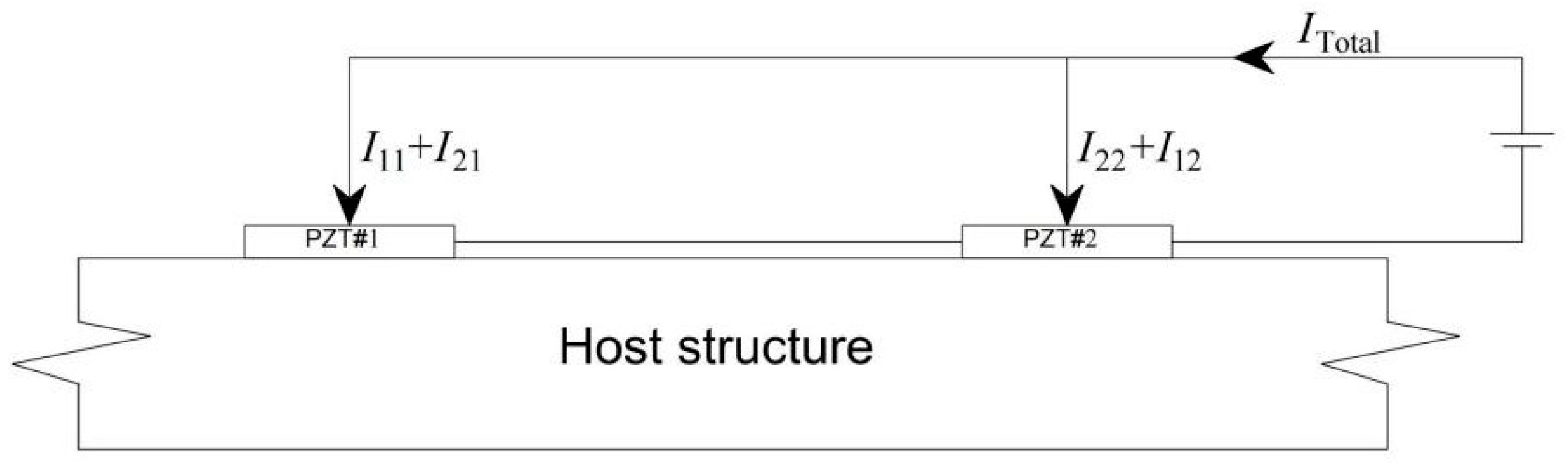
36]. The principle of cross-admittance is illustrated in
Figure 1. Two piezoelectric patches (PZT 1 and PZT 2) bonded on the host structure are connected in parallel, forming a closed-loop system. The drive-point EMI signals are then measured individually from each of the two transducers. Finally, the cross EMI response is calculated by proper circuit analysis. This configuration can more accurately reflect the local dynamic characteristics of the monitored structure and thereby better understand the overall health state of the structure. Cross-admittance enhances detection sensitivity, improves noise immunity, and enables effective identification and localization of bolt loosening. Theoretically, the ratio of the current flowing through PZT 2 to the voltage applied to PZT 1 is defined as the cross-admittance
Y12, and vice versa. From the perspective of testing, PZT 1 and PZT 2 are first connected in parallel. An electric voltage
V is then applied as excitation, and the total current is measured as the sum of the individual branch currents:
in which
Iij (
i,
j = 1, 2) represents the current generated on the
i-th PZT due to the voltage applied to the
j-th PZT. The group electrical admittance is defined as the ratio of the total output current
ITotal to the input voltage
V:
where
Y11 and
Y22 represent the drive-point admittance of PZT 1 and 2, respectively. Because
Y12 and
Y21 are equal [
35,
36], the cross-admittance between the two PZTs can be determined as follows:
During the experiment, an impedance analyzer was used to measure both the individual drive-point admittance of each piezoelectric patch and the group admittance Y from the two PZTs connected in parallel. Using Equation (3), the cross-admittance Y12 and Y21 could then be calculated.
A statistical damage index was then used to quantify the extent and location of bolt loosening. However, its direct application to raw conductance data led to biased outcomes due to minor inherent differences among PZTs and environmental variations like temperature fluctuations over different tests. To mitigate this issue, the conductance data were first preprocessed using
Z-score normalization before we calculated the statistical damage indices [
37]. The
Z-score normalization formula is given by the following:
where
is the original conductance data,
represents the average value of conductance data
,
is the standard deviation of conductance data, and
is the normalized conductance data after standardization. In this paper, the root mean square deviation (RMSD) damage index [
38] was employed, which is one of the most commonly used quantitative evaluation indices for damage identification based on EMI technology. Its mathematical expression is as follows:
where
and
represent the two sets of data values after
Z-score standardization under the undamaged and damaged states, respectively. A larger RMSD value indicates a greater deviation from the baseline (undamaged state), which is interpreted as a more significant change in the structural integrity, often correlating with the extent of bolt loosening. The RMSD magnitude provides a direct metric for quantitatively assessing the severity of bolt loosening. Furthermore, due to the localized sensitivity of piezoelectric sensors, damage occurring near a PZT patch induces more significant changes in the measured admittance, resulting in obviously higher RMSD values for that specific sensor. Thus, the localization of bolt loosening can be accurately determined through comparative analysis of RMSD distributions using multiple PZT patches.
3. Comparison with Conventional Drive-Point EM Admittance
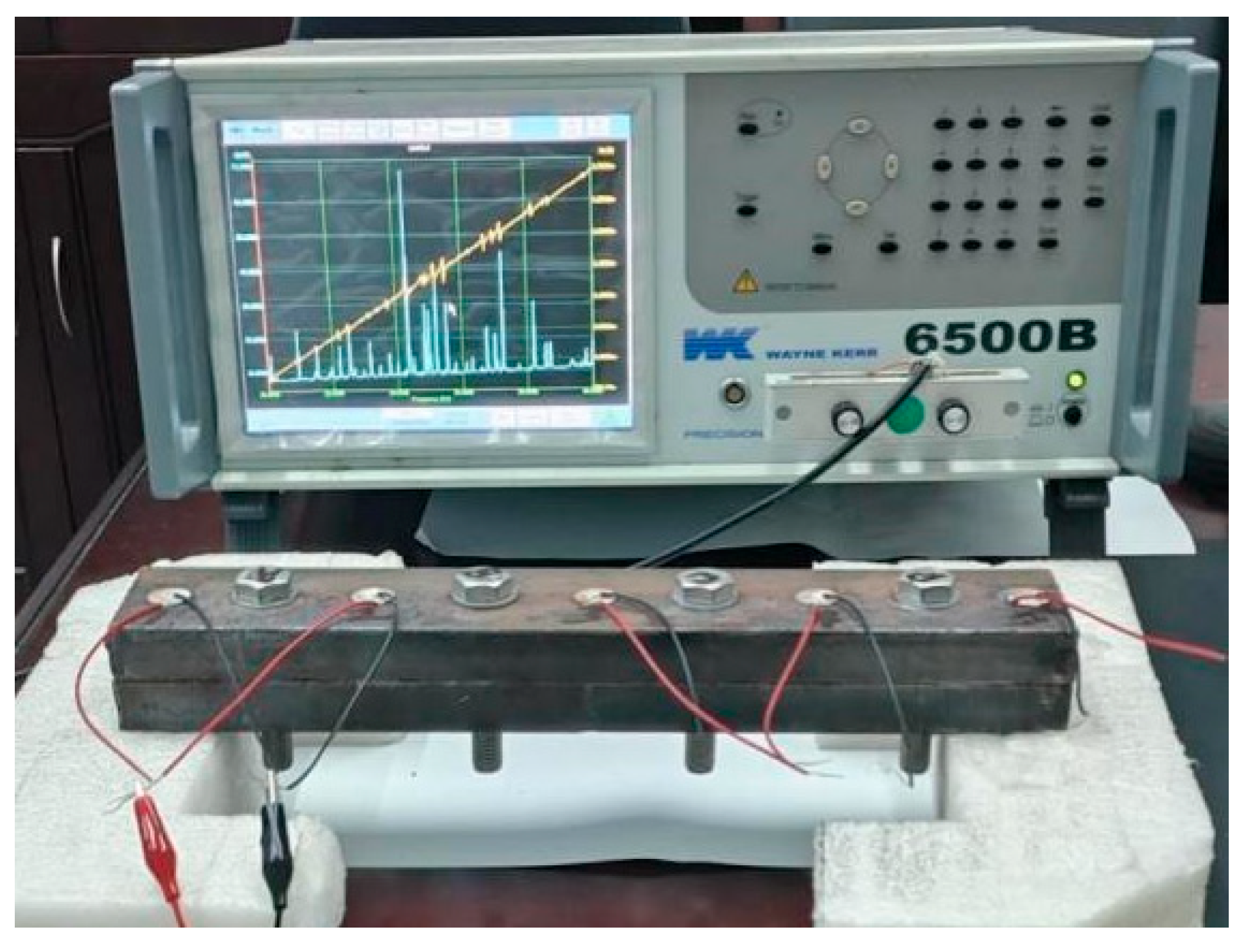
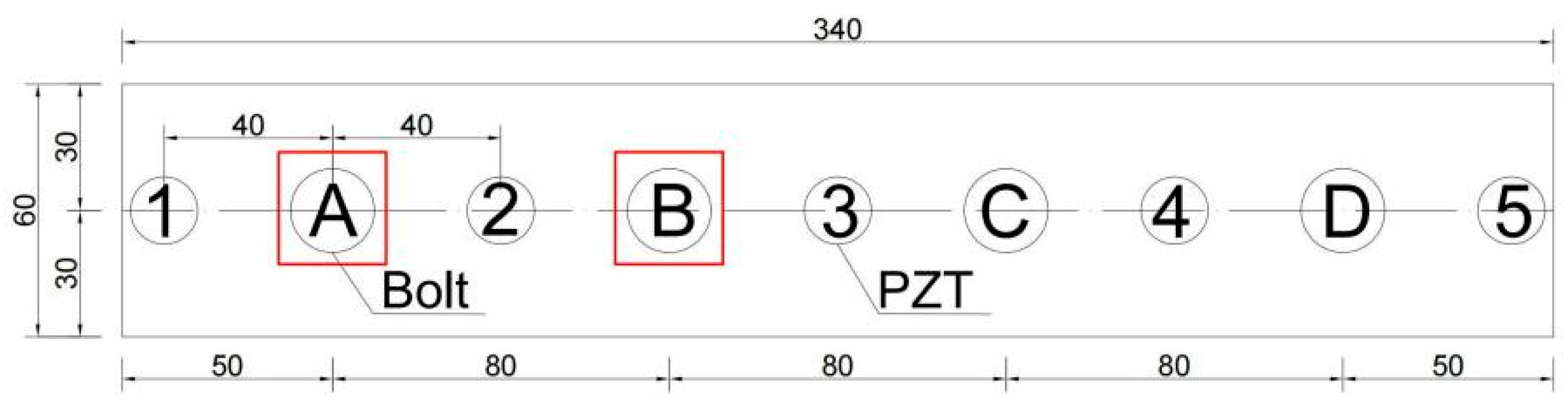
For the purpose of a comparison study, a preliminary experimental study on bolt loosening detection was conducted using the drive-point admittance method. The specimen is a steel bar-type connector with dimensions of 340 mm × 60 mm × 40 mm, assembled by two identical components using multiple bolts, as shown in
Figure 2. Five circular piezoelectric (PZT) patches (Model HNYA16-0.41-1, Suzhou Pante Electronic Ceramics Technologies Co., Ltd., Suzhou, China) with 15 mm diameter and 0.3 mm thickness were symmetrically bonded along the longitudinal centerline of the specimen using 502 super glue (Ningbo Deli Group Co., Ltd., Ningbo, China). It should be noted that a 24-h curing period is required for the transducer bonded with adhesive prior to testing to prevent data drift. Each PZT was spaced 40 mm from the center of adjacent bolts (labeled as A, B, C, and D, respectively), with the sensors sequentially numbered 1 to 5 based on their installation positions (see
Figure 3; all geometric dimensions in mm). To minimize external interference from boundary conditions, the specimen was suspended on low-density foam boards [
39]. The bolt torque was adjusted and monitored using a torque wrench equipped with a digital display, thereby ensuring precise control. First, all bolts (A–D) were uniformly tightened to 65 Nm as the baseline condition (no loosening). The drive-point admittance of each individual PZT (No. 1 to 5) was measured using an impedance analyzer WK6500B (Wayne Kerr Electronics, Shenzhen, China). Then, only Bolt A’s torque was adjusted to 45 Nm and while the torque of the other bolts remained invariable to simulate slight loosening state. The drive-point admittance measurements were repeated for all PZTs. Afterward, Bolt A was fully loosened (0 Nm torque), and the drive-point admittance data for all PZT patches were measured again. Finally, the entire experimental procedure was repeated. This time, only Bolt B was adjusted to different torque states while the torque states of other bolts were kept at 65 Nm.
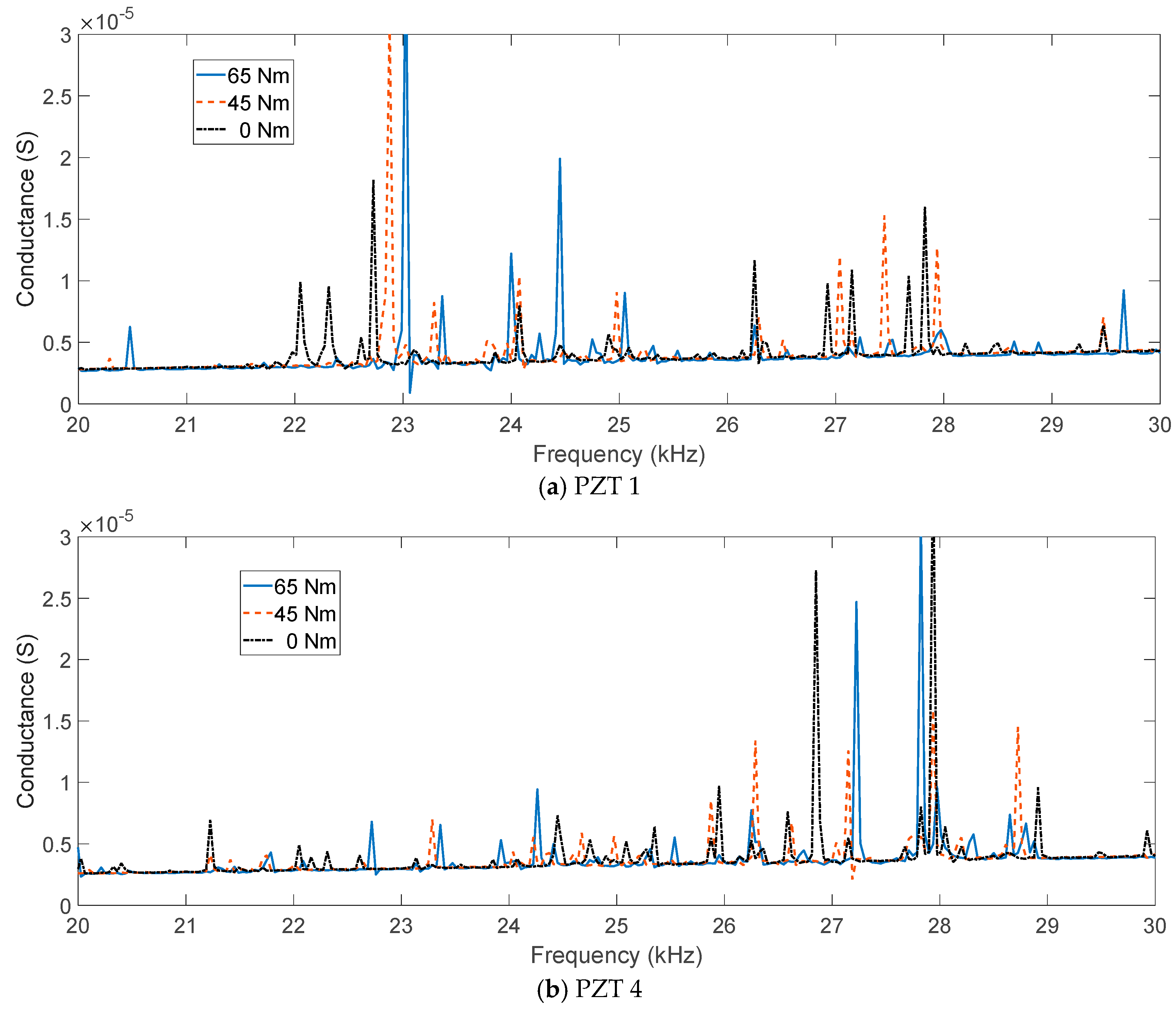
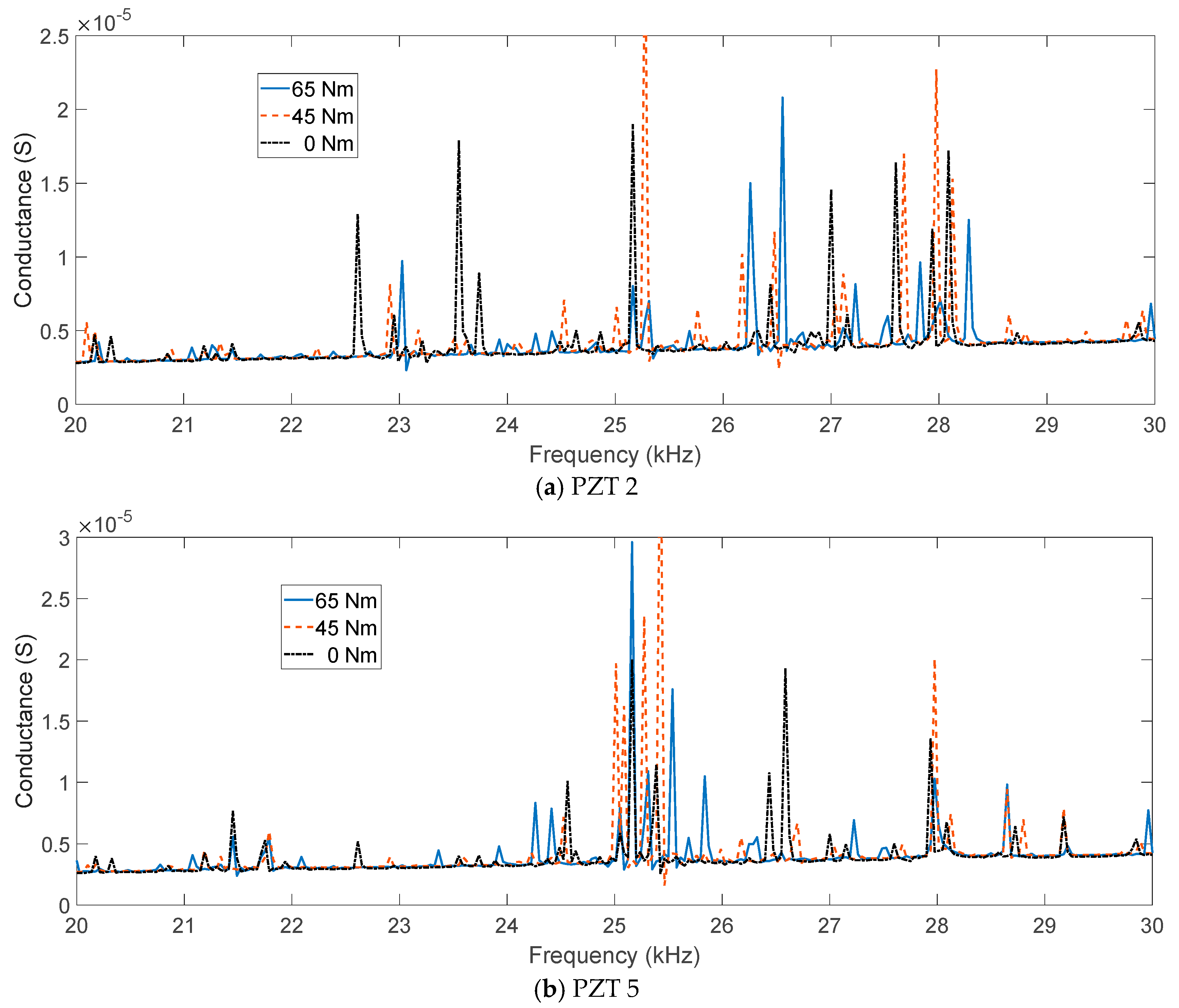
It can be seen from
Figure 4 and
Figure 5 that the conductance curves shifted significantly due to the occurrence and deepening of bolt looseness. It should be noted that only partial conductance curves are displayed in
Figure 4 and
Figure 5 for the sake of brevity. The underlying mechanism for this phenomenon primarily relates to alterations in the structure’s stiffness and damping properties, which are subsequently reflected in its dynamic response. However, changes in the conductance curve alone do not directly correlate with the extent of bolt loosening and merely indicate an alteration in the bolt’s state. Thus, an RMSD damage index integrated with the normalized drive-point admittance data was employed to determine both the degree and specific location of bolt loosening.
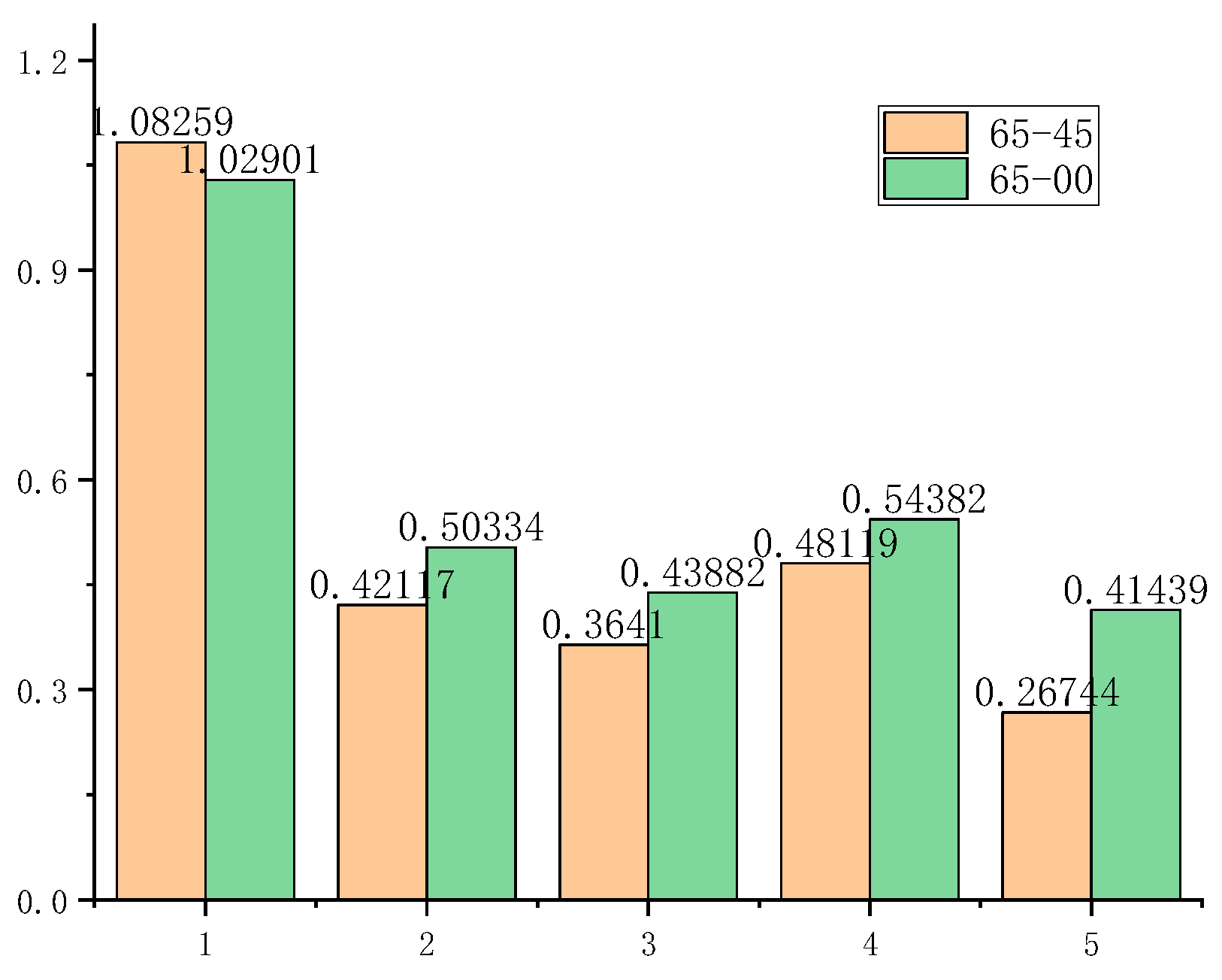
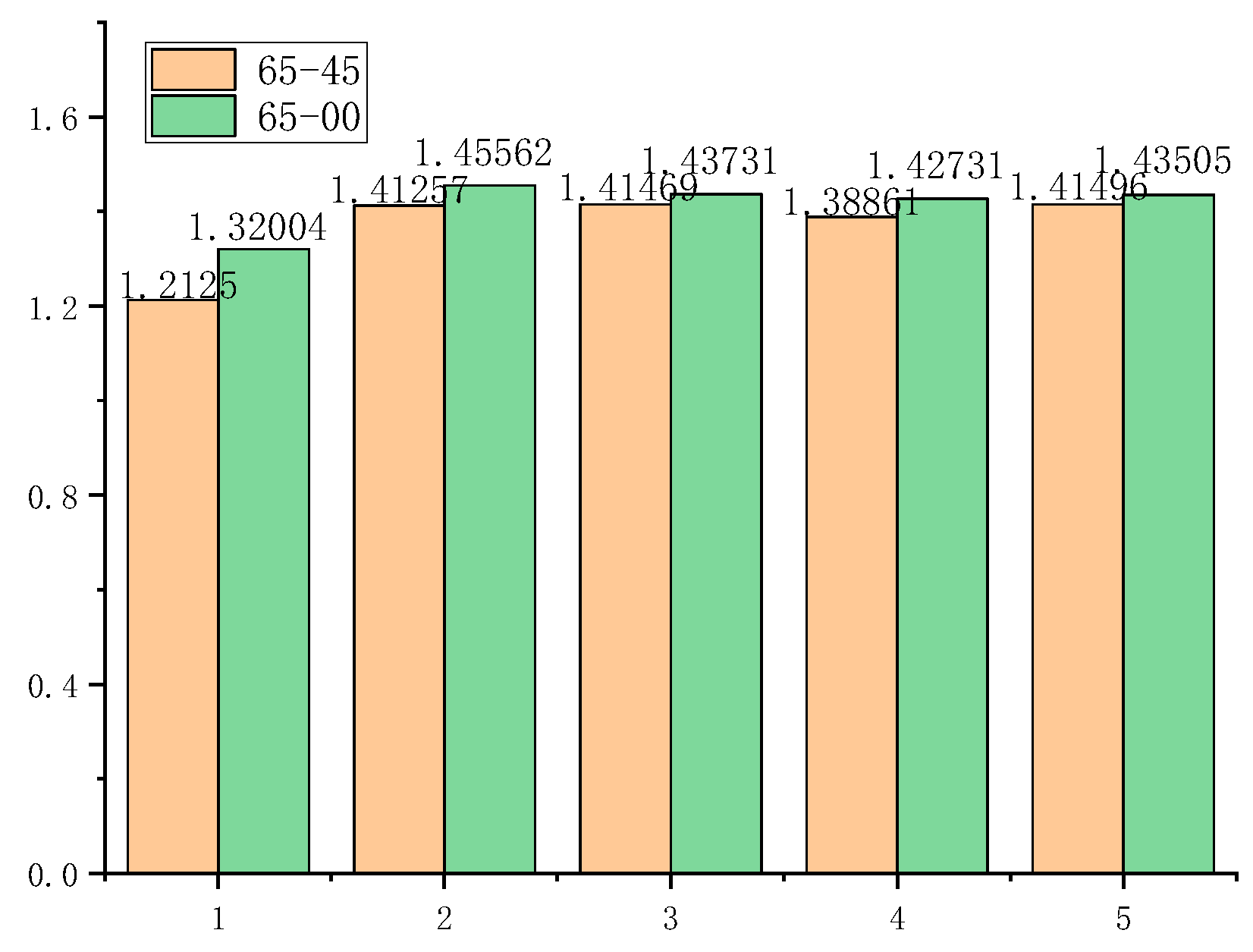
Figure 6 and
Figure 7 display the RMSD distribution characteristics of each piezoelectric patch under different bolt loosening states in the bar-type bolted connection specimen. In the figures, “65–45” represents the RMSD values calculated between the baseline state (65 Nm torque) and the slightly loosened state (45 Nm torque), while “65–00” denotes the RMSD values comparing the baseline state with the fully loosened state (0 Nm torque). The horizontal axis indicates the numbering of the piezoelectric patches (PZTs). As shown in
Figure 6, when the bolt torque decreases from 65 Nm to 45 Nm and further to 0 Nm, the normalized RMSD values of PZTs 2, 3, 4, and 5 exhibit an increasing trend with the progression of loosening, demonstrating their effectiveness in accurately identifying the severity of bolt loosening. However, the RMSD value of PZT 1 for the “65–00” case is lower than that for the “65–45” case, indicating an abnormal response. This discrepancy may be attributed to the high sensitivity of single-patch RMSD metrics to local contact conditions, where boundary effects or external noise interference could introduce false signals. For Bolt B loosening detection in
Figure 7, a clear increase in the normalized RMSD values is observed when comparing the “65–00 Nm” and “65–45 Nm” cases. In general, these findings are consistent with the actual experimental conditions, further validating the accuracy of the drive-point admittance method in identifying bolt loosening severity. Then, the RMSD-based damage detection method was further employed to identify the bolt loosening locations. In the drive-point EMI method, the RMSD value increases as the sensor is positioned closer to the loose bolt. Therefore, the location of the bolt loosening can be identified by determining the two adjacent piezoelectric wafers exhibiting the highest RMSD values. For Bolt A loosening, PZTs 1 and 4 consistently exhibit elevated RMSD values, clearly indicating the loosened bolts are located in the A, B, and C bolts between the No. 1 and No. 4 piezoelectric patches. Obviously, it failed to precisely identify the bolt loosening. For Bolt B loosening cases, a slight loosening state (45 Nm) yields unreliable localization (with PZT 5 showing anomalously high RMSD), while complete loosening (0 Nm) provides accurate identification because PZTs 2 and 3, which are adjacent to Bolt B, display the highest RMSD values.
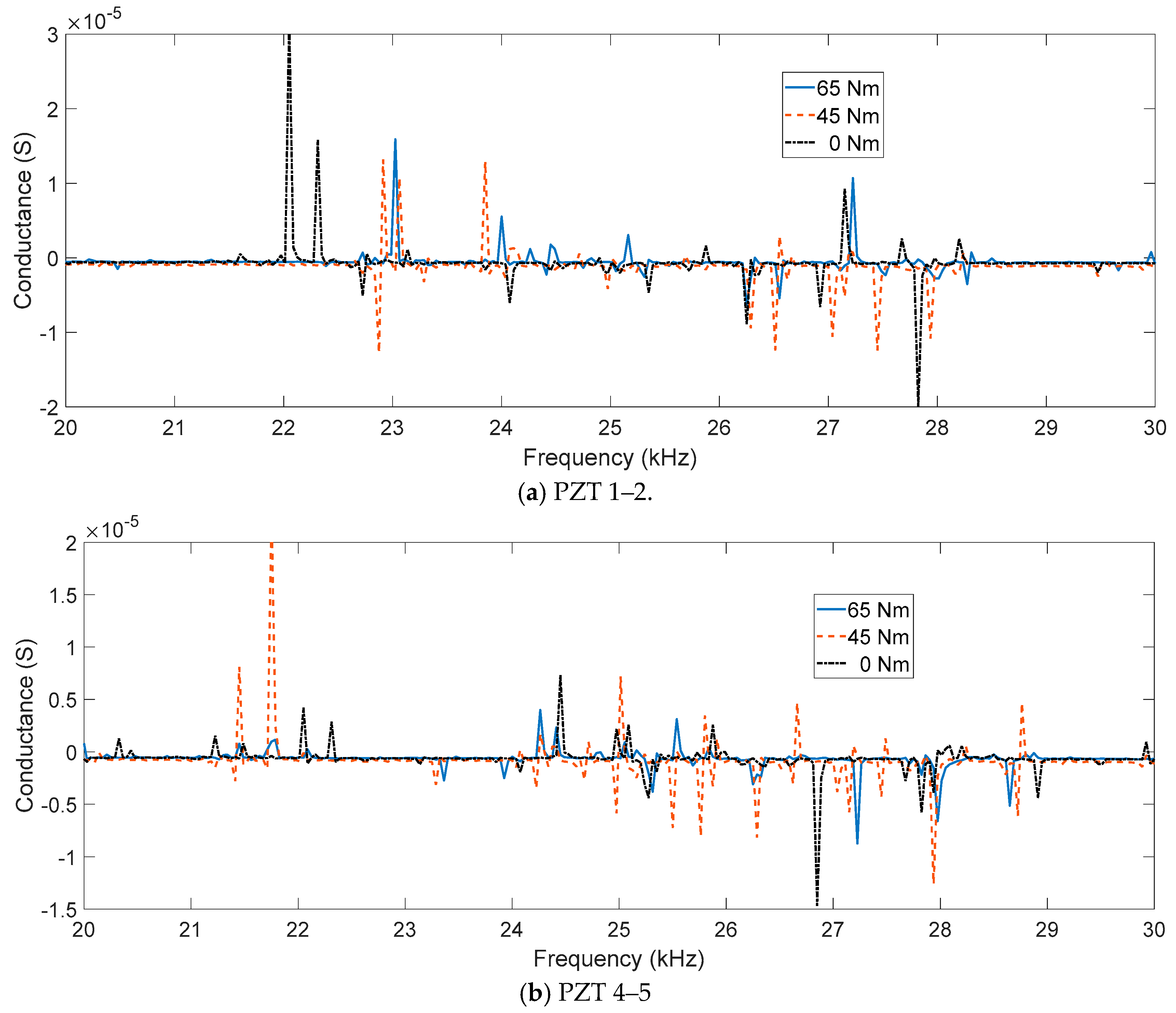
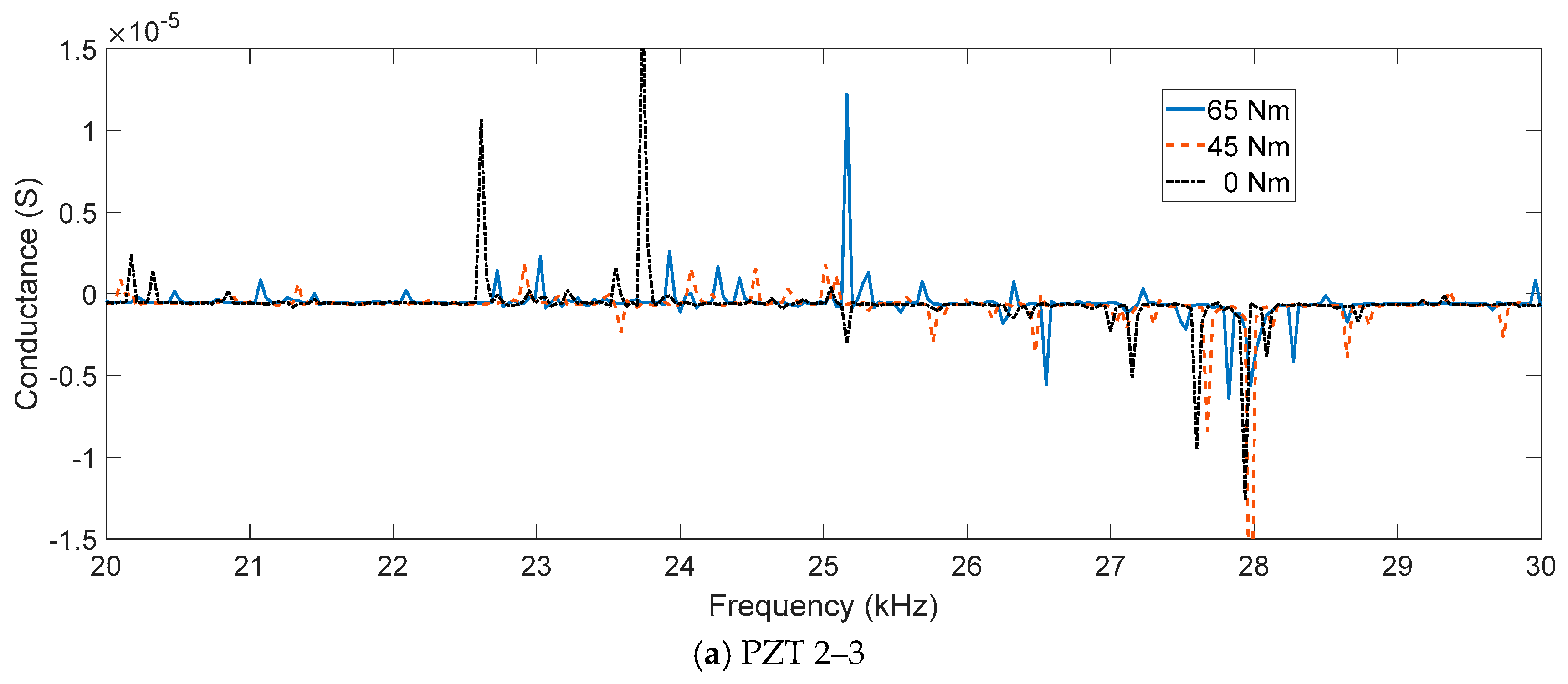
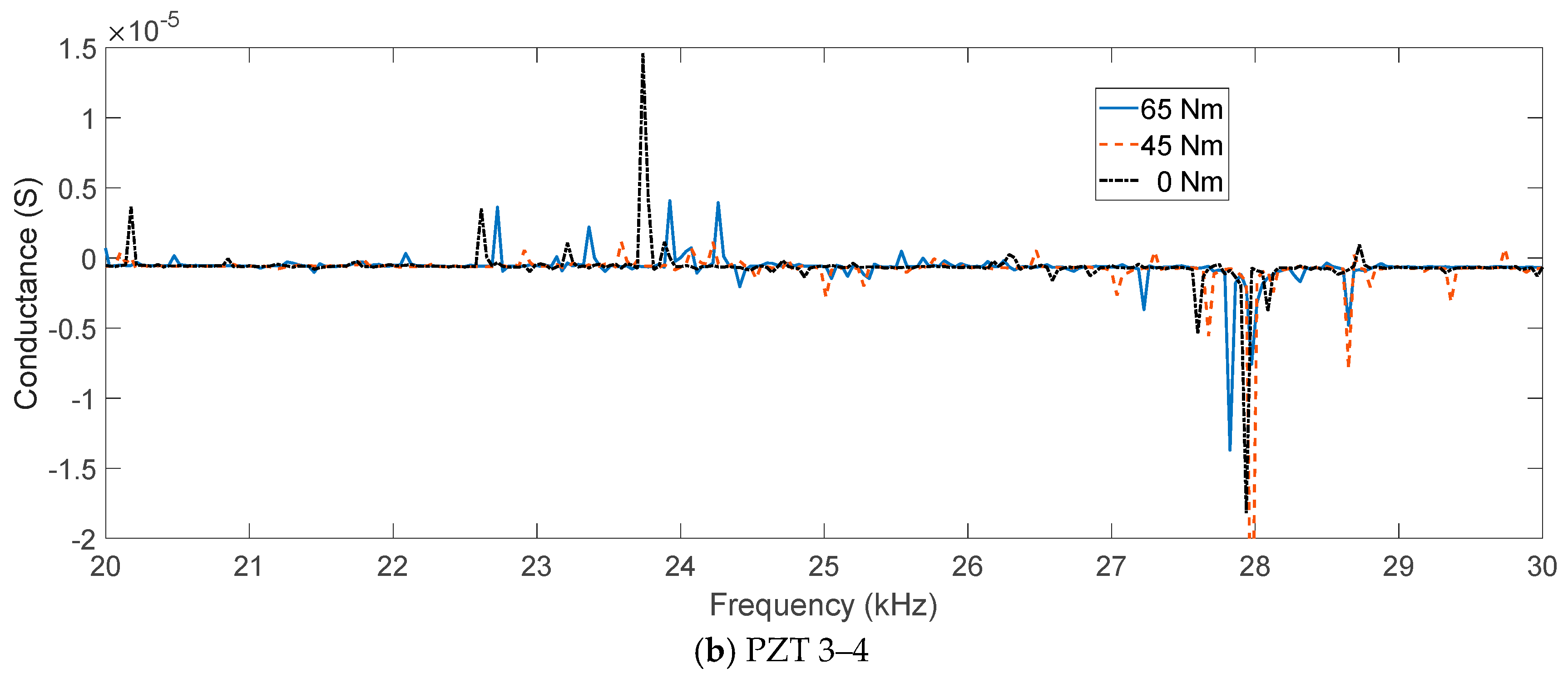
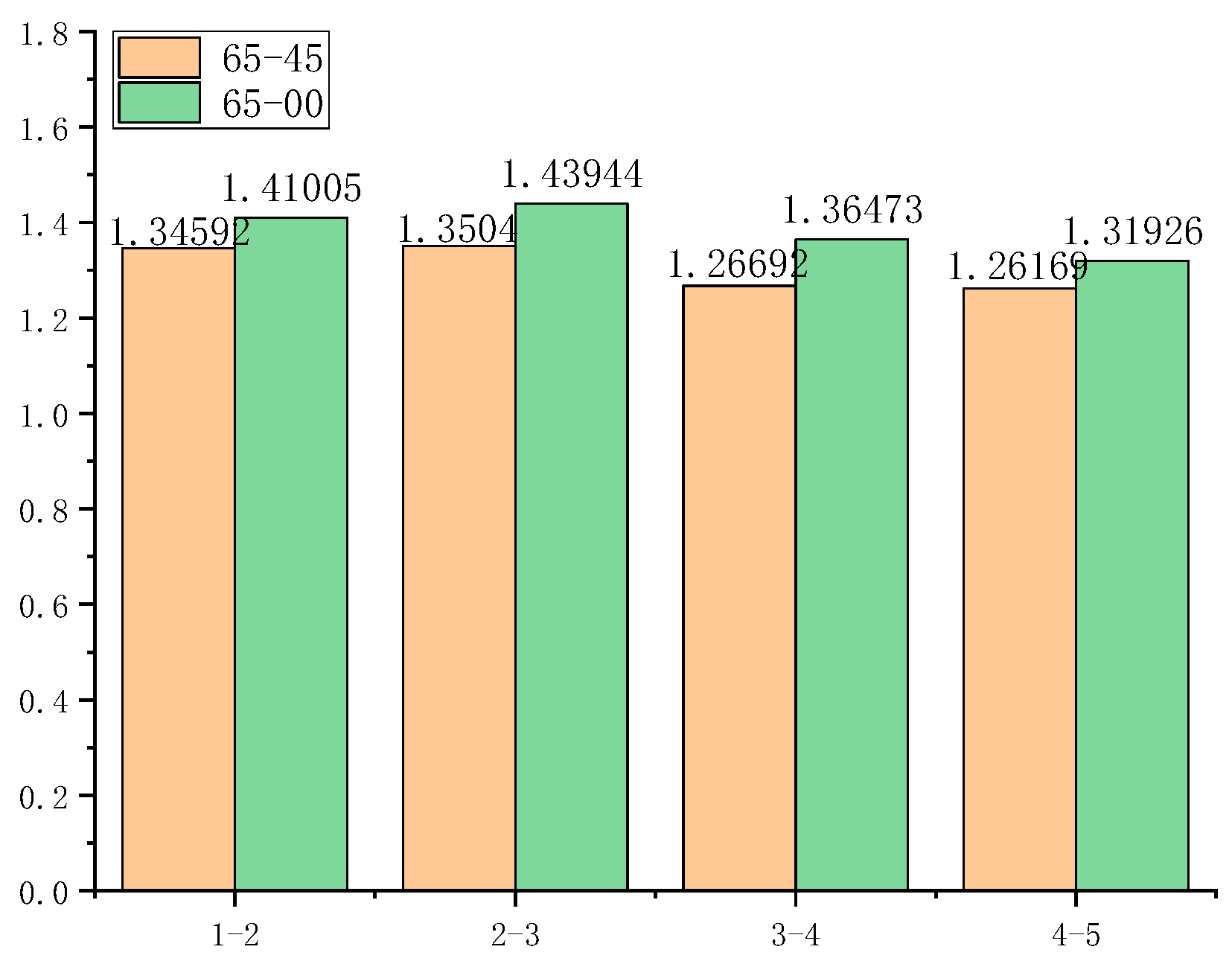
Cross electro-mechanical admittance (EMA) testing was subsequently conducted by configuring the five PZT patches into four adjacent pairs (1–2, 2–3, 3–4, and 4–5), with each PZT pair connected in parallel to the impedance analyzer. The group conductances were measured under three distinct torque conditions: baseline (65 Nm), slight loosening (45 Nm), and complete loosening (0 Nm). Using Equation (3), the corresponding cross-admittance was calculated and depicted in
Figure 8 and
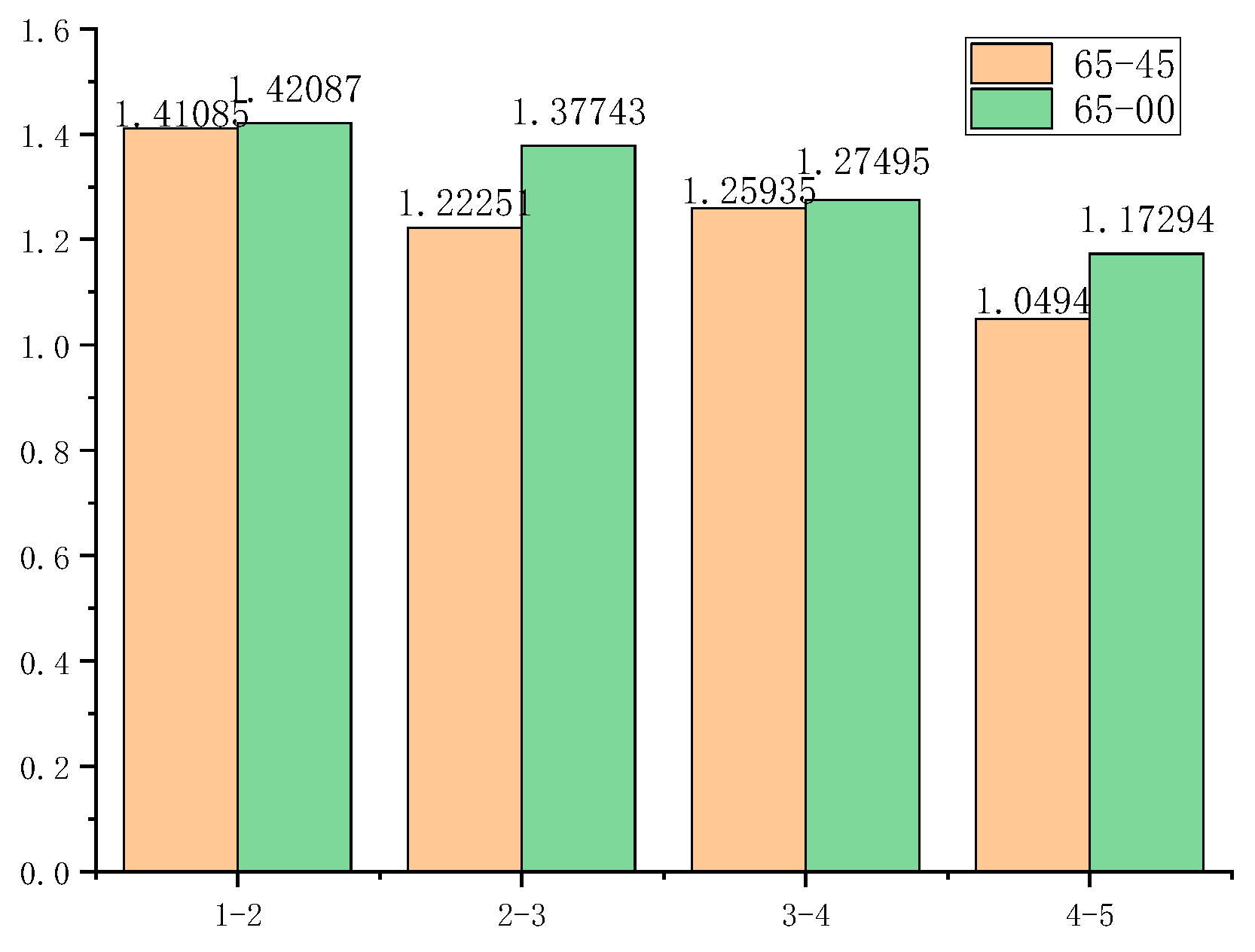
Figure 9 for the case of Bolt A and B loosening, respectively. Similarly to the drive-point admittance spectrum, the cross-admittance spectrum displays significant deviation with the increase in bolt looseness. The RMSD damage index was also employed to quantitatively assess both the degree and location of bolt loosening.
Figure 10 demonstrates that under different loosening conditions (65–45 Nm and 65–0 Nm), the RMSD values show distinct variations regardless of the PZT pairs’ relative distance to the loosened bolt, with increasing RMSD magnitudes corresponding to greater loosening severity. This trend confirms the effectiveness of the present method for detecting progressive bolt loosening. For the case of Bolt A loosening, PZT pair 1–2 consistently yields the highest RMSD values in both 65–45 Nm and 65–0 Nm states (see
Figure 10), accurately detecting Bolt A’s location. Similarly,
Figure 11 reveals that PZT pair 2–3 generates the maximum RMSD values for Bolt B’s loosening state.
Through the above comparison study on the bar-type specimen, it can be seen that the drive-point admittance-based technique shows a certain potential in detecting the looseness of bolted connections. However, sometimes its accuracy in identifying both loosening severity and location can be affected by boundary conditions and other interfering factors. In contrast, the cross-admittance, which reflects the local dynamic characteristics of the structure between paired piezoelectric patches, exhibits superior sensitivity to localized defects such as bolt looseness and can more accurately identify the degree and location of bolt looseness. Building on these findings, the following section will extend the investigation to a more complex rectangular specimen using the cross-admittance technique, further evaluating its robustness in practical structural health monitoring applications.
4. Bolt Loosening Detection Using Cross EMI
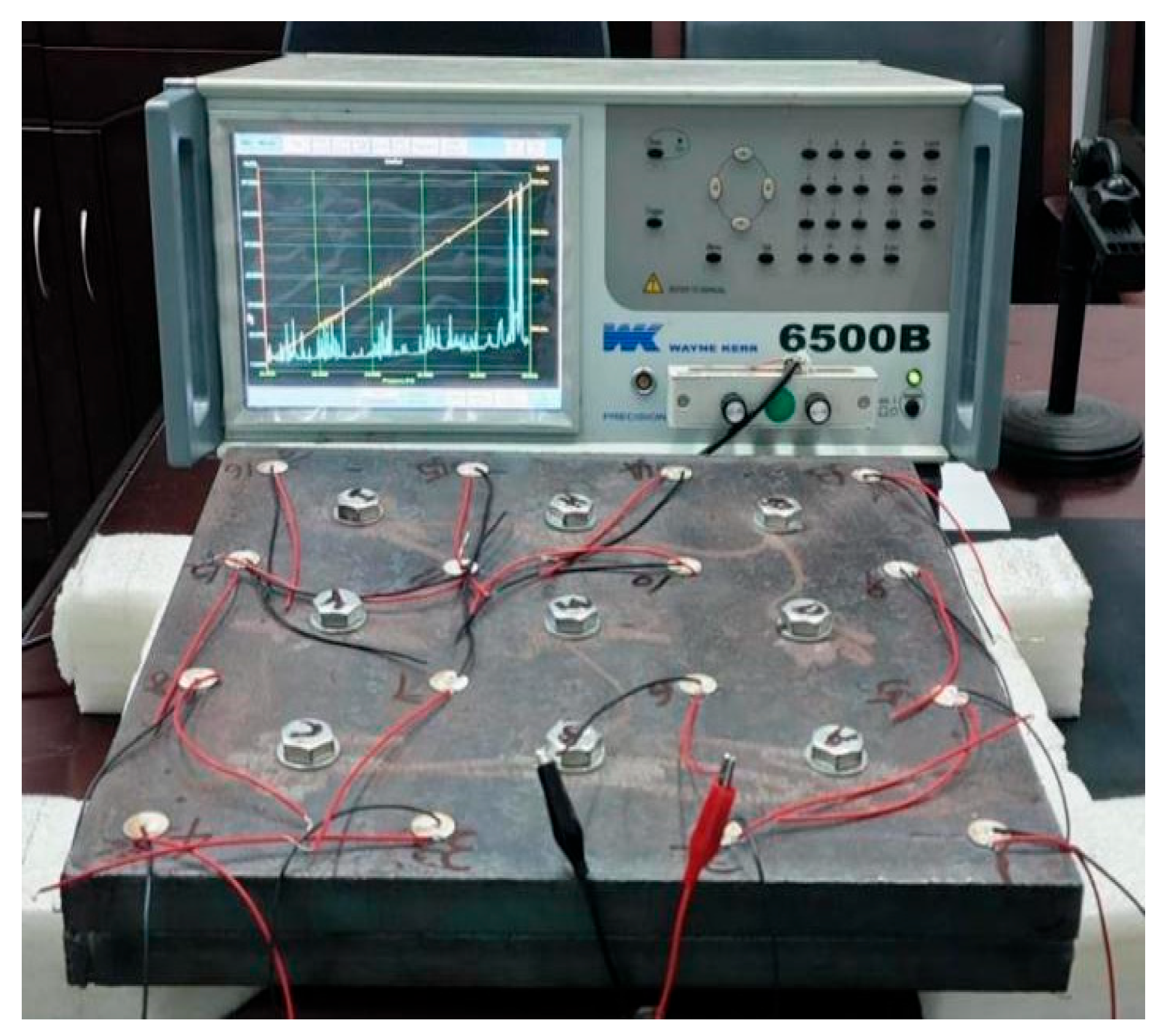
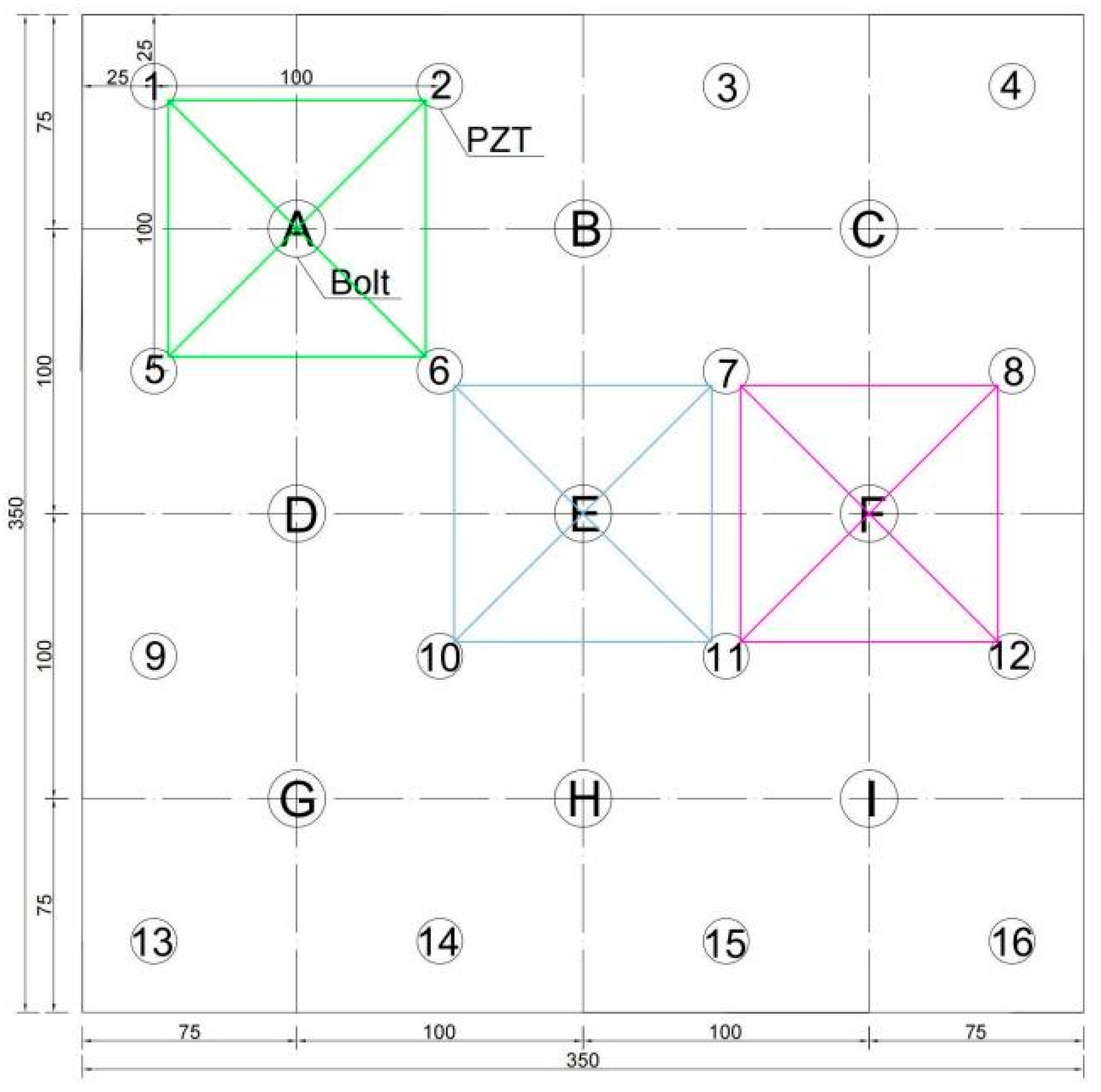
In this section, a rectangular bolt connector with geometric dimensions 350 mm × 350 mm × 40 mm was further studied, as shown in
Figure 12. Sixteen piezoelectric patches were systematically bonded on the specimen, with each patch center positioned 25 mm from the plate edges and 50 mm from the bolt axes. Nine bolts were labeled from A to I with uniform 100 mm spacing. The specimen was supported on low-density foam boards to simulate free boundary conditions (see
Figure 12 and
Figure 13; dimensions in
Figure 13 are in mm). The experiment focused on three typical bolt locations (A, E, and F) to investigate their loosening behavior. Similarly to the above experimental investigation, the torque of each target bolt (A, E, or F) was sequentially set to 65 Nm (baseline, no loosening), 45 Nm (slight loosening), and 0 Nm (full loosening), while the others were maintained at 65 Nm torque.
The impedance analyzer was used to sequentially connect each pair of piezoelectric patches, and both the group admittance data and drive-point conductance values of individual patches were measured in the chosen frequency range. Taking Bolt A as an example, six sets of parallel piezoelectric patch pairs could be established (1–2, 1–5, 1–6, 2–5, 2–6, and 5–6, as shown in
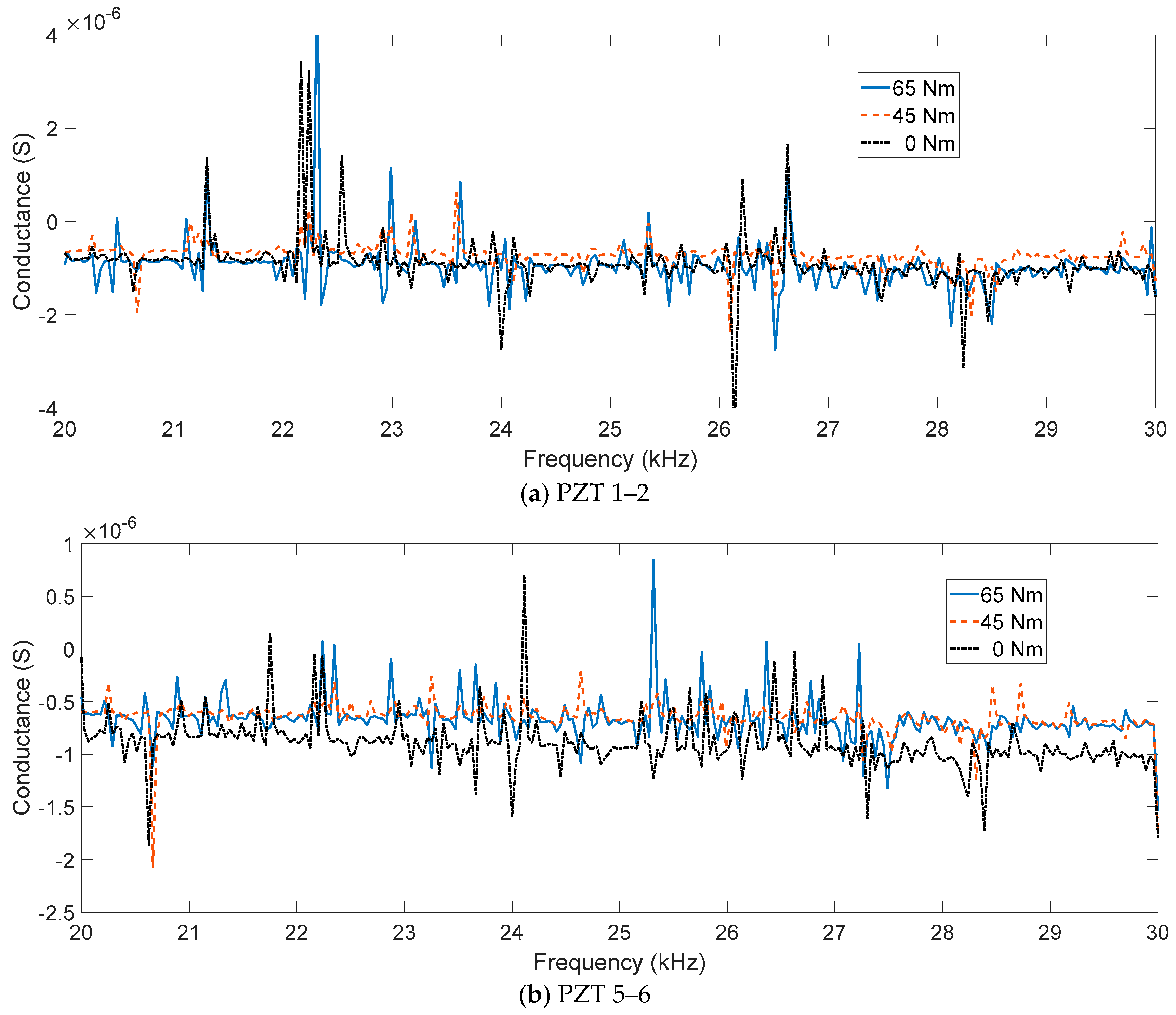
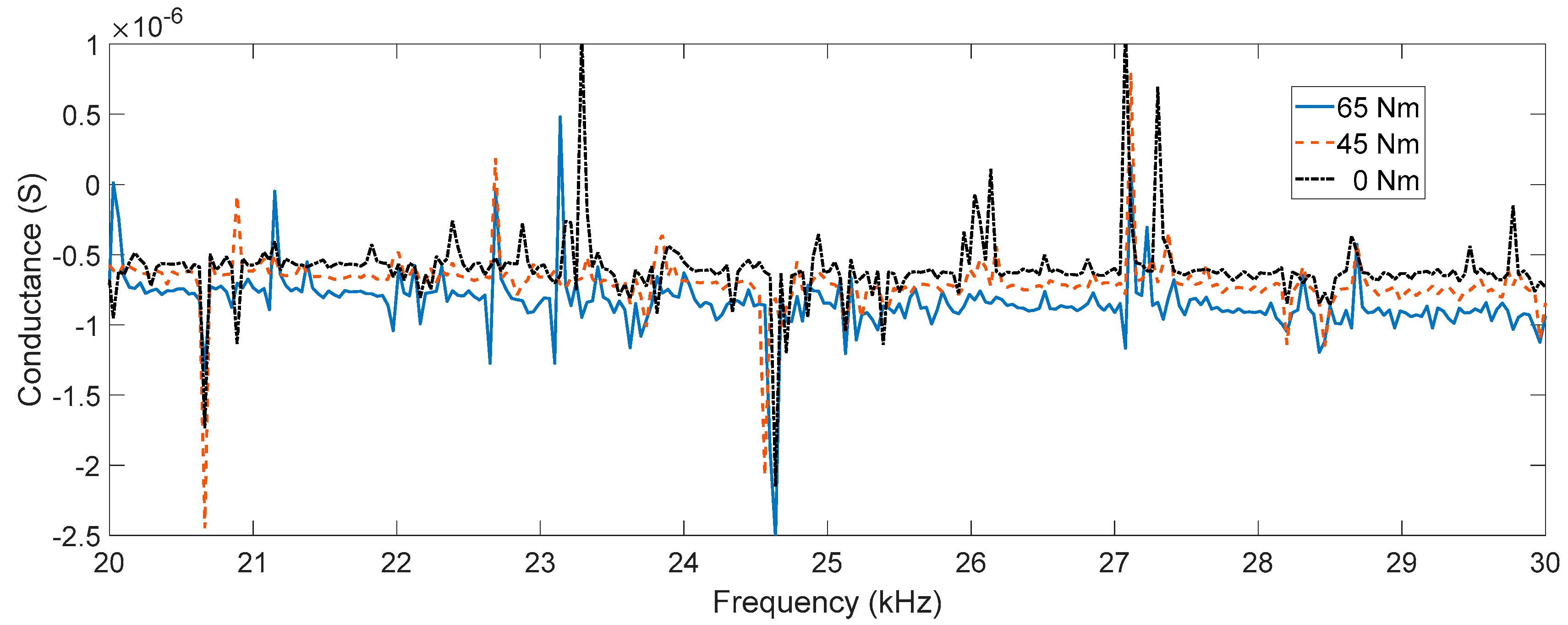
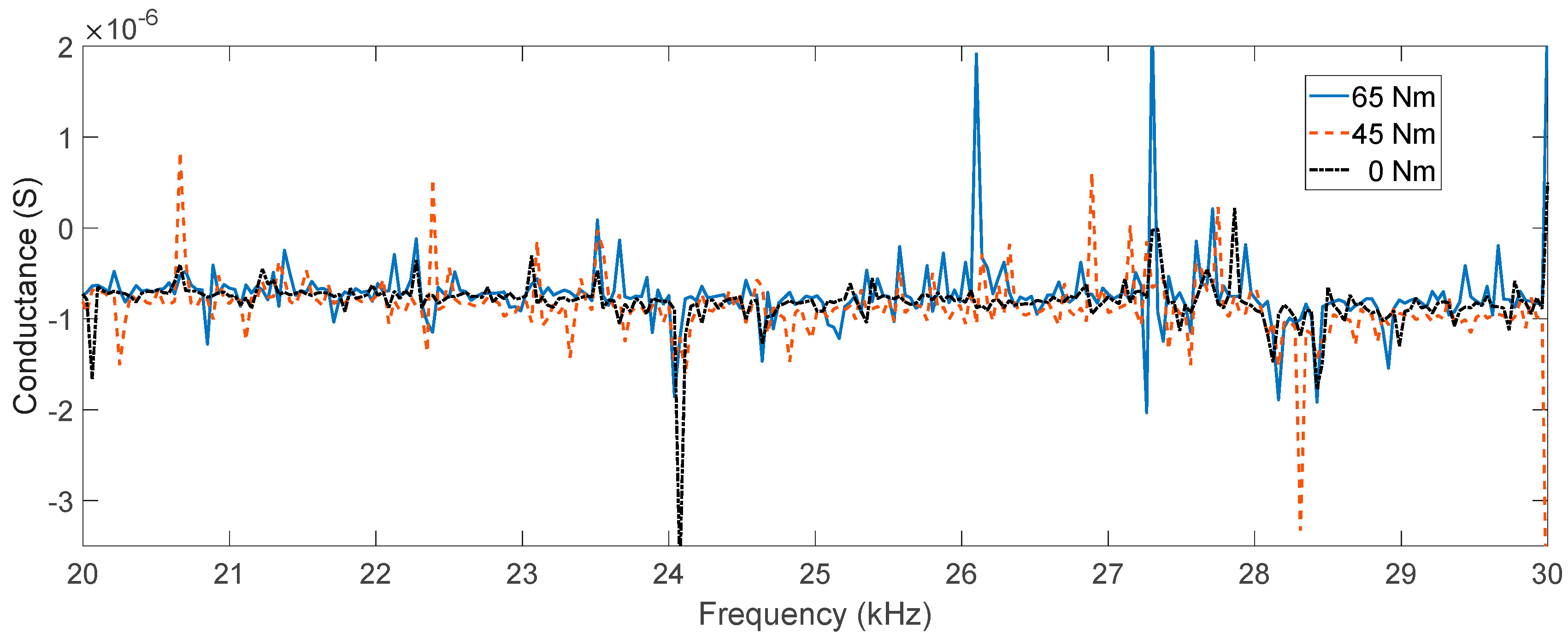
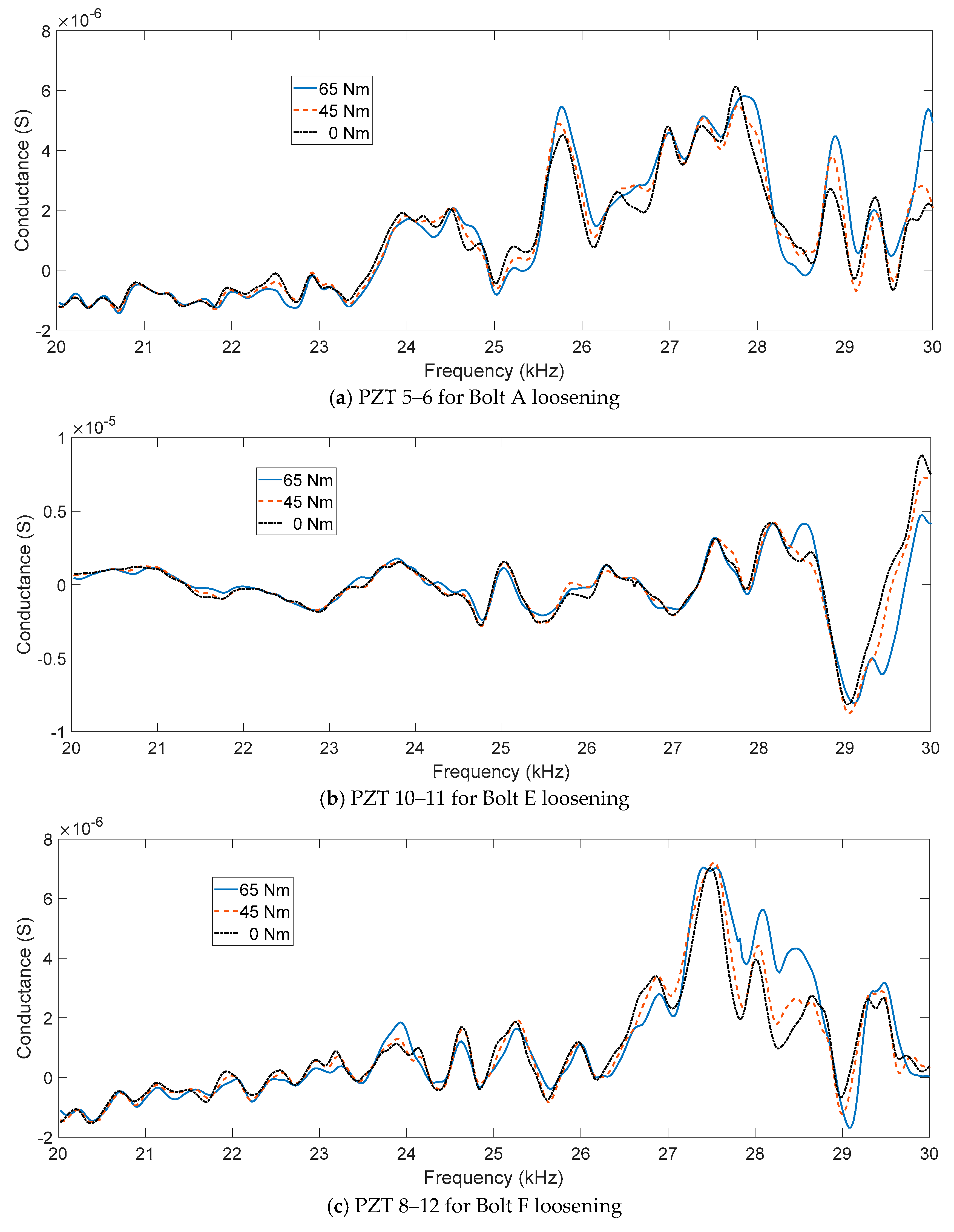
Figure 13), with similar configurations applied to the other bolts. By degressively adjusting the torque of Bolt A (65 Nm→45 Nm→0 Nm) while maintaining constant torque 65 Nm on the remaining bolts (B to I), the conductance values of each parallel combination and individual piezoelectric patch were synchronously acquired under different loosening conditions. The cross-admittance was then calculated by Equation (3) and the partial cross-admittance curves are depicted in
Figure 14. Additionally, partial cross-admittance curves for Bolts E and F under three different torque states are also shown in
Figure 15 and
Figure 16, respectively.
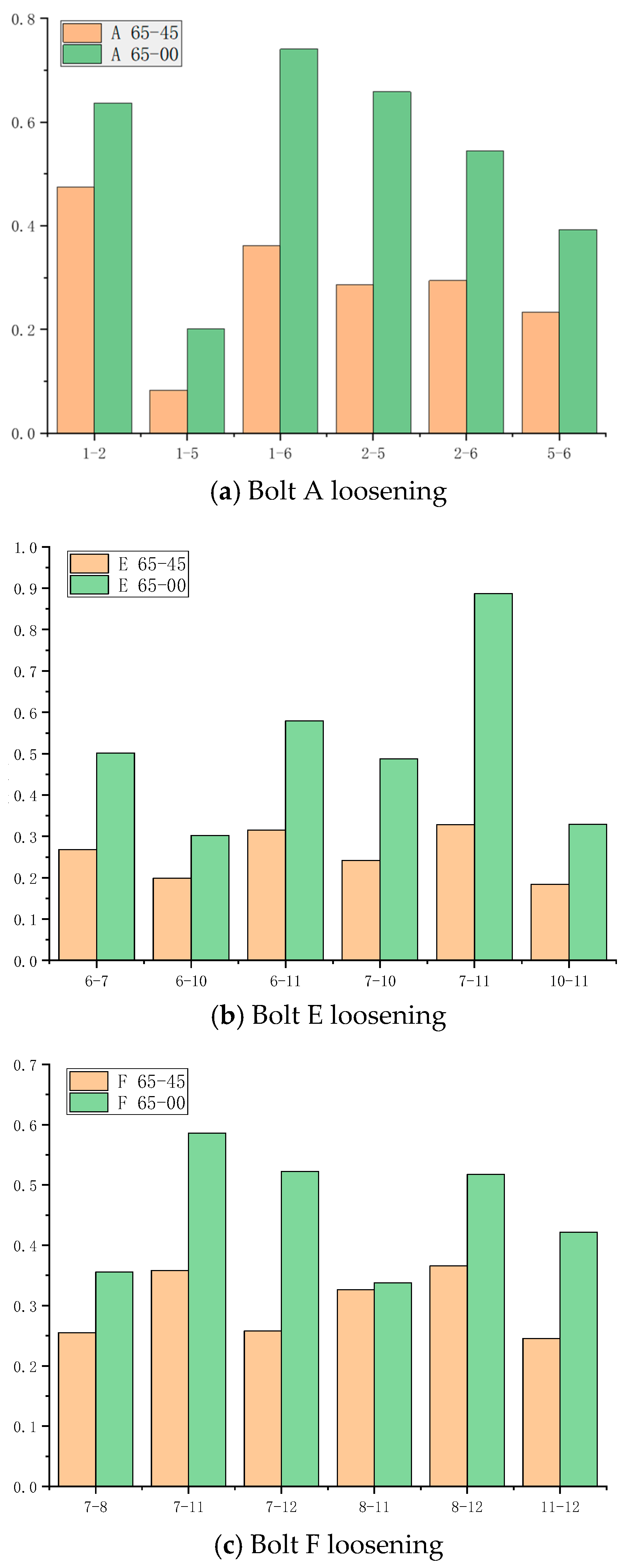
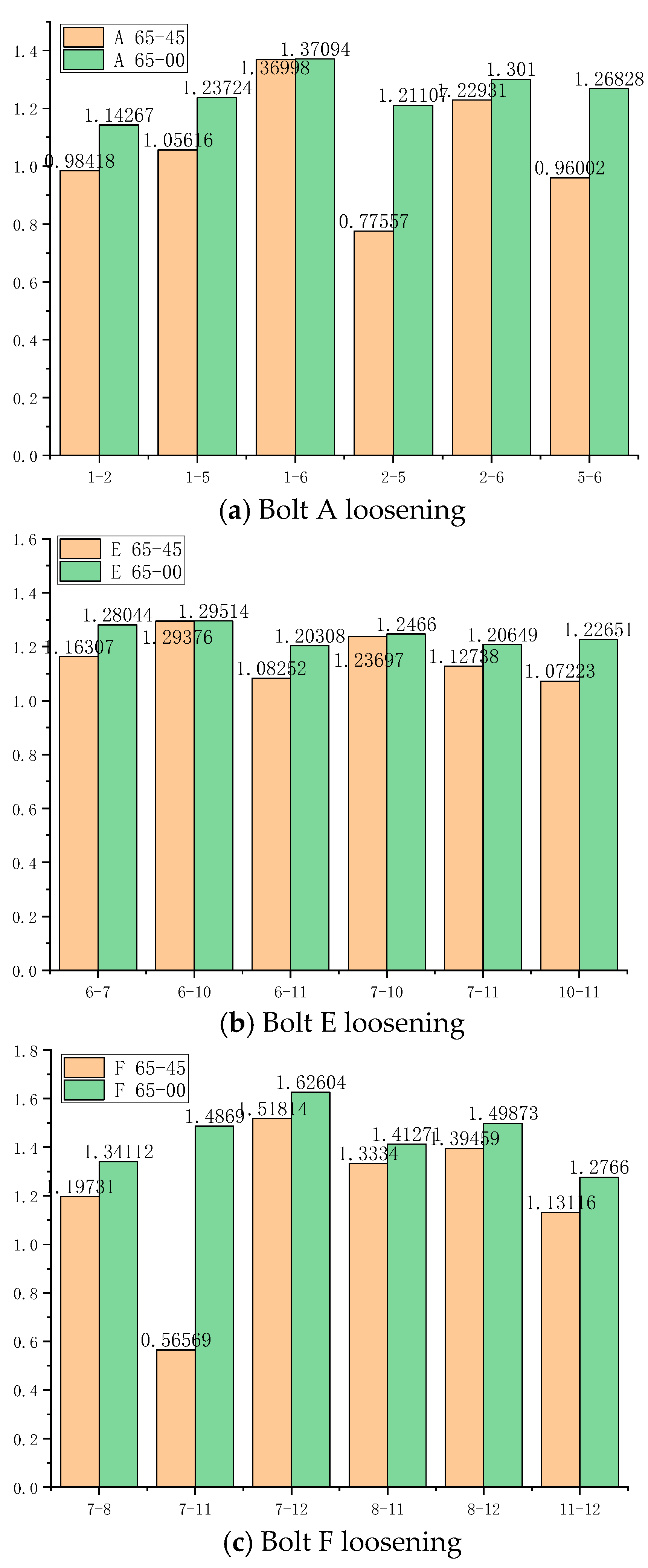
After normalizing the cross-admittance data, bolt loosening degree identification was first conducted using RMSD index. Since the conductance signals of piezoelectric patches are more sensitive to nearby defects, the following parallel piezoelectric patch pairs were selected: pairs 1–2, 1–5, 1–6, 2–5, 2–6, and 5–6 for Bolt A; pairs 6–7, 6–10, 6–11, 7–10, 7–11, and 10–11 for Bolt E; and pairs 7–8, 7–11, 7–12, 8–11, 8–12, and 11–12 for Bolt F. The cross-admittance data of these pairs were collected under different torque states (65 Nm, 45 Nm, and 0 Nm).
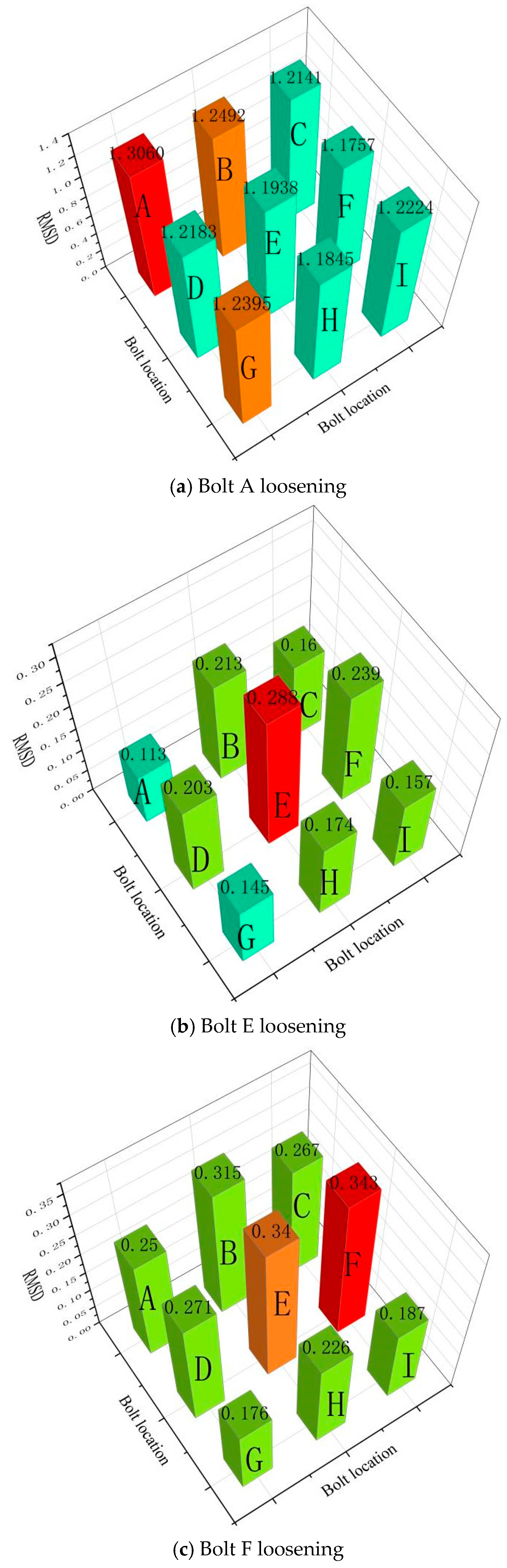
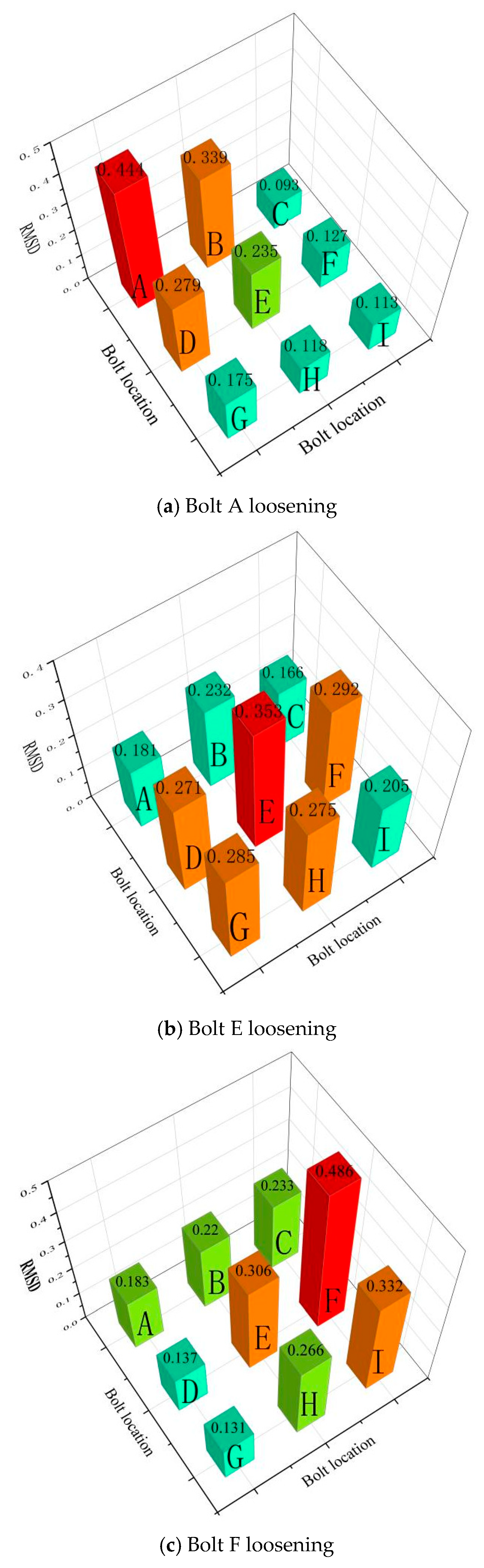
Figure 17 presents the damage index plots of the piezoelectric patches for Bolts A, E, and F under different loosening states. As the bolt loosening degree increased, the normalized RMSD values of each piezoelectric patch pair exhibited a consistent increasing trend (i.e., the statistical index values for the 65–0 Nm were consistently greater than those for the 65–45 Nm). This indicates that the present method integrated with normalized RMSD statistical index and cross-admittance can accurately identify the degree of bolt loosening. To provide a more intuitive and precise localization of bolt loosening, the average RMSD values of the 65-0 Nm statistical damage indices for the piezoelectric patch pairs around each bolt were employed. As illustrated in
Figure 18, the biggest averaged RMSD values were observed at Bolts A, E, and F, aligning perfectly with the actual experimental conditions and accurately identifying the loosened bolt locations. The results confirm that this method can accurately evaluate the degree of bolt loosening through quantitative RMSD analysis and more intuitively identify the specific locations of loosened bolts via spatial RMSD mapping.
5. Numerical Simulation and Discussion
The material properties of the piezoelectric patches and steel specimen used in the finite element simulation [
40,
41] are listed in
Table 1 and
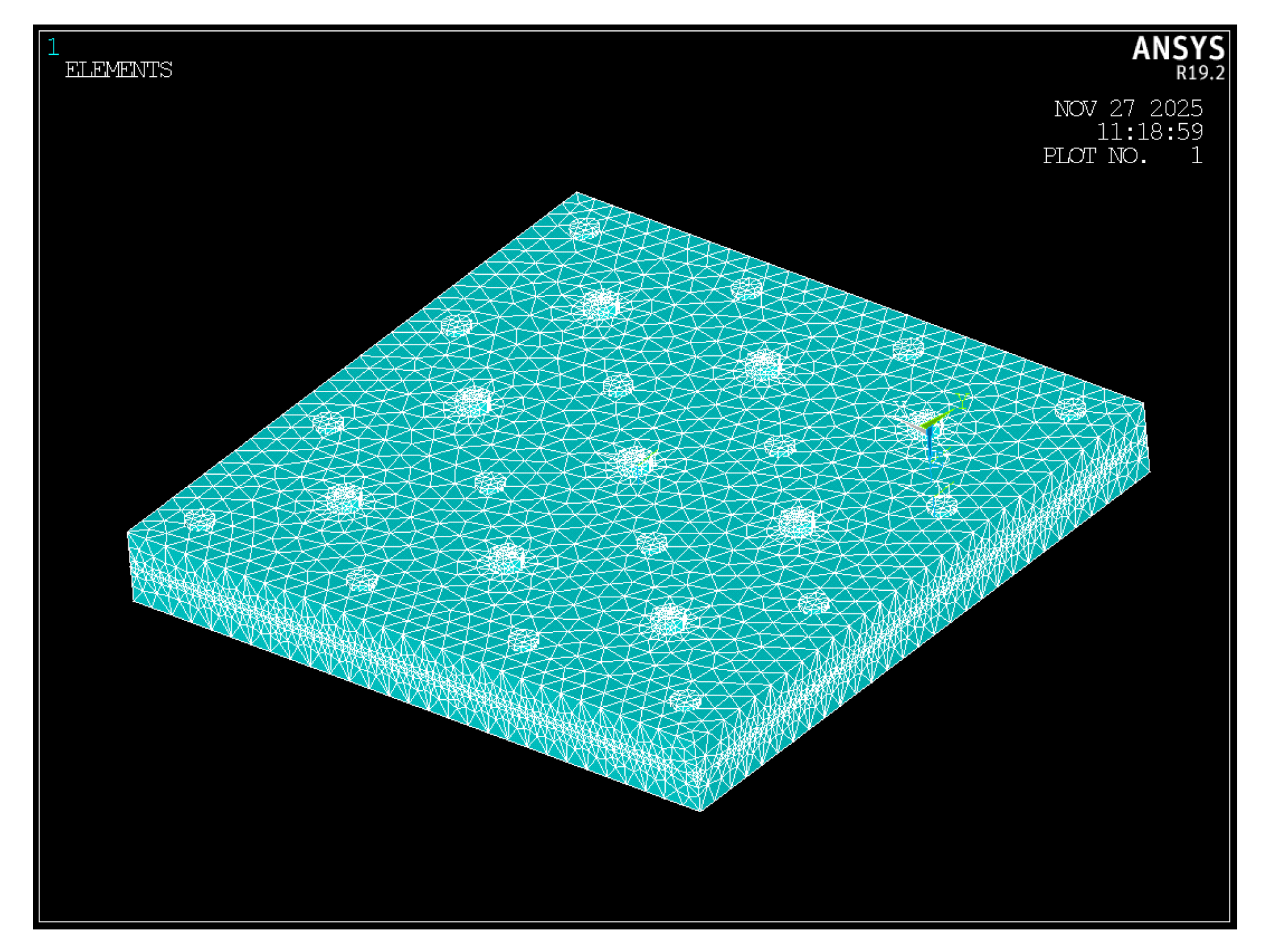
Table 2, respectively. Considering the geometric irregularity of the bolted connection structure and computational requirements, an intelligent meshing approach was adopted using the SmartSize function with a mesh density level of 6. The piezoelectric patches were simulated using coupled-field SOLID226 elements (20-node hexahedral coupled-field elements). It shows excellent computational stability and accuracy and is especially suitable for the simulation of mechanical electrical coupling characteristics of piezoelectric materials. Contact pairs were established using CONTA174 and TARGE170 elements, with preload elements generated on the bolts to apply preload force. The bolted connection structure was modeled with SOLID185 elements, an 8-node hexahedral formulation featuring three translational degrees of freedom (x, y, z) per node, suitable for simulating 3D solid configurations. To accommodate geometric irregularities around the bolt region, a free-mesh scheme based on hexahedral elements was employed. Then, a 1 V alternating voltage was applied to the upper and lower surfaces of the PZT piezoelectric patches. The EM signatures could be obtained from the proposed FEM model, as illustrated in
Figure 19.
The same rectangular specimen and working conditions as in the prior experiment were modeled in the FEM simulation for bolt loosening detection. By comparing the conductance plots of various piezoelectric patches under different bolt loosening states in the rectangular specimen, significant differences can be observed from
Figure 20 in the conductance patterns. This demonstrated that cross-admittance plots can qualitatively identify both the degree and location of bolt loosening. It should be noted that the cross conductance values from numerical simulations do not match the experimental signatures (See
Figure 14,
Figure 15 and
Figure 16). Compared to the simulated data, the conductance curve obtained from experimental testing exhibits a greater number of resonant peaks. Similar findings have been reported in the literature [
42,
43] when using the drive-point EMI technique. The primary reason for this is that FEM analysis assumes uniform material properties (density, mechanical damping factor, and elastic modulus); however, in practice, these properties are distributed non-uniformly [
42,
43], especially under high-frequency excitation.
Figure 21 revealed that, regardless of changes in the spatial relationship between the monitoring points and the loosened bolt, the RMSD indices corresponding to different loosening levels exhibit distinct numerical differences. As the bolt preload decreases, the RMSD values recorded at each monitoring point showed an increasing trend. For example, in the 1–2 piezoelectric patch pair, the statistical index value for the 65–45 Nm condition is smaller than that for the 65–0 Nm state. This trend agrees well with the artificially preset bolt loosening levels, effectively validating the efficacy of the cross-admittance method in monitoring bolt loosening degrees. Furthermore, after processing the cross-admittance data with the RMSD damage statistical indicator, the method successfully identifies the location of bolt loosening with high precision, as detailed in
Figure 22.
6. Conclusions
This study investigated the health monitoring of bolt loosening by employing cross-admittance-based EMI technology through integrated experimental and simulation approaches. The findings demonstrated that the proposed method offers significant advantages in detection sensitivity and localization accuracy. Specifically, for a bar-type specimen, both drive-point and cross-admittance measurements were employed to monitor bolt loosening. The observed shift in peak frequency within conductance spectra correlated with reduced bolt preload. Using the root mean square deviation (RMSD) as a quantitative damage index, this study achieved effective evaluation of bolt loosening severity. The results indicate that although drive-point admittance can roughly assess the degree and approximate location of loosening, its accuracy is considerably limited by boundary conditions and noise interference. In contrast, due to the implementation of a distributed piezoelectric transducer array, the cross-admittance approach establishes a closed-loop detection system via parallel-connected piezoelectric patches, which significantly enhances both sensitivity and spatial resolution, enabling precise localization of bolt loosening even in complex multi-bolt configurations. Furthermore, the paired-sensor configuration yields a direct spatial correlation between the measured signatures and the location of bolt loosening, significantly enhancing engineering practicality. However, it should be noted that, compared to traditional drive-point admittance, the cross-admittance technique requires a dense array of transducers, significantly increasing the number of sensors, installation effort, and hardware costs. Furthermore, it imposes additional demands on both testing procedures and computational resources for data processing.
Further experimental validation on a rectangular bolted joint confirmed that the RMSD index effectively identifies both the location and extent of bolt loosening, reinforcing the correlation between the statistical metric and physical damage. Finally, finite element simulations conducted in ANSYS R19.2 corroborated the experimental outcomes, showing consistent trends in conductance response and RMSD progression with increasing loosening severity. The numerical model successfully replicated the spectral shifts and damage-sensitive features observed empirically, providing a reliable theoretical basis and practical simulation tool for quantitative bolt loosening detection and localization in engineering applications.