Article

A 3D-Printed S-Band Corrugated Horn Antenna with X-Band RCS Reduction

1
China Academy of Aerospace System and Innovation, Beijing 100063, China
2
School of Electronic and Information Engineering, Xi’an Jiaotong University, Xi’an 710049, China
3
Key Laboratory of Intelligent Space TTC&O, Space Engineering University, Ministry of Education, Beijing 101416, China
*
Author to whom correspondence should be addressed.
Appl. Sci. 2025, 15(22), 11921; https://doi.org/10.3390/app152211921
Submission received: 30 September 2025 / Revised: 30 October 2025 / Accepted: 7 November 2025 / Published: 9 November 2025
(This article belongs to the Special Issue Advanced Design and Evaluation of Modern Antenna Systems)

Abstract

In this paper, a 3D-printed S-Band corrugated horn antenna with X-Band radar cross section (RCS) reduction is investigated. This work demonstrates effective RCS reduction at the X-band through the application of the phase cancellation principle. Specifically, the corrugated horn antenna is partitioned into eight identical sections, with three discrete height offsets introduced between them. The reflection phase cancellation, which can be attained through the path difference introduced by a designed height step among different regions, leads directly to a consequent suppression of scattered waves. The proposed low-RCS corrugated horn antenna is monolithically fabricated using stereolithography appearance (SLA) 3D printing technology, followed by a surface metallization process. The measured results demonstrate that the proposed antenna operates over the frequency band of 2.34–3.3 GHz in the S-band with good impedance matching, exhibiting a peak gain of 11.7 dB. Furthermore, the monostatic RCS of the antenna under normal incidence for both x- and y-polarizations exhibits a significant reduction of over 10 dB within the frequency range of 8.7–12.0 GHz and 8.2–12.0 GHz, respectively. This indicates that effective stealth performance is achieved across the majority of the X-band. The proposed design integrates exceptional out-of-band RCS reduction, low cost, light weight, and high efficiency, making it a promising candidate for radar stealth system applications.

1. Introduction

In modern information warfare, where technological superiority constitutes the primary combat force, electronic warfare has assumed a pivotal role in substantially enhancing military operational capabilities. Stealth technology, particularly radar stealth technology, has become indispensable for ensuring survivability in electronic warfare operations [1,2], enabling effective reconnaissance and reliable countermeasures against jamming in highly contested environments. Radar cross section (RCS) serves as a key tactical parameter for combat platforms, which is essential to modern combat survivability [3]. Notably, the antennas contribute significantly to the overall RCS of combat platforms, making the development of low-RCS antenna designs a critical aspect of stealth platforms [4,5]. However, as a critical component for transmitting and receiving wireless signals, the radiation performance of an antenna is of paramount importance. Consequently, achieving a balance between radiation and scattering properties represents a major challenge in stealth antenna design [6]. The X-band is of significant military relevance due to its extensive applications in radar, communications, and electronic warfare systems [7,8]. Consequently, the ability to achieve X-band stealth performance while maintaining antenna satisfactory radiation performance holds considerable promise for military applications and strategic significance.
Two common and effective approaches for reducing RCS are structural shaping of the antenna [9,10] and the application of radar-absorbing materials (RAMs) [11,12,13]. Reshaping the antenna offers only narrowband RCS reduction and often leads to degradation of antenna radiation performance [14]. RAMs, typically implemented as frequency selective absorbers [15] or frequency-selective rasorbers [16,17], effectively reduce out-of-band RCS through the absorption of incident electromagnetic waves beyond the operating band of the antenna. In [18], a dual-lossy-layer frequency-selective rasorber is proposed, achieving broadened bandwidth and enhanced absorption stability while maintaining high in-band transmission, thereby offering significant potential for stealth radome applications. Nevertheless, the incorporation of RAMs introduces several drawbacks, including degradation in the aperture efficiency of the antenna, as well as an increase in overall profile and volume [19].
The phase cancellation principle is widely employed in the design of low-RCS antennas owing to its design simplicity, high efficiency and broadband bandwidth characteristics. In [20], a chessboard configuration combining artificial magnetic conductor (AMC) and perfect electric conductor (PEC) structures is proposed, accomplishing a narrowband RCS reduction. The two unit cells generate a 180° phase difference between reflected waves under plane wave incidence, achieving backscattering suppression based on the phase cancellation principle. To further expand the operating bandwidth, an alternative AMC is strategically designed to replace PEC [21]. Furthermore, a wider variety of AMC units and their different arrangement configurations have been investigated to achieve broadband RCS reduction [22,23]. Similar to AMCs, polarization conversion metasurfaces (PCMs) also serve as an effective approach for achieving antenna stealth by utilizing the phase cancellation of reflections from different components [24,25]. However, the incorporation of these metasurface units may lead to an enlargement of the ground plane of the antenna.
Compared to PCB-based antennas, all-metal antennas offer advantages including lower loss, higher efficiency, and greater power-handling capacity [26]. While computer numerical control (CNC) machining is a widely used method for fabricating all-metal antennas and offers high precision, this high accuracy comes at a substantially greater cost. The advancement of laser powder bed fusion (LPBF) technology [27] has facilitated the 3D printing of all-metal antennas, emerging as a growing trend in antenna fabrication. The 3D printing technology enables the monolithic fabrication of complex antennas, offering advantages over CNC machining such as eliminated assembly and welding steps, as well as reduced production costs [28].
In this paper, a 3D-printed S-Band corrugated horn antenna with X-Band RCS reduction is presented. Based on the phase cancellation principle, this design achieves RCS reduction by dividing the corrugated horn into eight identical sections and introducing three distinct height steps. The corrugated horn antenna is fabricated using stereolithography (SLA) 3D printing followed by surface metallization, thereby significantly reducing the fabrication complexity and production costs compared to traditional CNC machining [29,30]. The proposed antenna maintains normal in-band radiation while achieving over 10 dB RCS reduction under both x- and y-polarized normal incidences across 8.7–12.0 GHz and 8.2–12.0 GHz, respectively, covering most of the X-band. The proposed antenna exhibits excellent out-of-band RCS reduction, low cost, and high efficiency, making it a promising candidate for stealth radar system applications.
The paper is organized as follows. In Section 2, the principle of RCS reduction using phase cancellation and the design procedure of the low-RCS horn antenna are discussed. Section 3 presents and discusses both simulated and measured performance of the proposed antenna. Finally, the conclusion is drawn in Section 4.

2. Antenna Design Procedure

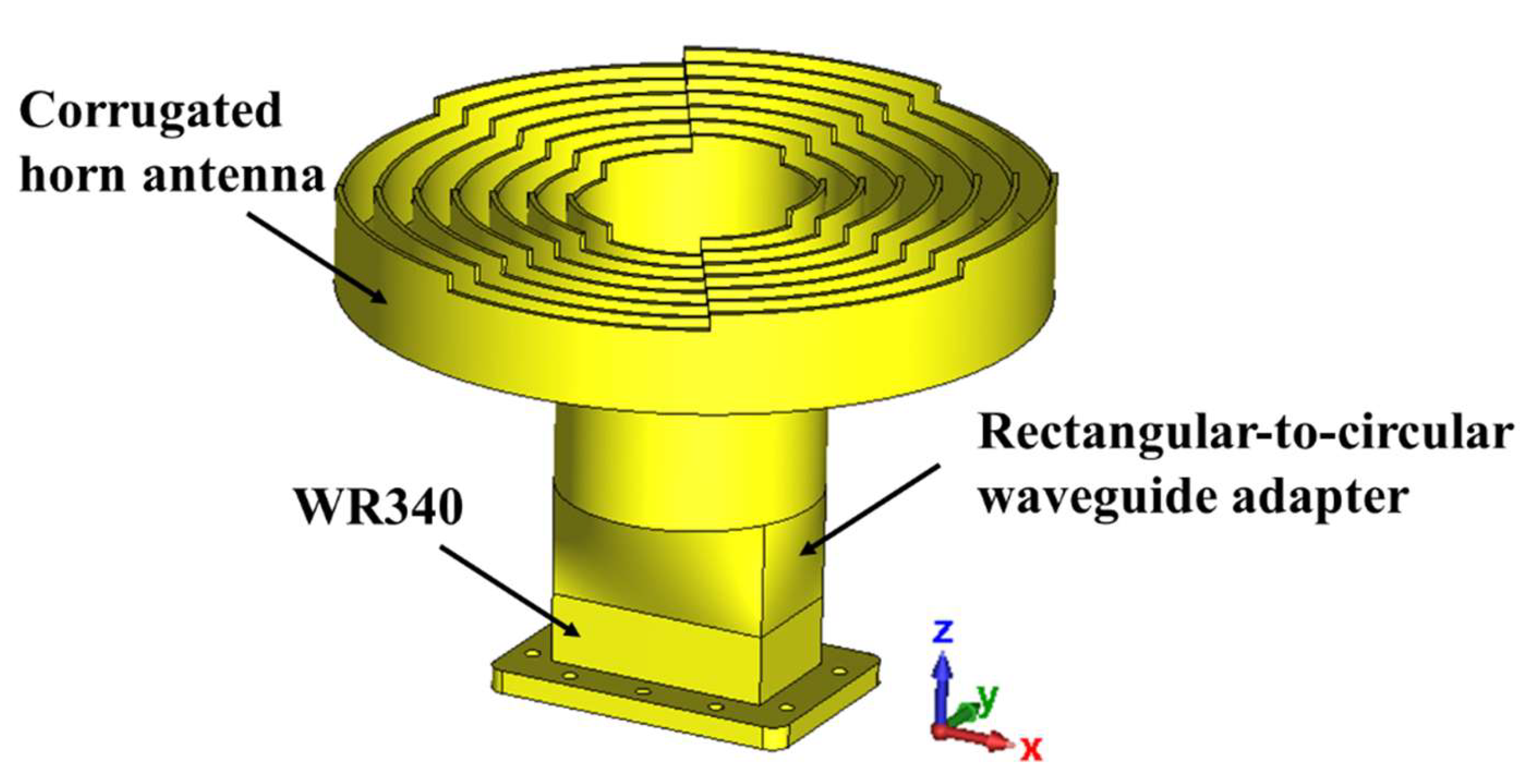
Figure 1 illustrates the geometry of the proposed low-RCS corrugated horn antenna. The proposed corrugated horn antenna can be monolithically fabricated using 3D printing technology without the requirement for internal supports. Compared to conventional corrugated horn antennas, this design achieves a low RCS in the X-band by partitioning the aperture into eight equal sections with distinct heights. In addition to the specially designed corrugated horn, the antenna incorporates a rectangular-to-circular waveguide adapter. The input port of the horn is connected to a standard WR340 rectangular waveguide to facilitate antenna measurement. The antenna is modeled and simulated with the help of a commercial full-wave electromagnetic solver CST Studio Suite 2024.
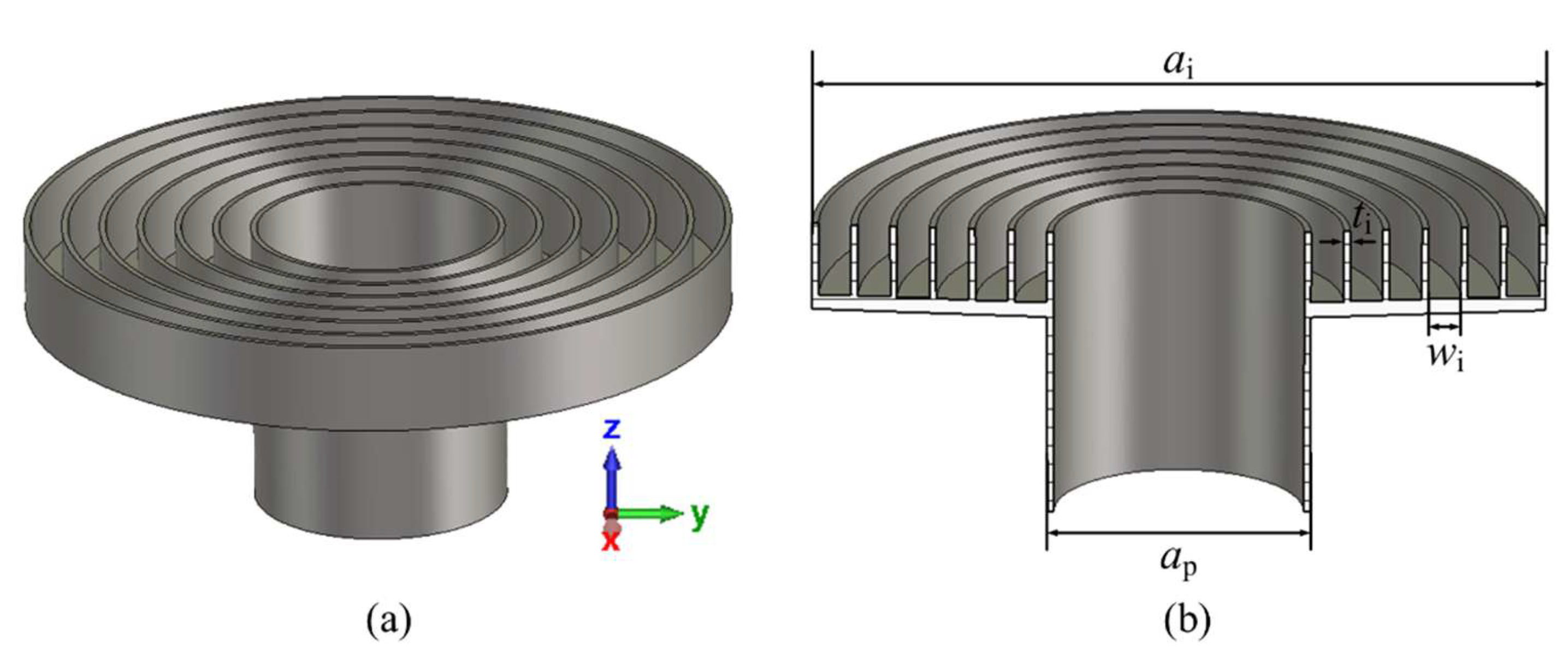
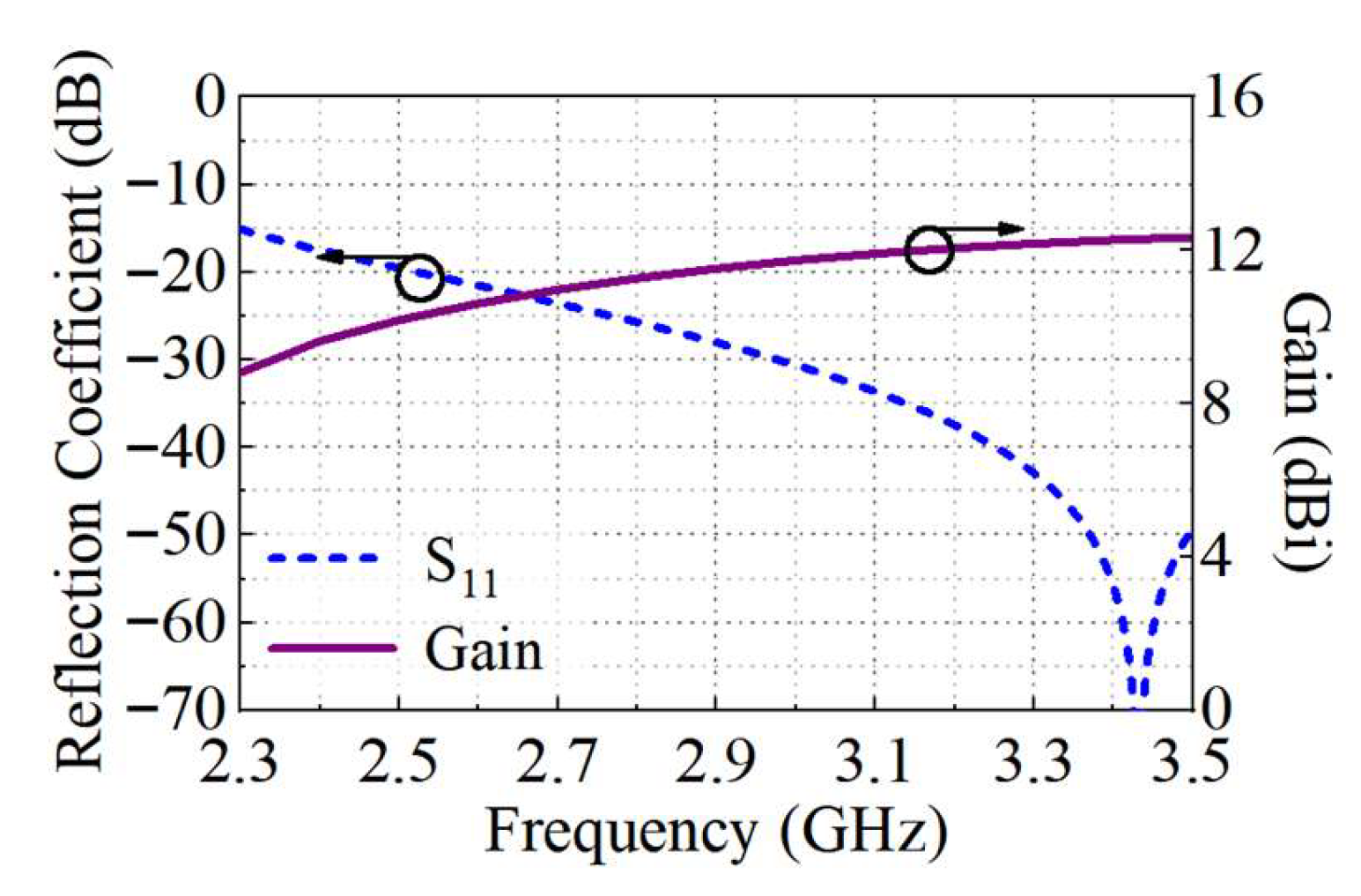
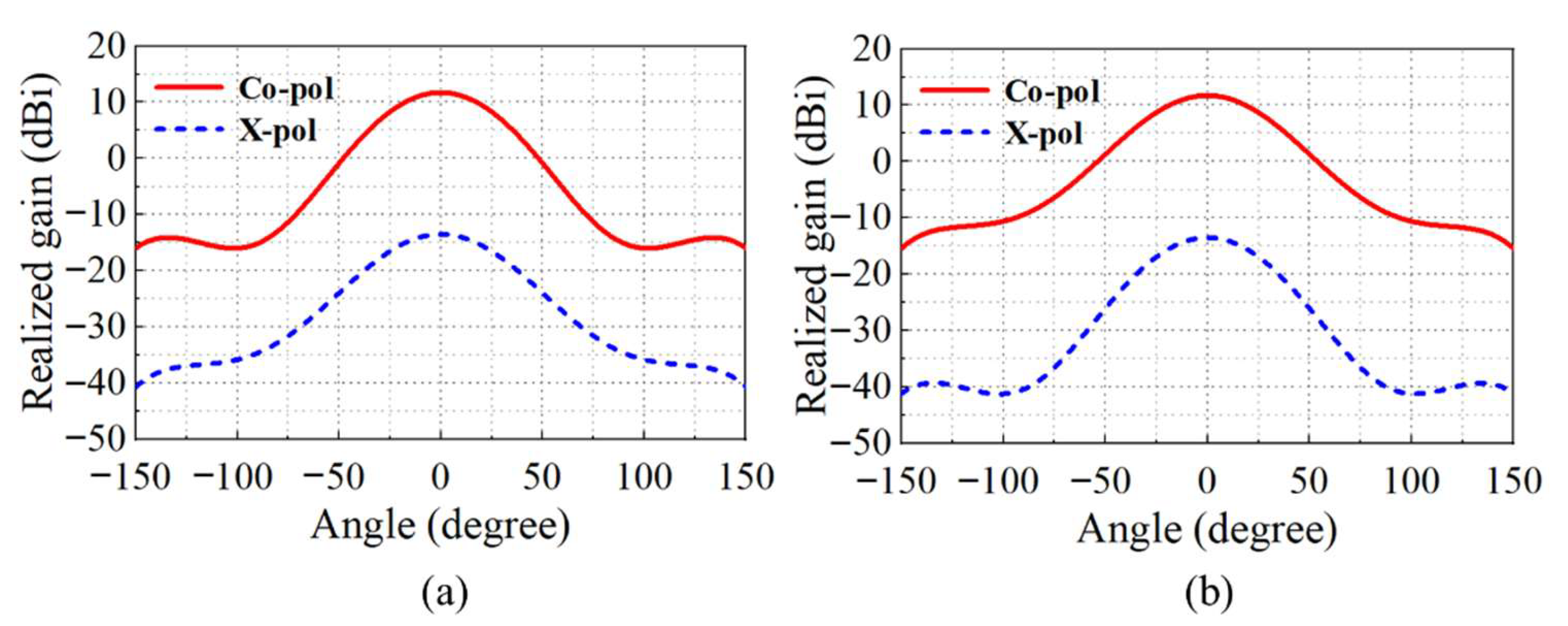
The desirable characteristics of corrugated horn antennas, such as symmetric radiation patterns, wide bandwidth, high gain, and low cross-polarization, make them widely employed as feeds for reflector antennas. Among these, the axial corrugated horn represents a specific configuration often utilized as a feed in compact antenna test ranges [31,32,33]. To quantify the improvement in RCS performance, a conventional axial corrugated horn is first designed and served as the reference horn [34]. The structure of the reference corrugated horn along with its relevant dimensions is presented in Figure 2. The number of grooves is dictated by the gain requirement of the corrugated horn, with a higher gain demanding a greater number of corrugations. Given the operational gain specification of approximately 10 dB for the horn antenna in this design, a corrugation count of six is determined to be optimal. Figure 3 illustrates the simulated reflection coefficient and gain of the reference corrugated horn. The horn achieves good impedance matching across the frequency of 2.3–3.5 GHz, with a reflection coefficient below −15 dB and a peak gain of 12.3 dBi. As depicted in Figure 4, the simulated radiation patterns of the horn exhibit excellent symmetry in the principal E- and H-planes at 3.0 GHz, while maintaining cross-polarization levels below −25 dB.
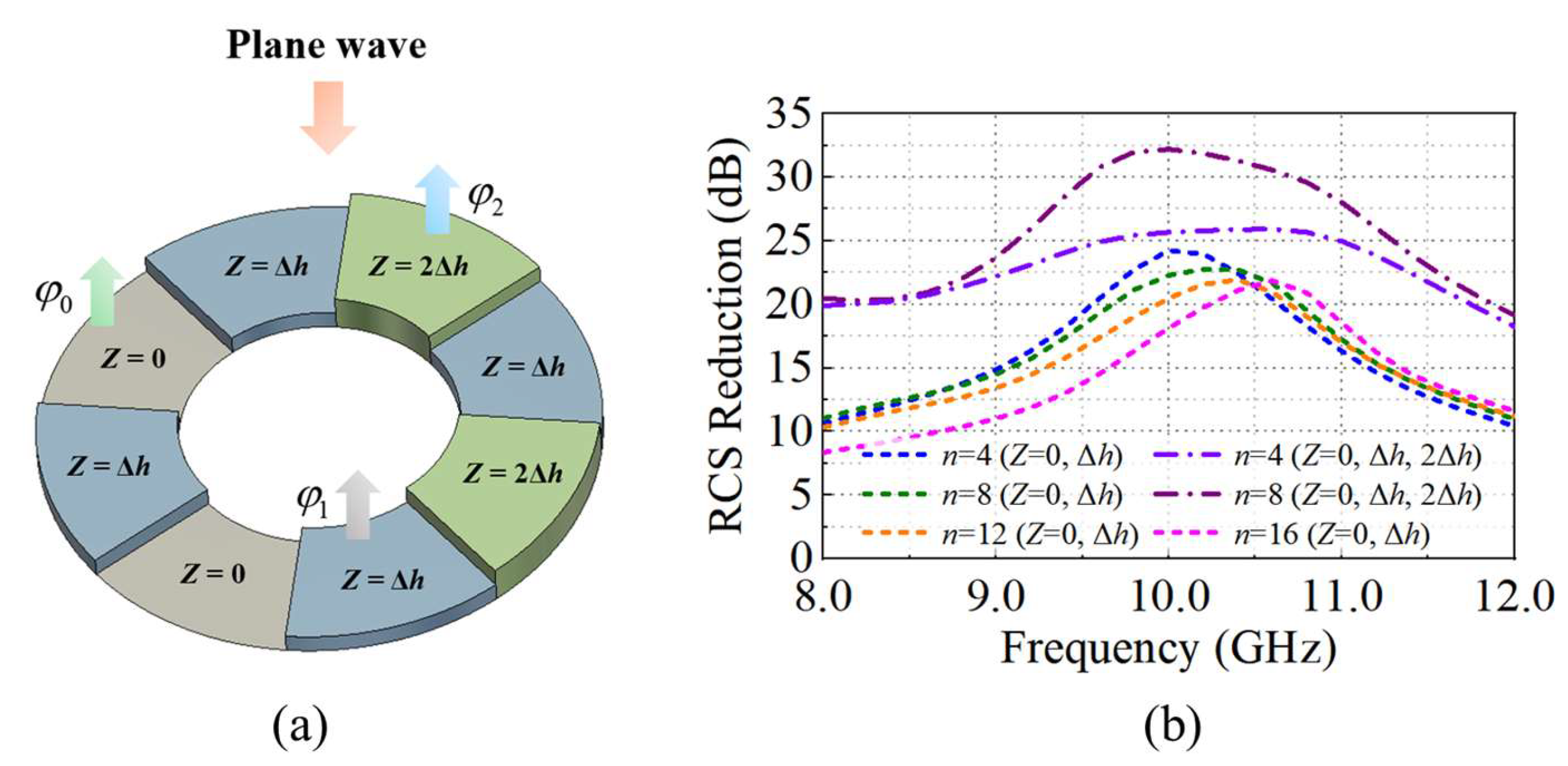
To investigate the RCS reduction principle of the proposed low-RCS horn, Figure 5 illustrates the operating mechanism and validation results. When a plane wave illuminates a nonplanar surface with steps of different heights, the reflection phase varies across each section [35], as illustrated in Figure 5a. Specifically, by leveraging the phase cancellation principle, RCS reduction can be realized when a 180° reflection phase difference between two sections causes destructive interference of the reflected waves. Consider a ring-shaped plane identical to that in Figure 5a, which is equally divided into n identical sections, with their heights set to m height steps, as exemplified for m = 3 (Z = 0, Δh, 2Δh) in the figure. The phase difference in the reflected waves from sections of different heights under incidence plane wave originates from the differing path lengths of the electromagnetic waves. The reflection phase for any section can be calculated as:
φ = φ 0 2 k Z
where k = 2π/λ is the wave vector, Z denotes the height relative to the reference plane, and φ0 represents the reflection phase from that reference plane (at Z = 0). According to Equation (1), a phase difference of 180° can be achieved by introducing a height difference of λ/4 between two adjacent sections, where λ is the wavelength at the center frequency. Since this design targets RCS reduction in the X-band (8.0–12.0 GHz), the center frequency is selected as 10 GHz, resulting in a required Δh of 7.5 mm.
Figure 5b presents the RCS reduction performance under nonplanar surface with different values of n and m. It is observed that when m = 2 (Z = 0, Δh), a higher section count n does not translate to significantly better RCS reduction. In contrast, a lower section count yields a larger reduction value in the lower frequency range. A comparative assessment concludes that the n = 4 and n = 8 configurations deliver a better RCS reduction performance. Expanding the analysis to n = 4 and n = 8 with an increased number of height steps (m = 3) reveals a marked improvement in RCS reduction compared to the configuration with only 2 height steps. The 8-section design outperformed its 4-section counterpart, which led to the final selection of the design depicted in Figure 5a. In this optimal design, the heights correspond to reflection phases φ0, φ1, and φ2, where a 180° phase difference between two adjacent sections (φ1φ0 = φ2φ1 = 180°) is key to realizing the target RCS reduction.
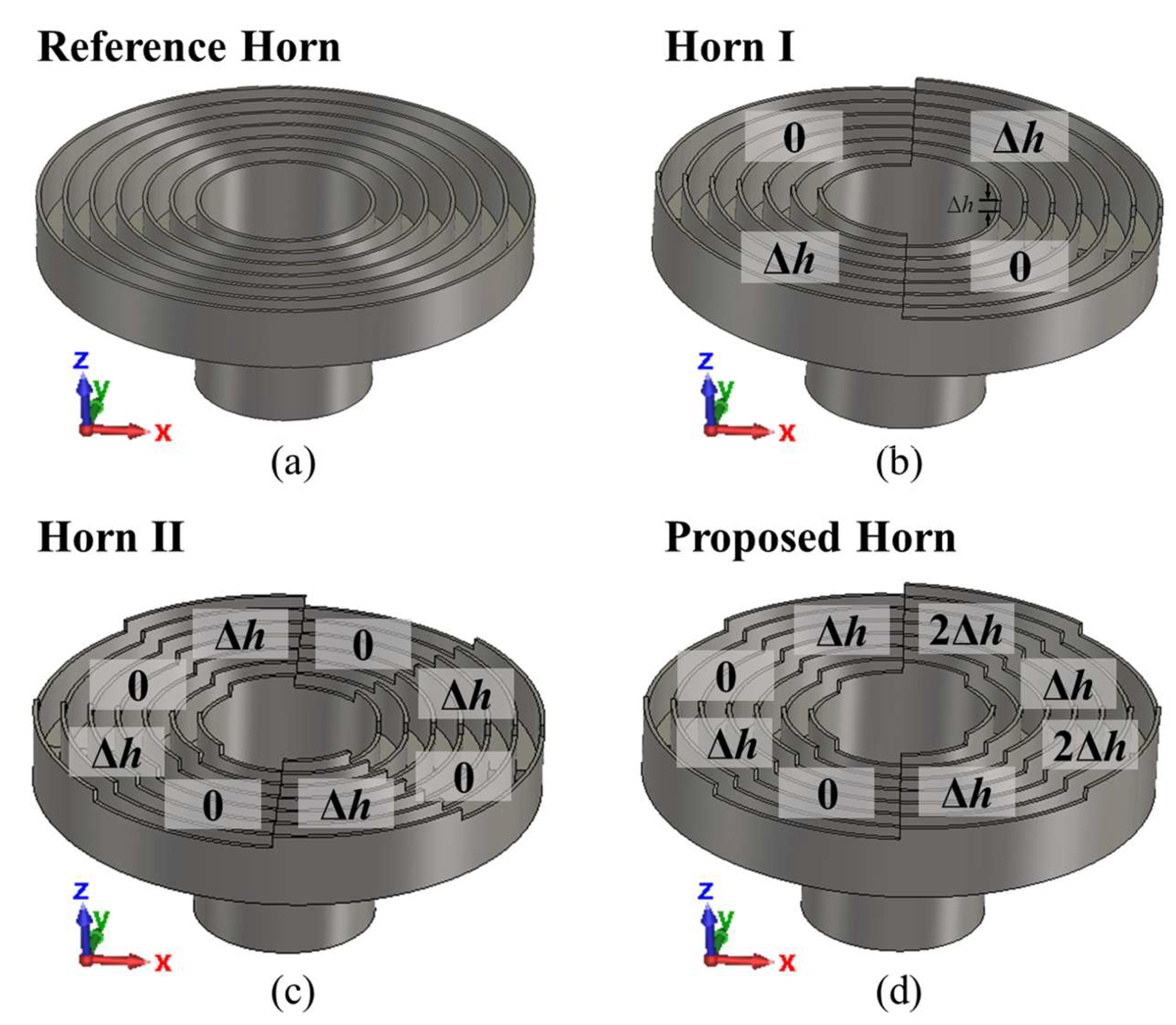
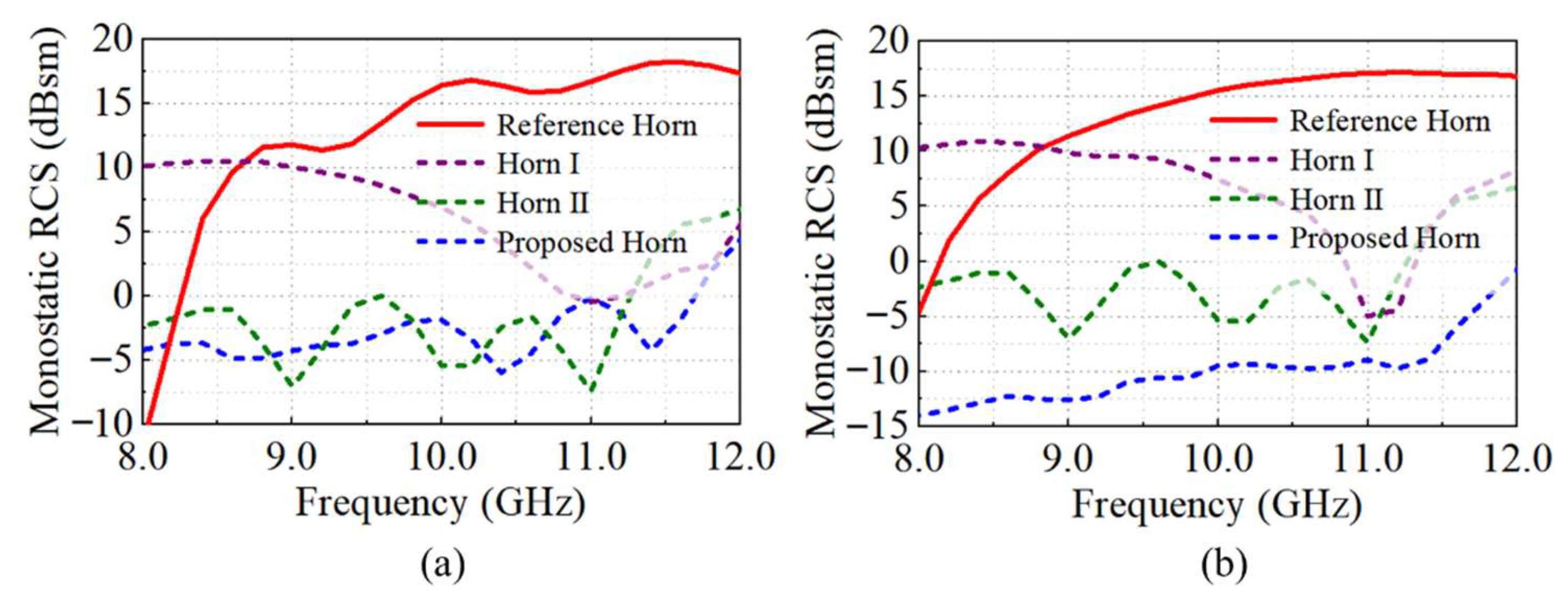
To validate the RCS reduction mechanism and performance of the proposed low-RCS horn, the design process is illustrated in Figure 6. Given the structural differences between the reference horn and the ring plane, the design process involved testing configurations with both 4 and 8 sections configured at various height steps. Based on the reference horn, two configurations are designed: Horn I segmented into four equal sections and Horn II into eight. In both cases, only two distinct heights (0 and Δh) are implemented, as depicted in Figure 6b,c, respectively. Figure 7 presents the simulated monostatic RCS of the horns under normal incidence for x-polarization and y-polarization. The electric field direction of the incident wave is aligned with the corresponding coordinate axes defined in Figure 6. Although the four-segment Horn I achieves a certain level of RCS reduction for both polarizations, its reduction bandwidth is markedly narrower than the eight-segment Horn II. Based on this foundation, the proposed low-RCS horn is eventually developed, as presented in Figure 6d. Similar to Horn II, the aperture of the proposed horn is also partitioned into eight sections, but featuring a set of three different height steps: 0, Δh, and 2Δh. When illuminated by the x-polarized incidence wave, while Horn II achieves a greater RCS reduction at certain discrete frequencies, the proposed horn attains a broader 10-dB RCS reduction bandwidth, with particularly pronounced suppression near 8.0 GHz and 12.0 GHz. Under y-polarized incidence, the proposed horn demonstrates a significantly larger RCS reduction across the entire X-band compared to Horn II. A comprehensive trade-off analysis determined that the design featuring a three-height profile is optimal. Moreover, to further broaden the RCS reduction bandwidth, the value of Δh is optimized in the simulation process, which con-verges to an optimal value of 7.2 mm.
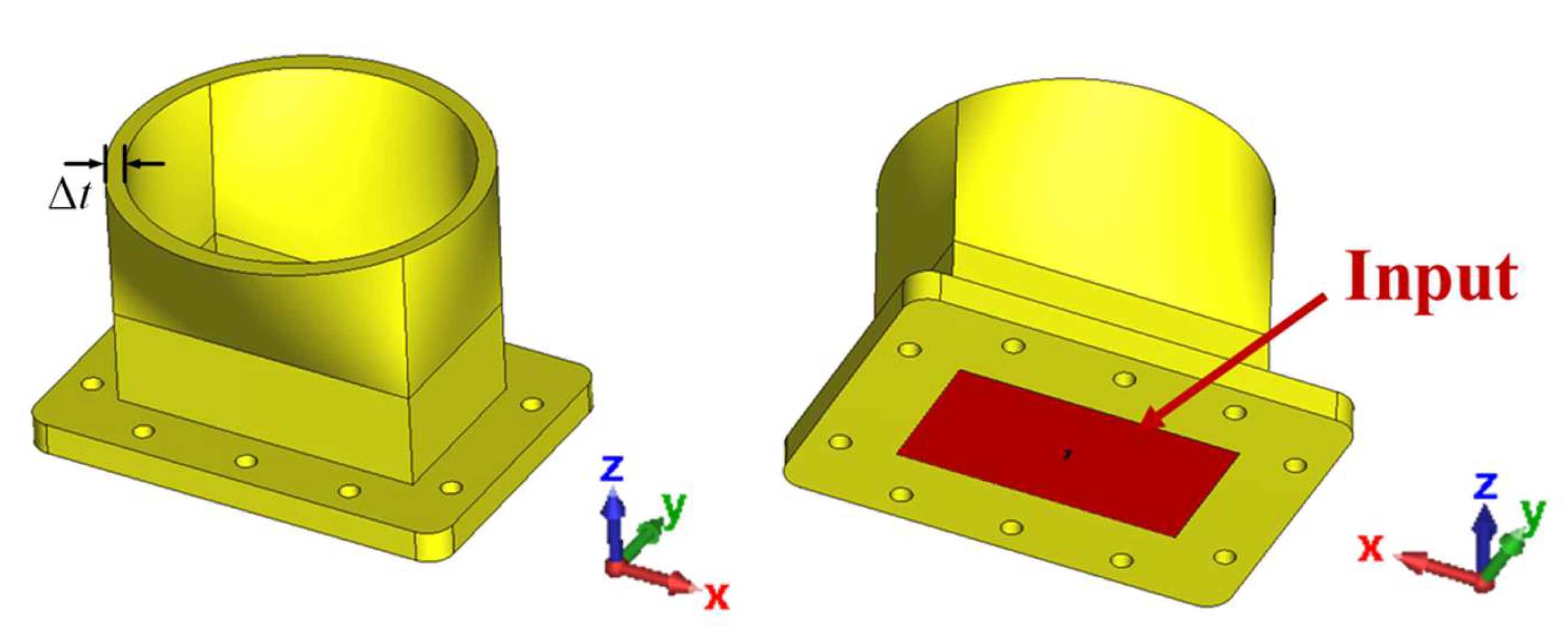
Leveraging the design freedom offered by 3D printing technology, a rectangular-to-circular waveguide adapter is designed for the proposed low-RCS corrugated horn antenna, as illustrated in Figure 8. It features a seamless transition from rectangular to circular cross-section, which is instrumental in achieving good impedance matching. Furthermore, the input port of the proposed low-RCS horn is compatible with the standard WR340 rectangular waveguide, which has a cross-section of 86.36 mm × 43.18 mm and facilitates antenna measurement and system integration. Notably, as detailed in Figure 8, the thickness of the metal housing (Δt) has been increased to a specified value of 5.7 mm to ensure structural integrity for manufacturing and to mitigate potential antenna deformation.
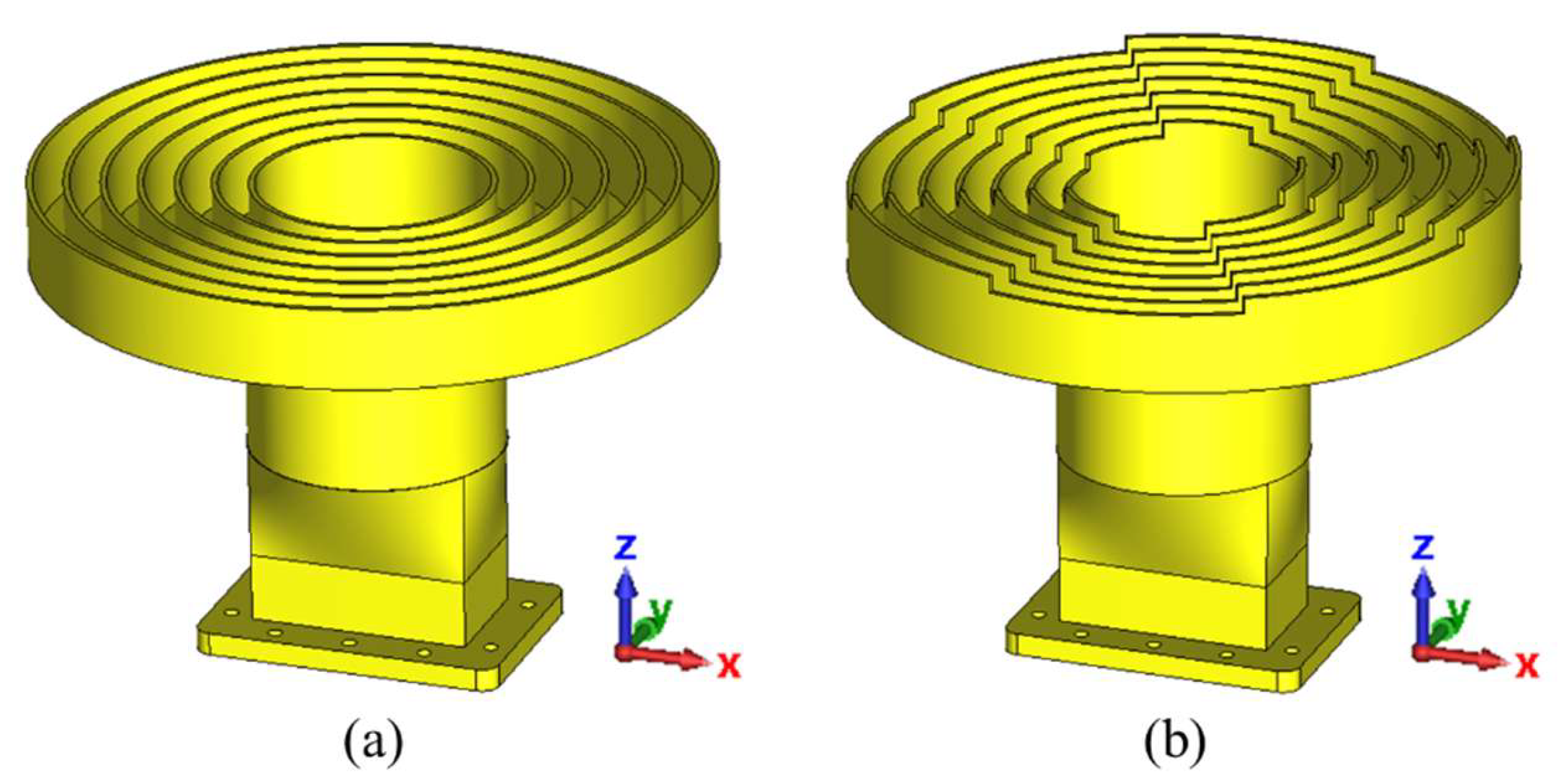
Figure 9 shows the geometry of the reference corrugated horn antenna (Ref. Ant.) and the proposed low-RCS corrugated horn antenna (Pro. Ant.). It can be observed that the aperture dimensions of the low-RCS corrugated antenna remain unchanged, with only a slight increase in the profile height compared to the reference one.
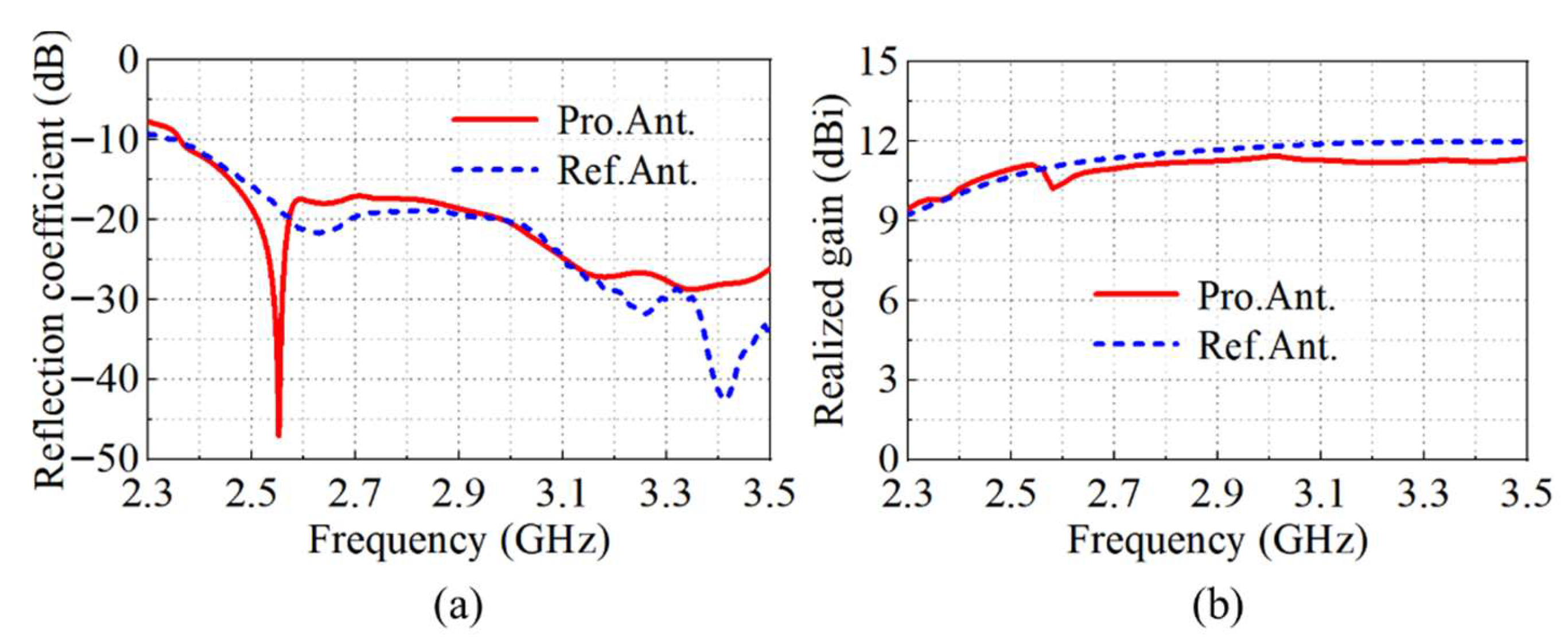
Figure 10 compares the simulated reflection coefficient and realized gain of the Pro. Ant and Ref. Ant. Clearly, the proposed low-RCS corrugated horn antenna demonstrates excellent impedance matching from 2.36 GHz to 3.5 GHz, while maintaining an operational bandwidth virtually the same as the reference antenna. Within the operating bandwidth, the proposed antenna exhibits a gain variation of less than 0.8 dB compared to the reference antenna, while reaching a peak gain of 11.3 dBi. These results indicate that the structural modifications implemented for RCS reduction have a minimal impact on the radiation performance of the horn antenna.
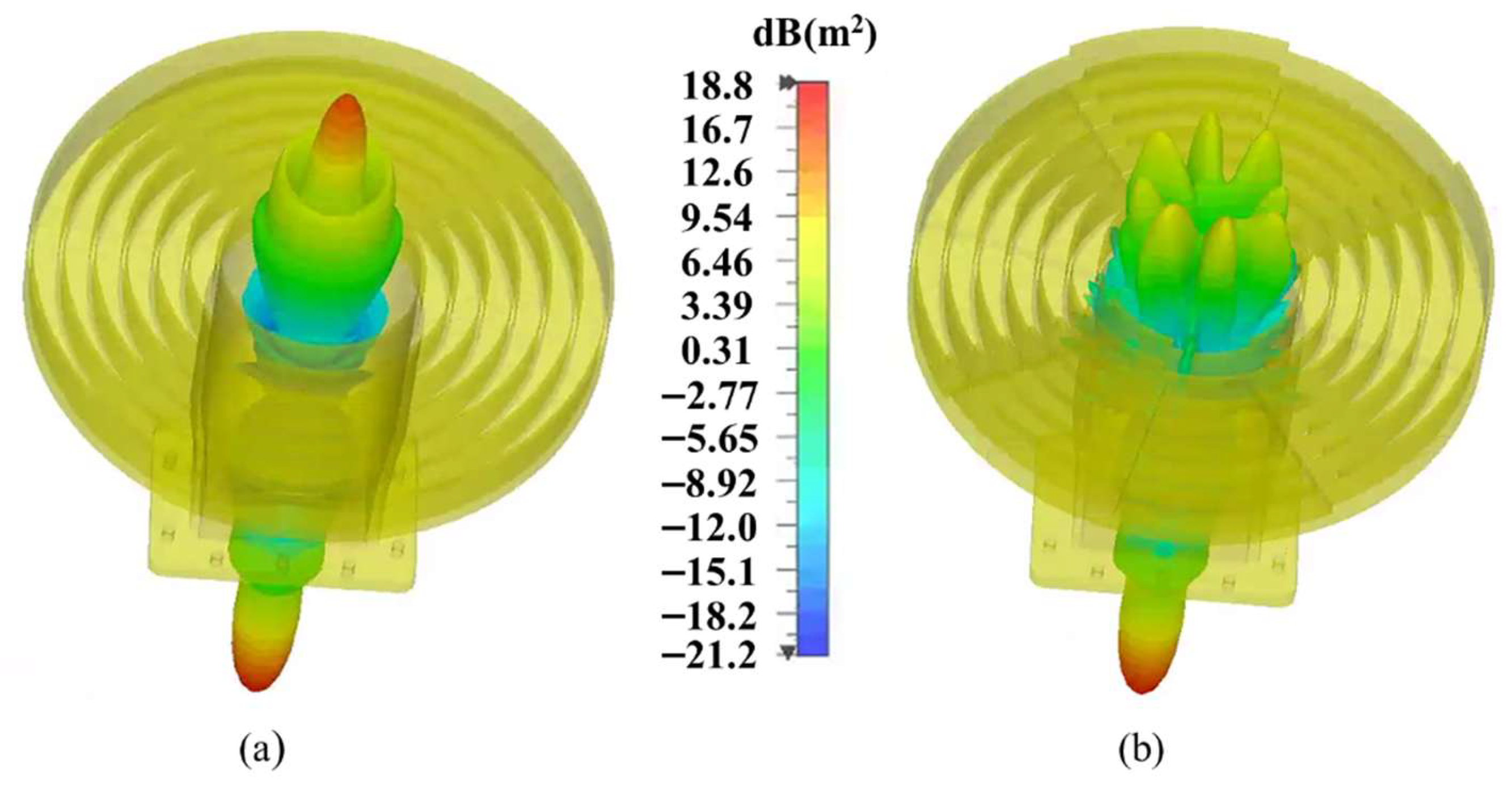
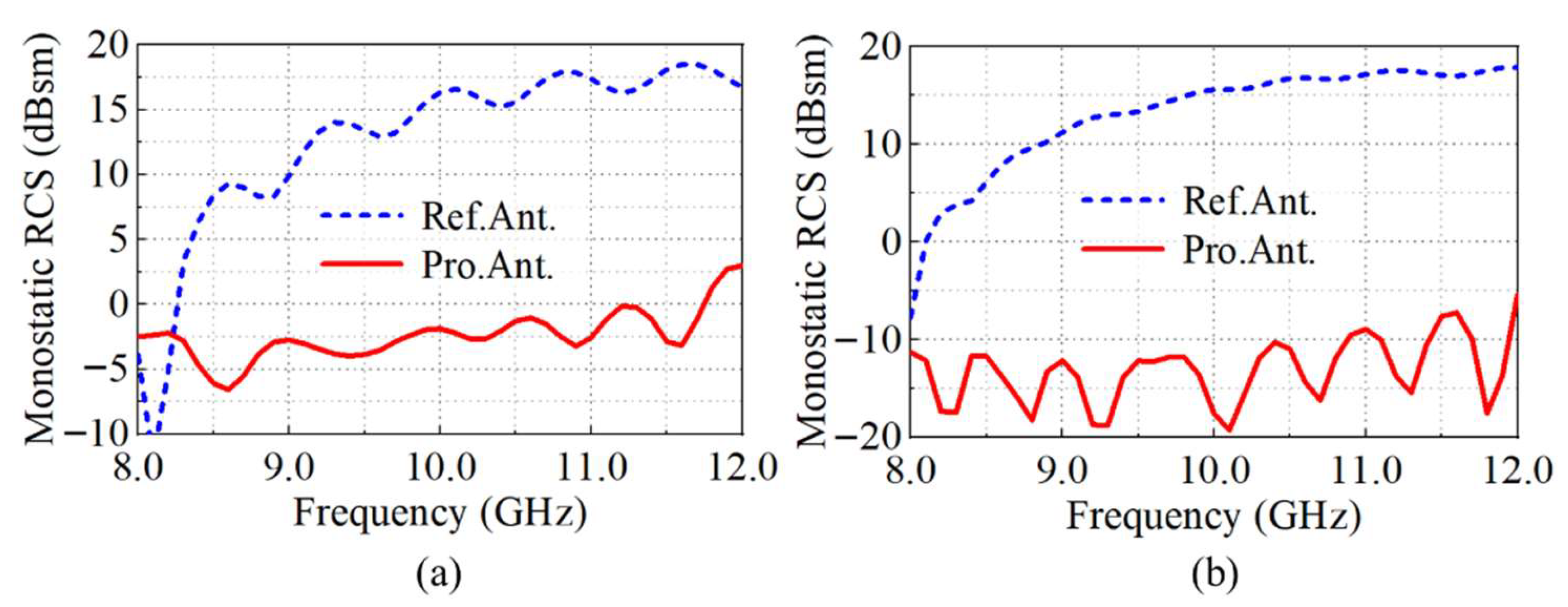
Figure 11 presents the simulated 3D RCS patterns of the two corrugated horn antennas under x-polarized incidence at 10.0 GHz. The scattering energy of the proposed low-RCS antenna is markedly reduced in the +z direction relative to the reference design, being diverted into eight discrete directions. This redistribution, which is consistent with the principle of phase cancellation [36], is achieved by means of the eight-section aperture with differential heights. The energy is redirected into non-critical angular directions, thereby leading to a reduction in the monostatic RCS. Similar 3D RCS patterns are observed under y-polarized plane wave illumination. A comparison of the simulated monostatic RCS for Pro. Ant. and Ref. Ant. under normal incidence for x- and y-polarizations is showed in Figure 12. The simulation results demonstrate that the proposed low-RCS corrugated horn achieves a 10-dB RCS reduction under x-polarized and y-polarized incident waves over the frequency ranges of 8.4–12.0 GHz and 8.1–12.0 GHz, respectively, corresponding to a nearly complete coverage of the X-band.
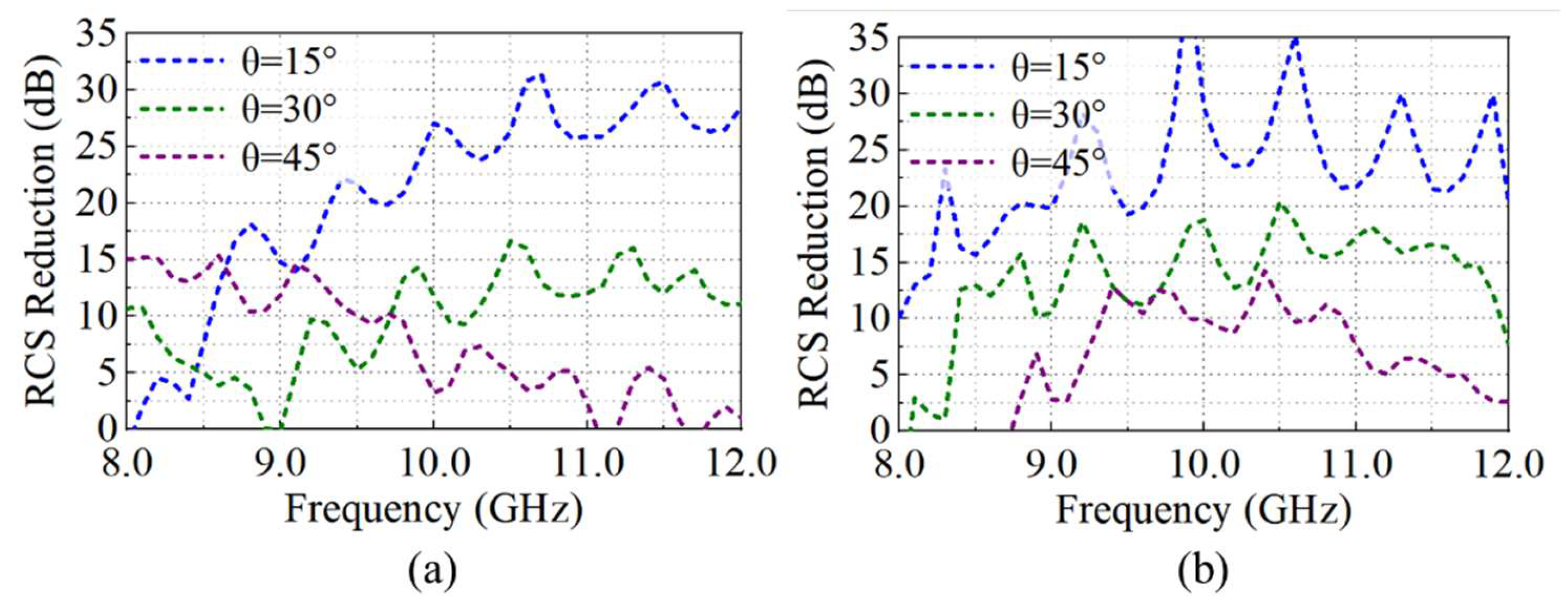
The simulated RCS reduction performance of the proposed low-RCS corrugated horn antenna under oblique incidence is shown in Figure 13. At an incidence angle of θ = 15°, the 10-dB RCS reduction bandwidths for x-polarization and y-polarization are 8.6–12.0 GHz and 8.0–12.0 GHz, respectively, showing little deviation from the normal incidence case. When the incident angle increases to 30°, the reduction at lower frequencies for x-polarization decreases significantly, resulting in a narrower bandwidth. In contrast, the y-polarization maintains a wide 10-dB RCS reduction bandwidth of 8.4–12.0 GHz. As the incident angle further increases to 45°, the 10-dB RCS reduction bandwidth becomes markedly narrower for both polarizations. The simulation results indicate that the x-polarization of the proposed horn antenna is considerably more sensitive to the incident angle than the y-polarization.

3. Experimental Results and Discussions

To validate the performance of the proposed antenna, a prototype is monolithically fabricated using SLA 3D printing technology. The manufacturing process features a resolution of 50 μm and a dimensional tolerance of ±0.1 mm, which meets the precision requirements for the intended application. A plastic body is first fabricated employing SLA 3D printing technology. Subsequently, the resin structure is coated with a 10 μm-thick copper layer through electrodes deposition to achieve a conductive surface [37,38]. Hence, the proposed antenna exhibits electromagnetic performance comparable to that of an all-metal counterpart, while offering the additional advantages of lower cost and reduced weight. In accordance with the experimental characterization in [39], an effective copper conductivity of 1.5 × 10⁷ S/m is selected for the simulations. The overall antenna dimensions are intentionally increased by 1.25% prior to printing, primarily to compensate for the cold shrinkage effect of the resin, with the minor effect of the metal coating inherently accounted for in this empirical value [29].
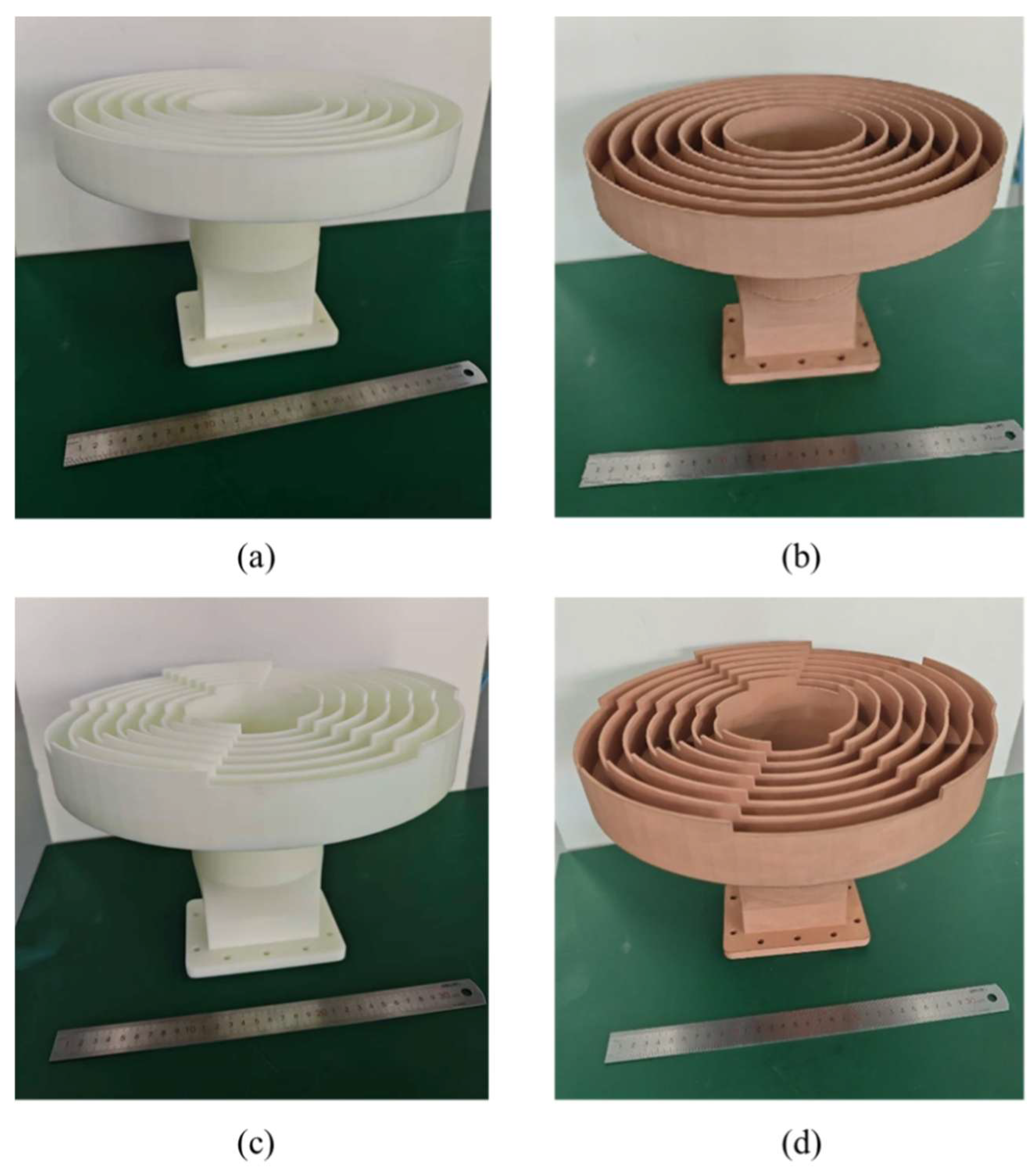
To validate the RCS reduction performance of our proposed antenna, both the reference corrugated horn antenna and the proposed low-RCS corrugated horn antenna are fabricated using the SLA 3D printing process. Figure 14 presents the fabricated prototypes. Specifically, Figure 14a,c show the Ref. Ant. and Pro. Ant. prior to metallization, while Figure 14b,d exhibit the corresponding antennas after the metallization process. The volume of the proposed low-RCS corrugated horn antenna is 297 × 297 × 228 mm3. The reflection coefficient of the antenna is measured using a Keysight Network Analyzer AV3672E. Measurements of the antenna radiation patterns are conducted in a multi-probe near-field anechoic chamber, with the setup shown in Figure 15. To facilitate connection with the test equipment, the antenna is connected to a waveguide-to-coaxial adapter during measurement.
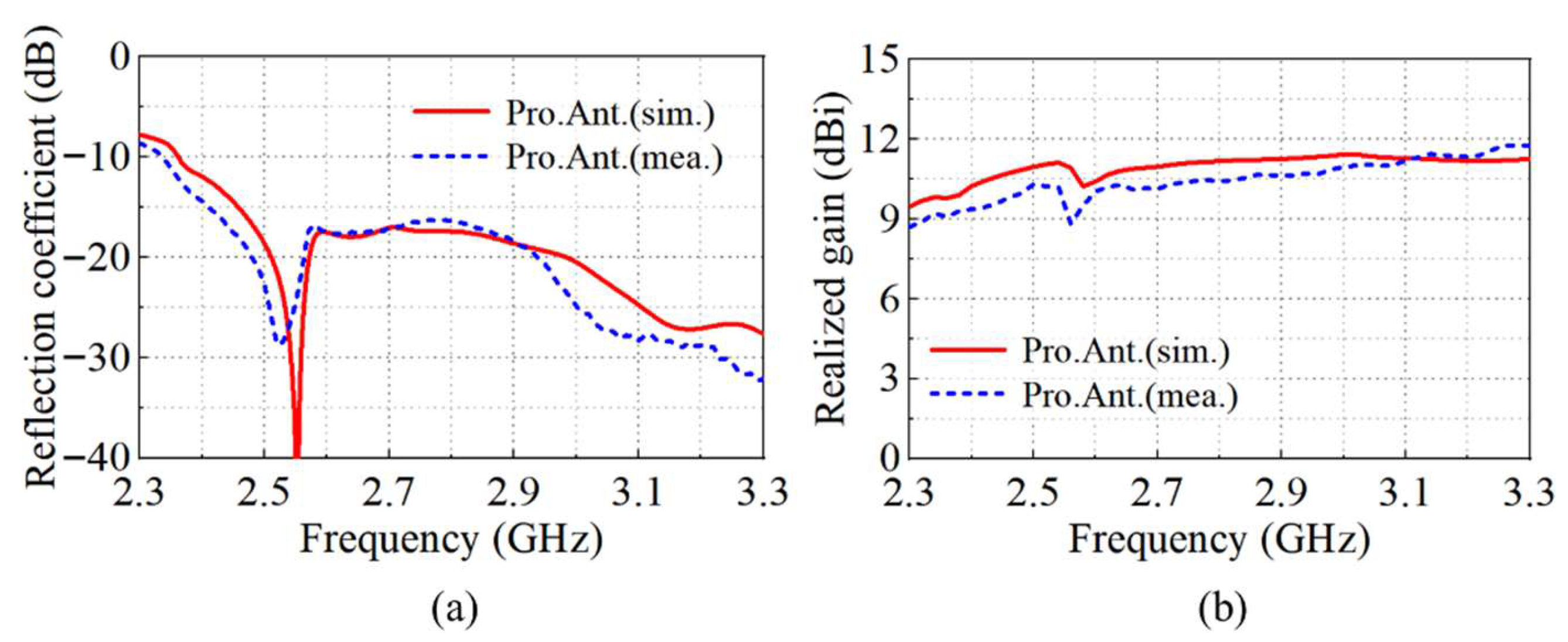
Figure 16 displays the measured and simulated reflection coefficient and realized gain of the proposed low-RCS corrugated horn antenna. To ensure compatibility, the measurement frequency range is dictated by the operational band (2.17–3.3 GHz) of the waveguide-to-coaxial adapter employed. The measured reflection coefficient is below −10 dB across the frequency range of 2.34 to 3.3 GHz, closely matching the simulation results with only a minor frequency shift, which indicates excellent impedance matching in the S-band. Within the operating band, the measured realized gain of the proposed antenna reaches up to 11.7 dBi. The discrepancy between the measured and simulated results can be attributed primarily to the losses and mismatches introduced by the waveguide-to-coaxial adapter, as well as manufacturing tolerances inherent in the 3D printing and metallization processes.
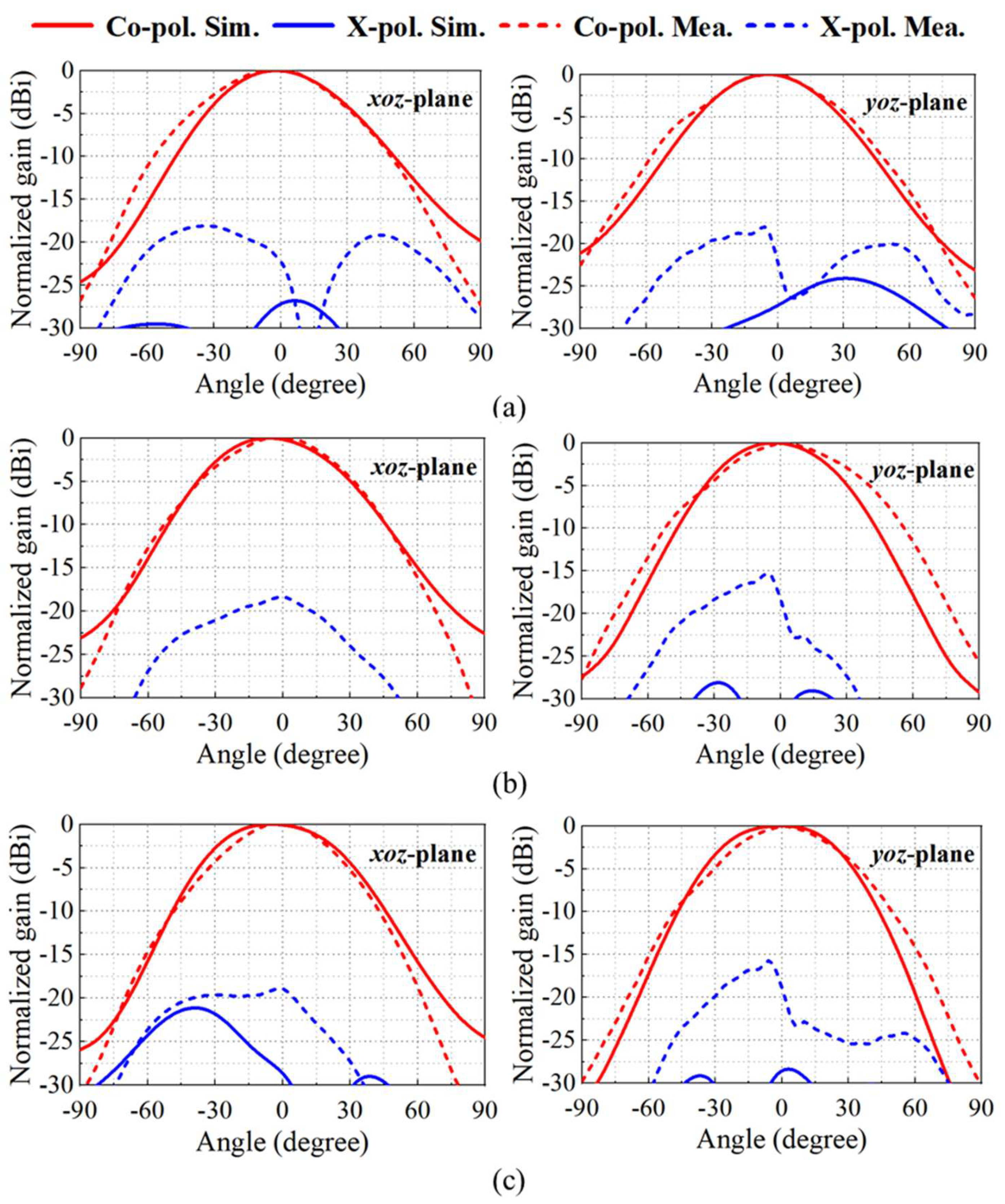
The simulated and measured far-field radiation patterns of the antenna in the xoz plane and yoz plane at 2.54, 2.90, and 3.26 GHz are illustrated in Figure 17. The results demonstrate good consistency between simulation and measurement, with highly symmetric patterns observed in both xoz and yoz planes. The antenna exhibits a simulated cross-polarization level below −25 dB and a measured level below −17.5 dB, with the discrepancy likely arising from a combination of measurement and fabrication tolerances.
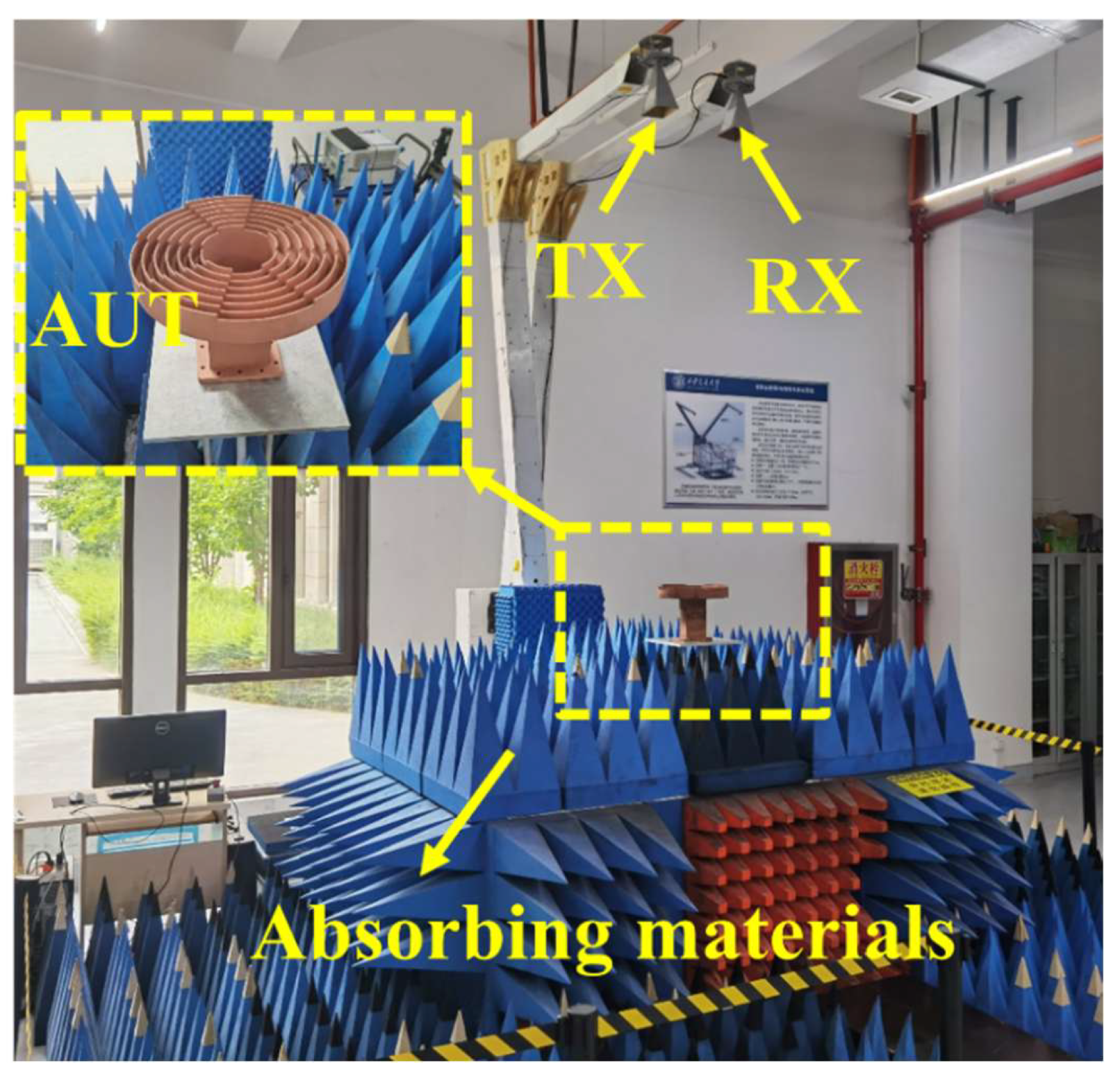
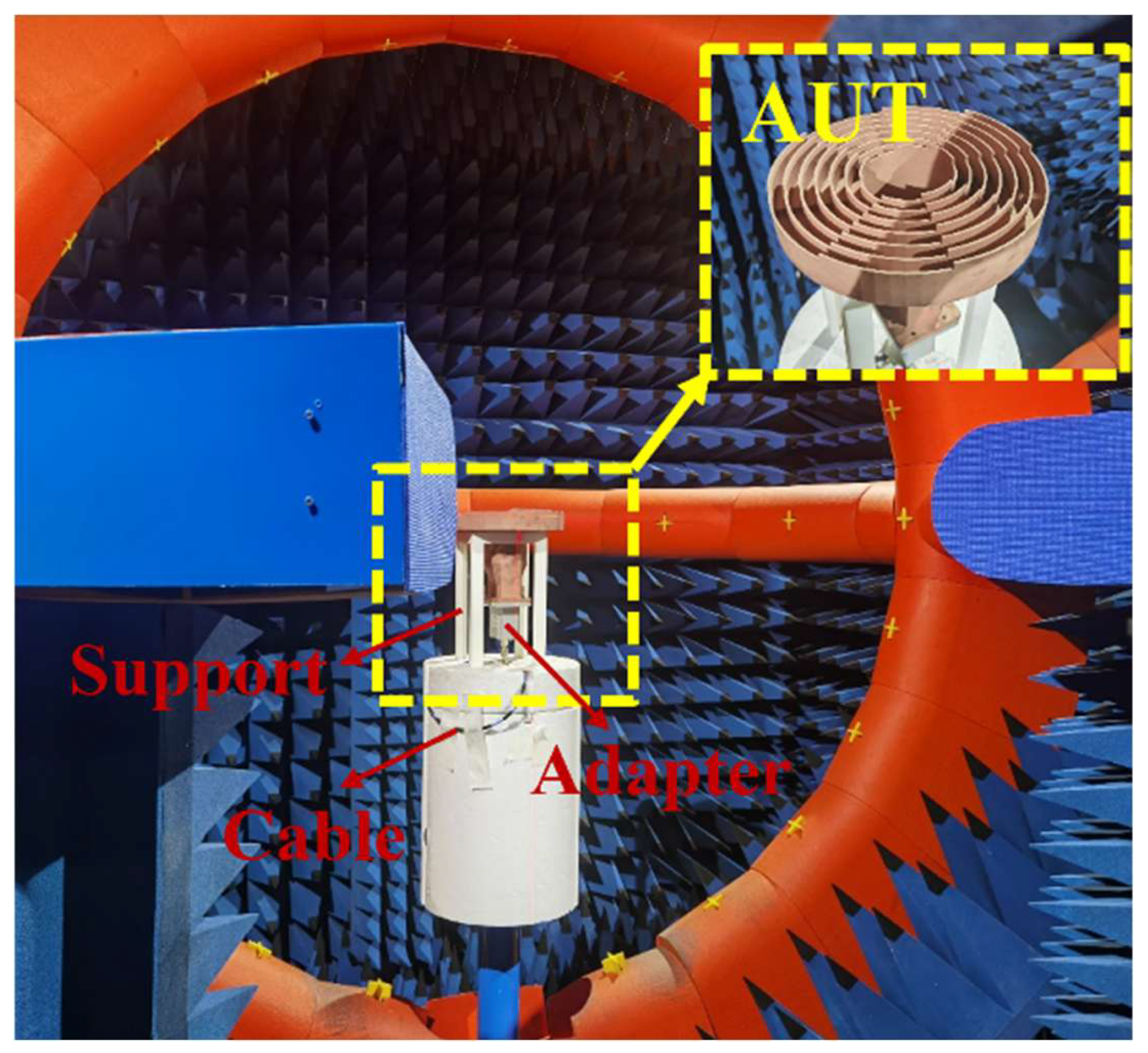
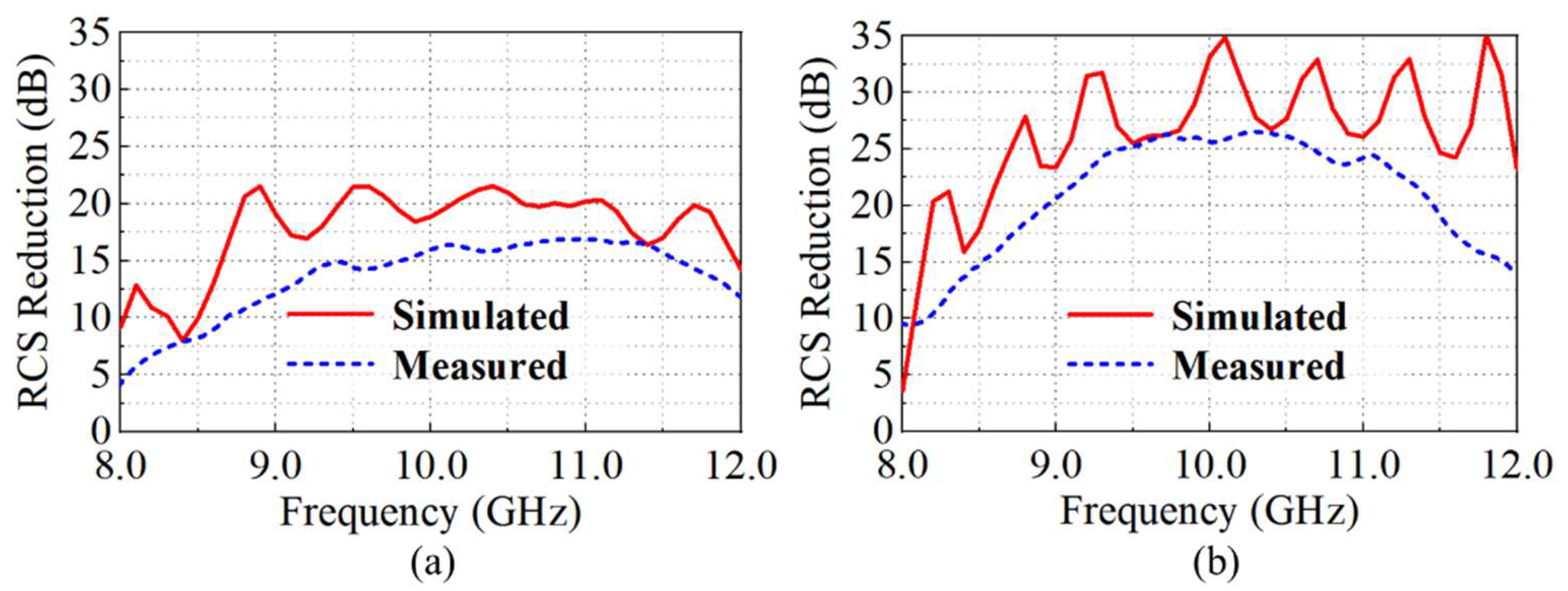
Figure 18 illustrates the measurement setup for evaluating the scattering performance of the antenna. To ensure measurement accuracy, a pair of standard-gain horn antennas operating from 8.0 to 12.0 GHz are connected to a vector network analyzer and used as the transmitting and receiving antennas in the measurement setup, respectively. Furthermore, absorbing materials are placed around the measurement setup to minimize interference and guarantee the validity of the results. During the measurement, the reference antenna served as the calibration target, with its measured RCS normalized to 0 dBsm to establish the baseline. The RCS reduction of the proposed antenna is subsequently defined relative to this baseline. The simulated and measured RCS reduction of the proposed low-RCS corrugated horn antenna compared to the reference antenna under normal incidence for x-polarization and y-polarization is depicted in Figure 19. The measured results demonstrate that the proposed low-RCS corrugated horn achieves a 10-dB RCS reduction bandwidth from 8.7 to 12.0 GHz under y-polarized plane wave incidence and from 8.2 to 12.0 GHz under y-polarized plane wave incidence, which effectively encompasses most of the X-band. Experimental results confirm that the RCS-reduction structure design is highly effective, yielding the average reduction of 14.9 dB for x-polarization and 21.5 dB for y-polarization, indicating that the structure is significantly more effective under y-polarized illumination. A discrepancy is observed between the simulated and measured RCS reduction results, where the simulations predict lower values. This discrepancy can be attributed to several factors, including manufacturing tolerances, measurement uncertainties, and imperfect anechoic chamber conditions.
To highlight the advantages of the proposed low-RCS corrugated horn antenna, a performance comparison is conducted with several reported low-RCS antennas listed in Table 1. Owing to the proposed design’s merits combined with the inherent wide bandwidth of the horn topology, the antenna achieves a superior impedance matching bandwidth compared to the other antennas listed, with the exception of [24]. While other works utilizing the phase cancellation principle achieve a wide RCS reduction bandwidth, their average in-band reduction level is lower than that of the proposed design. Moreover, the proposed antenna achieves an average reduction of over 20 dB under y-polarization. In contrast to absorber-based antennas [40,41], the proposed design achieves RCS reduction while maintaining minimal degradation to the radiation performance. For example, the antenna presented in [40] achieves a 10 dB RCS reduction across a wide bandwidth (6.0–16.0 GHz), but this comes at the cost of a 2 dB gain reduction relative to the absorbers. Furthermore, unlike the comparable low-RCS antennas suffer from the dielectric and assembly losses inherent to PCB fabrication, the proposed 3D-printed design inherently avoids these issues. Compared to the high-cost CNC machining process, SLA 3D printing offers significant advantages in reducing manufacturing cost and complexity, as well as in achieving a lighter antenna weight. Finally, the designed antenna features an all-metal waveguide structure, offering the benefits of higher efficiency and increased power-handling capability.

4. Conclusions

In this paper, a 3D-printed low-RCS corrugated horn antenna is investigated. Following the phase cancellation principle, the design is implemented by dividing the corrugated horn aperture into eight sections of equal area and introducing three different height steps among them. By limiting the physical modification to an increase in the profile height without expanding the aperture, the proposed antenna ensures minimal degradation to the radiation performance. The proposed low-RCS corrugated horn is integrated with a seamless rectangular-to-circular waveguide adapter. The entire all-metal antenna structure is monolithically fabricated using SLA 3D printing, offering the advantages of low cost and lightweight. The fabricated low-RCS corrugated horn antenna demonstrates good impedance matching across the S-band (2.34–3.3 GHz), with a peak gain of 11.7 dBi. Furthermore, the structural design for RCS reduction enables over 10 dB of RCS reduction across most of the X-band for both x- and y-polarized incident plane waves, resulting in average reduction levels of 14.9 dB and 21.5 dB, respectively. Owing to its excellent RCS reduction in the X-band, low cost, light weight, and high efficiency, the proposed antenna is a potential solution for stealth radar systems.

Author Contributions

Conceptualization, B.C.; Methodology, B.C. and Z.L.; Project administration, B.C. and J.L.; Software, Z.L.; Supervision, S.W., Y.C. and J.L.; Writing—original draft, Z.L.; Writing—review & editing, S.W., Y.C. and J.L. All authors have read and agreed to the published version of the manuscript.

Funding

This work was supported in part by the National Key R&D Program of China under Grant 2020YFA0709802, in part by the Key Laboratory of Intelligent Space TTC&O (Space Engineering University), Ministry of Education, No. CYK2024-02-09, in part by the National Natural Science Foundation of China under Grant 62231004, and in part by the Technology Innovation Guidance Program of Shaanxi Province under Grant 2024QCY-KXJ-177.

Institutional Review Board Statement

Not applicable.

Informed Consent Statement

Not applicable.

Data Availability Statement

All data are available from the author.

Conflicts of Interest

The authors declare that they have no conflict of interest to report regarding the present study.

References

  1. Westra, A.G. Radar versus stealth: Passive radar and the future of US military power. Jt. Force Q. JFQ 2009, 55, 136–143. [Google Scholar]
  2. Zhang, C.; Wang, L.; Jiang, R.; Hu, J.; Xu, S. Radar jamming decision-making in cognitive electronic warfare: A review. IEEE Sens. J. 2023, 23, 11383–11403. [Google Scholar] [CrossRef]
  3. Knott, E.F.; Shaeffer, J.F.; Tuley, M.T. Radar Cross Section; SciTech: Raleigh, NC, USA, 2004. [Google Scholar]
  4. Wang, P.; Jia, Y.; Hu, W.; Zhang, J.; Liu, Z.-X.; Liu, Y. Broadband low-RCS circularly polarized antenna array with reconfigurable scattering patterns. IEEE Trans. Antennas Propag. 2024, 72, 2279–2290. [Google Scholar] [CrossRef]
  5. Li, M.; Huang, Z.; Yang, X.-X.; Zeng, D.; Deng, R.; Yi, Z. Broadband in-band and out-of-band RCS reduction of antenna based on multiple mechanisms. IEEE Antennas Wirel. Propag. Lett. 2024, 23, 4673–4677. [Google Scholar] [CrossRef]
  6. Han, Z.-J.; Song, W.; Sheng, X.-Q. Gain enhancement and RCS reduction for patch antenna by using polarization-dependent EBG surface. IEEE Antennas Wirel. Propag. Lett. 2017, 16, 1631–1634. [Google Scholar] [CrossRef]
  7. Mu, W.; Yuan, H.; Zhu, L.; Xu, G.; Hao, Z.; Li, L.; Cao, Q. An ultrawideband low-RCS circularly polarized antenna array based on hybrid mechanism. IEEE Trans. Antennas Propag. 2025, 73, 254–265. [Google Scholar] [CrossRef]
  8. Wu, L.-C.; Doong, D.-J.; Lai, J.-W. Influences of nononshore winds on significant wave height estimations using coastal X-band radar images. IEEE Trans. Geosci. Remote Sens. 2022, 60, 4202111. [Google Scholar] [CrossRef]
  9. Chang, L.; Liu, H. Low-profile and miniaturized dual-band microstrip patch antenna for 5G mobile terminals. IEEE Trans. Antennas Propag. 2022, 70, 2328–2333. [Google Scholar] [CrossRef]
  10. Zhang, T.; Chen, Y.; Liu, Z.; Yang, S. A low-scattering vivaldi antenna array with slits on nonradiating edges. IEEE Trans. Antennas Propag. 2023, 71, 1999–2004. [Google Scholar] [CrossRef]
  11. Han, Y.; Gong, S.; Wang, J.; Li, Y.; Qu, S.; Zhang, J. Reducing RCS of patch antennas via dispersion engineering of metamaterial absorbers. IEEE Trans. Antennas Propag. 2020, 68, 1419–1425. [Google Scholar] [CrossRef]
  12. Sun, J.; Cao, Q.; Pan, M.; Zhu, L. A broadband multilayer absorber with switchable function of radiation. IEEE Trans. Antennas Propag. 2022, 70, 6841–6849. [Google Scholar] [CrossRef]
  13. Wang, X.; Qin, P.-Y.; Jin, R. Low RCS transmitarray employing phase controllable absorptive frequency-selective transmission elements. IEEE Trans. Antennas Propag. 2021, 69, 2398–2403. [Google Scholar] [CrossRef]
  14. Zhang, K.; Tan, R.; Jiang, Z.H.; Huang, Y.; Tang, L.; Hong, W. A compact ultrawideband dual-polarized vivaldi antenna with radar cross section reduction. IEEE Antennas Wirel. Propag. Lett. 2022, 21, 1323–1327. [Google Scholar] [CrossRef]
  15. Ding, Y.; Li, M.; Su, J.; Guo, Q.; Yin, H.; Li, Z.; Song, J. Ultrawideband frequency-selective absorber designed with an adjustable and highly selective notch. IEEE Trans. Antennas Propag. 2021, 69, 1493–1504. [Google Scholar] [CrossRef]
  16. Shi, Y.; Liu, X.Y. Dual-polarized frequency selective rasorber with two wide transmission bands. IEEE Trans. Antennas Propag. 2023, 71, 6260–6265. [Google Scholar] [CrossRef]
  17. Yu, D.; Dong, Y.; Zhang, Z.; Lin, M.; Han, L. High-selectivity frequency-selective rasorber with tunable absorptivity. IEEE Trans. Antennas Propag. 2023, 71, 3620–3630. [Google Scholar] [CrossRef]
  18. Xia, J.; Wei, J.; Liu, Y.; Zhang, Y.; Guo, S.; Li, C.; Bie, S.; Jiang, J. Design of a wideband absorption frequency selective rasorber based on double lossy layers. IEEE Trans. Antennas Propag. 2020, 68, 5718–5723. [Google Scholar] [CrossRef]
  19. Zhu, L.; Sun, J.; Xu, G.; Hao, Z.; Cao, Q. An integrated antenna array with broadband, low-RCS, and high-gain characteristics. IEEE Trans. Antennas Propag. 2024, 72, 5408–5413. [Google Scholar] [CrossRef]
  20. Paquay, M.; Iriarte, J.C.; Ederra, I.; Gonzalo, R.; Maagt, P.D. Thin AMC structure for radar cross-section reduction. IEEE Trans. Antennas Propag. 2007, 55, 3630–3638. [Google Scholar] [CrossRef]
  21. Sang, D.; Chen, Q.; Ding, L.; Guo, M.; Fu, Y. Design of checkerboard AMC structure for wideband RCS reduction. IEEE Trans. Antennas Propag. 2019, 67, 2604–2612. [Google Scholar] [CrossRef]
  22. Cheng, Y.-F.; Feng, J.; Liao, C.; Ding, X. Analysis and design of wideband low-RCS wide-scan phased array with AMC ground. IEEE Antennas Wirel. Propag. Lett. 2021, 20, 209–213. [Google Scholar] [CrossRef]
  23. El-Sewedy, M.F.; Abdalla, M.A. A monostatic and bistatic RCS reduction using artificial magnetic conductor metasurface. IEEE Trans. Antennas Propag. 2023, 71, 1988–1992. [Google Scholar] [CrossRef]
  24. Luo, H.; Wei, S.; Zhang, H.; Gong, K.; Liu, Q. A C-band polarization conversion metasurface antenna with broadband RCS reduction. IEEE Antennas Wirel. Propag. Lett. 2025, 24, 2447–2451. [Google Scholar] [CrossRef]
  25. Wang, P.; Jia, Y.; Hu, W.; Liu, Y.; Lei, H.; Sun, H.; Cui, T.J. Circularly polarized polarization conversion metasurface inspired antenna array with low RCS over a wide band. IEEE Trans. Antennas Propag. 2023, 71, 5626–5636. [Google Scholar] [CrossRef]
  26. Wu, S.; Li, J.; Chen, X.; Yan, S.; Zhang, X.Y. A Ka-band SLM printed filtering divider-fed magnetoelectric dipole antenna array using embedded gap waveguide. IEEE Antennas Wirel. Propag. Lett. 2023, 22, 774–778. [Google Scholar] [CrossRef]
  27. Bhavar, V.; Kattire, P.; Patil, V.; Khot, S.; Gujar, K.; Singh, R. A review on powder bed fusion technology of metal additive manufacturing. In Additive Manufacturing Handbook; CRC Press: Boca Raton, FL, USA, 2017; pp. 251–253. [Google Scholar]
  28. Cao, Y.; Yan, S. A dual-mode SIW compact monopulse comparator for sum and difference multibeam radar applications. IEEE Microw. Wirel. Compon. Lett. 2022, 32, 41–44. [Google Scholar] [CrossRef]
  29. Li, J.; Wu, S.; Li, Y.; Chen, X.; Yan, S.; Zhang, X.Y. SLA printed dual-band conical-beam filtering antenna. IEEE Antennas Wirel. Propag. Lett. 2023, 22, 2462–2466. [Google Scholar] [CrossRef]
  30. Li, J.; Wen, Y.; Li, Q.; Wu, S.; Xu, K.-D.; Zhang, X.Y. Frequency-controlled wide-angle scanning antenna based on sinusoidally modulated waveguide using stereo lithography appearance technology. IEEE Antennas Wirel. Propag. Lett. 2024, 23, 1909–1913. [Google Scholar] [CrossRef]
  31. Hesari, S.S.; Henke, D.; Veidt, B.; Reshetov, V.; Knee, L.B.G. A compact axial-ring feed horn and vacuum window model for a cryogenic Q-band receiver. In Proceedings of the 2021 IEEE 19th International Symposium on Antenna Technology and Applied Electromagnetics (ANTEM), Winnipeg, MB, Canada, 8–11 August 2021; pp. 1–2. [Google Scholar]
  32. Zhao, Z.; Wang, Z.; Kelly, J.R.; Gao, S. Balanced feed low cross-polarization quad-ridged horn antenna with center cross fusiform loaded. IEEE Trans. Antennas Propag. 2021, 69, 6004–6009. [Google Scholar] [CrossRef]
  33. Niu, W.; Yao, Y.; Liu, X.; Qi, L.; Chen, Z.; Yu, J.; Chen, X. Design of a coaxial feed horn for high efficiency compact antenna test range. In Proceedings of the 2018 11th UK-Europe-China Workshop on Millimeter Waves and Terahertz Technologies (UCMMT), Hangzhou, China, 5–7 September 2018; pp. 1–3. [Google Scholar]
  34. Wang, L.; Lei, L.; Wang, S. The design of a new H plane corrugated horn antenna in THz frequency. In Proceedings of the 2016 2nd IEEE International Conference on Computer and Communications (ICCC), Chengdu, China, 14–17 October 2016; pp. 1715–1718. [Google Scholar]
  35. Su, J.; Li, W.; Qu, M.; Yu, H.; Li, Z.; Qi, K.; Yin, H. Ultrawideband RCS reduction metasurface based on hybrid mechanism of absorption and phase cancellation. IEEE Trans. Antennas Propag. 2022, 70, 9415–9424. [Google Scholar] [CrossRef]
  36. Liu, Y.; Li, K.; Jia, Y.; Hao, Y.; Gong, S.; Guo, Y.J. Wideband RCS Reduction of a Slot Array Antenna Using Polarization Conversion Metasurfaces. IEEE Trans. Antennas Propag. 2016, 64, 326–331. [Google Scholar] [CrossRef]
  37. Daniel, J.P.; Havot, H.; Sayegrih, K. Antenna developments using polymers and metallized foam. In Proceedings of the Second European Conference on Antennas and Propagation, EuCAP 2007, Edinburgh, UK, 11–16 November 2007; pp. 1–6. [Google Scholar]
  38. Anguera, J.; Daniel, J.P.; Borja, C.; Mumbru, J.; Puente, C.; Leduc, T.; Laeveren, N.; Van Roy, P. Metallized foams for fractal-shaped microstrip antennas. IEEE Antennas Propag. Mag. 2008, 50, 20–37. [Google Scholar] [CrossRef]
  39. Li, J.; Guo, C.; Mao, L.; Xiang, J.; Huang, G.-L.; Yuan, T. Monolithically 3-D printed hemispherical resonator waveguide filters with improved outof-band rejections. IEEE Access 2018, 6, 57030–57048. [Google Scholar] [CrossRef]
  40. Zou, Y.; Kong, X.; Xing, L.; Jiang, S.; Wang, X.; Wang, H.; Liu, Z.; Zhao, Y.; Bornemann, J. A slot antenna array with reconfigurable RCS using liquid absorber. IEEE Trans. Antennas Propag. 2022, 70, 6095–6100. [Google Scholar] [CrossRef]
  41. Yang, Y.; Wang, C.; Yang, H.; Li, S.; Zhou, X.; Jin, J. A hybrid mechanism water-based metasurface for antenna RCS reduction. IEEE Trans. Antennas Propag. 2024, 72, 6464–6471. [Google Scholar] [CrossRef]
  42. Tian, Y.; Gao, H.; Yao, W.; Wu, J.; Guo, L. Low-profile and wide-band RCS-reduction antenna array based on the metasurface polarization converter. Opt. Express 2022, 30, 41313–41327. [Google Scholar] [CrossRef] [PubMed]
  43. Sun, S.; Jiang, W.; Li, X.; Liu, P.; Gong, S. Ultrawideband high-efficiency 2.5-dimensional polarization conversion metasurface and its application in RCS reduction of antenna. IEEE Antennas Wirel. Propag. Lett. 2019, 18, 881–885. [Google Scholar] [CrossRef]
  44. Zheng, Q.; Liu, W.; Zhao, Q.; Kong, L.; Ren, Y.-H.; Yang, X.-X. Broadband RCS reduction, antenna miniaturization, and bandwidth enhancement by combining reactive impedance surface and polarization conversion metasurface. IEEE Trans. Antennas Propag. 2024, 72, 7395–7400. [Google Scholar] [CrossRef]
Figure 1. Geometry of the proposed low-RCS corrugated horn antenna.
Applsci 15 11921 g001
Figure 2. Geometry of the reference corrugated horn. (a) 3D view. (b) Sectional View. The parameters are given as follows (unit: mm): ai = 296.67 mm, ap = 106.73 mm, ti = 2.64 mm, wi = 13.19 mm.
Applsci 15 11921 g002
Figure 3. Simulated reflection coefficient and gain of the reference corrugated horn.
Applsci 15 11921 g003
Figure 4. Simulated radiation patterns of the reference corrugated horn at 3.0 GHz. (a) E-plane. (b) H-plane.
Applsci 15 11921 g004
Figure 5. Theoretical analysis and verification. (a) Operating mechanism of the proposed antenna for RCS reduction. (b) RCS reduction performance under nonplanar surface with different values of n and m.
Applsci 15 11921 g005
Figure 6. Design procedure of the proposed low-RCS horn. (a) Reference Horn. (b) Horn I. (c) Horn II. (d) Proposed Horn.
Applsci 15 11921 g006
Figure 7. Different simulated monostatic RCS of the horns under normal incidence for (a) x-polarization and (b) y-polarization.
Applsci 15 11921 g007
Figure 8. Geometry of the rectangular-to-circular waveguide adapter of the proposed low-RCS corrugated horn antenna.
Applsci 15 11921 g008
Figure 9. Geometry of the corrugated horn antennas. (a) Ref. Ant. (b) Pro. Ant.
Applsci 15 11921 g009
Figure 10. Simulated results of the Pro. Ant. and Ref. Ant. (a) Reflection coefficient. (b) Realized gain.
Applsci 15 11921 g010
Figure 11. Simulated 3D RCS patterns of the corrugated horn antennas at 10.0 GHz under normal incidence for x-polarization. (a) Ref. Ant. (b) Pro. Ant.
Applsci 15 11921 g011
Figure 12. Simulated monostatic RCS of the Pro. Ant. and Ref. Ant. under normal incidence for (a) x-polarization and (b) y-polarization.
Applsci 15 11921 g012
Figure 13. Simulated RCS reduction of the proposed low-RCS corrugated horn antenna under oblique incidence for (a) x-polarization and (b) y-polarization.
Applsci 15 11921 g013
Figure 14. Fabricated prototype of the corrugated horn antennas. (a) Ref. Ant. without metallization. (b) Ref. Ant. with metallization. (c) Pro. Ant. without metallization. (d) Pro. Ant. with metallization.
Applsci 15 11921 g014
Figure 15. Radiation patterns measurement setup.
Applsci 15 11921 g015
Figure 16. Measured and simulated results. (a) Reflection coefficient. (b) Realized gain.
Applsci 15 11921 g016
Figure 17. Measured and simulated far-field radiation patterns. (a) 2.54 GHz. (b) 2.90 GHz. (c) 3.26 GHz.
Applsci 15 11921 g017
Figure 18. Scattering performance measurement setup.
Applsci 15 11921 g018
Figure 19. Measured and simulated RCS reduction of the proposed low-RCS corrugated horn antenna with respect to the reference antenna under normal incidence for (a) x-polarization and (b) y-polarization.
Applsci 15 11921 g019
Table 1. Comparison with some relevant reported low-RCS antennas.
ReferenceImpedance BW (GHz, %)Peak Gain
(dBi)
RCSR BW
(GHz)
Average RCSR
(dB)
Reduction MethodTechnologyAll-Metal
[24] (2025)5.8–7.9 (35%)12.06.0–13.0 (>5 dB)12.0Phase cancellationPCBNo
[36] (2016)4.45–4.75 (6.5%)6.86.0–18.0 (>5 dB)Not givenPhase cancellationPCBNo
[40] (2022)2.94–3.04 (3.3%)10.16.0–16.0 (>10 dB)13.28AbsorptionPCB&CNCNo
[41] (2024)5.70–6.07 (6.3%)9.910.6–26.0 (>7 dB)Not givenAbsorption &
Phase cancellation
PCB&CNCNo
[42] (2022)5.1–5.2 (1.9%)16.18.0–19.0 (>4 dB)11.8Phase cancellationPCBNo
[43] (2019)4.01–5.07 (10.8%)11.04.5–13.5 (>5 dB)12.9Phase cancellationPCBNo
[44] (2024)4.59–6.0 (25.6%)19.16.1–18.9 (>6 dB)6.0Phase cancellationPCBNo
This work2.34–3.3 (34%)11.78.7–12.0 (>10 dB)14.9Phase cancellation3D-PrintingYes
RCSR: RCS reduction.
Disclaimer/Publisher’s Note: The statements, opinions and data contained in all publications are solely those of the individual author(s) and contributor(s) and not of MDPI and/or the editor(s). MDPI and/or the editor(s) disclaim responsibility for any injury to people or property resulting from any ideas, methods, instructions or products referred to in the content.