



Trends and Future Directions in the Sports Performance of Deaf and Hard-of-Hearing Athletes: A Systematic Review



Abstract
Featured Application
Abstract
1. Introduction
2. Materials and Methods
2.1. Study Design
2.2. Inclusion and Exclusion Criteria
2.3. Literature Search Strategy and Study Selection Process
2.4. Data Extraction and Data Items
2.5. Methodological Quality of Included Studies (Risk of Bias)
2.6. Synthesis Methods
3. Results
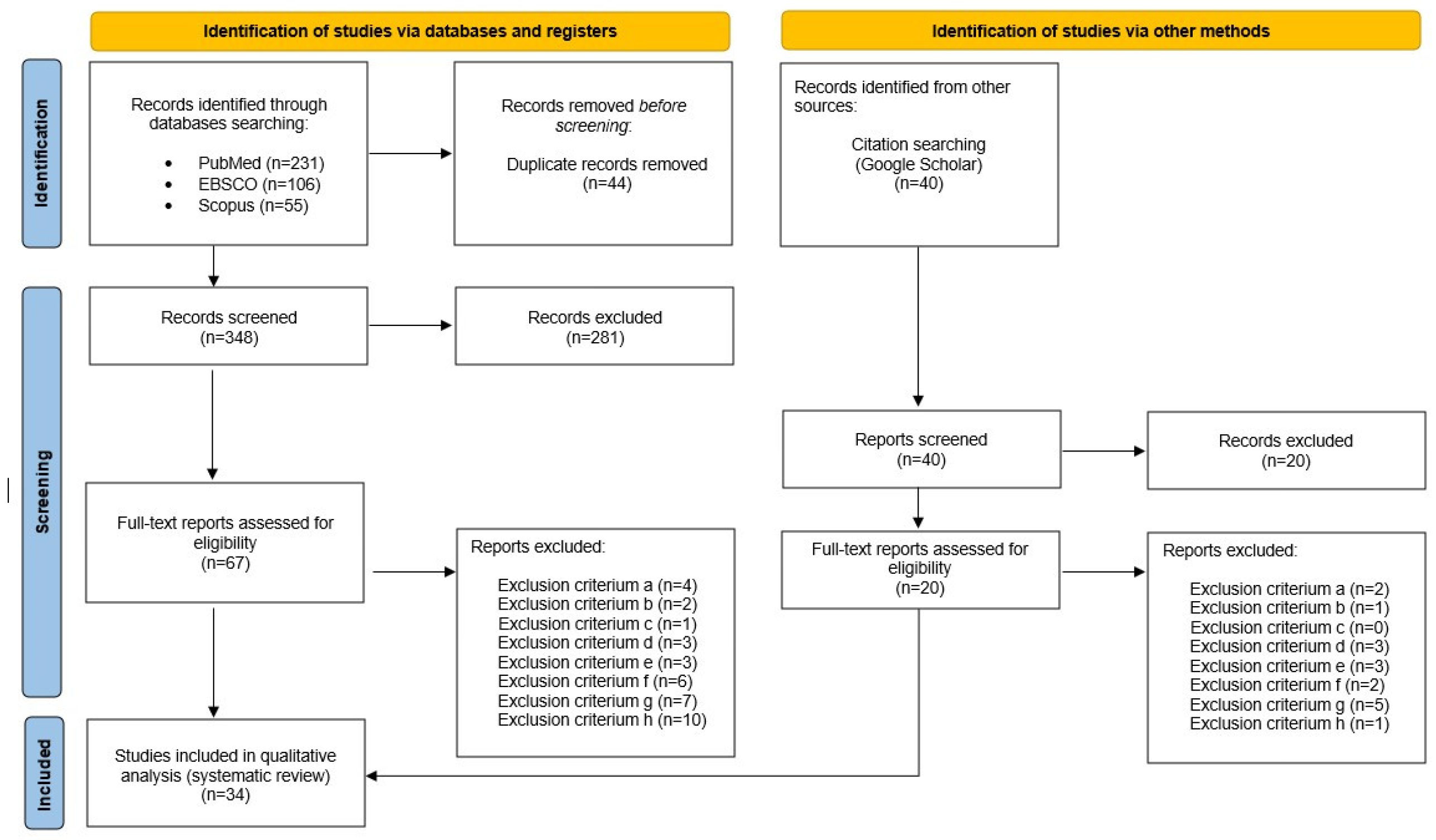
Study Selection and Characteristics
4. Discussion
4.1. Sport Performance
4.2. Participation in Deaf Sport
4.3. Athlete Coach Communication
4.4. Quality of Life and Self-Esteem
4.5. Limitations
5. Conclusions
Supplementary Materials
Author Contributions
Funding
Institutional Review Board Statement
Informed Consent Statement
Data Availability Statement
Conflicts of Interest
References
- Zar, A.; Alavi, S.; Hosseini, S.A.; Jafari, M. Effect of sport activities on the quality of life, mental health, and depression of the individuals with disabilities. Iran. J. Rehabil. Nurs. 2018, 4, 31–39. [Google Scholar]
- Omura, J.D.; Hyde, E.T.; Whitfield, G.P.; Hollis, N.D.; Fulton, J.E.; Carlson, S.A. Differences in perceived neighborhood environmental supports and barriers for walking between US adults with and without a disability. Prev. Med. 2020, 134, 106065. [Google Scholar] [CrossRef] [PubMed]
- Nhamo, E.; Sibanda, P. Inclusion in sport: An exploration of the participation of people living with disabilities in sport. Int. J. Sport Exerc. Health Res. 2019, 3, 5–9. [Google Scholar] [CrossRef]
- Nemček, D.; Mókušová, O. Position of sport in subjective quality of life of deaf people with different sport participation level. Phys. Cult. Sport Stud. Res. 2020, 87, 1–8. [Google Scholar] [CrossRef]
- Zwierzchowska, A.; Gawlik, K.; Grabara, M. Deafness and motor abilities level. Biol. Sport 2008, 25, 263–274. [Google Scholar]
- Stewart, D.A. Deaf Sport: The Impact of Sports Within the Deaf Community; Gallaudet University Press: Washington, DC, USA, 1991. [Google Scholar]
- Palmer, T.; Weber, K.M. The deaf athlete. Curr. Sport Med. Rep. 2006, 5, 323–326. [Google Scholar] [CrossRef]
- Obradović, S.; Nikodelis, T.; Stojković, M. Significance of sport activities for persons with disabilities. Godišnjak Psihol. 2021, 18, 27. [Google Scholar] [CrossRef]
- Stewart, D.A.; McCarthy, D.; Robinson, J.A. Participation in deaf sport: Characteristics of deaf sport directors. APAQ 1988, 5, 233–244. [Google Scholar] [CrossRef]
- Brancaleone, M.P.; Shingles, R.R. Communication patterns among athletes who are deaf or hard-of-hearing and athletic trainers: A pilot study. Athl. Train. 2015, 7, 29–33. [Google Scholar] [CrossRef]
- Nemček, D.; Kručanica, L. Satisfaction with health status in people with hearing impairments. JSHS 2014, 51, 185. [Google Scholar]
- Zwierzchowska, A.; Bieńkowska, K.I. The significance of the physical and motor potential for speech development in children with cochlear implant (CI)—preliminary study. Logopedia 2017, 46, 91–104. [Google Scholar]
- Akınoğlu, B.; Kocahan, T. Stabilization training versus equilibrium training in karate athletes with deafness. J. Exerc. Rehabil. 2019, 15, 576–583. [Google Scholar] [CrossRef] [PubMed]
- Assaiante, C.; Mallau, S.; Viel, S.; Jover, M.; Schmitz, C. Development of postural control in healthy children: A functional approach. Neural Plast. 2005, 12, 109–272. [Google Scholar] [CrossRef] [PubMed]
- Szulc, A.; MBalatoni, I.; Kopeć, S. Audiometry and doping control in competitive deaf sport. Acta Med. Social. 2021, 12, 81. [Google Scholar]
- Tweedy, S.M.; Vanlandewijck, Y.C. International Paralympic Committee position stand—background and scientific principles of classification in Paralympic Sport. Br. J. Sports Med. 2011, 45, 259–269. [Google Scholar] [CrossRef]
- Porter, A.; Creed, P.; Hood, M.; Ching, T.Y.C. Parental Decision-Making and Deaf Children: A Systematic Literature Review. J. Deaf. Stud. Deaf. Educ. 2018, 23, 295–306. [Google Scholar] [CrossRef] [PubMed]
- Freitas, E.; Simões, C.; Santos, A.C.; Mineiro, A. Resilience in deaf children: A comprehensive literature review and applications for school staff. J. Community Psychol. 2022, 50, 1198–1223. [Google Scholar] [CrossRef] [PubMed]
- Yet, A.X.J.; Hapuhinne, V.; Eu, W.; Chong, E.Y.; Palanisamy, U.D. Communication methods between physicians and Deaf patients: A scoping review. Patient Educ. Couns. 2022, 105, 2841–2849. [Google Scholar] [CrossRef] [PubMed]
- The PRISMA 2020 Statement: AN updated Guideline for Reporting Systematic Reviews|The EQUATOR Network. Available online: https://www.equator-network.org/ (accessed on 2 February 2024).
- Aromataris, E.; Lockwood, C.; Porritt, K.; Pilla, B.; Jordan, Z. (Eds.) JBI Manual for Evidence Synthesis; JBI: Miami, FL, USA, 2024; Available online: https://synthesismanual.jbi.global (accessed on 2 February 2024).
- Ma, L.L.; Wang, Y.Y.; Yang, Z.H.; Huang, D.; Weng, H.; Zeng, X.T. Methodological quality (risk of bias) assessment tools for primary and secondary medical studies: What are they and which is better? Mil. Med. Res. 2020, 29, 7. [Google Scholar] [CrossRef]
- Rochon, W.; Feinstein, S.; Soukup, M. Effectiveness of American Sign Language in Coaching Athletes Who Are Deaf. Online Submission 2006, 1–26. [Google Scholar]
- Vujkov, S.; Dukic, M.; Drid, P. Aerobic capacity of handball players with hearing impairment. Biomed. Hum. Kinet. 2010, 2, 58. [Google Scholar] [CrossRef]
- Kurková, P.; Válková, H.; Scheetz, N. Factors impacting participation of European elite deaf athletes in Sport. J. Sports Sci. 2011, 29, 607–618. [Google Scholar] [CrossRef]
- Güzel, N.A.; Açak, M.; Örer, G.E.; Savaş, S.; Coşkuner, Z. Comparison of max vo2 levels of elite and deaf footballers. Int. J. Sport Stud. 2012, 2, 607–610. [Google Scholar]
- Milašius, K.; Paulauskas, R.; Dadelienė, R.; Šatas, A. Body and functional capacity of Lithuanian deaf basketball team players and characteristics of game indices. BJSHS 2014, 119, 24–30. [Google Scholar] [CrossRef]
- Soto-Rey, J.; Pérez-Tejero, J.; Rojo-González, J.J.; Reina, R. Study of reaction time to visual stimuli in athletes with and without a hearing impairment. Percept. Mot. Skills. 2014, 119, 123–132. [Google Scholar] [CrossRef]
- Karademir, T. Fear of negative evaluation of deaf athletes. Anthropologist 2015, 19, 517–523. [Google Scholar] [CrossRef]
- Acak, M. Evaluations of Deaf Team Athletes Concerning Professional Skills of Their Coaches. J. Rehabil. Health Disabil. 2015, 1, 1–11. [Google Scholar]
- Uchida, W.; Marsh, H.W.; Hashimoto, K. Predictors and correlates of self-esteem in deaf athletes. Eur. J. Adapt. 2015, 8, 21–30. [Google Scholar] [CrossRef]
- Okan, I. Deaf Football Players’ Perception of the Coaches’ Occupational Skills. Anthropologist 2016, 25, 180–185. [Google Scholar] [CrossRef]
- Açak, M.; Kaya, O. A Review of Self-Esteem of the Hearing Impaired Football Players. Univers. J. Educ. Res. 2016, 4, 524–530. [Google Scholar] [CrossRef]
- Ercan, E.A.; Kılıç, A.; Savaş, S.; Açak, M.; Bıyıklı, Z.; Töre, H.F. Deaf athlete: Is there any difference beyond the hearing loss? In Revista de Cercetare si Interventie Sociala; Expert Projects Publishing House: Vienna, Austria, 2016; Volume 52, pp. 241–251. ISSN 1584-5397. [Google Scholar]
- Güzel, N.A.; Medeni, Ö.Ç.; Mahmut, A.C.A.K.; Savaş, S. Postural control of the elite deaf football players. JAPN 2016, 3, 1–8. [Google Scholar]
- Szulc, A.M.; Buśko, K.; Sandurska, E.; Kołodziejczyk, M. The biomechanical characteristics of elite deaf and hearing female soccer players: Comparative analysis. Acta Bioeng. Biomech. 2017, 19, 127–133. [Google Scholar]
- Vuljanić, A.; Tišma, D.; Miholić, S.J. Sports-anamnesis profile of deaf elite athletes in Croatia. In Proceedings of the 8th International Scientific Conference on Kinesiology, Opatija, Croatia, 10–14 May 2017. [Google Scholar]
- Tatlici, A.; Çakmakçi, E.; Yilmaz, S.; Arslan, F. Comparison of visual reaction values of elite deaf wrestlers and elite normally hearing wrestlers. TJSE 2018, 20, 63–66. [Google Scholar]
- Gümüs, M.; Eler, S. Evaluation of Physical and Physiological Characteristics of the Olympic Champion Turkish Deaf Men’s National Handball Team. J. Educ. Train. Stud. 2018, 6, 207–214. [Google Scholar] [CrossRef]
- Neuls, F.; Botek, M.; Krejci, J.; Panska, S.; Vyhnanek, J.; McKune, A. Performance-associated parameters of players from the deaf Czech Republic national soccer team: A comparison with hearing first league players. Sport Sci. Health 2019, 15, 527–533. [Google Scholar] [CrossRef]
- Akınoğlu, B.; Kocahan, T. The effect of deafness on the physical fitness parameters of elite athletes. J. Exerc. Rehabil. 2019, 15, 430–438. [Google Scholar] [CrossRef] [PubMed]
- Klimešová, I.; Krejčí, J.; Botek, M.; Neuls, F.; Sládečková, B.; Valenta, M.; Panská, S. Hydration status and the differences between perceived beverage consumption and objective hydration status indicator in the Czech elite deaf athletes. Acta Gymnica 2019, 49, 197–202. [Google Scholar] [CrossRef]
- Baranauskas, M.; Jablonskienė, V.; Abaravičius, J.A.; Stukas, R. Cardiorespiratory Fitness and Diet Quality Profile of the Lithuanian Team of Deaf Women’s Basketball Players. Int. J. Environ. Res. Public Health 2020, 17, 6749. [Google Scholar] [CrossRef]
- Buśko, K.; Kopczyńska, J.; Szulc, A. Physical fitness of deaf females. Biomed. Hum. Kinet. 2020, 12, 101–104. [Google Scholar] [CrossRef]
- Suner-Keklik, S.; Çobanoğlu, G.; Savas, S.; Seven, B.; Nihan, K.A.F.A.; Güzel, N.A. Comparison of Shoulder Muscle Strength of Deaf and Healthy Basketball Players. IJDSHS 2020, 3, 20–27. [Google Scholar] [CrossRef]
- Cobanoglu, G.; Suner-Keklik, S.; Gokdogan, C.; Kafa, N.; Savas, S.; Guzel, N.A. Static balance and proprioception evaluation in deaf national basketball players. Balt. J. Health Phys. Act. 2021, 13, 9–15. [Google Scholar] [CrossRef]
- Makaracı, Y.; Soslu, R.; Özer, Ö.; Uysal, A. Center of pressure-based postural sway differences on parallel and single leg stance in Olympic deaf basketball and volleyball players. J. Exerc. Rehabil. 2021, 17, 418–427. [Google Scholar] [CrossRef]
- Makaracı, Y.; Özer, Ö.; Soslu, R.; Uysal, A. Bilateral counter movement jump, squat, and drop jump performances in deaf and normal-hearing volleyball players: A comparative study. J. Exerc. Rehabil. 2021, 17, 339–347. [Google Scholar] [CrossRef]
- Güngör, A.K.; Şahin, Ş. Comparison of Mental Rotation and Reaction Time Performances In Deaf Athletes And Non-Athletes. SPORMETRE J. Phys. Educ. Sport Sci. 2022, 20, 126–137. [Google Scholar] [CrossRef]
- Brancaleone, M.P.; Talarico, M.K.; Boucher, L.C.; Yang, J.; Merfeld, D.; Onate, J.A. Hearing Status and Static Postural Control of Collegiate Athletes. J. Athl. Train. 2023, 58, 452–457. [Google Scholar] [CrossRef]
- Soslu, R.; Özer, Ö.; Uysal, A.; Pamuk, Ö. Deaf and non-deaf basketball and volleyball players’ multi-faceted difference on repeated counter movement jump performances: Height, force and acceleration. Front. Sports Act. Living. 2022, 4, 941629. [Google Scholar] [CrossRef]
- Yapici, H.; Soylu, Y.; Gulu, M.; Kutlu, M.; Ayan, S.; Muluk, N.B.; Aldhahi, M.I.; Al-Mhanna, S.B. Agility Skills, Speed, Balance and CMJ Performance in Soccer: A Comparison of Players with and without a Hearing Impairment. Healthcare 2023, 11, 247. [Google Scholar] [CrossRef]
- Brancaleone, M.P.; Shingles, R.R.; Weber, Z.A. Effect of Hearing Status on Concussion Knowledge and Attitudes of Collegiate Athletes. J. Sport Rehabil. 2024; ahead of print. [Google Scholar] [CrossRef]

| Number | Author | Q1 | Q2 | Q3 | Q4 | Q5 | Q6 | Q7 | Q8 | Sum |
|---|---|---|---|---|---|---|---|---|---|---|
| 1. | Rochon et al. [23] | U | U | U | Y | Y | Y | U | Y | 4/8 |
| 2. | Vujkov et al. [24] | Y | Y | Y | Y | Y | Y | Y | Y | 8/8 |
| 3. | Kurková et al. [25] | Y | Y | Y | Y | Y | Y | Y | Y | 8/8 |
| 4. | Güzel et al. [26] | N | Y | Y | Y | U | U | Y | Y | 5/8 |
| 5. | Nemček and Mókušová [11] | N | Y | Y | Y | U | U | Y | Y | 5/8 |
| 6. | Milašius et al. [27] | N | Y | Y | Y | U | N/A | Y | Y | 5/8 |
| 7. | Soto-Rey et al. [28] | Y | Y | Y | Y | Y | Y | Y | Y | 8/8 |
| 8. | Karademir et al. [29] | U | Y | Y | Y | U | Y | Y | Y | 6/8 |
| 9. | Brancaleone et al. [10] | U | Y | Y | Y | Y | Y | Y | Y | 7/8 |
| 10. | Acak [30] | Y | U | Y | Y | Y | Y | Y | Y | 7/8 |
| 11. | Uchida et al. [31] | U | U | Y | Y | Y | Y | Y | Y | 6/8 |
| 12. | Okan [32] | U | Y | Y | N | Y | Y | U | Y | 5/8 |
| 13. | Acak and Kaya [33] | Y | Y | Y | Y | U | U | Y | Y | 6/8 |
| 14. | Ercan et al. [34] | U | Y | Y | Y | N | N | Y | Y | 5/8 |
| 15. | Güzel et al. [35] | Y | Y | Y | Y | Y | Y | Y | Y | 8/8 |
| 16. | Szulc et al. [36] | Y | Y | Y | Y | Y | Y | Y | Y | 8/8 |
| 17. | Vuljanić et al. [37] | Y | Y | Y | Y | U | U | Y | Y | 6/8 |
| 18. | Tatlici et al. [38] | U | Y | Y | Y | Y | Y | Y | Y | 7/8 |
| 19. | Gümüs and Eler [39] | N | Y | Y | Y | Y | Y | Y | Y | 7/8 |
| 20. | Neuls et al. [40] | Y | Y | Y | Y | Y | Y | Y | Y | 8/8 |
| 21. | Akınoğlu and Kocahan [41] | Y | Y | Y | Y | Y | Y | Y | Y | 8/8 |
| 22. | Klimešová et al. [42] | Y | Y | Y | Y | Y | Y | Y | Y | 8/8 |
| 23. | Nemček and Mókušová [4] | N | N | Y | Y | U | N | Y | Y | 4/8 |
| 24. | Baranauskas et al. [43] | U | Y | Y | Y | Y | Y | Y | Y | 7/8 |
| 25. | Buśko et al. [44] | Y | Y | Y | Y | Y | Y | Y | Y | 8/8 |
| 26. | Suner-Keklík et al. [45] | Y | Y | Y | Y | Y | Y | Y | Y | 8/8 |
| 27. | Cobanoglu et al. [46] | U | Y | Y | Y | Y | Y | Y | Y | 7/8 |
| 28. | Makaraci et al. [47] | Y | Y | Y | Y | Y | Y | Y | Y | 8/8 |
| 29. | Makaraci et al. [48] | Y | Y | Y | Y | Y | Y | Y | Y | 8/8 |
| 30. | Güngör and Şahin [49] | U | Y | Y | Y | Y | Y | Y | Y | 7/8 |
| 31. | Brancaleone et al. [50] | Y | Y | Y | Y | Y | Y | Y | Y | 8/8 |
| 32. | Soslu et al. [51] | Y | Y | Y | Y | Y | Y | Y | Y | 8/8 |
| 33. | Yapici et al. [52] | Y | Y | Y | Y | Y | Y | Y | Y | 8/8 |
| 34. | Brancaleone et al. [53] | Y | Y | Y | Y | Y | Y | Y | Y | 8/8 |
| I—Sport Performance of Athletes in Deaf Sport | ||||||
|---|---|---|---|---|---|---|
| Aerobic Capacity of Athletes with Hearing Impairment | ||||||
| Author | Participants Characteristics | Sport | Research Issue | Research Tool | Research Test | Main Findings |
| Vujkov et al. [24] | nP = 28 SG1 (deaf international handball players); nP = 13/age = 30.4 ± 9.1 SG2 (healthy national handball players); nP = 15/age = 26.2 ± 3.6 | Handball | Comparison of the aerobic capacity between elite deaf and non-deaf players | Treadmill | VO2max test | No significant differences were noted in HRmax, HR at speed 12 km/h and VO2max between deaf and non-deaf players Lower values of HR (1st minute of recovery), oxygen pulse, absolute VO2max, pulmonary ventilation, tidal volume (p < 0.05) and maximal speed and speed at VO2max, (p < 0.01) were noted in deaf players |
| Güzel et al. [26] | nP = 59 SG1 (deaf 3rd division players); nP = 18/age = 23.2 ± 3.6 SG2 (deaf 1st division players); nP = 18/age = 24.6 ± 2.1 SG3 (deaf hearing handicapped players); nP = 23/age = 26.99 ± 4.88 | Football | Comparison of VO2max between deaf players of different sport levels | Tanita HD 358 body composition (Tokyo, Japan) Portable telemetric heart pulse rate monitor (Polar RS 400 multi, Tempere, Finland) | Shuttle run test (VO2max) | Maximum running pace and VO2max differed between SG2 and SG3 (p < 0.01) SG1 was characterized by the highest heart beat rates (p < 0.01) |
| Milašius et al. [27] | nP = 36 SG1 (deaf basketball players in 2005); nP = 12/age = 28.2 ± 5.5 SG2 (deaf basketball players in 2009); nP = 12/age = 24.9 ± 4.8 SG3 (deaf basketball players in 2013); nP = 12/age = 28.0 ± 5.0 | Basketball | Establishment and evaluation of body’s capacity and functional capacity of elite deaf basketball players from Deaflympic Games in 2005, 2009 and 2013 | Stadiometer (Seca 225, GmbH & Co, Hamburg, Germany) Tanita BC418 MA (Tokyo, Japan) Electric reactiometer (Baltec Sport, Kaunas, Lithuania) Ergometer “Monark 894 E” (Vansbro, Sweden) Official FIBA game registration protocols | Step ergometry test Repeated anaerobic alactic working test Hexagon test | 3.5 greater muscle mass was noted in SG3 (2013) compared to SG1 (2005) (p < 0.05) Deaf players (2013) were characterized by higher physical capacities compared to SG1 (2005) that was related with improvement of the quality of the game 49.2% improvement of goals precision was observed between deaf players (2005 vs. 2013) Higher number of defensive rebounds, fewer turnovers were found between 2005 and 2013 deaf players |
| Ercan et al. [34] | nP = 55 males SG1 (deaf players); nM = 30/age = 24.1 ± 3.21 CG (hearing players); nM = 22/ahe = 25.5 ± 3.03 | Football | Determination of the morphologic findings and cardiac status of deaf players compared to hearing players | Tanita BC 418 MA III (Tokyo, Japan) Symptom limited treadmill (Tepa-TM-Pro 2000 Model, Tepa, Turkey) General Electric, Vivid 7 (New York, USA) | VO2max test Echocardiographic test | No significant differences were noted in HRmax, (1st minute of recovery) between the groups. Derived myocardial performance index was significantly decreased in deaf players (p < 0.05) |
| Neuls et al. [40] | nP = 74 males, ≥ 17 years SG1 (deaf soccer players); nM = 31 SG2 (non-deaf soccer players); nM = 43 | Soccer | Comparison of performance-associated differences between deaf and non-deaf players | Soehnle 7307 (Backnang, Germany) Tanita BC-418 MA, Tanita, (Tokyo, Japan) Force platforms (AMTI OR6-7-1000, (Montreal, Canada) Treadmill (Lode Valiant, Groningen, the Netherlands), Oxygen mask Resting10-lead electrocardiogram (ECG) assessment (Delta 60D, Cardioline, Cavareno, Italy) | CMJ test Incremental running test | Deaf players were significantly shorter (p = 0.012), had higher BFP (p < 0.001), Ln rMSSD/RR (p = 0.006) and HRrest (p = 0.001) and lower FFM (p = 0.003), VO2max, (p < 0.001), and maximal power output (p < 0.001) compared to hearing players |
| Baranauskas et al. [43] | nP = 14 female/26.4 ± 4.5 | Basketball | Evaluation of the body composition, physical working capacity, nutrition intake and blood parameters (iron, vitamin D) | BIA tetra-polar electrodes (Jinryang Industrial Complex, Kyungsan City, Korea) 7-day food recall survey questionnaire Cycle ergometer (Ergoline-Select 200, Bitz, Germany) | VO2max test PWC170 test | No differences were found for VO2peak and the low VO2peak, while PWC170 indicated on average aerobic fitness level Fat intake was found to exceed the maximum recommended content for athletes (p = 0.012), which was not found for carbohydrate and protein (minimum levels) Deaf players were characterized by deficits of vitamin D and iron in blood serum |
| Speed of Response in Athletes with Hearing Impairment | ||||||
| Soto-Rey et al. [28] | nP = 123; nF = 33, nM = 90 SG1 (hearing impairment athletes) nP = 44; nF = 14, nM = 25/age = 25.6 ± 5.0 SG2 (athletes without hearing impairment) nP = 79; nF = 19, nM = 57/age = 22.6 ± 3.7 | N/A—team/individual | Differences in manual time of the speed of response to visual stimuli between hearing impairment and non-hearing impairment athletes | Record sheet SuperLab Pro software (version 2.0) Laptop ASUS Eee PC 1005 (10.1 inch display, Taipéi, Taiwán) | N/A | Hearing impairment athletes were characterized by a significantly shorter time of the speed of response compared to hearing athletes, with significant gender (shorter reaction time in male hearing impairment athletes) (p < 0.003) type of sport (individual) (p < 0.04) difference In each of the studied groups, faster RT was noted both in female and male athletes who competed compared to female and male athletes that did not participate in competition |
| Tatlici et al. [38] | nP = 18 SG1 (deaf athletes)/age = 22.55 ± 1.81 SG2 (hearing athletes)/age = 22.77 ± 1.85 | Wrestling | Comparison of the speed of response time between deaf and non-deaf athletes | Electronic reaction time meter (Newtest 1000, Bayburt, Turkey) | Visual hand reaction test | No significant relationships were found between intra-group right- and left-hand speed of response levels (p > 0.05) |
| Güngör and Şahin [49] | nP = 42; nF = 20/age = 17.85 ± 1.38; nM = 22/age = 18 ± 1.19 SG1 (deaf athletes); nP = 22; nF = 11, nM = 11 SG (deaf non-athletes); nP = 20; nF = 9, nM = 11 | Basketball | Determination of the mental rotation and speed of response performance in deaf athletes and deaf non-athletes based on sport and gender | Computer software MP36 (Biopac System, CA, USA) | Mental rotation test Reaction time test | No significant difference of mental rotation and the time of the speed of response variables were noted between deaf and non-deaf athletes Deaf male athletes were found to be better in the correct number (p < 0.03) of mental rotation and simple visual reaction variables (p < 0.03, p < 0.04) compared to deaf female non-athletes |
| Postural Control in Athletes with Hearing Impairment | ||||||
| Güzel et al. [35] | nP = 38 SG (deaf players)/age = 27.17 ± 4.64 CG1 (deaf controls)/age = 17.9 ± 0.88 CG2 (healthy controls)/age = 21.2 ± 2.86 | Football | Determination of the postural control of deaf players and comparison with deaf sedentary control and normal hearing players | Biodex-Balance System (Biodex Medical Systems, Inc., Shirley, NY, USA) | Postural stability test (bilateral/lateral stance with eyes open)—static surface | Significant differences were found for MLI score of dominant and non-dominant legs (p = 0.027, p = 0.045) and for limits of stability testing in overall (p = 0.008) and right direction (p = 0.017) in all three groups Deaf athletes and deaf controls were characterized by a significant difference in MLN score of non-dominant leg (p = 0.012) and in right direction of limits of stability test (p = 0.016) |
| Cobanoglu et al. [46] | nP = 25 SG1 (deaf basketball players); nP = 12/age = 22.5 SG2 (hearing individuals); nP = 13/24 | Basketball | Comparison of the static balance and knee proprioception between deaf elite players and hearing individuals | Biodex-BioSway Balance System (SD 950–340, Biodex Medical Systems, Inc., Shirley, NY, USA) Dualer IQ Digital Inclinometer (J-Tech Medical, Midvale, UT, USA) | Postural stability test Knee proprioception test | Postural stability was better in hearing individuals than in elite deaf players (p < 0.05) In deaf players, postural stability was different in terms of dominant (MLSL) and non- dominant side ( OSI, APSI, MLSL) (p < 0.05) |
| Makaraci et al. [47] | nP = 23 males SG1 (deaf basketball players), nM = 11/age = 25.18 ± 4.57 SG2 (deaf volleyball players), nM = 12/24.42 ± 4.42 | Basketball, Volleyball | Assessment of the postural sway values in parallel and single-leg stance and indication of the differences between sport specializations | A force plate (Kistler, type 5691A, Winterthur, Switzerland) | Postural sway test (feet apart/single-leg stance—dominant/non-dominant leg) with open/closed eyes | Better results in parallel stance and dominant leg postural sway values were found in deaf volleyball players (p ≤ 0.05) No difference was identified between branches in non-dominant leg postural sway values Better values of postural sway were noted both for parallel- and single-leg stance with eyes opened in both groups compared to stances with eyes closed |
| Brancaleone et al. [50] | nP = 155 males, females/age = 18–30 SG1 (D/HH athletes); nP = 55; nF = 19, nM = 36/age = 20.62 ± 1.8 SG2 (hearing athletes); nP = 100; nF = 32, nM = 68/age = 20.11 ± 1.59 | N/A | Determination of the effect of hearing status and stance condition on static postural control between D/HH and hearing athletes | A tri-axial force plate (Bertec FP4060, Bertec Corp., 110 Columbus, OH, USA) | mCTSIB/firm/foam surface—eyes open, firm/foam surface—eyes closed | Larger center of pressure velocity, medio-lateral amplitude of root-mean square and sway area were noted in D/HH athletes (p < 0.01) |
| Strength and Power in Athletes with Hearing Impairment | ||||||
| Szulc et al. [36] | nP = 55 females SG1 (deaf soccer players), nF = 20/age = 23.7 ± 5.0 SG2 (non-deaf soccer players); nF = 25/age = 20.3 ± 3.8 | Soccer | Differences in body composition, strength and power of the lower limbs and height of jump between deaf and non-deaf players | Siber Hegen anthropometry (Switzerland) Gulick tape Tanita BC-418 MA (Tokyo, Japan) Biodex dynamometer (Biodex S4 Pro, BiodexMedical Systems, Inc., Shirley, New York, USA) | ACMJ test CMJ test SPJ test | No differences in body build and composition were found between the groups, except for WC, CC and WHR (p < 0.01, ES 0.24–0.79) Non-deaf soccer players generated greater MVC in knee joint flexion, torque and power for 300 degrees for both lower limbs (p < 0.01, ES 0.19–0.48) and in left-leg flexion for 180 degrees (p = 0.02, ES 0.13) Hearing impairment did not limit the opportunities for development of physical fitness in deaf women (statistical insignificance in ACMJ, CMJ) |
| Akınoğlu and Kocahan [41] | nP = 137/age = 23.99 ± 6.56 SG1—deaf female athletes; nF = 52 SG2—deaf male athletes/nM = 85 | Karate, taekwondo, free style/Greco-Roman wrestling, running, basketball, judo, swimming | Determination of the health-related physical fitness parameters of deaf athletes | IsoMed 2000 (D. and R. Ferstl GmbH, Hemau, Germany) Human Body Equilibrium 360 device (HUBER360) Jamar hand dynamometer Tanita Body Composition Analyzer (TBF 300 M, Tokyo, Japan) | Static trunk flexion ET, flexion/extension ET, dynamic ET, lateral bridge test | Isokinetic muscle strength ratio was found to be 53–54% with 5% less for dominant/non-dominant ratio for all athletes In deaf male athletes anterior and posterior endurance of core muscles were lower than in deaf female athletes All athletes were characterized by a low level of grip strength and functional reach back/forward and a higher level of balance control with eyes opened than with eyes closed. A similar level of BMF% in able-bodied sedentary people was found in female athletes, while a slightly lower level of BMF% was noted in deaf male athletes |
| Buśko et al. [44] | nP = 29 females SG1 (deaf soccer players); nF = 13/age = 23.6 ± 4.3 SG2 (deaf non-players); nF = 16/age = 17.9 ± 2.8 | Soccer | Difference in the physical fitness between deaf players and deaf non-players | Force plate (JBA Zb, Staniak, Poland) | EUROFIT test | Deaf players had significantly higher scores in jumping performance in ACMJ, CMJ, SPJ and higher lower limbs power in CMJ than deaf non-players (p < 0.05), except the relative power in ACMJ, SPJ and maximal power output in SPJ (no statistical significance). Deaf players were more physically fit (p < 0.001) than deaf non-players, except for bent-arm hang test |
| Suner-Keklík et al. [45] | nP = 26 males SG1 (deaf players)/age = 24 ± 3 SG2 (hearing players)/age = 22 ± 2 | Basketball | Evaluation of shoulder muscle strength and endurance of deaf players and comparison with hearing players | Isokinetic dynamometer (Cybex NORM®, Humac, CA, USA) | Isokinetic test (internal and external rotators muscle strength) | No difference between internal and external rotation (Nm/kg) were observed in both groups (p > 0.05) Hearing players had higher external/internal rotation ratio (p = 0.017) In both groups, strength parameters of dominant extremities were higher than non-dominant extremity |
| Makaraci et al. [48] | nP = 26 males SG1 (deaf volleyball players), nM = 12/age = 24.25 ± 4.31 SG2 (non-deaf volleyball players)/age = 22.07 ± 3.2 | Volleyball | Comparison of jumping performance with different jumping protocols (CMJ, SJ, DJ) between deaf and non-deaf players | A force plate (Kistler, type 5691A, Winterthur, Switzerland)/sampling frequency of 1000 Hz | CMJ test SJ test DJ test | Non-deaf players were characterized by better jumping performance in CMJ, SJ and DJ protocols than deaf athletes (p ≤ 0.05) |
| Soslu et al. [51] | nP = 51 males SG1 (deaf basketball players), nM = 11/age = 26.18 ± 4.79 SG2 (deaf volleyball players), nM = 12/age = 26.33 ± 4.27 SG3 (non-deaf basketball players), nM = 14/age = 26.93 ± 4.87 SG4 (non-deaf volleyball players), nM = 14/age = 24.93 ± 5.1 | Basketball, volleyball | Comparison of the CJM performance between deaf and non-deaf players | A three-dimensional Kistler force plate (Type 5691A; Kistler, Winterthur, Switzerland) | Repetitive CMJ test | A decrease in the number of jumps, jump heights, the produced force, the acceleration at the time of jump and jump velocity were found in all athletes, however deaf athletes were more affected (p < 0.05) |
| Yapici et al. [52] | nP = 29 SG1 (hearing-impairment national team soccer players), nP = 13/age = 23.5 ± 3.1 SG2 (without hearing-impairment elite soccer players), nP = 16/age = 20.6 ± 1.4 | Soccer | Comparison of agility, speed, jump and balance performance between deaf and non-deaf elite soccer players | Tanita Body Composition Analyzer (BC 418, Tokyo, Japan) Y-Balance test Brower Timing System (USA)—10/20/30 m Test | Y-balance test 10, 20, 30 m sprint test Illinois test 505 agility test Zigzag test CMJ test Agility and shooting test | Hearing impairment players were characterized by lower BFP (which was related with balance scores) and higher speed, agility skills and CMJ performance Balance skills were lower in hearing-impairment players compared to without hearing-impairment players Hearing impairment players have the potential to perform a similar/better level of sport performance |
| Body Composition, Nutrition and Concussion in Athletes with Hearing Impairment | ||||||
| Gümüs and Eler [39] | nP = 20 males/age = 27 ± 6.26 | Handball | Evaluation of the physical and physiological characteristics of elite deaf players | Seca brand digital height gauge (Hamburg, Germany) Tanita Analyzer (BC-418, Tokyo, Japan) Force dynamometer (Takei grip-D, Tokyo, Japan) Newtest 2000 instrument Traffic obstacles | Handgrip strength test Visual reaction time test Vertical jump test Agility test | Deaf players were characterized by parallel body height, body mass, BMI, reaction speed, agility and body fat Flexibility (11.9 ± 5.22 cm) and jumping (30.1 ± 3.62–36.5 ± 4.45 cm) values were found to be lower than in hearing players |
| Klimesova et al. [42] | nP = 62 males/25.8 ± 8.3 | Football, hockey, volleyball, futsal, running | Evaluation of the hydration status, the beverage intake and the differences between perceived adequate fluid intake and laboratory indicator of hydration status | Soehnle 7307 (Leifheit, Nassau, Germany) Tanita BC-418 MA, Tanita (Tokyo, Japan) USG A handheld refractometer (ATAGOSUR-NE, Tokyo, Japan) A self-report fluid consumption questionnaire | N/A | 54% of deaf athletes—inadequate hydration 6% of deaf athletes—poor beverage consumption 2.2 ± 0.9 L (everyday life) 1.0 ± 0.5 L (training practice)– common fluid beverage intake |
| Brancaleone et al. [53] | nP = 162 deaf and hard-of-hearing athletes and able-bodied athletes | N/A | To examine the differences in knowledge of and attitudes toward concussion between athletes who are deaf and hard of hearing | The Rosenbaum Concussion Knowledge and Attitudes Survey | N/A | Athletes who are deaf/hard of hearing have poorer level of knowledge about concussion compared to hearing athletes |
| II—Participation in Deaf Sport | ||||||
| Kurková et al. [25] | nP = 53; nF = 21, nM = 32/age = 27.7 | Alpine skiing, badminton, cycling, orienteering, swimming, tennis, table tennis | Participation in segregated or integrated sports | Self-made survey questionnaire | N/A | Elite-level deaf athletes would take the opportunity to compete with hearing athletes. Inclusive competing of hearing and deaf athletes plays an important role in social inclusion |
| Karademir [29] | nP = 135; nF = 32, nM = 103/age = 24.9 ± 4.43 | Futsal | Social anxiety—fear of negative evaluation | FNE Questionnaire | N/A | Sport experience does not impact the level of fear of social negative evaluation of deaf athletes, which is higher in female deaf athletes |
| Vuljanić et al. [37] | nP = 31/nF = 11, nM = 20/age = 34.6 | Athletics, bowling, chess, curling, handball, shooting, table tennis | Preferences of participation of deaf athletes in integrated/segregated competition | Survey questionnaire from Kurková et al. (2011) | N/A | 29% of deaf athletes—preference for inclusive competition system 25% of deaf athletes—preference for separate competition system 19% of deaf athletes—do not have a preference |
| III—Athlete—Coach Communication in Deaf Sport | ||||||
| Rochon et al. [23] | nP = 95; n = 73 (hearing coaches), n = 22 (deaf athletes) | Football, hockey, water polo, basketball, field hockey, lacrosse, soccer, volleyball, baseball, softball, track, swimming, diving, bowling, wrestling, golf, tennis, badminton | Communication during training/competition between athlete and coach with ASM | Self-made survey questionnaire | N/A | Direct communication with ASM lessened the barriers between hearing coach/team mates and D/HH athletes and enhanced D/HH athlete’s sport performance (in athletes and coaches opinion) |
| Brancaleone et al. [50] | nP = 130; nF = 57, nM = 73/age = 18 < 25 | N/A | Analysis of the communication patterns between D/HH athletes and trainers | Adapted 30-item questionnaire from Rochon et al. [23] | N/A | Deaf athletes were significantly likely to use ASL to communicate with trainer and during game play HH athletes were more likely to use oral communication with trainer and during game-play The subjective rate of communication between deaf athlete and trainer was assessed as ‘good’ The subjective rate of communication between HH athlete and trainer was assessed as ‘excellent’ |
| Acak [30] | nP = 253; nF = 52, nM = 201/age = 18 to >30 | Football, volleyball, basketball, handball | Evaluation of coaches’ professional skills in deaf athletes’ opinion | Coach Assessment Scale for Deaf Athletes | N/A | Female deaf athletes were more satisfied with their coaches compared to male athletes Level of education of deaf athletes impacted the evaluation of coaches’ skills Hearing coach or hearing coach with sign language skills were found to be the most preferred coach model in the opinion of deaf athletes |
| Okan [32] | nP = 125; nF = 16, nM = 106/age = 16 to >31 | Football | Evaluation of the differences of deaf players’ perception of coaches with and without hearing impairment | Trainer Evaluation Scale for Deaf Athletes | N/A | Female deaf players had more positive evaluation of coaches’ skills compared to male deaf players Level of education of deaf athletes impacted on the evaluation of coaches’ technical sub-dimension skills (p < 0.05) Coaches with hearing aids were evaluated more negatively compared to hearing coaches (p < 0.05) Coaches who could communicate only in sign language were evaluated more negatively compared to oral communicative coaches (p < 0.05) |
| IV—Quality of Life and Self-Esteem of Athletes in Deaf Sport | ||||||
| Nemček and Mókušová [11] | nP = 152/nF = 48.7%, nM = 51.3% SG1 (competitive athletes)—18.4% SG2 (recreational sport participation)—9.9% SG3 (non-athletes—sedentary lifestyle)—71.7% | N/A | The impact of the level of sport participation on life satisfaction of athletes with hearing impairment | SQUALA Questionnaire | N/A | Athletes with hearing impairment showed higher subjective life satisfaction than non-athletes with hearing impairment |
| Uchida et al. [31] | nP = 112; nF = 46, nM = 66/age = 26.9 ± 7.42 | N/A—Deaflympic and World Deaf Athletic Championships athletes | Intrapersonal and interpersonal aspects of deaf athletes’ self-esteem based on sport participation level | SPS Questionnaire, IDES Questionnaire | N/A | Elite-level deaf athletes had fewer negative relationships with others Dramatic sports experiences can improve the level of self-esteem in elite deaf athletes |
| Acak and Kaya [33] | nP = 95, males/age = 17 > 29 | Football | Self-esteem of hearing impairment athletes in relation to adapted (deaf) football training | CSEI Questionnaire | N/A | The level of self-esteem differed in terms of impairment status No significant differences were noted between self-esteem status and age, sportive age, educational status and living-place variables |
| Nemček and Mókušová [4] | nP = 164 SG1(elite competitive-level athletes with hearing impairment) nP = 30/age = 22.2 ± 1.8 SG2—(recreational athletes), nP = 22/age = 25.2 ± 2.0 CG—(non- athletes), nP = 112/age = 26.8 ± 1.9 | N/A—Deaflympic level athletes | The impact of the level of sport participation on life satisfaction of deaf athletes | SQUALA and WHOQOL Questionnaires | N/A | Sport participation followed by social relationships were found to be the predominant domains of the sense of quality of life |
Disclaimer/Publisher’s Note: The statements, opinions and data contained in all publications are solely those of the individual author(s) and contributor(s) and not of MDPI and/or the editor(s). MDPI and/or the editor(s) disclaim responsibility for any injury to people or property resulting from any ideas, methods, instructions or products referred to in the content. |
© 2024 by the authors. Licensee MDPI, Basel, Switzerland. This article is an open access article distributed under the terms and conditions of the Creative Commons Attribution (CC BY) license (https://creativecommons.org/licenses/by/4.0/).
Share and Cite
Gaweł, E.; Soto-Rey, J.; Zwierzchowska, A.; Perez-Tejero, J. Trends and Future Directions in the Sports Performance of Deaf and Hard-of-Hearing Athletes: A Systematic Review. Appl. Sci. 2024, 14, 6860. https://doi.org/10.3390/app14166860
Gaweł E, Soto-Rey J, Zwierzchowska A, Perez-Tejero J. Trends and Future Directions in the Sports Performance of Deaf and Hard-of-Hearing Athletes: A Systematic Review. Applied Sciences. 2024; 14(16):6860. https://doi.org/10.3390/app14166860
Chicago/Turabian StyleGaweł, Eliza, Javier Soto-Rey, Anna Zwierzchowska, and Javier Perez-Tejero. 2024. "Trends and Future Directions in the Sports Performance of Deaf and Hard-of-Hearing Athletes: A Systematic Review" Applied Sciences 14, no. 16: 6860. https://doi.org/10.3390/app14166860
APA StyleGaweł, E., Soto-Rey, J., Zwierzchowska, A., & Perez-Tejero, J. (2024). Trends and Future Directions in the Sports Performance of Deaf and Hard-of-Hearing Athletes: A Systematic Review. Applied Sciences, 14(16), 6860. https://doi.org/10.3390/app14166860

