Trust Components: An Analysis in The Development of Type 2 Diabetic Mellitus Mobile Application




Abstract
1. Introduction
1.1. Mobile Health Application for Diabetes Mellitus
1.2. Usability Test
1.3. Trust in the Mobile Application
1.4. Previous Research
2. Analysis
2.1. Mobile Application in Healthcare
2.2. Telehealth
3. Research Methodology
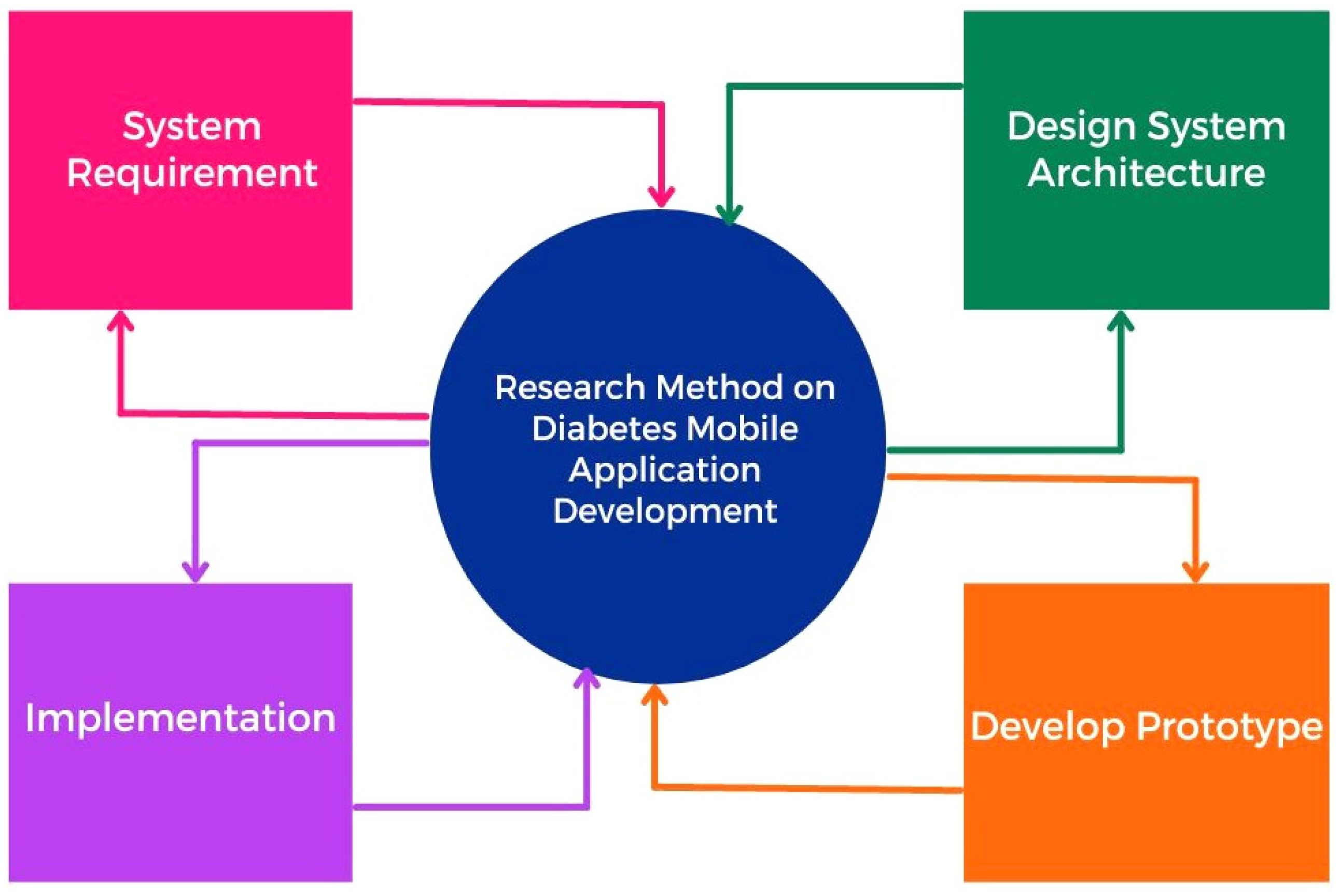
3.1. Research Method
3.2. Software Development Methodology
4. System Design
4.1. User Interface
4.2. Benefits of Application and Trustworthiness
4.3. Unified Modeling Language and Design Testing
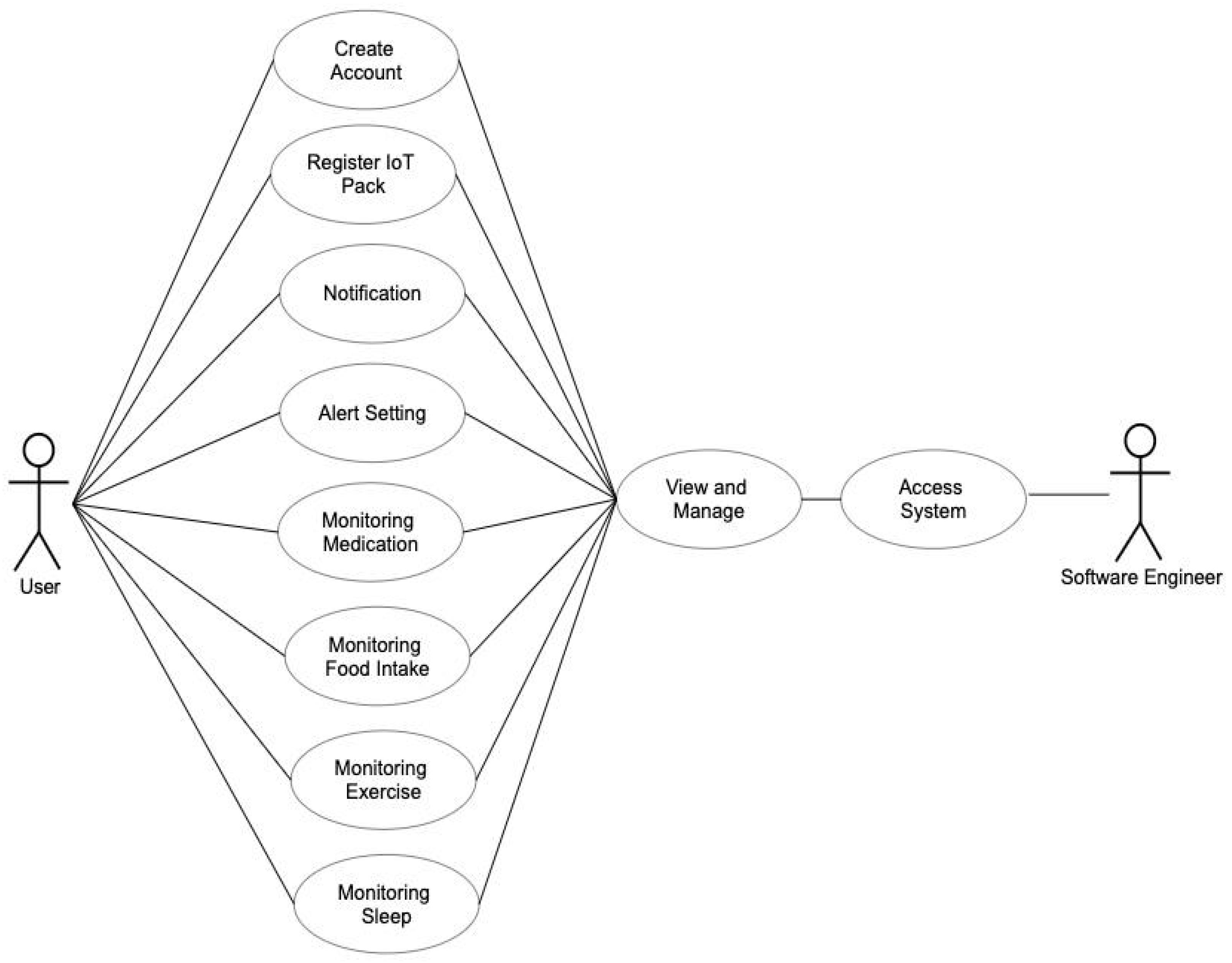
- Use Case Diagram
- Actor (two actors): The actor (User) is the user of the diabetes mobile application, and the other actor (Software Engineer) is the application developer;
- Use case (10 use cases): Create an Account, Register to IoT Pack, Notification, Alert Setting, Monitoring Medication, Monitoring Food Intake, Monitoring Exercise, Monitoring Sleep, View and Manage, and Access System;
- Association (18 associations): Association between the actor (User) and Use Case, Create an Account, Register to IoT Pack, Notification, Alert Setting, Monitoring Medication, Monitoring Food Intake, Monitoring Exercise, and Monitoring Sleep. Association between the actor (Software Engineer) to Use Case Access System, View and Manage, Create Account, Register to IoT Pack, Notification, Alert Setting, Monitoring Medication, Monitoring Food Intake, Monitoring Exercise, and Monitoring Sleep.
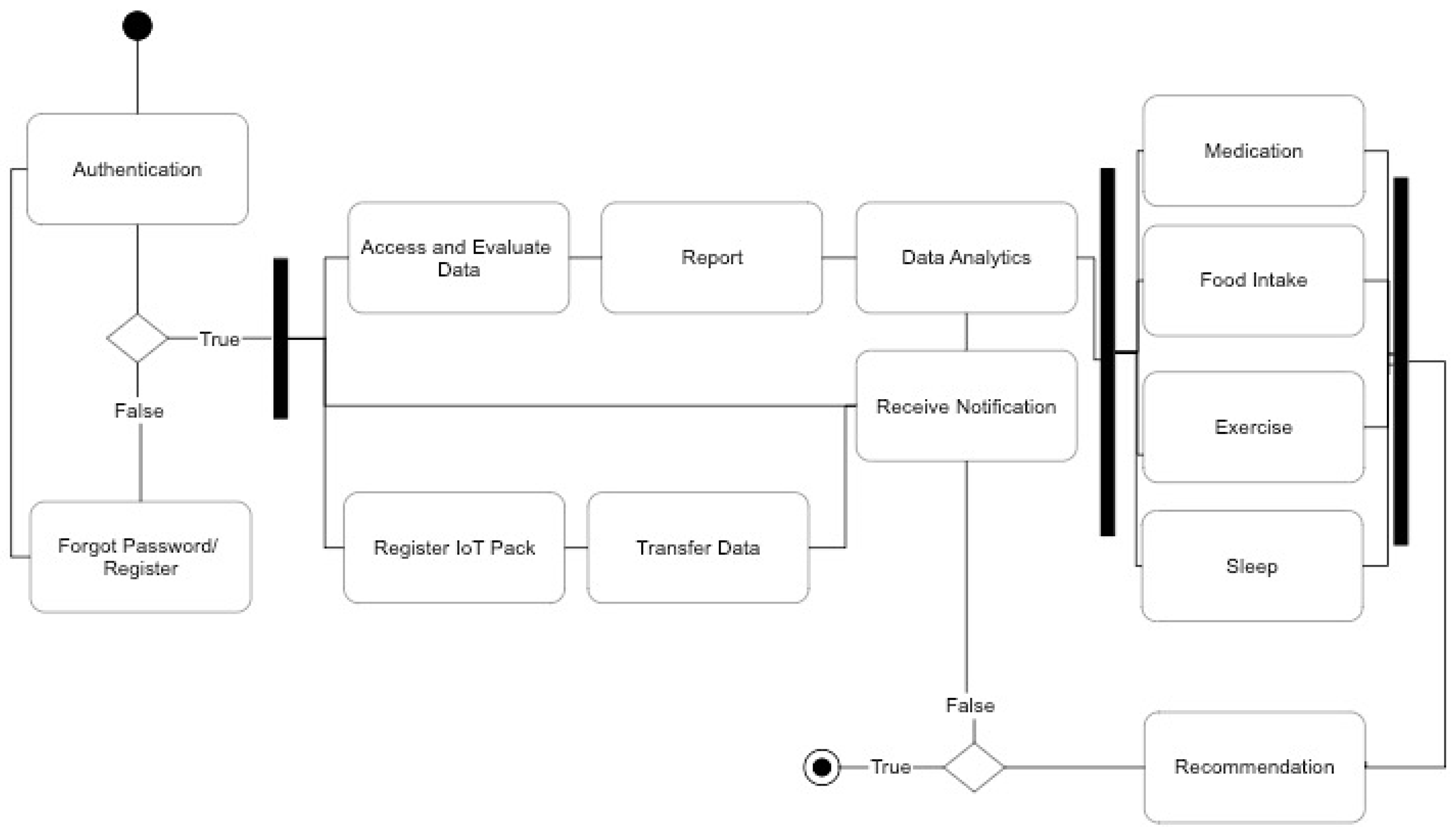
- Activity Diagram
- Start Point/Initial State;
- Activity (13 activities): Authentication, Forgot Password/Register, Access and Evaluate Data, Report, Data Analytics, Register IoT Pack, Transfer Data, Receive Notification, Medication, Food Intake, Exercise, Sleep, and Recommendation;
- Decision (two decisions): Decision After Activity (Authentication) and Decision after Activity (Recommendation);
- Synchronization (two forks, one join): Fork after Decision of Activity (Authentication), Fork After Activity (Data Analytics), and 1 Join After Activities (Medication, Food Intake, Exercise and Sleep);
- End state.
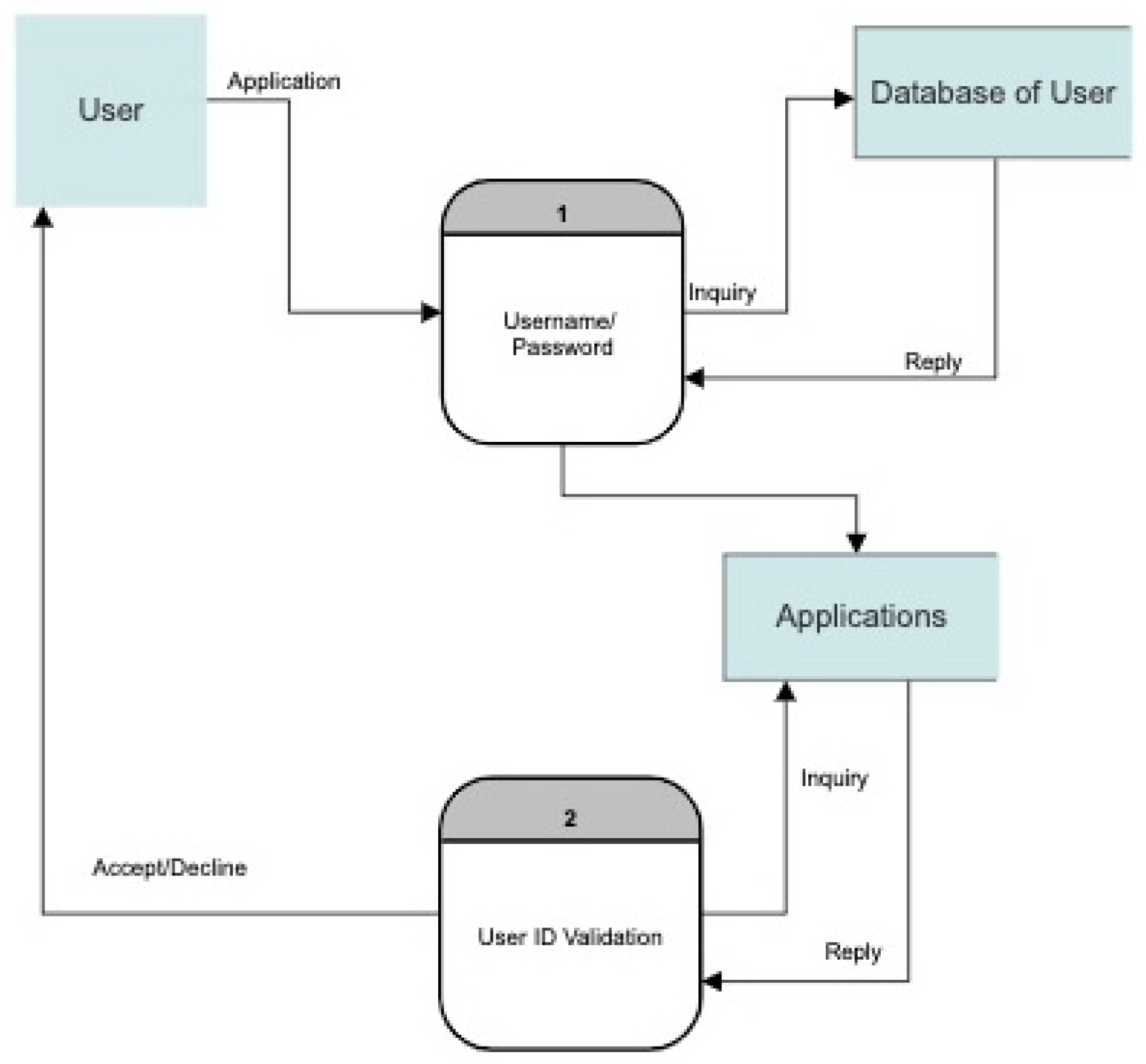
- Data Flow Diagram
- Functions (two Functions): Username/Password and User ID Validation;
- Input: User;
- Output: Application;
- File/Database: Database of User;
- Flow (seven Flows): Input (User) to Function (Username/Password), Function (Username/Password) to File/Database (Database of User), File/Database (Database of User) to Function (Username/Password), Function (Username/Password) to Output (Application), Output (Application) to Function (User ID Validation), Function (User ID Validation) to Output (Application), and Function (User ID Validation) to Input (User).
5. Summary and Conclusions
6. Future Work
Supplementary Materials
Author Contributions
Funding
Institutional Review Board Statement
Informed Consent Statement
Data Availability Statement
Conflicts of Interest
References
- Sadhana, S.; Bandana, K.; Asgar, A.; Rajesh, Y.; Abhay, S.; Krishan, S.; Krishnan, H.; Girish, S. Mobile technology A tool for healthcare and a boon in pandemic. J. Fam. Med. Prim. Care 2022, 11, 37–43. [Google Scholar]
- Żarnowski, A.; Jankowski, M.; Gujski, M. Use of Mobile Apps and Wearables to Monitor Diet, Weight, and Physical Activity: A CrossSectional Survey of Adults in Poland. Med. Sci. Monit. 2022, 1–18. [Google Scholar] [CrossRef]
- Pititto, B.D.A.; Eliaschewitz, F.G.; Paula, M.A.D.; Ferreira, G.C. BrazIliaN Type 1 & 2 DiabetEs Disease Registry (BINDER): Longitudinal, real-world study of diabetes mellitus control in Brazil. Front. Clin. Diabetes Healthcare Diabetes Clin. Epidemol. 2022, 1–12. [Google Scholar] [CrossRef]
- Naydenova, G. An overview of existing methods for evaluating mobile applications to change user behavior. Int. Sci. J. Sci. Technol. Union Mech. Eng. 2022, 7, 21–25. [Google Scholar]
- Kirloskar, M.M.; Bhagat, V.V.; Kodilkar, J.V.; Ketkar, M.S.; Vankudre, A.J. Prevalence of Stress Induced Hyperglycemia and Its Contributing Factors in Patients with Post Covid Mucormycosis—A Retrolective Study. Int. J. Recent Sci. Res. 2022, 13, 926–931. [Google Scholar]
- DiMeglio, L.A.; Molina, C.E.; Oram, R.A. Type 1 diabetes. Lancet 2019, 391, 2449–2462. [Google Scholar] [CrossRef] [PubMed]
- Adu, M.D.; Malabu, U.H.; Malau-Aduli, A.E.; Malau-Aduli, B.S. Mobile application intervention to promote self-management in insulin-requiring type 1 and type 2 diabetes individuals: Protocol for a mixed methods study and non-blinded randomized controlled trial. Diabetes Metab. Syndr. Obes. 2019, 12, 789–800. [Google Scholar] [CrossRef] [PubMed]
- Rachna, P.; Satish, R.K. Type 1 diabetes mellitus in pediatric age group A rising endemic. J. Fam. Med. Prim. Care 2022, 11, 2–31. [Google Scholar]
- Assaad, M.; Hekmat-Joo, N.; Hosry, J.; Kassem, A.; Itani, A.; Dahabra, L.; Yassine, A.A.; Zaidan, J.; El Sayegh, D. Insulin use in Type 2 diabetic patients: A predictive of mortality in COVID-19 infection. Diabetol. Metab. Syndr. 2022, 14, 85. [Google Scholar] [CrossRef]
- Mathur, P.; Leburu, S.; Kulothungan, V. Prevalence, Awareness, Treatment and Control of Diabetes in India from the Countrywide National NCD Monitoring Survey. J. Front. Public Health 2022, 10, 205. [Google Scholar] [CrossRef]
- Nuland, E.V.; Dumitrescu, I.; Scheepmans, K.; Paquay, L.; Wandeler, E.D.; Vliegher, K.D. The Diabetes Team Dynamics Unraveled: A Qualitative Study. Diabetology 2022, 3, 246–257. [Google Scholar] [CrossRef]
- Zajec, A.; Podkrajšek, K.; Tesovnik, T.; Šket, R.; Kern, B.; Bizjan, B.; Schweiger, D.; Kovac, J. Pathogenesis of Type 1 Diabetes: Established Facts and New Insights. J. Genes 2022, 13, 706. [Google Scholar] [CrossRef] [PubMed]
- Więckowska, R.K.; Justyna, D.; Grażyna, D. The usefulness of the nutrition apps in self-control of diabetes mellitus—The review of literature and own experience. Pediatr. Endocrinol. Diabetes Metab. 2022, 28, 75–80. [Google Scholar] [CrossRef]
- Apidechkul, T.; Chomchoei, C.; Upala, P. Epidemiology of undiagnosed type 2 diabetes mellitus among hill tribe adults in Thailand. Sci. Rep. 2022, 12, 1–9. [Google Scholar] [CrossRef] [PubMed]
- Madan, A.; Dubey, S.K. Usability Evaluation Methods: A Literature Review. Int. J. Eng. Sci. Technol. 2012, 4, 590–599. [Google Scholar]
- Christian Bastien, J.M. Usability testing: A review of some methodological andtechnical aspects of the method. Int. J. Med. Inform. 2010, 79, e18–e23. [Google Scholar] [CrossRef]
- Georgsson, M.; Staggers, N.; Weir, C. A Modified User-Oriented Heuristic Evaluation of a Mobile Health System for Diabetes Self-Management Support. Comput. Inform. Nurs. 2016, 34, 78–84. [Google Scholar] [CrossRef]
- Nasir, M.; Ikram, N.; Jallil, Z. Usability inspection: Novice crowd inspectors versus expert. J. Sytstems Softw. 2022, 183, 111122. [Google Scholar] [CrossRef]
- Alqurni, J.; Alroobaea, R.; Alqahtani, M. Effect of User Sessions on the Heuristic Usability Method. Int. J. Open Source Softw. Process. 2018, 9, 62–81. [Google Scholar] [CrossRef]
- Cho, H.; Keenan, G.; Madandola, O.O.; Santos, F.C.D.; Macieira, T.G.R.; Bjarnadottir, R.I.; Priola, K.J.B.; Lpoez, K.D. Assessing the Usability of a Clinical Decision Support System: Heuristic Evaluation. JMIR Hum. Factors 2022, 10, e31758. [Google Scholar] [CrossRef]
- Johnson, S.G.; Potrebny, T.; Larun, L.; Ciliska, D.; Olsen, N.R. Usability Methods and Attributes Reported in Usability Studies of Mobile Apps for Health Care Education: Scoping Review. JMIR Med. Educ. 2022, 8, e38259. [Google Scholar] [CrossRef] [PubMed]
- Banes, A. Development of App-Based E-Board Announcement System with SMS Support. Indian J. Sci. Technol. 2022, 15, 640–648. [Google Scholar] [CrossRef]
- Sandesara, M.; Bodkhe, U.; Tanwar, S.; Alshehri, M.D.; Sharma, R.; Neagu, B.C.; Grigoras, G.; Raboaca, M.S. Design and Experience of Mobile Applications: A Pilot Survey. J. Math. 2022, 10, 2380. [Google Scholar] [CrossRef]
- Maryam, S.; Purwono, A.; Syahril. Android application development for push notification feature for Indonesian space weather service based on Google Cloud Messaging. J. Phys. Conf. Ser. 2022, 1–8. [Google Scholar] [CrossRef]
- Hamid, K.; Iqbal, M.W.; Muhammad, H.A.B.; Fuzail, Z.; Ghafoor, Z.T.; Ahmad, S. Usability Evaluation of Mobile Banking Applications in Digital Business as Emerging Economy. Int. J. Comput. Sci. Netw. Secur. 2022, 22, 250–260. [Google Scholar]
- Lee, J.-H.; Park, J.-C.; Kim, S.-B. Therapeutic Exercise Platform for Type-2 Diabetic Mellitus. Electronics 2021, 10, 1820. [Google Scholar] [CrossRef]
- Park, J.C.; Kim, S.; Lee, J.-H. Self-Care IoT Platform for Diabetic Mellitus. Appl. Sci. 2021, 11, 2006. [Google Scholar] [CrossRef]
- Kuria, J.; Peters, I.A.; Wabwoba, F. Determinants of University Students’ Perceived Usefulness of Mobile Apps. Int. J. Comput. Trends Technol. 2022, 7, 10–19. [Google Scholar] [CrossRef]
- Stocchi, L.; Pourazad, N.; Michaelidou, N.; Tanusondjaja, A.; Harrigan, P. Marketing research on Mobile apps: Past, present and future. J. Acad. Mark. Sci. 2022, 50, 195–225. [Google Scholar] [CrossRef]
- Park, J.H.; Lee, Y.B.; Seo, Y.S.; Choi, J.H. Development and Effectiveness of a Smartphone Application for Clinical Practice Orientation. Int. J. Internet Broadcast. Commun. 2021, 13, 107–115. [Google Scholar]
- Hinze, A.; Vanderschantz, N.; Timpany, C.; Cunningham, S.J.; Saravani, S.J.; Wilkinson, C. A Study of Mobile App Use for Teaching and Research in Higher Education. Technol. Knowl. Learn. 2022, 1–29. [Google Scholar] [CrossRef]
- Scarry, A.; Rice, J.; O’Connor, E.M.; Tierney, A.C. Usage of Mobile Applications or Mobile Health Technology to Improve Diet Quality in Adults. J. Nutr. 2022, 14, 2437. [Google Scholar] [CrossRef] [PubMed]
- Totten, A.M.; Womack, D.M.; Eden, K.B.; McDonagh, M.S.; Griffin, J.C.; Grusing, S.; Hersh, W.R. Telehealth: Mapping the Evidence for Patient Outcomes from Systematic Reviews. In AHRQ Comparative Effectiveness Technical Briefs; Agency for Healthcare Research and Quality: Rockville, MD, USA, 2016; Volume 26. [Google Scholar]
- Joshua, S.R.; Mogea, T. Analysis and Design of Service Oriented Architecture Based in Public Senior High School Academic Information System. In Proceedings of the 5th International Conference on Electrical, Electronics and Information Engineering, Malang, Indonesia, 6–8 October 2017; pp. 180–186. [Google Scholar]
- Alshaheen, R.; Tang, R. User Experience and Information Architecture of Selected National Library Websites: A Comparative Content Inventory, Heuristic Evaluation, and Usability Investigation. J. Web Librariansh. 2022, 16, 31–67. [Google Scholar] [CrossRef]


| No. | Usability Level Measurement | |
|---|---|---|
| Level | Description | |
| 1 | Learnability | It is defined as the speed with which the user can use the system, the ease of use in the performance of a function, and the wishes of the user. |
| 2 | Efficiency | It is defined as a resource instrument that has a function to achieve better goals. |
| 3 | Memorability | Users are tested to see how long they can remember using the application. |
| 4 | Errors and security | How many problems are caused by errors that are inconsistent with what users expect from the system? |
| 5 | Satisfaction | The application’s freedom of expression and user comfort are both subjective measures of the user’s perception of the system. |
| No. | Research | ||
|---|---|---|---|
| Title | Year | Publisher | |
| 1 | “Therapeutic Exercise Platform for Type 2 Diabetic Mellitus” [26] | 2021 | Journal of Electronics, MDPI |
| 2 | “Self-Care IoT Platform for Diabetic Mellitus” [27] | 2021 | Journal of Applied Sciences, MDPI |
| No. | Application Classification | ||
|---|---|---|---|
| Researcher | Classification | Description | |
| 1 | B. D. A. Pititto | Disease prediction | A disease prediction application is an application that is used to help patients or application users find out the prediction of disease along with the overall results of the obtained diagnosis based on the symptoms felt. This application was developed using certain methods according to the scope of the case study (disease) to be analyzed by calculating all parameters related to the symptoms of the disease. The development of this disease prediction application is useful to help doctors and also provide recommendations to patients or users who have difficulty knowing the disease they are suffering from but only know the symptoms they feel. |
| 2 | J. H. Park | Clinical communication | A clinical communication application is the development of technology in the health sector that helps achieve a state or health status as a whole, both physically, mentally, and socially. This application focuses on communication-related health. The database in this application will store and process the existing data so that it can be useful for later use. Several clinical communication applications provide real-time communication services between patients and doctors to conduct health consultations. Doctors will collect information about the patient’s health status, or they can access a database to view the patient’s medical history. |
| 3 | Adu, U. H. Malabu | Medication | The lack of information about treatment and drugs is the basis for developing health applications in this field. If it is not handled properly, the patient or customer will self-regulate the drug therapy they receive, which will lead to an increase in cases of drug administration errors that are not in accordance with the patient’s needs. The medication health application focuses on education about drug information, assisting in health consultations on drug administration based on symptoms, and viewing the history of purchasing and using drugs stored in the database. |
| 4 | Lee, J.-H. | Exercise | Exercise health applications (also called health and fitness applications) are applications that can provide information to users without limitations of place or time and help them achieve their health and fitness targets. Some exercise applications provide features that are able to connect applications with other supporting devices to collect health information more comprehensively, for example, by connecting applications with treadmills, cycles, smartwatches, or other supporting devices. |
| 5 | R. K Więckowska | Nutrition | The nutrition application is an application that helps patients and users find out their nutritional needs and status by referring to nutrition and health sciences efficiently, cheaply, and accurately when each country has different nutritional guidelines. This is extremely useful because food consumption has an impact on a person’s nutritional status. Good nutritional status, also known as optimal nutritional status, occurs when the body receives and uses enough nutrients to support physical growth, brain development, workability, and overall health to the greatest extent possible. The nutrition application already has a nutritional value based on a calculated formula (nutritional standards). By accessing the database, the application can find specific numbers (foods or beverages) that will be or have been consumed. |
| No. | Android Characteristics | |
|---|---|---|
| Characteristic | Description | |
| 1 | Open source | Android is designed to be completely open, allowing any app to access any of the phone’s core functions, such as making calls, sending text messages, using the camera, and so on. To optimize the device’s memory and hardware resources, Android employs a specially designed virtual machine. Because Android is open source, it can be freely expanded to include newer, more advanced technologies as they become available. This platform will continue to evolve, allowing for the development of innovative mobile applications. |
| 2 | Accessibility | Android makes no distinction between the phone’s main application and third-party applications. All applications can be designed to have equal access to a phone’s capabilities to provide a diverse range of services and applications to users. |
| 3 | Reliability | Android removes barriers to developing new and innovative apps. A developer, for example, can combine web information with data on a person’s phone, such as the user’s contacts, calendar, or geographic location. |
| 4 | Easy to develop | Android provides a wide range of libraries and tools for developing better applications. Android includes a set of tools that can be used to help developers increase productivity when developing Google Inc. applications. Google has rebuilt Android from the ground up and made it open source, allowing developers to use it without paying Google for a license and build Android without restrictions. The Android Software Development Kit (SDK) includes the tools and Application Programming Interface (API) required to begin developing applications for the Android platform in Java. |
| No. | Telehealth Operational Definition | |
|---|---|---|
| Objective | Description | |
| 1 | Synchronous | Provides services or remote health services at the same time as consultations via video call (Zoom, Skype, etc.) or telephone |
| 2 | Asynchronous | Provides health services via emote/not concurrently (email or online chat consultation). |
| 3 | Mobile health | A mobile-based health service, such as health education and consultation, can be delivered through smartphones or mobile-based applications. |
| 4 | Virtual agent | Remote health service delivery through certain chatbots or applications that can help patients or users conduct 24 h health consultations |
| 5 | Artificial intelligence | Remote health services with artificial intelligence technology, such as being able to measure heart rate, make drug recommendations based on symptoms, and calculate or monitor sleep hours |
| No. | Application Development and Assessment | |
|---|---|---|
| Process | Description | |
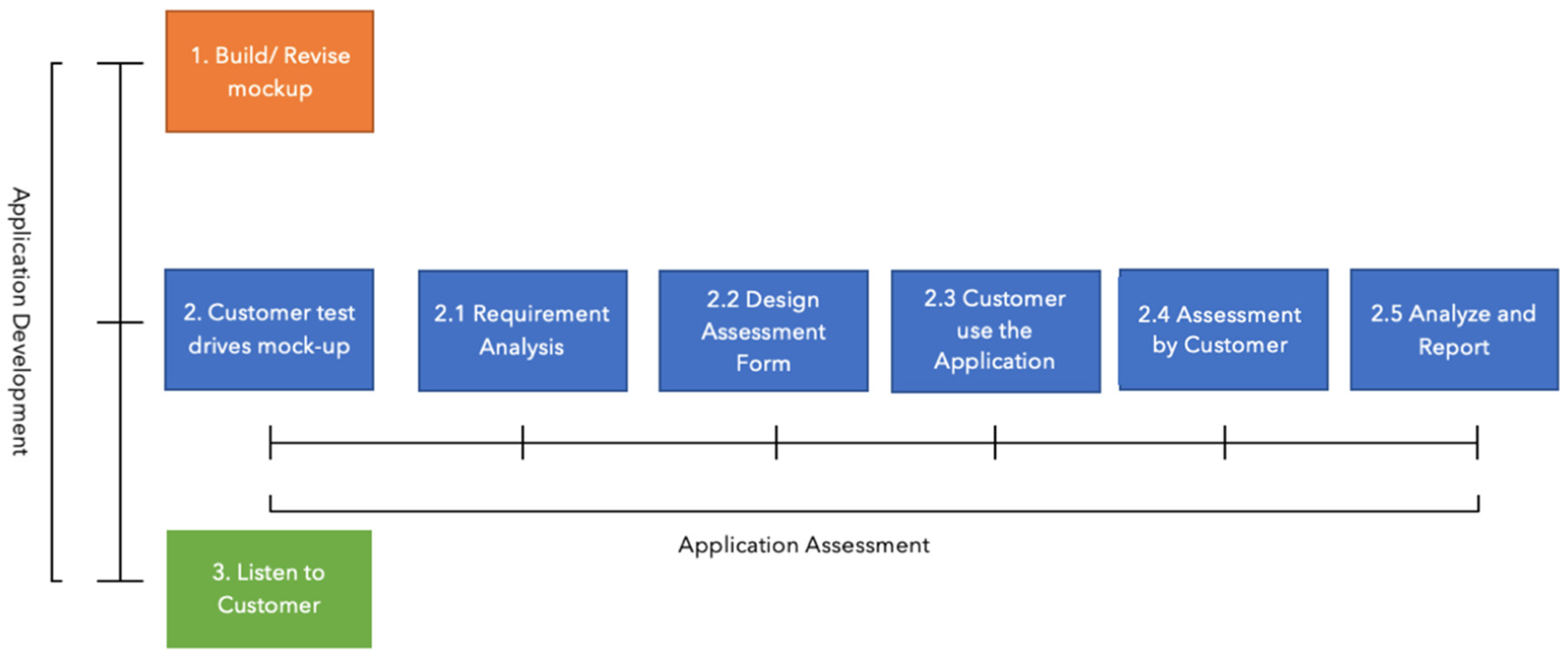
| 1 | Build/Revise mockup | The prototype model begins by gathering customer requirements for the software that will be created. At this stage, we researchers are gathering information about the needs of type 2 diabetes mellitus (T2DM) patients, which is poured in the form of features and services that monitor medication, food intake, exercise, and sleep. |
| 2 | The customer test drives the mockup | After listening to customer needs, a prototype program is created to give customers a better idea of what they truly want. The prototype program is typically an unfinished (but fully functional) program that simulates the software flow so that it appears to be completely finished. In this study, our researchers focused on four customer needs as functions or features in the application: medication monitoring, food intake monitoring, exercise monitoring, and sleep monitoring features. |
| 2.1 | Requirement analysis | The requirement analysis stage is characterized by an intense interaction between the system analysts and the system user community (end-users), during which the system development team demonstrates its expertise in order to gain user feedback and trust and obtain good participation. Because users may have had previous information system failures, it is difficult to persuade them to agree (being skeptical) about their information system requirements. |
| 2.2 | Design assessment form | Assessment in application development is an effort to obtain data or information from the processes and results that have been carried out. Before conducting an assessment, an assessment form is created, which includes several indicators to ensure that the information the users seek is accurate. |
| 2.3 | The customer uses the application | At this stage, the customer will use the mobile application that has been developed, where the application to be used is the latest updated version (version 2) with several changes from the previous version (version 1). |
| 2.4 | Assessment by the customer | The previous stage’s assessment form is distributed to customers in order to gather information about the application’s use on both the performance of version 1 and version 2 of the application. |
| 2.5 | Analyze and report | The assessment form that has been distributed will be collected and analyzed for data, and after that, it will be made into a report. |
| 3 | Listen to the customer | The customer or user evaluates this prototype program until specifications that match their wishes or needs are found. At this stage, the researcher will conduct a test involving 40 users who are participants (diabetic patients or non-patients) who are involved in using a mobile-based diabetes application. |
| No. | Design of the Application | ||
|---|---|---|---|
| Page | Mockup (Design) | User Interface (Implementation) | |
| 1 | Login On the login page, the user will fill in data in the form of an ID and password (if you have previously registered), while for new users, the application provides services to register by filling in detailed data or automatically using a Google account. |  | 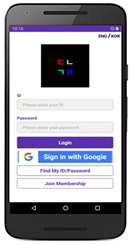 |
| 2 | Personal information Users are asked to enter information, such as their nickname, sex (male or female), date of birth, height, and weight, on the personal information page. | 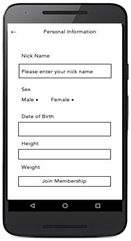 |  |
| 3 | Home On the home page, the application briefly displays features that can be explored by users in the form of icon visualization, such as statistics to view the results of health data calculations, Bluetooth connections to devices, surveys, sugar levels, medicine, exercise, and a calendar. | 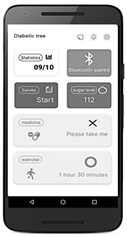 | 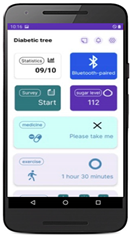 |
| 4 | Register IoT pack Users use the Register to IoT Pack page to connect applications to devices they own, such as wearable bands, glucometers, treadmills, and so on. | 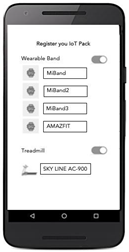 | 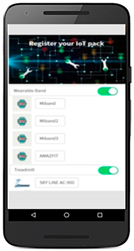 |
| 5 | Monitoring medication The medication monitoring page enables users to view or control the medication intake schedule as recommended, or it can be entered manually by the user. | 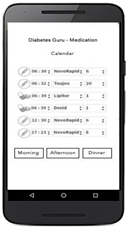 |  |
| 6 | Monitoring food intake The food intake monitoring page allows users to directly control food intake by making direct adjustments at the specified time, which is divided into three parts: breakfast, lunch, and dinner. | 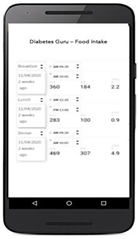 |  |
| 7 | Monitoring exercise The exercise monitoring page helps users see the exercise that has been completed. The results of the exercise are in the form of current speed, average speed, distance, and heart rate. | 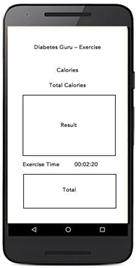 | 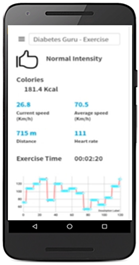 |
| 8 | Monitoring sleep The sleep monitoring page is visualized in the form of charts and calendars to make it easier for users to see the results of the evaluation and monitoring of sleep. The user can see the total presentation as well as the average rest and sleep hours of the user. |  | 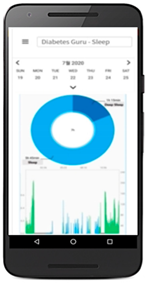 |
| No. | Benefits |
|---|---|
| 1 | Patients can accurately determine the level of risk of type 2 diabetes mellitus |
| 2 | Increase patient capacity for self-management of type 2 diabetes mellitus |
| 3 | Facilitates the decision-making process for optimal insulin dosage |
| 4 | Help maintain and manage a healthy lifestyle |
| 5 | Doctors will be more helpful in diagnosing type 2 diabetes mellitus and its complications |
| 6 | Nutritionists will be more helpful in determining the daily menu and physical exercise for people with type 2 diabetes mellitus |
| 7 | Improve communication between patients and healthcare professionals |
| No. | Trust Components | Description |
|---|---|---|
| 1 | Convenience | Basically, users use the application because its functionality fulfills their needs. The development of this diabetes mobile application was made with the aim of helping users meet their needs and providing users with an easy and efficient way to find out their needs related to diabetes treatment/prevention. Convenience, in this case, includes several parts, namely:
|
| 2 | Attractiveness | Diabetes mobile application development has an attraction that can make customers want to use this application in the form of:
|
| 3 | Simplicity | Simplicity is an important indicator that acts as one of the benefits of diabetes mobile applications, including:
|
| 4 | Information quality | The quality of information is one of the important advantages for users, especially diabetic users. The results/information available can be the result of evaluation and even referrals for doctors to know in order to effectively and efficiently prevent/control diabetes. The following is the quality of the information contained in the diabetes mobile application:
|
| No | Trust Factors | |
|---|---|---|
| Factors | Variable | |
| 1 | Functionality |
|
| ||
| ||
| 2 | Ease of Use |
|
| ||
| 3 | Usefulness |
|
| 4 | Security and Privacy |
|
| ||
| 5 | Cost |
|
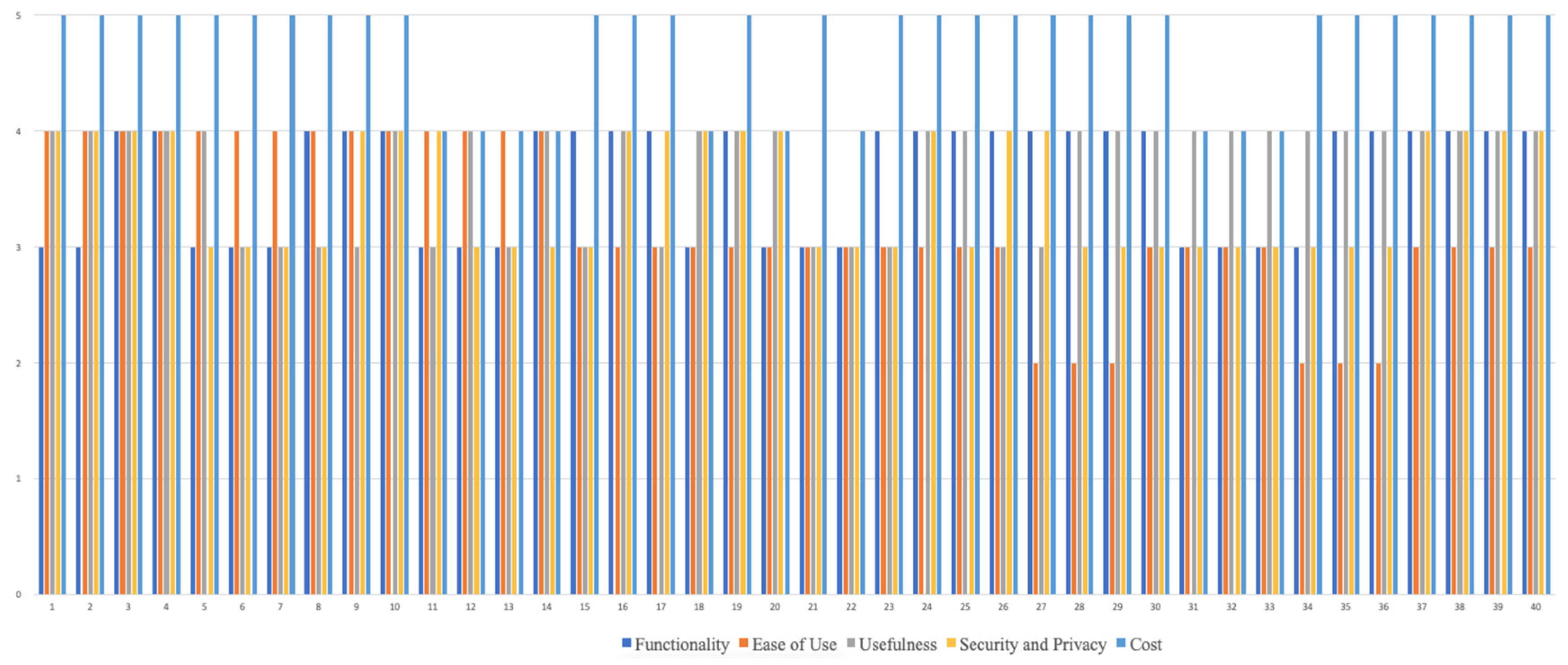
| Demographics | Full (N = 40) | Mobile App (Version 1) (N = 40) | ||||
|---|---|---|---|---|---|---|
| Frequency | % | High Trust Group | Low Trust Group | |||
| Frequency | % | Frequency | % | |||
| Sex | ||||||
| Female | 24 | 60 | 11 | 45.83 | 13 | 54.16 |
| Male | 16 | 40 | 5 | 31.25 | 11 | 68.75 |
| Education | ||||||
| High School | 5 | 12.5 | 4 | 80 | 1 | 20 |
| Undergraduate School | 30 | 75 | 5 | 16.66 | 25 | 83.33 |
| Graduate School | 5 | 12.5 | 2 | 40 | 3 | 60 |
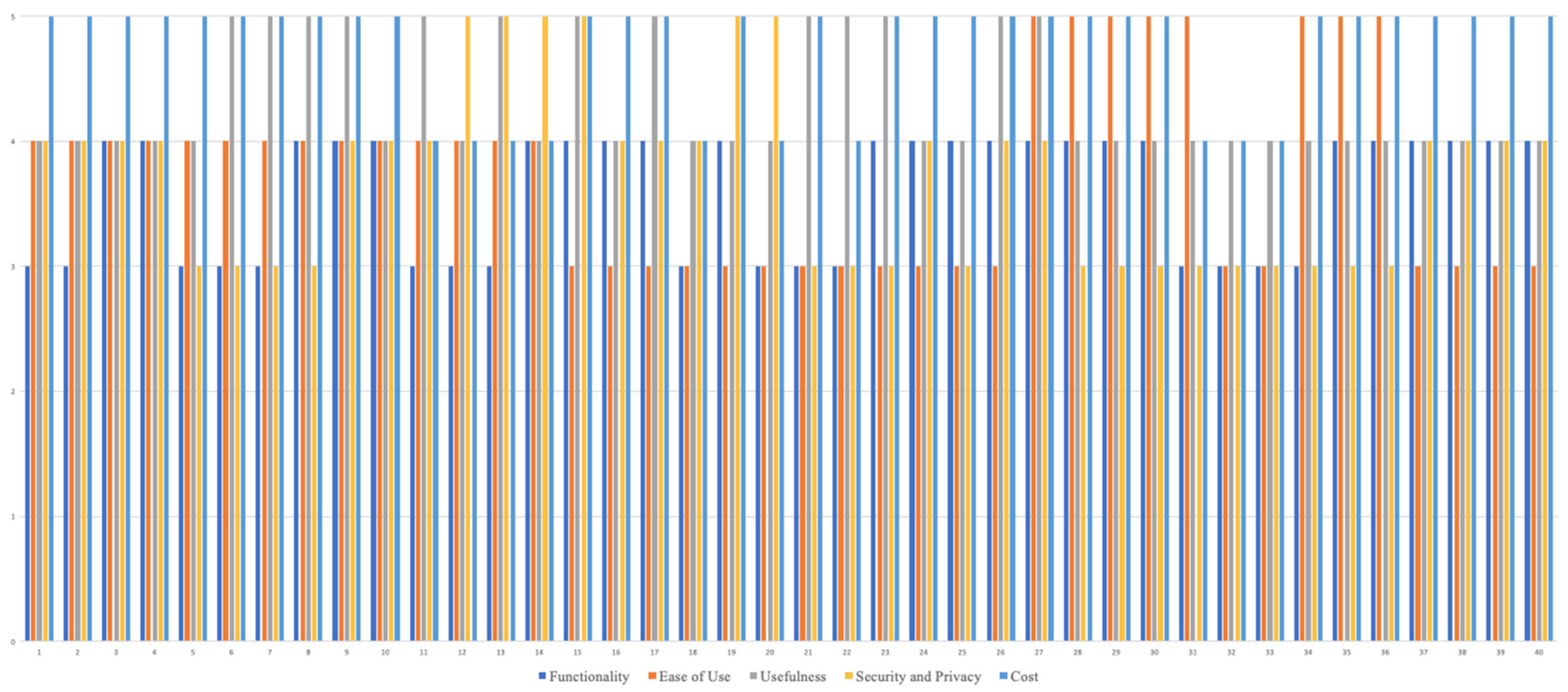
| Demographics | Full (N = 40) | Mobile App (Version 2) (N = 40) | ||||
|---|---|---|---|---|---|---|
| Frequency | % | High Trust Group | Low Trust Group | |||
| Frequency | % | Frequency | % | |||
| Sex | ||||||
| Female | 24 | 60 | 22 | 91.66 | 2 | 8.33 |
| Male | 16 | 40 | 13 | 81.25 | 3 | 23.07 |
| Education | ||||||
| High School | 5 | 12.5 | 5 | 100% | 0 | 0 |
| Undergraduate School | 30 | 75 | 28 | 93.33 | 3 | 7.14 |
| Graduate School | 5 | 12.5 | 4 | 80 | 1 | 30 |
| No | Mobile Application | ||
|---|---|---|---|
| Feature | Version 1 | Version 2 | |
| 1 | General | ||
| 1.1 | Speed | x | ✓ |
| 1.2 | Navigation | ✓ | ✓ |
| 1.3 | Optimization | ✓ | ✓ |
| 1.4 | Internet Requirement | x | ✓ |
| 1.4 | File Storage and Sharing | x | ✓ |
| 2 | Services | ||
| 2.1 | IoT Pack | ||
| a. Wearable Band | ✓ | ✓ | |
| b. Treadmill | ✓ | ✓ | |
| c. Gym Cycle | ✓ | ✓ | |
| 2.2 | Medication | ||
| a. Morning | ✓ | ✓ | |
| b. Afternoon | ✓ | ✓ | |
| c. Night | ✓ | ✓ | |
| 2.3 | Food Intake | ||
| a. Intake Recommendation (Breakfast, Lunch, and Dinner) | ✓ | ✓ | |
| b. Adjustmen Option | x | ✓ | |
| 2.4 | Exercise | ||
| a. Monitoring Through IoT Pack | ✓ | ✓ | |
| b. Monitoring Through Steps Counter in the App | x | ✓ | |
| 2.5 | Sleep | ||
| a. Evaluation/Result | ✓ | ✓ | |
| b. Suggestion | x | ✓ | |
Disclaimer/Publisher’s Note: The statements, opinions and data contained in all publications are solely those of the individual author(s) and contributor(s) and not of MDPI and/or the editor(s). MDPI and/or the editor(s) disclaim responsibility for any injury to people or property resulting from any ideas, methods, instructions or products referred to in the content. |
© 2023 by the authors. Licensee MDPI, Basel, Switzerland. This article is an open access article distributed under the terms and conditions of the Creative Commons Attribution (CC BY) license (https://creativecommons.org/licenses/by/4.0/).
Share and Cite
Joshua, S.R.; Abbas, W.; Lee, J.-H.; Kim, S.K. Trust Components: An Analysis in The Development of Type 2 Diabetic Mellitus Mobile Application. Appl. Sci. 2023, 13, 1251. https://doi.org/10.3390/app13031251
Joshua SR, Abbas W, Lee J-H, Kim SK. Trust Components: An Analysis in The Development of Type 2 Diabetic Mellitus Mobile Application. Applied Sciences. 2023; 13(3):1251. https://doi.org/10.3390/app13031251
Chicago/Turabian StyleJoshua, Salaki Reynaldo, Wasim Abbas, Je-Hoon Lee, and Seong Kun Kim. 2023. "Trust Components: An Analysis in The Development of Type 2 Diabetic Mellitus Mobile Application" Applied Sciences 13, no. 3: 1251. https://doi.org/10.3390/app13031251
APA StyleJoshua, S. R., Abbas, W., Lee, J.-H., & Kim, S. K. (2023). Trust Components: An Analysis in The Development of Type 2 Diabetic Mellitus Mobile Application. Applied Sciences, 13(3), 1251. https://doi.org/10.3390/app13031251