You are currently viewing a new version of our website. To view the old version click .
Applied Sciences
  • Article
  • Open Access

30 December 2022

Gender Recognition of Bangla Names Using Deep Learning Approaches

,
,
and
1
Department of Computer Science and Engineering, Bangamata Sheikh Fojilatunnesa Mujib Science & Technology University, Jamalpur 2012, Bangladesh
2
AI Engineer, Semantics Lab, Begum Rokeya University, Rangpur 5404, Bangladesh
3
School of Computer Science and Engineering, The University of Aizu, Aizuwakamatsu 965-8580, Japan
*
Author to whom correspondence should be addressed.
This article belongs to the Special Issue Deep Learning Based on Neural Network Design

Abstract

The name of individuals has a specific meaning and great significance. Individuals’ names generally have substantial gender differences, and explicitly, Bengali names usually have a solid sexual identity. We can determine if a stranger is a man or a woman based on their name with remarkably suitable precision. In this research, we primarily conducted a thorough investigation into gender prediction based on a person’s name using DL-based methods. While various techniques have been explored for the English language, there has been little progress in the Bengali language. We address this gap by presenting a large-scale experiment with 2030 Bangladeshi unique names. We used both convolutional neural network (CNN)- and recurrent neural network (RNN)-based deep learning methods to infer gender from the Bangladeshi names in the Bengali language. We presented the one-dimensional CNN (Conv1D), simple long short-term memory (LSTM), bidirectional LSTM, stacked LSTM, and combined Conv1D and stacked bidirectional LSTM-based models and evaluated the performance of each scheme using our own dataset. Experimental results are analyzed on the basis of accuracy, precision, recall, F1-score, ROC AUC score, and loss performance metrics. The performance evaluative results show that Conv1D outperforms with 91.18% accuracy, which is likely to improve as the size of the training data grows.

1. Introduction

Bengali, commonly known as Bangla, is a widely spoken language in Bangladesh as well as India’s eastern regions (West Bengal and Kolkata). Bengali is the native language of more than 228 million people and ranks sixth in the world in terms of native speakers. Bengali speakers are 265 million worldwide, placing it sixth in terms of total speakers [1,2]. Nowadays, Bangla natural language processing (BNLP) has become a focal point in the area of NLP and AI for both academic and industrial researchers [3,4,5,6]. As a preprocessing step in many AI and NLP applications, gender recognition of names is required. It can help to improve the performance of applications such as coreference resolution (discover all phrases in a text that refer to the same item), machine translation (transforming a text from one natural language to another), automatic query replying, content-based ad, and automatic retrieval of specific information, etc. Person’s names have important relevance in several sectors since they are an essential element of social groups. Many tasks, such as testing for fairness using machine learning algorithms for content recommendation, need knowledge of users’ demographic information, which includes gender [7,8]. As a result, those registered users who do not reveal their gender must be inferred by using their information, such as name provided during the registration process. We proposed various approaches for automatic gender prediction from a person’s name, described in detail in Section 5 and Section 6. At present, many academic and commercial investigators have been studying and exploring the automated identification of human names [9,10,11,12]. It is known from the literature reviewing that many researchers of academic institutions and industries have been working on NLP using AI, ML, and DL-based algorithms, but to our knowledge, we did not find many research works on gender inference from names. The majority of previous works available in the literature have focused on English, ignoring other languages such as Bangla. The currently available software for determining the sexual identity of people uses dictionary lookup algorithms. Currently, there is no freely available system/method to determine the sexual identity from Bangla names for research, industrial, or other uses. Many attempts are also being made to make the Bangla language more accessible on the web and in technological areas. CNN- and LSTM-based classification approaches find use in a large number of NLP tasks and other machine learning applications specifically for text and time sequence data [13,14,15,16]. Our main contributions are Bangla name data collection, cleaning and preprocessing of collected data, preparation of a suitable dataset of Bangla names, an in-depth inspection of different word-level characteristics of Bangladeshi names in the Bengali language that differentiate between the two sexes, identification of the attributes that are very useful in classification, and presentation of a state-of-the-art gender identification technique based on CNN and LSTM. This research is mostly concerned with the gender recognition of Bengali names. In this paper, we built Conv1D, LSTM, bidirectional LSTM, stacked LSTM, and combined Conv1D and stacked bidirectional LSTM-based gender classifier and critically evaluated the performance of each classifier using our prepared own dataset through the analysis of the values of accuracy, precision, recall, F1-score, ROC AUC score, and loss metrics. The following is a breakdown of the paper’s structure. The related works will be covered in the second section, details of dataset preparation are mentioned in the third section, the proposed framework for the development of the gender classifier is presented in Section 4, and the description of the DNN-based experimental models will be introduced in the fifth part. The sixth section of this article will discuss the experimental setup and procedure, and analysis of the outcomes of the developed DNN-based gender classifiers will be presented in Section 7. The performance comparison and discussion will be covered in Section 8, and the last portion will summarize the advantages and draw conclusions for future research.

3. Dataset Preparation

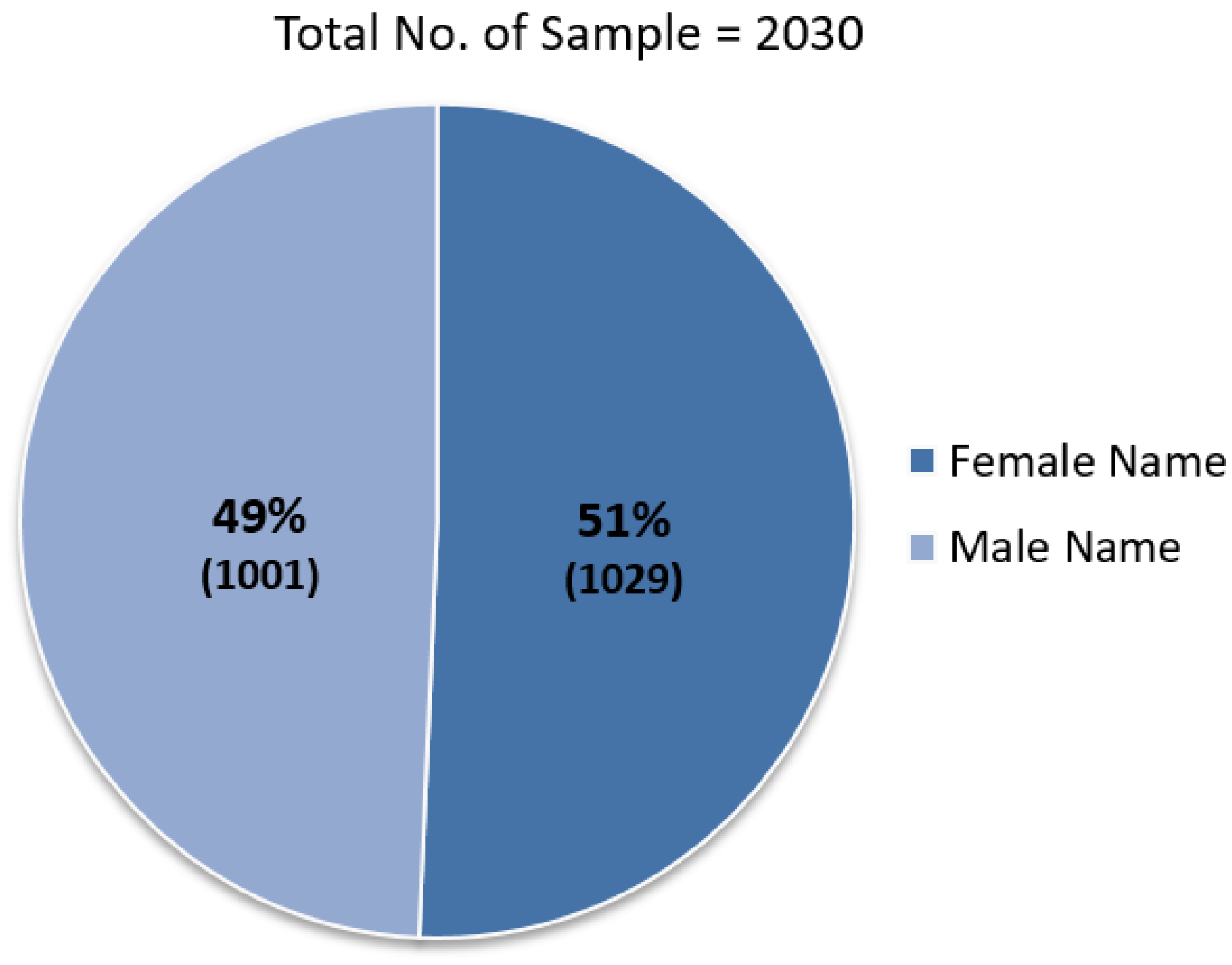
We prepared a dataset for NLP tasks containing 2030 data samples of Bengali names and corresponding gender, both for females and males. In our dataset, there are 1029 names of the male gender and 1001 names of the female gender. The data samples are collected from different sources such as Wikipedia, baby name suggestion websites, etc. Mainly we collected the names and corresponding gender of famous poets, singers, athletes, baby names, and other well-known persons in Bangladesh. Our dataset is publicly available in the Hugging Face (https://huggingface.co/datasets/faruk/bengali-names-vs-gender?fbclid=IwAR1lT_GGiWRquGAJ4tefNSUqQj8OuCeTCiaOY1t_79SbLdq8Pv94W4Fto7Y, accessed on 26 December 2022). Full documentation and dataset specifications are also provided in the repository. The dataset in CSV format has two columns, namely Name and Gender. We classified the data into two categories, which are Male and Female. Each row has two attributes. The first one is name, and the second one is gender. The name attribute is in utf-8 encoding, and the gender attribute has been signified by 0 and 1; 0 is used for male, and 1 is for female. We did not consider only diminutive names, all kinds of names that means short, medium, and large size names are available in our dataset containing one, two, and three string, respectively. We did not perform augmentation to our collection by multiplying the number of names. This whole dataset was prepared and cleaned manually for our work. Our prepared dataset is graphically depicted in Figure 1.
Figure 1. Dataset overview.

4. The Proposed Framework

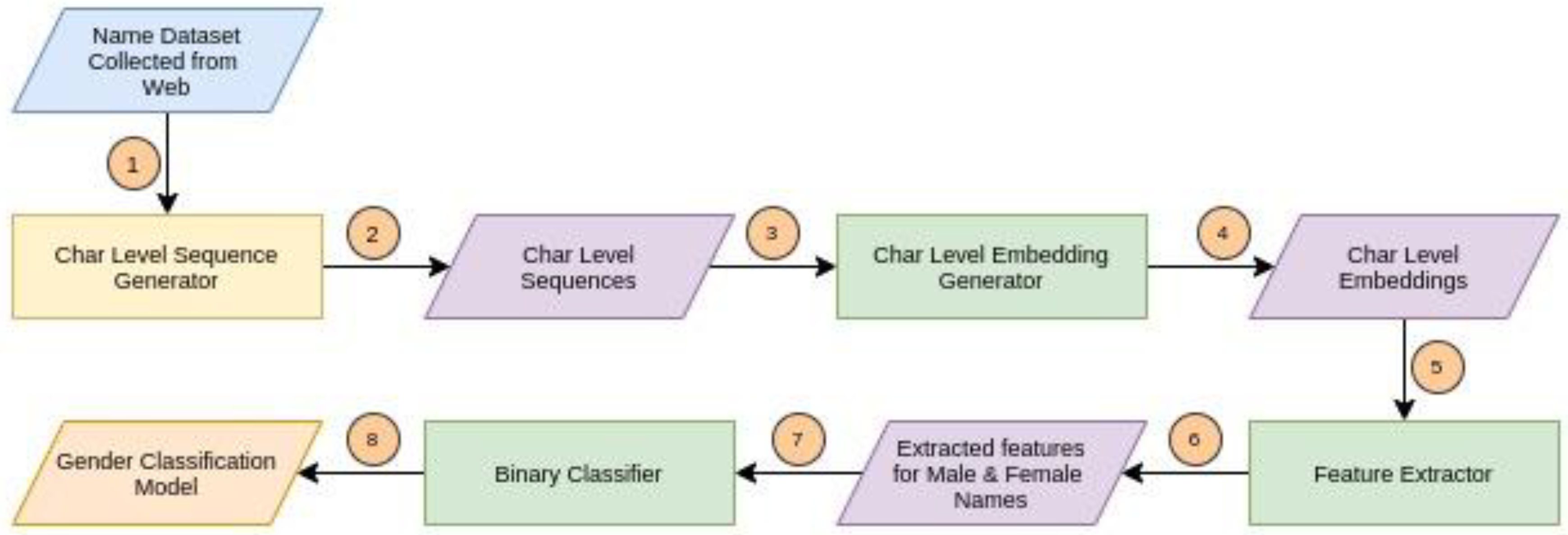
The overall system architecture, including major components of the proposed method, is shown in Figure 2. The detail of each component is described in the following subsections:
Figure 2. Flow diagram of gender classification from Bengali names.

4.1. Char-Level Sequence Generator

We converted all the names in our dataset to char-level sequences. For generating sequences, we choose the maximum length of the sequences to be 29. If any sequence is less than the maximum length, we padded zero as the default value.

4.2. Char-Level Embedding

Embedding is one of the most important parts of working with text data. We used character-level embedding for the following two reasons: Firstly, the majority of the names in our dataset are short; that is, most of them contain only one string, which may be the person’s first name or last name. Secondly, occurrences of characters in a person’s name largely depend on the person’s gender. Normally, the suffix (‘আ’ = ‘a’), (‘ই’ = ‘i’), (‘উ’ = ‘u’) prevails at the end of a female name.

4.3. Feature Extractor and Binary Classifier

To learn the features from the embedding, we performed several experiments using a convolution neural network (CNN) as well as with long short-term memory (LSTM) and their variations. Table 1 shows the detailed configurations of those feature extractors. We used a binary classification layer with a sigmoid activation for our classification purpose.

5. DNN-Based Models

A brief introduction of CNN- and LSTM-based DNNs used in this research work is provided in this section.

5.1. Convolutional Neural Network

Convolutional neural network (CNN/ConvNet) is a multiple-layer deep neural network that is commonly used in the design and calculation of natural language processing (NLP)-related tasks, including word segmentation (WS), information extraction (IE), relation extraction (RE), named entity recognition (NER), parts of speech tagging (POS), coreference resolution, parsing, word sense disambiguation (WSD), speech recognition, text to speech (TTS), machine translation (MT), etc. [27]. The idea behind using CNNs in NLP is to make use of their ability to extract features that capture salient information about an input. CNNs are applied to embedding vectors of a given sentence with the hopes that they will manage to extract useful features, such as phrases and relationships between words that are closer together in the sentence, which can be used for text classification. The NLP CNN is usually made up of 3 or more 1D convolutional and pooling layers, unlike traditional CNNs. In this work, we used one-dimensional CNN (Conv1D) and a combination of Conv1D and stacked LSTM-based models.

5.2. Long Short-Term Memory

Long short-term memory (LSTM) networks are a kind of RNN that can learn long-term dependencies. It is essentially their default behavior to remember information for longer durations. LSTM holds promise for any sequential processing tasks, including language modeling, machine translation, handwriting recognition and generation, speech recognition, speech synthesis, etc. [28,29]. Several models based on LSTM, Bi-LSTM, and stacked LSTM are used in this paper.

5.3. Loss Function

The purpose of loss functions is to compute the quantity that a model should seek to minimize during training. Since there are only two label classes (assumed to be 0 and 1) in this work, we used the binary cross-entropy loss function, which is a kind of probabilistic loss function that computes the cross-entropy loss between true labels and predicted labels. For each example, there should be a single floating-point value per prediction. The binary cross-entropy loss function calculates the loss (L) of an example by computing the following average:
L o s s = 1 o u t p u t   s i z e i = 1 o u t p u t   s i z e y i · l o g y ^ i + 1 y i · log 1 y ^ i
where y ^ i is the i t h scalar value in the model output, y i is the corresponding target value, and o u t p u t s i z e is the number of scalar values in the model output [30].

5.4. Optimizer

The Adam optimizer, which implements the Adam algorithm, was utilized in this research. Adam optimization is a stochastic gradient descent approach based on adaptive first- and second-order moment estimation. This technique is computationally efficient, requires minimal memory, is insensitive to diagonal rescaling of gradients, and is well suited for large data/parameter issues [31].

5.5. Model Configurations

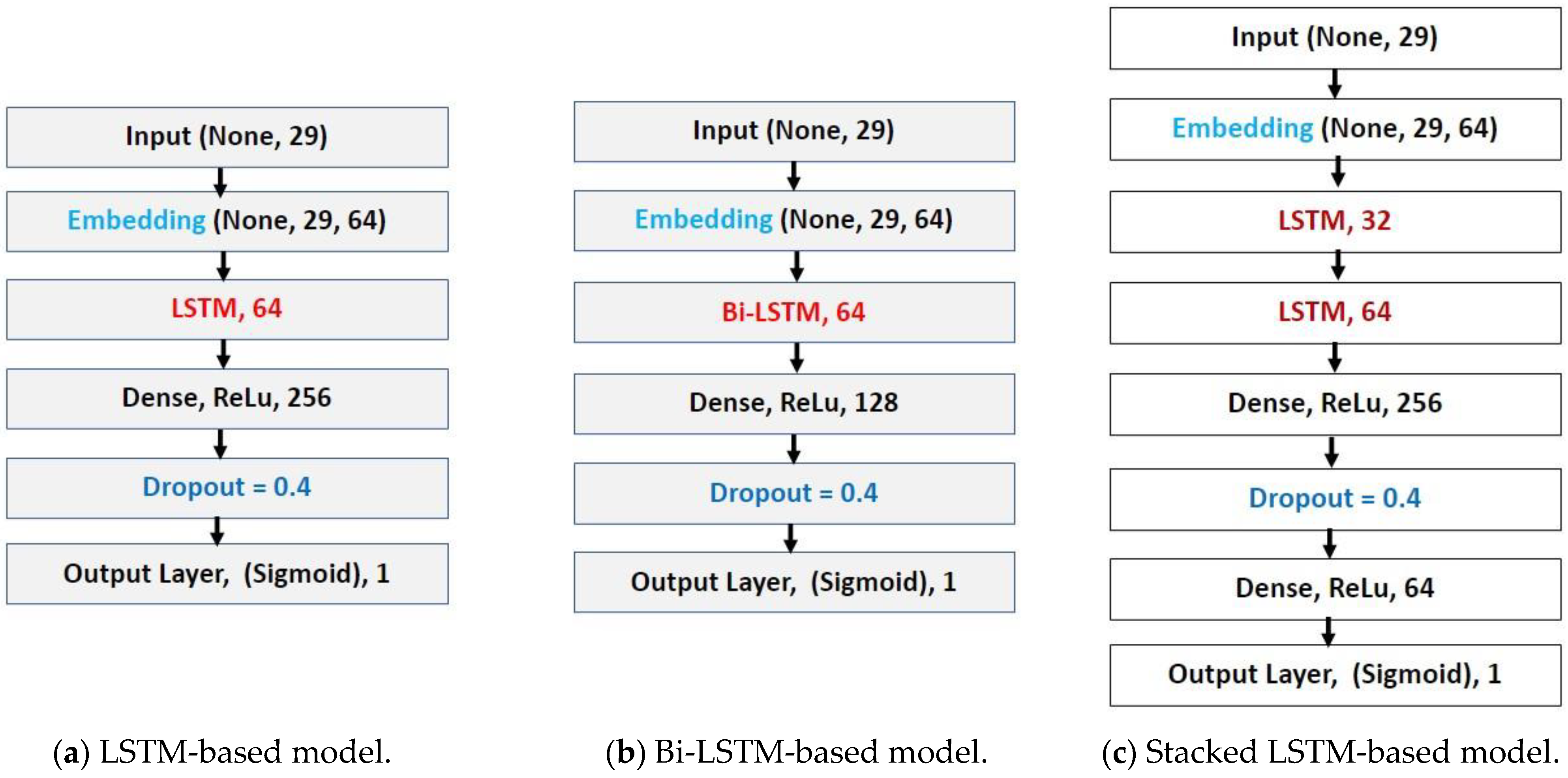
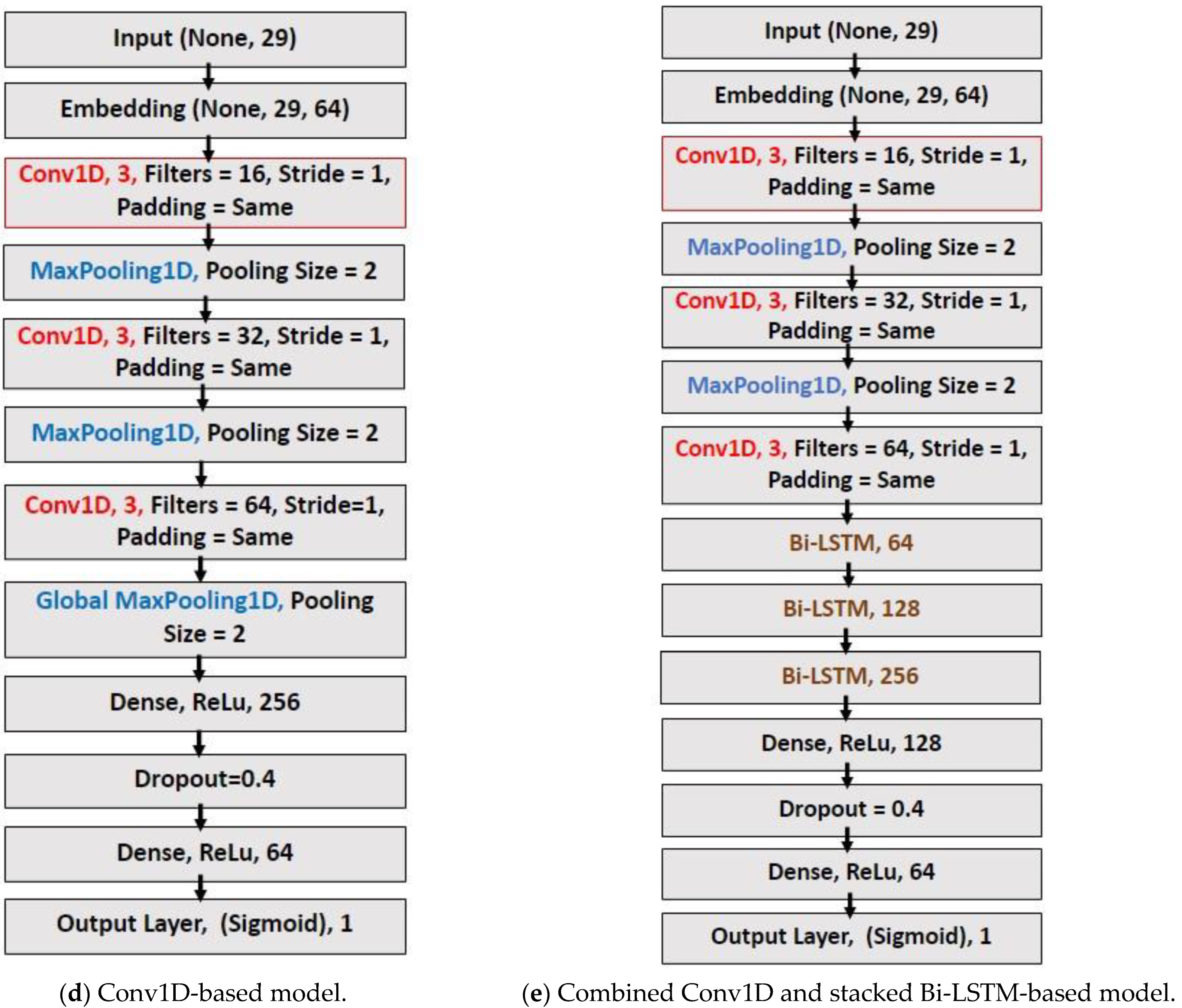
Five distinct deep neural networks based on LSTM, Bi-LSTM, and Conv1D were employed in total. Table 2 lists the technical specifications for each model. In addition, from Figure 3a through Figure 3e, each model’s layer visualization with data dimension is depicted.
Table 2. Experimental setting of different DNN models.
Figure 3. (ae) Layer visualization of five different DNN models.

6. Experimental Setup

We have tried different deep learning-based algorithms to investigate the adaptability and improvements for various approaches. Five different classifiers have been trained and tested on the test set for comparing and selecting the suitable classifier as the best one for classifying gender form name data. We have executed the whole experiment in python 3.8. For training the deep learning models/classifiers, we have used keras with tensorflow (version 2.4.1) backend. We have used it to train, validate, and infer the predictions for test data to calculate the performance metrics. We have also used pandas (version 1.3.5) for handling, and preprocessing the dataset, matplotlib for visualizing the dataset, scikitlearn has been used for calculating the performance metrics. In order to evaluate the performance of our proposed approach, we conducted five different experiments using the dataset with total data point 2030, shown in Table 3. In every algorithm, our data train test split was 80/20; that is, 80% of the total data was used for training, and 20% was for testing. We have followed the 10-fold cross-validation method to evaluate how well our model can work. There is no overlap between the train and test datasets.
Table 3. Splitting of dataset for training, validation, and testing.

7. Prediction and Performance Analysis

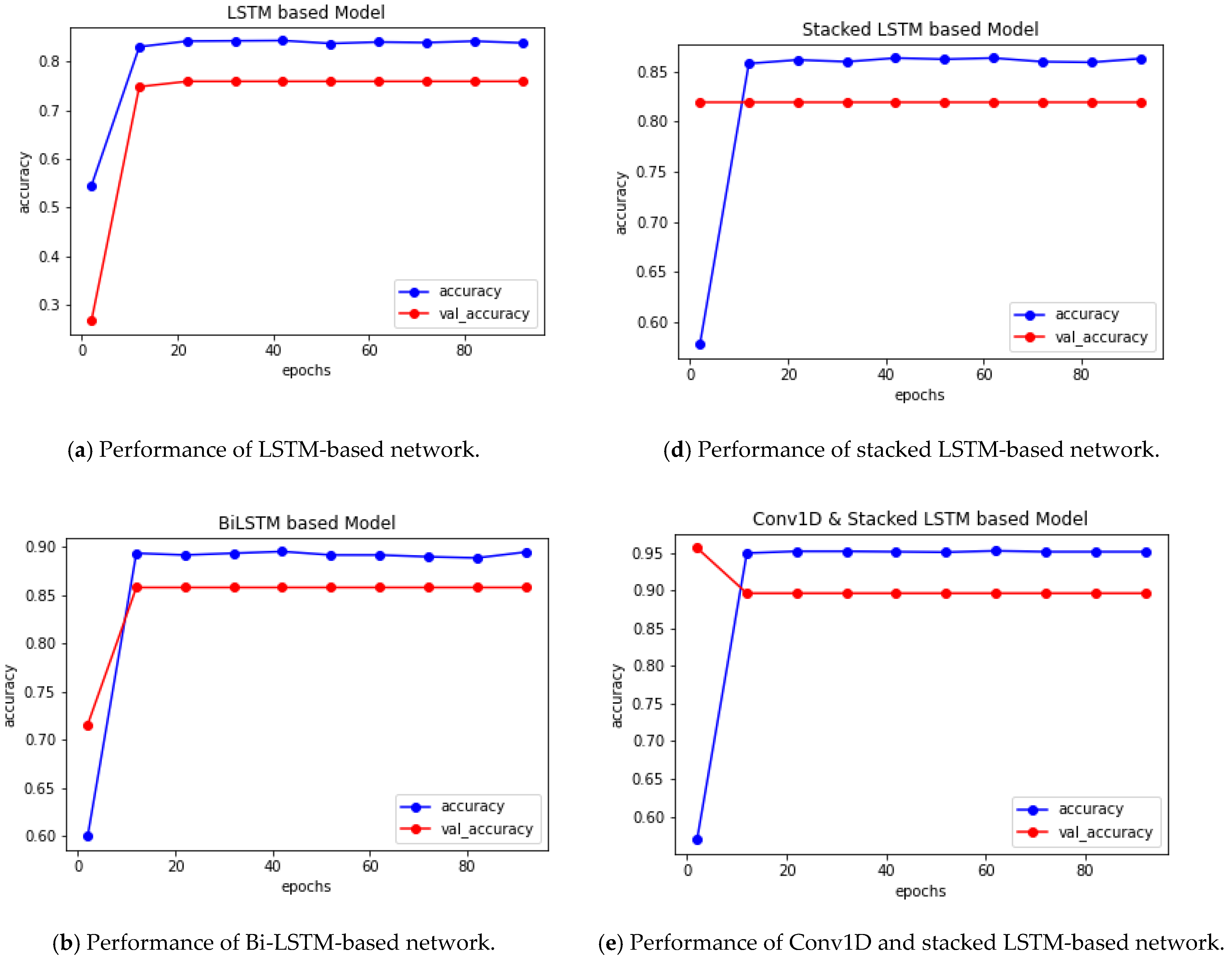
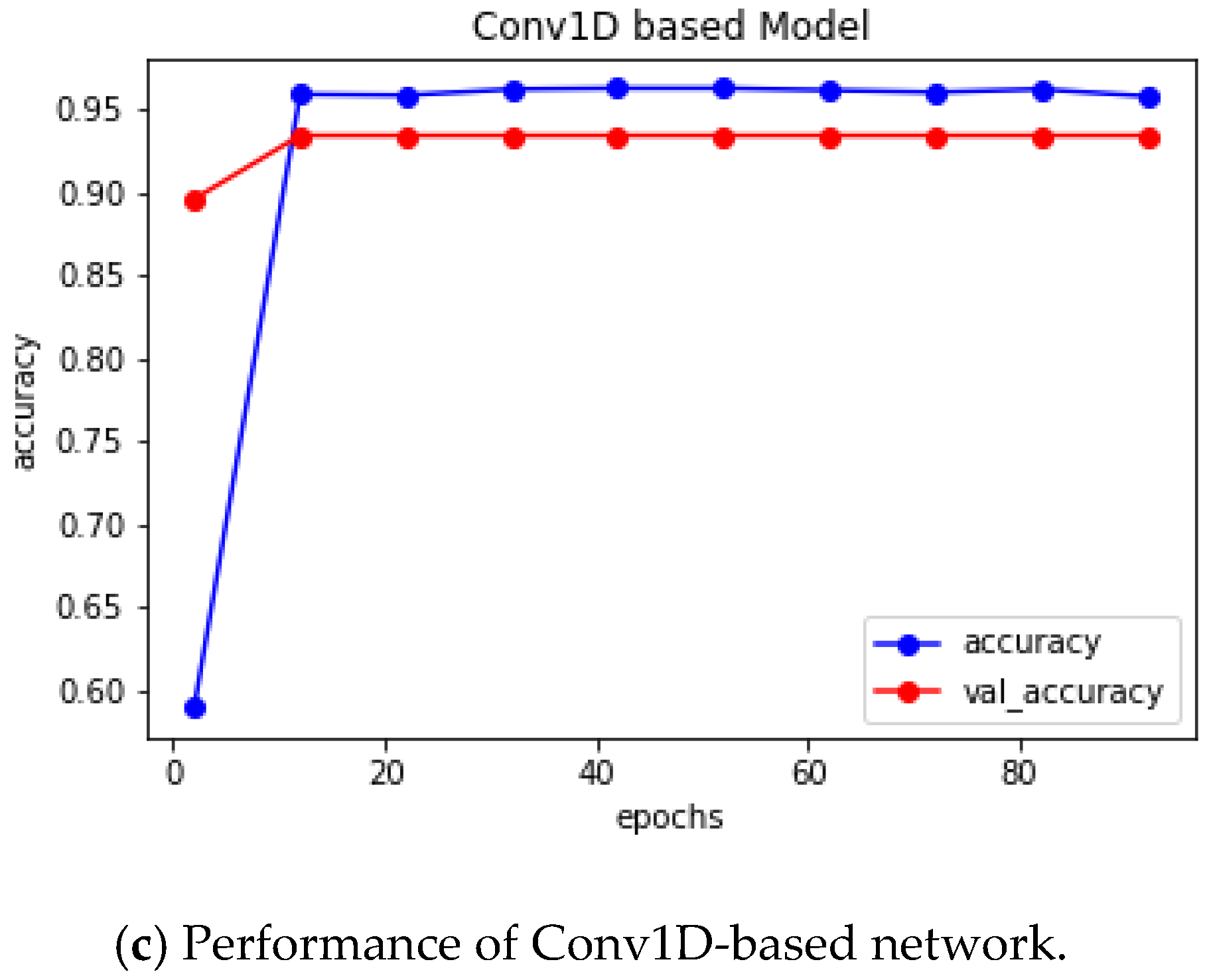
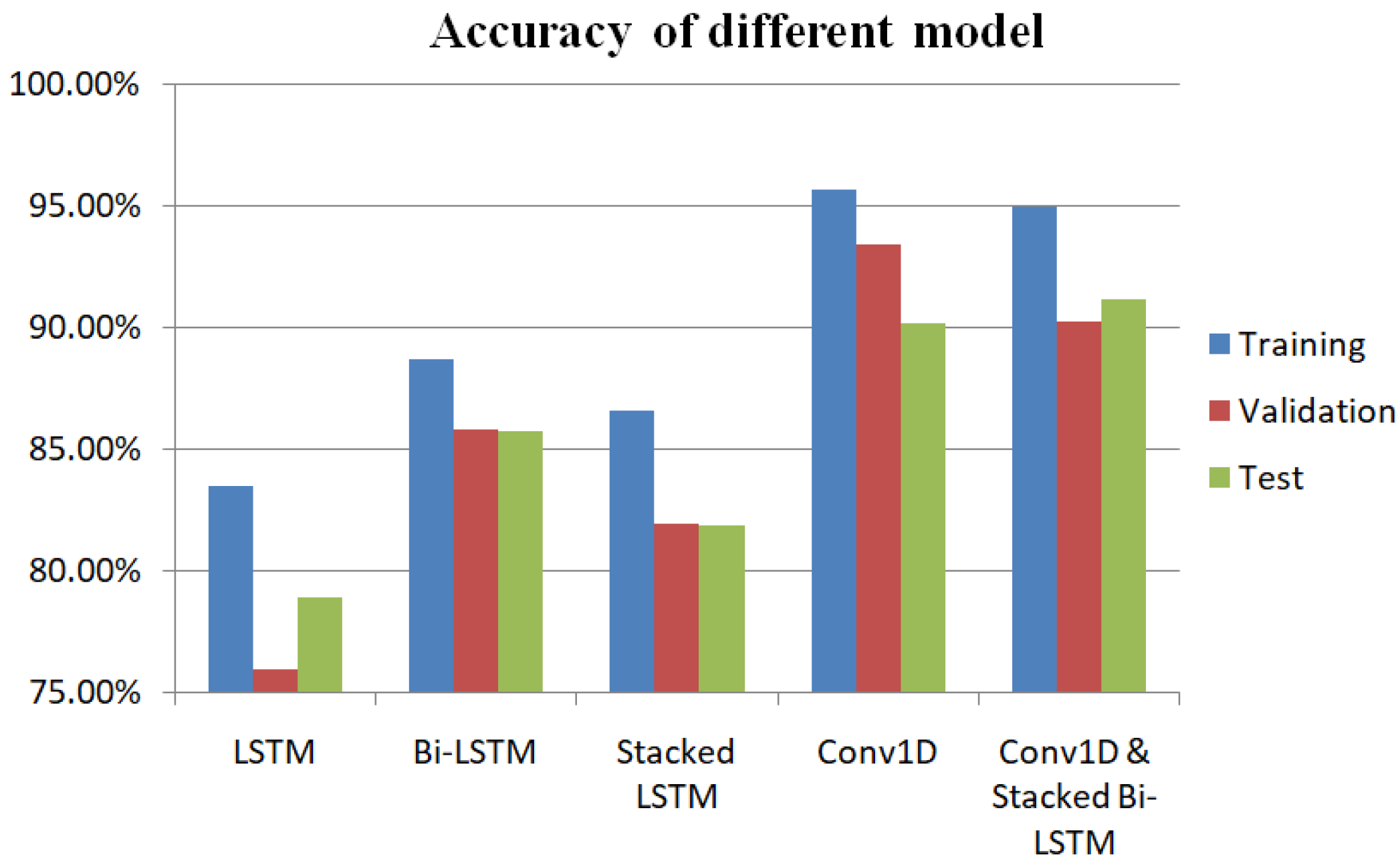
Using the training dataset, we built the experimental models. We tuned the essential parameters while constructing the models to make them more accurate and reliable. Once the models were completed, we ran our test dataset to assess the inferring methodology for gender prediction from Bangla names. We have achieved a satisfactory performance in each experiment in terms of accuracy, precision, recall, F1-score, ROC AUC score, and loss performance metrics, which is clearly demonstrated in Table 4. Table 5 depicts the percentage accuracy values for training, validation, and test dataset. The percentage accuracy of trained networks is also graphically illustrated in Figure 4a–e, and the comparison of accuracy values for training, validation, and test dataset are clearly depicted in Figure 5. From both tabular and pictorial representation, it is definitely depicted that Conv1D-based DNN provides maximum accuracy of 95.65%, 93.44%, and 92.16% for training, validation, and test dataset, respectively. It is clearly shown from Table 3 that Conv1D and the combination of Conv1D and stacked Bi-LSTM-based DNNs are more effective, whereas simple LSTM-based DNNs had the worst performance among the five variations of CNN and LSTM-based models.
Table 4. The performance of gender detection from Bangla name data.
Table 5. Accuracy of five different classifiers for training, validation, and test dataset.
Figure 4. (ae) Graphical illustration of epochs versus accuracy of each network for training and validation dataset.
Figure 5. Performance comparison among the different models in terms of accuracy for training, validation, and test dataset.

8. Experimental Results and Discussion

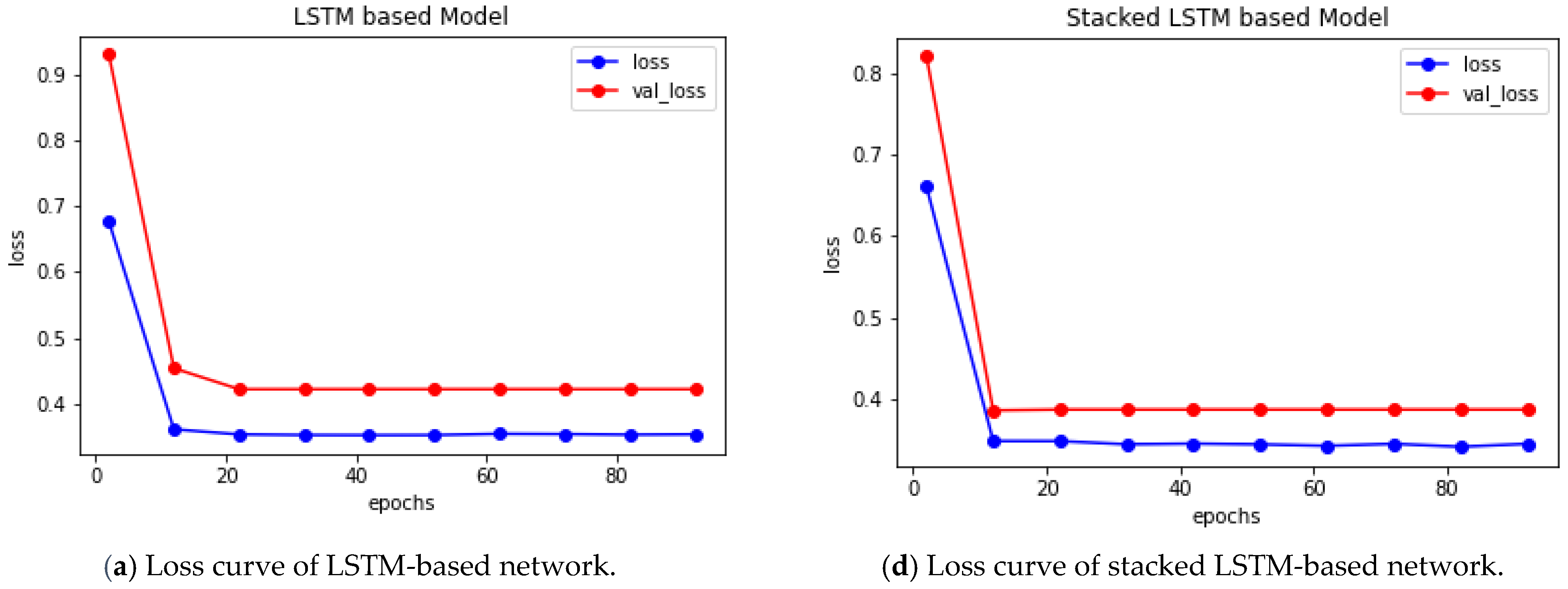
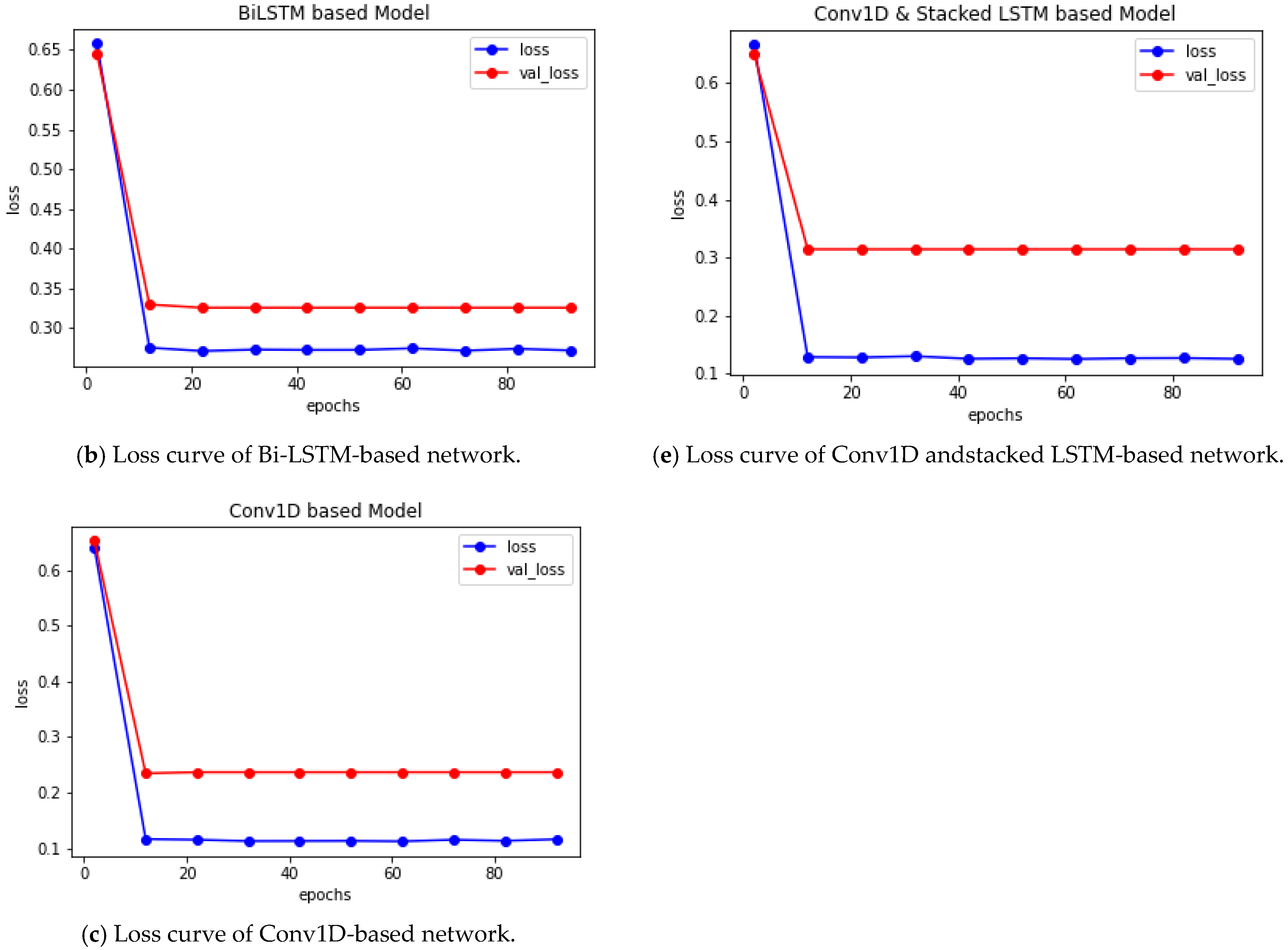
It is a very difficult and critical issue to extract information from Bangla names. In this work, five deep learning classifiers, such as LSTM, Bi-LSTM, stacked LSTM, and Conv1D and stacked Bi-LSTM, have been applied using our own dataset. To evaluate the effectiveness of our developed classifier models perfectly, we examined several performance metrics: accuracy, precision, recall, F1-score, and ROC AUC score. The tabular presentation of the performance metrics’ values of the five proposed systems, along with the comparison, are neatly shown in Table 4 and Table 5. Table 6 represents the summary of the experimental results. It is clearly depicted from Table 4 that the ConvNet-based model outperforms all in terms of accuracy, precision, recall, F1-score, and ROC AUC score performance metrics. From Table 5, it is also shown that the prediction accuracy of the Conv1D-based model is high for training, validation, and test dataset. The CNN-based system achieved the highest accuracy, 92.16%, and foremost, an F1 score of 0.920, which is clearly presented in Table 6. On the contrary, the LSTM-based system provides minimal performance with an accuracy of 71.57% and an F1 score value of 0.773 only. In addition, the graphical representation of the accuracy and loss values of the five different models are evidently displayed in Figure 4, Figure 5 and Figure 6. From the experimental results, we can conclude that the Conv1D-based classifier is very much robust and gives the best output among all of these. The implementation and trained models of this research are publicly available at the GitHub (https://github.com/MdHumaunKabir/Gender-Prediction-from-Bangla-Names, accessed on 26 December 2022).
Table 6. Comparison among the experimental results.
Figure 6. (ae) Pictorial representation of epochs versus the loss of different networks for training and validation dataset.
In Section 2, we presented some related works. From this section, it is shown that there is no study available in the literature that classifies gender from Bangladeshi names in the Bengali language. This is the first research to infer gender from Bangladeshi names in the Bengali language using our own dataset. For this reason, it is difficult to compare our achieved results with previous works. We looked into the challenge of determining gender from a user’s first name in this study. We suggested character-based machine learning models and proved that our models are able to infer the gender of users with much higher accuracy. In different cultures, only initial names may have diverse gender connotations. In this case, we illustrated that using both first and last names may be effective. One drawback of our system is that if the first name is unisex, determining gender might be difficult. It is beneficial to utilize both first and last names, or the first name and content information, in this circumstance. In the future, we intend to investigate whether integrating these entire factors (first and last names, as well as content information) can provide us even better outcomes.

9. Conclusions and Future Work

Automatic gender detection can be beneficial for gender analysis in any sector/ service to discover gender bias or inequality, specifically to understand women’s position in tech, media, professional domain, academic domain, etc. Additionally, it will be a smart way to predict the gender from the name, which will be helpful for gender-based data analysis using text data. If the dataset is increased, we hope to get better performance by using Conv1D and a combination of Conv1D and stacked Bi-LSTM. Other methods can also be tried for better results. In the near future, we will work to develop an online-based name-to-gender inference service API that will be available on the Internet for Bengali and English names. Other applications and users can utilize the API. We will also aim to collect additional data and employ other innovative algorithms and technologies to strengthen the models.

Author Contributions

Conceptualization, M.H.K., F.A. and J.S.; methodology, M.H.K., F.A. and J.S.; investigation, M.H.K., F.A. and J.S.; data curation, M.H.K. and F.A.; writing—original draft preparation, M.H.K.; writing—review and editing, M.H.K., J.S. and M.A.M.H.; visualization, M.H.K., F.A. and M.A.M.H.; supervision, J.S.; funding acquisition, J.S. All authors have read and agreed to the published version of the manuscript.

Funding

This work was supported by the Competitive Research Fund of The University of Aizu, Japan.

Institutional Review Board Statement

Not Applicable.

Data Availability Statement

Our prepared own dataset with full documentation, called the Bengali female and male names dataset, is publicly available at the Hugging Face (https://huggingface.co/datasets/faruk/bengali-names-vs-gender?fbclid=IwAR1lT_GGiWRquGAJ4tefNSUqQj8OuCeTCiaOY1t_79SbLdq8Pv94W4Fto7Y, accessed on 26 December 2022).

Conflicts of Interest

The authors declare no conflict of interest.

References

  1. Iman Ghosh. Ranked: The 100 Most Spoken Languages around the World. Last Modified 15 February 2020. Available online: https://www.visualcapitalist.com/100-most-spoken-languages/ (accessed on 8 January 2021).
  2. Sen, O.; Fuad, M.; Islam, M.N.; Rabbi, J.; Masud, M.; Hasan, M.K.; Awal, M.A.; Fime, A.A.; Fuad, M.T.H.; Sikder, D.; et al. Bangla Natural Language Processing: A Comprehensive Analysis of Classical, Machine Learning, and Deep Learning-Based Methods. IEEE Access 2022, 10, 38999–39044. [Google Scholar] [CrossRef]
  3. Patel, S.; Shah, B.; Kaur, P. Leveraging User Comments in Tweets for Rumor Detection. In Advances in Intelligent Systems and Computing; Springer: Singapore, 2022; Volume 1388. [Google Scholar] [CrossRef]
  4. Bhowmik, N.; Arifuzzaman, M.; Mondal, M. Sentiment Analysis on Bangla Text Using Extended Lexicon Dictionary and Deep Learning Algorithms; Elsevier Inc.: Amsterdam, The Netherlands, 2022; Volume 13, pp. 1–14. [Google Scholar]
  5. Ani, J.F.; Islam, M.; Ria, N.J.; Akter, S.; Masum AK, M. Estimating Gender Based On Bengali Conventional Full Name With Various Machine Learning Techniques. In Proceedings of the 2021 12th International Conference on Computing Communication and Networking Technologies (ICCCNT), Kharagpur, India, 6–8 July 2021; pp. 1–6. [Google Scholar] [CrossRef]
  6. Abdallah, E.E.; Alzghoul, J.R.; Alzghool, M. Age and Gender prediction in Open Domain Text. Procedia Comput. Sci. 2020, 170, 563–570. [Google Scholar] [CrossRef]
  7. Karako, C.; Manggala, P. Using image fairness representations in diversity-based re-ranking for recommendations. In Proceedings of the Adjunct Publication of the 26th Conference on User Modeling, Adaptation and Personalization, Singapore, 8–11 July 2018; pp. 23–28. [Google Scholar]
  8. Yao, S.; Huang, B. Beyond parity: Fairness objectives for collaborative filtering. In Advances in Neural Information Processing Systems; MIT press: Cambridge, MA, USA, 2017; pp. 2921–2930. [Google Scholar]
  9. Gattal, A.; Djeddi, C.; Bensefia, A.; Ennaji, A. Handwriting Based Gender Classification Using COLD and Hinge Features. In Lecture Notes in Computer Science Image and Signal Processing; Springer: Cham, Switzerland, 2020; pp. 233–242. [Google Scholar]
  10. Roy, P.; Bhagath, P.; Das, P. Gender Detection from Human Voice Using Tensor Analysis. In Proceedings of the 1st Joint SLTU and CCURL Conference on Language Resources and Evaluation (LREC), Marseille, France, 16 May 2020; pp. 211–217. [Google Scholar]
  11. Bérubé, N.; Ghiasi, G.; Sainte-Marie, M.; Larivière, V. Wiki-Gendersort: Automatic gender detection using first names in Wikipedia. arXiv 2020. [Google Scholar] [CrossRef]
  12. To, H.Q.; Nguyen, K.V.; Nguyen, N.L.; Nguyen, A.G. Gender Prediction Based on Vietnamese Names with Machine Learning Techniques. In Proceedings of the 4th International Conference on Natural Language Processing and Information Retrieval, Seoul, Republic of Korea, 18–20 December 2020. [Google Scholar]
  13. Sotelo, A.F.; Gómez-Adorno, H.; Esquivel-Flores, O.; Bel-Enguix, G. Gender Identification in Social Media Using Transfer Learning. In Lecture Notes in Computer Science Pattern Recognition; Springer: Cham, Switzerland, 2020; pp. 293–303. [Google Scholar]
  14. Kowsher, M.; Sanjid, M.Z.I.; Das, A.; Ahmed, M.; Sarker, M.M.H. Machine Learning and Deep Learning based Information Extraction from Bangla Names. Procedia Comput. Sci. 2020, 178, 224–233. [Google Scholar] [CrossRef]
  15. Karim, R.; Islam, M.A.; Simanto, S.R.; Chowdhury, S.A.; Roy, K.; Al Neon, A.; Hasan, M.S.; Firoze, A.; Rahman, R.M. A Step Towards Information Extraction: Named Entity Recognition in Bangla Using Deep Learning. J. Intell. Fuzzy Syst. 2019, 37, 1–13. [Google Scholar] [CrossRef]
  16. Chollet, F. Deep Learning with Python; Manning Publications: New York, NY, USA, 2017. [Google Scholar]
  17. Shuai, Q.; Wang, R.; Jin, L.; Pang, L. Research on Gender Recognition of Names Based on Machine Learning Algorithm. In Proceedings of the 10th International Conference on Intelligent Human-Machine Systems and Cybernetics (IHMSC), Hangzhou, China, 25–26 August 2018; Volume 2, pp. 335–338. [Google Scholar]
  18. Zhang, S.; Zhang, S.; Wang, X. Automatic Recognition of Chinese Organization Name Based on Conditional Random Fields. In Proceedings of the International Conference on Natural Language Processing and Knowledge Engineering, Beijing, China, 30 August–1 September 2007; pp. 229–233. [Google Scholar]
  19. Hu, Y.; Hu, C.; Tran, T.; Kasturi, T.; Joseph, E.; Gillingham, M. What’s in a name?—Gender classification of names with character based machine learning models. Data Min. Knowl. Discov. 2021, 35, 1537–1563. [Google Scholar] [CrossRef]
  20. Rego, R.C.; Silva, V.M. Predicting gender of Brazilian names using deep learning. arXiv 2021, arXiv:2106.10156. [Google Scholar]
  21. Panchenko, A.; Teterin, A. Detecting gender by full name: Experiments with the russian language. In International Conference on Analysis of Images, Social Networks and Texts; Springer: Cham, Switzerland, 2014; pp. 169–182. [Google Scholar]
  22. Tripathi, A.; Faruqui, M. Gender prediction of Indian names. In Proceedings of the IEEE Technology Students’ Symposium, Kharagpur, India, 14–16 January 2011; pp. 137–141. [Google Scholar] [CrossRef]
  23. Tang, Q.; Lin, H. Research on Gender Recognition for Character in Text. J. Chin. Inf. Process. 2010. Available online: https://en.cnki.com.cn/Article_en/CJFDTotal-MESS201002005.htm (accessed on 18 January 2020).
  24. Paiva, E.; Paim, A.; Ebecken, N. Convolutional Neural Networks and Long Short-Term Memory Networks for Textual Classification of Information Access Requests. IEEE Lat. Am. Trans. 2021, 19, 826–833. [Google Scholar] [CrossRef]
  25. Han, X.; Li, B.; Wang, Z. An attention-based neural framework for uncertainty identification on social media texts. Tsinghua Sci. Technol. 2020, 25, 117–126. [Google Scholar] [CrossRef]
  26. Arkhipenko, K.; Kozlov, I.; Trofimovich, J.; Skorniakov, K.; Gomzin, A.; Turdakov, D. Comparison of neural network architectures for sentiment analysis of Russian tweets. Proc. Dialogue 2016. Available online: http://www.dialog-21.ru/media/3380/arkhipenkoetal.pdf (accessed on 20 January 2020).
  27. Wang, W.; Gang, J. Application of Convolutional Neural Network in Natural Language Processing. In Proceedings of the International Conference on Information Systems and Computer Aided Education (ICISCAE), Changchun, China, 6–8 July 2018; pp. 64–70. [Google Scholar]
  28. Hochreiter, S.; Schmidhuber, J. Long Short-Term Memory. J. Neural Comput. 1997, 9, 1735–1780. [Google Scholar] [CrossRef] [PubMed]
  29. Yao, L.; Guan, Y. An Improved LSTM Structure for Natural Language Processing. In Proceedings of the IEEE International Conference of Safety Produce Informatization (IICSPI), Chongqing, China, 10–12 December 2018; pp. 565–569. [Google Scholar] [CrossRef]
  30. Keras API Docs. Binary Cross-Entropy Class. Available online: https://keras.io/api/losses/probabilistic_losses/#binarycrossentropy-class (accessed on 2 January 2021).
  31. Kingma, D.P.; Ba, J. Adam: A method for stochastic optimization. arXiv 2015, arXiv:1412.6980. [Google Scholar]
Disclaimer/Publisher’s Note: The statements, opinions and data contained in all publications are solely those of the individual author(s) and contributor(s) and not of MDPI and/or the editor(s). MDPI and/or the editor(s) disclaim responsibility for any injury to people or property resulting from any ideas, methods, instructions or products referred to in the content.

Article Metrics

Citations

Article Access Statistics

Multiple requests from the same IP address are counted as one view.