Using Singular Value Decomposition and Chaotic Maps for Selective Encryption of Video Feeds in Smart Traffic Management
 ,
,  and
and
Abstract
:1. Introduction
2. Background and Related Work
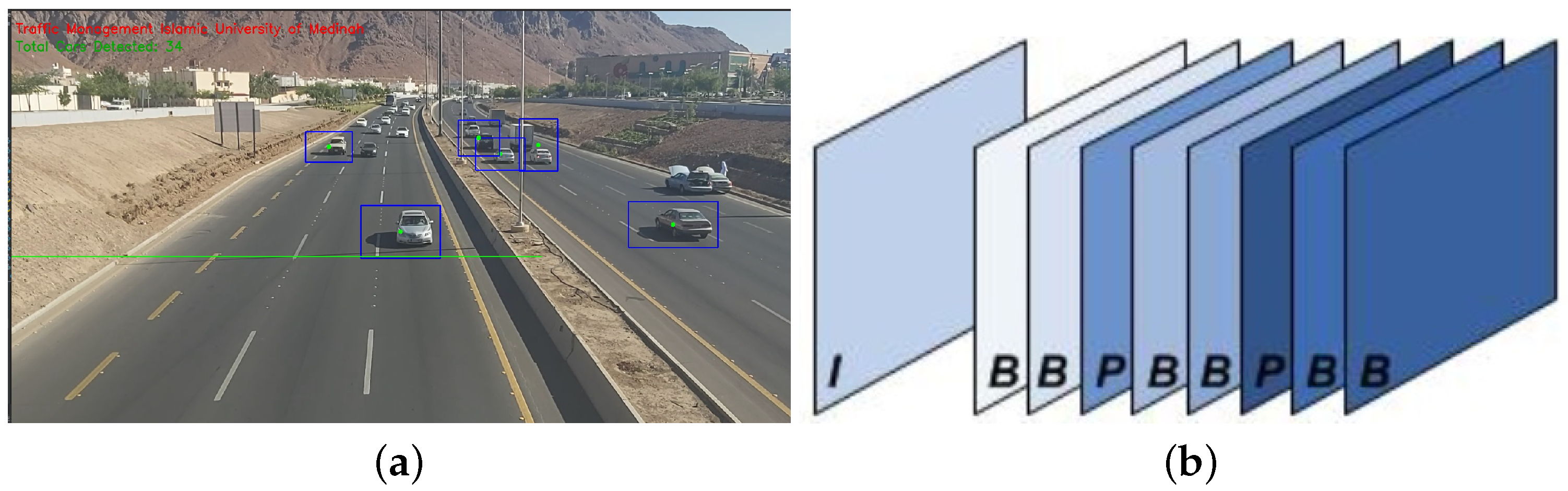
2.1. MPEG Video Sequence
2.2. Singular Value Decomposition
- and represent the averages of x and y, respectively.
- and represent the variances of x and y, respectively.
- represents the covariance of x and y.
- and are two variables used to stabilize a division with a weak denominator.
- L is the dynamic range of the pixel values.
- and .
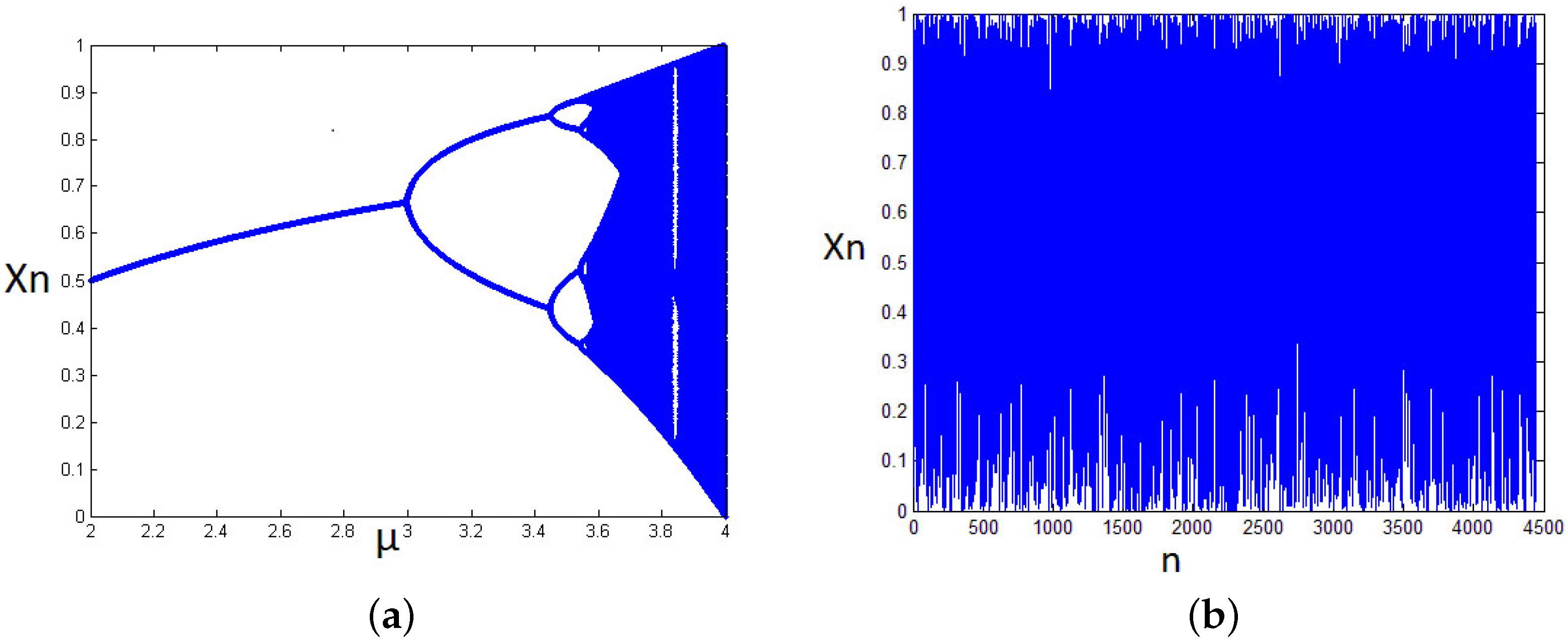
2.3. Logistic Map
2.4. The Generalized Cat Map
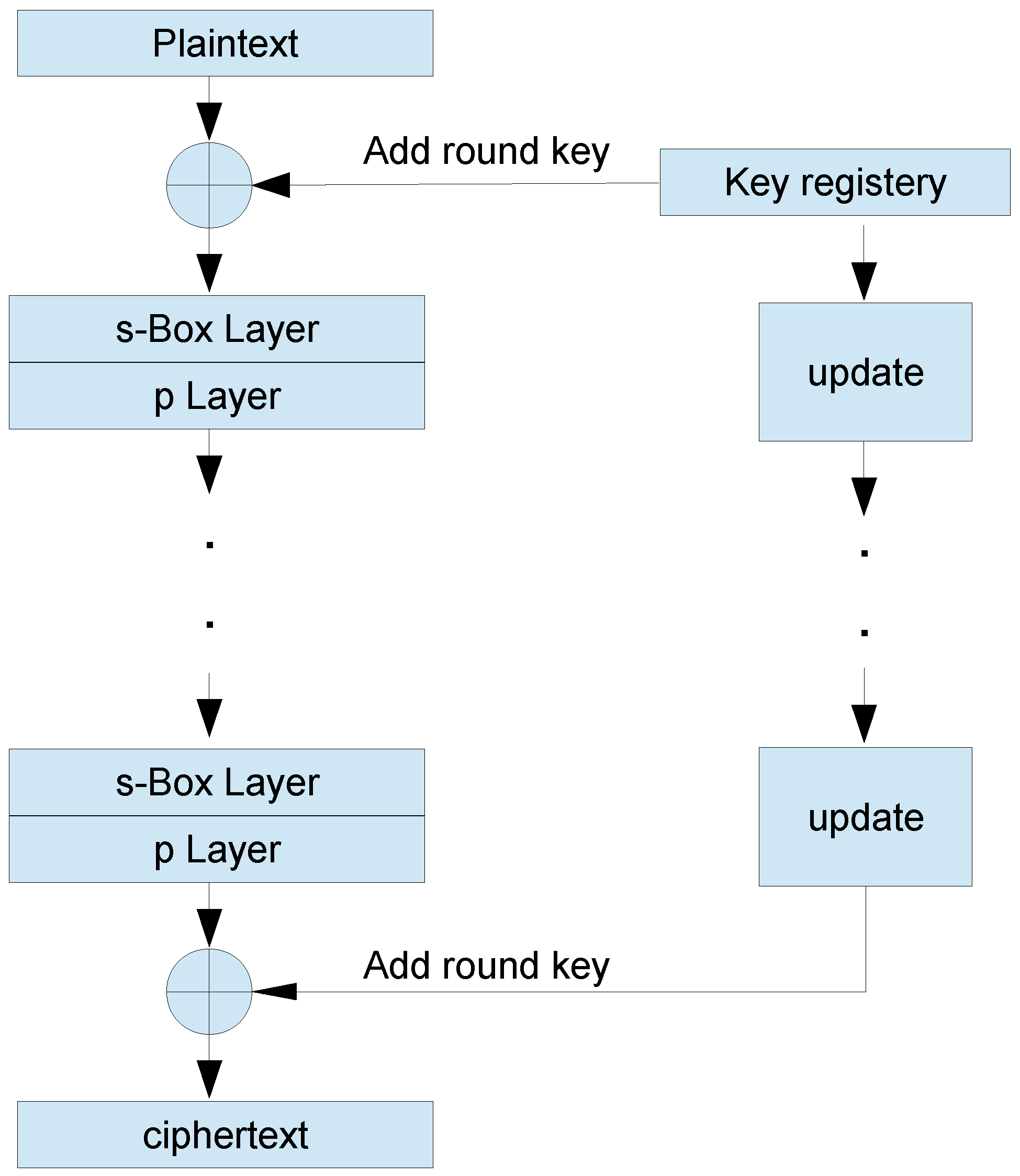
2.5. PRESENT Block Cipher
2.6. Selective Encryption
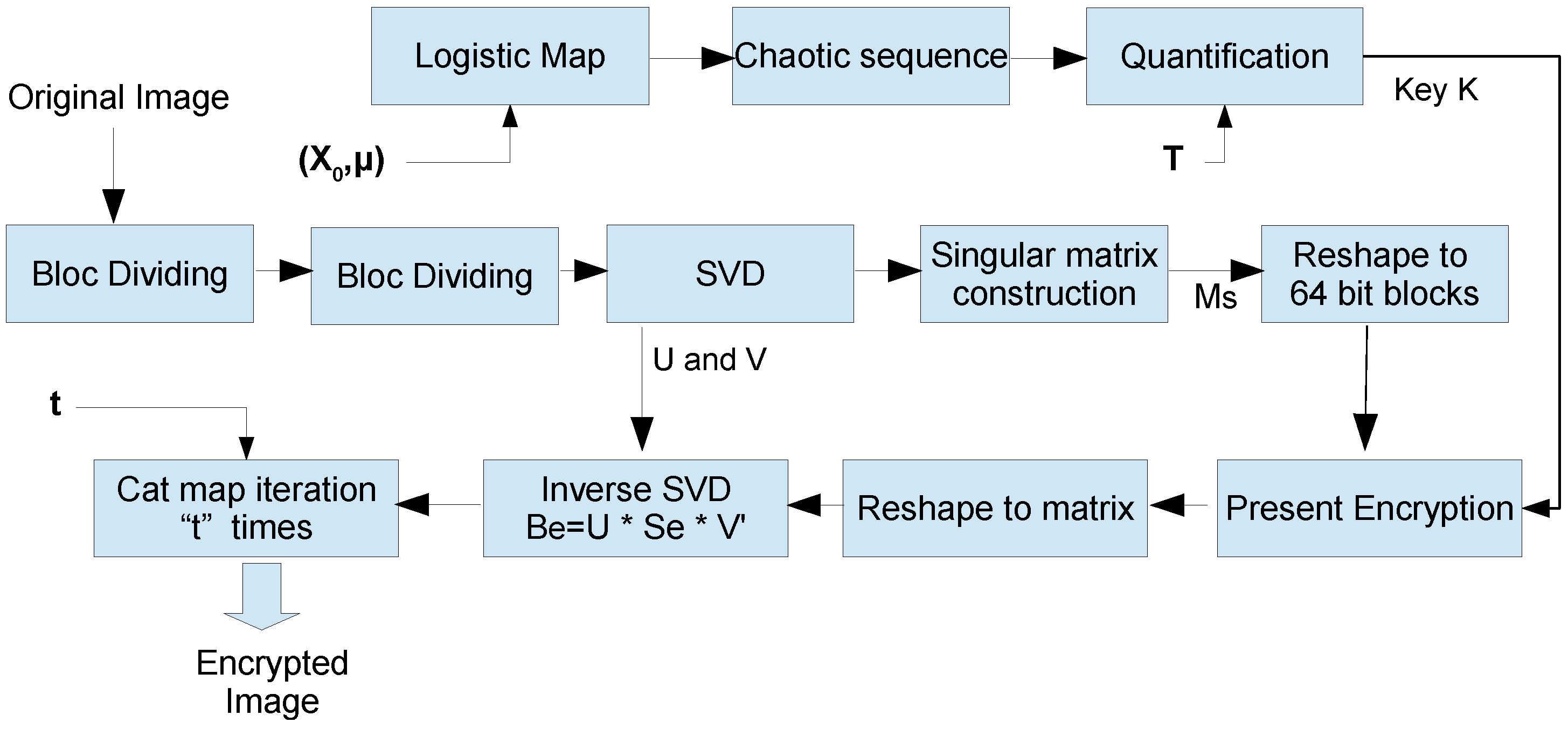
3. Proposed Approach
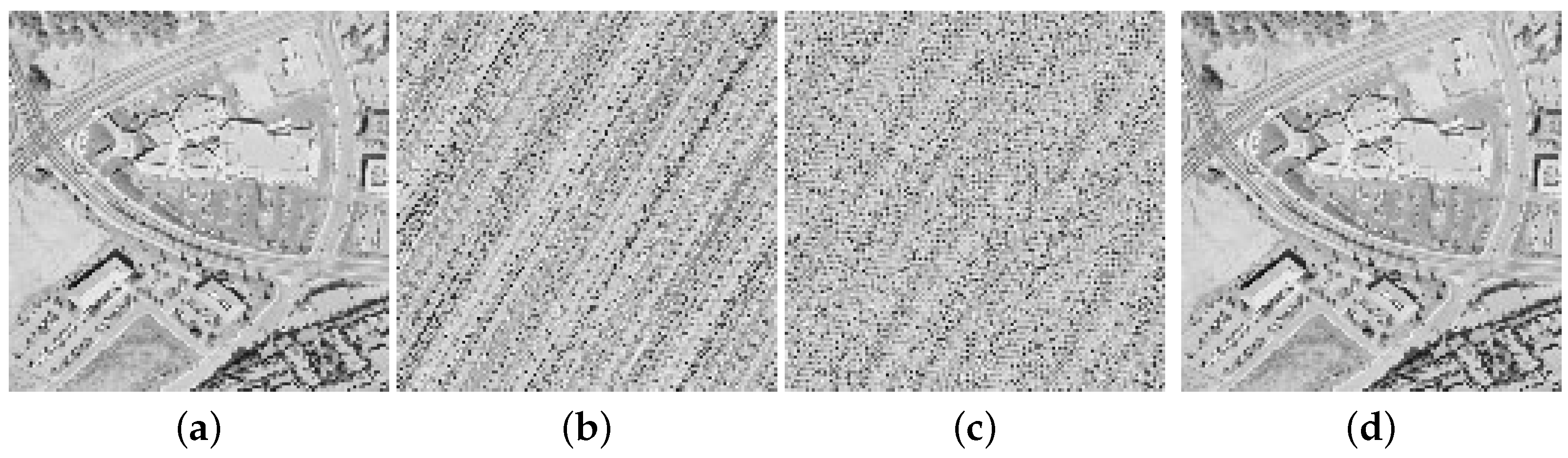
- The image M is split into non-overlapping blocks, each measuring .
- For each block, the singular value decomposition is applied, and the diagonal matrix is extracted, where i is the block number.
- For each block, the first singular value is extracted and stored in matrix with size . After processing all the blocks, matrix is constructed, and it represents the input to encryption procedure.
- The singular values of the matrix are rounded and converted to binary. Then, the binary values are transformed to a vector, which is decomposed into blocks of size 64 bits that are encrypted.
- Starting from an initial condition and a control parameter , 80 pseudo-random numbers are generated by iterating the logistic map. These numbers are quantified using a threshold T to construct the encryption key K.
- The encrypted blocks are reshaped, and the encrypted singular matrices are constructed.
- The inverse singular value decomposition is applied to each block to obtain the image with encrypted singular values.
- The pixels of the resulted images are shuffled using the Arnold cat map. The number of iterations of the cat map t is considered one of the keys of the cryptosystem.
- = 987,654,326 and ;
- The threshold ;
- The number of iterations of the Arnold cat map .
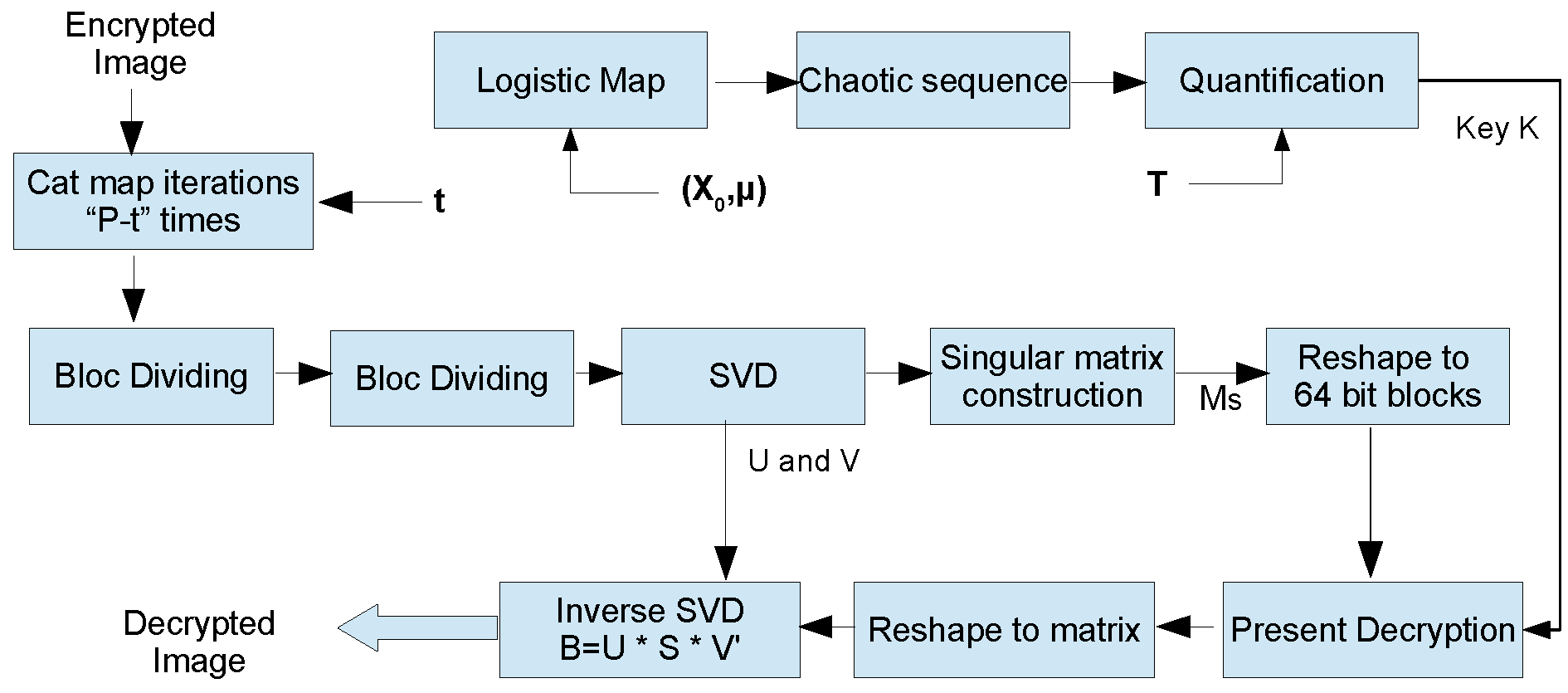
- To restore pixel coordinates, the cat map is iterated “P-t” times, where “P” is the period of the cat map and “t” is the number of iterations in the encryption process.
- The encrypted image is split into non-overlapping blocks of size .
- Every block is decomposed using singular value decomposition, and the diagonal matrix is extracted.
- For each block, the first singular value is extracted and stored in a matrix to construct the encrypted singular matrix.
- The singular values of the encrypted matrix are rounded and converted to binary. The binary values are then transformed to a vector, which is is decomposed into blocks of size 64 bits that are decrypted.
- The logistic map is used to generate 80 pseudo-random numbers, which are quantified using the threshold T to construct the decryption key K.
- The blocks are injected along with the key K into the decryption procedure.
- The decrypted values are reshaped and transformed to singular blocks.
- Finally, the inverse singular value decomposition is applied to each block to obtain the decrypted image.
4. Experiments and Results
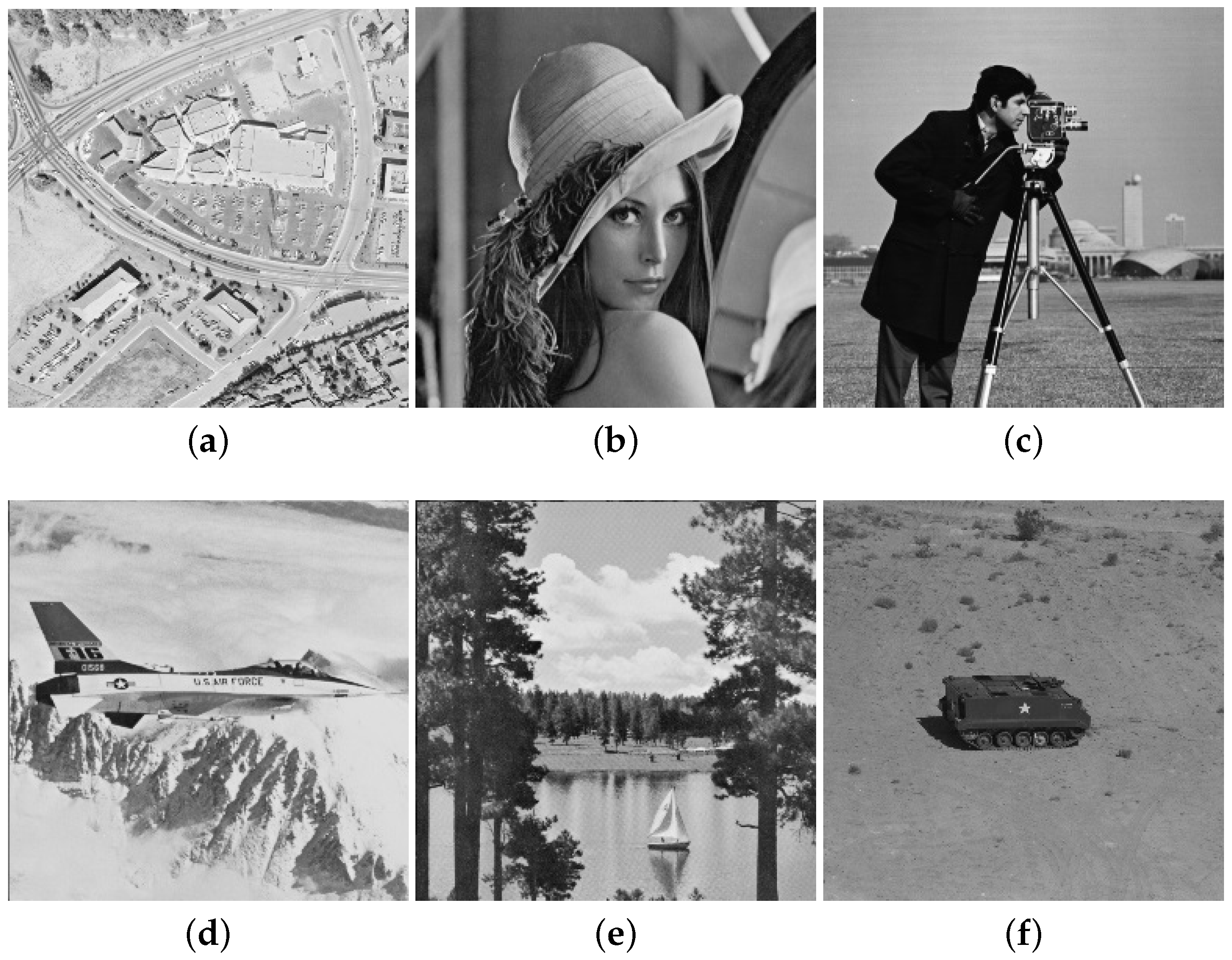
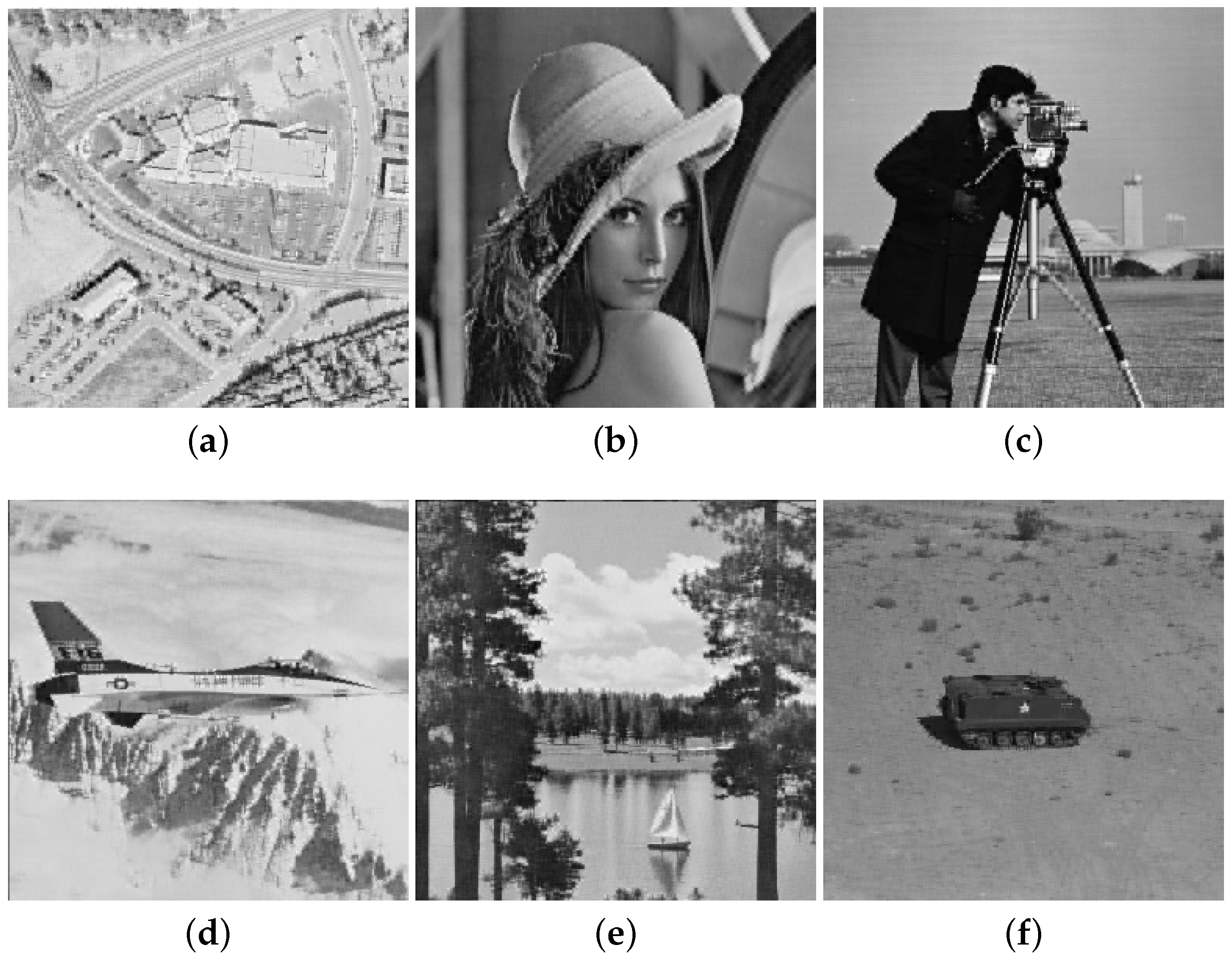
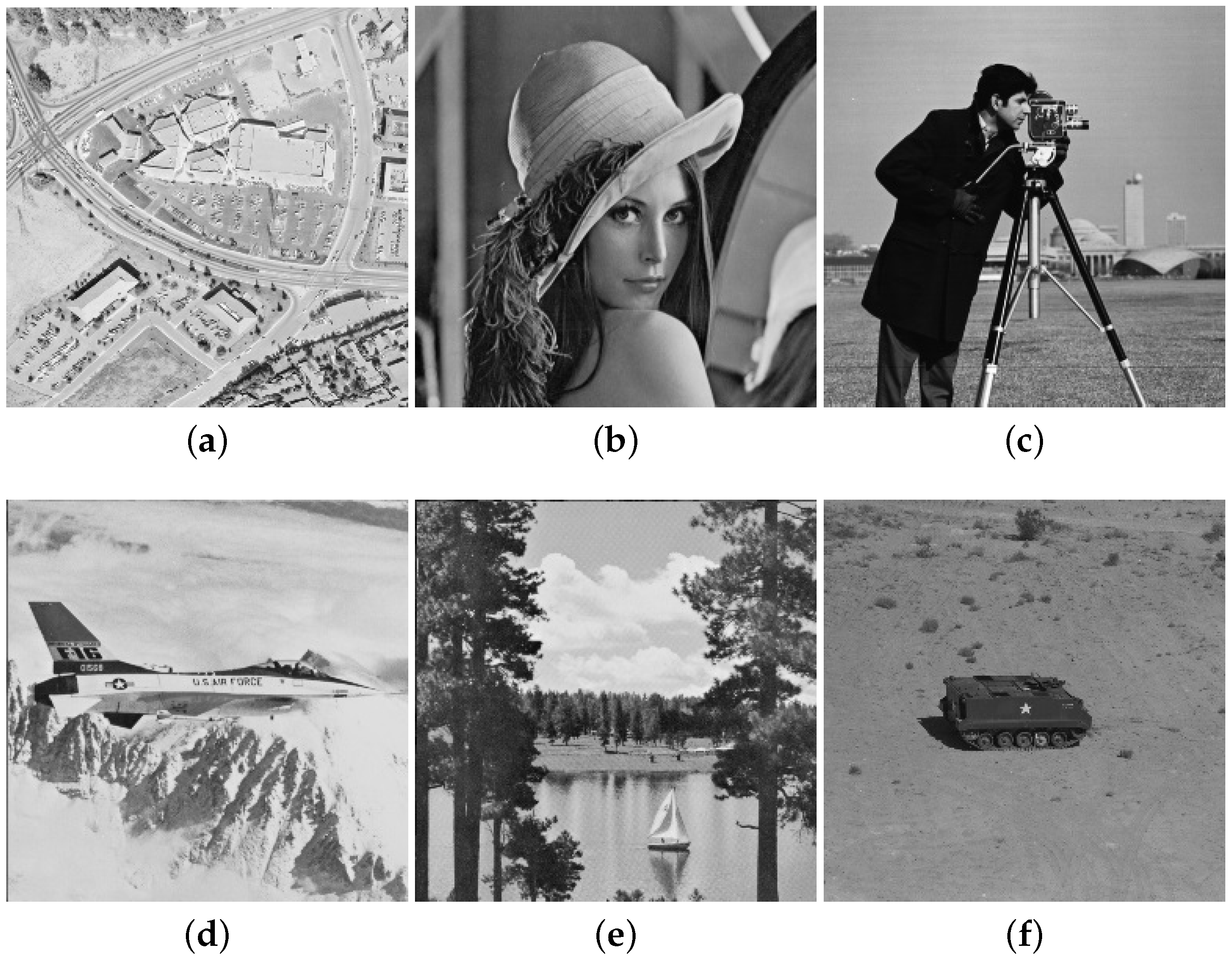
4.1. Setup
4.2. Evaluation Metrics
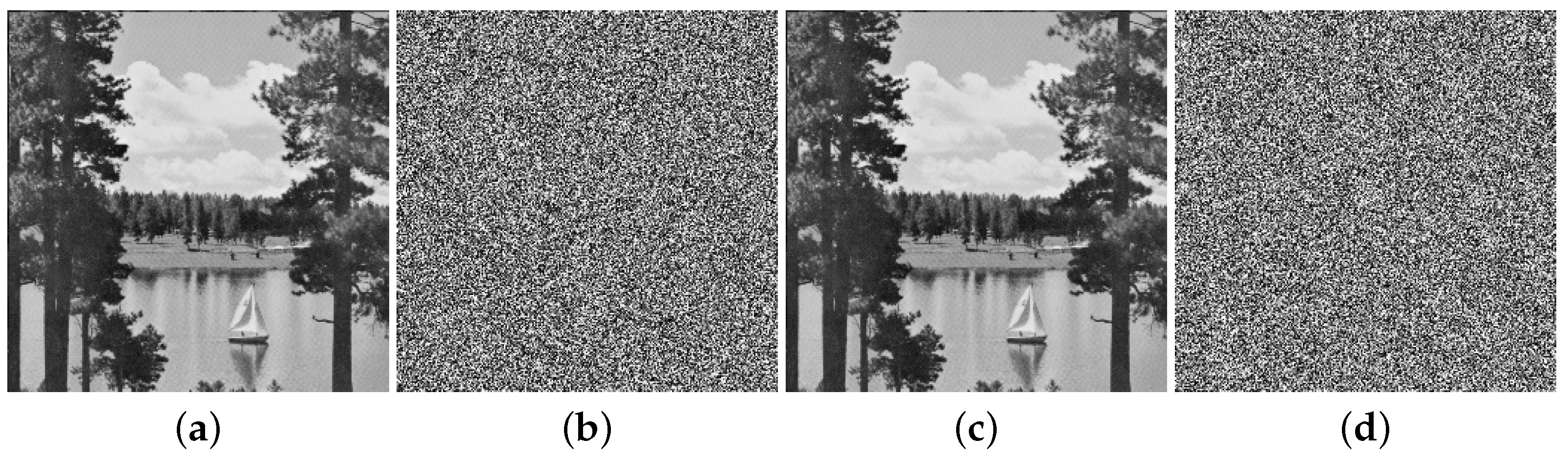
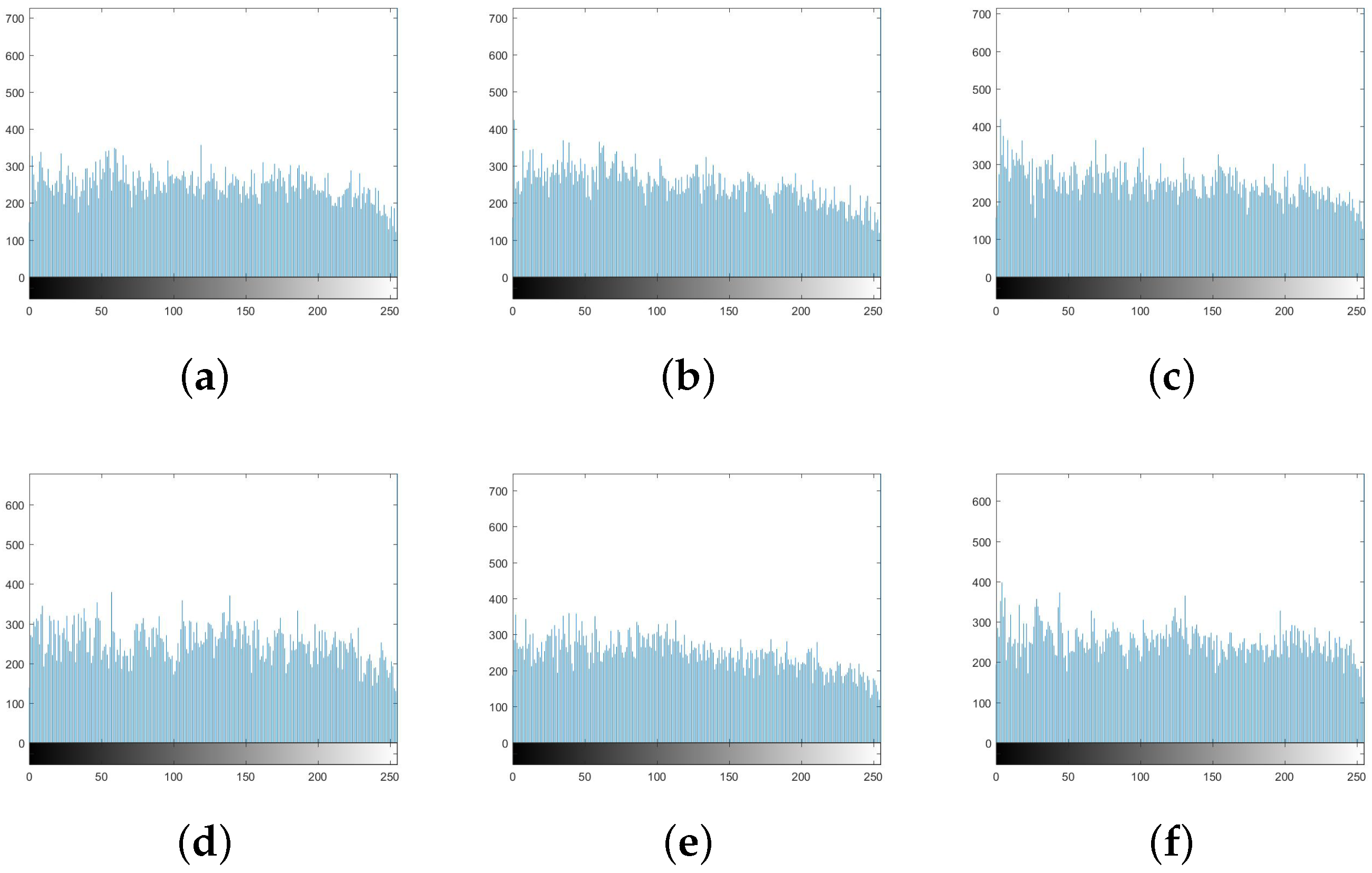
- Tonal distribution of the encrypted images—It is used to see if the encrypted image is subject to any kind of statistical attack. To avoid a statistical attack, the tonal distribution of the encrypted images should be uniform.
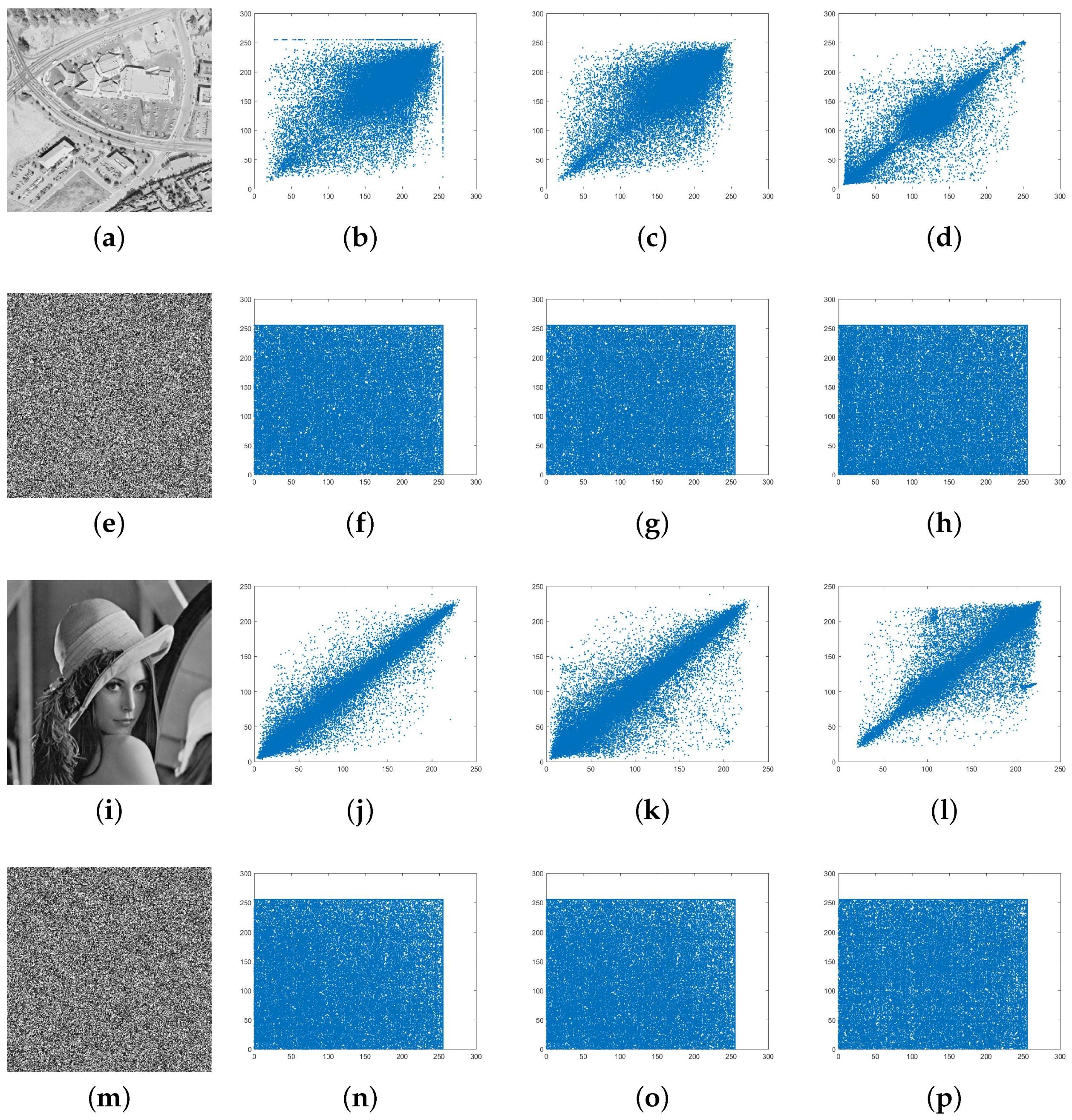
- Correlation of adjacent pixels—Plain images have a high degree of correlation between neighboring pixels, which should not be present in an encrypted image. In both plain and encrypted photos, we calculate the correlation of adjacent pixels in all directions.
- Sensitivity to differential attacks—In this experiment, the difference between two cryptograms that resulted from the encryption of two slightly different images is measured to evaluate the cryptosystem’s strength against differential attacks.
- Entropy—It measures the randomness in the data. An encrypted image should show a random alike appearance.
- Computational complexity—We calculate the time required to encrypt the image using selective encryption and full encryption. This metric evaluates the time consumed by the encryption, and it should be less for selective encryption as compared to full encryption.
- Key space—Key space could be defined as the theoretical set of all possible combinations. This number (key space) should be significantly large to make the brute-force attack impractical.
- Key sensitivity—These are experiments drawn to assess the sensitivity of the secret keys; the slightest change in the one of the keys should be diffused through the cipher.
- Comparison with recent encryption schemes—To validate our scheme, it needs to be compared with recent cryptosystems.
4.3. Results
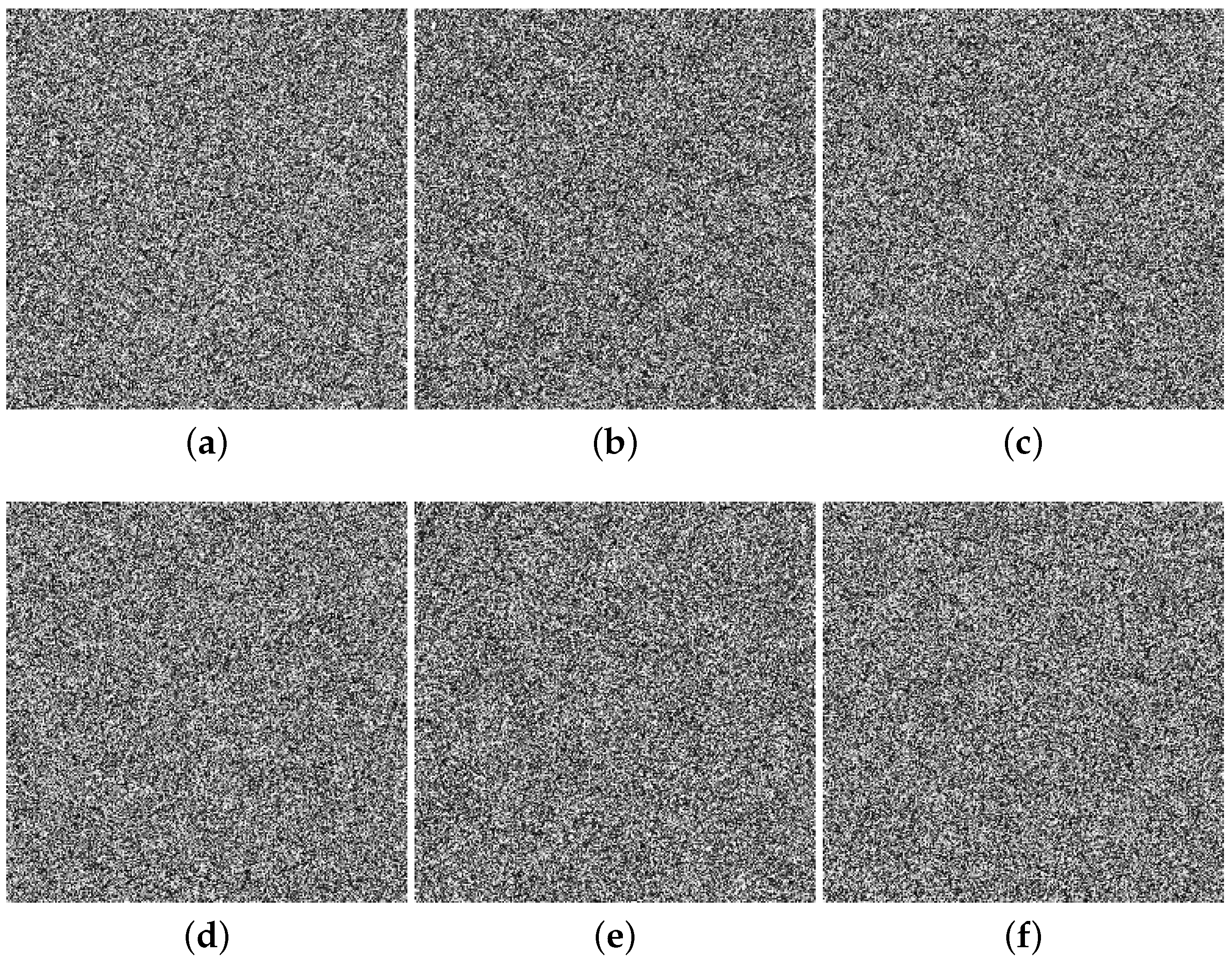
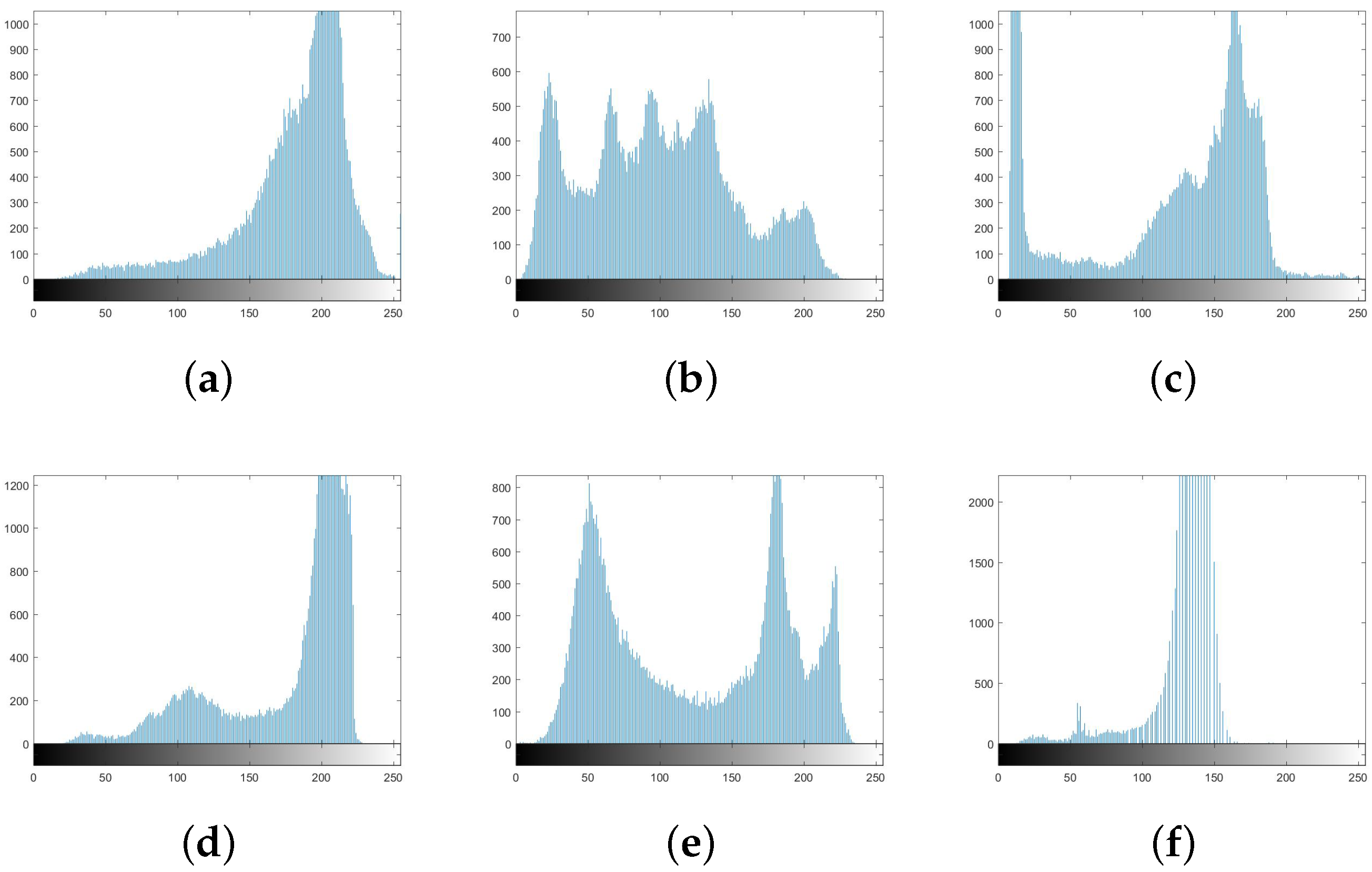
4.3.1. Tonal Distribution
4.3.2. Correlation of Adjacent Pixels
- and : two neighboring pixels. (horizontal or vertical).
- S is the number of (, ) couples.
- and are the mean values of and .
4.3.3. Sensitivity to Differential Attack
4.3.4. Entropy
4.3.5. Computational Complexity
4.3.6. Key Space Analysis
- The initial condition and the control parameter of the logistic map.
- The threshold T used for quantification of the generated pseudo-random sequence.
- The number of iterations t of the Arnold cat map.
4.3.7. Key Sensitivity
4.3.8. Comparison with Related Work
5. Conclusions
Author Contributions
Funding
Acknowledgments
Conflicts of Interest
References
- Alsaawy, Y.; Alkhodre, A.; Abi Sen, A.; Alshanqiti, A.; Bhat, W.A.; Bahbouh, N.M. A Comprehensive and Effective Framework for Traffic Congestion Problem Based on the Integration of IoT and Data Analytics. Appl. Sci. 2022, 12, 2043. [Google Scholar] [CrossRef]
- Bhat, W.A. Is a data-capacity gap inevitable in big data storage? Computer 2018, 51, 54–62. [Google Scholar] [CrossRef]
- Bhat, W.; Quadri, S. Restfs: Secure data deletion using reliable & efficient stackable file system. In Proceedings of the 2012 IEEE 10th International Symposium on Applied Machine Intelligence and Informatics (SAMI), Herl’any, Slovakia, 26–28 January 2012; pp. 457–462. [Google Scholar]
- FIPS, N. 197: Announcing the Advanced Encryption Standard (AES); Information Technology Laboratory, National Institute of Standards and Technology: Gaithersburg, MD, USA, 2001. [Google Scholar]
- Matsui, M. The first experimental cryptanalysis of the Data Encryption Standard. In Advances in Cryptology—Crypto’94, Proceedings of the 14th Annual International Cryptology Conference, Santa Barbara, CA, USA, 21–25 August 1994; Springer: Berlin/Heidelberg, Germany, 1994; pp. 1–11. [Google Scholar]
- Lian, S. Multimedia Content Encryption: Techniques and Applications; CRC Press: Boca Raton, FL, USA, 2008. [Google Scholar]
- Kocarev, L.; Lian, S. Chaos-Based Cryptography: Theory, Algorithms and Applications; Studies in Computational Intelligence; Springer: Berlin/Heidelberg, Germany, 2011. [Google Scholar]
- Mao, Y.; Chen, G.; Lian, S. A novel fast image encryption scheme based on 3d chaotic baker maps. Int. J. Bifurc. Chaos 2004, 14, 3613–3624. [Google Scholar] [CrossRef]
- Liu, H.; Wang, X. Image encryption using DNA complementary rule and chaotic maps. Appl. Soft Comput. 2012, 12, 1457–1466. [Google Scholar] [CrossRef]
- Liu, H.; Wang, X. Color image encryption using spatial bit-level permutation and high-dimension chaotic system. Opt. Commun. 2011, 284, 3895–3903. [Google Scholar] [CrossRef]
- Liu, H.; Wang, X. Color image encryption based on one-time keys and robust chaotic maps. Comput. Math. Appl. 2010, 59, 3320–3327. [Google Scholar] [CrossRef] [Green Version]
- Liu, H.; Kadir, A.; Gong, P. A fast color image encryption scheme using one-time s-boxes based on complex chaotic system and random noise. Opt. Commun. 2015, 338, 340–347. [Google Scholar] [CrossRef]
- Khan, J.S.; ur Rehman, A.; Ahmad, J.; Habib, Z. A new chaos-based secure image encryption scheme using multiple substitution boxes. In Proceedings of the 2015 Conference on Information Assurance and Cyber Security (CIACS), Rawalpindi, Pakistan, 18 December 2015; pp. 16–21. [Google Scholar]
- Khan, J.S.; Ahmad, J.; Khan, M.A. Td-ercs map-based confusion and diffusion of autocorrelated data. Nonlinear Dyn. 2017, 87, 93–107. [Google Scholar] [CrossRef]
- Khan, J.; Ahmad, J.; Hwang, S.O. An efficient image encryption scheme based on: Henon map, skew tent map and s-box. In Proceedings of the 6th International Conference on Modeling, Simulation, and Applied Optimization (ICMSAO), Istanbul, Turkey, 27–29 May 2015; pp. 1–6. [Google Scholar]
- Gao, T.; Chen, Z. A new image encryption algorithm based on hyper-chaos. Phys. Lett. A 2008, 372, 394–400. [Google Scholar] [CrossRef]
- Chen, G.; Mao, Y.; Chui, C.K. A symmetric image encryption scheme based on 3d chaotic cat maps. Chaos Solitons Fractals 2004, 21, 749–761. [Google Scholar] [CrossRef]
- Anees, A.; Siddiqui, A.M.; Ahmed, F. Chaotic substitution for highly autocorrelated data in encryption algorithm. Commun. Nonlinear Sci. Numer. Simul. 2014, 19, 3106–3118. [Google Scholar] [CrossRef]
- Som, S.; Mitra, A.; Palit, S.; Chaudhuri, B.B. A selective bitplane image encryption scheme using chaotic maps. Multimed. Tools Appl. 2019, 78, 10373–10400. [Google Scholar] [CrossRef]
- Kaur, A.; Singh, G. A Random Selective Block Encryption Technique for Secure Image Cryptography Using Blowfish Algorithm. In Proceedings of the International Conference on Inventive Communication and Computational Technologies, ICICCT 2018, Coimbatore, India, 20–21 April 2018; pp. 1290–1293. [Google Scholar]
- Khan, J.S.; Ahmad, J. Chaos based efficient selective image encryption. Multidimens. Syst. Signal Process. Int. J. 2019, 30, 943. [Google Scholar] [CrossRef]
- Niu, Y.; Zhou, Z.; Zhang, X. An image encryption approach based on chaotic maps and genetic operations. Multimed. Tools Appl. 2020, 79, 25613–25633. [Google Scholar] [CrossRef]
- Premkumar, R.; Anand, S. Secured and compound 3-D chaos image encryption using hybrid mutation and crossover operator. Multimed. Tools Appl. 2019, 78, 9577–9593. [Google Scholar] [CrossRef]
- Murali, P.; Niranjana, G.; Paul, A.J.; Muthu, J.S. Domain-flexible selective image encryption based on genetic operations and chaotic maps. Vis. Comput. 2022. [Google Scholar] [CrossRef]
- He, J.; Xu, Y.; Luo, W.; Tang, S.; Huang, J. A novel selective encryption scheme for H.264/AVC video with improved visual security. Signal Process. Image Commun. 2020, 89, 115994. [Google Scholar] [CrossRef]
- Shen, Y.; Tang, C.; Xu, M.; Lei, Z. Optical selective encryption based on the FRFCM algorithm and face biometric for the medical image. Opt. Laser Technol. 2021, 138, 106911. [Google Scholar] [CrossRef]
- Rim, Z.; Ridha, E.; Mourad, Z. An improved partial image encryption scheme based on lifting wavelet transform, wide range Beta chaotic map and Latin square. Multimed. Tools Appl. 2021. [Google Scholar] [CrossRef]
- Cheng, H.; Li, X. Partial encryption of compressed images and videos. IEEE Trans. Signal Process. 2000, 48, 2439–2451. [Google Scholar] [CrossRef]
- Ayoup, A.M.; Hussein, A.H.; Attia, M.A. Efficient selective image encryption. Multimed. Tools Appl. 2016, 75, 17171–17186. [Google Scholar] [CrossRef]
- Akram, B.; Oussama, B.; Houcemeddine, H.; Safya, B. Selective Image Encryption Using DCT with AES Cipher. In Computer Science & Information Technology (CS & IT); Academy & Industry Research Collaboration Center (AIRCC): Tamil Nadu, India, 2014. [Google Scholar] [CrossRef]
- Xiang, T.; Wong, K.W.; Liao, X. Selective image encryption using a spatiotemporal chaotic system. Chaos Interdiscip. J. Nonlinear Sci. 2007, 17, 023115. [Google Scholar] [CrossRef] [PubMed]
- Golub, G.; Kahan, W. Calculating the singular values and pseudo-inverse of a matrix. SIAM J. Numer. Anal. 1965, 2, 205–224. [Google Scholar] [CrossRef]
- Benrhouma, O.; Hermassi, H.; El-Latif, A.A.A.; Belghith, S. Cryptanalysis of a video encryption method based on mixing and permutation operations in the DCT domain. Signal Image Video Process. 2015, 9, 1281–1286. [Google Scholar] [CrossRef]
- Wang, Z.; Bovik, A.; Sheikh, H.; Simoncelli, E. Image quality assessment: From error visibility to structural similarity. IEEE Trans. Image Process. 2004, 13, 600–612. [Google Scholar] [CrossRef] [Green Version]
- Bao, J.; Yang, Q. Period of the discrete Arnold cat map and general cat map. Nonlinear Dyn. 2012, 70, 1365–1375. [Google Scholar] [CrossRef]
- Bogdanov, A.; Knudsen, L.R.; Leander, G.; Paar, C.; Poschmann, A.; Robshaw, M.J.; Seurin, Y.; Vikkelsoe, C. PRESENT: An Ultra-Lightweight Block Cipher. In Proceedings of the Cryptographic Hardware and Embedded Systems—CHES 2007, 9th International Workshop on Cryptographic Hardware and Embedded Systems, Vienna, Austria, 10–13 September 2007; Springer: Berlin/Heidelberg, Germany, 2007; pp. 450–466. [Google Scholar] [CrossRef] [Green Version]
- Menezes, A.; Van Oorschot, P.; Vanstone, S. Handbook of Applied Cryptography; CRC Press: Boca Raton, FL, USA, 1997. [Google Scholar]
- Christy Atika, S.; Eko Hari, R.; Edi Jaya, K. Good Performance Images Encryption Using Selective Bit T-des On Inverted Lsb Steganography. J. Ilmu Komput. Dan Inf. 2019, 12, 41–49. [Google Scholar]
- Benrhouma, O.; Mannai, O.; Hermassi, H. Digital images watermarking and partial encryption based on DWT transformation and chaotic maps. In Proceedings of the 2015 IEEE 12th International Multi-Conference on Systems, Signals Devices (SSD15), Mahdia, Tunisia, 16–19 March 2015; pp. 1–6. [Google Scholar] [CrossRef]
- Benrhouma, O.; Hermassi, H.; Belghith, S. Tamper detection and self-recovery scheme by DWT watermarking. Nonlinear Dyn. 2015, 79, 1817–1833. [Google Scholar] [CrossRef]
- Murillo-Escobar, M.A.; Meranza-Castillón, M.O.; López-Gutiérrez, R.M.; Cruz-Hernández, C. Suggested Integral Analysis for Chaos-Based Image Cryptosystems. Entropy 2019, 21, 815. [Google Scholar] [CrossRef] [Green Version]
- Alvarez, G.; Li, S. Some basic cryptographic requirements for chaos-based cryptosystems. Int. J. Bifurc. Chaos 2006, 16, 2129–2151. [Google Scholar] [CrossRef] [Green Version]
- Marion, A. Introduction to Image Processing; Springer: Berlin/Heidelberg, Germany, 1991. [Google Scholar] [CrossRef]
- Kamali, S.H.; Shakerian, R.; Hedayati, M.; Rahmani, M. A new modified version of Advanced Encryption Standard based algorithm for image encryption. In Proceedings of the 2010 International Conference on Electronics and Information Engineering, Kyoto, Japan, 1–3 August 2010; Volume 1, pp. V1-141–V1-145. [Google Scholar] [CrossRef]
- Wu, Y. NPCR and UACI Randomness Tests for Image Encryption. Cyber J. J. Sel. Areas Telecommun. 2011, 1, 31–38. [Google Scholar]
- Huang, X.; Ye, G. An efficient self-adaptive model for chaotic image encryption algorithm. Commun. Nonlinear Sci. Numer. Simul. 2014, 19, 4094–4104. [Google Scholar] [CrossRef]






| Standard Image | Block Number | Value | |||
|---|---|---|---|---|---|
| S1 | S2 | S3 | S4 | ||
| cameraman | 1 | 628.5056 | 16.6462 | 7.8219 | 2.7480 |
| 33 | 474.5510 | 24.6315 | 8.2719 | 0.4573 | |
| tank | 40 | 522.7868 | 14.9429 | 3.7784 | 1.1981 |
| 200 | 527.5800 | 13.3748 | 10.0325 | 0.9129 | |
| lena | 4000 | 530.3523 | 36.7818 | 8.0956 | 3.1669 |
| 2150 | 455.2935 | 14.5609 | 6.7711 | 3.6052 | |
| Aerial | Lena | Cameraman | Jet | Lake | Tank |
|---|---|---|---|---|---|
| 0.8007 | 0.9250 | 0.9323 | 0.9285 | 0.8900 | 0.8737 |
| Image | Horizontal | Vertical | Diagonal | |||
|---|---|---|---|---|---|---|
| Plain | Encrypted | Plain | Encrypted | Plain | Encrypted | |
| Aerial | 0.6652 | −0.0018 | 0.7425 | −0.0066 | 0.6922 | 0.0084 |
| Lena | 0.9679 | −0.0062 | 0.9342 | −0.0048 | 0.8961 | 0.0077 |
| cameraman | 0.9565 | −0.0093 | 0.9333 | −0.0038 | 0.9045 | 0.0069 |
| Jet | 0.9109 | 0.0022 | 0.9023 | −0.0085 | 0.8862 | 0.0044 |
| Lake | 0.9366 | 0.0081 | 0.9340 | 0.0028 | 0.9145 | 0.0061 |
| Tank | 0.8761 | −0.0034 | 0.9195 | 0.0080 | 0.8542 | 0.0075 |
| Images | Aerial | Lena | Cameraman | Jet | Lake | Tank |
|---|---|---|---|---|---|---|
| NPCR% | 99.6454 | 99.6515 | 99.7855 | 99.6652 | 99.7544 | 99.8711 |
| UACI% | 33.3288 | 32.9722 | 33.7811 | 30.1776 | 32.5110 | 30.4588 |
| Images | Aerial | Lena | Cameraman | Jet | Lake | Tank |
|---|---|---|---|---|---|---|
| Enrtopy | 7.9114 | 7.9059 | 7.9178 | 7.9453 | 7.8938 | 7.9068 |
| Image | Full Encryption | Selective Encryption |
|---|---|---|
| 256 × 256 tank | 31.652340 s | 3.780312 s |
| 256 × 256 lena | 30.875214 s | 3.010088 s |
| NPCR% | UACI | Correlation | Entropy | |||
|---|---|---|---|---|---|---|
| Horizontal | Vertical | Diagonal | ||||
| Proposed | 99.6172 | 30.7198 | −0.0017 | −0.0021 | 0.0068 | 7.9135 |
| Niu et al. [22] | 99.1600 | 33.0400 | 0.0478 | 0.0829 | −0.0889 | 7.9328 |
| Premkumar et al. [23] | 93.6800 | 29.6100 | −0.0586 | 0.0881 | 0.0696 | 7.4944 |
| Murali et al. [24] | 99.5210 | 33.2451 | −0.0710 | −0.0655 | −0.0953 | 7.9987 |
Publisher’s Note: MDPI stays neutral with regard to jurisdictional claims in published maps and institutional affiliations. |
© 2022 by the authors. Licensee MDPI, Basel, Switzerland. This article is an open access article distributed under the terms and conditions of the Creative Commons Attribution (CC BY) license (https://creativecommons.org/licenses/by/4.0/).
Share and Cite
Benrhouma, O.; Alkhodre, A.B.; AlZahrani, A.; Namoun, A.; Bhat, W.A. Using Singular Value Decomposition and Chaotic Maps for Selective Encryption of Video Feeds in Smart Traffic Management. Appl. Sci. 2022, 12, 3917. https://doi.org/10.3390/app12083917
Benrhouma O, Alkhodre AB, AlZahrani A, Namoun A, Bhat WA. Using Singular Value Decomposition and Chaotic Maps for Selective Encryption of Video Feeds in Smart Traffic Management. Applied Sciences. 2022; 12(8):3917. https://doi.org/10.3390/app12083917
Chicago/Turabian StyleBenrhouma, Oussama, Ahmad B. Alkhodre, Ali AlZahrani, Abdallah Namoun, and Wasim A. Bhat. 2022. "Using Singular Value Decomposition and Chaotic Maps for Selective Encryption of Video Feeds in Smart Traffic Management" Applied Sciences 12, no. 8: 3917. https://doi.org/10.3390/app12083917
APA StyleBenrhouma, O., Alkhodre, A. B., AlZahrani, A., Namoun, A., & Bhat, W. A. (2022). Using Singular Value Decomposition and Chaotic Maps for Selective Encryption of Video Feeds in Smart Traffic Management. Applied Sciences, 12(8), 3917. https://doi.org/10.3390/app12083917