


Abstract
This paper presents an external-cavity dual-wavelength mid-infrared multiple optical parametric oscillator based on a single MgO:APLN crystal, which is pumped by a pulsed 1.064 μm laser. The output power and beam qualities of parametric lasers at different repetition rates and transmittance were studied. When the pump power of the 1.064 μm laser was 34.5 W, the repetition rate was 63 kHz, the maximum output powers of 2.79 W@3.30 μm and 4.92 W@3.84 μm were obtained with the transmittance T = 60%@1.57 μm, corresponding to optical–optical conversion efficiencies of 8.1% and 14.3%, respectively. Meanwhile, the beam qualities of two mid-infrared laser beams were effectively optimized and the pulse widths of 9.72 ns@3.30 μm and 9.67 ns@3.84 μm were obtained synchronously.
1. Introduction
The dual-wavelength lasers in the range of 3~5 μm have versatile applications such as military confrontation and laser radar [1,2]. A multiple optical parametric oscillator (MOPO) is an effective way to obtain a multi-wavelength tunable laser in the same spectral region [3,4,5,6,7]. However, due to the multiple frequencies and complex energy conversion path in the process of synchronous oscillation, which produces the gain competition of the multiple parametric outputs easily, this can result in power distribution imbalance, beam quality deterioration, spectrum broadening, and so on [8,9,10,11,12,13,14]. In 2015, Yu et al. demonstrated a straight cavity MOPO using an aperiodically poled MgO:LN(MgO:APLN). The 1.57 μm and 3.84 μm cross period resonant outputs were realized through a single polarized crystal with the output power of 2.4 W@1.57 µm and 1.31 W@3.84 µm [15,16]. In 2020, the college of Advanced Interdisciplinary Studies from National University of Defense Technology used a traditional Raman fiber oscillator as a dual-wavelength pump source, the output power of 2 W@3.27 µm and 4.98 W@3.66 µm were achieved [17,18].
In this study, an external-cavity pumped high repetition rate MOPO based on a single MgO:APLN crystal is reported. The gain competition in the process of MOPO under different repetition rates and transmittance is experimentally demonstrated. Moreover, the output power of dual-wavelength mid-infrared is maximized by selecting the repetition rate and transmittance @1.57 μm. When the pump power of the 1.064 μm laser was 34.5-W, the repetition rate was 63 kHz, the maximum output powers of 2.79 W@3.30 μm and 4.92 W@3.84 μm were obtained with the transmittance T = 60%@1.57 μm, corresponding to optical–optical conversion efficiencies of 8.1% and 14.3% and quantum efficiencies of 32.24% and 27.71%, respectively.
2. Materials and Methods
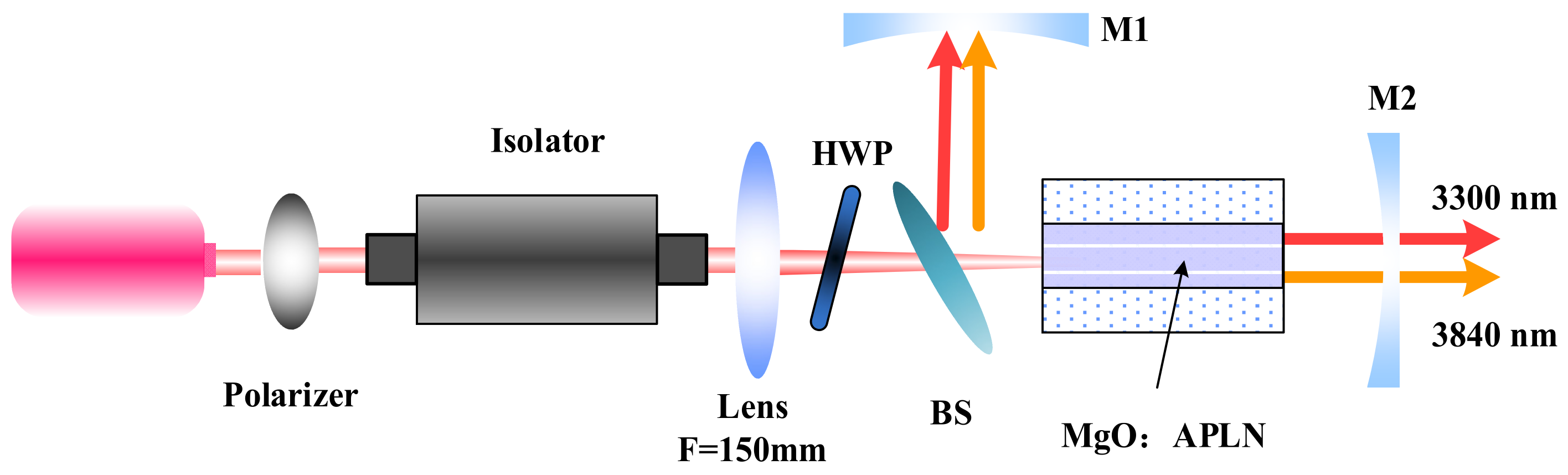
The experimental setup of the external cavity MgO:APLN-MOPO is shown in Figure 1. The pump source of the MOPO was an AO Q-switched Nd:YVO4 laser working at 1.064-μm, the maximum output power was 40 W with the pulse width of 9.86 ns@60 kHz. The laser crystal was an adhesive-free bond a-cut YVO4/Nd:YVO4 crystal with 0.25 at% Nd concentration. Its cross section was 3 mm × 3 mm, and it consisted of a 16 mm Nd3+-doped YVO4 and two 4 mm pure YVO4. The output 1.064 μm laser was converted to linear polarization after the polarizer. An optical isolator and a half-wave plate(HWP) were used to isolate the 1.064 μm laser returning to the pump source, and the laser was focused into the MgO:APLN crystal by a convex lens with a focal length of 150 mm. To eliminate the walk-off effect between the beams, we used the maximum nonlinear coefficient d33 of the MgO:APLN crystal. The multiple OPO cavity consisted of M1, a beam splitter (BS), and a concave mirror M2; the parameters of the cavity mirror coating are listed in Table 1.
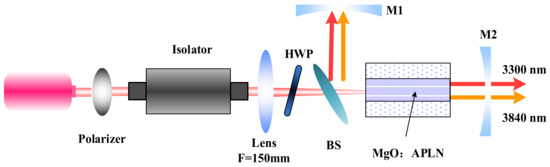
Figure 1.
Schematic diagram of experiment setup.

Table 1.
Coating parameters.
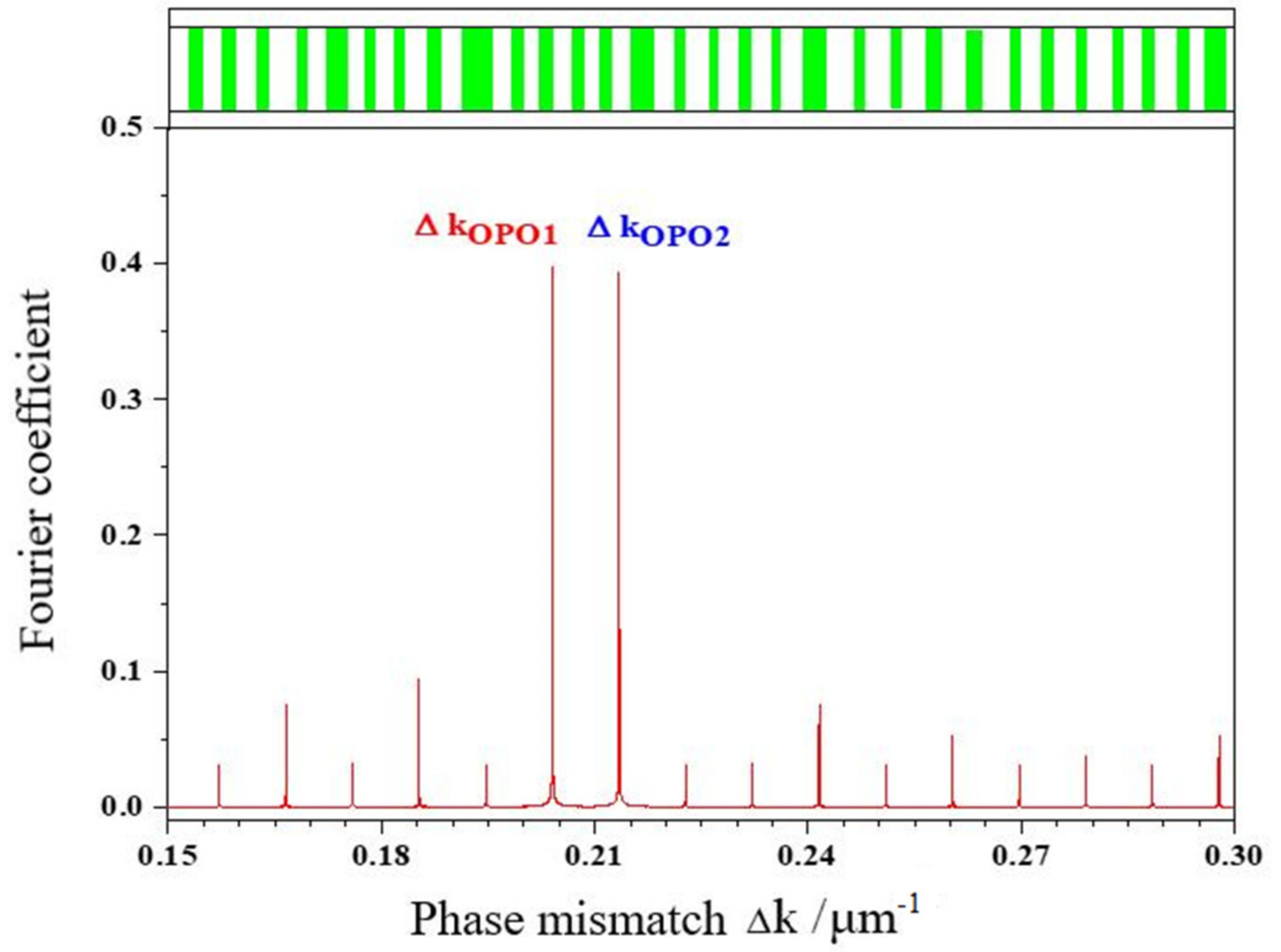
In a previous study, we designed an aperiodically poled MgO:LN (MgO:APLN) domain structure for two-phase mismatch compensation; the phase mismatch and the polarization structure is shown in Figure 2 and the inset, respectively. The superlattice was customized and produced by the HCP company, which provided two inverted lattice vectors for the MgO:APLN crystal [19,20]. According to the Fourier transform, the Fourier coefficients corresponding to the two-phase mismatch compensation △K were 0.41 and 0.42, respectively, which provided an effective inverse lattice vector of (1.57 μm, 3.30 μm) and (1.47 μm, 3.84 μm) pumped by 1.06 μm. The 5% MgO-doped APLN, as the nonlinear medium, was placed in the OV50 thermostat, and the temperature was maintained at 25 °C. The MgO:APLN crystal dimension was 50 mm × 3 mm × 3 mm, and both ends of the faces were anti-reflection coated at 1.06 μm, 1.4~1.7 μm, and 3.3~4.2 μm.
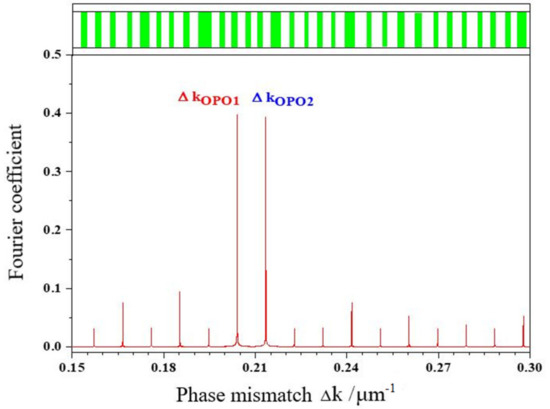
Figure 2.
Polarization structure and phase mismatch of MgO:APLN.
3. Results
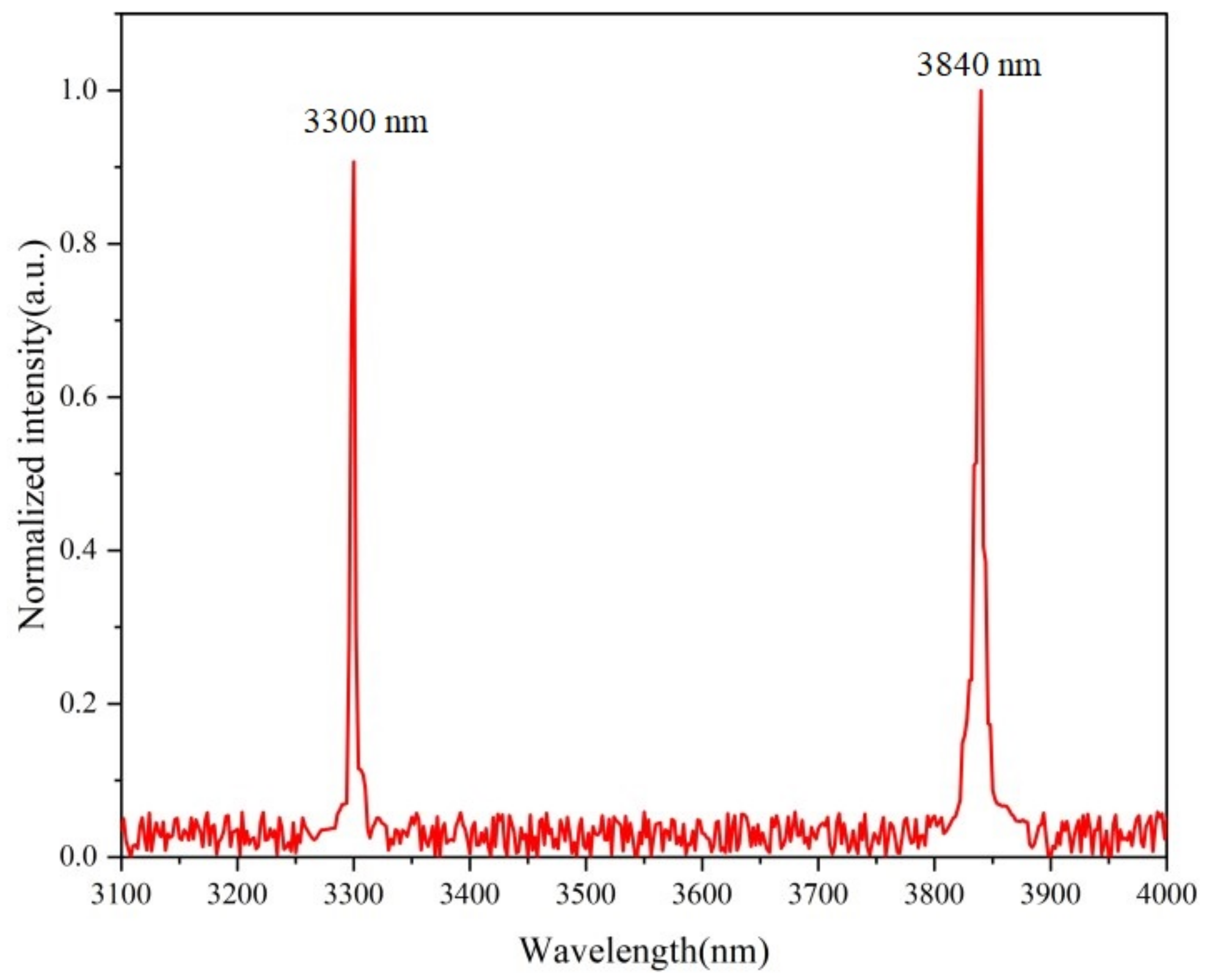
According to the above experimental parameters, the output characteristics of MOPO at different repetition rates were studied with the transmittance of M1 of 40% and the maximum pump power of 34.5 W (measured by a power meter of OPHIR F150A-BB-26-PPS). We used the Fourier spectrometer (ARCoptix, wavelength range from 1 μm to 5.6-μm, spectral resolution of 0.01 ppm with linewidth < 10 GHz) produced by American Thorlabs Company; the wavelength was synchronously collected at 3.3 μm and 3.8 μm, when the repetition rate changed from 20 to 100 kHz, corresponding to the wavelength of the near-infrared output at 1.47 μm and 1.57 μm, respectively. The mid-infrared laser spectrum with a repetition rate of 100 kHz is shown in Figure 3. Note that when the repetition rate changed from 20 to 100 kHz, the output wavelength and linewidth showed no obvious variation.
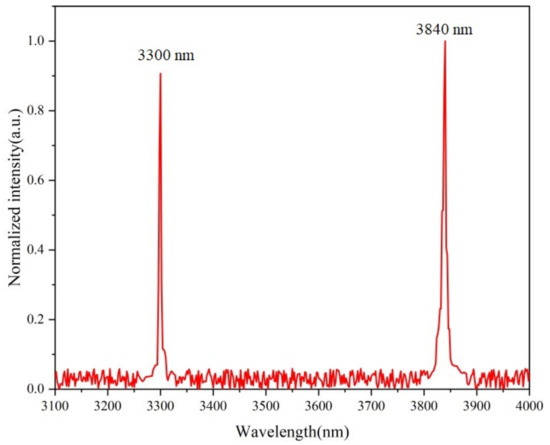
Figure 3.
The dual wavelength mid-infrared laser spectrum.
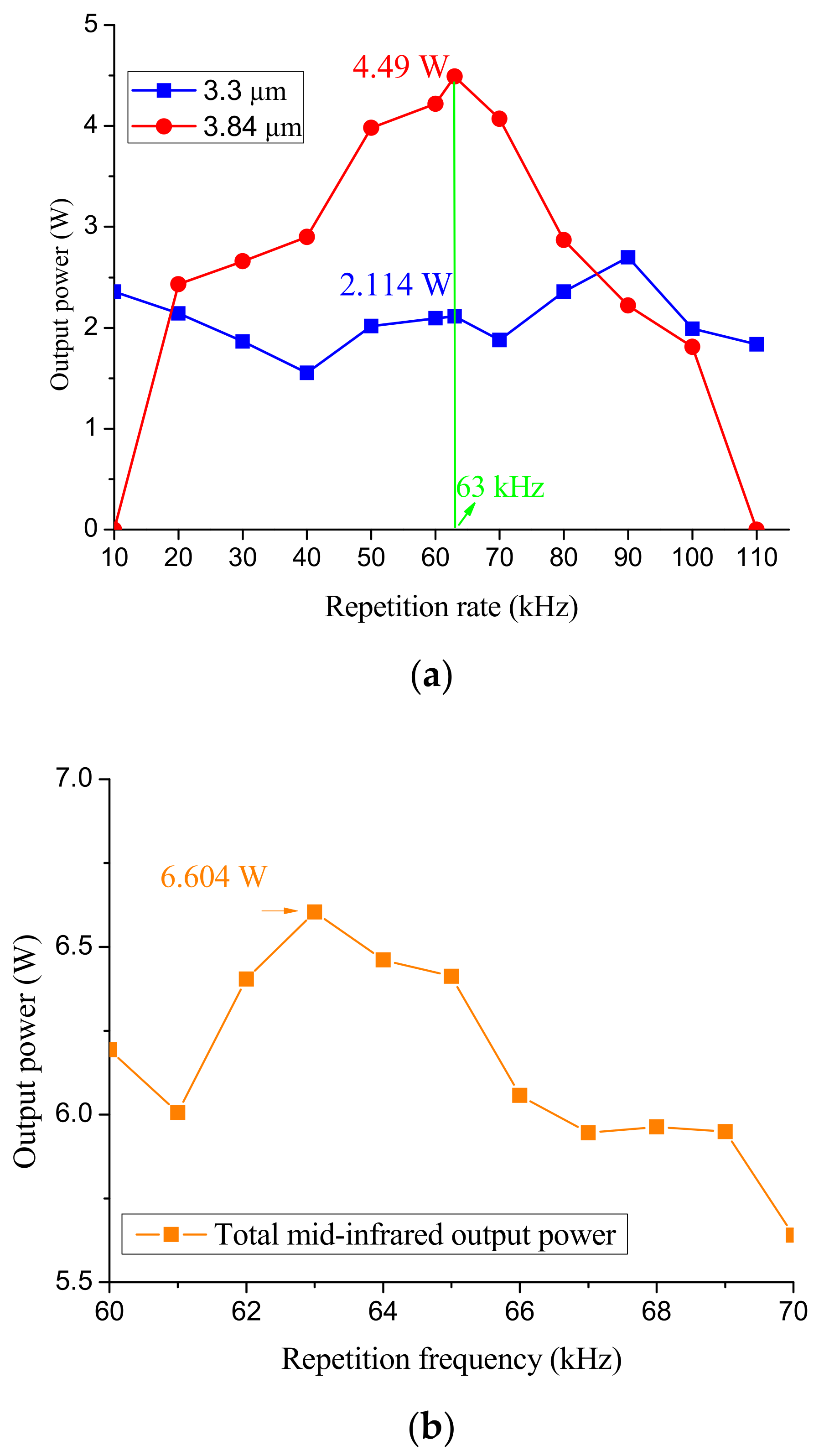
The measured maximum output power of the dual-wavelength mid-infrared lasers when the repetition rate changed from 20 to 100 kHz is shown in Figure 4. As can be observed, the power of the 3.84 μm mid-infrared laser increased gradually with the enhancement of repetition rate; when the repetition rate was 63 kHz, the maximum output powers of 2.11 W@3.3 μm and 4.49 W@3.84 μm were obtained, and the mid-infrared total power was 6.6-W, corresponding to the optical–optical conversion efficiency of 19.1%. With the continuous increase in repetition rate, the power of the 3.84 μm mid-infrared laser decreased gradually, and the gain competition of two parameter outputs in the cavity became more and more intense; however, for the 3.3 μm laser, the change in repetition rate had a gentle effect on its output power. When the repetition rate was less than 10 kHz or higher than 110 kHz, the 3.84 μm was not achieved throughout the process because the parametric optical gain of OPO1 (1.57 μm, 3.30 μm) was higher than that of OPO2 (1.47 μm, 3.84 μm) in the process of multiple optical parametric oscillation and energy conversion. The unbalanced output powers between 3.30 μm and 3.84 μm were caused by fierce gain competition and reversal conversion in a cavity.
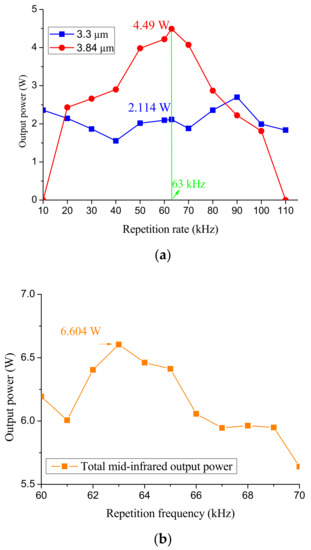
Figure 4.
The output power of mid-infrared lasers at different repetition rates. (a) The output power of mid-infrared lasers @20~100 kHz. (b) The total power of dual-wavelength @60~70 kHz.
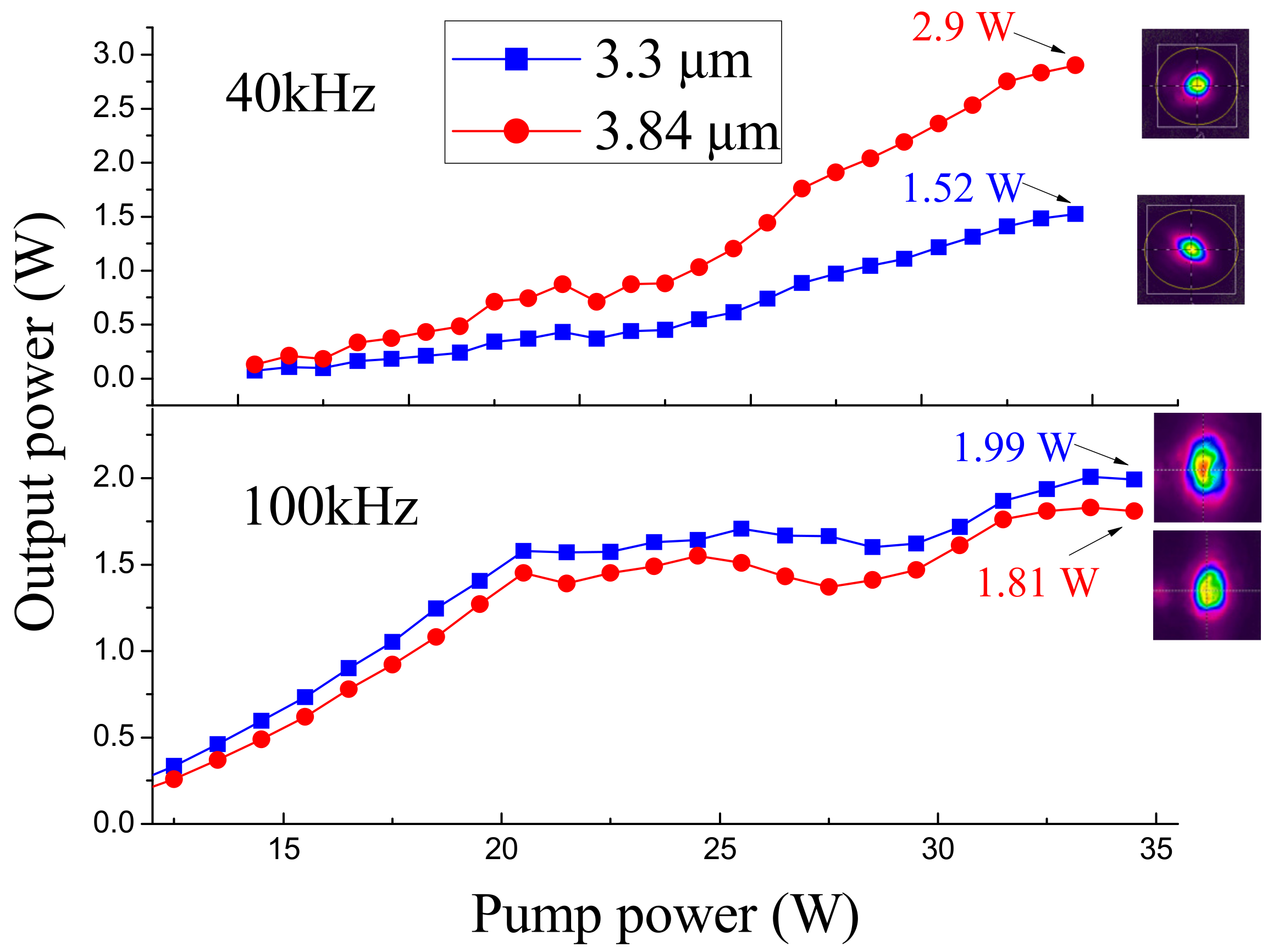
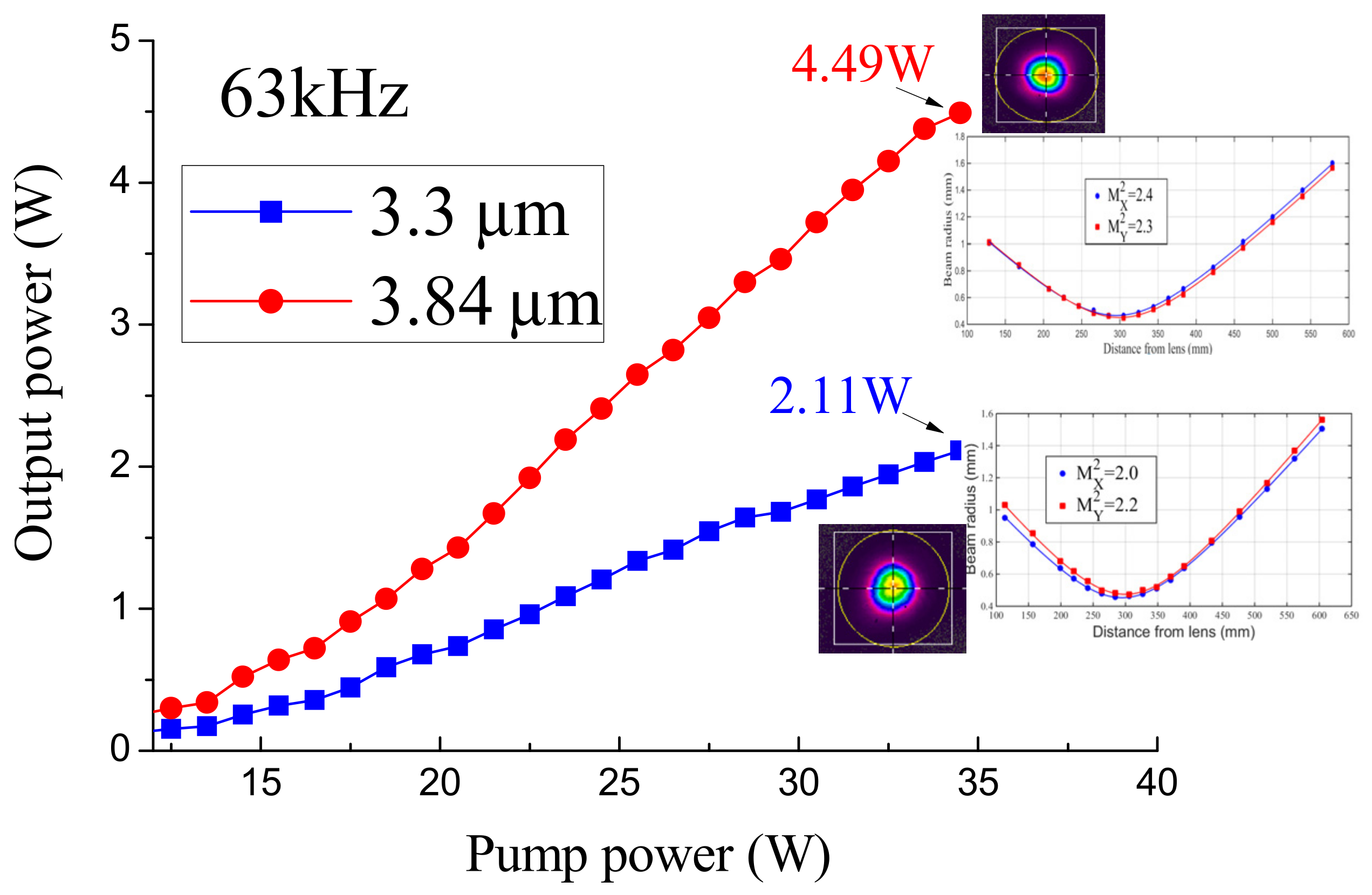
We used a pyroelectric array camera (OPHIR PyrocamIII) to measure the exit beam distribution of 3.30 and 3.84 μm. Figure 5 and Figure 6 show the output power and beam qualities of two mid-infrared lasers at different repetition rates. When the repetition rate was 63 kHz, the maximum power of two mid-infrared outputs was realized; meanwhile, the slope efficiency was improved with an increase in the pump power, which proves that under the modulation of the optimal repetition rate, the gain obtained by the two parameter lasers oscillation process was optimally distributed, and the problem of gain competition was effectively solved. It can be seen that choosing the appropriate repetition rate can improve the conversion efficiencies and beam qualities of the mid-infrared outputs.
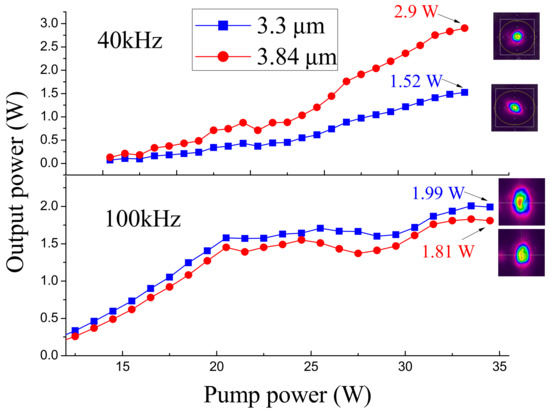
Figure 5.
Power curve and beam qualities at different repetition rates.
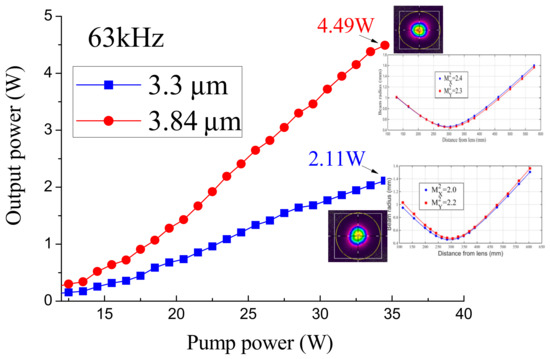
Figure 6.
Output power and beam quality at 63 kHz.
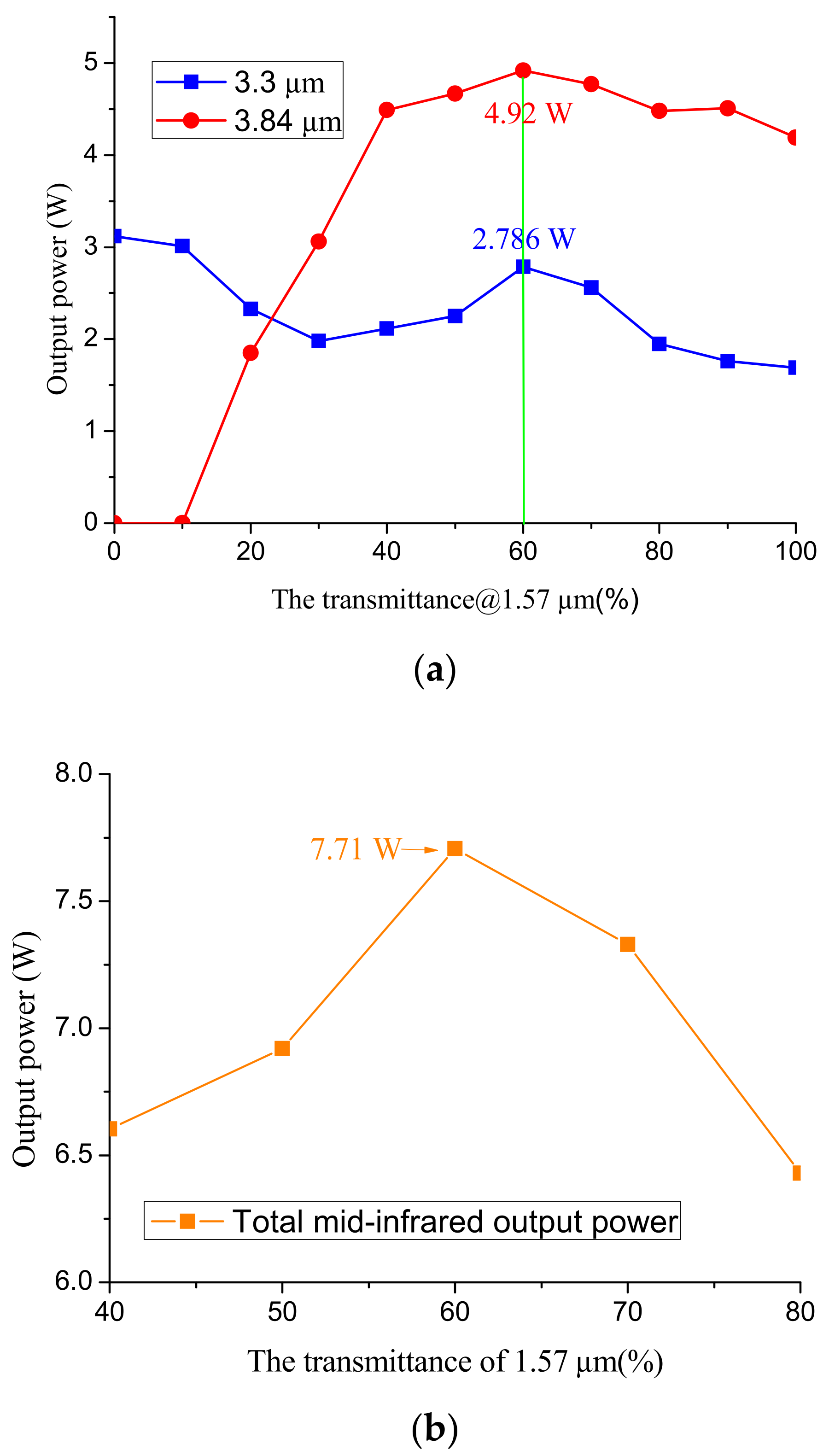
Based on the above experiments, the characteristics of mid-infrared pamametric outputs by changing the transmittance@1.57 μm of M1 were studied. The output power of dual-wavelength mid-infrared lasers is shown in Figure 7 when the transmittance @1.57-μm changed from 0 to 99%. As can be seen from this figure, under the low transmittance of the M1, the 3.84 μm laser had a smaller effective gain. As the transmittance of the 1.57 μm laser increased, the oscillation process of the 3.84 μm laser enhanced gradually. When the transmittance of the M1 was 60%@1.57 μm, the output power of 4.92 W@3.84 μm and 2.786 W@3.3 μm was achieved, and the total power of mid-infrared laser was increased to 7.71 W. With the continuous increase in transmittance, the output power of the two mid-infrared beams decreased gradually, indicating that they had reached the gain saturation state at this time. This proved that by changing the transmittance @1.57 μm, most of the signal light was emitted from the output mirror, which decreased the accumulation of parametric outputs and reduced the power density in the cavity, inhibited the occurrence of back conversion, and improved the conversion efficiency. Selecting the best transmittance can effectively balance the gain distribution of the two parametric beams.
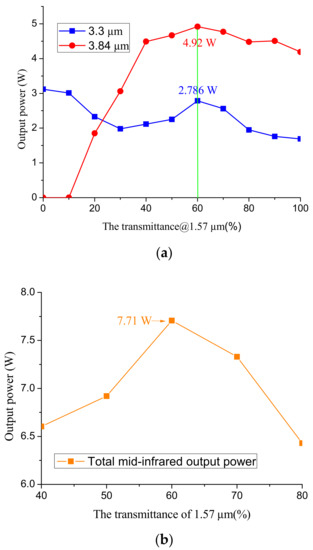
Figure 7.
The output power of mid-infrared lasers under different transmittance. (a) The output power of mid-infrared lasers under different transmittance. (b) The total power of dual-wavelength under different transmittance.
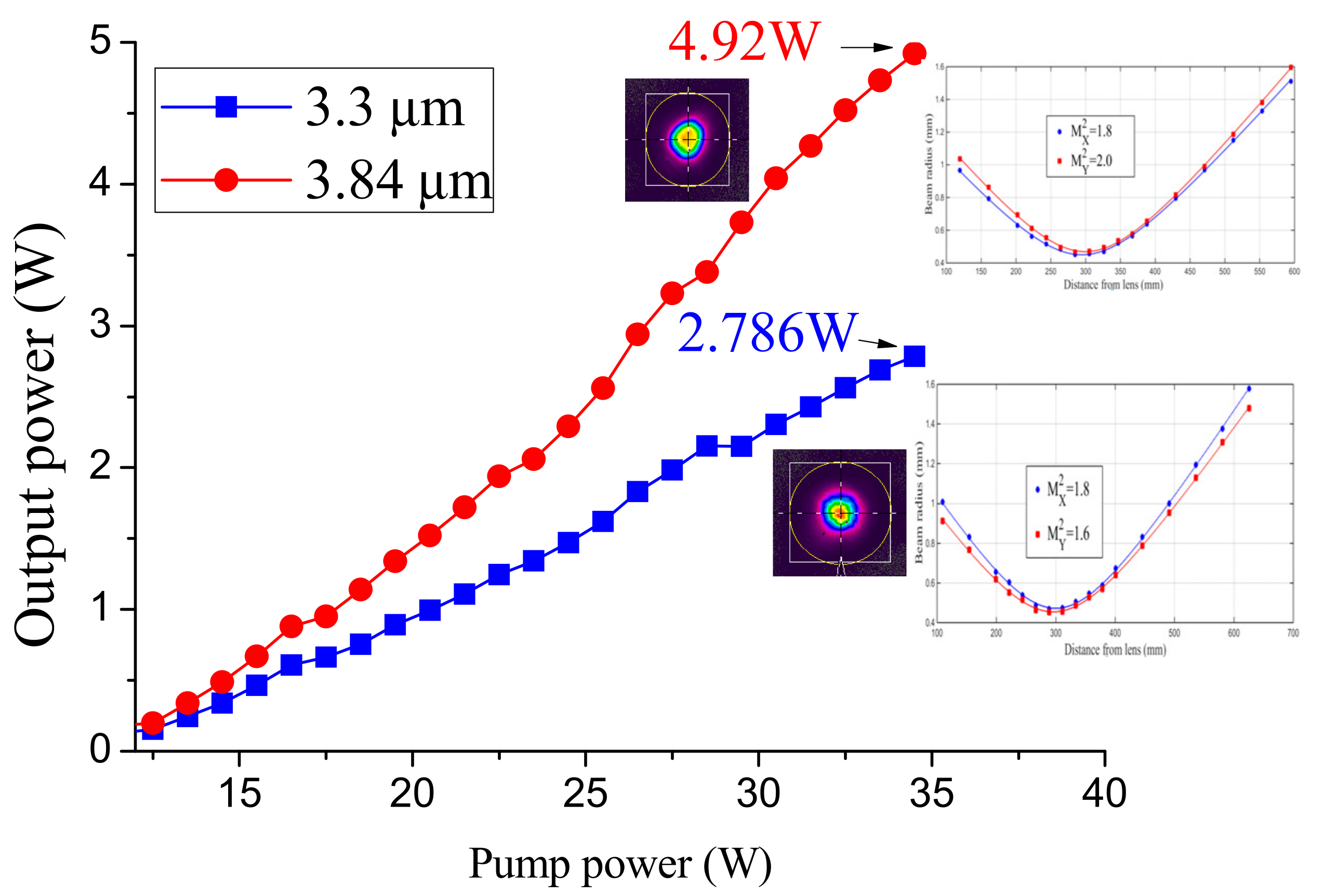
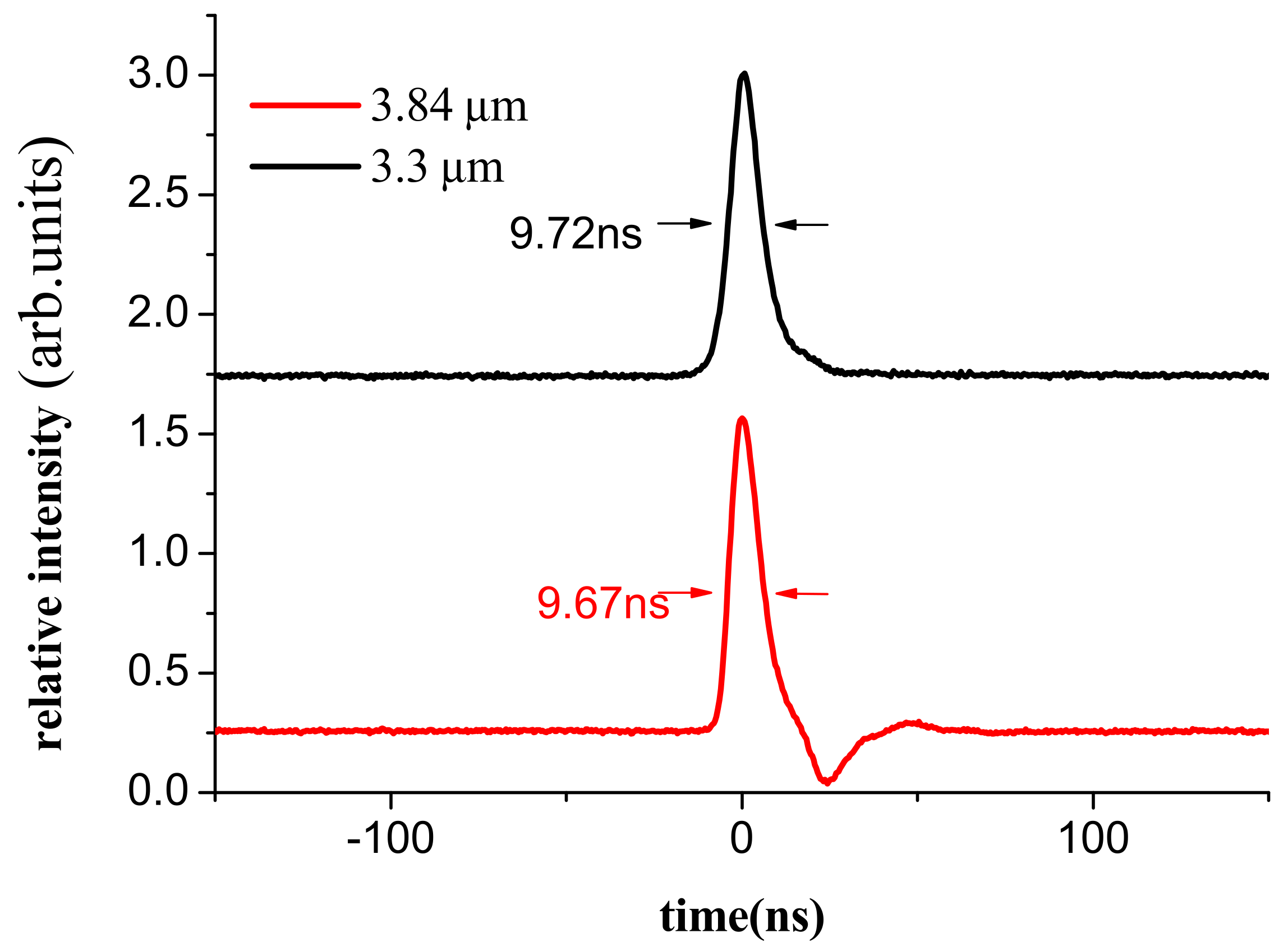
The power curve, beam qualities, and pulse width of dual-wavelength mid-infrared outputs were measured with the repetition rate of 63 kHz and the transmittance T = 60%@ 1.57-μm; the results are shown in Figure 8 and Figure 9. As shown in Figure 8, by selecting the optimal transmittance of the M1, the power of the two mid-infrared outputs was further improved. At the same time, the exit beam quality was significantly optimized due to the balance of the gain competition between the two parametric lasers. The pulse widths of 9.72-ns@3.30 μm and 9.67 ns@3.84 μm were measured by a HgCdTeZn infrared detector(PCI3TE-12) and oscilloscope (MDO3054,Tektronix) synchronously, after splitting the output mid-infrared lasers under the maximum output power.
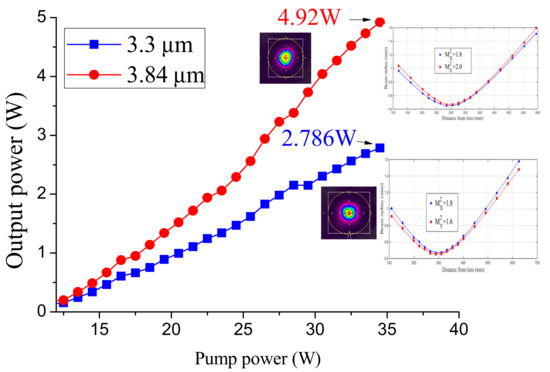
Figure 8.
Output power and beam qualities with the transmittance of 60%.
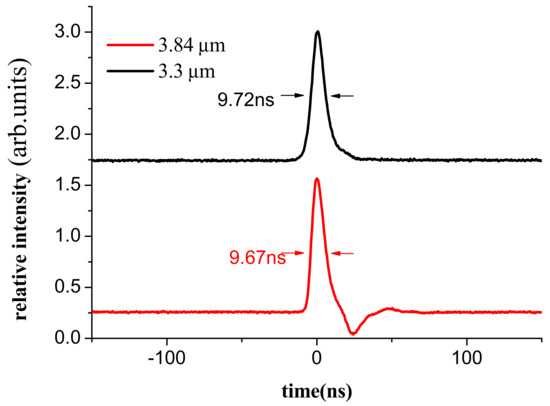
Figure 9.
Pulse width of the mid-infrared lasers.
4. Conclusions
In sum, we experimentally demonstrated an external-cavity pumped high repetition rate MOPO based on a MgO:APLN crystal. The influence of gain competition on OPO output powers and beam qualities was investigated, and the gain competition in the process of MOPO under repetition rate and transmittance was also analyzed experimentally. It was found that the inhomogeneous distribution of laser intensity reduced the conversion efficiencies and deteriorated the beam qualities, and the gain competition of two pairs of parametric waves was balanced by selecting the best repetition rate and output mirror transmittance; the power density in the cavity was reduced, the occurrence of back conversion was inhibited, and the conversion efficiencies of the mid-infrared wavelength were improved. When the maximum pump power of 1.064 μm laser was 34.5 W and the repetition rate was 63 kHz, the maximum output powers of 2.79 W@3.30 μm and 4.92 W@3.84 μm were obtained with the transmittance T = 60%@1.57 μm, corresponding to conversion efficiencies of 8.1% and 14.3% and quantum efficiencies of 32.24% and 27.71%, respectively.
Author Contributions
Conceptualization, Z.W., B.L. and Y.W.; methodology, R.H.; software, Z.W.; validation, Z.W., Y.Y. (Yaru Yang) and Y.Y. (Yongji Yu); formal analysis, Z.W.; investigation, Z.W.; resources, Z.W.; data curation, Z.W.; writing—original draft preparation, Z.W.; writing—review and editing, Z.W.; visualization, G.J.; supervision, Z.W.; project administration, Y.Y. (Yongji Yu); funding acquisition, G.J. All authors have read and agreed to the published version of the manuscript.
Funding
This work was supported by the National Natural Science Foundation of China (11974060, U20A20214) and the Young and Middle-aged Science and Technology Innovation Leader and Team of Jilin Science and Technology Department, China (20190101004JH).
Institutional Review Board Statement
Not applicable.
Informed Consent Statement
Not applicable.
Data Availability Statement
The data presented in this study are available on request from the corresponding author.
Acknowledgments
We thank the Jilin Key Laboratory of Solid-State Laser Technology and Application, School of Science, Changchun University of Science and Technology.
Conflicts of Interest
The authors declare no conflict of interest.
References
- Peng, Y.; Wei, X.; Nie, Z.; Luo, X.; Peng, J.; Wang, Y.; Shen, D. High-power, narrow-bandwidth mid-infrared PPMgLN optical parametric oscillator with a volume Bragg grating. Opt. Express 2015, 23, 30827–30832. [Google Scholar] [CrossRef] [PubMed]
- Liu, S.; Wang, Z.; Zhang, B.; He, J.; Hou, J.; Yang, K.; Wang, R.; Liu, X. Wildly Tunable, High-Efficiency MgO:PPLN Mid-IR Optical Parametric Oscillator Pumped by a Yb-Fiber Laser. Chin. Phys. Lett. 2014, 31, 024204. [Google Scholar] [CrossRef]
- Liu, S.; Wang, Z.; Zhang, B.; He, J.; Hou, J.; Yang, K.; Wang, R.; Liu, X. A multi-wavelength pulsed mid-infrared laser based on Er:YAG. Opt. Commun. 2020, 485, 126667. [Google Scholar]
- He, Y.; Guo, Y.; Xu, D.; Wang, Y.; Zhu, X.; Yao, J.; Yan, C.; Tang, L.; Li, J.; Zhong, K.; et al. High energy and tunable mid-infrared source based on BaGa4Se7 crystal by single-pass difference frequency generation. Opt. Express 2019, 27, 9241–9248. [Google Scholar] [CrossRef] [PubMed]
- Wang, L.; Xing, T.; Hu, S.; Wu, X.; Wu, H.; Wang, J.; Jiang, H. Mid-infrared ZGP-OPO with a high optical-to-optical conversion efficiency of 75.7%. Opt. Express 2017, 25, 3373–3380. [Google Scholar] [CrossRef] [PubMed]
- Samanta, G.K.; Ebrahim-Zadeh, M. Dual-wavelength, two-crystal, continuous-wave optical parametric oscillator. Opt. Lett. 2011, 36, 3033–3035. [Google Scholar] [CrossRef] [PubMed]
- Liu, J.; Liu, Q.; Yan, X.; Chen, H.; Gong, M. High repetition frequency PPMgOLN mid-infrared optical parametric oscillator. Laser Phys. Lett. 2010, 7, 630–633. [Google Scholar] [CrossRef]
- Weibring, P.; Edner, H.; Svanberg, S. Versatile Mobile Lidar System for Environmental Mnitoring. Appl. Opt. 2003, 42, 3583–3594. [Google Scholar] [CrossRef] [PubMed] [Green Version]
- Lin, D.; Alam, S.U.; Shen, Y.; Chen, T.; Wu, B.; Richardson, D.J. Large aperture PPMgLN based high-power optical parametric oscillator at 3.8 μm pumped by a nanosecond linearly polarized fiber MOPA. Opt. Express 2013, 20, 15008–15014. [Google Scholar] [CrossRef] [PubMed] [Green Version]
- Gayer, O.; Sacks, Z.; Galun, E.; Arie, A. Temperature and Wavelength Dependent Refractive Index Equations for MgO-Doped Congruent and Stoichiometric LiNbO3. Appl. Phys. B 2008, 91, 343–348. [Google Scholar] [CrossRef]
- Garcıa-López, J.H.; Aboites, V.; Kir’yanov, A.V.; Damzen, M.J.; Minassian, A. High repetition rate Q-switching of high power Nd:YVO4 slab laser. Opt. Commun. 2003, 218, 155–160. [Google Scholar] [CrossRef]
- McEwan, K.J. Synchronously pumped tandem OPO and OPO/DFM devices based on a single PPLN crystal. Proc. SPIE 2003, 4972, 1–12. [Google Scholar]
- Wu, B.; Shen, Y.H.; Cai, S.S. Widely tunable high power OPO based on a periodically poled MgO doped lithium niobate crystal. Opt. Laser Technol. 2007, 35, 1115–1119. [Google Scholar] [CrossRef]
- Yu, Y.J.; Chen, X.Y.; Wang, C.; Wu, C.T.; Dong, Y.; Li, S.T.; Jin, G.Y. Experimental study of multiple optical parametric oscillator based on MgO:APLN and its evolution analysis of back conversion. Acta Phys. Sin. 2015, 64, 044203. [Google Scholar]
- Yu, Y.; Chen, X.; Cheng, L.; Li, S.; Wu, C.; Dong, Y.; Fu, Y.; Jin, G. Continuous-Wave Intracavity Multiple Optical Parametric Oscillator Using an Aperiodically Poled Lithium Niobate Around 1.57 and 3.84 μm. IEEE Photonics J. 2017, 9, 1–8. [Google Scholar] [CrossRef]
- Yu, Y.; Chen, X.; Cheng, L.; Dong, Y.; Wu, C.; Li, S.; Fu, Y.; Jin, G. High repetition rate multiple optical parametric oscillator by an aperiodically poled lithium niobate around 1.57 and 3.84 μm. Opt. Laser Technol. 2017, 97, 187–190. [Google Scholar] [CrossRef]
- Wang, P.; Cheng, X.; Li, X.; Xiao, H.; Xu, X. Fiber-laser-pumped, continuous-wave, dual-wavelength, mid-infrared optical parametric oscillator. Laser Phys. 2018, 28, 085103. [Google Scholar] [CrossRef]
- Feng, J.; Wang, P.; Cheng, X.; Li, X.; Hua, W.; Han, K. A High Efficient Dual-Wavelength Mid-Infrared Optical Parametric Oscillator Pumped by the Raman Fiber Oscillator. IEEE Photonics J. 2020, 12, 1–18. [Google Scholar] [CrossRef]
- Liu, H.; Yu, Y.J.; Wang, Y.H.; Liu, H.Y.; Jin, G.Y. Energy conversion of multi-optical parametric oscillation based on time-dependent split-step integration methods in MgO:APLN. Acta Phys. Sin. 2019, 68, 244202. [Google Scholar] [CrossRef]
- Liu, H.; Yu, Y.; Wang, Y.; Li, L.; Jin, G. Multi-optical parametric oscillator based on electro-optical polarization mode conversion at 3.3 μm and 3.84 μm. Infrared Phys. Technol. 2021, 115, 103702. [Google Scholar] [CrossRef]
Publisher’s Note: MDPI stays neutral with regard to jurisdictional claims in published maps and institutional affiliations. |
© 2022 by the authors. Licensee MDPI, Basel, Switzerland. This article is an open access article distributed under the terms and conditions of the Creative Commons Attribution (CC BY) license (https://creativecommons.org/licenses/by/4.0/).