


Featured Application
The platform is applied in the Maritime Silk Road Transport environmental security service system. This system provides global navigation assurance and environmental protection services.
Abstract
Since the e-Navigation strategy was put forward, various countries and regions in the world have researched e-Navigation test platforms. However, the sources of navigation data are multi-source, and there are still difficulties in the unified acquisition, processing, analysis and application of multi-source data. Users often find it difficult to obtain the required comprehensive navigation information. The purpose of this paper is to use e-Navigation architecture to design and develop maritime data security management platform, strengthen navigation safety guarantee, strengthen Marine environment monitoring, share navigation and safety information, improve the ability of shipping transportation organizations in ports, and protect the marine environment. Therefore, this paper proposes a four-layer system architecture based on Java 2 Platform Enterprise Edition (J2EE) technology, and designs a unified maritime data storage, analysis and management platform, which realizes the intelligent, visualized and modular management of maritime data at shipside and the shore. This platform can provide comprehensive data resource services for ship navigation and support the analysis and mining of maritime big data. This paper expounds on the design, development scheme and demonstration operation scheme of the maritime data security management platform from the system structure and data exchange mode.
1. Introduction
In 2006, the International Maritime Organization (IMO) officially confirmed the e-Navigation concept proposed by the International Association of Marine Aids to Navigation and Lighthouse Authorities (IALA), which aims to form a unified model of maritime information collection, exchange, storage, analysis and visualization shipside and at the shore, so as to enhance the berth-to-berth navigation capability, Maritime safety assurance capability, and Marine environmental protection capability [1]. The ship user, for example, should not only have an electronic navigation chart, an Automatic Identification System (AIS) and information collected by the ship itself but also have historical and real-time meteorological data, dynamic water depth data near the port, navigation safety data and other types of information, so that ship users can judge navigation safety through data collected by themselves and the cloud.
E-Navigation is not a thorough subversion or replacement of traditional navigation concepts and methods, but an attempt to optimize the traditional navigation mode by integrating and integrating existing technical tools and maximizing the respective advantages of man and machine. Compared with the traditional mode of navigation, e-Navigation helps to improve the standard of safe navigation, reduce the collision, stranding and oil spill risk, improve the efficiency of the ship and shore-based supervision, strengthen the quality of the ship’s personnel, promote the increase in navigation safety and be conducive to the protection of the marine environment and the management of human resources.
European and American countries started early in the study of the e-Navigation Test Beds, and have completed the development of several Test Beds, which provides experience for the study of China. This paper will give a more comprehensive introduction in Section 2.1. The purpose of the development of these Test Beds is to provide maritime users with more comprehensive and perfect services according to the content of the Maritime Service Portfolio (MSP), which is introduced in detail in Section 2.2 of this paper. However, there are still many unsolved problems. For example, the level of maritime safety infrastructure in various countries is uneven, the traffic situation is complex, ship collision accidents occur from time to time [2], the navigation of small ships is difficult to supervise [3], the efficiency of search and rescue emergency needs to be improved [4] and the navigation safety of ships is difficult to guarantee [5]. Maritime departments, ports, ships and other users in all countries need to be able to quickly obtain data such as route information, environmental information, navigation information and emergency management information, to ensure the safety of ships through further analysis.
The purpose of this paper is to integrate the advanced experience of the international e-Navigation Test Beds, integrate existing maritime data, unify data standards and structures and provide users with as many services as possible through the fusion and analysis of maritime data. Therefore, this paper develops a multi-source data fusion maritime safety management platform. Considering hydrometeorology, navigation information and risk prevention, a four-layer system architecture is designed to manage and analyze geographic information, marine environment, ship dynamics and other data uniformly on the cloud platform. Users can obtain maritime data in mobile, web and client, and support to display on the electronic chart. The platform improves the efficiency of data exchange between the ship, the shore and other users, facilitates the shore-based facilities for vessel traffic monitoring and management and improves the efficiency of shipping and logistics.
This paper gives a brief review of related work and background of the international e-Navigation Test Beds and MSP in Section 2 and discusses the design method of the maritime data security management platform in Section 3. This is followed by some applications of the platform in Section 4. Finally, conclusions and prospects are given in Section 5.
2. Background and Related Work
2.1. E-Navigation Test Beds
Since 2010, under the guidance of IMO, e-Navigation Test Beds have been successively established in Europe, America and other countries [6]. They are used to verify the research results of the system framework structure, data model, information communication and system function of e-Navigation.
The EfficienSea project in the European Union include different maritime related groups brought together into unified electronic navigation and commercial activities at sea to improve the efficiency of ship-shore information exchange and provide security for the ship voyage [7]. The services available include meteorological and oceanographic data on the voyage service, maritime safety information service, route exchange and route recommendation service, collision avoidance service, etc. The MONALISA project is the Baltic Sea intelligent highway and electronic navigation project [8]. Its main functions include four parts: Dynamic forward-looking route planning, electronic crew visas, quality assurance of hydrographic survey data and global sharing of maritime data. The e-Navigation Test Beds constructed by the ACCSEAS project implement regional maritime unimpeded navigation [9]. The services provided include route switching, safety information services, water depth services, ship operation coordination, ship location prediction, vessel traffic service (VTS) scheduling data exchange and automatic failure analysis reports. As one of the main advocates of e-Navigation, the basic technical research provided by the United States greatly promotes the development of the e-Navigation system. Japan actively engaged in research work using the AIS binary message to broadcast maritime safety information and established a Testbed on the VHF Data Exchange System (VDES) operations system to collect the location information of small fishing boats [10]. This system supports local port operation, provides environmental information and gradually promotes it in the Japanese coastal areas. A series of comprehensive field trials have been conducted in the lab, land and open sea in Singapore Straits to measure the performance of the developed ship-borne VDES mobile station [11]. South Korea has designed and implemented SMATR-Navigation [12], which is a comprehensive maritime digital communications security system. This system can provide an accident prevention service for vulnerable ships, real-time context-aware monitoring services, customized service for a fishing vessel, and Electronic Navigational Charts (ENC) Streaming Services for Small ships. Canada has launched the e-Navigation project on the St. Lawrence River. Daewon Park presents a method by which multiple domains of the Universal Hydrological Data Model S-100-based data can be integrated according to the characteristics of such data [13]. These projects promise to greatly facilitate S-100-based e-Navigation systems’ handling of multiple and various domains’ data.
In order to implement e-Navigation, scholars from all over the world have researched ships and shore-based communications and S-100. Alexander et al. believe that the collection, exchange and integration of maritime information need to be standardized [14]. Suhyun Park et al. developed the display module including S-57 and S-101 standards, and developed a data management system by referring to the method of S-101 management of ENC [15,16]. Min-soo Ki et al. proposed a maritime information service platform based on Shore, which can provide sensor information such as an electronic navigation chart, weather, current and AIS information, as well as integrate map information and web services [17]. Thomas Porathe summaized the EU’s five e-Navigation projects in terms of solutions, testing, navigation monitoring and unmanned ships, and concluded that there is still room for improvement in the safety and efficiency of ship traffic management [18]. Jennifer Barry outlines the conceptual framework and priorities for Canadian e-Navigation [19]. Kwang An has designed an e-Navigation service for non-Solas ships [20]. Axel Hahn discusses other transportation domains and technical specification requirements for the e-Navigation architecture [21]. Jianan Luo and Xiaoxia Wan discussed the S-100’s problems and the corresponding solutions [22].
2.2. Maritime Service Portfolio
The development of e-Navigation Test Beds is not only to solve the problem of data standards and management but also to provide users with navigation safety services. Therefore, IMO has identified 16 MSP [23], as shown in Table 1. MSP is the realization method of providing services to ships through e-Navigation. An MSP is a set of standardized, operational and technical maritime services provided to seafarers onshore in a channel, port or similar area [24]. From this definition, MSP is established by area. At present, the six major regions for the implementation of MSP are ports and adjacent port areas, coastal or restricted areas, high seas and open areas, coastal or infrastructure construction areas, polar areas and other remote areas. The content, accuracy and level of the e-Navigation service provided by different MSP areas will be different.
Table 1.
MSP content.
The MSP Service Portfolio can guide scholars to study maritime service. Fabio Mazzarella et al. proposed a Bayesian ship prediction algorithm based on particle filtering (PF), which was evaluated using real AIS data [25]. Michele Fiorini et al. proposed a complete ship route visualization method from the original AIS data [26]. Oh, D et al. proposed a GML-based S-101 ENC data recording encoding method [27]. Hu, W.X realized the conversion of the S-57 data structure to the S-101 data structure by analyzing the differences between S-57 and S-101 in the structure and geometry of electronic navigation chart coding [28]. Zhou Y focused on S-102 data organization and spatial schemes, and realized the reading and display of S-102 Bathymetric Attributes Grid (BAG) data based on code programming [29]. Zhou X et al. proposed a comprehensive framework to assess the capability of maritime Synthetic Aperture Radar (SAR) in the South China Sea [30].
3. Design of Maritime Data Security Management Platform
The purpose of this paper is a reference to Common Shore-Based System Architecture (CSSA) specifications of shore-based system architecture, to draw lessons from the international advanced experience of research and Test Beds [31,32,33,34] by the tenet of “users demand-oriented”, make full use of the existing maritime information resource for optimization and integration, set up the latest international research achievements in e-Navigation navigation data security management platform and improve the quality of maritime security services [35,36].
The maritime data security management platform is a complex system integrating multi-source maritime data, which need a flexible hierarchical system architecture to provide services for users [37]. Therefore, the platform uses J2EE technology architecture [38] and Oracle Service Bus (OSB) for design, EhCache technology to improve the system response speed and concurrency and forms a special development platform to speed up the system development. The development of the platform has scalability, flexibility, easy maintenance, multi-source data acquisition and fusion processing capabilities.
3.1. The Architecture of Maritime Data Security Management Platform
The Marine data security management platform uses the J2EE technology architecture on the server. This method can be highly compatible with the operating system and database system and can be transplanted to become cross-platform. Applications deployed on the J2EE platform have the advantages of high availability, security, scalability and reliability. This method uses Service-Oriented Architectures (SOA) to encapsulate the data interface of each subsystem for information exchange into a Web Service, which is registered in the OSB through the Web Services Description Language (WSDL) file to provide data services, then adapts to the changing environment and shields the technical differences between different systems.
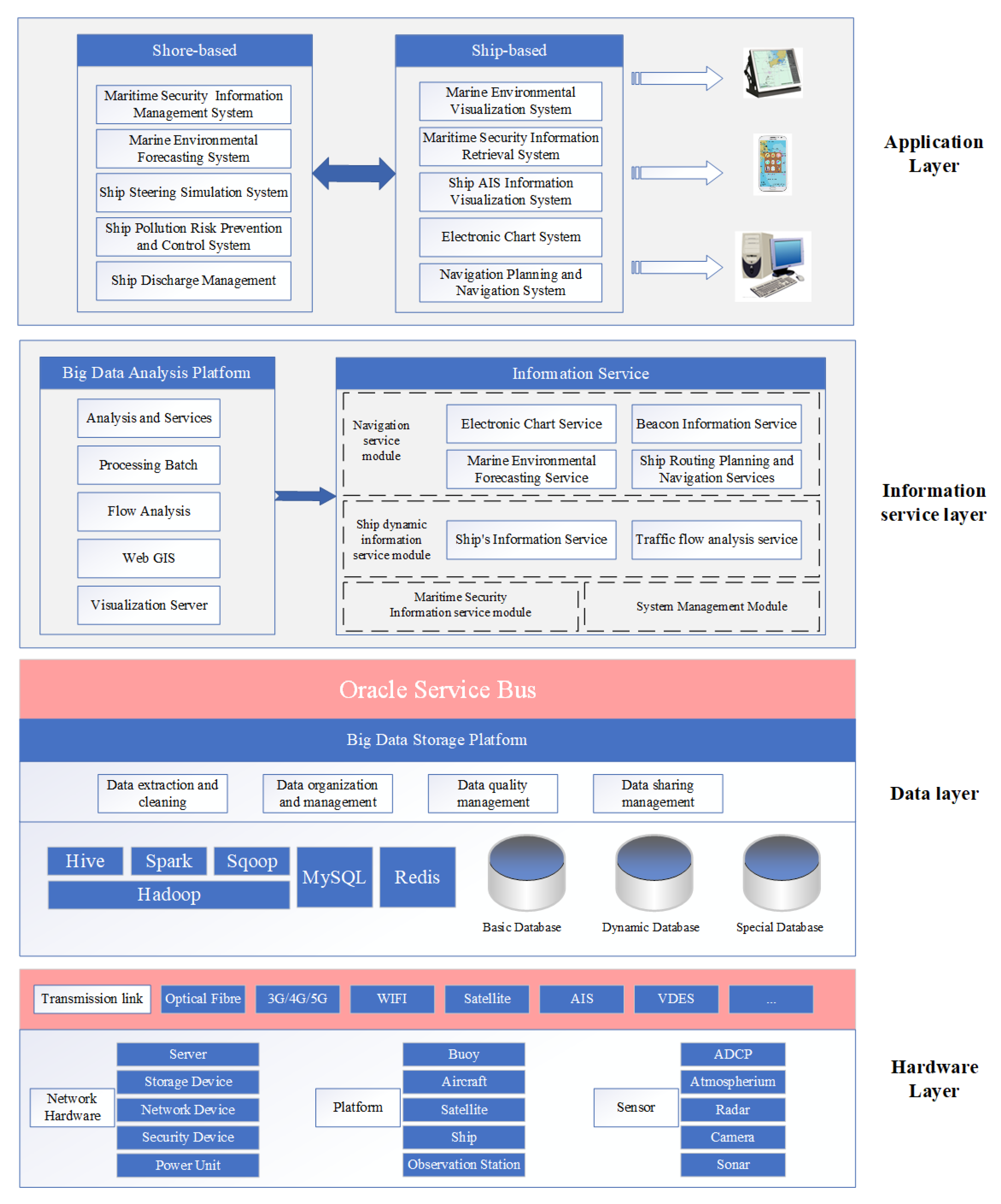
This paper proposes a four-layer system architecture, as shown in Figure 1, which includes the application layer, information service layer, data layer and hardware layer. The design of the system architecture aims to realize the unified collection and management of multi-source maritime data, use methods of big data analysis and mining to fuse and analyze the data and then provide users with diverse, professional and accurate data services. The application layer is composed of a shore-based application system and berth application system, which runs on the client machine and provides visualization and an interactive application system for different users. The information service layer is composed of a big data analysis and mining system and an information service system, which runs on a J2EE Web server and provides a professional data service module for the application layer and performs data fusion and analysis. The data layer consists of all kinds of special databases, which run on the J2EE database server, providing the required data for the resource service layer and managing the data. The hardware layer is composed of the network hardware, data platform, data acquisition sensor and so on. It runs on acquisition equipment such as the ship, shore, surface and underwater, and provides original data support for the data layer.
Figure 1.
The architecture of the maritime data security management platform.
3.2. Application Layer
The application layer provides various special data service systems for shore-based users and ship users and provides convenient and intelligent services according to users’ needs. For example, shore-based users can use the Marine environment forecasting system to obtain wind, wave, current and other marine environment data of the desired area, and use the ship steering simulation system to view the three-dimensional Marine environment of a specified port. Using the electronic navigation chart system, ship users can not only view the basic Marine geographic information but also choose to overlay AIS data, Marine environment forecast data, ship route data, ship pollution emission data, hazardous conditions and other comprehensive navigation data. Through the use of a route planning system, users can analyze navigation data, determine the degree of risk of ship navigation and develop a safe navigation plan. With the development of an intelligent ocean, more maritime applications can be expanded on the platform to facilitate the use of more users.
3.3. Information Service Layer
The information service layer is composed of big data analysis and mining systems and information service systems. It is connected to the bottom database through the data bus and the top user layer through the Web service interface. Among them, the big data analysis and mining system mainly provides computing support for maritime data processing and serves as a unified data acquisition, storage, analysis and output platform, which is the middle part of the connection between the application layer, the data layer and the hardware layer. The big data analysis and mining system can efficiently extract the data required by the upper application, and meet the computing requirements of application batch processing, analysis, visualization and so on. The information service system mainly provides professional maritime information services, including the marine hydrometeorological environment forecast, ship AIS information, electronic navigation chart update, route planning, navigation and other information services. Users can display the required maritime data through the terminal visualization system.
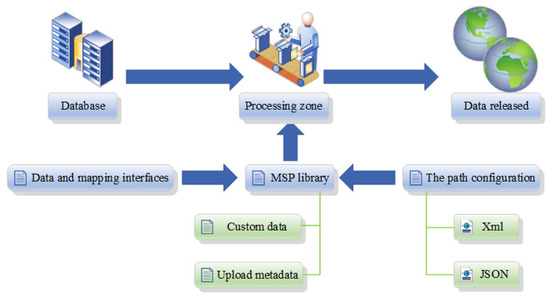
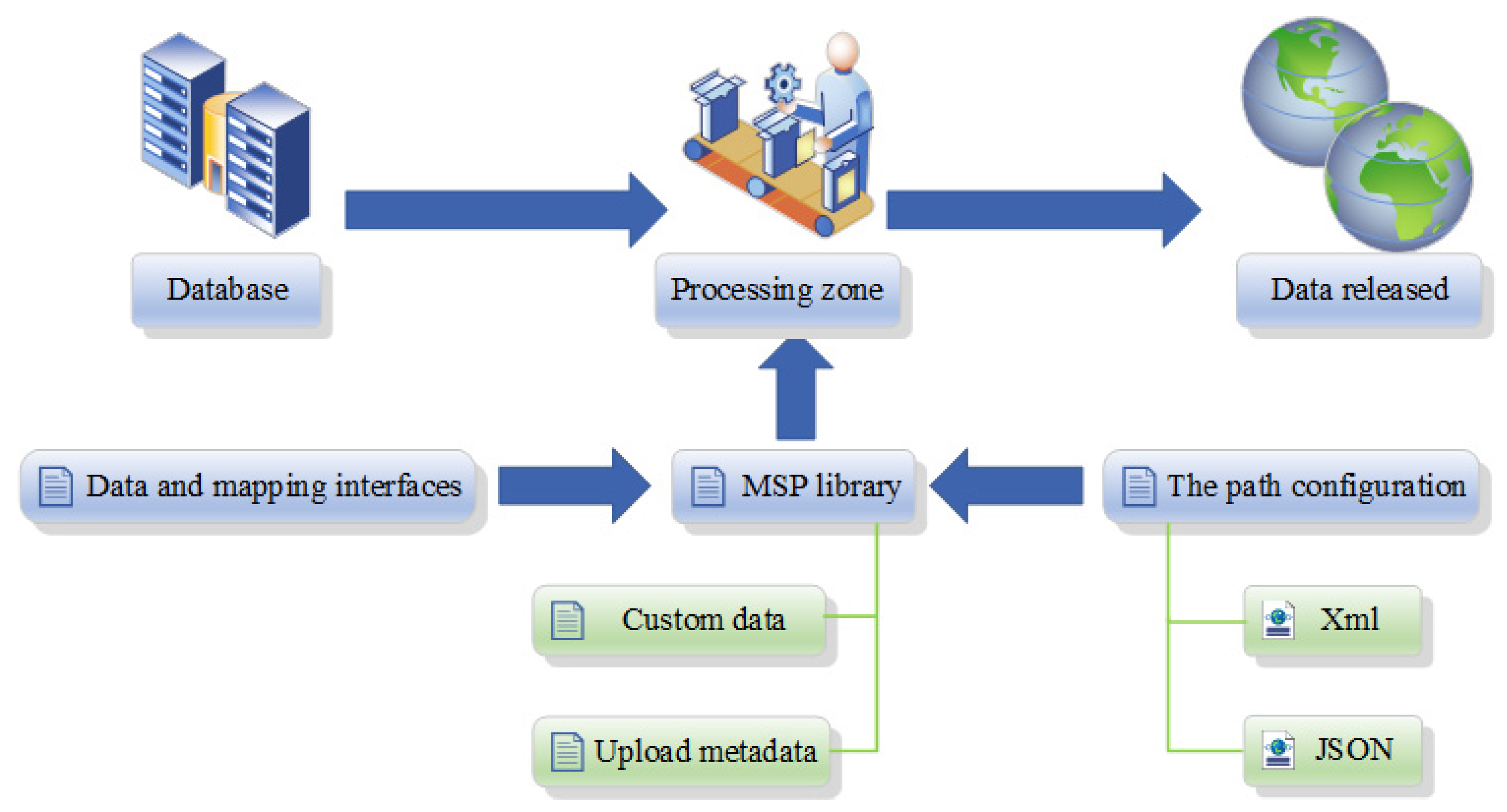
Relying on the OSB data bus, the MSP navigation information service system obtains the information data of the registration service from the e-Navigation integrated information management system, then processes and encapsulates the information under the MSP product specifications. The data source and data format are flexibly configured through the data mapping mode. The Java dynamic class loading mechanism is used to maintain the independence of each service, to facilitate the control and management of the service such as loading, publishing and stopping. This system provides the information service of the maritime service set through the service interface, and also provides the ship dynamic information and the maritime security information service to users. Finally, the system configuration management module carries out unified configuration management. Now, ENC (MSP11), maritime safety information (MSP5), meteorological information (MSP15) and hydrological information (MSP15) have been released. The architecture of the MSP navigation information service is shown in Figure 2.
Figure 2.
The architecture of MSP navigation information service.
This system obtains service data from the big data storage system and sends it to the processing zoom. It is processed through the navigation information service module, ship dynamic information service module, maritime security information service module and system management module. Finally, it is released through the configured path. The next part describes the workflow of the four service modules.
- Navigation information service module;
The navigation information service module is the main function to ensure the safety of ships in navigation, including the electronic navigation chart service, marine environment forecast service, beacon information service and route planning and navigation service. This module provides a special electronic navigation chart service interface, and users can access the latest electronic navigation chart database and update it. Based on the electronic navigation chart, the data of ships, ports, hydrology, meteorology and pollution emissions are superimposed in the form of thematic layers. The layers can be selected independently, and multiple charts are loaded at the same time and stitched together seamlessly. This module functions to access the hydrometeorological data from acquisition instruments from a ship and Marine forecasting center by comparing the real-time data and historical data to obtain higher accuracy of forecast data, and when the ship and the cloud communication failure, it can also function through acquisition instruments from a ship and a simple prediction model for small-scale environmental forecasts. Besides, this module provides route planning and navigation services for shipboard and shore-based users by acquiring data of buoy, ports, observation stations, etc.
- 2.
- Ship dynamic information service module;
The ship dynamic information service module includes the ship information service and the traffic flow analysis service. This module realizes the real-time display of the ship’s current position, ship’s name, current speed, course and other information in the electronic navigation chart, and different sources of ships are shown with different symbols and different types of ships with different colors. This module also realizes intelligent ship supervision. After binding the corresponding ship, it can automatically display static data, dynamic data and associated data of the ship, such as the type of ship, real-time position, historical track, etc.
- 3.
- Maritime security information service module;
The navigation support information service module realizes the timely release and inquiry of information regarding navigation beacon businesses, surveying and mapping businesses, navigation businesses, navigation books, port information, maritime security-related laws and regulations, international conventions, etc. The system has internal control of the release policy, and the release of all contents can only be granted through the process of approval. The specific process can be customized according to users’ business needs, which supports both a simple one-step workflow and a complex approval process.
- 4.
- System management module.
The system management module implements the permission management of the above three modules. Each service module needs permission to obtain information content. The administrator with management permissions can conduct the configuration management for each published service.
3.4. Data Layer
The data layer is mainly a big data storage system, which is connected to the upper layer through a unified data access interface, including basic maritime databases, dynamic databases and special databases. It can carry out the extraction and cleaning, organization and management, quality management, sharing management and other services of maritime spatiotemporal data.
The existing navigation support system still has problems regarding difficult integration of heterogeneous data from multiple sources and low efficiency of data management. Therefore, the maritime data security management platform integrates the information resources of the maritime department, adopts the dynamic class loading technology to realize the unified management of the data from different interfaces and multiple sources, establishes a database that can store information effectively and realizes the configuration and management of the navigation data collection and storage. In order to meet the needs of various user applications, this paper has been optimized from the following four aspects.
- Use a reasonable database optimization strategy to improve the speed and performance of database applications. First, use as simple an integer or short string as possible to simplify and avoid sorting. Then, when a large number of data are sorted, the relevant data are put into a temporary table operation. Index during a multi-table query, multi-joint query and data filtering to reduce I/O. Use more “And” concatenation and less “Or” concatenation when using a “where” clause, and avoid complex expressions, non-initial substrings and long strings.
- Using Ehcache data caching technology, such as ship dynamic data, real-time data of buoys and real-time hydrometeorological data are cached by the distributed cache. Ehcache provides an Application Programming Interface (API) that is easy to use, easy to configure and easy to deploy and run. In large memory situations, all processes can support hundreds of gigabytes of throughput. The lifetime, free time, memory and maximum number of caches for each Cache can be flexibly set and can be changed at run time. The user first accesses the cache to obtain data when requesting data, and only accesses the database to obtain data when the data do not exist, to reduce the access to the database.
- The establishment of a separate physical database is conducive to the promotion of the system in the future. When the number of users increases and the system needs to be expanded, the number of virtual or physical servers can be easily increased to achieve diversion and reduce the pressure of the system without changing the system structure.
- The Oracle Real Application Cluster (RAC) is used to improve system performance, reliability and balance server load pressure through RAC cluster configuration.
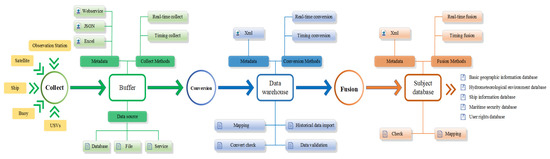
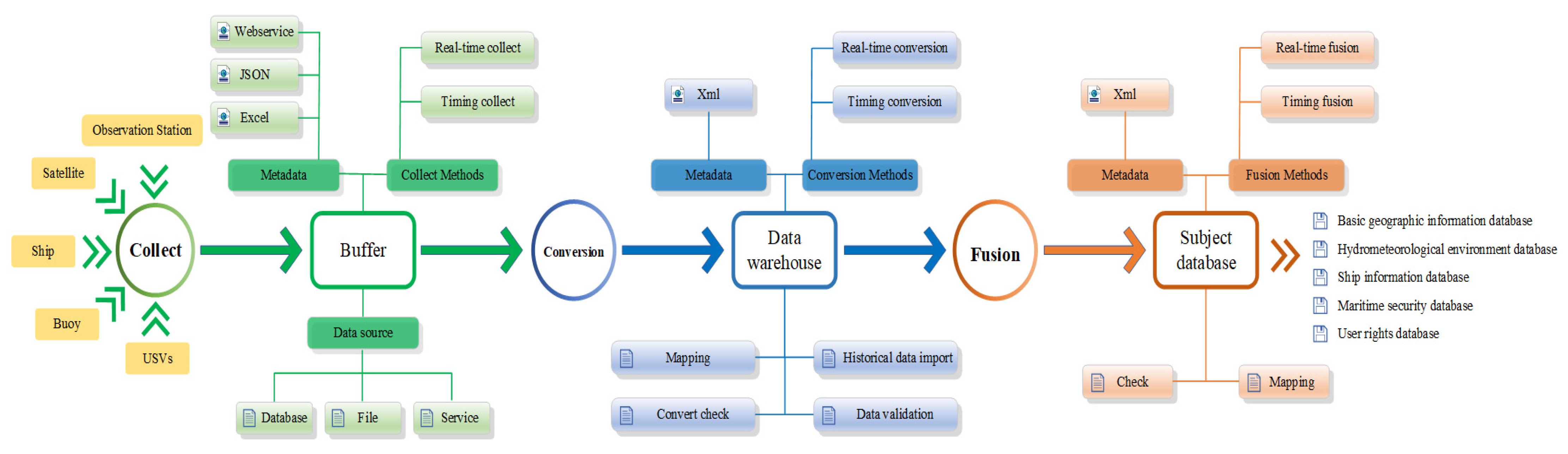
In order to solve the problem of compatibility between the data required by the application system and the data collected by hardware devices in standards and formats, the platform designs a unified data management process, establishes a data warehouse management system, analyzes and processes all data and provides services for all users. As shown in Figure 3, the management process of this system mainly includes data collection, data conversion, data fusion, log management and the acquisition state, which constitute the database management system.
Figure 3.
The process of data management.
- Data collection. The sources of data mainly include maritime departments and observation equipment acquisition. For example, hydrometeorological data are partly from the National Marine Environmental Forecast Center, which mainly includes historical data and forecast data of a certain sea area. The other part comes from the data collected by the ship’s equipment, mainly the real-time data of the sea area near the route. The basic data of the electronic navigation chart are mainly from the Navy Press, and updated data are obtained by processing satellite remote sensing images. Besides, navigation data can be obtained through satellites, observation stations, multifunctional buoys, the shipborne Acoustic Doppler Current Profiler (ADCP), meteorological instruments, cameras, radar, sonar and other equipment.
- Data conversion. In the process of the collection, processing, exchange, distribution, service and application of maritime data, a great deal of data exchange is needed. When the data exchange is required to be automated or unattended (or with minimal human intervention), the data exchanged must be predefined and structured so that they can be understood and processed unambiguously by either side or multilateral exchanges. The data interchange format covers the sharing requirements of certain types of data exchanged in maritime data-sharing activities. It aims at ensuring an unambiguous understanding and automatic processing of data exchanged by all parties in bilateral or multilateral data exchange. The data interchange format is important content for the exchange and sharing of various complex heterogeneous data. Therefore, a simple and universal Extensible Markup Language (XML) file is used to describe the structure of the data interchange format.
- Data fusion. This platform has set up several thematic databases, including the basic geographic information database, hydrometeorological environment database, ship information database, maritime security database and user rights database. According to the special needs of users, it can extract the required information from a specific database in real-time and form a new dataset for users.
- Log management. This function is for the convenience of viewing and managing the operation record of users when using the platform. In the event of platform problems or human error, the problems can be found timely and solved quickly according to the log records.
- Acquisition state. This function is mainly used to display the configured data source information.
3.5. Hardware Layer
The hardware layer is composed of the network hardware, data platform, data acquisition sensor and so on. It runs on the acquisition equipment from the ship, shore, surface and underwater, and is the direct source of maritime data acquisition. For example, the ship is equipped with an Electronic Chart Display and Information System (ECDIS), VDES, radar, camera, Atmospherium and other equipment; the multipurpose buoy and Unmanned Surface Vehicles (USVs) are equipped with the Global Navigation Satellite System (GNSS), ADCP, Camera, Inertial Measurement Unit (IMU), Micro Electro Mechanical Systems (MEMS) and other equipment, and transmits the data collected by each sensor back to the server of the data storage center through the satellite link. The shore equipment includes Satellites, Observation Station, etc., and the Transmission Control Protocol (TCP) Server gateway is set up in the Cloud Server to receive data, process the data according to the data structure, save the data in the storage device and manage the data using security devices. What is more, Table 2 lists the hardware components on the ship, shore, surface and underwater.
Table 2.
Hardware component.
4. Platform Application
4.1. e-Navigation Development Platform
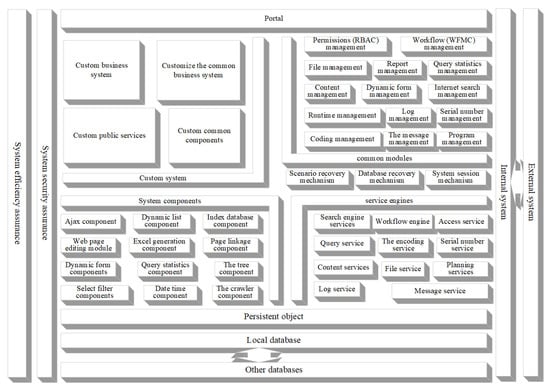
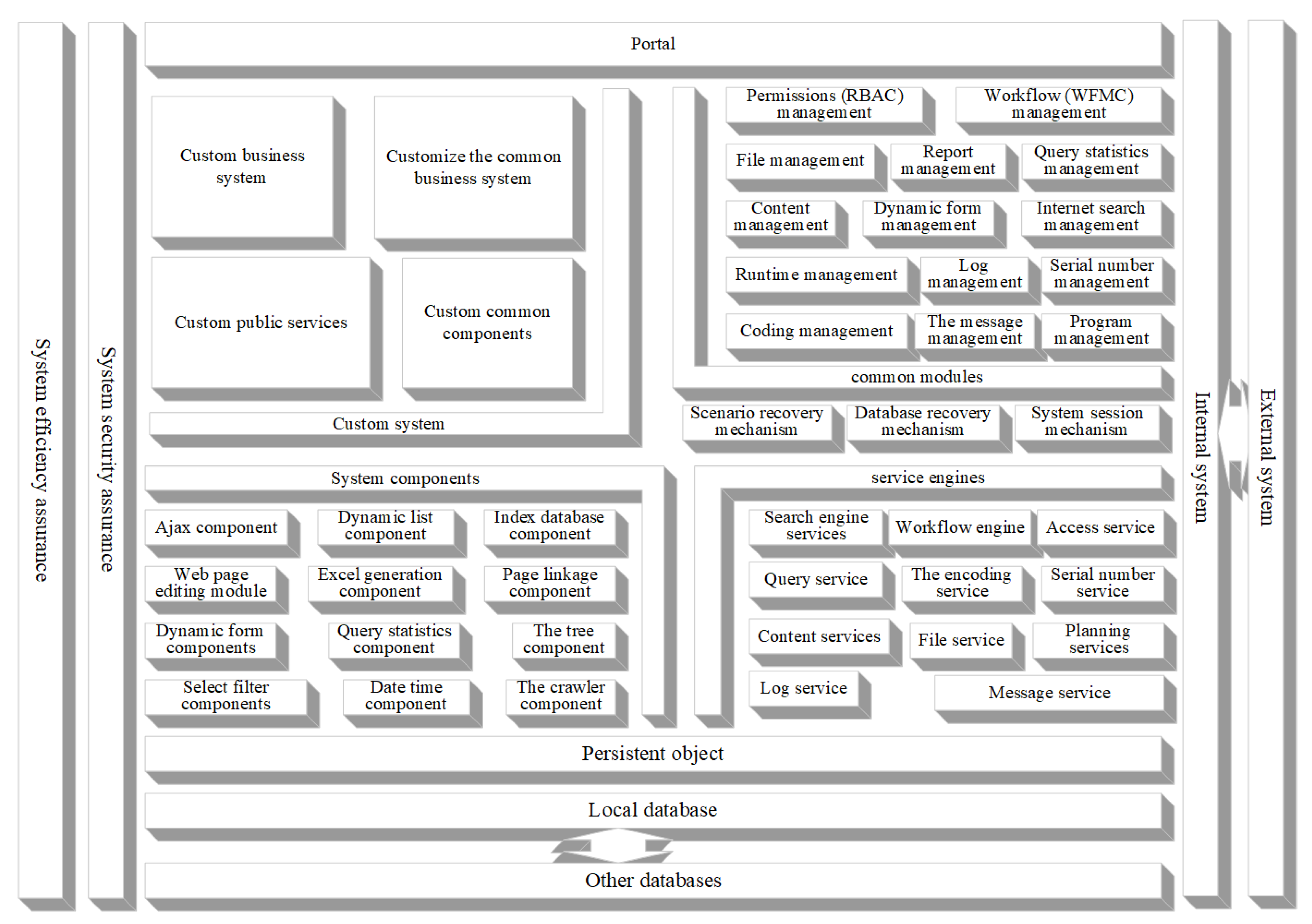
In the process of system development, the maritime security data security platform has formed a set of platform frameworks based on J2EE system development, which follows the e-Navigation specifications, and accumulated many reusable common system components and formed a series of service engines based on the concept of SOA. Finally, intelligent, visual and modular development has been completed for the user authority, organization, workflow, report form, file management, user interface and other aspects.
The e-Navigation development platform supports all workflow models and provides a visual process modelling environment [39]. The platform provides common modules, service engines, system components and custom systems, which can greatly accelerate the development of the server and shorten the system development cycle. At the same time, this platform can improve the standard and consistency of the system construction. What is more, it benefits from the expansion and upgrade of the e-Navigation pilot project in the future. Figure 4 is an e-Navigation development platform.
Figure 4.
E-Navigation development platform.
4.2. e-Navigation Development Platform
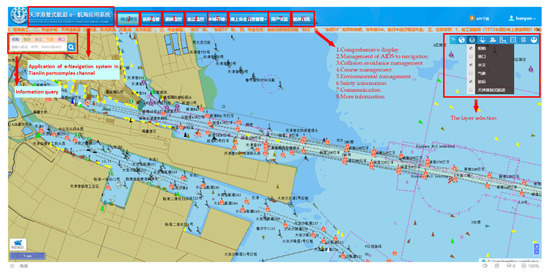
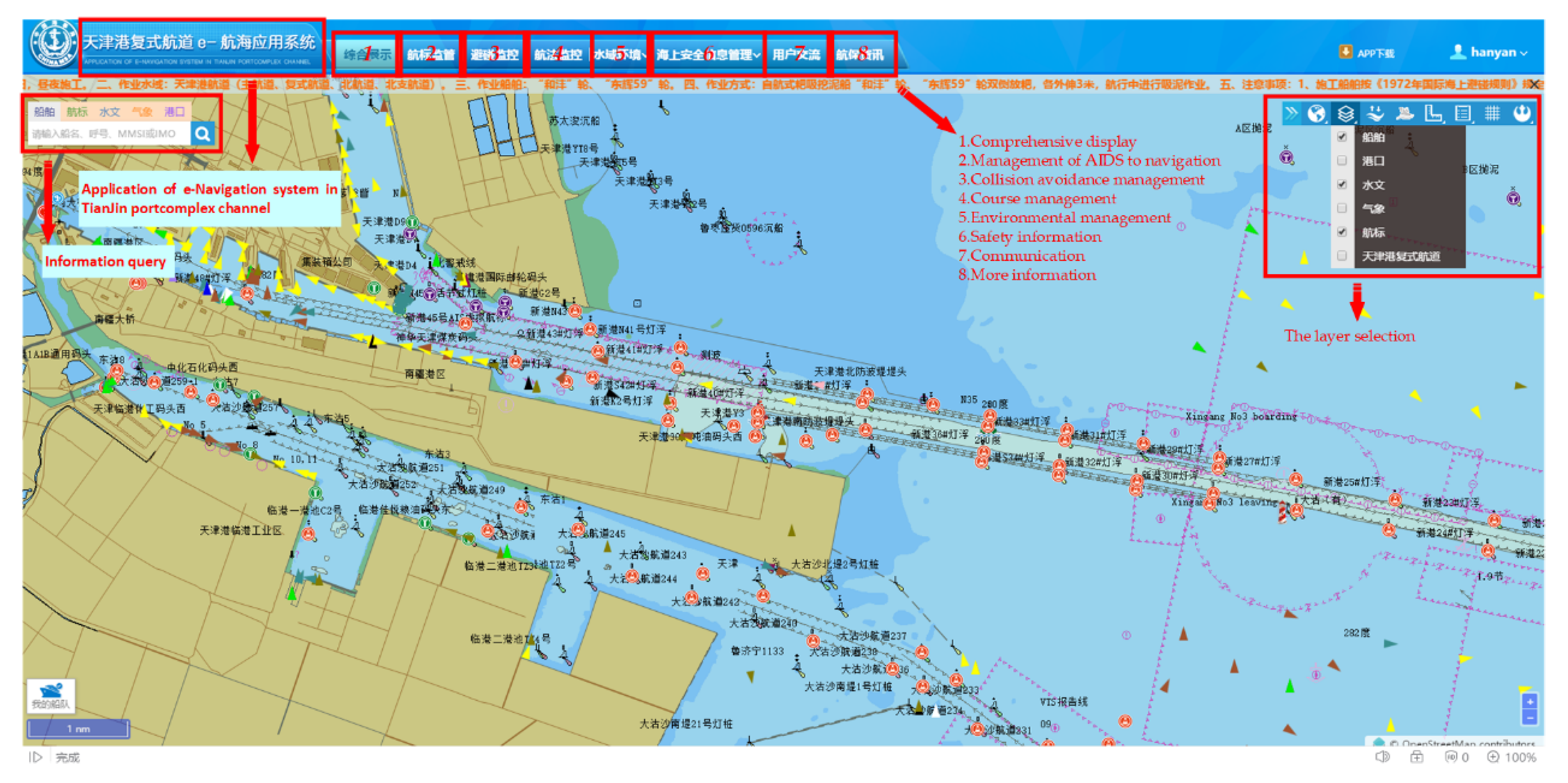
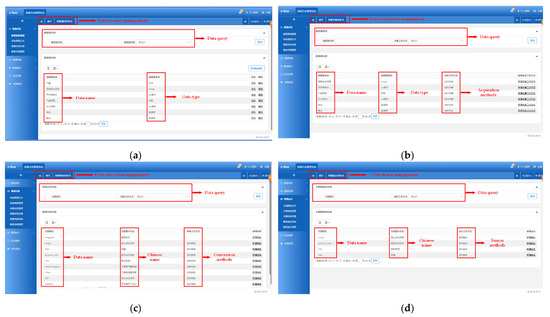
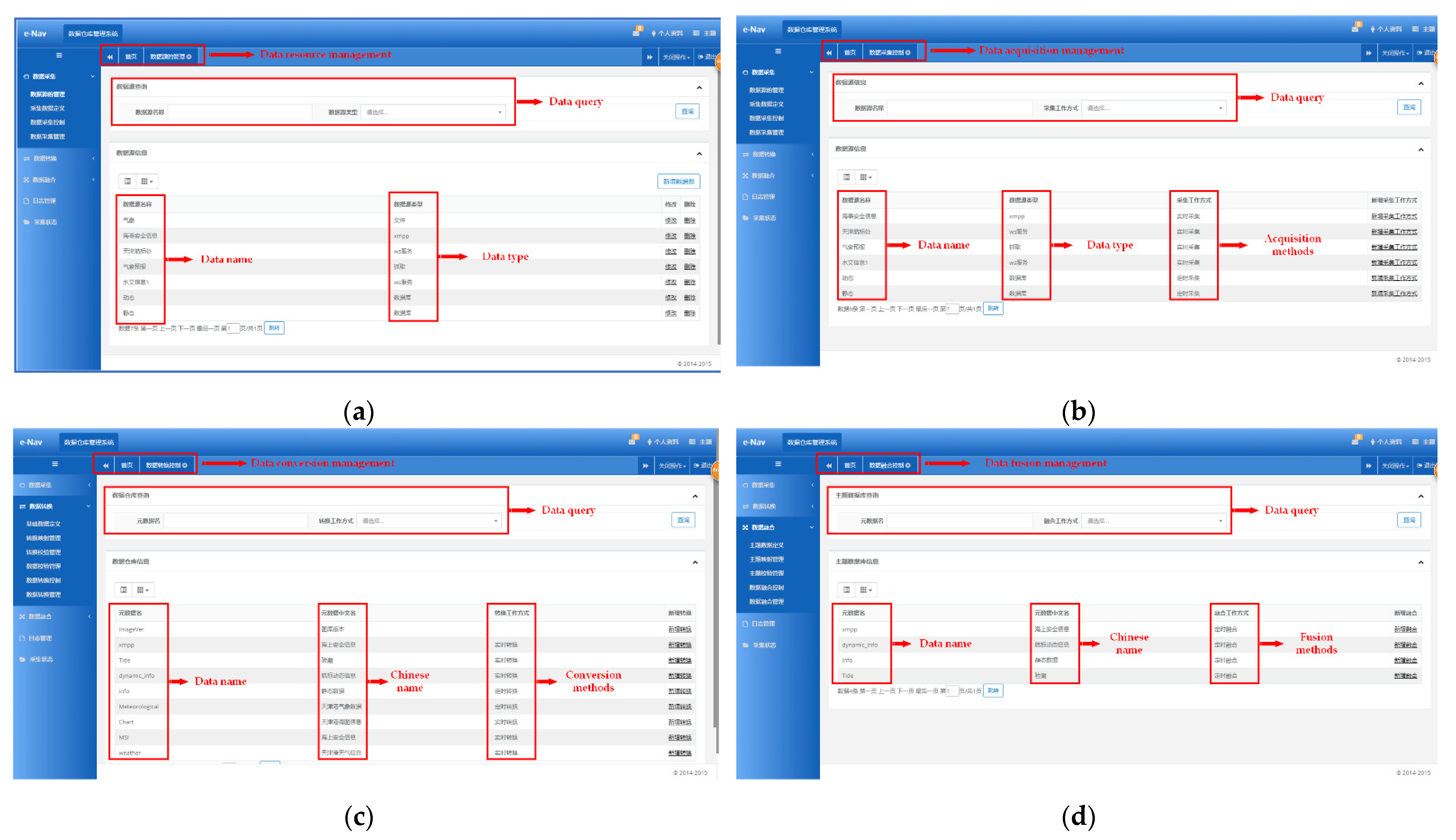
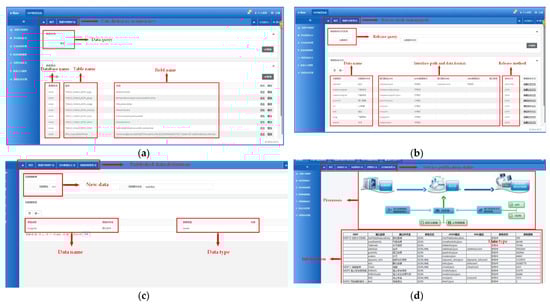
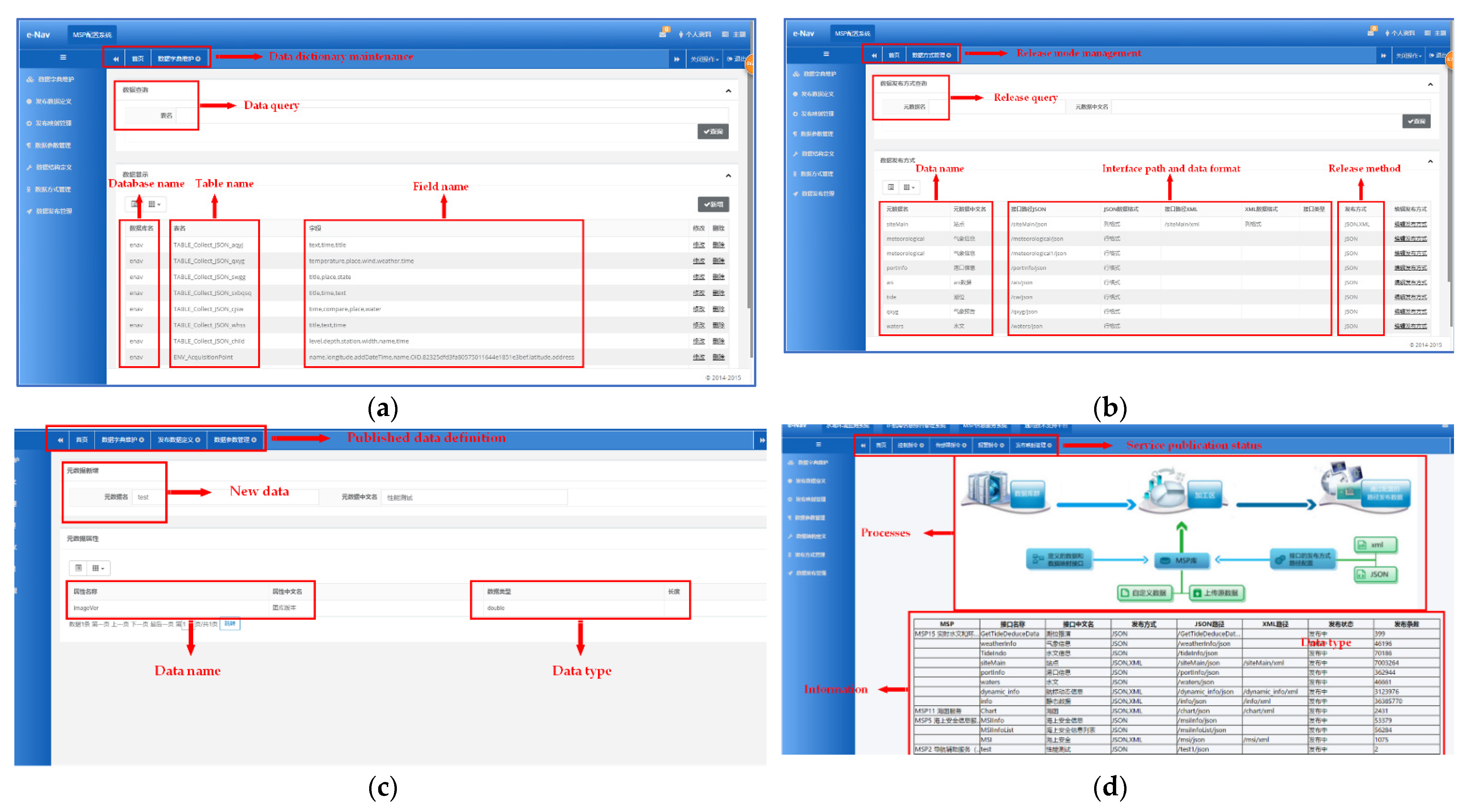
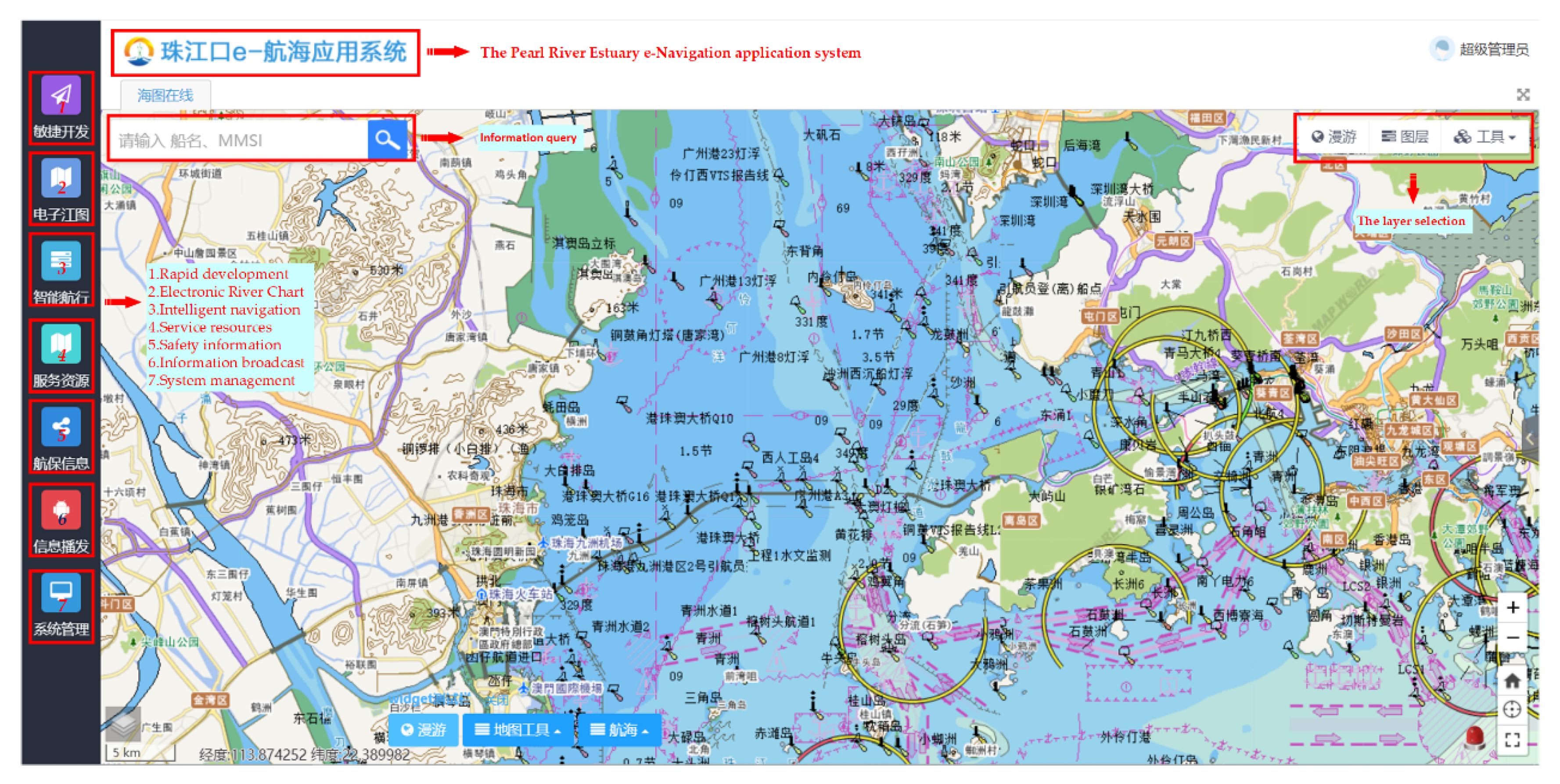
The maritime data security management platform can be used as the basic framework for developing ship and shore-based e-Navigation systems. In 2016, the Tianjin port e-Navigation integrated information management system was developed and has been running stably until now. The system interface is shown in Figure 5. The system realizes visualization and modular design of maritime data and develops a data management system, as shown in Figure 6. Among them, Figure 6a shows the data resource management, Figure 6b shows the data acquisition management, Figure 6c shows the data conversion management and Figure 6d shows the data fusion management. At the same time, the system provides users with information services such as ships, waterways, hydrometeorology and multifunctional buoys [40], as shown in Figure 7. More specifically, Figure 7a shows the data dictionary maintenance, Figure 7b shows the release mode management, Figure 7c shows the published data definition and Figure 7d shows the service publication status. Subsequently, the Pearl River Estuary e-Navigation application system was developed, which can carry out route planning, intelligent navigation and chart plotting, as shown in Figure 8.
Figure 5.
The Tianjin Port e-Navigation integrated information management system.
Figure 6.
The data management system. (a) Data resource management; (b) data acquisition management; (c) data conversion management; (d) data fusion management.
Figure 7.
The information service system. (a) Data dictionary maintenance; (b) release mode management; (c) published data definition; (d) service publication status.
Figure 8.
Pearl River Estuary e-Navigation application system.
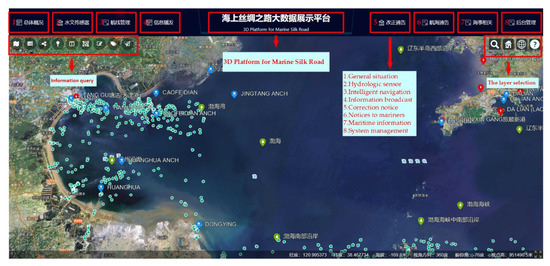
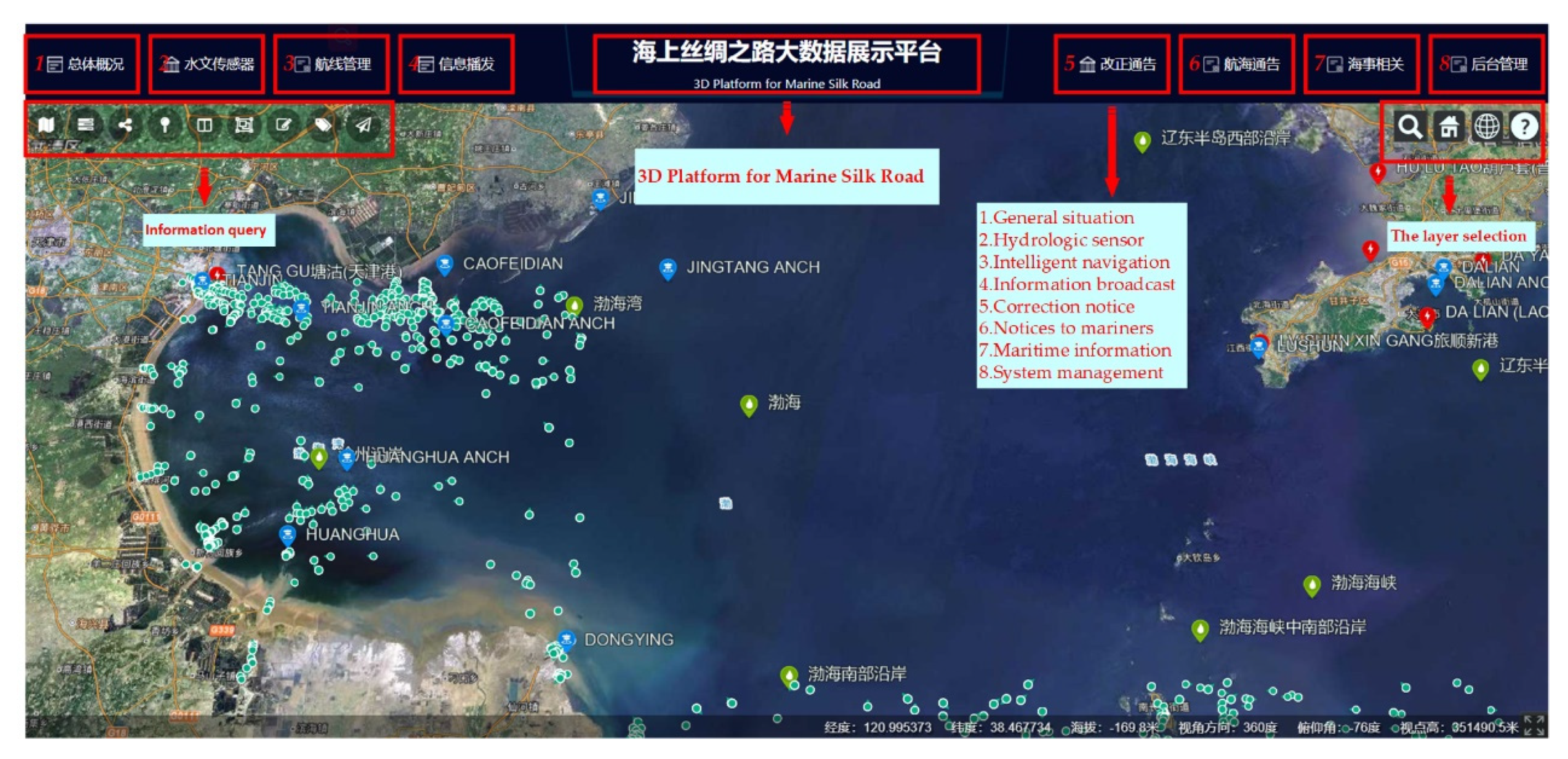
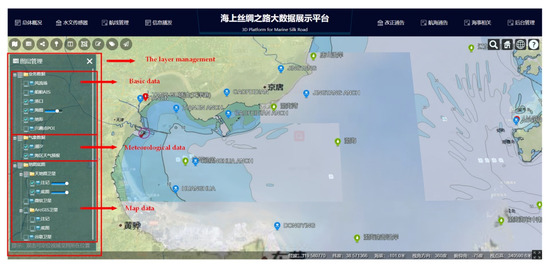
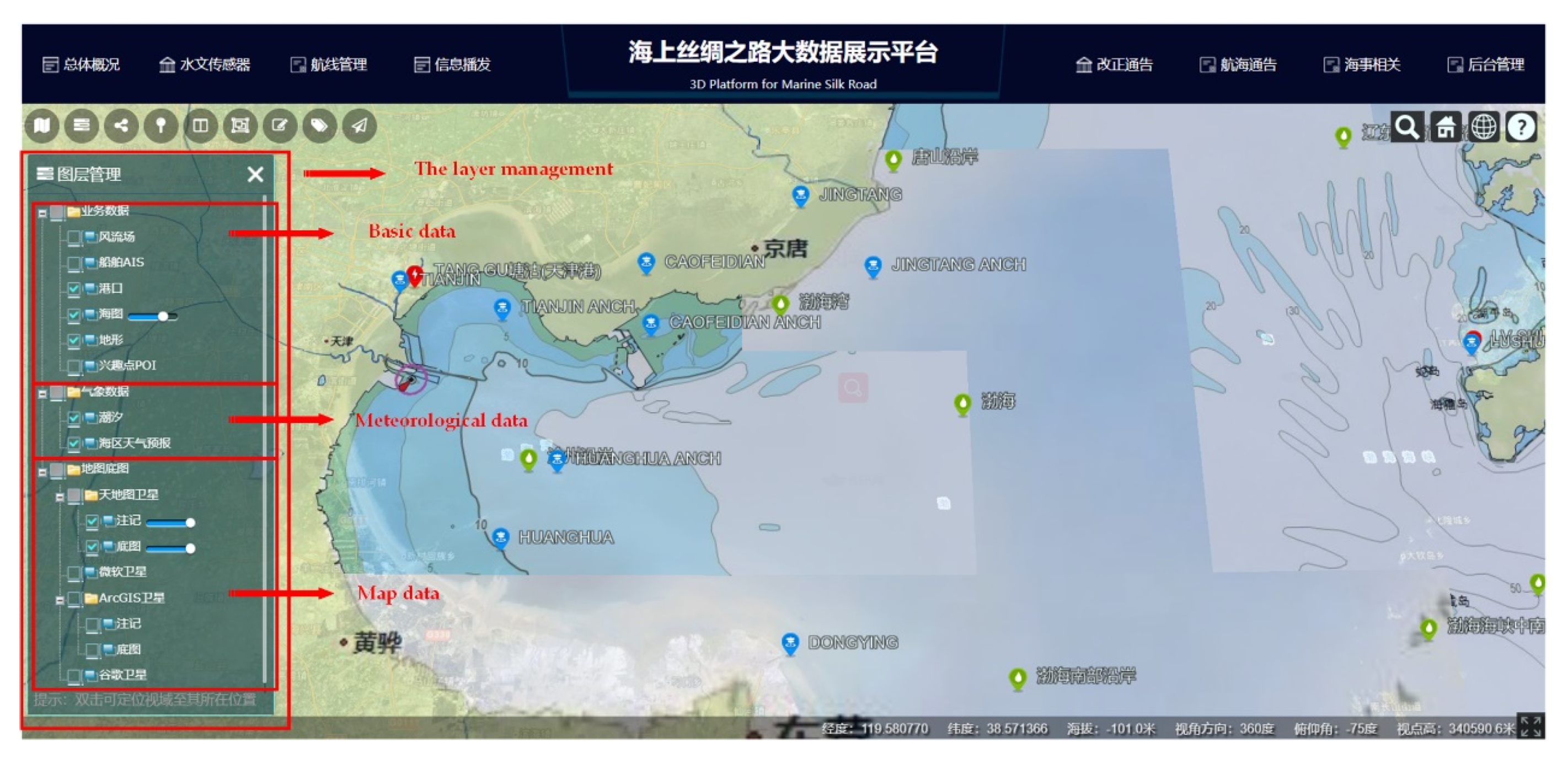
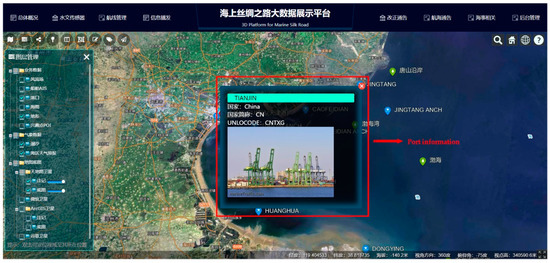
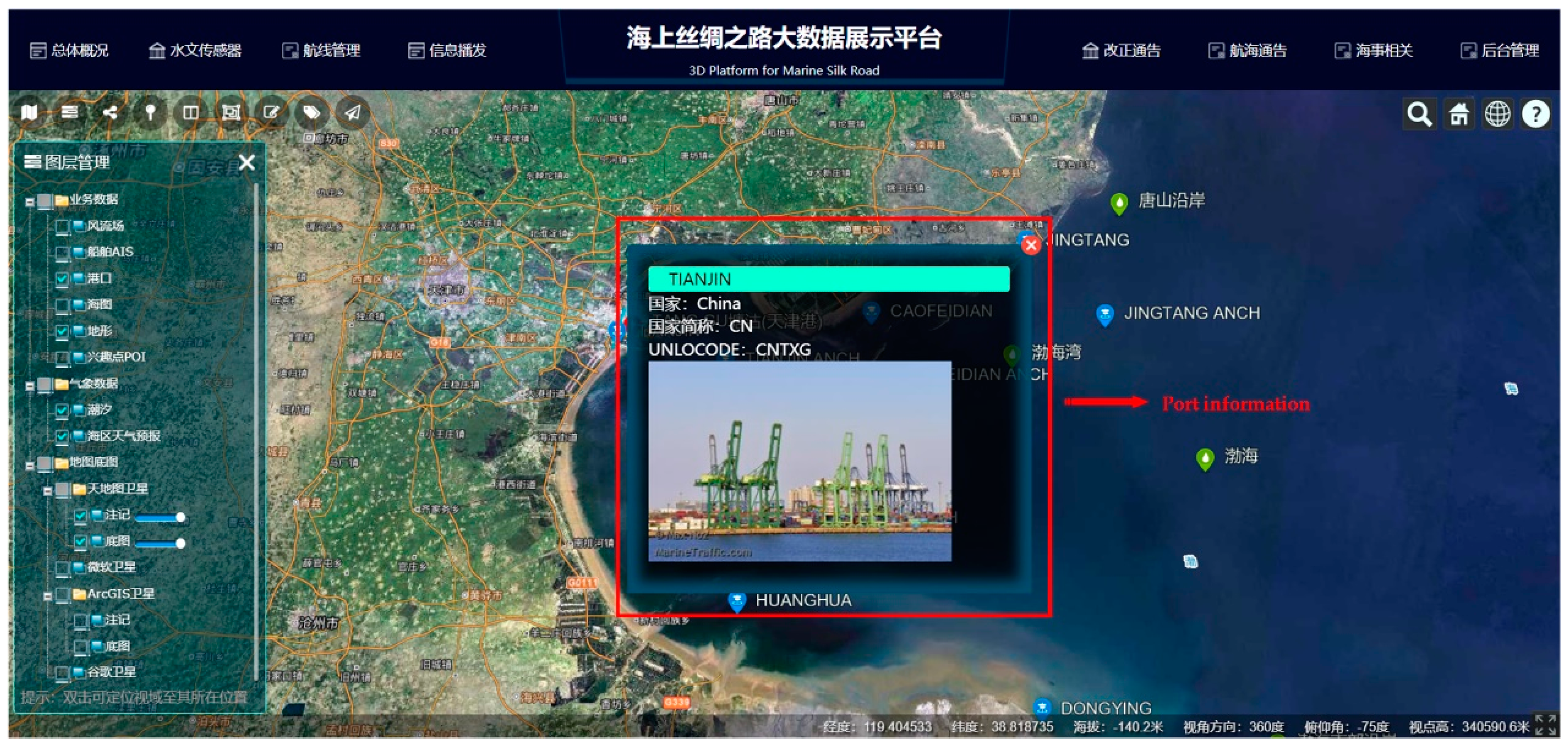
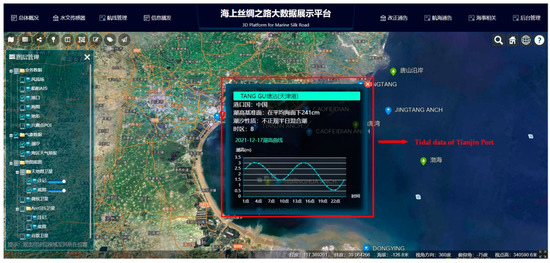
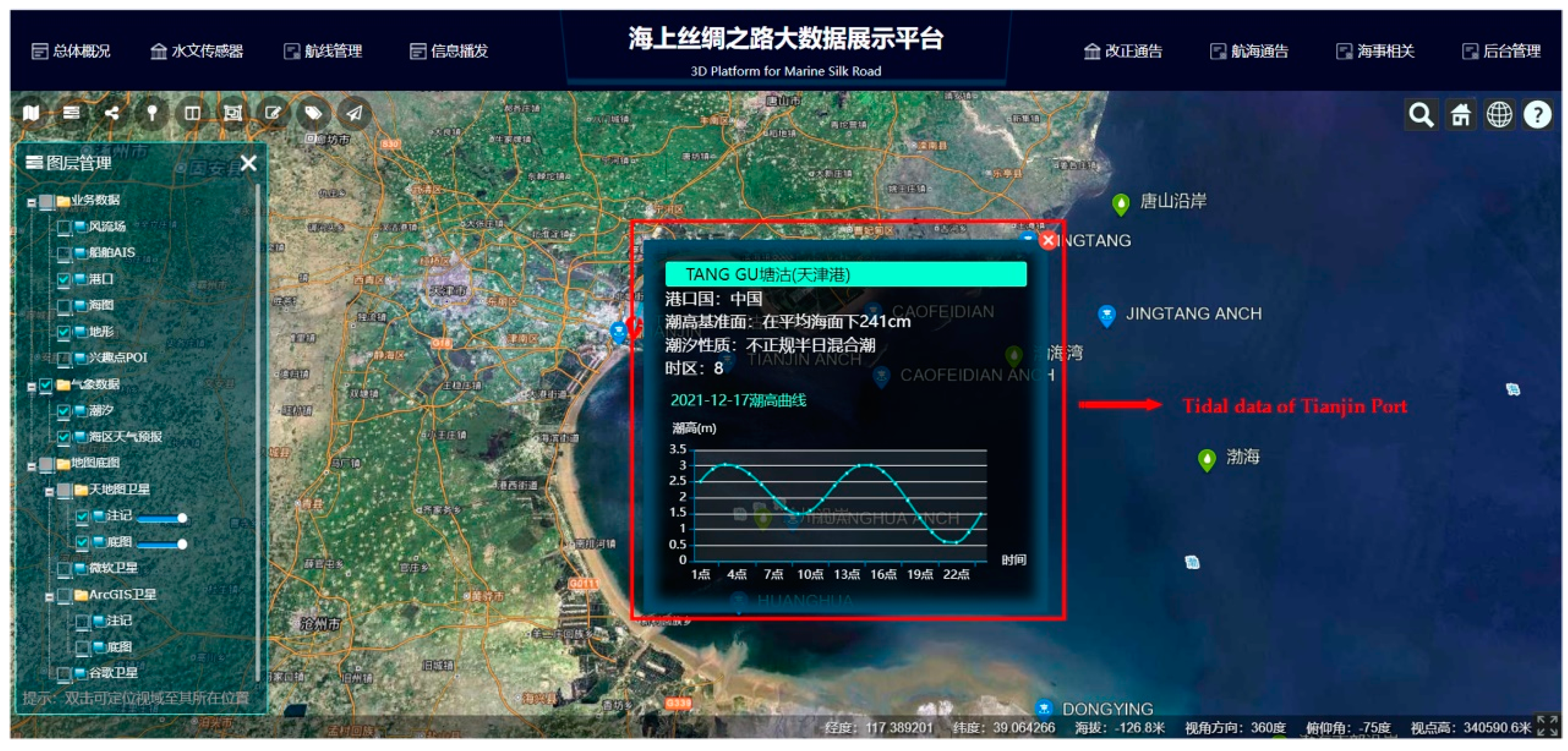
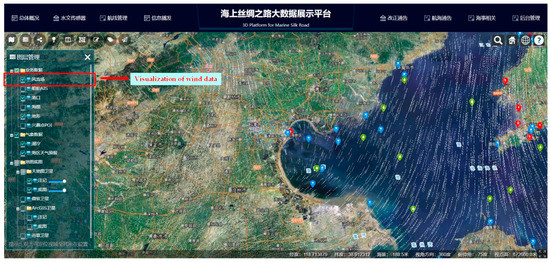
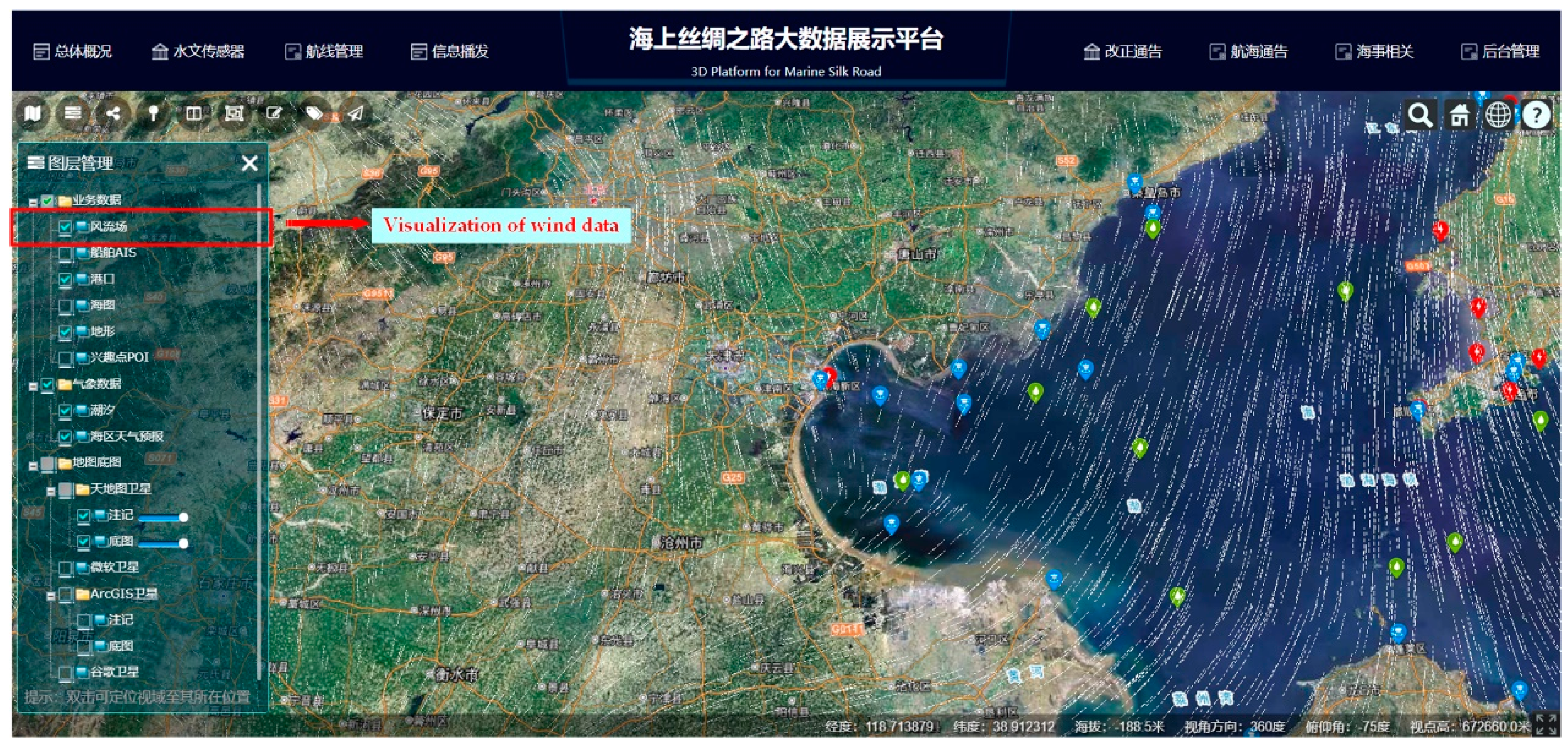
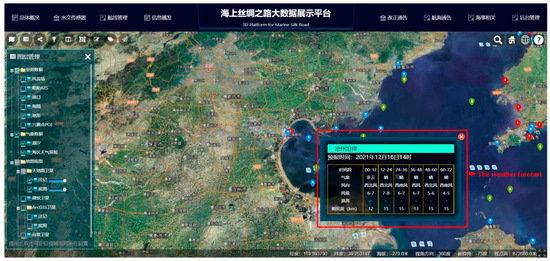
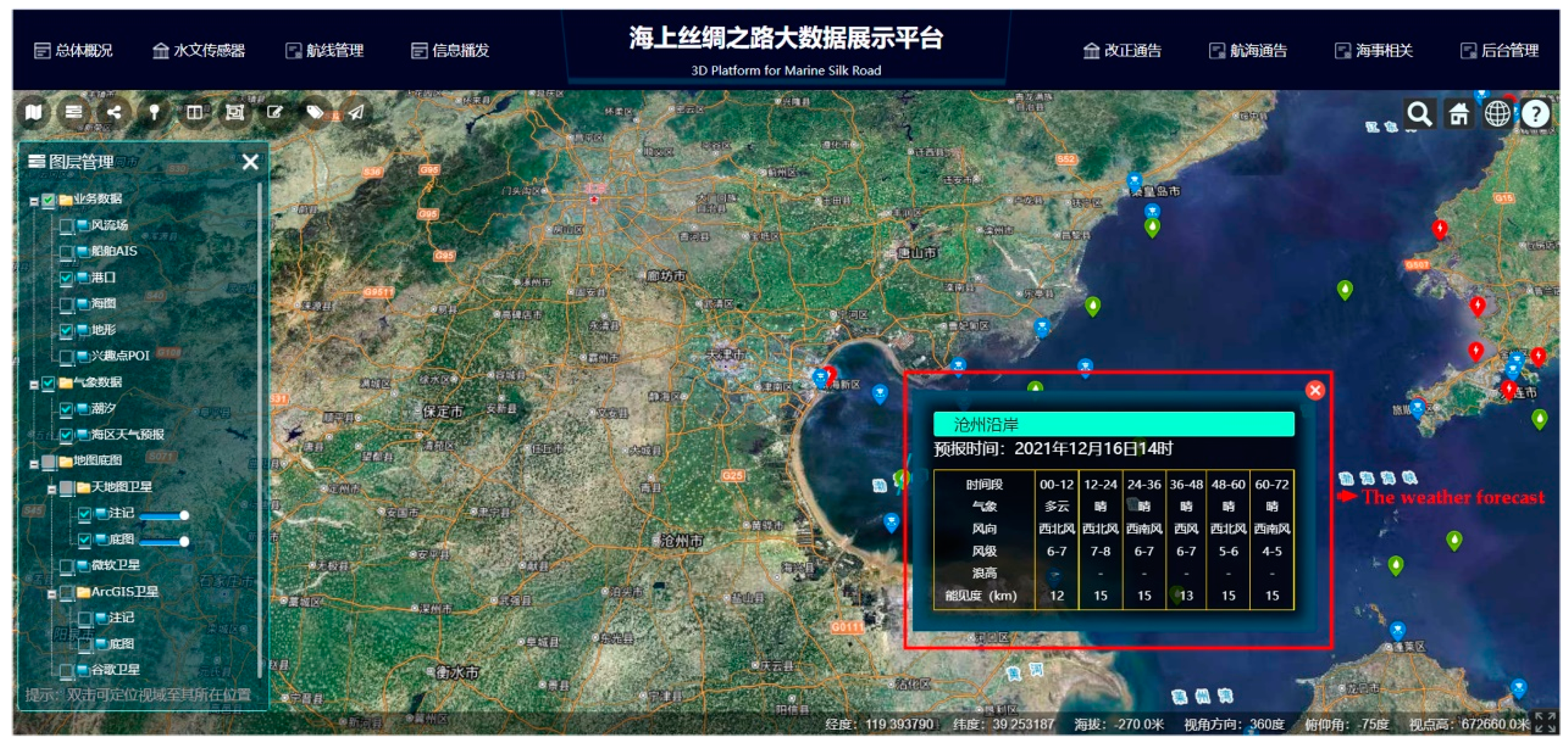
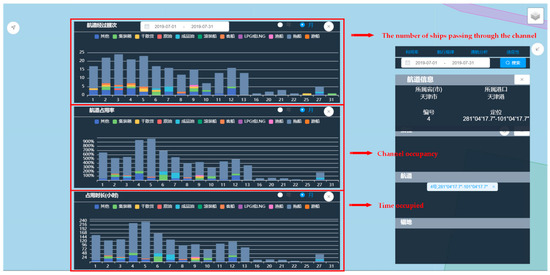
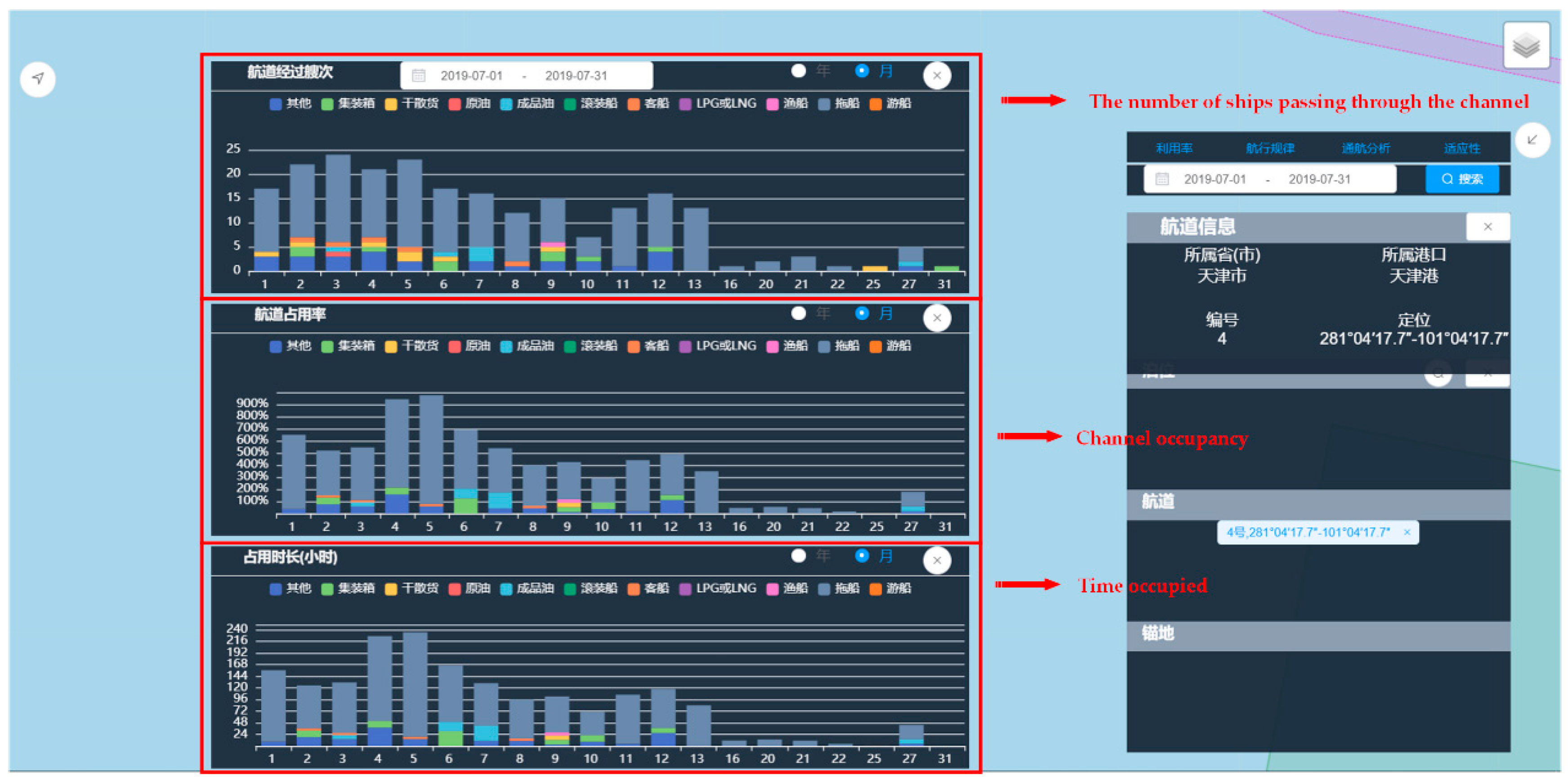
Based on developments in recent years, the Maritime Silk Road Transport environmental security service system was developed in 2021. The system also uses the technical architecture of the maritime data security management platform and realizes the visualization of various marine data on 2D and 3D integrated maps. The system interface is shown in Figure 9. The hardware layer is connected to oceangoing ships carrying sensors, multi-function buoy carrying a data collector and shore-based data acquisition equipment, the data layer is connected to a variety of map images and th electronic navigation chart and the information service layer provides users with basic geographic information services, which can display Google map images superimposed with electronic navigation charts, as shown in Figure 10. In addition, port information, tide information and weather information can be displayed, as shown in Figure 11, Figure 12, Figure 13 and Figure 14. With the big data analysis and mining system, it can also carry out the statistics and analysis of ship navigation data in ports, waterways, berths and other areas, as shown in Figure 15.
Figure 9.
3D Platform for Marine Silk Road.
Figure 10.
Geographic information service.
Figure 11.
Port information.
Figure 12.
Visualization of tidal data.
Figure 13.
Visualization of wind data.
Figure 14.
The weather forecast.
Figure 15.
Statistics and analysis of waterway information.
5. Conclusions and Prospects
The maritime data security management platform is developed by referring to the CSSA shore-based system architecture and the MSP information service system, and the four-layer software architecture is designed according to the J2EE technology architecture. Through the integration, processing and analysis of the electronic navigation chart, marine environment, AIS and other data, ship navigation information, ship dynamic information, maritime security information and other information services are realized. This platform integrates multi-source heterogeneous data, a navigation application model and an electronic navigation chart. It solves the problems regarding the lack of maritime security information, complex navigation tools and overlapping functions. The integrated maritime security information system has been realized, which enhances the ability of safe navigation of ships, shares navigation information more widely and comprehensively and makes the operation of navigators more convenient and fast. At present, three application systems have been developed based on the platform architecture, which can give full play to the advantages of unified data management and provide users with various services of MSP such as geographic information, environmental information and navigation information.
The maritime data security management platform will still face many challenges, and future work will focus on the improvement of system functions and application promotion. Although the platform has realized a comprehensive display of maritime security information, there are still difficulties in data coordination and sharing among various maritime departments, so it is necessary to design a unified platform conducive to the management of various maritime departments. Besides, the expression of data under the S-100 standard is not perfect, especially the lack of intelligent performance of three-dimensional navigation data, and a mature software system has not been formed.
There are still many challenges in developing the maritime data security management platform. However, this study demonstrates this platform can provide promising applications for the field of e-Navigation Test Beds.
Author Contributions
The manuscript was written by Y.Z.; all authors discussed the original idea; conceptualization, A.Z. and Y.Z.; methodology, D.Z. and Y.Z.; software, Y.Z.; validation, Y.Z., Z.K. and Y.L.; formal analysis, Y.Z.; investigation, Y.Z.; resources, A.Z.; data curation, A.Z.; writing—original draft preparation, Y.Z.; writing—review and editing, Y.Z. and D.Z.; visualization, Y.Z.; supervision, A.Z.; project administration, A.Z.; funding acquisition, A.Z. All authors have read and agreed to the published version of the manuscript.
Funding
This research was funded by the National Key Research and Development Program of China, grant number 2018YFC1407400.
Institutional Review Board Statement
Not applicable.
Informed Consent Statement
Informed consent was obtained from all subjects involved in the study.
Acknowledgments
This research was supported by the National Key R&D Program of China (Grant no. 2018YFC1407400). The authors would like to thank the editors and anonymous reviewers for their valuable comments.
Conflicts of Interest
The authors declare no conflict of interest.
Abbreviations
| ADCP | Acoustic Doppler Current Profiler |
| AIS | Automatic Identification System |
| API | Application Programming Interface |
| BAG | Bathymetric Attributes Grid |
| CSSA | Common Shore-Based System Architecture |
| ECDIS | Electronic Chart Display and Information System |
| ENC | Electronic Navigational Charts |
| GNSS | Global Navigation Satellite System |
| IALA | The International Association of Marine Aids to Navigation and Lighthouse Authorities |
| IMO | International Maritime Organization |
| IMU | Inertial Measurement Unit |
| J2EE | Java 2 Platform Enterprise Edition |
| MEMS | Micro Electro Mechanical Systems |
| MSP | Maritime Service Portfolio |
| OSB | Oracle Service Bus |
| RAC | Real Application Cluster |
| S-100 | The S-100 Universal Hydrological Data Model |
| S-101 | The S-101 Universal Hydrological Data Model |
| S-102 | The S-102 Universal Hydrological Data Model |
| S-57 | The S-57 Universal Hydrological Data Model |
| SAR | Synthetic Aperture Radar |
| SOA | Service-Oriented Architectures |
| TCP | Transmission Control Protocol |
| USVs | Unmanned Surface Vehicles |
| VDES | VHF Data Exchange System |
| VTS | Vessel traffic service |
| WSDL | Web Services Description Language |
| XML | Extensible Markup Language |
References
- Cairns, W.R. The E-Navigation Revolution. Proc. Mar. Saf. Secur. Counc. 2007, 64, 30–32. [Google Scholar]
- Chai, T.; Xue, H. A study on ship collision conflict prediction in the Taiwan Strait using the EMD-based LSSVM method. PLoS ONE 2021, 16, e0250948. [Google Scholar] [CrossRef] [Scilit] [PubMed]
- Oh, J.-H.; Kim, K.-I.; Jeong, J.-S. A Study on the Risk Analysis based on the Trajectory of Fishing Vessels in the VTS Area. Int. J. e-Navig. Marit. Econ. 2015, 2, 38–46. [Google Scholar] [CrossRef] [Scilit]
- Xiong, W.; van Gelder, P.; Yang, K. A decision support method for design and operationalization of search and rescue in maritime emergency. Ocean Eng. 2020, 207, 107399. [Google Scholar] [CrossRef] [Scilit]
- Puisa, R.; McNay, J.; Montewka, J. Maritime safety: Prevention versus mitigation? Saf. Sci. 2021, 136, 105151. [Google Scholar] [CrossRef] [Scilit]
- IALA. E-Navigation Testbeds. 2019. Available online: https://www.iala-aism.org/technical/e-nav-testbeds/completed-testbeds/ (accessed on 1 October 2020).
- EfficienSea. 2012. Available online: http://efficiensea.eu/ (accessed on 27 September 2015).
- MONALISA 2.0. 2015. Available online: http://monalisaproject.eu/ (accessed on 27 September 2015).
- ACCSEAS. 2015. Available online: http://www.accseas.eu (accessed on 27 September 2015).
- Lcdr Yu, N.; Cdr Kinji, T. IALA ENAV22-6.3, Japan’s consideration on the utilizations of VDES, Paris 2018. In Proceedings of the 19th IALA Conference, Incheon, Korea, 27 May–2 June 2018. [Google Scholar]
- Peng, X. IALA ENAV22-6.4, Ship-borne VDES Mobile Station Development and Trial Results in Singapore, Paris 2018. In Proceedings of the 19th IALA Conference, Incheon, Korea, 27 May–2 June 2018. [Google Scholar]
- Jin, H. IALA ENAV22-6.2, Maritime Messaging Service (MMS): The Value Transporter of the Maritime Connectivity Platform, Paris 2018. In Proceedings of the 19th IALA Conference, Incheon, Korea, 27 May–2 June 2018. [Google Scholar]
- Park, D.-W.; Park, S. Syntactic-level integration and display of multiple domains’ S-100-based data for e-navigation. Clust. Comput. 2017, 20, 721–730. [Google Scholar] [CrossRef] [Scilit]
- Alexander, L.; Brown, M.; Greenslade, B. Development of IHO S-100: The New IHO Geospatial Standard for Hydrographic Data. Int. Hydrogr. Rev. 2007, 8, 56–62. [Google Scholar]
- Park, D.; Park, S. E-Navigation-supporting data management system for variant S-100-based data. Multimed. Tools Appl. 2015, 74, 6573–6588. [Google Scholar] [CrossRef] [Scilit]
- Park, D.; Park, S. Multiple-domain marine data utilization structure for e-navigation. Clust. Comput. 2016, 19, 301–308. [Google Scholar] [CrossRef] [Scilit]
- Kim, M.S.; Jang, I.S.; Lee, C.H. Design and Implementation of the Converged Platform for Geospaital and Maritime Infor-mation Service based on S-100 Standard. J. Korea Spat. Inf. Soc. 2013, 21, 23–32. [Google Scholar]
- Porathe, T. A Navigating Navigator Onboard or a Monitoring Operator Ashore? Towards Safe, Effective, and Sustainable Maritime Transportation: Findings from Five Recent EU Projects. Transp. Res. Procedia 2016, 14, 233–242. [Google Scholar] [CrossRef] [Scilit]
- Breton, D.; Barry, J.; Vandehei, L. Improving Canada’s Marine Navigation System through e-Navigation. Int. J. e-Navig. Marit. Econ. 2016, 4, 23–30. [Google Scholar] [CrossRef] [Scilit]
- An, K. E-navigation Services for Non-SOLAS Ships. Int. J. e-Navig. Marit. Econ. 2016, 4, 13–22. [Google Scholar] [CrossRef] [Scilit]
- Hahn, A.; Bolles, A.; Fränzle, M.; Fröschle, S.; Park, J.H. Requirements for e-Navigation Architectures. Int. J. e-Navig. Marit. Econo-My 2016, 5, 1–20. [Google Scholar] [CrossRef] [Scilit]
- Luo, J.; Wan, X.; Sun, D.; Wu, J.; Xu, G.; Liu, L.; Duan, J. S-100 hydrographic geospatial data model review. Bull. Surv. Mapp. 2019, 25, 91. [Google Scholar]
- IMO. 2015. Available online: http://www.imo.org/en/OurWork/Safety/Navigation/Pages/eNavigation.aspx (accessed on 27 September 2015).
- Wawruch, R. The Concept of a Single Window in e-Navigation and According to the EU Regulations. TransNav Int. J. Mar. Navig. Saf. Sea Transp. 2015, 9, 551–556. [Google Scholar] [CrossRef] [Scilit]
- Mazzarella, F.; Arguedas, V.F.; Vespe, M. Knowledge-based vessel position prediction using historical AIS data. In Proceedings of the 2015 Sensor Data Fusion: Trends, Solutions, Applications (SDF), Bonn, Germany, 6–8 October 2015; pp. 1–6. [Google Scholar] [CrossRef] [Scilit]
- Fiorini, M.; Capata, A.; Bloisi, D.D. AIS Data Visualization for Maritime Spatial Planning (MSP). Int. J. e-Navig. Marit. Econ. 2016, 5, 45–60. [Google Scholar] [CrossRef] [Scilit]
- Oh, D.; Park, D.; Lim, Y.; Park, S. Methods of GML-Based Representation of S-101 ENC Vector Data. In Proceedings of the 2015 5th International Conference on IT Convergence and Security (ICITCS), Kuala Lumpur, Malaysia, 24–27 August 2015. [Google Scholar] [CrossRef] [Scilit]
- Hu, W. Research of ENC Data Conversion from S-57 to S-101 Standard. Master’s Thesis, Dalian Maritime University, Dalian, China, 2017. [Google Scholar]
- Zhou, Y. Research of S-102 Bathymetry Data Production Based on Coverage. Master’s Thesis, Dalian Maritime University, Dalian, China, 2017. [Google Scholar]
- Zhou, X.; Cheng, L.; Min, K.; Zuo, X.; Yan, Z.; Ruan, X.; Chu, S.; Li, M. A framework for assessing the capability of maritime search and rescue in the south China sea. Int. J. Disaster Risk Reduct. 2020, 47, 101568. [Google Scholar] [CrossRef] [Scilit]
- Park, G.; Park, D.; Park, S. Design and Implementation of Display Module for Electronic Navigational Chart Data. In Proceedings of the 2014 International Conference on IT Convergence and Security (ICITCS), Beijing, China, 28–30 October 2014. [Google Scholar] [CrossRef] [Scilit]
- Chen, G.; Li, B.; Tian, F.; Ji, P.; Li, W. Design and implementation of a 3D ocean virtual reality and visualization engine. J. Ocean Univ. China 2012, 11, 481–487. [Google Scholar] [CrossRef] [Scilit]
- Wang, L. The Development of Hainan Provincial Digital Ocean Environment Parameters Three-dimensional Visualization System. Procedia Comput. Sci. 2019, 154, 556–560. [Google Scholar] [CrossRef] [Scilit]
- Goralski, R.; Ray, C.; Gold, C. Applications and Benefits for the Development of Cartographic 3D Visualization Systems in support of Maritime Safety. Int. J. Mar. Navig. Saf. Sea Transp. 2011, 5, 423–431. [Google Scholar]
- Zhou, T.; Li, X. Intelligent Navigation of Ships Based on E-navigation. Ship Eng. 2019, 41, 41–43. [Google Scholar]
- Martinez, F.J.; Uya, A. Global maritime surveillance and oceanic vessel traffic services: Towards the e-navigation. WMU J. Marit. Aff. 2021, 20, 3–16. [Google Scholar] [CrossRef] [Scilit]
- Qiu, T.; Zhao, Z.; Zhang, T.; Chen, C.; Chen, C. Underwater Internet of Things in Smart Ocean: System Architecture and Open Issues. IEEE Trans. Ind. Inform. 2019, 16, 4297–4307. [Google Scholar] [CrossRef] [Scilit]
- Johnson, R. J2EE development frameworks. Computer 2005, 38, 107–110. [Google Scholar] [CrossRef] [Scilit]
- Benoit, A.; Çatalyürek, Ü.V.; Robert, Y.; Saule, E. A survey of pipelined workflow scheduling: Models and Algorithms. ACM Comput. Surv. 2013, 45, 1–36. [Google Scholar] [CrossRef] [Scilit]
- Zhang, H.; Zhang, D.; Zhang, A. An Innovative Multifunctional Buoy Design for Monitoring Continuous Environmental Dynamics at Tianjin Port. IEEE Access 2020, 8, 171820–171833. [Google Scholar] [CrossRef] [Scilit]


Publisher’s Note: MDPI stays neutral with regard to jurisdictional claims in published maps and institutional affiliations. |
© 2022 by the authors. Licensee MDPI, Basel, Switzerland. This article is an open access article distributed under the terms and conditions of the Creative Commons Attribution (CC BY) license (https://creativecommons.org/licenses/by/4.0/).