An Assessment Model for Air Passenger Risk Classification


Abstract
:1. Introduction
2. Assessment Model for Air Passenger Risk Classification
2.1. Index System of Passenger Risk Assessment
2.2. Weights of Passenger Risk Assessment Indexes
2.3. Improved Fuzzy Comprehensive Evaluation Method
2.3.1. Determination of Factor Set
2.3.2. Determination of Evaluation Set
2.3.3. Determination of Weight Set
2.3.4. Improved Fuzzy Relation Matrixes
2.3.5. Fuzzy Comprehensive Evaluation
3. Case Study
3.1. Overview of Examples
3.2. Analysis of Examples
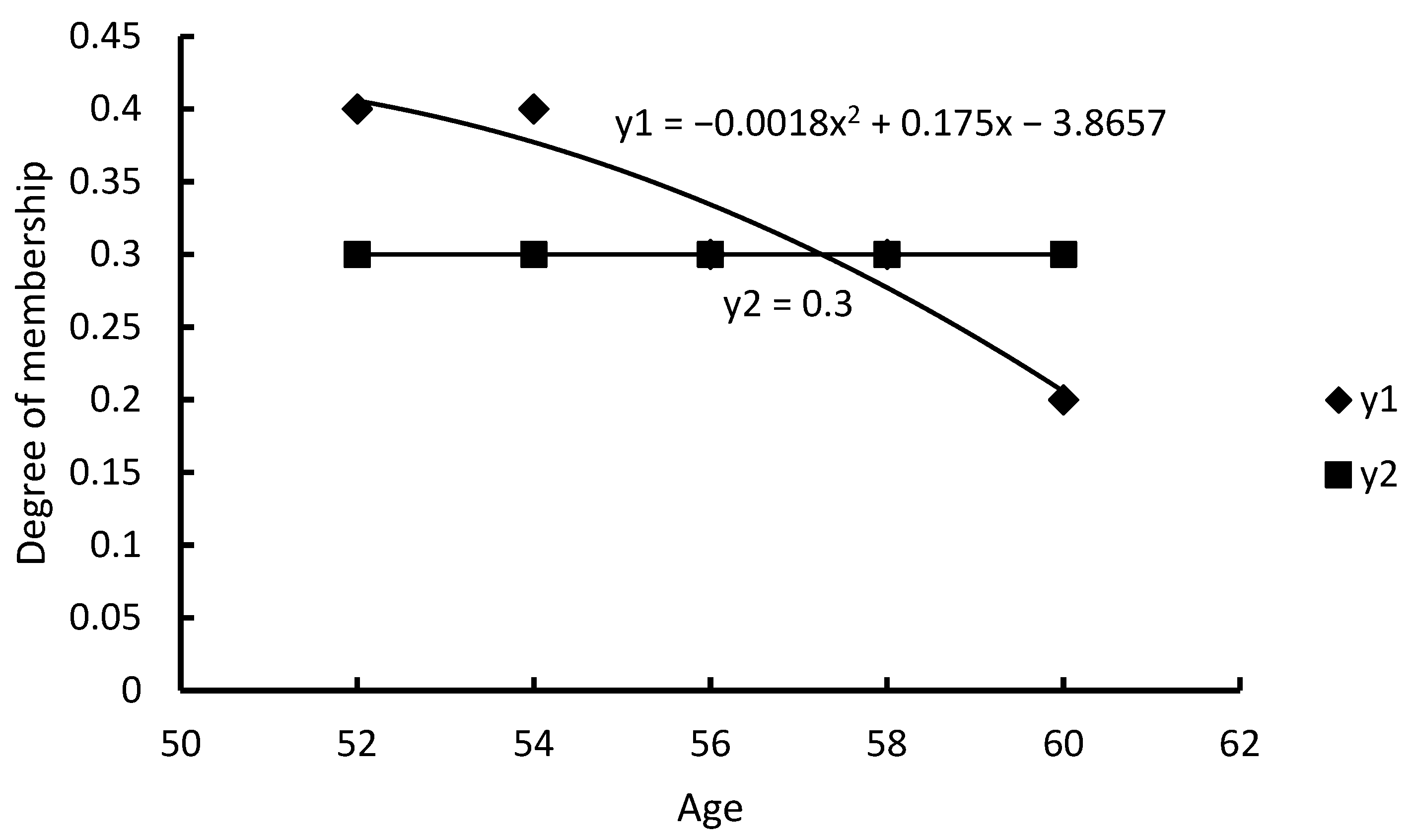
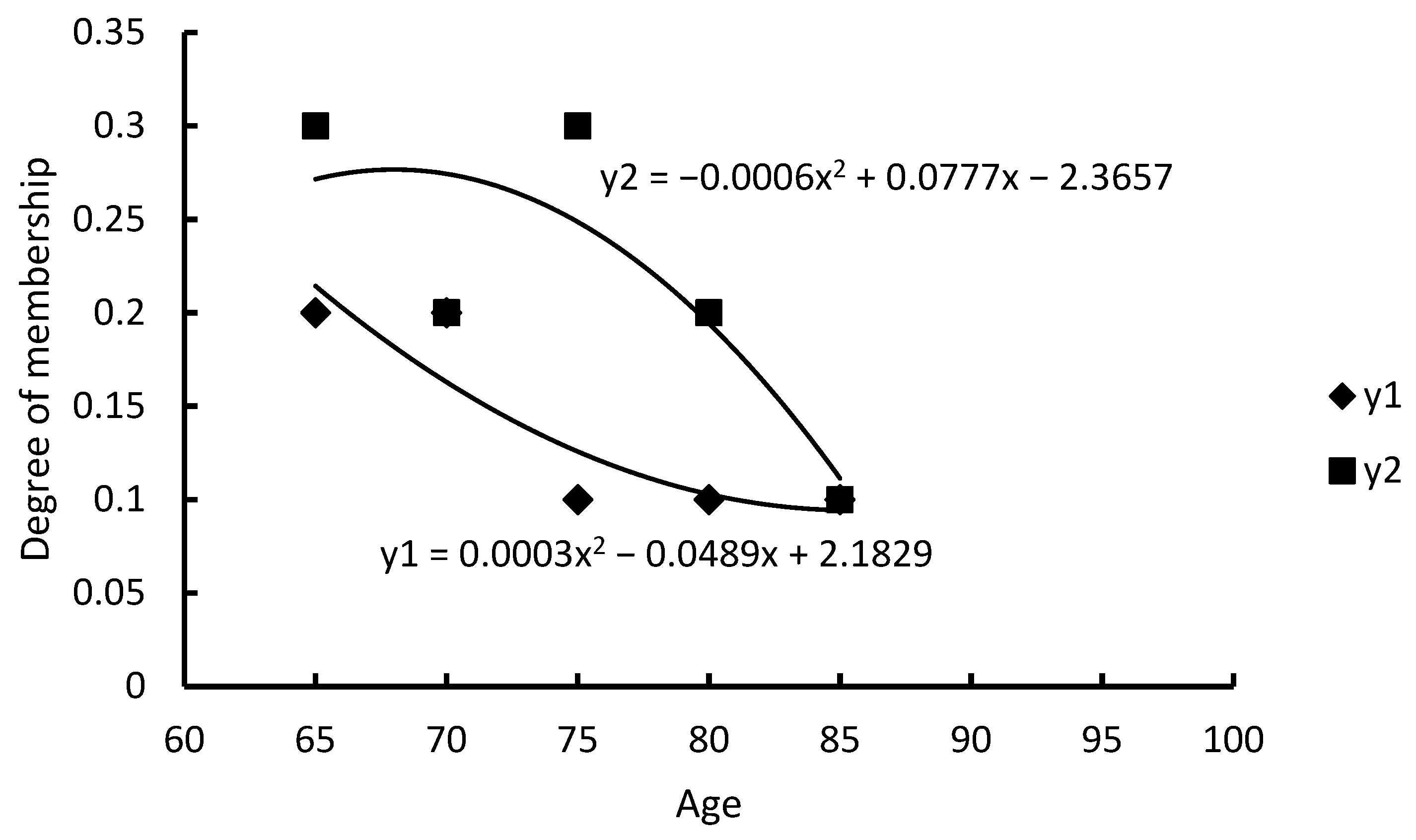
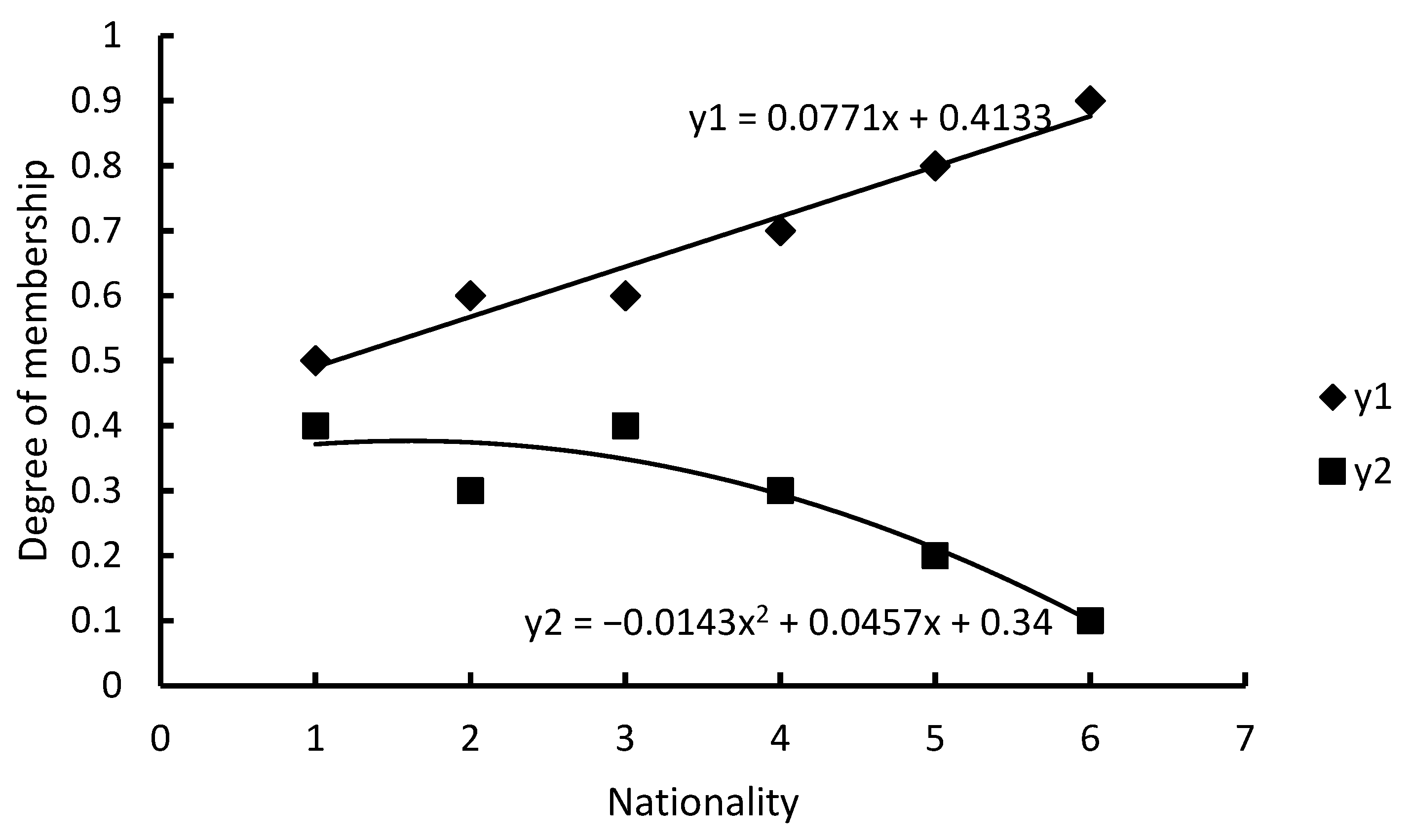
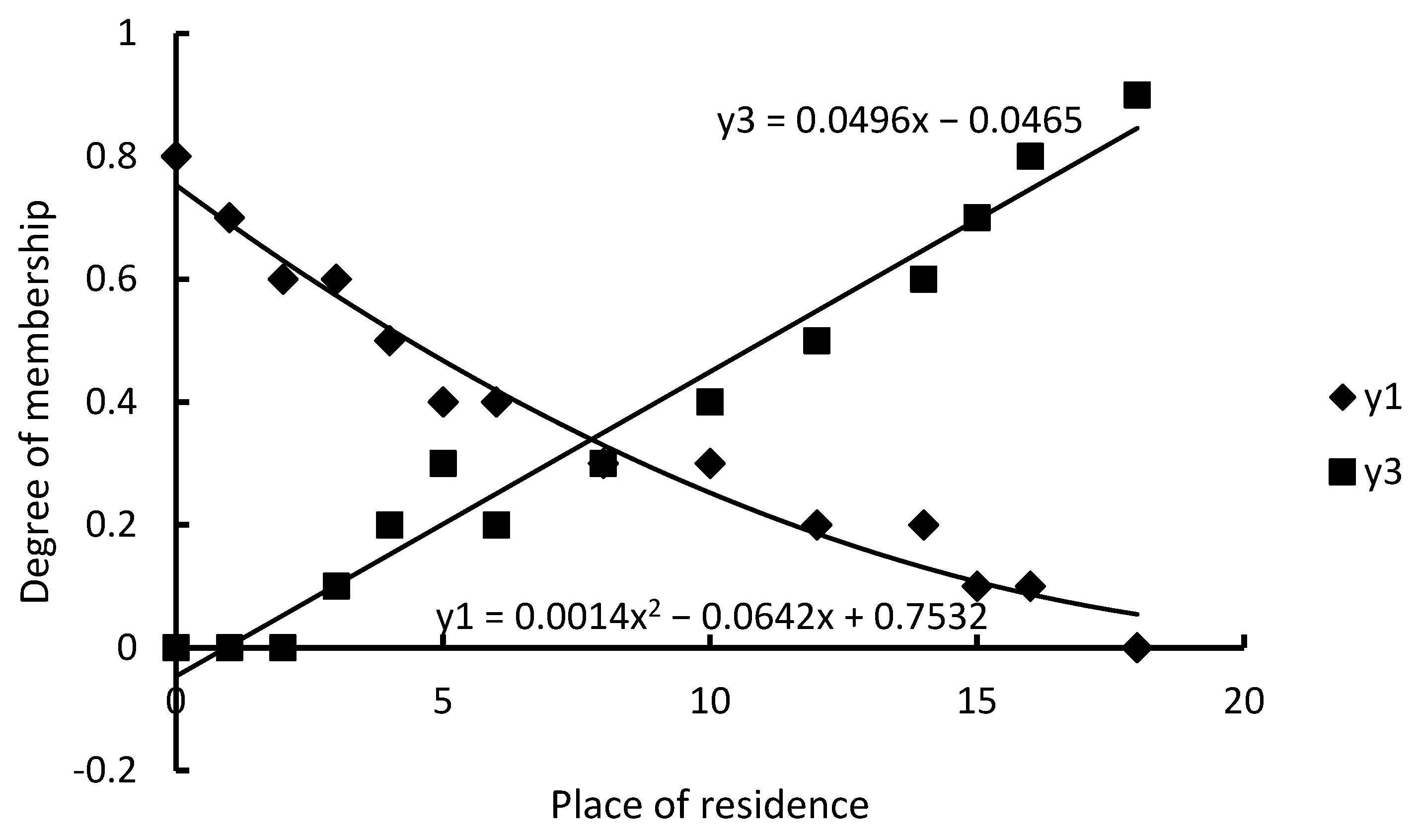
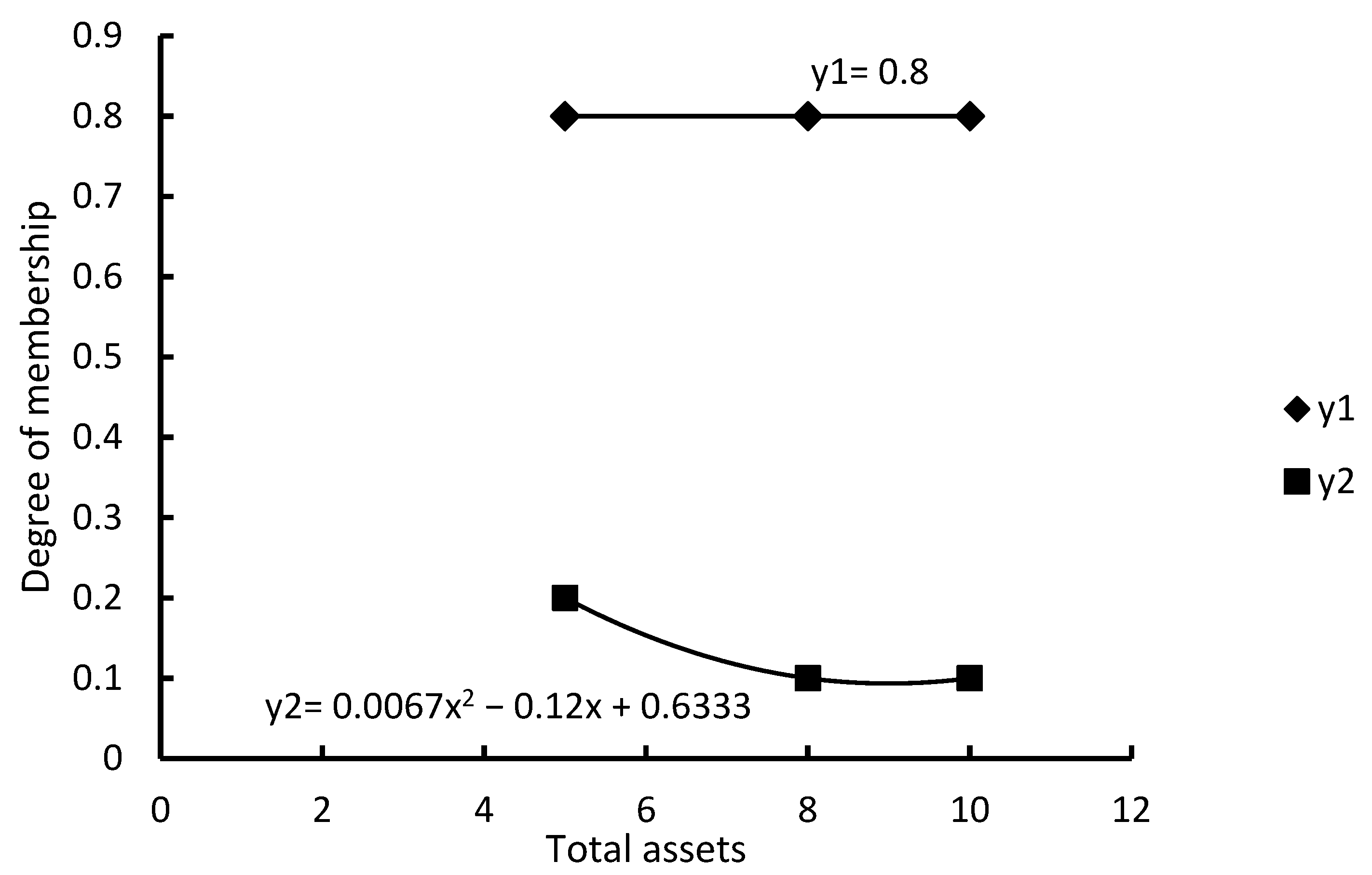
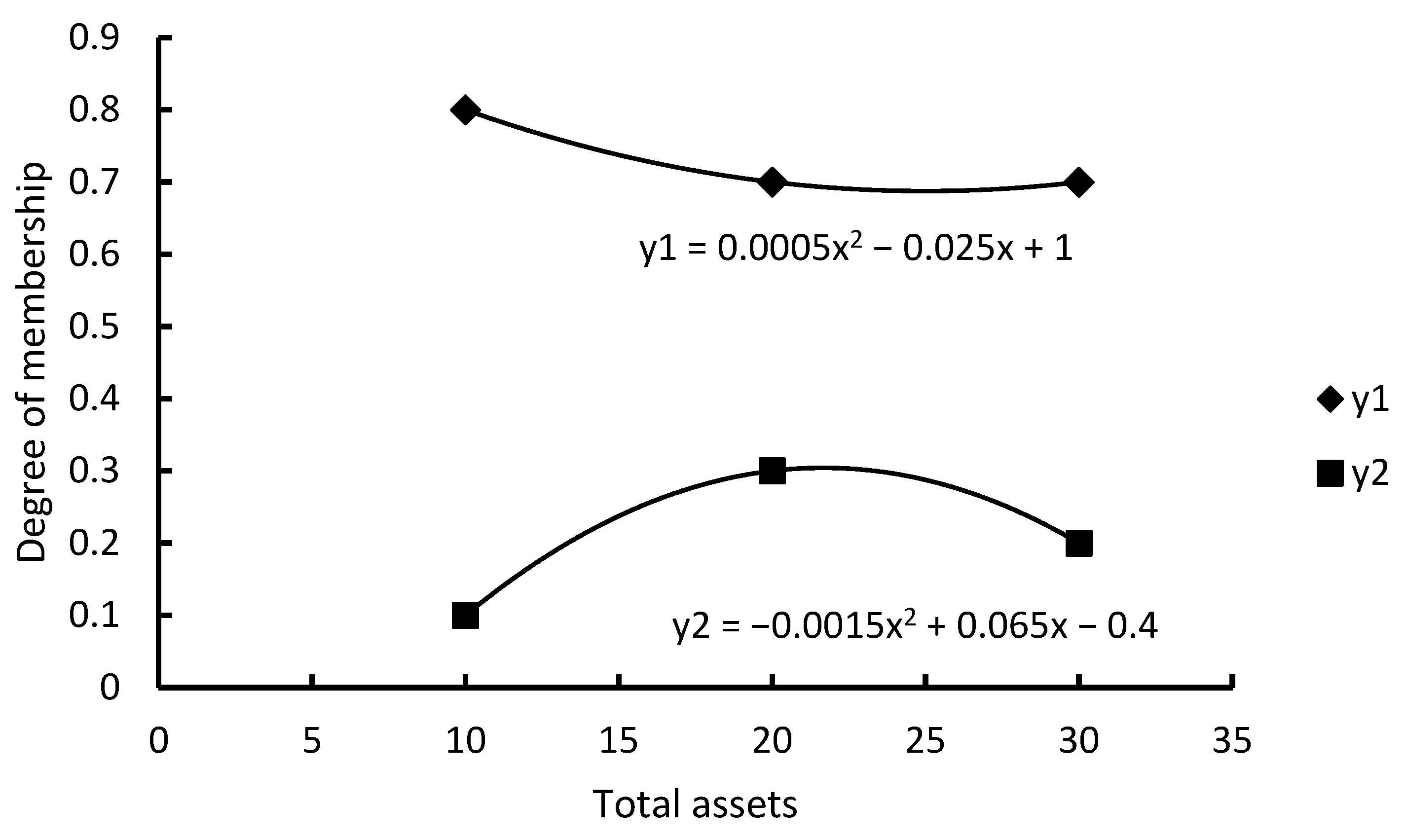
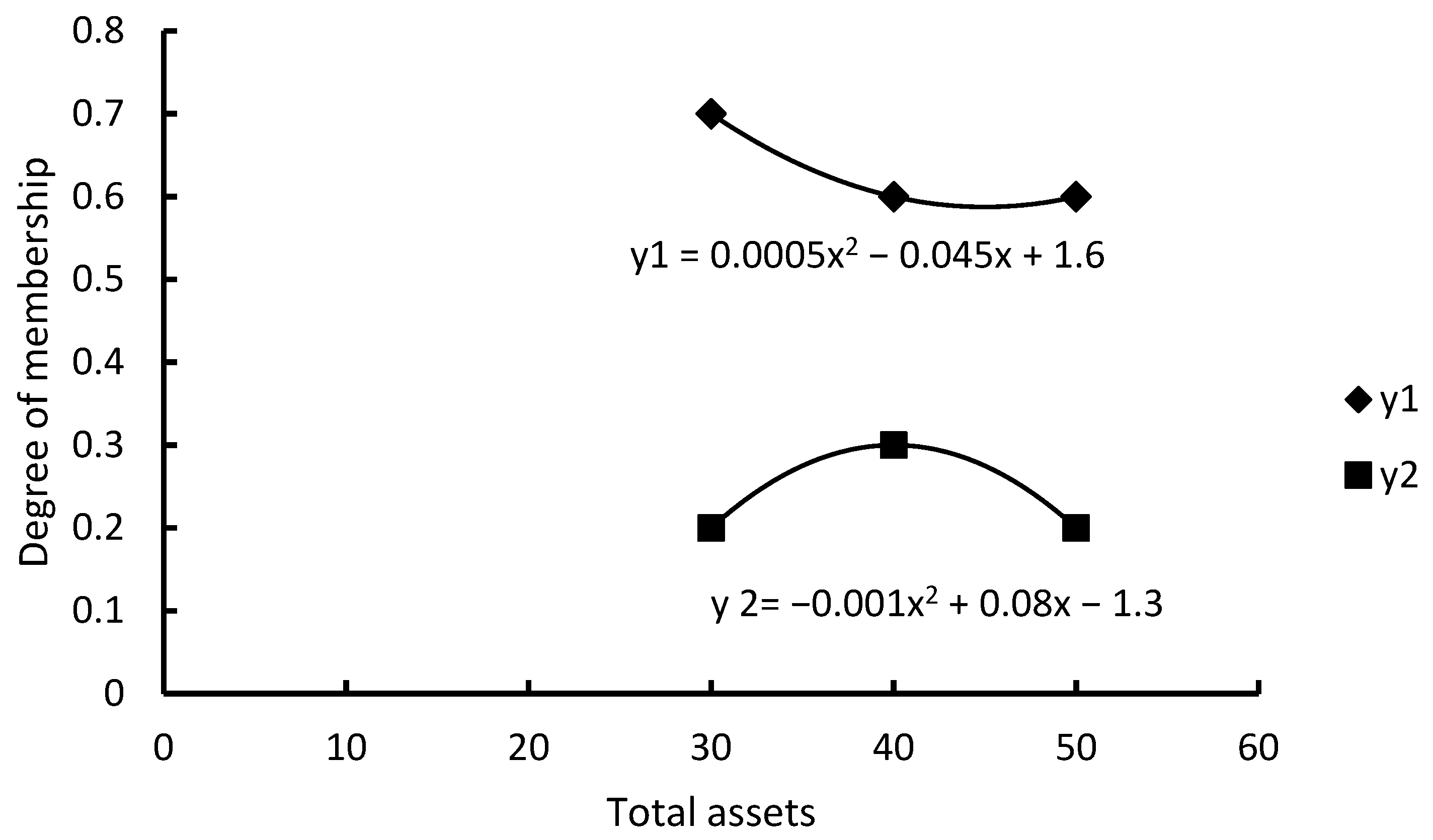
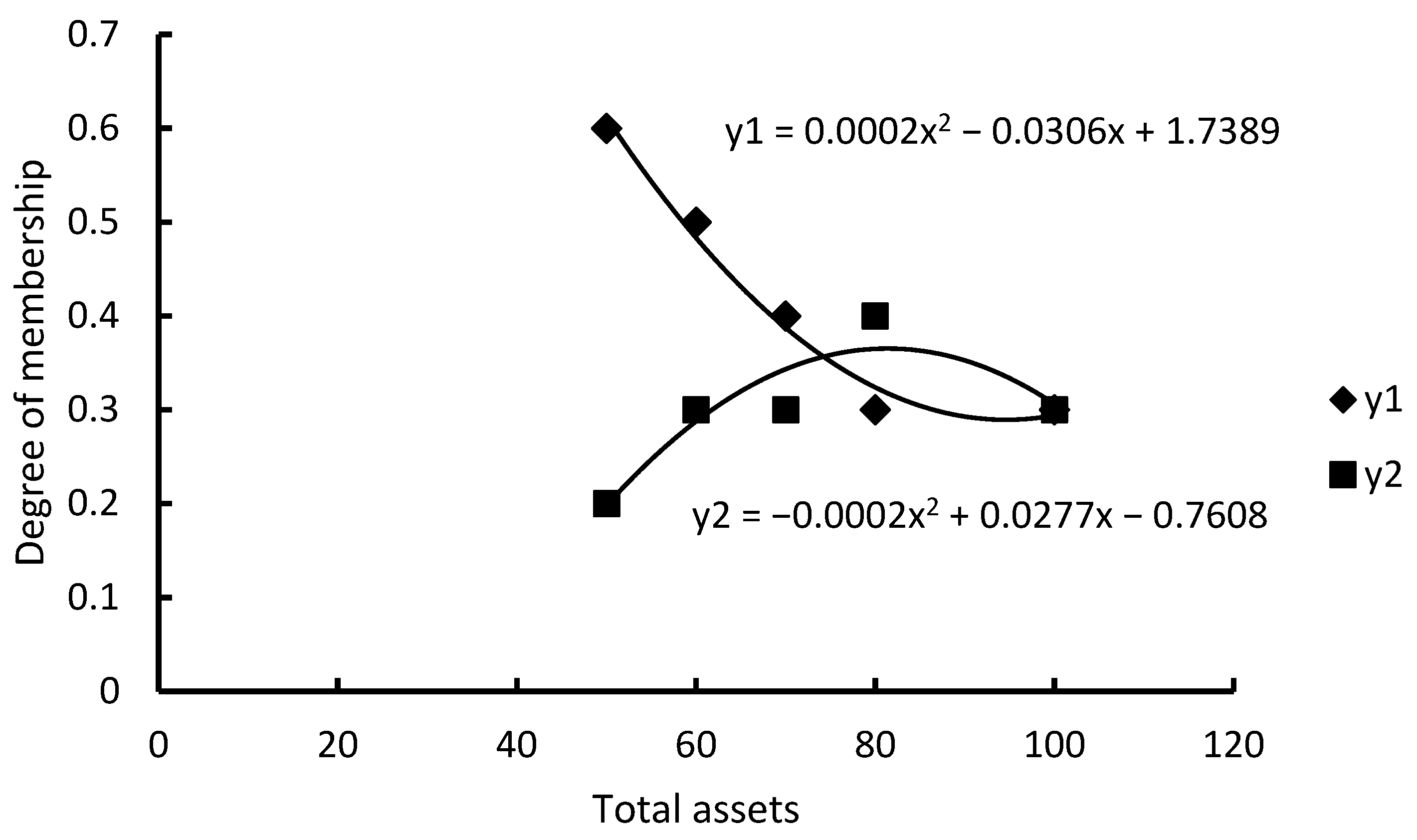
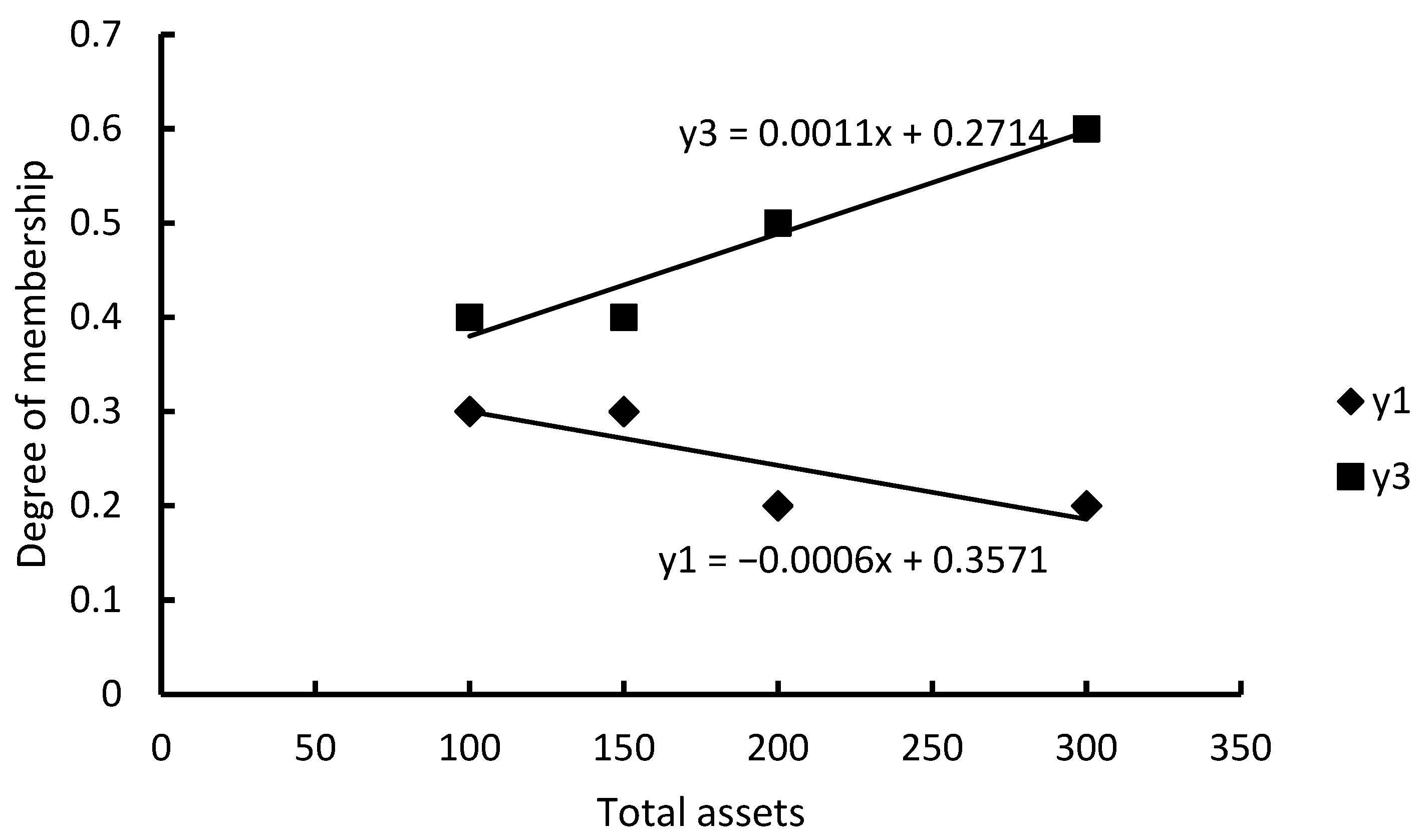
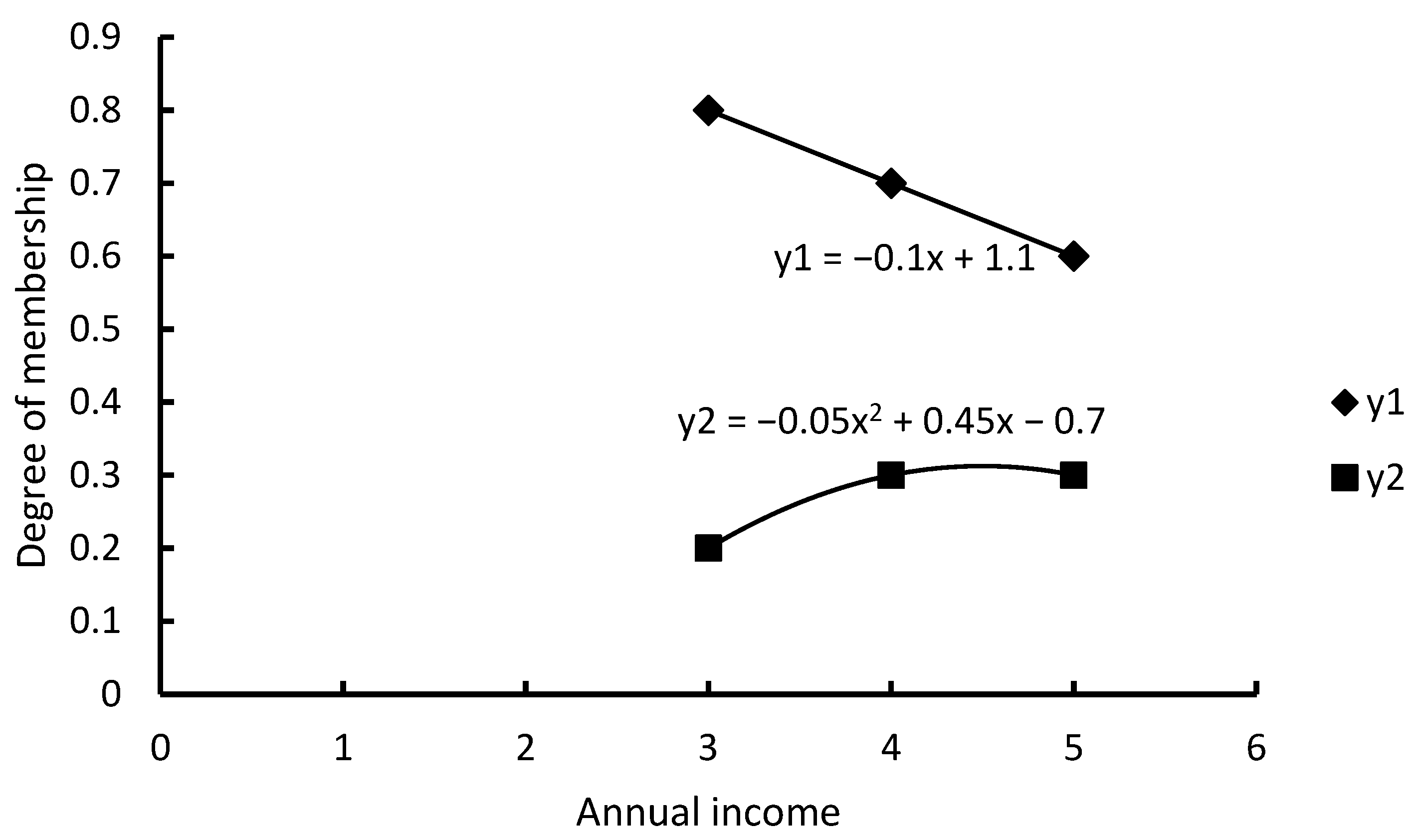
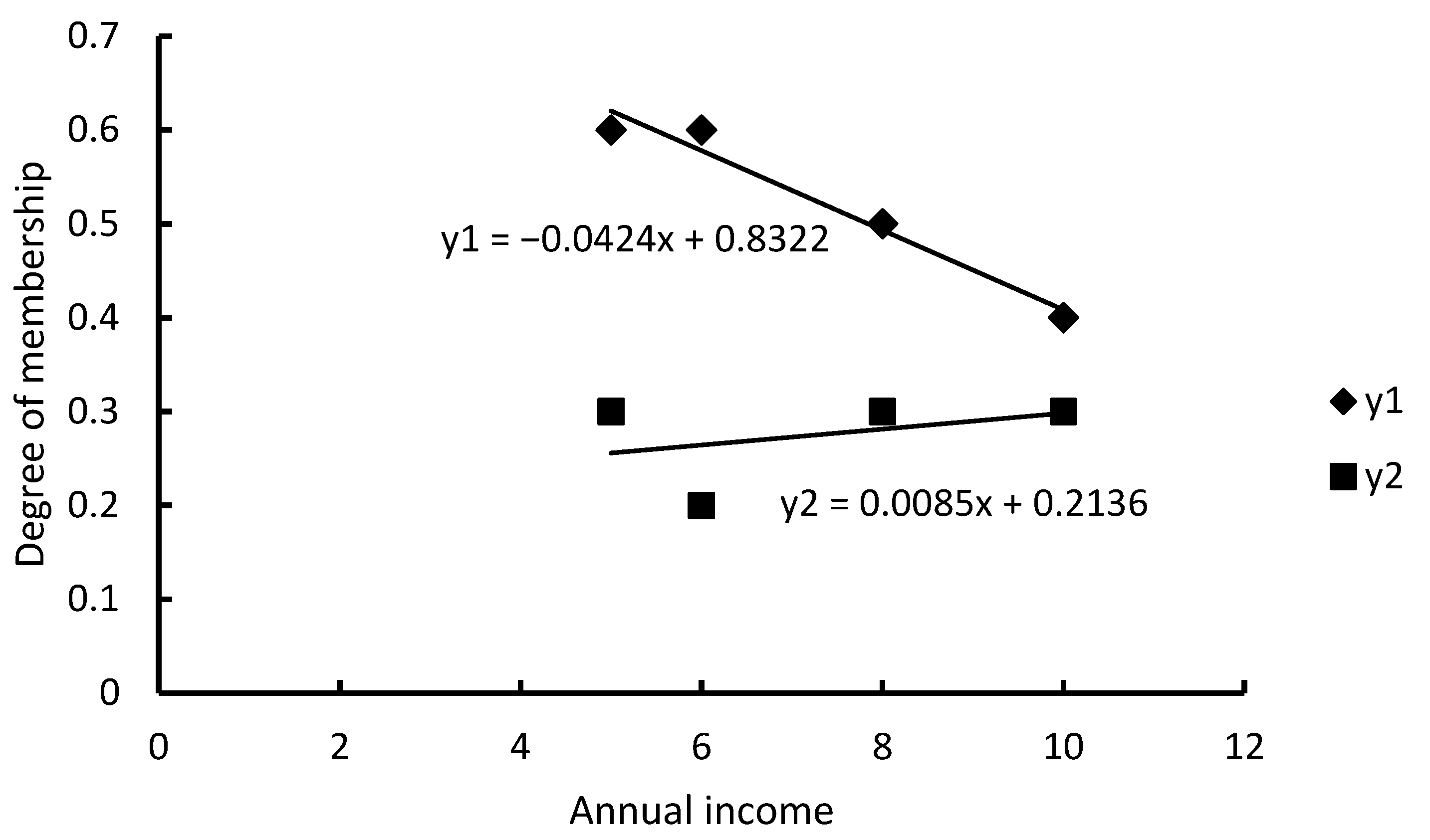
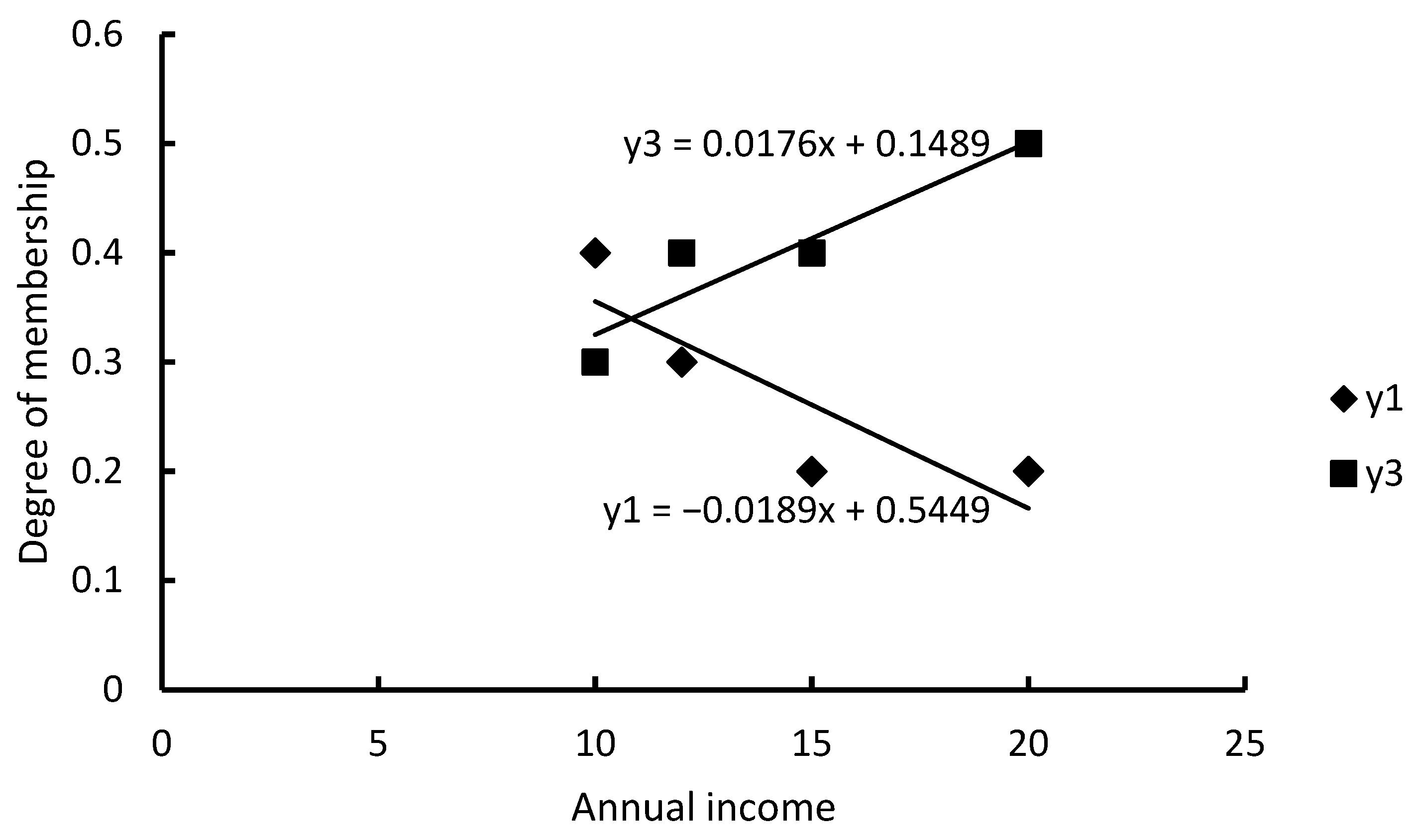
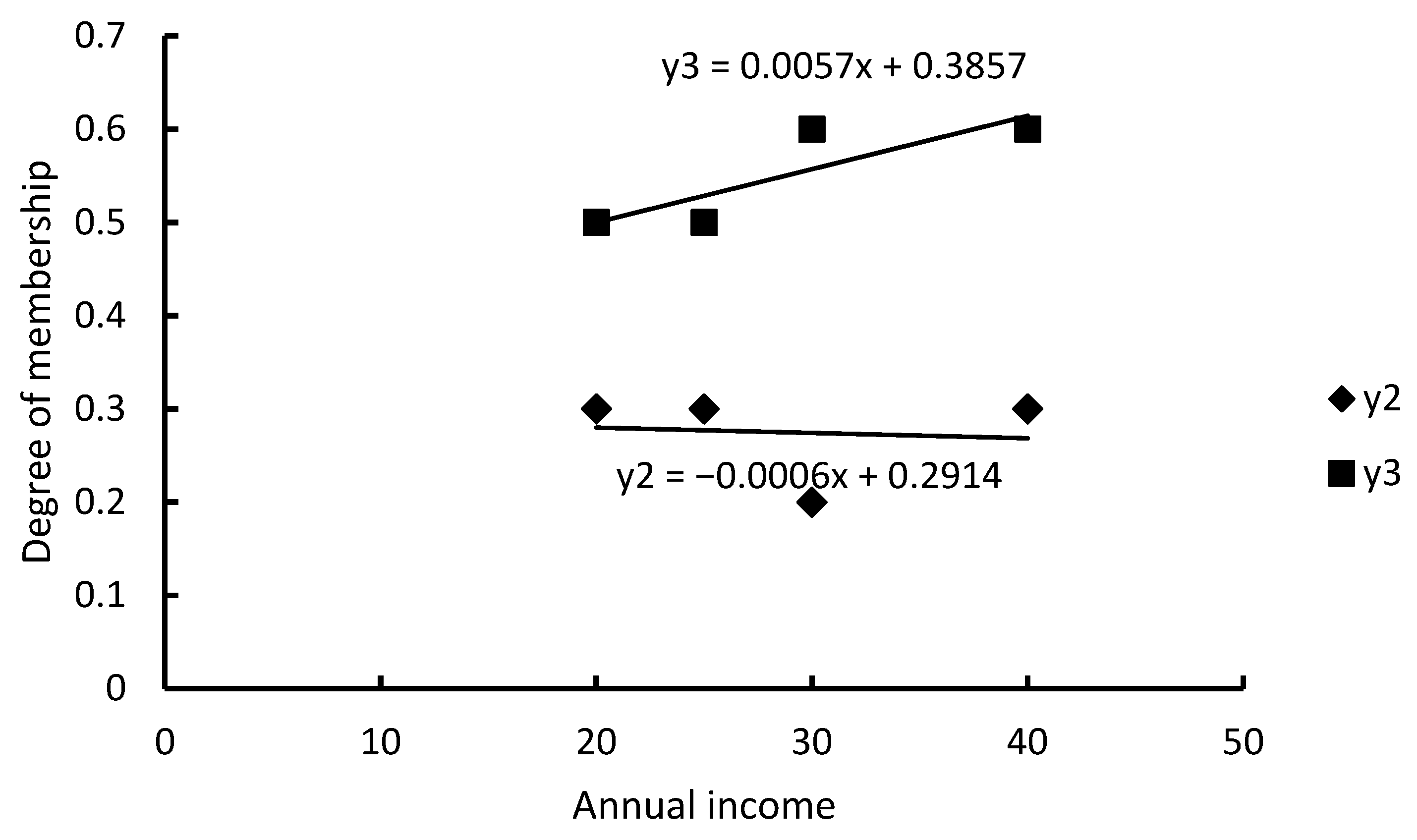
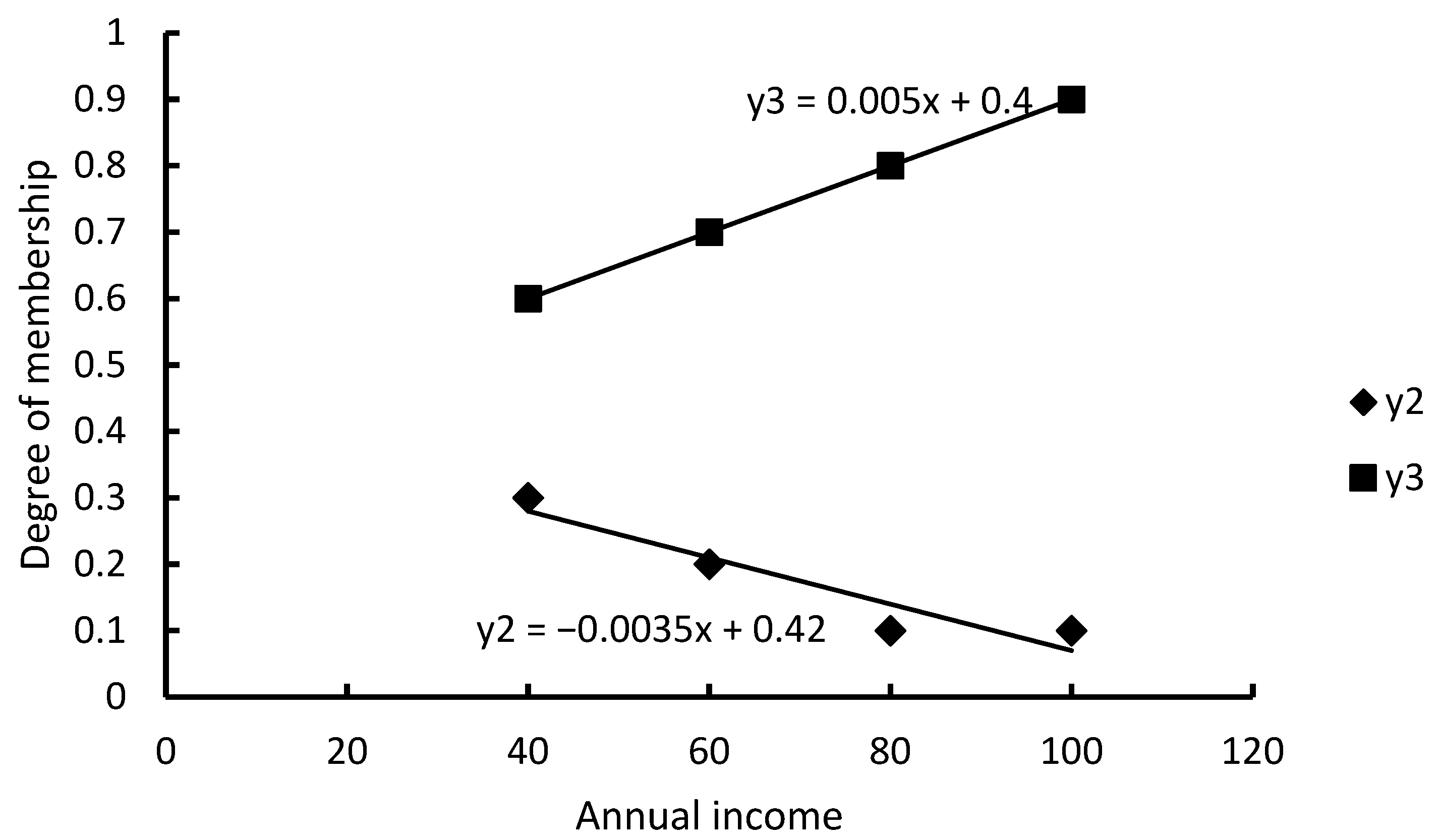
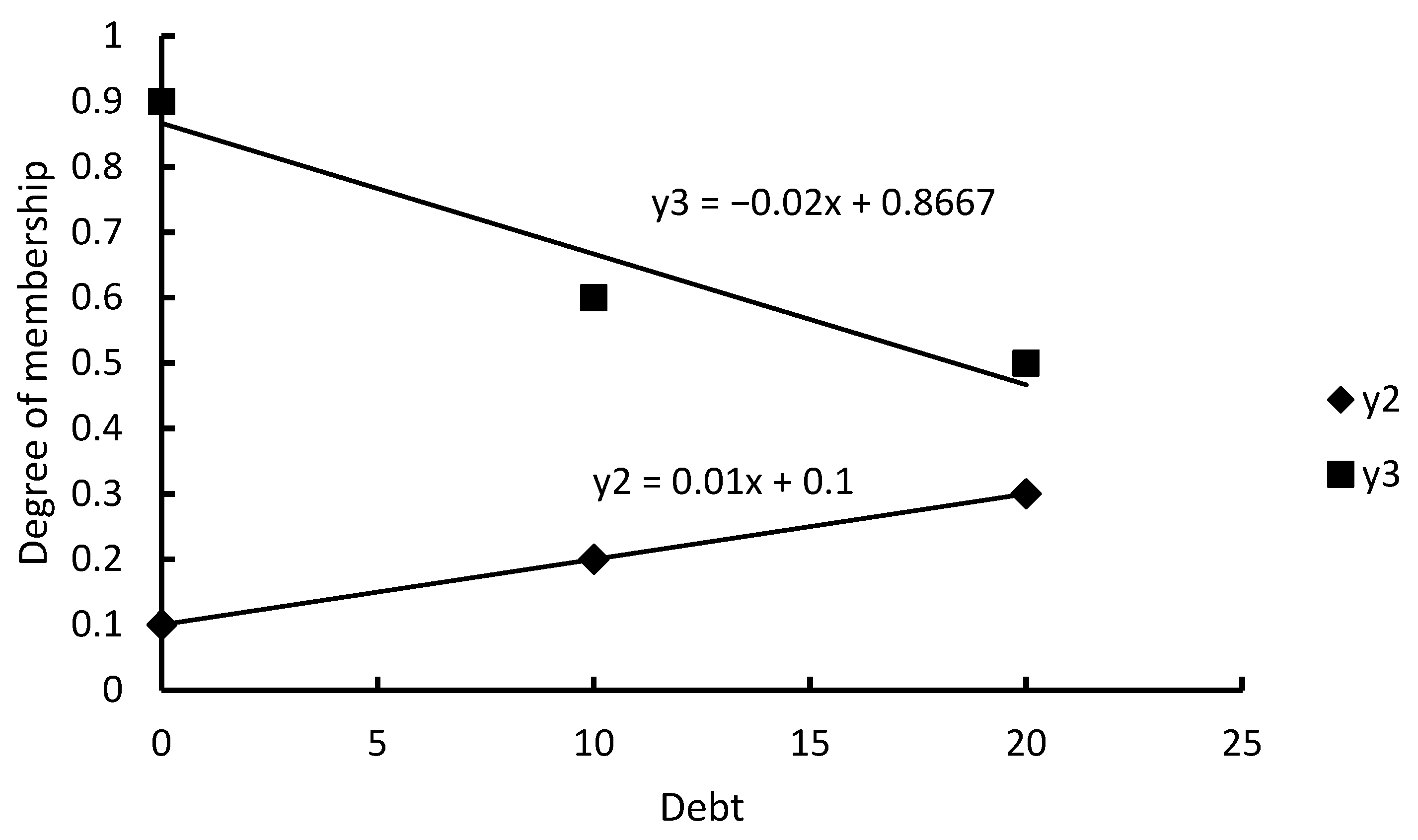
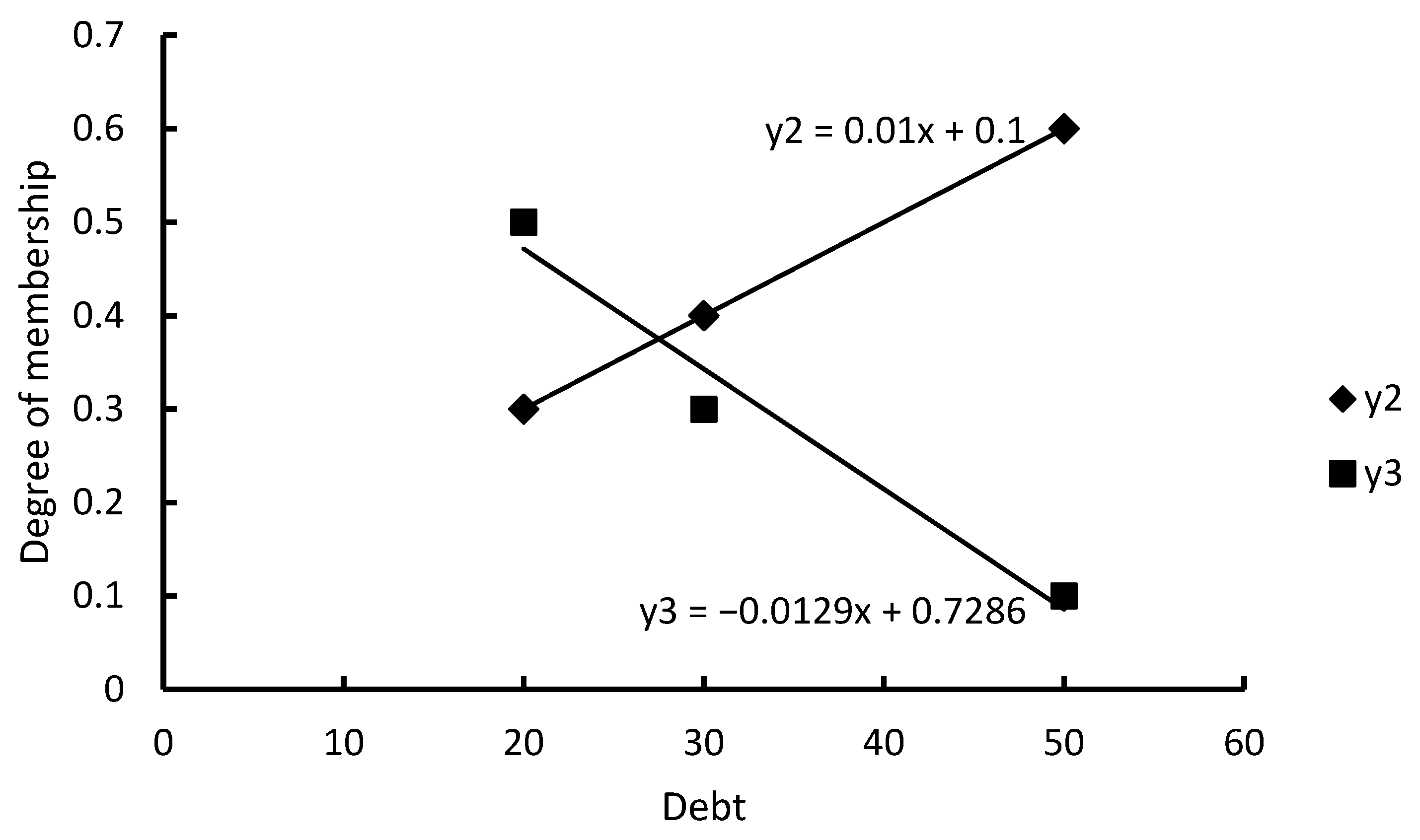
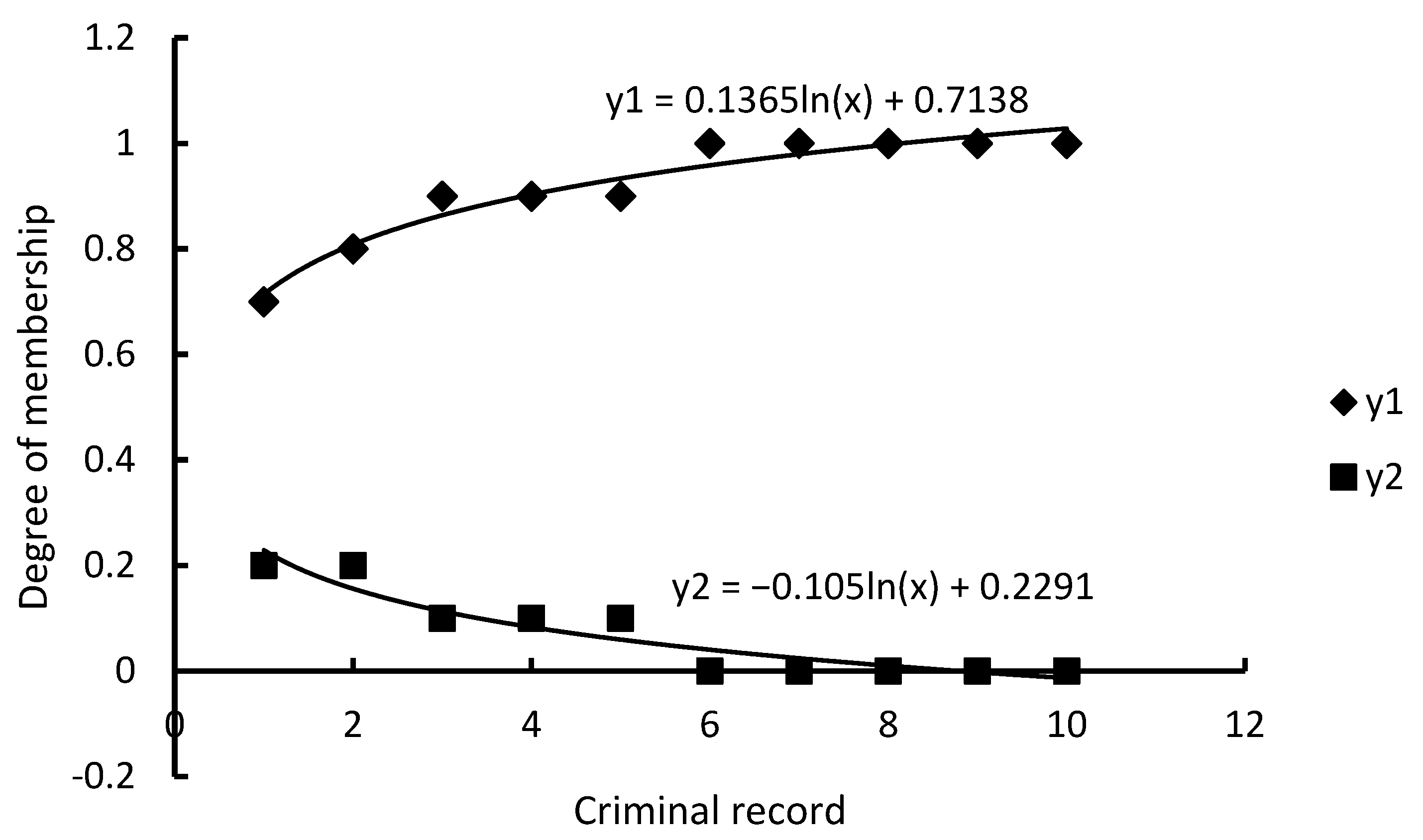
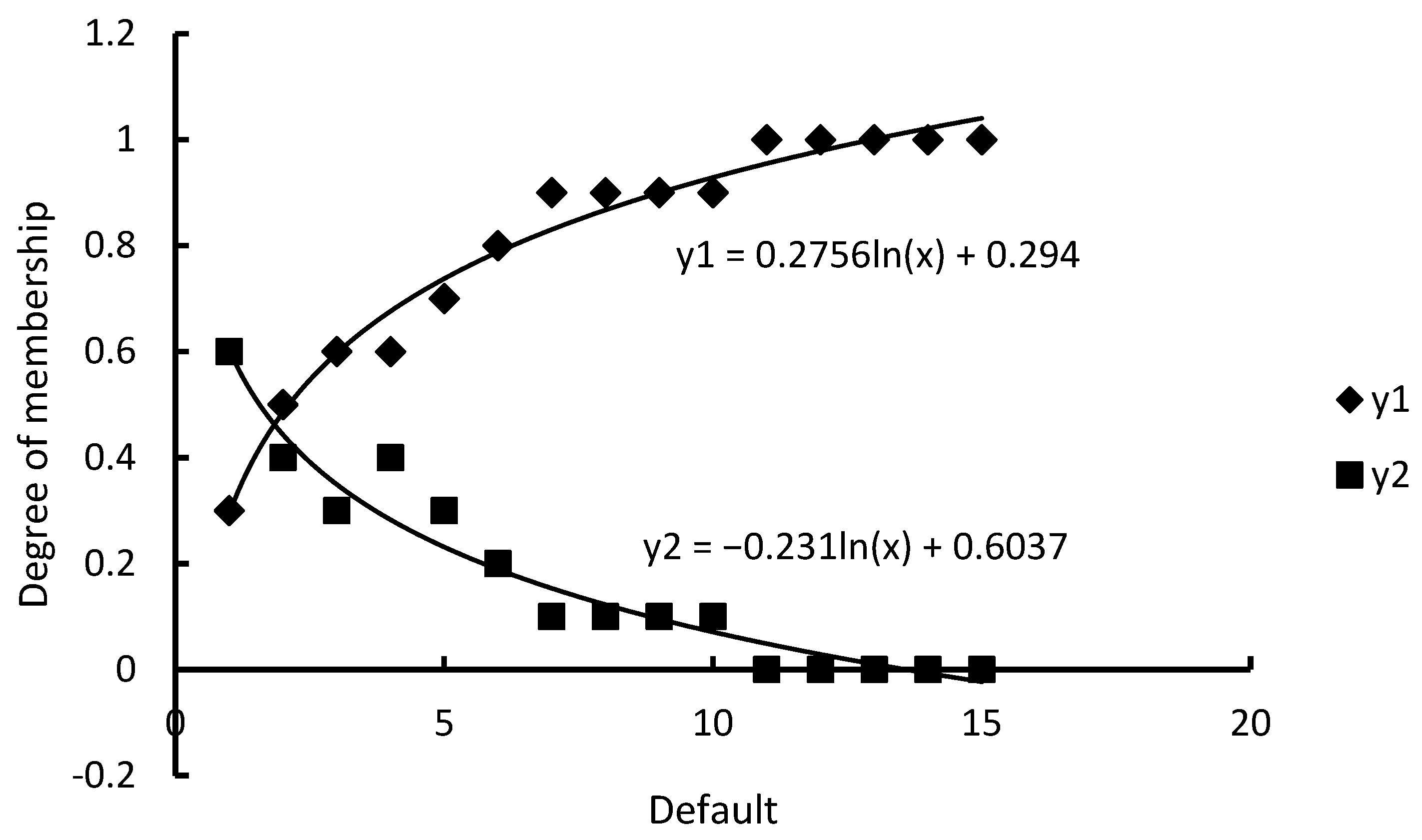
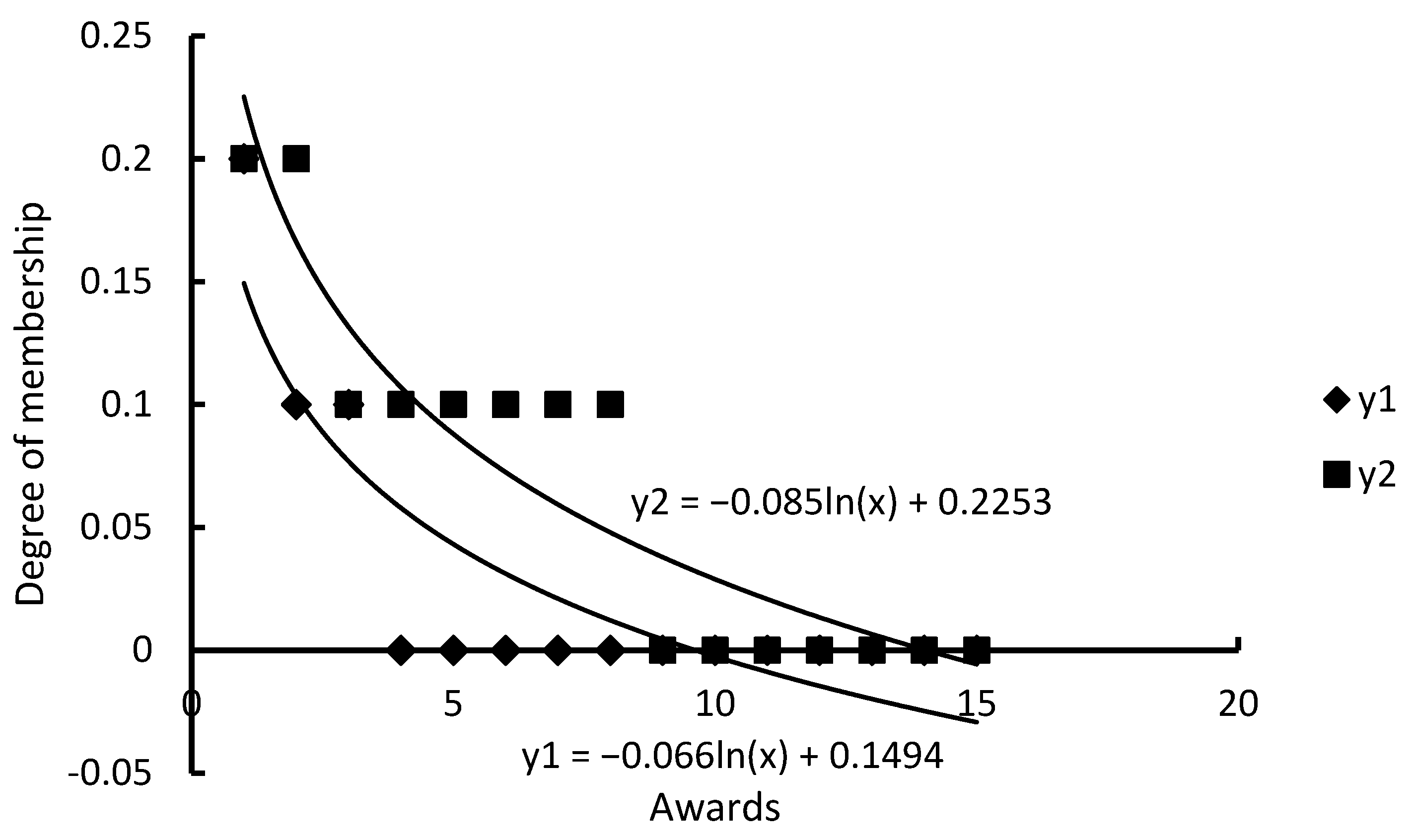
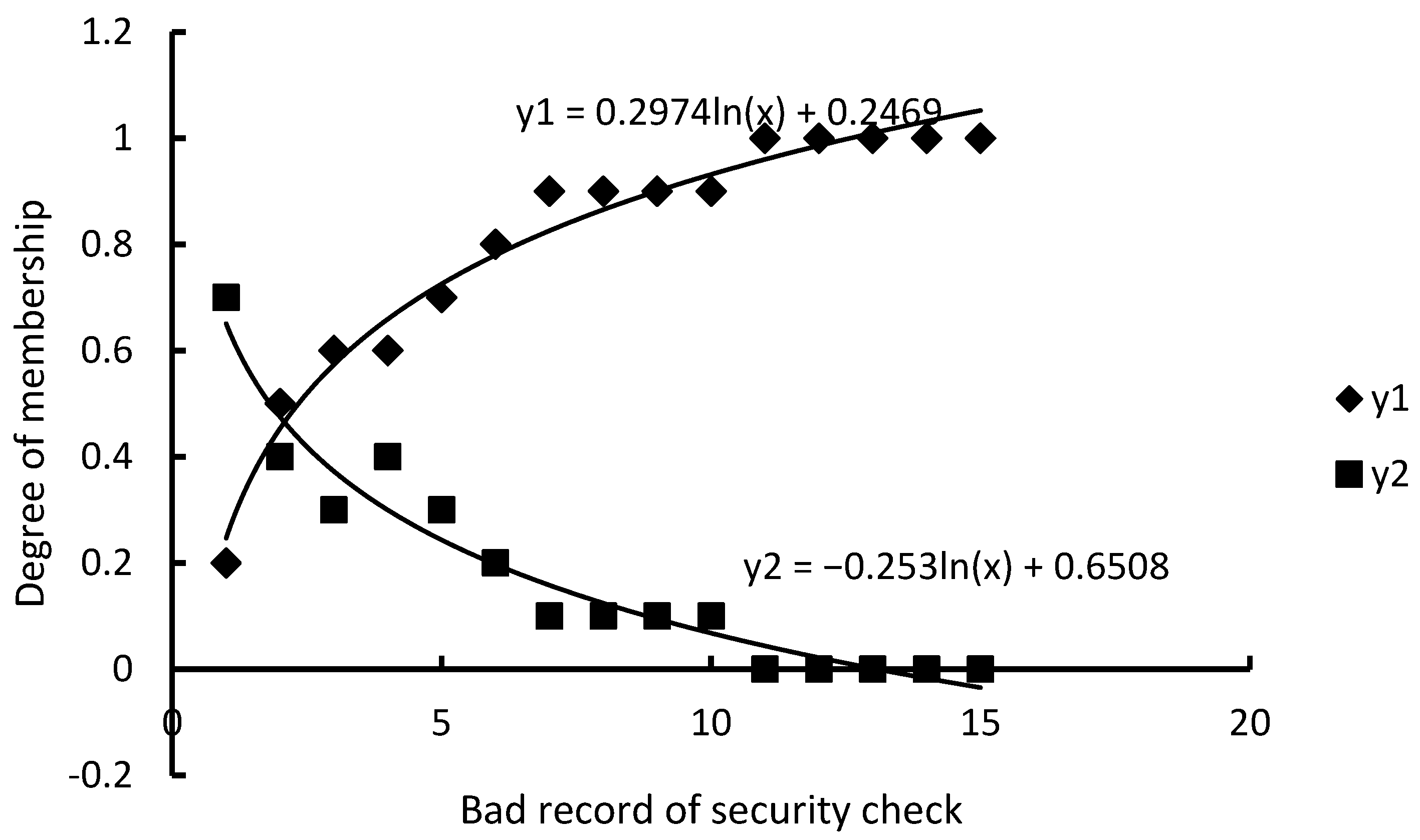
3.2.1. Determination of Fuzzy Relation Matrixes
3.2.2. First-Level Fuzzy Comprehensive Evaluation
3.2.3. Second-Level Fuzzy Comprehensive Evaluation
3.3. Results Analysis
4. Conclusions
- (1)
- Based on the analysis of classified security check modes, this paper used the comprehensive method to establish the index system of passenger risk assessment, and utilized the analytic hierarchy process and the improved fuzzy comprehensive evaluation method to build the assessment model for passenger risk classification. In addition, the feasibility of the model was verified by experimental results.
- (2)
- Compared with the existing research, the index system of passenger risk assessment established in this paper is simpler but better. It eliminates redundant indexes and retains key indexes, improving the efficiency and reliability of the evaluation. The assessment model for passenger risk classification based on the improved fuzzy comprehensive evaluation method establishes the standard of single factor evaluation, which avoids the tedious process of evaluating a large number of passengers and improves the evaluation efficiency to a certain extent.
- (3)
- However, there are some problems in the established index system of passenger risk assessment because of the lack of relevant data. Moreover, the selected examples only preliminarily verify the feasibility of the model in theory. In the future research, the index system will be tested and structurally optimized based on specific data, and the evaluation model will be further improved with the real data of passengers to make it better align with the actual demand.
Author Contributions
Funding
Data Availability Statement
Acknowledgments
Conflicts of Interest
Appendix A

| First-Level Indexes | Importance of Passenger Risk Assessment Indexes | ||||||||
|---|---|---|---|---|---|---|---|---|---|
| 1 | 2 | 3 | 4 | 5 | 6 | 7 | 8 | 9 | |
| Basic background and Personal status | |||||||||
| Basic background and Economic situation | |||||||||
| Basic background and Personal conduct | |||||||||
| Basic background and Civil aviation travel record | |||||||||
| Personal status and Economic situation | |||||||||
| Personal status and Personal conduct | |||||||||
| Personal status and Civil aviation travel record | |||||||||
| Economic situation and Personal conduct | |||||||||
| Economic situation and Civil aviation travel record | |||||||||
| Personal conduct and Civil aviation travel record | |||||||||
| Second-Level Indexes | Importance of Passenger Risk Assessment Indexes | ||||||||
|---|---|---|---|---|---|---|---|---|---|
| 1 | 2 | 3 | 4 | 5 | 6 | 7 | 8 | 9 | |
| Gender and Age | |||||||||
| Gender and Nationality | |||||||||
| Gender and Education | |||||||||
| Age and Nationality | |||||||||
| Age and Education | |||||||||
| Nationality and Education | |||||||||
| Second-Level Indexes | Importance of Passenger Risk Assessment Indexes | ||||||||
|---|---|---|---|---|---|---|---|---|---|
| 1 | 2 | 3 | 4 | 5 | 6 | 7 | 8 | 9 | |
| Occupation and Place of residence | |||||||||
| Occupation and Religious belief | |||||||||
| Occupation and Marital status | |||||||||
| Occupation and State of health | |||||||||
| Place of residence and Religious belief | |||||||||
| Place of residence and Marital status | |||||||||
| Place of residence and State of health | |||||||||
| Religious belief and Marital status | |||||||||
| Religious belief and State of health | |||||||||
| Marital status and State of health | |||||||||
| Second-Level Indexes | Importance of Passenger Risk Assessment Indexes | ||||||||
|---|---|---|---|---|---|---|---|---|---|
| 1 | 2 | 3 | 4 | 5 | 6 | 7 | 8 | 9 | |
| Total assets and Annual income | |||||||||
| Total assets and Debt | |||||||||
| Total assets and Insurance amount | |||||||||
| Annual income and Debt | |||||||||
| Annual income and Insurance amount | |||||||||
| Debt and Insurance amount | |||||||||
| Second-Level Indexes | Importance of Passenger Risk Assessment Indexes | ||||||||
|---|---|---|---|---|---|---|---|---|---|
| 1 | 2 | 3 | 4 | 5 | 6 | 7 | 8 | 9 | |
| Criminal record and Default | |||||||||
| Criminal record and Awards | |||||||||
| Criminal record and Bad record of security check | |||||||||
| Default and Awards | |||||||||
| Default and Bad record of security check | |||||||||
| Awards and Bad record of security check | |||||||||
| Second-Level Indexes | Importance of Passenger Risk Assessment Indexes | ||||||||
|---|---|---|---|---|---|---|---|---|---|
| 1 | 2 | 3 | 4 | 5 | 6 | 7 | 8 | 9 | |
| Annual number of flights and Aviation insurance amount | |||||||||
| Annual number of flights and Flight information | |||||||||
| Annual number of flights and Ticket type | |||||||||
| Annual number of flights and Time of buying tickets | |||||||||
| Annual number of flights and Method of buying tickets | |||||||||
| Aviation insurance amount and Flight information | |||||||||
| Aviation insurance amount and Ticket type | |||||||||
| Aviation insurance amount and Time of buying tickets | |||||||||
| Aviation insurance amount and Method of buying tickets | |||||||||
| Flight information and Ticket type | |||||||||
| Flight information and Time of buying tickets | |||||||||
| Flight information and Method of buying tickets | |||||||||
| Ticket type and Time of buying tickets | |||||||||
| Ticket type and Method of buying tickets | |||||||||
| Time of buying tickets and Method of buying tickets | |||||||||
Appendix B
| Indexes | Attribute Values of Indexes | Evaluation Levels | ||
|---|---|---|---|---|
| High-risk | Medium-risk | Low-risk | ||
| Gender | Male | |||
| Female | ||||
| Age | 2 years old | |||
| 4 years old | ||||
| 6 years old | ||||
| 8 years old | ||||
| 10 years old | ||||
| 12 years old | ||||
| 14 years old | ||||
| 15 years old | ||||
| 16 years old | ||||
| 17 years old | ||||
| 18 years old | ||||
| 20 years old | ||||
| 22 years old | ||||
| 24 years old | ||||
| 26 years old | ||||
| 28 years old | ||||
| 30 years old | ||||
| 35 years old | ||||
| 40 years old | ||||
| 45 years old | ||||
| 50 years old | ||||
| 52 years old | ||||
| 54 years old | ||||
| 56 years old | ||||
| 58 years old | ||||
| 60 years old | ||||
| 65 years old | ||||
| 70 years old | ||||
| 75 years old | ||||
| 80 years old | ||||
| 85 years old | ||||
| Nationality | Countries where the annual number of wars or terrorist attacks is 0 | |||
| Countries where the annual number of wars or terrorist attacks is 1 | ||||
| Countries where the annual number of wars or terrorist attacks is 2 | ||||
| Countries where the annual number of wars or terrorist attacks is 3 | ||||
| Countries where the annual number of wars or terrorist attacks is 4 | ||||
| Countries where the annual number of wars or terrorist attacks is 5 | ||||
| Countries where the annual number of wars or terrorist attacks is 6 | ||||
| Education | Master degree and above | |||
| Bachelor degree | ||||
| College degree | ||||
| High school or technical secondary school education | ||||
| Junior high school education and below | ||||
| Indexes | Attribute Values of Indexes | Evaluation Levels | ||
|---|---|---|---|---|
| High-risk | Medium-risk | Low-risk | ||
| Occupation | Administrative organ or institution | |||
| State-owned enterprise | ||||
| Private enterprise and others | ||||
| Unemployment | ||||
| Place of residence | Areas without terrorist attacks in 0 years | |||
| Areas without terrorist attacks in 1 year | ||||
| Areas without terrorist attacks in 2 years | ||||
| Areas without terrorist attacks in 3 years | ||||
| Areas without terrorist attacks in 4 years | ||||
| Areas without terrorist attacks in 5 years | ||||
| Areas without terrorist attacks in 6 years | ||||
| Areas without terrorist attacks in 8 years | ||||
| Areas without terrorist attacks in 10 years | ||||
| Areas without terrorist attacks in 12 years | ||||
| Areas without terrorist attacks in 14 years | ||||
| Areas without terrorist attacks in 15 years | ||||
| Areas without terrorist attacks in 16 years | ||||
| Areas without terrorist attacks in 18 years | ||||
| Religious belief | Islam | |||
| Christianity | ||||
| Buddhism | ||||
| Others | ||||
| None | ||||
| Marital status | Married with children | |||
| Married without children | ||||
| Unmarried | ||||
| Divorced with children | ||||
| Divorced without children | ||||
| State of health | Bad | |||
| General | ||||
| Good | ||||
| Indexes | Attribute Values of Indexes | Evaluation Levels | ||
|---|---|---|---|---|
| High-risk | Medium-risk | Low-risk | ||
| Total assets/ten thousand yuan | 5 | |||
| 8 | ||||
| 10 | ||||
| 20 | ||||
| 30 | ||||
| 40 | ||||
| 50 | ||||
| 60 | ||||
| 70 | ||||
| 80 | ||||
| 100 | ||||
| 150 | ||||
| 200 | ||||
| 300 | ||||
| Annual income/ten thousand yuan | 3 | |||
| 4 | ||||
| 5 | ||||
| 6 | ||||
| 8 | ||||
| 10 | ||||
| 12 | ||||
| 15 | ||||
| 20 | ||||
| 25 | ||||
| 30 | ||||
| 40 | ||||
| 60 | ||||
| 80 | ||||
| 100 | ||||
| Debt/ten thousand yuan | 0 | |||
| 10 | ||||
| 20 | ||||
| 30 | ||||
| 50 | ||||
| 70 | ||||
| 80 | ||||
| 100 | ||||
| 150 | ||||
| 200 | ||||
| 300 | ||||
| 500 | ||||
| Insurance amount/ten thousand yuan | 0 | |||
| 0.3 | ||||
| 0.5 | ||||
| 0.8 | ||||
| 1 | ||||
| 3 | ||||
| 5 | ||||
| 8 | ||||
| 10 | ||||
| 20 | ||||
| 30 | ||||
| 40 | ||||
| Indexes | Attribute Values of Indexes | Evaluation Levels | ||
|---|---|---|---|---|
| High-risk | Medium-risk | Low-risk | ||
| Criminal record | None | |||
| 1 time | ||||
| 2 times | ||||
| 3 times | ||||
| 4 times | ||||
| 5 times | ||||
| 6 times | ||||
| 7 times | ||||
| 8 times | ||||
| 9 times | ||||
| 10 times | ||||
| Default | None | |||
| 1 time | ||||
| 2 times | ||||
| 3 times | ||||
| 4 times | ||||
| 5 times | ||||
| 6 times | ||||
| 7 times | ||||
| 8 times | ||||
| 9 times | ||||
| 10 times | ||||
| 11 times | ||||
| 12 times | ||||
| 13 times | ||||
| 14 times | ||||
| 15 times | ||||
| Awards | None | |||
| 1 time | ||||
| 2 times | ||||
| 3 times | ||||
| 4 times | ||||
| 5 times | ||||
| 6 times | ||||
| 7 times | ||||
| 8 times | ||||
| 9 times | ||||
| 10 times | ||||
| 11 times | ||||
| 12 times | ||||
| 13 times | ||||
| 14 times | ||||
| 15 times | ||||
| Bad record of security check | None | |||
| 1 time | ||||
| 2 times | ||||
| 3 times | ||||
| 4 times | ||||
| 5 times | ||||
| 6 times | ||||
| 7 times | ||||
| 8 times | ||||
| 9 times | ||||
| 10 times | ||||
| 11 times | ||||
| 12 times | ||||
| 13 times | ||||
| 14 times | ||||
| 15 times | ||||
| Indexes | Attribute Values of Indexes | Evaluation Levels | ||
|---|---|---|---|---|
| High-risk | Medium-risk | Low-risk | ||
| Annual number of flights | 2 times | |||
| 5 times | ||||
| 10 times | ||||
| 12 times | ||||
| 15 times | ||||
| 18 times | ||||
| 20 times | ||||
| 25 times | ||||
| 30 times | ||||
| 35 times | ||||
| 40 times | ||||
| 45 times | ||||
| 50 times | ||||
| 55 times | ||||
| 60 times | ||||
| 65 times | ||||
| Aviation insurance amount/ten thousand yuan | 0 | |||
| 20 | ||||
| 40 | ||||
| 60 | ||||
| 80 | ||||
| 100 | ||||
| 120 | ||||
| 140 | ||||
| 160 | ||||
| 180 | ||||
| 200 | ||||
| 220 | ||||
| 240 | ||||
| Flight information | Areas without terrorist attacks in 0 years | |||
| Areas without terrorist attacks in 1 year | ||||
| Areas without terrorist attacks in 2 years | ||||
| Areas without terrorist attacks in 3 years | ||||
| Areas without terrorist attacks in 4 years | ||||
| Areas without terrorist attacks in 5 years | ||||
| Areas without terrorist attacks in 6 years | ||||
| Areas without terrorist attacks in 8 years | ||||
| Areas without terrorist attacks in 10 years | ||||
| Areas without terrorist attacks in 12 years | ||||
| Areas without terrorist attacks in 14 years | ||||
| Areas without terrorist attacks in 15 years | ||||
| Areas without terrorist attacks in 16 years | ||||
| Areas without terrorist attacks in 18 years | ||||
| Ticket type | Round-trip ticket | |||
| One-way ticket | ||||
| Time of buying tickets | 1/12 days before departure | |||
| 0.5 days before departure | ||||
| 1 day before departure | ||||
| 2 days before departure | ||||
| 3 days before departure | ||||
| 5 days before departure | ||||
| 7 days before departure | ||||
| 8 days before departure | ||||
| 10 days before departure | ||||
| 12 days before departure | ||||
| 14 days before departure | ||||
| 20 days before departure | ||||
| 30 days before departure | ||||
| 40 days before departure | ||||
| 50 days before departure | ||||
| 60 days before departure | ||||
| Method of buying tickets | Online payment | |||
| Cash payment | ||||
Appendix C
| Indexes | Attribute Values of Indexes | Evaluation Levels | ||
|---|---|---|---|---|
| High-risk | Medium-risk | Low-risk | ||
| Gender | Male | 0.4 | 0.3 | 0.3 |
| Female | 0.2 | 0.3 | 0.5 | |
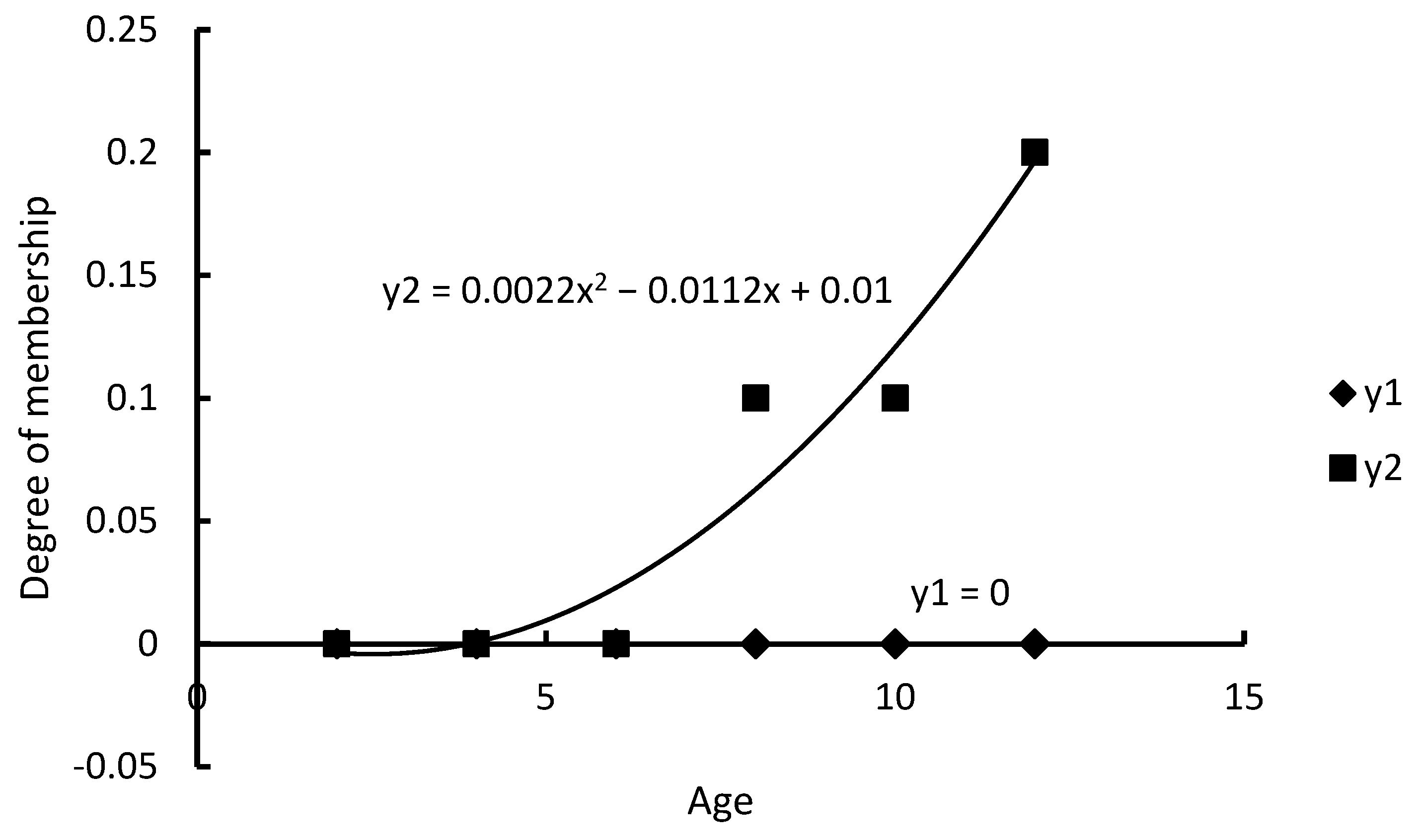
| Age | 2 years old | 0 | 0 | 1 |
| 4 years old | 0 | 0 | 1 | |
| 6 years old | 0 | 0 | 1 | |
| 8 years old | 0 | 0.1 | 0.9 | |
| 10 years old | 0 | 0.1 | 0.9 | |
| 12 years old | 0 | 0.2 | 0.8 | |
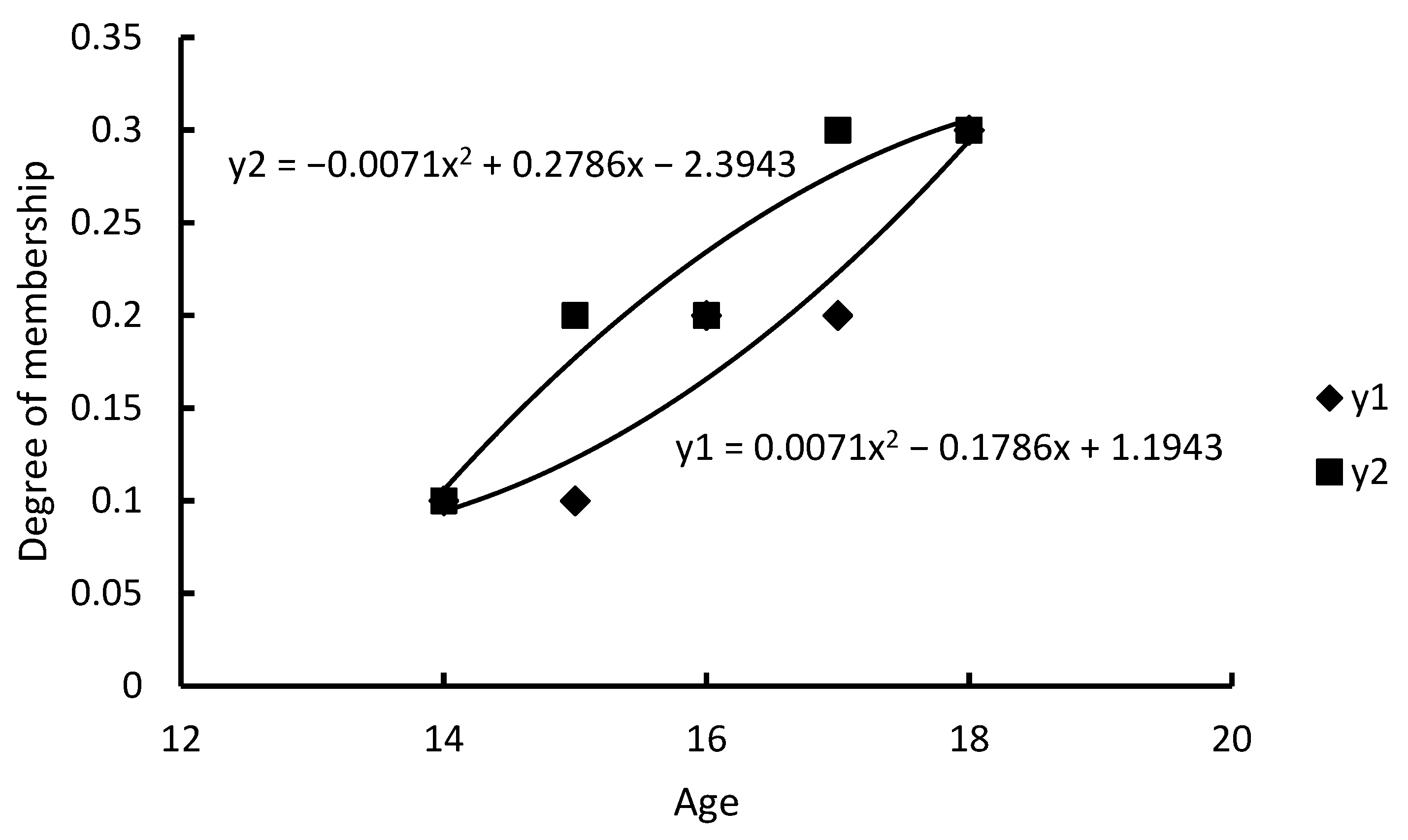
| 14 years old | 0.1 | 0.1 | 0.8 | |
| 15 years old | 0.1 | 0.2 | 0.7 | |
| 16 years old | 0.2 | 0.2 | 0.6 | |
| 17 years old | 0.2 | 0.3 | 0.5 | |
| 18 years old | 0.3 | 0.3 | 0.4 | |
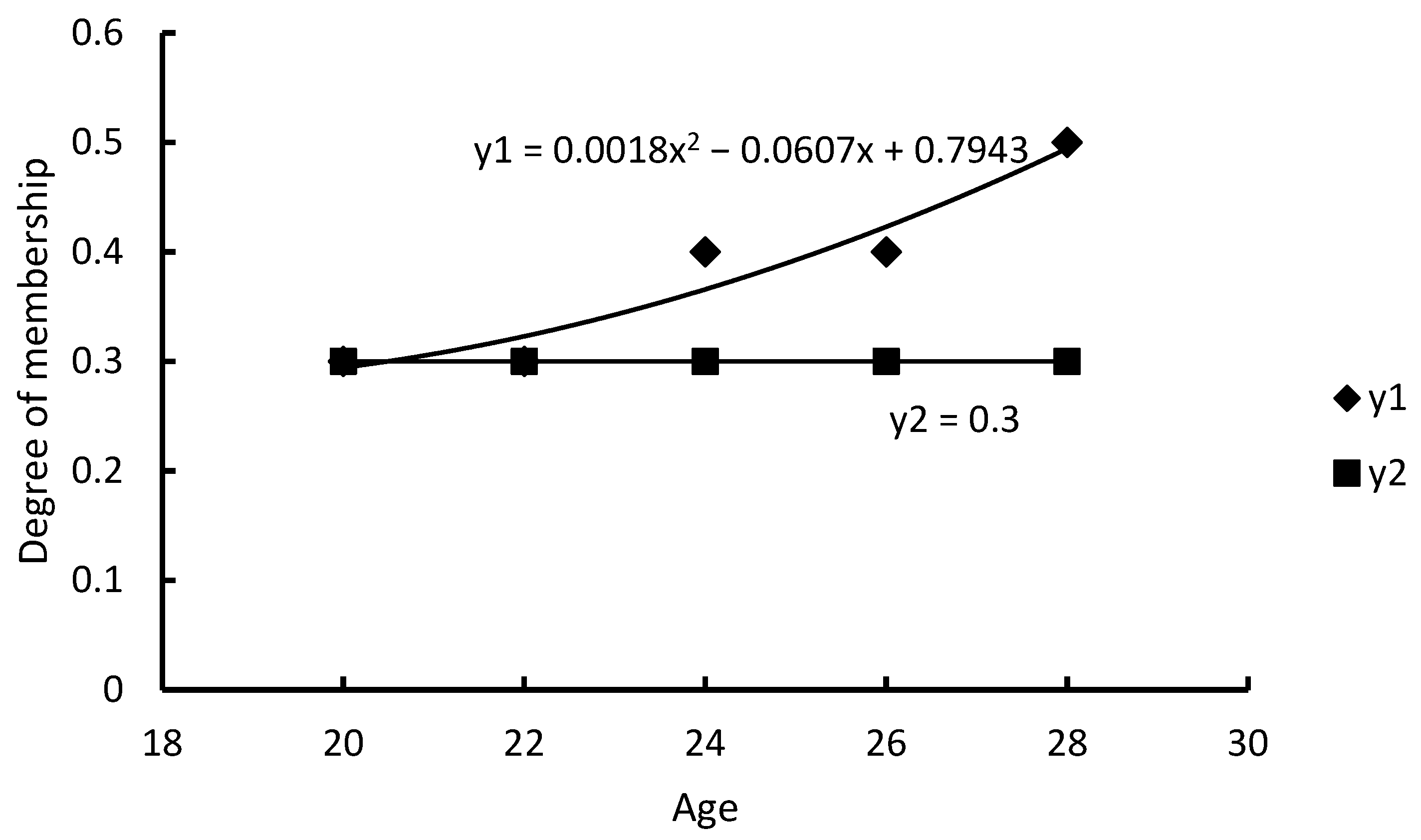
| 20 years old | 0.3 | 0.3 | 0.4 | |
| 22 years old | 0.3 | 0.3 | 0.4 | |
| 24 years old | 0.4 | 0.3 | 0.3 | |
| 26 years old | 0.4 | 0.3 | 0.3 | |
| 28 years old | 0.5 | 0.3 | 0.2 | |
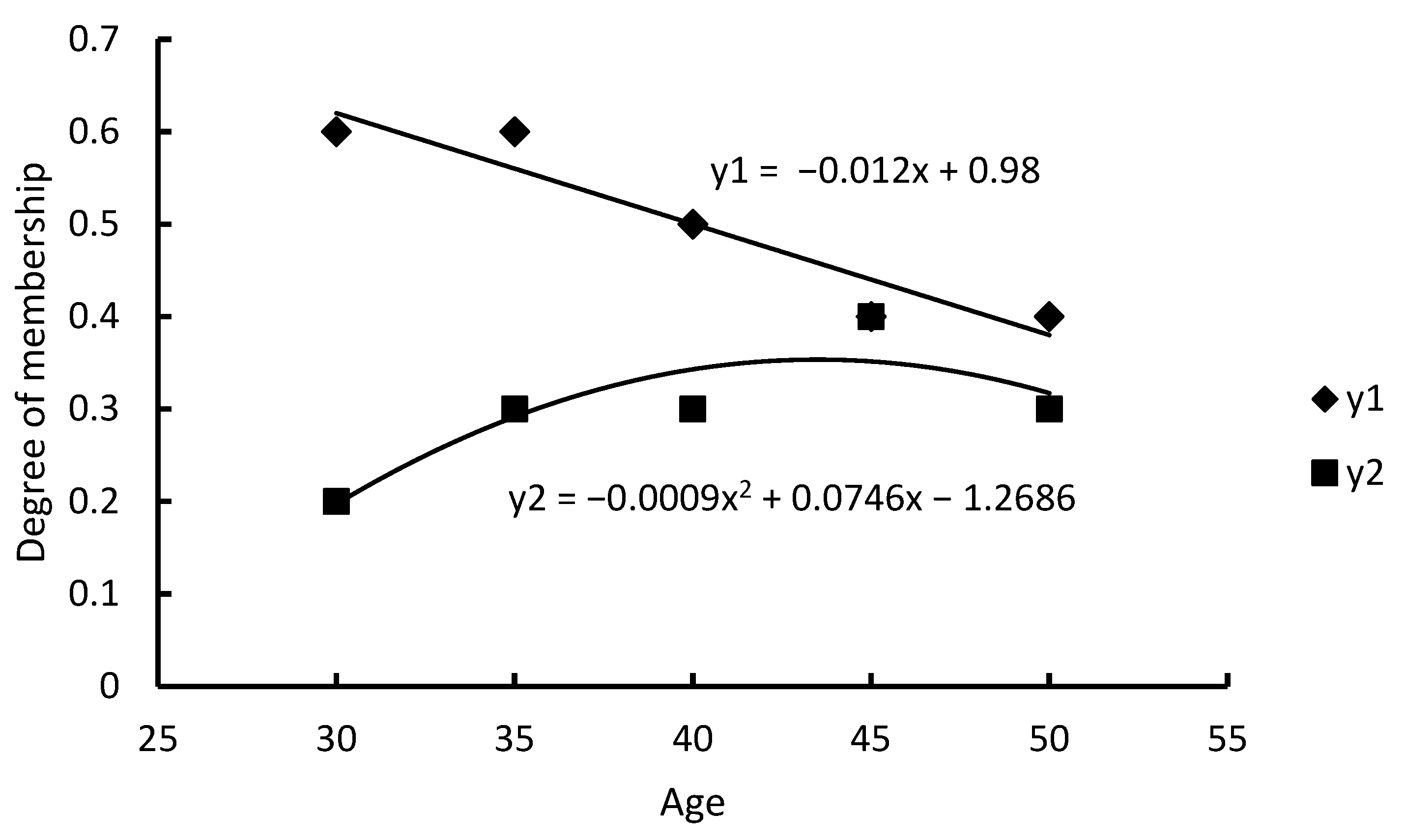
| 30 years old | 0.6 | 0.2 | 0.2 | |
| 35 years old | 0.6 | 0.3 | 0.1 | |
| 40 years old | 0.5 | 0.3 | 0.2 | |
| 45 years old | 0.4 | 0.4 | 0.2 | |
| 50 years old | 0.4 | 0.3 | 0.3 | |
| 52 years old | 0.4 | 0.3 | 0.3 | |
| 54 years old | 0.4 | 0.3 | 0.3 | |
| 56 years old | 0.3 | 0.3 | 0.4 | |
| 58 years old | 0.3 | 0.3 | 0.4 | |
| 60 years old | 0.2 | 0.3 | 0.5 | |
| 65 years old | 0.2 | 0.3 | 0.5 | |
| 70 years old | 0.2 | 0.2 | 0.6 | |
| 75 years old | 0.1 | 0.3 | 0.6 | |
| 80 years old | 0.1 | 0.2 | 0.7 | |
| 85 years old | 0.1 | 0.1 | 0.8 | |
| Nationality | Countries where the annual number of wars or terrorist attacks is 0 | 0.2 | 0.3 | 0.5 |
| Countries where the annual number of wars or terrorist attacks is 1 | 0.5 | 0.4 | 0.1 | |
| Countries where the annual number of wars or terrorist attacks is 2 | 0.6 | 0.3 | 0.1 | |
| Countries where the annual number of wars or terrorist attacks is 3 | 0.6 | 0.4 | 0 | |
| Countries where the annual number of wars or terrorist attacks is 4 | 0.7 | 0.3 | 0 | |
| Countries where the annual number of wars or terrorist attacks is 5 | 0.8 | 0.2 | 0 | |
| Countries where the annual number of wars or terrorist attacks is 6 | 0.9 | 0.1 | 0 | |
| Education | Master degree and above | 0.2 | 0.3 | 0.5 |
| Bachelor degree | 0.3 | 0.3 | 0.4 | |
| College degree | 0.4 | 0.3 | 0.3 | |
| High school or technical secondary school education | 0.5 | 0.3 | 0.2 | |
| Junior high school education and below | 0.6 | 0.2 | 0.2 | |
| Indexes | Attribute Values of Indexes | Evaluation Levels | ||
|---|---|---|---|---|
| High-risk | Medium-risk | Low-risk | ||
| Occupation | Administrative organ or institution | 0.2 | 0.3 | 0.5 |
| State-owned enterprise | 0.2 | 0.4 | 0.4 | |
| Private enterprise and others | 0.3 | 0.5 | 0.2 | |
| Unemployment | 0.6 | 0.3 | 0.1 | |
| Place of residence | Areas without terrorist attacks in 0 years | 0.8 | 0.2 | 0 |
| Areas without terrorist attacks in 1 year | 0.7 | 0.3 | 0 | |
| Areas without terrorist attacks in 2 years | 0.6 | 0.4 | 0 | |
| Areas without terrorist attacks in 3 years | 0.6 | 0.3 | 0.1 | |
| Areas without terrorist attacks in 4 years | 0.5 | 0.3 | 0.2 | |
| Areas without terrorist attacks in 5 years | 0.4 | 0.3 | 0.3 | |
| Areas without terrorist attacks in 6 years | 0.4 | 0.4 | 0.2 | |
| Areas without terrorist attacks in 8 years | 0.3 | 0.4 | 0.3 | |
| Areas without terrorist attacks in 10 years | 0.3 | 0.3 | 0.4 | |
| Areas without terrorist attacks in 12 years | 0.2 | 0.3 | 0.5 | |
| Areas without terrorist attacks in 14 years | 0.2 | 0.2 | 0.6 | |
| Areas without terrorist attacks in 15 years | 0.1 | 0.2 | 0.7 | |
| Areas without terrorist attacks in 16 years | 0.1 | 0.1 | 0.8 | |
| Areas without terrorist attacks in 18 years | 0 | 0.1 | 0.9 | |
| Religious belief | Islam | 0.5 | 0.4 | 0.1 |
| Christianity | 0.4 | 0.4 | 0.2 | |
| Buddhism | 0.3 | 0.5 | 0.2 | |
| Others | 0.3 | 0.4 | 0.3 | |
| None | 0.2 | 0.3 | 0.5 | |
| Marital status | Married with children | 0.2 | 0.3 | 0.5 |
| Married without children | 0.3 | 0.3 | 0.4 | |
| Unmarried | 0.3 | 0.4 | 0.3 | |
| Divorced with children | 0.3 | 0.5 | 0.2 | |
| Divorced without children | 0.5 | 0.3 | 0.2 | |
| State of health | Bad | 0.2 | 0.3 | 0.5 |
| General | 0.4 | 0.3 | 0.3 | |
| Good | 0.5 | 0.3 | 0.2 | |
| Indexes | Attribute Values of Indexes | Evaluation Levels | ||
|---|---|---|---|---|
| High-risk | Medium-risk | Low-risk | ||
| Total assets/ten thousand yuan | 5 | 0.8 | 0.2 | 0 |
| 8 | 0.8 | 0.1 | 0.1 | |
| 10 | 0.8 | 0.1 | 0.1 | |
| 20 | 0.7 | 0.3 | 0 | |
| 30 | 0.7 | 0.2 | 0.1 | |
| 40 | 0.6 | 0.3 | 0.1 | |
| 50 | 0.6 | 0.2 | 0.2 | |
| 60 | 0.5 | 0.3 | 0.2 | |
| 70 | 0.4 | 0.3 | 0.3 | |
| 80 | 0.3 | 0.4 | 0.3 | |
| 100 | 0.3 | 0.3 | 0.4 | |
| 150 | 0.3 | 0.3 | 0.4 | |
| 200 | 0.2 | 0.3 | 0.5 | |
| 300 | 0.2 | 0.2 | 0.6 | |
| Annual income/ten thousand yuan | 3 | 0.8 | 0.2 | 0 |
| 4 | 0.7 | 0.3 | 0 | |
| 5 | 0.6 | 0.3 | 0.1 | |
| 6 | 0.6 | 0.2 | 0.2 | |
| 8 | 0.5 | 0.3 | 0.2 | |
| 10 | 0.4 | 0.3 | 0.3 | |
| 12 | 0.3 | 0.3 | 0.4 | |
| 15 | 0.2 | 0.4 | 0.4 | |
| 20 | 0.2 | 0.3 | 0.5 | |
| 25 | 0.2 | 0.3 | 0.5 | |
| 30 | 0.2 | 0.2 | 0.6 | |
| 40 | 0.1 | 0.3 | 0.6 | |
| 60 | 0.1 | 0.2 | 0.7 | |
| 80 | 0.1 | 0.1 | 0.8 | |
| 100 | 0 | 0.1 | 0.9 | |
| Debt/ten thousand yuan | 0 | 0 | 0.1 | 0.9 |
| 10 | 0.2 | 0.2 | 0.6 | |
| 20 | 0.2 | 0.3 | 0.5 | |
| 30 | 0.3 | 0.4 | 0.3 | |
| 50 | 0.3 | 0.6 | 0.1 | |
| 70 | 0.4 | 0.4 | 0.2 | |
| 80 | 0.4 | 0.5 | 0.1 | |
| 100 | 0.5 | 0.4 | 0.1 | |
| 150 | 0.6 | 0.3 | 0.1 | |
| 200 | 0.7 | 0.2 | 0.1 | |
| 300 | 0.8 | 0.1 | 0.1 | |
| 500 | 0.9 | 0.1 | 0 | |
| Insurance amount/ten thousand yuan | 0 | 0.7 | 0.2 | 0.1 |
| 0.3 | 0.5 | 0.4 | 0.1 | |
| 0.5 | 0.3 | 0.6 | 0.1 | |
| 0.8 | 0.4 | 0.5 | 0.1 | |
| 1 | 0.4 | 0.4 | 0.2 | |
| 3 | 0.4 | 0.3 | 0.3 | |
| 5 | 0.3 | 0.4 | 0.3 | |
| 8 | 0.3 | 0.3 | 0.4 | |
| 10 | 0.2 | 0.3 | 0.5 | |
| 20 | 0.2 | 0.2 | 0.6 | |
| 30 | 0.1 | 0.2 | 0.7 | |
| 40 | 0.1 | 0.1 | 0.8 | |
| Indexes | Attribute Values of Indexes | Evaluation Levels | ||
|---|---|---|---|---|
| High-risk | Medium-risk | Low-risk | ||
| Criminal record | None | 0 | 0 | 1 |
| 1 time | 0.7 | 0.2 | 0.1 | |
| 2 times | 0.8 | 0.2 | 0 | |
| 3 times | 0.9 | 0.1 | 0 | |
| 4 times | 0.9 | 0.1 | 0 | |
| 5 times | 0.9 | 0.1 | 0 | |
| 6 times | 1 | 0 | 0 | |
| 7 times | 1 | 0 | 0 | |
| 8 times | 1 | 0 | 0 | |
| 9 times | 1 | 0 | 0 | |
| 10 times | 1 | 0 | 0 | |
| Default | None | 0 | 0 | 1 |
| 1 time | 0.3 | 0.6 | 0.1 | |
| 2 times | 0.5 | 0.4 | 0 | |
| 3 times | 0.6 | 0.3 | 0.1 | |
| 4 times | 0.6 | 0.4 | 0 | |
| 5 times | 0.7 | 0.3 | 0 | |
| 6 times | 0.8 | 0.2 | 0 | |
| 7 times | 0.9 | 0.1 | 0 | |
| 8 times | 0.9 | 0.1 | 0 | |
| 9 times | 0.9 | 0.1 | 0 | |
| 10 times | 0.9 | 0.1 | 0 | |
| 11 times | 1 | 0 | 0 | |
| 12 times | 1 | 0 | 0 | |
| 13 times | 1 | 0 | 0 | |
| 14 times | 1 | 0 | 0 | |
| 15 times | 1 | 0 | 0 | |
| Awards | None | 0.6 | 0.3 | 0.1 |
| 1 time | 0.2 | 0.2 | 0.6 | |
| 2 times | 0.1 | 0.2 | 0.7 | |
| 3 times | 0.1 | 0.1 | 0.8 | |
| 4 times | 0 | 0.1 | 0.9 | |
| 5 times | 0 | 0.1 | 0.9 | |
| 6 times | 0 | 0.1 | 0.9 | |
| 7 times | 0 | 0.1 | 0.9 | |
| 8 times | 0 | 0.1 | 0.9 | |
| 9 times | 0 | 0 | 1 | |
| 10 times | 0 | 0 | 1 | |
| 11 times | 0 | 0 | 1 | |
| 12 times | 0 | 0 | 1 | |
| 13 times | 0 | 0 | 1 | |
| 14 times | 0 | 0 | 1 | |
| 15 times | 0 | 0 | 1 | |
| Bad record of security check | None | 0 | 0 | 1 |
| 1 time | 1 | 0.2 | 0.7 | |
| 2 times | 2 | 0.5 | 0.4 | |
| 3 times | 3 | 0.6 | 0.3 | |
| 4 times | 4 | 0.6 | 0.4 | |
| 5 times | 5 | 0.7 | 0.3 | |
| 6 times | 6 | 0.8 | 0.2 | |
| 7 times | 7 | 0.9 | 0.1 | |
| 8 times | 8 | 0.9 | 0.1 | |
| 9 times | 9 | 0.9 | 0.1 | |
| 10 times | 10 | 0.9 | 0.1 | |
| 11 times | 11 | 1 | 0 | |
| 12 times | 12 | 1 | 0 | |
| 13 times | 13 | 1 | 0 | |
| 14 times | 14 | 1 | 0 | |
| 15 times | 15 | 1 | 0 | |
| Indexes | Attribute Values of Indexes | Evaluation Levels | ||
|---|---|---|---|---|
| High-risk | Medium-risk | Low-risk | ||
| Annual number of flights | 2 times | 0.7 | 0.2 | 0.1 |
| 5 times | 0.6 | 0.2 | 0.2 | |
| 10 times | 0.5 | 0.3 | 0.2 | |
| 12 times | 0.4 | 0.3 | 0.3 | |
| 15 times | 0.3 | 0.4 | 0.3 | |
| 18 times | 0.3 | 0.3 | 0.4 | |
| 20 times | 0.2 | 0.3 | 0.5 | |
| 25 times | 0.2 | 0.2 | 0.6 | |
| 30 times | 0.1 | 0.2 | 0.7 | |
| 35 times | 0.1 | 0.1 | 0.8 | |
| 40 times | 0 | 0.1 | 0.9 | |
| 45 times | 0 | 0.1 | 0.9 | |
| 50 times | 0 | 0.1 | 0.9 | |
| 55 times | 0 | 0.1 | 0.9 | |
| 60 times | 0 | 0.1 | 0.9 | |
| 65 times | 0 | 0.1 | 0.9 | |
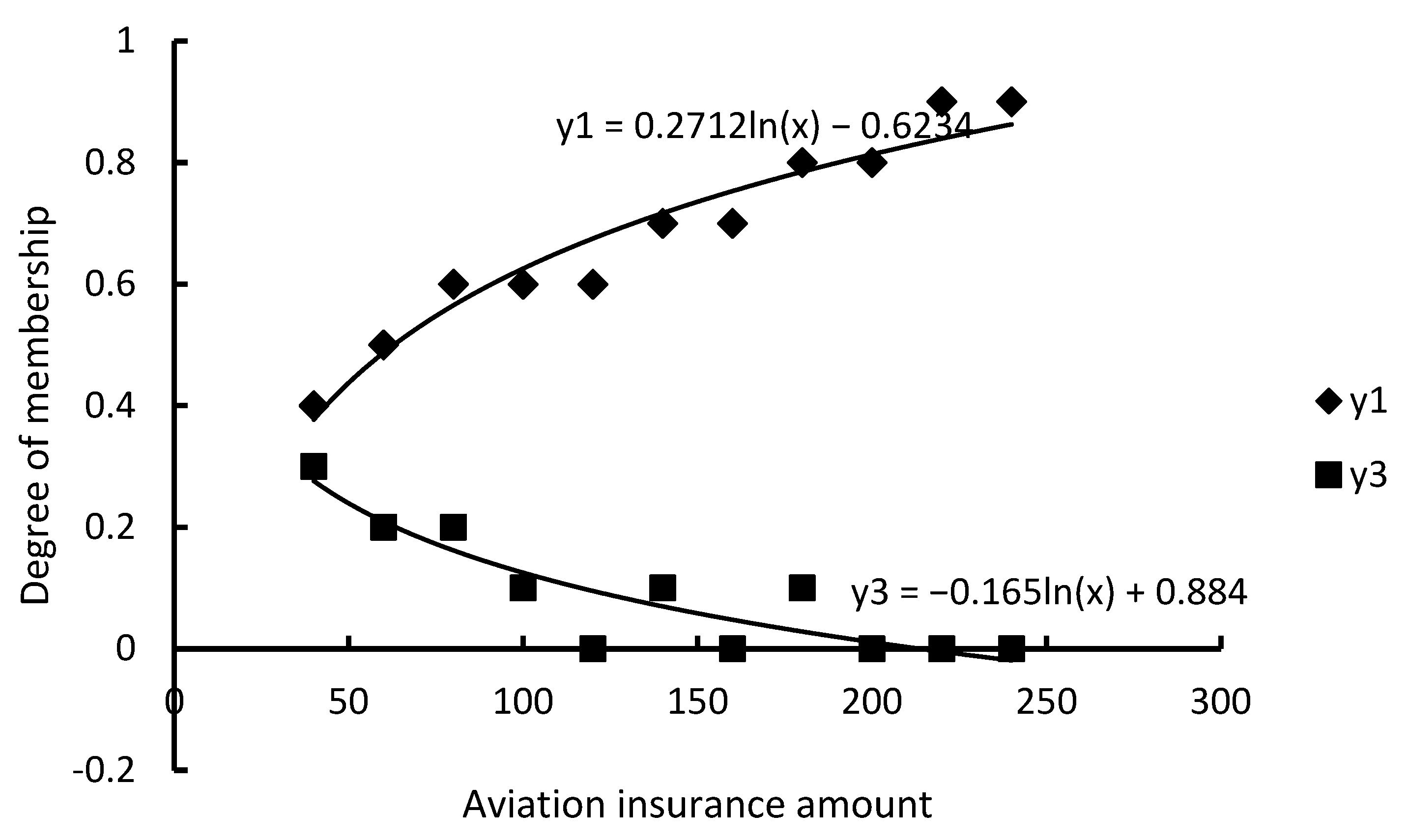
| Aviation insurance amount/ten thousand yuan | 0 | 0.6 | 0.2 | 0.2 |
| 20 | 0.3 | 0.3 | 0.4 | |
| 40 | 0.4 | 0.3 | 0.3 | |
| 60 | 0.5 | 0.3 | 0.2 | |
| 80 | 0.6 | 0.2 | 0.2 | |
| 100 | 0.6 | 0.3 | 0.1 | |
| 120 | 0.6 | 0.4 | 0 | |
| 140 | 0.7 | 0.2 | 0.1 | |
| 160 | 0.7 | 0.3 | 0 | |
| 180 | 0.8 | 0.1 | 0.1 | |
| 200 | 0.8 | 0.2 | 0 | |
| 220 | 0.9 | 0.1 | 0 | |
| 240 | 0.9 | 0.1 | 0 | |
| Flight information | Areas without terrorist attacks in 0 years | 0.8 | 0.2 | 0 |
| Areas without terrorist attacks in 1 year | 0.7 | 0.3 | 0 | |
| Areas without terrorist attacks in 2 years | 0.6 | 0.4 | 0 | |
| Areas without terrorist attacks in 3 years | 0.6 | 0.3 | 0.1 | |
| Areas without terrorist attacks in 4 years | 0.5 | 0.3 | 0.2 | |
| Areas without terrorist attacks in 5 years | 0.4 | 0.3 | 0.3 | |
| Areas without terrorist attacks in 6 years | 0.4 | 0.4 | 0.2 | |
| Areas without terrorist attacks in 8 years | 0.3 | 0.4 | 0.3 | |
| Areas without terrorist attacks in 10 years | 0.3 | 0.3 | 0.4 | |
| Areas without terrorist attacks in 12 years | 0.2 | 0.3 | 0.5 | |
| Areas without terrorist attacks in 14 years | 0.2 | 0.2 | 0.6 | |
| Areas without terrorist attacks in 15 years | 0.1 | 0.2 | 0.7 | |
| Areas without terrorist attacks in 16 years | 0.1 | 0.1 | 0.8 | |
| Areas without terrorist attacks in 18 years | 0 | 0.1 | 0.9 | |
| Ticket type | Round-trip ticket | 0.3 | 0.3 | 0.4 |
| One-way ticket | 0.4 | 0.3 | 0.3 | |
| Time of buying tickets | 1/12 days before departure | 0.8 | 0.2 | 0 |
| 0.5 days before departure | 0.5 | 0.3 | 0.2 | |
| 1 day before departure | 0.3 | 0.5 | 0.2 | |
| 2 days before departure | 0.3 | 0.4 | 0.3 | |
| 3 days before departure | 0.3 | 0.3 | 0.4 | |
| 5 days before departure | 0.3 | 0.2 | 0.5 | |
| 7 days before departure | 0.2 | 0.3 | 0.5 | |
| 8 days before departure | 0.3 | 0.1 | 0.6 | |
| 10 days before departure | 0.2 | 0.2 | 0.6 | |
| 12 days before departure | 0.1 | 0.3 | 0.6 | |
| 14 days before departure | 0.1 | 0.2 | 0.7 | |
| 20 days before departure | 0 | 0.3 | 0.7 | |
| 30 days before departure | 0.1 | 0.1 | 0.8 | |
| 40 days before departure | 0 | 0.2 | 0.8 | |
| 50 days before departure | 0 | 0.1 | 0.9 | |
| 60 days before departure | 0 | 0.1 | 0.9 | |
| Method of buying tickets | Online payment | 0.3 | 0.3 | 0.4 |
| Cash payment | 0.5 | 0.3 | 0.2 | |





References
- McLay, L.A.; Jacobson, S.H.; Kobza, J.E. A multilevel passenger screening problem for aviation security. Nav. Res. Logist. 2006, 53, 183–197. [Google Scholar] [CrossRef]
- Babu, V.L.L.; Batta, R.; Lin, L. Passenger grouping under constant threat probability in an airport security system. Eur. J. Oper. Res. 2006, 168, 633–644. [Google Scholar] [CrossRef]
- Nie, X.F.; Batta, R.; Drury, C.G.; Lin, L. Passenger grouping with risk levels in an airport security system. Eur. J. Oper. Res. 2007, 194, 574–584. [Google Scholar] [CrossRef]
- Majeske, K.D.; Lauer, T.W. Optimizing airline passenger prescreening systems with Bayesian decision models. Comput. Oper. Res. 2011, 39, 1827–1836. [Google Scholar] [CrossRef]
- Nie, X.F.; Parab, G.; Batta, R.; Lin, L. Simulation-based selectee lane queueing design for passenger checkpoint screening. Eur. J. Oper. Res. 2012, 219, 146–155. [Google Scholar] [CrossRef]
- Huang, P.; Luh, H.; Zhang, Z.G. A queueing model for tiered inspection lines in airports. Int. J. Inf. Manage. Sci. 2016, 27, 147–177. [Google Scholar]
- Song, C.; Zhuang, J. N-stage security screening strategies in the face of strategic applicants. Reliab. Eng. Syst. Saf. 2017, 165, 292–301. [Google Scholar] [CrossRef]
- Zheng, Y.J.; Sheng, W.G.; Sun, X.M.; Chen, S.Y. Airline passenger profiling based on fuzzy deep machine learning. IEEE Trans. Neural Netw. Learn. Syst. 2017, 28, 2911–2923. [Google Scholar] [CrossRef] [PubMed]
- Wang, Q.Q.; Wang, D. Research on the airport security inspection system based on passenger classification. In Proceedings of the International Conference on Information, Computer and Education Engineering (ICICEE), Hong Kong, China, 11–12 November 2017; Available online: http://dpi-journals.com/index.php/dtcse/article/view/17215 (accessed on 20 June 2022).
- Song, C.; Zhuang, J. Modeling Precheck parallel screening process in the face of strategic applicants with incomplete information and screening errors. Risk Anal. 2018, 38, 118–133. [Google Scholar] [CrossRef]
- Albert, L.A.; Nikolaev, A.; Lee, A.J.; Fletcher, K.; Jacobson, S.H. A review of risk-based security and its impact on TSA PreCheck. IISE Trans. 2020, 53, 657–670. [Google Scholar] [CrossRef]
- Wang, C.H.; Chen, Y.T.; Wu, X.J. A multi-tier inspection queueing system with finite capacity for differentiated border control measures. IEEE Access 2021, 9, 60489–60502. [Google Scholar] [CrossRef]
- Cavusoglu, H.; Koh, B.; Raghunathan, S. An analysis of the impact of passenger profiling for transportation security. Oper. Res. 2010, 58, 1287–1302. [Google Scholar] [CrossRef]
- Cavusoglu, H.; Kwark, Y.; Mai, B.; Raghunathan, S. Passenger profiling and screening for aviation security in the presence of strategic attackers. Decis. Anal. 2013, 10, 63–81. [Google Scholar] [CrossRef]
- Bagchi, A.; Paul, J.A. Optimal allocation of resources in airport security: Profiling vs. Screening. Oper. Res. 2014, 62, 219–233. [Google Scholar] [CrossRef]
- Stewart, M.G.; Mueller, J. Responsible policy analysis in aviation security with an evaluation of PreCheck. J. Air Transp. Manag. 2015, 48, 13–22. [Google Scholar] [CrossRef]
- Wong, S.; Brooks, N. Evolving risk-based security: A review of current issues and emerging trends impacting security screening in the aviation industry. J. Air Transp. Manag. 2015, 48, 60–64. [Google Scholar] [CrossRef]
- Stotz, T.; Bearth, A.; Siegrist, M.; Ghelfi, S.M. The perceived costs and benefits that drive the acceptability of risk-based security screenings at airports. J. Air Transp. Manag. 2022, 100, 102183. [Google Scholar] [CrossRef]
- McLay, L.A.; Lee, A.J.; Jacobson, S.H. Risk-based policies for airport security checkpoint screening. Transp. Sci. 2010, 44, 333–349. [Google Scholar] [CrossRef]
- Stewart, M.G.; Mueller, J. Risk and economic assessment of expedited passenger screening and TSA PreCheck. J. Transp. Secur. 2017, 10, 1–22. [Google Scholar] [CrossRef]
- Tang, Y.L. Study on the Index System of the Airport Passengers Classification Based on Risk. Master’s Thesis, Civil Aviation University of China, Tianjin, China, 2018. [Google Scholar]
- Feng, W.G.; Jiang, Z.F.F. Improving security checks and passenger risk evaluation with classification of airline passengers. Data Anal. Knowl. Discov. 2020, 4, 105–119. [Google Scholar]


| Target Tier | First-Level Indexes | Second-Level Indexes |
|---|---|---|
| Passenger risk assessment | Basic background | Gender |
| Age | ||
| Nationality | ||
| Education | ||
| Personal status | Occupation | |
| Place of residence | ||
| Religious belief | ||
| Marital status | ||
| State of health | ||
| Economic situation | Total assets | |
| Annual income | ||
| Debt | ||
| Insurance amount | ||
| Personal conduct | Criminal record | |
| Default | ||
| Awards | ||
| Bad record of security check | ||
| Civil aviation travel record | Annual number of flights | |
| Aviation insurance amount | ||
| Flight information | ||
| Ticket type | ||
| Time of buying tickets | ||
| Method of buying tickets |
| 1 | 1/2 | 1/2 | 1/5 | 1/3 | |
| 2 | 1 | 1 | 1/3 | 1/2 | |
| 2 | 1 | 1 | 1/3 | 1/2 | |
| 5 | 3 | 3 | 1 | 2 | |
| 3 | 2 | 2 | 1/2 | 1 |
| 1 | 1/2 | 1/3 | 1/3 | |
| 2 | 1 | 1/2 | 1/2 | |
| 3 | 2 | 1 | 1 | |
| 3 | 2 | 1 | 1 |
| 1 | 2 | 1/2 | 2 | 2 | |
| 1/2 | 1 | 1/4 | 1 | 1 | |
| 2 | 4 | 1 | 4 | 4 | |
| 1/2 | 1 | 1/4 | 1 | 1 | |
| 1/2 | 1 | 1/4 | 1 | 1 |
| 1 | 1 | 1/3 | 1/2 | |
| 1 | 1 | 1/3 | 1/2 | |
| 3 | 3 | 1 | 2 | |
| 2 | 2 | 1/2 | 1 |
| 1 | 3 | 3 | 1 | |
| 1/3 | 1 | 1 | 1/3 | |
| 1/3 | 1 | 1 | 1/3 | |
| 1 | 3 | 3 | 1 |
| 1 | 1/2 | 1/2 | 2 | 1/2 | 2 | |
| 2 | 1 | 1 | 4 | 1 | 4 | |
| 2 | 1 | 1 | 4 | 1 | 4 | |
| 1/2 | 1/4 | 1/4 | 1 | 1/4 | 1 | |
| 2 | 1 | 1 | 4 | 1 | 4 | |
| 1/2 | 1/4 | 1/4 | 1 | 1/4 | 1 |
| First-Level Indexes | Weights | Second-Level Indexes | Weights |
|---|---|---|---|
| 0.0743 | 0.1089 | ||
| 0.1887 | |||
| 0.3512 | |||
| 0.3512 | |||
| 0.1352 | 0.2222 | ||
| 0.1111 | |||
| 0.4445 | |||
| 0.1111 | |||
| 0.1111 | |||
| 0.1352 | 0.1411 | ||
| 0.1412 | |||
| 0.4550 | |||
| 0.2627 | |||
| 0.4143 | 0.3750 | ||
| 0.1250 | |||
| 0.1250 | |||
| 0.3750 | |||
| 0.2410 | 0.1250 | ||
| 0.2500 | |||
| 0.2500 | |||
| 0.0625 | |||
| 0.2500 | |||
| 0.0625 |
| Second-Level Indexes | Dimension | Single Factor Evaluation Vectors |
|---|---|---|
| Gender | Male | |
| Female | ||
| Age | Under 14 years old (x < 14) | |
| 14–18 years old (14 ≤ x ≤ 18) | ||
| 19–30 years old (19 ≤ x ≤ 30) | ||
| 31–50 years old (31 ≤ x ≤ 50) | ||
| 51–60 years old (51 ≤ x ≤ 60) | ||
| Over 60 years old (x > 60) | ||
| Nationality | Countries where the annual number of wars or terrorist attacks x is 0 | |
| Countries where the annual number of wars or terrorist attacks x is 1 or more | ||
| Education | Master degree and above | |
| Bachelor degree | ||
| College degree | ||
| High school or technical secondary school education | ||
| Junior high school education and below |
| Second-Level Indexes | Dimension | Single Factor Evaluation Vectors |
|---|---|---|
| Occupation | Administrative organ or institution | |
| State-owned enterprise | ||
| Private enterprise and others | ||
| Unemployment | ||
| Place of residence | Areas without terrorist attacks in x years | |
| Religious belief | Islam | |
| Christianity | ||
| Buddhism | ||
| Others | ||
| None | ||
| Marital status | Married with children | |
| Married without children | ||
| Unmarried | ||
| Divorced with children | ||
| Divorced without children | ||
| State of health | Bad | |
| General | ||
| Good |
| Second-Level Indexes | Dimension | Single Factor Evaluation Vectors |
|---|---|---|
| Total assets | 0–10 (inclusive) ten thousand yuan (0 ≤ x ≤ 10) | |
| 10–30 (inclusive) ten thousand yuan (10 > x ≤ 30) | ||
| 30–50 (inclusive) ten thousand yuan (30 > x ≤ 50) | ||
| 50–100 (inclusive) ten thousand yuan (50 > x ≤ 100) | ||
| More than 100 ten thousand yuan (x > 100) | ||
| Annual income | 0–5 (inclusive) ten thousand yuan (0 ≤ x ≤ 5) | |
| 5–10 (inclusive) ten thousand yuan (5 > x ≤ 10) | ||
| 10–20 (inclusive) ten thousand yuan (10 > x ≤ 20) | ||
| 20–40 (inclusive) ten thousand yuan (20 > x ≤ 40) | ||
| More than 40 ten thousand yuan (x > 40) | ||
| Debt | 0–20 (inclusive) ten thousand yuan (0 ≤ x ≤ 20) | |
| 20–50 (inclusive) ten thousand yuan (20 > x ≤ 50) | ||
| 50–100 (inclusive) ten thousand yuan (50 > x ≤ 100) | ||
| 100–200 (inclusive) ten thousand yuan (100 > x ≤ 200) | ||
| More than 200 ten thousand yuan (x > 200) | ||
| Insurance amount | 0–0.5 (inclusive) ten thousand yuan (0 ≤ x ≤ 0.5) | |
| 0.5–1 (inclusive) ten thousand yuan (0.5 > x ≤ 1) | ||
| 1–5 (inclusive) ten thousand yuan (1 > x ≤ 5) | ||
| 5–10 (inclusive) ten thousand yuan (5 > x ≤ 10) | ||
| More than 10 ten thousand yuan (x > 10) |
| Second-Level Indexes | Dimension | Single Factor Evaluation Vectors |
|---|---|---|
| Criminal record | None (x = 0) | |
| One and more times (x ≥ 1) | ||
| Default | None (x = 0) | |
| One and more times (x ≥ 1) | ||
| Awards | None (x = 0) | |
| One and more times (x ≥ 1) | ||
| Bad record of security check | None (x = 0) | |
| One and more times (x ≥ 1) |
| Second-Level Indexes | Dimension | Single Factor Evaluation Vectors |
|---|---|---|
| Annual number of flights | 0–10 times (0 ≤ x ≤ 10) | |
| 11–20 times (11 ≤ x ≤ 20) | ||
| More than 20 times (x > 20) | ||
| Aviation insurance amount | 0 yuan (x = 0) | |
| 20 ten thousand yuan (x = 20) | ||
| 40 ten thousand yuan and above (x ≥ 40) | ||
| Flight information | Destination or origin without terrorist attacks in x years | |
| Ticket type | Round-trip ticket | |
| One-way ticket | ||
| Time of buying tickets | 1 day before departure (inclusive) (x ≤ 1) | |
| 1–3 days before departure (1 < x ≤ 3) | ||
| 4–7 days before departure (4 ≤ x ≤ 7) | ||
| 8–14 days before departure (8 ≤ x ≤ 14) | ||
| More than 14 days before departure (x > 14) | ||
| Method of buying tickets | Online payment | |
| Cash payment |
| Indexes | |||||
|---|---|---|---|---|---|
| Passengers | |||||
| A | Male | 28 years old | Countries where the annual number of wars or terrorist attacks x is 3 | Bachelor degree | |
| B | Male | 37 years old | Countries where the annual number of wars or terrorist attacks x is 1 | College degree | |
| C | Male | 30 years old | Countries where the annual number of wars or terrorist attacks x is 2 | Junior high school education | |
| D | Male | 39 years old | Countries where the annual number of wars or terrorist attacks x is 0 | High school education | |
| E | Male | 45 years old | Countries where the annual number of wars or terrorist attacks x is 1 | College degree | |
| F | Female | 40 years old | Countries where the annual number of wars or terrorist attacks x is 0 | Master degree | |
| G | Female | 65 years old | Countries where the annual number of wars or terrorist attacks x is 0 | Bachelor degree | |
| H | Female | 20 years old | Countries where the annual number of wars or terrorist attacks x is 0 | Bachelor degree | |
| Indexes | ||||||
|---|---|---|---|---|---|---|
| Passengers | ||||||
| A | Freelance work | Areas without terrorist attacks in 0 years | Christianity | Unmarried | Good | |
| B | Private enterprise | Areas without terrorist attacks in 3 years | Islam | Married with children | Good | |
| C | Private enterprise | Areas without terrorist attacks in 1 year | Islam | Unmarried | Good | |
| D | Unemployment | Areas without terrorist attacks in 5 years | Buddhism | Divorced with children | Bad | |
| E | Private enterprise | Areas without terrorist attacks in 8 years | Buddhism | Divorced with children | General | |
| F | Administrative organ | Areas without terrorist attacks in 10 years | None | Married with children | Good | |
| G | Retirement | Areas without terrorist attacks in 15 years | None | Married with children | General | |
| H | Student | Areas without terrorist attacks in 12 years | None | Unmarried | Good | |
| Indexes | |||||
|---|---|---|---|---|---|
| Passengers | |||||
| A | 8 ten thousand yuan | 6 ten thousand yuan | 150 ten thousand yuan | 0 yuan | |
| B | 50 ten thousand yuan | 15 ten thousand yuan | 200 ten thousand yuan | 3 ten thousand yuan | |
| C | 10 ten thousand yuan | 8 ten thousand yuan | 100 ten thousand yuan | 1 ten thousand yuan | |
| D | 5 ten thousand yuan | 4 ten thousand yuan | 50 ten thousand yuan | 0.5 ten thousand yuan | |
| E | 50 ten thousand yuan | 15 ten thousand yuan | 80 ten thousand yuan | 5 ten thousand yuan | |
| F | 300 ten thousand yuan | 25 ten thousand yuan | 30 ten thousand yuan | 10 ten thousand yuan | |
| G | 100 ten thousand yuan | 12 ten thousand yuan | 0 yuan | 30 ten thousand yuan | |
| H | 10 ten thousand yuan | 3 ten thousand yuan | 0 yuan | 20 ten thousand yuan | |
| Indexes | |||||
|---|---|---|---|---|---|
| Passengers | |||||
| A | 2 times | 1 time | None | 1 time | |
| B | 1 time | 2 times | None | 2 times | |
| C | 1 time | None | None | 2 times | |
| D | None | 1 time | None | 1 time | |
| E | None | 1 time | None | 1 time | |
| F | None | None | 2 times | None | |
| G | None | None | 1 time | None | |
| H | None | None | 3 times | None | |
| Indexes | |||||||
|---|---|---|---|---|---|---|---|
| Passengers | |||||||
| A | 5 times | 0 yuan | Destination or origin without terrorist attacks in 0 years | One-way ticket | 1/12 days before departure | Cash payment | |
| B | 10 times | 200 ten thousand yuan | Destination or origin without terrorist attacks in 3 years | One-way ticket | 0.5 days before departure | Online payment | |
| C | 2 times | 0 yuan | Destination or origin without terrorist attacks in 1 year | One-way ticket | 3 days before departure | Cash payment | |
| D | 2 times | 20 ten thousand yuan | Destination or origin without terrorist attacks in 10 years | One-way ticket | 1 day before departure | Online payment | |
| E | 15 times | 20 ten thousand yuan | Destination or origin without terrorist attacks in 8 years | Round-trip ticket | 2 days before departure | Online payment | |
| F | 20 times | 20 ten thousand yuan | Destination or origin without terrorist attacks in 15 years | Round-trip ticket | 3 days before departure | Online payment | |
| G | 12 times | 40 ten thousand yuan | Destination or origin without terrorist attacks in 20 years | Round-trip ticket | 7 days before departure | Online payment | |
| H | 5 times | 20 ten thousand yuan | Destination or origin without terrorist attacks in 12 years | One-way ticket | 14 days before departure | Online payment | |
Publisher’s Note: MDPI stays neutral with regard to jurisdictional claims in published maps and institutional affiliations. |
© 2022 by the authors. Licensee MDPI, Basel, Switzerland. This article is an open access article distributed under the terms and conditions of the Creative Commons Attribution (CC BY) license (https://creativecommons.org/licenses/by/4.0/).
Share and Cite
Zhou, H.; Xue, Y.; Jiang, Z.; Cai, F.; Li, W. An Assessment Model for Air Passenger Risk Classification. Appl. Sci. 2022, 12, 9580. https://doi.org/10.3390/app12199580
Zhou H, Xue Y, Jiang Z, Cai F, Li W. An Assessment Model for Air Passenger Risk Classification. Applied Sciences. 2022; 12(19):9580. https://doi.org/10.3390/app12199580
Chicago/Turabian StyleZhou, Hang, Yuting Xue, Ziqi Jiang, Fanger Cai, and Weicong Li. 2022. "An Assessment Model for Air Passenger Risk Classification" Applied Sciences 12, no. 19: 9580. https://doi.org/10.3390/app12199580
APA StyleZhou, H., Xue, Y., Jiang, Z., Cai, F., & Li, W. (2022). An Assessment Model for Air Passenger Risk Classification. Applied Sciences, 12(19), 9580. https://doi.org/10.3390/app12199580