Research on the Application of Foamed Lightweight Concrete (FLC) in the Construction of Highway Soft Soil Foundation Engineering with Buried High-Pressure Gas Pipes


Abstract
1. Introduction
2. Project Overview
2.1. Project Description
2.2. Engineering Geology
2.3. Surrounding Environment
3. Programme Design Studies
3.1. Design Principles
3.2. Commonly Used Soft Foundation Treatment Methods
3.3. Programme Design
4. FLC Feasibility Study
4.1. FLC Parameters Determination
4.2. Load Stability Calculations
4.3. Calculation of Additional Stresses and Settlements
5. Benefits Study
5.1. Safety Benefits Analysis
5.2. Economic Benefits Analysis
5.3. Ecological Benefits Analysis
6. Practical Analysis
6.1. Analysis of Settlement Test Results
6.2. Analysis of Earth Pressure Test Results
7. Conclusions
- (1)
- Through the existing buried under the high-pressure pipeline bending radius tolerance worth out the calculation method of pipeline settlement control limit, verify the feasibility of the application of FLC in the construction of the highway soft foundation of the existing buried under the high pressure gas pipeline section, for the existing buried under the pipeline settlement ideas calculation provides a new idea;
- (2)
- Using carbon emissions as a parameter in the ecological benefit analysis of the two schemes, a simple carbon emission assessment model was determined based on LCA theory, which improved the one-sidedness of the safety benefit and economic benefit analysis, and proved that the carbon emission of the FLC light embankment method is less than that of the traditional pile foundation construction method, which is in line with the requirement of coordinated and sustainable development of human production activities and natural ecosystems, and is of great significance to the green transformation of the construction industry and the achievement of the double carbon target;
- (3)
- Relying on the FLC soft foundation treatment of the existing buried high-pressure gas pipeline section of the Foqingcong Expressway, the project cost was reduced by 12% and the carbon emission was reduced by 1/3 under the premise of safety and stability. This study also fully proved the feasibility of FLC application in the process of soft soil roadbed treatment of the existing buried pipeline, which has reference significance for the optimal design of similar projects.
Author Contributions
Funding
Data Availability Statement
Conflicts of Interest
References
- Xi, L. Comparison and selection of soft foundation treatment schemes for road and bridge junction. Ind. Constr. 2017, 47, 342–344+349. (In Chinese) [Google Scholar]
- Meilan, Z.; Haichen, Y.; Xiaoshan, L. Study on the Parameters of Buried Pipelines under Highway to Ensure Safety. Munic. Technol. 2021, 39, 119–124. (In Chinese) [Google Scholar]
- Otani, J.; Mukunoki, T.; Kikuchi, Y. Visualization for engineering property of in-situ light weight soils with air foams. Soils Found. 2008, 42, 93–105. [Google Scholar] [CrossRef] [Scilit]
- Nambiar, E.K.K.; Ramamurthy, K. Fresh state characteristics of foam concrete. J. Mater. Civ. Eng. 2008, 20, 111–117. [Google Scholar] [CrossRef] [Scilit]
- Jones, M.R.; Ozlutas, K.; Zheng, L. Stability and instability of foamed concrete. Mag. Concr. Res. 2016, 68, 542–549. [Google Scholar] [CrossRef] [Scilit]
- Song, Y.; Lange, D. Influence of fine inclusions on the morphology and mechanical performance of lightweight foam concrete. Cem. Concr. Compos. 2021, 124, 104264. [Google Scholar] [CrossRef] [Scilit]
- Shi, X.; Huang, J.; Su, Q.J.C.; Materials, B. Experimental and numerical analyses of lightweight foamed concrete as filler for widening embankment. Constr. Build. Mater. 2020, 250, 118897. [Google Scholar] [CrossRef] [Scilit]
- Yu, H.; Wang, Y.; Chao, Z.; Peng, W.; Cen, Y. Study on Subgrade Settlement Characteristics After Widening Project of Highway Built on Weak Foundation. Arab. J. Sci. Eng. 2017, 42, 1–10. [Google Scholar] [CrossRef] [Scilit]
- Hui, L. Rapid construction method of foam lightweight soil in subway emergency rescue. J. Henan Sci. Technol. 2013, 14, 24–25. (In Chinese) [Google Scholar]
- Wenjie, C.; Zhiyong, D.; Qingmeng, M.; Qingchang, Q. Protection Technology of Reinforced Concrete in Cold Area and Saline Soil Environment. Constr. Technol. 2016, 45, 544–546. (In Chinese) [Google Scholar]
- Liu, X.; Ni, C.; Zhang, L.; Sheng, K.; Hong, B. Durability Assessment of Lightweight Cellular Concrete in Subgrade by the Method of Analytic Hierarchy Process Combined with Fuzzy Comprehensive Evaluatio. Math. Probl. Eng. 2019, 2019, 4915870. [Google Scholar]
- Qizhen, J.; Zhongping, C.; Jianbin, W.; Jifu, L. Determination method of light soil thickness for soft foundation embankment replacement. Highway 2019, 64, 84–88. (In Chinese) [Google Scholar]
- Wei, Z.; Kui, T. Application and technical improvement of foam lightweight soil. Jiangxi Build. Mater. 2016, 10, 100–102. (In Chinese) [Google Scholar]
- Mengyuan, S.; Zhijie, W.; Guangqing, Y.; Dan, L. Calculation and Evaluation of Carbon Emission from Different Types of Retaining Structures. Railw. Surv. 2020, 46, 41–48. (In Chinese) [Google Scholar]
- Peipei, H. Study on the Life-cycle Energy Consumption of New-type Wali Material. Master’s Thesis, Hubei University of Technology, Wuhan, China, 2013. (In Chinese) [Google Scholar]
- Wenguang, C. The Comprehensive Evaluation of Soft Soil Foundation Treatment in LCA Method. Master’s Thesis, Qingdao University of Technology, Qingdao, China, 2012. (In Chinese) [Google Scholar]
- Zhijia, X.; Liangchen, L.; Changgen, Y.; Chao, J.; Yaxin, W.; Qi, X.; Jiang, L. Evaluation of energy consumption and carbon emissions for construction of wet and soft loess subgrade in highway engineering. J. Dalian Univ. Technol. 2021, 61, 522–530. (In Chinese) [Google Scholar]
- Falliano, D.; Domenico, D.D.; Sciarrone, A.; Ricciardi, G.; Gugliandolo, E.J.T.; Mechanics, A.F. Fracture behavior of lightweight foamed concrete: The crucial role of curing conditions. Theor. Appl. Fract. Mech. 2019, 103, 102297. [Google Scholar] [CrossRef] [Scilit]
- Cai, D.G.; Wei, S.W.; Ye, Y.S.; Zhang, Q.L.; Li, Z.G.; Li, S. Mechanical properties of lightweight foam concrete filler for roadbed of high-speed railway. Arab. J. Geosci. 2021, 14, 1–10. [Google Scholar] [CrossRef] [Scilit]
- Cong, M.; Bing, C. Properties of a foamed concrete with soil as filler. Constr. Build. Mater. 2015, 76, 61–69. [Google Scholar] [CrossRef] [Scilit]
- Gopalakrishnan, R.; Sounthararajan, V.M.; Mohan, A.; Tholkapiyan, M. The strength and durability of fly ash and quarry dust light weight foam concrete. Mater. Today Proc. 2019, 22, 1117–1124. [Google Scholar] [CrossRef] [Scilit]
- Xun, L. The Research on Settlement Deformation Observation and Prediction Methods of Soft Soil Foundation. Master’s Thesis, Changsha University of Science & Technology, Changsha, China, 2017. (In Chinese) [Google Scholar]
- Shengyun, P. Application of Plastic Drainage Plate in Soft Soil Foundation Treatment. Master’s Thesis, Zhejiang University, Hangzhou, China, 2019. (In Chinese) [Google Scholar]
- Yan, X. Research on foundation treatment method of Binhai Avenue in Putian, Fujian. Master’s Thesis, Shenzhen University, Shenzhen, China, 2018. (In Chinese) [Google Scholar]
- JTG 3363-2019; Specifications for Design of Foundation of Highway Bridges and Culverts. People’s Transportation Press: Beijing, China, 2019. (In Chinese)
- Guangxin, L. Advanced Soil Mechanics; Tsinghua University Press: Beijing, China, 2004. (In Chinese) [Google Scholar]
- JTG D30-2015; Specification for Design of Highway Subgrade. People’s Communications Press: Beijing, China, 2015. (In Chinese)
- Dongping, Z.; Sixun, W.; Luwei, W.; Huachang, F.; Deyong, W. Study on Settlement Control Standard of Underground Gas Pipelines Affected by Tunnel Underpass Construction. Mod. Tunn. Technol. 2021, 58, 258–264. (In Chinese) [Google Scholar]
- Hao, Z. Underground Natural Gas Pipeline Allowable Settlement Deformation Calculation. Shanghai Gas 2010, 04, 14–15+46. (In Chinese) [Google Scholar]
- GB 50251-2015; Code for design of gas transmission pipeline engineering. China Planning Press: Beijing, China, 2015. (In Chinese)
- Fei, D. Research on Foundation Treatment of Soft Soil Subgrade of the East Hangzhou Railway Station Building. Railw. Stand. Des. 2018, 62, 31–35. (In Chinese) [Google Scholar]
- Guangdong Provincial Department of Housing and Urban-Rural Development. Comprehensive Quota of Housing Construction and Decoration Engineering in Guangdong Province: 2018; Huazhong University of Science and Technology Press: Wuhan, China, 2018. (In Chinese) [Google Scholar]
- Shillaber, C.M.; Mitchell, J.K.; Dove, J.E. Energy and Carbon Assessment of Ground Improvement Works. I: Definitions and Background. J. Geotech. Geoenvironmental Eng. 2016, 142, 04015083. [Google Scholar] [CrossRef] [Scilit]
- Cole, R.J.; Kernan, P.C. Life-cycle energy use in office buildings. Build. Environ. 1996, 31, 307–317. [Google Scholar] [CrossRef] [Scilit]
- Yongxin, Z.; Ying, S. Assessment of building energy consumption and environmental impact based on life cycle theory. Constr. Manag. Mod. 2009, 23, 109–112. (In Chinese) [Google Scholar]
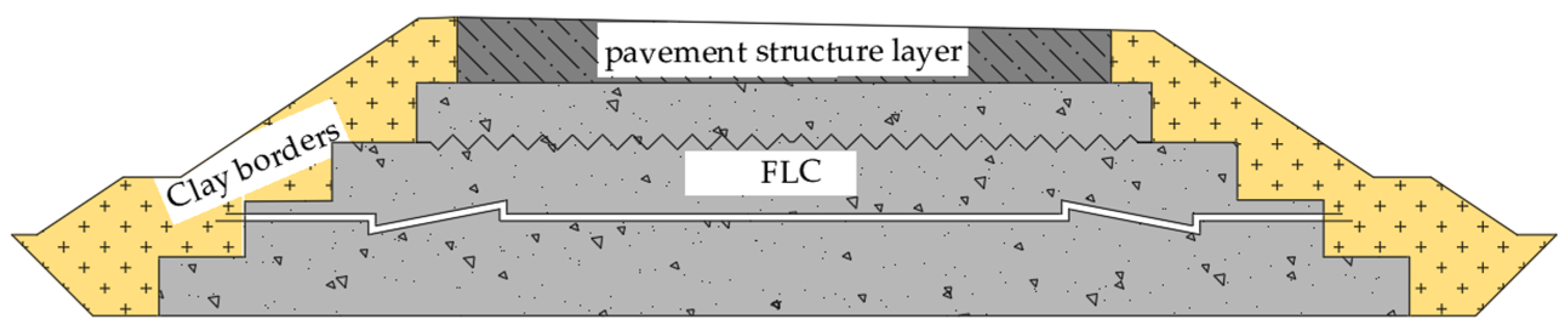
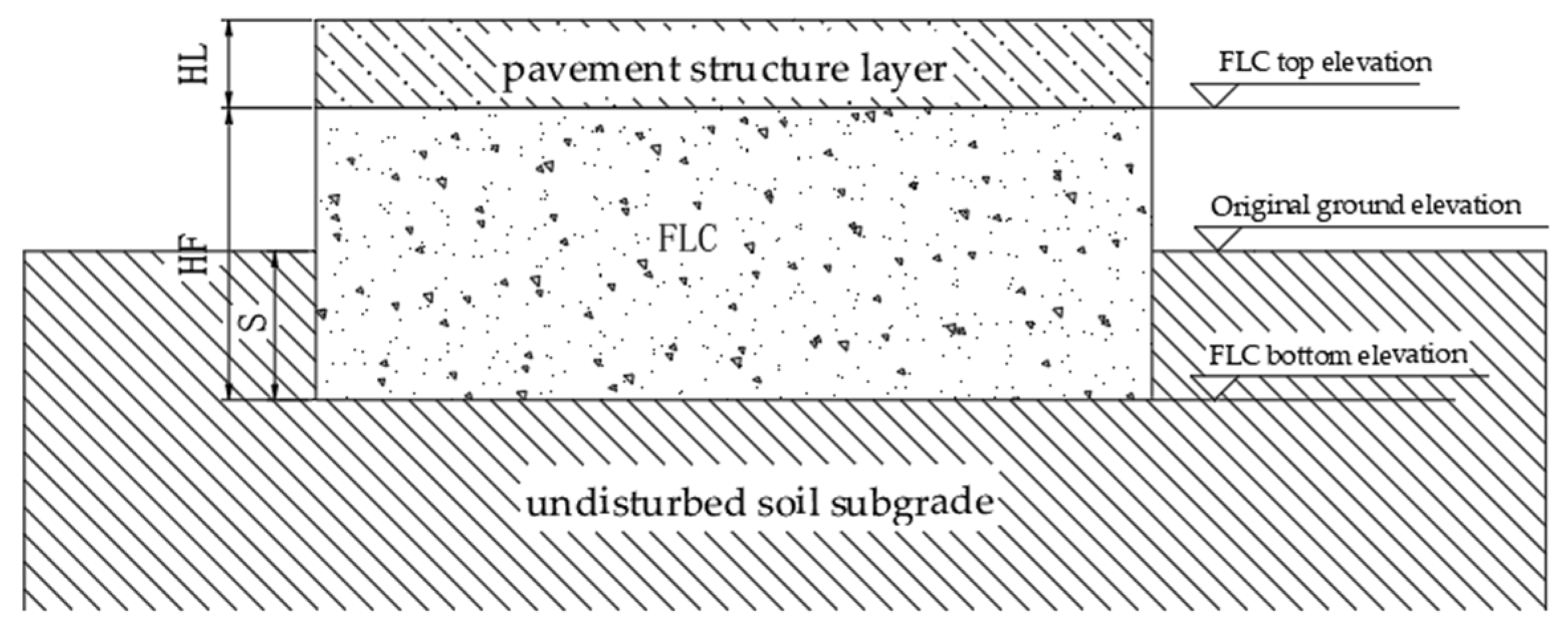


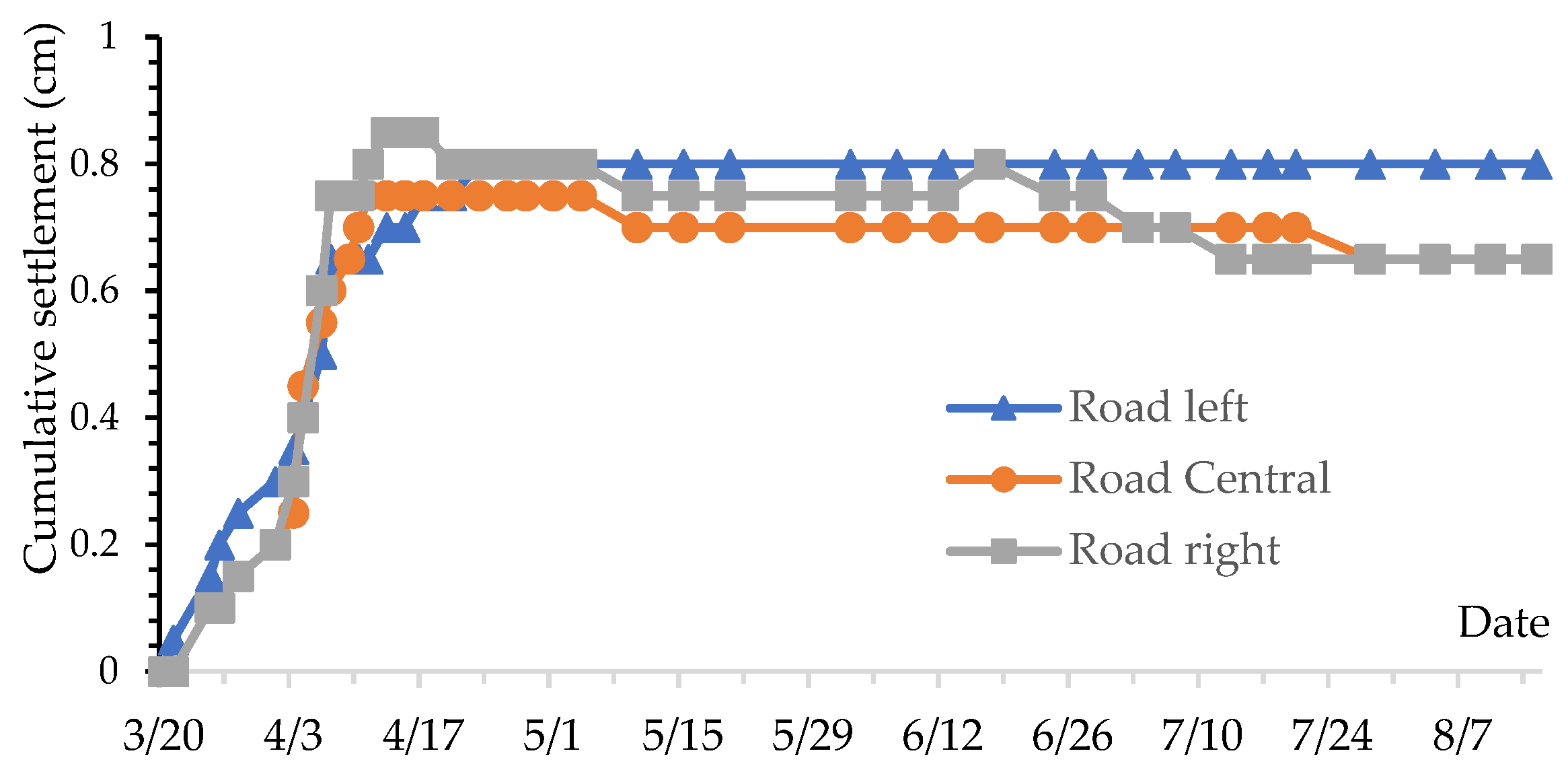


| Treatment | Principle | Advantages | Disadvantages | Scope of Application | |
|---|---|---|---|---|---|
| drainage consolidation | Through the pressurisation and drainage systems the free water in the soft ground is induced to drain through the gaps, the water content of the soil is reduced, the effective stress is continuously increased, and the bearing capacity of the soil is improved. | Simple method, large treatable depth and low cost. | The long construction period, the large geological area affected and the dynamic equilibrium state of the surrounding original buildings. | A soft clay layer with a high water content. | |
| replacement bedding method | The use of excavated stone slag, sand and gravel and other materials with good permeability to replace the soil layer, filling and compaction in layers to improve the base bearing capacity, control settlement and change the permeability of the soil layer. | A radical improvement to the foundation, simple to implement, fast to construct and cost effective. | The shallow depth of the replacement fill requires a large amount of permeable material and cannot treat soft foundations with overburden. | Only suitable for shallow replacement where the depth of the replacement is not greater than 3 metres and is less affected by external forces. | |
| geogridsGrid construction | To channel infiltration works, isolate the partitioning effect and form a transversely and longitudinally bonded monolithic structure, this is often achieved by means of geogrids, grids, etc. | Practical and cost effective. | The surface cover is prone to erosion and affects the stability of the bank. | Commonly used after soft foundation treatment and before filling with sand bedding. | |
| rigid pile composite foundations | plain concrete piles | The holes are first cut to the design depth at the construction site, then the concrete is poured and compacted into shape. | High load-bearing capacity, low settlement, mature construction techniques, easy to control the quality of construction. | High cost and long construction period. | Suitable for all kinds of soft soils up to 20 m thick. |
| CFG pile (Cement Fly Ash Gravel pile) | The squeezing action is used to densify the uncompacted foundation soil and improve the overall stability and bearing capacity of the foundation. | The treatment depth is large, the construction is convenient, the settlement is small and the effect of improving the bearing capacity of the natural foundation is remarkable. | The construction process is difficult, the monopile load capacity is low, and the piling results are related to the construction technology and environment. | Suitable for silty soils, miscellaneous fills, saturated and unsaturated clayey soils, etc. with large thicknesses. | |
| cement mixing piles | The cement slurry, lime and other curing agents are mixed with the foundation soil to form a columnar cement soil, which in turn improves the geological environment, increases the compression modulus of the soil and reduces settlement. | Significantly improves the overall bearing capacity of the soil and is fast to construct. | The construction process is complex and the quality of the piles is influenced by construction experience and the geological environment. | Suitable for soft foundations such as silt, clay and chalk with a soft soil thickness of less than 12 m. | |
| ultralight fill replacement method | Foam lightweight Concrete (FLC) | By reducing the self-weight of the road base fill to reduce the additional stress on the foundation, the effect of improving the stability of the foundation and reducing post-work settlement is achieved. | Lightness, adjustable strength, high fluidity, self-supporting after curing, water resistance, durability, etc. | High unit cost | Commonly used to resolve differential settlement, frost protection, bridge abutment backfill, construction and maintenance of highways, etc. |
| Distance from the Bottom of the Structural Layer of the Road/m | Wet Density Rfw/(kg·m−3) | 28 d Compressive Strength/MPa |
|---|---|---|
| 0~0.8 | Rfw ≤ 650 | ≥1.2 |
| >0.8 | Rfw ≤ 650 | ≥0.8 |
| Strength Grade/MPa | Water-Cement Ratio | Composition of FLC per Square/(kg/m3) | Bubble Rate/% | Design Wet Density/(kg/m3) | Flow Value | 7 d Compressive Strength/MPa | 28 d Compressive Strength/MPa | |
|---|---|---|---|---|---|---|---|---|
| Cement | Water | |||||||
| 0.8 | 0.65 | 319 | 207 | 68.7 | 560 | 180 | 0.56 | 0.86 |
| 0.65 | 309 | 201 | 69.6 | 545 | 175 | 0.47 | 0.75 | |
| 0.65 | 328 | 213 | 67.8 | 575 | 182 | 0.6 | 0.92 | |
| 1.2 | 0.65 | 350 | 227 | 65.6 | 610 | 186 | 0.63 | 1.25 |
| 0.65 | 359 | 233 | 64.7 | 625 | 185 | 0.69 | 1.3 | |
| 0.65 | 340 | 221 | 66.5 | 595 | 180 | 0.59 | 1.18 | |
| Z/m | 0 | 2 | 4 |
|---|---|---|---|
| 54 | 90 | 116 |
| Z/m | Z/b | |||
|---|---|---|---|---|
| 0 | 0 | 0.25 | 12 | 1.8 |
| 2 | 0.53 | 0.23 | 11.19 | 5.4 |
| 4 | 1.07 | 0.18 | 8.55 | 16.8 |
| Single Project | Scheme I/CNY | Scheme II/CNY |
|---|---|---|
| earthworks | 866,097.355 | 682,558.62 |
| plain concrete piles | 2,908,879.97 | |
| CFG piles | 287,922 | |
| cement mixing piles | 551,403.73 | |
| sand and gravel bedding | 1,181,795.615 | |
| steel-plastic grating | 718,177.85 | |
| plastic drainage board | 102,693.481 | |
| cast-in-place cover slab C35 concrete | 1,021,311.35 | |
| Cast-in-place cover reinforcement | 1,004,711.87 | |
| FLC | 6,749,642.1 | |
| clay borders | 142,409 | |
| Total | 816,421,993.221 | 7,574,609.72 |
| Phase | Project | Unit | CO2 | SO2 | NOx | CO | Quantity | Carbon Emissions/t |
|---|---|---|---|---|---|---|---|---|
| Materialization phase | P.S32.5 | kg/t | 677.68 | 0.202 | 1.087 | 0.292 | 50 kg | 0.034 |
| Transportation phase | road transportation | kg/t·km | 18.2 | 14,200 | 12.9 | 261 | 67 km | 48.549 |
| Construction phase | deep mixers (thermal) | kg/wh | 1.14 | 0.0001 | 0.0052 | 0.0028 | 227 kwh | 260.617 |
| lifting equipments (diesel) | kg/kg | 0.0734 | 0.0026 | 0.0003 | 0.0007 | 32.25 kg | 0.002 | |
| Curing agent preparation systems (thermal) | kg/wh | 1.14 | 0.0001 | 0.0052 | 0.0028 | 40.17 kwh | 46.119 |
| Project | Quantity | Unit Carbon Emissions/ (kg·m−1(m−3)) | Total Carbon Emissions/t | Total Carbon Emissions of the Programme/t |
|---|---|---|---|---|
| Plain concrete piles | 29,661.50 | 1,217,218.13 | 36,104,515.450 | Scheme I: 41,974,810 |
| CFG piles | 4900.80 | 324,558.3267 | 1,590,595.447 | |
| Cement mixing piles | 12,044.60 | 355,320.9858 | 4,279,699.146 | Scheme II: 14,953,161 |
| FLC | 27,319.90 | 547,335.85 | 14,953,160.752 |
Publisher’s Note: MDPI stays neutral with regard to jurisdictional claims in published maps and institutional affiliations. |
© 2022 by the authors. Licensee MDPI, Basel, Switzerland. This article is an open access article distributed under the terms and conditions of the Creative Commons Attribution (CC BY) license (https://creativecommons.org/licenses/by/4.0/).
Share and Cite
Jiang, Z.; Gao, X.; Feng, X.; Chen, D. Research on the Application of Foamed Lightweight Concrete (FLC) in the Construction of Highway Soft Soil Foundation Engineering with Buried High-Pressure Gas Pipes. Appl. Sci. 2022, 12, 10119. https://doi.org/10.3390/app121910119
Jiang Z, Gao X, Feng X, Chen D. Research on the Application of Foamed Lightweight Concrete (FLC) in the Construction of Highway Soft Soil Foundation Engineering with Buried High-Pressure Gas Pipes. Applied Sciences. 2022; 12(19):10119. https://doi.org/10.3390/app121910119
Chicago/Turabian StyleJiang, Zaolong, Xin Gao, Xiaozhe Feng, and Dachuan Chen. 2022. "Research on the Application of Foamed Lightweight Concrete (FLC) in the Construction of Highway Soft Soil Foundation Engineering with Buried High-Pressure Gas Pipes" Applied Sciences 12, no. 19: 10119. https://doi.org/10.3390/app121910119
APA StyleJiang, Z., Gao, X., Feng, X., & Chen, D. (2022). Research on the Application of Foamed Lightweight Concrete (FLC) in the Construction of Highway Soft Soil Foundation Engineering with Buried High-Pressure Gas Pipes. Applied Sciences, 12(19), 10119. https://doi.org/10.3390/app121910119