Abstract
This study analyzed if process oil and synthetic rubber, the main materials of the previous synthetic polymerized rubber gel waterproofing materials (P-SPRG), can be replaced with waste oil and waste rubber to be recycled as raw waterproofing materials as a part of expanding the recycling of waste resources to waterproof areas. The synthetic polymerized rubber gel waterproofing materials (W-SPRG), based on the mixture of waste oil and waste rubber, were primarily analyzed for the trend of viscosity changes according to the mixture ratio between waste oil and waste rubber and were secondarily tested for eight performances, including viscosity, solid content, water permeability resistance, wet surface adhesion, structural behavior responsiveness, underwater loss resistance, chemical resistance safety, and temperature safety. After testing, the viscosity was the highest when the mixture ratio of waste oil and waste rubber was in the range of 2:1, and wet surface adhesion, structural behavior responsiveness, and temperature safety were relatively improved. Moreover, the comparative analysis of performance between W-SPRG and P-SPRG showed that W-SPRG secured the more stable performance in viscosity, solid content, wet surface adhesion, underwater loss resistance, and chemical resistance safety. Based on the results of this study, it has been confirmed that recycled waste oil and waste rubber can be commercialized as raw waterproof materials. This is expected to contribute to improvements in the cost reduction and environmental pollution arising due to waste disposal and incineration.
1. Introduction
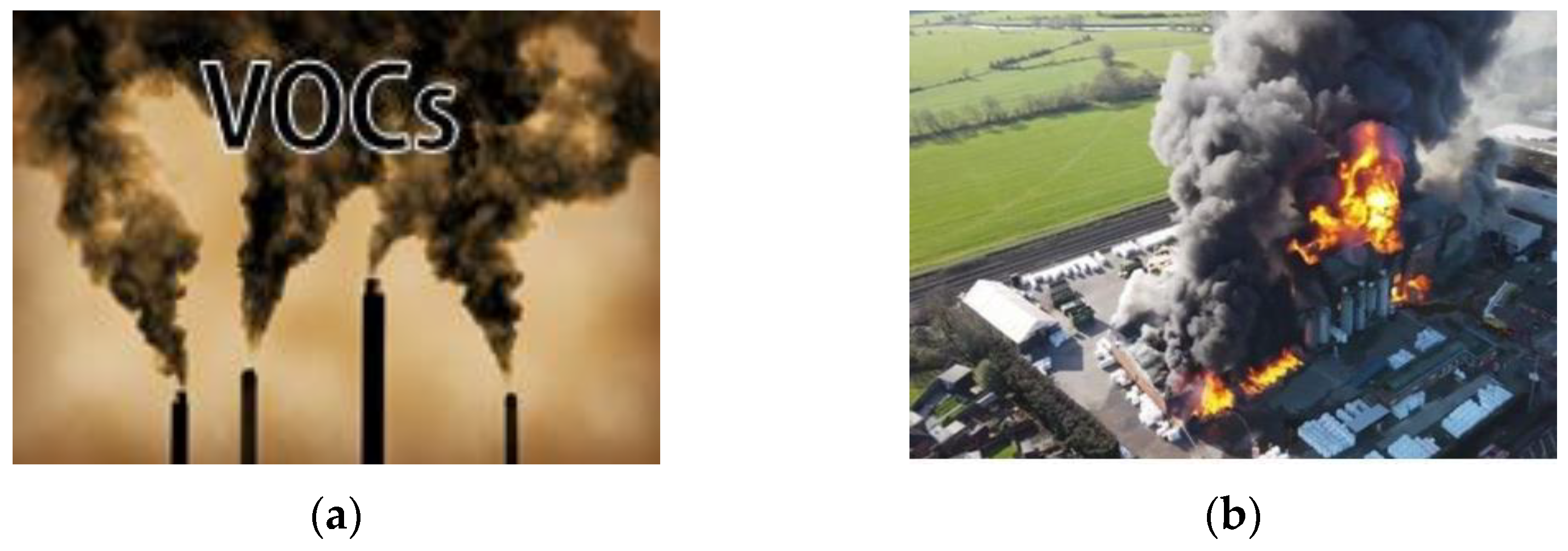
With the development of industrialization, various types of wastes are continuously increasing as industrial by-products. In order to recycle these wastes, there are additional costs such as the construction of factory facilities to make new products and the social agreement to satisfy the quality standards in use. However, instead of recycling through huge cost, most of the waste has been incinerated or landfilled, and as a result, the earth has a problem of air and soil pollution. In addition, the use of various volatile organic solvents [1] such as toluene, thinner, xylene, benzene, and acetone in the waterproofing industry using inorganic and organic construction chemicals was accompanied by air pollution. In particular, in the case of existing waterproofing materials (P-SPRG), asphalt and synthetic rubber are mixed and melted at a high temperature of 250~300 °C [2] in the manufacturing stage, as shown in Figure 1. A large amount of harmful substances such as carbon dioxide are produced [3], and fires also threaten the safety of workers.
Figure 1.
Environmental pollution and safety issues. (a) Air pollution caused by the incineration of waste resources. (b) Fire occurred during the manufacturing process of waterproofing material.
To look at the technical development trends of recycling polymeric waste materials, most are focused on renewable thermoplastics, as highly thermosetting rubber materials are expensive but most of them are incinerated or disposed of due to an irreversible vulcanization treatment [4]. Generally, there are two types of technology to process waste rubber for recycling: (1) the concept of flooring by finely grinding waste rubber, mixing [5] it with a binder, and manufacturing and constructing it as mats, blocks, etc., and (2) collecting and using oil, carbon, etc., contained in rubber through pyrolysis. However, these technologies are not meeting economic and market demands. In the case of waste oil, there is a problem of containing heavy metals such as cadmium, lead, chrome, and arsenic, limitations in jet force due to high viscosity, and the limited range of recycling due to incomplete combustion caused by the high content of ash. The reality is that most of them are recycled into fuel [6] oil through ion refining, vacuum distillation, high-temperature pyrolysis, and other refining methods, [7] which are difficult to be applied to products with various characteristics.
This study aimed at improving the performance of previous waterproofing materials (P-SPRG) as a part of expanding the viscous semi-solid-type [8] synthetic polymerized rubber gel waterproofing materials (W-SPRG). This is to confirm the waterproof performance from the perspective of waterproof engineering, not polymerization, based on the mixture [9] of waste oil and waste rubber to waterproof areas [10,11,12] using the unique features [13] of waste oil and waste rubber and contributing [14] to the economic effects and improvements of environmental problems by recycling waste resources.
In addition, through this study, by innovatively using waste oil and waste rubber as raw materials for waterproofing materials, it is possible to reduce the use of expensive synthetic rubber and process oil as well as to reduce carbon dioxide emissions and the cost of the incineration and treatment of waste resources. This can be expected to improve environmental problems.
2. Materials and Test Methods
2.1. Characteristics of Waste Oil and Waste Rubber
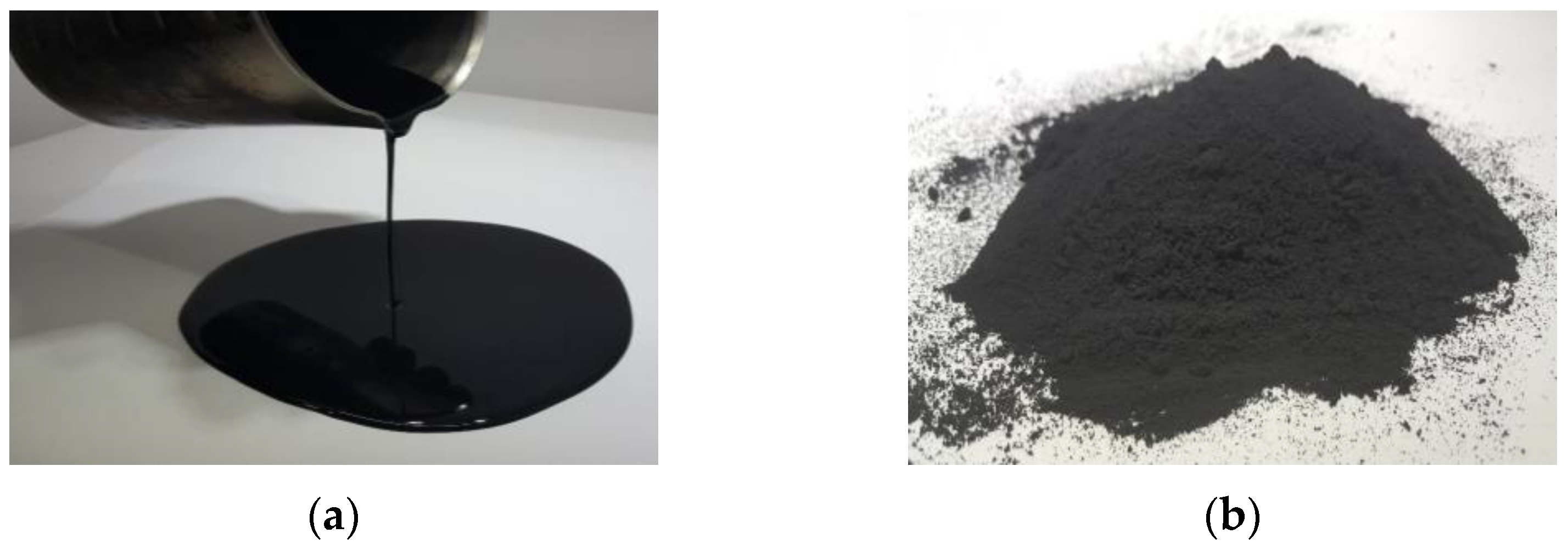
As shown in Figure 2, waste oil and waste rubber forms are weak acidic substances in dark brown opaque oils and gels. There are fine particles in the form of sludge that make separation and sedimentation difficult, along with moisture. The sludge is hard to burn because of its high viscosity and weak jet force, and it must be refined for use because it contains a lot of ash, which causes incomplete combustion. The waste oil used for this study was refined waste engine oil used as automobile engine oil, and the waste rubber, EPDM (ethylene propylene diene monomer), with more ozone resistance, weather resistance, and durability than ordinary synthetic rubbers, was recycled in powder form at room temperature and in frozen conditions.
Figure 2.
Waste oil and waste rubber forms. (a) Waste oil (engine oil) liquid. (b) Waste rubber (EPDM) powder.
2.2. Mixture of Waste Oil and Waste Rubber

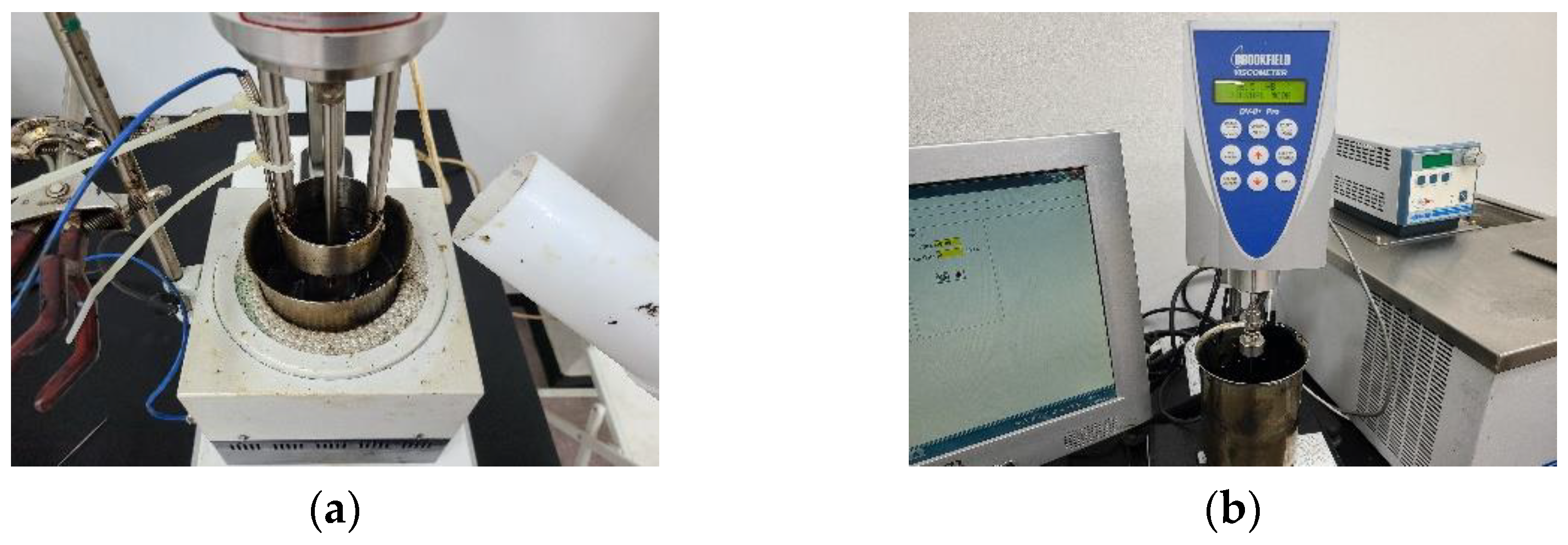
It was most important to derive the ratio of molten liquid materials with a viscosity that can be blended as W-SPRG. Waste oil and waste rubber were combined in each ratio using a heating mantle and a rotary stirrer as shown in Table 1, and the viscosity was measured by extracting molten liquid materials after heating and stirring in the range of temperature from 150 °C to 200 °C for 30~120 min, as shown in Figure 3.
Table 1.
Mixture ratio between waste oil and waste rubber.
Figure 3.
Mixture of waste oil and waste rubber and viscosity measurement. (a) Mixture between waste oil and waste rubber. (b) Measurement of viscosity of molten liquid agent.
2.3. Mixture of W-SPRG
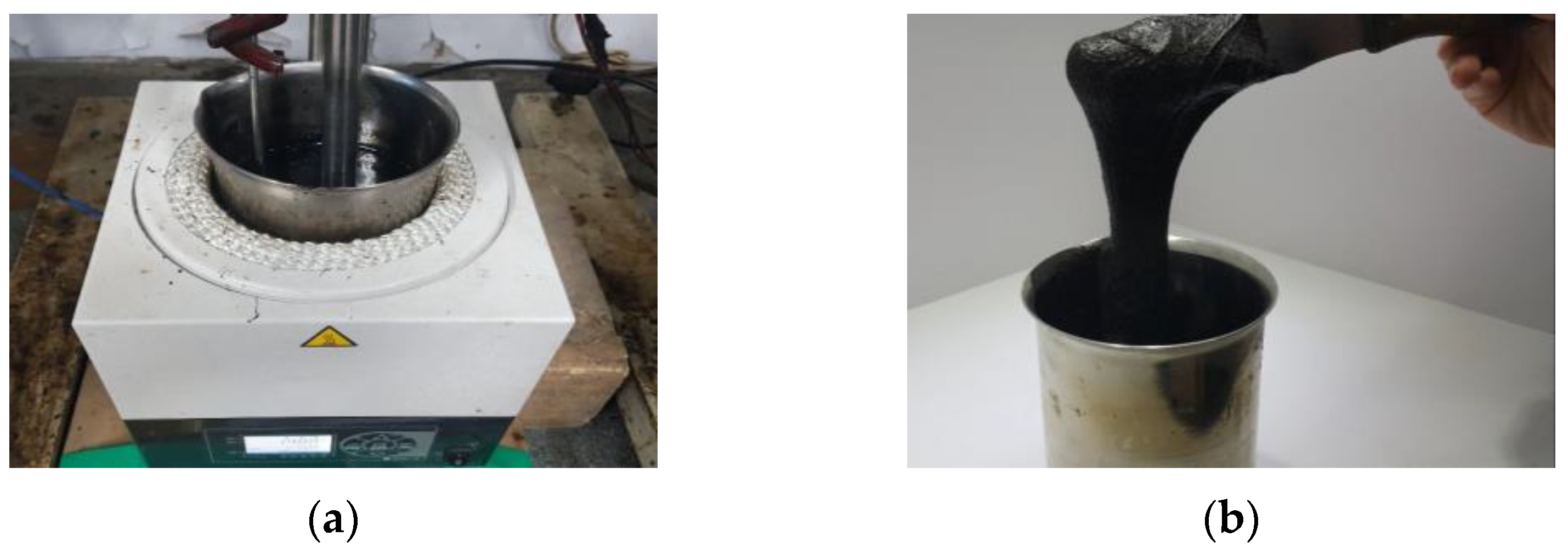
For the mixture of W-SPRG, among the molten liquid materials extracted through the mixing process of waste oil and waste rubber, for five ratios, excluding the 1:1 ratio, which cannot be mixed or stirred secondarily, the synthetic rubber polymer gel waterproofing materials were extracted, as shown in Figure 4, after mixing and stirring the other components in Table 2.
Figure 4.
W-SPRG mixture and extraction. (a) W-SPRG mixture. (b) W-SPRG extraction.
Table 2.
Other components and range of W-SPRG.
Among the raw material component ratios of W-SPRG, the mixture of waste oil and waste rubber was set to 30% of the total raw material components by applying the waste material usage of the environmental sign certification standards EL 244 Waterproofing Materials [15] for Construction of the Ministry of Environment in Korea. Other components were used in the same ratio as shown in Table 3.
Table 3.
Raw material component ratio of W-SPRG (%).
2.4. Test Method
For the test evaluation of W-SPRG waterproofing materials, which were a mixture waste oil and waste rubber, eight tests, including viscosity, solid content, water permeability resistance, wet surface adhesion, structural behavior responsiveness, underwater loss resistance, chemical resistance safety, and temperature safety, were conducted [16,17,18,19] as shown in Table 4.
Table 4.
Test items and methods for W-SPRG evaluation.
3. Results and Discussion
3.1. Mixture of Waste Oil and Waste Rubber Results
3.1.1. Temperature and Time
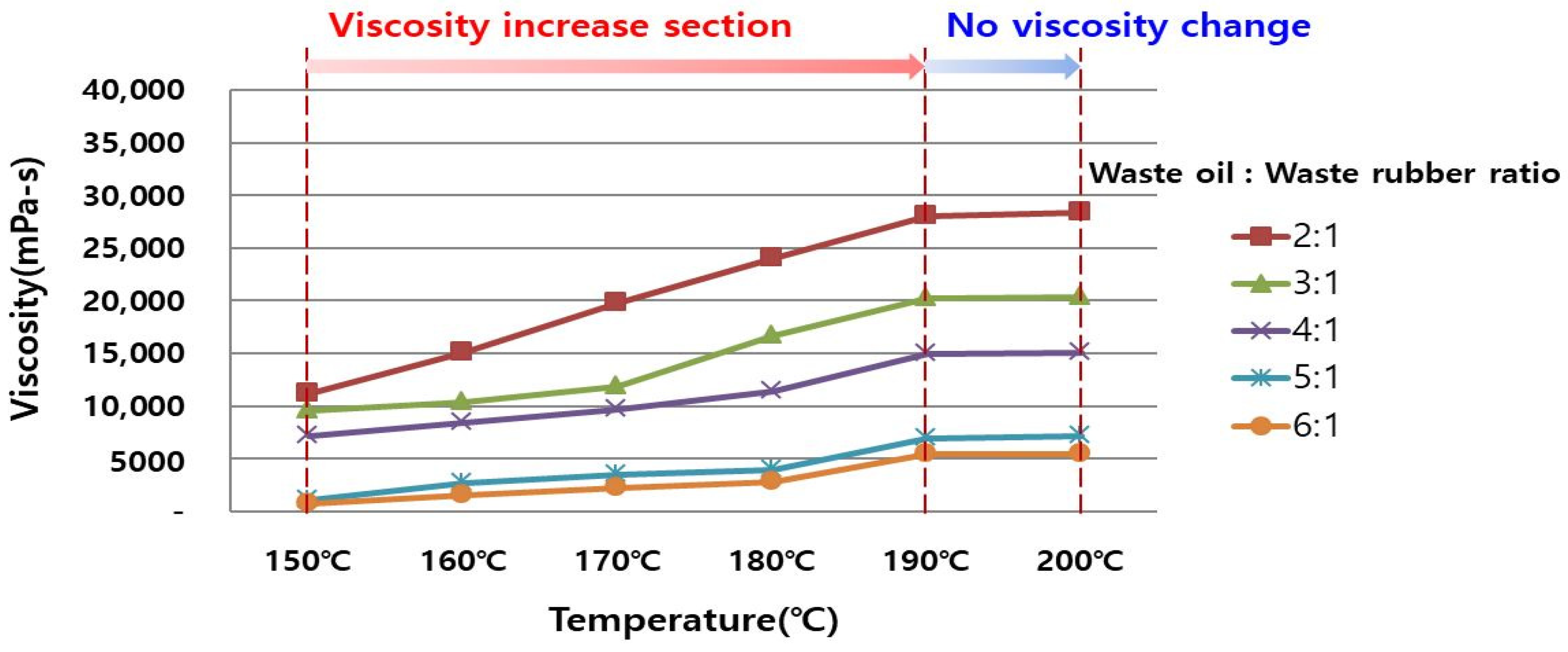
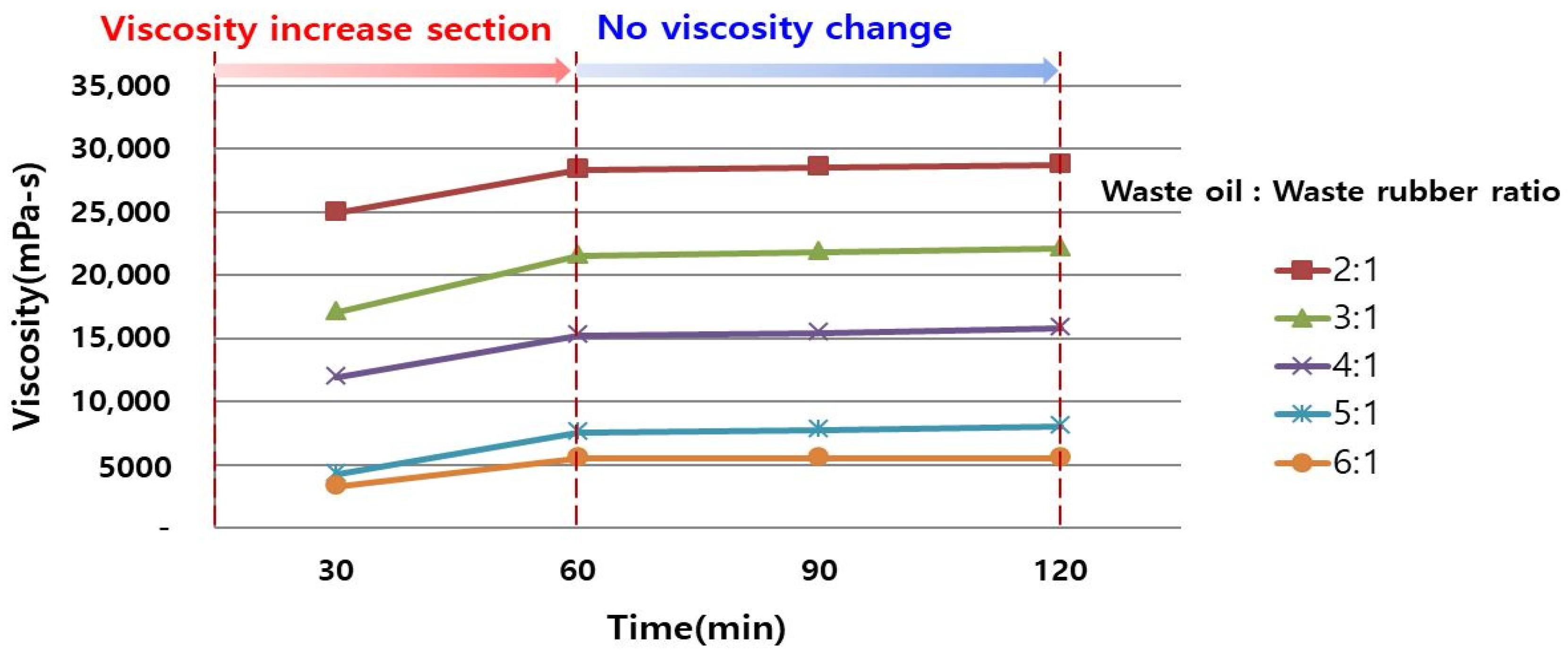
Looking at the change in the viscosity of the six mixing ratio samples of waste oil and waste rubber according to the increase in melting temperature, the viscosity increased up to 190 °C as shown in Figure 5, but there was no further change in viscosity at high temperatures after 190 °C. As shown in Figure 6, there was no more viscosity change according to the melting time after 60 min, which showed that the appropriate temperature for the mixture of waste oil and waste rubber was 190 °C and the appropriate time was 60 min.
Figure 5.
Variation in viscosity with melting temperature.
Figure 6.
Variation in viscosity with melting time.
3.1.2. Viscosity
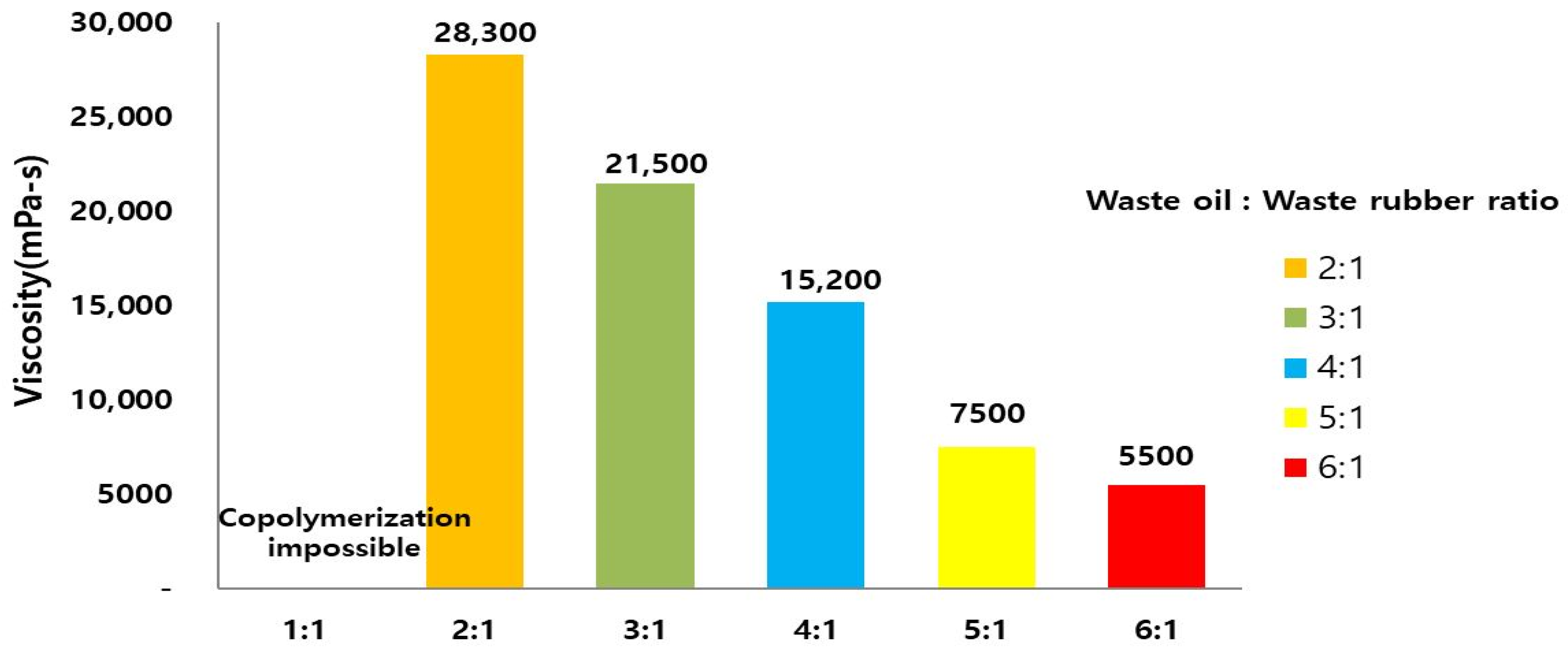
As shown in Figure 7, the viscosity value by ratio of molten liquid material extracted at 190 °C and 60 min by the ratio of waste oil and waste rubber showed that an equivalent waste oil content was impossible based on the waste rubber content, and the lower the content of waste oil, the higher the viscosity.
Figure 7.
Viscosity value with ratio of waste oil and waste rubber.
3.2. Performance Evaluation Results
3.2.1. Viscosity
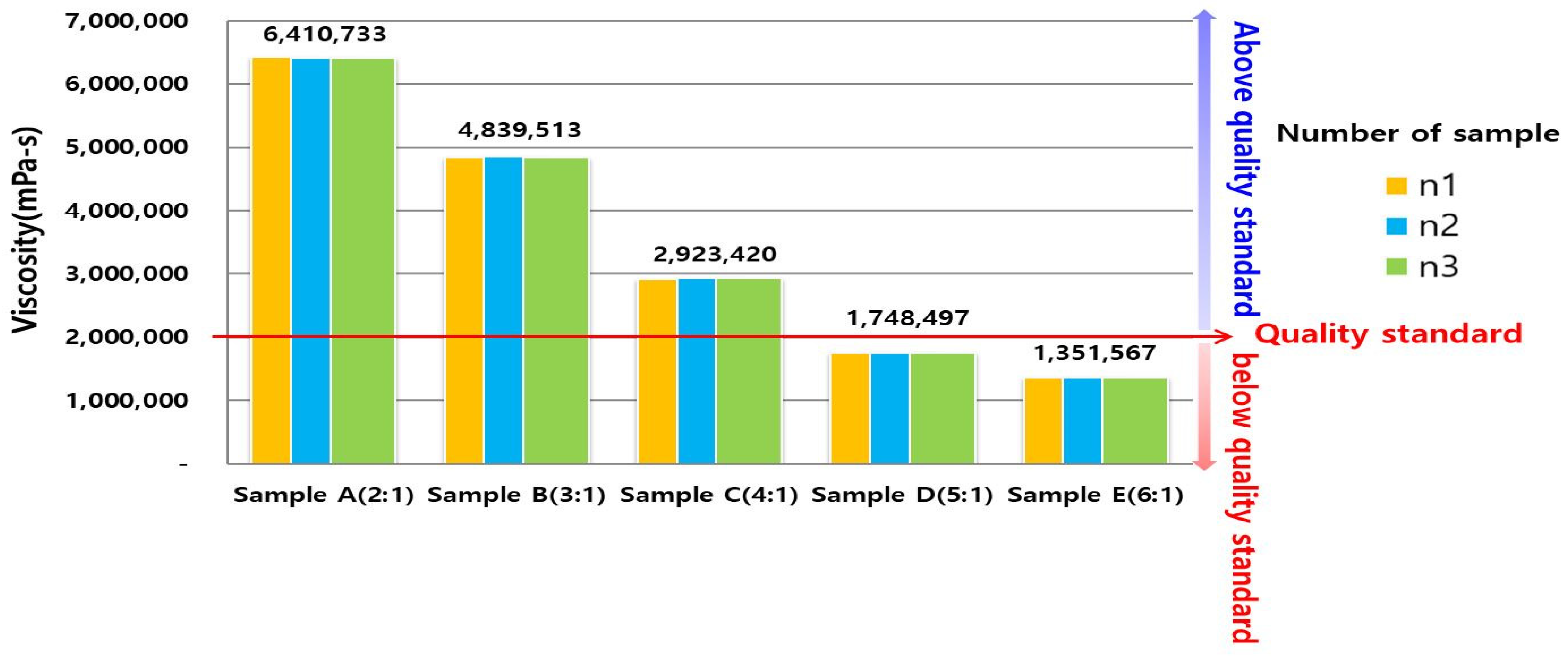
The viscosity test was conducted according to the KS M ISO 2555:2002 Plastics—Resins in the liquid state or as emulsions or dispersions—Determination of apparent viscosity by the Brookfield Test method. The viscosity test result of each W-SPRG sample mixed according to the ratio of waste oil and waste rubber showed that the highest viscosity was measured in sample A, mixed with a ratio of 2:1 of waste oil and waste rubber, as shown in Figure 8. This confirmed that a viscosity below the quality standard was measured in samples D and E, mixed with ratios of 5:1 and 6:1, because the contents of waste oil were high based on the contents of waste rubber, and this was reflected in the viscosity value of W-SPRG in proportion to the mixture viscosity value of waste oil and waste rubber. This showed that waste oil and waste rubber are not just playing the role of fillers to increase the volume but also as waterproofing materials that can adjust the viscosity of synthetic polymerized gel waterproofing materials. It was also possible to secure the quality of viscosity when the ratio between waste oil and waste rubber was below 4:1. Because the higher the content of waste oil, the lower the viscosity value based on the waste rubber content, it was difficult to secure the quality, and samples D and E were subsequently excluded from the experiment.
Figure 8.
Viscosity value by sample of W-SPRG.
3.2.2. Solid Content
The solid content test was conducted under other adhesive test methods among the test methods of KS M 3705:2015 General test methods of adhesives, and the resulting value was calculated according to the formula in Equation (1):
where N is the nonvolatile content (%); Ws is the sample weight before driving (g); and Wd is the sample weight after driving (g).
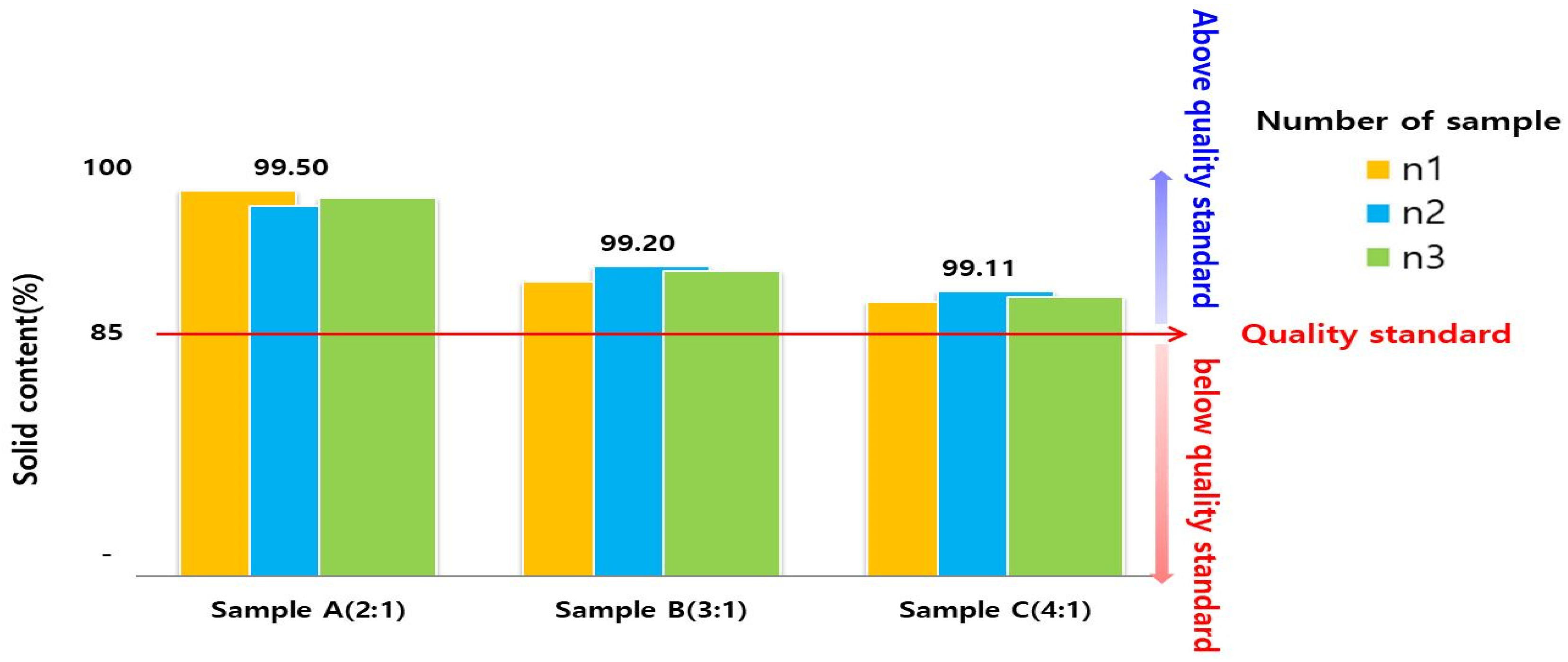
As shown in Figure 9, the test result showed that sample A was 99.5%, sample B was 99.2%, and sample C was 99.1%, which confirmed that each sample secured the high solid content because moisture and volatile matters are removed sufficiently during the high-temperature mixing process of waste oil and waste rubber.
Figure 9.
Solid content by sample of W-SPRG.
3.2.3. Water Permeability Resistance
After testing the water permeability resistance of each sample, as shown in Table 5, samples A and B were not permeable, but sample C could not resist water pressure conditions due to its relatively low viscosity compared to samples A and B, and the sample leaked. Accordingly, it was confirmed that the viscosity that can correspond to water pressure conditions should secure a viscosity value that exceeds sample C in order to achieve the quality standard.
Table 5.
Water permeability resistance by sample of W-SPRG.
3.2.4. Wet Surface Adhesion
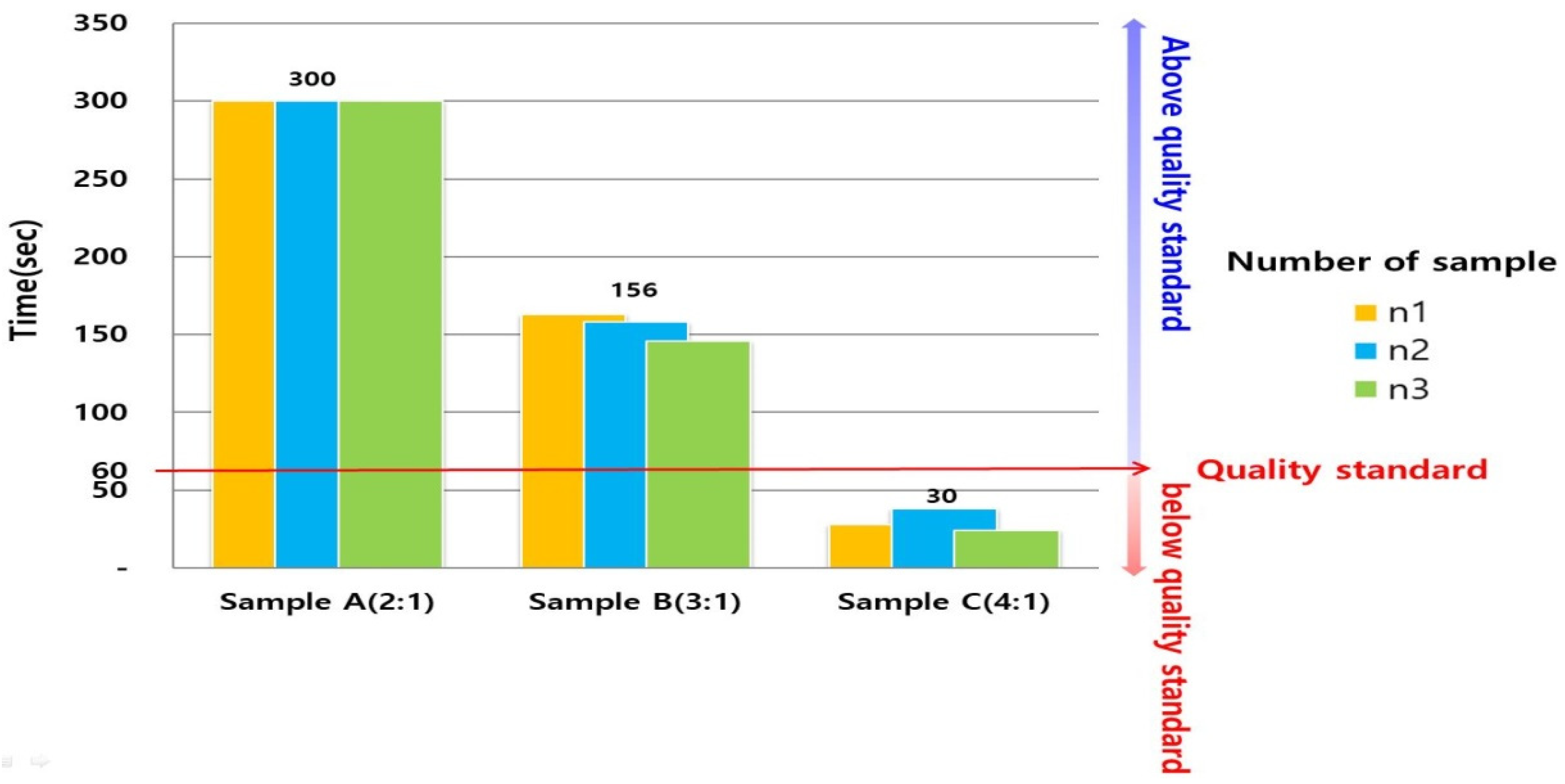
The result of the wet surface adhesion tests showed that, as shown in Figure 10, samples A and B displayed adhesiveness for more than 60 s. In the case of sample A, a more stable performance was observed compared to samples B and C under conditions where contact with moisture lasted, but in the case of sample C, it was confirmed that the adhesion capacity could not be maintained for a long time due to the relatively low viscosity value.
Figure 10.
Wet surface adhesion by sample of W-SPRG.
3.2.5. Structural Behavior Responsiveness
The test results of structural behavior responsiveness showed that, as shown in Table 6, samples A and B were not permeable, but sample C was water-permeable. In the case of sample C, it could not resist water pressure conditions and became permeated with water in the water permeability resistance test conducted after a behavior. Accordingly, it was confirmed that synthetic polymerized rubber gel waterproofing materials should secure responsiveness to concrete behavior [20] and water pressure resistance to secure stable performance.
Table 6.
Structural behavior responsiveness by sample of W-SPRG.
3.2.6. Underwater Loss Resistance
The value of the test result of underwater loss resistance was calculated by the formula in Equation (2):
where N is the nonvolatile content (%); Ws is the sample weight before drying (g); and Wd is the mass in the dry condition (dish nonwoven fabric rubber band) (g).
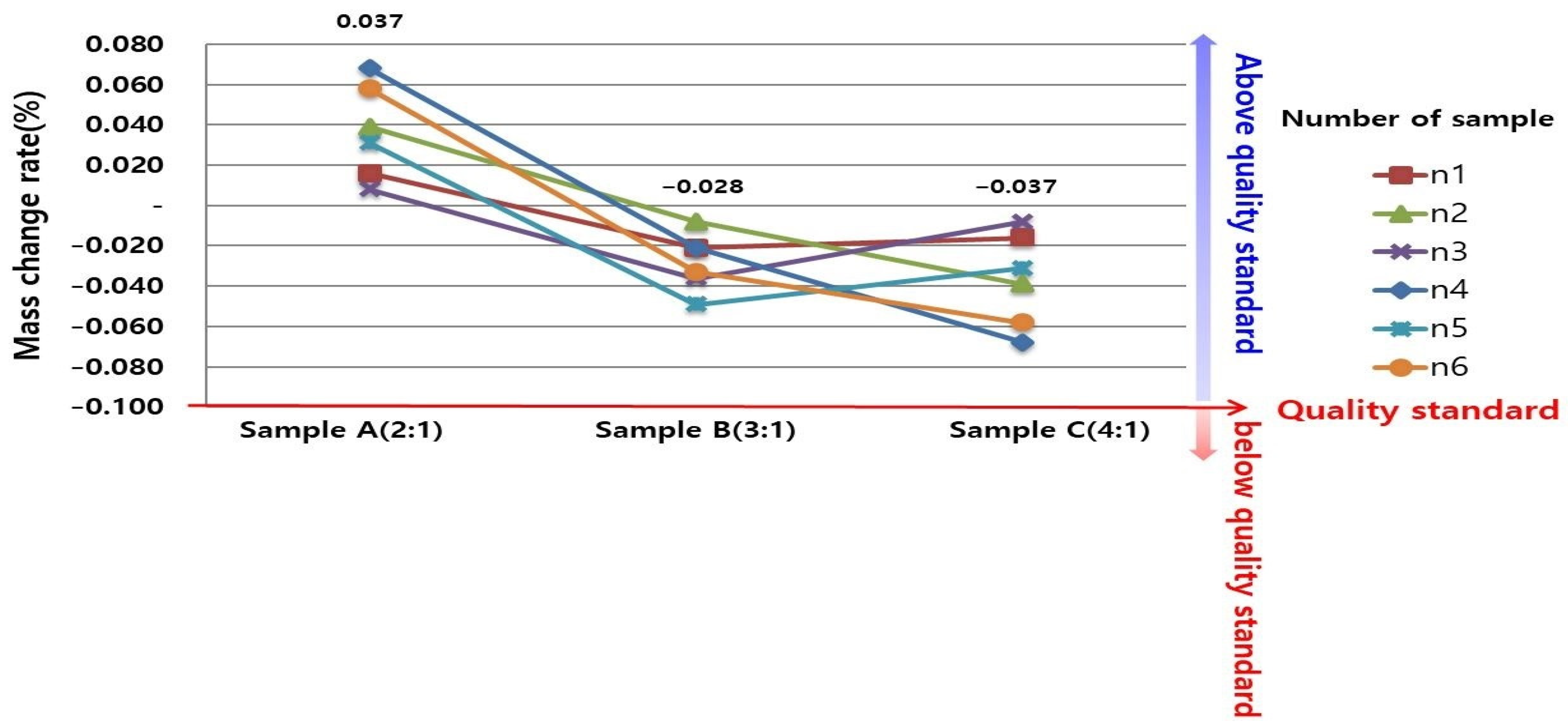
The results of the underwater loss resistance test showed that samples A, B, and C could secure higher performances than the quality standard, as shown in Figure 11. In the case of samples B and C, there was a slight decrease in the mass change rate, but the samples were not separated and lost and no suspended matter was identified. Thus, it was confirmed that they can be applied not only to ground structures but also as water leakage repair materials for underground structures by securing a performance that is not separated or lost, even in an underwater environment where a flow rate is generated [21,22].
Figure 11.
Underwater loss resistance by sample of W-SPRG.
3.2.7. Chemical Resistance Safety
The result of the chemical resistance safety test was calculated by the formula in Equation (3):
where a is the pretest sample mass (g); b is the post-test sample mass (g); and c id the mass in the dry condition.
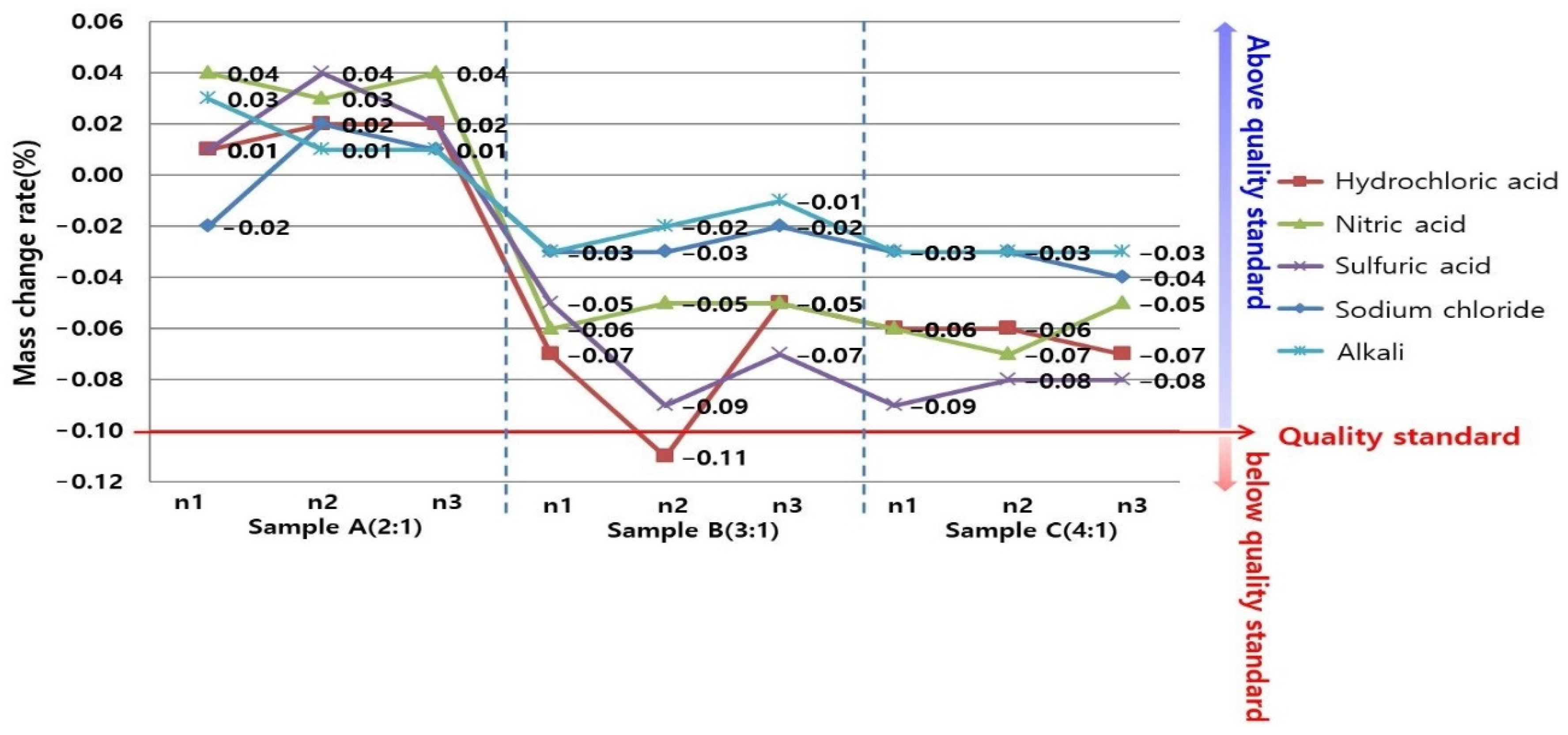
As shown in Figure 12, the result of the chemical resistance safety test showed that samples A, B, and C had little change in mass under acid, sodium chloride, and alkali treatment conditions. In the case of sample B, one specimen showed a reduced rate of change that finely exceeded the quality standard under hydrochloric acid treatment, but it was confirmed that the performance secured an average value.
Figure 12.
Chemical resistance safety by sample of W-SPRG.
3.2.8. Temperature Safety
The test of temperature safety showed that, as shown in Table 7, samples A and B were not permeated with water under the repeated heat and cold resistance conditions, but sample C was permeated for all three specimens. In the case of C, it flowed down under high-temperature conditions due to the relatively low viscosity compared to samples A and B. It was identified that the viscosity could secure a performance under high-temperature conditions where it exceeded the viscosity value of sample C.
Table 7.
Temperature safety by sample of W-SPRG.
3.3. Analyses of Results
3.3.1. Analysis of W-SPRG Performance with Mixture Ratio of Waste Oil and Waste Rubber
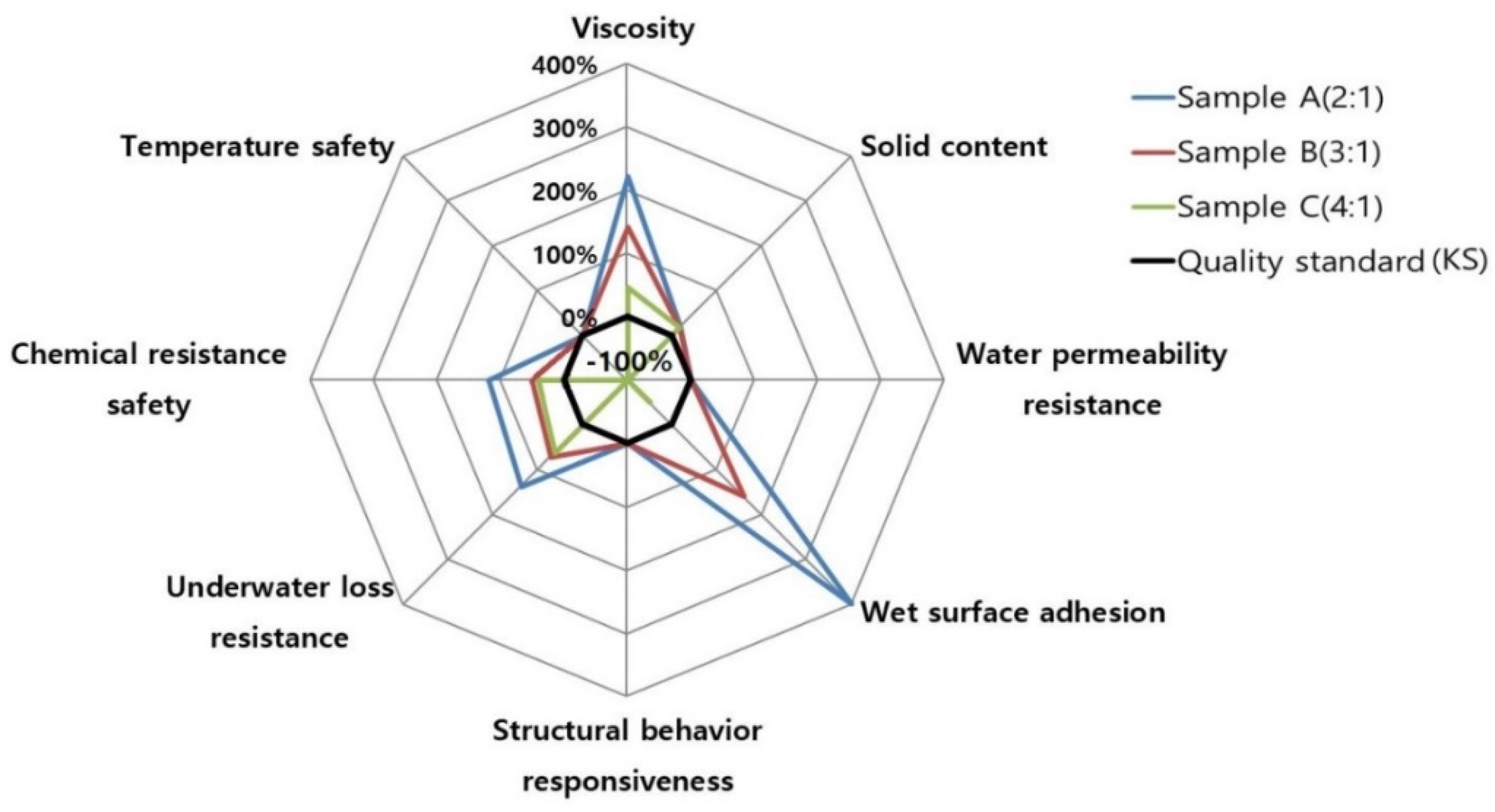
The performance evaluation results of eight items of the samples were analyzed comprehensively for samples A, B, and C, whose viscosity values were measured above the 2,000,000 mPa·s of the quality standard (KS) for each sample of W-SPRG. As shown in Table 8 and Figure 13, it was identified that samples A and B secured performances higher than the quality standard on all tests. In the case of sample C, whose viscosity value was lower than samples A and B, it turned out that it was difficult to secure the right performance under water permeability resistance, wet surface adhesion, structural behavior responsiveness, and temperature safety. It was confirmed that it was necessary to have a higher viscosity than the viscosity value of sample C in order to secure stable waterproofing performance under the high-temperature environment, repeated behavior, and wet surface conditions. This result showed that the viscosity value of W-SPRG was proportional to the viscosity value of mixed waste oil and water rubber, the viscosity of W-SPRG was correlated with ensuring the proper waterproofing performance, and the stable waterproofing performance could be secured by suggesting the proper viscosity value of synthetic polymerized rubber gel waterproofing materials, depending on the waste oil content based on waste rubber.
Table 8.
Comparative analysis of performance improvement by sample of W-SPRG compared to KS quality standard.
Figure 13.
Comparison of performance improvement by sample of W-SPRG compared to KS quality standard.
3.3.2. Comparative Analysis of Performance between W-SPRG and P-SPRG
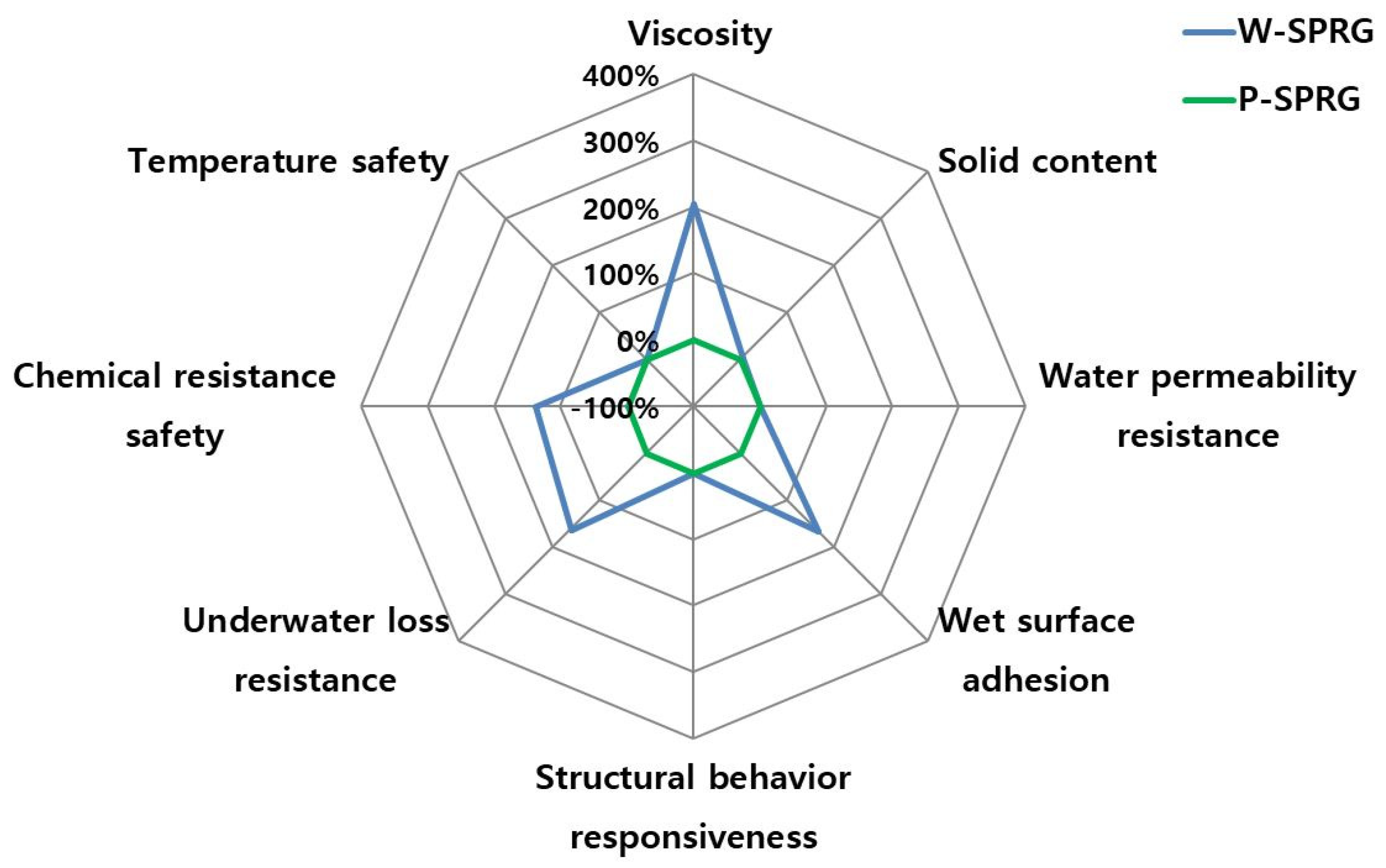
Both samples A and B of W-SPRG met the KS quality standard in all performance tests. Accordingly, to compare the performance between W-SPRG (sample A) and P-SPRG, it was identified that the performance of W-SPRG (sample A) was more improved than P-SPRG in viscosity (205%), solid content (3.6%), underwater loss resistance (161.7%), wet surface adhesion (165.5%), and chemical resistance safety (138.5%), as shown in Table 9 and Figure 14. In particular, the performance improvement was much higher in wet surface adhesion improvement viscosity, underwater loss resistance, and wet surface adhesion, which showed a great viscosity improvement by the mixture of waste oil and waste rubber. The viscosity improvement of W-SPRG means that it can have better cohesiveness than P-SPRG that is not lost in the water in an underwater environment that is in direct contact with water and can also maintain a stable waterproof layer without any bumps on a wet surface.
Table 9.
Comparative analysis of performance improvement of W-SPRG compared to P-SPRG.
Figure 14.
Comparison of improvement level of W-SPRG compared to P-SPRG.
4. Conclusions
This study identified that as the amount of waste that is the by-product of industrial development continues to increase, waste oil and waste rubber (waste engine oil and waste EPDM rubber), with environmental problems due to low recycling rates, could be used as waterproofing materials. This study also quantitatively presented the viscosity range of synthetic mixed rubber gel waterproofing materials, which utilized waste resources by mixture ratio based on the mixtures of waste oil and waste rubber.
It was found that the process oil and synthetic rubber, the main raw materials of previous synthetic polymerized rubber gel waterproofing materials, could be replaced with waste oil and waste rubber to be used as waterproofing materials by comparing and analyzing the correlation between the viscosity and waterproofing performance. It is expected to be used later as the study data to revise the quality standard for the performance improvement of waterproofing materials [23] and to expand waste resources to waterproofing areas. Furthermore, our future studies will include chemical analyses, including the chemical structure and molecular weights of polymers using such analyzers as XPS, FT-IR, NMR, etc., and extend into copolymerization techniques [9] for copolymerization reactions and the chemical and functional composition of the resulting products. The main study results are summarized below:
(1) After testing the viscosity of synthetic polymerized rubber gel waterproofing materials created by mixing and stirring other components based on the mixture ratio between waste oil and waste rubber, the results showed that the viscosity value was the highest when the mixture ratio between waste oil and waste rubber was in the range of 2:1. In the range of 5:1 and 6:1, the viscosity value was measured to be lower than the quality standard of 2,000,000 mPa·s, and the mixture ratio of waste oil and waste rubber to secure the proper viscosity of W-SPRG could be determined.
(2) In the waterproofing performance tests of samples A, B, and C of W-SPRG, whose viscosity values were measured to be higher than the quality standard of 2,000,000 mPa·s, it was shown that sample C, whose viscosity value was lower than 3,000,000 mPa·s did not secure the proper performance in water permeability resistance, wet surface adhesion, structural behavior responsiveness, and temperature safety. Thus, it showed that sample C should have higher viscosity than minimum of 3,000,000 mPa·s in the high-temperature environment, repeated behavior, and wet surface conditions.
(3) The comparison of the performance improvement between the synthetic polymerized rubber gel waterproofing materials(P-SPRG), whose main materials include the previous process oil and synthetic rubber, and synthetic polymerized rubber gel waterproofing materials(W-SPRG) based on a mixture of waste oil and waste rubber showed that W-SPRG had an improved performance in viscosity (205%), solid content (3.6%), underwater loss resistance (161.7%), wet surface adhesion (165.5%), and chemical resistance safety (138.5%).
(4) It was identified that the previous process oil and synthetic rubber can be replaced with waste oil and waste rubber to be used as synthetic polymerized rubber gel waterproofing materials, and the waterproofing performance could be improved. It was also identified that it can contribute to reductions in cost and environmental contamination problems arising from the disposal and incineration of waste oil and waste rubber.
Author Contributions
S.-K.O., S.-T.P. and J.-Y.L. conceived and designed the experiments; S.-T.P. and J.-Y.L. performed the experiments; S.-T.P. and S.-K.O. analyzed the data; S.-T.P. and J.-Y.L. wrote the paper. All authors have read and agreed to the published version of the manuscript.
Funding
This research received no external funding.
Institutional Review Board Statement
Not applicable.
Informed Consent Statement
Not applicable.
Data Availability Statement
Not applicable.
Conflicts of Interest
The authors declare no conflict of interest. The founding sponsors had no role in the design of the study, in the collection, analyses, or interpretation of data, in the writing of the manuscript, or in the decision to publish the results.
Abbreviations
KS: Korean Industrial Standards; P-SPRG: Previous Synthetic Polymerized Rubber Gel; W-SPRG: Previous Synthetic Polymerized Rubber Gel Using Waste materials.
References
- Long, Y.; Dabros, T.; Hamza, H. Stability and settling characteristics of solvent-diluted bitumen emulsions. Fuel 2002, 81, 1945–1952. [Google Scholar] [CrossRef]
- Park, J.S.; Kim, D.B.; Park, W.G.; Oh, S.K. Analysis on the causes of the oil leakage phenomenon for complex waterproofing methods of asphalt mastic and modified asphalt sheet. J. Korea Inst. Build. Constr. 2018, 18, 337–345. [Google Scholar]
- Oh, S.K.; Seo, S.J.; Park, J.S.; Kim, D.B.; Choi, S.Y.; Kim, B.I. A study on compatibility between asphalt mastic and poly urethane coating material (focused on fatigue resistance). J. Korea Inst. Build. Constr. 2018, 18, 255–256. [Google Scholar]
- Lee, J.-Y. Current Status of Waste Rubber Regeneration Technology; The Korean Society of Industrial and Engineering Chemistry, Prospect of Industrial Chemistry: Seoul, Korea, 2007; Volume 10, p. 3. [Google Scholar]
- Aljarmouzi, A.; Dong, R. Sustainable asphalt rejuvenation by using waste tire rubber mixed with waste oils. Sustainability 2022, 14, 8246. [Google Scholar] [CrossRef]
- Akbas, A.; Yuhana, N.Y. Recycling of rubber wastes as fuel and its additives. Recycling 2021, 6, 78. [Google Scholar] [CrossRef]
- Lee, Y.-B. A Study on the Application of Coagulant in Waste Oil Ion Refining Process. Master’s Thesis, Hanyang University, Seoul, Korea, 2007. [Google Scholar]
- Oh, S.-K. A New Approach to Water-Proofing and Leakage Repair Technology of Concrete Structures; Korea Institute for Structural Maintenance and Inspection: Seoul, Korea, 1999; Volume 3, p. 2. [Google Scholar]
- Malinowski, S.; Herbert, P.A.F.; Rogalski, J.; Jaroszyńska-Wolińska, J. Laccase enzyme polymerization by soft plasma jet for durable bioactive coatings. Polymers 2018, 10, 532. [Google Scholar] [CrossRef] [PubMed]
- Korea Land & Housing Corporation. A Proposal for the Quality Enhancement of the Waterproofing Method in Housing; Korea Land & Housing Corporation: Jinju, Korea, 2017. [Google Scholar]
- Korea Land & Housing Corporation. LH Special Specifications 42535 Adhesive Gel-Sheet Hybrid Water-Proofing; Korea Land & Housing Corporation: Jinju, Korea, 2014. [Google Scholar]
- Ministry of Land, Infrastructure, and Transport. National Construction Standard Standard Specification KCS 414007 Sheet and Coating Hybrid Water-Proofing; Ministry of Land, Infrastructure, and Transport: Sejong, Korea, 2016. [Google Scholar]
- Lee, J.Y.; Seo, H.J.; Oh, K.H.; Bo, J.; Oh, S.K. Crack-bridging property evaluation of synthetic polymerized rubber gel (SPRG) through yield stress parameter identification. Materials 2021, 14, 7599. [Google Scholar] [CrossRef] [PubMed]
- Park, T.-W. A Study on the Reduction Effect of CO2 by Green Growth and Recycling Waste Lubricant. Master’s Thesis, Kyungpook National University, Daegu, Korea, 2010. [Google Scholar]
- Ministry of Environment. Environmental Sign Certification Standard EL244 Waterproof Materials for Construction. 2012. Available online: https://el.keiti.re.kr:9443/service/page.do?mMenu=2&sMenu=1 (accessed on 8 August 2022).
- Korean Standard, KS M ISO 2555:2002; Plastics-Resins in the Liquid State or as Emulsions or Dispersions-Determination of Apparent Viscosity by the Brookfield Test Method. Korean Standards Association: Seoul, Korea, 2002.
- Korean Standard, KS M 3705:2015; General Test Method of Adhesives. Korean Standards Association: Seoul, Korea, 2015.
- Korean Standard, KS F 4935:2008; Adhesive Flexible Rubber Asphalt-Based Injection-Type Sealing Material for Water-Leakage Repair. Korean Standards Association: Seoul, Korea, 2018.
- ISO TS 16774:2011; Guidelines for the Repair of Water-Leakage Cracks in Concrete Structures, 2016–2017. Parts 1–6. International Organization for Standardization: Geneva, Switzerland, 2017.
- Oh, K.-H.; Kim, S.-Y. Strain concentration ratio analysis of different waterproofing materials during concrete crack movement. Materials 2021, 14, 4429. [Google Scholar] [CrossRef] [PubMed]
- Oh, S.-K. Selection for Proper Materials and Methods to be Considered in Waterproof Design of Buildings; Architectural Institute of Korea: Seoul, Korea, 2007; pp. 76–82. [Google Scholar]
- Oh, S.-K. Waterproof Construction Handbook; Korea Specialty Construction Association, Wet-Waterproofing Contractors Council: Seoul, Korea, 1997. [Google Scholar]
- Ministry of Land, Infrastructure, and Transport. Utility Pipe Conduit Standard Specification. 2010. Available online: https://www.codil.or.kr/codil.do (accessed on 8 August 2022).
Publisher’s Note: MDPI stays neutral with regard to jurisdictional claims in published maps and institutional affiliations. |
© 2022 by the authors. Licensee MDPI, Basel, Switzerland. This article is an open access article distributed under the terms and conditions of the Creative Commons Attribution (CC BY) license (https://creativecommons.org/licenses/by/4.0/).