


Abstract
Natural plant protection products (known as biopesticides), derived from natural materials (plants, bacterial strains, and certain minerals) that can be used to control pests, are an alternative to plant protection chemicals (known as pesticides) due to certain advantages: less toxic to humans and the environment, no release/leaching of harmful residues, and usually much specific to the target pests. This review focuses on the systematization of information highlighting the main advantages related to the natural plant protection products used, the extractive methods of obtaining them, their physical-chemical analysis methodology, the specific constituents responsible for their pesticide effects, the mechanisms of action, and methods for direct application on vegetable crops or on seeds stored in warehouses, in order to eliminate the adverse effects occurred in the case of plant protection chemicals use. Special attention has been accorded to natural plant protection products from the spontaneous flora of Moldova (Romania’s macroeconomic region NE), which can be considered a resource of valuable secondary metabolites, especially in the form of vegetable essential oils, with biological effects and biopesticide routes of action. All presented information concludes that biopesticides can successfully replace the chemical plant protection products on small farms and especially in silos (seeds and cereals).
1. Introduction
Ensuring food needs for a numerically growing population in certain geographic areas of the world has stimulated the use of natural plant protection products (as biopesticides) in agriculture because of their role in increasing the productivity of crops and protecting them from the action of certain pests [1,2].
In agriculture, the action of the pest manifests both during the development of the crop and in the post-harvest period (during transport, or storage). For this reason, the manufacturing of chemical plant protection products (known as pesticides) has been and is still closely related to certain branches of science such as biology, organic chemistry, biochemistry, as well as those of the agricultural sector.
The use of chemical plant protection products has led to increased productivity in agriculture mainly due its efficient action against the unwanted vegetation and removal of pests [2,3,4]. According to data provided by the World Health Organization [1], chemical plant protection products usage was increasing worldwide since 1940 (when first use took place), especially in developed countries, having as main objectives the following [5]:
- The control of arthropods during the vegetation period.
- The control of pathogens from agricultural crops and in the forest.
- Selective weed control in agricultural crops and forestry.
- The disinsectisation/sanitation of silos, food stores, and greenhouses.
- The treatment of seeds.
However, the intensive use of chemical plant protection products (persistent and non-biodegradable), often even irrational, has contributed to the initiation and intensification of deep soil degradation processes, groundwater and surface water pollution, and air contamination, consequently affecting the flora and fauna in the adjacent areas [2,6,7,8,9,10,11].
Contamination of crops from these soils has been recorded which has led to the impact on the entire food chain and especially on food products innocuity [12]. Therefore, new actual agricultural development directions are imposed and the development of new, highly efficient products that do not create dependence and resistance among the pests (thus reducing the number of applications and the dose of these products) to protect fauna and be environmentally friendly is urgently required [2,3].
In recent decades, international and national concerns have been intensified both to increase plant production and to improve its capitalization. Multiple and complex industrialization of plant crops is constantly evolving by applying modern methods for their preservation and processing.
The plant organism, in terms of the chemical composition and the functions that performs, is very complex. Today, plants are recognized as the sources of bioactive compounds (terpene, steroids, anthocyanins, anthraquinones, phenols, polyphenols, etc.) with applications in cosmetic, pharmaceutical, and food industries [3].
However, recent data show that a growing number of vegetal plants extracts have been studied and tested as natural plant protection products (biopesticides) (well-known are the extracts of Chrysanthemum cinerariaefolium, Chrysanthemum coccineum, Haloxylon salicornicum, Stemona japonicum, Schoenocaulon officinale, Origanum vulgare, Thymus vulgaris, Azadiractina indica, Leuzea carthamoides, Mentha spp., Lavendula spp., Nicotiana spp., and also certain active ingredients as polyphenols, alpha-chaconine, nicotine, thymol, silphinenes, carvacrol, pyrethrins, rotenone, byanodine sabadilla, from certain essential oils and plant extracts) that can be used against a wide range of arthropod pests that attack vegetal plant crops or seeds deposits. The obtained results demonstrated its high efficacy, multiple mechanisms of action and low toxicity on vertebrates [3,13,14,15,16,17]. However, the number of biopesticides based on vegetal plant extracts, which have been tested, is still low.
The aim of the work is to systematize information on the use of synthetic chemical plant protection products (pesticides) and their effects on the environmental factors and the quality of the agro-food products which motivates the advancement of the studies regarding the natural plant protection products (biopesticides) obtained from the vegetal extracts.
Ensuring the quality of people’s life is closely associated to a series of concepts implemented in recent years, namely sustainable development, climate change prevention or sustainable and bio-dynamic agriculture, this research study presents some pertinent information on natural plant protection products which represent a real challenge for researchers and practitioners. Consequently, this work highlights the significance and impact of a few proved beneficial results of plant protection products in association with their specific characteristics, especially of the herbal extracts from the spontaneous flora of Moldova (Romania).
2. Started Point: Chemical Plant Protection Products
The synthetic chemical protection products are used in agriculture to prevent the growth and destruction of weeds and pests that affect the crop quality. Among the factors determining the alteration of crops’ quality and quantity are: wild animals, rodents, insects and, most of all, pathogenic microorganisms, such as: fungi (Fusarium spp., Aspergillus spp., Lecanicillium lecanii, Beauveria bassiana, Trichoderma harzianum, T. harzianum), bacteria (Bacillus thuringiensis, Bacillus popilliae, Actinomycetes, Bacillus subtilis, Pseudomonas fluorescens) and viruses (Baculoviruses, Microspridian—Lymantria dispar) [1,2,3,14,17,18].
The action of pests, of any category, is primarily to reduce the quality and quantity of crops and obtained food products, which may affect the health of consumer (e.g., human health) [7,10,13].
The specialized literature indicates the existence of several classification criteria of the chemical plant protection products [18]: origin, anti-harmful action (action on pests), physical form of presentation, chemical structure and/or degree of toxicity. In practice, the selection of certain chemical plant protection products is done in compliance with criteria for their actions on pests and toxic effects on the population and the environment [10,19], such as:
- Lower impact on human health and a very low toxicity to warm-blooded animals.
- Lower toxicity compared to other alternative pest control products.
- Lesser effects on other organisms in the environment, such as bees, fish, and birds.
- Lower potential for contamination of soil and, implicitly, groundwater.
- Minimum number of required applications.
- Higher efficiency at lower doses and avoidance to pest resistance.
Last but not least, the selection of a particular chemical plant protection product is made according to the purpose and its main characteristics: selectivity and specificity, systemic action, phytotoxicity, occurrence of pest resistance, toxicity to humans and animals, environmental pollution, etc. [1,6,7,10,19].
Practical use of chemical plant protection products involves direct application to soil/plants, in relatively low doses, in the liquid form or mixtures. Particular attention is paid to the modulation of these compounds, which involves mixing the active substance with various solid ingredients (talc, kaolin, clays, calcium carbonate, etc.) or liquids (water, organic solvents, mineral and/or essential oils), because they must allow uniform spread over large areas of reduced amounts of active substance and achieve an improvement in adhesion to plants and thus ensure an optimal biological effect [19].
Moreover, the choice of conditioning form and formula helps to increase the effectiveness and economics of chemical plant protection product treatments and reduces the risk of pollution and phytotoxicity. Of great importance in the chemical plant protection product conditioning is also the choice of auxiliary products (solvents, surfactants) which should be based on a number of factors dependent on the intended purpose and the final properties of the commercial product [19]: the physicochemical properties and the active substance action; the physiological and biological characteristics of the pest; the type of culture being treated; the soil composition; the climatic conditions, etc.
The chemical plant protection products, under different trade names that depend on the manufacturer, are conditioned in various forms to fulfill much users requirements:
- (a)
- Solid products such as: powdered powders, wettable powders, granules, impregnated strips, solid fertilizer mixtures, etc.
- (b)
- Liquid products, namely: aqueous solutions, mixtures of organic solvents or mineral oils, which can provide a fine spraying and, in the aerosols, emulsifiable concentrates.
- (c)
- Micro-encapsulation and fixation on macromolecular support is a modern conditioning process, with advantages over classical methods, applied in the cases where the structure and properties of active derivatives allow such approach.
A good chemical plant protection product should be strong against pests, should not endanger the human health and non-target organisms, and ultimately should break down into harmless compounds and thus it does not persist in the environment. Both relative and specific toxicity of the chemical plant protection products should be estimated to determine its potential and it is closely related to the spray droplet size and chemical dose density, the application time, which can also provide adequate control of the pests. Also, the research on the development of adequate packaging and disposal procedures is needed, as well as application of equipment optimization. All these will lead to the rational use of chemical plant protection products, and thus they can be used in an acceptable and sustainable way.
Very strict laws (i.e., Environmental Protection Agengy—EPA’s regulation of pesticides (EPA Agrees to Regulate Novel Nanotechnology Pesticides after Legal Challenge-March 2015); (EC) 1107/2009) should be adopted to protect the flora and fauna surrounding the environment in which the target pests or target organisms live.
A number of indications/recommendations on the chemical plant protection product label can prevent the effects on non-target organisms. However, there are many cases where the benefits of chemical plant protection products (pesticides) come with a number of disadvantages due to their toxicity or their degradation products, to treated crops or to the flora and fauna adjacent to these crops [10].
3. Next Level: Natural Plant Protection Products (Biopesticides)
Today, the concern for people’s life quality has become more obvious by ensuring the protection of the environment and food safety. Food quality is closely related to raw material production conditions. Vegetable crops, seed production and preservation are influenced by the quality of pest control products and management of weeds as well as parasitic crops. A few regulations were permitted to reduce the usage of synthetic chemical plant protection products in agriculture where it was possible [20].
At the same time, it was expanded the phenomenon of resistance of the insects and harmful organisms to the action of synthetic chemical plant protection products dispersed on vegetal plants as a result of repeated use and increased doses [21]. In this context, new concepts appear and develop, such as the nano-biopesticides [22,23,24] and ecological organic agriculture. The concept of ecological organic agriculture does not accept the use of chemical synthesis compounds in order to protect, stimulate the growth or preservation of plants, fruits, and seeds [1,25], and thus a new category of compounds, natural plant protection products, appeared as a challenging alternative.
Natural plant protection products (biopesticides) are natural compounds obtained from the mineral, plant, or animal kingdom, including microorganisms, by various methods of extraction of active compounds or classes of active compounds/ingredients with beneficial effects in pest control through various mechanisms [13,20,26,27,28].
The natural plant protection products are considered the third-generation of chemical plant protection products (pesticides) that are rapidly gaining popularity. Starting with the 19th century, agriculture begun to use natural insecticides such as pyrethrum and rotenone, derived from chrysanthemum flower powders and Derris roots [20]. A wide range of microbial products derived from microorganisms and other natural sources have been added to its [13,15,21,29,30]. The natural compounds of the general category of biopesticides may belong to the next subclasses: biofungicides (e.g., Trichoderma spp.), bioherbicides (Phytophthora spp.), bioinsecticides (spores forming bacteria, Bacillus thuringiensis and B. popilliae, Actinomycetes), entomopathogenic fungus (Beauveria bassiana), microscopic roundworms (Entomopathogenic nematodes) [31], spinosad (Saccharopolyspora spinosa), insect hormones, and insect growth regulators [3,14,17,29].
Among the natural plant protection products, bioinsecticides used in the protection of crops and seeds in storage conditions and the management of weed control are of particular interest.
There are known situations when it was applied different volatile oils obtained from different plants for their bioinsecticide effect, although the mechanism of action is insufficiently known [16,21,31,32,33]. In a recent review, Zoubiri and Baaliouamer (2014) make a remarkable systematization for an impressive number of plants (227) belonging of many botanical species (259) from which volatile oils with a very complex chemical composition were obtained (i.e., spathulenol (8.6%), caryophyllene oxide (7.5–10.6%), cis-3-hexen-1-ol (11.3%), 1-hexanol (5.8%), β-caryophyllene (9.7%), γ-cadinene (5.0%)), which showed insecticidal activity [16].
The classes of biologically active compounds in most essential vegetable oils are terpenes and terpenoids (~25,000 types, 55%), alkaloids (~12,000 types, 27%), and phenolic compounds (~8000 types, 18%) which can be framed into two major classes: phytoalexins which are compounds that are synthesized de novo (as opposed to be released by, for example, hydrolytic activity) and phytoanticipins which are pre-formed infectious inhibitors [32]. The authors also systematized the results of some studies performed for determination of the essential vegetal oils’ effect on insects. For this purpose, for the type of tested insect, the applied dose was expressed as: LD (lethal dose) 50/90/95; LC (lethal concentration) 50/80/90/100; RD (repellent dose) 50; ED (effective dose) 50; LT (lethal time); MLD (minimum lethal dose); RC (repellency class), respectively the insecticidal activity type (larvicidal, contact, fumigant, repetitive, acaricidal, antifungal, adulticide) [16].
Toxicity of certain active ingredients of some natural plant protection products extracted from plants against insects varies greatly depending on type of solvent used as carrier, such as shown in Table 1 for the oral and dermal lethal dose (LD50) [15] or for fumigant toxicity of certain plant essential oils (EOs) (e.g., for Callosobruchus chinensis EO − LC50 = 10.8–11.0 μL/L after 24 h (LT), or Senegalia Tenuifolia EO with a concentration of 12.5 μg/mL air (MLC) caused 96.6% mortality in larvae of Lycoriella Ingenue) [34].

Table 1.
The oral and dermal lethal dose (LD50) of some ingredients/active compounds.
Another relevant example is the study of Bett and his collaborators (Miller and Smith), which systematizes a series of results of recent research on the repellent effect and contact toxicity of essential oils of Cupressus lusitanica (Miller) and Eucalyptus saliga (Smith) on insects that attack agro-food products (seeds, grains) during storage [14].
Recently, the development of new classes of natural plant protection products has been made and succeeded, being approved and integrated into agricultural practice with the support of institutions empowered to market of these products with efficacy on pests, which has been a real success for commerce [35]. Among these, good examples include:
- Rosemary essential oil (commercial name: Ecotrol™, Sporan™, Ecosmart) used as insecticide, acaricide, fungicide (octopamine antagonists; membrane disruptors) [1,15,20,21,32].
- Clove essential oil (commercial name: Matran EC, Burnout II, Bioorganic Lawn) used as insecticides, herbicides (neurotoxic, interference with the octopamine neuromodulator) [32,36].
- Jojoba essential oil (commercial name: Detur, E-Rasem, Eco E-Rase, Permatrol, EraseTM) used as fungicide, insecticide (β-suffocation) (eggs and immature life stages), repellent, blocking access to oxygen) [1,21,32].
- Cinnamon essential oil (commercial name: Weed Zap™, Repellex, Ecosmart) used as an insecticide, herbicide (octopamine antagonists, membranes disruptors) [15,20,21,32,36].
- Lemon grass essential oil (commercial designation: GreenMatch EXTM, EcoPCO) used as insecticides, herbicides (octopamine antagonists, membrane disruptors, etc.) [1,15,20,21,32].
Although these alternative natural plant protection products are natural and have repellent, vermifugal, germicid, and vermicid effects, the widespread practical applicability is still limited due to farmers’ reluctance to accept natural products as biopesticides and due to the insufficient studies in this area [13,25,32,37,38].
Particular attention is paid to natural compounds with bioinsecticidal action that can be obtained from a variety of plant, animal, or microorganism sources [15,20,30]. The antibacterial action manner depends on the characteristics of the insecticide classes to be destroyed by shock effects, ovicidal or larvicidal effects, multiplication influence (pheromones). Even though the number of plant-originated insecticides of practical importance is rather limited compared to chemical plant protection products, the continuation of finding new active compounds/ingredients of different plants in the entire world is the future challenge in this field.
Insecticides of plant origin are largely nontoxic to humans and animals, do not leave toxic residues and do not cause the occurrence of insect resistance [3,14,15,16,20,21,39].
The relatively high price of natural insecticides limits their application to restrictive areas, such as sanitation, greenhouses, etc. Among the compounds with biological action against insects, obtained from the plant species, there are remarkable various categories of alkaloids, pyrethrins, rotenoids and terpenic structure-based insecticides [15,20,30]. The mechanism of insecticide action is shown in Figure 1.
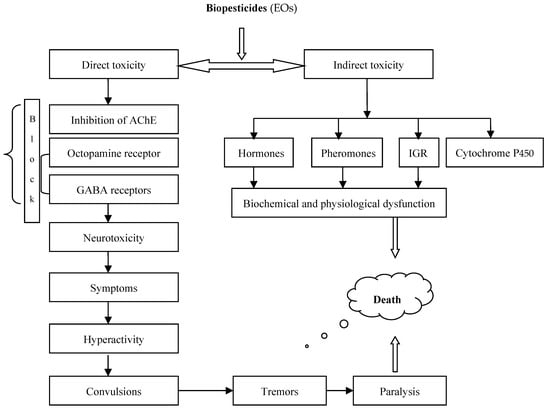
Figure 1.
The action mechanism of essential oils on insects (adapted from Mossa 2016 [21]). (Notes: EOs—essential oils; AChE—acetylecholinestrase; GABA receptor—γ-aminobutyric acid receptor; octopamine—a neurotransmitter, neurohormone and circulating neurohormone-neuromodulator working on nervous system in insects).
4. Plant Extracts as Natural Plant Protection Products
Plants can be considered as a perfect laboratory with potential to supply organic and inorganic substances without which human and animal life would be impossible [15,27,32,40,41]. These substances synthesized in the plant kingdom may be of primary (proteins, carbohydrates, and fats) or secondary (terpene, steroids, anthocyanins, anthraquinones, phenols and polyphenols, etc.) metabolites classes [3,16,32,39,42,43,44].
Secondary metabolites reported till now include the following classes: nicotine, caffeine, flavorings (vanillin and cinnamic aldehyde), pigments (indigo and kaki), pyrethrum (natural insecticide obtained from marigolds and chrysanthemum varieties), rubber (natural latex obtained from the bark of the rubber tree), dyes, odorants, flavorants and alkaloids [3,16,39,42,45]. Although essential oils have demonstrated high efficacy, multiple mechanisms of action, low toxicity on vertebrates, and potential use of byproducts as reducing agents, the number of commercially available natural plant protection products based on essential oils still remains low.
Practical use of vegetal extract as natural plant protection products is limited to individual producers and small crops. Herbal extracts used as biopesticides have a few advantages such as:
- High efficacy against a wide range of pests and diseases of agricultural and medical importance.
- Multiple action mechanisms due to the large number of active ingredients in each mix.
- Low toxicity against non-target organisms, including humans.
- Relatively simple and cheap production processes.
- Reducing health risks during application due to low residue toxicity.
Analyzing the main strengths and weaknesses that result from the use of plant extracts as natural plant protection products, the main challenges for future research include: (1) developing effective stabilization processes (e.g., microencapsulation); (2) simplifying complex and costly authorization requirements for natural plant protection products use, and (3) optimizing plant growth conditions and extraction processes leading to a homogeneous chemical composition [39].
4.1. Methods of Vegetal Extracts Preparation
The quality of products obtained by plant processing (which spontaneously grows and develops spontaneously or is grown under controlled conditions, such as medicinal, aromatic, ornamental or wild) is given by the content of active principles. This content in turn is dependent on ecological factors, the species growth area, the culture technology, the biological value of the cultivar (population, variety, hybrid, etc.) and, last but not the least, the processing modalities.
Obtaining active principles with different properties and applications (in making products for phytosanitation and phytopharmaceutical uses, pharmaceuticals, foodstuffs, or cosmetics) from vegetal material can be achieved mainly by extraction methods. They were especially noticeable solid-liquid extraction working with different fragments of the plant or in plant mixtures dependent on established target [42,44,45,46,47,48,49,50,51,52], and liquid-liquid extraction for separation of certain components from the crude extract of the solid-liquid extract.
The studied literature indicates many variants of classical or modern solid-liquid extraction that can be successfully applied for this purpose. Thus, Talmaciu et al. [42] systematize in their work some variants of liquid-solid extraction presented in scientific literature [43,49,51,52,53]. It started from the classical ones (solvent extraction and distillation) to modern variants or unconventional ones (pulsator—electric field, enzyme digestion, ultrasound, microwave heating, or supercritical fluid extraction) or more recent date methods entitled “green extraction techniques”, which use modern solvents to extract the active principles of the plant.
The choice of an extraction technique depends on the purpose of the application, the type and the part of the plant to be used, the solvent requirements (acceptable level of toxicity on the extract and the environment, chemical nature of the compounds to be extracted), temperature regime, and optimum time without initiating the destruction of chemical compounds (Table 2), and follows the methodology described in Figure 2.
Table 2.
Methods used to obtain plant extracts.
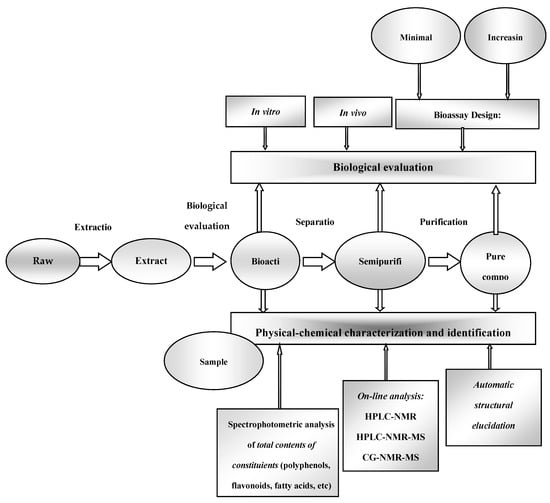
Figure 2.
Schematic representation of the extraction of active principles from different plants [32].
Processing plants for their use as extraction material of bioactive compounds involves two process phases:
- (1)
- Primary processing consisting of the drying, conditioning, and packaging of plants.
- (2)
- Advanced processing, which involves the transformation of raw materials obtained from primary processing into products that can be marketed: phytotherapeutic products (aqueous extractive solutions, hydroalcoholic extractive solutions, lyophilized powders from extractive solutions), phytosanitation products, cosmetics, nutritional supplements and dietary supplements or food additives.
Because these active principles with biological action on living organisms can be exploited, they must be conditioned in various forms accessible to the consumer but also effective in releasing the active principle in certain types of media (aqueous, alcoholic, etheric or other organic types) (Table 3). Vegetal products may be used in the following forms: (i) natural state: whole, fragments, powders or as influenza/infusion, decoction products, macerate, or (ii) phyto-sanitary preparations (extracts, tinctures, syrups) which are easier to administer and not very expensive.
Table 3.
Methods for extraction of active compounds from plants [42,44,46].
Solvent extraction has been shown to be the most commonly used bioactive compound extraction method/technique for plants, involving the extraction of components from a solid or semi-solid sample in a suitable solvent [62,63,64,65,66]. It can be practiced in several variants depending on the type of compound to be obtained and the cost-benefit criterion: (a) the classical variant, (b) the supercritical fluid variant, (c) with natural deep eutectic solvents or as vegetal oil, and (d) with alternative heating source (ultrasounds and microwaves) [44,46,47,52,53,67]. In the extraction technique, the choice of solvent (water, organic solvent (ethanol, methanol), or mixtures of organic solvents (ethyl acetate, hexane, etc.) is essential and depends on the nature of the substance to be extracted and the subsequent treatment to be applied further to the obtained extract [46,48,52,53].
The development of extraction techniques to obtain highly effective separation of all-natural ingredients, irrespective of their concentrations, has prompted numerous comparative studies on the advantages and disadvantages of these separation techniques currently practiced [42,45,63]. Numerous restrictions on organic solvents, linked to toxicity and environmental impact, have boosted the identification of new extraction opportunities with modern or “green” solvents.
Green technologies (e.g., sonoextraction, microwave extraction) have emerged and developed [42,47,49,51,67,68] due to a few appreciable advantages: (a) short extraction time, (b) low energy consumption, (c) use of non-toxic environmental solvents (environmentally friendly ones). Also, another direction in solvent extraction is the use of non-polluting “green solvents” that are non-volatile organic compounds with high dissolution, low toxicity, low environmental impact, which are usually obtained from renewable resources [46,48,49,52].
4.2. Methods for Determination of the Chemical Composition of Plant Extracts
The chemical composition of plant extracts depends mainly on the parts of the plant that are subjected to extraction, the growing and harvesting conditions, as well as the extraction technique and conditions. The resulting extract, irrespective of the extraction technique used, has an extremely complex composition, which is why the selectivity and sensitivity of the quantitative determination method are essential. The plants are distinguished by their qualitative chemical composition, largely on compound classes, but different as a quantitative composition, as well as by the presence of compounds that differentiate them by their taste, smell, and biological properties. In general, a number of classes of main organic chemical compounds (carbohydrates, flavonoids, phenols, quinones, saponins, tannins, lipids, fatty acids) are distinguished in different proportions along with bitter principles, resins, anthocyanins, gums, dyes, microelements (Ca, Mg, K, Zn, Cu), and vitamins [17,21,33]. The volatile oils obtained have different colors and consistencies from one plant to another and are characterized by a complex content rich in polyphenols, oxygenated monoterpene compounds (such as thymol, carvacrol, linalool, borneol, carvone, camphor, etc.), hydrocarbons (p-cymene, α- and β-pinene, myrcene, limonene, etc.) (Table 2), and sesquiterpenes [39,69].
Considering the selectivity and sensitivity as criteria for assessing the analytical performances for a method of quantitative determination of the composition of plants, extracts and oils obtained from them, a series of methods applied for quantitative or structural determinations are practically preferred depending on the context. Frequently used quantitative determination methods include the following: spectrophotometric methods (SM), high performance liquid chromatography (HPLC), high speed counter current chromatography (HSCCC), and thin-layer chromatographic (TLC) [45,65,69,70,71]. For structural characterization, the scientific literature mentions spectrometric methods as well as Nuclear Magnetic Resonance (NMR), Fourier Transform Infrared Spectroscopy (FTIR), Mass Spectroscopy (MS) [42,44,45,69,70,71].
Achieving high performance in terms of efficiency, costs and time of analysis was possible by applying combined separation—determination techniques, such as: gas chromatography—mass spectroscopy (GC-MS); liquid chromatography—mass spectrometry (LC-MS) and flow injection electrospray ionization—MS (ESI-MS) (Table 4) [65,72,73,74,75,76,77,78,79].
Table 4.
Methods for analyzing plant extracts (adapted from [42,44,45,73,74,75,76]).
5. Bio-Insecticidal Action of Some Spontaneous Flora Species in Moldova (Romania)
The region of Moldova in NE of Romania is characterized by a rich and diverse spontaneous flora, specific to subregions and growth location [35]. Environmental factors make a real mark on it, as confirmed by the particularity of growth (size, bloom, density) and the chemical composition of plants (leaves, flowers, stems or roots).
The target spontaneous flora for bio-preparations are plant species considered to be aromatic or of medicinal interest. In this context, it is interesting the information reported by Purcaru and his collaborators on the Romanian annual and perennial plants (herbaceae, trees, shrubs) [77]. They identified 64 species of native flora belonging to 21 botanical families that were studied for antimicrobial activity. Of these species, 28.1% are annual plants, 46.9% are perennial herbaceous plants and the rest (25%) are perennial woody species (shrubs and trees). Also, nearly 50% of the species belongs to the Asteraceae and Lamiaceae botanical families. From the point of view of properties that make them useful as plant protection products, antibacterial effects have been reported for 89% of species, and 57.8% of the species have shown antifungal activity [77].
Fierascu et al. performed another comprehensive review of spontaneous flora of Romania with biomedical applications [41]. Among the traditional plants, they describe the extraction methods used to obtain Heracleum spondylium (hogweed), Anethum grasveolens L. (dill), Taraxacum officinalis L. and Arctium lappa L. (burdock) extracts, in various variants, especially maceration-percolation-decoction-infusion in association with the analytical techniques for the characterization of these extracts [41]. However, in the spontaneous flora, there are elements that can also have a biopesticide effect, belonging to extremely common botanical families: Lamiaceae, Asteraceae, Primulaceae, Equisetaceae, Hypericicaceae, Poligonaceae, Apiaceae, etc., but the species that are parts of the Lamiaceae family numerically predominate.
From this botanical family, there are 138 species known as medicinal, aromatic or melliferous plants in Romania. The most common of these are the mint, nettle, basil, sage, and thyme species, which have been sometimes used in popular agricultural practices to combat pests [46,77,78,79,80].
It is an increasing number of literature studies that highlight the bio-pesticide potential of plant extracts obtained from spontaneous or cultivated flora in Romania (Table 5). Numerous experimental studies have been reported on the composition of plant extracts from the spontaneous flora of Romania, as well as practice reports on the use of these plants extracts to combat the crops pest or grain stores and seeds. Thus, Morar et al. studied the effect of nicotine hydroalcoholic extracts (from Nicotiana tabacum and Nicotiana rustica), anabasina (from Anabasis aphylla), quasina (from Quasina amara), rotenone (from Derris elliptica), and pyrethrin (Chrysanthenum cinerariaefolium, Pyretrum coccine) on Colorado beetle (Leptinotarsa decemlineata Say.) [80].
Table 5.
Practical use of extracts from Romanian spontaneous flora.
Brudea et al. studied the efficacy of secondary metabolites extracted from native plants of the common fern (Driopteris filix mas), sage (Salvia nemorosa), wormwood (Artemisia dracunculus, A. vulgaris, A. absinthium), the wolf (Aristolochia clematidis), Heracleum spondylium, Stachis sylvatica, Tanacetum vulgare, Urtica dioica, Sambucus ebulus, and Taxus baccata on caterpillar (Hyphantria cunea Drury) (F. Arctiidae-Lepidoptera) under laboratory conditions [81].
Daraban et al. studied the potential repellent and/or germicidal effect of spontaneous flora extracts (Satureja hortensis, Ocimum basilicum, Origanum vulgare, Hypericum perforatum, Rumex patientia, Achillea millefolium, Calendula officinalis, Matricaria chamomilla, Salvia officinalis, Pimpinella anisum, Equisetum arvense, Allium sativum, Urtica dioica, Primula veris) on pests (Leptinotarsa decemlineata) and insects from deposits (Acanthoscelides obsoletus) [81,82].
Coisin et al. make a chemical and phytochemical assessment of some sage species from Romania [79], and Pruteanu and his collaborators performed a biochemical and physicochemical comparative study of four types of extracts obtained from dry air thyme (Thymus serpyllum L harvested) of spontaneous Romanian flora [83].
6. Conclusions
Although plant protection chemicals (pesticides) were initially used to increase agricultural productivity, to control pests and infectious diseases, but also to eliminate parasitic vegetation, their negative effects have been shown to be cumulative over time, meaning increased risks vis-à-vis the health of living beings, but also a series of negative effects on the environment, thus counterbalancing the benefits associated with their use. Some of the side effects associated with the application of plant protection chemicals have occurred in the form of increasing the population of resistant pests, declining beneficial organisms such as predators, pollinators, and earthworms, changes in soil microbial diversity, contamination of the water and air ecosystem, and last but not least, affecting human health by reducing the quality of food resulting from the processing of agricultural raw materials.
In this review, we intended to paint an exhaustive picture of the information in the literature on methods of obtaining plant extracts, specifically concerning chemical and physico-chemical methods for their qualitative and quantitative characterization by identifying those biologically active compounds that determine the pesticide action of these types of extracts.
The results of this review highlight the fact that there is a growing challenge in the development and characterization of natural products for the protection of plant crops and seeds in deposits (biopesticides), which will largely involve bio-nanotechnology in the full study of resistant genotypes or pesticides with fewer adverse effects, as well as sustainable and long-term agricultural practices. It is also particularly useful the information that facilitating the growth of spontaneous flora will be able to lead in the future to high-performance products with reduced costs, an essential element that will facilitate the use of such products by small farmers.
Author Contributions
D.S.—review coordinator and Section 1 and Section 5; C.Z.—Abstract, Section 3 and Section 4, the manuscript translation in English and the entire correction of the manuscript; L.R.—Section 2, Conclusions and the manuscript translation in English; M.B.—responsible and consultant for the part related to plants and plant protection; G.M.D.—ensured the collection, selection and formatting of data from the literature. All authors have read and agreed to the published version of the manuscript.
Funding
This research received no external funding.
Conflicts of Interest
The authors declare no conflict of interest.
References
- Gill, H.K.; Garg, H. Pesticide: Environmental Impacts and Management Strategies. In Pesticides—Toxic Effects; Larramendy, M.L., Soloneski, S., Eds.; IntechOpen: Rijeka, Croatia, 2014; pp. 187–230. [Google Scholar]
- Saravi, S.S.S.; Shokrzadeh, M. Role of pesticides in human life in the modern age: A review. In Pesticides in the Modern World—Risks and Benefits; Stoytcheva, M., Ed.; IntechOpen: Rijeka, Croatia, 2011; pp. 3–12. [Google Scholar]
- Singh, B.; Kaur, A. Control of insect pest in crop plants and stored food grains using plant saponins: A review. LWT Food Sci. Technol. 2018, 87, 93–101. [Google Scholar] [CrossRef]
- Valcke, M.; Bourgault, M.H.; Rochette, L.; Normandin, L.; Samuel, O.; Belleville, D.; Blanchet, C.; Phaneuf, D. Human health risk assessment on the consumption of fruits and vegetables containing residual pesticides: A cancer and non-cancer risk/benefit perspective. Environ. Int. 2017, 108, 63–74. [Google Scholar] [CrossRef]
- Comanita, E.; Soldea, C. Chemistry and Technology of Pesticides; Rotaprint: Iasi, Romania, 1982; 20p. (In Romanian) [Google Scholar]
- Kudsk, P.; Jørgensena, L.N.; Ørum, J.E. Pesticide Load—A new Danish pesticide risk indicator with multiple applications. Land Use Policy 2018, 70, 384–393. [Google Scholar] [CrossRef]
- Sabarwala, A.; Kumara, K.; Singha, R.P. Hazardous effects of chemical pesticides on human health—Cancer and other associated disorders. Environ. Toxicol. Pharmacol. 2018, 63, 103–114. [Google Scholar] [CrossRef]
- Cothran, R.D.; Brown, J.M.; Relyea, R.A. Proximity to agriculture is correlated with pesticide tolerance: Evidence for the evolution of amphibian resistance to modern pesticides. Evol. Appl. 2013, 6, 832–841. [Google Scholar] [CrossRef]
- Rusu, L.; Harja, M.; Suteu, D.; Dabija, A.; Favier, L. Pesticide residues contamination of milk and dairy products. A case study: Bacau district area, Romania. J. Environ. Prot. Ecol. 2016, 17, 1229–1241. [Google Scholar]
- Yadav, I.C.; Devi, N.L.; Syed, J.H.; Cheng, Z.; Li, J.; Zhang, G.; Jones, K.C. Current status of persistent organic pesticides residues in air, water, and soil, and their possible effect on neighboring countries: A comprehensive review of India. Sci. Total Environ. 2015, 511, 123–137. [Google Scholar] [CrossRef]
- Meyers, L.; Bull, J. Fighting change with change: Adaptive variation in an uncertain world. Trends Ecol. Evol. 2002, 17, 551–557. [Google Scholar] [CrossRef]
- Mostafalou, S.; Abdollahi, M. Concerns of environmental persistence of pesticides and human chronic diseases. Clin. Experim. Pharmacol. 2012, 5, e002. [Google Scholar] [CrossRef]
- Mfarrej, M.F.B.; Rara, F.M. Competitive, Sustainable Natural Pesticides. Acta Ecol. Sin. 2018, 39, 145–151. [Google Scholar] [CrossRef]
- Bett, P.K.; Deng, A.L.; Ogendo, J.O.; Kariuko, S.T.; Kamatenesi-Mugisha, M.; Mihale, J.M.; Torto, B. Residual contact toxicity and repellence of Cupressus lusitanica Miller and Eucalyptus saligna Smith essential oils against makor syored product insect pests. Ind. Crop. Prod. 2017, 110, 65–74. [Google Scholar] [CrossRef]
- Pavela, R. History, Presence and Perspective of Using Plant Extracts as Commercial Botanical Insecticides and Farm Products for Protection against Insects—A Review. Plant Prot. Sci. 2016, 52, 229–241. [Google Scholar]
- Zoubiri, S.; Baaliouamer, A. Potentiality of plants as source of insecticide principles. J. Saudi Chem. Soc. 2014, 18, 925–938. [Google Scholar] [CrossRef]
- Upasani, S.M.; Kotkar, H.M.; Mendki, P.S.; Maheshwari, V. Partial characterization and insecticidal properties of Ricinus communis L foliage flavonoids. Pest Manag. Sci. 2003, 59, 1349–1354. [Google Scholar] [CrossRef]
- Mocanu, A.M. Pesticide Technology; Matrix Rom: Bucharest, Romania, 2013; pp. 34–56. (In Romanian) [Google Scholar]
- Soldea, C.; Mocanu, A.M. Pesticides—Property—Accessibility; Matrix Rom: Bucharest, Romania, 2009; pp. 24–33. (In Romanian) [Google Scholar]
- Dayan, F.E.; Cantrell, C.L.; Duke, S.O. Natural products in crop protection. Bioorg. Med. Chem. 2009, 17, 4022–4034. [Google Scholar] [CrossRef]
- Mossa, A.T.H. Green Pesticides: Essential Oils as Biopesticides in Insect-pest Management. J. Environ. Sci. Technol. 2016, 9, 374–378. [Google Scholar] [CrossRef]
- Nuruzzaman, M.; Rahman, M.M.; Liu, Y.; Naidu, R. Nano-encapsulation, Nano-guard for Pesticides: A New Window for Safe Application. J. Agric. Food Chem. 2016, 64, 1447–1483. [Google Scholar] [CrossRef]
- Vimala, P.S.; Devi, P.; Duraimurugan, K.S.V.P.; Chandrika, B.; Gayatri, R.D.; Prasad, R. Nanobiopesticides for Crop Protection. In Nanobiotechnology Applications in Plant Protection; Abd-Elsalam, K.A., Prasad, R., Eds.; Springer: Cham, Switzerland, 2019; Volume 2, pp. 145–168. [Google Scholar]
- Lade, B.D.; Gogle, D.P.; Nandeshwar, S.B. Nano Bio Pesticide to Constraint Plant Destructive Pests. J. Nanomed. Res. 2017, 6, 158–167. [Google Scholar] [CrossRef][Green Version]
- Brzozowski, L.; Mazourek, M. Sustainable agricultural future relies on the transition to organic agroecological pest management. Sustainability 2018, 10, 2023–2048. [Google Scholar] [CrossRef]
- da Silva, V.C.; Rodrigues, C.M. Natural products: An extraordinary source of value-added compounds from diverse biomasses in Brazil. Chem. Biol. Technol. Agric. 2014, 1, 1–6. [Google Scholar] [CrossRef]
- Jimenez-Reyes, M.F.; Carrasco, H.; Olea, A.F.; Silva-Moreno, E. Natural compounds: A sustainable alternative to the phytopathogens control. J. Chil. Chem. Soc. 2019, 64, 4459–4465. [Google Scholar] [CrossRef]
- Villaverde, J.J.; Saudin-Espano, P.; Sevilla-Moran, B.; Lopez-Goti, C.; Alonso-Prados, J.L. Biopesticides from natural products: Curent development, legislative framework and future trends. BioResources 2016, 11, 5618–5640. [Google Scholar] [CrossRef]
- Gupta, S.; Dikshit, A.K. Biopesticides: An eco-friendly approach for pest control. J. Biopestic. 2010, 3, 186–188. [Google Scholar]
- Zarins, I.; Daugavietis, M.; Halimona, J. Biological activity of plant extracts and their application as ecologically harmless biopesticides. Sci. Work. Lith. Inst. Hortic. Lith. Univ. Agric. 2009, 28, 269–280. [Google Scholar]
- Laznik, Z.; Toth, T.; Lakatos, T.; Vidrih, M. Control of the Colorado potato beetle (Leptinotarsa decemlineata [Say]) on potato under field conditions: A comparison of the efficacy of foliar application of two strains of Steinernema feltiae (Filipjev) and spraying with thiametoxam. J. Plant Dis. Prot. 2010, 117, 129–135. [Google Scholar] [CrossRef]
- Pino, O.; Sánchez, Y.; Rojas, M.M. Plant secondary metabolites as an alternative in pest management. I: Background, research approaches and trends—Review article. Rev. Protección Veg. 2013, 28, 81–94. [Google Scholar]
- Mazid, S.; Kalita, J.C.; Rajkhowa, R.C. A review on the use of biopesticides in insect pest management. Int. J. Sci. Adv. Technol. 2011, 1, 169–178. [Google Scholar]
- Park, D.W.; Kim, K.G.; Choi, E.A.; Kang, G.R.; Kim, T.S.; Yang, Y.S.; Moon, S.J.; Ha, D.R.; Kim, E.S.; Cho, B.S. Pesticide residue sin leafy vegetables, stalk and stem vegetables from South Korea: Along-term study on safety and health risk assessment. Food Addit. Contam. Part A 2016, 33, 105–118. [Google Scholar]
- Bohinc, T.; Horvat, A.; Ocvirk, M.; Košir, I.J.; Rutnik, K.; Trdan, S. The first evidence of the insecticidal potential of plant powders from invasive alien plants against rice weevil under laboratory conditions. Appl. Sci. 2020, 10, 7828. [Google Scholar] [CrossRef]
- Karimi, J.; Dara, S.K.; Arthurs, S. Microbial insecticides in Iran: History, current status, challenges and perspective. J. Invertebr. Pathol. 2018, 165, 67–73. [Google Scholar] [CrossRef]
- Lengai, G.M.W.; Muthomi, J.W.; Mbega, E.R. Phytochemical activity and role of botanical pesticides in pest management for sustainable agricultural crop production. Sci. Afr. 2020, 7, e00239. [Google Scholar] [CrossRef]
- Rojht, H.; Kosir, I.J.; Trdan, S. Chemical analysis of three herbal extracts and observation of their activity against adults of Acanthoscelides obtectus and Leptinotarsa decemlineata using a video tracking system. J. Plant Dis. Prot. 2012, 119, 59–67. [Google Scholar] [CrossRef]
- Pavela, R.; Benelli, G. Essential Oils as Ecofriendly Biopesticides? Challenges and Constraints. Trends Plant Sci. 2016, 21, 1484–1492. [Google Scholar] [CrossRef] [PubMed]
- Tembo, Y.; Mkindi, A.G.; Mkenda, P.A.; Mpumi, N.; Mwanauta, R.; Stevenson, P.C.; Ndakidemi, P.A.; Belmain, S.R. Pesticidal Plant Extracts Improve Yield and Reduce Insect Pests on Legume Crops Without Harming Beneficial Arthropods. Front. Plant Sci. 2018, 9, 1425. [Google Scholar] [CrossRef]
- Fierascu, R.C.; Fierascu, I.; Ortan, A.; Avramescu, S.M.; Dinu-Pirvu, C.E.; Ionescu, D. Romanian Aromatic and Medicinal Plants: From Tradition to Science. In Aromatic and Medicinal Plants—Back to Nature; El-Shemy, H.A., Ed.; IntechOpen: Rijeka, Croatia, 2017; pp. 149–173. [Google Scholar]
- Talmaciu, A.I.; Volf, I.; Popa, V.I. A Comparative Analysis of the ‘Green’ Techniques Applied for Polyphenols Extraction from Bioresources. Chem. Biodivers. 2015, 12, 1635–1651. [Google Scholar] [CrossRef]
- Chandler, D.; Bailey, A.S.; Tatchell, G.M.; Davidson, G.; Greaves, J.; Grant, W.P. The development, regulation and use of biopesticides for integrated pest management. Philos. Trans. R. Soc. B Biol. Sci. 2011, 366, 1987–1998. [Google Scholar] [CrossRef]
- Sasidharan, S.; Chen, Y.; Saravanan, D.; Sundram, K.M.; Latha, L.Y. Extraction, Isolation and Characterization of Bioactive Compounds from Plants’ Extracts. Afr. J. Tradit. Complementary Altern. Med. 2011, 8, 1–10. [Google Scholar] [CrossRef]
- Ignat, I.; Volf, I.; Popa, V.I. A critical review of methods for characterisation of polyphenolic compounds in fruits and vegetables. Food Chem. 2011, 126, 1821–1835. [Google Scholar] [CrossRef]
- Khaw, K.Y.; Parat, M.O.; Shaw, P.N.; Falconer, J.R. Solvent Supercritical Fluid Technologies to Extract Bioactive Compounds from Natural Sources: A Review. Molecules 2017, 22, 1186–1208. [Google Scholar] [CrossRef]
- Sadeghi, A.; Hakimzadeh, V.; Karimifar, B. Microwave Assisted Extraction of Bioactive Compounds from Food: A Review. Int. J. Food Sci. Nutr. Eng. 2017, 7, 19–27. [Google Scholar]
- Yara-Varón, E.; Li, I.Y.; Balcells, M.; Canela-Garayoa, R.; Fabiano-Tixier, A.S.; Chemat, F. Vegetable Oils as Alternative Solvents for Green Oleo-Extraction, Purification and Formulation of Food and Natural Products. Molecules 2017, 22, 1474–1498. [Google Scholar] [CrossRef] [PubMed]
- Chemat, F.; Vian, M.A.; Cravotto, G. Green Extraction of Natural Products: Concept and Principles. Int. J. Mol. Sci. 2012, 13, 8615–8627. [Google Scholar] [CrossRef] [PubMed]
- Pirvu, L.; Armatu, A.; Bubueanu, C.; Pintilie, G.; Nita, S. Obtaining and chemical characterization of some vegetal extracts with corrosion-scaling inhibition properties. Part I. Fagus sylvatica and Alii cepae bulbus extracts. Rom. Biotechnol. Lett. 2010, 15, 5683–5689. [Google Scholar]
- Ameer, K.; Shahbaz, H.M.; Kwon, J.H. Green Extraction Methods for Polyphenols from Plant Matrices and Their Byproducts: A Review. Compr. Rev. Food Sci. Food Saf. 2017, 16, 295–315. [Google Scholar] [CrossRef]
- Dai, Y.; Rozema, E.; Verpoorte, R.; Choi, Y.H. Application of natural deep eutectic solvents to the extraction ofanthocyanins from Catharanthus roseus with high extractability and stability replacing conventional organic solvents. J. Chromatogr. A 2016, 1434, 50–56. [Google Scholar] [CrossRef] [PubMed]
- Dai, Y.; van Spronsenb, J.; Witkamp, G.J.; Verpoortea, R.; Choia, Y.H. Natural deep eutectic solvents as new potential media for green technology. Anal. Chim. Acta 2013, 766, 61–68. [Google Scholar] [CrossRef] [PubMed]
- Handa, S.S.; Khanuja, S.P.S.; Longo, G.; Rakesh, D.D. Extraction Technologies for Medicinal and Aromatic Plants; International Centre for Science and High Technology: Trieste, Italy, 2008; pp. 83–208. [Google Scholar]
- Azmir, J.; Zaidul, I.S.M.; Rahman, M.M.; Sharif, K.M.; Mohamed, A.; Sahena, F.; Jahurulm, M.H.A.; Ghafoor, K.; Norulaini, N.A.N.; Omar, A.K.M. Techniques for extraction of bioactive compounds from plant materials: A review. J. Food Eng. 2013, 117, 426–436. [Google Scholar] [CrossRef]
- Akyıl, S.; İlter, I.; Koç, M.; Ertekin, F.K. Recent Trends in Extraction Techniques for High Value Compounds from Algae as Food Additives. Turkish J. Agric.—Food Sci. Technol. 2018, 6, 1008–1014. [Google Scholar] [CrossRef][Green Version]
- Rasul, M.G. Extraction, Isolation and Characterization of Natural Products from Medicinal Plants. Int. J. Basic Sci. Appl. Comput. 2018, 2, 1–6. [Google Scholar]
- Oreopoulou, A.; Tsimogiannis, D.; Oreopoulou, V. Extraction of Polyphenols from Aromatic and Medicinal Plants: Overview of the Methods and the Effect of Extraction. In Polyphenols in Plants: Isolations, Purifications and Extract Preparations, 2nd ed.; Watson, R., Ed.; Academic Press: London, UK, 2019; pp. 243–260. ISBN 978-0-12-813768-0. [Google Scholar]
- Chan, C.H.; Yusoff, R.; Ngoh, G.C. Optimization of microwave-assisted extraction based on absorbed microwave power and energy. Chem. Eng. Sci. 2014, 111, 41–47. [Google Scholar] [CrossRef]
- Ghitescu, R.E.; Volf, I.; Carausu, C.; Bühlmann, A.M.; Gilca, I.A.; Popa, V.I. Optimization of ultrasound-assisted extraction of polyphenols from spruce wood bark. Ultrason. Sonochem. 2015, 22, 535–541. [Google Scholar] [CrossRef] [PubMed]
- Soledispa, P.A.; Gonzalez, J.; Cuellar, A.; Pérez, J.; Monan, M. GC-MS Chemical Characterization of Main Components of Smilax domingensis Wild. in Cuba. J. Agric. Stud. 2018, 6, 79–86. [Google Scholar] [CrossRef][Green Version]
- Saxena, H.O.; Tripathi, Y.C.; Pawar, G.; Kakkar, A. Botanicals as biopesticides: Active chemical constituents and biocidal action. In Familiarizing with Local Biodiversity; Khatri, P.K., Meshram, P.B., Eds.; Tropical Forest Research Institute (ICFRE): Jabalpur, India, 2014; pp. 227–246. [Google Scholar]
- Walia, S.; Saha, S.; Tripathy, V.; Sharma, K.K. Phytochemical biopesticides: Some recent developments. Phytochem. Rev. 2017, 16, 989–1007. [Google Scholar] [CrossRef]
- Mocan, A.; Zengin, G.; Mollica, A.; Uysal, A.; Gunes, E.; Crişan, G.; Aktumsek, A. Biological effects and chemical characterization of Iris schachtii Markgr. extracts: A new source of bioactive constituents. Food Chem. Toxicol. 2018, 112, 448–457. [Google Scholar] [CrossRef]
- Besil, M.N.A.; Pequeño, F.; Alonzo, N.; Hladki, R.; Cesio, M.V.; Heinzen, H. Evaluation of different QuEChERS procedures for pesticide residues determination in Calendula officinalis (L.) inflorescences. J. Appl. Res. Med. Aromat. Plants 2017, 7, 143–148. [Google Scholar] [CrossRef]
- García-Beltrán, J.M.; Esteban, M.Á. Properties and Applications of Plants of Origanum Sp. Genus. SM J. Biol. 2016, 2, 1006–1015. [Google Scholar]
- Mockute, D.; Judezentiene, A. Variability of the essential oils composition of Achillea mille-folium ssp. millefolium growing wild in Lithuania. Biochem. Syst. Ecol. 2003, 31, 1033–1045. [Google Scholar] [CrossRef]
- Verma, R.S.; Joshi, N.; Padalia, R.C.; Goswami, P.; Singh, V.R.; Chauhan, A.; Verma, S.K.; Iqbal, H.; Verma, R.K.; Chanda, D.; et al. Chemical composition and allelopathic, antibacterial, antifungal and in vitro acetylcholinesterase inhibitory activities of yarrow (Achillea millefolium L.) native to India. Ind. Crop. Prod. 2017, 104, 144–155. [Google Scholar] [CrossRef]
- Zenão, S.; Aires, A.; Dias, C.; Saavedra, M.J.; Fernandes, C. Antibacterial potential of Urtica dioica and Lavandula angustifolia extracts against methicillin resistant Staphylococcus aureus isolated from diabetic foot ulcers. J. Herb. Med. 2017, 10, 53–58. [Google Scholar] [CrossRef]
- Sharifzadeh, A.; Khosravi, A.R.; Ahmadian, S. Chemical composition and antifungal activity of Satureja hortensis L. essentiall oil against planktonic and biofilm growth of Candida albicans isolates from buccal lesions of HIV+ individuals. Microb. Pathog. 2016, 96, 1–9. [Google Scholar] [CrossRef]
- Abdel-Reheem, M.A.T.; Oraby, M.M. Anti-microbial, cytotoxicity, and necrotic ripostes of Pimpinella anisum essential oil. Ann. Agric. Sci. 2015, 60, 335–340. [Google Scholar] [CrossRef]
- Heydarian, M.; Jooyandeh, H.; Nasehi, B.; Noshad, M. Characterization of Hypericum perforatum polysaccharides with antioxidant and antimicrobial activities: Optimization based statistical modeling. Int. J. Biol. Macromol. 2017, 104, 287–293. [Google Scholar] [CrossRef] [PubMed]
- Grigore, A.; Paraschiv, I.; Colceru-Mihul, S.; Bubueanu, C.; Draghici, C.; Ichim, M. Chemical composition and antioxidant activity of Thymus vulgaris L. volatile oil obtained by two different methods. Rom. Biotechnol. Lett. 2010, 15, 5436–5443. [Google Scholar]
- Judpentiene, A.; Mockute, D. Chemical composition of essential oils of Artemisia absinthium L. (wormwood) growing wild in Vilnius. Chemija 2004, 15, 64–68. [Google Scholar]
- Singh, S.; Kumar, V.; Singh, S.; Dhanjal, D.S.; Datta, S.; Singh, J. Global Scenario of Plant-Microbiome for Sustainable Agriculture: Current Advancements and Future Challenges. In Plant Microbiomes for Sustainable Agriculture, 1st ed.; Yadav, A.N., Singh, J., Rastegari, A.A., Yadav, N., Eds.; Springer: Cham, Switzerland, 2020; pp. 425–443. [Google Scholar] [CrossRef]
- Ke, J.; Wang, B.; Yoshicuni, Y. Microbiome engineering: Synthetic Biology of Plant-Associated Microbiomes in Sustainable Agriculture. Trends Biotechnol. 2020, in press. [Google Scholar] [CrossRef] [PubMed]
- Purcaru, T.; Diguta, C.; Matei, F. Antimicrobial potential of Romanian spontaneous flora—A Minireview. Sci. Pap. Ser. B Hortic. 2018, 62, 667–680. [Google Scholar]
- Brudea, V.; Risca, I.M.; Enea, C.; Tomescu, C.V. Efficacy of some biopesticides and plant secondary metabolites against fall webworm Hyphantria cunea Drury (F. Arctiidae-Lepidoptera) in the lab conditions. Agron. Resour. Mold. 2012, 45, 73–80. [Google Scholar] [CrossRef]
- Coisin, M.; Necula, R.; Grigoras, V.; Gille, E.; Rosenhech, E.; Zamfirache, M.M. Phytochemical evaluation of some Salvia species from Romanian flora. Sci. Ann. UAIC Veg. Biol. 2012, 58, 35–44. [Google Scholar]
- Morar, G.; Sirbu, C.; Oltean, I. Efectul extractelor hidroalcoolice din plante asupra gandacului de Colorado (Leptinotarsa decemlineata Say.) Nota II. ProEnvironment 2008, 2, 101–104. [Google Scholar]
- Daraban, G.; Badeanu, M.; Rusu, L.; Suteu, D. Biopesticides—A new challenge in assuring food quality and sustainable agriculture. USAMV Sci. Pap. Hortic. 2018, 61, 269–274. [Google Scholar]
- Daraban, G.; Badeanu, M.; Rusu, L.; Suteu, D. Researches on the biopesticides obtained by extraction with non-toxic solvents and the insecticide effect on deposit pests. Bull. Inst. Politech. Iasi 2018, 64, 33–41. [Google Scholar]
- Pruteanu, A.; Popescu, C.; Vladut, V.; Gageanu, G. Biochemical analysis of some vegetal extracts obtained from indigenous spontaneous species of Thymus serpyllum L. Rom. Biotechnol. Lett. 2018, 23, 14013–14024. [Google Scholar]
Publisher’s Note: MDPI stays neutral with regard to jurisdictional claims in published maps and institutional affiliations. |
© 2020 by the authors. Licensee MDPI, Basel, Switzerland. This article is an open access article distributed under the terms and conditions of the Creative Commons Attribution (CC BY) license (http://creativecommons.org/licenses/by/4.0/).