1. Introduction
Uncertainties such as tolerance, backlash, and clearance can affect kinematic and dynamic characteristics of a mechanism, especially for a steering linkage [
1]. In previous studies, the uncertain parameters affecting steering linkages have been quantified [
1], while the robust design was an alternative for synthesis of the mechanism [
2]. The first study presented an effective surrogate model for reliability analysis wherein it was extended to time-dependent reliability analysis [
1]. Previous work applied the first-passage approach to handle the time-dependent reliability analysis [
3]. In reliability analysis of mechanisms, it is difficult to collect the uncertainty data due to geometrical properties [
4], flexible components [
5], and joint clearance within the model [
6]. The complete evaluation of uncertainty for all possible realizations of mechanism motion within a specific condition caused by the useable mechanism is needed [
1]. Kinematic reliability analysis of steering mechanisms has been proposed for sensitivity analysis and optimization design [
2]. An alternative method of reliability analysis is MonteCarlo simulation (MCS), which is computationally time-consuming. This kind of technique is called the probabilistic analysis. This technique is straightforward but requires thousands of analyses for an optimization run, which is impractical in most cases. As a result, to improve computational burden, the surrogate models as mentioned in many research papers [
2,
7] have been used to estimate function evaluations. Meanwhile, research in the field of topology optimization has been presented in [
8], which depends on uncertainty of material properties, external loads, and other parameters. The uncertain parameters can result in impractical optimum design [
9]. Recently, there are two main strategies to address the problem while accounting for uncertainties in topology optimization. The first technique is robust topology optimization (RTO) [
10] and the second is reliability-based topology optimization (RBTO) [
11]. The robustness or reliability can be based on the probabilistic model or non-probabilistic model [
10]. The probabilistic model is a more popular choice than the non-probabilistic model due to its fast progress. Unfortunately, this model requires more precision of objective information to make the statistical distribution of uncertainties in the primary design stage similar with the robust design of mechanisms. On the other hand, the well-known examples of the second model are the convex set [
12], the fuzzy set method [
13], and anti-optimization with fuzzy set [
14]. The fuzzy set model is a proven alternative selection method for collection of the uncertainties in optimization. This is because it provides moderate conservative results and it is acceptable and simple to combine with other techniques. Such techniques include anti-optimization [
14] and a target performance-based design approach [
9]. The disadvantage of the anti-optimization and fuzzy method is complexity in analysis due to the double-loop nested problem where optimization and anti-optimization are solved at the same time [
14]. Similar to RBTO with a fuzzy set model, it causes triple-loop nested problems due to the additional topology optimization design stage. The complexity has been reduced by using the target performance-based design approach, which can reduce the triple-loop nested problem to a double-loop nested or single-loop problem [
9,
15]. Thus far, no technique can be applied to solve the nested problem of the reliability analysis optimization design of a steering linkage, and therefore our present work aimed to reduce the complexity of the double-loop nested problem in the reliability-based design optimization (RBDO) using a multi-objective optimization technique with the worst-case scenario and fuzzy uncertainties. Conventionally, RBDO and uncertainties can be categorized into two groups depending on uncertainty classification. They are aleatory uncertainty and epistemic uncertainty. The first one is caused by the randomness of a physical variation. On the other hand, the second one is due to the lack and incomplete of knowledge [
16]. In general, the aleatory uncertainty is handled with the probabilistic model, but epistemic uncertainty is modeled with a convex set, a fuzzy set method, and anti-optimization [
15].
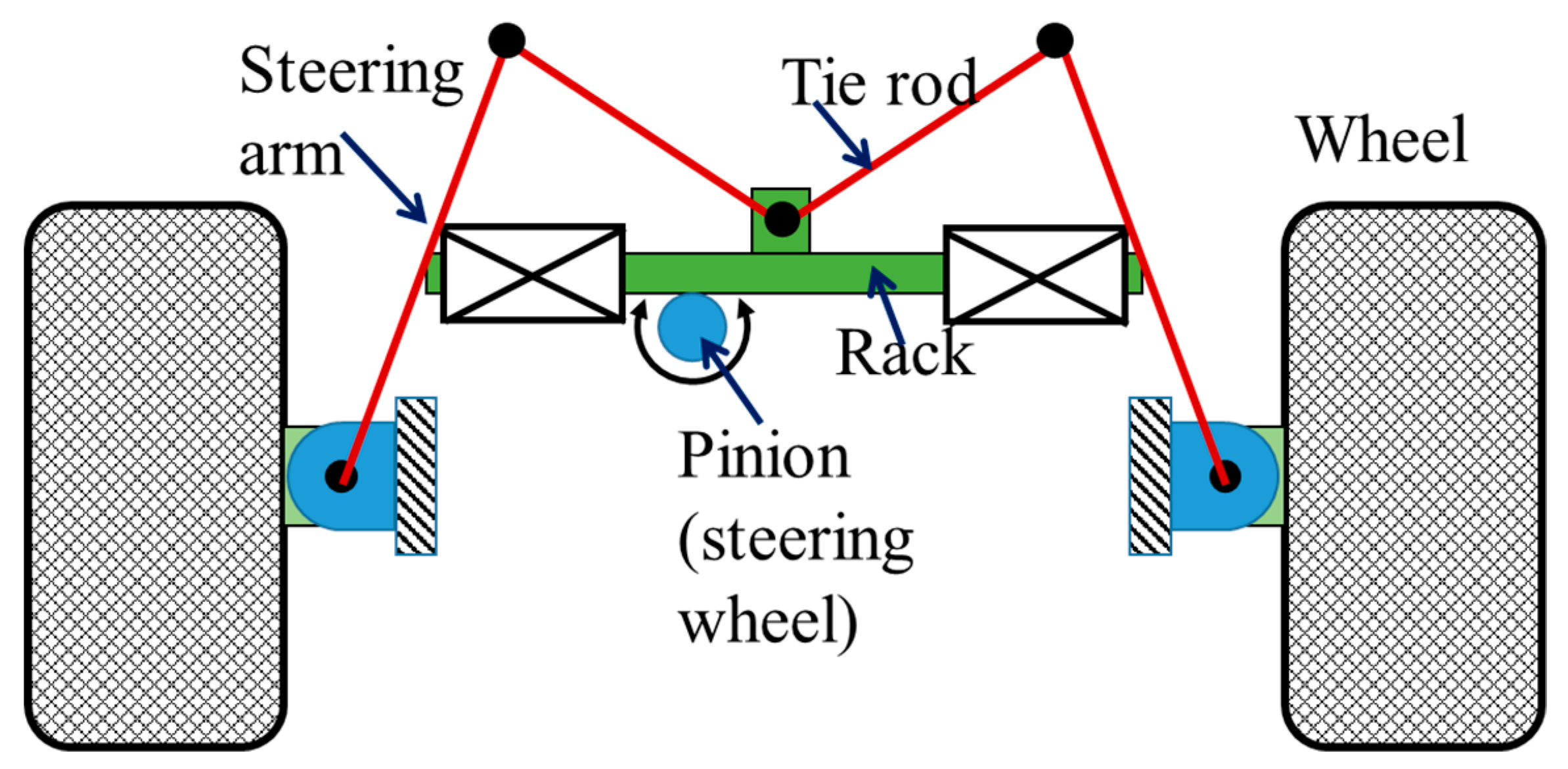
Next, state of the art steering linkage synthesis is introduced. A planar steering linkage works by applying a single input at a rack and pinion to drive two steering arms and tie rods as shown in
Figure 1. It is a commonly used steering system in passenger cars, called a central take-off (CTO) type [
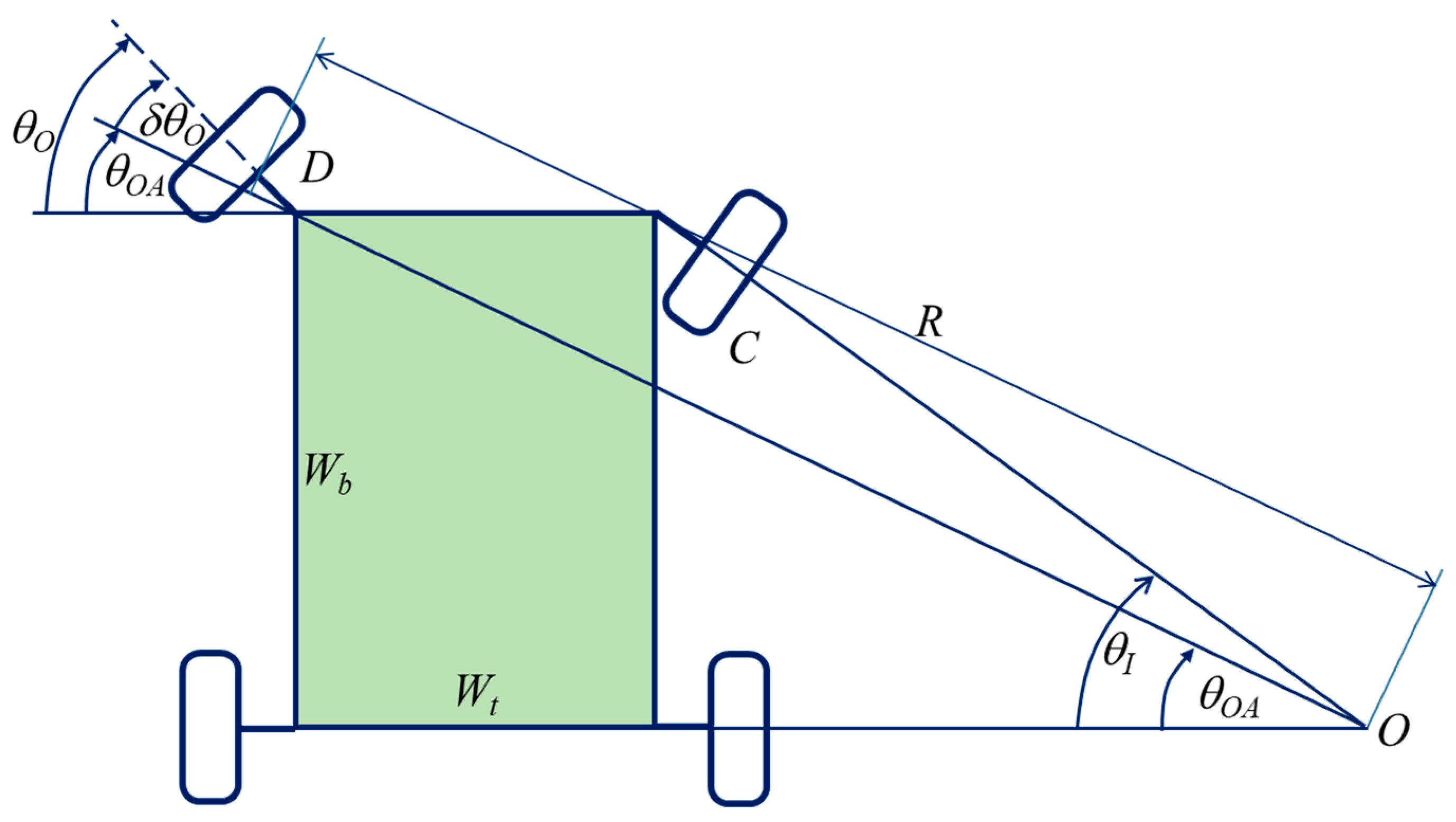
2]. The design objective of this kind of mechanism is to avoid skidding and wear, which can be achieved by following the Ackermann principle. According to this principle, all lines passing the front wheel axle should meet at the line passing the rear axle, causing an instantaneous center, as shown in
Figure 2. By using trigonometric relations, the outer wheel angle,
θOA, can be expressed as a function of the inner front wheel angle,
θI.
where
Wt is the wheel track, and
Wb is a wheelbase. In principal, there is no mechanism that can totally follow the Ackerman principle at every angle including the four-bar and six-bar linkages. Many researchers have paid attention to finding the solution for minimizing the steering error (STE) between the desired and practical angles of the outer front wheels during turning. The objective of optimum synthesis of a steering linkage using STE has been proposed in [
18]. The definition of STE was defined as
where
θO and
θOA are the actual and desired angles made by the same outer front wheel during turning, respectively. In this work, it is called angle distance (AD). The function was a traditional or reference objective function for the steering linkage synthesis until the work of Showers and Lee [
19], who proposed the steering error in the form of the distance deviation from the instantaneous center. This is a concept of Euclidean distance (EUD). For more than a decade, researchers have tried to improve the steering mechanism by applying optimization techniques with the traditional objective function rather than reconsidering other functions that may result in a better design. The traditional function has been used in several works for single-objective optimization of the link-length sensitivity [
2,
18,
20] or steering error [
18,
21,
22,
23] or six-bar steering linkage [
22,
23,
24,
25,
26,
27,
28,
29,
30] or topology optimization [
31]. Then, the work by Zhou et al. [
30] proposes the weighted sum method to combine STE and toe-in angle deviation during a wheel jumping. As previously mentioned, only one work by Showers and Lee [
19] has defined the steering error in the form called a cornering radius function [
32]. Later, a new steering error was compared with the traditional one [
17,
20], providing better optimization results [
33]. Due to the robustness of multi-objective evolutionary algorithms (MOEAs) in solving the steering linkage design, which can perform only once in finding a solution set [
17], they can be an alternative choice to gradient-based optimizers. It was shown that the performance of such a method for solving minimization of steering error and turning radius is acceptable [
33].
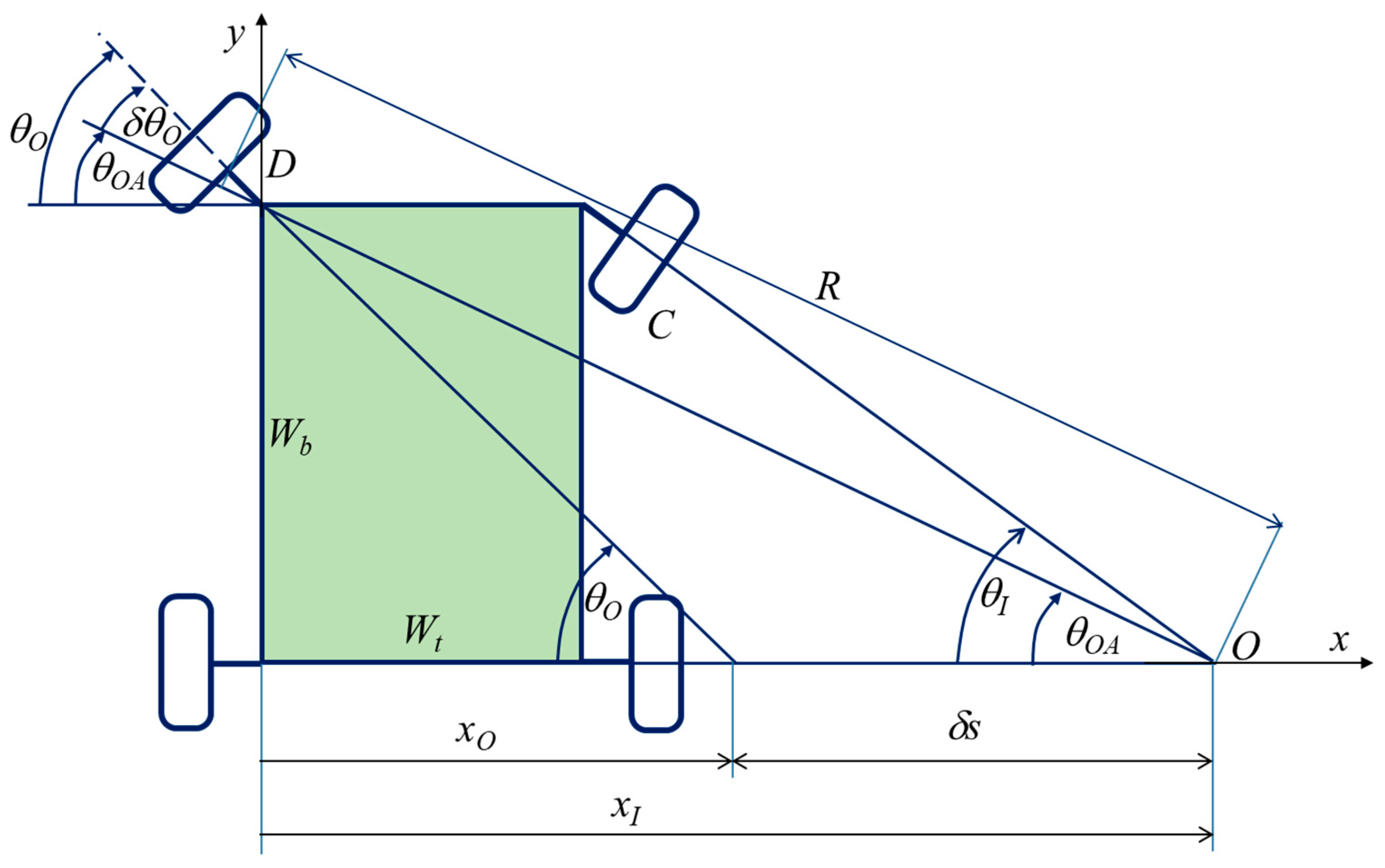
A steering error in form of Euclidean distance (EUD) can be defined by a distance deviation rather than angle distance (AD) that is defined in (2). The deviation distance of the instantaneous center of an actual steering mechanism and its theoretical value is a steering error [
33], as shown in
Figure 3.
From the figure, the trigonometric relation is used to formulate the steering error as
Then, the Euclidean distance of a steering error is defined as
where
xO and
xI are dimensionless.
This equation shows the steering error as a function of
θO,
θI, and a car geometric ratio
Wt/Wb. Notice that the last term is smaller than 1 due to it being dependent on the geometry of a car. In the previous work, a proper value of a scaling factor (
k) to minimize the steering error was proposed as [
33]
The numerical experiment showed that common four-bar linkage cannot meet the design requirements of a steering linkage. Consequently, it leads to the use of the six-bar linkage [
20,
22,
23,
24,
25]. The six-bar steering linkage is proposed to be the steering mechanism, which has an expectation to satisfy the Ackermann principle while it is better than the previous mechanism [
26,
27,
28,
29,
30,
31,
32]. Nevertheless, it can fulfill the Ackermann principal for only some angles. The McPherson suspension is therefore combined with the steering linkage to achieve a high precision design [
28,
30,
34]. A probability-based reliability technique increased the reliability and precision of the steering linkage design, as proposed in [
1]. Furthermore, there are three coupling systems, including hub motor driving, differential assisted steering, and semi-active suspension systems of an electric vehicle used to study the performance enhancement of the integrated chassis system [
33].
From the literature, the best objective function, constraint handling, and optimizer from the previous study in [
33] are combined with a multi-objective optimization technique with the worst-case scenario and fuzzy uncertainties. The expectation is reduced complexity in the reliability-based steering linkage design and increased reliability of the design result.
The remainder of this paper starts with
Section 2, preparing kinematic analysis, the steering errors, and the brief detail of the optimizer. Next, the multi-objective reliability-based design optimization technique (MRBDO) is proposed in
Section 3. The simple test problem for validation of the proposed MRBDO is presented in
Section 4, followed by a numerical experiment of reliability analysis of steering linkage, which is given in
Section 5. The design results, and conclusions and discussions are in
Section 6 and
Section 7, respectively.
2. Optimization Design Problem Formulation
The multi-objective optimization problem of a six-bar steering linkage has been proposed in previous work [
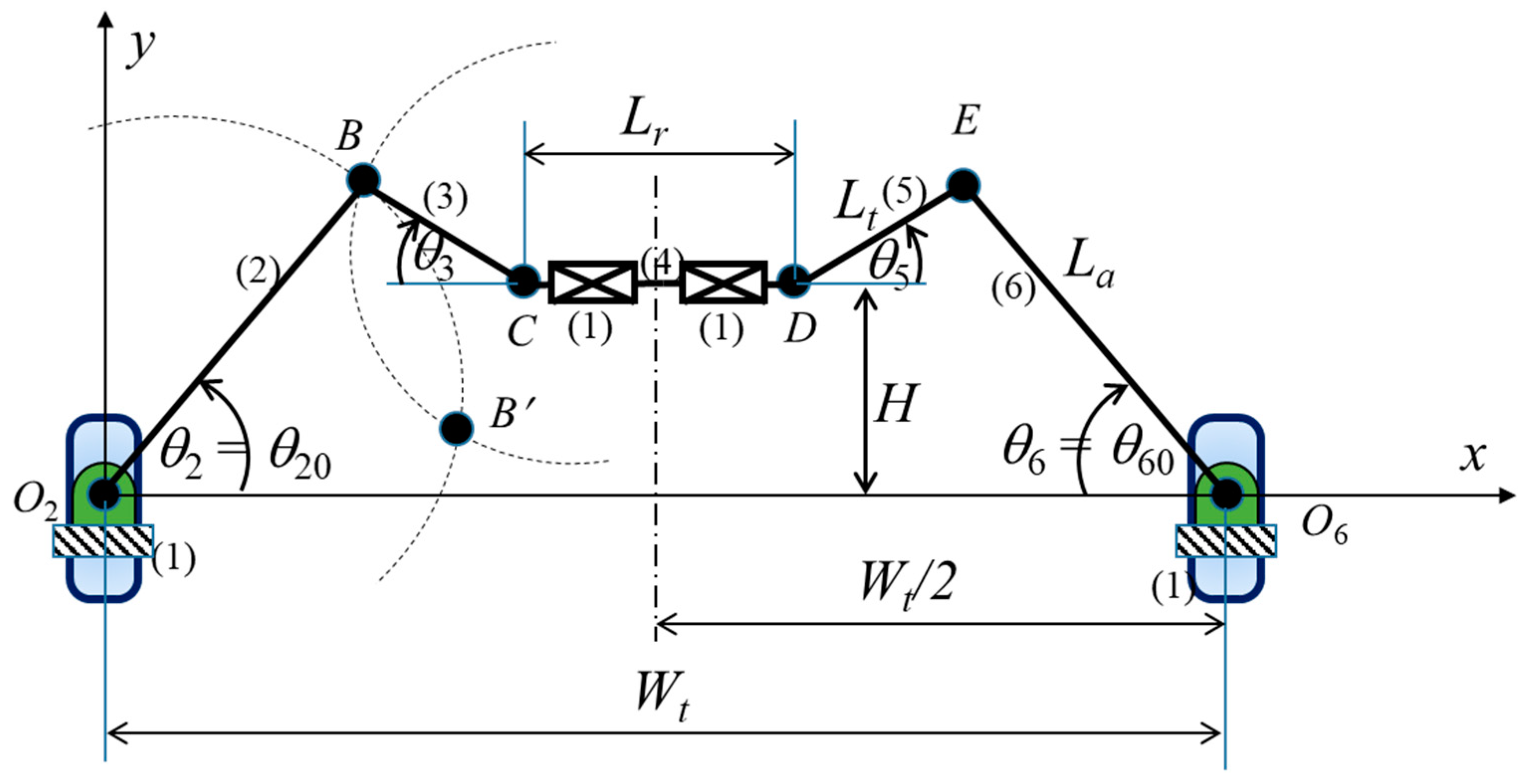
17]. The objective functions are derived from the side take-off model (STO) leading type, as shown in
Figure 4. The combination of the drawing and mathematical techniques is used to define a connected point B of two circles with radius (steering arm length
La, and tie rod length
Lt) and known length (rack length
Lr and is the off-set distance
H). The changing position C caused by rack movements (
b) can be formulated mathematically due to the shape changing of the linkage, which has been detailed in Sleesongsom and Bureerat [
17].
In cases of the car turning right, the two circles traced by the steering arms and tie rods are intersected at two points
B and
B′:
and
where
b is the displacement of a rack to the positive right-hand side, the center
C (
Cx2,
Cy2) = (
Wt/2 −
Lb,
H) and
Lb =
Lr/2 −
b. This
Lb value will be used for computing
θ2 and
θ3. In cases of turning left,
θ5 and
θ6 are computed by setting
Lb =
Lr/2 +
b.
Rearranging (7) into
and substituting into (8) forms a quadratic equation
where
a2 = 1 −
B2,
a1 = −2
CB,
a0 =
C2 −
La2,
, and
.
The solutions of Equation (9) are
From Equation (7), if y1 and y2 are known, x1 and x2 can be computed.
The highest value between
y1 and
y2 are selected to be the solution. An initial angle on the left arm
θ2 =
θ20 is similar to the right arm
θ6 =
θ60 only in cases of the car moving in a straight motion. However, in
Figure 4, the angles
θ2,
θ3,
θ5, and
θ6 have the trigonometric relations as follows:
and
where
Lb =
Lr/2 +
b for
θ5 and
θ6, and
Lb =
Lr/2 −
b for computing
θ2 and
θ3.
The outer wheel angle and inner front wheel angle are
θO = θ20 −
θ2, and
θI = θ6 −
θ60 =
θ6 −
θ20, respectively. Then, STE in Equation (6) is computed while the limiting position of steering linkage is our consideration to protect our design result from useless mechanisms [
17,
33,
34].
2.1. Optimization Problems
A general optimization problem can be stated as
where
i = 1 for single-objective optimization,
i > 1 for multi-objective optimization,
x is a vector of design variables,
gi are inequality constraints,
N is the number of inequality constraints,
xi is a vector of lower bound limits, and
xu is a vector of upper bound limits.
From the new steering error, the optimization problem for steering linkage design is posed as
where the design variables are
x = {
La,
Lt,
H}
T. In turning right/left of the car in range
θI ∈ [0°, 40°], the computation of the steering error
f should be less than or equal to 0.75. The value is defined follow in [
33], which is in the interval [0,1]. The design constraints imposed in the problem (14) cause a narrow feasible region, as mentioned in [
17,
33]. The extension causes the feasible design domain being wider. The second last constraint is assigned for avoiding the steering linkage from limiting position [
17,
33]. All remaining constraints are assigned for the mechanism usability.
2.2. aRPBIL-DE
For the optimizer used in this study, it is an adaptation of the original hybridization of real-code population-based incremental learning and differential evolution (RPBIL-DE). The technique has been proposed in the design of a steering linkage [
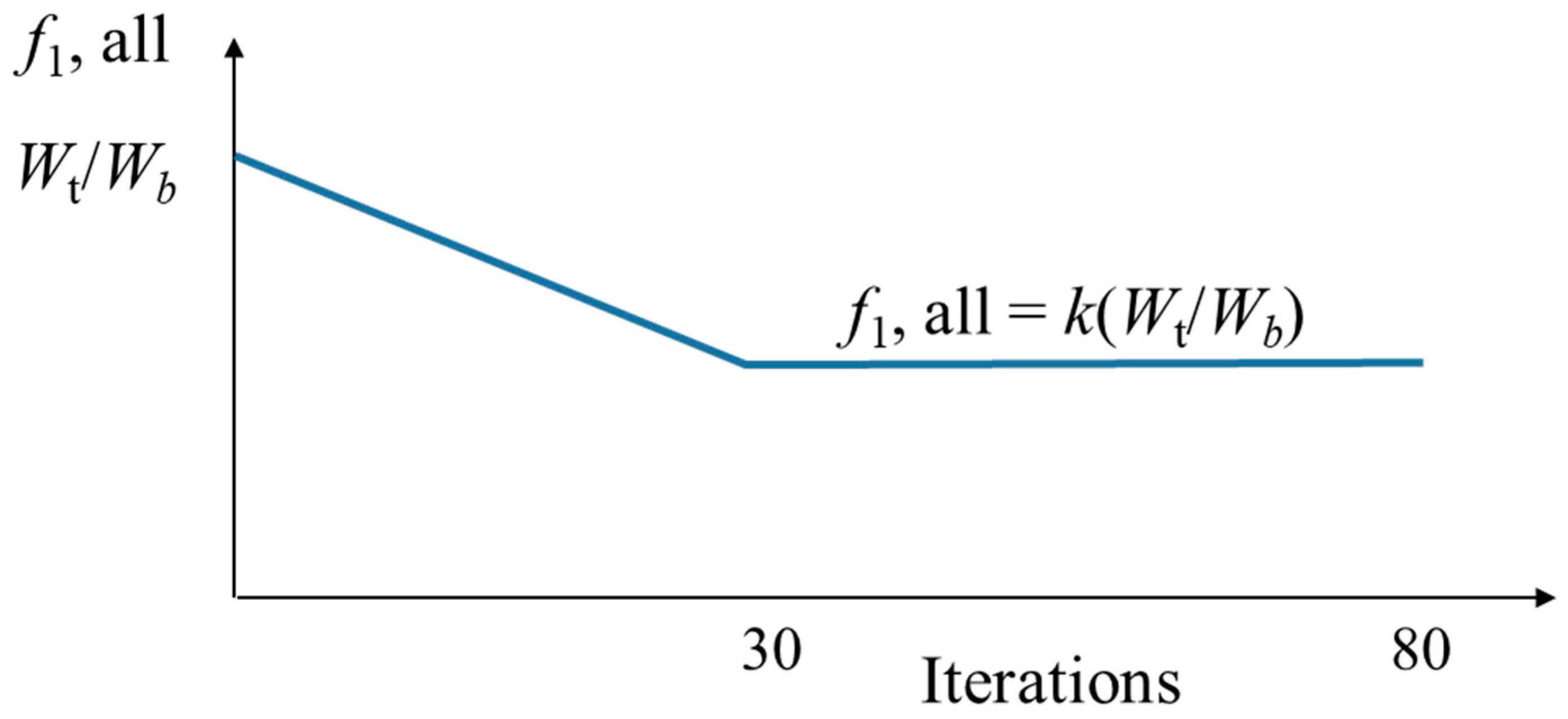
17]. The differential evolutionary (DE) reproduction is still DE/best/2/bin combined with the relaxation scheme, as shown in
Figure 5, which leads to good results in solving a problem with a narrow feasible region [
33]. The scheme starts with a car geometric ratio (
Wt/Wb) of0.5586 and linearly decreases to
k(
Wt/Wb) at iteration 30 and becomes constant afterwards, where the best value is
k = 0.4 [
33]. Furthermore, the optimizer is combined with the opposition concept, which offers acceptable results [
33]. The real code version of the population-based incremental learning(PBIL) uses a probability matrix to represent a real code population during its search. The element
Pij of the probability matrix suggests the probability of
xi being created from interval
j of the
nI equal-spaced intervals of the bounds of
xi. For multi-objective optimization, many (say
NT) probability matrices are used to increase population diversity; thus, each probability matrix is called a probability tray. The probability trays are used to create a population of design solutions iteratively. The obtained population is then further modified using the DE reproduction. In this work, the DE/best/2/bin scheme is used, which can be expressed as
where
F ∈ [0.25, 0.75] is a scaling factor.
q1,
r1,
q2, and
r2 are randomly selected from the current real code population. The solution
p is a solution in the Pareto archive and
c is a resulting mutant solution. The binomial crossover is then performed on those mutant solutions, leading to a set of offspring. The combination of the offspring and the non-dominated solutions kept in the Pareto archive are sorted to find the new set of non-dominated solutions. Updating the probability matrices can be carried out by grouping the non-dominated solutions into
NT groups and then finding the centroid
rG of each group. A centroid is randomly chosen to update a probability matrix or probability tray as
where
where
r is an interval in which the
i-th element of
rG is located.
The superscripts “old” and “new” stand for the previous and updated values of
Pij, respectively. The procedure of this algorithm is shown in Algorithm 1. The variable
pc is a crossover probability of DE, and
CR is cross over ratio of an element of an offspring
c, which is a binomial crossover.
| Algorithm 1. aRPBIL-DE |
Input: Objective function name (fun), Pareto archive size (NA), number of generations (NG), population size (NP), number of probability matrix columns (nI), number of probability trays (NT)
Output: Pareto front as fbest, xbest
Initialization: For each tray, Pij = 1/nI
Main steps
: Finding f = fun(X), where X is generated from the probability trays in which it is a real code population
: Generate a Pareto archive A by means of non-dominated sorting.
1: For i = 1 to NG
2: Separate the non-dominated solutions into NT groups using a clustering technique
3: Find a centroid rG of each group
4: Update each tray Pij using rG
4.1: Generate opposite learning rate OLR= 1 −LR
4.2: Choose LR= LR or OLR using binomial probability
4.3: Update each tray using Equation (17).
5: Generate X from the probability trays
6: For j = 1 to NP (recombine X and Pareto archive A using DE operators)
6.1: Randomly selects p from A
6.2: Randomly selects q and r from X, q ≠ r
6.3: Calculate mutation c by Equation (16).
6.4: Fit ci into its bound constraints.
6.5: If rand< pc, perform crossover
6.5.1: For k = 1 to n
6.5.2: If rand < CR, yk = ck
6.5.3: Else, yj,k = pk
6.5.4: End
7: End
8: Find f = fun(Y), where Y = {y1, …, yj, …, yNP} is a new real-code population
9: Perform Y∪A then find the new member in A with a non-dominated solution
10: If the member or size of A is larger than NA, remove some of the members using a clustering technique
11: End |
3. Multi-Objective, Reliability-Based Design Optimization Technique (MORBDO)
From the literature, an alternative technique to collect the uncertainties into RBDO was proposed. This is anti-optimization used to solve reliability-based design problem. Fuzzy set can be used to describe uncertainties with the help from experts’ opinions. In cases where uncertainty exists in the form of fuzzy variables
a = (a
1, a
2, …, a
l), defining tolerance, backlash, clearance, etc., causes the constraints as a function of
x and
a. The constraints consist of inequality and bound constraints. Equality constraints, such as design symmetry, are not included directly in the design problem as they can be treated in the phase of design variable decoding. In reliability-based design with anti-optimization, all constraints should be given for the worst-case scenario or maximum possible (max (
gi(
x,
a)). This means all constraints are bucketed to find the worst-case scenario. Then, the upper-level and lower-level optimum design problem is to be formulated as
If a simple optimization technique is used to solve the sub-problem (lower-level), only the maximization of the constraint should be solved
N times at each step of modification of
x in the upper level of Equation (18). The anti-optimization and fuzzy set cause the double-loop nested problem due to the need to solve optimization and anti-optimization problems at the same time [
12,
14]. This technique is well-known in the group of non-probabilistic approaches as the worst-case reliability where the intervals of uncertainties without accurate probability distributions [
12,
14] are pre-specified. A simple procedure for solving the nested optimization problem can be summarized as
- Step 1
Assign an initial value ai(k) where k = 0 for a corresponding to each of inequality constraints gi(x,a) ≤ 0, i = 1, …, N.
- Step 2
Solve problem (18) for fixed a = ai(k), for the ith constraint to obtain the optimal solution x(k).
- Step 3
Fix x at x(k) and solve anti-optimization solution () to find ai(k) for each inequality constraint, and set k = k + 1.
- Step 4
Return to Step 2 if the termination condition is not satisfied.
The procedure for solving the double-loop nested problem causes computationally expensive evaluation. In the past, several methods have been developed to solve the problem, expecting to increase computational efficiency. The present idea is to reduce the complexity of the double-loop nested problem in such a way to change the single-objective, reliability-based design optimization (18) to multi-objective, reliability-based design optimization problems. The interval of uncertainties using a fuzzy set model and an α-cut technique as one of the objective functions is also considered as follows
where WCSV is the worst-case scenario value.
The complexity reduction herein means that the single-objective design problem (18) that requires a double loop optimization run is altered to the equivalent deterministic multi-objective problem in (19). With the proposed idea, any powerful multi-objective evolutionary algorithm (MOEA) can be used to solve the problem as MOEA can explore a Pareto front within one run. For the processing of fuzzy input values, the fuzzy set model is adopted with α-cut, which has been proposed in [
13]. Furthermore, the new development technique can reduce the complexity of the double-loop nested problem to a single-loop one by using a multi-objective evolutionary technique that can find a solution set within one optimization run, being called the multi-objective, reliability-based design optimization (MORBDO).
From the present aim and the new technique, the traditional steering linkage optimization problem (15), in the previous section, can be changed to be the multi-objective, reliability-based design optimization problem using the worst-case scenario and fuzzy set model with the following explanation. The design constraints are imposed not to violate their predefined values. The uncertainties (
a) are the tolerance of a steering arm length
La and the tie rod-violated
Lt, which are assumed to be fuzzy variables. The multi-objective reliability-based design optimization problem can be formulated as
and all constraints can be normalized with their allowable limits
as follows
6. Numerical Experimental Results
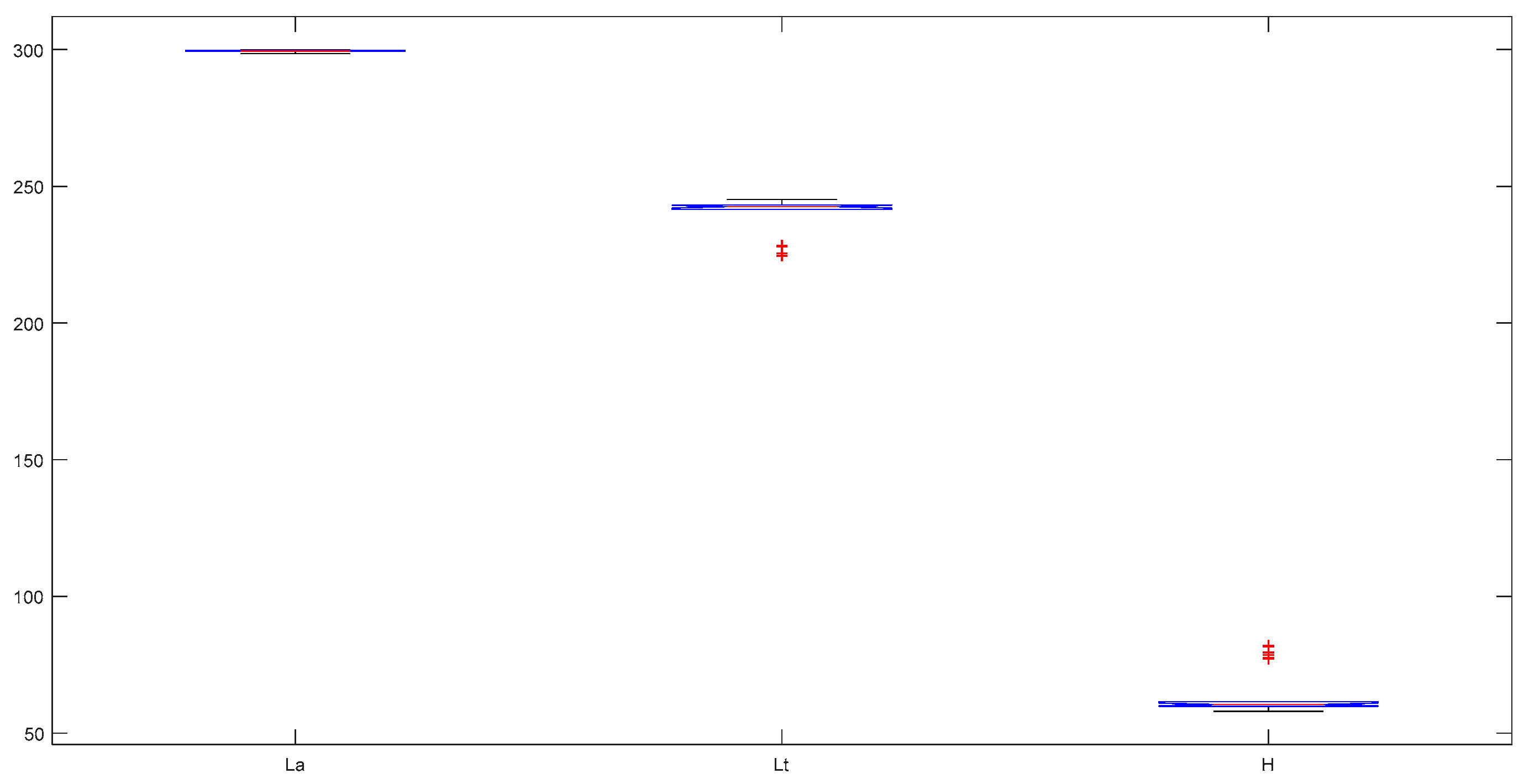
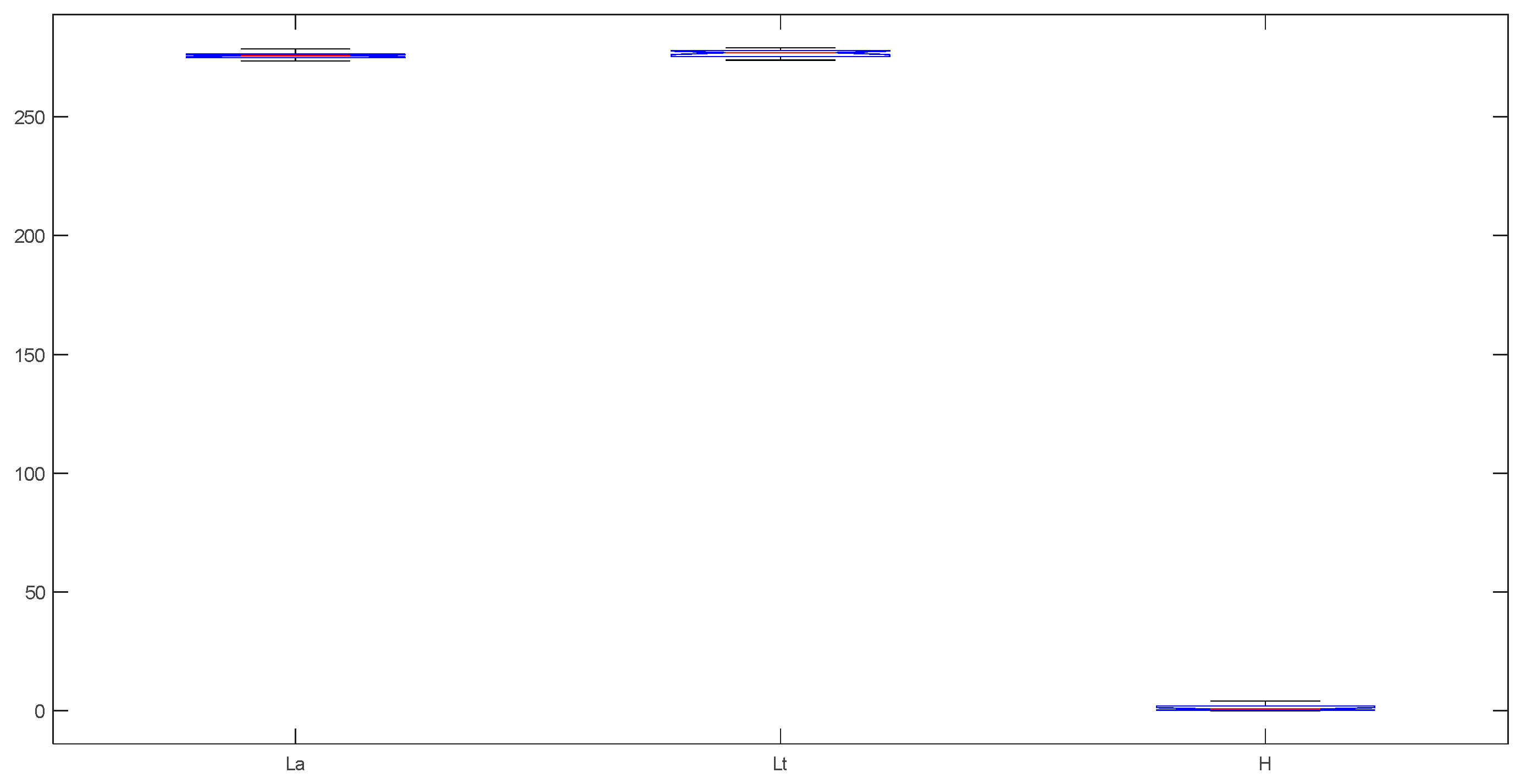
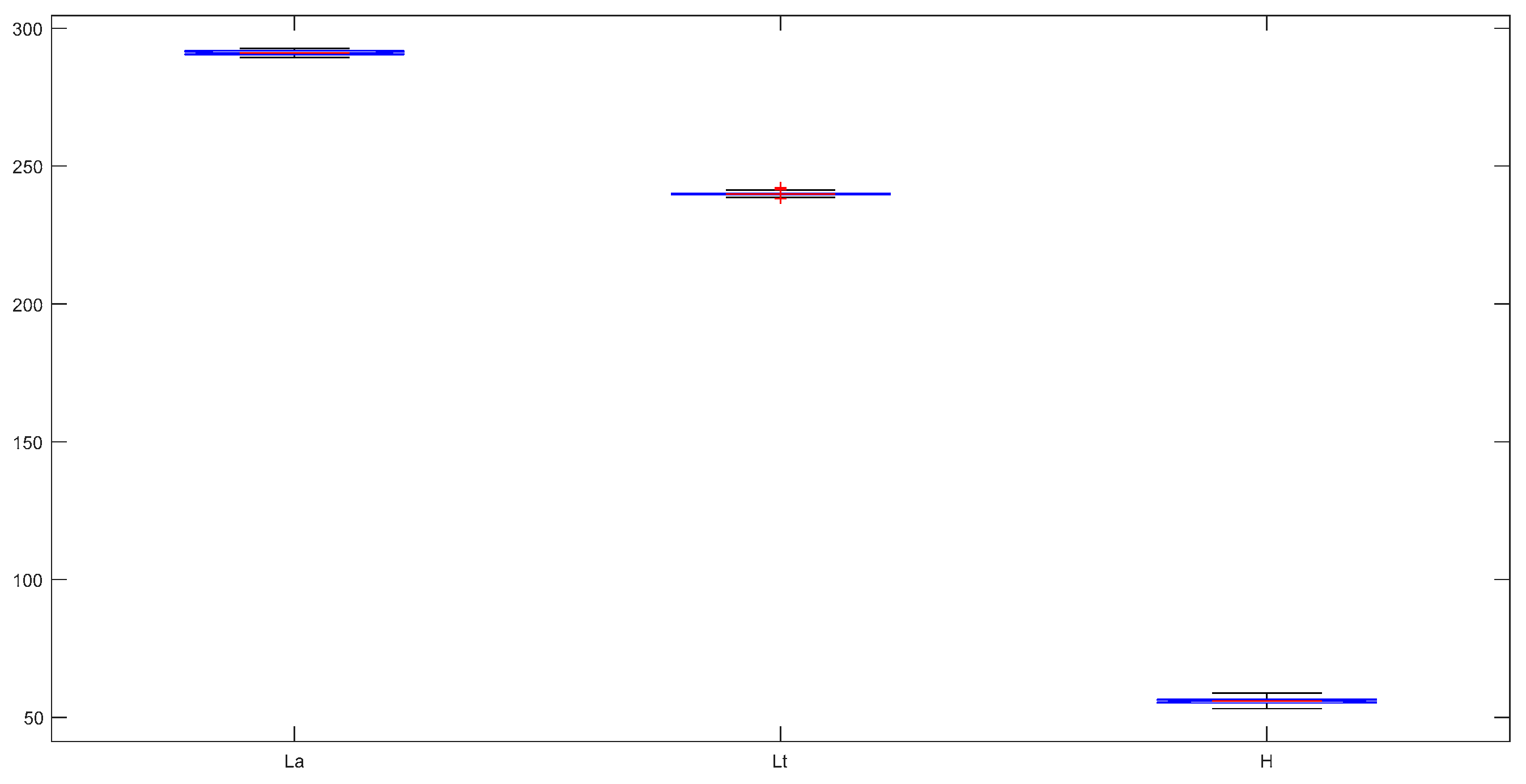
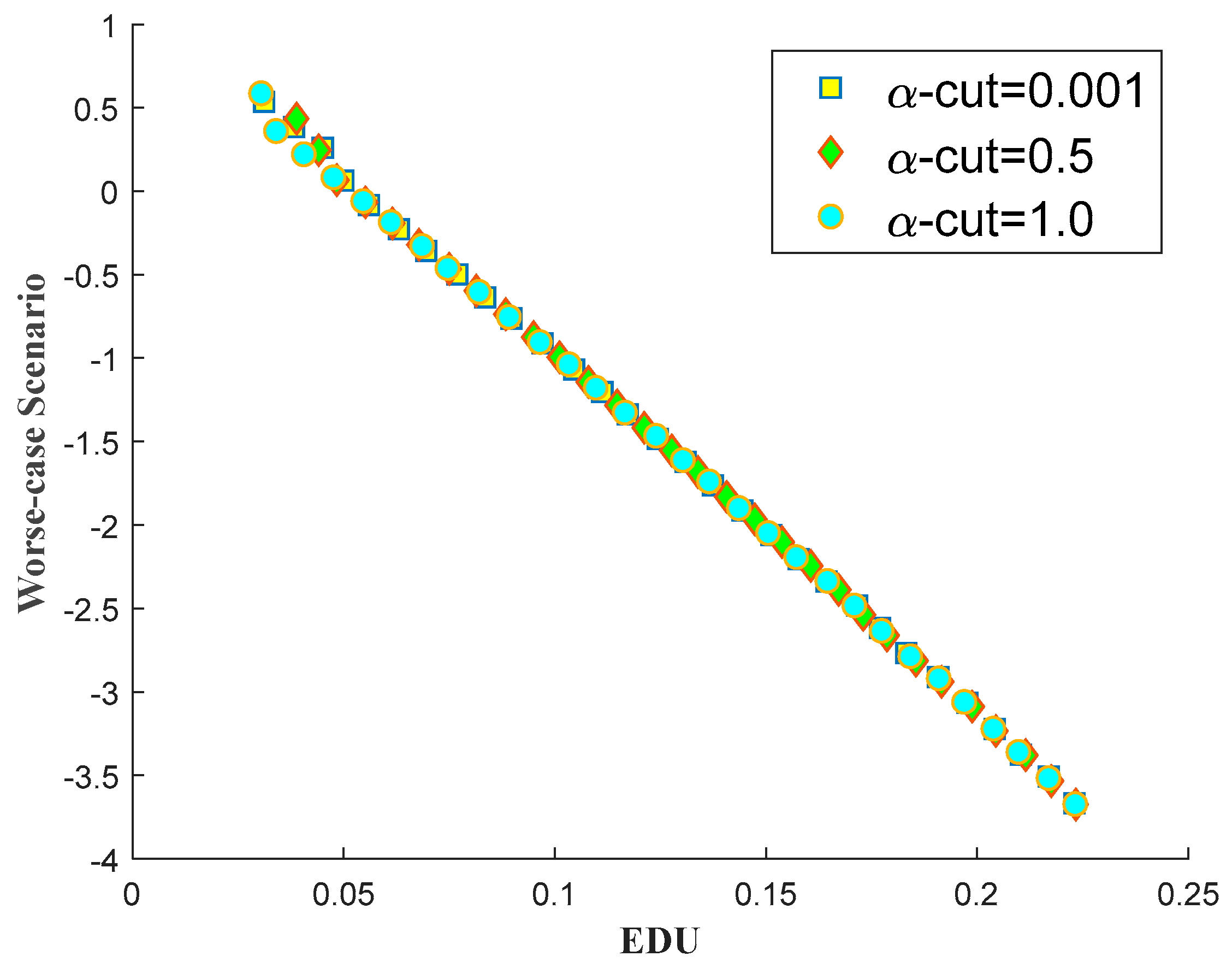
The MORBDO problem was solved for 30 runs with α-cut = 1.0, 0.5, and 0.001, and the obtained statistical results are shown in
Table 2. The average computational times for each optimization run and α-cut were slightly different in terms of running time, as shown in
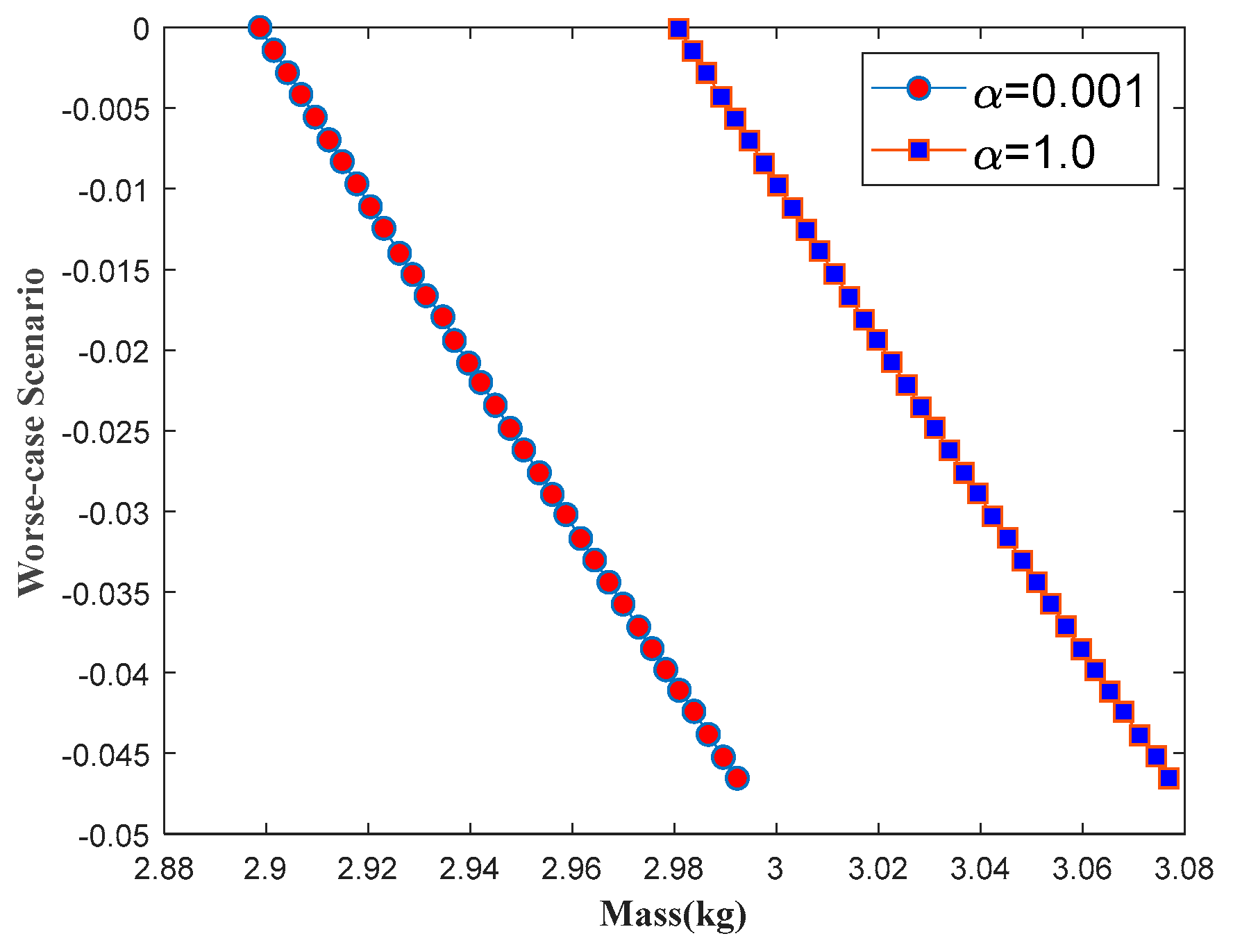
Table 2. The new technique spends only a few second in solving the problem. The plot of the best Pareto frontier is shown in
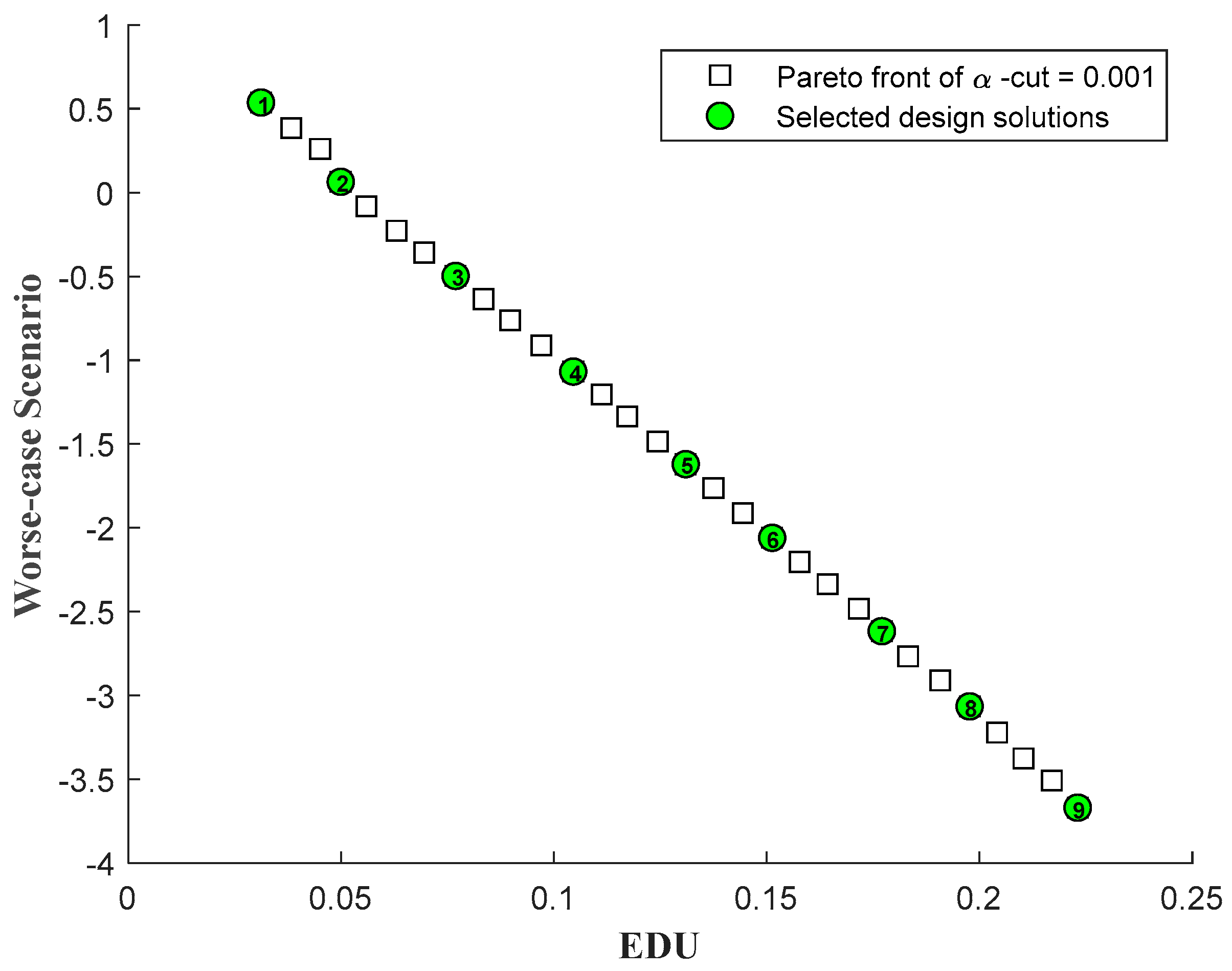
Figure 7. Some selected solutions were obtained from clustering [
36] and shown in
Figure 8. The minimum steering error was0.03043, with the maximum worst-case scenario being 0.5867 at the parameter bound of α-cut = 1.0. The maximum steering error obtained was0.2232, with the maximum worst-case scenario (WCSV) being −3.673 at the parameter bound of the same α-cut. The steering error was0.05463, which was close to zero at α-cut = 1.0, representing the deterministic optimum solution, which provided the WCSV as −0.05887. According to the mean value of hyper volume (HV) in
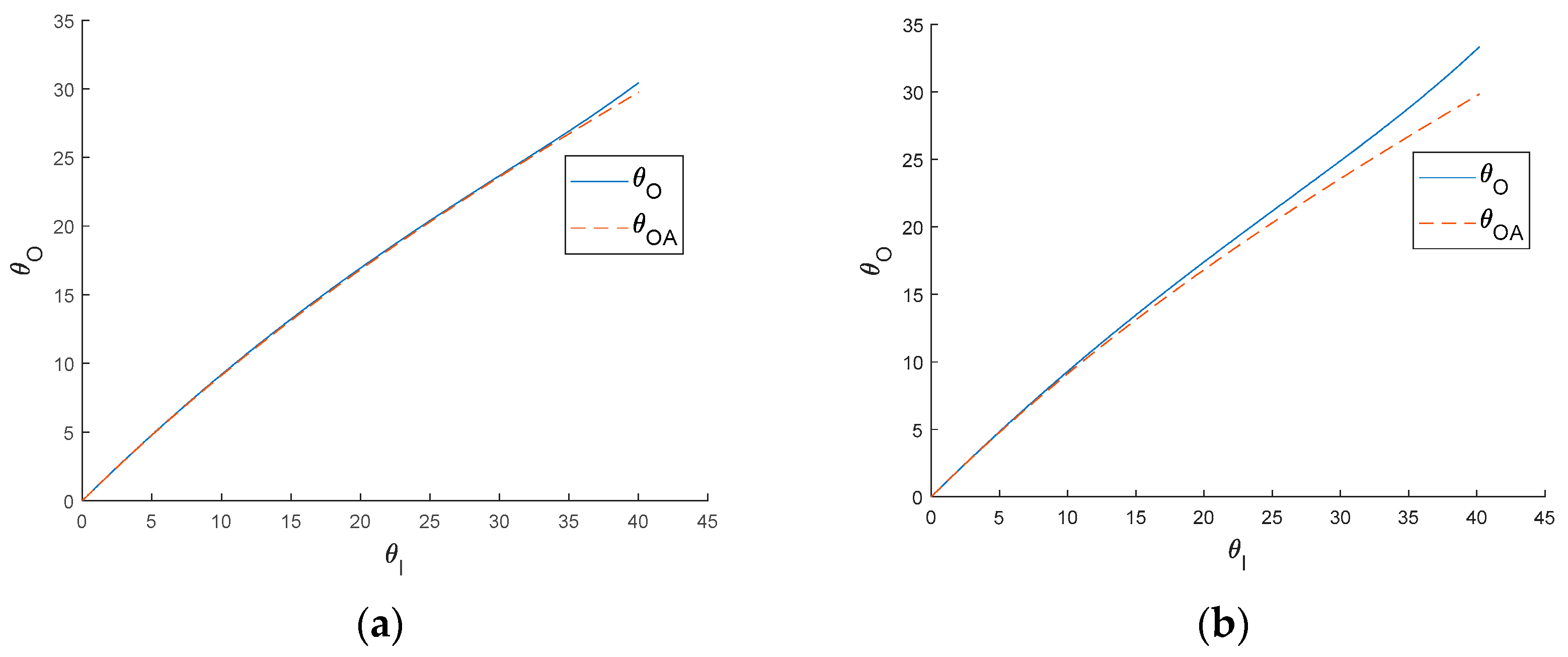
Table 2, the highest value represented the best front. It can be concluded that the best front to worst wereα-cut = 1.0, then 0.5, and finally 0.001. From the results, the lower HV meant more reliable solutions. The Pareto frontier represents various solutions obtained from using different α-cuts. The fronts depended on the WCSVs and the level of α-cuts. The best and worst of the steering errors were solutions with plots of ideal (θ
OA) versus actual (θ
O) angles at α-cut = 0.001 (solution 2 and 9 of the most reliable front in
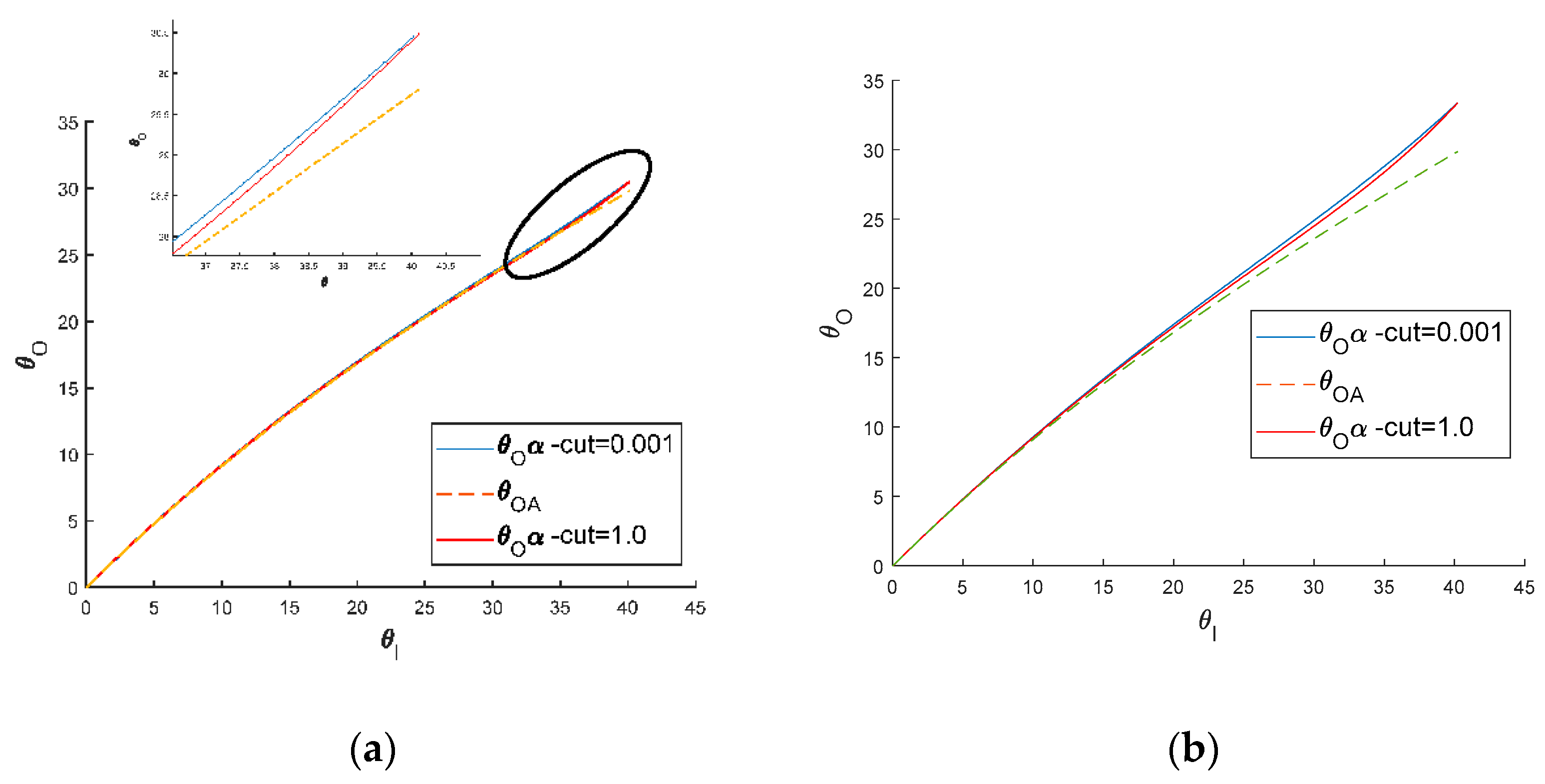
Figure 9). From the figure, the result shows the worst steering error, but it was also the most reliable. To re-examine the results of the proposed technique depending on α-cuts, we selected the plot as the ideal (θ
OA) versus actual (θ
O) angles of solution 2 with very high value of α-cut.
Figure 10a shows that the steering error increased as the level of α-cut =1 decreased. A similar took takes place for solution 9, as shown in
Figure 10b.
Figure 11,
Figure 12 and
Figure 13 show the boxplots of distribution design parameters where the central mark indicates the median and the bottom and top edges of the box show the 25% and 75% percentiles, respectively. The whiskers extended to the most extreme data points do not consider outliers, and the outliers are plotted individually using the “+” symbol.
Figure 8 shows some selected solutions while
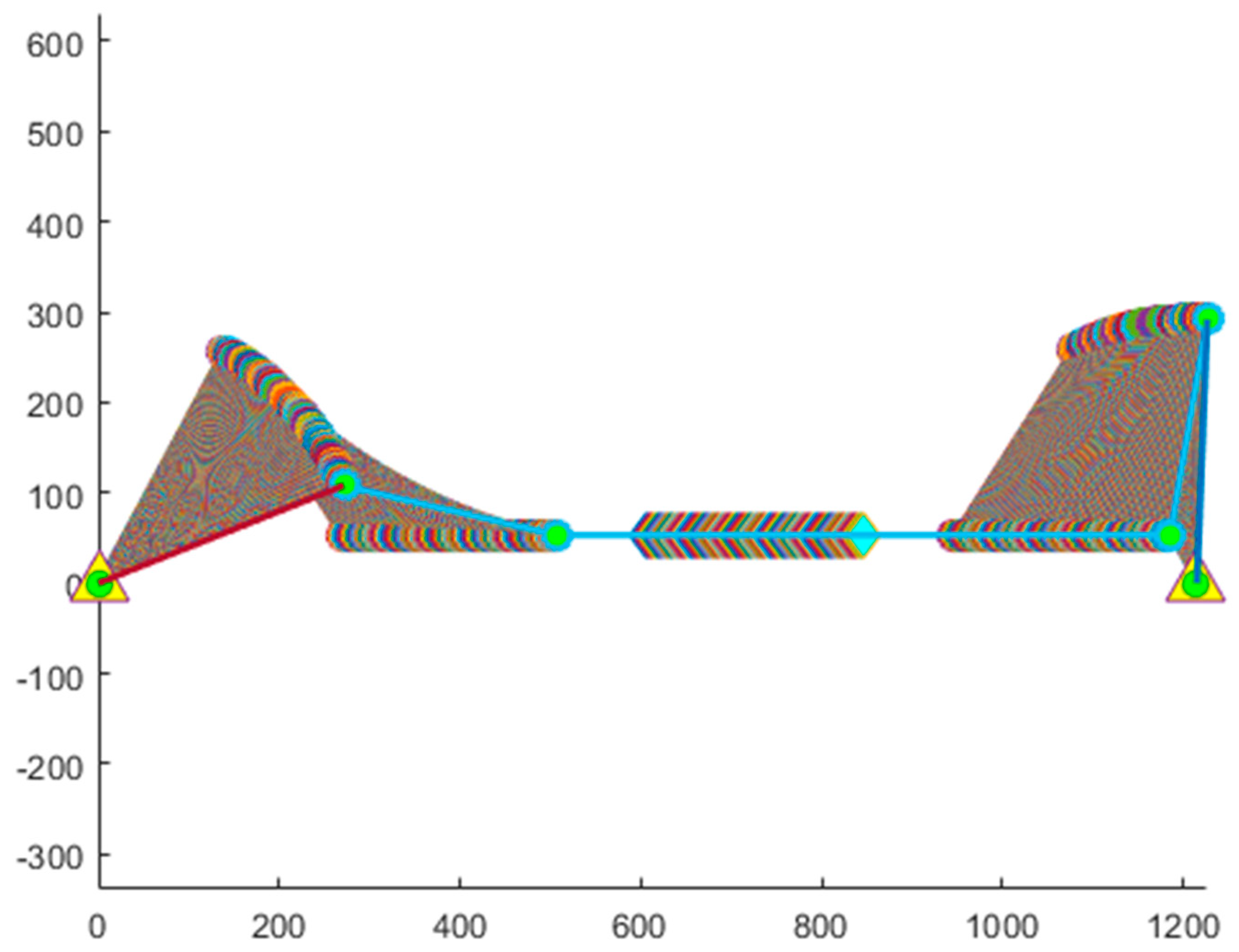
Figure 14 shows a corresponding steering linkage kinematic diagram of solution number 1. The various linkages were indifferent because of the design constraints imposed in problem (18) caused by the narrow feasible solution as mentioned in [
17]. The mechanisms may have similar shapes but they have different dimensions, as shown in
Figure 11,
Figure 12 and
Figure 13. Such differences affect the results of the worse-case scenario value. A designer can select the conservative solution, which provides a compromise between the steering error and worse-case scenario value due to uncertainties. The motion of a steering linkage of solution number 1 in
Figure 8 is illustrated in
Figure 14. It can promote the designed steering linkage to work well.