


Abstract
The study of astromaterials, including meteorites, provides essential insights into the origin and evolution of the Solar System. Their scientific value relies not only on analytical investigations but also on rigorous documentation and long-term preservation. In this context, standardized cataloging systems are not merely administrative acts but fundamental tools for ensuring data accessibility, safeguarding collection integrity, and facilitating knowledge dissemination within the planetary science community. Importantly, most meteorites are preserved in museum collections, making these institutions central to their conservation and study. This contribution examines the BN-PL (Beni Naturalistici–Planetologia) Italian national cataloging standard, developed by the Central Institute for Cataloging and Documentation (ICCD) under the Ministry of Culture. Specifically designed for meteorite museum collections, BNPL forms part of a legally recognized, interoperable, and open-access system. The standard comprises over 21 thematic sections, covering classification, sample availability, provenance, acquisition, analytical data, conservation policies, exhibition records, and bibliography. Each entry is complemented by high-resolution images and multimedia documentation, supporting both research and public engagement. This work outlines the state of cataloging Italian meteorite museum collections using BNPL, highlighting its strengths and limitations, while also considering the potential development of the standard for cataloging astromaterials within the national heritage framework.
1. Introduction
The existing literature on museum collection management emphasizes that the systematic documentation of collected objects is as critical as their proper conservation and effective valorization. A detailed examination of natural history museums’ cataloging practices over the centuries falls outside the scope of this work; however, it is worth noting the definition of cataloging in the context of mineralogical collecting proposed by Hearth et al. [1]. Citing Turner [2], the authors describe cataloging as the process through which a raw mineral is transformed into a specimen, to which formative and world-building meanings are assigned. This perspective underscores that cataloging is not merely a procedural or administrative task, but a curatorial and epistemic act that imbues specimens with interpretative and scientific significance, situating them within broader frameworks of knowledge, research, and cultural heritage. During the cataloging process, specimens disclose their “biographies” [3], encompassing details of their provenience, the history of ownership, physical characteristics, and their placement within established scientific classification systems. The information generated in this process is not only transmitted to the relevant scientific community but also disseminated to the wider public through exhibitions and educational initiatives (e.g., [4]). In this way, cataloging contributes simultaneously to the advancement of specialized research and to the promotion of cultural and scientific literacy. Furthermore, by ensuring systematic preservation and accessibility, cataloging guarantees that this body of knowledge will remain available to future generations of scientists, scholars, and interested members of the general public, thereby reinforcing both the scientific and societal value of natural history museum collections.
However, this process is frequently influenced by the subjectivity of the cataloger, who determines which categories of data are documented and how they are represented. In many cases, information is recorded according to in-house registration models, which are often inconsistent across institutions and limited to local databases. Such practices, while functional at an institutional level, hinder interoperability, comparability, and data accessibility [5]. The reliance on individualized approaches may also lead to the omission of relevant contextual information or to discrepancies in terminology, ultimately reducing the scientific utility of the records. Moreover, as emphasized by Rinaldo et al. [6], a substantial portion of primary cataloging resources remains in handwritten form, considerably limiting their effective use and reuse. Documents such as ancient museum catalogs and inventories are often difficult to interpret, and the lack of machine-readable formats renders their integration into digital systems particularly challenging. These constraints prevent both the accessibility and interoperability of the data, reducing its potential for large-scale analysis, long-term preservation, and broader dissemination within the scientific community.
The absence of standardized and widely shared cataloging practices has resulted in the study of these primary sources being approached selectively within the framework of geoscientific collections. For example, mineralogical cataloging has been examined from multiple perspectives, including the history of scientific collecting (e.g., [7]), the role of mineral collections as indicators of cultural, social, and political significance [8], and within the broader framework of geological power [9], encompassing colonial and imperial contexts [1,10].
By contrast, other categories of geoscientific museum collections, such as meteorite collections, have received comparatively limited attention in terms of cataloging practices. In most cases, scholarly efforts have concentrated primarily on their scientific classification and analytical investigation (e.g., [11,12]). Therefore, the study of museum meteorite collections has often been restricted to the publication of inventories, usually in journals addressed to the planetary sciences community (e.g., [13]). While these approaches are of unquestionable scientific relevance, they remain insufficient from the perspective of museum documentation and heritage management, particularly given that most known meteorites are preserved in museum contexts (e.g., [14]).
Regarding the cataloging practices of meteorite collections, both in museums and in research institutions, a notable lack of shared methodologies can be observed. Although databases such as MetBase [15] and NASA’s Astromat [16], which have recently merged [17], employed well-defined data schemas, and guidelines exist for the curation of astromaterial collections primarily intended for research purposes [18,19,20], standardized frameworks specifically addressing cataloging are largely absent. At present, the widely recognized models are those issued by the Meteoritical Society, the body responsible for the official approval of new meteorites [21]. These models pertain exclusively to two procedural contexts: the submission of requests for the naming of specimens recovered in dense collection areas (e.g., [22,23]) (Table A1), and the formal procedure required for the recognition and approval of new meteorites (Table A2). The latter process culminates in the publication of the approved entries in the Meteoritical Bulletin Database, which serves as the authoritative global reference for meteorite nomenclature and classification [24]. Once published, the record is typically revised only in cases where subsequent investigations require modifications to the scientific classification of the specimen, while other descriptive and curatorial data generally remain unchanged.
Based on the above considerations, it becomes increasingly evident that natural history museums and scientific institutions preserving meteorite collections, particularly those of historical significance, must be provided with standardized cataloging models and guidelines. The adoption of shared frameworks is necessary not only to guarantee the consistency and interoperability of data across different repositories but also to safeguard the long-term accessibility and reusability of such information for both research and conservation purposes. The standards should be developed and implemented at a national level, thus ensuring that individual institutions are not left to rely solely on local solutions, which often lack compatibility and broader recognition.
This work is therefore devoted to the analysis and description of the Italian national standard for the cataloging of meteorite museum collections. The BNPL (Beni Naturalistici–Planetologia) model was issued in 2007 by the Central Institute for Cataloging and Documentation (ICCD), an office of the Italian Ministry of Culture [25]. Beyond its formal description, the present study will examine the adoption of BNPL across the country, evaluating its advantages and limitations. Finally, this article will consider the BNPL standard in light of emerging challenges linked to astromaterial curation practices for documentation, storage, and accessibility of planetary materials stored in both natural history museums and curation facilities.
2. The BNPL Cataloging Standard
The enactment of Legislative Decree No. 42 of 22 January 2004 (Code for Cultural Heritage and Landscape) significantly broadened the spectrum of asset categories officially recognized as cultural heritage in Italy, thereby expanding the scope of regulatory protection and management responsibilities. Among these newly recognized categories are technological heritage and natural history heritage, encompassing collections of scientific, historical, and cultural significance. The procedures and modalities for the cataloging process of cultural heritage are established by the Italian Ministry of Culture, which collaborates with regional authorities and universities in the development of methodologies and standards. This framework ensures national-level access to and processing of data, facilitating the integration of entries into the General Catalog of Cultural Heritage database (LD No. 42/2004, art. 17), the official database managed by the Italian Ministry of Culture, in which all records of Italian cultural heritage are freely accessible and available for download in open-access format [26,27].
In this context, meteorite collections, preserved in natural history museums and research institutions, are now formally acknowledged as cultural assets, underscoring the necessity of standardized cataloging and conservation practices to ensure their long-term accessibility, scientific utility, and public dissemination. In addition to the standards developed for the cataloging of geo-mineralogical and paleontological collections [28,29,30], whose specialized sections have already been reviewed [31], the ICCD issued the BN-PL standard in 2007 for the cataloging of planetary materials, primarily meteorites, preserved in museum collections.
The BNPL cataloging model is released in an open format on the official ICCD website [32], where it can be freely downloaded and utilized with software capable of reading spreadsheet files. Alternatively, the model can be used within the ministerial SIGECWeb platform [33,34], which is accessible through unique credentials issued by ICCD and manages the entire cataloging workflow—from the development and dissemination of standards to the publication of records through the General Catalog of Cultural Heritage website [35]. Similarly to other ICCD cataloging standards, BNPL has been developed in full alignment with the FAIR (Findable, Accessible, Interoperable, and Reusable) principles [36]. By adhering to these principles, BNPL ensures that all metadata and records are systematically organized, readily discoverable by diverse users, interoperable with other national and international databases, and reusable for a wide range of scientific, educational, and curatorial purposes. This approach not only strengthens the transparency and reliability of meteorite documentation but also facilitates long-term preservation, data sharing, and integration into broader research infrastructures. The General Catalog of Cultural Heritage ensures wide data distribution through its Linked Open Data (LOD) services [37]. The concept of LOD refers to a set of best practices for publishing structured data on the web and interlinking them to build a global, openly accessible, and distributed data space—often referred to as the web of data [38]. Within this environment, billions of granular data points are semantically connected, allowing users to enrich individual datasets by cross-referencing information originating from different institutions, administrative bodies, or private entities. The catalog dataset can be downloaded in JSON format from the Italian Open Data portal [39], and in the forthcoming CLIO national catalog system, data accessibility will be further enhanced through dedicated APIs. Interoperability is ensured through extensive semantic alignment operations with domain-specific ontologies, including CIDOC-CRM and the Europeana Data Model (EDM) [40,41], as well as other conceptual models widely adopted in bibliographic and cultural heritage contexts, such as BIBFRAME and RiC-O [42,43]. The BNPL catalog standard is mapped within the ArCo ontology [44], which serves as a foundational conceptual framework for the future CLIO national catalog system. ArCo is a comprehensive network of ontologies designed to model the rich semantic complexity of Italian cultural heritage. By leveraging ArCo, the BNPL schema can be semantically situated within a broader, well-structured knowledge graph, facilitating data interoperability and integration across different domains. Through this mapping, each BNPL record can be expressed in RDF (Resource Description Framework), enabling its transformation into LOD that aligns with other ontologies in the cultural heritage domain. This semantic alignment ensures that the BNPL data is machine-readable and interoperable. In addition, ArCo supports a knowledge-graph approach. The new CLIO catalog system will exploit this knowledge graph to represent each cultural heritage entity as nodes interconnected via semantically rich relationships. By embedding BNPL in ArCo, the catalog benefits from a scalable and modular architecture: ArCo’s ontologies are incrementally developed and publicly released under open licenses, with versioning managed on GitHub. Finally, this integration enables powerful functionalities such as SPARQL querying, semantic reasoning, and data linking, thereby facilitating advanced applications—ranging from research tools to digital exhibitions—while contributing to a dynamic, semantically interconnected “web of knowledge”.
The BN-PL catalog standard is structured into 21 sections, comprising over 500 individual metadata fields. Table A3 offers a structured overview of all sections included in the BN-PL standard, emphasizing the most relevant fields. For detailed guidance on the procedures and criteria regarding the application of the standard, reference should be made to the pertinent normative documents, which define the methodological and formal requirements for its proper compilation [25]. The BNPL cataloging standard is currently available in its 3.01 release, which already provides a robust framework for documenting extraterrestrial materials. Nevertheless, future developments are expected to align the standard with the most recent updates of other ICCD cataloging protocols, specifically version 4.01. In addition to these structural updates, the BNPL standard could be further enriched through the integration of newly adopted meteorite classification schemes (e.g., [45]) and advanced analytical datasets. For example, recent years have witnessed the establishment of new isotopic investigations—particularly nucleosynthetic anomaly data for elements such as Cr, Ti, and Fe—as routine tools in meteoritics, offering refined insights into early Solar System reservoirs. Similarly, the incorporation of state-of-the-art geochronological techniques, including Re–Os and Lu–Hf isotopic systems, would allow catalog records to better capture the temporal evolution of meteoritic materials. The progressive expansion of the BNPL standard in this direction would enhance not only the scientific depth of the catalog but also its long-term value as a dynamic repository of planetary materials research.
Beyond the systematics sections, which gather all the information necessary to achieve a reliable taxonomic classification of the meteorite, Table A3 also illustrates a broad range of additional sections that collectively ensure proper curation and long-term heritage management. These sections address crucial aspects such as conservation practices, the outcomes of analytical investigations, and the detailed description of the specimen, including the inventory numbers used in the museums preserving the specimens, as well as the systematic recording of tags, labels, and associated metadata. In this regard, the presence of local inventory numbers constitutes a fundamental element in facilitating scientific collaboration and specimen loans between researchers and institutions. These identifiers provide unambiguous references to specific specimens, thereby formally acknowledging their existence and precise location within a collection. This data is particularly valuable for researchers who wish to access or request specimens from institutions that may not maintain fully digitized or publicly available inventories. By referencing the inventory numbers, researchers can directly contact the relevant institutions to arrange loans or consultations, ensuring efficient communication and fostering collaboration. Further subsections are devoted to documenting the administrative and geographic information related to the institution responsible for preserving the sample, thereby ensuring transparency and traceability in custodianship. Notably, Table A3 also includes a section dedicated to the economic appraisal of the specimen, which highlights the multifaceted nature of meteorite heritage, encompassing not only its scientific and cultural significance but also its material and economic dimensions. However, although the cataloging records are freely accessible and downloadable from the General Catalog of Cultural Heritage database, this does not imply that all categories of information—such as those concerning economic evaluation, georeferencing, and ownership—are made available without restrictions. In fact, the various sections constituting the BNPL catalog model are subject to differentiated levels (Table A3). These range from level 0 up to level 3. Level 0 refers to data that are present in the record, but are never accessible to the general public (i.e., data relating to the economic evaluation of the sample) and remain restricted to the Italian Ministry of Culture and institutions responsible for preserving the specimens. Level 3, is assigned to specimens insufficiently safeguarded and thus exposed to the risk of theft or damage. When level 3 is selected, sensitive information (i.e., the precise geographical location where the specimens are kept) is withheld. Information that is not publicly accessible can nonetheless be consulted upon request by qualified scholars. Researchers who submit a formal request to the ICCD may be granted permission to review the restricted data, ensuring controlled access to detailed cataloging information for research purposes.
Concerning the methodology for compiling a BNPL catalog card [25], it should be emphasized that not every section of the model is obligatory. To render a card formally valid, it is sufficient to complete the mandatory fields that constitute the inventory catalog level (level I) and that are shown in Table A3. This level guarantees the registration of the essential information required to recognize and describe the specimen, both scientifically and from a heritage perspective. The cataloger, however, may go further by filling in the non-mandatory fields. Doing so allows the record to reach the pre-catalog level (level P), where additional details enrich the descriptive and contextual framework of the specimen. When the model is completed in its entirety, including bibliographic references and supporting documentation, the record attains the catalog level (level C), which provides the fullest possible representation of the specimen within the database. A further element of particular importance is the requirement to attach at least one photographic image. This image must include a metric reference, ensuring not only a realistic visual rendering of the object but also enabling accurate scientific comparisons and verifications across collections and institutions.
Another particularly significant aspect of the BNPL compiling methodology lies in the adoption of controlled vocabularies for several sections of the model, most notably those dedicated to systematics (e.g., meteorite class and group). By requiring catalogers to select terms from predefined lists, the system reduces the risk of terminological variation, typographical errors, or subjective interpretations, thereby ensuring that entries remain consistent and comparable across different institutions and collections. This practice is essential not only for maintaining internal coherence within the General Catalog of Cultural Heritage database but also for enabling interoperability with other national and international cataloging systems, which often rely on standardized descriptors for effective data exchange and integration. In addition to controlled vocabulary, every field in the model is subject to a character limit. While this may appear to be a technical constraint, it plays a crucial role in standardizing the structure of the information provided. By restricting the length of entries, the methodology discourages overly discursive or interpretive descriptions, promoting instead concise and objective formulations. This enhances the clarity and reliability of the data, facilitates automated indexing and retrieval processes, and improves the long-term sustainability of the digital archive. Both controlled vocabularies and character limits reflect a broader strategy aimed at balancing scientific accuracy, curatorial needs, and digital interoperability, ensuring that the General Catalog of Cultural Heritage remains a robust and versatile tool for heritage documentation and research. In this regard, it is important to note that catalogued records are not static entities but may be progressively revised and expanded. Upon formal request submitted to the ICCD, the information associated with each specimen can be updated to reflect any changes that may occur over time, whether related to its physical state, provenance, curatorial history, scientific interpretations, exhibitions and loans, or any newly available metadata. Furthermore, owing to the multi-instance nature of many paragraphs and fields within the standard—meaning that these sections can be duplicated to incorporate new information without overwriting or removing previous entries—all data (e.g., conservation conditions or mislabeling cases have been reported after loan returns [46], remain fully documented. This structural feature ensures the construction of a continuous, traceable, and comprehensive documentation history for each specimen, thereby enhancing the reliability and long-term research value of the catalog.
In summary, the BNPL cataloging methodology combines mandatory and optional fields, controlled vocabularies, character limits, and differentiated visibility levels to guarantee both scientific rigor and heritage-oriented management of meteorite specimens. These features reflect a systematic effort to balance accuracy, accessibility, and interoperability within the framework of national cultural heritage documentation. Having outlined the structure and rationale of the model, the following section will examine its practical adoption, assessing the extent to which the BNPL national cataloging standard has been implemented in the case of meteorite collections.
Having outlined the structure and rationale of the BNPL national standard, the following section is dedicated to examining its practical adoption within the country. The assessment aims to determine the extent to which this model has been implemented and integrated into everyday curatorial practice for meteorite collections. The evaluation is based on a systematic review of the entries accessible through the General Catalog of Cultural Heritage database, which provides a comprehensive and publicly navigable representation of the cataloged specimens using the BNPL standard. The results of this analysis are presented in the following section.
3. Results
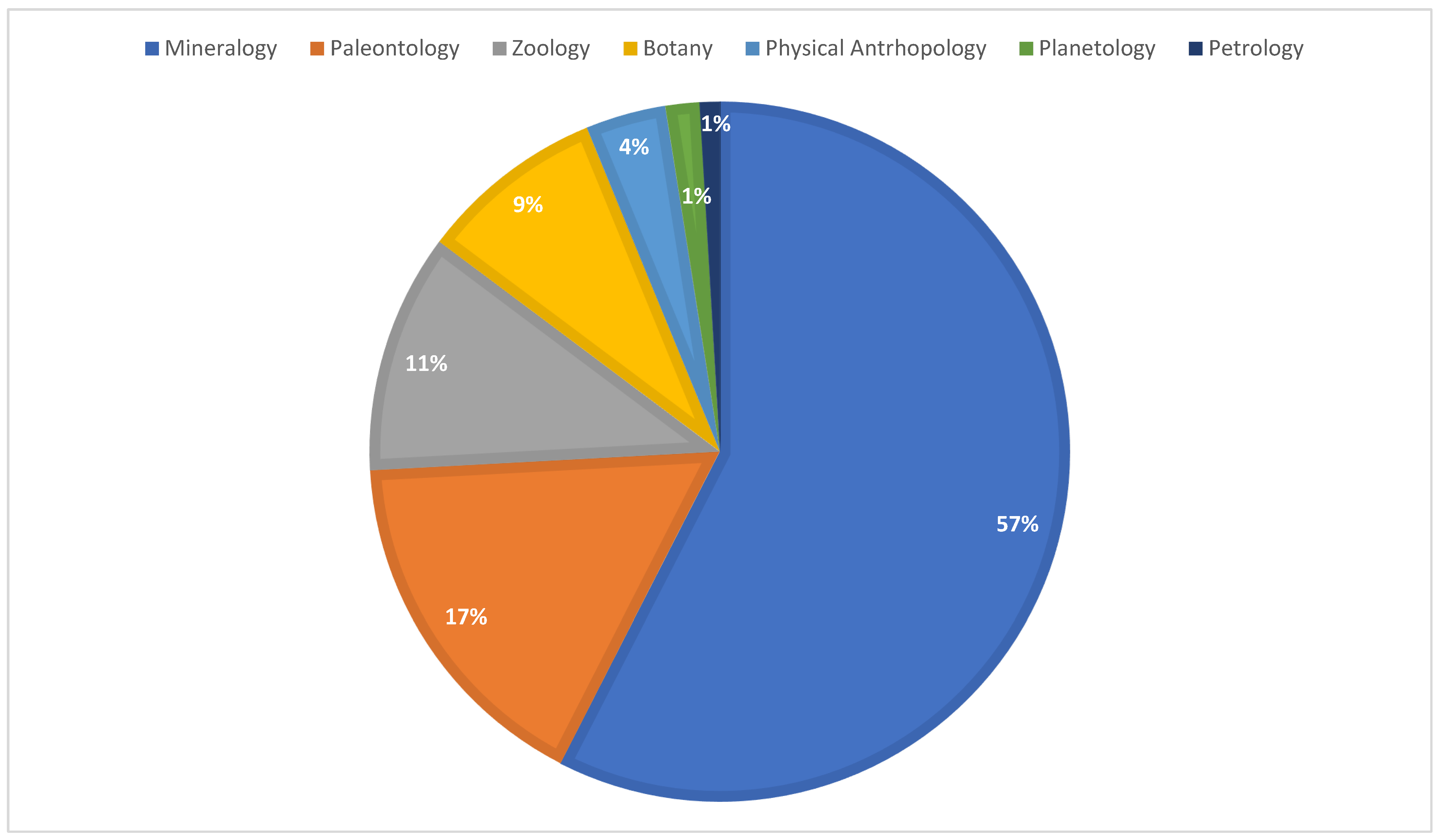
At the time of writing (November 2025), the General Catalog of Cultural Heritage comprises a total of 3,155,980 entries spanning a wide spectrum of categories (Table A4). Naturalistic heritage accounts for 73.003 entries, representing roughly 2% of the total items. Within this category, mineralogical heritage is the most substantial, with 41,999 records, followed by paleontological specimens (12,131), zoological specimens (8090), botanical specimens (6264), physical anthropology (2698), planetology (1153), and petrology (667) (Figure 1).
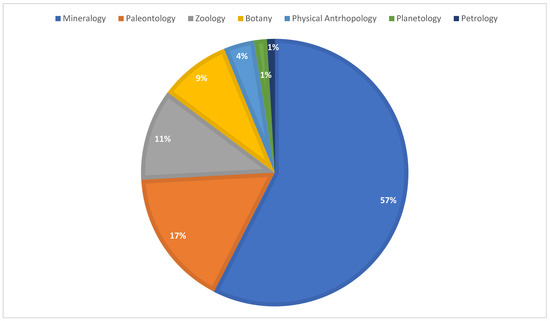
Figure 1.
Cataloged Italian Naturalistic Heritage as of November 2025. Data source: General catalog of Cultural Heritage database.
According to the data shown in Figure 1, slightly more than one thousand meteorite specimens preserved in Italian museums have been cataloged to date using the BNPL national standard. It should be noted that the cataloged specimens originate exclusively from just two of Italy’s twenty regions, namely Tuscany (1043) and Emilia-Romagna (110). The distribution of cataloged meteorites across institutions and regions is summarized in Table 1.

Table 1.
Number of meteorites cataloged by institutions using the BNPL national standard in Tuscany and Emilia-Romagna. Data source: General Catalog of Cultural Heritage database.
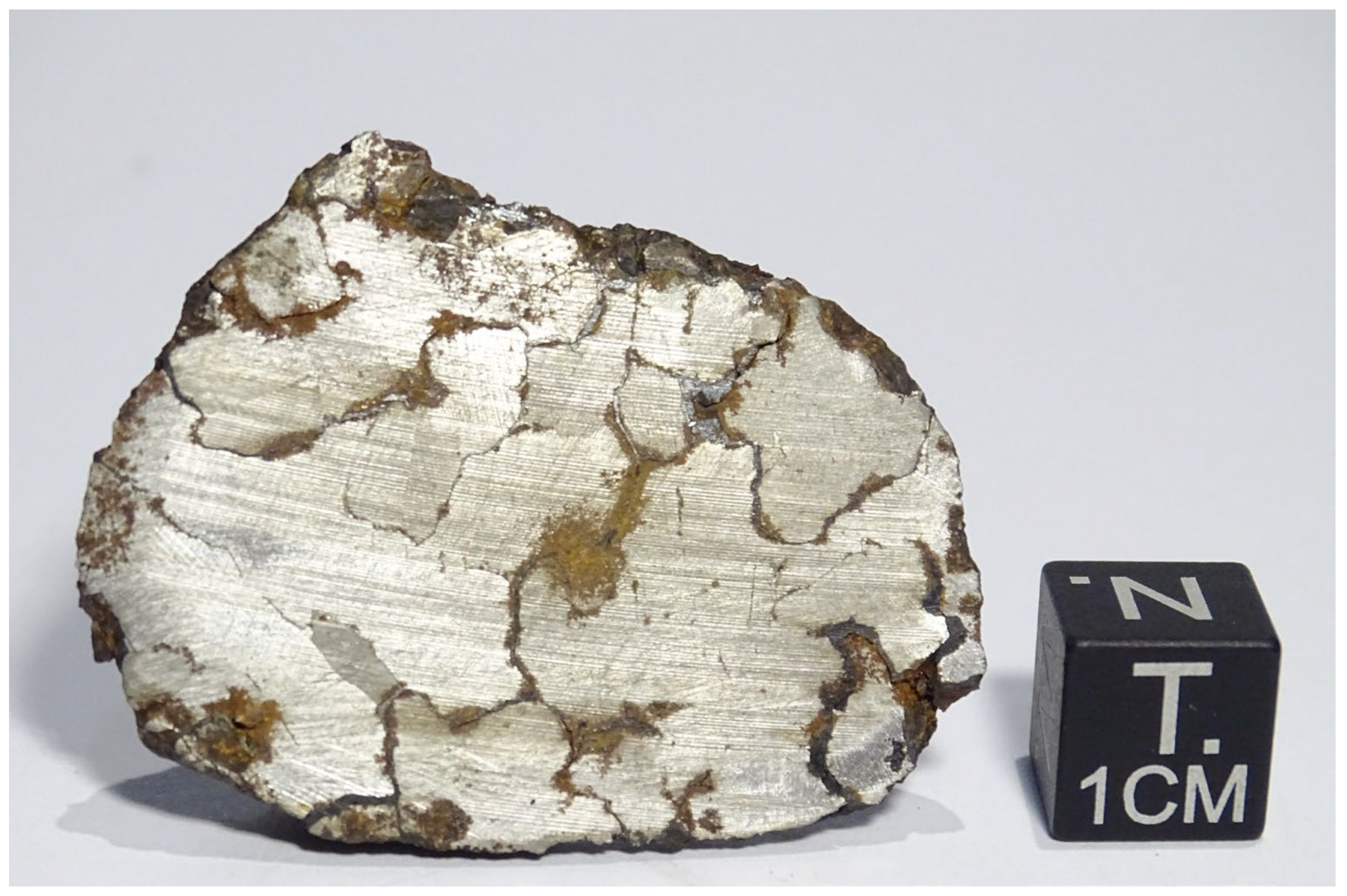
All cataloging campaigns adhere strictly to the methodology outlined in the previous section. Each catalog card is completed to a minimum inventory level, ensuring consistency across institutions. Furthermore, every entry is accompanied by a high-quality image of the specimen, including a metric reference (e.g., Figure 2).
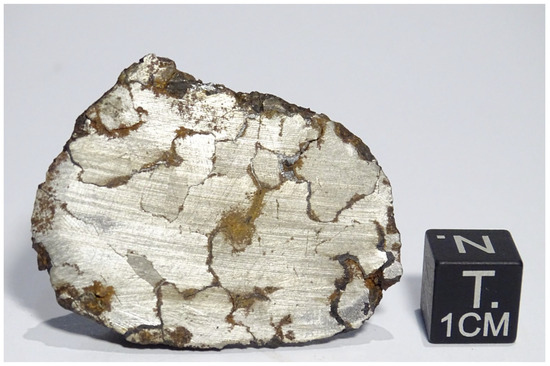
Figure 2.
Example of a BNPL catalog photograph: the Castiglione del Lago meteorite, classified as Iron, IAB-MG, recovered in Umbria (Italy) in 1970. The specimen is preserved at the Italian Museum of Planetary Sciences in Prato (ICCD catalog number 0901332712). Data source: General Catalog of Cultural Heritage database.
Concerning the cataloged specimens, the University of Firenze and the Italian Museum of Planetary Sciences include both historical and newly acquired samples, reflecting their role as classification institutions and providers of related services [47]. The Antarctic Museum ‘Felice Ippolito’ in Siena presents specimens originating from the Italian Antarctic Program [48]. The Luigi Bombicci Museum of the University of Bologna, by contrast, maintains a collection composed of historical meteorites.
4. Discussion
The results derived from the analysis of meteorite entries within the General Catalog of Cultural Heritage shed light on both the strengths and the present limitations of adopting the BNPL national cataloging standard. The data show that, at the present stage, the corpus of cataloged meteorites amounts to slightly more than one thousand specimens, which is a partial reflection of the actual extent of meteorite collections preserved in Italian museums and institutions. More strikingly, this entire dataset originates exclusively from two regions, Tuscany and Emilia-Romagna, thus revealing a highly uneven geographical distribution in the implementation of cataloging activities.
Tuscany, with three active institutions—the Antarctic Museum ‘Felice Ippolito’ in Siena, the Museum System of the University of Firenze, andI co the Italian Museum of Planetary Sciences in Prato—emerges as the leading region, responsible for most cataloged meteorites. Emilia-Romagna is represented by the Luigi Bombicci Museum of the University of Bologna. The limited territorial adoption presents several implications. Italy hosts a substantial number of natural history museums distributed across universities, regional institutions, and local civic museums. According to data collected by the National Institute of Statistics (ISTAT) for the year 2022 [49], the Italian museum system includes 261 museums and similar institutions whose prevalent typology is classified as “Natural history and natural sciences,” as illustrated in Table 2.
Table 2.
Number of institutions classified as natural history and natural sciences museums in Italy, grouped by region, as of 2022. Da source: ISTAT.
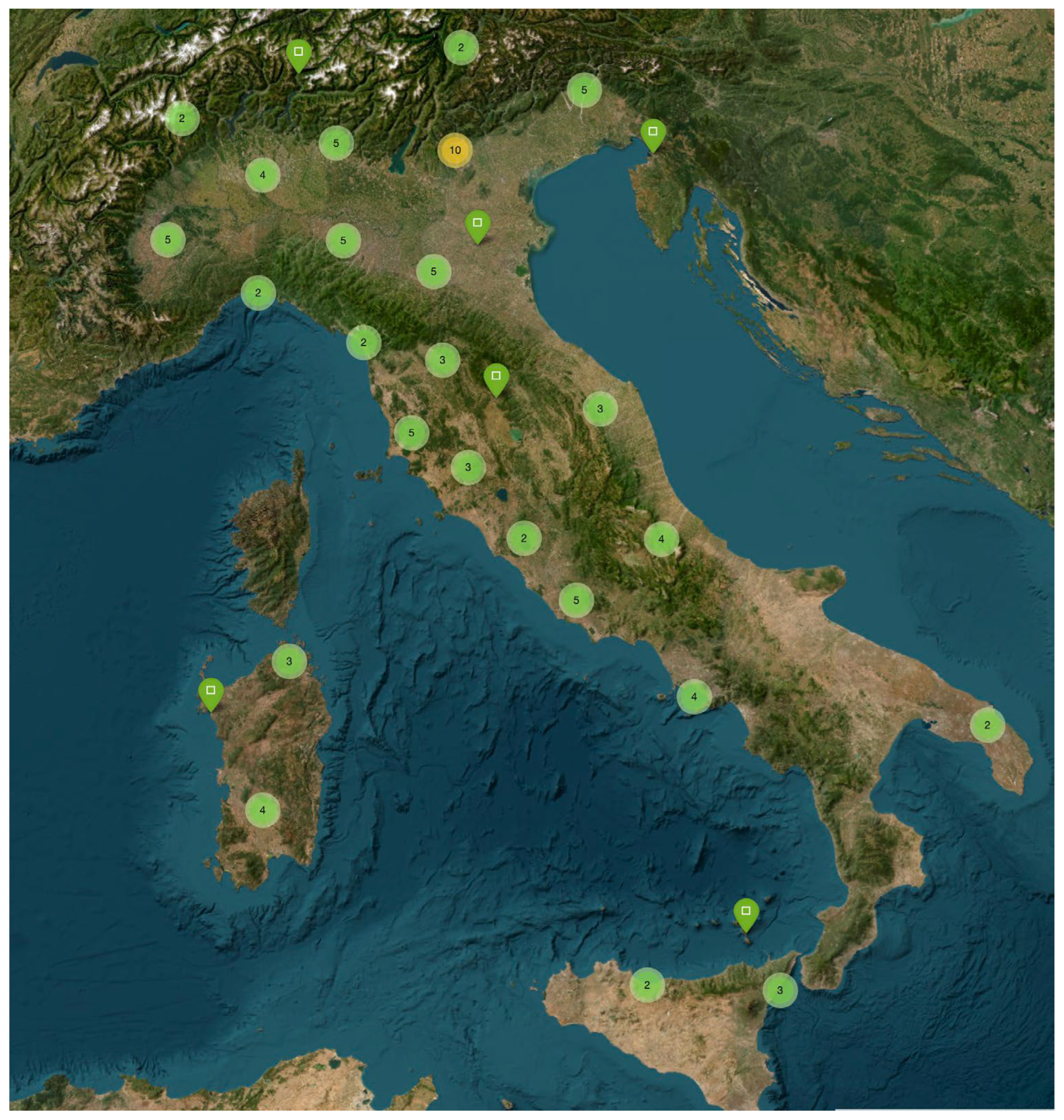
While the overall number of institutions dedicated to natural history and natural sciences is ascertainable, a comprehensive evaluation of the size and content of their specialized collections remains challenging. According to the Italian Institute for Environmental Protection and Research (ISPRA), 98 museums across Italy curate litho-mineralogical collections (Figure 3), whereas Martino [50] reported that approximately 15.4% of Italian university museum collections are devoted to Earth sciences. Within this context, the literature reports the presence of meteorite collections in diverse Italian natural history museums such as the Natural History and Civic Planetarium “Ulrico Hoepli” in Milano [51], which houses a collection of over 240 specimens and has recently been reopened to the public [52]; the Regional Museum of Natural Sciences in Turin (107 specimens) [53]; the Mineralogy and Petrography Museum of the University of Pavia (ca. 20 specimens) [54], the Natural History Museum of the University of Pisa (30 specimens of 26 individual meteorites as of June 2003 [55,56]); and the Mineralogical Museum of the University “La Sapienza” in Rome (360 specimens representing 211 individual meteorites [57]). The literature also highlights the existence of a private meteorite collection recently acquired by the Gemellaro Museum of the University of Palermo [58] as well as the presence of historic specimens within Alberto Pelloux’s (1868–1948) mineralogical collections kept at the Earth Sciences Museum of the Bari University [59]. Additional historically and scientifically important meteorite specimens are preserved at the Royal Mineralogical Museum of the University “Federico II” of Napoli, including the collection of the naturalist Teodoro Monticelli (1759–1845) [60], as well as at the Mineralogical Museum “Leonardo de Prunner” of the University of Cagliari, which houses fragments of the Sinnai meteorite that fell in Sardinia on 19 February 1956 [61]. Finally, meteorite specimens are also recorded within regional cataloging repositories [62], including those belonging to the Museum of Earth and Sky located in San Giovanni in Persiceto (Bologna) [63].
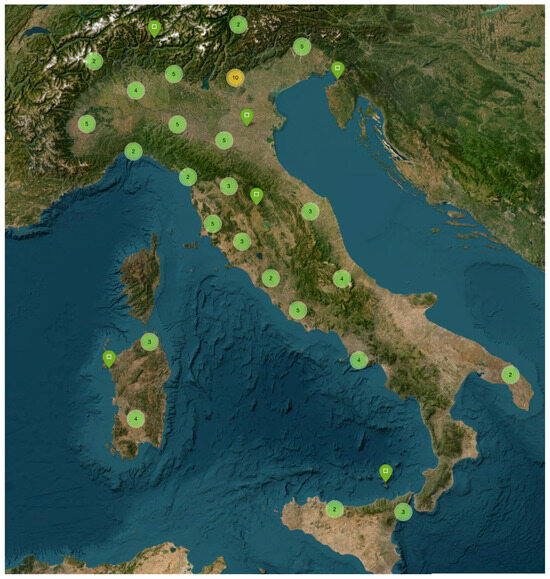
Figure 3.
Geographic distribution of museums and institutions in Italy that preserve litho-mineralogical collections, based on data from ISPRA.
Based on the above, meteorite museum collections, besides those already listed in the General Catalog of Cultural Heritage, are indeed known to exist in other Italian institutions and regions; however, the absence of standardized cataloging practices means that most of these collections remain documented only through internal museum records and databases or scattered references in the literature. At present, no consolidated inter-institutional databases exist that would allow for a systematic assessment of the number, typology, and distribution of these specimens.
The restricted territorial implementation of the BNPL cataloging model, therefore, entails a number of noteworthy implications. From a scientific perspective, the restricted dataset does not yet provide a reliable overview of the diversity and distribution of meteorite museum collections across Italy. From a heritage-management point of view, the absence of cataloged records from most Italian regions raises concerns about the risk of under-documentation, inconsistent preservation standards, and, in certain cases, reduced visibility for collections that may already suffer from limited public exposure. Such gaps diminish the potential of the BNPL national standard to serve as a tool for knowledge, conservation, and accessibility, hindering not only the establishment of a harmonized national framework but also limiting the potential for comprehensive analyses, cross-regional assessments, and large-scale integrative studies on the Italian extraterrestrial material heritage.
Table 3 presents a cross-SWOT analysis of the BNPL national cataloging standard, providing an integrated perspective on the internal and external factors that influence its effectiveness, adoption, and long-term sustainability. By examining the interactions between Strengths (S), Weaknesses (W), Opportunities (O), and Threats (T), this framework helps identify strategic actions to reinforce its adoption and mitigate critical challenges.
Table 3.
Cross-SWOT analysis of the BNPL national cataloging standard.
The SWOT analysis highlights the considerable potential of adopting a unified national standard for cataloging extraterrestrial materials, while simultaneously revealing the structural weaknesses and external threats that could undermine its long-term effectiveness. The strengths identified—such as alignment with ICCD ministerial protocols, the presence of controlled vocabularies, recursive fields for continuous updates, and full interoperability with the General Catalog of Cultural Heritage database—demonstrate the significant advantages of a standardized, scientifically robust documentation framework. However, these strengths are counterbalanced by notable weaknesses, including incomplete national adoption, uneven institutional expertise, and the absence of a coordinated cataloging strategy, all of which remain critical barriers to achieving a comprehensive documentation of the Italian extraterrestrial material heritage. Opportunities such as increasing public and academic interest in planetary sciences and the potential for inter-institutional consortia underscore the timely relevance of initiating a structured, nationwide cataloging campaign. At the same time, threats—including technological obsolescence and the persistent risk of data loss—reinforce the urgency of establishing training programs capable of building technical capacity across diverse institutions. Taken together, these factors demonstrate that a coordinated national effort—combining large-scale cataloging initiatives with sustained training and professional development—is essential not only to ensure the long-term preservation and accessibility of meteorite collections, but also to secure their scientific, educational, and societal value over time. In this context, it is important to recall that the cataloging of museum-held heritage in accordance with the national standards for the documentation of Italian cultural heritage is mandated by law (Art. 17, Legislative Decree No. 42/2004). Furthermore, the systematic and standardized cataloging of collections constitutes one of the essential criteria for an institution to obtain formal recognition as part of the National Museum System, as established by Ministerial Decree 113 of 21 February 2018. In addition to the requirement to comply with legislative regulations, the promotion of standardized cataloging can be further encouraged through participation in national initiatives. For example, the University Museum System of Firenze advanced the standardized cataloging of its geo-mineralogical collections through its participation in the Rete Italiana dei Musei Universitari (Network of Italian University Museums). This network represents a pioneering national initiative that unites twelve university museums from across Italy to foster scientific culture, promoting institutional collaboration, and supporting educational innovation. By encouraging the adoption of national cataloging standards, the network has played a key role in enhancing the consistency, accessibility, and scholarly value of academic museum collections throughout the country [64]. Expanding the cataloging coverage of the BNPL standard is thus a necessary step not only for safeguarding meteorite collections but also for consolidating the narratives that connect these extraterrestrial materials to broader questions of science, culture, and heritage. Within the Italian context, such an initiative would not only ensure the systematic preservation of meteorites but also promote their valorization as objects of both scientific inquiry and cultural heritage. In this way, Italy would enhance the capacity of its institutions to safeguard these materials while simultaneously fostering their accessibility for research, education, and public engagement. For example, the BNPL cataloging dataset could be adopted for educational platforms that contextualize planetary processes in more accessible ways for students, teachers, and the general public. Beyond these applications, BNPL catalog records offer substantial potential to support STEM (Science, Technology, Engineering, Mathematics) education more broadly. The structured, standardized documentation of meteorites creates a high-quality dataset that can be integrated into digital learning environments, virtual collections, and inquiry-based teaching modules. Moreover, the use of BNPL-formatted datasets in conjunction with artificial intelligence (AI) tools such as Cat-IA [65] opens new avenues for educational innovation, enabling semantic search and data-driven exploration within the catalog records.
On the international stage, this effort would position Italy to engage more substantively in the broader discourse on shared scientific and cultural heritage, a discourse that has been actively advanced by other European nations, including France, Germany, Austria, and the United Kingdom [66,67,68,69]. In these countries, most meteorite specimens and associated documentation are curated within national natural history museums, whose centralized databases function as critical nodes for the aggregation, dissemination, and global accessibility of data (e.g., [70]). Adopting the BNPL while engaging with transnational networks, Italy will not only safeguard its meteorite museum collections but also maximize the long-term scientific, cultural, and institutional value of these materials.
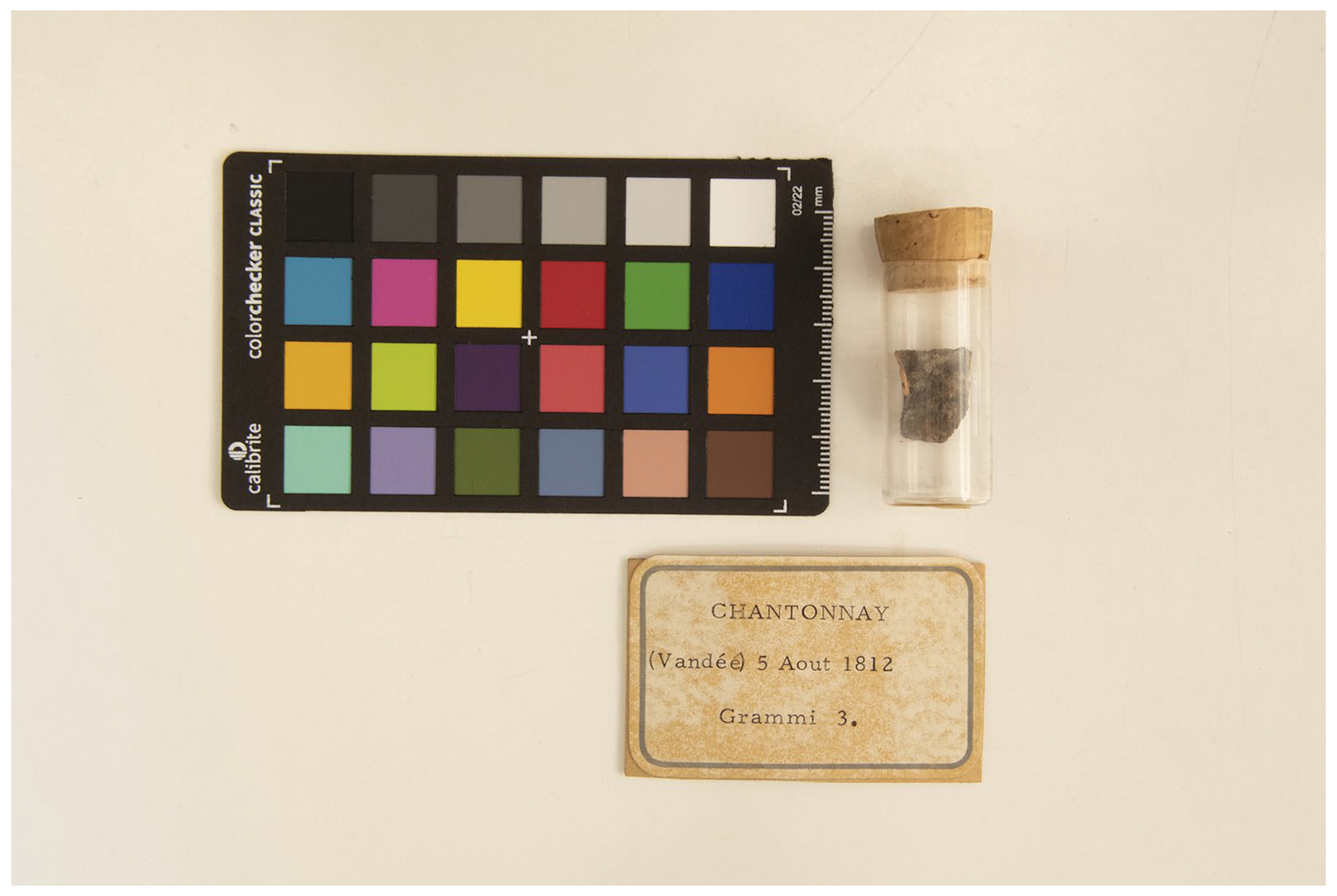
As stated above, a national cataloging framework ensures methodological consistency across different repositories, facilitating accurate documentation, standardized metadata, and comprehensive data preservation. Such an approach enables seamless integration of historical and newly acquired or classified specimens, supports the verification and traceability of research findings, and strengthens institutional accountability. In this regard, it is particularly noteworthy that the ongoing cataloging campaign at the University of Bologna is systematically uncovering and rendering accessible data from a collection of considerable historical and scientific importance, specifically that of the 19th-century naturalist Luigi Bombicci (1833–1903) [71,72] (Figure 4). The careful documentation of this collection not only preserves the provenance and integrity of specimens acquired during a vital period of Italian natural history but also provides contemporary researchers with critical insights into historical classification practices, acquisition networks, and the broader development of meteoritics in Italy.
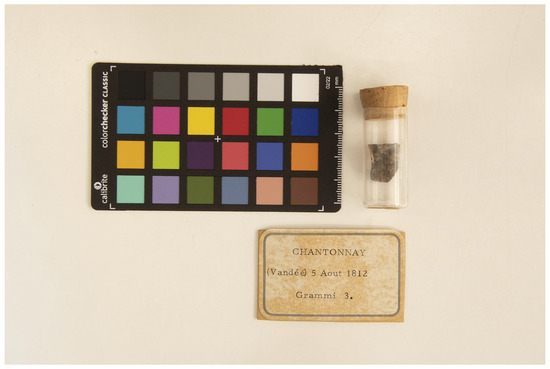
Figure 4.
A specimen of the Chantonnay meteorite belonging to Luigi Bombicci’s meteorite collection. ICCD catalog number: 0800691690. Data source: General Catalog of Cultural Heritage database.
Improving the adoption of the BNPL national standard is then of strategic importance from the perspective of establishing a storage curation facility of planetary materials in Italy [73]. Even if the escalating costs and technical challenges have cast uncertainty on the destiny of the Mars Sample Return (MSR) program, several high-profile sample return missions, both recently completed and planned, are scheduled for the coming decades (e.g., [74,75,76,77]). These missions demonstrate that the success of sample return programs does not conclude with their landing on Earth but depends critically on the infrastructures that ensure their long-term preservation, standardized cataloging, and accessibility, such as those already established in the United States and Japan (e.g., [78]). A comprehensive examination of cataloging protocols specifically developed for returned samples lies beyond the scope of the present review, which is primarily focused on surveying the current state of meteorite documentation in Italian museum collections using the BNPL national cataloging standard. Nevertheless, readers interested in the methodological and procedural aspects of returned-sample cataloging, including the MSR-related protocols, may refer to the following studies, which offer detailed insights into current best practices in advanced curation of astromaterials (e.g., [18,79]) as well as for the documentation and management of extraterrestrial materials retrieved through sample-return missions (e.g., [79,80,81,82,83]).
In this scenario, the BNPL standard should be regarded as a conceptual and methodological baseline from which a more sophisticated cataloging model can be developed. While BNPL provides a coherent descriptive logic and a valuable organizational structure, its primary role in this process is to offer the initial framework upon which a dedicated system for research extraterrestrial collections can be conceived. Such a system must be capable of addressing the distinctive scientific, technical, conservation, and curatorial requirements associated with these materials preserved in scientific institutions, such as storage and curation facilities, where the long-term preservation, traceability, and accessibility of these samples will be paramount. At the same time, it is crucial to underscore that the future cataloging standard will not merely represent an extension or adaptation of BNPL but rather the establishment of an entirely new, autonomous, and purpose-built framework. Its design will be informed not only by current international best practices and experts in the field, but also by the heritage of major past experiences and multidisciplinary initiatives—most notably the EUROCARES project [84]. By integrating these diverse strands of expertise, the emerging standard aims to provide a comprehensive, forward-looking solution capable of supporting both present and future research needs within the planetary science and meteoritics communities.
5. Conclusions
The analysis of meteorite cataloging practices in Italy demonstrates that the implementation of the BNPL national standard represents a decisive advancement in the stewardship of extraterrestrial materials. By providing a coherent and methodologically rigorous framework for documentation, classification, and long-term data preservation, BNPL ensures the traceability of meteorite specimens across Italian museums, harmonizing practices that were previously fragmented. In this regard, the cases of Firenze, Prato, Bologna, and Siena exemplify how diverse collection strategies—ranging from historical acquisitions to contemporary research-oriented sampling—can be integrated effectively within a unified documentation system, thereby enhancing both scientific reliability and institutional coordination.
Nonetheless, the full adoption of the BNPL standard for cataloging meteorite museum collections requires further refinement and the development of coordinated initiatives. These initiatives could include the establishment of targeted training programs for museum personnel, researchers, and graduate and doctoral students, fostering their active participation in the launch of new cataloging campaigns and ensuring the consistent application of best practices across institutions. Complementing these efforts, the forthcoming national storage curation facility will benefit from the experience provided by the adoption of the BNPL model during the development of its own cataloging standards and systems.
In conclusion, the improvement of the BNPL national cataloging standard will not only secure the long-term preservation and environmental protection of planetary collections but also enable enhanced monitoring, risk management, and integration of metadata across institutions, bridging the gap between conservation, valorization, and research use of the Italian meteorite heritage. Together, the combination of these approaches will facilitate interoperability of Italian cataloging datasets with global databases and the establishment of new collaborative research networks.
Author Contributions
Conceptualization, A.F., X.S. and G.P.; methodology, A.F., X.S. and G.P.; writing—original draft preparation, A.F.; writing—review and editing, A.F., X.S. and G.P.; funding acquisition, G.P. All authors have read and agreed to the published version of the manuscript.
Funding
This study was carried out within the Space It Up project funded by the Italian Space Agency (ASI) and the Ministry of University and Research (MUR) under contract n. 2024-5-E.0-CUP n. I53D24000060005.
Data Availability Statement
No new data were created or analyzed in this study. Data sharing is not applicable to this article.
Acknowledgments
The authors gratefully acknowledge the invaluable contributions of all museum personnel from the aforementioned institutions, whose expertise and dedication were essential to the successful execution of the cataloging campaigns. Their careful work ensured both the accuracy and completeness of the data, enabling the systematic documentation of Italy’s meteorite collections. The authors also extend their sincere thanks to Maria Letizia Mancinelli (ICCD) for her unwavering support, guidance, and insightful contributions to the cataloging activities involving geo-mineralogical collections. This collaborative effort reflects the interdisciplinary nature of the project, bridging curatorial practice, scientific research, and heritage management, and underscores the importance of coordinated teamwork in the preservation and valorization of Italian planetary materials.
Conflicts of Interest
The authors declare no conflicts of interest.
Abbreviations
The following abbreviations are used in this manuscript:
| AI | Artificial Intelligence |
| API | Application Programming Interface |
| ArCo | Architettura della Conoscenza |
| BIBFRAME | Bibliographic Framework |
| BNPL | Beni Naturalistici–Planetologia |
| Cat-IA | Catalogo-Intelligenza Artificiale |
| CLIO | Catalogazione, Localizzazione, Identificazione, Organizzazione |
| EDM | Europeana Data Model |
| JSON | JavaScript Object Notation |
| ICCD | Central Institute for Catalog and Documentation |
| LOD | Link Open Data |
| INSTAT | National Institute of Statistics |
| ISPRA | Italian Institute for Environmental Protection and Research |
| MSR | Mars Sample Return |
| RDF | Resource Description Framework |
| RiC-O | Records in Contexts Ontology |
| STEM | Science, Technology, Engineering, Mathematics |
Appendix A
Table A1.
Template for requesting provisional names to the Nomenclature Committee of the Meteoritical Society for new meteorites found in dense collection areas. Fields have been grouped into four sections. Fields marked with an asterisk (*) are mandatory.
Table A1.
Template for requesting provisional names to the Nomenclature Committee of the Meteoritical Society for new meteorites found in dense collection areas. Fields have been grouped into four sections. Fields marked with an asterisk (*) are mandatory.
| Template for Requesting Provisional Names | ||
|---|---|---|
| Section | Field | Description/Notes |
| Proposed Identification | Proposed name * | Name/abbreviation of the collection area where the specimen was found |
| Discovery/Origin | Field name * | Local field or find name |
| Origin | Country/region where specimen was recovered | |
| Latitude | Geographic latitude of find site | |
| Longitude | Geographic longitude of find site | |
| Collection data | Purchased | Indicate the place if acquire through purchase |
| Date * | Date of discovery/acquisition | |
| Mass * | Total recovered mass | |
| Pieces | Number of individual specimens or fragments | |
| Specimen Information | Specimens * | Location and mass of the type specimens |
| Description * | General description of the specimen | |
| Info | Additional information about the specimen or submitter’s contact data | |
| Administrative | Assigned to | Submitter’s name |
| Assigned by | Automatic | |
Table A2.
Template for submitting new meteorites to the Nomenclature Committee of the Meteoritical Society. Fields have been grouped into seven sections. Fields marked with an asterisk (*) are mandatory.
Table A2.
Template for submitting new meteorites to the Nomenclature Committee of the Meteoritical Society. Fields have been grouped into seven sections. Fields marked with an asterisk (*) are mandatory.
| Template for the Submission of New Meteorites | ||
|---|---|---|
| Section | Field | Description/Notes |
| Identification | Proposed name * | Proposed name for the specimen or the provisional name |
| Geographic information | Country | Country where the specimen was recovered |
| State/Province | State/Province where the specimen was found | |
| Site | Description of the setting where the specimen fell or was found | |
| Latitude | Geographic latitude of find site | |
| Longitude | Geographic longitude of find site | |
| Recovery Context | Find or Fall Date | Date that the specimen fell or was discovered |
| Fall | C for confirmed fall, P for probable Fall, S for Find, Possible Fall, D for Find, doubtful Fall, or Y for fall no suggestion | |
| Purchase Date | If purchased, provide acquisition date | |
| Purchase Place | Location of acquisition | |
| Physical Data | Mass * | Total mass of the specimen including fragments |
| Pieces * | Number of the recovered specimens/Descriptive words as “many” | |
| Systematics | Class * | Specimen classification |
| Shock | Shock stage | |
| Weathering grade | Degree of terrestrial weathering | |
| Fa | Fayalite content of olivine in mol% | |
| Fs | Ferrosilite content of pyroxene, calculated from Fe-Mg-Ca endmembers, in mol% | |
| Wo | Wollastonite content of pyroxene, calculated from Fe-Mg-Ca endmembers, in mol% | |
| Mag sus | Magnetic susceptibility | |
| Writeup physical | Description of the specimen’s physical characteristics | |
| Writeup petrog | Petrographic description | |
| Writeup geochem | Geochemical description | |
| Writeup class | Classification description | |
| Class method | Special ordinary chondrite classification methods: “~” = oil immersion, “m” = magnetic susceptibility, “x” = Xray diffraction, or enter a description for other methods | |
| Curation | Type spec mass * | Type specimen(s) mass |
| Type spec loc * | Name or abbreviation of the institution where the type specimen has been deposited | |
| Main mass loc * | Location/name of the owner of the main mass | |
| Writeup specimens | List the weight and location of the most significant specimens | |
| Writeup history | History of the recovered specimens | |
| Finder | Name of the person(s) who discovered the specimen | |
| Comments | General remarks | |
| Administrative | Classifier * | Name(s) of the classifier(s) |
| Submitter * | Name of the submitter | |
Table A3.
Most relevant fields for the BNPL Italian national cataloging standard for museum meteorite collections. Fields marked with an asterisk (*) are mandatory.
Table A3.
Most relevant fields for the BNPL Italian national cataloging standard for museum meteorite collections. Fields marked with an asterisk (*) are mandatory.
| BNPL | |||
|---|---|---|---|
| Visibility | Section | Field | Description/Notes |
| 1 | Object | Definition * | Describe the type of meteorite according to the literature (e.g., Martian, aubrite, etc.) |
| Identification | Specify if the specimen is an individual or is part of a series/collection | ||
| Container | Specify the container or support, if any, in which the meteorite is currently preserved | ||
| 1 | Quantity | Number | Record the number of individual specimens, if greater than one |
| 1 | Systematics | Nomenclature | |
| Name | Enter the official meteorite name as reported in the Meteoritical Bulletin Database | ||
| Type | Meteorite type | ||
| Class | Meteorite classification | ||
| Group | Meteorite group | ||
| Petrologic Type | Meteorite petrologic type | ||
| Fall/Find | Specify whether the meteorite is a find or a fall | ||
| Date | Specify the date of the fall or the recovery of the first fragment | ||
| Type specimen location | Indicate the institution preserving the type specimen | ||
| Type specimen weight | Weight of the type specimen | ||
| Main mass location | Specify the institution responsible for preserving the main mass, or the name of the collector. | ||
| Main mass weight | Weight of the main mass | ||
| Total known weight | Record the meteorite’s total known weight | ||
| 1 | Petrography | Shock grade | Meteorite shock grade |
| Texture | Meteorite texture | ||
| Weathering grade | Meteorite weathering grade | ||
| Chondrule/matrix ratio | Specify the ratio of chondrules to matrix in terms of volume percent (vol%) | ||
| Chondrule type | Report the predominant chondrule type(s) in the specimen | ||
| 1 | Mineralogy | Fayalite (mol%) | Indicate the average composition of olivine in the sample, expressed as mole percent of fayalite |
| Ferrosilite (mol%) | Report the mean orthopyroxene composition in the sample, in terms of ferrosilite mole percent | ||
| Anorthite (mol%) | Indicate the average composition of plagioclase in the sample, expressed as mole percent of anorthite | ||
| Olivine (vol%) | Indicate the modal percentage of olivine (vol%) | ||
| Pyroxene (vol%) | Indicate the modal percentage of orthopyroxene (vol%) | ||
| Plagioclase (vol%) | Indicate the modal percentage of plagioclase (vol%) | ||
| Metal (vol%) | Indicate the modal percentage of metal (vol%) | ||
| Sulphides (vol%) | Indicate the modal percentage of sulphides (vol%) | ||
| 1 | Oxygen isotopes | δ17O | |
| δ18O | |||
| Δ17O | |||
| 1 | Geochronology | Igneous age | Indicate the age of the rock, that is, the time elapsed since the solidification of the parental melt |
| 87 Rb/86 Sr | |||
| 147 Sm/144 Nd 147 Sm/144 Nd | |||
| 238 U/206 Pb | |||
| Shock age | Express the age of the metamorphic event resulting from shock experienced by the meteorite | ||
| 87 Rb/86 Sr | |||
| 40 Ar/40 K | |||
| Cosmic ray exposure age | The cosmic-ray exposure age (CREA) is a measure of how long a meteorite has traveled through interplanetary space, remaining exposed to cosmic rays from the Sun and the Galaxy | ||
| 3 He | |||
| 21 Ne | |||
| 38 Ar | |||
| Terrestrial Age | The terrestrial age of a meteorite is a measure of the time the meteorite has resided on Earth | ||
| 14 C | |||
| 10 Be | |||
| 36 Cl | |||
| 1 | Additional information | Availability of sample portions | |
| Availability thin sections | |||
| Availability of grains | |||
| 1 | Type | Type | Indicate if the meteorite is a holotype |
| Author | Indicate the name(s) of the classifier(s) | ||
| Reference | Specify the biographic reference of the meteorite’s classification | ||
| 1 | Tags/Labels | Text | Report the text of the label(s), tag(s) |
| Notes | Additional information about tag(s), label(s) | ||
| 1 | Field data | Location/Continent/Country | Specify the information about the location where the meteorite was collected |
| 1 | Recovery data | Date/Collector/ Principal investigator | Information regarding the collection date and the collector, as well as the reasons and methods that led to the collection of |
| 1 | Past classification | Systematics, Petrology, Mineralogy, Oxygen isotopes, Geochronology, Type, Additional information, tags/labels | Reporting previous meteorite’s classification data, if any |
| 1–3 | Geographic and Administrative Location * | Data regarding the geographic and administrative location of the meteorite at the time the record is compiled | |
| 1–3 | Past geographic and administrative location(s) | Information regarding past geographic and administrative location of the meteorite | |
| 0–1 | Collection and economic data | ||
| Inventory | Meteorite inventory number (preserving institution) | ||
| Valuation | Indicate the economic value of the meteorite | ||
| Collection | Provide details regarding the current collection and any historical collections of which the meteorite is or has been a part | ||
| 3 | Point-based georeferencing | Provide information allowing the georeferencing of both the original collection site and the current location of the meteorite | |
| 1 | Technical data | Measurements | Data about the specimen’s size |
| 1 | Analytical data | Physical description, historical notes | Detailed information on the meteorite |
| 1 | Conservation * | State, type, modalities | Provide information on the conservation condition of the cataloged item |
| 1 | Restoration/Analyses | Provide details of any restoration work performed and laboratory analyses conducted on the meteorite. | |
| 1–2 | Legal status/regulatory constraints * | Provide details regarding the item’s ownership, relevant legal protections, and any transfers of ownership | |
| 1–2 | References and sources | Photos *, graphs, audio-videos, archival documents, books, exhibitions | Information on documentary sources and on photographic, graphic, multimedia, and bibliographic references, including exhibitions (if any) |
| 1 | Data access * | Data access profile | Information regarding access to the data, ranging from fully accessible (1) to restricted (3) |
| 1 | Notes | General remarks | |
Table A4.
Data pertaining to the categories of the Italian General Catalog of Cultural Heritage, which documents the nation’s cultural assets managed under the Ministry of Culture. The table represents the number of cataloged records for each heritage category.
Table A4.
Data pertaining to the categories of the Italian General Catalog of Cultural Heritage, which documents the nation’s cultural assets managed under the Ministry of Culture. The table represents the number of cataloged records for each heritage category.
| Category | Number of Records |
|---|---|
| Works of art | 2,219,767 |
| Archeology | 407,777 |
| Photography | 223,081 |
| Architecture and landscape | 101,596 |
| Naturalistic heritage | 73,003 |
| Material and immaterial demo-ethno-anthropological heritage | 77,561 |
| Numismatic | 40,304 |
| Technological and scientific heritage | 16,914 |
| Musical instruments | 1977 |
References
- Hearth, S.; Robbins, C.; Weldon, M.; Anderson, A.; Bieber-Stanley, R.; Chenila, A.; Christ, H.; Cosgrove, H.; Hanson-Rosenberg, M.; Hill, C.; et al. Cataloguing Minerals, Part One: Historical Cataloguing Practices and the Logics of Colonialism. Mus. Soc. 2024, 22, 15–28. [Google Scholar] [CrossRef]
- Turner, H. Organizing Knowledge in Museums: A Review of Concepts and Concerns. Knowl. Organ. 2017, 44, 472–484. [Google Scholar] [CrossRef]
- Alberti, S.J.M.M. Objects and the Museum. Isis 2005, 96, 559–571. [Google Scholar] [CrossRef]
- Nobre, A.G.; Meurer, M.; Campanaro, J.F.; de Borba, A.W. Geodiversity Elements of Geological Collections as Ex Situ Teaching Tool: The Example of the Geography Department at the Federal University of Pelotas, Rio Grande do Sul, Brazil. Geoheritage 2024, 16, 14. [Google Scholar] [CrossRef]
- Kirk, R.J.; Owens, I.F.P. A global approach for natural history museum collections. Science 2023, 379, 1192–1194. [Google Scholar] [CrossRef]
- Rinaldo, C.; Rielinger, D.; Deveer, J.; Castronovo, D. Connecting Libraries, Archives, and Museums: Collections in Support of Natural History Science. ACM J. Comput. Cult. Herit. 2023, 16, 1–24. [Google Scholar] [CrossRef]
- Strauß, A. Rock value: Scientific and economic conditions for collecting minerals in the early nineteenth century. J. Hist. Collect. 2023, 35, 77–90. [Google Scholar] [CrossRef]
- Vogel, J. Stony realms: Mineral collections as markers of social, cultural and political spaces in the 18th and early 19th Century. Hist. Soc. Res./Hist. Sozialforschung 2015, 40, 301–320. [Google Scholar]
- Walker, J.; Johnson, M. On mineral sovereignty: Towards a political theory of geological power. Energy Res. Soc. Sci. 2018, 45, 56–66. [Google Scholar] [CrossRef]
- Robbins, C.; Hearth, S.; Weldon, M.; Anderson, A.; Bieber-Stanley, R.; Chernila, A.; Christ, H.; Cosgrove, H.; Hanson-Rosenberg, M.; Hill, C.; et al. Cataloguing Minerals, Part Two: Re-imagining Mineral Catalogue Descriptions to Address Colonial Legacies. Mus. Soc. 2024, 22, 29–42. [Google Scholar] [CrossRef]
- Marrocchi, Y.; Bonal, L.; Gattacceca, J.; Piani, L.; Beck, P.; Greenwood, R.; Eschrig, J.; Basque, A.; Nuccio, P.M.; Martin, F.F. The Piancaldoli meteorite: A forgotten primitive LL3.10 ordinary chondrite. Meteorit. Planet. Sci. 2020, 55, 1924–1935. [Google Scholar] [CrossRef]
- Llorca, J.; Campeny, M.; Ibáñez, N.; Allepuz, D.; Camarasa, J.M.; Aurell-Garrido, J. The meteorite of Barcelona (1704): History, discovery, and classification. Meteorit. Planet. Sci. 2020, 55, 705–725. [Google Scholar] [CrossRef]
- Eschrig, J.; Meier, M.M.M.; Hofmann, B.A. A complete inventory of institutional and public meteorite collections in Switzerland. Meteorit. Planet. Sci. 2025, 60, 1384–1410. [Google Scholar] [CrossRef]
- Franza, A.; Shehaj, X.; Pratesi, G. A Fistful of Mars Exploring the Role of Martian Meteorites in Cultural Heritage and Scientific Inquiry. Heritage 2024, 7, 6981–6997. [Google Scholar] [CrossRef]
- MetBase Database. Available online: https://metbase.org (accessed on 22 November 2025).
- Astromat Database. Available online: https://astromat.org (accessed on 22 November 2025).
- Hezel, D.C.; Lehnert, K.A.; Elangovan, P.; Ji, P.; Mays, J.; Koblitz, J. The MetBase database has merged into Astromat. Meteorit. Planet. Sci. 2025, 60, 143–148. [Google Scholar] [CrossRef]
- McCubbin, F.M.; Herd, C.D.K.; Yoda, T.; Hutler, A.; Calaway, M.J.; Allton, J.H.; Corrigan, C.M.; Fries, M.D.; Harrington, A.D.; McCoy, T.J.; et al. Advanced Curation of Astromaterials for Planetary Science. Space Sci. Rev. 2019, 215, 48. [Google Scholar] [CrossRef]
- Gattacceca, J.; Maurel, C.; Hutzler, A.; Rochette, P.; Weiss, B.P. Curation and Storage of Astromaterials: A Magnetic Perspective. Space Sci. Rev. 2025, 221, 67. [Google Scholar] [CrossRef]
- MacArthur, J.L.; Joy, K.H.; Jones, R.H.; Harvey, T.A.; Almeida, N.V. Curation and classification procedures for the UK Antarctic meteorite collection. Meteorit. Planet. Sci. 2024, 59, 3215–3228. [Google Scholar] [CrossRef]
- Marvin, U.B. The Meteoritical Society: 1933 to 1993. Meteoritics 1993, 28, 261–314. [Google Scholar] [CrossRef]
- Khiri, F.; Ibhi, A.; Saint-Gerant, T.; Medjkane, M.; Ouknine, L. Meteorite falls in Africa. J. Afr. Earth Sci. 2017, 134, 644–657. [Google Scholar] [CrossRef]
- Aboulahris, M.; Chennaoui Aoudjehane, H.; Rochette, P.; Gattaceca, J.; Jull, A.J.T.; Ouazaa, N.L.; Folco, L.; Buhl, S. Characteristics of the Sahara as a meteorite recovery surface. Meteorit. Planet. Sci. 2019, 54, 2908–2928. [Google Scholar] [CrossRef]
- Meteoritical Bulletin Database. Available online: https://www.lpi.usra.edu/meteor/ (accessed on 31 August 2025).
- Casto, L.; Celi, M.; Ferrante, F.; Francescangeli, R.; Pesce, G.B.; Pezzotta, F.; Pizzo, M.; Pratesi, G.; Scandurra, P.; Zorzin, R. Scheda BNPL. Beni Naturalistici—Planetologia; ICCD: Roma, Italy, 2007; pp. 1–107. [Google Scholar]
- Catalogo Generale dei Beni Culturali. Available online: https://catalogo.beniculturali.it/progetto (accessed on 31 August 2025).
- Veninata, C. Dal Catalogo generale dei beni culturali al knowledge graph del patrimonio culturale italiano: Il progetto ArCo. DigItalia 2020, 15, 43–56. [Google Scholar] [CrossRef]
- Casto, L.; Celi, M.; Ferrante, F.; Francescangeli, R.; Pesce, G.B.; Pezzotta, F.; Pizzo, M.; Pratesi, G.; Scandurra, P.; Zorzin, R. Scheda BNM. Beni Naturalistici—Mineralogia; ICCD: Roma, Italy, 2007; pp. 1–132. [Google Scholar]
- Casto, L.; Celi, M.; Ferrante, F.; Francescangeli, R.; Pesce, G.B.; Pezzotta, F.; Pizzo, M.; Pratesi, G.; Scandurra, P.; Zorzin, R. Scheda BNPE. Beni Naturalistici—Petrologia; ICCD: Roma, Italy, 2007; pp. 1–115. [Google Scholar]
- Angelelli, F.; Barbagli, F.; Corradini, E.; Cioppi, E.; D’Arpa, C.; Del Favero, L.; Ferrante, F.; Fornasiero, M.; Fresina, A.; Manganuco, S.; et al. Scheda BNP. Beni Naturalistici—Paleontologia; ICCD: Roma, Italy, 2008; pp. 1–97. [Google Scholar]
- Pratesi, G.; Franza, A. Mineralogical, petrological and planetological heritage. The (Italian) story so far. Rend. Lincei Sci. Fis. e Nat. 2021, 32, 95–116. [Google Scholar] [CrossRef]
- The BNPL Cataloging Model. Available online: https://www.iccd.beniculturali.it/getFile.php?id=268 (accessed on 31 August 2025).
- The SIGECWeb Platform. Available online: https://www.iccd.beniculturali.it/it/sigec-web (accessed on 31 August 2025).
- Desiderio, L.M.; Mancinelli, M.L.; Negri, A.; Plances, E.; Saladini, L. Il SIGECweb nella prospettiva del catalogo nazionale dei beni culturali. DigItalia 2013, 8, 69–82. [Google Scholar]
- General Catalog of Cultural Heritage Database. Available online: https://catalogo.beniculturali.it (accessed on 22 November 2025).
- Wilkinson, M.D.; Dumontier, M.; Aalbersberg, I.J.; Appleton, G.; Axton, M.; Baak, A.; Blomberg, N.; Boiten, J.W.; da Silva Santos, L.B.; Bourne, P.E.; et al. The FAIR guiding principles for scientific data management and stewardship. Sci. Data 2016, 3, 160018. [Google Scholar] [CrossRef]
- Bauer, F.; Kaltenböck, M. Linken Open Data: The Essential; Edition Mono/Monochrome: Vienna, Austria, 2011. [Google Scholar]
- Hogan, A. The Web of Data; Springer: Cham, Switzerland, 2020. [Google Scholar]
- Italian Open Data Portal. Available online: https://dati.culturaitalia.it/ (accessed on 22 November 2025).
- Bruseker, G.; Carboni, N.; Guillem, A. Cultural Heritage Data Management: The Role of Formal Ontology and CIDOC CRM. In Heritage and Archeology in the Digital Age. Acquisition, Curation, and Dissemination of Spatial Cultural Heritage Data; Vincenti, M.L., López-Menchero Bendicho, V.M., Ioannide, M., Levy, T.E., Eds.; Springer: Cham, Switzerland, 2017; pp. 93–131. [Google Scholar]
- Bontchev, B. Evolving Europeana’s Metadata: From ESE to EDM. Digit. Present. Preserv. Cult. Sci. Herit. 2012, 2, 27–37. [Google Scholar]
- Kroeger, A. The road to BIBFRAME: The evolution of the idea of bibliographic transition into a post-MARC future. Cat. Classif. Q. 2013, 51, 873–890. [Google Scholar] [CrossRef]
- Mikhaylova, D.; Metilli, D. Extending RiC-O to model historical architectural archives: The ITDT ontology. ACM J. Comput. Cult. Herit. 2023, 16, 1–15. [Google Scholar] [CrossRef]
- ArCo Ontology. Available online: https://dati.cultura.gov.it/arco-rete-ontologie/ (accessed on 22 November 2025).
- Jacquet, E.; Doisneau, B. The secondary classification of unequilibrated chondrites. Meteorit. Planet. Sci. 2024, 59, 3150–3180. [Google Scholar] [CrossRef]
- Pittarello, L.; Chernonozhkin, S.M.; Marchhart, O.; Martschini, M.; Merchel, S.; Wieser, A.; Vanhaecke, F.; Goderis, S. A terrestrial rock instead of an ureilite: Caution is recommended to scientists working on material received from meteorite collections. Meteorit Planet Sci. 2025, 60, 2283–2292. [Google Scholar] [CrossRef]
- Moggi Cecchi, V.; Pratesi, G.; Carpino, S.; Caporali, S. La classificazioni delle meteoriti in conto terzi come veicolo efficace per l’incremento patrimoniale e per la valorizzazione scientifica delle collezioni dei musei naturalistici. Museol. Sci. Mem. 2017, 17, 144–147. [Google Scholar]
- Folco, L. Fifteen years of Antarctic micrometeorite research by the Italian Programma Nazionale delle Ricerche in Antartide. Sci. Lett. 2010, 293, 104–113. [Google Scholar]
- National Institute of Statistics. Inquiry on Museums and Similar Institutions. Available online: https://www.istat.it/microdati/indagine-sui-musei-e-le-istituzioni-similari/ (accessed on 22 November 2025).
- Martino, V. Musei e collezioni del patrimonio universitario. Indagine su un sistema diffuso. Museol. Sci. Nuova Ser. 2016, 10, 42–55. [Google Scholar]
- Folco, L.; Peri, F.; Pezzotta, F. The meteorite collection of the Civico Planetario and the Museo Civico di Storia Naturale in Milan, Italy. Meteorit. Planet. Sci. 2002, 37, B95–B103. [Google Scholar] [CrossRef]
- Una Collezione Spaziale. Available online: https://museodistorianaturalemilano.it/esposizioni-permanenti/i-meteoriti-una-collezione-spaziale (accessed on 16 November 2025).
- Costa, E.; Marengo, A.; Bittarello, E.; Gallo, L.M. Le meteoriti del Museo di Mineralogia e Petrografia dell’Università e del Museo Regionale di Scienze Naturali di Torino; Regione Piemonte: Torino, Italy, 2018. [Google Scholar]
- Callegari, A.M.; Marian, M.; Musa, M.; Riccardi, M.P.; Tarantino, S.C.; Zema, M. La collezione di meteoriti del Museo di Mineralogia: Riscoperta e valorizzazione. Museol. Sci. Mem. 2025, 24, 45–48. [Google Scholar]
- Perchiazzi, N.; D’orazio, M.; Folco, L. The meteorite collection at Museo di Storia Naturale, Pisa University, Italy. Meteorit. Planet. Sci. 2004, 39, A171–A176. [Google Scholar] [CrossRef]
- Bonaccorsi, E.; Biagioni, C.; D’Orazio, M. Minerals, rocks and meteorites on display: The new exhibition at the Pisa University’s Natural History Museum. In Proceedings of the Il Pianeta Dinamico: Sviluppi e Prospettive A 100 Anni da Wegener, Florence, Italy, 2–4 September 2015. [Google Scholar]
- La Collezione di Meteoriti del Museo di Mineralogia della Sapienza. Available online: https://www.uniroma1.it/sites/default/files/allegati_news/METORITI%20-%20La%20collezione%20del%20Museo%20di%20Mineralogia%20Sapienza.pdf (accessed on 16 November 2025).
- D’Arpa, C.; Di Patti, C. Le collezioni: “pezzi da museo” o memoria viva del patrimonio culturale? Museol. Sci. Mem. 2025, 24, 24–27. [Google Scholar]
- Monno, A.; Montenegro, V. Dalla collezione al racconto: Storia di un Chiodo. Museol. Sci. Mem. 2025, 24, 167–170. [Google Scholar]
- Franza, A.; Petti, C.; Pratesi, G. More than just a rock collection. The meteorite collection of the Italian geologist Teodoro Monticelli (1759–1845). Earth Sci. Hist. 2021, 40, 39–67. [Google Scholar] [CrossRef]
- Tassinari, R.; Bonadiman, C.; Cruciani, G.; Franceschelli, M.; Marchi, M.; Lugari, C. Re-classification of the Sinnai meteorite. Plinius 2018, 44, 294. [Google Scholar]
- PatER. Catalog of the Cultural Heritage in Emilia-Romagna. Available online: https://patrimonioculturale.regione.emilia-romagna.it/servizi/pater (accessed on 31 August 2025).
- Serra, R. Catalogue of meteorites of the Museum of Earth and Sky of San Giovanni in Persiceto (Bologna, Italy). Quad. del Mus. Civ. di Stor. Nat. di Ferrara 2017, 5, 11–32. [Google Scholar]
- Corradini, E. La rete dei Musei Universitari: Diffusione e contestualizzazione del patrimonio culturale degli atenei, orientamento al metodo e alla cultura scientifica. In Valorizzare il PATRIMONO culturale delle Università. Focus su Arte e Architettura; Magnani, L., Stagno, L., Eds.; Genova University Press: Genova, Italy, 2016; pp. 131–142. [Google Scholar]
- Cat-IA Tool. Available online: https://iccd.beniculturali.it/it/150/archivio-news/5436/ (accessed on 22 November 2025).
- Caillet Komorowski, C.L.V. The meteorite collection of the National Museum of Natural History in Paris, France. In The History of Meteoritics and Key Meteorite Collections: Fireballs, Falls and Finds; McCall, G.J.H., Bowden, A.J., Howarth, R.J., Eds.; Geological Society of London: London, UK, 2006; Volume 256, pp. 163–204. [Google Scholar]
- Greshake, A. History of the meteorite collection at the Museum für Naturkunde, Berlin. In The History of Meteoritics and Key Meteorite Collections: Fireballs, Falls and Finds; McCall, G.J.H., Bowden, A.J., Howarth, R.J., Eds.; Geological Society of London: London, UK, 2006; Volume 256, pp. 135–151. [Google Scholar]
- Brandstätter, F. History of the meteorite collection of the Natural History Museum of Vienna. In The History of Meteoritics and Key Meteorite Collections: Fireballs, Falls and Finds; McCall, G.J.H., Bowden, A.J., Howarth, R.J., Eds.; Geological Society of London: London, UK, 2006; Volume 256, pp. 123–133. [Google Scholar]
- Russell, S.; Grady, M.M. A history of the meteorite collection at the Natural History Museum, London. In The History of Meteoritics and Key Meteorite Collections: Fireballs, Falls and Finds; McCall, G.J.H., Bowden, A.J., Howarth, R.J., Eds.; Geological Society of London: London, UK, 2006; Volume 256, pp. 153–162. [Google Scholar]
- Catalogue of Meteorites. Natural History Museum in London Data Portal. Available online: https://data.nhm.ac.uk/dataset/metcat (accessed on 31 August 2025).
- Bombicci, L. Météorites du Cabinet de Minéralogie de la Royale Université; Fava e Garagnani: Bologna, Italy, 1888. [Google Scholar]
- Gallitelli, P. Le Meteoriti del Museo Dell’istituto di Mineralogia e Petrografia dell’Universita’di Bologna; Tip. Compositori: Bologna, Italy, 1974. [Google Scholar]
- A Prato il Centro di Ricercar sui Materiali Extraterrestri. Available online: https://firenze.repubblica.it/cronaca/2024/12/05/news/prato_centro_materiali_extraterrestri-423824209/ (accessed on 31 August 2025).
- Nakamura, T.; Engrand, C.; Zolensky, M.; Hamilton, V.E.; Fraeman, A.A. Sample Return Missions: Rosetta Stones Returned from the First Small Bodies in the Solar System. Space Sci. Rev. 2025, 221, 44. [Google Scholar] [CrossRef]
- Usui, T.; Bajo, K.H.; Fujiva, W.; Koike, M.; Miura, Y.N.; Sugahara, H.; Tachibana, S.; Takano, Y.; Kuramoto, K. The Importance of Phobos Sample Return for Understanding the Mars-Moon System. Space Sci. Rev. 2020, 216, 49. [Google Scholar] [CrossRef]
- Lin, Y.; Yang, W.; Zhang, H.; Hui, H.; Hu, S.; Xiao, L.; Liu, J.; Xiao, Z.; Yue, Z.; Zhang, J.; et al. Return to the Moon: New perspectives on lunar exploration. Sci. Bull. 2024, 69, 2136–2148. [Google Scholar] [CrossRef]
- Hou, Z.; Liu, J.; Pang, F.; Wang, Y.; Li, Y.; Xu, M.; Gong, J.; Jiang, K.; Lin, Y.; Liu, Y.; et al. In search of signs of life on Mars with China’s sample return mission Tianwen-3. Nat. Astron. 2025, 9, 783–792. [Google Scholar] [CrossRef]
- Abe, M. The JAXA Planetary Material Sample Curation Facility. In Sample Return Missions. The Last Frontier of Solar System Exploration; Longobardo, A., Ed.; Elsevier: Amsterdam, The Netherlands, 2021; pp. 241–248. [Google Scholar]
- McCubbin, F.; Farley, K.A.; Harrington, A.D.; Hutzler, A.; Smith, C.L. Mars Sample Return: From collection to curation of samples from a habitable world. Proc. Natl. Acad. Sci. USA 2025, 122, e2404253121. [Google Scholar] [CrossRef]
- Yada, T.; Fujimura, A.; Abe, M.; Nakamura, T.; Noguchi, T.; Okazaki, R.; Nagao, K.; Ishibashi, Y.; Shirai, K.; Zolensky, M.; et al. Hayabusa-returned sample curation in the Planetary Material Sample Curation Facility of JAXA. Meteorit. Planet. Sci. 2014, 49, 135–153. [Google Scholar] [CrossRef]
- Tait, K.T.; McCubbin, F.M.; Smith, C.L.; Agee, C.B.; Busemann, H.; Cavalazzi, B.; Debaille, V.; Hutzler, A.; Usui, T.; Kminek, G.; et al. Preliminary Planning for Mars Sample Return (MSR) Curation Activities in a Sample Receiving Facility (SRF). Astrobiology 2022, 22, S1. [Google Scholar] [CrossRef]
- Righter, K.; Lunning, N.G.; Nakamura-Messenger, K.; Snead, C.J.; McQuillan, J.; Calaway, M.; Allums, K.; Rodriguez, M.; Funk, R.C.; Harrington, R.S.; et al. Curation planning and facilities for asteroid Bennu samples returned by the OSIRIS-REx mission. Meteorit. Planet. Sci. 2023, 4, 572–590. [Google Scholar] [CrossRef]
- Tahara, R.; Hatakeda, K.; Nishimura, M.; Yogata, K.; Fukai, R.; Miyazaki, A.; Yada, T.; Enokido, Y.; Abe, M.; Kawasaki, S.; et al. JAXA curation for Bennu samples returned by the NASA’s OSIRIS-REx mission. Meteorit. Planet. Sci. 2025, early view. [Google Scholar] [CrossRef]
- Smith, L.C.; Russell, S.S.; Hutzler, A.; Meneghin, A.; Brucato, J.R.; Rettberg, P.; Leuko, S.; Longobardo, A.; Dirri, F.; Palomba, E.; et al. A roadmap for a European extraterrestrial sample curation facility—The EUROCARES project. In Sample Return Missions: The Last Frontier of Solar System Exploration; Longobardo, A., Ed.; Elsevier: Amsterdam, The Netherlands, 2021; pp. 249–268. [Google Scholar]
Disclaimer/Publisher’s Note: The statements, opinions and data contained in all publications are solely those of the individual author(s) and contributor(s) and not of MDPI and/or the editor(s). MDPI and/or the editor(s) disclaim responsibility for any injury to people or property resulting from any ideas, methods, instructions or products referred to in the content. |
© 2025 by the authors. Licensee MDPI, Basel, Switzerland. This article is an open access article distributed under the terms and conditions of the Creative Commons Attribution (CC BY) license.