1. Introduction
Walnut meal (WM) and sesame meal (SM), by-products of walnut oil and sesame oil extractions, are produced in substantial quantities in China and represent a potentially valuable high-protein feed resource for livestock and poultry [
1,
2]. WM contains roughly 40% crude protein and a balanced amino acid profile, and the protein content of SM can reach 40~50%. Both are higher than those of soybean meal, cottonseed meal, and rapeseed meal [
1,
2]. Studies suggest that supplementing diets with flaxseed and WM can effectively reduce nitrogen excretion, enhance nitrogen utilization efficiency, and improve average daily gain (ADG) in piglets [
3]. Liu et al. (2024) [
4] reported that incorporating 5% walnut kernel cake into pig diets significantly increased crude fat content and back fat thickness, indicating that WM promotes fat deposition. Pérez-Trejo et al. (2022) [
2,
5] observed that fattening lambs fed a basal diet supplemented with sesame meal instead of soybean meal had the highest gross profit margin. Farrokhi et al. (2021) [
6] found that feeding broiler chickens with a diet supplemented with sesame meal significantly increased their daily feed intake.
However, the utilization of WM and SM in animal feed is limited by their high tannin (derived from coats) and fibre content [
7]. Tannins, characterized by their astringent taste and strong affinity for proteins and polypeptides, readily form complexes that reduce protein digestibility in animals [
8]. To enhance the nutritional value of WM and SM, feedstuff fermentation has emerged as a promising approach [
8]. Liquid-state fermentation (LFF), involving the mixing of feed with water at a ratio of 1:1.5 to 1:4.0, can be conducted spontaneously or through inoculation with specific microorganisms [
9]. During LFF, microbial enzymes degrade toxins and anti-nutritional factors in the feed, while generating beneficial metabolites such as volatile fatty acids, vitamins, and bacteriocins [
10]. Compared to solid-state fermentation, LFF offers superior control over the fermentation environment and enhances palatability, leading to increased feed intake [
11]. Previous studies have demonstrated that LFF significantly reduces
Enterobacteriaceae abundance while increasing
Lactobacillus abundance in the pig gut [
12]. Notably, this modulation of gut microbiota can be transmitted from gestating sows to their offspring, reducing piglet diarrhoea incidence [
13]. Furthermore, LFF has been shown to significantly improve feed intake, nutrient digestibility, and ADG in growing–finishing pigs [
14].
Enzymatic hydrolysis involves the addition of specific enzymes to the feed to achieve targeted effects [
15]. For example, phytase degrades phytic acid, improving phosphorus availability, while proteases break down large protein molecules into readily absorbable peptides [
16]. Fermentation, in contrast, utilizes enzyme-active substances produced through microbial metabolism to degrade anti-nutritional factors and enhance nutrient content [
17]. Furthermore, fermented feed can positively influence gut microbiota, offering a potential alternative to antibiotics [
18]. However, relying solely on enzyme preparations to improve feed materials can be costly, while microbial fermentation alone may lead to excessive nutrient depletion [
19]. Co-fermentation technology, which synergistically combines the benefits of both enzymes and microorganisms, represents a promising approach for efficient and cost-effective feed pre-treatment [
20]. Specifically, lactic acid bacteria (LAB) produce substantial amounts of lactic acid, rapidly decreasing the fermentation pH and inhibiting the growth of undesirable bacteria [
21]. Moreover, research indicates that yeast can significantly increase the crude protein content of feed; consequently, yeast and LAB are frequently employed in LFF [
22]. Notably,
Saccharomyces cerevisiae (brewer’s yeast) and
Lactobacillus plantarum also exhibit the capacity to degrade tannin through the production of metabolites with tannase activity [
23,
24].
Despite its potential as a significant unconventional protein feed resource in China, the utilization of WM and SM is limited by their high tannin and fibre content [
7]. Effective methods to mitigate these anti-nutritional factors and enhance the quality and nutritional value of both remain limited. Therefore, it is of great significance to explore the fermentation optimization effects and nutritional value of WM and SM, so as to enrich the diversity of protein sources in swine production. We hypothesize that liquid-state microbial-enzymatic co-fermentation can improve the nutrient digestibility of WM and SM by degrading anti-nutritional factors and modifying the substrate structure. In general, this study aimed to develop a liquid-state microbial-enzymatic co-fermentation process to improve the nutritional profile of WM and SM. Specifically, we sought to evaluate the impact of this co-fermentation process on nutrient digestibility, DE, and ME in growing pigs. The results will provide a scientific foundation for the enhanced and efficient utilization of WM in swine diets and contribute to the enrichment of the diversity of protein feed resources.
4. Discussion
Within the animal intestine, LAB are widely employed in the fermentation of feed materials and are recognized as a crucial beneficial bacterial group [
27]. Their primary contribution to fermentation lies in their capacity to effectively regulate the process. Following rapid proliferation, LAB generate substantial quantities of lactic acid, thereby lowering the pH, suppressing the growth of undesirable bacteria, and enhancing the hygienic quality of liquid fermentation environments [
28,
29,
30,
31]. Prior research indicates that LAB possess a notable capability for phytic acid degradation. For instance, experimental findings by Lopez et al. (2000) demonstrated that LAB can decompose phytic acid salts, leading to an increase in inorganic phosphate content [
32]. Further substantiating this, Lau et al. (2022) provided experimental evidence confirming LAB’s phytic acid-degrading ability [
33]. Their study, involving anaerobic fermentation of liquid feed with three LAB types (
L. plantarum,
S. pentosus, and
L. lactis), revealed a reduction in phytic acid phosphorus content from 3.07% to 2.66%. Moreover, LAB contribute to tannin degradation; specifically,
L. plantarum has been shown to produce tannase [
34]. Curiel et al. (2009) isolated and characterised tannase produced by
L. plantarum, observing high enzymatic activity at 40 °C [
35]. In a related study, Shang et al. (2019) found that fermenting papaya with
Lactobacillus resulted in a 78% tannin removal rate [
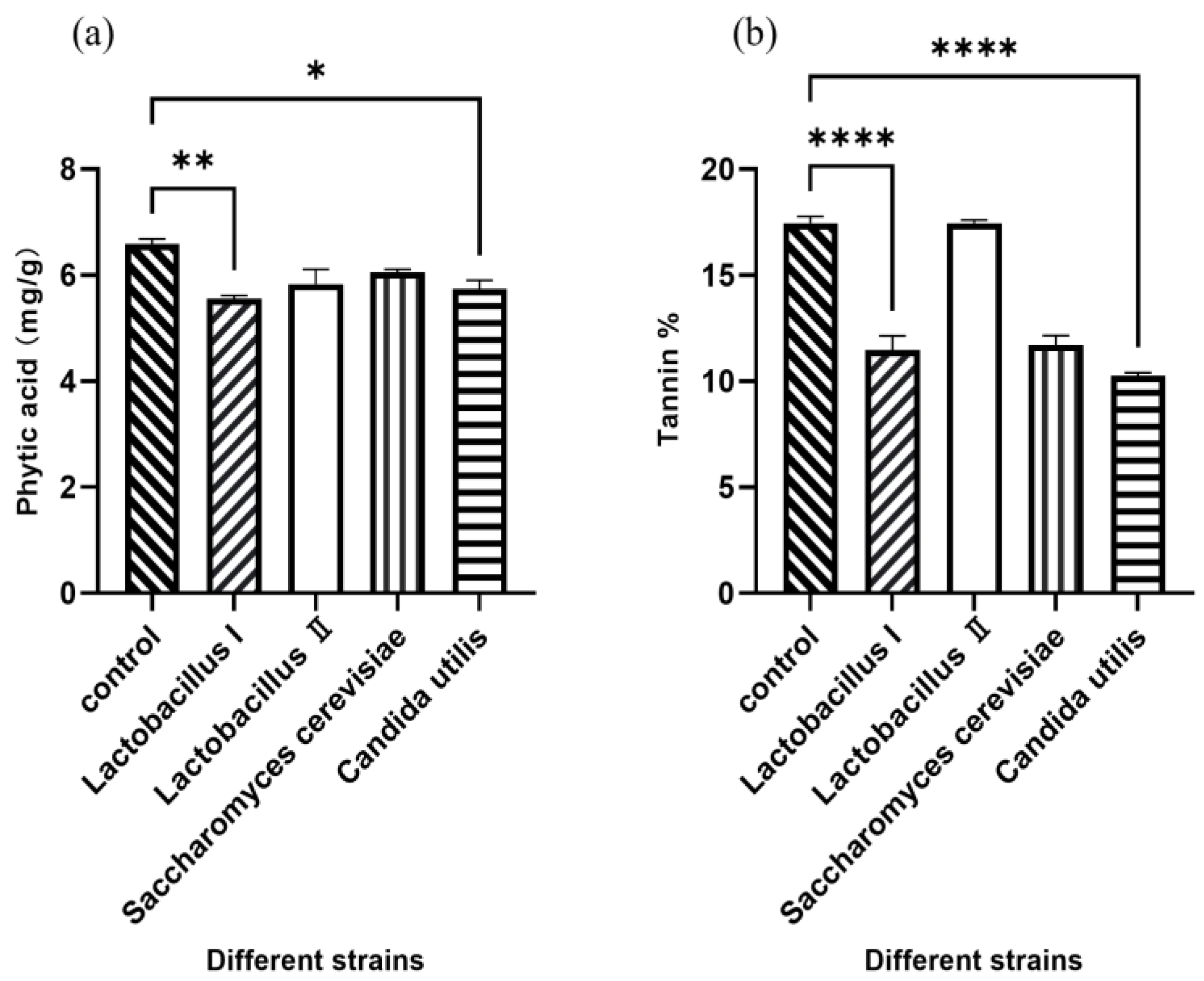
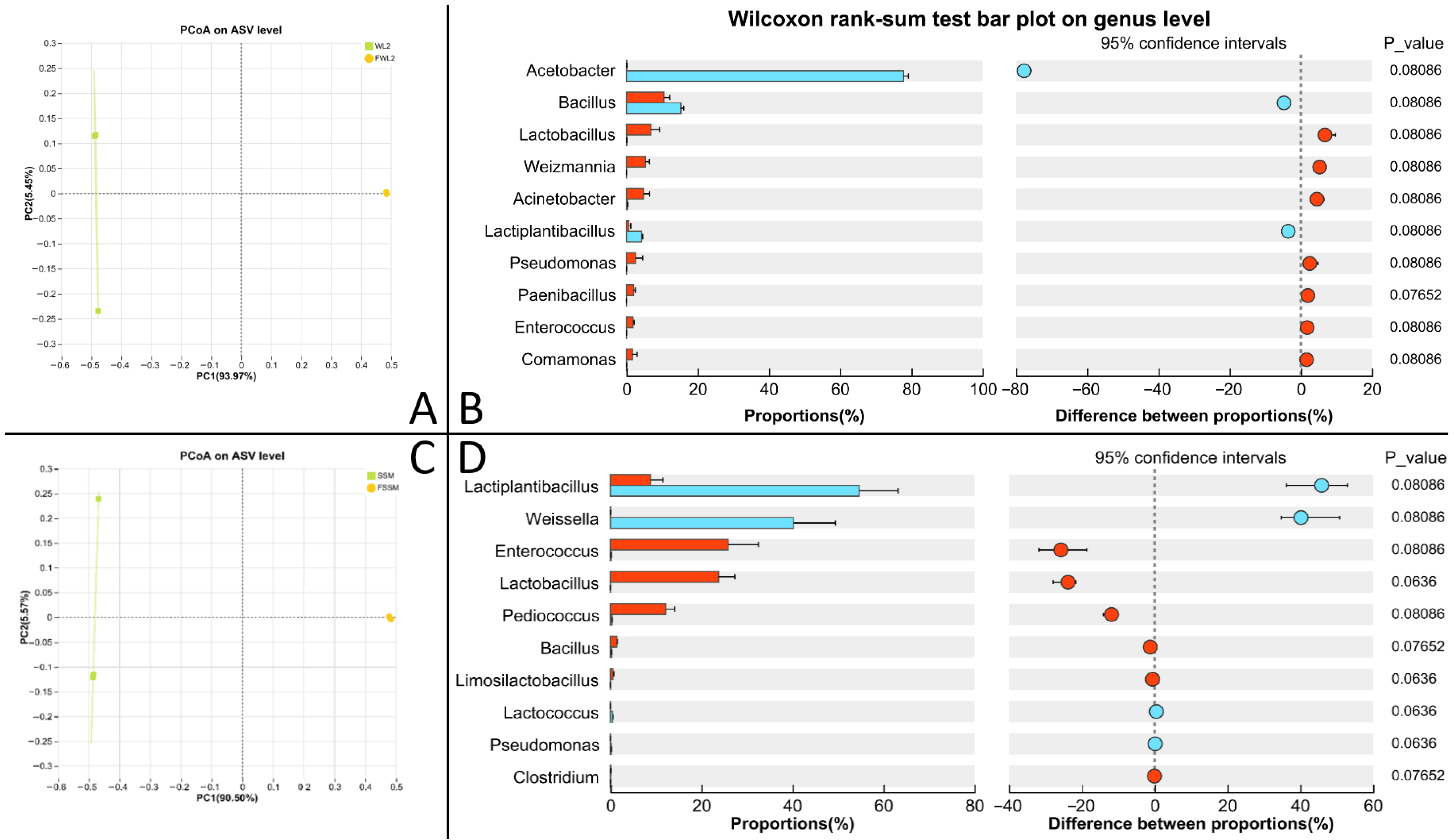
36]. The results from the present study indicated a 39.41% reduction in tannin content in walnut meal treated via liquid fermentation enzymatic hydrolysis compared to untreated walnut meal, and an 18.66% decrease in phytic acid content in treated sesame meal relative to its untreated counterpart. Aligning with established previous research, the findings of this study demonstrate that
Lactobacillus spp. significantly contribute to the degradation of tannin and phytic acid, two prevalent anti-nutritional factors. This finding is likely due to the significant enrichment of
Enterococcus,
Lactobacillus, and
Bacillus in the fermented WM microbial community. To elaborate,
Enterococcus produces tannin-degrading enzymes, and
Lactobacillus and
Bacillus secrete cellulase and xylanase, thereby facilitating fibre degradation [
28,
29]. Conversely, the microbial profile of fermented SM was characterised by a dominance of
Lactobacillus,
Weizmannia, and
Acinetobacter. Within this composition,
Lactobacillus secretes phytase, and
Weizmannia and
Acinetobacter contribute to microbial protein synthesis and the generation of various organic acids [
29,
30,
31].
Yeast is a widely recognized fermentation strain, particularly prevalent in the feed industries [
37]. Cao et al. (2024) demonstrated that fermenting soybean meal with brewing strains of yeast resulted in enhanced crude protein and acid-soluble protein content, reaching 542.5 g/kg and 117.2 g/kg, respectively [
38]. Further investigation by Anderson et al. (2015) into yeast protein synthesis from glucose revealed that supplementing with 25 mM inorganic phosphate yielded an almost threefold increase in protein production [
39]. Moreover, studies using
C. utilis and
B. subtilis to ferment Huangjiu lees reported a 14.5% rise in crude protein. In this study, enzymatic fermentation led to a 10.63% increase in the crude protein content of walnut meal and a 7.47% increase in sesame meal [
40]. These results are in concordance with previous research findings. However, the increase in crude protein content may be attributed to the fermentation process, in which microorganisms utilize a portion of the soluble carbohydrates in the feed as an energy source, decompose them to produce carbon dioxide and water that are released into the air, resulting in a reduction in the total dry matter of the feed and thus creating a concentration effect [
11,
12]. Alternatively, during their growth and reproduction, the fermenting strains may utilize non-protein nitrogen, small-molecule peptides, and amino acids from the feed to synthesize their own microbial biomass protein [
20,
22]. When the amount of protein synthesized by the microorganisms exceeds that decomposed and consumed from the raw materials, the total protein content in the feed would increase accordingly [
39,
40]. Therefore, it is essential to combine the nutrient digestibility data to evaluate the actual effect of nutritional improvement.
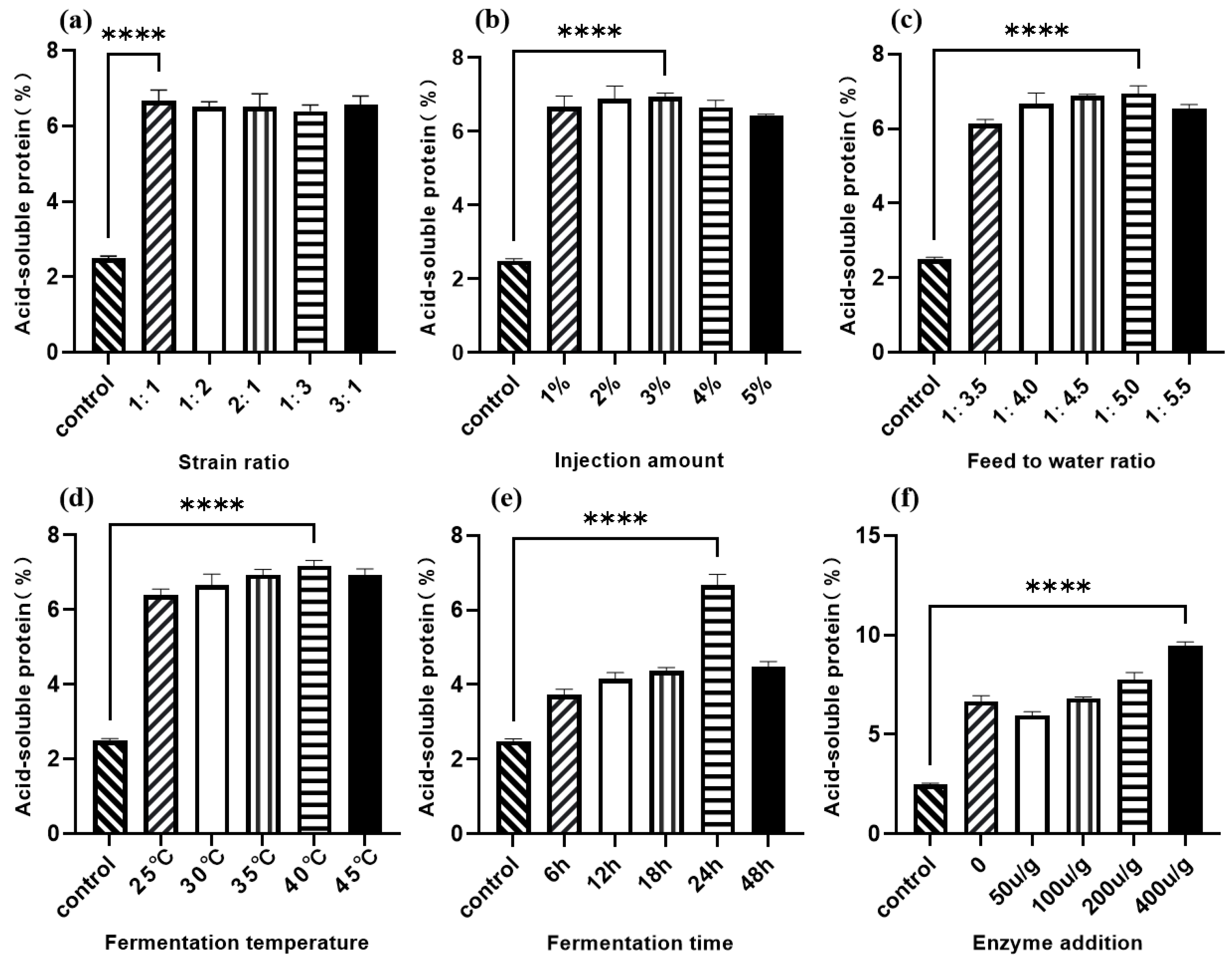
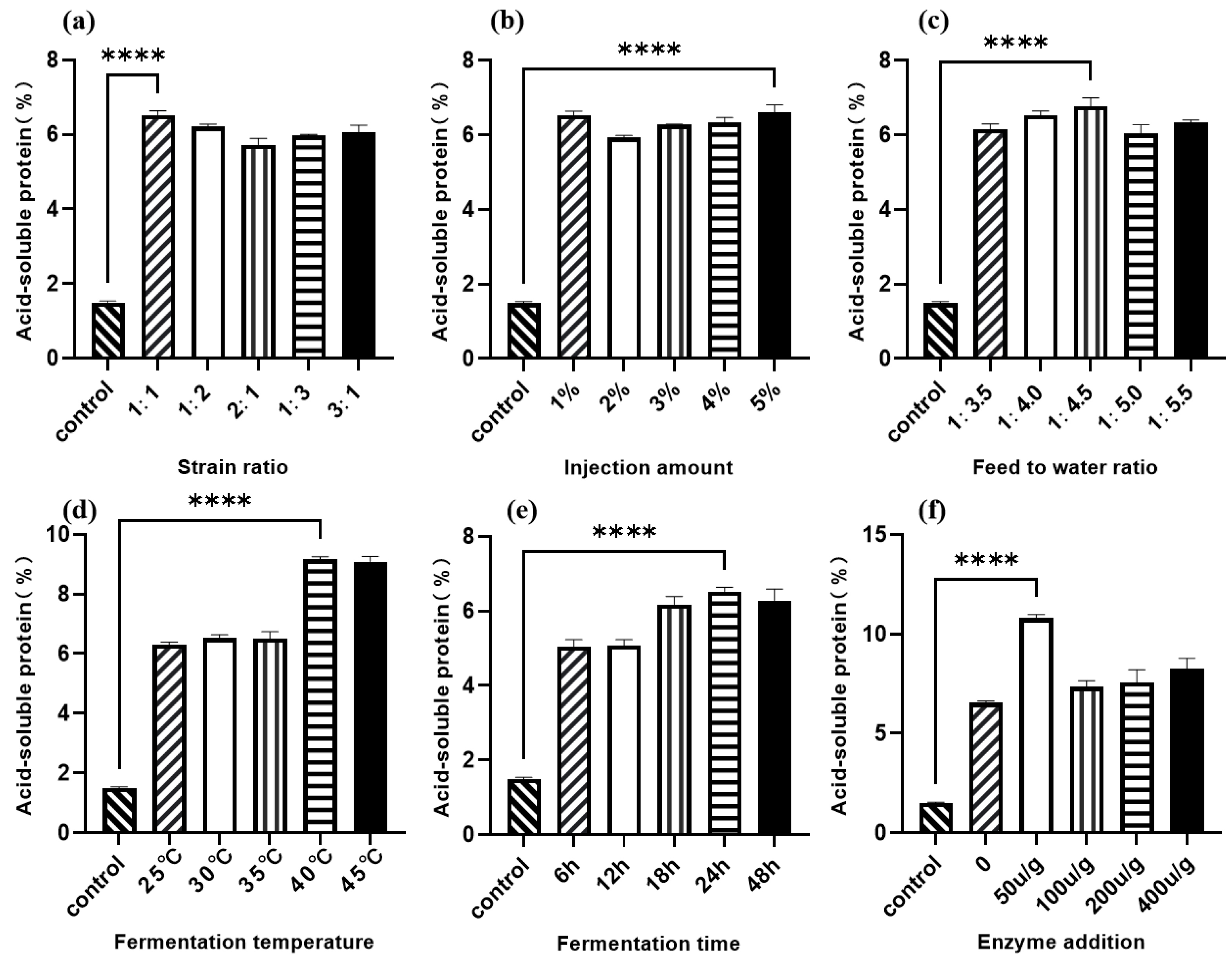
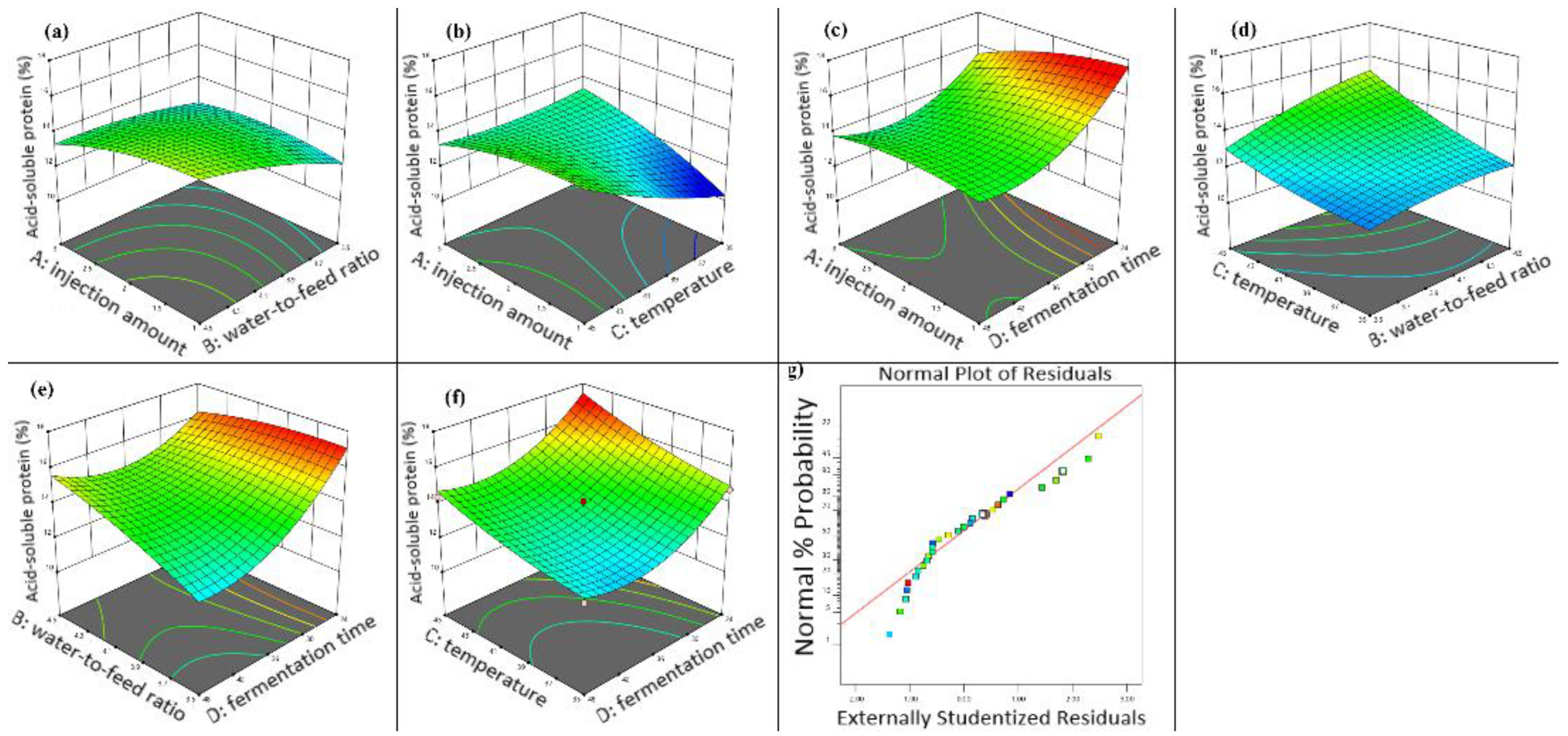
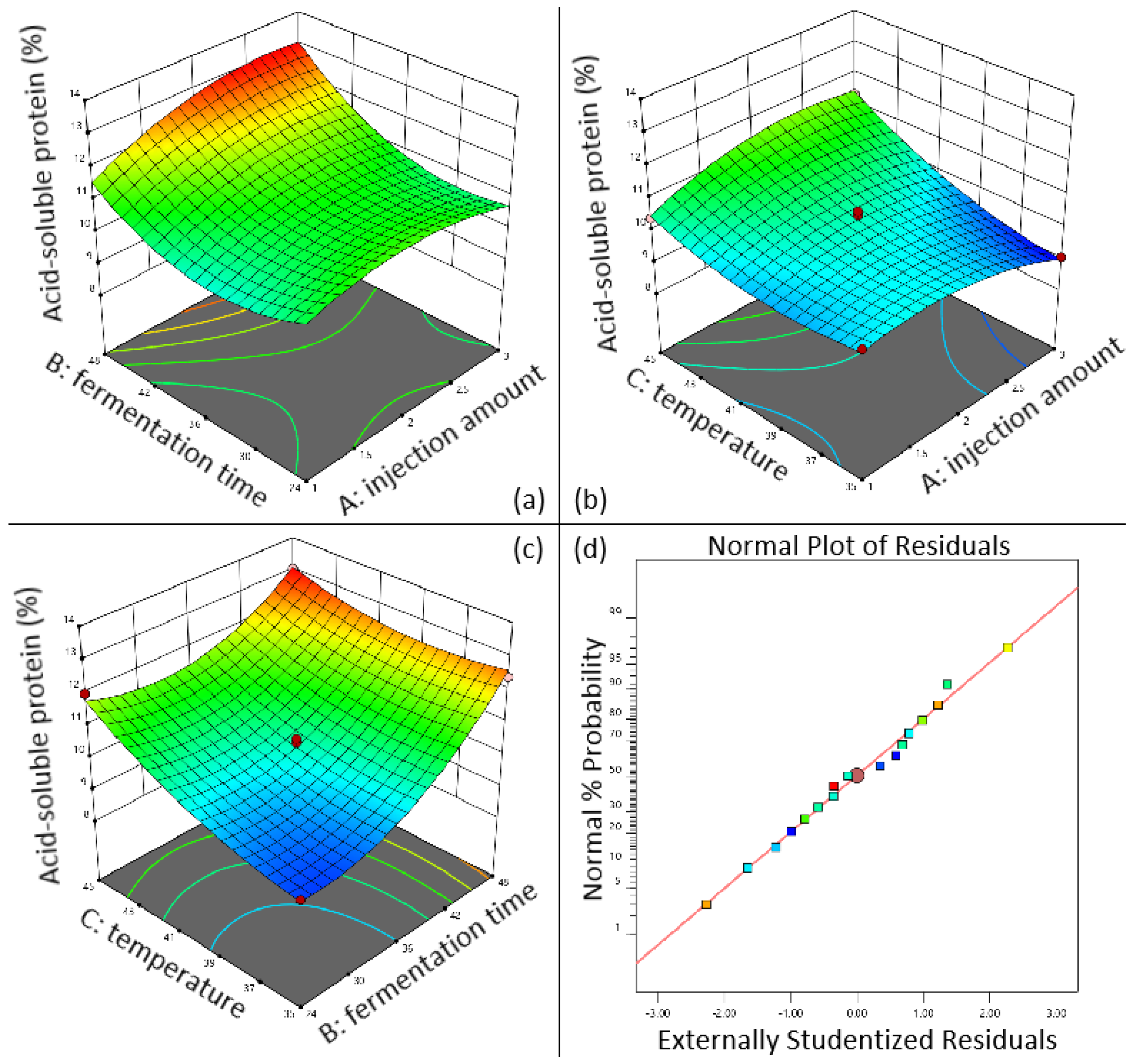
Variance analysis of the response surface optimization experiment for walnut meal indicated that fermentation temperature had the most significant influence on acid-soluble protein content. This may be attributed to walnut meal’s composition, which is rich in cellulose and tannins, resulting in a compact fibrous structure that inherently limits microbial enzyme accessibility to the substrate. As temperature serves as the principal factor governing enzymatic activity, it consequently emerged as the most impactful variable in enhancing protein solubility. Following temperature, fermentation time, water-to-material ratio, and inoculum size were identified as successively less influential factors in the optimization model. For sesame meal fermentation, the primary anti-nutritional factor in sesame meal is phytic acid, and microbial protein synthesis is more dependent on the duration of microbial metabolism, which renders fermentation time the most influential factor on acid-soluble protein content. Following fermentation time, temperature and bacterial enzyme inoculation amount were identified as successively less influential factors in the optimization model. A principal advantage of liquid fermentation over solid fermentation is its reduced fermentation period [
27]. Prior research has demonstrated that the accumulation of lactic acid by lactic acid bacteria during liquid fermentation shows a significant difference compared to the control group after 8 h. By 16 h, lactic acid accumulation approximates its maximum value and stabilizes [
33].
Surface structures of both feed materials were observed to have changed to varying degrees via scanning electron microscopy. The microstructural alterations (surface roughness, porosity) and chemical bond modifications (e.g., in polysaccharide and protein regions) revealed by SEM and FTIR analyses are closely linked to potential improvements in nutrient digestibility. These physical and chemical structural changes are hypothesized to increase the accessibility of digestive enzymes to protein and carbohydrate substrates, thereby enhancing nutrient release and absorption. Untreated walnut meal presented with a compact structure and smooth surface, whereas the fermented feed materials displayed a rougher surface and reduced particle size, potentially due to fermentation strain metabolic products or the inclusion of proteases [
41,
42]. For the result of FTIR spectra, both feed ingredients exhibited significantly enhanced absorption peaks at 2930 cm
−1, indicative of the stretching vibration of C-H bonds. This observed peak enhancement is likely attributable to the degradation of polysaccharides during fermentation, which would expose more CH
2 and CH
3 groups due to the breakage of long chains [
43]. Following fermentation, both walnut and sesame meals displayed more pronounced absorption peaks around 1060 cm
−1, a region associated with the C-O-C ether bond stretching vibration within sugar units [
44]. Based on single-factor fermentation outcomes, this spectral change may result from the metabolic activity of the fermentation strain or the breakdown of hemicellulose by cellulase, leading to the depolymerisation of polysaccharides into smaller oligosaccharides or structural modifications [
45]. Furthermore, the observed FTIR spectral changes in fermented WM may be attributed to the enrichment of
Bacillus and
Lactobacillus. These microorganisms secrete cellulase and xylanase, which cleave long-chain fibres, induce polysaccharide depolymerisation, expose additional CH
2/CH
3 groups, and thereby directly enhance the two characteristic peaks. Conversely, the dominant
Lactobacillus in fermented SM exhibits weak enzyme-producing capacity, resulting in limited hemicellulose decomposition and only a mild enhancement of the FTIR characteristic peaks.
Microbial community shifts in walnut meal before and after fermentation were evaluated using alpha and beta diversity indices and differential abundance profiling. The integrated analysis of alpha and beta diversity demonstrated that fermentation induced substantial alterations in microbial composition, leading to a notable increase in microbial abundance within the fermented substrate. This enrichment is likely attributed to the initial low moisture content of unfermented WM and SM, which inherently restricted robust microbial proliferation [
41]. Post-fermentation, the microbial community displayed enhanced specialization, with dominant taxa stabilizing within the
Lactobacillus and
Bacillus genera. Notably,
Weissella species metabolize glucose for lactic acid production and thrive optimally at pH values ≤ 5.5 [
46], while
L. plantarum modifies carbohydrate metabolism to boost ATP generation and can further adjust amino acid metabolism under acidic conditions [
47,
48,
49]
Following fermentation, the ileal digestibility of amino acids in walnut and sesame meals exhibited an upward trend. This improvement may be attributed to the elevated levels of acid-soluble protein, specifically free peptides and amino acids, post-fermentation [
50]. Existing research indicates that an increase in acid-soluble protein content positively influences the digestibility of crude protein and amino acids [
51], which was consistent with a current study where probiotics metabolize and utilize proteins in the feed to produce acid-soluble proteins, which improving palatability, facilitating the digestion or absorption of piglets, thus ensuring the utilization and quality of fermented feed [
52]. Previous studies reported apparent ileal digestibility values for lysine, methionine, and threonine in feed supplemented with casein-sesame meal as 85.3%, 85.4%, and 85.3%, respectively [
52]. While the apparent ileal digestibility of methionine in this experiment was comparable, the values for lysine and threonine were lower. This discrepancy might be attributable to an imbalance in the amino acid profile of sesame meal when used as a sole dietary component [
50,
52]. Notably, the observation that the SID of glycine in FWM surpassed 100% (103.82%) is a significant and not uncommon finding in studies of fermented ingredients. This phenomenon strongly suggests the net entry of glycine into the digestive stream beyond what was intrinsically present in the FWM itself. The most scientifically supported explanation for this is likely the synthesis of glycine by the gut microbiota in the ileum, followed by its absorption. Functional shift in the gut environment induced by fermentation. The altered microbial community likely facilitates the in situ production and subsequent absorption of glycine [
49]. This underscores a key benefit of fermented ingredients: their impact extends beyond simply improving the digestibility of intrinsic nutrients to actively enriching the nutrient pool within the gut through microbial metabolism [
47,
48].
The crude protein digestibility of walnut meal demonstrated an upward trend following fermentation treatment. This improvement is attributable not only to the increased acid-soluble protein content but also, in part, to the degradation of tannin [
53,
54]. Research indicates that tannins impair animal nutrient digestion and absorption by hydrolyzing gastric and pancreatic proteases and inhibiting ileal microbial degradation [
55]. Comparative study from Pan et al. (2022) on pigs fed sorghum with high versus low tannin content revealed significantly lower nutrient digestibility in the high-tannin group [
56], a finding that aligns with the results of this study. Furthermore, the digestibility of nutrients such as crude protein and crude fibre in fermented sesame meal was significantly higher than in untreated samples, with the degradation of the anti-nutritional factor phytic acid playing a crucial role [
57]. Phytic acid’s potent chelating effect with metal ions forms phytate salts, which inhibit gastric proteases and consequently hinder mineral and protein digestion and absorption in animals [
58,
59]. Lagos et al. (2022) demonstrated that phytase supplementation effectively degrades phytate content, leading to a significant enhancement in amino acid and crude protein digestibility in pigs [
60]. Similarly, this experiment observed an increasing trend in the digestion rate of crude ash in fermented sesame meal, potentially owing to phytic acid degradation, which consequently improved mineral digestion and utilization by pigs [
61]. Research supporting this, which suggests reduced phytate content benefits calcium and phosphorus absorption and lowers phosphorus excretion in pigs [
62], is consistent with these results.
The digestive and metabolic energy of sesame meal underwent significant changes after fermentation treatment, whereas walnut meal displayed an increasing trend in these energy metrics. Existing research suggests that digestive energy metabolism is negatively correlated with neutral and acid detergent fibre content and positively correlated with crude protein levels [
63]. Moreover, a predictive equation developed for sorghum’s digestive and metabolic energy demonstrated that tannin content also influences these values [
64]. This association may be due to the considerable effect of tannin on protein digestibility, which, in turn, indirectly impacts the feed’s digestive and metabolic energy.
This study has several limitations. The sample size, ten castrated male crossbred pigs used across both experiments, may limit statistical power and the ability to detect smaller treatment effects. Furthermore, the research did not assess key practical aspects such as animal growth performance, intestinal health, economic feasibility, or the scalability of the fermentation process. Future studies should include large-scale feeding trials to evaluate growth metrics (e.g., ADG, FCR), intestinal morphology and microbiota, and the consistency, cost, and scalability of production. Such work would strengthen the practical applicability of fermented wheat middlings and soybean meal in swine diets.



 ,
,