Physiological Thresholds and Adaptation Mechanisms of the Ili Perch (Perca schrenkii) to Chloride-Type Saline Water
 , ,
, , 
Simple Summary
Abstract
1. Introduction
2. Materials and Methods
2.1. Experimental Fish and Acclimation
2.2. Experimental Design
2.2.1. Acute Salinity Stress Experiment
- (1)
- Behavioral observation, mortality recording and quantification
- (2)
- Tissue and plasma sampling
2.2.2. Chronic Salinity Stress Experiment
2.3. Determination of Physiological and Biochemical Indicators
2.4. Data Processing and Statistical Analysis
2.4.1. Acute Toxicity Parameters
2.4.2. Behavioral and Physiological Data
3. Results
3.1. Effects of Acute Salinity Stress on Perca schrenkii
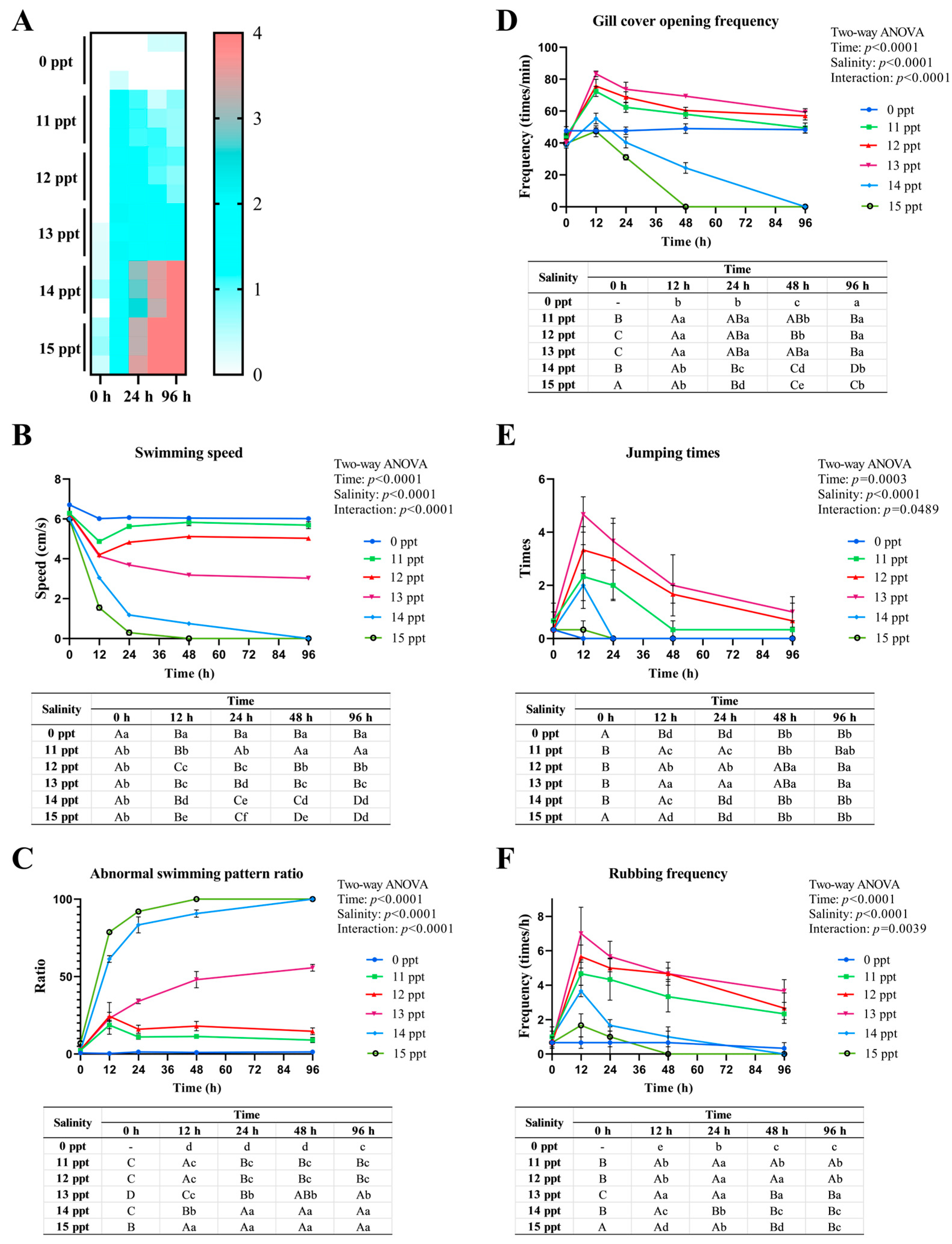
3.1.1. Behavioral Responses to Acute Salinity Stress
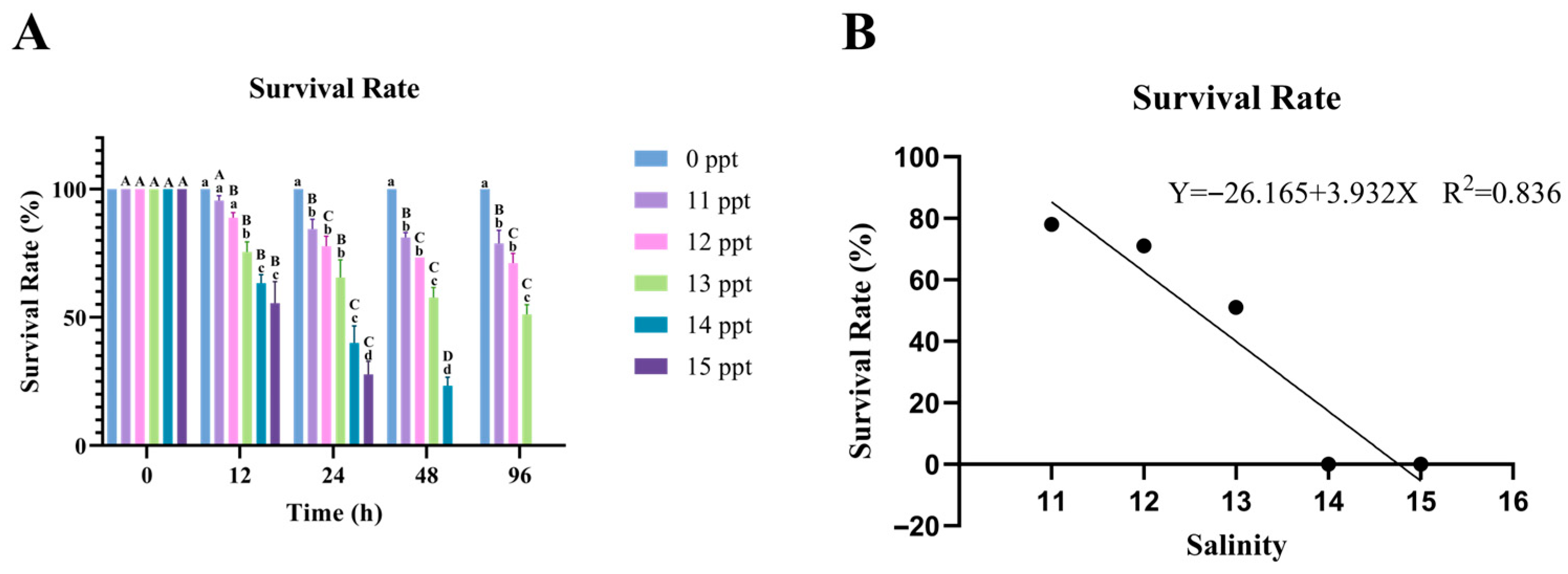
3.1.2. Mortality and Lethal Threshold (LC50)
3.1.3. Physiological and Biochemical Responses to Acute Salinity Stress
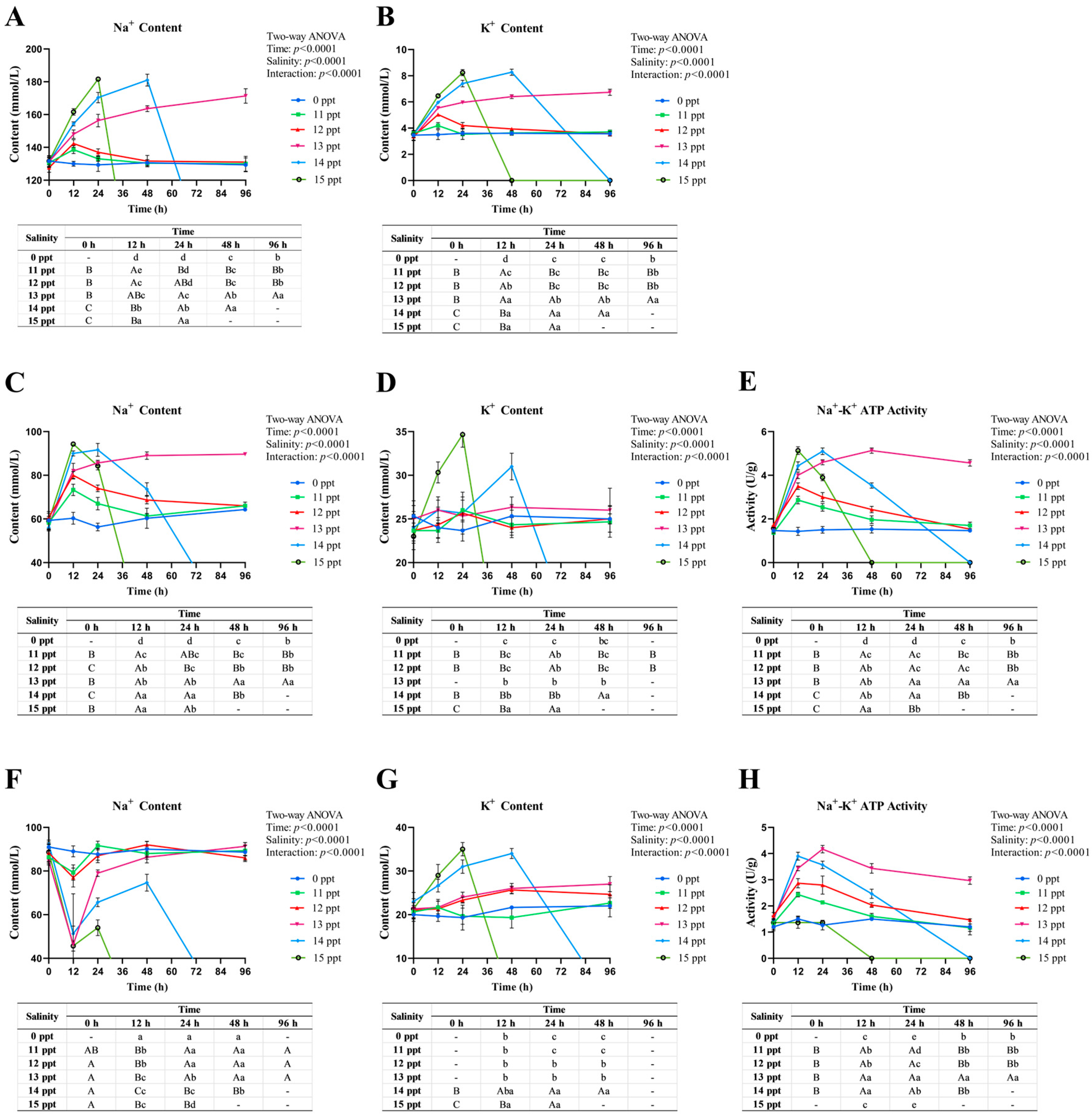
Osmotic Regulation of Acute Salinity Stress
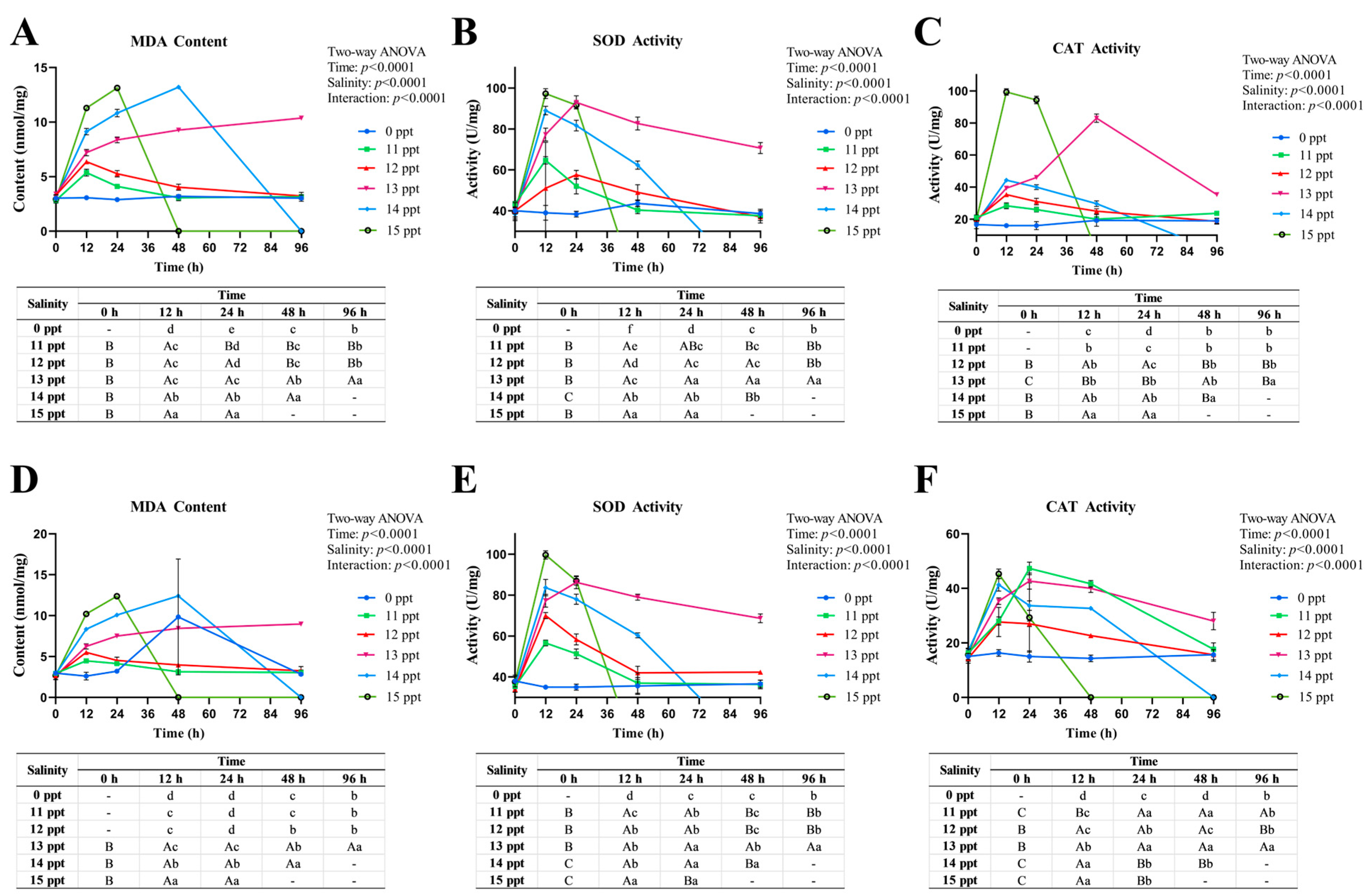
Oxidative Stress of Acute Salinity Stress
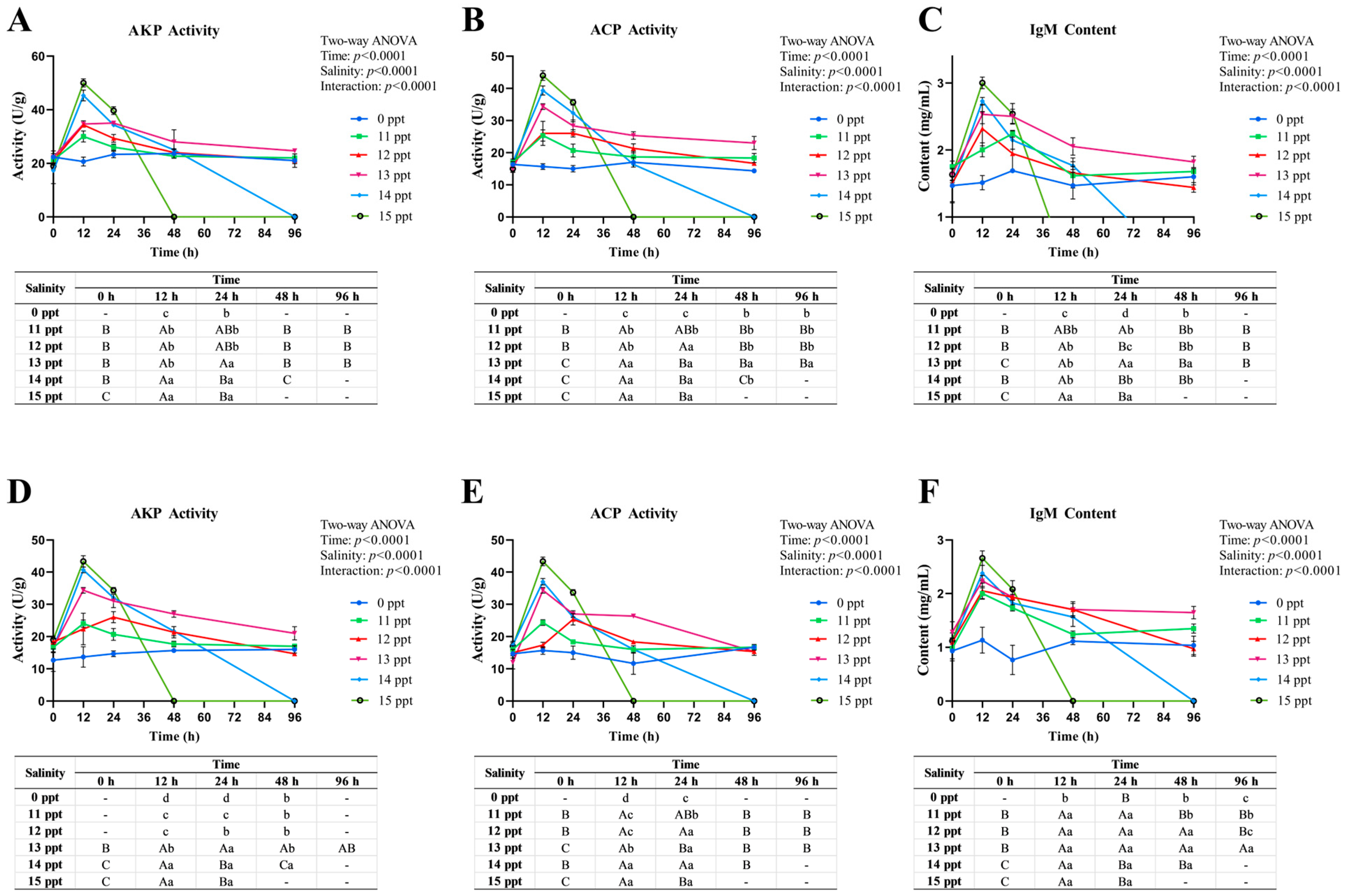
Immune Function of Acute Salinity Stress
3.2. Effects of Chronic Salinity Stress on Perca schrenkii
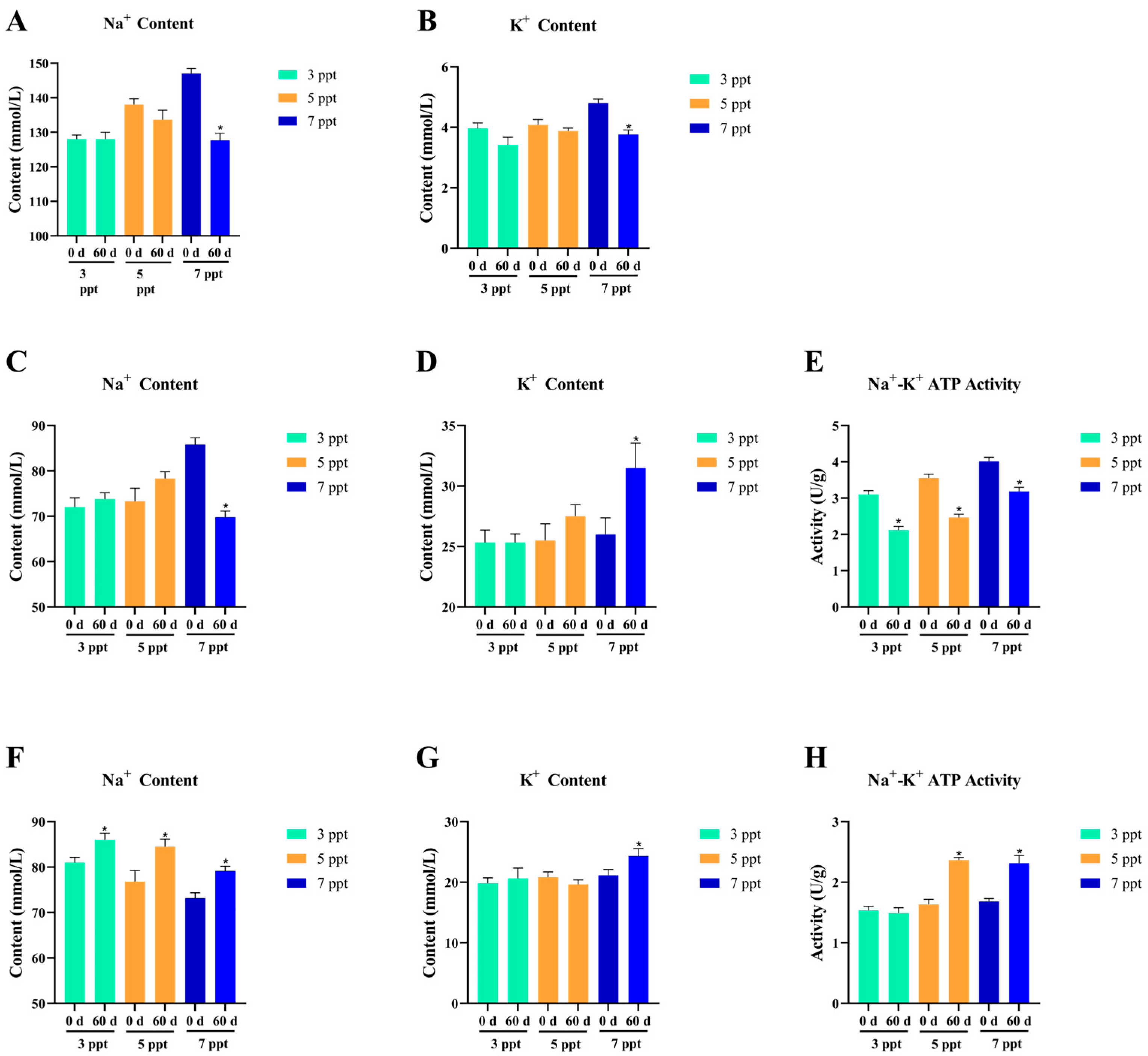
3.2.1. Osmotic Regulation of Chronic Salinity Stress
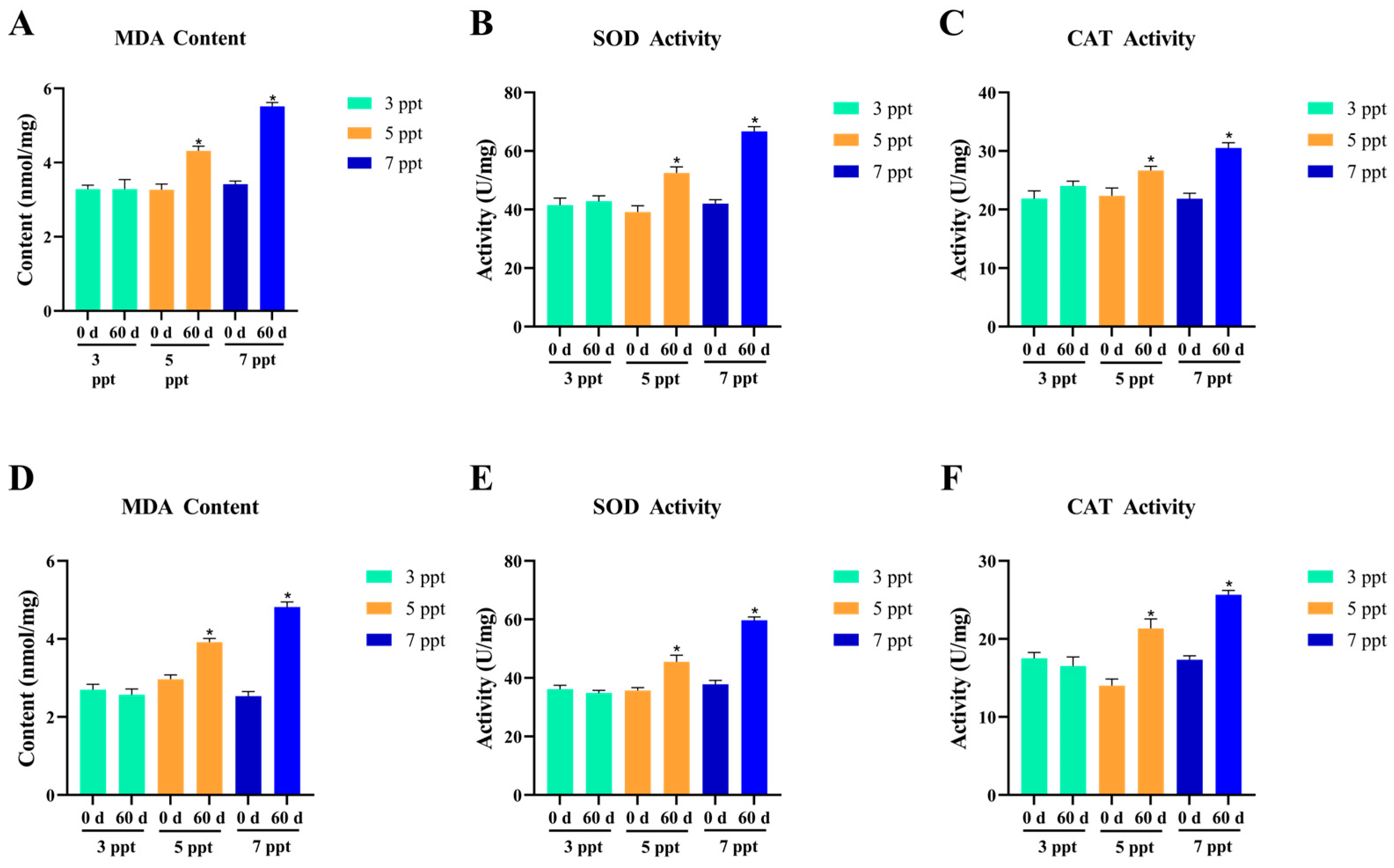
3.2.2. Oxidative Stress of Chronic Salinity Stress
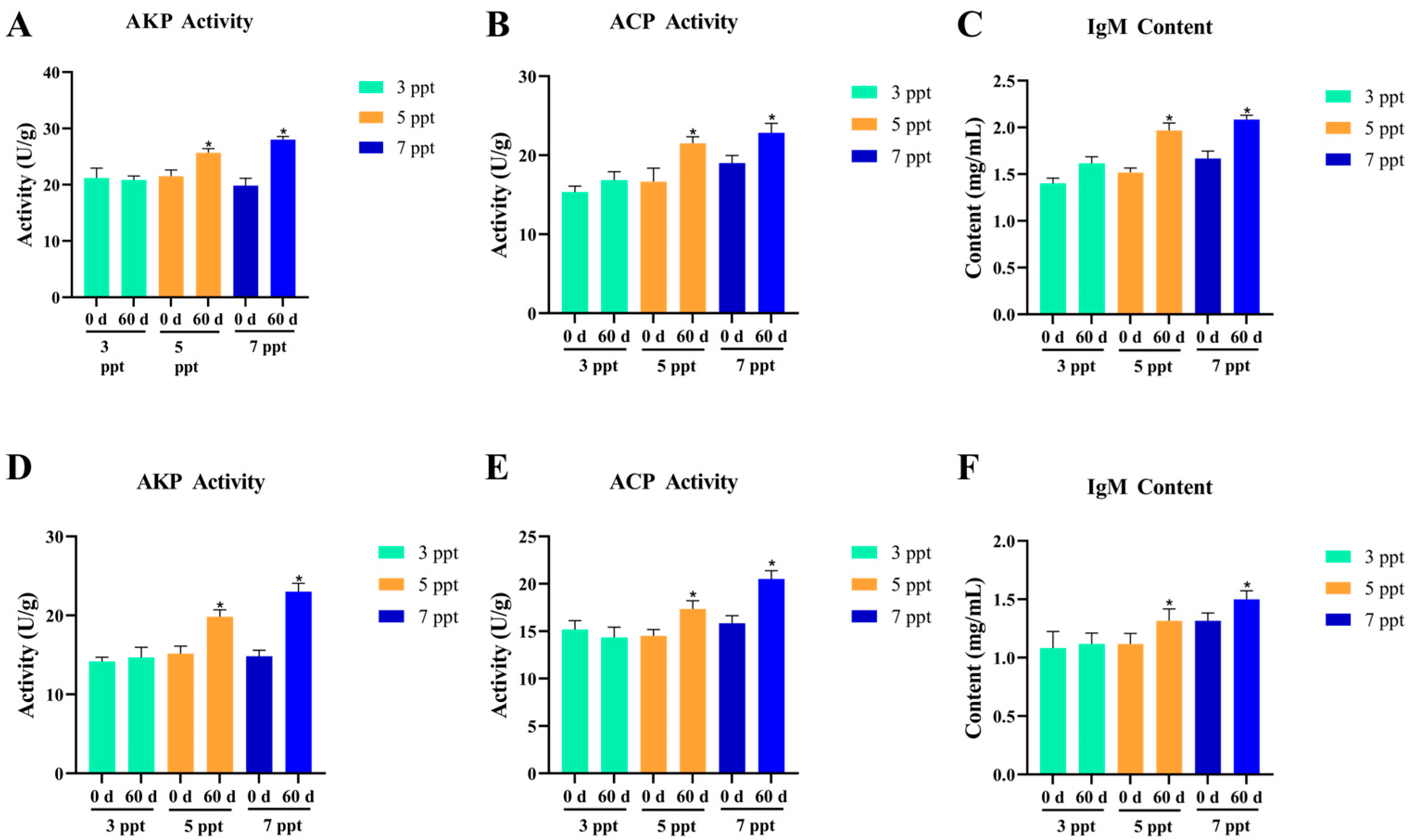
3.2.3. Immune Function of Chronic Salinity Stress
4. Discussion
4.1. The Defined Salinity Threshold and Its Ecological Implications
4.2. Osmoregulatory Strategy: From Compensation to Collapse
4.3. Oxidative Stress and Immune Response: An Integrated Defense Network
4.4. Acclimation Potential and Aquaculture Relevance
4.5. Limitations and Future Perspectives
5. Conclusions
Author Contributions
Funding
Institutional Review Board Statement
Informed Consent Statement
Data Availability Statement
Acknowledgments
Conflicts of Interest
References
- Nevermann, H.; Aminzadeh, M.; Madani, K.; Shokri, N. Quantifying water evaporation from large reservoirs: Implications for water management in water-stressed regions. Environ. Res. 2024, 262, 119860. [Google Scholar] [CrossRef]
- FAO. The State of World Fisheries and Aquaculture 2024—Blue Transformation in Action; FAO: Rome, Italy, 2024. [Google Scholar]
- Scanlon, B.R.; Faunt, C.C.; Longuevergne, L.; Reedy, R.C.; Alley, W.M.; McGuire, V.L.; McMahon, P.B. Groundwater depletion and sustainability of irrigation in the US High Plains and Central Valley. Proc. Natl. Acad. Sci. USA 2012, 109, 9320–9325. [Google Scholar] [CrossRef]
- Cao, L.; Naylor, R.; Henriksson, P.; Leadbitter, D.; Metian, M.; Troell, M.; Zhang, W. China’s aquaculture and the world’s wild fisheries. Science 2015, 347, 133–135. [Google Scholar] [CrossRef]
- Bo, Y.; Liu, C.; Jiao, P.; Lü, F.; Zhang, H. Hydrochemical Characteristics and Evolution of Underground Brine in Lop Nur, Northwestern China. Acta Geol. Sin.-Engl. Ed. 2024, 98, 786–800. [Google Scholar] [CrossRef]
- Yang, F.Y.; Li, X.J.; Wang, Z.C.; Zha, C.S. Eeo-fishery model in soda saline-alkaline land of northeast China. Chin. J. Eco-Agric. 2004, 12, 192–194. [Google Scholar]
- Kimera, F.; Mugwanya, M.; Madkour, K.; Dawood, M.A.O.; Sewilam, H. Maximization of brackish water productivity for the sustainable production of striped catfish (Pangasianodon hypophthalmus) and grain sorghum (Sorghum bicolor (L.) Moench) cultivated under an integrated aquaculture–agriculture system. Environ. Sci. Pollut. Res. 2024, 31, 31878–31895. [Google Scholar] [CrossRef]
- Cui, G.; Liu, Y.; Tong, S. Hydrogeochemical processes controlling the salinity of surface water and groundwater in an inland saline-alkali wetland in western Jilin, China. Front. Ecol. Evol. 2022, 10, 993849. [Google Scholar] [CrossRef]
- He, J.; Den, Q.; Ma, X.; Su, X.; Ma, X. Soil salinization affected by hydrogeochemical processes of shallow groundwater in Cangzhou City, a coastal region in North China. Hydrol. Res. 2021, 52, 1116–1131. [Google Scholar] [CrossRef]
- Zhou, J.; He, M.; Li, B.; Jiao, J.; Tang, Z.; Li, Z.; Rao, H. Lithium isotopic composition of the carbonate type salt lake in Tibet and its implication for origin and hydrological processes. Sci. Rep. 2025, 15, 11862. [Google Scholar] [CrossRef]
- Zhang, R.; Zhao, Z.; Li, M.; Luo, L.; Wang, S.; Guo, K.; Xu, W. Metabolomics analysis reveals the response mechanism to carbonate alkalinity toxicity in the gills of Eriocheir sinensis. Comp. Biochem. Physiol. Toxicol. Pharmacol. 2023, 263, 109487. [Google Scholar] [CrossRef]
- Che, C.; Yang, P.; Qin, K.; Li, Y.; Fan, Z.; Li, W.; Gao, S.; Wang, C.; Mu, C.; Wang, H. Based on metabolomics analysis: Metabolic mechanism of intestinal tract of Scylla paramamosain under low-salt saline-alkali water aquaculture environment. BMC Genom. 2024, 25, 1232. [Google Scholar] [CrossRef]
- Singh, A.; Rajput, V.D.; Sharma, R.; Ghazaryan, K.; Minkina, T. Salinity stress and nanoparticles: Insights into antioxidative enzymatic resistance, signaling, and defense mechanisms. Environ. Res. 2023, 235, 116585. [Google Scholar] [CrossRef]
- Sinha, A.K.; Dasan, A.F.; Rasoloniriana, R.; Pipralia, N.; Blust, R.; De Boeck, G. Hypo-osmotic stress-induced physiological and ion-osmoregulatory responses in european sea bass (Dicentrarchus labrax) are modulated differentially by nutritional status. Comp. Biochem. Physiol. A Mol. Integr. Physiol. 2015, 181, 87–99. [Google Scholar] [CrossRef] [PubMed]
- Zeng, L.; Ai, C.X.; Wang, Y.H.; Zhang, J.S.; Wu, C.W. Abrupt salinity stress induces oxidative stress via the Nrf2-Keap1 signaling pathway in large yellow croaker Pseudosciaena crocea. Fish Physiol. Biochem. 2017, 43, 955–964. [Google Scholar] [CrossRef] [PubMed]
- Jiang, I.-F.; Bharath Kumar, V.; Lee, D.-N.; Weng, C.-F. Acute osmotic stress affects tilapia (Oreochromis mossambicus) innate immune responses. Fish Shellfish. Immunol. 2008, 25, 841–846. [Google Scholar] [CrossRef]
- Dildar, T.; Cui, W.; Ikhwanuddin, M.; Ma, H. Aquatic Organisms in Response to Salinity Stress: Ecological Impacts, Adaptive Mechanisms, and Resilience Strategies. Biology 2025, 14, 667. [Google Scholar] [CrossRef] [PubMed]
- Takvam, M.; Wood, C.M.; Kryvi, H.; Nilsen, T.O. Ion Transporters and Osmoregulation in the Kidney of Teleost Fishes as a Function of Salinity. Front. Physiol. 2021, 12, 664588. [Google Scholar] [CrossRef]
- Varsamos, S.; Nebel, C.; Charmantier, G. Ontogeny of osmoregulation in postembryonic fish: A review. Comp. Biochem. Physiol. Part A Mol. Integr. Physiol. 2005, 141, 401–429. [Google Scholar] [CrossRef] [PubMed]
- Barmintseva, A.E.; Shalgimbayeva, G.M.; Asylbekova, S.Z.; Isbekov, K.B.; Danko, E.K.; Mugue, N.S. Genetic differentiation of balkhash perch Perca schrenki kessler, 1874 from lake balkhash and alakol lake system of kazakhstan. Russ. J. Genet. 2015, 51, 871–876. [Google Scholar] [CrossRef]
- Mamilov, N. Biology of Balkhash Perch (Perca schrenkii Kessler, 1874); CRC Press: Boca Raton, FL, USA, 2015; pp. 47–72. [Google Scholar]
- Zhi, C.W. Analysis of Nutritional Composition the Triplophysa (Hedinichthys) yarkandensis (Day) about Tarim River. J. Hydroecol. 2011, 32, 137–141. [Google Scholar]
- Yang, L.; Yu, Y.; Wang, C.; Hu, L.; Ma, Y.; Zi, F.; Ma, R.; Huo, Q.; Song, Y.; Sun, Z.; et al. Analysis and evaluation of the muscle quality of high-salinity aquaculture fish in Xinjiang, China. J. Food Compos. Anal. 2025, 144, 107750. [Google Scholar] [CrossRef]
- Christensen, E.A.F.; Grosell, M.; Steffensen, J.F. Maximum salinity tolerance and osmoregulatory capabilities of European perch Perca fluviatilis populations originating from different salinity habitats. Conserv. Physiol. 2019, 7, coz004. [Google Scholar] [CrossRef]
- Overton, J.L.; Bayley, M.; Paulsen, H.; Wang, T. Salinity tolerance of cultured Eurasian perch, Perca fluviatilis L.: Effects on growth and on survival as a function of temperature. Aquaculture 2008, 277, 282–286. [Google Scholar] [CrossRef]
- Christensen, E.A.; Svendsen, M.B.; Steffensen, J.F. Plasma osmolality and oxygen consumption of perch Perca fluviatilis in response to different salinities and temperatures. J. Fish Biol. 2017, 90, 819–833. [Google Scholar] [CrossRef]
- Abdel-Rahim, M.; Elhetawy, A.; Shawky, W.; El-Zaeem, S.; El-Dahhar, A. Enhancing Florida red tilapia aquaculture: Biofloc optimization improves water quality, pathogen bacterial control, fish health, immune response, and organ histopathology across varied groundwater salinities. Vet. Res. Commun. 2024, 48, 2989–3006. [Google Scholar] [CrossRef] [PubMed]
- GB 11607-1989; Water Quality Standard for Fisheries. Ministry of Ecology and Environment: Beijing, China, 1989.
- Kou, T.R. A Simple Calculation Method for Determining Median Lethal Dose Using Kou’s Method. Chin. Pharmacol. Bull. 1963, 8, 49–52. [Google Scholar]
- Dai, W.; Zhang, Z.; Dong, Y.; He, L.; Xue, Q.; Lin, Z. Acute Salinity Stress Disrupts Gut Microbiota Homeostasis and Reduces Network Connectivity and Cooperation in Razor Clam Sinonovacula constricta. Mar. Biotechnol. 2023, 25, 1147–1157. [Google Scholar] [CrossRef]
- Xu, M.; Zhang, C.; Qi, Q.; Wang, R.; Zhang, S.; Yan, R.; Li, B.; Li, S. Effects of salinity stress on anxiety behavior and antioxidant capability of guppy (Poecilia reticulata). Ecotoxicology 2023, 32, 598–605. [Google Scholar] [CrossRef]
- Fang, H.; Yang, Y.Y.; Wu, X.M.; Zheng, S.Y.; Song, Y.J.; Zhang, J.; Chang, M.X. Effects and Molecular Regulation Mechanisms of Salinity Stress on the Health and Disease Resistance of Grass Carp. Front. Immunol. 2022, 13, 917497. [Google Scholar] [CrossRef]
- Harshini, V.; Shukla, N.; Raval, I.; Kumar, S.; Shrivastava, V.; Chaudhari, A.; Patel, A.K.; Joshi, C.G. Interplay of gene expression and regulators under salinity stress in gill of Labeo rohita. BMC Genom. 2023, 24, 336. [Google Scholar] [CrossRef]
- Cañedo-Argüelles, M.; Kefford, B.J.; Piscart, C.; Prat, N.; Schäfer, R.B.; Schulz, C.-J. Salinisation of rivers: An urgent ecological issue. Environ. Pollut. 2013, 173, 157–167. [Google Scholar] [CrossRef]
- Fan, J.; Yan, Y.; Lin, Y.; Huang, Y.; Li, E.; Chen, L.; Wang, X. Effects of different feeding strategies on ion-transporting, energy metabolism and intestinal health of Nile tilapia (Oreochromis niloticus) under saline-alkaline stress. Aquac. Rep. 2025, 44, 103033. [Google Scholar] [CrossRef]
- Christensen, E.A.F.; Stieglitz, J.D.; Grosell, M.; Steffensen, J.F. Intra-Specific Difference in the Effect of Salinity on Physiological Performance in European Perch (Perca fluviatilis) and Its Ecological Importance for Fish in Estuaries. Biology 2019, 8, 89. [Google Scholar] [CrossRef]
- Shi, H.; Luo, G.; Sutanudjaja, E.H.; Hellwich, O.; Chen, X.; Ding, J.; Wu, S.; He, X.; Chen, C.; Ochege, F.U.; et al. Recent impacts of water management on dryland’s salinization and degradation neutralization. Sci. Bull. 2023, 68, 3240–3251. [Google Scholar] [CrossRef]
- Zheng, L.L.; Yu, D.; Sun, N.; Wang, C.; Chen, W.J.; Ding, Z.F.; He, S.P.; Yang, L.D. DNA barcoding and cryptic diversity in fishes from the Ili River Valley in China, Xinjiang. Ecol. Evol. 2024, 14, e70352. [Google Scholar] [CrossRef] [PubMed]
- Yu, T.; Jiapaer, G.; Long, G.; Li, X.; Jing, J.; Liu, Y.; De Maeyer, P.; Van de Voorde, T. Interannual and seasonal relationships between photosynthesis and summer soil moisture in the Ili River basin, Xinjiang, 2000–2018. Sci. Total Environ. 2023, 856, 159191. [Google Scholar] [CrossRef] [PubMed]
- Fedosova, N.U.; Habeck, M.; Nissen, P. Structure and Function of Na,K-ATPase-The Sodium-Potassium Pump. Compr. Physiol. 2021, 12, 2659–2679. [Google Scholar] [CrossRef]
- Lucu, C.; Towle, D.W. Na++K+-ATPase in gills of aquatic crustacea. Comp. Biochem. Physiol. Part A Mol. Integr. Physiol. 2003, 135, 195–214. [Google Scholar] [CrossRef]
- Gao, S.; Wang, J.; Zhang, K.; Xing, G.; Tan, Y.; Chen, L.; Ai, T.; Zhang, S.; Chen, Y.; Nie, Z.; et al. Physiological Response Mechanisms of Triplophysa strauchii Under Salinity Stress. Biology 2025, 14, 1202. [Google Scholar] [CrossRef] [PubMed]
- Staehr, C.; Matchkov, V.V. Demand creates its own supply: The Na/K-ATPase controls metabolic reserve and flexibility. Acta Physiol. 2021, 232, e13673. [Google Scholar] [CrossRef]
- Wang, L.; Wu, Z.-Q.; Wang, X.-L.; Ren, Q.; Zhang, G.-S.; Liang, F.-F.; Yin, S.-W. Immune responses of two superoxide dismutases (SODs) after lipopolysaccharide or Aeromonas hydrophila challenge in pufferfish, Takifugu obscurus. Aquaculture 2016, 459, 1–7. [Google Scholar] [CrossRef]
- Sun, J.; Li, H.; Wu, X.; Chen, M.; Liu, Y.; Yan, B.; Xu, C.; Li, Y.; Zhang, H.; Zheng, H. Transcriptome analysis and physiological responses reveal the effects of acute low salinity stress on the noble scallop Chlamys nobilis. Aquaculture 2026, 611, 743068. [Google Scholar] [CrossRef]
- Ajima, M.N.O.; Kumar, K.; Poojary, N.; Pandey, P.K. Oxidative stress biomarkers, biochemical responses and Na+ -K+ -ATPase activities in Nile tilapia, Oreochromis niloticus exposed to diclofenac. Comp. Biochem. Physiol. Toxicol. Pharmacol. 2021, 240, 108934. [Google Scholar] [CrossRef] [PubMed]
- Sun, J.L.; Zhao, L.L.; Liao, L.; Tang, X.H.; Cui, C.; Liu, Q.; He, K.; Ma, J.D.; Jin, L.; Yan, T.; et al. Interactive effect of thermal and hypoxia on largemouth bass (Micropterus salmoides) gill and liver: Aggravation of oxidative stress, inhibition of immunity and promotion of cell apoptosis. Fish Shellfish. Immunol. 2020, 98, 923–936. [Google Scholar] [CrossRef] [PubMed]
- Marnett, L.J. Oxy radicals, lipid peroxidation and DNA damage. Toxicology 2002, 181–182, 219–222. [Google Scholar] [CrossRef]
- Janero, D.R. Malondialdehyde and thiobarbituric acid-reactivity as diagnostic indices of lipid peroxidation and peroxidative tissue injury. Free Radic. Biol. Med. 1990, 9, 515–540. [Google Scholar] [CrossRef]
- Li, L.; Wei, X.F.; Yang, Z.Y.; Zhu, R.; Li, D.L.; Shang, G.J.; Wang, H.T.; Meng, S.T.; Wang, Y.T.; Liu, S.Y.; et al. Alleviative effect of poly-β-hydroxybutyrate on lipopolysaccharide-induced oxidative stress, inflammation and cell apoptosis in Cyprinus carpio. Int. J. Biol. Macromol. 2023, 253, 126784. [Google Scholar] [CrossRef]
- Liu, J.; Zhang, P.; Wang, B.; Lu, Y.; Li, L.; Li, Y.; Liu, S. Evaluation of the effects of Astragalus polysaccharides as immunostimulants on the immune response of crucian carp and against SVCV in vitro and in vivo. Comp. Biochem. Physiol. Toxicol. Pharmacol. 2022, 253, 109249. [Google Scholar] [CrossRef] [PubMed]
- Zhang, W.; He, X.; Chen, X.; Han, H.; Shen, B.; Diao, M.; Liu, H.Y. Exogenous selenium promotes the growth of salt-stressed tomato seedlings by regulating ionic homeostasis, activation energy allocation and CO2 assimilation. Front. Plant Sci. 2023, 14, 1206246. [Google Scholar] [CrossRef]
- Wang, Z.; Zhu, W.; Xu, Y.; Yu, S.; Zhang, L.; Zhou, Z.; Diao, J. Effects of simazine and food deprivation chronic stress on energy allocation among the costly physiological processes of male lizards (Eremias argus). Environ. Pollut. 2021, 269, 116139. [Google Scholar] [CrossRef]
- Gu, Y.; Xu, D.; Liu, J.; Chen, Y.; Wang, J.; Song, Y.; Sun, B.; Xia, B. Bioaccumulation of functionalized polystyrene nanoplastics in sea cucumber Apostichopus japonicus (Selenka, 1867) and their toxic effects on oxidative stress, energy metabolism and mitochondrial pathway. Environ. Pollut. 2023, 319, 121015. [Google Scholar] [CrossRef] [PubMed]




| Indicator Category | Specific Indicator | Measurement Method |
|---|---|---|
| Swimming behavior | Swimming speed | Record the distance swam by the fish in 30 s, calculate mean speed (cm/s) |
| Abnormal swimming pattern ratio | Statistic the duration of abnormal behaviors (lateral swimming, side-lying) in 10 min, calculate the proportion of abnormal duration to total observation time (%) | |
| Respiratory behavior | Gill cover opening frequency | Count the number of gill cover openings in 5 min, convert to frequency per minute (times/min), take the mean of 3 counts |
| Stress avoidance behavior | Jumping times | Count the number of times the fish leaps out of the water within 1 h |
| Rubbing frequency | Count the number of times the fish rubs its body against the tank wall within 1 h |
| Indicator Category | Indicators | Detection Method | Instrument Model |
|---|---|---|---|
| Ion balance | Na+, K+ | Flame atomic absorption spectrophotometry | PerkinElmer AA800 PerkinElmer Inc., located in Waltham, MA, USA |
| Osmoregulation | Na+-K+-ATPase | Colorimetry | TM FC Microplate Reader Thermo Fisher Scientific Inc., located in Waltham, MA, USA |
| Oxidative stress | CAT, SOD | Colorimetry | TM FC Microplate Reader |
| MDA | TBA method | TM FC Microplate Reader | |
| Immune function | AKP, ACP | Colorimetry | TM FC Microplate Reader |
| IgM | ELISA | BioTek ELx800 Microplate Reader BioTek Instruments, Inc., located in Winooski, VT, USA |
Disclaimer/Publisher’s Note: The statements, opinions and data contained in all publications are solely those of the individual author(s) and contributor(s) and not of MDPI and/or the editor(s). MDPI and/or the editor(s) disclaim responsibility for any injury to people or property resulting from any ideas, methods, instructions or products referred to in the content. |
© 2025 by the authors. Licensee MDPI, Basel, Switzerland. This article is an open access article distributed under the terms and conditions of the Creative Commons Attribution (CC BY) license.
Share and Cite
Zhang, K.; Gao, S.; Xing, G.; Hao, Y.; Nie, Z.; Wei, J.; Ai, T.; Zhang, S.; Zhang, J.; Huang, Z. Physiological Thresholds and Adaptation Mechanisms of the Ili Perch (Perca schrenkii) to Chloride-Type Saline Water. Animals 2026, 16, 63. https://doi.org/10.3390/ani16010063
Zhang K, Gao S, Xing G, Hao Y, Nie Z, Wei J, Ai T, Zhang S, Zhang J, Huang Z. Physiological Thresholds and Adaptation Mechanisms of the Ili Perch (Perca schrenkii) to Chloride-Type Saline Water. Animals. 2026; 16(1):63. https://doi.org/10.3390/ani16010063
Chicago/Turabian StyleZhang, Kaipeng, Shixin Gao, Guanping Xing, Yichao Hao, Zhulan Nie, Jie Wei, Tao Ai, Shijing Zhang, Jiasong Zhang, and Zhaohua Huang. 2026. "Physiological Thresholds and Adaptation Mechanisms of the Ili Perch (Perca schrenkii) to Chloride-Type Saline Water" Animals 16, no. 1: 63. https://doi.org/10.3390/ani16010063
APA StyleZhang, K., Gao, S., Xing, G., Hao, Y., Nie, Z., Wei, J., Ai, T., Zhang, S., Zhang, J., & Huang, Z. (2026). Physiological Thresholds and Adaptation Mechanisms of the Ili Perch (Perca schrenkii) to Chloride-Type Saline Water. Animals, 16(1), 63. https://doi.org/10.3390/ani16010063