Population Structure and Climate Effects on Geckobia Infestation in Ptyodactylus Geckos from Israel and West Bank, with Descriptions of G. parva sp. nov. and G. inermis sp. nov.


Simple Summary
Abstract
1. Introduction
2. Materials and Methods
2.1. Specimen Collection and Morphological Analysis
2.2. Parasitological Data Analysis
2.3. Population Structure and Sex Ratio Analysis
2.4. Köppen–Geiger Climate Classification and Spatial Patterns
2.5. Statistical Analysis
2.6. Statistical Power and Effect Size Analysis
3. Results
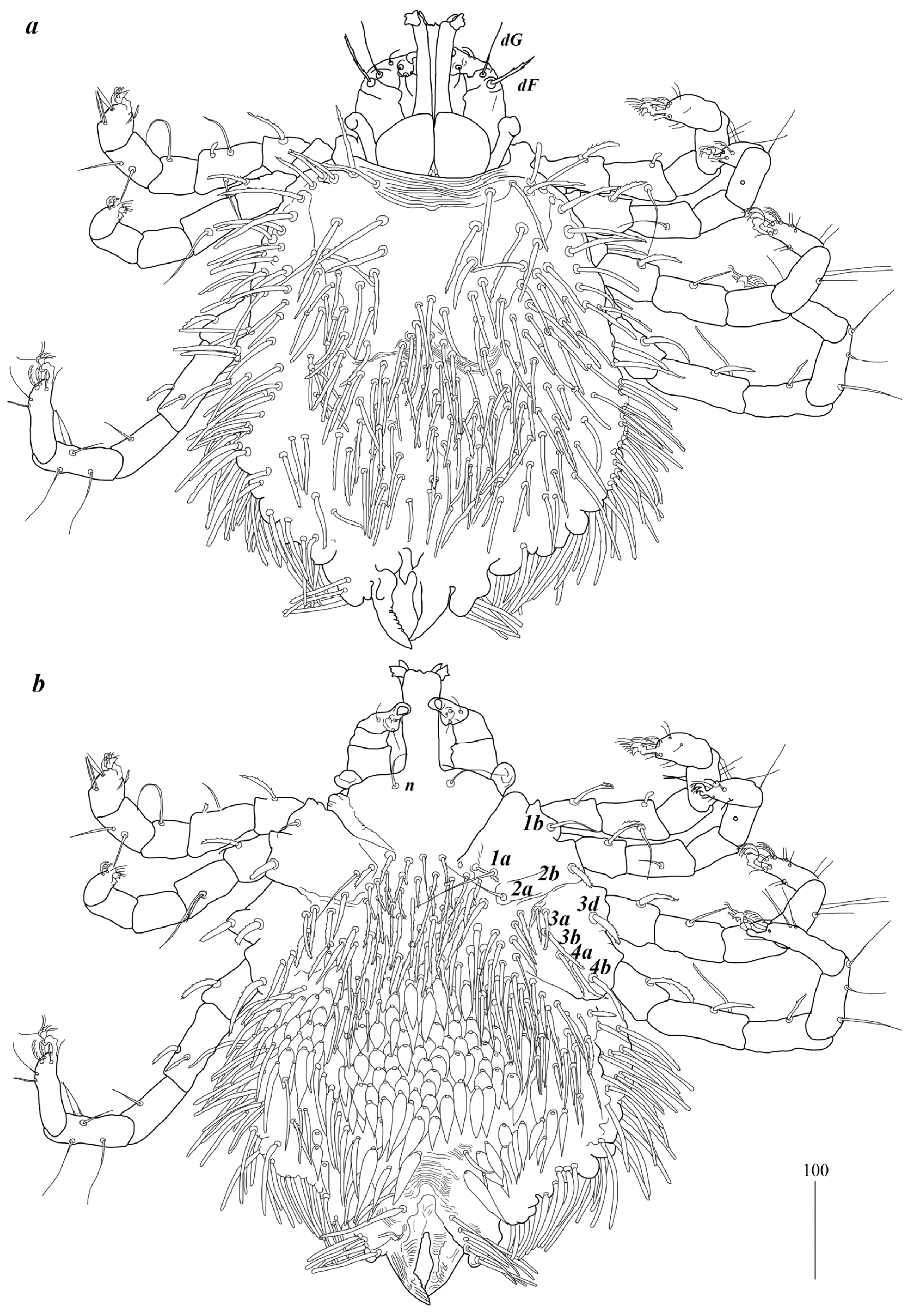
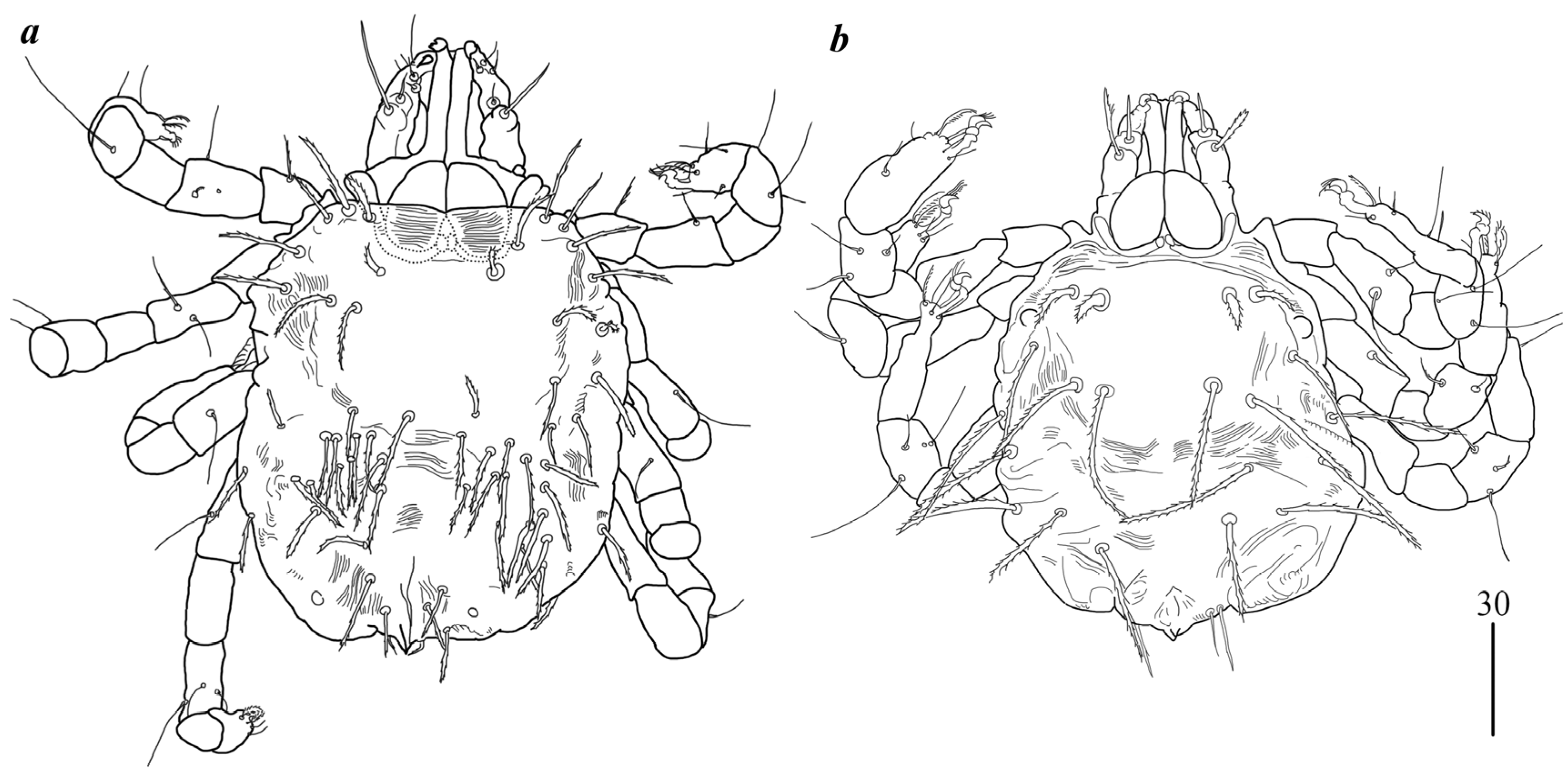
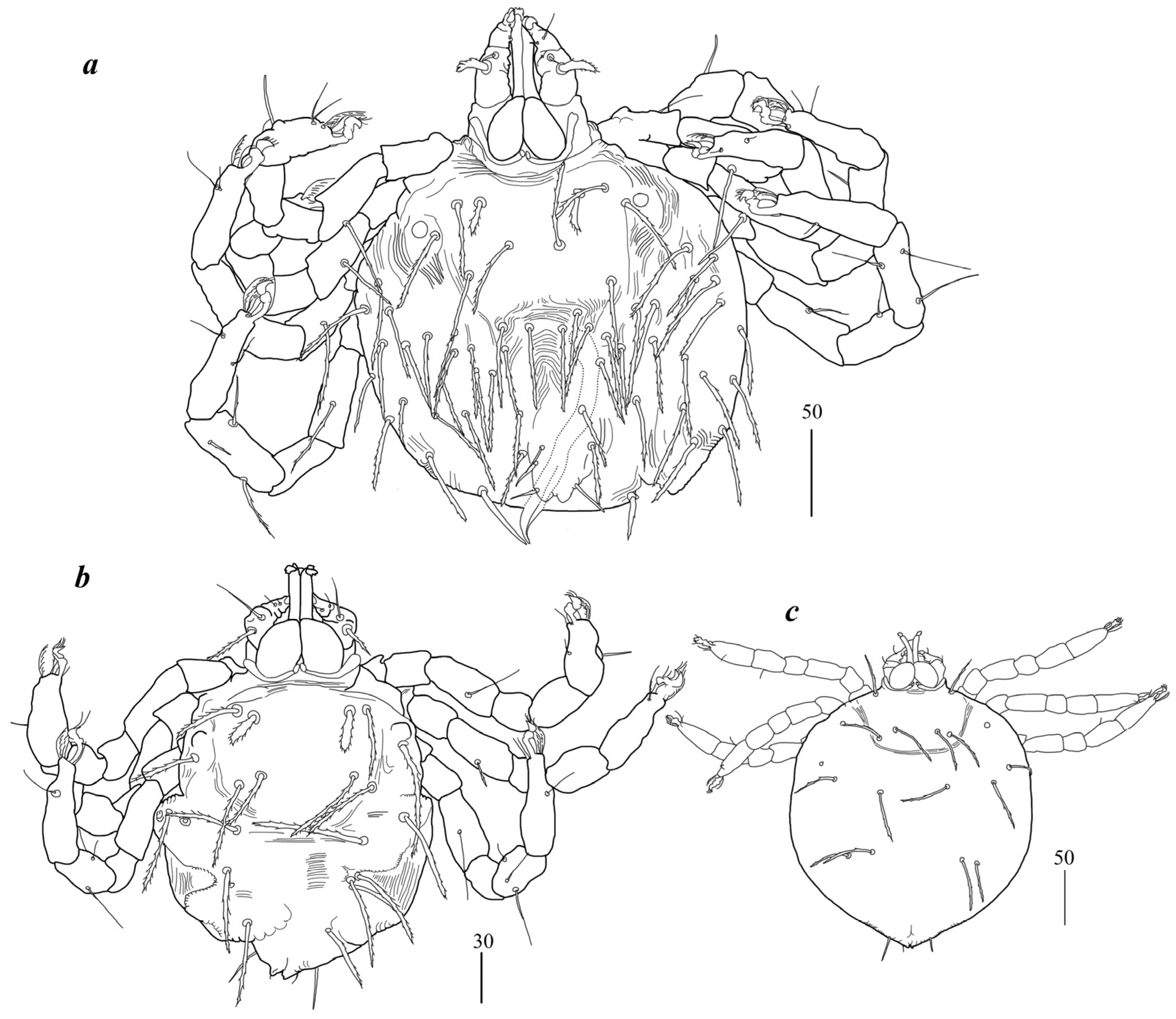
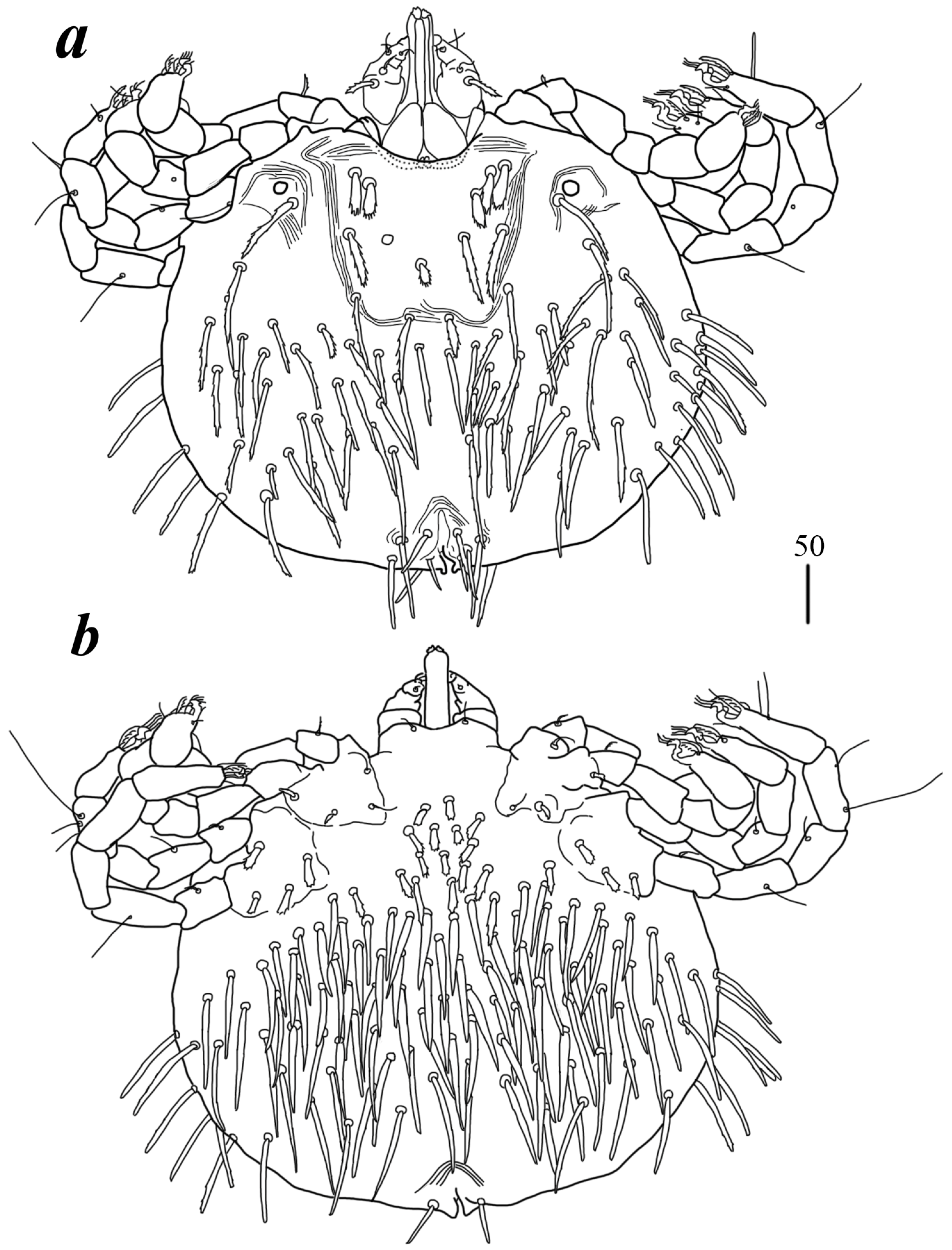
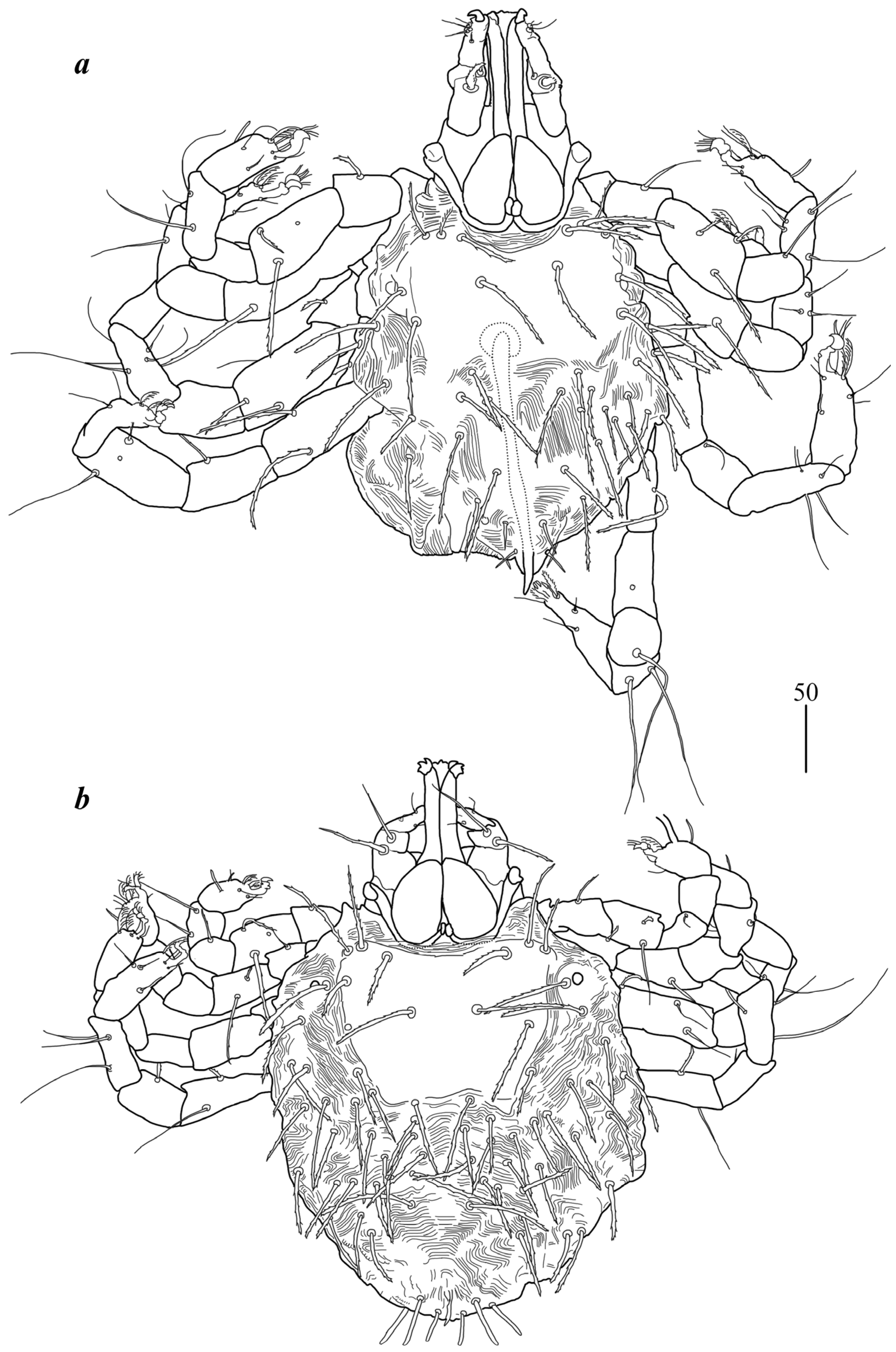
3.1. Description
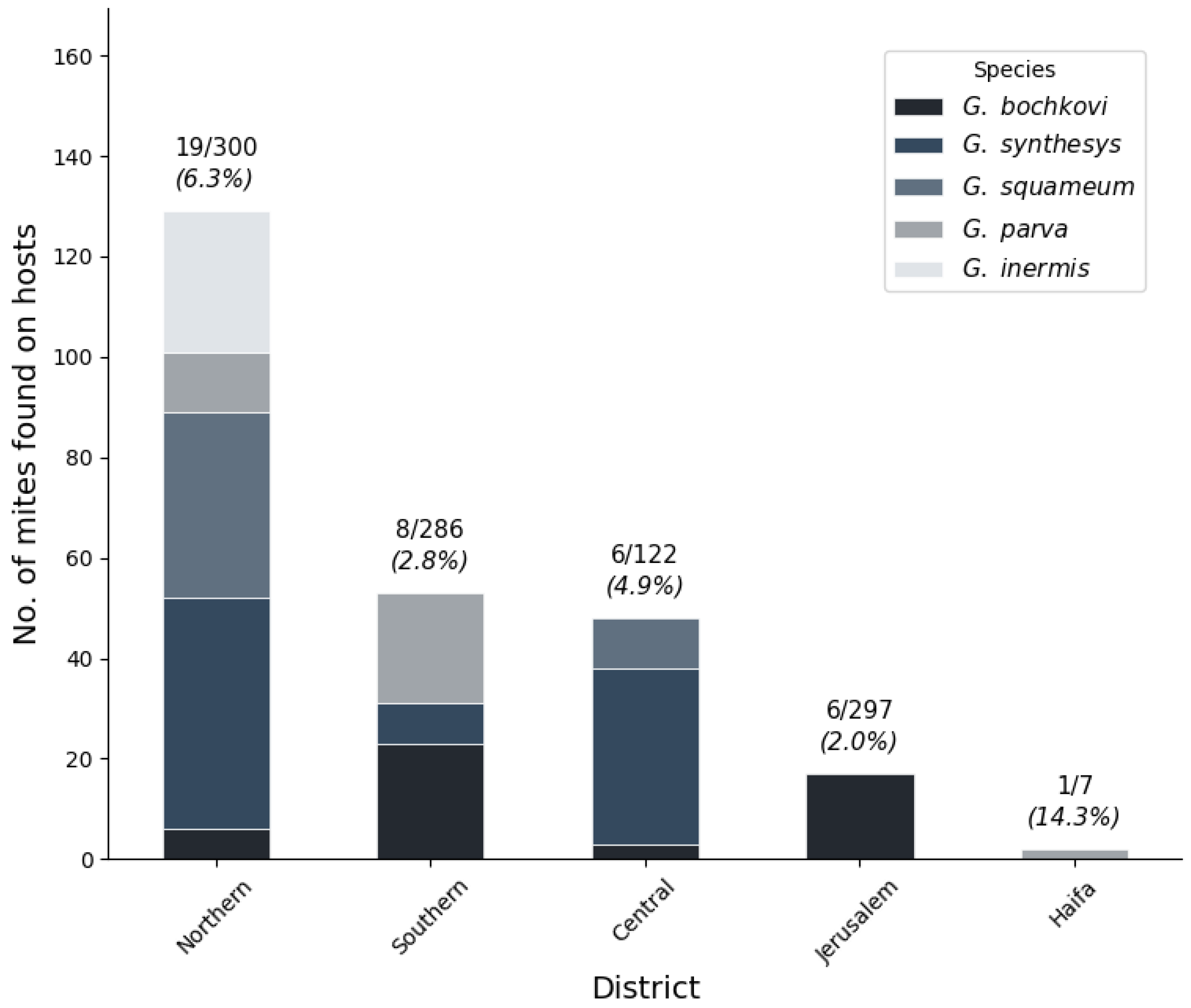
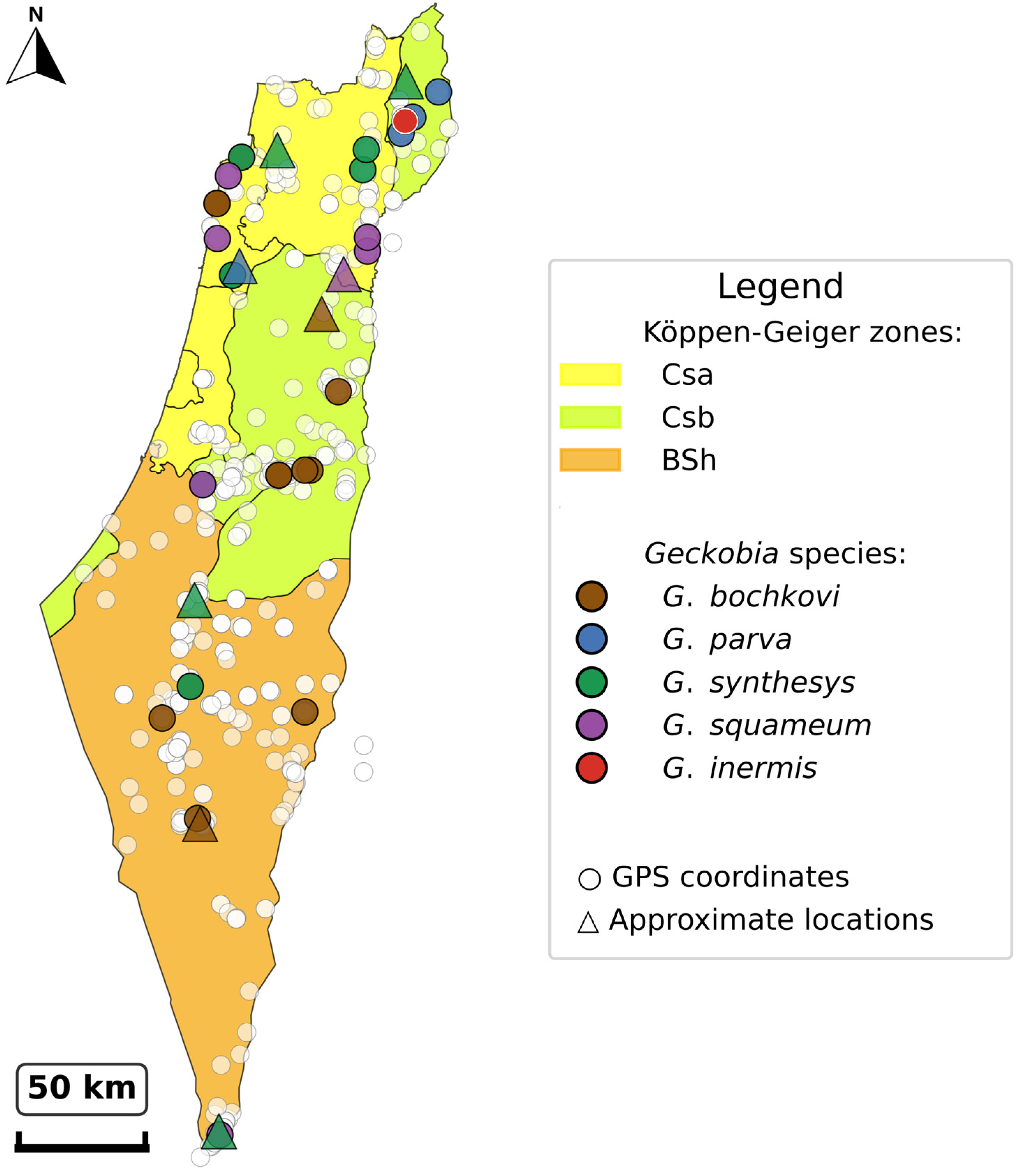
3.2. Ecological Analyses
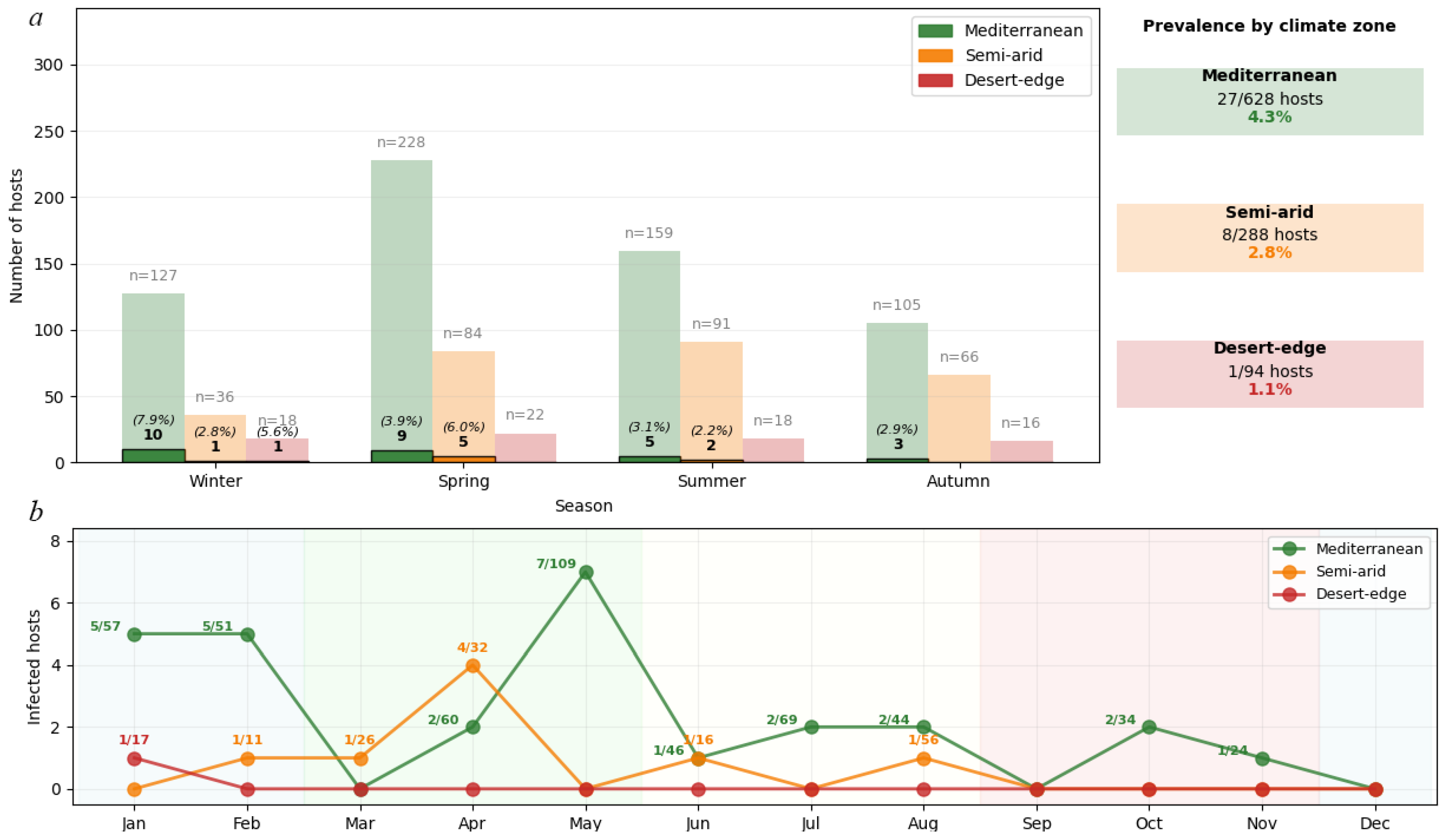
Seasonal Phenological Plasticity
4. Discussion
5. Conclusions
Supplementary Materials
Author Contributions
Funding
Institutional Review Board Statement
Informed Consent Statement
Data Availability Statement
Acknowledgments
Conflicts of Interest
References
- Fajfer, M. Acari (Chelicerata)—Parasites of reptiles. Acarina 2012, 20, 108–129. [Google Scholar]
- Paredes-León, R.; Klompen, H.; Pérez, T.M. Systematic revision of the genera Geckobiella Hirst, 1917 and Hirstiella Berlese, 1920 (Acari: Prostigmata: Pterygosomatidae) with description of a new genus for American species parasites on geckos formerly placed in Hirstiella. Zootaxa 2012, 3510, 1–40. [Google Scholar] [CrossRef]
- Prasad, V. A new genus and species of pterygosomatid mite (Acarina: Pterygosomatidae) from India. Int. J. Acarol. 1975, 1, 14–17. [Google Scholar] [CrossRef]
- Fajfer, M. A systematic revision of the scale mite genus Pterygosoma Peters, 1849 (Acariformes: Pterygosomatidae). Zootaxa 2020, 4805, zootaxa.4805.1.1. [Google Scholar] [CrossRef]
- Fajfer, M. New species and records of scale mites (Acariformes: Pterygosomatidae) from geckos (Squamata: Gekkonidae and Carphodactylidae). Biomed Res. Int. 2018, 2018, 9290308. [Google Scholar] [CrossRef]
- Bochkov, A.V.; Mironov, S.V. Two new species of the genus Geckobia (Acari: Pterygosomatidae) from geckons (Lacertilia: Gekkonomorpha) with a brief review of host–parasite associations of the genus. Russ. J. Herpetol. 2000, 7, 61–68. [Google Scholar]
- Fajfer, M.; Karanth, K.P. New morphological and molecular data reveal an underestimation of species diversity of mites of the genus Geckobia (Acariformes: Pterygosomatidae) in India. Diversity 2022, 14, 1064. [Google Scholar] [CrossRef]
- Bertrand, M. Morphologic adaptations to parasitism in reptiles: Pterygosomatidae (Prostigmata: Raphignatina). In Acarid Phylogeny and Evolution. Adaptations in Mites and Ticks; Bernini, F., Nannelli, R., Nuzzacci, G., De Lillo, E., Eds.; Kluwer Academic Publishers: Dordrecht, The Netherlands, 2002; pp. 199–207. [Google Scholar]
- Jack, K.M. Leg-chaetotaxy with special reference to the Pterygosomatidae (Acarina). Ann. Natal Mus. 1964, 16, 152–171. [Google Scholar]
- Fajfer, M. Mites of the new species group nitidus (Acariformes: Pterygosomatidae: Geckobia), parasites of lizards in South America. Syst. Parasitol. 2015, 90, 213–222. [Google Scholar] [CrossRef]
- Keddy, P.A. Assembly and response rules: Two goals for predictive community ecology. J. Veg. Sci. 1992, 3, 157–164. [Google Scholar] [CrossRef]
- Edney, E.B. Water Balance in Land Arthropods; Springer: Berlin, Germany, 1977. [Google Scholar]
- Marshall, A.G. The Ecology of Ectoparasitic Insects; Academic Press: London, UK, 1981. [Google Scholar]
- Goldreich, Y. The Climate of Israel: Observation, Research and Application; Kluwer Academic/Plenum Publishers: New York, NY, USA, 2003. [Google Scholar] [CrossRef]
- Budianto, A.; Basuki, Y. Prevalence and intensity of Geckobia spp. (Acari: Pterygosomatidae) on house geckos Hemidactylus spp. in urban environments of Indonesia. IOP Conf. Ser. Earth Environ. Sci. 2021, 948, 012007. [Google Scholar] [CrossRef]
- Bertrand, M.; Pfliegler, W.P.; Sciberras, A. Does the African native host explain the African origin of the parasite? The Maltese Geckobia estherae n. sp. parasitic on Tarentola mauritanica (Acari: Raphignathoidea: Pterygosomatidae). Acarologia 2012, 52, 353–366. [Google Scholar] [CrossRef][Green Version]
- Bertrand, M.; Kukushkin, O.; Pogrebnyak, S. A New Species of Mites of the Genus Geckobia (Prostigmata, Pterygosomatidae), Parasitic on Mediodactylus kotschyi (Reptilia, Gekkota) from Crimea. Vestn. Zool. 2013, 47, 99–111. [Google Scholar] [CrossRef][Green Version]
- Eren, G.; Açıcı, M. An updated checklist of ticks and mites (Acari) reported on reptiles of Türkiye: New records and new host–parasite associations. Acarol. Stud. 2025, 7, 12–41. [Google Scholar] [CrossRef]
- Metallinou, M.; Červenka, J.; Crochet, P.-A.; Kratochvíl, L.; Wilms, T.; Geniez, P.; Shobrak, M.Y.; Brito, J.C.; Carranza, S. Species on the rocks: Systematics and biogeography of the rock-dwelling Ptyodactylus geckos (Squamata: Phyllodactylidae) in North Africa and Arabia. Mol. Phylogenet. Evol. 2015, 85, 208–220. [Google Scholar] [CrossRef] [PubMed]
- Tamar, K.; Carranza, S.; Šmíd, J.; Moravec, J. Taxonomy and phylogeny of the Levant fan-footed gecko Ptyodactylus puiseuxi and the resurrection of Ptyodactylus bischoffsheimi. Syst. Biodivers. 2025, 23, 2454011. [Google Scholar] [CrossRef]
- Bertrand, M.; Paperna, I.; Finkelman, S. Pterygosomatidae: Descriptions et observations sur les genres Pterygosoma, Geckobia, Zonurobia et Hirstiella (Acari: Actinedida). Acarologia 1999, 40, 275–304. [Google Scholar]
- Fajfer, M. Two new mite species of the genus Geckobia Mégnin (Acariformes: Pterygosomatidae) from Israel. Zootaxa 2023, 5227, 251–264. [Google Scholar] [CrossRef]
- Fajfer, M. Systematics of reptile-associated scale mites of the genus Pterygosoma (Acariformes: Pterygosomatidae) derived from external morphology. Zootaxa 2019, 4603, 401–440. [Google Scholar] [CrossRef]
- Reed, J.C. Analysis of the Function and Evolution of Mite Pockets in Lizards. Ph.D. Thesis, University of Michigan, Ann Arbor, MI, USA, 2014. Available online: https://deepblue.lib.umich.edu/bitstream/handle/2027.42/107203/jayreed_1.pdf?sequence=1&isAllowed=y (accessed on 9 August 2025).
- Díaz, J.A.; Torres, R.A.; Paternina, L.E.; Santana, D.J.; Miranda, R.J. Traveling with an invader: Ectoparasitic mites of Hemidactylus frenatus (Squamata: Gekkonidae) in Colombia. Cuad. Herpetol. 2020, 34, 1–4. [Google Scholar] [CrossRef]
- Prawasti, T.S.; Farajallah, A.; Raffiudin, R. Three species of ectoparasite mites (Acari: Pterygosomatidae) infested geckos in Indonesia. HAYATI J. Biosci. 2013, 20, 80–88. [Google Scholar] [CrossRef]
- GBIF.org. GBIF Occurrence Download. Available online: https://doi.org/10.15468/dl.turhfw (accessed on 8 July 2025).
- Krantz, G.W.; Walter, D.E. A Manual of Acarology, 3rd ed.; Texas Tech University Press: Lubbock, TX, USA, 2009; 807p. [Google Scholar]
- Grandjean, F. Les segments postlarvaires de l’hystérosoma chez les oribates (Acariens). Bull. Soc. Zool. Fr. 1939, 64, 273–284. [Google Scholar]
- Grandjean, F. Observations sur les Acariens de la famille des Stigmaeidae. Arch. Sci. Phys. Nat. 1944, 26, 103–113. [Google Scholar]
- Norton, R.A. A review of F. Grandjean’s system of leg chaetotaxy in the Oribatei and its application to the Damaeidae. In Biology of Oribatid Mites; Dindal, D.L., Ed.; SUNY College of Environmental Science and Forestry: Syracuse, NY, USA, 1977; pp. 33–61. [Google Scholar]
- Grandjean, F. Au sujet de l’organe de Claparede, des eupathides multiples et des taenidies mandibulaires chez les Acariens actinochitineux. Arch. Sci. Phys. Nat. 1946, 28, 63–87. [Google Scholar]
- Uetz, P.; Freed, P.; Aguilar, R.; Reyes, F.; Kudera, J.; Hošek, J. (Eds.) The Reptile Database. Available online: http://www.reptile-database.org (accessed on 8 August 2025).
- Beck, H.E.; McVicar, T.R.; Vergopolan, N.; Berg, A.; Lutsko, N.J.; Dufour, A.; Zeng, Z.; Jiang, X.; van Dijk, A.I.J.M.; Miralles, D.G. High-resolution (1 km) Köppen–Geiger maps for 1901–2099 based on constrained CMIP6 projections. Sci. Data 2023, 10, 724. [Google Scholar] [CrossRef] [PubMed]
- Bush, A.O.; Lafferty, K.D.; Lotz, J.M.; Shostak, A.W. Parasitology meets ecology on its own terms: Margolis et al. revisited. J. Parasitol. 1997, 83, 575–583. [Google Scholar] [CrossRef]
- Givati, A.; Rosenfeld, D. The Arctic Oscillation, Climate Change and the Effects on Precipitation in Israel. Atmos. Res. 2013, 132–133, 114–124. [Google Scholar] [CrossRef]
- Ziv, B.; Saaroni, H.; Pargament, R.; Harpaz, T.; Alpert, P. Trends in Rainfall Regime over Israel, 1975–2010, and Their Relationship to Large-Scale Variability. Reg. Environ. Change 2014, 14, 1751–1764. [Google Scholar] [CrossRef]
- Jabbarpour, S. Türkiye’de Dağılış Gösteren Bazı Kertenkelelerde Ektoparazit Yaşayan Akarlar (Arachnida: Acarina). Ph.D. Thesis, Ege University, İzmir, Türkiye, 2016. [Google Scholar]
- Fajfer, M. Three new species of scale mites (Acari: Pterygosomatidae) parasitizing Agama sankaranica (Sauria: Agamidae). Zootaxa 2013, 3700, 271–282. [Google Scholar] [CrossRef]
- Werren, J.H.; Baldo, L.; Clark, M.E. Wolbachia: Master manipulators of invertebrate biology. Nat. Rev. Microbiol. 2008, 6, 741–751. [Google Scholar] [CrossRef] [PubMed]
- Álvarez-Ruiz, L.; Megía-Palma, R.; Reguero, S.; Ruiz, S.; Zamora-Camacho, F.J.; Figuerola, J.; Moreno-Rueda, G. Opposed elevational variation in prevalence and intensity of endoparasites and their vectors in a lizard. Curr. Zool. 2018, 64, 197–204. [Google Scholar] [CrossRef] [PubMed]
- Wu, Q.; Richard, M.; Rutschmann, A.; Miles, D.B.; Clobert, J. Environmental variation mediates the prevalence and co-occurrence of parasites in the common lizard Zootoca vivipara. BMC Ecol. 2019, 19, 44. [Google Scholar] [CrossRef] [PubMed]
- Drechsler, R.M.; Belliure, J.; Megía-Palma, R. Phenological and intrinsic predictors of mite and haemacoccidian infection dynamics in a Mediterranean community of lizards. Parasitology 2021, 148, 1303–1314. [Google Scholar] [CrossRef] [PubMed]
- Trägårdh, I. Acariden aus Ägypten und dem Sudan. In Results of the Swedish Zoological Expedition to Egypt and the White Nile. Part II; Jägerskiöld, L.A., Ed.; Uppsala University: Uppsala, Sweden, 1905; pp. 1–124. [Google Scholar]
- Hirst, A.S. On the Parasitic Mites of the Suborder Prostigmata (Trombidioidea) Found on Lizards. J. Linn. Soc. Lond. Zool. 1926, 36, 173–200. [Google Scholar] [CrossRef]






| Species | No. of Infested Hosts | Prevalence (%) [95% CI] | Abundance | Intensity (Mean ± SD, Median) | Cramér’s V [95% CI] | Power |
|---|---|---|---|---|---|---|
| G. bochkovi | 16 | 1.41 [0.87–2.28] | 0.043 | 3.06 ± 2.61 (2.0) | 0.041 [0.018–0.064] | 0.52 |
| G. synthesys | 12 | 1.06 [0.61–1.84] | 0.084 | 7.92 ± 5.96 (6.0) | 0.035 [0.012–0.058] | 0.71 |
| G. squameum | 9 | 0.79 [0.42–1.50] | 0.049 | 6.22 ± 5.24 (4.0) | 0.029 [0.008–0.050] | 0.48 |
| G. parva | 4 | 0.35 [0.14–0.90] | 0.032 | 9.00 ± 8.46 (6.5) | n.d. */− | <0.20 |
| G. inermis | 1 | 0.09 [0.02–0.50] | 0.025 | 28.0 ± 0.0 (28.0) | n.d. */− | n.a. * |
| Species | No | T | Prevalence (%) [95% CI] | Abundance | Intensity (±SD) |
|---|---|---|---|---|---|
| P. guttatus | 27 | 904 | 2.99 [1.98–4.32] | 0.167 | 5.59 ± 6.63 |
| P. puiseuxi | 7 | 177 | 3.95 [1.60–7.98] | 0.588 | 14.86 ± 12.64 |
| P. hasselquistii | 2 | 41 | 4.88 [0.60–16.53] | 0.073 | 1.50 ± 0.71 |
| P. oudrii | 1 | 1 | 100.00 [2.50–100.00] | 6.000 | 6.00 ± 0.00 |
| Species | T | A | F | M | L | D | P | C | M:F | Raw p-Value | Holm p-Value |
|---|---|---|---|---|---|---|---|---|---|---|---|
| G. bochkovi | 49 | 37 | 21 | 16 | 9 | 0 | 0 | 3 | 0.76 | 0.5114 | 1.0 |
| G. synthesys | 95 | 21 | 16 | 5 | 31 | 15 | 15 | 13 | 0.31 | 0.0266 | 0.1064 |
| G. squameum | 56 | 40 | 31 | 9 | 5 | 0 | 3 | 8 | 0.29 | 0.0007 | 0.0034 |
| G. parva | 36 | 6 | 6 | 0 | 25 | 1 | 0 | 4 | 0.0 | 0.0312 | 0.0938 |
| G. inermis | 28 | 4 | 2 | 2 | 12 | 5 | 7 | 0 | 1.0 | 1.0 | 1.0 |
| Total | 264 | 108 | 76 | 32 | 82 | 21 | 25 | 28 | 0.42 | - | - |
Disclaimer/Publisher’s Note: The statements, opinions and data contained in all publications are solely those of the individual author(s) and contributor(s) and not of MDPI and/or the editor(s). MDPI and/or the editor(s) disclaim responsibility for any injury to people or property resulting from any ideas, methods, instructions or products referred to in the content. |
© 2025 by the authors. Licensee MDPI, Basel, Switzerland. This article is an open access article distributed under the terms and conditions of the Creative Commons Attribution (CC BY) license (https://creativecommons.org/licenses/by/4.0/).
Share and Cite
Fajfer-Jakubek, M.; Sikora, B. Population Structure and Climate Effects on Geckobia Infestation in Ptyodactylus Geckos from Israel and West Bank, with Descriptions of G. parva sp. nov. and G. inermis sp. nov. Animals 2025, 15, 3461. https://doi.org/10.3390/ani15233461
Fajfer-Jakubek M, Sikora B. Population Structure and Climate Effects on Geckobia Infestation in Ptyodactylus Geckos from Israel and West Bank, with Descriptions of G. parva sp. nov. and G. inermis sp. nov. Animals. 2025; 15(23):3461. https://doi.org/10.3390/ani15233461
Chicago/Turabian StyleFajfer-Jakubek, Monika, and Bożena Sikora. 2025. "Population Structure and Climate Effects on Geckobia Infestation in Ptyodactylus Geckos from Israel and West Bank, with Descriptions of G. parva sp. nov. and G. inermis sp. nov." Animals 15, no. 23: 3461. https://doi.org/10.3390/ani15233461
APA StyleFajfer-Jakubek, M., & Sikora, B. (2025). Population Structure and Climate Effects on Geckobia Infestation in Ptyodactylus Geckos from Israel and West Bank, with Descriptions of G. parva sp. nov. and G. inermis sp. nov. Animals, 15(23), 3461. https://doi.org/10.3390/ani15233461