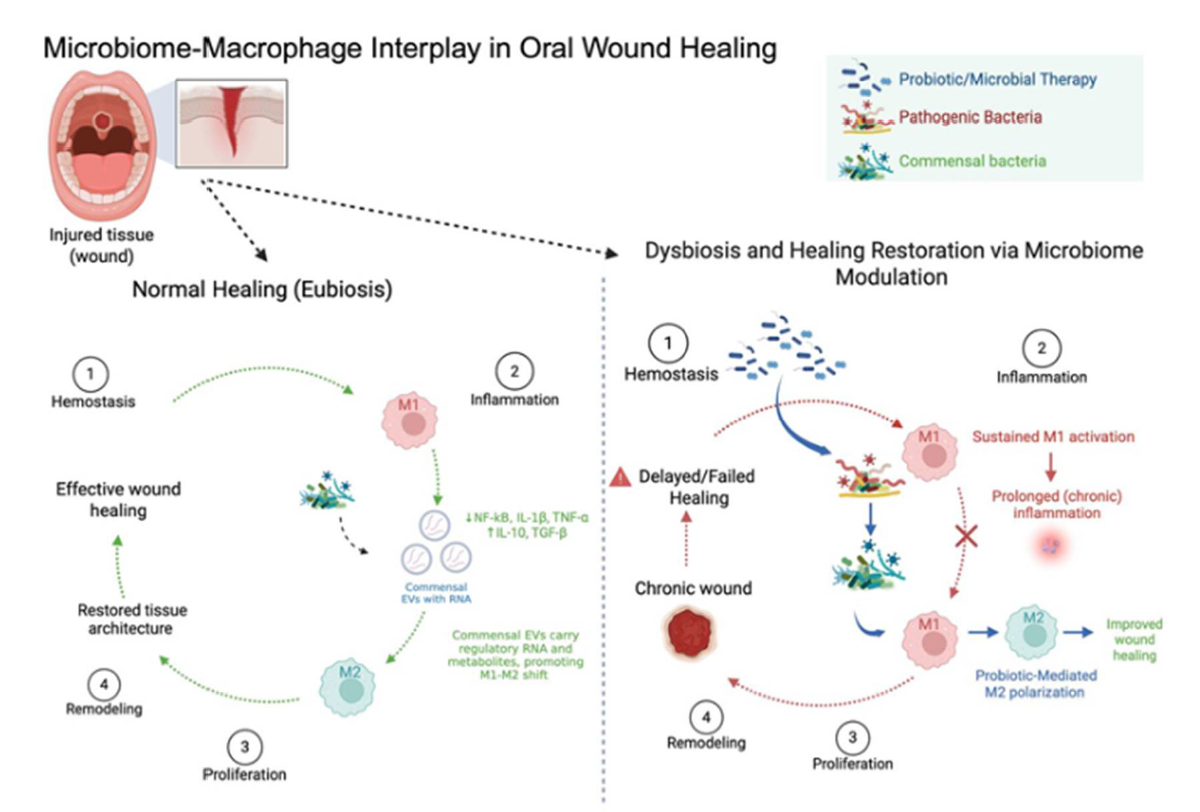
Harnessing Microbiome-Mediated and Macrophage-Driven Mechanisms for Oral Wound Healing

 ,
,  , , , , ,
  , , and
Abstract
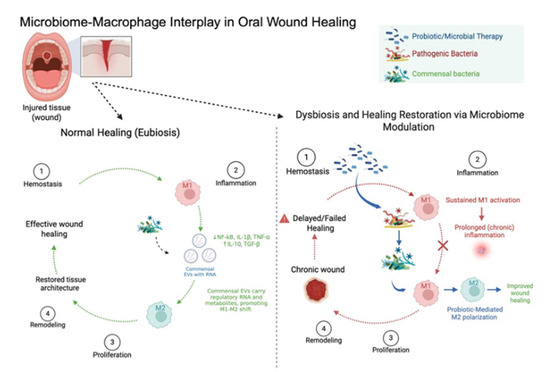
1. Introduction
2. The Oral Microenvironment: Structure, Immunity and Microbial Exposure
3. The Impact of Oral Microbiome on Wound Healing Phases
3.1. Hemostatic Phase

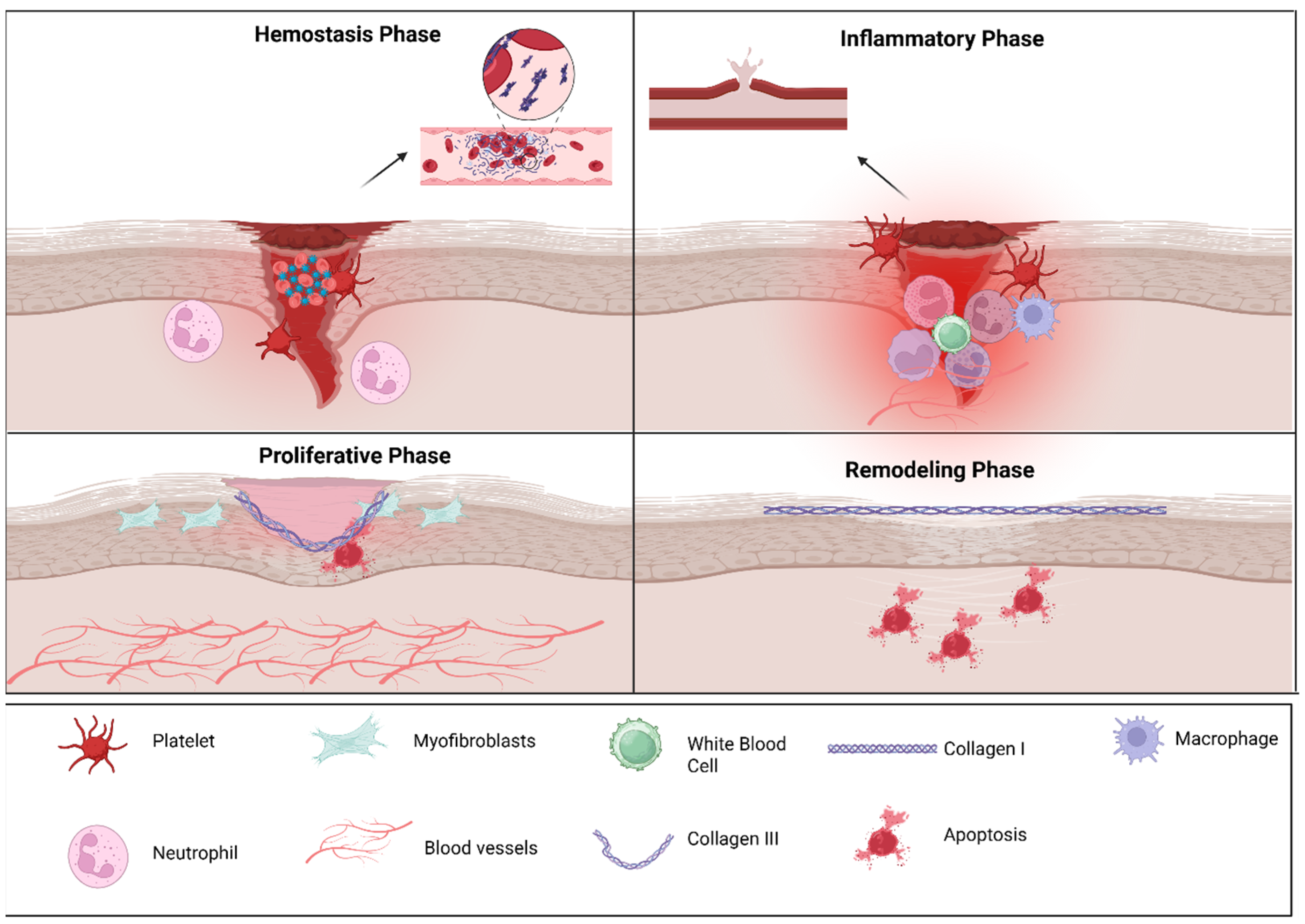
| Wound Healing Phase | Description |
Role of Inflammatory
Markers | Role of Anti-Inflammatory Markers | References |
|---|---|---|---|---|
| Hemostasis phase | Initial response to injury involving blood clot formation. | Platelets release cytokines (e.g., IL-1β, TNF-α) and growth factors (e.g., PDGF, TGF-β) to initiate inflammation and recruit immune cells to the wound site. | Anti-inflammatory mediators such as lipoxins, resolvins, and protectins help resolve inflammation and prevent excessive clotting and tissue damage. | [37,38,39] |
| Inflammatory phase | Characterized by inflammation and removal of debris. | Neutrophils and macrophages release pro-inflammatory cytokines (e.g., IL-6, IL-8, TNF-α) to eliminate pathogens and cellular debris and stimulate angiogenesis and fibroblast proliferation. | Interleukin-10 (IL-10) and transforming growth factor-beta (TGF-β) help suppress inflammation, regulate immune responses, and promote tissue repair. | [40,41,42] |
| Proliferative phase | Formation of new tissue by fibroblasts and endothelial cells. | Fibroblasts produce collagen and extracellular matrix components, while endothelial cells promote angiogenesis and blood vessel formation. | Anti-inflammatory cytokines like IL-4 and IL-13 help modulate the inflammatory response and facilitate tissue remodeling and wound closure. | [43,44,45] |
| Remodeling phase | Maturation and remodeling of the newly formed tissue. | Matrix metalloproteinases (MMPs) produced by fibroblasts and macrophages degrade excess collagen and promote tissue remodeling. | Tissue inhibitors of metalloproteinases (TIMPs) control MMP activity, prevent excessive tissue degradation, and promote tissue maturation and strength. | [46,47,48] |
3.2. Inflammatory Phase
3.3. Proliferative Phase
3.4. Remodeling Phase
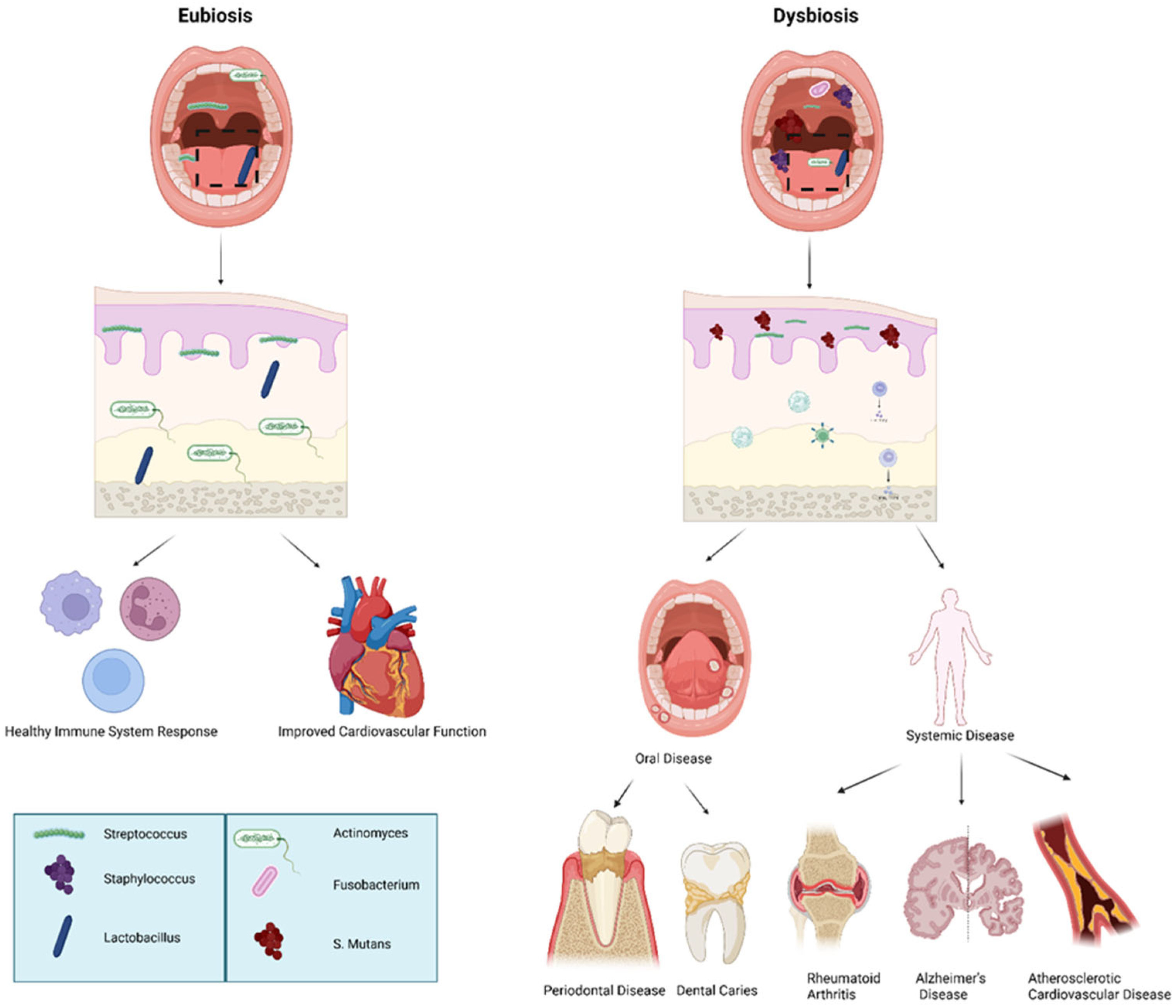
4. Eubiosis and Dysbiosis vs. Probiotics in Skin, Gut and Oral Habitat
| Conditions | Eubiosis vs. Probiotic | Dysbiosis vs. Pathogenic |
|---|---|---|
| Gut/intestinal microbiota | Bacteroides fragilis [82] Faecalibacterium prausnitzii [83] Bifidobacterium breve [84] Lactobacillus rhamnosus GG [85], Bifidobacterium longum [86,87] | Clostridium difficile [88], Escherichia coli [89], Enterococcus faecalis [90] |
| Oral microbiota | Streptococcus salivarius [91], Actinomyces naeslundii, Streptococcus salivarius K12 [92], Lactobacillus reuteri [93] | Streptococcus mutans [94], Porphyromonas gingivalis [95], Fusobacterium nucleatum [96] |
| Skin microbiota | Staphylococcus epidermidis [97], Cutibacterium acnes [98], Corynebacterium accolens [99], Lactobacillus plantarum [100], Lactobacillus rhamnosus GG [101] | Staphylococcus aureus [102], Malassezia spp. [103] |
| Vaginal microbiota | Lactobacillus crispatus [104], Lactobacillus iners [105], Lactobacillus gasseri [106], Lactobacillus rhamnosus GR-1 [107], Lactobacillus reuteri RC-14 [108] | Gardnerella vaginalis (BV) [109], Candida albicans (yeast infection) [110], Atopobium [110] |
5. Macrophage Polarization in Oral Wound Healing
5.1. M1 and M2 Phenotypes and Function
5.2. Microbial Influence on Macrophage Polarization
6. Microbiome-Based Therapeutics for Modulation of Wound Healing
6.1. Probiotic-Based Therapeutics in Oral and Cutaneous Wounds
6.2. Mechanisms of Microbial Modulation: Cytokine Signaling and Receptor Engagement
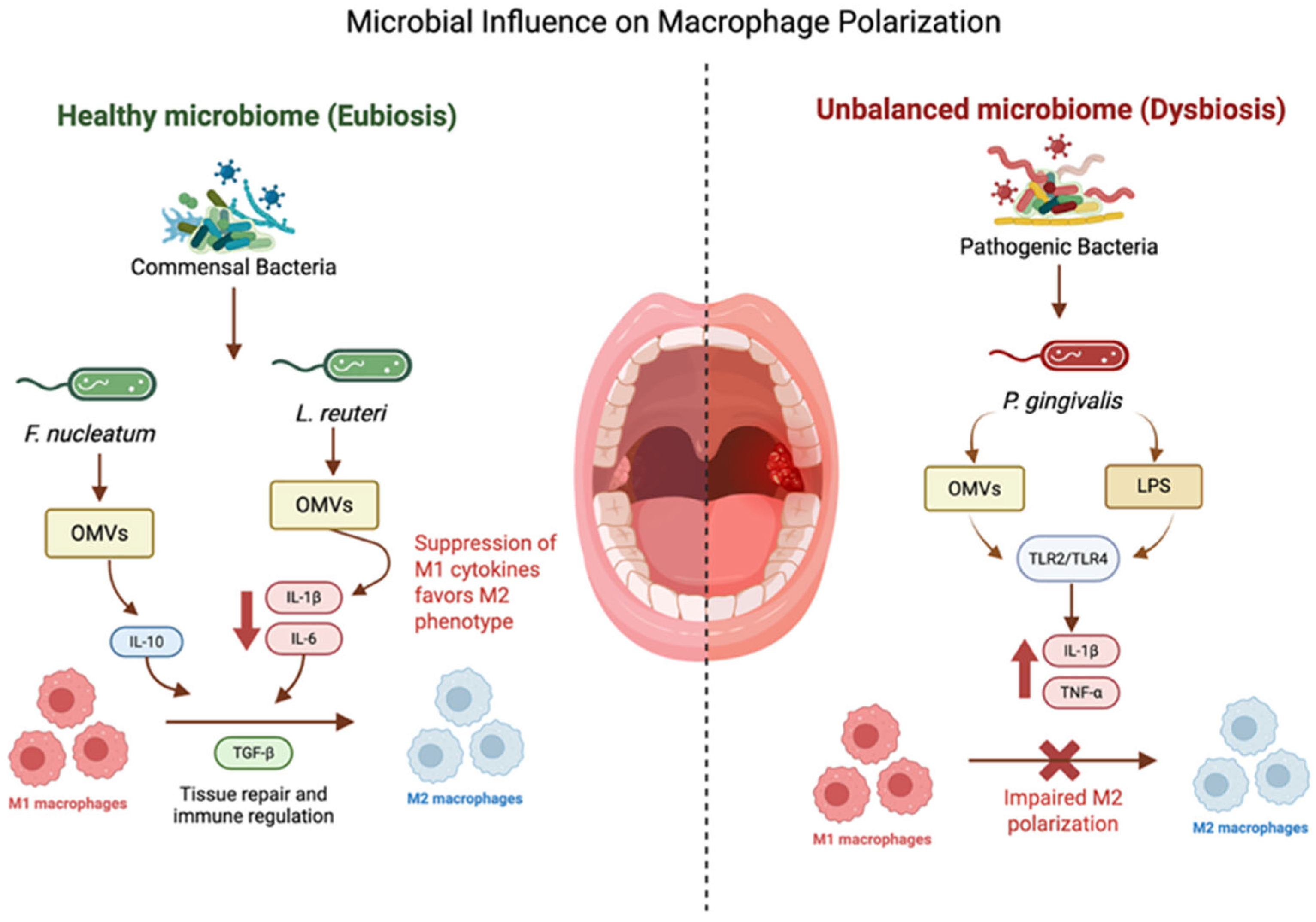
- Outer membrane vesicles (OMVs): OMVs from F. nucleatum and P. gingivalis influence TLR2/TLR4 signaling and activation of inflammation, with downstream effects on IL-1β, IL-6, TNF-α, and IFN-β production [129].
- Lipoteichoic acids and peptidoglycans: structural components of Gram-positive bacteria such as S. mutans and A. naeslundii stimulate release of pro-inflammatory cytokines like TNF-α, IL-1β, and IL-6 in macrophages [130].
- Lantibiotics (e.g., salivaricins): produced by S. salivarius K12, these peptides inhibit NF-κB activation and reduce IL-8 and IL-6 signaling, promoting a homeostatic environment [131].
- Metabolites (e.g., reuterin): produced by L. reuteri, reuterin exhibits anti-inflammatory properties by neutralizing LPS and suppressing macrophage polarization toward the M1 state [132].
6.3. Probiotic-Mediated M2 Polarization—A Therapeutic Opportunity
| Phenotype | Cytokines/ Chemokines/Growth Factor | Role in Oral Wound Healing | Phases | Oral Wound Conditions | References |
|---|---|---|---|---|---|
| M1 | IL-1β, IL-6, TNF-α, IFN-γ, ROS | Initiate the inflammatory response, clear pathogens, and recruit immune cells to the injury site. | Inflammatory Phase | Acute Oral Wounds (e.g., dental extraction, minor trauma) | [117,147] |
| M2 | IL-10, TGF-β, VEGF, IGF-1 | Suppress inflammation, promote angiogenesis, and stimulate fibroblast activity and extracellular matrix deposition. | Proliferative Phase | Chronic Periodontal Wounds (e.g., periodontitis) | [148] |
| M2 | M2b-like (Immunoregulatory) IL-10, IL-1RA, TGF-β | Modulate immune responses, balancing pro- and anti-inflammatory signals. | Transitional Phase | Diabetic Oral Wounds (delayed healing) | [149] |
| M2 | TGF-β, IL-10, PDGF, VEGF | Facilitate tissue remodeling, collagen deposition, and scar formation. | Remodeling Phase | Oral Mucosal Wounds (e.g., ulcers, post-surgery) | [150] |
| M1 | TNF-α, IL-1β, IL-6 (low IL-10) | Persistent inflammation, chronic wounds, and impaired healing. | Chronic Wound Phase | Chronic Periodontitis | [151] |
| Mixed M1/M2 Phenotypes | IL-6, IL-10, VEGF, TGF-β, IFN-γ | Adapt to saliva, oral microbiota, and mechanical stress for tissue-specific repair. | Oral Wound Healing | Oral Wounds in Immunocompromised Patients | [152] |
| M1- | IL-1β, TNF-α, IL-6, IL-17 | Delayed resolution of inflammation, impairing wound healing. | Chronic Inflammation | Oral Wounds in Smoking (e.g., impaired healing) | [153] |
| Mixed M1/M2 | IL-1β, TNF-α, IL-6, IL-10 | Biofilm-associated wounds trigger prolonged inflammation and microbial persistence. | Inflammatory/Chronic | Dental Implants and Peri-implantitis | [154] |
| Tumor-associated Macrophages (TAMs) | TGF-β, IL-10, VEGF, IL-6 | Promote tumor invasion and immunosuppression but can support tissue healing in surgical resection wounds. | Variable | Oral Squamous Cell Carcinoma (OSCC) Wounds | [155] |
| Source | Microbiome Intervention | Application | Wound Healing Model | Impact on Macrophages | Effect |
|---|---|---|---|---|---|
| Wälivaara D.Å 2019 (Clinical Trial) [156] | Lactobacillus reuteri-containing lozenges | Oral | Surgical extraction of impacted mandibular third molars | N/A | No significant influence of probiotics on wound healing mechanism. Did observe reduced swelling and pain |
| Li 2023 [157] | Bifidobacterium breve | Oral | C57BL/6N mice hard palate mucosal defect model | N/A | Therapeutic potential of Bifidobacterium breve on oral mucosal wound healing after impairment caused by Sunitinib. Promoted wound healing by intestinal dendritic cell-derived IL-10 |
| Han 2020 [158] | L. reuteri | Inoculated in the wound | Palate mucosal model on C57BL/6 mice | N/A | Reuterin in L. reuteri neutralized the LPS in L. gingivalis and inhibiting inflammation while promoting wound healing |
| Xu 2024 [159] | Lactobacillus paracasei TYM202 | Injection | Full-thickness skin injury on Sprague Dawley rats | Found higher levels of M2 macrophages | The probiotic hydrogel encapsulated with L. paracasei TYM202 (HAEPS@L.sei gel) promotes wound healing by reducing inflammation and promoting angiogenesis and increasing collagen deposition |
| Li 2024 [160] | Gluconacetobacter (formerly Acetobacter), Agrobacterium, and Aerobacter | Skin wounds on the back of Sprague Dawley rats | N/A | Bacterial cellulose hydrogel (Ag-BCN) and carbon nanodots with resveratrol reduced wound healing time and ROS and promoted wound healing | |
| Mohtashami 2021 [161] | Lactobacillus bulgaricus and Lactobacillus plantarum | Topical | Diabetic cutaneous wounds in Wistar rats | Promoted the proliferation of macrophages | The bacteria modulated the immune response and accelerated the wound healing process |
| Evelina Vågesjö 2018 [162] | Lactobacilli with a plasmid encoding CXCL12 | Topical | Full-thickness wound on the hind limb of C57BL/6 mice | Promoted proliferation of TGF-β+ macrophages | Accelerated wound closure |
| Emelie Öhnstedt 2023 [163] (human clinical trial) | Engineered Limosilactobacillus reuteri R2LC to produce CXCL12-a (ILP100-Topical) | Topical | Full-thickness wound punching on the arm | N/A | Overall safe. Multiple doses resulted in larger amount of healed wounds |
| Oral Microbiota Bacteria | Product/Secretory Factors | Expected Effects with Reference Links |
|---|---|---|
| Streptococcus salivarius | --- | Inhibits NF-KB activation and IL-8 secretion (both use HT-29 primary tumor epithelial cells) |
| --- | Increases IL-6 and TNF-α expression (mentions “infected oral epithelial cells also expressed relatively high levels of the chemo attractive cytokine IL-8”) | |
| Actinomyces naeslundii | Peptidoglycan purified | Increases IL-1β, IL-6, and TNF-α gene expression in mouse peritoneal macrophages (and stimulates osteoclast genesis in alveolar bone resorption) |
| Streptococcus mutans | --- | Induces IL-1β production via inflammasome activation in THP1 macrophages [164] |
| lipoteichoic acid purified | Induces TNF-α and nitric oxide (NO) production in RAW264.7 murine macrophages [165] | |
| Outer membrane vesicles (OMVs) purified | S. mutans OMVs increased production of IL-1β, IL-6, TNF-α and IL-8 (especially IL-1β) in THP1 cells; also reduces macrophage phagocytosis [166] | |
| Porphyromonas gingivalis | Outer membrane vesicles (OMVs) | OMV-stimulated macrophages produce a large amount of TNF-α, IL-12p70, IL-6, IL-10, IFNβ, and nitric oxide; OMVs can also induce NK-KB activation 9 [167] |
| --- | Activates NLRP3 and AIM2 inflammasomes in THP1 cells via TLR2 and TLR4 signaling, leading to IL-1β secretion and pyroptotic cell death (pro-inflammatory cell death; apoptosis = non-inflammatory) via caspase-1 activation [168] | |
| Outer membrane vesicles (OMVs) purified | Macrophages require a second signal (e.g., exogenous ATP), whereas monocytes (and THP-1 cells) only require one signal for inflammasome activation. This distinction may neatly explain why P. gingivalis activation of the inflammasome and IL-1β production has been demonstrated in THP-1 and Mono-Mac-6 cell lines (Bostanci et al., 2009; Hamedi et al., 2009), as well as in human monocytes (Huang et al., 2009; Jung et al., 2015) [169]. In comparison, studies in mature macrophage populations found that P. gingivalis fails to activate the inflammasome (Taxman et al., 2012; Slocum et al., 2014) unless stimulated with a secondary signal. Used murine bone-marrow-der. macrophage (BMM); human monocyte-der. macrophage (MDM)
| |
| Fusobacterium nucleatum | --- | Fn-challenged Mφ (unpolarized mac, THP1) had significantly lower mRNA level of M1 markers iNOS and TNF-α but significantly higher mRNA level of M2 markers IL-10 and CD206 = suggests Fn may be involved in M2-like polarization [170] |
| Outer membrane vesicles (OMVs) purified | Secreted OMVs can activate TLR4 and downstream targets ERK, CREB, and NF-κB, which promotes pro-inflammatory cytokine production. These effects were observed in colonic HT29 cells, as well as in human colonoid (organoid) monolayers [129]. | |
| --- | Activates both TLR2 and TLR4 in bone-marrow-derived macrophages to stimulate IL-6 production (and TNF-α) [171] | |
| Fn-cell wall; Lipopolysaccharides |
| |
| Two more promising papers: | ||
| Streptococcus salivarius K12 | Salivaricin A2 and B (lantibiotics = antimicrobial peptides) | Salivaricins inhibit other pathogens; K12 inhibits NF-KB pathway/inflammation and stimulates type I and II interferon responses (type 2 = INF-Gamma!) “Our analyses…indicated that K12 didn’t initiate synthesis of proinflammatory cytokines/chemokines, nor did it regulate genes involved in responses to such molecules.” [131] |
| Lactobacillus reuteri | Membrane vesicles | MVs inhibit LPS-induced macrophage polarization towards pro-inflammatory phenotype, promote their polarization towards anti-inflammatory phenotype, and reduce inflammation levels in vitro 9 [175] |
| “L. reuteri and inactivated L. reuteri treatment enhance macrophage phagocytic activity to kill intracellular pathogens (Figure 3A,B). Previous studies have also confirmed that Lactobacillus can activate macrophages, enhance phagocytosis ability and inhibit intracellular pathogen survival, thus playing a role in resisting pathogens [24,25].” | ||
| Streptococcus oralis | Hydrogen peroxide (H2O2) | Cytotoxic, kills monocytes and epithelial cells [176] |
7. Future Directions for Therapeutic Innovation
8. Conclusions
Author Contributions
Funding
Institutional Review Board Statement
Informed Consent Statement
Data Availability Statement
Acknowledgments
Conflicts of Interest
Abbreviations
| AI | Artificial Intelligence |
| AIM2 | Absent in Melanoma 2 |
| ATP | Adenosine Triphosphate |
| BCN | Bacterial Cellulose Nanocomposite |
| BMM | Bone Marrow-Derived Macrophages |
| BV | Bacterial Vaginosis |
| CAR-T | Chimeric Antigen Receptor T cells |
| CCR7 | C-C Chemokine Receptor Type 7 |
| CD | Cluster of Differentiation |
| CF | Cystic Fibrosis |
| CX3CR1 | C-X3-C Motif Chemokine Receptor 1 |
| CXCL | C-X-C Motif Chemokine Ligand |
| ECM | Extracellular Matrix |
| EGF | Epidermal Growth Factor |
| FGF | Fibroblast Growth Factor |
| GM-CSF | Granulocyte–Macrophage Colony-Stimulating Factor |
| HAEPS | Hyaluronic Acid-Encapsulated Probiotic System |
| HIF-1α | Hypoxia-Inducible Factor-1 Alpha |
| IBS | Irritable Bowel Syndrome |
| IFN-β | Interferon Beta |
| IFN-γ | Interferon Gamma |
| IGF-1 | Insulin-Like Growth Factor-1 |
| IL | Interleukin |
| IL-1RA | Interleukin-1 Receptor Antagonist |
| iNOS | Inducible Nitric Oxide Synthase |
| LPS | Lipopolysaccharide |
| MHC | Major Histocompatibility Complex |
| MDM | Monocyte-Derived Macrophages |
| MMP | Matrix Metalloproteinase |
| MVs | Membrane Vesicles |
| NETs | Neutrophil Extracellular Traps |
| NF-κB | Nuclear Factor Kappa-Light-Chain-Enhancer of Activated B Cells |
| NGF | Nerve Growth Factor |
| NO | Nitric Oxide |
| OMVs | Outer Membrane Vesicles |
| ONF | Oro-Nasal Fistula |
| OSCC | Oral Squamous Cell Carcinoma |
| PAMPs | Pathogen-Associated Molecular Patterns |
| PD-L1 | Programmed Death-Ligand 1 |
| PD-L2 | Programmed Death-Ligand 2 |
| PDGF | Platelet-Derived Growth Factor |
| PEG | Polyethylene Glycol |
| PG | Peptidoglycan |
| PRRs | Pattern Recognition Receptors |
| ROS | Reactive Oxygen Species |
| SCFAs | Short-Chain Fatty Acids |
| SNPs | Single-Nucleotide Polymorphisms |
| STAT1 | Signal Transducer and Activator of Transcription 1 |
| TAMs | Tumor-Associated Macrophages |
| TGF-α | Transforming Growth Factor Alpha |
| TGF-β | Transforming Growth Factor Beta |
| Th17 | T Helper 17 Cells |
| TIMPs | Tissue Inhibitors of Metalloproteinases |
| TLR | Toll-Like Receptor |
| TNF-α | Tumor Necrosis Factor Alpha |
| VEGF | Vascular Endothelial Growth Factor |
References
- Wallace, H.A.; Basehore, B.M.; Zito, P.M. Wound Healing Phases. In StatPearls; StatPearls Publishing: Treasure Island, FL, USA, 2024. [Google Scholar]
- Demidova-Rice, T.N.; Hamblin, M.R.; Herman, I.M. Acute and impaired wound healing: Pathophysiology and current methods for drug delivery, part 1: Normal and chronic wounds: Biology, causes, and approaches to care. Adv. Skin Wound Care 2012, 25, 304–314. [Google Scholar] [CrossRef] [PubMed]
- Zhao, R.; Liang, H.; Clarke, E.; Jackson, C.; Xue, M. Inflammation in Chronic Wounds. Int. J. Mol. Sci. 2016, 17, 2085. [Google Scholar] [CrossRef] [PubMed]
- Zielińska, M.; Pawłowska, A.; Orzeł, A.; Sulej, L.; Muzyka-Placzyńska, K.; Baran, A.; Filipecka-Tyczka, D.; Pawłowska, P.; Nowińska, A.; Bogusławska, J.; et al. Wound Microbiota and Its Impact on Wound Healing. Int. J. Mol. Sci. 2023, 24, 17318. [Google Scholar] [CrossRef] [PubMed]
- Brand, H.S.; Ligtenberg, A.J.; Veerman, E.C. Saliva and wound healing. Monogr. Oral Sci. 2014, 24, 52–60. [Google Scholar] [CrossRef]
- Sampaio-Maia, B.; Caldas, I.M.; Pereira, M.L.; Perez-Mongiovi, D.; Araujo, R. The Oral Microbiome in Health and Its Implication in Oral and Systemic Diseases. Adv. Appl. Microbiol. 2016, 97, 171–210. [Google Scholar] [CrossRef]
- Peng, X.; Cheng, L.; You, Y.; Tang, C.; Ren, B.; Li, Y.; Xu, X.; Zhou, X. Oral microbiota in human systematic diseases. Int. J. Oral Sci. 2022, 14, 14. [Google Scholar] [CrossRef]
- Ibrahim, S.M.; Khalel, A.M. Using the Immune System for Effective Periodontal and Caries Management. BioMed Res. Int. 2025, 2025, 6385469. [Google Scholar] [CrossRef]
- Larouche, J.; Sheoran, S.; Maruyama, K.; Martino, M.M. Immune Regulation of Skin Wound Healing: Mechanisms and Novel Therapeutic Targets. Adv. Wound Care 2018, 7, 209–231. [Google Scholar] [CrossRef]
- Wang, L.; Yang, K.; Xie, X.; Wang, S.; Gan, H.; Wang, X.; Wei, H. Macrophages as Multifaceted Orchestrators of Tissue Repair: Bridging Inflammation, Regeneration, and Therapeutic Innovation. J. Inflamm. Res. 2025, 18, 8945–8959. [Google Scholar] [CrossRef]
- Zenobia, C.; Herpoldt, K.-L.; Freire, M. Is the oral microbiome a source to enhance mucosal immunity against infectious diseases? npj Vaccines 2021, 6, 80. [Google Scholar] [CrossRef]
- Krzyszczyk, P.; Schloss, R.; Palmer, A.; Berthiaume, F. The Role of Macrophages in Acute and Chronic Wound Healing and Interventions to Promote Pro-wound Healing Phenotypes. Front. Physiol. 2018, 9, 419. [Google Scholar] [CrossRef] [PubMed]
- Toma, A.I.; Fuller, J.M.; Willett, N.J.; Goudy, S.L. Oral wound healing models and emerging regenerative therapies. Transl. Res. 2021, 236, 17–34. [Google Scholar] [CrossRef] [PubMed]
- Ambrose, L.; Dinu, C.A.; Gurau, G.; Maftei, N.-M.; Matei, M.N.; Hincu, M.-A.; Radu, M.; Mehedinti, M.-C. The Role of Probiotics in Healing Burns and Skin Wounds; An Integrative Approach in the Context of Regenerative Medicine. Life 2025, 15, 1434. [Google Scholar] [CrossRef] [PubMed]
- Juarez, V.M.; Montalbine, A.N.; Singh, A. Microbiome as an immune regulator in health, disease, and therapeutics. Adv. Drug Deliv. Rev. 2022, 188, 114400. [Google Scholar] [CrossRef]
- Kutschera, U. Antonie van Leeuwenhoek (1632–1723): Master of Fleas and Father of Microbiology. Microorganisms 2023, 11, 1994. [Google Scholar] [CrossRef]
- Patil, S.; Rao, R.S.; Sanketh, D.S.; Amrutha, N. Microbial flora in oral diseases. J. Contemp. Dent. Pract. 2013, 14, 1202–1208. [Google Scholar] [CrossRef]
- Ezaura, E.; Nicu, E.A.; Krom, B.P.; Keijser, B.J.F. Acquiring and maintaining a normal oral microbiome: Current perspective. Front. Cell. Infect. Microbiol. 2014, 4, 85. [Google Scholar] [CrossRef]
- Dewhirst, F.E.; Chen, T.; Izard, J.; Paster, B.J.; Tanner, A.C.R.; Yu, W.-H.; Lakshmanan, A.; Wade, W.G. The human oral microbiome. J. Bacteriol. 2010, 192, 5002–5017. [Google Scholar] [CrossRef]
- Deo, P.; Deshmukh, R. Oral microbiome: Unveiling the fundamentals. J. Oral Maxillofac. Pathol. 2019, 23, 122–128. [Google Scholar] [CrossRef]
- Rajasekaran, J.J.; Krishnamurthy, H.K.; Bosco, J.; Jayaraman, V.; Krishna, K.; Wang, T.; Bei, K. Oral Microbiome: A Review of Its Impact on Oral and Systemic Health. Microorganisms 2024, 12, 1797. [Google Scholar] [CrossRef]
- Hetta, H.F.; Ahmed, R.; Ramadan, Y.N.; Fathy, H.; Khorshid, M.; Mabrouk, M.M.; Hashem, M. Gut virome: New key players in the pathogenesis of inflammatory bowel disease. World J. Methodol. 2025, 15, 92592. [Google Scholar] [CrossRef] [PubMed]
- Pinana, M.; Rapoport, C.; Champtiaux, N.; Lescaille, G.; Allenbach, Y.; Rochefort, J. Cytomegalovirus-induced oral ulcers: A case report and literature review. Clin. Case Rep. 2023, 11, e7459. [Google Scholar] [CrossRef] [PubMed]
- Piperi, E.; Papadopoulou, E.; Georgaki, M.; Dovrat, S.; Bar Illan, M.; Nikitakis, N.G.; Yarom, N. Management of oral herpes simplex virus infections: The problem of resistance. A narrative review. Oral Dis. 2024, 30, 877–894. [Google Scholar] [CrossRef] [PubMed]
- Thakkar, P.; Banks, J.M.; Rahat, R.; Brandini, D.A.; Naqvi, A.R. Viruses of the oral cavity: Prevalence, pathobiology and association with oral diseases. Rev. Med. Virol. 2022, 32, e2311. [Google Scholar] [CrossRef]
- Crimi, S.; Fiorillo, L.; Bianchi, A.; D’amico, C.; Amoroso, G.; Gorassini, F.; Mastroieni, R.; Marino, S.; Scoglio, C.; Catalano, F.; et al. Herpes Virus, Oral Clinical Signs and QoL: Systematic Review of Recent Data. Viruses 2019, 11, 463. [Google Scholar] [CrossRef]
- Squier, C.A.; Kremer, M.J. Biology of oral mucosa and esophagus. JNCI Monogr. 2001, 2001, 7–15. [Google Scholar] [CrossRef]
- DiPietro, L.A. Oral Stem Cells: The Fountain of Youth for Epithelialization and Wound Therapy? Adv. Wound Care 2014, 3, 465–467. [Google Scholar] [CrossRef]
- Komori, T.; Ono, M.; Hara, E.S.; Ueda, J.; Nguyen, H.T.T.; Nguyen, H.T.; Yonezawa, T.; Maeba, T.; Kimura-Ono, A.; Takarada, T.; et al. Type IV collagen α6 chain is a regulator of keratin 10 in keratinization of oral mucosal epithelium. Sci. Rep. 2018, 8, 2612. [Google Scholar] [CrossRef]
- Inchingolo, F.; Martelli, F.S.; Gargiulo Isacco, C.; Borsani, E.; Cantore, S.; Corcioli, F.; Boddi, A.; Nguyễn, K.C.D.; De Vito, D.; Aityan, S.K.; et al. Chronic Periodontitis and Immunity, Towards the Implementation of a Personalized Medicine: A Translational Research on Gene Single Nucleotide Polymorphisms (SNPs) Linked to Chronic Oral Dysbiosis in 96 Caucasian Patients. Biomedicines 2020, 8, 115. [Google Scholar] [CrossRef]
- Yang, B.; Hang, S.; Xu, S.; Gao, Y.; Yu, W.; Zang, G.; Zhang, L.; Wang, Z. Macrophage polarisation and inflammatory mechanisms in atherosclerosis: Implications for prevention and treatment. Heliyon 2024, 10, e32073. [Google Scholar] [CrossRef]
- Hou, K.; Wu, Z.X.; Chen, X.Y.; Wang, J.Q.; Zhang, D.; Xiao, C.; Zhu, D.; Koya, J.B.; Wei, L.; Li, J.; et al. Microbiota in health and diseases. Signal Transduct. Target. Ther. 2022, 7, 135. [Google Scholar] [CrossRef]
- Ballini, A.; Dipalma, G.; Isacco, C.G.; Boccellino, M.; Di Domenico, M.; Santacroce, L.; Nguyễn, K.C.; Scacco, S.; Calvani, M.; Boddi, A.; et al. Oral Microbiota and Immune System Crosstalk: A Translational Research. Biology 2020, 9, 131. [Google Scholar] [CrossRef]
- Chibly, A.M.; Aure, M.H.; Patel, V.N.; Hoffman, M.P. Salivary gland function, development, and regeneration. Physiol. Rev. 2022, 102, 1495–1552. [Google Scholar] [CrossRef]
- Vila, T.; Rizk, A.M.; Sultan, A.S.; Jabra-Rizk, M.A. The power of saliva: Antimicrobial and beyond. PLoS Pathog. 2019, 15, e1008058. [Google Scholar] [CrossRef]
- Spite, M.; Clària, J.; Serhan, C.N. Resolvins, specialized proresolving lipid mediators, and their potential roles in metabolic diseases. Cell Metab. 2014, 19, 21–36. [Google Scholar] [CrossRef] [PubMed]
- Brass, L.F.; Zhu, L.; Stalker, T.J. Minding the gaps to promote thrombus growth and stability. J. Clin. Investig. 2005, 115, 3385–3392. [Google Scholar] [CrossRef] [PubMed]
- Fuster, V.; Fayad, Z.A.; Moreno, P.R.; Poon, M.; Corti, R.; Badimon, J.J. Atherothrombosis and high-risk plaque: Part II: Approaches by noninvasive computed tomographic/magnetic resonance imaging. J. Am. Coll. Cardiol. 2005, 46, 1209–1218. [Google Scholar] [CrossRef] [PubMed]
- Coller, B.S. Leukocytosis and ischemic vascular disease morbidity and mortality: Is it time to intervene? Arterioscler. Thromb. Vasc. Biol. 2005, 25, 658–670. [Google Scholar] [CrossRef]
- Goren, I.; Allmann, N.; Yogev, N.; Schurmann, C.; Linke, A.; Holdener, M.; Waisman, A.; Pfeilschifter, J.; Frank, S. A transgenic mouse model of inducible macrophage depletion: Effects of diphtheria toxin-driven lysozyme m-specific cell lineage ablation on wound inflammatory, angiogenic, and contractive processes. Am. J. Pathol. 2009, 175, 132–147. [Google Scholar] [CrossRef]
- Willenborg, S.; Lucas, T.; van Loo, G.; Knipper, J.A.; Krieg, T.; Haase, I.; Brachvogel, B.; Hammerschmidt, M.; Nagy, A.; Ferrara, N.; et al. CCR2 recruits an inflammatory macrophage subpopulation critical for angiogenesis in tissue repair. Blood 2012, 120, 613–625. [Google Scholar] [CrossRef]
- Koh, T.J.; DiPietro, L.A. Inflammation and wound healing: The role of the macrophage. Expert Rev. Mol. Med. 2011, 13, e23. [Google Scholar] [CrossRef]
- Barrientos, S.; Stojadinovic, O.; Golinko, M.S.; Brem, H.; Tomic-Canic, M. PERSPECTIVE ARTICLE: Growth factors and cytokines in wound healing. Wound Repair Regen. 2008, 16, 585–601. [Google Scholar] [CrossRef]
- Falanga, V. Wound healing and its impairment in the diabetic foot. Lancet 2005, 366, 1736–1743. [Google Scholar] [CrossRef]
- Clark, R.A. Fibrin and wound healing. Ann. N. Y. Acad. Sci. 2001, 936, 355–367. [Google Scholar] [CrossRef] [PubMed]
- Saarialho-Kere, U.K.; Pentland, A.P.; Birkedal-Hansen, H.; Parks, W.C.; Welgus, H.G. Distinct populations of basal keratinocytes express stromelysin-1 and stromelysin-2 in chronic wounds. J. Clin. Investig. 1994, 94, 79–88. [Google Scholar] [CrossRef] [PubMed]
- Desmoulière, A.; Geinoz, A.; Gabbiani, F.; Gabbiani, G. Transforming growth factor-beta 1 induces alpha-smooth muscle actin expression in granulation tissue myofibroblasts and in quiescent and growing cultured fibroblasts. J. Cell Biol. 1993, 122, 103–111. [Google Scholar] [CrossRef] [PubMed]
- Park, J.E.; Barbul, A. Understanding the role of immune regulation in wound healing. Am. J. Surg. 2004, 187, 11S–16S. [Google Scholar] [CrossRef]
- Rada, B. Neutrophil Extracellular Traps. Methods Mol. Biol. 2019, 1982, 517–528. [Google Scholar] [CrossRef]
- Auffray, C.; Sieweke, M.H.; Geissmann, F. Blood monocytes: Development, heterogeneity, and relationship with dendritic cells. Annu. Rev. Immunol. 2009, 27, 669–692. [Google Scholar] [CrossRef]
- Eming, S.A.; Krieg, T.; Davidson, J.M. Inflammation in wound repair: Molecular and cellular mechanisms. J. Investig. Dermatol. 2007, 127, 514–525. [Google Scholar] [CrossRef]
- Hamilton, J.A. Colony-stimulating factors in inflammation and autoimmunity. Nat. Rev. Immunol. 2008, 8, 533–544. [Google Scholar] [CrossRef] [PubMed]
- Warnatsch, A.; Tsourouktsoglou, T.-D.; Branzk, N.; Wang, Q.; Reincke, S.; Herbst, S.; Gutierrez, M.; Papayannopoulos, V. Reactive Oxygen Species Localization Programs Inflammation to Clear Microbes of Different Size. Immunity 2017, 46, 421–432. [Google Scholar] [CrossRef] [PubMed]
- Uriarte, S.M.; Edmisson, J.S.; Jimenez-Flores, E. Human neutrophils and oral microbiota: A constant tug-of-war between a harmonious and a discordant coexistence. Immunol. Rev. 2016, 273, 282–298. [Google Scholar] [CrossRef] [PubMed]
- Huang, C.B.; Alimova, Y.; Ebersole, J.L. Macrophage polarization in response to oral commensals and pathogens. Pathog. Dis. 2016, 74, ftw011. [Google Scholar] [CrossRef]
- Raziyeva, K.; Kim, Y.; Zharkinbekov, Z.; Kassymbek, K.; Jimi, S.; Saparov, A. Immunology of Acute and Chronic Wound Healing. Biomolecules 2021, 11, 700. [Google Scholar] [CrossRef]
- Kaci, G.; Goudercourt, D.; Dennin, V.; Pot, B.; Doré, J.; Ehrlich, S.D.; Renault, P.; Blottière, H.M.; Daniel, C.; Delorme, C. Anti-Inflammatory properties of Streptococcus salivarius, a commensal bacterium of the oral cavity and digestive tract. Appl. Environ. Microbiol. 2014, 80, 928–934. [Google Scholar] [CrossRef]
- Li, Y.; He, X.; Luo, G.; Zhao, J.; Bai, G.; Xu, D. Innovative strategies targeting oral microbial dysbiosis: Unraveling mechanisms and advancing therapies for periodontitis. Front. Cell. Infect. Microbiol. 2025, 15, 1556688. [Google Scholar] [CrossRef]
- Aleksijević, L.H.; Aleksijević, M.; Škrlec, I.; Šram, M.; Šram, M.; Talapko, J. Porphyromonas gingivalis Virulence Factors and Clinical Significance in Periodontal Disease and Coronary Artery Diseases. Pathogens 2022, 11, 1173. [Google Scholar] [CrossRef]
- Michalak, K.P.; Michalak, A.Z. Understanding chronic inflammation: Couplings between cytokines, ROS, NO, Cai2+, HIF-1α, Nrf2 and autophagy. Front. Immunol. 2025, 16, 1558263. [Google Scholar] [CrossRef]
- Cui, Z.; Wang, P.; Gao, W. Microbial dysbiosis in periodontitis and peri-implantitis: Pathogenesis, immune responses, and therapeutic. Front. Cell. Infect. Microbiol. 2025, 15, 1517154. [Google Scholar] [CrossRef]
- Leonov, G.E.; Varaeva, Y.R.; Livantsova, E.N.; Starodubova, A.V. The Complicated Relationship of Short-Chain Fatty Acids and Oral Microbiome: A Narrative Review. Biomedicines 2023, 11, 2749. [Google Scholar] [CrossRef]
- Wan, J.; Shan, Y.; Fan, Y.; Fan, C.; Chen, S.; Sun, J.; Zhu, L.; Qin, L.; Yu, M.; Lin, Z. NF-κB inhibition attenuates LPS-induced TLR4 activation in monocyte cells. Mol. Med. Rep. 2016, 14, 4505–4510. [Google Scholar] [CrossRef] [PubMed]
- Li, M.; Hou, Q.; Zhong, L.; Zhao, Y.; Fu, X. Macrophage Related Chronic Inflammation in Non-Healing Wounds. Front. Immunol. 2021, 12, 681710. [Google Scholar] [CrossRef] [PubMed]
- Chen, C.; Liu, T.; Tang, Y.; Luo, G.; Liang, G.; He, W. Epigenetic regulation of macrophage polarization in wound healing. Burn. Trauma. 2023, 11, tkac057. [Google Scholar] [CrossRef] [PubMed]
- Landén, N.X.; Li, D.; Ståhle, M. Transition from inflammation to proliferation: A critical step during wound healing. Cell. Mol. Life Sci. 2016, 73, 3861–3885. [Google Scholar] [CrossRef]
- Moretti, L.; Stalfort, J.; Barker, T.H.; Abebayehu, D. The interplay of fibroblasts, the extracellular matrix, and inflammation in scar formation. J. Biol. Chem. 2021, 298, 101530. [Google Scholar] [CrossRef]
- Khurshid, Z.; Naseem, M.; Asiri, F.Y.I.; Mali, M.; Khan, R.S.; Sahibzada, H.A.; Zafar, M.S.; Moin, S.F.; Khan, E. Significance and Diagnostic Role of Antimicrobial Cathelicidins (LL-37) Peptides in Oral Health. Biomolecules 2017, 7, 80. [Google Scholar] [CrossRef]
- Dawes, C.; Pedersen, A.M.L.; Villa, A.; Ekström, J.; Proctor, G.B.; Vissink, A.; Aframian, D.; McGowan, R.; Aliko, A.; Narayana, N.; et al. The functions of human saliva: A review sponsored by the World Workshop on Oral Medicine VI. Arch. Oral Biol. 2015, 60, 863–874. [Google Scholar] [CrossRef]
- Tracy, L.E.; Minasian, R.A.; Caterson, E. Extracellular Matrix and Dermal Fibroblast Function in the Healing Wound. Adv. Wound Care 2016, 5, 119–136. [Google Scholar] [CrossRef]
- Hinz, B. Formation and function of the myofibroblast during tissue repair. J. Investig. Dermatol. 2007, 127, 526–537. [Google Scholar] [CrossRef]
- Tomasek, J.J.; Gabbiani, G.; Hinz, B.; Chaponnier, C.; Brown, R.A. Myofibroblasts and mechano-regulation of connective tissue remodelling. Nat. Rev. Mol. Cell Biol. 2002, 3, 349–363. [Google Scholar] [CrossRef]
- Cialdai, F.; Risaliti, C.; Monici, M. Role of fibroblasts in wound healing and tissue remodeling on Earth and in space. Front. Bioeng. Biotechnol. 2022, 10, 958381. [Google Scholar] [CrossRef]
- Raffetto, J.D.; Khalil, R.A. Matrix metalloproteinases and their inhibitors in vascular remodeling and vascular disease. Biochem. Pharmacol. 2008, 75, 346–359. [Google Scholar] [CrossRef] [PubMed]
- Chen, S.; Saeed, A.F.; Liu, Q.; Jiang, Q.; Xu, H.; Xiao, G.G.; Rao, L.; Duo, Y. Macrophages in immunoregulation and therapeutics. Signal Transduct. Target. Ther. 2023, 8, 207. [Google Scholar] [CrossRef] [PubMed]
- Mah, W.; Jiang, G.; Olver, D.; Cheung, G.; Kim, B.; Larjava, H.; Häkkinen, L. Human gingival fibroblasts display a non-fibrotic phenotype distinct from skin fibroblasts in three-dimensional cultures. PLoS ONE 2014, 9, e90715. [Google Scholar] [CrossRef] [PubMed]
- Chuhuaicura, P.; Rodríguez-Niklitschek, C.; Oporto, G.H.; Salazar, L.A. Distinct Molecular Mechanisms in Oral Mucosal Wound Healing: Translational Insights and Future Directions. Int. J. Mol. Sci. 2025, 26, 10660. [Google Scholar] [CrossRef]
- Hajishengallis, G. Periodontitis: From microbial immune subversion to systemic inflammation. Nat. Rev. Immunol. 2015, 15, 30–44. [Google Scholar] [CrossRef]
- Afzaal, M.; Saeed, F.; Shah, Y.A.; Hussain, M.; Rabail, R.; Socol, C.T.; Hassoun, A.; Pateiro, M.; Lorenzo, J.M.; Rusu, A.V.; et al. Human gut microbiota in health and disease: Unveiling the relationship. Front. Microbiol. 2022, 13, 999001. [Google Scholar] [CrossRef]
- DeGruttola, A.K.; Low, D.; Mizoguchi, A.; Mizoguchi, E. Current Understanding of Dysbiosis in Disease in Human and Animal Models. Inflamm. Bowel Dis. 2016, 22, 1137–1150. [Google Scholar] [CrossRef]
- Bădăluță, V.A.; Curuțiu, C.; Dițu, L.M.; Holban, A.M.; Lazăr, V. Probiotics in Wound Healing. Int. J. Mol. Sci. 2024, 25, 5723. [Google Scholar] [CrossRef]
- Rinninella, E.; Raoul, P.; Cintoni, M.; Franceschi, F.; Miggiano, G.A.D.; Gasbarrini, A.; Mele, M.C. What Is the Healthy Gut Microbiota Composition? A Changing Ecosystem across Age, Environment, Diet, and Diseases. Microorganisms 2019, 7, 14. [Google Scholar] [CrossRef] [PubMed]
- Dikeocha, I.J.; Al-Kabsi, A.M.; Chiu, H.-T.; Alshawsh, M.A. Faecalibacterium prausnitzii Ameliorates Colorectal Tumorigenesis and Suppresses Proliferation of HCT116 Colorectal Cancer Cells. Biomedicines 2022, 10, 1128. [Google Scholar] [CrossRef] [PubMed]
- Rivière, A.; Selak, M.; Lantin, D.; Leroy, F.; De Vuyst, L. Bifidobacteria and Butyrate-Producing Colon Bacteria: Importance and Strategies for Their Stimulation in the Human Gut. Front. Microbiol. 2016, 7, 979. [Google Scholar] [CrossRef]
- Shi, C.-W.; Cheng, M.-Y.; Yang, X.; Lu, Y.-Y.; Yin, H.-D.; Zeng, Y.; Wang, R.-Y.; Jiang, Y.-L.; Yang, W.-T.; Wang, J.-Z.; et al. Probiotic Lactobacillus rhamnosus GG Promotes Mouse Gut Microbiota Diversity and T Cell Differentiation. Front. Microbiol. 2020, 11, 607735. [Google Scholar] [CrossRef] [PubMed]
- Yao, S.; Zhao, Z.; Wang, W.; Liu, X. Bifidobacterium Longum: Protection against Inflammatory Bowel Disease. J. Immunol. Res. 2021, 2021, 8030297. [Google Scholar] [CrossRef]
- Heavey, M.K.; Hazelton, A.; Wang, Y.; Garner, M.; Anselmo, A.C.; Arthur, J.C.; Nguyen, J. Targeted delivery of the probiotic Saccharomyces boulardii to the extracellular matrix enhances gut residence time and recovery in murine colitis. Nat. Commun. 2024, 15, 3784. [Google Scholar] [CrossRef]
- Martinez, E.; Taminiau, B.; Rodriguez, C.; Daube, G. Gut Microbiota Composition Associated with Clostridioides difficile Colonization and Infection. Pathogens 2022, 11, 781. [Google Scholar] [CrossRef]
- Repoila, F.; Le Bohec, F.; Guérin, C.; Lacoux, C.; Tiwari, S.; Jaiswal, A.K.; Santana, M.P.; Kennedy, S.P.; Quinquis, B.; Rainteau, D.; et al. Adaptation of the gut pathobiont Enterococcus faecalis to deoxycholate and taurocholate bile acids. Sci. Rep. 2022, 12, 8485. [Google Scholar] [CrossRef]
- Li, N.; Tan, G.; Xie, Z.; Chen, W.; Yang, Z.; Wang, Z.; Liu, S.; He, M. Distinct enterotypes and dysbiosis: Unraveling gut microbiota in pulmonary and critical care medicine inpatients. Respir. Res. 2024, 25, 304. [Google Scholar] [CrossRef]
- Santacroce, L.; Passarelli, P.C.; Azzolino, D.; Bottalico, L.; Charitos, I.A.; Cazzolla, A.P.; Colella, M.; Topi, S.; Godoy, F.G.; D’addona, A. Oral microbiota in human health and disease: A perspective. Exp. Biol. Med. 2023, 248, 1288–1301. [Google Scholar] [CrossRef]
- Babina, K.; Salikhova, D.; Polyakova, M.; Svitich, O.; Samoylikov, R.; El-Abed, S.A.; Zaytsev, A.; Novozhilova, N. The Effect of Oral Probiotics (Streptococcus Salivarius k12) on the Salivary Level of Secretory Immunoglobulin A, Salivation Rate, and Oral Biofilm: A Pilot Randomized Clinical Trial. Nutrients 2022, 14, 1124. [Google Scholar] [CrossRef] [PubMed]
- Widyarman, A.S.; Udawatte, N.S.; Roeslan, M.O.; Rizal, M.I.; Richi, M.; Kusnoto, J.; Seneviratne, C.J. Short- term effect of probiotic Lactobacillus reuteri consumption on the salivary microbiome profile of subjects undergoing orthodontic treatment with fixed appliances. J. Oral Microbiol. 2022, 14, 2067103. [Google Scholar] [CrossRef] [PubMed]
- Xu, X.; Xiao, J.; Niu, Y. Editorial: The Pivotal Role of Oral Microbiota Dysbiosis and Microbiota-Host Interactions in Diseases. Front. Cell. Infect. Microbiol. 2022, 12, 947638. [Google Scholar] [CrossRef] [PubMed]
- Di Stefano, M.; Santonocito, S.; Polizzi, A.; Mauceri, R.; Troiano, G.; Lo Giudice, A.; Romano, A.; Mascitti, M.; Isola, G. A Reciprocal Link between Oral, Gut Microbiota during Periodontitis: The Potential Role of Probiotics in Reducing Dysbiosis-Induced Inflammation. Int. J. Mol. Sci. 2023, 24, 1084. [Google Scholar] [CrossRef]
- Su, S.-C.; Chang, L.-C.; Huang, H.-D.; Peng, C.-Y.; Chuang, C.-Y.; Chen, Y.-T.; Lu, M.-Y.; Chiu, Y.-W.; Chen, P.-Y.; Yang, S.-F. Oral microbial dysbiosis and its performance in predicting oral cancer. Carcinogenesis 2021, 42, 127–135. [Google Scholar] [CrossRef]
- D’arcangelo, S.; Di Fermo, P.; Diban, F.; Ferrone, V.; D’ercole, S.; Di Giulio, M.; Di Lodovico, S. Staphylococcus aureus/Staphylococcus epidermidis from skin microbiota are balanced by Pomegranate peel extract: An eco-sustainable approach. PLoS ONE 2024, 19, e0308211. [Google Scholar] [CrossRef]
- Rozas, M.; de Ruijter, A.H.; Fabrega, M.J.; Zorgani, A.; Guell, M.; Paetzold, B.; Brillet, F. From Dysbiosis to Healthy Skin: Major Contributions of Cutibacterium acnes to Skin Homeostasis. Microorganisms 2021, 9, 628. [Google Scholar] [CrossRef]
- Flowers, L.; Grice, E.A. The Skin Microbiota: Balancing Risk and Reward. Cell Host Microbe 2020, 28, 190–200. [Google Scholar] [CrossRef]
- Tsai, W.-H.; Chou, C.-H.; Chiang, Y.-J.; Lin, C.-G.; Lee, C.-H. Regulatory effects of Lactobacillus plantarum-GMNL6 on human skin health by improving skin microbiome. Int. J. Med. Sci. 2021, 18, 1114–1120. [Google Scholar] [CrossRef]
- Delanghe, L.; Spacova, I.; Van Malderen, J.; Oerlemans, E.; Claes, I.; Lebeer, S. The role of lactobacilli in inhibiting skin pathogens. Biochem. Soc. Trans. 2021, 49, 617–627. [Google Scholar] [CrossRef]
- Kobayashi, T.; Glatz, M.; Horiuchi, K.; Kawasaki, H.; Akiyama, H.; Kaplan, D.H.; Kong, H.H.; Amagai, M.; Nagao, K. Dysbiosis and Staphylococcus aureus Colonization Drives Inflammation in Atopic Dermatitis. Immunity 2015, 42, 756–766. [Google Scholar] [CrossRef]
- Schmid, B.; Künstner, A.; Fähnrich, A.; Bersuch, E.; Schmid-Grendelmeier, P.; Busch, H.; Glatz, M.; Bosshard, P. Dysbiosis of skin microbiota with increased fungal diversity is associated with severity of disease in atopic dermatitis. J. Eur. Acad. Dermatol. Venereol. 2022, 36, 1811–1819. [Google Scholar] [CrossRef]
- Tachedjian, G.; Aldunate, M.; Bradshaw, C.S.; Cone, R.A. The role of lactic acid production by probiotic Lactobacillus species in vaginal health. Res. Microbiol. 2017, 168, 782–792. [Google Scholar] [CrossRef] [PubMed]
- Chee, W.J.Y.; Chew, S.Y.; Than, L.T.L. Vaginal microbiota and the potential of Lactobacillus derivatives in maintaining vaginal health. Microb. Cell Fact. 2020, 19, 203. [Google Scholar] [CrossRef] [PubMed]
- Qi, F.; Fan, S.; Fang, C.; Ge, L.; Lyu, J.; Huang, Z.; Zhao, S.; Zou, Y.; Huang, L.; Liu, X.; et al. Orally administrated Lactobacillus gasseri TM13 and Lactobacillus crispatus LG55 can restore the vaginal health of patients recovering from bacterial vaginosis. Front. Immunol. 2023, 14, 1125239. [Google Scholar] [CrossRef] [PubMed]
- Petrova, M.I.; Reid, G.; ter Haar, J.A. Lacticaseibacillus rhamnosus GR-1, a.k.a. Lactobacillus rhamnosus GR-1: Past and Future Perspectives. Trends Microbiol. 2021, 29, 747–761. [Google Scholar] [CrossRef]
- Zhang, Y.; Lyu, J.; Ge, L.; Huang, L.; Peng, Z.; Liang, Y.; Zhang, X.; Fan, S. Probiotic Lacticaseibacillus rhamnosus GR-1 and Limosilactobacillus reuteri RC-14 as an Adjunctive Treatment for Bacterial Vaginosis Do Not Increase the Cure Rate in a Chinese Cohort: A Prospective, Parallel-Group, Randomized, Controlled Study. Front. Cell. Infect. Microbiol. 2021, 11, 669901. [Google Scholar] [CrossRef]
- Velloza, J.; Heffron, R. The Vaginal Microbiome and its Potential to Impact Efficacy of HIV Pre-exposure Prophylaxis for Women. Curr. HIV/AIDS Rep. 2017, 14, 153–160. [Google Scholar] [CrossRef]
- Han, Y.; Liu, Z.; Chen, T. Role of Vaginal Microbiota Dysbiosis in Gynecological Diseases and the Potential Interventions. Front. Microbiol. 2021, 12, 643422. [Google Scholar] [CrossRef]
- Das, A.; Sinha, M.; Datta, S.; Abas, M.; Chaffee, S.; Sen, C.K.; Roy, S. Monocyte and Macrophage Plasticity in Tissue Repair and Regeneration. Am. J. Pathol. 2015, 185, 2596–2606. [Google Scholar] [CrossRef]
- Shi, Z.; Yao, C.; Shui, Y.; Li, S.; Yan, H. Research progress on the mechanism of angiogenesis in wound repair and regeneration. Front. Physiol. 2023, 14, 1284981. [Google Scholar] [CrossRef] [PubMed]
- Xue, J.-D.; Gao, J.; Tang, A.-F.; Feng, C. Shaping the immune landscape: Multidimensional environmental stimuli refine macrophage polarization and foster revolutionary approaches in tissue regeneration. Heliyon 2024, 10, e37192. [Google Scholar] [CrossRef] [PubMed]
- Chen, R.; Zhang, H.; Tang, B.; Luo, Y.; Yang, Y.; Zhong, X.; Chen, S.; Xu, X.; Huang, S.; Liu, C. Macrophages in cardiovascular diseases: Molecular mechanisms and therapeutic targets. Signal Transduct. Target. Ther. 2024, 9, 130. [Google Scholar] [CrossRef] [PubMed]
- Matsuoka, M.; Soria, S.A.; Pires, J.R.; Sant’aNa, A.C.P.; Freire, M. Natural and induced immune responses in oral cavity and saliva. BMC Immunol. 2025, 26, 34. [Google Scholar] [CrossRef]
- Luo, M.; Zhao, F.; Cheng, H.; Su, M.; Wang, Y. Macrophage polarization: An important role in inflammatory diseases. Front. Immunol. 2024, 15, 1352946. [Google Scholar] [CrossRef]
- Wynn, T.A.; Vannella, K.M. Macrophages in Tissue Repair, Regeneration, and Fibrosis. Immunity 2016, 44, 450–462. [Google Scholar] [CrossRef]
- Su, D.; Tsai, H.-I.; Xu, Z.; Yan, F.; Wu, Y.; Xiao, Y.; Liu, X.; Wu, Y.; Parvanian, S.; Zhu, W.; et al. Exosomal PD-L1 functions as an immunosuppressant to promote wound healing. J. Extracell. Vesicles 2019, 9, 1709262. [Google Scholar] [CrossRef]
- Feng, Y.; Sun, Z.-L.; Liu, S.-Y.; Wu, J.-J.; Zhao, B.-H.; Lv, G.-Z.; Du, Y.; Yu, S.; Yang, M.-L.; Yuan, F.-L.; et al. Direct and Indirect Roles of Macrophages in Hypertrophic Scar Formation. Front. Physiol. 2019, 10, 1101. [Google Scholar] [CrossRef]
- Pizzurro, G.A.; Miller-Jensen, K. Reframing macrophage diversity with network motifs. Trends Immunol. 2023, 44, 965–970. [Google Scholar] [CrossRef]
- Yan, L.; Wang, J.; Cai, X.; Liou, Y.; Shen, H.; Hao, J.; Huang, C.; Luo, G.; He, W. Macrophage plasticity: Signaling pathways, tissue repair, and regeneration. Medcomm 2024, 5, e658. [Google Scholar] [CrossRef]
- Belkaid, Y.; Hand, T.W. Role of the Microbiota in Immunity and Inflammation. Cell 2014, 157, 121–141. [Google Scholar] [CrossRef]
- Huang, X.; Huang, X.; Huang, Y.; Zheng, J.; Lu, Y.; Mai, Z.; Zhao, X.; Cui, L.; Huang, S. The oral microbiome in autoimmune diseases: Friend or foe? J. Transl. Med. 2023, 21, 211. [Google Scholar] [CrossRef]
- Mazziotta, C.; Tognon, M.; Martini, F.; Torreggiani, E.; Rotondo, J.C. Probiotics Mechanism of Action on Immune Cells and Beneficial Effects on Human Health. Cells 2023, 12, 184. [Google Scholar] [CrossRef] [PubMed]
- Zhao, L.; Xin, J.; Hu, M.; Xue, C.; Dong, N. Programmable microbial therapeutics: Advances in engineered bacteria for targeted in vivo delivery and precision medicine. J. Adv. Res. 2025. [Google Scholar] [CrossRef] [PubMed]
- Ramirez-Calderon, G.; Susapto, H.H.; Hauser, C.A.E. Delivery of Endothelial Cell-Laden Microgel Elicits Angiogenesis in Self-Assembling Ultrashort Peptide Hydrogels In Vitro. ACS Appl. Mater. Interfaces 2021, 13, 29281–29292. [Google Scholar] [CrossRef] [PubMed]
- Gao, Z.; Sheng, T.; Zhang, W.; Feng, H.; Yu, J.; Gu, Z.; Zhang, Y. Microneedle-Mediated Cell Therapy. Adv. Sci. 2024, 11, 2304124. [Google Scholar] [CrossRef]
- Ye, Z.; Chen, H.; Weinans, H.; van der Wal, B.; Rios, J.L. Novel Aptamer Strategies in Combating Bacterial Infections: From Diagnostics to Therapeutics. Pharmaceutics 2024, 16, 1140. [Google Scholar] [CrossRef]
- Engevik, M.A.; Danhof, H.A.; Ruan, W.; Engevik, A.C.; Chang-Graham, A.L.; Engevik, K.A.; Shi, Z.; Zhao, Y.; Brand, C.K.; Krystofiak, E.S.; et al. Fusobacterium nucleatum Secretes Outer Membrane Vesicles and Promotes Intestinal Inflammation. mBio 2021, 12, 10-1128. [Google Scholar] [CrossRef]
- Rockel, C.; Hartung, T. Systematic review of membrane components of gram-positive bacteria responsible as pyrogens for inducing human monocyte/macrophage cytokine release. Front. Pharmacol. 2012, 3, 56. [Google Scholar] [CrossRef]
- Cosseau, C.; Devine, D.A.; Dullaghan, E.; Gardy, J.L.; Chikatamarla, A.; Gellatly, S.; Yu, L.L.; Pistolic, J.; Falsafi, R.; Tagg, J.; et al. The Commensal Streptococcus salivarius K12 downregulates the innate immune responses of human epithelial cells and promotes host-microbe homeostasis. Infect. Immun. 2008, 76, 4163–4175. [Google Scholar] [CrossRef]
- Xu, Y.; Ding, X.; Wang, Y.; Li, D.; Xie, L.; Liang, S.; Zhang, Y.; Li, W.; Fu, A.; Zhan, X. Bacterial Metabolite Reuterin Attenuated LPS-Induced Oxidative Stress and Inflammation Response in HD11 Macrophages. Antioxidants 2022, 11, 1662. [Google Scholar] [CrossRef]
- Trombetta, A.C.; Soldano, S.; Contini, P.; Tomatis, V.; Ruaro, B.; Paolino, S.; Brizzolara, R.; Montagna, P.; Sulli, A.; Pizzorni, C.; et al. A circulating cell population showing both M1 and M2 monocyte/macrophage surface markers characterizes systemic sclerosis patients with lung involvement. Respir. Res. 2018, 19, 186. [Google Scholar] [CrossRef]
- Kwiecień, I.; Polubiec-Kownacka, M.; Dziedzic, D.; Wołosz, D.; Rzepecki, P.; Domagała-Kulawik, J. CD163 and CCR7 as markers for macrophage polarisation in lung cancer microenvironment. Cent. Eur. J. Immunol. 2019, 44, 395–402. [Google Scholar] [CrossRef]
- Burgess, M.; Wicks, K.; Gardasevic, M.; A Mace, K. Cx3CR1 Expression Identifies Distinct Macrophage Populations That Contribute Differentially to Inflammation and Repair. Immuno Horiz. 2019, 3, 262–273. [Google Scholar] [CrossRef]
- Sun, X.; Gao, J.; Meng, X.; Lu, X.; Zhang, L.; Chen, R. Polarized Macrophages in Periodontitis: Characteristics, Function, and Molecular Signaling. Front. Immunol. 2021, 12, 763334. [Google Scholar] [CrossRef] [PubMed]
- Wu, T.; Tang, C.; Tao, R.; Yong, X.; Jiang, Q.; Feng, C. PD-L1-Mediated Immunosuppression in Oral Squamous Cell Carcinoma: Relationship With Macrophage Infiltration and Epithelial to Mesenchymal Transition Markers. Front. Immunol. 2021, 12, 693881. [Google Scholar] [CrossRef] [PubMed]
- Kondoh, N.; Mizuno-Kamiya, M.; Umemura, N.; Takayama, E.; Kawaki, H.; Mitsudo, K.; Muramatsu, Y.; Sumitomo, S. Immunomodulatory aspects in the progression and treatment of oral malignancy. Jpn. Dent. Sci. Rev. 2019, 55, 113–120. [Google Scholar] [CrossRef] [PubMed]
- Zhang, L.; Nie, F.; Zhao, J.; Li, S.; Liu, W.; Guo, H.; Yang, P. PGRN is involved in macrophage M2 polarization regulation through TNFR2 in periodontitis. J. Transl. Med. 2024, 22, 407. [Google Scholar] [CrossRef]
- Chaudhari, N.; Prakash, N.; Pradeep, G.; Mahajan, A.; Lunawat, S.; Salunkhe, V. Evaluation of density of tumor-associated macrophages using CD163 in histological grades of oral squamous cell carcinoma, an immunohistochemical study. J. Oral Maxillofac. Pathol. 2020, 24, 577. [Google Scholar] [CrossRef]
- Xu, Z.-J.; Gu, Y.; Wang, C.-Z.; Jin, Y.; Wen, X.-M.; Ma, J.-C.; Tang, L.-J.; Mao, Z.-W.; Qian, J.; Lin, J. The M2 macrophage marker CD206: A novel prognostic indicator for acute myeloid leukemia. Oncoimmunology 2020, 9, 1683347. [Google Scholar] [CrossRef]
- Corliss, B.A.; Azimi, M.S.; Munson, J.M.; Peirce, S.M.; Murfee, W.L. Macrophages: An Inflammatory Link Between Angiogenesis and Lymphangiogenesis. Microcirculation 2016, 23, 95–121. [Google Scholar] [CrossRef]
- Shigeoka, M.; Koma, Y.-I.; Nishio, M.; Akashi, M.; Yokozaki, H. Alteration of Macrophage Infiltrating Compartment: A Novel View on Oral Carcinogenesis. Pathobiology 2021, 88, 327–337. [Google Scholar] [CrossRef] [PubMed]
- Kwiecień, I.; Rutkowska, E.; Polubiec-Kownacka, M.; Raniszewska, A.; Rzepecki, P.; Domagała-Kulawik, J. Identification of PD-1 ligands: PD-L1 and PD-L2 on macrophages in lung cancer milieu by flow cytometry. Transl. Lung Cancer Res. 2021, 10, 1679–1689. [Google Scholar] [CrossRef] [PubMed]
- Miyashita, Y.; Kuraji, R.; Ito, H.; Numabe, Y. Wound healing in periodontal disease induces macrophage polarization characterized by different arginine-metabolizing enzymes. J. Periodontal Res. 2022, 57, 357–370. [Google Scholar] [CrossRef] [PubMed]
- Goudy, S.L.; Bradley, H.L.; Gacasan, C.A.; Toma, A.; Sekar, K.P.C.; Wuest, W.M.; Tomov, M.; Serpooshan, V.; Coskun, A.; Jones, R.M. Microbial Changes Occurring During Oronasal Fistula Wound Healing. Microorganisms 2025, 13, 327. [Google Scholar] [CrossRef]
- Novak, M.L.; Koh, T.J. Phenotypic transitions of macrophages orchestrate tissue repair. Am. J. Pathol. 2013, 183, 1352–1363. [Google Scholar] [CrossRef]
- Cho, Y.-D.; Kim, K.-H.; Lee, Y.-M.; Ku, Y.; Seol, Y.-J. Periodontal Wound Healing and Tissue Regeneration: A Narrative Review. Pharmaceuticals 2021, 14, 456. [Google Scholar] [CrossRef]
- Sharifiaghdam, M.; Shaabani, E.; Faridi-Majidi, R.; De Smedt, S.C.; Braeckmans, K.; Fraire, J.C. Macrophages as a therapeutic target to promote diabetic wound healing. Mol. Ther. 2022, 30, 2891–2908. [Google Scholar] [CrossRef]
- Ryu, H.S.; Lim, N.K.; Padalhin, A.R.; Abueva, C.; Park, S.Y.; Chung, P.; Woo, S.H. Improved healing and macrophage polarization in oral ulcers treated with photobiomodulation (PBM). Lasers Surg. Med. 2022, 54, 600–610. [Google Scholar] [CrossRef]
- Liu, J.; Li, T.; Zhang, S.; Lu, E.; Qiao, W.; Chen, H.; Liu, P.; Tang, X.; Cheng, T.; Chen, H. Proteomic and single-cell analysis shed new light on the anti-inflammatory role of interferonβ in chronic periodontitis. Front. Pharmacol. 2023, 14, 1232539. [Google Scholar] [CrossRef]
- Bootun, R. Effects of immunosuppressive therapy on wound healing. Int. Wound J. 2013, 10, 98–104. [Google Scholar] [CrossRef] [PubMed]
- Saaoud, F.; Shao, Y.; Cornwell, W.; Wang, H.; Rogers, T.J.; Yang, X. Cigarette Smoke Modulates Inflammation and Immunity via Reactive Oxygen Species-Regulated Trained Immunity and Trained Tolerance Mechanisms. Antioxid. Redox Signal. 2023, 38, 1041–1069. [Google Scholar] [CrossRef] [PubMed]
- Li, Y.; Li, X.; Guo, D.; Meng, L.; Feng, X.; Zhang, Y.; Pan, S. Immune dysregulation and macrophage polarization in peri-implantitis. Front. Bioeng. Biotechnol. 2024, 12, 1291880. [Google Scholar] [CrossRef] [PubMed]
- Kalogirou, E.M.; Tosios, K.I.; Christopoulos, P.F. The Role of Macrophages in Oral Squamous Cell Carcinoma. Front. Oncol. 2021, 11, 611115. [Google Scholar] [CrossRef]
- Wälivaara, D.Å.; Sjögren, I.; Gerasimcik, N.; Yucel-Lindberg, T.; Twetman, S.; Abrahamsson, P. Effects of Lactobacillus reuteri-containing lozenges on healing after surgical removal of mandibular third molars: A randomised controlled trial. Benef Microbes 2019, 10, 653–659. [Google Scholar] [CrossRef]
- Li, Q.; Li, Y.; Qiao, Q.; Zhao, N.; Yang, Y.; Wang, L.; Wang, Y.; Guo, C.; Guo, Y. Oral administration of Bifidobacterium breve improves anti-angiogenic drugs-derived oral mucosal wound healing impairment via upregulation of interleukin-10. Int. J. Oral Sci. 2023, 15, 56. [Google Scholar] [CrossRef]
- Han, N.; Jia, L.; Guo, L.; Su, Y.; Luo, Z.; Du, J.; Mei, S.; Liu, Y. Balanced oral pathogenic bacteria and probiotics promoted wound healing via maintaining mesenchymal stem cell homeostasis. Stem Cell Res. Ther. 2020, 11, 61. [Google Scholar] [CrossRef]
- Xu, H.; Li, Y.; Song, J.; Zhou, L.; Wu, K.; Lu, X.; Zhai, X.; Wan, Z.; Gao, J. Highly active probiotic hydrogels matrixed on bacterial EPS accelerate wound healing via maintaining stable skin microbiota and reducing inflammation. Bioact. Mater. 2024, 35, 31–44. [Google Scholar] [CrossRef]
- Li, W.; Yu, J.; Li, Q.; Wang, H.; Liu, X.; Li, P.; Jiang, X.; Yang, J. Bacterial cellulose nanofiber reinforced self-healing hydrogel to construct a theranostic platform of antibacterial and enhanced wound healing. Int. J. Biol. Macromol. 2024, 281, 136336. [Google Scholar] [CrossRef]
- Mohtashami, M.; Mohamadi, M.; Azimi-Nezhad, M.; Saeidi, J.; Nia, F.F.; Ghasemi, A. Lactobacillus bulgaricus and Lactobacillus plantarum improve diabetic wound healing through modulating inflammatory factors. Biotechnol. Appl. Biochem. 2021, 68, 1421–1431. [Google Scholar] [CrossRef]
- Vågesjö, E.; Öhnstedt, E.; Mortier, A.; Lofton, H.; Huss, F.; Proost, P.; Roos, S.; Phillipson, M. Accelerated wound healing in mice by on-site production and delivery of CXCL12 by transformed lactic acid bacteria. Proc. Natl. Acad. Sci. USA 2018, 115, 1895–1900. [Google Scholar] [CrossRef] [PubMed]
- Öhnstedt, E.; Vågesjö, E.; Fasth, A.; Lofton Tomenius, H.; Dahg, P.; Jönsson, S.; Tyagi, N.; Åström, M.; Myktybekova, Z.; Ringstad, L.; et al. Engineered bacteria to accelerate wound healing: An adaptive, randomised, double-blind, placebo-controlled, first-in-human phase 1 trial. EClinicalMedicine 2023, 60, 102014. [Google Scholar] [CrossRef] [PubMed]
- Song, Y.; Na, H.S.; Park, E.; Park, M.H.; Lee, H.A.; Chung, J. Streptococcus mutans activates the AIM2, NLRP3 and NLRC4 inflammasomes in human THP-1 macrophages. Int. J. Oral Sci. 2018, 10, 23. [Google Scholar] [CrossRef] [PubMed]
- Hong, S.W.; Baik, J.E.; Kang, S.-S.; Yun, C.-H.; Seo, D.-G.; Han, S.H. Lipoteichoic acid of Streptococcus mutans interacts with Toll-like receptor 2 through the lipid moiety for induction of inflammatory mediators in murine macrophages. Mol. Immunol. 2014, 57, 284–291. [Google Scholar] [CrossRef]
- Song, G.; Li, M.; Zhou, B.; Qi, H.; Guo, J. Streptococcus mutans outer membrane vesicles affect inflammasome activation and the glycolysis of macrophages. Microb. Pathog. 2024, 196, 106994. [Google Scholar] [CrossRef]
- Zhang, Z.; Liu, D.; Liu, S.; Zhang, S.; Pan, Y. The Role of Porphyromonas gingivalis Outer Membrane Vesicles in Periodontal Disease and Related Systemic Diseases. Front. Cell. Infect. Microbiol. 2020, 10, 585917. [Google Scholar] [CrossRef]
- Park, E.; Na, H.S.; Song, Y.-R.; Shin, S.Y.; Kim, Y.-M.; Chung, J. Activation of NLRP3 and AIM2 Inflammasomes by Porphyromonas gingivalis Infection. Infect. Immun. 2014, 82, 112–123. [Google Scholar] [CrossRef]
- Fleetwood, A.J.; Lee, M.K.; Singleton, W.; Achuthan, A.; Lee, M.-C.; O’BRien-Simpson, N.M.; Cook, A.D.; Murphy, A.J.; Dashper, S.G.; Reynolds, E.C.; et al. Metabolic Remodeling, Inflammasome Activation, and Pyroptosis in Macrophages Stimulated by Porphyromonas gingivalis and Its Outer Membrane Vesicles. Front. Cell. Infect. Microbiol. 2017, 7, 351. [Google Scholar] [CrossRef]
- Hu, L.; Liu, Y.; Kong, X.; Wu, R.; Peng, Q.; Zhang, Y.; Zhou, L.; Duan, L. Fusobacterium nucleatum Facilitates M2 Macrophage Polarization and Colorectal Carcinoma Progression by Activating TLR4/NF-κB/S100A9 Cascade. Front. Immunol. 2021, 12, 658681. [Google Scholar] [CrossRef]
- Park, S.-R.; Kim, D.-J.; Han, S.-H.; Kang, M.-J.; Lee, J.-Y.; Jeong, Y.-J.; Lee, S.-J.; Kim, T.-H.; Ahn, S.-G.; Yoon, J.-H.; et al. Diverse toll-like receptors mediate cytokine production by Fusobacterium nucleatum and Aggregatibacter actinomycetemcomitans in macrophages. Infect. Immun. 2014, 82, 1914–1920. [Google Scholar] [CrossRef]
- Groeger, S.; Zhou, Y.; Ruf, S.; Meyle, J. Pathogenic Mechanisms of Fusobacterium nucleatum on Oral Epithelial Cells. Front. Oral Health 2022, 3, 831607. [Google Scholar] [CrossRef]
- Wu, J.; Li, Q.; Fu, X. Fusobacterium nucleatum Contributes to the Carcinogenesis of Colorectal Cancer by Inducing Inflammation and Suppressing Host Immunity. Transl. Oncol. 2019, 12, 846–851. [Google Scholar] [CrossRef] [PubMed]
- Noh, E.-J.; Kang, M.-J.; Jeong, Y.-J.; Lee, J.-Y.; Choi, H.-J.; Oh, S.-M.; Lee, K.-B.; Kim, D.-J.; Shin, J.-A.; Cho, S.-D.; et al. Withaferin A inhibits inflammatory responses induced by Fusobacterium nucleatum and Aggregatibacter actinomycetemcomitans in macrophages. Mol. Med. Rep. 2016, 14, 983–988. [Google Scholar] [CrossRef] [PubMed]
- Chen, Y.; Huang, X.; Liu, A.; Fan, S.; Liu, S.; Li, Z.; Yang, X.; Guo, H.; Wu, M.; Liu, M.; et al. Lactobacillus Reuteri Vesicles Regulate Mitochondrial Function of Macrophages to Promote Mucosal and Cutaneous Wound Healing. Adv. Sci. 2024, 11, e2309725. [Google Scholar] [CrossRef] [PubMed]
- Okahashi, N.; Nakata, M.; Kuwata, H.; Kawabata, S. Streptococcus oralis Induces Lysosomal Impairment of Macrophages via Bacterial Hydrogen Peroxide. Infect. Immun. 2016, 84, 2042–2050. [Google Scholar] [CrossRef]
- Waasdorp, M.; Krom, B.P.; Bikker, F.J.; van Zuijlen, P.P.M.; Niessen, F.B.; Gibbs, S. The Bigger Picture: Why Oral Mucosa Heals Better Than Skin. Biomolecules 2021, 11, 1165. [Google Scholar] [CrossRef]
- Almubarak, A.; Tanagala, K.K.K.; Papapanou, P.N.; Lalla, E.; Momen-Heravi, F. Disruption of Monocyte and Macrophage Homeostasis in Periodontitis. Front. Immunol. 2020, 11, 330. [Google Scholar] [CrossRef]
- Wu, X.; He, W.; Mu, X.; Liu, Y.; Deng, J.; Liu, Y.; Nie, X. Macrophage polarization in diabetic wound healing. Burn. Trauma 2022, 10, tkac051. [Google Scholar] [CrossRef]
- Mantovani, A.; Sica, A.; Sozzani, S.; Allavena, P.; Vecchi, A.; Locati, M. The chemokine system in diverse forms of macrophage activation and polarization. Trends Immunol. 2004, 25, 677–686. [Google Scholar] [CrossRef]
- Madsen, D.H.; Leonard, D.; Masedunskas, A.; Moyer, A.; Jürgensen, H.J.; Peters, D.E.; Amornphimoltham, P.; Selvaraj, A.; Yamada, S.S.; Brenner, D.A.; et al. M2-like macrophages are responsible for collagen degradation through a mannose receptor–mediated pathway. J. Cell Biol. 2013, 202, 951–966. [Google Scholar] [CrossRef]
- Min, Z.; Yang, L.; Hu, Y.; Huang, R. Oral microbiota dysbiosis accelerates the development and onset of mucositis and oral ulcers. Front. Microbiol. 2023, 14, 1061032. [Google Scholar] [CrossRef] [PubMed]
- Belkaid, Y.; Harrison, O.J. Homeostatic Immunity and the Microbiota. Immunity 2017, 46, 562–576. [Google Scholar] [CrossRef] [PubMed]
- Li, X.; Yao, C.; Lan, D.; Chen, Y.; Wang, Y.; Qi, S. Porphyromonas gingivalis promote microglia M1 polarization through the NF-κB signaling pathway. Heliyon 2024, 10, e35340. [Google Scholar] [CrossRef]
- Sardar, P.; Almeida, A.; Pedicord, V.A. Integrating functional metagenomics to decipher microbiome–immune interactions. Immunol. Cell Biol. 2024, 102, 680–691. [Google Scholar] [CrossRef]
- Zhu, B.; Bai, Y.; Yeo, Y.Y.; Lu, X.; Rovira-Clavé, X.; Chen, H.; Yeung, J.; Nkosi, D.; Glickman, J.; Delgado-Gonzalez, A.; et al. A multi-omics spatial framework for host-microbiome dissection within the intestinal tissue microenvironment. Nat. Commun. 2025, 16, 1230. [Google Scholar] [CrossRef]
- Nam, Y.; Kim, J.; Jung, S.-H.; Woerner, J.; Suh, E.H.; Lee, D.-G.; Shivakumar, M.; Lee, M.E.; Kim, D. Harnessing Artificial Intelligence in Multimodal Omics Data Integration: Paving the Path for the Next Frontier in Precision Medicine. Annu. Rev. Biomed. Data Sci. 2024, 7, 225–250. [Google Scholar] [CrossRef]
- Zhang, Y.; Thomas, J.P.; Korcsmaros, T.; Gul, L. Integrating multi-omics to unravel host-microbiome interactions in inflammatory bowel disease. Cell Rep. Med. 2024, 5, 101738. [Google Scholar] [CrossRef]



Disclaimer/Publisher’s Note: The statements, opinions and data contained in all publications are solely those of the individual author(s) and contributor(s) and not of MDPI and/or the editor(s). MDPI and/or the editor(s) disclaim responsibility for any injury to people or property resulting from any ideas, methods, instructions or products referred to in the content. |
© 2026 by the authors. Licensee MDPI, Basel, Switzerland. This article is an open access article distributed under the terms and conditions of the Creative Commons Attribution (CC BY) license.
Share and Cite
Sekar, K.P.C.; Schmiliver, B.; Pieterick, P.E.; Cha, T.; Patel, H.A.; Robinson, H.; Kumar, P.; Wu, D.T.; Jones, R.; Goudy, S. Harnessing Microbiome-Mediated and Macrophage-Driven Mechanisms for Oral Wound Healing. Microorganisms 2026, 14, 330. https://doi.org/10.3390/microorganisms14020330
Sekar KPC, Schmiliver B, Pieterick PE, Cha T, Patel HA, Robinson H, Kumar P, Wu DT, Jones R, Goudy S. Harnessing Microbiome-Mediated and Macrophage-Driven Mechanisms for Oral Wound Healing. Microorganisms. 2026; 14(2):330. https://doi.org/10.3390/microorganisms14020330
Chicago/Turabian StyleSekar, Keerthi Priya Chinniampalayam, Bianca Schmiliver, Paige Elizabeth Pieterick, Tim Cha, Helly A. Patel, Hope Robinson, Prashant Kumar, David T. Wu, Rheinallt Jones, and Steven Goudy. 2026. "Harnessing Microbiome-Mediated and Macrophage-Driven Mechanisms for Oral Wound Healing" Microorganisms 14, no. 2: 330. https://doi.org/10.3390/microorganisms14020330
APA StyleSekar, K. P. C., Schmiliver, B., Pieterick, P. E., Cha, T., Patel, H. A., Robinson, H., Kumar, P., Wu, D. T., Jones, R., & Goudy, S. (2026). Harnessing Microbiome-Mediated and Macrophage-Driven Mechanisms for Oral Wound Healing. Microorganisms, 14(2), 330. https://doi.org/10.3390/microorganisms14020330