1. Introduction
The global ornamental fish trade is a multi-billion-dollar industry, with the annual legal trade value estimated to range between USD 15 and 30 billion [
1,
2]. Despite its growing popularity, less than 1% of this trade is attributed to the public aquarium sector [
3]. Koi carp (
Cyprinus carpio var.
koi) are among the most popular freshwater ornamental fish species, both as pets and as display animals in public aquaria, and as of 2024, they represent a substantial market share with an estimated trade value of USD 2.7 billion [
4,
5]. When kept in large ponds or aquaria, their striking color patterns and graceful swimming behavior are reported to evoke a sense of tranquility that sustains hobbyists’ interest while creating significant commercial opportunities for breeders [
6,
7].
Single or mixed infections frequently trigger disease outbreaks in fish under various stress conditions, leading to significant economic losses for aquaculture producers [
8]. Concurrent infections can substantially impact fish health, altering the progression and severity of numerous diseases [
9]. Co-infections observed in fish emerge from complex interactions shaped by genetic relatedness among pathogens, environmental factors and pre-existing diseases. These interactions are critical in determining pathogen transmissibility, virulence levels, and host survival outcomes [
10]. In this context, many bacterial pathogens have been identified as causative disease agents in koi carp. These include species from the genera
Shewanella,
Aeromonas Vibrio,
Bacillus,
Citrobacter,
Edwardsiella,
Flavobacterium,
Mycobacterium,
Klebsiella,
Proteus,
Providencia and
Serratia [
8,
11,
12,
13,
14]. Establishing definitive etiology in ornamental fish mortality events is inherently challenging. Multiple bacterial, viral, fungal, and parasitic agents may co-occur; clinical signs are often nonspecific, and diagnostic workups may be constrained by financial, logistical, or welfare considerations. As a result, many reports can only infer the relative contribution of individual agents based on patterns of isolation, pathology and supporting genomic or phenotypic evidence rather than exhaustive exclusion of all possible pathogens.
The genus
Aeromonas comprises Gram-negative bacteria that are widely distributed in aquatic habitats, among aquatic organisms, and in food products. They are clinically important as opportunistic pathogens in fish and humans [
15,
16].
A. veronii is a significant opportunistic pathogen in aquatic systems and is widely distributed in nature, exhibiting remarkable environmental adaptability [
17]. In fish, it is the primary cause of epizootic ulcerative syndrome and hemorrhagic septicemia [
18,
19,
20]. While
Aeromonas salmonicida remains the best-known
Aeromonas species in finfish pathology, recent studies have highlighted that
A. veronii and related taxa can also cause severe systemic infections in a wide range of hosts, including ornamental fishes [
14]. In recent years, the frequency of large-scale
A. veronii outbreaks has increased, leading to serious losses in aquaculture; the bacterium can also infect amphibians and warm-blooded animals, posing a threat to food security [
21,
22,
23]. It has been associated with sepsis, gastroenteritis, and other infections in humans, particularly in the elderly and children with reduced immune function [
24,
25,
26,
27]. Furthermore, infections have been documented even in individuals with intact immune function. [
28,
29].
Shewanella is another bacterial genus capable of causing disease in koi and is present in both freshwater and marine ecosystems, representing a latent threat to aquaculture [
30]. Various species have been isolated from healthy farmed and wild ornamental fish, as well as frequently from diseased fish [
31,
32,
33,
34]. Typical disease manifestations include ulcerative and necrotic skin lesions [
33,
35]. However, in some conditions, the infection can be characterized by darkening in color, lethargy, erosive lesions on the mouth, pale gills, lens atrophy and exophthalmos [
31,
32,
33,
34]. Visceral findings include hemorrhage—especially in the kidney and spleen—ascites, hepatic pallor, and petechial hemorrhages in the swim bladder [
31,
33,
35]. In addition, several
Shewanella species have shown zoonotic potential, having been linked to human septicemia, skin and soft-tissue infections, biliary tract infections, peritonitis, and emphysema [
36,
37,
38,
39].
This study presents the genome-based characterization of Aeromonas veronii and Shewanella sp. concurrently isolated from an adult koi carp that presented with marked ascites, abnormal buoyancy and reduced activity. The data obtained provide novel insights into the potential virulence traits of these opportunistic pathogens and their possible interactions during co-infection. Moreover, the findings contribute to a more comprehensive assessment of waterborne zoonotic risks in line with the ‘One Health’ approach.
3. Results
3.1. Necropsy Findings and Phenotypic Characterization of Isolates
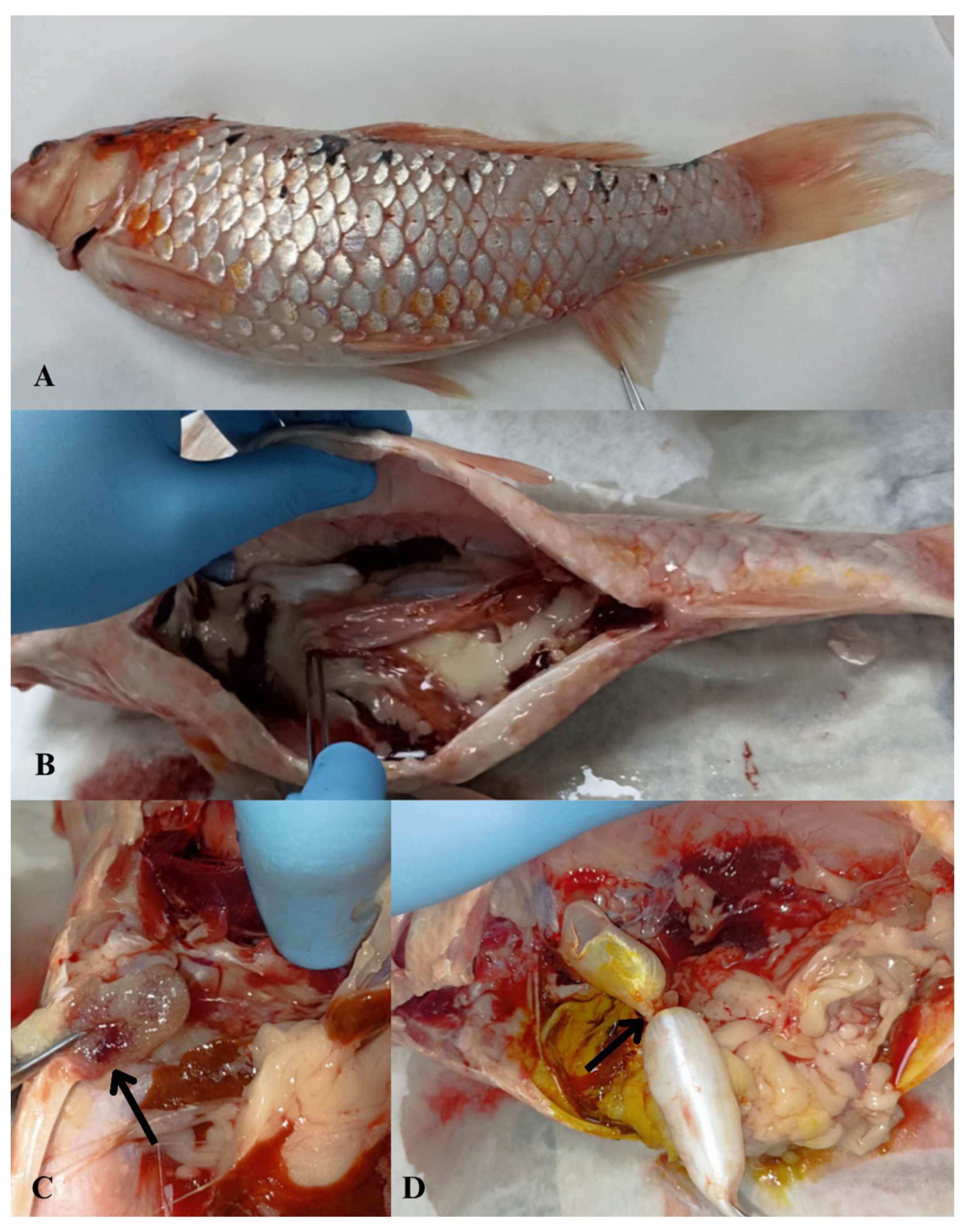
Macroscopic examination revealed widespread scale loss and surface hemorrhages with marked abdominal distension (
Figure 1A). Visceral inspection showed advanced ascites and multifocal hemorrhages, most prominent in the heart (
Figure 1B,C). The swim bladder displayed abnormal morphology with nodular deformation (
Figure 1D). Bacteriology of the heart and anterior kidney yielded two dominant, mucoid, glossy colony morphotypes: a light-cream colony (designated KOI-1) and a dark-brown colony (KOI-2), both purified to single strains. Both isolates were motile, oxidase-positive, and strongly catalase-positive. Microscopy showed Gram-negative rods.
MALDI-TOF MS pre-identification yielded high-confidence matches to Aeromonas veronii and Shewanella sp., with score values ≥ 2.0, supporting the phenotypic and genomic assignments.
3.2. Genome Analysis
The Shewanella sp. Koi-1 and A. veronii Koi-2 strains have been deposited in the NCBI GenBank database. The Koi-1 isolate consists of three contigs, with a genome size of 4.85 Mb and a GC content of 47.96%. In contrast, the Koi-2 isolate comprises two contigs, exhibiting a slightly larger genome size of 4.89 Mb and a more compact, GC-rich genomic profile with a GC content of 58.33%. Genome annotation revealed a total of 4255 and 4614 predicted genes in Koi-1 and Koi-2, respectively, of which 4119 (Shewanella sp. Koi-1) and 4455 (A. veronii Koi-2) were identified as protein-coding sequences (CDSs). Both isolates contained a high number of rRNA (10–11 copies), tRNA (103–123), and ncRNA regions, indicating substantial translational capacity. Furthermore, 245 pseudogenes were identified in the A. veronii Koi-2 genome, compared to 84 in the Shewanella sp. Koi-1 genome, indicating that these two species have undergone distinct evolutionary adaptations.

Phylogenetic analysis demonstrated that the
Shewanella sp. Koi-1 isolate is closely related to
S. seohaensis,
S. xiamenensis, and
S. mangrovisoli, but is positioned on a separate branch, indicating a distinct phylogenetic lineage. This suggests that Koi-1 and
S. seohaensis may share a common evolutionary ancestor. However, the Koi-1 isolate represents a genetically distinct phylogenetic clade (
Figure 2,
Table S1). The average nucleotide identity (ANI) values calculated between Koi-1 and
S. seohaensis CCUG 60900 were ANIb: 95.9% and ANIm: 96.26%, while the digital DNA–DNA hybridization (dDDH) value was determined to be 67.6%. As this value falls below the 70% threshold generally used for species delineation, it supports the classification of
Shewanella sp. Koi-1 is a distinct species despite its phylogenetic proximity to
S. seohaensis. Furthermore, the isolation of
Shewanella strains from aquatic, fish, and human sources in the same geographical region as Koi-1 lends further support to the hypothesis that this strain may be capable of occupying diverse ecological niches and potentially engaging in zoonotic interactions.

In the phylogenetic tree, all isolates were identified as belonging to the
A. veronii species. The isolates were color-coded based on their origins: blue for aquatic sources, green for human sources, and brown for terrestrial sources (
Figure 3,
Table S2). The Koi-2 isolate is indicated in blue with white text, representing its morphological characteristics, and is clustered among the aquatic-origin isolates. Phylogenetically, the Koi-2 isolate is positioned within the
A. veronii species complex, displaying a high degree of similarity and close genetic relatedness to other aquatic isolates. The average nucleotide identity (ANI) values between Koi-2 and the reference strain
A. veronii CECT 4257 were calculated as follows: ANIb = 96.13%, ANIm = 96.45%. The digital DNA–DNA hybridization (dDDH) value was determined to be 70.2%, which is very close to the 70% threshold commonly accepted for species delineation. These findings indicate that the Koi-2 isolate shares a high degree of genetic similarity with
A. veronii and is most likely positioned within this species (
Figure 3).
Furthermore, the presence of both human-, aquatic-, and terrestrial-origin isolates within the same phylogenetic cluster supports the notion that A. veronii is a broadly distributed, opportunistic, and potentially zoonotic bacterial species.
3.3. Functional Genome Analysis
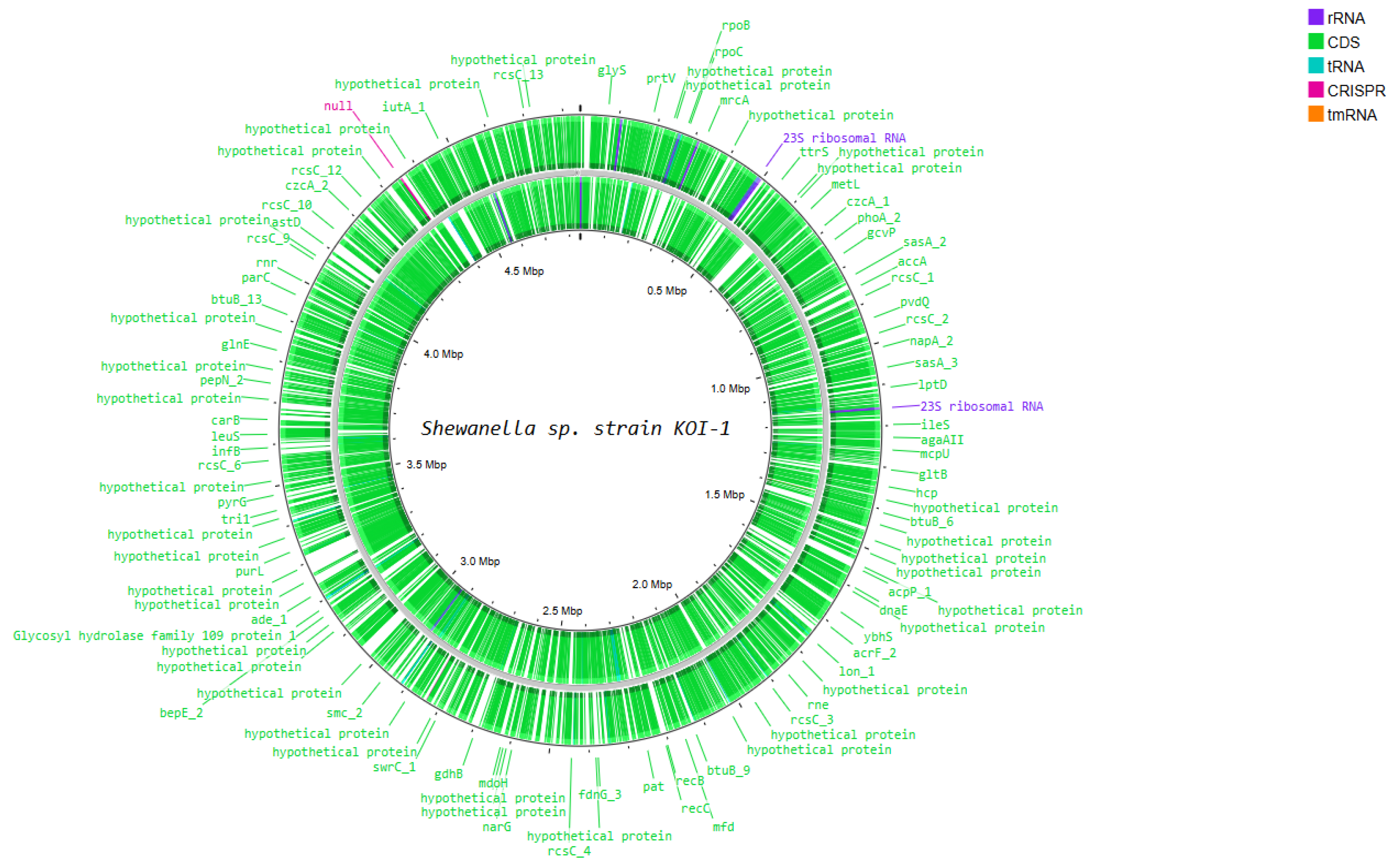
Functional genome analysis of
Shewanella sp. strain KOI-1 showed a single circular chromosome (~4.6–4.8 Mbp;
Figure 4) densely populated with coding sequences on both strands and featuring rRNA operons (e.g., 23S rRNA), numerous tRNA loci, a tmRNA, and CRISPR elements. Annotated genes included core information-processing functions (
rpoB,
rpoC,
dnaE,
infB,
leuS,
rne,
recB/
recC,
mfd,
lon), chromosome organization (
smc), and central metabolism (
mdh,
gdhB,
gltB,
purL,
narG,
fdnG). Cell-envelope and transport modules were represented by
lptD and outer-membrane nutrient receptors (e.g.,
btuB), while environmental sensing/regulation featured multiple
rcsC paralogs. The map also contained loci for secretion/interaction systems (e.g.,
hcp), alongside many distributed hypothetical proteins (
Figure 4).
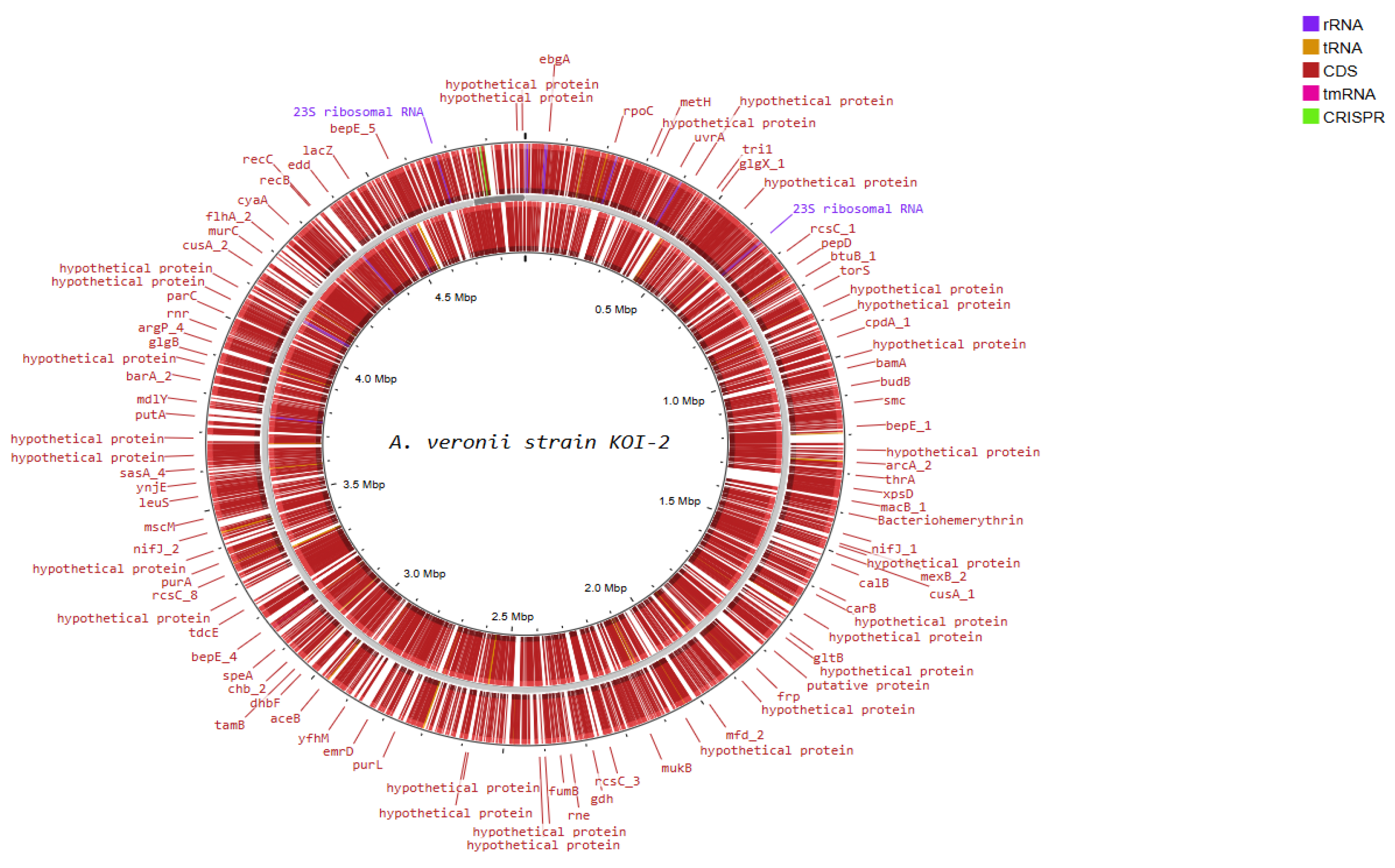
Functional genome analysis of
A. veronii strain KOI-2 revealed a circular chromosome of ~4.6–4.7 Mbp (
Figure 5), densely populated with coding sequences on both strands and annotated features including rRNA operons (e.g., 23S rRNA), multiple tRNA loci, a tmRNA, and putative CRISPR elements. Gene annotations encompassed core information-processing functions (e.g.,
rpoC,
uvrA,
recC,
mfd), cell division/chromosome maintenance
(smc,
mukB), and central metabolism (e.g.,
metH,
carB,
gltB,
gdh,
fumB,
putA,
purL). Cell envelope and transport-related loci were prominent, including outer-membrane biogenesis/secretion genes
(bamA,
tamB), type II secretion component
(xpsD), and multiple efflux/transport systems
(macB,
mexB,
cusA,
emrD). Environmental sensing and regulation were represented by several two-component and transcriptional regulators
(rcsC paralogs,
torS,
arcA), alongside motility/chemotaxis and surface structures (e.g.,
flhA). Numerous hypothetical proteins were distributed across the genome, interspersed with the above functional categories (
Figure 5).
The prophage analysis revealed the presence of distinct prophage regions within the genomes of
A. veronii strain KOI 2 and
Shewanella sp. strain KOI 1 (
Table 1).
A. veronii strain KOI 2 harbored two prophage regions: a 38.6 kb intact prophage associated with PHAGE_Escher_500465_1 (NC_049342), encoding 54 proteins and exhibiting a GC content of 58.74%, and a 38.3 kb questionable prophage region linked to PHAGE_Entero_mEp237 (NC_019704), comprising 58 proteins with a GC content of 55.76%. In comparison,
Shewanella sp. strain KOI 1 contained a single 45.7 kb questionable prophage region associated with PHAGE_Entero_cdtI (NC_009514), encoding 50 proteins and exhibiting a GC content of 47.94% (
Table 1).
3.4. Pathogenic Potential
PathogenFinder classified the Shewanella sp. Koi-1 genome as a human pathogen with a probability of 0.478. Input proteome coverage was 0.76%. The analysis reported 4227 sequences totaling 1,388,782 bp (longest sequence 4323 bp; shortest 30 bp; average segment length 328.0 bp). Fourteen pathogenic gene families and 18 non-pathogenic families were matched. Representative hits included TonB-dependent receptor proteins with high amino-acid identity to Shewanella baltica genomes (e.g., 95.19% to CP000753, protein AB509755; 92.02% to CP001252, protein ACK48044) and a Na+ symporter (92.73% identity to CP000753, protein ABS80828). A conserved hypothetical protein also matched a Serratia marcescens genome (94.77% identity to AE014299, protein AAN58732).
PathogenFinder classified the A. veronii Koi-2 genome as a human pathogen with a probability of 0.519. Input proteome coverage was 0.56%. The analysis comprised 4610 sequences totaling 1,411,921 bp (longest sequence 5359 bp; shortest 30 bp; average segment length 306.0 bp). Twelve pathogenic gene families and 14 non-pathogenic families were matched. Representative hits included a signal peptide peptidase showing 92.51% identity to A. salmonicida A449 (protein ABO98081), a group II decarboxylase with 95.04% identity to A. hydrophila ATCC 7966 (protein ABK36070), and a protein from Photobacterium profundum SS9 with 94.19% identity.
3.5. Virulence and Virulence-Associated Genes
Virulence gene analysis indicated that both isolates possess substantial pathogenic potential. In total, 194 virulence-associated genes were identified in the A. veronii Koi-2 isolate and 152 in the Shewanella sp. Koi-1 isolate. These genes predominantly correspond to functions related to adhesion, secretion systems, iron acquisition, and immune evasion.
In
Shewanella sp. Koi-1 strain, proteolysis was represented by a Zn
2+ metalloprotease (M48 family;
zmp1/M48), consistent with extracellular protease activity. Lipopolysaccharide (LPS) biogenesis and export were encoded by a complete
lpt module (
lptB/C/D/E/F/G) and core lipid A pathway genes (
lpxA/B/C/D/K/L/M,
waaA,
kdsA,
rfaE/hldE) alongside the ABC flippase
msbA. Fatty-acid synthesis (FAS-II) components (
fabA/B/D/F/G/H/Z,
fabV, and regulator
fabR) were also present. LOS/LPS modification genes included
eptA,
gmhA, and an
ArnT homolog. Oxidative-stress defense comprised
katB and
katG. Cysteine/glutathione acquisition and redox buffering were supported by
cysE/K/M,
cydC/D,
gshA/B. Biotin metabolism genes (
birA,
bioA/B/C/D/F,
accB) were encoded. Exopolysaccharide and capsule formation were indicated by
galU,
ugd,
galE,
glmM,
pgi, and capsule loci (GfcC family; Wzi). Multidrug efflux capacity was encoded by the RND pump
acrA/acrB with the outer-membrane channel
tolC. Respiratory versatility linked to virulence ecology included nitrate-sensing/reduction genes (
narQ,
napA/B). A complete type II secretion system (T2SS/Gsp) was present (
gspC/D/E/F/G/H/I/J/K/L). Quorum-sensing capacity was indicated by
luxS (AI-2 pathway). Iron acquisition and heme utilization machinery included heme biosynthesis (
hemA–H), ferrous-iron uptake (
feoA/B), and cytochrome
c maturation (
ccmA–I). Motility and chemotaxis systems were encoded by core chemosensory regulators (
cheA/B/R/V/W/Y/Z), flagellar structural genes for hook/basal-body assembly (
flgA–M,
flgN/O), the export/assembly apparatus (
flhA/B/F/G;
fliE/F/G/H/I/J/K/L/M/N/O/P/R), and motor proteins (
MotA/MotB,
PomA). Surface adhesion and biofilm determinants encompassed type IV pili (
pilB/M/N/P/T/V/W/Z/Q and related components), MSHA pili (
mshI/J/K/F/P/L), and curli fibers (
csgB/D/E/F/G) (
Table S3).
For
A. veronii Koi-2 strain, cytotoxic and enterotoxic factors included pore-forming aerolysin/hemolysin family toxins (e.g.,
aerA and
hlyA) together with cytotonic/cytotoxic enterotoxins (
alt,
ast,
act). Type III secretion–linked effector activity was represented by ADP-ribosylating toxin
aexU. Secretory capacity was supported by complete type II secretion (T2SS/Gsp) and evidence of type VI secretion hallmarks (such as
hcp,
vgrG), consistent with export and contact-dependent antagonism. Proteolysis and tissue invasion were indicated by extracellular metalloproteases and serine proteases (e.g., elastase/serralysin-like loci), along with lipases/phospholipases. Adhesion, motility, and biofilm formation were encoded by polar flagellar systems with canonical
flg/flh/fli structural and export genes, chemotaxis regulators (
cheA/B/R/W/Y/Z), mannose-sensitive hemagglutinin (MSHA) type IV pili, and additional type IV pilus biogenesis modules (
pilB/M/N/P/Q/T/V/W/Z). Surface and envelope biosynthesis comprised LPS/lipid A and core oligosaccharide pathways (
lpxA/B/C/D/K/L/M,
waaA,
kdsA,
rfaE
/hldE), alongside capsule/exopolysaccharide contributors such as
galU,
ugd, and nucleotide-sugar interconversion enzymes. Nutrient and iron acquisition determinants included ferrous iron uptake (
feoA/B),
TonB–
ExbB/
ExbD–dependent transporters, heme utilization and biosynthesis genes (
hemA–H), and cytochrome
c maturation (
ccmA–I). Redox and stress defenses were reflected by catalase/peroxidase enzymes (
katG,
katB) and glutathione/cysteine modules (
gshA/B,
cysE/K/M). Cell–cell communication capacity was supported by
luxS (AI-2 quorum sensing). Multidrug efflux potential was indicated by RND-type pumps (
acrA
/acrB) with the outer-membrane channel
tolC (
Table S4).
3.6. Antimicrobial Resistance Genes
Resistome analysis identified multiple antimicrobial resistance determinants in both isolates, consistent with a multidrug-resistant profile, in the
Shewanella sp. Koi-1 isolate, the class D β-lactamase gene OXA-436 (enzymatic inactivation of β-lactams; decreased susceptibility to carbapenems and penicillins) was detected. The
rsmA regulator associated with efflux upregulation was present (reduced susceptibility to fluoroquinolones, diaminopyrimidines, and phenicols via increased efflux). A determinant annotated as “
Escherichia coli EF-Tu mutations conferring resistance to pulvomycin” was also detected (target alteration of elongation factor
Tu, conferring resistance to elfamycin-class agents) (
Table S5).
In the
A. veronii Koi-2 isolate, a broader resistance region was observed: sul1 (target replacement with an alternative dihydropteroate synthase, sulfonamide resistance),
qacEΔ1 (efflux-mediated tolerance to quaternary ammonium compounds and related biocides),
cphA3 (metallo-β-lactamase, carbapenem hydrolysis),
rsmA (efflux-associated reduced susceptibility to fluoroquinolones, diaminopyrimidines, and phenicols),
tet(A) [efflux pump, tetracycline export],
aadA3 [aminoglycoside adenylyltransferase modifying streptomycin/spectinomycin], and OXA-1157 (class D β-lactamase, hydrolysis of penicillins) (
Table S5).
3.7. Bacterial Synergism/Antagonism
Comparative protein clustering with OrthoVenn identified 2076 orthologous gene clusters across the two isolates, of which 1892 were shared. KOI-1 (
Shewanella sp.) contained 83 isolate-specific clusters, and KOI-2 (
A. veronii) contained 101 isolate-specific clusters. Total predicted proteins were 4035 (KOI-1) and 4210 (KOI-2). The analysis recovered 1816 single-copy clusters, and 47.01% of all proteins were singletons. Functional annotation placed most genes in metabolism and genetic information processing categories. Successfully annotated genes numbered 2346 (58.1%) in KOI-1 and 2524 (60.0%) in KOI-2. Category counts indicated relatively higher representation of signaling/cellular-process genes in
A. veronii and of environmental information-processing genes in
Shewanella sp. antiSMASH detected multiple biosynthetic gene clusters (BGCs) in both genomes (
Tables S6 and S7). KOI-1 harbored eight BGCs, including RiPP-like, terpene, beta-lactone, NI-siderophore, and arylpolyene clusters; one cluster showed high similarity to an eicosapentaenoic acid (EPA) pathway. KOI-2 contained seven BGCs, comprising terpene, RiPP-like, NRP-metallophore, arylpolyene, and hserlactone clusters; a chromobactin-like NRPS (Type I) cluster was present. KEGG Mapper assigned genes to broad pathway sets, with the highest match counts in global metabolism, secondary-metabolite biosynthesis, microbial metabolism, and cofactor/vitamin biosynthesis. Genes mapped to ABC transporters, two-component systems, amino-acid and carbon metabolism, and to motility/interaction module, including flagellar assembly, bacterial secretion systems, biofilm formation, and quorum sensing (
Figures S1–S8).
3.8. Environmental Distribution of Shewanella sp. Koi-1 and A. veronii Koi-2
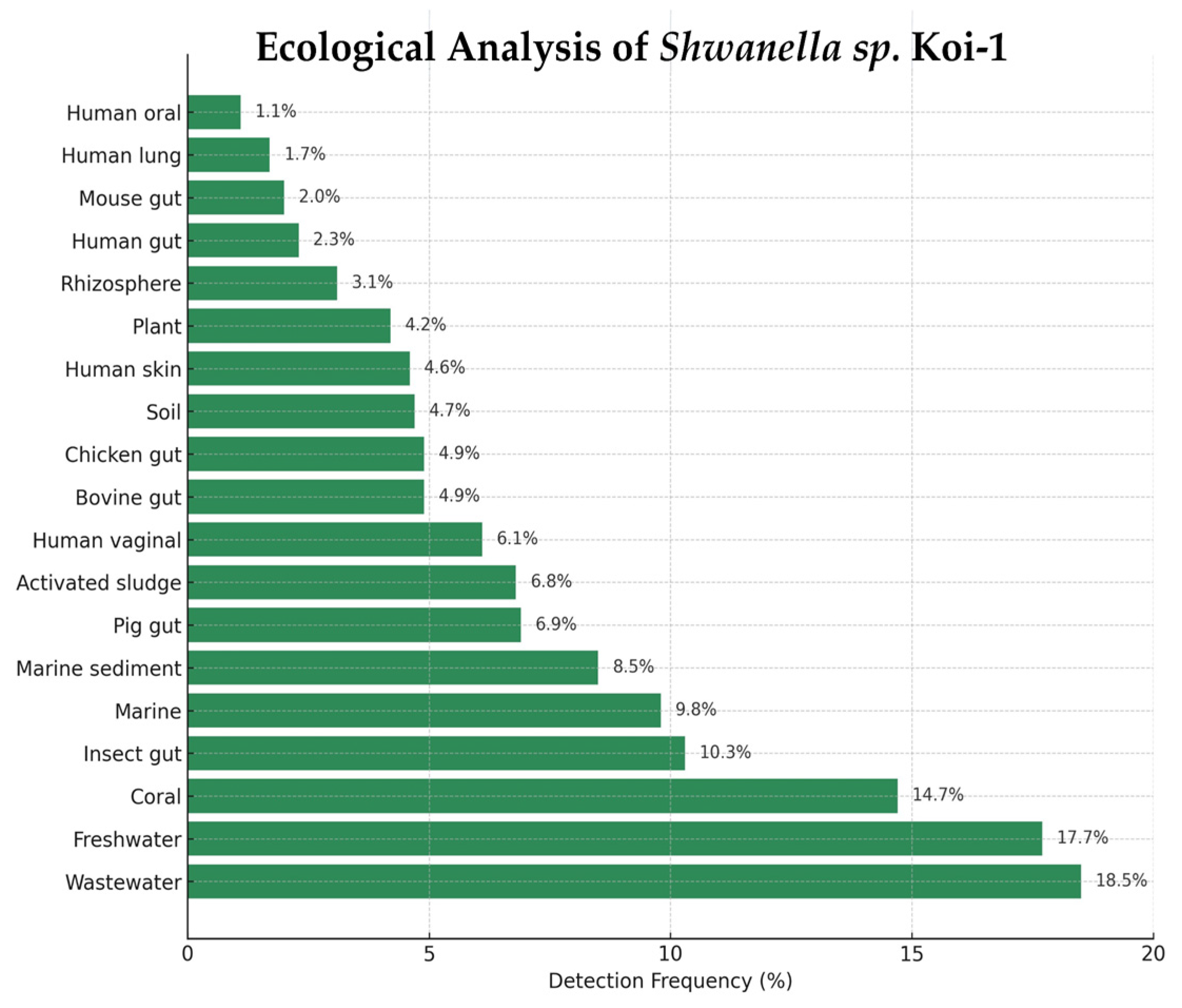
Shewanella sp. Koi-1 was detected across 19 ecological categories in the Protologger output, with the highest frequencies in wastewater (18.5%) and freshwater (17.7%), followed by coral (14.7%), insect gut (10.3%), marine water (9.8%), and marine sediment (8.5%). Additional detections were recorded in pig gut (6.9%), activated sludge (6.8%), human vaginal (6.1%), bovine gut (4.9%), chicken gut (4.9%), soil (4.7%), human skin (4.6%), plant (4.2%), rhizosphere (3.1%), human gut (2.3%), mouse gut (2.0%), human lung (1.7%), and human oral (1.1%) (
Figure 6).
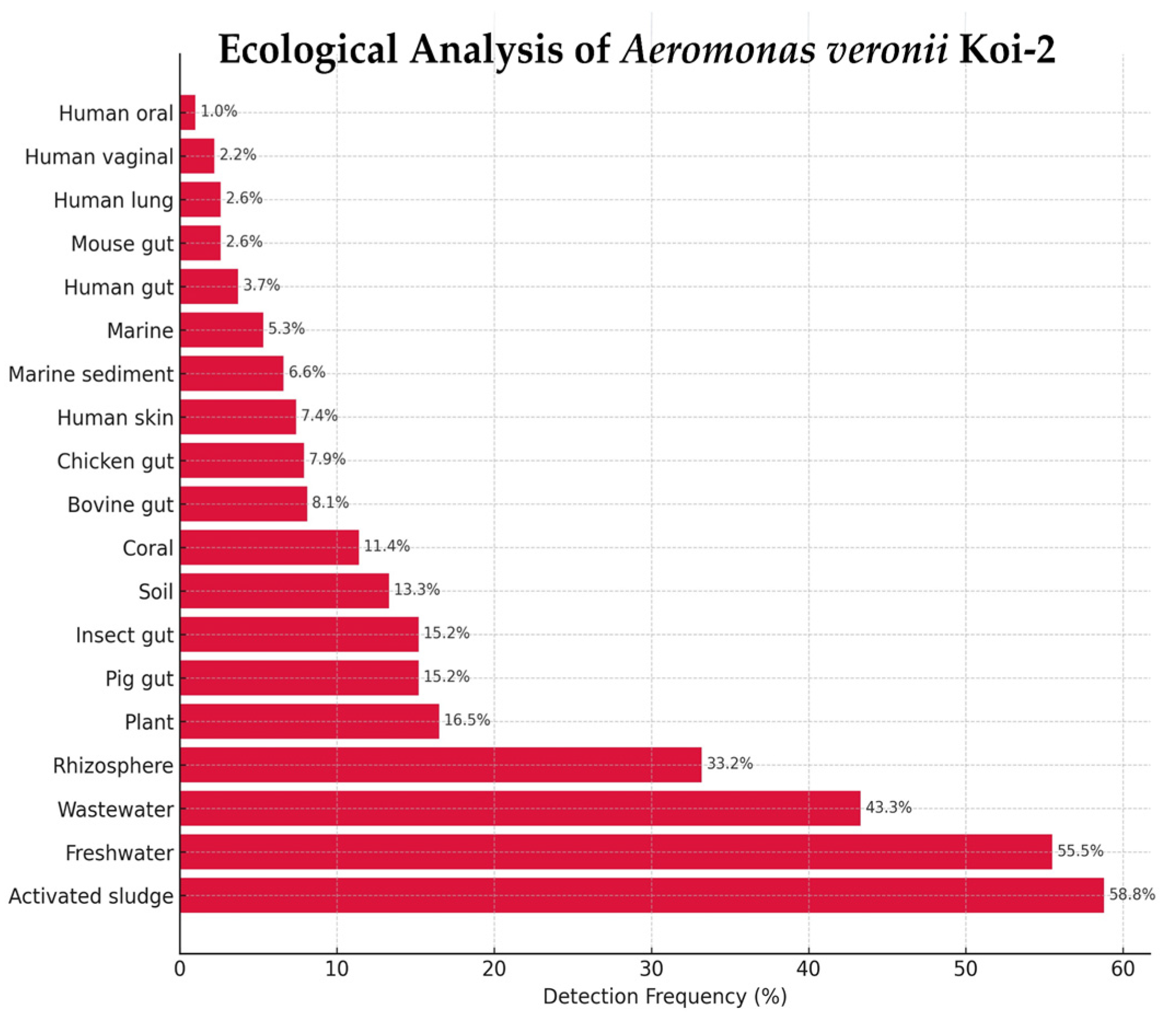
A. veronii Koi-2 was detected across 19 ecological categories in the Protologger output, with the highest frequencies observed in activated sludge (58.8%) and wastewater (43.3%), followed by freshwater (55.5%), rhizosphere (33.2%), plant (16.5%), and insect gut (15.2%) metagenomes. Additional detections were recorded in pig gut (15.2%), soil (13.3%), coral (11.4%), bovine gut (8.1%), chicken gut (7.9%), human skin (7.4%), marine sediment (6.6%), marine water (5.3%), human vaginal (2.2%), mouse gut (2.6%), human lung (2.6%), human gut (3.7%), and human oral (1.0%) metagenomes (
Figure 7).
3.9. Antimicrobial Susceptibility Results
Antimicrobial susceptibility testing was quality-controlled with A. salmonicida subsp. salmonicida ATCC 33658; inhibition-zone diameters for ampicillin, gentamicin, florfenicol, oxytetracycline, erythromycin, enrofloxacin, and trimethoprim–sulfamethoxazole fell within the reference ranges specified in CLSI M42-A. Isolates showing no measurable inhibition zone (0 mm) were recorded as resistant.
For Shewanella sp. KOI-1, categorical resistance was observed to ampicillin (AMP), amoxicillin (AML), and tetracycline (TE). Species-specific clinical breakpoints are not defined for Shewanella in CLSI/EUCAST; therefore, other results are reported descriptively: erythromycin (E) 16 mm, gentamicin (CN) 20 mm, ciprofloxacin (CIP) 21 mm, doxycycline (DO) 16 mm, florfenicol (FFC) 33 mm, and enrofloxacin (ENR) 22 mm.
For A. veronii KOI-2, resistance was detected to tetracycline (TE), ampicillin (AMP), amoxicillin (AML), flumequine (UB), trimethoprim–sulfamethoxazole (SXT), and oxytetracycline (OT). EUCAST provides a clinical breakpoint for Aeromonas only for ciprofloxacin; the measured CIP 21 mm was interpreted as resistant. For agents without species-specific breakpoints, zone diameters are reported descriptively: erythromycin (E) 16 mm, gentamicin (CN) 20 mm, doxycycline (DO) 16 mm, florfenicol (FFC) 33 mm, and enrofloxacin (ENR) 22 mm.
4. Discussion
Rapid environmental change, characterized by rising temperatures, drought, altered hydrology, overharvesting, and expanding polyculture, has been shown to reconfigure aquatic habitats and the microbiotas they sustain [
55]. Fish species that typically maintain homeostasis within a familiar microbial community are increasingly forced to coexist with novel assemblages, thereby lowering the threshold for mixed infections. In the context of aquaculture, even minor alterations in water parameters have the potential to significantly alter the composition of the surrounding microbiota, erode the host’s immune system, and create conditions conducive to simultaneous colonization by multiple agents. Co-infections are therefore a routine feature of aquaculture systems, where complex habitats and a diverse pathogen pool foster concurrent infection dynamics [
10]. In fish, the routes to co-infection are varied. Inter-microbial interactions may be synergistic or antagonistic, and the host’s condition is pivotal [
56]. Parasite burdens and other stressors can depress immune defenses and facilitate secondary bacterial invasion [
57]. Despite the growing attention to co-infections, the joint pathogenic potential of
Shewanella sp. and
A. veronii in koi has not yet been systematically defined.
We co-isolated Shewanella sp. and A. veronii from a moribund koi, confirmed identity (culture/biochemistry/MALDI-TOF), and generated draft genomes. Using OrthoVenn3, KEGG (BlastKOALA/Mapper), antiSMASH, and resistome/virulence screens, we performed comparative functional genomics. The integrated in silico analysis delineated complementary and interaction-related pathways (e.g., siderophores, secretion/biofilm, quorum sensing) consistent with potential co-infection.
Mortality events in aquarium fishes are often overlooked because individuals are small and easily replaced. However, diseases arising under long-term aquarium conditions can lead to the loss of valuable broodstock and may also cause emotional distress for owners who develop attachments to their fish. In addition, aquarists commonly manipulate tanks and handle fish and tank water with their bare hands, creating opportunities for pathogen exposure and zoonotic transmission [
58]. In the present investigation conducted at a large aquarium wholesaler supplying fish to multiple regions of Turkey, mortality among large koi carp prompted diagnostic evaluation. Affected fish consistently exhibited abdominal distention (commonly referred to by aquarists as “dropsy”), scale loss, lateral (side) swimming, and reduced activity. Necropsy revealed severe abdominal effusion, subcutaneous hemorrhage beneath the scales, and air bladder deformation and displacement. Microbiological analyses identified two dominantly growing bacterial agents,
Shewanella sp. and
A. veronii. Similar lesions have been reported in aquarium fish infections in which
Shewanella spp. and
Aeromonas spp. are isolated, and co-infection rather than single-pathogen infection is frequently documented in such cases [
59,
60]. Building on prior research in intensively stocked catfish, where unusual winter mortalities were linked to a mixed bacterial infection and Koch’s postulates were fulfilled for
A. veronii in the presence of co-isolated
S. putrefaciens, our findings in koi are consistent with a recurrent
Aeromonas–
Shewanella disease ecology [
59]. In this particular instance, the co-isolation of
A. veronii and
Shewanella sp. from a moribund koi, along with the gross pathology findings (ascites/dropsy, pallor, reduced activity), and the genome-resolved virulence and multidrug-resistance repertoires, align with the clinicopathological picture reported in the catfish outbreak. Taken together, these data indicate that
A. veronii–Shewanella coinfection is not restricted to a single host species or production system and that its pathogenicity has already been experimentally demonstrated in teleosts. Accordingly, and consistent with the principles of refinement and reduction, a repeat broad experimental infection model may not be necessary to establish causality for the ornamental-fish context. Instead, targeted, hypothesis-driven in vivo work is best limited to verifying specific synergistic mechanisms suggested by our genomic and phenotypic evidence, and to informing mechanism-aware therapy.
Aquaculture remains comparatively nascent from a microbiological standpoint, and the microbial diversity of ornamental aquarium fishes is less thoroughly investigated than that of farmed species. Several studies have reported that many pathogens isolated from aquarium fishes represent previously uncharacterized taxa, and, in some cases, bacterial agents seldom associated with particular hosts have been documented as pathogens [
61,
62]. In our study, comparative genomics of the
Shewanella sp. isolate yielded dDDH and ANI values that, when considered together, fell below accepted species-level thresholds (≈95–96% ANI and 70% dDDH), precluding confident identification within any described
Shewanella species and aligning with reports of taxonomic novelty among aquarium-associated isolates. By contrast, the co-infecting agent,
A. veronii, highlights the pathogenic potential of this species in aquarium fishes, distinct from more frequently reported
Aeromonas taxa such as
A. hydrophila,
A. sobria, or
A. caviae. Notably, had identification relied solely on phenotypic or primary assays (MALDI-TOF), these agents might have been assigned to the most commonly encountered
Shewanella and
Aeromonas species; whole-genome analysis instead confirmed that both pathogens in this case fall outside the routinely implicated taxa. Collectively, these findings underscore the need to incorporate genome-based identification in diverse infection scenarios and to discriminate rigorously between single-pathogen infections and co-infections.
Mortality and clinical reports indicate that several bacteria commonly detected in ornamental fishes—such as
Vibrio,
Aeromonas, and
Plesiomonas—also cause human infections and therefore exhibit zoonotic potential, as clearly documented by Smith et al. [
63]. Consistent with these records,
Shewanella spp. have been implicated in transmission from fish to humans, including cases associated with fishhook injury–related disease [
58,
64]. Beyond aquarium husbandry, human exposures in freshwater or marine environments (e.g., fish bites) and in facilities offering “fish pedicure” services have been followed by
Aeromonas-associated skin and soft-tissue infections, further underscoring the zoonotic character of these agents [
65].
Genome-based identification is fundamental to the treatment of animal diseases; without the correct assignment of the etiologic agents, effective therapy cannot be achieved. Given the co-infection identified in this case, antimicrobial susceptibility testing was performed for both pathogens, and treatment protocols were designed to prioritize agents active against both while accounting for known resistance mechanisms in the
Shewanella sp. Koi-1 isolate, phenotypic resistance to β-lactams such as ampicillin (AMP) and amoxicillin (AML) was concordant with the genomic detection of OXA-436, which encodes a class D β-lactamase responsible for hydrolysis of the β-lactam ring and inactivation of penicillins and selected carbapenems [
59]. The observed reduction in susceptibility to fluoroquinolones and phenicols aligned with the presence of
rsmA, a determinant associated with enhanced efflux activity contributing to multidrug resistance. In addition, the determinant annotated as “
E. coli EF-Tu mutants conferring resistance to pulvomycin” supports the potential for target-site–mediated resistance to elfamycin-class agents via alterations in elongation factor
Tu.
Aeromonas veronii Koi-2 exhibited broad-spectrum multidrug resistance by both phenotypic and genotypic criteria. Phenotypic resistance to tetracyclines (TE, OT) was concordant with the presence of tet(A), which encodes an efflux pump mediating active export of tetracycline. Non-susceptibility to ampicillin and amoxicillin aligned with the detection of OXA-1157 and cphA3, β-lactamase determinants associated with hydrolysis of the β-lactam ring. Resistance to trimethoprim–sulfamethoxazole (SXT) correlated with sul1, which confers sulfonamide resistance within the folate pathway. In addition, aadA3—encoding an aminoglycoside-modifying enzyme—supported resistance to streptomycin/spectinomycin-like agents via enzymatic modification. For both isolates, detection of rsmA was consistent with the observed reduced susceptibility to fluoroquinolones and phenicols, which was in line with enhanced efflux activity. Overall, there was a high concordance between phenotypic resistance patterns and genotypic determinants identified via the CARD database, indicating that both isolates employ multiple mechanisms—including enzymatic inactivation, efflux pump overexpression, and target modification—to achieve multidrug resistance.
These findings at the isolate level are consistent with the broader evidence base that positions
Aeromonas, including
A. veronii, among the principal bacterial hazards at the aquarium-human interface. There is documented evidence of human infections that are linked to aquaria and aquarium water [
66]. Furthermore,
Shewanella sp. is recognized as a recurrent member of freshwater aquarium microbiota and is implicated in fish disease. The species is flagged among the genera of zoonotic concern. In light of the emerging evidence that numerous freshwater aquarium fish pathogens are zoonoses, and that human cases associated with aquaria encompass
A. veronii among other enteric/opportunistic agents, our data underscores the imperative for risk-aware husbandry and handling practices, particularly for children, the elderly, and immunocompromised individuals [
32,
66]. The clinical picture observed in the affected koi—ascites, scale loss, imbalance, and multifocal visceral hemorrhages—align with the combined virulence factors encoded by both isolates.
A. veronii Koi-2 possessed multiple cytotoxic and enterotoxic components, including aerolysin/hemolysin family toxins and cytotonic enterotoxins, along with secretion systems and motility/biofilm modules that aid in tissue invasion and persistence. Meanwhile,
Shewanella sp. Koi-1 encoded metalloproteases, complete LPS/LOS biosynthesis pathways, type II secretion systems, and extensive adhesion and biofilm determinants, which support mucosal damage and systemic spread. These features together suggest a plausible mechanism for the severe serositis, ascites, and hemorrhagic lesions observed at necropsy. From a therapeutic perspective, the combined resistome of the two isolates has direct implications for empiric and targeted treatment in ornamental fish medicine. The presence of
blaOXA-436 in
Shewanella sp. and
blaOXA-1157 plus
cphA3 in
A. veronii, together with
sul1,
tet(A) and
aadA3, underpins the observed non-susceptibility to penicillins, carbapenems, tetracyclines, sulfonamides and aminoglycosides. These findings suggest that the empirical use of aminopenicillins or tetracyclines in similar cases is not advisable, and instead support the selection of agents with documented in vitro activity against both species, ideally guided by case-specific susceptibility testing and awareness of intrinsic resistance profiles.
From a mechanistic standpoint, our integrated pathway analysis indicates a plausible genomic basis for cooperative resource capture, colonization, and tissue persistence by the A. veronii and Shewanella co-isolates. It is evident that both genomes encode iron-acquisition systems (e.g., chromobactin-like NRPS in A. veronii; NI-siderophore and TonB-dependent receptors in Shewanella), secretion and interaction modules (Type II components in A. veronii; Hcp-like loci in Shewanella), motility/chemotaxis and biofilm formation pathways, quorum-sensing repertoires, and overlapping multidrug determinants (β-lactamases, efflux-associated regulators). Metabolic mapping further highlights complementary capacities, including anaerobic respiration and redox flexibility in Shewanella, alongside tissue-damaging enzymes and adhesins in A. veronii. AntiSMASH identifies lipid/pigment clusters (such as EPA-linked, arylpolyene) that could enhance oxidative-stress tolerance in mixed communities. Collectively, these computer modeling findings are consistent with the potential for cooperative or at least compatible co-infection dynamics in the field; however, experimental work is still required to confirm any synergistic interactions.
Our co-isolates from koi—Aeromonas veronii and Shewanella sp.—exhibit genomic features consistent with zoonotic potential. Both genomes encoded over 100 loci associated with virulence, spanning adhesion, secretion, iron acquisition, stress tolerance, and immune evasion modules. These loci indicated capacities relevant to fish disease and compatible with human colonization/infection scenarios. Ecological profiling provides further evidence to support the hypothesis of broad host–habitat connectivity. The genome of Shewanella sp. was associated with 19 ecological categories, as determined by the Protologger analysis. The highest representation was observed in wastewater (18.5%) and freshwater (17.7%) samples. Additional signals were detected from human-associated niches, including skin (4.6%), vaginal (6.1%), intestinal (2.3%), lung (1.7%), and oral (1.1%) environments, as well as from animal guts and various environmental reservoirs. Similarly, the genome of A. veronii was linked to 19 ecological categories. The highest detection frequencies were recorded in activated sludge (58.8%) and freshwater (55.5%) samples, followed by detections in human skin (7.4%), intestine (3.7%), vaginal (2.2%), lung (2.6%), oral cavity (1.0%), animal guts, and diverse environmental reservoirs. These findings indicate that both Shewanella sp. Koi-1 and A. veronii Koi-2 isolates are distributed across a wide range of ecological niches, exhibiting a clear predominance in aquatic environments. This pattern underscores their high environmental adaptability and potential involvement in nutrient-rich or anthropogenically influenced aquatic systems. Concurrently, resistome screens identified numerous determinants for β-lactams (including carbapenems), tetracyclines, sulfonamides, aminoglycosides, and efflux-mediated multidrug tolerance, characteristics that could impede clinical management in the event of human transmission.
This work should be viewed as a genome-resolved analysis of a natural outbreak affecting multiple koi, where several fish in the affected aquarium reportedly died with similar clinical and pathological features, as well as microbiological reports. This study specifically focused on a single koi that exhibited the most prominent and representative lesions, allowing for a thorough necropsy and bacterial analysis while minimizing the need for redundant sampling of multiple animals. Instead of trying to reproduce the disease experimentally, this outbreak was used to identify the virulence and resistance profiles of the co-infecting Aeromonas veronii and Shewanella sp., and to develop mechanistic hypotheses to guide future in vivo studies. This step-by-step approach aligns with the 3R principles (Replacement, Reduction, and Refinement) by utilizing naturally occurring cases, minimizing animal use, and refining future experimental infections to ensure they are both ethically and scientifically justified.
In alignment with a One Health framework, the results obtained provide support for enhanced surveillance that integrates clinical diagnostics in ornamental fish with routine screening of aquarium environments. This is complemented by targeted education for aquarists aimed at mitigating cross-species transmission risks. It is imperative to acknowledge that these inferences are derived from genomic analyses rather than experimental challenge trials and should be validated in vivo.