1. Introduction
Proteus mirabilis is a Gram-negative, motile, non-sporulating bacterium from the
Enterobacteriaceae family. This bacterium is a pathogen of significant clinical concern, particularly as a leading cause of catheter-associated and complicated urinary tract infections (UTIs), where it is implicated in 10–44% of long-term catheter-associated cases [
1]. Its virulence is enhanced by swarming motility, robust biofilm formation, and urease production, which can lead to severe complications such as urolithiasis, bacteremia, and sepsis [
1,
2]. Importantly, the therapeutic management of
P. mirabilis is increasingly compromised by a high prevalence of antibiotic resistance [
3], with recent studies reporting multi-drug resistance in up to 48% of isolates and the emergence of pan-drug-resistant strains [
4]. Control of UTIs caused by antibiotic-sensitive
Proteus strains is difficult due to the “shield” provided by the biofilm formation [
5]. The
Proteus features, including its escalating resistance, underscores the urgent need for alternative therapeutic strategies, among which phage therapy has re-emerged as a promising precision antimicrobial approach [
6].
Bacteriophages (phages) are traditionally regarded as highly specific antimicrobial agents that lyse their bacterial hosts. However, the regulatory frameworks, historically designed for stable chemical antibiotics, must adapt to accommodate phages as evolving biological entities, particularly concerning manufacturing standards, clinical trial design for narrow-spectrum agents, and pathways for updating therapies against resistant strains [
7,
8]. Clinical efficacy can be limited by narrow host ranges, the potential for bacterial resistance, and complex unpredictable interactions with the host immune system [
9]. In turn, a complex interplay between the particular phage, the infecting bacterium, and the mammalian host’s immune system can enhance the efficacy of phage therapy [
10]. This interaction can lead to a beneficial “phage-immune synergy”, wherein bacterial clearance is achieved through a combination of direct phage-mediated lysis and the recruitment of host immune components [
11]. Notably, while some phages exhibit immunomodulatory properties, clinical trials using phages as standalone antibacterial agents have sometimes failed to demonstrate clear superiority over standard care, highlighting a gap in our understanding [
12]. Therefore, a pivotal and unresolved question is whether phages function merely as direct lytic agents or can also act as strategic immunomodulators that actively prime and shape pathogen-specific adaptive immunity. Investigating these phage–immune interactions—specifically the potential for phages to serve as immune adjuvants—is essential for optimizing therapeutic protocols, overcoming current limitations, and achieving durable clinical outcomes against resilient pathogens like
P. mirabilis [
13,
14].
It has been shown that phages interact with the mammalian immune system in several ways [
15], including phage phagocytosis [
16], the recognition of phage nucleic acids by intracellular pattern recognition receptors (PRRs) such as Toll-like receptor 9 (TLR9), the production of anti-phage antibodies, and the modulation of cytokine responses [
17]. Despite this, the mechanisms by which phages influence the development of adaptive immunity against bacterial pathogens remain poorly understood.
Our previous study demonstrated that intravenous administration of the
P. mirabilis phage PM16 into mice induces a transient increase in blood levels of the tumor necrosis factor-α (TNF-α), interferon-γ (IFN-γ), and interleukins (IL-1β and IL-6) [
18]. However, it fails to elicit a long-term anti-phage antibody response, suggesting an inability of the particular phage to independently induce B-cell memory, possibly due to suppressed IL-27 [
18]. Therefore, it was hypothesized that the PM16 phage could function as an adjuvant during
P. mirabilis infection, enhancing the specific adaptive immune response against the pathogen.
The aim of the current study is to evaluate the effect of PM16 therapy on the course of the first and second P. mirabilis infection in vivo, to investigate the development of a pathogen-specific antibody response, and to elucidate the underlying mechanism by studying the direct interaction between PM16 and macrophages in vitro including the production of proinflammatory cytokines and inducible nitric oxide synthase (iNOS), as well as macrophage bactericidal activity.
2. Materials and Methods
2.1. Animals
A cohort of two-month-old male Balb/c mice was procured from the animal care facility at the State Research Center of Virology and Biotechnology VECTOR in Novosibirsk. Mice were housed under controlled light–dark conditions and provided with food and water ad libitum. All procedures performed on animals were in accordance with the ethical standards of EU Directive 2010/63/EU and received approval from the Inter-institutional Bioethics Committee of the Institute of Cytology and Genetics SB RAS, Russia (protocol code 70, date of approval 21 January 2021).
2.2. P. mirabilis and Its Podophage PM16
The
P. mirabilis CEMTC 73 strain and its podophage PM16 [
19] were sourced from the Collection of Extremophilic Microorganisms and Type Cultures (CEMTC) at the Institute of Chemical Biology and Fundamental Medicine (ICBFM), SB RAS, and the bacterial strain was cultivated in Lysogeny Broth (LB) at 37 °C. Previously, the susceptibility of the
P. mirabilis CEMTC 73 strain to antibiotics was tested using the disk diffusion method (OXOID, Basingstoke, UK) in accordance with the EUCAST recommendations (
https://www.eucast.org, accessed on 25 June 2025). The following antimicrobials were used: beta-lactams, aminoglycosides, fluoroquinolones, chloramphenicol, and sulphonamides, and it was indicated that this strain is resistant to cefotaxime and levofloxacin.
To propagate the PM16 podophage,
P. mirabilis CEMTC 73 culture was grown to OD600 of 0.6, inoculated with PM16 at a multiplicity of infection (MOI) of 0.1, and incubated at 37 °C with agitation until the onset of bacterial lysis. Phage particles were precipitated from the lysate using polyethylene glycol 8000 (Appli-Chem, Darmstadt, Germany) in the presence of 2.5 M sodium chloride. Following centrifugation, the resulting pellet was resuspended in phosphate-buffered saline (PBS), pH 8.0. Phage purification was carried out by centrifugation (22,000 rpm, 2 h, and 4 °C) through a cesium chloride gradient [
20]. After dialysis against PBS, the phage titer was measured as 5 × 10
11 plaque-forming units per milliliter (PFU/mL).
2.3. Limulus Amebocyte Lysate Assay
To assess endotoxin content, purified PM16 was serially diluted in sterile 0.9% NaCl to final concentrations ranging from 106 to 1012 PFU/mL. The endotoxin levels of these dilutions were quantified using the limulus amebocyte lysate (LAL) assay (Charles River Laboratories Inc., Charleston, SC, USA) in accordance with the manufacturer’s protocol. For parenteral pharmaceutical formulations, an endotoxin concentration of 0.5 endotoxin units (EU) per milliliter is considered acceptable. A PM16 preparation with a titer of 109 PFU/mL was found to correspond to an endotoxin level of 0.5 EU/mL.
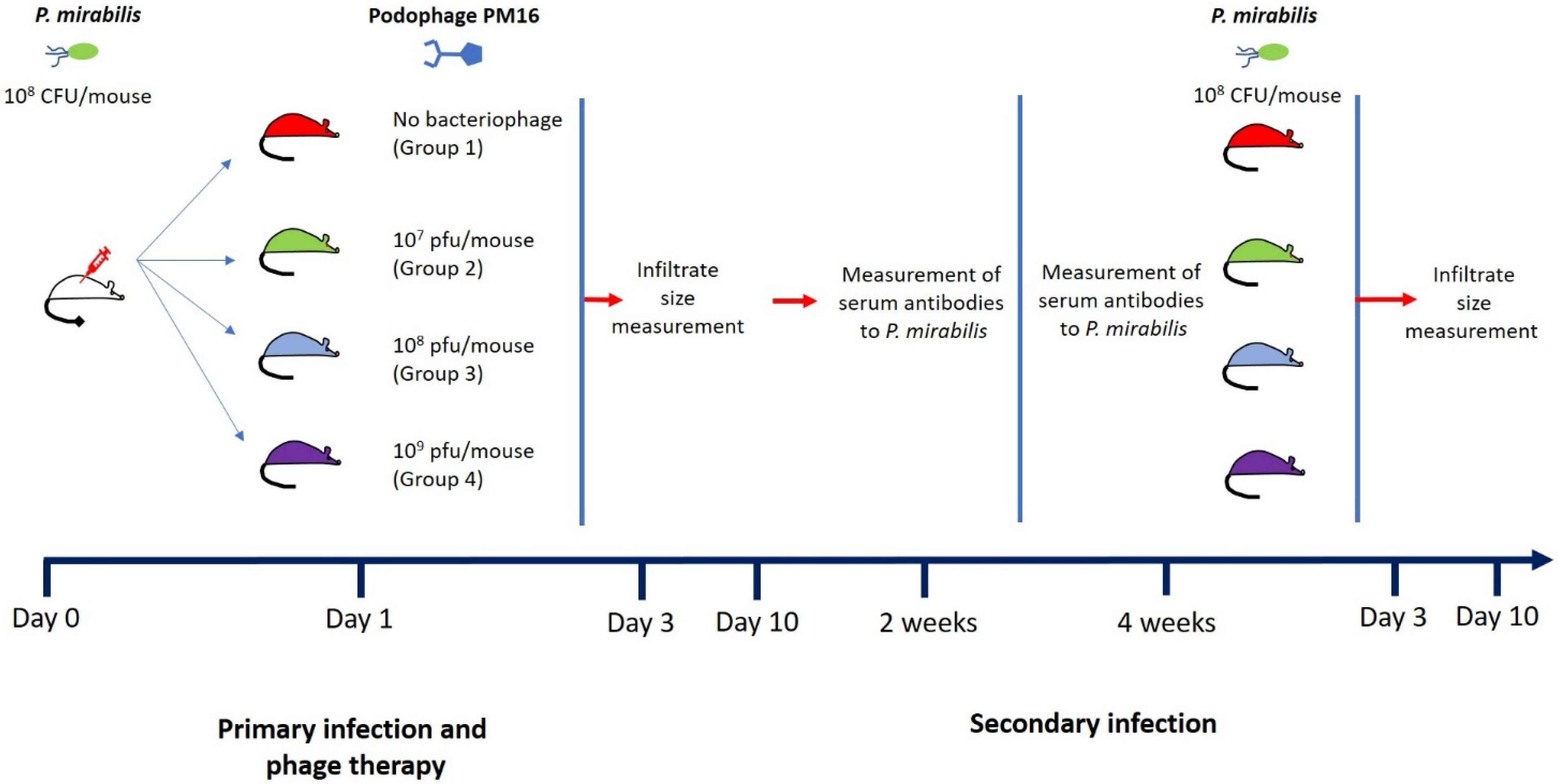
2.4. Subcutaneous Infection Model
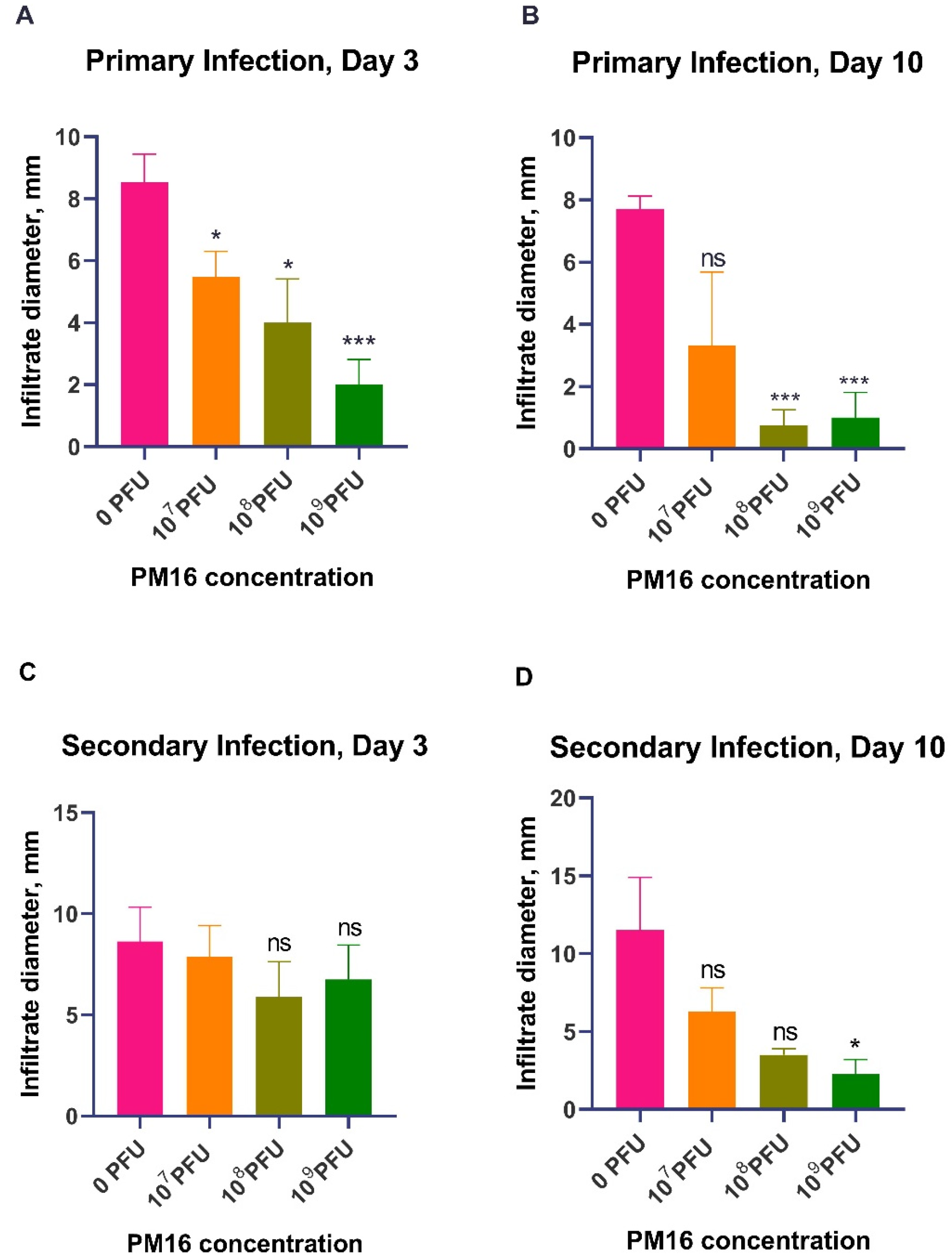
Balb/c mice were infected with P. mirabilis using 108 CFU in 100 µL of PBS per mouse. One day later, the mice were divided into 4 groups (n = 8) based on our previous observations on infiltrate sizes. The groups were conditioned in separate ventilated units of AWTech Vent-Biom 1, a ventilated animal conditioning system used to prevent cross-contamination. The only inclusion criteria were the strain (Balb/c) and age (1.5 months); no exclusion criteria were applied, as the study design was observational. Each mouse was treated with different concentrations of PM16 (all in 100 µL of PBS): the first group received only PBS; the second, third, and fourth groups were injected with 107 PFU per mouse, 108 PFU per mouse, and 109 PFU per mouse, respectively. All treatments were applied laterally to the site where P. mirabilis was injected. Four weeks after the first P. mirabilis infection, the second P. mirabilis infection procedure was performed (108 CFU in 100 µL of PBS) but without applying the phage therapy. The infiltrate size was monitored on days 3 and 10 after the onset of both the first and second infection. The infiltrate sizes were estimated using the caliper to measure two orthogonal dimensions of infiltrate with the subsequent calculation of the geometric mean of both using the formula diameter = SQRT (L × W), where L is the one dimension (arbitrary—length) and W is another dimension (arbitrary—width). Blood samples were collected two and four weeks after the first infection. Individual serum samples from each mouse were used for immunological experiments.
2.5. Statistics
All data are presented as mean ± SD. For inflammatory infiltrate size at each time point (days 3 and 10 of the first and second infections), the Brown Forsythe and Welch ANOVA test was used, followed by Games–Howell’s multiple comparisons test to com-pare each phage-treated group to the control group (0 PFU). A p-value of less than 0.05 was considered statistically significant.
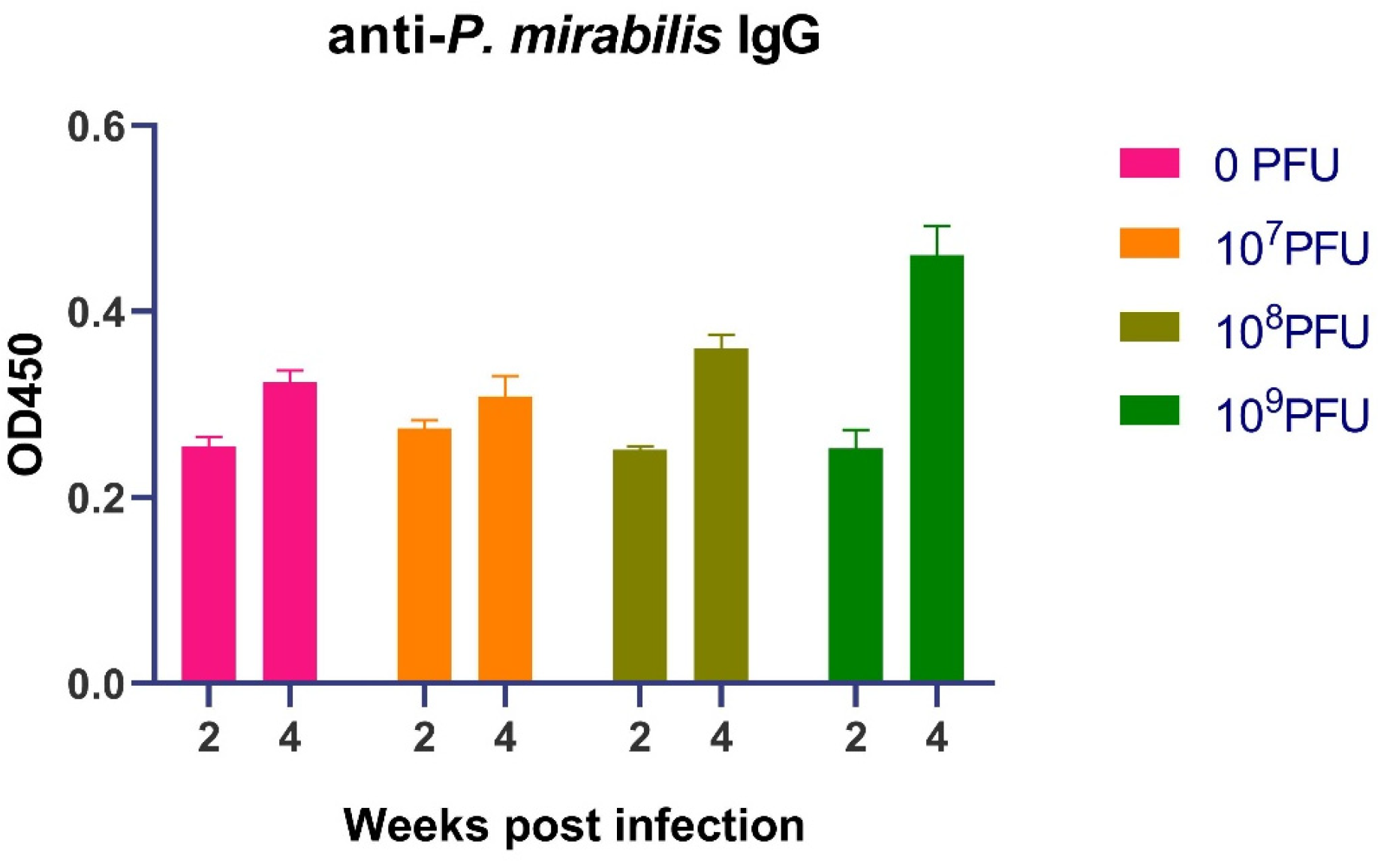
2.6. Assessment of Serum IgG to P. mirabilis Infection
P. mirabilis cells were immobilized on the surface of 96-well mu-plates (ibidi, Gräfelfing, Germany) and opsonized using the collected mice sera (dilution 1:500) overnight at 4 °C. Then, wells were washed three times with PBS and stained using anti-IgG Alexa Fluor 488-conjugated donkey anti-mouse antibodies (Invitrogen, Waltham, MA, USA). Bacterial cells were stained using intercalating stain Hoechst 33342 (Life technologies, Carlsbad, CA, USA). Fluorescent signals were detected using LSM710 confocal microscope at 1000× magnification. Images were acquired using a 405 nm laser line for Hoechst 33342 (detection window: 415–480 nm) and a 488 nm laser line for Alexa Fluor 488 (detection window: 493–580 nm). Sequential scanning was used to eliminate crosstalk between channels. All images were acquired in a single session using identical microscope settings to ensure valid comparison between subgroups. Image segmentation and measurement were performed with the CellProfiler 3.0 software. Object identification was first conducted based on the anti-IgG signal in the AF488 channel to demarcate bacterial cells. Subsequently, segmentation based on the Hoechst signal was performed, applying a threshold adjustment of +0.5 µm to the nuclear stain to ensure the resulting masks encompassed the periplasmic space. This established segmentation protocol was then uniformly applied to all subsequent images from the remaining serum samples. The mean fluorescence intensity (MFI) per identified bacterial cell was calculated.
2.7. Preparation of Stimulated Macrophages
Primary murine bone marrow-derived macrophages were plated at 5000 cells per glass-bottom dish or 24-well plates and stimulated with 20 ng/mL Granulocyte–Macrophage Colony-Stimulating Factor (GM-CSF) for 24 h in DMEM/F12 culture medium supplemented with Fetal Calf Serum (10%) at 37 °C.
2.8. Real-Time PCR
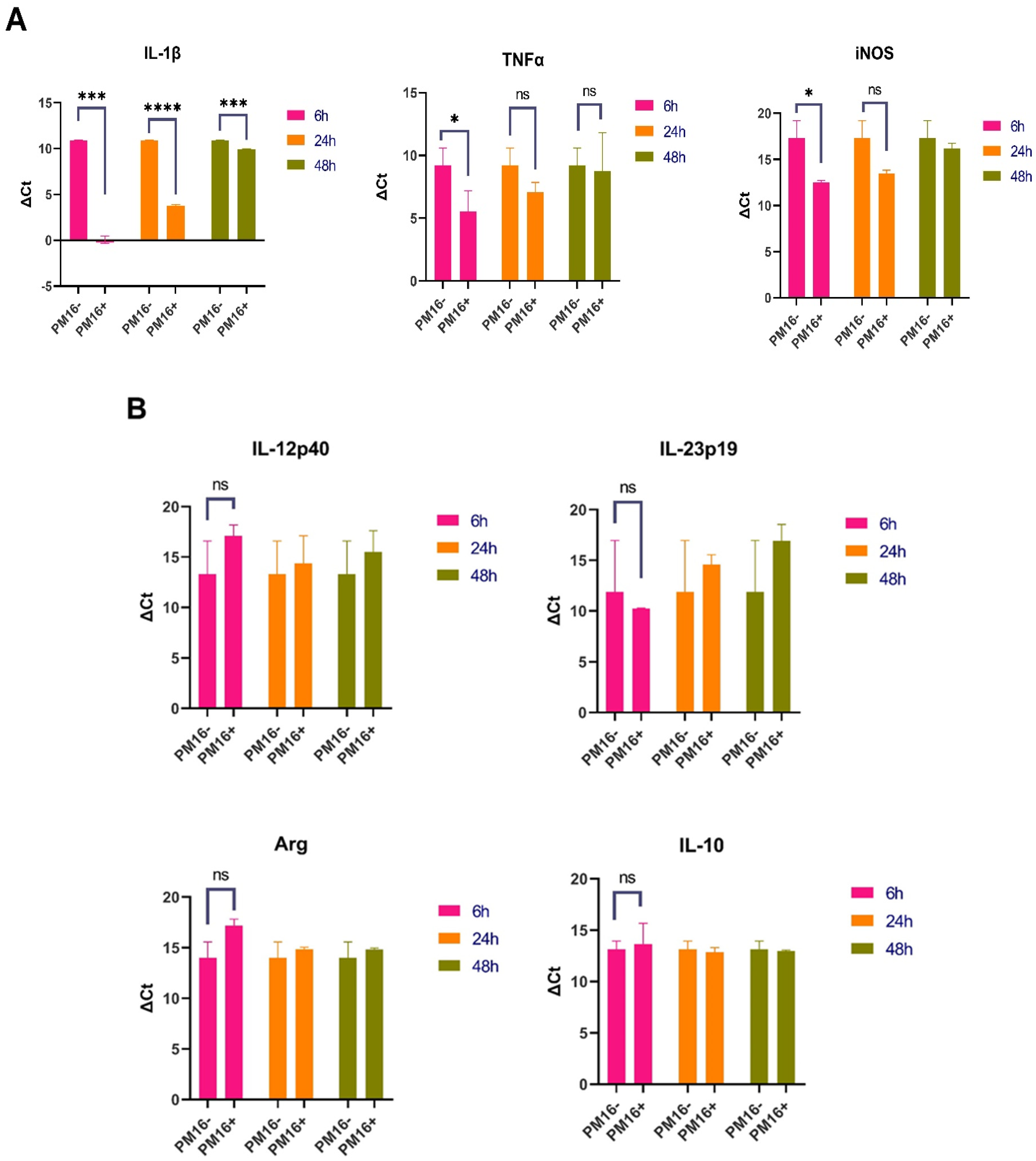
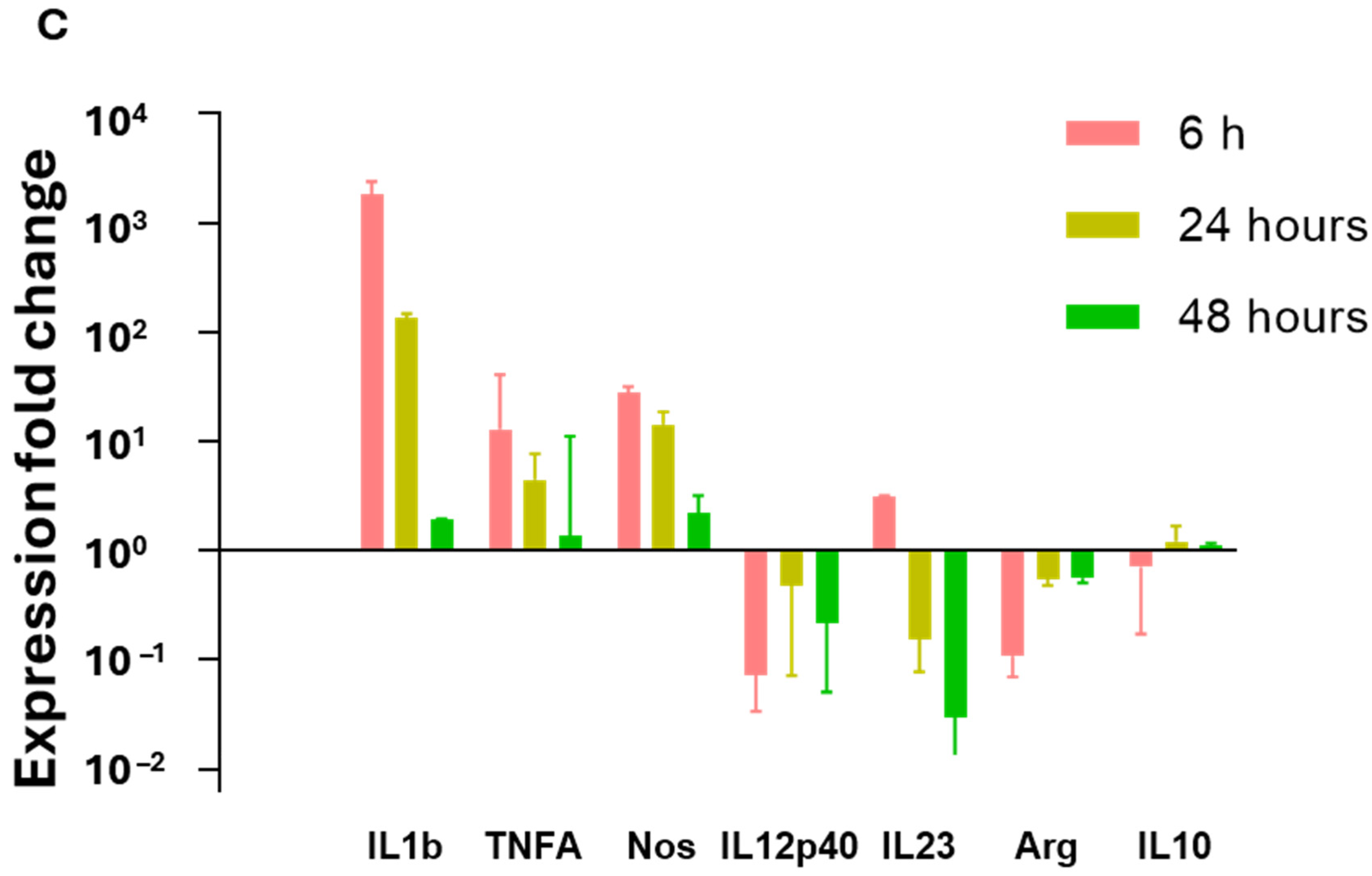
To characterize the macrophage-intrinsic response to PM16, cytokine and activation marker expressions were measured in primary murine bone marrow-derived macro-phages stimulated with GM-CSF and exposed to purified PM16 at a different titer in the absence of bacteria. Total RNA was isolated 6, 24, and 48 h after phage addition. cDNA was synthesized using standard reverse transcription procedures, and transcript levels of proinflammatory (IL-1β, TNFα, and iNOS), regulatory (IL-10), and polarization-associated (Arg1, IL-12p40, and IL-23p19) genes were quantified by real-time PCR using gene-specific intron-skipping primers (
Table 1) designed with NCBI Primer-BLAST online tool (
https://www.ncbi.nlm.nih.gov/tools/primer-blast/; accessed on 5 January 2026) so that each primer should cover the exon–exon junction on target mRNA. The amplification was performed using BioMaster RT-qPCR SYBR Blue (Biolabmix LLC, Novosibirsk, Russia) and the real-time machine CFX96 (Biorad, Hercules, CA, USA). The conditions for PCR were as follows: initial denaturation: 95 °C (5 min); cycling: 95 °C for 15 s; annealing: Tm + 3 °C for 15 s; and elongation: 72 °C for 30 s. The maximum number of 34 cycles was utilized for each primer set. Relative expression was calculated using the ΔΔCt method, with GM-CSF-stimulated macrophages without PM16 serving as the reference control. Gene expression values were normalized to β-actin (Actb) as the housekeeping gene. All data were presented as mean ± SD. For cytokine production level at each time point, the Welch’s
t test was used. A
p-value of less than 0.05 was considered significant.
2.9. Microscopy and Bacterial Enumeration
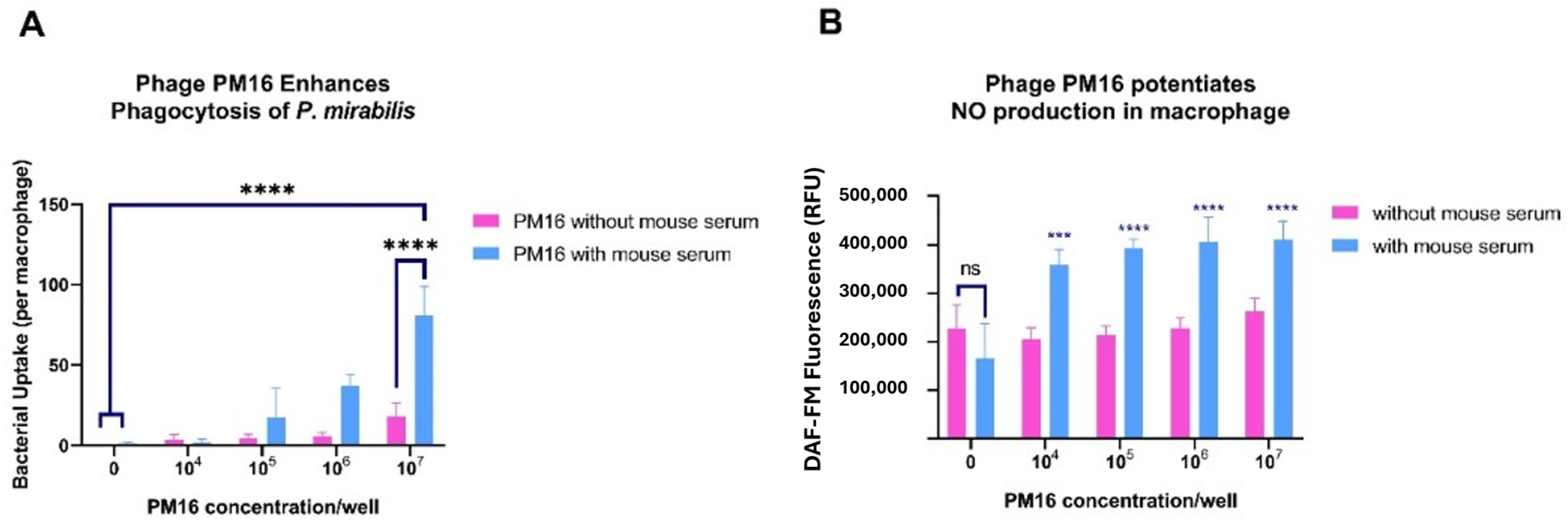
To determine whether PM16 enhances macrophage capacity for bacterial uptake and intracellular killing, GM-CSF-stimulated primary murine bone marrow-derived macrophages were then incubated with purified PM16 for 30 min at different titers (0, 104 PFU/mL, 105 PFU/mL, 106 PFU/mL, or 107 PFU/mL). Hoechst-labeled P. mirabilis was added at 107 CFU/well in the presence or absence of normal mouse serum obtained from non-immune BALB/c mice (the serum has been characterized as non-binding for P. mirabilis and PM16 with ELISA and microscopy experiments). Macrophages were imaged 5 h after bacterial addition using confocal microscopy. Intracellular bacteria were enumerated using CellProfiler software, and the median number of bacteria per macrophage was calculated. Three independent experiments were performed, yielding three biological replicates per group. All data are presented as mean ± SD. For bacterial enumeration at each PM16 concentration, the two-way ANOVA test was used, followed by Sidak’s multiple comparisons test. A p-value of less than 0.05 was considered statistically significant. This approach enabled quantitative assessment of phage-induced enhancement of bacterial internalization.
2.10. Measurement of Nitric Oxide Production
To assess nitric oxide (NO) production in response to PM16 exposure, GM-CSF-stimulated primary murine bone marrow-derived macrophages were subsequently incubated with purified PM16 for 5 h at titers of 0, 104 PFU/mL, 105 PFU/mL, 106 PFU/mL, or 107 PFU/mL). Intracellular NO production was quantified by adding the fluorescent probe 2′,7′-dichlorofluorescin diacetate (DCF-DA) to the cultures, followed by measurement of fluorescence intensity as an indicator of reactive nitrogen species. Fluorescence values from GM-CSF-only controls were used as the baseline for comparison. Two-way ANOVA test was used to estimate NO production by macrophages, followed by Sidak’s multiple comparisons test. A p-value of less than 0.05 was considered statistically significant. This assay enabled evaluation of PM16-induced enhancement of macrophage NO production.
2.11. Analysis of Bacterial Survival Within Macrophages
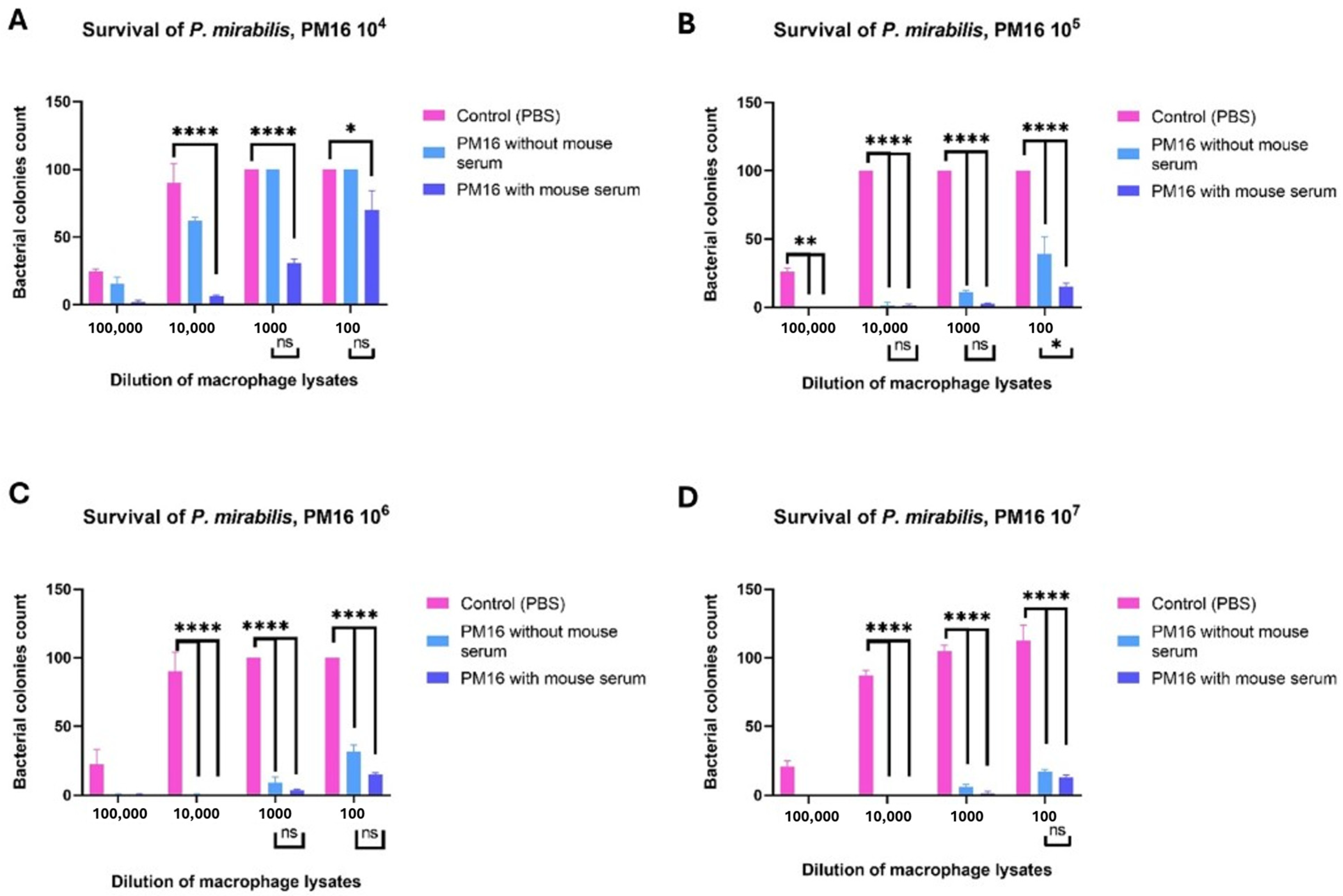
To quantify the impact of PM16 on intracellular P. mirabilis survival, GM-CSF-stimulated primary murine bone marrow-derived macrophages were seeded into 24-well plates, stimulated with GM-CSF for 24 h, and then exposed to P. mirabilis (107 CFU/well) for 5 h. After the loading period, cultures were treated with PM16 at the indicated titers (0, 104 PFU/mL, 105 PFU/mL, 106 PFU/mL, or 107 PFU/mL) with or without the addition of mouse serum. Twenty-four h after phage addition, macrophages were lysed with sterile water to release intracellular bacteria. Lysates were serially diluted (1:100; 1:1000; 1:10,000; and 1:100,000) and plated onto non-selective agar plates to enumerate viable P. mirabilis colonies. Plates were incubated overnight at 37 °C and CFUs per dilution were counted; confluent growth was recorded as >100 colonies. The number of colonies recovered from macrophage lysates was used to assess PM16-dependent, dose-responsive effects on intracellular bacterial viability. Data were analyzed using two-way ANOVA, followed by Sidak’s multiple comparisons test.
4. Discussion
In this study, we present evidence that the
Proteus phage PM16 acts not only as an antibacterial agent but also as a potent modulator of the immune response, enhancing the development of long-term, specific immunity against its bacterial host,
P. mirabilis. Our in vivo results clearly indicated a dose-dependent protective effect of PM16 during both the first and second infections. In addition, the consequences of the protective effect of a single PM16 treatment were observed when mice were injected with
P. mirabilis a month after treatment. This protective immunity was directly correlated with elevated levels of pathogen-specific IgG, indicating the successful induction of a robust adaptive immune response. Crucially, since we have previously shown that PM16 alone is unable to induce a long-term anti-phage antibody response [
18], the observed enhancement cannot be attributed to the immunogenicity of the phage virions themselves. This finding contradicts the hypothesis that PM16 functions as a classic antigenic adjuvant.
Instead, we propose a mechanism centered on the priming of innate immunity. Our in vitro experiments established that PM16 is a direct and potent activator of macro-phages, driving a specific transcriptional program, which is consistent with classical M1 polarization. The potent induction of proinflammatory cytokines (TNFα, IL-1β) likely occurs through the recognition of phage nucleic acids by intracellular pattern recognition receptors, such as TLR9, a common pathway for immunostimulatory phages [
18]. This activation is characterized by the robust, early upregulation of these key cytokines and a sustained induction of iNOS. More importantly, we demonstrated that this transcriptional shift is functionally significant: PM16-treated macrophages exhibit a dramatic increase in both bacterial uptake and intracellular killing. This aligns with the established concept of phage-mediated opsonization [
15,
21,
22], where phages coating bacteria enhance their recognition and phagocytosis by immune cells. The potent, dose-dependent reduction in recoverable bacterial colonies in our survival assay confirms that the increased phagocytosis culminates in enhanced bacterial clearance, with nitric oxide being a key mediator of this bactericidal effect.
It should be mentioned that our in vitro findings revealed that the presence of normal mouse serum significantly amplified PM16-induced nitric oxide production in macrophages, even in the absence of bacteria. This suggests that serum components actively potentiate the phage’s immunostimulatory capacity. We propose that soluble serum factors, such as natural antibodies, or soluble pattern recognition receptors can bind to phage particles, forming complexes that more effectively engage macrophage surface receptors and/or enhance intracellular signaling. This serum-dependent synergy highlights the importance of considering the physiological context of phage–immune interactions, where blood and tissue fluids may critically modulate the immunomodulatory profile of therapeutic phages. This hypothesis was first proposed by Górski at al. [
13], and future studies should be focused on specific serum components that can interact with bacteriophages.
Our observation that PM16 induces a strong proinflammatory cytokine profile stands in contrast to studies of other phages, such as T4, which have demonstrated anti-inflammatory properties, including the inhibition of NF-κB and reduction in reactive oxygen species (ROS) in immune cells [
23]. This highlights the critical concept that phage–immune interactions are phage-specific. The immune net outcome—whether proinflammatory, anti-inflammatory, or neutral—depends on the specific phage, its structural components, and its interaction with host receptors [
15,
24]. The robust M1 polarization induced by PM16 suggests that it engages different signaling pathways than other phages, which elicited anti-inflammatory markers like the IL-1 receptor antagonist (IL1RN), or suppresses LPS-driven inflammation [
24,
25,
26]. This specificity underscores the importance of a detailed characterization of the immunomodulatory “fingerprint” of each therapeutic phage candidate.
Finally, the translational implication of this primed state is significant. By enhancing phagocytosis and intracellular killing, PM16 not only aids in direct bacterial clearance but also promotes more efficient processing of bacterial antigens. This process is essential for linking innate detection to adaptive immunity. The observed long-term protective memory likely stems from this optimized antigen presentation, a hypothesis supported by models of phage–immune synergy [
27], where effective pathogen handling by primed innate cells is a prerequisite for durable adaptive responses. Future work should directly trace the fate of bacterial antigens from PM16-treated mice to B and T-cell activation to confirm this proposed link.
In conclusion, this study repositions the PM16 podophage from a simple antibacterial agent to an active partner and primer of the immune system. Its specific capacity to skew macrophages toward a bactericidal, proinflammatory phenotype via innate receptor recognition creates a local microenvironment that ensures effective pathogen clearance and orchestrates a superior adaptive immune response, resulting in durable protection against reinfection.




 ,
,