1. Introduction
Antimicrobial resistance (AMR) refers to the ability of microorganisms—such as bacteria, viruses, fungi, and parasites—to survive exposure to antimicrobial agents that would normally inhibit or kill them. Resistance may be intrinsic, when it is naturally present in certain species, or acquired, when it develops through chromosomal mutations or horizontal gene transfer via plasmids, integrons, and transposons. These mechanisms enable bacteria to resist treatment through enzymatic antimicrobial inactivation, target modification, reduced membrane permeability, or the activation of efflux pumps [
1]. For instance,
Escherichia coli often acquires resistance through
tetA/
tetB efflux pumps against tetracycline [
2] or AmpC β-lactamases to resist β-lactams; 65.6% of fish isolates in the U.S. carried β-lactam resistance genes [
3], while resistance to cephalosporins and carbapenems poses major clinical threats. Globally, AMR is estimated to cause 700,000 to over one million deaths annually [
4,
5], with severe burdens in urinary tract infections (48,700 deaths in Egypt [
6]). Overuse of antimicrobials in medicine and agriculture accelerates resistance, as seen in resistance to aminoglycosides and β-lactams in Iran and Tunisia [
7] and high resistance to both Extended-Spectrum β-lactamases (ESBLs) and poultry infection rates in China and Pakistan [
7,
8]. Under the One Health framework, which recognizes the interconnection between human, animal, and environmental health, strengthening integrated surveillance, genomic analysis, and prevention strategies targeting antimicrobial resistance is essential to protect public health, food security, and the effectiveness of modern medicine [
9].
In accordance with the World Health Organization (WHO) Global priority pathogens list,
E. coli is classified as a critical-priority pathogen, while
Salmonella enterica and
Campylobacter jejuni are designated as high-priority pathogens for antimicrobial resistance surveillance and control. These organisms are prevalent in both human and animal infections and often carry β-lactamases, aminoglycoside-modifying enzymes (AMEs), and plasmid-mediated resistance determinants, making them central drivers of AMR spread [
8]. Intensive farming practices expose food animals to frequent antibiotic use, selecting for multi-antimicrobial resistant pathogens such as
E. coli [
8]. Surveillance studies show that over 1200 fecal samples from these animals contained widespread ESBL-producing Enterobacteriaceae [
8], and resistant
E. coli genes were detected across the same species in research conducted by the University of Minnesota [
10]. Genomic analyses further underscore that their role are impacted by bovine respiratory disease (BRD), where resistance complicates treatment [
11], and the Feldgarden team [
12] validated AMRFinder using isolates from these species, confirming their role in disseminating clinically relevant resistance mechanisms. These may explain why
E. coli is a leading cause of urinary tract infections and a frequent carrier of resistance to multiple antimicrobials [
9]. In addition,
Salmonella is also found to be strongly associated with foodborne outbreaks where whole-genome sequencing has linked population structure to AMR traits [
13], and
Campylobacter jejuni has developed resistance to frontline therapies such as fluoroquinolones and macrolides. Studying these pathogens thus allows comparison across species to reveal broader resistance patterns and targets the organisms most responsible for AMR infections in livestock species that dominate the human food chain and are in close contact with people [
14].
Ampicillin, tetracycline, streptomycin, sulfonamides/trimethoprim, nalidixic acid, and chloramphenicol are widely used in human and veterinary medicine and are among the antimicrobials most affected by resistance in foodborne and zoonotic pathogens. These antimicrobials target first-line infections caused by
E. coli,
Salmonella enterica, and
Campylobacter jejuni, yet resistance rates are alarmingly high: A 2007 study [
15] reports resistance rates in poultry isolates such as tetracycline (68.5%), amoxicillin (61.4%), ceftiofur (51.3%), and spectinomycin (47.2%). Resistance mechanisms vary by class:
tet genes driving tetracycline efflux [
11,
16],
gyrA mutations leading to fluoroquinolone resistance [
6], β-lactamase genes compromising ampicillin and cephalosporins [
8], and plasmid-mediated quinolone resistance [
17]. Streptomycin, once essential for veterinary pathogens such as
Histophilus somni, now faces widespread resistance, while livestock surveillance shows ampicillin resistance in over 60% of
Mannheimia haemolytica isolates [
11]. The Sherry team [
18] demonstrated > 99% predictive accuracy for resistance to these antimicrobials in
Salmonella using whole genome sequencing, validating their use as core markers for multi-antimicrobial resistance (MAR) surveillance. Because these six antimicrobials are frontline therapies, heavily used in both human and animal health, and highly vulnerable to genetic resistance mechanisms, they were chosen as the focus of this study for monitoring AMR to provide the clearest picture of how resistance evolves and spreads across food animals, clinical infections, and global public health.
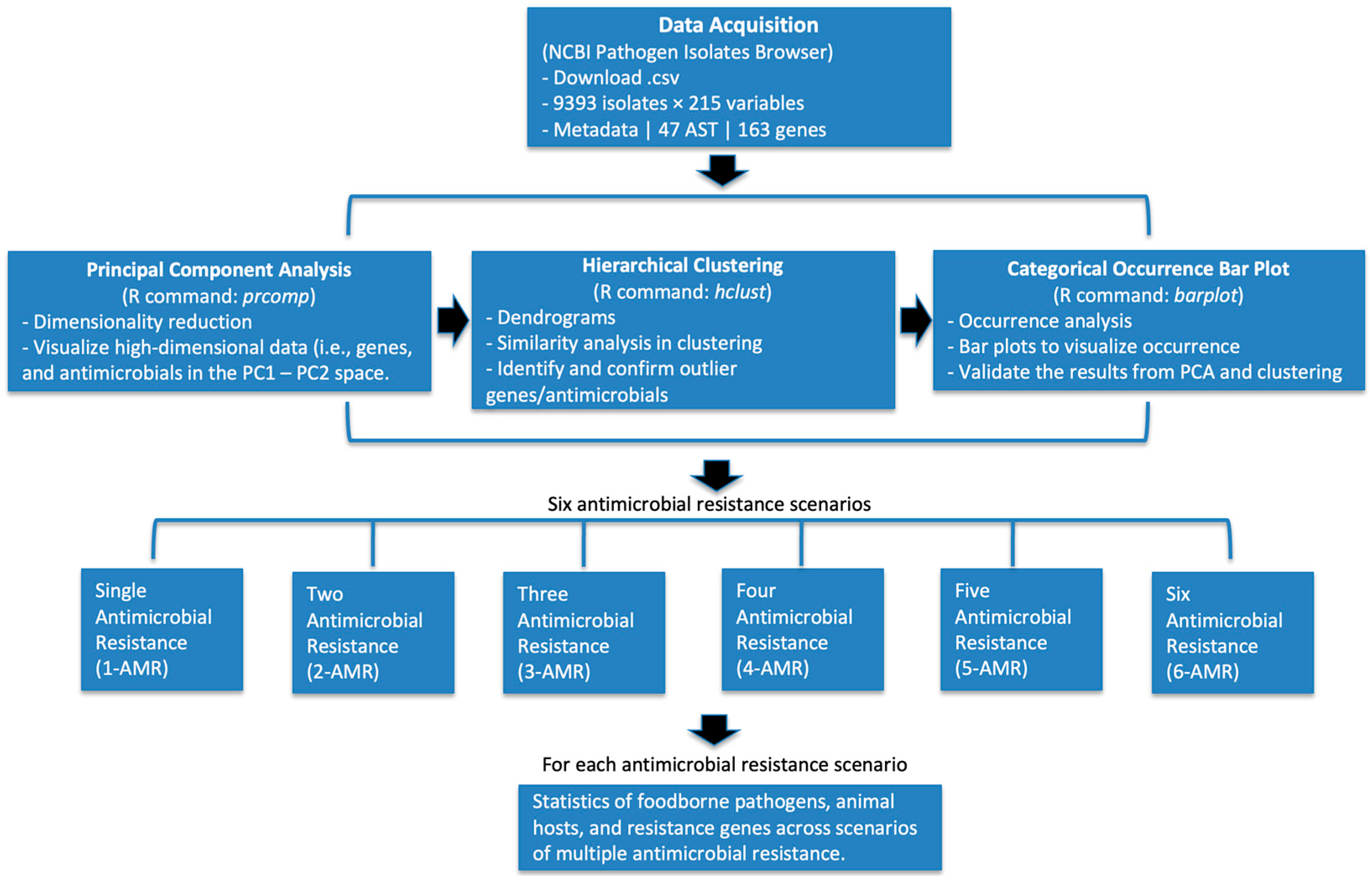
To systematically study multi-antimicrobial resistance in U.S. foodborne pathogens, comprehensive AMR gene data are essential, and the NCBI Pathogen Isolates Browser provides these data across food animals over time [
19,
20,
21]. This database is a government-supported, open-access platform that compiles genomic and phenotypic data on pathogens, enabling real-time detection and surveillance of antimicrobial resistance. It provides isolate-level details such as collection date, geographic origin, resistance genes, and AMR phenotype, making it a critical tool for public health research. Studies have used it to map the distribution of key resistance determinants like
blaCTX-M,
qnr, and aminoglycoside-modifying enzymes, while also highlighting challenges in prediction accuracy [
17]. The Gajdács team [
9] likewise evaluated genotypic and phenotypic profiles of foodborne pathogens, while the Eckstrand team [
3] applied the database’s pipelines to aquatic isolates, detecting high-risk resistance genes and uncovering overlooked reservoirs of multi-antimicrobial resistance. Related investigations have leveraged the database to identify virulence and AMR gene patterns globally [
22], analyze stress response gene co-occurrence with AMR [
23], and distinguish outbreak versus non-outbreak
E. coli and
Salmonella isolates in the U.S. [
24]. More recent studies highlight its value for U.S. livestock surveillance, such as cattle [
25] and poultry [
26], confirming its role as a standardized data source for tracking AMR across hosts, pathogens, and antimicrobials. Two recent applications of this database indicated that three livestock-associated monophasic
Salmonella enterica lineages frequently carried the mobile ASSuT resistance cassette [
27] and that 1.84 million AMR entries,
Enterobacter spp., showed elevated
qnrS and β-lactam genes [
28]. Collectively, these applications show that the database enables integrative, spatiotemporal AMR surveillance and provides actionable data to inform interventions against zoonotic and clinical threats.
This work builds on resources such as the NCBI Pathogen Isolates Browser but applies a new, integrative approach. Instead of examining a single pathogen–antimicrobial pair, it conducts a multi-antimicrobial, multi-species analysis of AMR by studying
Salmonella enterica,
Campylobacter jejuni, and
Escherichia coli isolates from livestock hosts, including pigs, cattle, chickens, and turkeys. Resistance is evaluated across six critical antimicrobials that represent frontline therapies in both human and veterinary medicine, where high levels of resistance have been documented and where surveillance is most urgently needed. By combining phenotypic susceptibility data with genomic resistance signatures and applying multivariate statistical methods such as principal component analysis (PCA) [
29,
30,
31,
32] and hierarchical clustering [
33,
34,
35], the study identifies resistance clusters that co-occur, reveals how they vary across pathogens. Focusing on multiple antimicrobials rather than single-antimicrobial outcomes captures the true complexity of AMR and highlights cross-class resistance patterns that shape clinical outcomes. Although centered on six key antimicrobials, the methodology provides a scalable framework that can be extended to additional antimicrobials for broader surveillance and intervention. The objective of this study is to characterize cross-species AMR patterns and co-occurring resistance clusters across these pathogens and antimicrobials, thereby providing a comparative framework to strengthen U.S. livestock-based AMR surveillance.
3. Results
The top six antimicrobials were first identified from data via multivariate statistical analysis. The resistance patterns were then examined systematically across all AMR scenarios, beginning with isolates resistant to a single antimicrobial (1-AMR) and extending to those resistant to multiple antimicrobials (up to 6-AMR). For each AMR category, we first identified the most frequent antimicrobial combinations and then quantified how these combinations associate with specific pathogens and AMR genes. These relationships were visualized through pathogen–antimicrobial–gene interaction bubble plots, which integrated three dimensions of information: (i) the pathogen contributing to a given resistance event, (ii) the antimicrobial combination defining the resistance category, and (iii) the AMR genes most commonly observed among isolates within that combination. This structure enables direct comparison across AMR levels and highlights how resistance profiles evolve as isolates acquire resistance to additional antimicrobials.
3.1. Identification of Top Antimicrobials in the Dataset
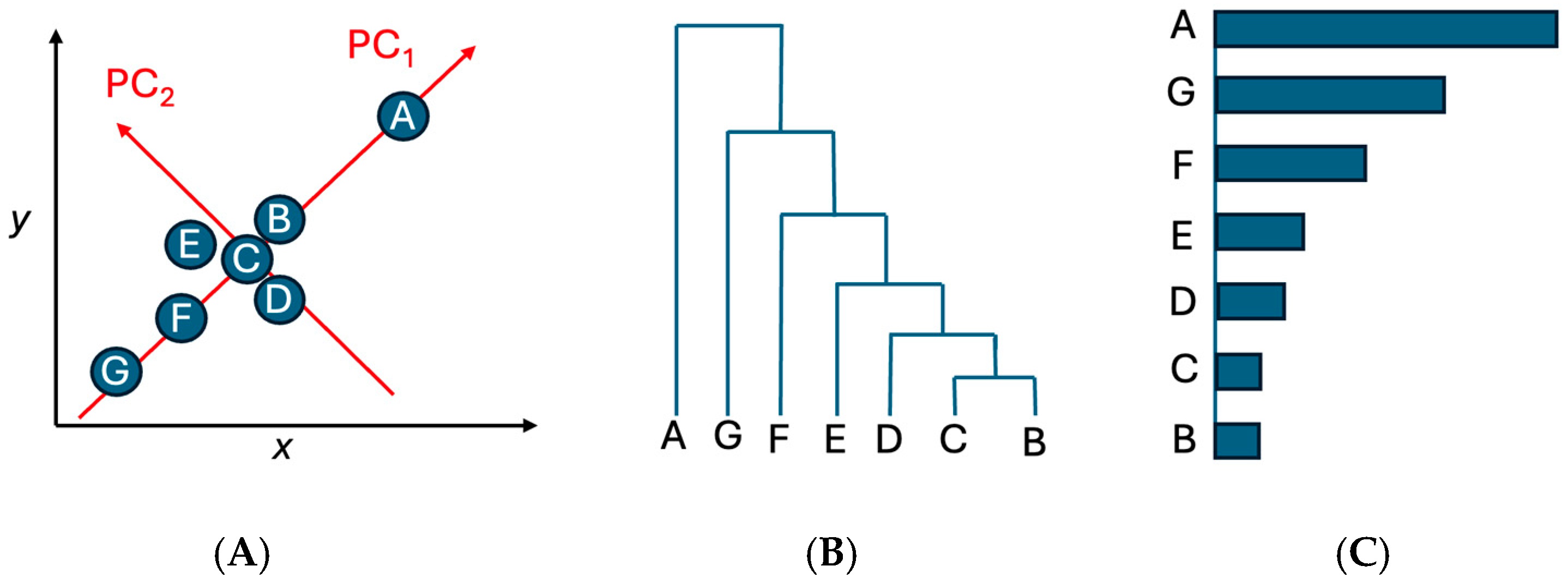
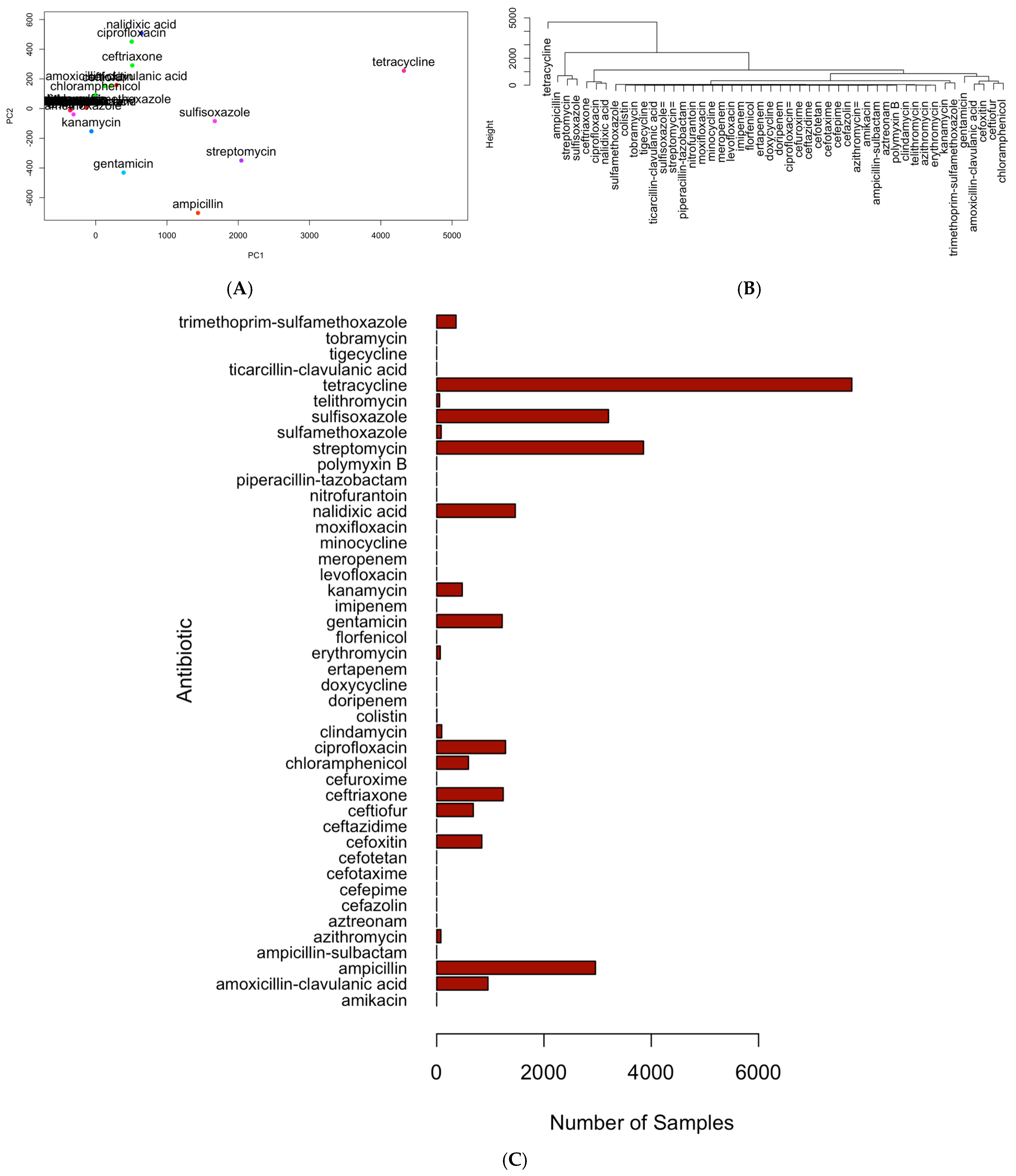
Figure 3 is used to illustrate the application of principal component analysis (PCA), hierarchical clustering, and bar histograms to identify the top six antimicrobials from the dataset, including tetracycline, ampicillin, streptomycin, sulfisoxazole, nalidixic acid, and ciprofloxacin. In this analysis, PCA was applied to the antimicrobial resistance matrix to project all antimicrobials into a two-dimensional space defined by PC1 and PC2, with 95.3% percentage variance explained by PC1 and PC2 (
Figure 3A). This PCA projection served primarily as a visualization tool: antimicrobials with similar resistance profiles tended to cluster together in the PCA space, resulting in several antimicrobials being “lumped” closely along the main axes. Because PCA alone does not cleanly separate antimicrobials, hierarchical clustering was applied to the PCA coordinates using Euclidean distance and Ward’s linkage to systematically distinguish groups of antimicrobials with shared resistance signatures (
Figure 3B). The clustering dendrogram was interpreted using an elbow-type criterion, allowing antimicrobials that separated clearly from the bulk clusters to be identified as structurally distinct. These separated branches highlight antimicrobials with resistance patterns that differ substantially from the rest of the dataset. Finally, bar plots (
Figure 3C) were generated to quantify the number of resistant isolates for each antimicrobial. This quantitative view validates the selection of the six antimicrobials, including tetracycline, streptomycin, sulfisoxazole, ampicillin, nalidixic acid, and ciprofloxacin, by showing that they also have the highest resistance frequencies, reinforcing the combined conclusions from PCA and clustering. These six antimicrobials additionally span the major antimicrobials represented in the dataset, ensuring that they capture the dominant and clinically relevant resistance phenotypes. As such, they serve as a representative set for downstream multi-antimicrobial resistance analyses.
3.2. Resistance to a Single Antimicrobial: Pathogen and Gene Distributions
A total of six antimicrobials, including tetracycline, streptomycin, sulfisoxazole, ampicillin, nalidixic acid, and ciprofloxacin, accounted for all single-drug resistance cases detected in the dataset. As shown in
Table 2, tetracycline resistance was the most prevalent (2167 isolates), followed by streptomycin (1452 isolates) and sulfisoxazole (804 isolates). Ampicillin, nalidixic acid, and ciprofloxacin showed lower but non-negligible resistance frequencies. This distribution mirrors the antimicrobial usage patterns and selective pressures commonly reported in food animal production systems, where tetracyclines, aminoglycosides, and sulfonamides have historically been used more extensively, resulting in a larger reservoir of resistant isolates.
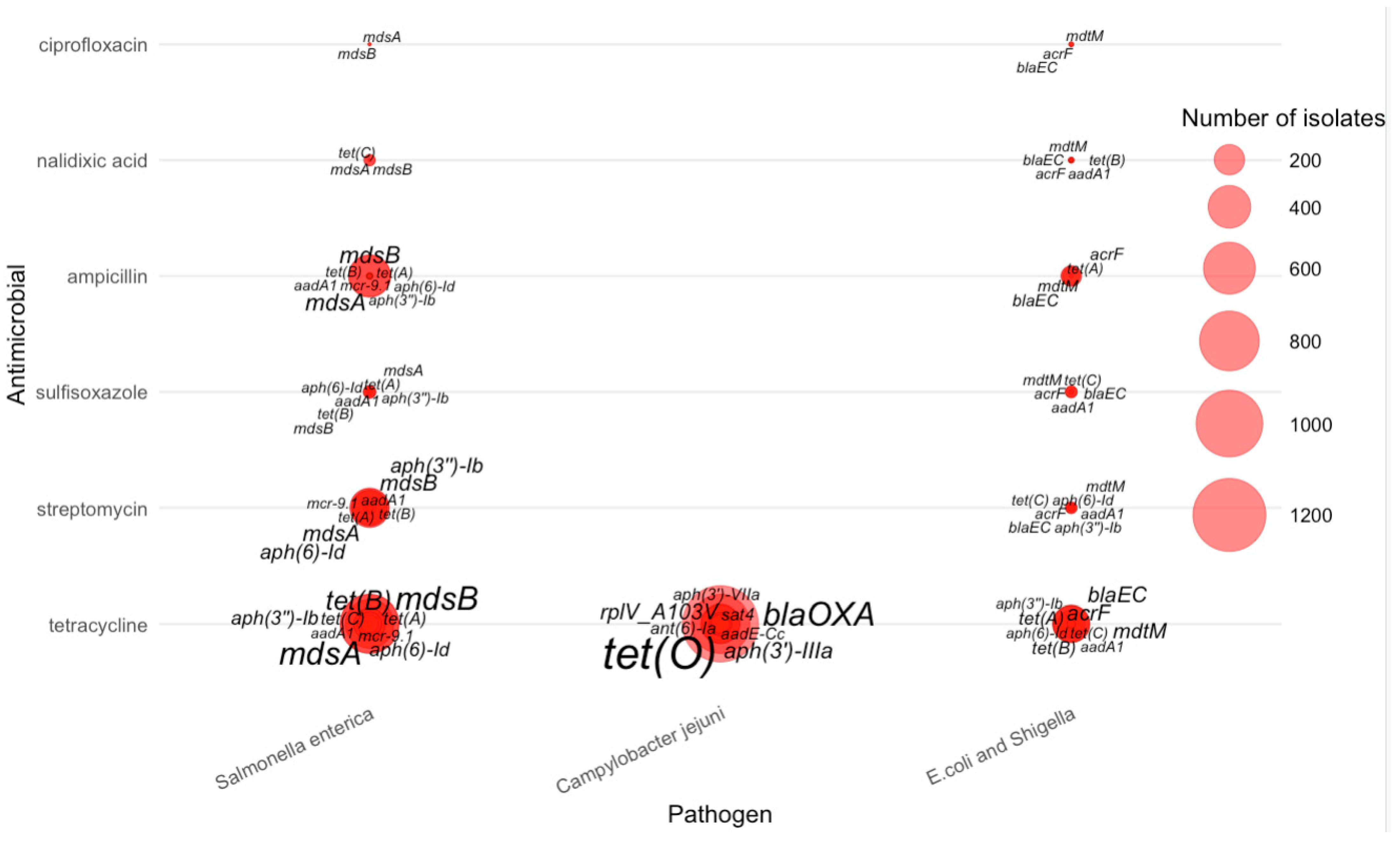
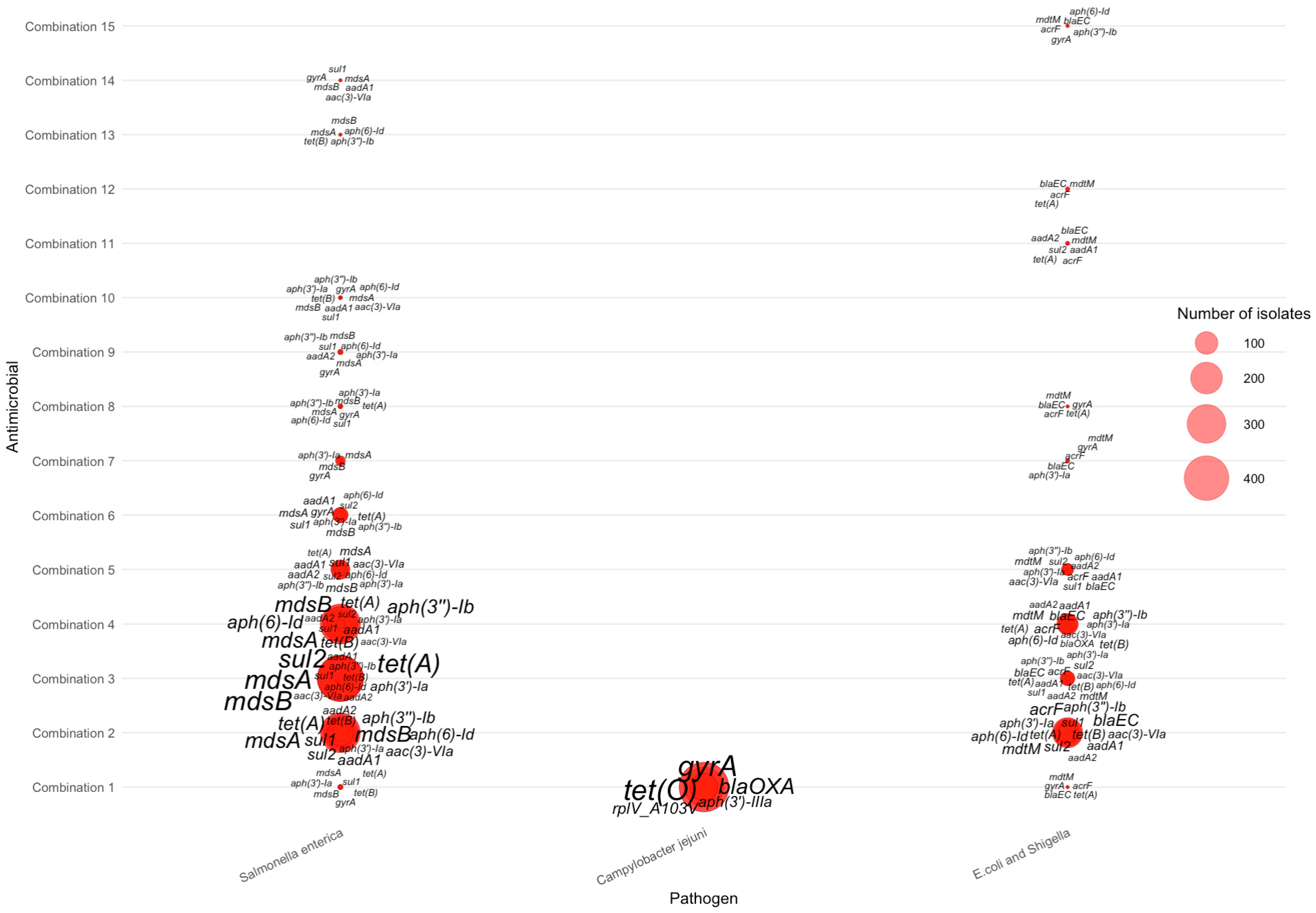
The integrated pathogen–antimicrobial–gene bubble plot further illustrates how single-drug resistance cases are distributed across the three major pathogens (
Figure 4).
Salmonella enterica accounted for the majority of single-AMR events, especially for tetracycline, streptomycin, and ampicillin.
Campylobacter jejuni dominated resistance to tetracycline.
E. coli/
Shigella contributed a smaller but distinct set of resistance cases, particularly for ampicillin and certain tetracycline-associated genes. These pathogen-specific patterns reinforce that single-drug resistance is not uniformly distributed across taxa but is shaped by distinct ecological and selective environments.
The figure further reveals that for tetracycline resistance, the most prominent genes were tet(O)—displayed with the largest label size due to its high frequency in Campylobacter jejuni—along with mdsA, mdsB, aph(6)-Id, and several other tet variants that appeared predominantly in Salmonella enterica and E. coli/Shigella. Streptomycin resistance was strongly associated with aminoglycoside-modifying enzymes, especially aph(3″)–Ib, aph(6)–Id, aadA1, and mcr-9, which appeared frequently in Salmonella isolates.
For sulfisoxazole, resistance was primarily linked to mdsA, mdsB, tet(A), and aph(3″)–Ib, rather than sul1 or sul2, which do not appear in this dataset. Ampicillin-resistant isolates were marked by β-lactamase genes such as blaEC, often accompanied by multidrug efflux components such as mdtM and acrF. Nalidixic acid resistance was comparatively sparse and dominated by mdsA, mdsB, and tet(C). Ciprofloxacin resistance showed a similar pattern, with mdsA and mdsB again contributing substantially, suggesting that efflux-mediated resistance is more common than plasmid-borne fluoroquinolone determinants in AMR-1 isolates of these pathogens.
Overall, the AMR-1 bubble map demonstrates pathogen-specific resistance signatures: multidrug efflux genes (mdsA/mdsB) are broadly distributed across all organisms, tet(O) is strongly enriched in Campylobacter jejuni, and β-lactamases (bla genes) dominate ampicillin resistance in E. coli/Shigella. These patterns provide a quantitative basis for understanding core resistance determinants associated with single-drug resistance across major foodborne pathogens.
3.3. Resistance to Two Antimicrobials: Pathogen and Gene Distributions
Table 3 summarizes co-resistance patterns among isolates resistant to exactly two antimicrobials. Across all observed two-drug combinations, tetracycline appeared most frequently, partnering with streptomycin in 1198 isolates—the dominant co-resistance pair in the dataset. Several other tetracycline-based combinations were also common, including tetracycline–sulfisoxazole (581 isolates) and tetracycline–ampicillin (368 isolates), indicating that tetracycline resistance frequently co-occurs with multiple other drug resistances. Fluoroquinolone co-resistance was also evident: nalidixic acid–ciprofloxacin resistance was the fourth most common combination (244 isolates), reflecting cross-resistance within this drug class. Moderate-frequency pairs included streptomycin–sulfisoxazole (176 isolates) and streptomycin–ampicillin (78 isolates). Less frequent combinations—such as tetracycline with nalidixic acid (13 isolates) or ciprofloxacin (7 isolates)—were also detectable but occurred at much lower rates. Overall, the AMR-2 distribution shows that co-resistance is dominated by a small number of high-frequency antimicrobial pairs, many of which involve tetracycline, highlighting its central role in early multi-drug resistance patterns.
For isolates resistant to two antimicrobials, distinct pathogen-specific gene signatures emerged across the ranked antimicrobial combinations (
Figure 5).
Salmonella enterica contributed the majority of AMR-2 isolates and displayed the broadest repertoire of resistance genes. Across the highest-frequency combinations—particularly tetracycline–streptomycin, tetracycline–sulfisoxazole, and tetracycline–ampicillin—
Salmonella exhibited consistent enrichment of
mdsA,
mdsB,
aph(6)-Id,
aph(3″)-Ib, tet(A), and
tet(B), with
mdsA/mdsB and
aph(6)-Id appearing as the most dominant and widespread determinants. In contrast,
Campylobacter jejuni showed a much narrower gene profile, centered primarily on
blaOXA, and
gyrA, which clustered mainly around nalidixic acid–ciprofloxacin co-resistance.
E. coli/
Shigella isolates displayed intermediate diversity, frequently carrying
blaEC,
mdtM,
acrF, and
aph(3′)-Ib, with enriched signatures observed in combinations involving ciprofloxacin and nalidixic acid. Collectively, the AMR-2 bubble plot highlights how the transition from single-drug to dual-drug resistance reveals clearer pathogen-specific gene groupings:
Salmonella retains a wide multidrug-efflux– and aminoglycoside-associated signature,
Campylobacter shows quinolone-focused markers, and
E. coli/
Shigella carry a mix of β-lactam, efflux, and aminoglycoside resistance genes.
3.4. Resistance to Three Antimicrobials: Pathogen and Gene Distributions
Table 4 summarizes the distribution of isolates resistant to three antimicrobials (AMR-3), revealing several dominant three-drug resistance patterns among foodborne pathogens. The most frequent combinations—tetracycline + nalidixic acid + ciprofloxacin (504 isolates), tetracycline + streptomycin + sulfisoxazole (494 isolates), tetracycline + sulfisoxazole + ampicillin (474 isolates), and tetracycline + streptomycin + ampicillin (407 isolates)—all involve tetracycline as a shared component, underscoring its central role in multidrug resistance. Streptomycin, sulfisoxazole, and ampicillin also appear repeatedly across the highest-frequency combinations, suggesting strong co-selection among these antimicrobials within circulating strains. In contrast, lower-frequency combinations (fewer than 10 isolates) such as tetracycline + streptomycin + ciprofloxacin or streptomycin + nalidixic acid + ciprofloxacin occur only sporadically, indicating that most triple-resistant isolates cluster into a small number of recurrent resistance profiles.
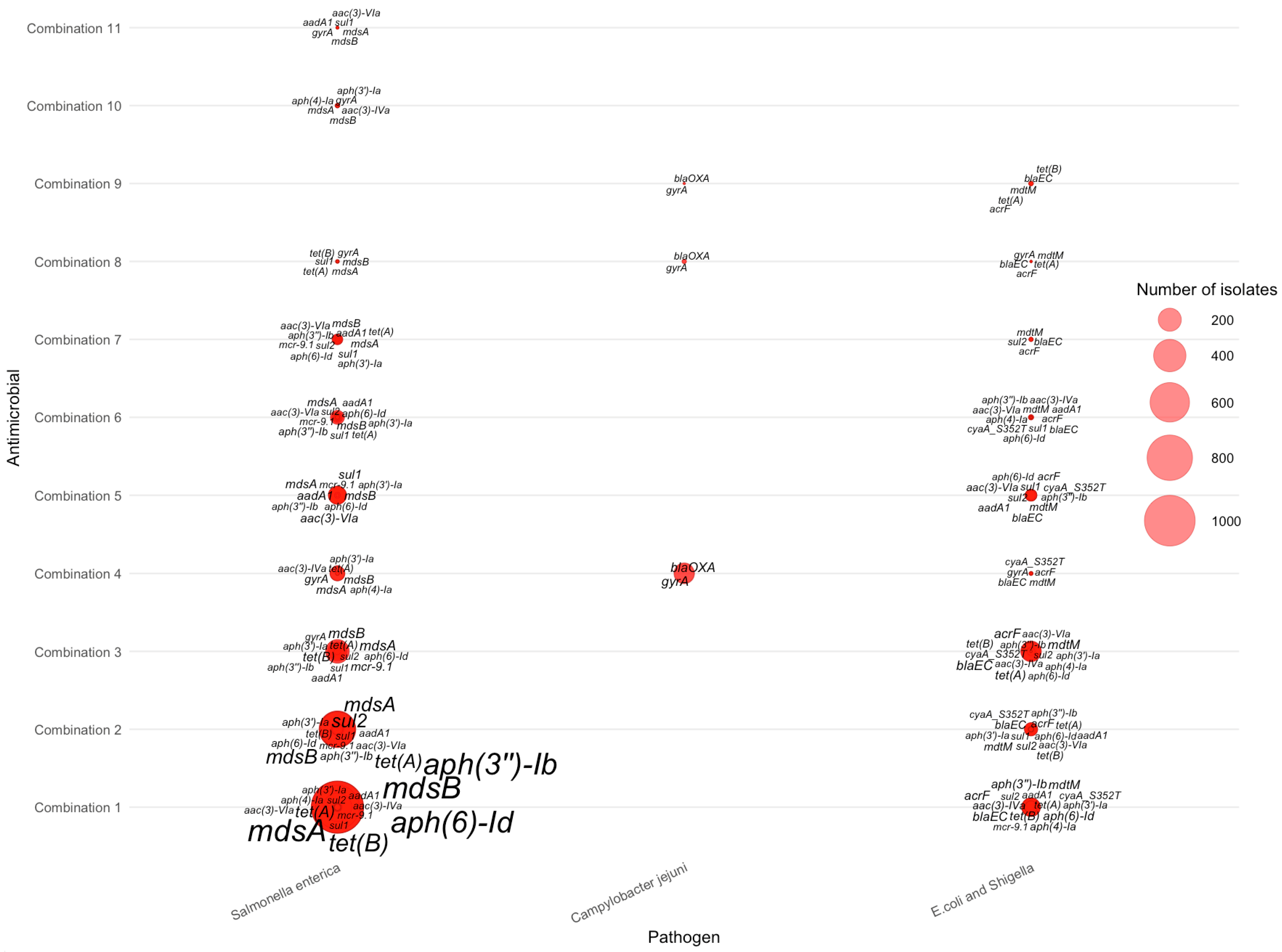
For isolates resistant to three antimicrobials, gene–pathogen patterns varied substantially across the top combinations listed in
Table 4. The most common AMR-3 profiles—tetracycline–nalidixic acid–ciprofloxacin (Combination 1), tetracycline–streptomycin–sulfisoxazole (Combination 2), tetracycline–sulfisoxazole–ampicillin (Combination 3), and tetracycline–streptomycin–ampicillin (Combination 4)—were dominated by
Salmonella enterica, which exhibited large clusters of multidrug-resistance genes (
Figure 6). Across these combinations,
Salmonella enterica consistently carried
mdsA,
mdsB,
tet(A),
tet(B),
sul2,
aph(3″)-Ib, and
aph(6)-Id, forming the core signature of triple-antimicrobial resistance in these species. In contrast,
Campylobacter jejuni contributed fewer AMR-3 cases but displayed distinct markers, most notably
tet(O),
gyrA, and
blaOXA, consistent with known tetracycline and fluoroquinolone resistance mechanisms.
E. coli and
Shigella showed more heterogeneous genetic profiles, frequently expressing
blaEC,
acrF,
aadA1, and
mdtM across lower-frequency combinations. These patterns collectively demonstrate that high-frequency AMR-3 resistance is primarily driven by
Salmonella through efflux pump and aminoglycoside-associated genes, whereas
Campylobacter and
E. coli/
Shigella contribute pathogen-specific resistance determinants linked to fluoroquinolone and β-lactam resistance.
3.5. Resistance to Four Antimicrobials: Pathogen and Gene Distributions
Table 5 summarizes the distribution of isolates resistant to four antimicrobials (4-AMR), revealing a highly skewed pattern dominated by a single tetracycline-centered profile. The most frequent 4-AMR combination—tetracycline + streptomycin + sulfisoxazole + ampicillin—accounted for 649 isolates, far exceeding all other four-drug combinations and reflecting a consistent co-resistance pattern among these long-used antimicrobials in foodborne pathogens. The next most common combinations occurred at substantially lower frequencies, such as tetracycline + sulfisoxazole + nalidixic acid + ciprofloxacin (84 isolates) and tetracycline + sulfisoxazole + ampicillin + nalidixic acid (39 isolates), indicating that multi-class resistance involving fluoroquinolones or quinolones occurs but is less widespread. Several additional 4-AMR combinations were detected at very low levels (≤10 isolates), suggesting sporadic or lineage-specific resistance events.
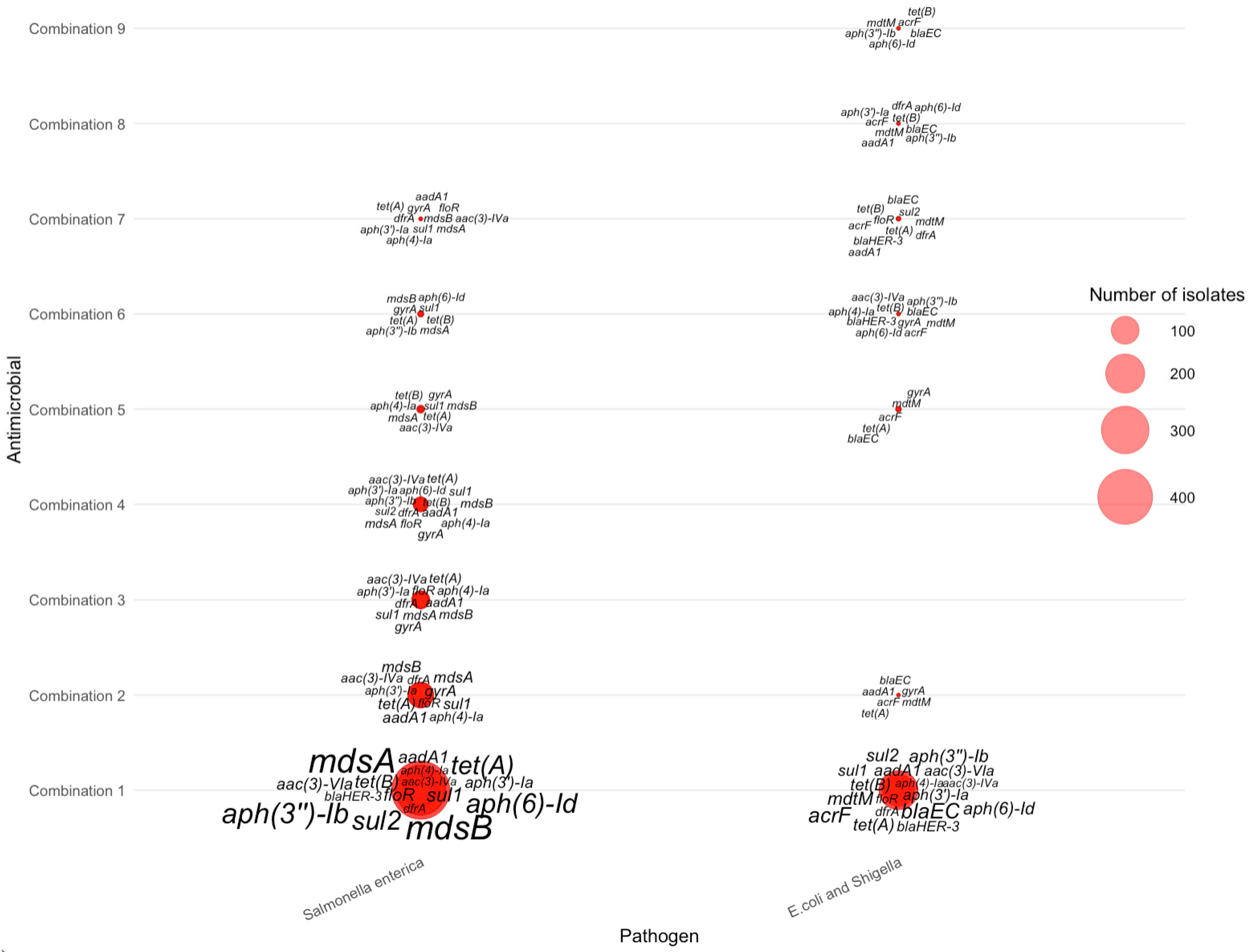
Across the nine AMR-4 antimicrobial combinations (
Table 5), resistance gene distributions were concentrated almost entirely in
Salmonella enterica and
E. coli/
Shigella, with no AMR-4 isolates detected for
Campylobacter jejuni. In
Salmonella enterica, combinations 1–4—which included tetracycline, streptomycin, sulfisoxazole, and ampicillin—showed the highest gene burdens, characterized by frequent multidrug-resistance loci such as
mdsA,
mdsB,
aph(3″)-Ib,
aph(6)-Id,
sul2, and
tet(A). These genes appeared in large clusters (as shown in
Figure 7), reflecting the strong co-selection pressures associated with these four drugs in
Salmonella enterica. In contrast,
E. coli/
Shigella displayed smaller AMR-4 gene clusters, typically involving combinations containing nalidixic acid or ciprofloxacin. Key genes in these isolates included
blaEC,
acrF,
mdtM,
gyrA, and
tet(B), which together indicate quinolone and β-lactam resistance signatures commonly seen in Enterobacterales. The sharp contrast between the dense
Salmonella enterica clusters and the sparse
E. coli/
Shigella clusters illustrates the species-specific structure of AMR-4 profiles and highlights
Salmonella enterica as the dominant contributor to high-order multi-antimicrobial resistance.
3.6. Resistance to Five Antimicrobials: Pathogen and Gene Distributions
Table 6 summarizes the distribution of isolates exhibiting resistance to five antimicrobials. Similar to lower-order resistance patterns, tetracycline, streptomycin, and sulfisoxazole again form the backbone of the most common multidrug resistance profiles. The most frequent AMR-5 combination—tetracycline + streptomycin + sulfisoxazole + nalidixic acid + ciprofloxacin—accounted for 153 isolates, indicating that this core set of antimicrobials represents the dominant multidrug resistance signature in the dataset. The second most common combination—tetracycline + sulfisoxazole + ampicillin + nalidixic acid + ciprofloxacin—included 76 isolates, followed by tetracycline + streptomycin + sulfisoxazole + ampicillin + nalidixic acid with 30 isolates. All remaining AMR-5 combinations occurred at much lower frequencies (≤4 isolates each), highlighting the sharp drop-off in diversity as resistance expands to five antimicrobials. Collectively, these findings demonstrate that although a wide range of theoretical five-drug combinations is possible, only a small number appear frequently in circulating foodborne pathogens, and they consistently involve tetracycline, streptomycin, and sulfisoxazole—reinforcing their central role in multidrug resistance profiles.
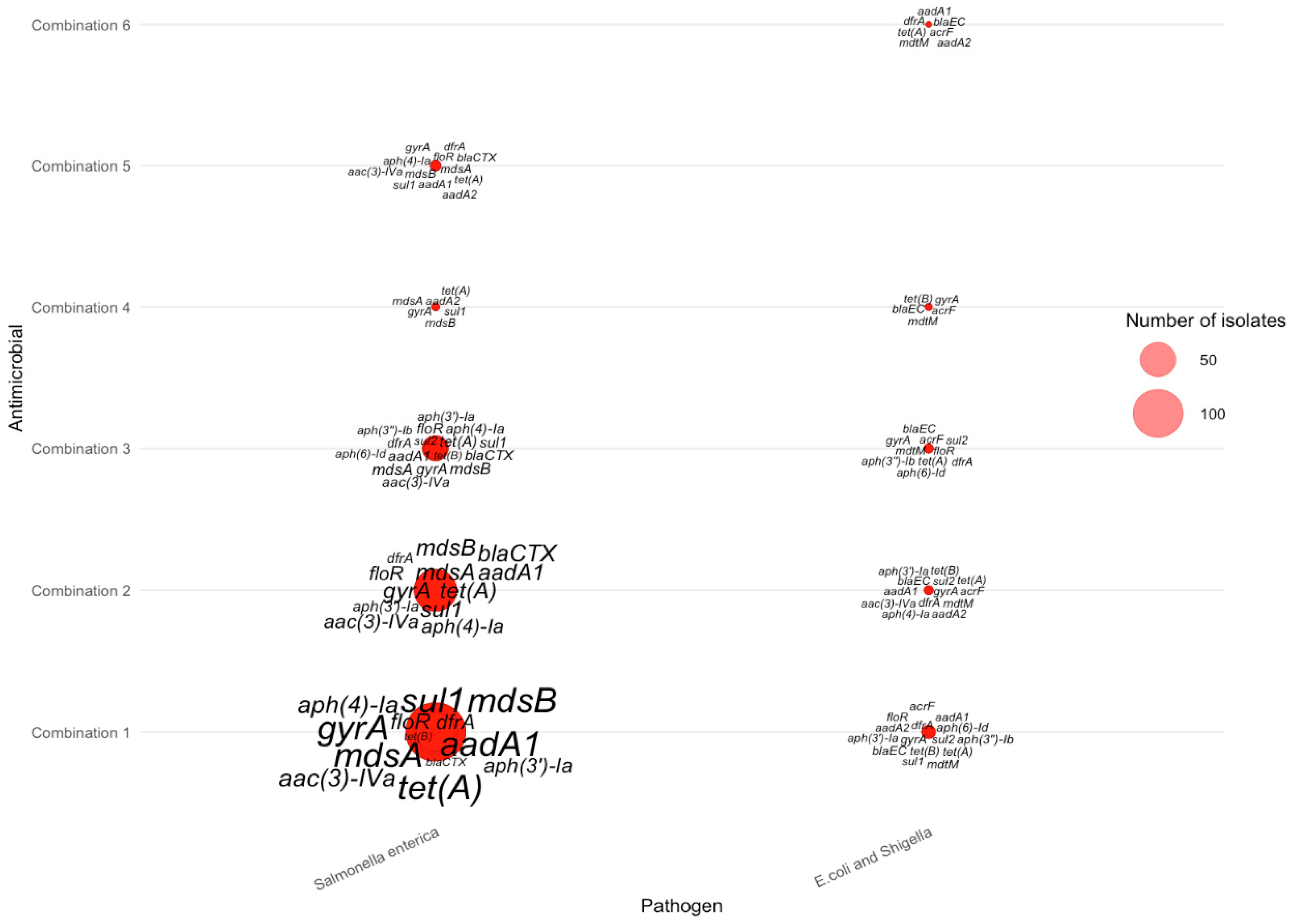
For isolates resistant to five antimicrobials, the six combinations listed in
Table 6 produced distinct pathogen–gene patterns, as shown in the corresponding bubble plot. Most AMR-5 isolates belonged to
Salmonella enterica, with Combination 1 (tetracycline–streptomycin–sulfisoxazole–nalidixic acid–ciprofloxacin; 153 isolates) contributing the largest cluster. Within this group, several multidrug-efflux and aminoglycoside-modifying genes—including
mdsA,
mdsB,
gyrA,
tet(A),
floR,
aadA1, and
aph(3″)-Ia,—were highly enriched (as shown in
Figure 8), reflecting broad-spectrum resistance mechanisms. Combination 2 (tetracycline–sulfisoxazole–ampicillin–nalidixic acid–ciprofloxacin; 76 isolates) showed a similar genetic profile, again dominated by
mdsA,
mdsB,
aac(3)-IVa,
tet(A), and
aadA1, with slightly fewer total occurrences. Combination 3 (tetracycline–streptomycin–sulfisoxazole–ampicillin–nalidixic acid; 30 isolates) displayed a reduced but consistent pattern, primarily featuring
mdsA,
mdsB,
tet(A), and
aph(3″)-Ib.
In contrast, E. coli and Shigella isolates showed far fewer AMR-5 cases, producing smaller and more dispersed bubbles across combinations. The most recurrent genes among these isolates included blaEC, mdtM, acrF, tet(B), and aac(3″)-Ia. As in previous AMR scenarios, Campylobacter jejuni contributed no AMR-5 cases, consistent with the absence of bubbles in the corresponding positions of the visualization. Together, these distributions highlight that five-antimicrobial resistance remains concentrated in Salmonella enterica, driven by a recurring set of efflux pumps, aminoglycoside-modifying enzymes, and tetracycline resistance determinants.
3.7. Resistance to Six Antimicrobials: Pathogen and Gene Distributions
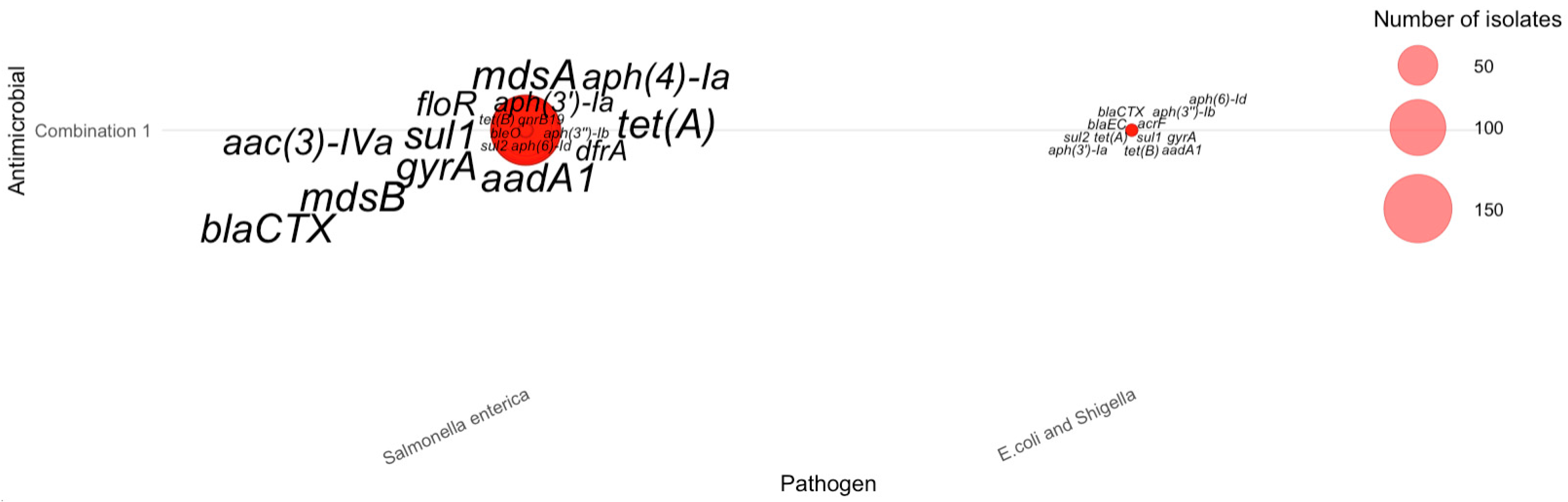
Since all six antimicrobials are included, only one combination exists. In total, there are 164 cases that were taken from the NCBI database. These recorded cases only represent a much smaller percentage than those cases that have AMR to fewer than six antimicrobials.
For the AMR-6 scenario, a single antimicrobial combination—tetracycline, streptomycin, sulfisoxazole, nalidixic acid, ampicillin, and ciprofloxacin had isolates resistant to all six drugs. The gene-level bubble plot reveals that these highly multidrug-resistant isolates were detected exclusively in
Salmonella enterica and
E. coli/
Shigella, with no AMR-6 cases observed in
Campylobacter jejuni (as shown in
Figure 9). In
Salmonella enterica, the dominant resistance determinants included
mdsA,
mdsB,
aph(4′)-la,
aac(3)-IVa,
sul1,
aadA1,
floR,
gyrA,
tet(A), and
blaCTX, illustrating a broad suite of efflux pump, aminoglycoside-modifying, sulfonamide, tetracycline, and β-lactam resistance genes co-occurring within the same isolates. In contrast,
E. coli/
Shigella isolates resistant to all six antimicrobials carried a smaller yet distinct combination of genes—most prominently
blaEC,
blaCTX,
acrF,
tet(A),
tet(B),
aph(3′)-Ib,
aph(6)-Id, and
aadA1. These patterns demonstrate that although AMR-6 cases are rare, the few isolates exhibiting this extreme phenotype harbor dense clusters of resistance determinants, with
Salmonella enterica showing a broader and more diverse gene repertoire compared with
E. coli/
Shigella.
3.8. Comparative Analysis Across All 6 AMR Scenarios
Table 7 summarizes the distribution of pathogen isolates across the six AMR categories using row-wise percentages, ensuring that each row sums to 100%. This structure reveals clear species-specific resistance patterns.
Campylobacter jejuni appears overwhelmingly in the 1-AMR category, comprising 65.7% of all isolates resistant to only one antimicrobial, and is nearly absent in higher AMR categories, confirming that multidrug resistance is extremely rare in this species. In contrast,
Salmonella enterica shows a broader distribution across AMR levels: although it represents 19.5% of 1-AMR isolates, its highest contribution occurs in 2-AMR (35.7%), followed by gradual declines through 3-AMR (20.4%), 4-AMR (10.3%), 5-AMR (4.2%), and 6-AMR (2.7%).
E. coli and
Shigella display a more even distribution across 1-AMR to 4-AMR, with smaller contributions in the 5-AMR and 6-AMR groups. The antimicrobial rows show a different trend: tetracycline, sulfisoxazole, streptomycin, ampicillin, nalidixic acid, and ciprofloxacin become nearly universal within the higher AMR categories—approaching or reaching 100% representation in 4-AMR through 6-AMR—highlighting their central role in multi-antimicrobial resistance patterns. Overall, this table clarifies how pathogen species differ sharply in their AMR complexity, while core antimicrobials consistently dominate higher-order resistance combinations.
4. Discussion
4.1. Antimicrobials and Pathogens Involved in Microbial Resistance in Food Animals
Across all resistance categories (AMR-1 through AMR-6), a consistent and biologically meaningful hierarchy of antimicrobials emerged from our analysis. Tetracycline > streptomycin > sulfisoxazole > ampicillin > nalidixic acid > ciprofloxacin were repeatedly dominant across single- and multi-drug resistance categories, and they constituted nearly all of the highest-frequency antimicrobial combinations observed in 2-AMR through 6-AMR scenarios. Their prominence reflects both extensive historical use in agricultural and clinical settings and well-documented selective pressures that facilitate persistence of associated resistance genes. Tetracycline resistance was nearly ubiquitous across higher-order AMR categories, reaching 94–100% representation in 3-AMR to 6-AMR isolates. This confirms tetracycline’s role as a central driver of multi-antimicrobial resistance, consistent with global findings that tetracycline resistance genes (
tetA,
tetB,
tetO) are among the most widespread determinants in Enterobacteriaceae and foodborne pathogens [
9]. Sulfisoxazole, streptomycin, and ampicillin also increased sharply in prevalence as the number of co-resistant antimicrobials grew, indicating that these agents form the backbone of the most common co-resistance clusters circulating in
Salmonella enterica and
E. coli/
Shigella. In contrast, nalidixic acid and ciprofloxacin—representing fluoroquinolone resistance—were less common in low-order AMR but became strongly enriched in the highest AMR levels, a pattern consistent with the evolutionary acquisition of gyrase- and efflux-mediated mechanisms at later stages of multidrug resistance [
36]. Collectively, these findings suggest that the six highlighted antimicrobials capture the major phenotypic “axes” of resistance in U.S. foodborne pathogens, enabling a representative and interpretable framework for multivariate visualization and cross-scenario comparisons.
The three foodborne pathogens differ markedly in their contributions across resistance categories.
Campylobacter jejuni overwhelmingly dominates AMR-1 (65.7%) but rarely appears in higher resistance categories, being absent entirely from AMR-4 through AMR-6. This pattern aligns with
Campylobacter’s known dominance in single-drug resistance (especially tetracycline and fluoroquinolones) but low association with many-drug resistance. In contrast,
Salmonella enterica is broadly distributed across all AMR levels—from 19.5% of AMR-1 cases up to 61% of AMR-4 and 94%+ in AMR-5 and AMR-6—making it the primary driver of complex multidrug resistance [
37].
E. coli/
Shigella contributes modestly to low-level resistance but retains representation up to AMR-6, especially in fluoroquinolone-associated multidrug cases. The bubble-plot visualizations reinforce these trends:
Salmonella enterica dominates the gene clouds in nearly every AMR-k figure, while
E. coli/
Shigella contributes smaller but consistent clusters.
4.2. AMR Gene Landscape
Across all resistance scenarios, several antimicrobial resistance (AMR) genes emerged as dominant contributors to the observed patterns. Most notably,
mdsA and
mdsB were consistently the most frequently present genes in resistant isolates. Their prevalence highlights the widespread nature of the
mds efflux pump system, even though these genes do not directly encode resistance to the six antimicrobials studied [
38,
39]. Interestingly, nearly every isolate containing
mdsA also contained
mdsB. The co-dominance of these genes indicates that efflux-pump mechanisms are central to the broader multi-antimicrobial resistance phenotype, rather than being tied to a single antimicrobial class. Their abundance also reflects the predominance of
Salmonella enterica in the dataset, since this pathogen frequently carries
mds genes. The tetracycline-resistance genes
tet(A) and
tet(B) were also highly prevalent, complementing the widespread phenotypic tetracycline resistance observed across AMR categories [
2].
Streptomycin resistance genes were another recurring feature, with aminoglycoside-modifying enzyme (AME) genes—such as
aph(3″)-Ib,
aph(6)-Id, and
aadA1—appearing prominently in all six resistance categories. These genes encode enzymes that modify aminoglycosides, preventing antimicrobial binding and thereby disabling their antimicrobial activity [
40,
41]. Sulfonamide resistance genes
sul1 and
sul2 also highly detected. These genes encode dihydropteroate synthase (DHPS) variants with reduced affinity for sulfonamides, preventing sulfisoxazole from binding and rendering it ineffective [
42]. Although absent in
C. jejuni isolates (
Figure 7),
sul1 and
sul2 were common in
Salmonella enterica, and
E. coli and Shigella spp. Their co-occurrence varied by resistance level, with fewer isolates carrying both genes as the number of resistance determinants increased. This may suggest redundancy when multiple resistance mechanisms accumulate.
Quinolone resistance genes (
acrF,
gyrA, and
mdtM) were also widespread across resistance categories.
acrF and
mdtM encode efflux pumps that expel quinolones, while
gyrA mutations prevent antimicrobial binding to the DNA gyrase target site [
43,
44]. These genes were frequently observed in all three pathogens. Finally,
blaEC,
blaOXA, and
blaCTX encode β-lactamases that hydrolyze the β-lactam ring of ampicillin, preventing effective binding and resulting in resistance [
45,
46]. They were most common in
E. coli and Shigella, and
C. jejuni isolates, but less frequent in
Salmonella enterica. This is notable because
Salmonella enterica is historically associated with ampicillin resistance, likely due to other β-lactamases such as
blaTEM-1, which were not included in this dataset.
4.3. Interaction of Genes, Pathogens, and Antimicrobials Across AMR Categories
The interactions among pathogens, antimicrobials, and resistance genes display a clear escalation in complexity from AMR-1 through AMR-6, revealing how co-resistance builds through the coordinated accumulation of specific genetic determinants. In the AMR-1 category, gene–drug relationships are highly antimicrobial-specific:
tet(A),
tet(B),
mdsA, and
mdsB dominate tetracycline resistance in
Salmonella enterica [
47], whereas
tet(O) and
blaOXA are characteristic of fluoroquinolone-related single-drug resistance in
Campylobacter jejuni [
48]. As co-resistance expands into AMR-2, frequent two-drug combinations—particularly tetracycline plus streptomycin—consistently enrich for
mdsA,
mdsB,
tet(A/
B),
aph(3″)-Ib, and
aph(6)-Id, indicating that efflux pump genes and aminoglycoside-modifying enzymes form some of the earliest and most stable genetic modules supporting multidrug resistance.
In AMR-3 and AMR-4, the gene profiles broaden substantially, with large “gene clouds” reflecting stacked resistance determinants across multiple antimicrobials. The most common combinations, such as tetracycline–sulfisoxazole–ciprofloxacin and tetracycline–streptomycin–ampicillin, are highly enriched with sul1, sul2, tet(A/B), mdsA/B, blaCTX, aadA1, aac(3)-IVa, and fluoroquinolone-associated gyrA mutations. These patterns illustrate convergence between efflux systems, plasmid-borne β-lactamases, aminoglycoside resistance genes, and sulfonamide resistance pathways, suggesting coordinated selection pressures favoring multi-class resistance cassettes.
At the highest resistance levels (AMR-5 and AMR-6), the gene landscapes are dominated almost exclusively by Salmonella enterica, which carries dense clusters of resistance determinants. These include efflux pump genes (mdsA, mdsB, acrF, mdtM), β-lactamases (blaEC, blaCTX), aminoglycoside-modifying enzymes (aph(3″)-Ib, aph(6)-Id, aac(3)-IVa), and chromosomal fluoroquinolone mutations (gyrA). These profiles represent highly adapted, extensively resistant Salmonella enterica lineages capable of withstanding five or more antimicrobial agents.
Overall, the progression from AMR-1 to AMR-6 demonstrates a stepwise accumulation of resistance: AMR-1 reflects pathogen–drug pairings shaped by intrinsic ecology (Campylobacter for tetracycline and fluoroquinolones; Salmonella enterica across multiple classes). AMR-2 to AMR-4 mark the emergence of core resistance gene modules involving efflux, tetracycline, sulfonamide, β-lactam, and aminoglycoside pathways. AMR-5 and AMR-6 are characterized by Salmonella enterica lineages carrying large mobile cassettes combined with chromosomal mutations, enabling broad-spectrum resistance. These findings highlight the importance of monitoring interactions among these six key antimicrobials and the resistance genes they select for, as well as prioritizing targeted interventions for Salmonella enterica—the primary driver of high-level multi-class antimicrobial resistance in U.S. foodborne pathogens.
4.4. Limitations and Future Work
There were a couple of key limitations throughout the study that should be noted. Firstly, although the NCBI Pathogen Isolates Browser allowed for a large and informative data set, it was heavily dominated by certain variables like Salmonella enterica isolates in terms of pathogens. Therefore, the distribution of the different isolates was densely packed into specific categories. This could affect the trends towards what is most predictable for Salmonella enterica. At the same time, the sheer abundance of Salmonella enterica isolates highlights the pathogen’s prominence or, equivalently, the importance of surveilling its trends. Additionally, these isolates were only sourced from the U.S., limiting the scope of understanding of AMR. Due to the limited space and the large number of potential combinations, we only analyzed the top 6 antimicrobials and top 3 pathogens, which may mean potential trends and patterns were disregarded as a result of a narrow focus. In addition, many of the top 20 genes could correlate with some other important antimicrobials that were not among the top 6, leading to some results that may not be generalizable. Another substantial limitation was that Campylobacter jejuni had no cases of resistance against four, five, and six antimicrobials. This pathogen was still resisted by antimicrobials other than the six selected ones. Lastly, another key limitation of this study is the lack of consistent, fine-grained information on the specific source context of isolates within each food-animal host category. Although isolates are annotated by host species (chicken, turkey, beef, and pork), the NCBI Pathogen Isolates Browser does not uniformly specify whether individual isolates originated from production environments, processing facilities, retail meat products, or foodborne outbreak investigations involving human cases. As a result, no additional filtering or stratification by production, processing, retail, or outbreak source was applied beyond the standardized host annotations provided by NCBI. Consequently, the resistance patterns reported here should be interpreted as aggregated, host-associated AMR profiles rather than source-specific risk estimates.
In future work, more types of pathogens along with more types of antimicrobials could potentially be investigated, especially for the broader patterns between them. A broader range of pathogens and antimicrobials would also be useful to have a better understanding of the extent of multi-antimicrobial resistance these pathogens possess. In addition, incorporating datasets with more detailed and standardized isolate source annotations could enable stratified analyses that distinguish among on-farm production, processing, retail, and human outbreak–associated contexts, thereby further enhancing the interpretability and translational relevance of antimicrobial resistance surveillance data. Additionally, the dataset could have been expanded to be larger (i.e., more samples of each pathogen) to achieve an even greater understanding of the patterns between AMR and the phenotype, despite this study already conducting research on quite a large dataset. Expanding the sourcing of the data internationally could also be useful to identify whether trends in the U.S. align with trends worldwide. Additionally, while foodborne pathogens are very dangerous, there are other equally, if not more dangerous, pathogens sourced from humans that could also be investigated for patterns between the genome and resistance behaviors. With an understanding of the resistance genome and its connection to resistance behavior in pathogens, future work could potentially include modeling the spread of such pathogens and incorporating the potential severity for certain organisms.