2. Sweet Bags in Scholarship
Representing a fusion of historical, material, and cultural experiences, sweet bags are discussed across a range of fields, including sixteenth- to eighteenth-century fashion, particularly Queen Elizabeth’s wardrobe, gift-giving culture, and embroidery techniques. While rarely the central subject, this section briefly reviews the main books and articles that mention bags, spanning from their role within Early Modern wardrobes to the technical challenges of recreating their design today. This section will help clarify the cultural and literary positioning of these bags within the context of the sixteenth and seventeenth centuries, as well as in relation to existing scholarship.
Sweet bags are often analysed as clothing items through the historical development of portable accessories. In the field of dress studies, it is worth mentioning Vanda Foster, a specialist in historical clothing with museum experience, who in her book
Bags and Purses (1982) traces the evolution of various types of bags from the seventeenth to the nineteenth centuries. She notes that in the early 1600s, separate, visible pockets tied to girdles were used by both men and women, but this changed as Queen Elizabeth I’s reign brought stiffer, bulkier formal clothing. This made visible pockets attached to belts or carried in plain sight impractical. Consequently, people switched to “large chamois leather pockets” inside the breeches or “long drawstring pouches” hidden under voluminous skirts, thus maintaining the bag’s utility without compromising the fashionable silhouette or modesty. By the 17th century, while breech pockets and their narrower sewn variations became more common, they did not entirely replace the small, rectangular bags used for coins. The latter were typically made of leather, knitted wool, or silk, and closed with long, tasselled drawstrings (
Foster 1982, pp. 8–9).
Against this backdrop and driven partly by the growth of gaming and petty theft, sweet bags emerged among the elite in the mid-1600s. They may be seen as part of a transitional process between the visible girdle pouches of the thirteenth and fourteenth centuries and the hidden tie-on pockets of the eighteenth century. Furthermore, it can be suggested that it is precisely the variety of materials from which most body-worn bags were made and the differences in how they were closed that distinguish them from more sophisticated smell bags. Foster describes the latter as small purses containing dried flowers, herbs, or vinegar-soaked sponges, which served to scent the surrounding air or act as a personal perfume to mask body odour. Additionally, sweet bags were used as packaging for gifts (money, jewellery), souvenirs, and symbols of love or friendship. These exquisite sweet items, often made of silk or velvet and embellished with metallic threads or pearls, were personal and sentimental, reflecting shifts in fashion, social structure, and ideas about well-being (
Foster 1982, pp. 8–9).
The presence of sweet bags in the clothing of the elite and their importance as elements of attires can be traced in the works of Janet Arnold, British dress historian and the author of
Patterns of Fashion 3: The Cut and Construction of Clothes for Men and Women c.1560–1620 (1985) and
Queen Elizabeth’s Wardrobe Unlock’d (2020), among other works. Although not solely focused on sweet bags, Arnold’s research demonstrates their significant presence in the elite life of Queen Elizabeth I’s court. She cites a 1562 instance where the Queen’s skinner, Adam Bland, supplied a “grose” (p. 144) of “crimson Satten swete Bagges.” In this quotation, “grose”, according to old English, means a commercial unit of twelve dozen, or 144 sweet bags made of crimson satin, and, on top of that, “viij lb of swete powder” (p. 754), which is eight pounds or roughly 3.6 kg of perfumed powder, intended to scent and refresh the Queen’s garments and fabrics. Bland also placed sweet bags among furs to maintain their freshness (pp. 311, 877). Accounts that Arnold refers to show that the use of sweet powder increased over the years, rising from eight pounds in 1564 to twenty-four pounds by 1584. The fragrant powder was likely held in luxury containers, described as “silke bags with a twist of golde and silke lyned with lether” or larger “fustian bags.” These bags, “being perfumed with Amber Muske Syvett and stufte with perfumed Cotten and sweete powder all of our greate Guarderobe” (
Arnold 2020, p. 167), were also kept in wooden cases to preserve their scent: “one great case to put in swete bages made of white wode covered with crimsin Velvet lyned with crimsin Sarceonet quilted by thimbrawderer and garnished with riben and gilt nayles all of our great warderobe” (
Arnold 2020, p. 167). Therefore, drawing on Arnold’s work, sweet bags in Elizabethan England belonging to Queen Elizabeth I and the courtly elite can be imagined as luxurious pouches of silk or fustian, sometimes lined with leather and closed with gold and silk cords, and filled with aromatic powders, including the costly ambergris and musk.
Sweet bags also acquired symbolic significance (
Foster 1982), resulting from the use of similar small bags in various circumstances (associated with beauty, reputation, and body and environment scents) and with different non-aromatic internal contents. For example,
Robb (
2015) discusses how the symbolism of Early Modern handbags developed through the use of purses resembling sweet bags in shape and design but differing in content. Although Robb does not discuss sweet bags per se, the purses she examines are small, embroidered bags often adorned with moral or charitable slogans, that bearing a close visual resemblance to sweet bags, served distinctly different purposes. Her case study is based on small purses emerging after the 1601 Poor Laws formalised charity, embellished with moral slogans, “Remember the poor”, “I pray God to B(sic) My Guide”, “Love Thy Neighbor”, “Thy Wages of Sin is Death”, and “Pity the Poor.” Despite the appeals, this type of bag did not always serve to help the poor, but was also used as a practical accessory for storing and carrying money and not herbs, as well as a status sign of a good household that was expected to be generous and supportive of the needy. Therefore, the article examines such purses as elements of virtue and statues, as well as instruments of poor relief. The attractive appearance of the accessory, due to beads, decorative stitching, and slogans, served as a means of transforming the act of charity from ordinary assistance to the poor into a theatrical performance driven by the ‘currency of reputation.’ Behind this phenomenon stood the art of needlework and women’s craftsmanship, entailing their contribution to the “spiritualisation of the household,” stressing ideals of piety and obedience, and supporting “moral and instructive artwork within the home.” It also fostered “female bonding” as needlework skills were passed down from generation to generation. The purses, as material witnesses, illuminate the complex interplay between public displays of generosity, moral virtue, and womanhood in the Early Modern period.
Another interesting aspect of the symbolism of handbags and the variety of their shapes has been explored in the article by Edward B.M. Rendall and Isabella Rosner “Plays, Plague, and Pouches: The Role of the Outside in Early Modern English Plague Remedies” focused on sweet bags’ connection to drama and plague medicine. This research provides a meticulous case study of the frog-shaped sweet bag, which has a distinct design, suggesting it was used to purify the air around the body, as such a form would have been rather unsuitable for financial purposes (
Rendall and Rosner 2021). The authors state that the frog form had cultural roots, as references to this animal are present in Early Modern drama (
Macbeth,
The Masque of Queens,
Titus Andronicus) and political imagery (e.g., Elizabeth I’s nickname for the Duke of Anjou), making it a symbol of foreignness, witchcraft, or political rivalry (especially during the Anglo-Dutch Wars) (
Rendall and Rosner 2021, p. 3). The exotic herbs inside reinforced its magical and apotropaic aura. Thus, the frog pouch uniquely merged form, aromatic, and protective functions, and embedded symbolism into a health-related object.
The symbolism of purses for presenting money, their ambiguity in form, and their association with the elite strata of the population influenced their use as gifts or packaging for gifts, souvenirs, and symbols of love or friendship (
Foster 1982). The process of gifting is mentioned in
Queen Elizabeth’s Wardrobe Unlock’d (2020) by the already-mentioned Janet Arnold, who analysed for this publication Christmas gift lists, the Queen’s Jewellery Inventory, the Diary, and warrants, among other records, to reveal that sweet bags also functioned as prestigious gifts to the Queen (p. 389).
Sweet bags are also studied from a more technical perspective. Thus, the details of embroidery, composition, and materials used in the creation of handbags are examined. Jacqui Carey, a specialist in early English embroidery and historical textiles, provides extensive scholarship on sweet bags in her books, notably
Sweet Bags: An Investigation into 16th & 17th Century Needlework (2009) and
Elizabethan Stitches (2012). In
Sweet Bags, Carey meticulously details the objects’ purposes, use as status symbols and gifts, and the specific craftsmanship involved, including stitching, materials, symbolism (
Carey 2008). In
Elizabethan Stitches, Carey addresses a fundamental challenge of connecting the historical term “sweet bag” to surviving material bags in an unambiguous way (
Carey 2012, p. 6). This difficulty arises because remaining areifacts rarely retain their original fragrance, their functions overlap with those of other purses (such as alms purses), and documentation is vague. Despite this, Carey defines sweet bags as small, usually embroidered textile pouches, square in shape (average 11.4 cm by 11.8 cm), dating to the late 16th and early 17th centuries, originally intended to hold substances for perfuming clothing and spaces.
Carey’s work includes case studies of Elizabethan embroidery from major museums including the Victoria and Albert Museum, the British Library, the Ashmolean Museum, the Embroiderers’ Guild, and private collections. Based on analysed items, she provides a glossary, highlights forgotten stitches, and elaborates on surviving textiles from the late sixteenth to the early seventeenth centuries. All the information is accompanied by close-up photographs and step-by-step instructions for reconstructing the mentioned historical clothing items. Beyond Carey’s work, more technical overviews of sweet bags or sweet purses also feature in studies of embroidery across different periods, such as Embroidery: A Collection of Articles on Subjects Connected with the Study of Fine Needlework, Including Stitches, Materials, Methods of Work, and Designing (1909), and Samplers and Stitches: A Handbook of the Embroiderer’s Art (1921).
Melinda Sherbring also provides detailed, technical documentation of Early Modern English sweet bags, focusing on their construction, materials, and design, rather than their social context. Her analysis is based largely on the collection at the Museum of Fine Arts, Boston, and she adopts standardised terminology, referencing Carey’s work where necessary. Sherbring’s research confirms that most bags were constructed from plain-weave linen and silk taffeta lining, with decorative elements created using silk threads and various metal threads (silver, silver-gilt) for outlines and texture (e.g., purl and bullion). Components included braided silk cords, spangles (sequins), and occasional beads. Crucially, Sherbring provides a systematic list of 13 structural components (lining, mouth, lip, lip edging, lip lines, lacing holes, drawstrings, drawstring pulls, base loops, base tassels, openers, seams, and purse strings or straps). Her meticulous, technical perspective significantly advances the understanding of the sweet bags’ materiality, the required needlework skills, and the general popularity of handicrafts in the period (
Sherbring 2021,
2022,
2023a,
2023b,
2025).
More recent studies have examined the relationship between design elements and scent, raising questions about the possibility of reconstructing historical aromas. These works address the material culture of smell from a broader historical perspective, though most discussions focus on perfumed gloves or other small objects rather than sweet bags. One of the most outstanding works is Holly Dugan’s The Ephemeral History of Perfume: Scent and Sense in Early Modern England (2011), where the author examines how Renaissance scents contributed to individuals’ self-representation and, consequently, became a marketable commodity. Parts of her research on bags and gloves draw on Margaret Yelverton’s 1621 Booke of Phisicke Surgery Preserves and Cookery with Sundrie Other Excellent Receites and Mary Doggett’s 1681 recipe book. These describe practices such as fumigating sickrooms, perfuming clothing, making sweet waters and pomanders, and composing aromatic mixtures for sweet bags. However, Dugan prioritises scent’s role in identity formation over a detailed discussion of individual objects. Catherine Maxwell’s Scents & Sensibility: Perfume in Victorian Literary Culture (2017) similarly concentrates on literary and decorative olfactory traditions, noting only briefly that “Sachets in the form of little silk bags and ornamental envelopes were widely available for purchase throughout the Victorian period” (p. 34). The book also explores 19th-century scented accessories such as artificial flowers, perfumed buttons, and repandrines or, in other words, ribbons infused with scent to decorate garments. Susan Stewart’s Common and Uncommon Scents: A Social History of Perfume (2022) likewise mentions that scent bags eventually replaced the older practice of simply powdering clothes. Among current scholars, William Tullett stands out for his focus on the historical experience of smell. He, together with his colleagues, elaborated on the concept of “whiffstory” to recreate historical scents and understand the past, an approach exemplified by the remodelling of scented gloves in Making Whiffstory: A Contemporary Re-creation of an Early Modern Scent for Perfumed Gloves (2022). Subsequently, despite the rapid development in the field of scent history and olfactory studies, few works have addressed the fragrant component of sweet bags in detail.
This brief overview of key works illustrates how the culture of small sweet bags has evolved from the moment when bags worn in visible places were replaced with smaller ones, usually hidden under voluminous skirts, to the appearance of more intimate purses, and ultimately to sweet bags that served both medical and moral purposes. Vanda views sweet bags as a consequence of broader changes in fashion, reflecting a shift in how personal and bodily objects were managed, particularly by women. Carey agrees with Vanda that sweet bags’ early function was to mask unpleasant odours in an era before modern hygiene and sanitation, and later as gifts exchanged in acts of affection or social ritual, which added to the sentimental value of the bags. Furthermore, according to Robb, embroidered pouches adorned with beads illustrate the variety of bag types circulating at the time, some of which slightly resembled sweet bags and may well have served as their inspiration. Although these were not used for herbs but for money, they symbolised a pious and virtuous household committed to helping people experiencing poverty. As emblems of a diligent and exemplary family, such pouches and the process of their creation provided women with opportunities for self-expression through threads rather than words and for building female bonds. The communication among women, through shared work, patterns, and recipes, may in turn have prompted further variations and uses of sweet bags. While a wide range of hypothetical uses of bags has emerged, and historical references confirm their existence, identifying which surviving objects these descriptions refer to remains ambiguous. For this reason, recipe-based research can only hypothetically reconstruct the contents of such bags and the aromatic compounds they might have contained. Moreover, although existing studies illuminate the social, material, and symbolic dimensions of sweet bags, they tend to emphasise visual or textual evidence, and far fewer have asked what they might have smelled like. Turning from sight to scent, the following section addresses this gap by re-examining sweet bags and the sensory worlds they once contained as objects of olfactory heritage and sensory history.
3. Redefining Sweet Bags as Olfactory Heritage
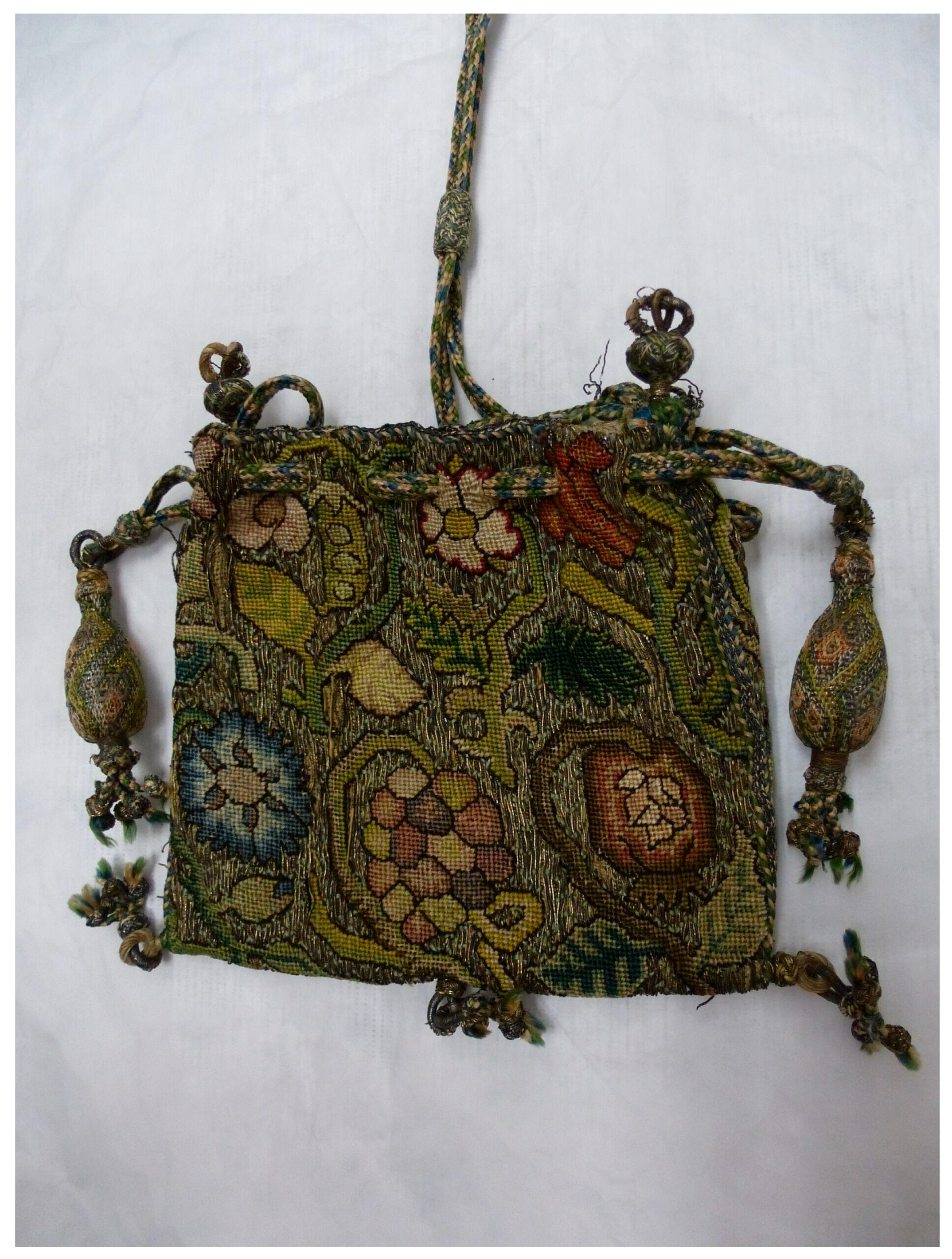
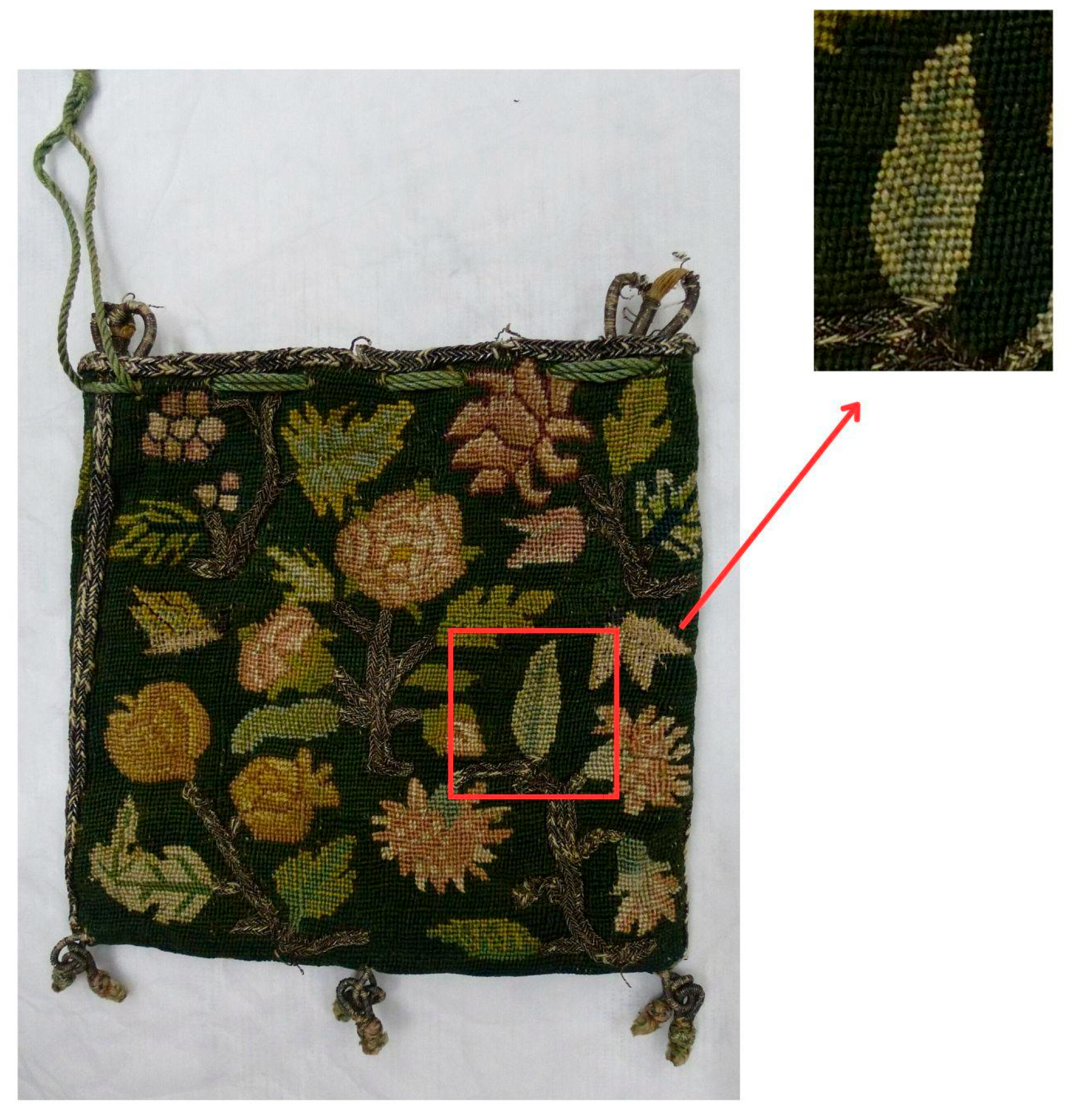
Is our nose capable of sensing the sweet bag as a historical artefact? Can we, today, still grasp its probable aromatic contents and the cultural meanings attached to the scents once enclosed within it? Even without prior knowledge of sweet bags, the floral embroidery of the bag in
Figure 1—one of the specimens preserved in the Victoria and Albert Museum—seems to invite the viewer to imagine its fragrance, as its stitched blooms hint at the fragrant botanicals that may once have filled the bags’ interior.
The process of rethinking starts with the bag’s design, featuring floral and fruit motifs, among which pomegranates, roses, carnations, acorns, and scrolling vines become possible to discern, executed in shades of green, blue, gold, red, and cream. The elaborate embroidery and costly threads suggest that such items were not intended for everyday use as purses or money pouches, but rather as demonstrative accessories or elegant gifts entailing a symbolic meaning (
Heal 2014, p. 144). These are some of the details that define the characteristics of sweet bags and their functions as expressions of refinement, status, and sensory sophistication in Early Modern culture.
By contrast, in the 16th century, money was typically carried in simple purses securely fastened to the girdle. Considering the substantial crime rates, valuable items, including coins, jewellery, or important letters, were often hidden as close to the body as possible. Given the short length of the ties and the nuanced embroidery on sweet bags (such as the one presented in
Figure 1), it is improbable that these items could have been hidden under clothing or attached to a waist belt. In addition, the limited number of preserved examples that are in decent condition emphasises their use primarily for special occasions rather than as everyday, utilitarian items (
Baines and Fennetaux 2020;
Foster 1982).
Beyond the visual appeal of their floral motifs and delicate craftsmanship, the descriptions of their occasionally enclosed contents reveal sweet bags as integral to olfactory heritage, offering a tangible connection to the sensory practices of the Early Modern period. For instance, a recipe from the eclectic compendium of practical knowledge, home remedies, and domestic arts Natura Exenterata (1655) lists ingredients for such accessories: “Oras, Cloves, Storax, Calamint, Calamus, Beniamyn, Cypres, white Sanders, Lavender, Bassill, Marjerome” (p. 467). Although such descriptions are not common, they are not rare either. Reading these recipes alongside the visual evidence allows one to contemplate the complex olfactory and material image of sweet bags. Instructions of this kind suggest that the term “sweet” may have originated from the bags’ ability to hold dried flowers and medicinal plants, offering protection against unpleasant odours or disease, or simply imparting a pleasant fragrance to the body or clothing, among other diverse uses. In this way, olfactory heritage provides a framework for linking the materiality of craftsmanship to the elusiveness of perfumed fillings, facilitating this connection through the olfactory gaze.
Olfactory heritage, as a counterpart to traditional visual- and fact-based forms of legacy, acknowledges the value of smells, despite their elusiveness, as mediums of information, meaning, and emotion in evoking cultural memory (
Bembibre and Strlič 2022). More broadly, the legacy of scents and smells is part of a sensory dimension of cultural intangible patrimony encompassing “practices, representations, expressions, knowledge, skills—as well as the instruments, objects, artifacts and cultural spaces associated therewith—that communities, groups and, in some cases, individuals recognize as part of their cultural heritage,” meaning that it refers to the dynamic, lived cultural expressions of communities (
UNESCO 2020). The identification of smells worthy of legacy involves the exploration of the olfactory components of traditions, customs, beliefs, historical narratives, material artefacts, and geographical locations. Smell can manifest as textual or visual references to scents, volatile organic compounds (VOCs) emitted by historical objects, spaces, or practices, or fragrant solutions like perfumes, aromatic liquids or historical scent reconstructions, or olfactory art designed to be experienced.
Naturally, not all smells constitute the olfactory heritage. Cecilia Bembibre Jacobo, drawing on the policy of Historic England, an organisation that manages historical objects and environments, and its instructions, outlined in
Conservation Principles, Policies and Guidance (2008), adjusts the institution’s criteria to determine which scents should be granted heritage recognition (
Bembibre Jacobo 2020). According to her view, an odour can be qualified as a “heritage smell” and have historical value when it helps establish links among historical communities, their activities, and their locations. Also, a smell can be considered important when it is associated with prominent figures or events. Another criterion is the social value of a scent, arising from collective experience and memory. Sweet bags correspond to all key heritage values: they are tied to historical communities through their presence in royal gift rolls and evoke prominent figures through their associations with Queen Elizabeth I, while their embedding in domestic, medicinal, and gendered traditions of scent, craftsmanship, and sensory expression reflects a collective past. Thus, olfactory heritage is constituted by smells that have arisen as a result of a selective focus of specific communities on certain aromas; they are not necessarily associated with a specific still-existing location, but instead have associative links with historical practices, events, or personas—as exemplified by the sweet bag that give a whiff into the story of the Early Modern English past.
The practice of the olfactory gaze, a concept coined and brought into active circulation by olfactory art historian and curator Caro Verbeek, can be particularly useful in defining olfactory heritage in a precise and meaningful way. She defines this notion as a mode of looking at images, texts, and objects with smell in mind, disrupting the default “scopic regime”
1 and revealing odour cues that would otherwise remain unseen (
Ehrich et al. n.d.). Olfactory hints are the first observations that show that a scent was once significant. These hints prompt us to recognise the smell (or the object carrying it) as a “heritage smell,” especially when it is tied to culturally or historically valuable materials. The term parallels other critical frameworks such as the “male gaze” or “female gaze”, highlighting that perception is conditioned by different factors, including cultural and sensory hierarchies (
Ehrich et al. n.d.). While the olfactory gaze uncovers overlooked scent cues in artworks or artefacts, olfactory heritage designates the process by which these sensory traces are preserved and legitimised as part of cultural memory (
Muller 2023, p. 190). Cultivating this gaze fosters recognition of neglected scent histories and contributes to the extension of olfactory heritage legacies. Together, olfactory gaze and olfactory heritage transform “hidden” scent stories into stable and transmissible forms of cultural knowledge. Thus, combining recipe analysis with the olfactory gaze enables a departure from the conventional classification of sweet bags merely as examples of “embroidery” or “needlework,” and moves toward recognising their olfactory potency. Through the olfactory gaze, bags are repositioned from aesthetic tokens to sensorial artefacts filled with the aromas of plants such as camomile, rose, coriander, nigella seed, cumin, betony, rosemary, and others. Their exterior embroidered floral patterns do not always correspond to the ingredients within, yet their contents were believed to possess healing powers capable of alleviating everything from melancholy to stomach ailments.
The concept of olfactory heritage can be situated within the broader framework of the smellscape, which encompasses the lived and spatial dimensions of smell. The idea of smellscape was introduced in 1984 by Daniel Wynne Gade, a professor of Geography at the University of Vermont, who, in his article “Redolence and Land Use on Nosy Be, Madagascar” (1984), defined it as a space with distinctive smells resulting from the area’s uses and human choices or intentions that shape those uses, which can be enhanced by environmental factors (
Gade 1984, pp. 29, 36), though their influence is limited by place boundaries that restrict their spread (
Gade 1984, p. 36). Smellscapes are classified based on their nature within a distal array and cause, including industrial waste, garbage accumulation, exhaust fumes, household vapours, local flora, and specialised horticulture (Gade, “Redolence and Land Use,” p. 37). Gade also introduced the term “nasal menu” to describe the diversity of aromas in a given environment (Gade, “Redolence and Land Use,” p. 36). Although Gade’s comprehensive definition established the concept of a smellscape, Douglas Porteous introduced it to the broader public in his 1985 article “Smellscape”, defining it by comparison to the landscape, but representing spatially ordered or place-related smells that, unlike a visual scene, cannot be captured like a photograph (
Porteous 1985, p. 360). According to Porteous’s views, odours are dispersed throughout space, and their intensity depends on time, weather, and movement (Porteous, “Smellscape,” p. 367). Porteous also emphasised the psychological component of smellscapes as well as hedonic reactions to smells, emotional or motivational arousal, individual and age-related responses, smells’ tolerance, preferences, and adaptations, all of which matter for the smellscape’s definition and experience (Porteous, “Smellscape,” p. 359). A key difference between Gade’s and Porteous’ theories lies in their approaches to conducting research. Gade studied the concept directly on site on the island of Nosy Be, while Porteous conducted a critical analysis of literary works (Trygg Engen, Edward Relph, Francis B. Colavita, Susan S. Schiffman, Rudyard Kipling, John Atkins, and Robert Ruark). It is also noteworthy that Porteous does not cite or otherwise acknowledge Gade in his work. Despite these differences, their views can be summarised as understanding the smellscape as the unity of a smell’s location, individual interpretation, and interactions with surrounding smells. These two central definitions of the smellscape enable us to envisage this concept as having a dynamic and multidimensional nature, which also allows us to describe it through the idea of a palimpsest,
2 meaning that each scent layer, whether related to culture, society, or nature, shapes and influences the next, making them mutually dependent.
While the smellscape describes the immediate sensory environment shaped by odours, olfactory heritage designates the historically and culturally significant elements of that environment, including the scents that persist in collective memory, become symbolically meaningful, and are transmitted across generations. Through the olfactory gaze, it becomes possible to discern how the sensory environment of the past, represented by the Early Modern smellscape, gave rise to specific forms of olfactory heritage embodied in objects such as sweet bags. Consequently, in what follows, the article positions sweet bags both through recipes that directly refer to these pouches as part of olfactory heritage, and through less explicit evidence, namely the presence of other small bags in culinary and medical instructions that may have served as their prototypes or inspiration, the social background of their production, and the brief linguistic genealogy of the term itself. The analysis also includes a comparison between the plant elements described in recipes and those represented in the embroidery of surviving bags. Taken together, these perspectives reveal sweet bags as inherently multisensory objects, whose study through recipes opens an additional interpretive dimension, one that brings smell back into dialogue with the surviving visual and material traces.
4. Sweet Bags as Olfactory Heritage Practices Reflected in Literary Recipes
The bag shown above in
Figure 1 is one of a number of similar embroidered bags used to hold herbs to give the body a pleasant scent, mask unpleasant odours, or serve symbolic purposes. Therefore, considering the definition of olfactory heritage—based on culturally significant smells rooted in a group’s communal life, recalling specific people, places, rituals, customs, and shared experiences that have shaped their sensory understanding—bags are examples of aromatic objects entailing certain traditions and routines meaningful in the Early Modern period. This section will examine the material traditions and domestic routines associated with sweet bags by tracing their preparation as documented in Early Modern cookbooks, medical compendiums, and household manuals, where detailed ingredient lists for fillings offer invaluable insights into how tangible heritage and sensory perception were interwoven and the impact of this connection on daily life and the physical conditions of Early Modern people. A systematic and chronological analysis of recipes for decorative aromatic bags, aiming to delve into the complex sensory inputs such accessories provided and the range of their potential applications will be described. The analysis of literary sources is vital because the scents themselves cannot be physically preserved over centuries. By studying how sweet bags are mentioned in these texts, researchers can further connect them to aspects of olfactory heritage such as the material reconstruction of scent content, the ways scent characteristics were created, and how a community described and categorised particular aromas. At the end, a general definition of sweet bags will be drawn.
One of the earliest sweet bag recipes is found in Markham’s
Countrey Contentments, or The English Husvvife (1623), a book that, in its extended title, already emphasises the importance of “skill in […] perfumes.” The method for creating such bags appears in a homonymous section titled “Skill in Perfumes.” Additionally, the sweet bag instructions are found among such entries as “An Excellent Water for Perfume,” “To Perfume Gloves,” “To Perfume a Jerkin,” “To Make Washing Balls,” “To Make a Musk Ball,” “A Perfume to Burn,” and “To Make Pomander.” This peculiarity of the book’s organisational approach, with the distinction of the olfactory component, will be seen in later publications by various authors. One of the recipes in Markham’s collection
3 provides a lengthy instruction, beginning with taking numerous botanicals and aromatics, such as “Arras, Gallaminis, Ciris”, dried rose leaves, marjoram, and sandalwood, and subsequently beating them “into a grosse pouder” (
Markham 1623, p. 140). This powder is then enriched with costly animal musk, civet, and ambergris before being sealed into a taffeta bag (
Markham 1623, p. 140).
The only technical element that visually describes the bag is taffeta, a common type of fabric in the Early Modern period. For example, according to Richard Hakluyt’s collection of travelogues and voyage literature,
Principal Navigations, in 1589, English privateers seized goods such as taffeta, silk, and Madeira wine from Iberian ships, often by force and under the cover of deception. One of these episodes is described in “The Voiage of the Right Honorable George Erie of Cumberland to the Azores, &c.,” written by the mathematician and engineer Edward Wright and edited by Richard Hakluyt as a chapter in his
Navigations. During an attack on one of the easternmost Azorean islands, called São Miguel, the English fleet raised a Spanish flag to disguise their identity. At night, Englishmen attacked ships anchored at the port, cut their ropes, and captured the Spaniards. When they towed away three ships, many people from the Spanish crew panicked and leapt into the sea, raising the alarm. The city’s response was cannon fire, which was unsuccessful due to the darkness. Interestingly, Scots aboard one ship pretended to shoot at the English but later deserted and offered their services. One of the captured ships contained 30 barrels of Madeira wine, wool, silk, and taffeta. This episode illustrates how materials used for sweet bags—including fine fabrics like taffeta and silk, among others—were acquired during England’s expansionist maritime ventures (
Hakluyt 1903, pp. 3–4).
There is also a variation on the preparation of a sweet bag in another medical treatise on diagnosing, understanding, and treating internal diseases, Praxis Medicinæ, or The Physitian’s Practise: Wherein Are Contained All Inward Diseases from the Head to the Foot (1632) by Gualtherus Bruele. It is important to note that a second, corrected edition was published in 1639, but for the purposes of this discussion, which aims to identify the moment when smell bags first appeared in print, all quotations are taken from the 1632 edition. The following excerpt provides another example of a sweet bag recipe:
℞ of Betony leaues, flowers of Camomile, Roses, ana M i. of the seeds of Nigella, ana ℥ ss, of prepared Coriander, ana ʒ iij. being dried, let them be beaten a little, and let them be sewed in a linnen cloth like a pillow.
What is interesting here is that the visual and physical component of the sweet bag is explicitly mentioned through its shape, “like a pillow”, and material, “a linnen cloth.” In addition, the recipe specifies that the herbs should be dried, ground, and then sewn into a small linen bag. This detail adds to the ideas of bags’ appearance and filling’s arrangement, ranging from floral scents of roses, through herbaceous notes of camomile and betony, to pungent and savoury coriander and nigella.
The same resource also notes that “a bag of Maioram, Betony, Rosemary, Conserue of Rosemary Flowers, Aorus…” (
Bruele 1632, p. 5) was used for the treatment of headache, specifically
cephalea (general headache) and
hemicranea (one-sided headache, i.e., migraine). Bruele also states that the aromatic components “shall be applied to those veines which swell about the part affected: or to the end of the nose” (
Bruele 1632, p. 7). In this way, the tip of the nose becomes a sensitive and therapeutic site, and because the perception of fragrances was understood as a form of healing, the use of such decorative accessories within reach of the nose became a reasonable practice. Following the sniffing pattern, Bruele recommended another method of treating headaches, where aroma compounds, including “flowers of Staechas, of Rosemary, Sage, Betony, Maioram, Origan, dried Worme-wood…Nutmegs, Mace,” should be “sewed into a red cloth, whereof make a bagge in the forme of a cap,”
4 (
Bruele 1632, p. 11). Although this recipe refers to a non-square-shaped object, the very practice of mixing herbs and enclosing them in fabric suggests the prevalence of small aromatic or medicinal sachets (
Bruele 1632, p. 11). Additionally, the recipe states that the composition can be used for several months, indicating its durability and lasting fragrance. In
Praxis Medicinæ, or The Physitian’s Practise (1632), there are also recommendations for heart ailments, which, as in the case of the headache recipe, require adding the same ingredients and placing them in a bag or pomander
5 (
Bruele 1632, p. 211). The appearance of the pomander highlights the interrelation between practices of smelling aromatic substances enclosed in fabric bags and the subsequent habit of using a solid vessel for personal scent-carrying. Although
Praxis Medicinæ does not contain a separate section or chapter on scented objects, it includes numerous examples of such bags being used as compresses or worn on the body.
A later and more detailed reference can be found in the seventeenth-century broad-scope therapeutic and practical encyclopaedia of medicine and household management, Natura Exenterata (1655), of a collaborative, possibly anonymous or pseudonymous authorship. This work equally offers remedies for wounds, sores, scabs, itch, worms, kidney and stones, as well as instructions for the artistry of crafting and filling sweet bags with lavender. Guidelines on how to fill pouches with aromatic ingredients appear in the section titled “Certain very good perfumes” (p. 460). Although this rubric suggests a focus on scents, related perfume recipes are scattered throughout the whole compendium. “Certain very good perfumes” opens with royal perfumes’ recipes, namely “King Henry’s,” “King Edward’s,” and “the French Queen’s,” perfumes. These are followed by entries titled “Another Fine Perfume” (p. 461) and “Another Other Perfume” (p. 461), as well as a list of herbs suitable for perfuming. The section then transitions to recipes for aromatic gloves and subsequently to pomanders. It is only after these instructions that three distinct recipes for sweet bags appear, followed by several formulas for preparing aromatic powders specifically for these pouches. The contextual placement of sweet bags within other olfactory objects and practices shows a continuum of aromatic traditions aimed at maintaining health, cleanliness, ideas of beauty, and, often, emotional regulation through scent. This positioning suggests that readers were expected to know where to look for such items and how they were used in everyday life, while the absence of sewing instructions or other technical details in sweet bag-filling recipes further implies a pre-existing familiarity among Early Modern readers with the craft of these or similar pouches. Moreover, putting scent bags in a relatively separate section makes this book similar to Markham’s Countrey Contentments, or The English Husvvife. Their appearance following instructions for pomanders aligns with humoral theory, as both items were employed to prevent foul air, uplift the spirits, and find the balance between emotions and cognition.
The next two recipes from Natura Exenterata offer illustrative examples:
To make a sweet Bagge.
Orras Gallia Muscata
Calamus Aromaticus
Cipres roots
Fussis
…
Storax, Calamint
Beniamin
Fine Marjorme gently dryed
Eares of Lavender dryed
Five or six grains of Musk, Civet or Amber
Put in your eares of Lavender, and Marjerom whole:
This precise list of sweet bag ingredients is preceded by a block of three options for creating aromatic powder to be sewn into silk bags:
A sweet pouder to be sown in silk bagges.
Take Roses, yeallow Sanders, Belzonum, Spick, Cypres of each a like, beat them in a Morter.
Another.
Take Belzonum, Storax, Calamint, Cloves of each two oun|ces, fine Yreos six ounces, yeallow Sanders three ounces, fine Musk twenty graines.
Another.
Take Roles, Orras, Spick, sweet Marjerom dryed, Fossis, Cy|pres, Belzonum of each a like quantity.
These recipes, even though they specify the material used—silk—do not indicate the size of the bags. Occasionally, quantities of herbs are given in ounces, yet further measurements are generally absent.
In addition to the above-mentioned, less specified uses of the bags, Early Modern medical recipe books, which often incorporate elements of a miscellany and household manuals, contain other examples of herbal pouches created for more precise purposes (at least according to the instructions present). For instance, small bags designed to perfume linen can be clearly identified in
Delightes for Ladies to Adorne Their Persons, Tables, Closets, and Distillatories with Beauties, Banquets, Perfumes and Waters, appearing in editions of 1602 and 1611. As with
Praxis Medicinæ, it is important to note the existence of a later edition, however, to trace the earliest printed references to smell bags; this discussion cites the 1602 edition. One of the recipes is called “
Sweet bags to lie among linnen”, which recommends filling the bags with “Rhodium finely beaten” (
Plat 1602). Lignum rhodium is a general name for several types of plants that are united by a rose-like fragrance that comes from their essential oils.
Another source, whose very title already conveys a talent for fragrance,
Polygraphice, or the arts of drawing, engraving, etching, limning, painting, washing, varnishing, gilding, colouring, dying, beautifying and perfuming (1675), provides additional evidence of the use of scented sachets in everyday life for perfuming linen. It recommends placing aromatic powders made from damask rose leaves, musk, and violet in sachets among clothing (
Salmon et al. 1675, p. 318),
6 confirming the practical household function of sweet bags and sachets as textile perfumes. This recipe is also quite simple, containing only three ingredients, namely damask rose leaves, violet leaves, and musk. In this case, the ingredients’ measurements (“one pound,” “half a drachm,” “three ounces”) are also indicated, in contrast to some guidelines mentioned earlier. As in the previous recipes, the process of preparing the herbs is also specified (“mix them”).
Of particular interest is the instruction that follows immediately, whose title, “V. Another for the same or to wear about on,”
7 already indicates its purpose. The recipe recommends creating a powder to be carried and applied directly to the body, albeit without specifications for amounts or proportions. To prepare it, in addition to the usual rose and musk, ingredients such as cloves, spikenard, storax, and cinnamon should be mixed together and placed in small bags (
Salmon et al. 1675, pp. 318–19). The absence of detailed instructions for use may indicate that such mixtures and pouches were familiar to people and did not have clearly defined use rules.
After a brief examination of the aforementioned titles “IV. A Sweet Powder to lay among cloaths” and “V. Another for the same or to wear about one,” as well as the ingredients of the recipes, one might gain the impression that the two entries are identical. However, they possess notable differences. Both recipes were indeed meant to scent clothing, but the second one is extended to a dual purpose “for the same or to wear about one,” where the second distinctive part implies personal use, possibly sewn into a sweet bag or worn on the body. The fact that the second recipe is also for bags that can be carried on the body confirms its more complex composition. Thus, each recipe contains dried rose leaves as a base (the first specifying damask rose, a more fragrant variety), and both include musk, while the second also incorporates cloves, spikenard, storax, and cinnamon. From this, it can be concluded that the first is more minimalistic, reflecting its household use. The second has a richer, more ceremonial tone, suggesting bodily proximity and perhaps higher social or ritual value. These two recipes show how sweet bags moved between home, wardrobe, and the body.
In the same edition of
Polygraphice (1675), the following recipe is again devoted to domestic use of scented bags, namely for placing them among linen, rather than for personal use.
8 Interestingly, Salmon, Clark, and Crumpe offer three different powder options for linen and other household needs. Thus, the third option differs in terms of ingredients and the duration of the fragrance’s persistence—up to twenty years (
Salmon et al. 1675, 319).
9Polygraphice, like some other books, is divided into sections. Sweet bags are mentioned in the section entitled “Of Perfuming Powdres” (p. 425), followed by “Of Perfuming Balsams” (p. 425). Thus, this position once again shows that the creation of fragrant objects was part of everyday life, rooting them in the history of culture. Many of the ingredients (e.g., rosemary, orris root, chamomile, thyme) had humoral and medical associations, suggesting that sweet bags were valued not merely for their fragrance but also for their protective, therapeutic qualities against foul air (miasma), disease, and melancholy.
Another confirmation of the use of sweet bags for perfuming linen, as well as their filling with powders, appears in
The Ladies Dictionary: Being a General Entertainment of the Fair-Sex, a Work Never Attempted Before in English (1694).
10 The recipe “Powders for the Hair, Linen and Sweet Bags” includes detailed instructions for aromatic mixtures promising “Great Efficacy for Ladyes” (
N. H. 1694). What distinguishes this recipe is its explicit reference to the seductive function of scent, marking a departure from the more common medicinal or hygienic applications. The mixture in question is composed of florentine iris, iris roots, red rose leaves, violets, marjoram, and the frequently mentioned benjamin, cloves, and styrax, ingredients that not only imparted a pleasant fragrance to linen and hair but were also believed to influence those nearby and even “bewitch” a stubborn man: “if nevertheless you meet with any that defies your Charms, and is obstinate, do you not despair; for we will teach you how you shall tickle his Nose with a Powder, and cartously fetch him about with is” (
N. H. 1694). This instance treats powders for hair, linen, and sweet bags as variations on a single formula, showing that Early Modern scent practices involved beauty and domestic domains. The partially identical base—iris root, cloves, storax, benjamin, and musk—and the similarity in preparation suggest that the same aromatic blend could be useful for multiple textile and body surfaces. Such migration from linens (cleanliness) to hairstyles (grooming) emphasises the interconnections between household management and personal care. Notably, in this example, fragrance is also shown as an instrument of flirtation, as the phrase “tickle his nose with a powder, and cautiously fetch him about with it” implies. As the same sachet could be sewn by women, stored in a wardrobe, perfumed a coiffure, and wafted toward a suitor, a new smellscape dominated by female practices emerged. The recipe thus affirms that sweet bags were more than handcrafted utilitarian objects, and they participated in a female-controlled sensory economy that blended domestic order, bodily display, and even sexual agency.
An interesting variation among objects designed to preserve aromas is the “sweet ball,” a small, portable scent object akin to a pomander, intended to perfume clothing, bedding, or the hands when carried or gently heated. Such objects are mentioned in the recipe for Oleum Imperiale, an aromatic and luxurious oil based on ambergris, styrax, rose oil, cinnamon, and clove oils.
11 A special feature is that the sediment formed after twenty days of infusion was used to create multifunctional sweet balls (
Salmon et al. 1675), solid aromatic objects made from the fragrant residues—amber and storax—left after distilling Oleum Imperiale, which could serve as sachets for clothing, beads for the hands, or incense for burning. Inasmuch as this recipe is for Oleum Imperiale, the remaining sediment after oil preparation can be reused to make other aromatic objects, which would guarantee extensive use of such ingredients as ambergris, musk, storax, and civet.
When examining the contents of sweet bags, some aromatic herbs appear more frequently than others. Ingredients such as rosemary, orris root, chamomile, and thyme carried humoral and medical associations, reinforcing the notion that these bags functioned not merely as sources of pleasure but as therapeutic protectors against foul air (miasma), disease, and melancholy. Yet, beyond familiar materials like musk, civet, and amber, the recipes also feature less common and sometimes surprising ingredients. For example,
orras or, as it appears in
Natura Exenterata (
Philiatros 1655, p. 466), “Yreos and Orras spick, “refers to orris, the root of the iris plant, especially
Iris germanica or
Iris florentina, valued for its violet-like fragrance (
Miller 1807, p. 784). Later in the text, examples of bags containing depictions of the iris will be presented. In
A New Medical Dictionary; Or, General Repository of Physic (1791), iris is described in a way that suggests that it was familiar to the public: “but in the dried state in which we commonly have it in our shops, he [Dr. Cullen] considers it as an insignificant expectorant,” and later, “As a medicine it is an useful expectorant; it attenuates viscid phlegm, and promotes its discharge” (
Motherby and Wallis 1791, p. 454).
The reference to phlegm and to the cold and moist qualities of the human organism shows that this plant may have been used to restore the body’s internal equilibrium, preventing the physical and mental sluggishness associated with a phlegmatic imbalance. Orris was also used to powder wigs and hair. It is worth noting that cough remedies, toothpastes, tooth powders and liqueurs had orris root in their formulas to add flavour (
Van Wyk and Wink 2017, p. 194). This broad use of the plant, based on its sensory profile, makes it a fitting ingredient for sweet bags.
Calamus aromaticus is an old Latin name (now treated as a synonym) for
Acorus calamus L., the “sweet flag,” a plant with aromatic rhizomes used in perfumery and medicine. The plant was likely imported from the Levant or India. Once dried, it preserves its fixed aroma for many years, losing the leek-like scent of the fresh root. Traditionally,
Acorus calamus has been used as a carminative and digestive treatment. It can help release spasms, relieve stomach cramps, stimulate appetite, and even ease asthma. In an unhygienic environment, a digestive aroma would have been a logical addition (
Motherby and Wallis 1791, pp. 177–78).
Storax is a resin obtained from the storax tree (
Styrax officinalis), used in incense and perfumery. The tree and its bloom slightly resemble some floral motifs often embroidered on sweet bags. A substance called “calamita” is sometimes interpreted as a dry form of storax, as opposed to the liquid version. There are different types of storax, but this recipe likely refers to the regular kind, a fragrant, brownish resin prepared with added sawdust and valued in medicine and perfumery for its stimulating and strengthening effects. This resin was typically obtained from the bark of
Styrax officinale trees in Syria and the Levant (
Motherby and Wallis 1791, p. 682).
Calamint, an aromatic herb of the
Calamintha genus (related to mint), was included for its fresh, minty scent. Benzoin, also known as benjamin, is a balsamic resin derived from the bark of various
Styrax species. It has a sweet, balsamic odour, and an acrid, bittersweet taste. The inclusion of these ingredients means that they were often found in Early Modern households (
Henderson 1890).
In
Natura Exenterata, at the ingredient level,
Belzonum, which is likely benzoin, a sweet-smelling oleo-resin obtained from
Styrax benzoin and
S. tonkinense, both trees native to Java, Thailand, and other tropical parts of Asia, appears quite often. Known among Arab sources as “the frankincense of Java,” benzoin was a key ingredient in pomanders, incenses, and soaps, and was used to give “body” to perfumes. Today, it functions as a fixative and is commonly added to sachets and potpourri. With its vanilla-like aroma, benzoin was also used medicinally to soothe irritated skin, relieve respiratory issues (such as coughs, bronchitis, and sore throats), and expel phlegm in humoral terms. It was additionally applied in cosmetics to promote clear skin.
Storax and
calamint also appear in these recipes.
Spick likely refers to spikenard, a perfumery material derived from plants growing in the high mountain regions of the Himalayas. Spikenard has a strong scent reminiscent of patchouli and valerian, with a faint musk-like undertone.
Yeallow Sanders stands for yellow sandalwood (
Santalum album), a tall evergreen tree native to southern India, later cultivated in the Royal Botanical Gardens at Kew in the nineteenth century (
Henderson 1890).
Sandalwood acts as a diuretic, promoting the flow of urine and supporting the genitourinary system. Its antiseptic properties enhance its efficacy in treating urinary tract infections such as gleet, gonorrhoea, bladder infections, and chronic cystitis. As an expectorant, it loosens phlegm and congestion in the respiratory system, easing chronic bronchitis, a dry cough, a sore throat, and inflammation of mucous tissues. Traditionally, this aromatic, bittersweet herb has also been used to treat digestive disorders, relieving indigestion, stomachache, and vomiting (
Van Wyk and Wink 2017, p. 324). Being an analgesic that soothes pain, it relieves headaches, abdominal pain, and spasms. Applied externally, sandalwood benefits bacterial skin conditions such as dermatitis, acne, and psoriasis, and has been used in deodorants and mouthwashes for its antibacterial and cleansing effects. Multifunctional and purifying, sandalwood acts upon both the body’s surface and its interior—from the skin to the stomach (
McHugh 2012). This duality parallels the use of sweet bags, whose external application served to soothe internal symptoms through aromatic and therapeutic means. Summing up the brief review, it is impossible not to notice how the filling of the recipes has been refined and the thematic separation of such bags from other recipes has emerged.
Thus, after the analysis conducted in the previous paragraphs, sweet bags can be defined as small, embroidered fabric pouches essential to Early Modern olfactory heritage. These aromatic objects served multiple roles; namely, they provided a pleasant personal scent, masked unpleasant odours (especially in the context of miasma theory), and were widely used for therapeutic and medicinal purposes (e.g., treating headaches). Furthermore, they played a significant part in domestic management by perfuming linen and were later integrated into personal care and social display, even being noted as instruments of flirtation. Analysis of Early Modern sources, including medical compendiums and household manuals, reveals the complex fillings of these bags, among which were rose leaves, marjoram, calamus aromaticus, and orris root, to name but a few. These botanicals were often combined with valuable resins and fixatives like benzoin, storax, and high-cost animal products such as musk, civet, and ambergris to ensure the longevity of the fragrance.
6. Recipes vs. Objects
The previous sections of the analysis looked at recipes and their components. The next step will be to analyse whether there are any matches between the ingredients listed in the recipe descriptions and the images on the bags.
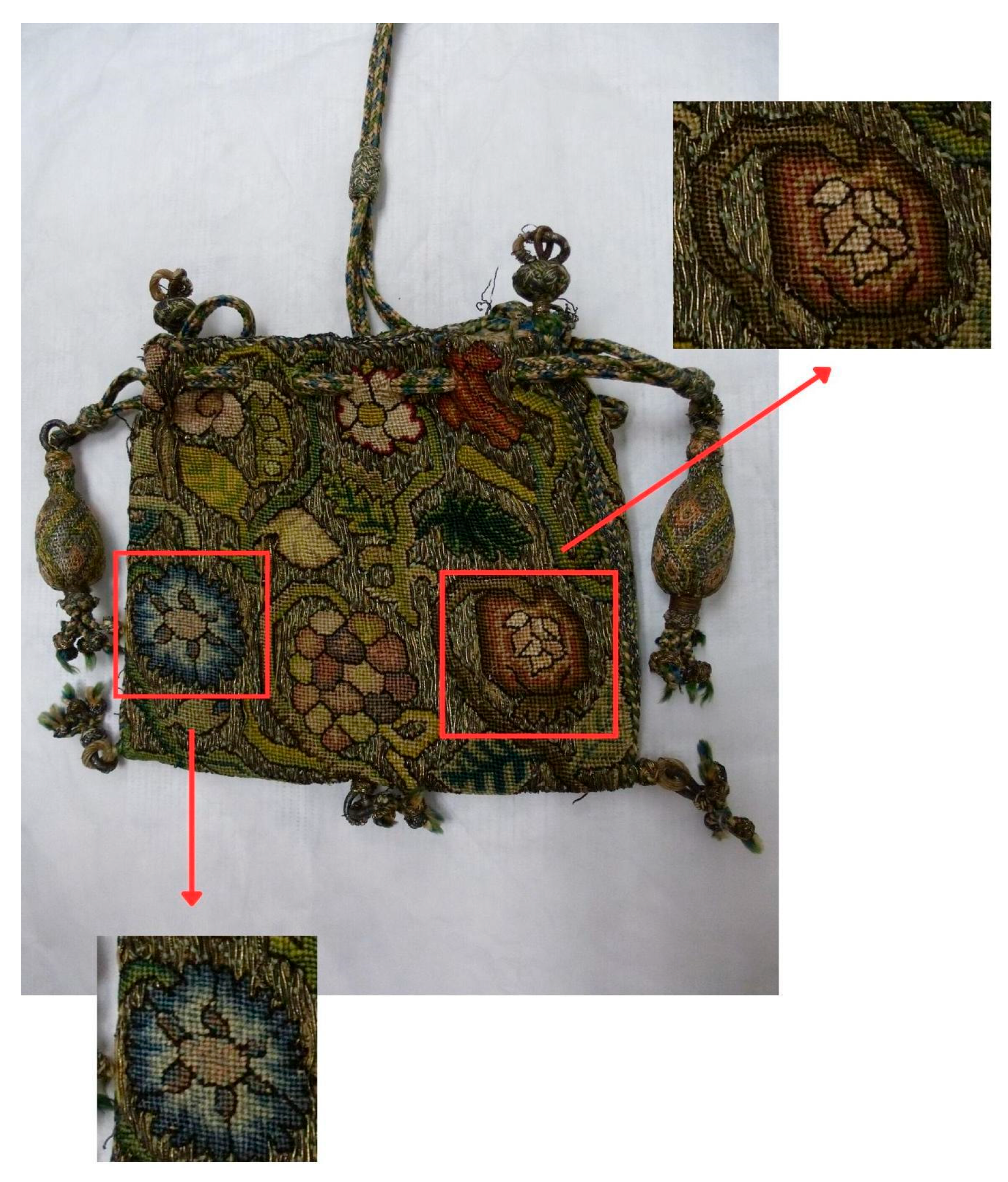
To explore possible overlaps between the recipes and the embroidered vegetation on sweet bags, pieces from the Victoria and Albert Museum’s online collection were examined. Working with the online catalogue and its descriptions revealed recurring floral motifs, particularly the rose, which not only appears frequently among the listed ingredients but also dominates the decorative patterns of most surviving bags. The first image at the beginning of this article shows a bag decorated with floral representations resembling a rose in shades of red, cream, and pink, as well as plants similar to irises, or possibly violets. Among these, carnations can also be identified, though they are rarely mentioned in recipes. For clarity, an example of a carnation is shown in
Figure 2 in its embroidered form and in
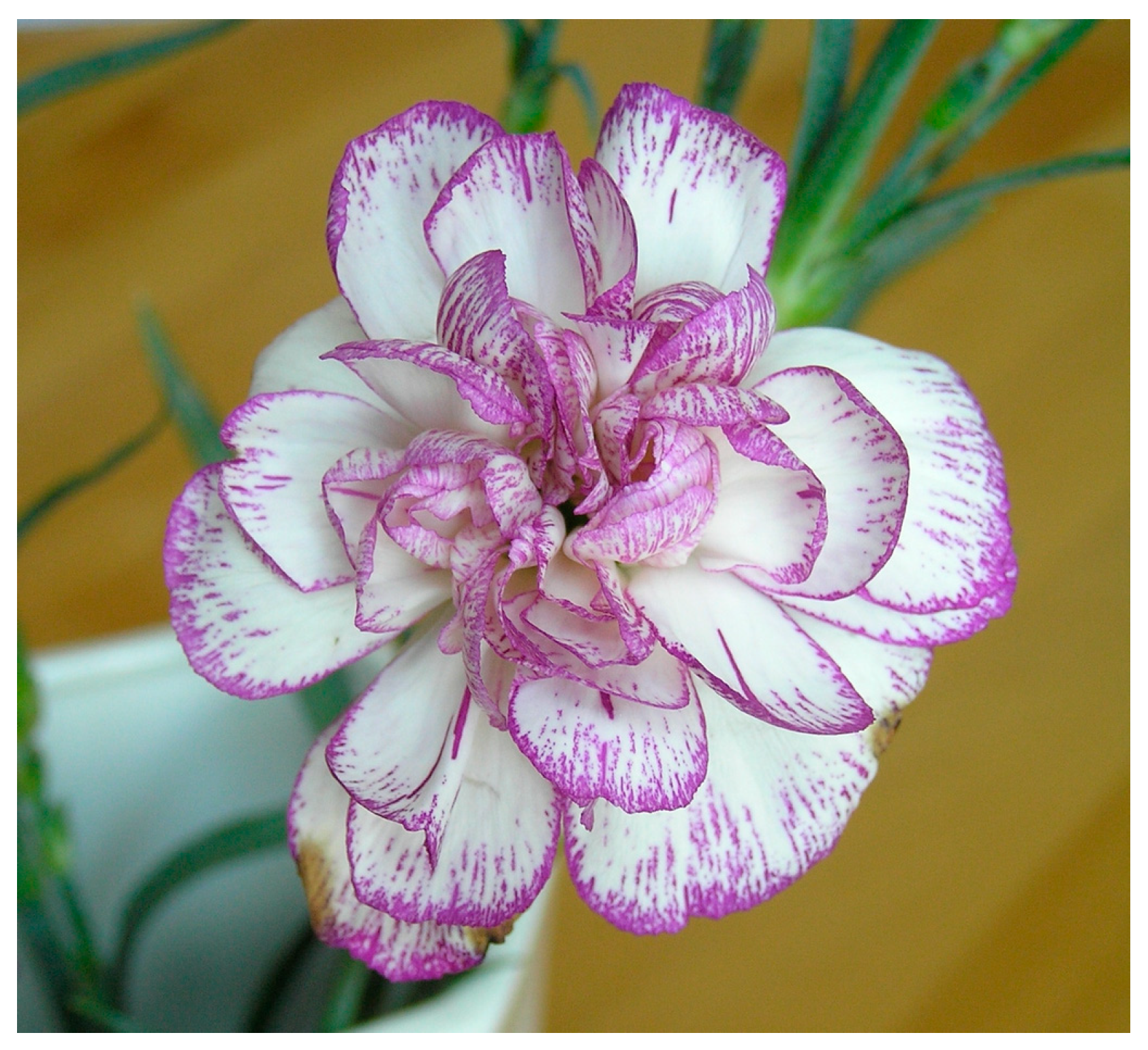
Figure 3 as it appears in real life. On the other hand, the blue and rust-red variants may symbolically echo common Early Modern motifs such as the Tudor rose.
Figure 3 depicts a carnation, a versatile floral type, whose densely layered, overlapping petals could inspire a range of embroidery motifs. Additionally, the relative simplicity of its form made it particularly adaptable for embroidered representation.
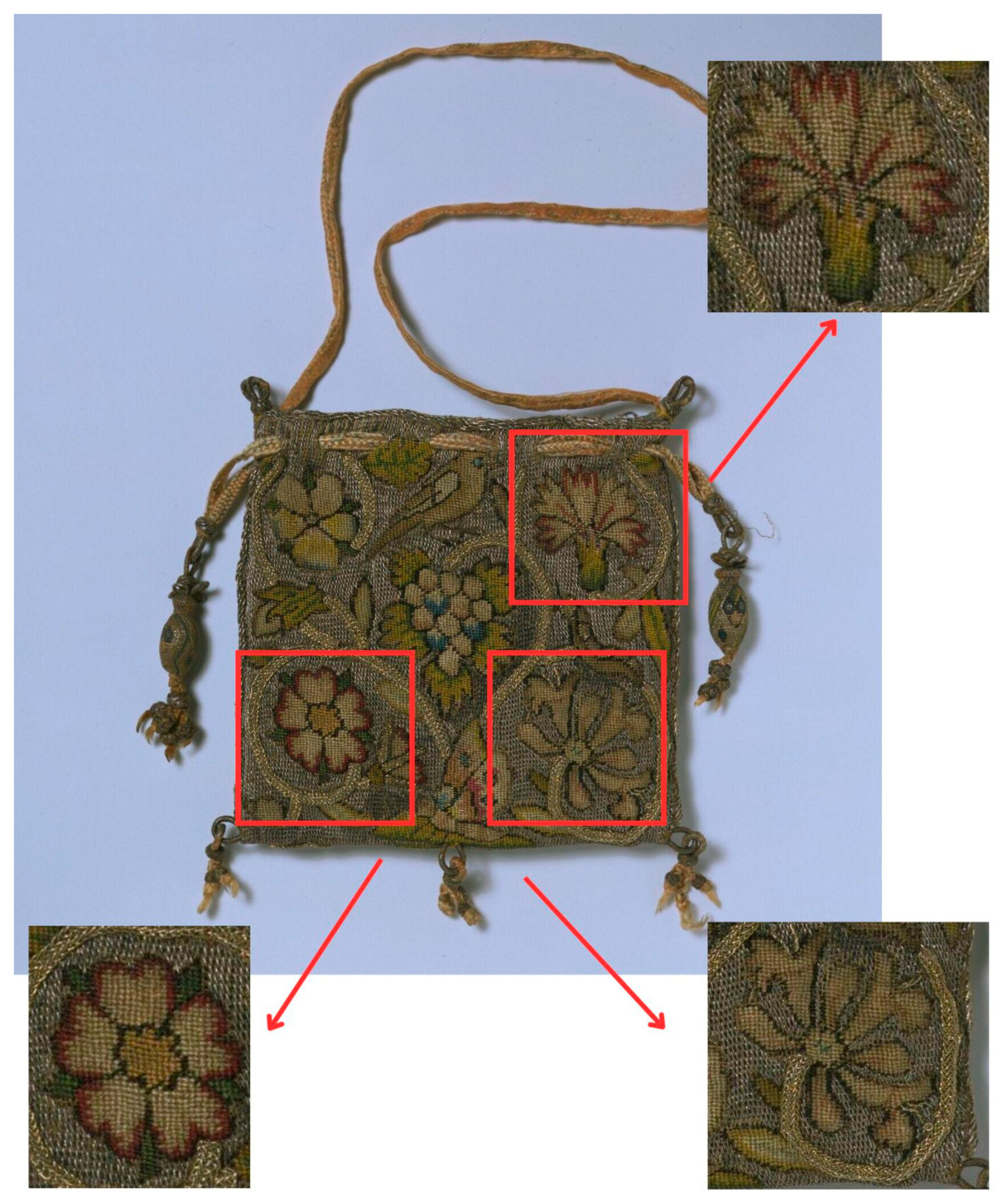
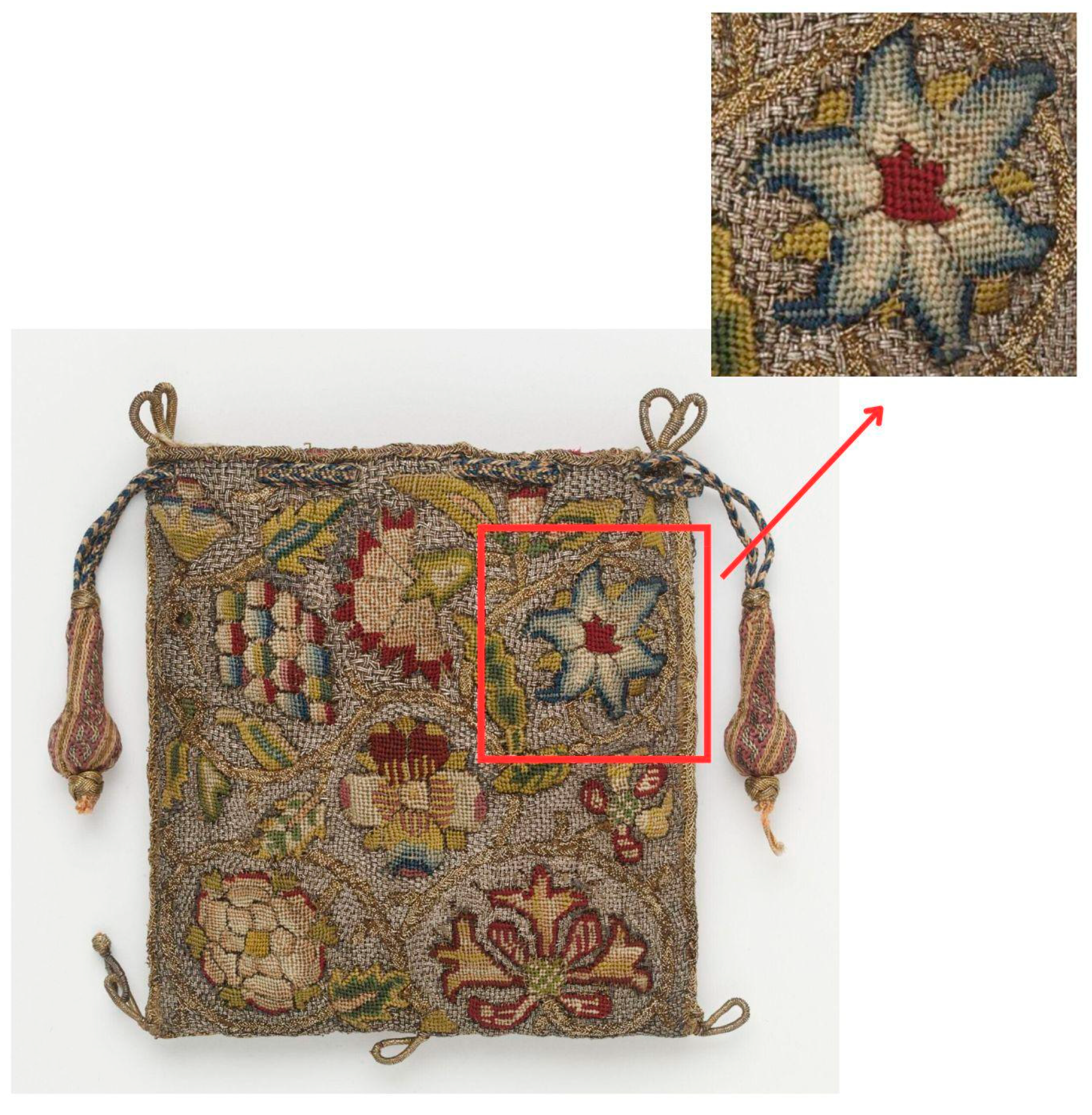
The next recognisable element is the iris, as depicted in
Figure 4, positioned in the upper right corner, whose elongated leaves and veined petals also appear on some surviving bags.
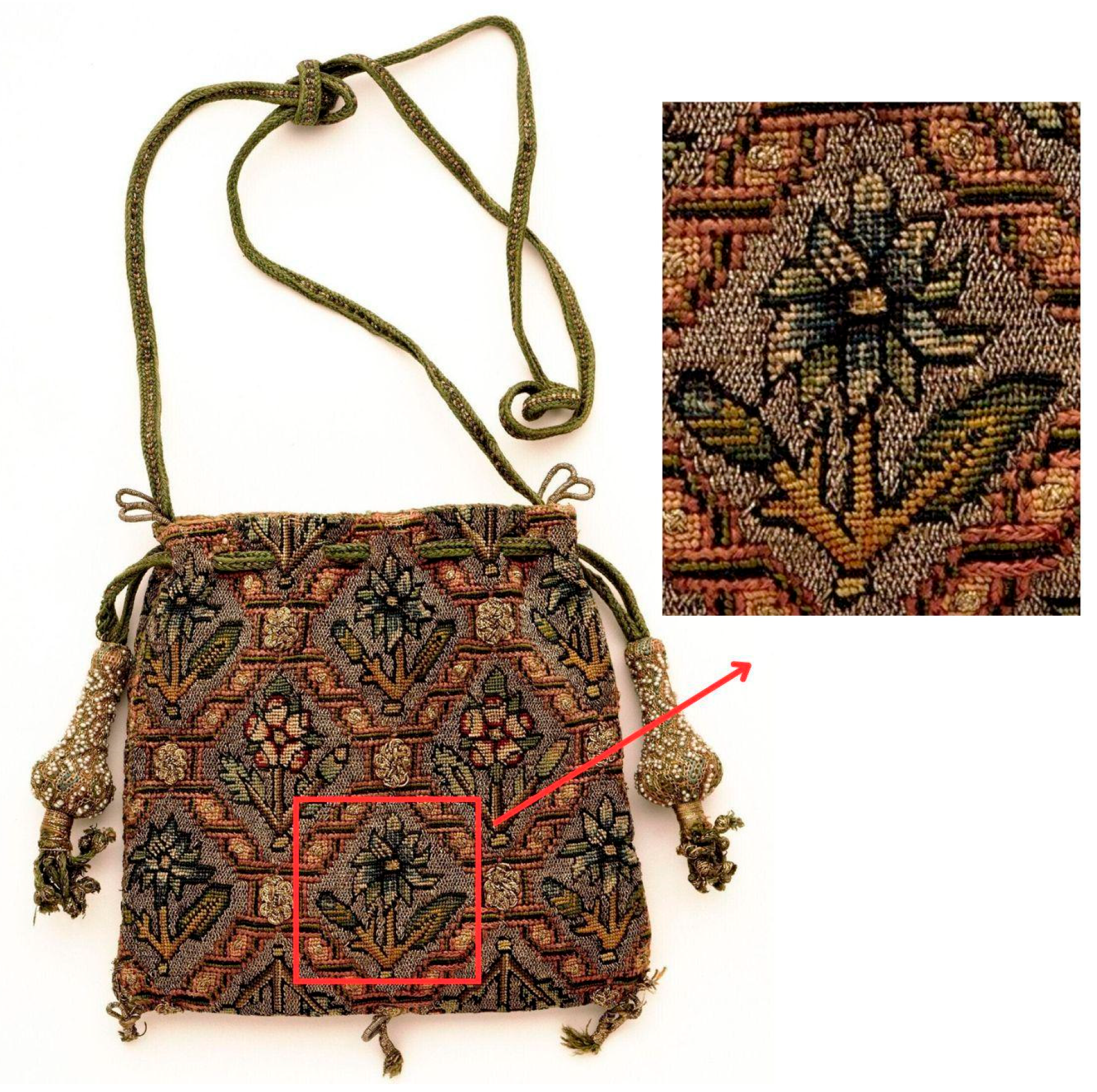
In the embroidery of the bag shown in
Figure 4, and less distinctly in
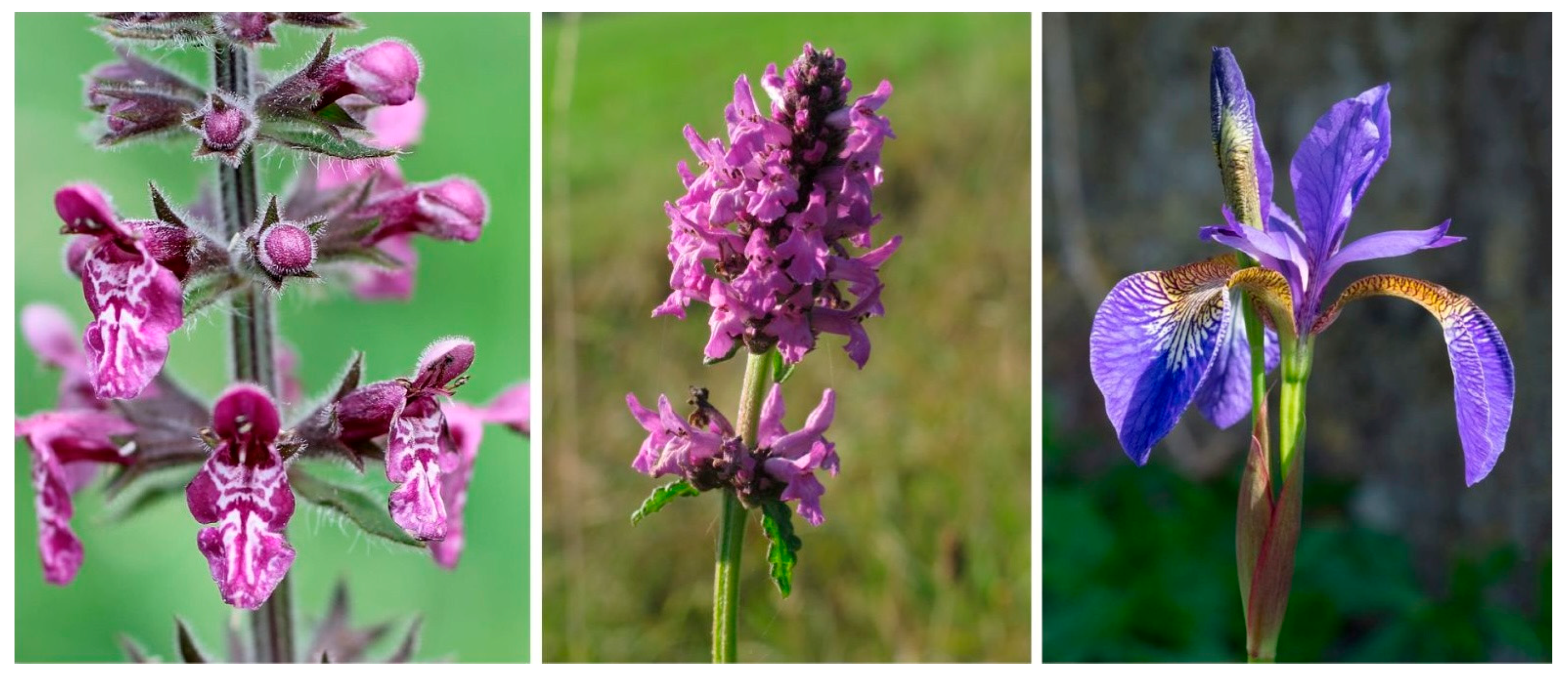
Figure 2, alongside irises and roses, it is possible to identify a betony plant in the bottom right corner, distinguished by its spiked, clustered flower form, which might be reflected in the upright flowering spikes embroidered on some bags. For comparison, below in
Figure 5, two species of betony (
Stachys officinalis and
Betonica grandiflora) are shown alongside with the aforementioned iris (
Iris sibirica) from
Figure 4. Looking at these flowers, one can imagine how their spiked, clustered forms might have inspired the upright flowering motifs embroidered on some bags.
Furthermore, other flowers, such as violets, make a more prominent appearance in the next two examples.
Figure 6 and
Figure 7 probably have heart-shaped leaves and blossoms in shades of purple and blue.
The flowers in
Figure 6 and
Figure 7 bear a distant resemblance to violets due to the distinctly pointed form of their petals, although this plant is not mentioned in the recipes. The inclusion of such a form, or one recalling it, may be explained by the flower’s relative simplicity. As with the carnation (
Figure 2 and
Figure 3), the radial arrangement of petals made it suited for embroidered representation. The resemblance of many embroidered plants to violets may also be explained by the flower’s popularity in cultivation. Violets and related species were widely grown in borders, cottage gardens, and naturalistic plantings due to their resilience and long flowering season from late spring through autumn. The embroidered version of the violets in
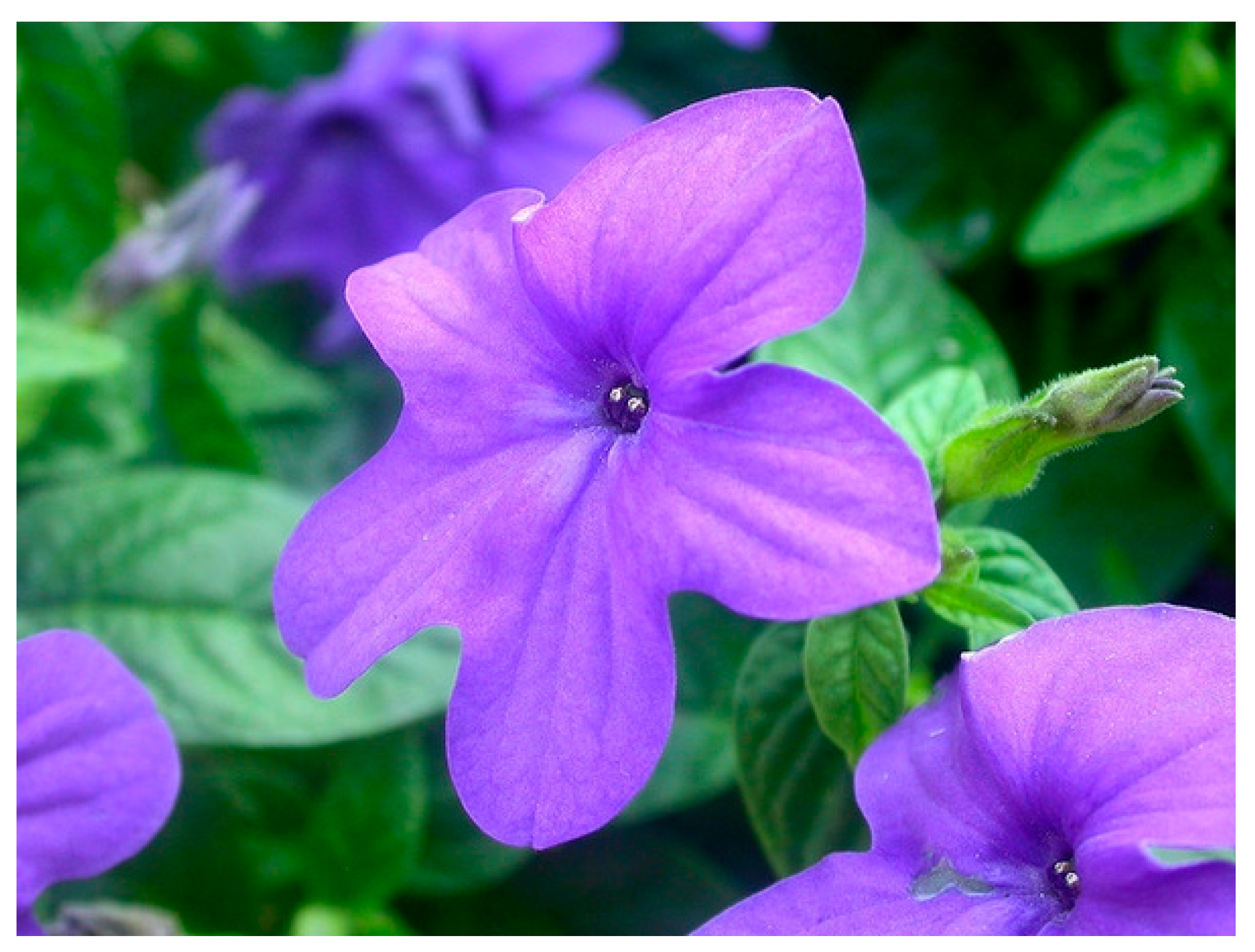
Figure 7 can be compared with their real-life appearance, shown in
Figure 8.
The next recurring plant is marjoram in
Figure 9. Often rendered as small, clustered florets or sprigs, though not individually identifiable, these recur as part of the filler foliage.
Having considered the embroidered motifs on the bag shown in
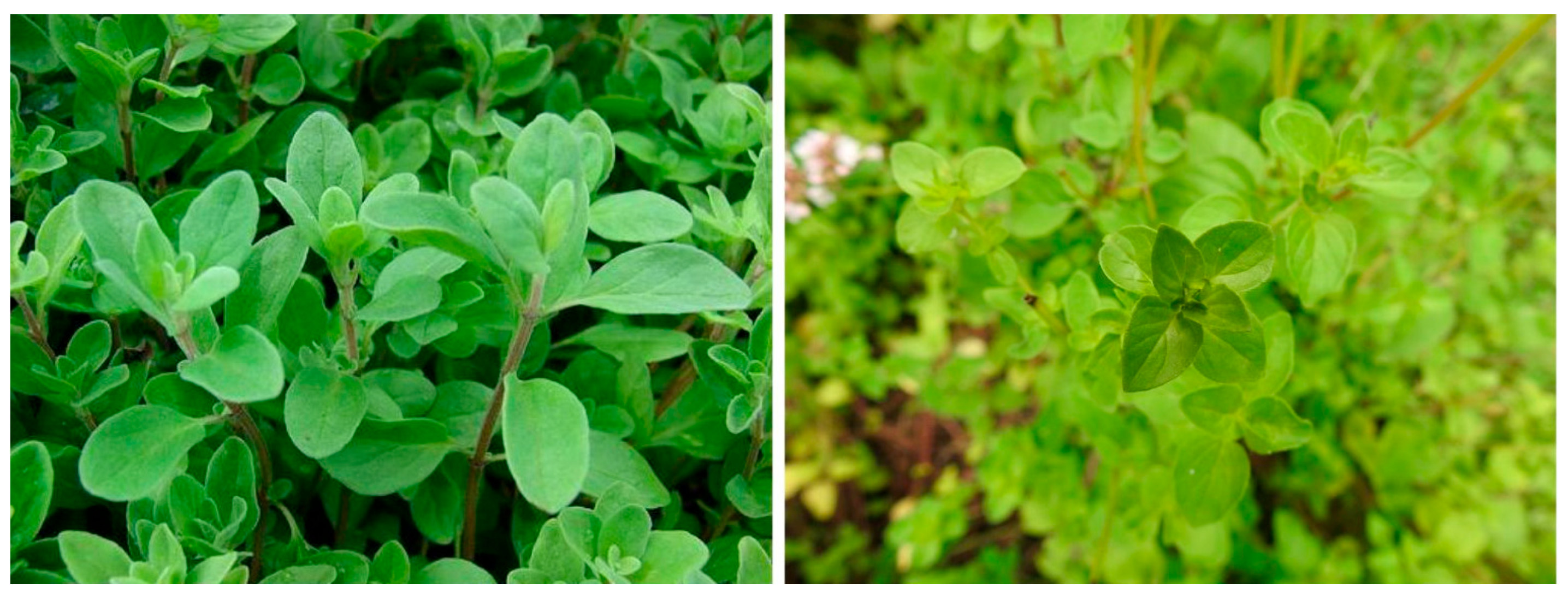
Figure 9, a comparison with the actual plant proves instructive, as
Figure 10 shows how marjoram (
Origanum majorana) appears in nature.
Origanum majorana exhibits a compact growth pattern and paired leaves.
In the recipe mentioned above, “Powders for the Hair, Linen and Sweet Bags” (
N. H. 1694), which not only perfumes the body and garments but is also said to charm men, florentine iris, iris roots, and marjoram are mentioned together. Marjoram is also present in recipes from
Polygraphice, or the Arts of Drawing, Engraving, Etching, Limning, Painting, Washing, Varnishing, Gilding, Colouring, Dying, Beautifying and Perfuming, which include instructions to “put them into bags to lay amongst linen,” and in another recipe for sweet bags that describes mixtures capable of retaining their aroma for up to twenty years.
It is important to note that small circular seed-like motifs resembling coriander, nigella, and various other seeds are less explicitly illustrated in floral form but still noticeable. These details appear in decorative backgrounds or among vines, possibly referencing spice seeds abstractly.
Thus, only a few clear correspondences are immediately noticeable. A potentially more effective approach might be to first examine how plants such as coriander, camomile, sage, or saffron were typically represented in embroidery on other objects. These comparative examples could then serve as reference points for analysing their possible appearance on sweet bags. However, even this method does not guarantee a reliable identification of specific plants. It is also possible that the craftswomen were not always familiar with the actual appearance of the herbs and instead embroidered stylised or imagined botanical forms for decorative purposes.