1. Introduction
The promise of digitized construction has been significantly unfulfilled. Since the 50’s, business leaders have asserted “no human decisions, no human responsibility, no human management” will be needed, resulting in a “technocrats’ paradise” [
1]. Academic thought leaders [
2] have noted that information communication technology (ICT) has a history of evolving “slowly and expensively” for the private sector. However, promoters, such as software companies, have continued to market their products as problem-solvers and productivity enhancers. Yet, buyers have hesitated to adopt ICT or have done so incrementally for various reasons.
A smart city is an urban area where digital technologies and data collection improve the quality of life and the sustainability and efficiency of city operations [
3]. To support smart city development, governments in different countries publish their smart city strategies and practices to advance economic development [
4]. Existing reports discuss smart city development from multiple perspectives, including citizen-centric strategies, smart grid security, resilience, and air quality, using ICT [
5,
6,
7,
8]. Given these diversified studies on technologies, there is a shortage on digital construction implementation across the whole project lifecycle to facilitate related processes in smart city development.
Building information modelling (BIM) offers the Architecture, Engineering, Construction, and Operations (AECO) industry an opportunity to leverage digital technologies to advance smart city construction. Simultaneously, the continuous development of digital technologies, such as Internet of Things (IoT), cloud computing, big data, artificial intelligence (AI), etc., have extended BIM into digital twins (DT) and city information modelling (CIM) [
9,
10,
11,
12]. These enablers create opportunities to implement digital construction throughout the project lifecycle, fostering a more sustainable and intelligent built environment. Relevant research examines the integration of digital construction technologies into smart buildings and urban development to meet the expectations of building users. Nevertheless, challenges remain in handling data transitions between digital construction and smart city development [
10]. ISO 19650 [
13], an international standard for managing information throughout the lifecycle of a built asset using BIM, provides a viable approach to smart city development by accumulating asset information across the project lifecycle.
However, the AECO industry still has difficulties adopting BIM in smart city construction for the following reasons. Firstly, there are few illustrative cases of BIM implementation throughout the entire project lifecycle to retain digital built assets. Most project cases applying BIM focus on specific stages of the project lifecycle, such as design, scheduling, and cost control [
14]. Such fragmented BIM applications cannot suggest lifecycle BIM implementation. Secondly, a wide range of digital construction technologies as the ecosystem makes the data interoperability unpredictable among tools. This leads to the difficulty of selecting tools to satisfy lifecycle needs at the beginning of the project. Thirdly, digital construction lacks long-term planning, mature and reliable approaches, and applicable strategies in organizations to maximize its values in the project lifecycle processes. Lastly, information collection and confirmation are not articulated—it is implied—leaving practitioners with an unclear process [
15]. These drawbacks highlight the lack of a digital transformation roadmap, both technical and organizational.
The foregoing discussed challenges can be concretized when organizations, particularly Small- and Medium-sized Enterprises (SMEs), who are in a transitional period from BIM Stage 1 to 2 following ISO 19650, adopt digital construction into project lifecycle under their specific situations [
16]. They need clear strategies to support practical workflows for deliverables, and interoperable software packages for applications at various project phases. By targeting these aspects, this paper aims to identify potential solutions based on the case study of the Forest City development. It servs a referred example for digital transformation in organizations, who seek applicable digitalized workflows, to implement digital construction in the project lifecycle, and thus to meet the needs of smart city development.
The structure of this paper consists of seven sections.
Section 2 is the literature review to highlight the state-of-the-art current policy and standards, trends on digital transformation, project lifecycle implementation and delivery approach, as well as availabilities of popular digital technologies.
Section 3 discusses a proposition to contextualize the current Stage 2 framework of ISO 19650, and a parallel approach in the research method to examining multiple projects delivered by an organization. The aggregated information can thus reflect related strategies and tactics of this organization.
Section 4 focuses on the construction of Forest City as a case study from a multifaceted perspective of BIM strategy, workflow digitalization, and process digitization to examine their implementation features, applicability, and adoptability.
Section 5 discusses implications and recommendations for organization performing digital construction based on analysis of digital workflows in the case study.
Section 6 is the discussion on findings of the contextualized Stage 2 framework of ISO 19650 in project lifecycle, and
Section 7 is the conclusion.
2. State-of-the-Art
Digital construction implementation across the project lifecycle relies on not only technology but also on multiple factors of policy and standard, effective strategy, project delivery approach, and digital transformation in organizations. This section reviews these non-technological influential factors and enabling digital technologies to gain insights into digital construction implementation in the project lifecycle.
2.1. Policy and Standards
Since the 2009 Copenhagen Summit (COP 15) of the 15th United Nations Climate Change Conference, the UK has pursued the deployment of green and low-carbon emission-reduction measures. One of the important areas is to raise energy efficiency and reduce waste in the construction industry. Because BIM has decreased construction costs, increased Multifactor (KLEMS: K-capital, L-labor, E-energy, M-materials, and S-purchased services) productivity, reduced waste during construction, and improved operation and lowered maintenance cycles of buildings, the UK government established a BIM task group to formulate a series of BIM standards called BIM Level 2 [
17].
The UK BIM task group aimed to guide the construction industry in adopting BIM and to ensure that all government-funded public construction projects in the UK adopt it by 2016, while reducing carbon emissions by 25% across the industry. One assessment of BIM Level 2 across all UK projects indicates that BIM saved £840 million in construction costs in 2013/2014 [
18]. Due to the positive results in BIM-enabled results, the UK BIM Level 2 series have been embedded into ISO 19650 for information management in the AECO industry and recognized by associations and governments worldwide.
The strong software industry in the USA, on the other hand, needs confidence to boost for the adoption of ICT applications in its construction industry. From the BIM Stage 1 using computer-aided design (CAD) to the current BIM Stage 2 of using object-oriented CAD, namely BIM, in terms of ISO 19650, USA software like Bentley MicroStation, Autodesk AutoCAD, and Revit have become the mainstream toolkits for the AECO industry. The National Institute of Building Sciences (NIBS) of the USA has formulated the national BIM standard [
19], laying the foundation for the adoption of the Industrial Foundation Classes (IFC) by the U.S. BIM software industry to achieve data interoperability among programs. This data standard and its derivatives, such as COBie (Construction and Operation Building Information Exchange Standard), are also promoted by buildingSMART International as part of openBIM standards [
20] to increase the efficacy of digitization for the construction industry.
2.2. ISO 19650 Information Management Layer
ISO 19650 inherits the core information management framework from the UK BIM Level 2, in which BIM maturity levels, information delivery cycle, Common Data Environment (CDE), and standards are key components. Originally, there are four BIM levels defined from Level 0 to 3 to represent element-based CAD at Level 0 and 1, object-oriented CAD (namely BIM) at Level 2, and more advanced openBIM at Level 3. These BIM maturity levels show and predict the evolution of technology in the AECO industry. Moreover, UK BIM Level 2 standard introduces the CapEx-OpEx (Capital Expenditure–Operating Expenditure) concept in its information delivery cycle diagram to convey the principle of information management in terms of Employer’s Information Requirements (EIR), BIM Execution Plan (BEP), Master Information Delivery Plan (MIDP), product information model (PIM), and asset information model (AIM). Additionally, CDE is the information repository to support the information model development from PIM to final AIM as retained asset information across the project lifecycle. Various UK national standards underline and support all related activities for the information management and technological aspects.
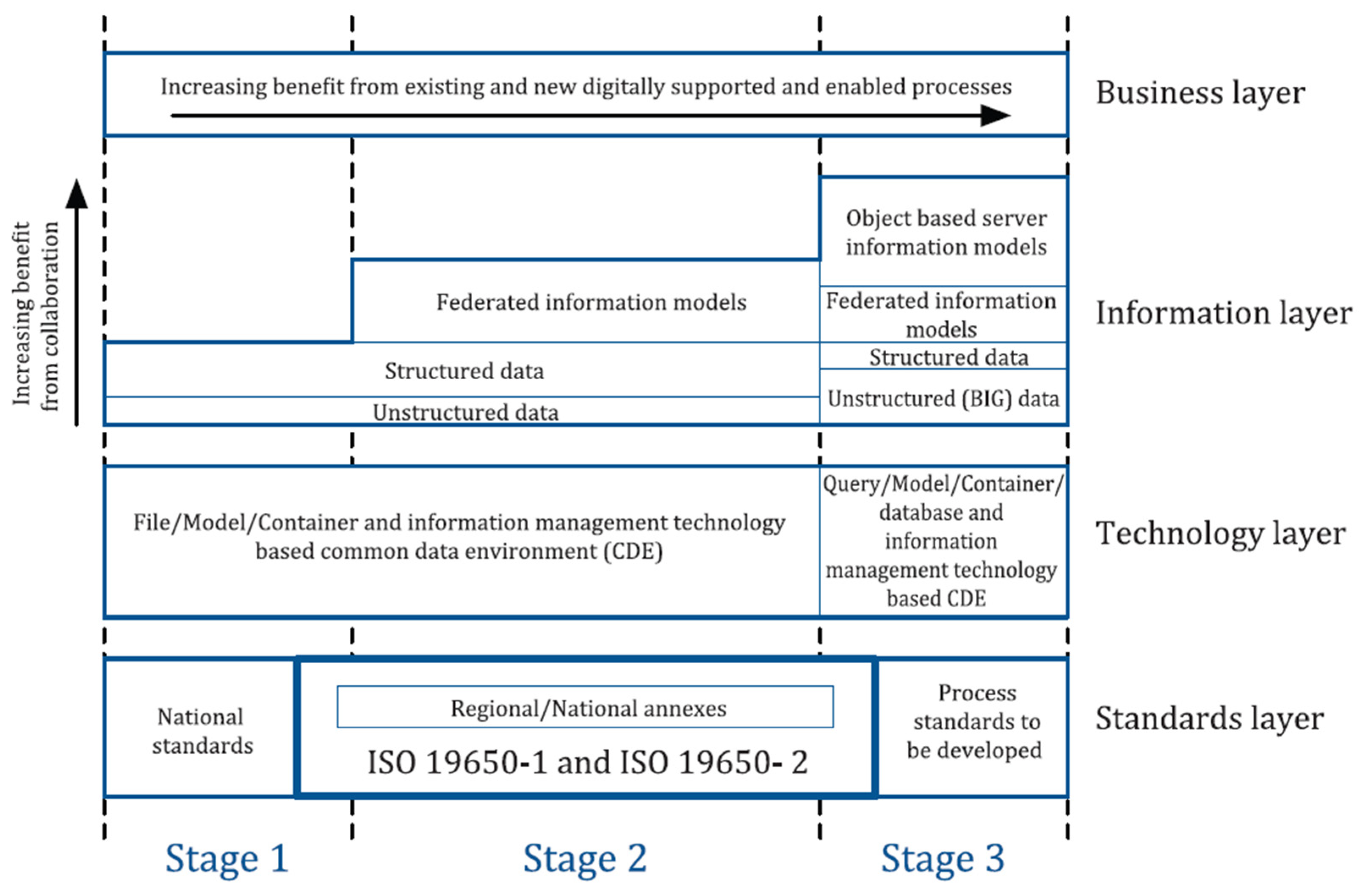
Migrating from the UK BIM Level 2 standard to suit international requests, ISO 19650 merges BIM Level 0 and 1 into BIM Stage 1 to represent general CAD activities for analogue information management whilst BIM Stage 2 corresponding to BIM Level 2 for digital information management. Specifically, ISO 19650 has three layers of business, information, and technology for information management at Stage 2 (
Figure 1). The business layer is for owners to establish information requirements (IR) through documentations of OIR, PIR, AIR, and EIR. In the meantime, contractors are responsible for PIM creation and continuously develop it into AIM. This commitment is based on contractors’ BEP responses to satisfy EIR and then be appointed to undertake BIM implementation. All these concepts are illustrated in its information management process.
The data incremental process from PIM to AIM is dependent on both layers of information and technology. ISO 19650 suggests applying federated disciplinary BIM models like architecture, structure, and MEP to manage the information layer. Simultaneously, a CDE at the technology layer needs to support federated BIM applications in various process activities to supply required graphics and non-graphics data or documents and retain asset information as AIM. Three-dimensional design authoring and coordination as a key activity in the design phase is addressed in the standard for clarifying the concept of containers and their working mechanisms in the CDE.
This three-layer information management structure only outlines a rough framework for projects to be implemented in the involved phases. A more contextualized ISO 19650 is necessary for owners to develop details for IR at the business layer whilst contractors ought to have a decision process of TIDP→MIDP→Pre-appointment BEP to respond to EIR. Once being appointed for the project delivery, contractors need to specify Delivery Team BEP to implement the project accordingly. Within this standardized framework of ISO 19650, contractors shall ensure their digital delivery capability, mobilize relevant resources, and apply relevant digital technologies in activities to satisfy IR at both information layer and technology layer.
2.3. Project Lifecycle Implementation
ISO 19650 advocates that BIM is applied throughout the project lifecycle to support relevant process activities. It enables seamless collaboration to bridge gaps among multidisciplinary information islands existing in design, construction, operation, and maintenance [
21]. This advocated benefit is verified by different studies [
14,
22]. Nevertheless, lifecycle BIM implementation still has enormous barriers due to cost-efficiency, standardization, technology and application, and trained professionals [
22,
23]. These factors are also influential for SMEs as contractors who have limited investments to set up sufficient implementation infrastructures. Seeking suitable implementation approaches to satisfy the information and the technology layers in ISO 19650 has no fixed solutions, which are dependent on individual organizations’ situations and visions [
16,
23]. It is a challenge for contractors that the PIM-AIM evolution process needs to combine cost-efficient delivery approaches with owners’ business interests of retaining built assets digitally.
The owner as client is a driver in implementing BIM into project lifecycle according to ISO 19650, since various information requirements are initiated from clients. Research also points out that BIM implementation hardly reaches the latter stages like operation and maintenance [
14]. This highlights the importance of clients mandating BIM requirements to enable the accumulation of AIM based on PIM during construction processes. It thus indicates a general strategy of client pull upstream and contractor push downstream for implementing BIM throughout the project lifecycle. This is one of reasons why the UK government “develop its capability as a construction client and act as an exemplary client across the industry”, stated in the Government Construction Strategy (GCS) 2016-20 [
24], which is the continuity based on the success of GCS 2011-15 [
17]. It had a mandate for fully collaborative 3D BIM on centrally procured government construction projects by 2016.
2.4. Project Delivery Approach
The lifecycle BIM implementation also depends on project delivery approaches, with the traditional Design–Bid–Build and the more widely recommended Integrated Project Delivery (IPD) as two important options for contractors. The former is widely adopted in the construction industry and the latter is increasingly considered a natural partner of BIM to facilitate project delivery [
25,
26,
27,
28]. Because of the popularity of traditional Design–Bid–Build in project delivery, UK BIM Level 2 or ISO 19650 targets this traditional approach to information management to elicit relevant information requirements, such as OIR, PIR, AIR, and EIR [
13], from owners, and gain response from contractors using BEP. Simultaneously, designers are usually not in the same organizations with the owner and contractors. Such an organizational barrier, in fact, is negative to facilitate BIM adoption due to various issues in communication, collaboration, standardization, interoperability, and so on [
27].
IPD is advocated to integrate fragmented stakeholders into a unified project delivery effort, enabling multiparty communication and collaboration by overcoming hurdles that the Design–Bid–Build approach [
26] cannot. It is broadly acknowledged that mutual respect and trust and early involvement of key stakeholders is vital to the successfulness of IPD [
27]. The MacLeamy Curve illustrates such notions to maximize BIM benefits from early design adoptions throughout the whole project lifecycle. Nevertheless, IPD implementation remains challenges worldwide, and a lack of BIM support is one of the highlighted problems by different studies [
25,
28]. This recognition triggers further consideration of digital transformation in organizations to establish sufficient digital delivery capability no matter what project delivery approaches to follow. ISO 19650 is yet a guidance for digital transformation for organizations like SMEs, who need to seek possibilities or breakthrough to cultivate relevant digital delivery competency according to their own situations.
2.5. Digital Transformation in Organization
Digital transformation is described as the adoption of BIM for the creation, production, and administration of constructed assets through collaborative and data intensive methodology [
29]. It goes beyond the technology perspective and asks for clarified roles, processes, and project organizational structures to be firmly established. As such, to facilitate communication and collaboration among stakeholders across fragmented multidiscipline [
30]. The AECO industry attempts to respond to this question from different perspectives to facilitate digital transformation in organizations.
One study proposes a conceptual model of BIM adoption for developing countries that considers multiple contextual, strategic, and adoption factors [
23]. It serves a high-level directional guidance for project managers, policymakers, and leaders who are interested in leveraging digital transformation through BIM adoption. On the other hand, Digital Construction Company Maturity Model (DCCMM) is created to address the challenge of implementing and integrating digital technologies and processes into existing company structures [
31]. It provides construction companies with a holistic framework based on transparent and comprehensible indicators to reflect the digitalization degree of their own structures. This model is applicable for organizations at an enterprise-level to follow a strategic way to consider digital transformation before taking actions.
At a project level for BIM implementation, BEP is a key document to specify involved tasks and resources for teamwork through effective information management. It is essential regarding who-will-do-what-and-when within a contractual project boundary [
29]. Pronounced outputs before ISO 19650 are the “BIM Planning Guide for Facility Owners” and the “BIM Project Execution Planning Guide” for contractors, respectively [
32,
33]. The former outlines related procedures to create a strategy for integrating BIM throughout an owned organization. The latter provides guidance for contractors to implement BIM in their projects. Such high-level guidance is positive for organizations to consider their strategies. However, contractors need to take their project’s contexts into account to implement it at an operational level.
Moreover, the Integrated Digital Delivery (IDD) best practice framework suggests guidelines to implement digital technologies for stakeholders in an efficient, safe, and integrated construction project [
34]. In its Designers category, the best practice of BEP is highlighted for design consistency and smooth information flow among stakeholders. It hence requires clear insights into relevant workflows to manage involved tasks, resources, and related parties to fulfill task performance needs. The current ISO 19650 aligned BEP templates, e.g., Delivery Team BIM Execution Plan [
35], consider 3D design coordination as a core process in the document without involving other nD modelling activities due to its high-level BIM implementation framework nature and contractors’ diversity. Therefore, the establishment of digital workflows is strongly dependent on contractors’ adoption of specific technologies and applications into processes at the information layer, which requires stakeholders’ know-how and understanding to be created based on dedicated project contexts [
36]. It also involves relevant CDE constitution at the technology layer to underpin the information layer.
Resistance to change is a conspicuous factor in organizational and cultural change when adopting BIM. For the purpose of achieving successful BIM adoption, research suggests that an organization ought to take advantage of potential benefits and understand the need of BIM that relies on changes within its organization [
37]. Once this is realized, the improvement of digital skills and workforce capabilities are then required. The results of an interview conducted in Ireland amongst construction professionals show a disparity between BIM adoption (57%) and the willingness/ease of reverting back to traditional work methods (43%) [
37]. Both studies indicate that relevant benchmarking for digital enabled project delivery is necessary for organizations to establish confidence step-by-step so that to continue their digital transformation efforts. Otherwise, unperceivable cost-benefit would frustrate organizations’ ambitions.
A recent study seconds that the BIM recognition is increasingly from a socio-technical perspective instead of a merely technology-centric tool [
38]. The Technology–Organization–Environment (TOE) framework is discussed in a socio-technical context to assess BIM adoption situations based on the Swedish AECO industry [
39]. It evaluates BIM implementation by applying three dimensions of technology, organization, and environment. A range of barriers from each dimension are applied within its empirical study to consider potential influences. However, the research is short of project contexts to examine implementation details at an operational level, especially aligning with industry recognized standards like ISO 19650 to assess related dimensional impacts. Regardless these pitfalls, the highlighted TOE framework provides a theoretical foundation to examine digital construction implementation.
2.6. BIM-Integrated Digital Technology Ecosystems
It is worth mentioning that BIM is increasingly integrated with other digital technologies to contribute to digital transformation in organizations and acceleration of their project lifecycle adoption. BIM, as a working philosophy, encompasses processes, people, policies, and digital technologies, such as object-oriented CAD by default [
40]. A range of other digital technologies, including cloud computing, IoT, big data, DT, AI, and geographic information system (GIS), can enrich the technological domain in BIM and enhance contractors’ delivery capabilities to satisfy smart city developers’ strategies.
Cloud computing ensures business scalability by providing organizations with the ability to expand their operations effortlessly without the need for additional infrastructure, to manage peak periods of demand [
41]. This minimizes operational costs and enhances collaboration seamlessly, unlike traditional business operations that require significant IT infrastructure when there is a need to expand due to spikes in demand. This advanced computing technology shifts CDE from original document management systems into more integrated data centric platforms, on which multi-service and multi-field collaboration can be achieved in the cloud [
42]. This highlights possibilities for contractors to apply vertical cloud systems more efficiently in project delivery processes, such as 4D planning, 5D cost estimation, and digital asset retaining and handover for 6D maintenance and operation applications. It also paves the way to enable conceptual CIM to be practical for smart city developers to integrate city management [
43].
IoT embeds sensors, software, electronics, and network connectivity into devices to gather and share information across the internet [
44]. This advanced feature promotes IoT to integrate with BIM and GIS. Some studies indicate that IoT-BIM-GIS integration is widely applied for construction safety and onsite resource monitoring [
45,
46]. Contractors can adopt this valuable feature to enhance their project management capabilities to be more proactive, safe, dynamic, and accurate. In the meantime, BIM provides both geometric and semantic information to support DT applications in specific contexts. It thus bridges the physical and digital domains to have up-to-date requirements, present conditions and future status of buildings and infrastructures for efficient facility and asset management. Such dynamic data ensures owners to perform informed decision making regarding built assets [
47].
DT also shows great potentials to facilitate digital construction implementation across the project lifecycle. A research framework proposes to leverage surveying sensors and IoT (SSIoT) technologies for monitoring the quality of residential building developments [
48]. Its BIM-SSIoT integration aggregates comprehensive lifecycle data of residential projects, including design, construction, operation, and maintenance. Another study targets the commissioning of building control systems to investigate a DT-based assessment of a building’s energy performance throughout its lifecycle [
49]. It emphasizes the model data integration from simulation during early design and the whole lifespan of a building to improve building operations through data-driven simulation.
DT is synthesized tightly with BIM from not only early design to consider long-term building operation and maintenance but also urban management applications. To explore reliable virtual models to combine BIM with DT, virtual in situ modelling (VIM) is discussed to represent building behaviors from modelling environments, model types, modelling sources, modelling approaches, and model fusion techniques [
50]. It verifies that VIM can facilitate BIM-DT integration to achieve advanced building operations and maintenance. Extending to the macro CIM from BIM, DT creation is also discussed in city planning to apply higher-level LOD building models defined by CityGML [
51]. An automated approach to generating a LOD4 semantic building model is investigated [
52]. It utilizes RGB images as only input for building exteriors and interiors whilst building entrance is common areas to synthesize the first two. Based on those post-processed by an algorithm, this method can generate semantic building models for LOD4 applications.
CIM is significantly supported by IoT for real-time data capturing to supply required information for DT applications. It allows the interconnection of sensing and actuating devices that provide the ability to share information across platforms using a unified framework [
53]. Contemporary adoption of IoT provides the benefit of accessing live data for condition reporting. Notwithstanding, the massive amount of data produced by the IoT devices, which is referred to as ‘big data’, is either unstructured, semi-structured, or structured in nature. This generates an enhanced database system over the usual gathering, storing, processing, and analyzing of data [
54].
Also, big data analytics aid in extracting highly rich information for predictions, trends identification, and retrieval of hidden information for efficient decision making. AI further creates intelligent machines that can reason, learn, communicate, perceive, plan, operate, as well as move objects around [
55]. Using sophisticated AI algorithms and models, machines can learn from big data and enhance business and organizational operations using the knowledge acquired [
56]. Based on the benefits of IoT, big data, and AI, smart city developers can utilize this daily operation data and multi-scale spatial information for efficient urban asset management for CIM applications [
11].
2.7. Challenges and Opportunities
The current research efforts and outputs indicate possibilities to cope with the challenge of lifecycle project implementation adopting digital construction. The existing ISO 19650 is an underlying support for this transformative journey. Simultaneously, clarification of who-will-do-what-when-and-how is essential for project stakeholders, who are within a project contractual boundary, understand digital technology applications, but need to have clear workflows to facilitate seamless information flow. To achieve such a streamlined digital project delivery, a suitable organization structure ought to be firmly established to host related digitalized workflows and digitized processes. However, there is still the lack of verified details on contractors, especially those who are in a transitional period from BIM Stage 1 to 2, seeking tailored digital construction adoption into project lifecycle and wish to promote their digital transformation.
3. Proposition and Methodology
Targeting the identified challenges of applying digital construction across the project lifecycle, this section proposes an implementation strategy, which aligns with the current Stage 2 framework of the ISO 19650 for digitalized workflow contextualization and assessment. It also discusses a relevant research method applied in the subsequent case study.
3.1. Digitalized Workflows Within ISO 19650
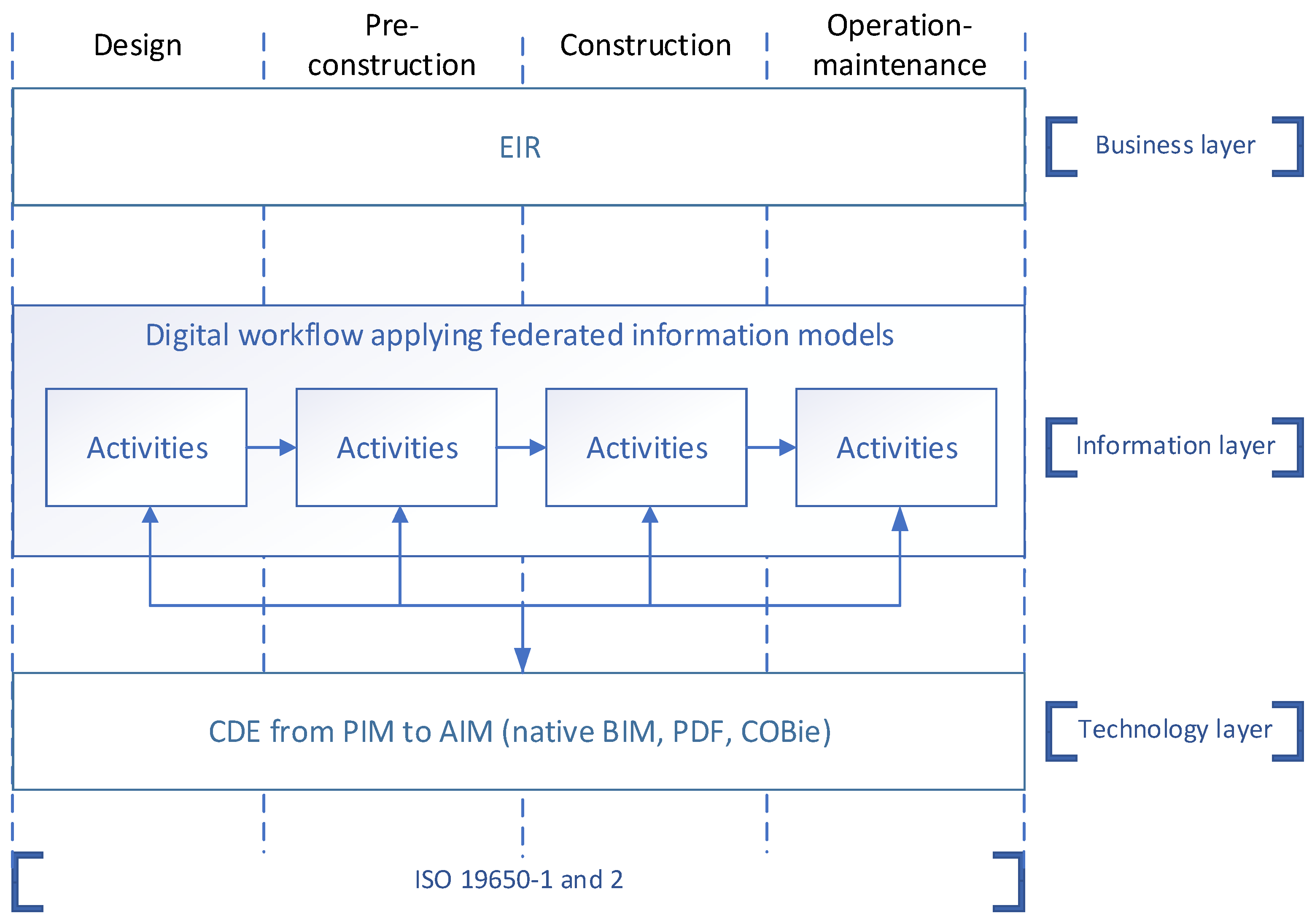
The contextualization of digitalized workflow happens at the information layer and is related to the interrelated layers of business and technology within the Stage 2 framework of ISO 19650 (
Figure 2).
From a strategic perspective, the owner/client is expected to provide a complete EIR to detail the relevant IR covering the phases of design, preconstruction, construction, operation, and maintenance in the business layer. Therefore, having a clear business vision or “North Star” between owner/client and contractor is critical for project lifecycle planning. It is important to translate business ambitions into project targets and requirements through the decision process of OIR→AIR→PIR→EIR under the guidance of ISO 19650. By default, the owner/client aims to retain digital built assets throughout all phases for facility and asset management after the project handover.
From a tactical perspective, an interconnected digitalized workflow applied by contractors at the information layer can facilitate digital construction processes in various activities from design to construction applying federated information models. As such, workflow digitalization and process digitization can thus interrupt isolated information islands to convert outputs into inputs across all phases in the project lifecycle. Mapping the “System of Systems” process end-to-end with no unconnected tasks or data will bring clarity [
57]. Within such a streamlined digital workflow, contractors are expected to utilize their assured technologies and applications to achieve cost-effective delivery outcomes throughout the process while meeting client requirements upon project completion.
From a data perspective, digitization of the involved processes such as design, scheduling, cost estimation, procurement, etc., can be supported by relevant CDEs in the technology layer, in which various graphics information (e.g., native BIM models, IFC, etc.), non-graphics information (e.g., spreadsheets like COBie, etc.), and documents (e.g., PDF, meeting minutes, etc.) can support related activities in the information layer. Achieving these three contextualized aspects will promote the digital construction implementation across whole project lifecycles to retain built assets digitally and to satisfy client needs.
3.2. Digitalized Workflow Assessment Indicators
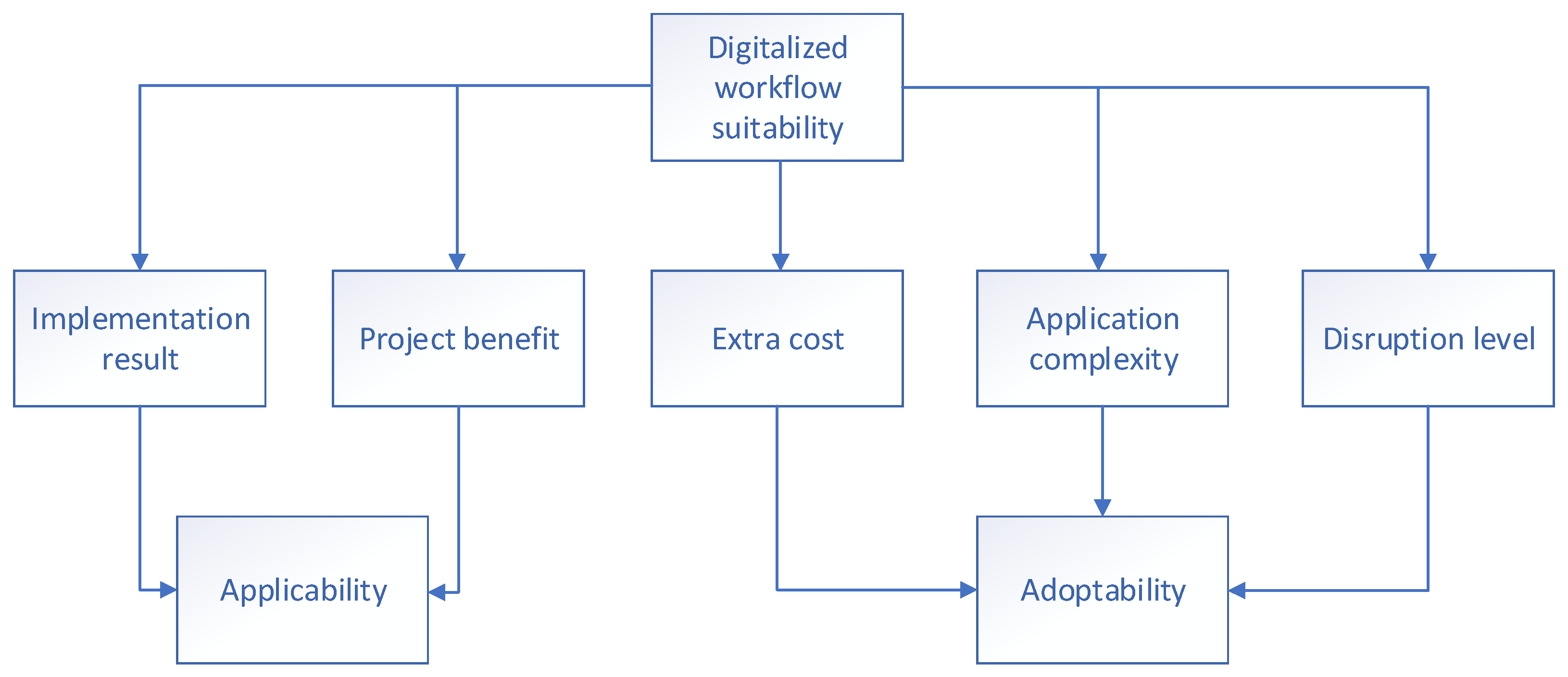
Each digitalized workflow has an assessment to inspect its suitability of applicability and adoptability using indicators. Applicability has two indicators of Implementation Result and Project Benefit directly from the project context to reflect the usefulness of workflows. On the other hand, adoptability refers to indicators applying the TOE framework to measure barriers. This study applies three indicators including External Cost and Disruption Level from the environment dimension, and Application Complexity from the technology dimension, to understand potential barriers for adoption (
Figure 3). There is not an indicator from the organization dimension in view of IPD delivery features in the case study of Forest City development. These considerations are devised to exhibit main features of the project. The details of indicators are discussed as follows.
Implementation result: It is objective evidence of digital workflow performance outcomes, which are obtained directly from project records being logged and released by the project team. It is about the usefulness or not that can be rated as Success or Fail to complete specific tasks.
Project benefit: It demonstrates relevant significant values that are directly created by applying devised digital workflows. Its measurement is based on relevant benchmarking strategies so that to provide comparable information to show the values as Significant or Not.
Extra Cost: It indicates related external consultancy services to be involved in workflows to assist tasks’ performance and incur additional costs. These costs can be classified into Low (no training or consultancy), Medium (training or consultancy involved within half year), and High (training or consultancy involved more than half year).
Application Complexity: It signifies software technology complexity for applications in related disciplines by different users. It consists of three levels of Low, Medium, and High to correspond, respectively, to stand-alone for single user, cloud-based for multiuser in a single discipline, and cloud-based for multiuser in multiple disciplines. The cloud computing technology is considered specifically in this indicator because of its better accessibility than IoT, DT, and others on the market.
Disruption Level: It reflects relevant digital workflows’ impact on existing workflows and stakeholders. The more changes and stakeholders involved in a digital workflow the higher level of its disruption.
3.3. Research Method
To validate the proposed considerations nevertheless encounters realistic difficulties. It is partly because suitable projects have a paucity in lifecycle project implementation using digital construction/BIM, and partly because fragmented BIM implementation from different organizations cannot illustrate a full spectrum of digital construction strategy to nurture digital delivery capability for a particular organization. Given these challenges, it is postulated that a parallel approach can help understand an organization, which establishes related digitalized workflows and digitized processes in corresponding phases of multiple projects. Thus, it can gain an overall understanding on this organization’s strategy of digital construction adoption into the project lifecycle.
The case study of Forest City development in the subsequent section is about an interconnected digital construction workflow from an organization for the project lifecycle implementation. The overall Forest City construction project applies UK BIM Level 2 essences technically, which is examined within the Stage 2 framework of the ISO 19650. Since both standards share the same core components, relevant discussions target general digital construction situations for ISO 19650. Being empirical research, the applied methodology in the case study adopts project performance observation and real-world data from previously released project records [
58,
59,
60,
61]. Therefore, the research is irrelevant to human participants and thus ethics issues and commercial confidentiality are not involved.
The case study comes from a technical perspective to examine the suitability of the digitalized workflow. Two fundamental subworkflows of design quality checking and project optimization are highlighted for quantitative analysis. Other subworkflows, including asset collection, defect management, precast design and production, and integrated 5D cost management, as part of components in the main workflow provide descriptive discussions due to limited project data. The general research consideration as such is to reflect the overall project implementation strategy of this organization. The research limitation lies in incompleteness of project data records for some subworkflows. Also, the adoptability assessment indicators for the subworkflows are based on observed objective information only without assessments from participants to strengthen relevant findings.
4. Case Study
The Malaysian government launched the “Iskandar Plan” in 2006 aiming to develop a special economic zone in Johor. The mega project of Forest City development is strategically located in the Iskandar Special Economic Zone [
62]. It was planned as a model of future green, smart cities in the world to pursue its aspiration of smart and sustainable development. This section discusses its project overview, BIM strategy, digitalized workflows, and digitized work nodes to highlight key considerations of digital construction implementation in its multiple projects at phases of design, preconstruction, and build.
4.1. Project Overview
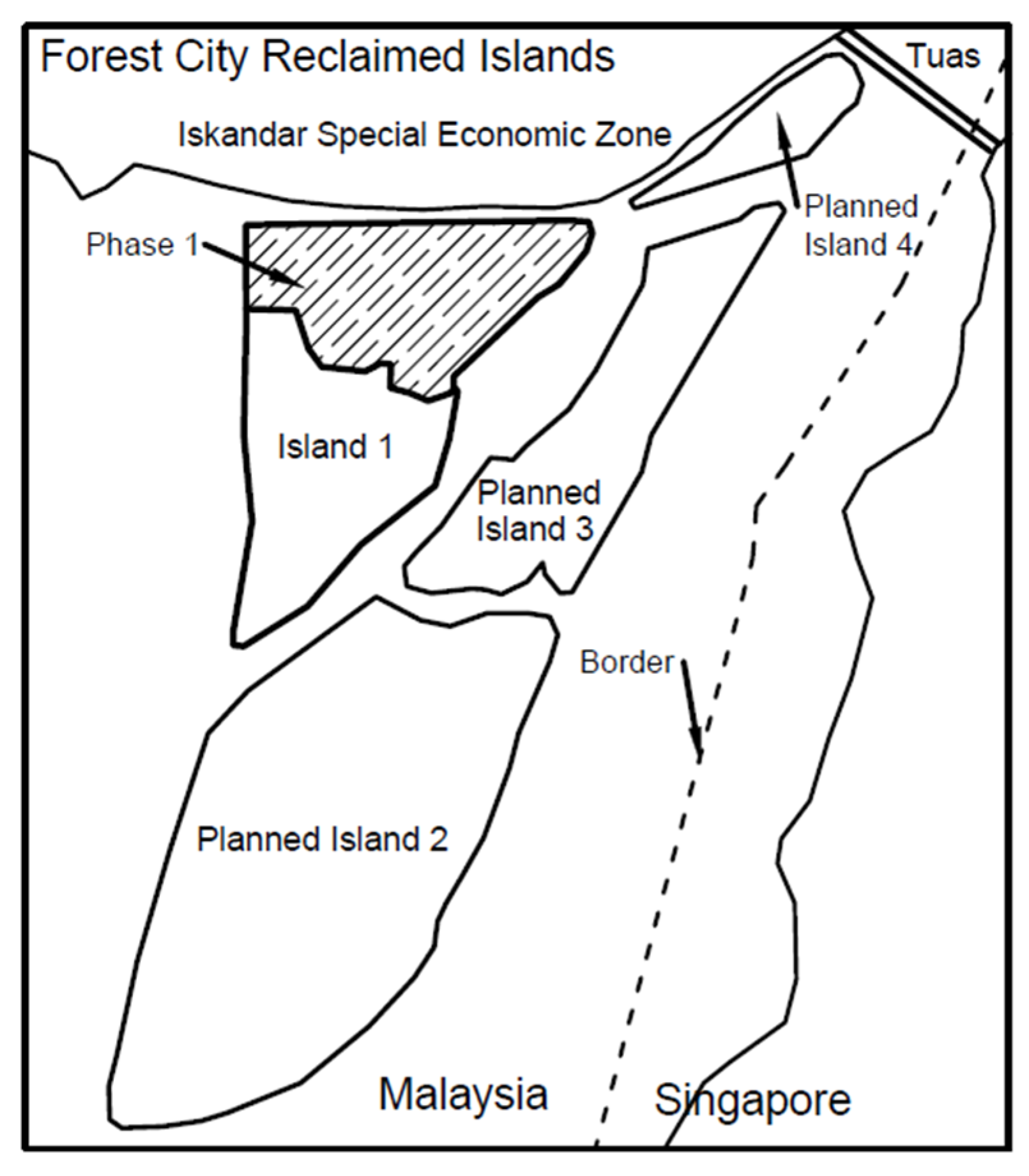
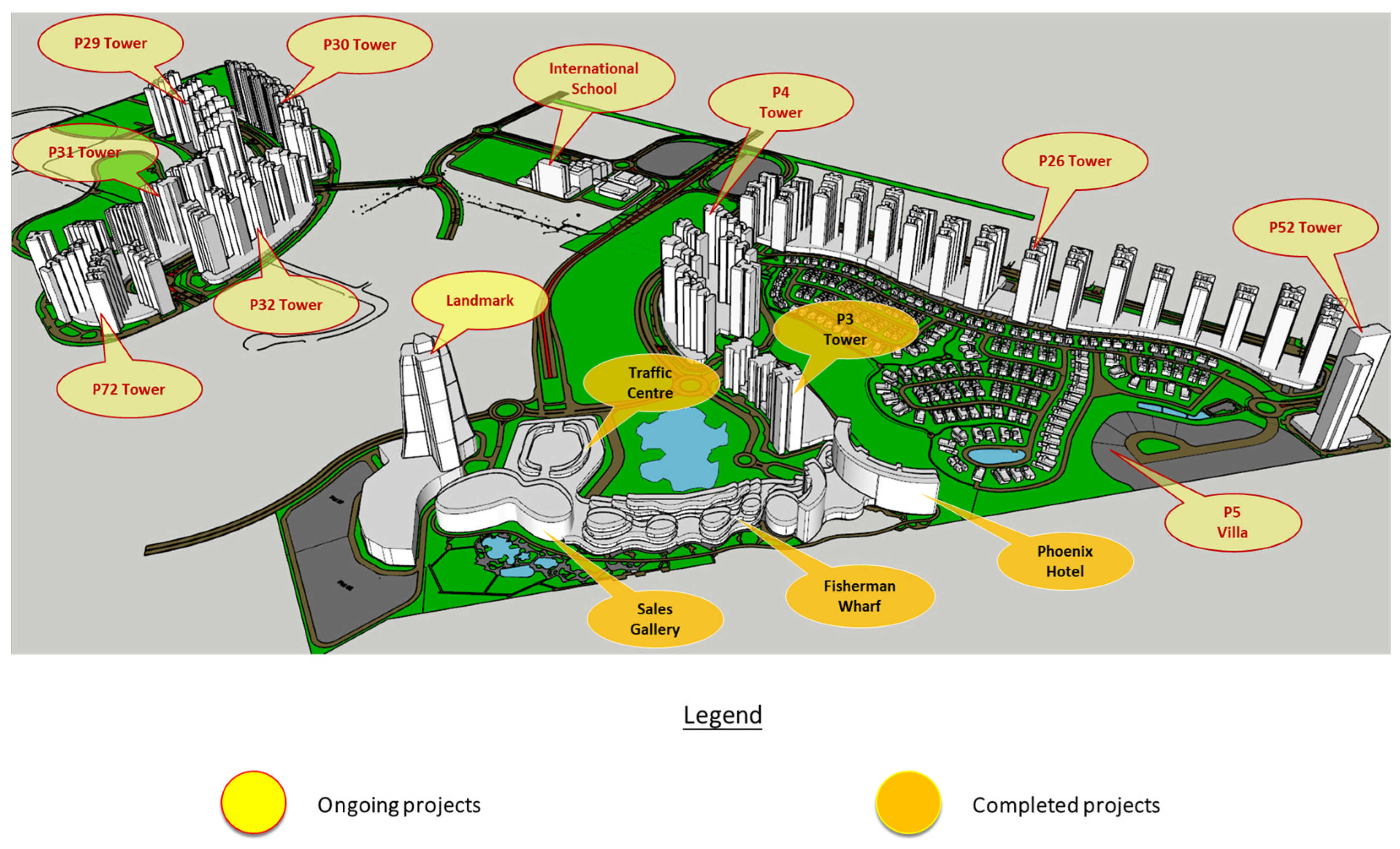
The overall project consists of four man-made islands, for which reclamation is ap-plied near the Malaysia and Singapore border to provide required lands for the development. The Phase 1 development in Island 1 focuses on residential buildings of apartments and villas, as well as other multiplex including a hotel, a sales gallery, a commercial street, an international school, a traffic center, and relevant infrastructures. By the end of 2020, a series of buildings with infrastructure had been developed, accounting for one-third of the total planned area of Phase 1 (
Figure 4).
4.2. BIM Strategy
The strategic plan of Forest City development highlights BIM as a modernized approach being applied across the whole project lifecycle from design, construction, and subsequent operation and maintenance. Because the developer has self-owned design and construction companies, it is positive that IPD can be applicable for delivering some of its projects and some of its projects can be contracted in the way of Design–Bid–Build to deliver. Moreover, it procures an integrated precast concrete design and production system including hardware and software to facilitate its development. Nevertheless, 2D drawings as a traditional approach at BIM Level 1 are still prevalent for project collaboration and implementation. This is one of the realistic challenges for the developer in cultivating the required digital delivery competency to satisfy project needs.
In order to elevate delivery capabilities to be BIM Level 2, an in-house digital engineering team is invested and dedicated to digital construction. Its mission is to support Forest City development by adopting digital technologies, including BIM, into the construction. As of the team establishment, some projects had been completed, and some were in the development process (
Figure 5). Therefore, it is essential to understand stakeholders’ expectations based on project states to cultivate digitalized workflows and digitized processes.
Table 1 lists the relationships among projects, stakeholders, and their expected work as tasks for the in-house digital engineering team. It is indicated that most projects that the team can contribute to are residential buildings and the multiplex of the Landmark building. A realistic task is hence identified to retain the built asset digitally for the high valued Landmark building alone with its physical handover. Meanwhile, the use of BIM and other digital technologies should facilitate the delivery of ongoing residential building projects and yield cost-effective outcomes.
A series of policies and internal standards were adopted and developed for implementing digital construction in the development. Furthermore, the necessary hardware, software, and networks were configured within the IT infrastructure to underpin relevant activities. These devoted efforts are discussed in their respective aspects.
BIM standard adoption. The Hong Kong CIC BIM Standards (Phase One) [
63], a simplified and revised version of the UK BIM Level 2 standards, is selected to guide BIM implementation in the construction projects. It serves a fundamental policy understanding for all related parties and disciplines towards BIM work. This includes revision of related contract framework by adding mandatary clauses to allocate certain budget for (sub-) contractors so that they are contracted to apply BIM in their construction work.
IT infrastructure setup. Workstations as clients being connected with servers, which are featured with documentation management configuration to mockup CDE’s information containers referring to BS1192:2007. Therefore, all digital projects can be retained in a unified information repository so that any authorized parties/individuals can access required data effectively and efficiently.
Exclusive digital construction ecosystem. A series of software packages are procured for 3D BIM authoring, 4D scheduling, 5D cost estimation, 6D asset management, and defect management. In particular, a precast concrete production system, including machinery and software, is established and installed in a dedicated factory in advance. The comprehensive ecosystem lays a solid foundation to implement digital construction for the retention, reuse, and trace of project data across all phases in the project lifecycle.
BIM modelling protocols development. This work targeted specific software packages so that related BIM models can be created accurately and then inputted into corresponding software environments to assist work in processes. It is meant to satisfy requirements of 3D to 6D modelling applications.
Regular trainings provided by internal and external experts. Relevant BIM training is delivered regularly to disseminate knowledge and provide hands-on practice for all stakeholders. As such, related parties are communicated to for the understanding of the landscape of UK BIM Level 2.
4.3. Workflow Digitalization
There are multiple tasks indicated by
Table 1 on the implementation of digital construction, in which to collect and retain built assets digitally in AIM satisfies the owner’s interest and other tasks benefit the contractors in associated processes by using PIM. Hence, the AIM needs to be created, for which its data is incrementally accumulated along with the PIM development across the entire project lifecycle according to UK BIM Level 2. The rationale behind this work is dependent on a coherent digitalized workflow to connect with related processes and utilize underlying dataflow from Design and Build to Operation/Maintenance.
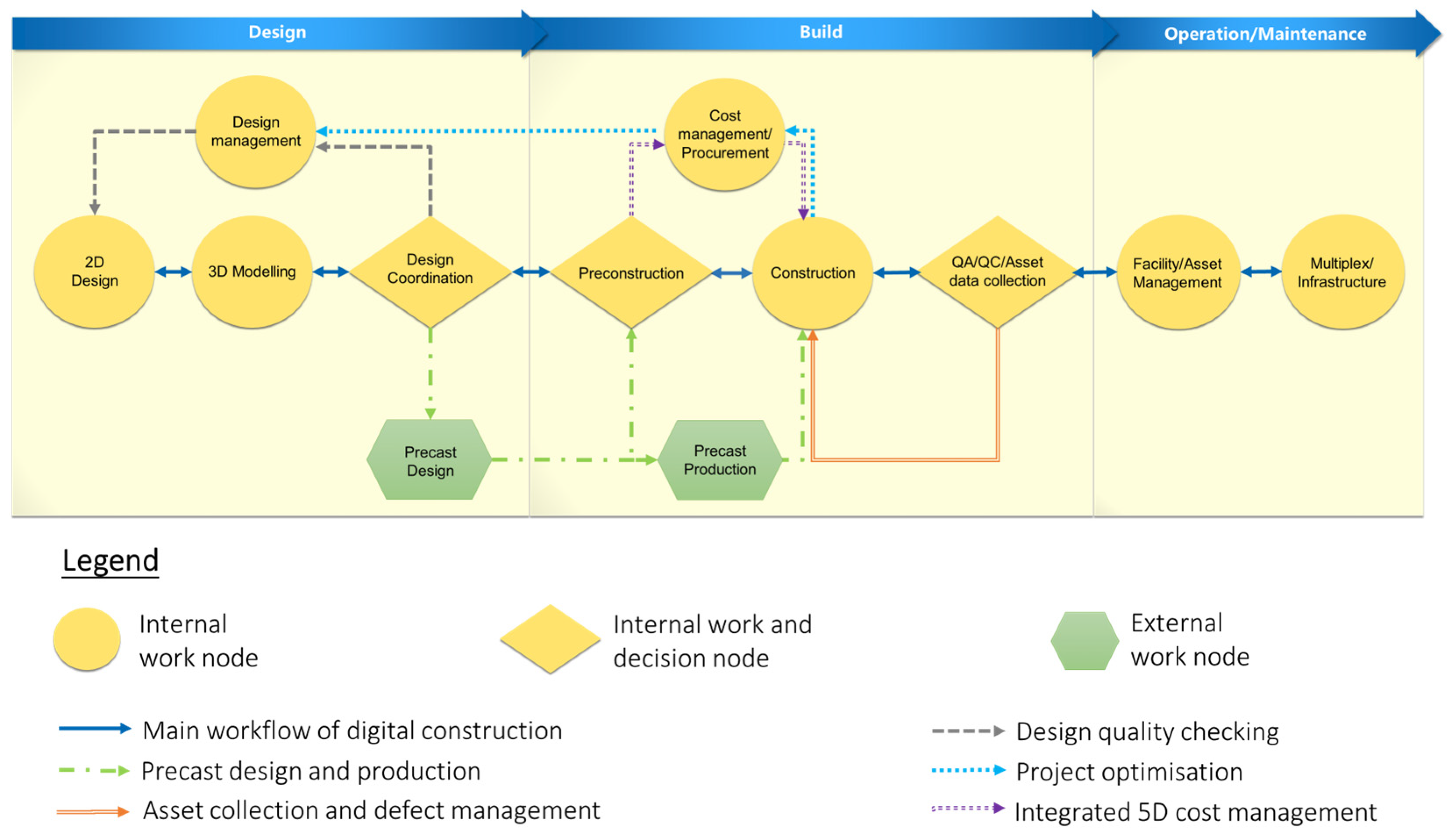
This digital construction workflow encompasses fundamental and advanced subworkflows (
Figure 6). The former includes design quality checking, project optimization, and asset collection and defect management whilst the latter contains precast design and production, and integrated 5D cost management. Both fundamental and advanced subworkflows consist of a series of work nodes that process relevant tasks. The precast design and production workflow is the only external subworkflow belonging to another organization. It has two external work nodes of precast design and precast production that need inputs from the internal work nodes.
4.3.1. Design Quality Checking
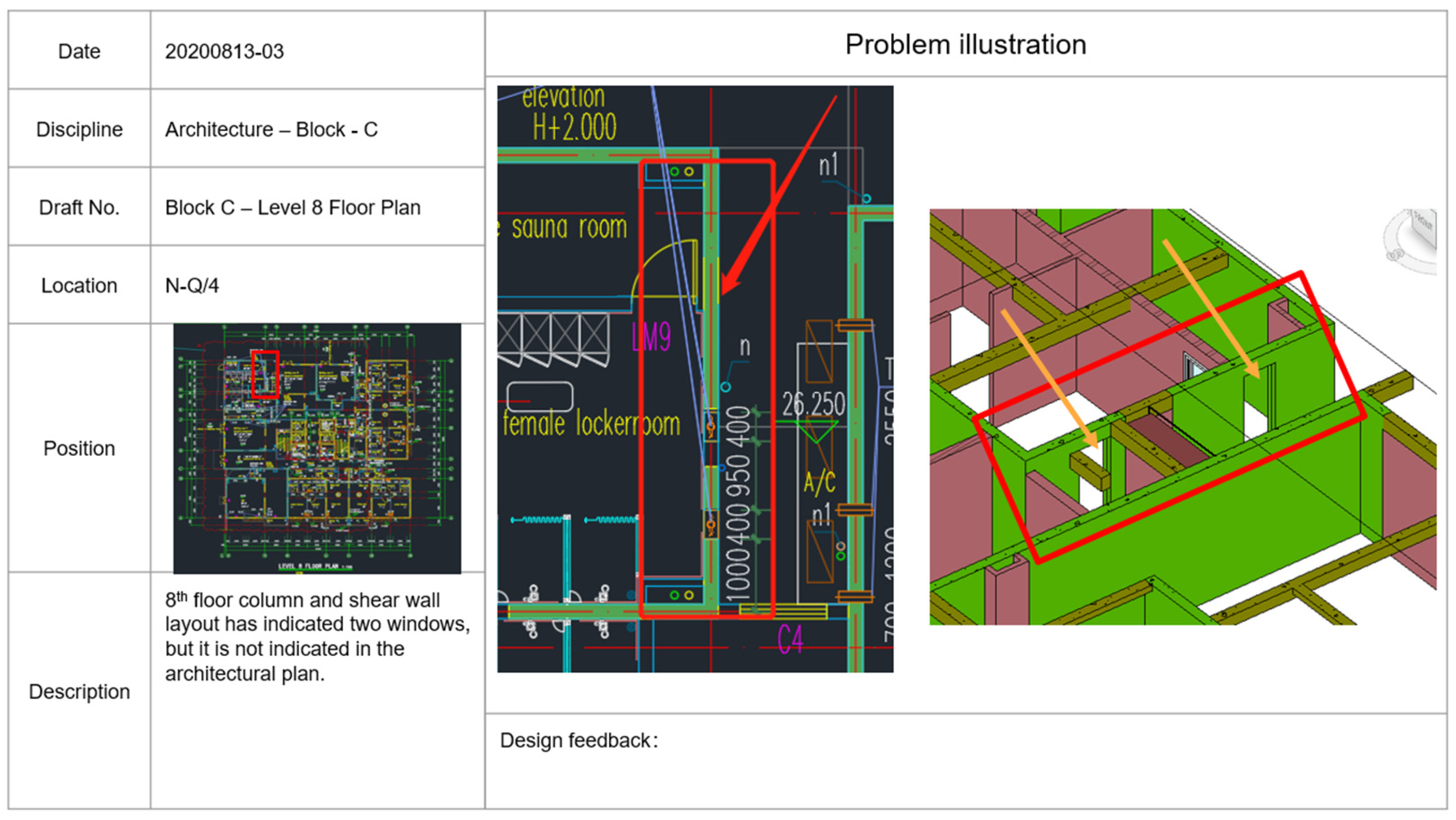
The subworkflow of design quality checking is performed during the design phase. As all designs for both cast-in-place and precast projects are conducted using 2D CAD, potential design conflicts are inevitable and hence are subject to quality checking through 3D modelling. The in-house digital engineering team obtains 2D CAD drawings from the design team and converts them into 3D BIM models to check potential design problems. Furthermore, identified design pitfalls need the design management team to verify and correct so that 2D CAD drawings can be flawless to guide onsite operations for the project team. The collaboration among these stakeholders relies on request-for-information (RFI) documents, which record each pitfall for verification and correction (
Figure 7).
4.3.2. Project Optimization
The project optimization is performed by evaluating completed construction projects and furthermore informing uncompleted and future development for the purpose of cost effectiveness and best practices. Since a few of the projects had been completed at an early stage of the Forest City without BIM intervention, it is worth conducting a cost analysis to involve relevant stakeholders in this task. Obtaining final project cost information from the cost team and the project team, it is practical to compare with the same project, which is optimized by 3D modelling and clash detection from the collaboration between the design and the in-house digital engineering team. This cross-team multiparty collaboration is positive to result in meaningful best practices being adopted and to improve the overall project delivery.
4.3.3. Asset Collection and Defect Management
The subworkflow of asset collection and defect management involves the project team with the in-house digital engineering team at the design and build phases. Created 3D BIM models as PIMs are continuously applied in asset information collection based on the collaboration between the project team and the in-house digital engineering team. The task targets high-value building projects to be performed. Additionally, checked 2D CAD drawings as inputs are further processed for the project team to perform defects recording, reflecting, fixing, and solving. Since most operations undertaken by the project team in the workflow are onsite tasks, mobile devices are necessary to support these activities.
4.3.4. Precast Design and Production
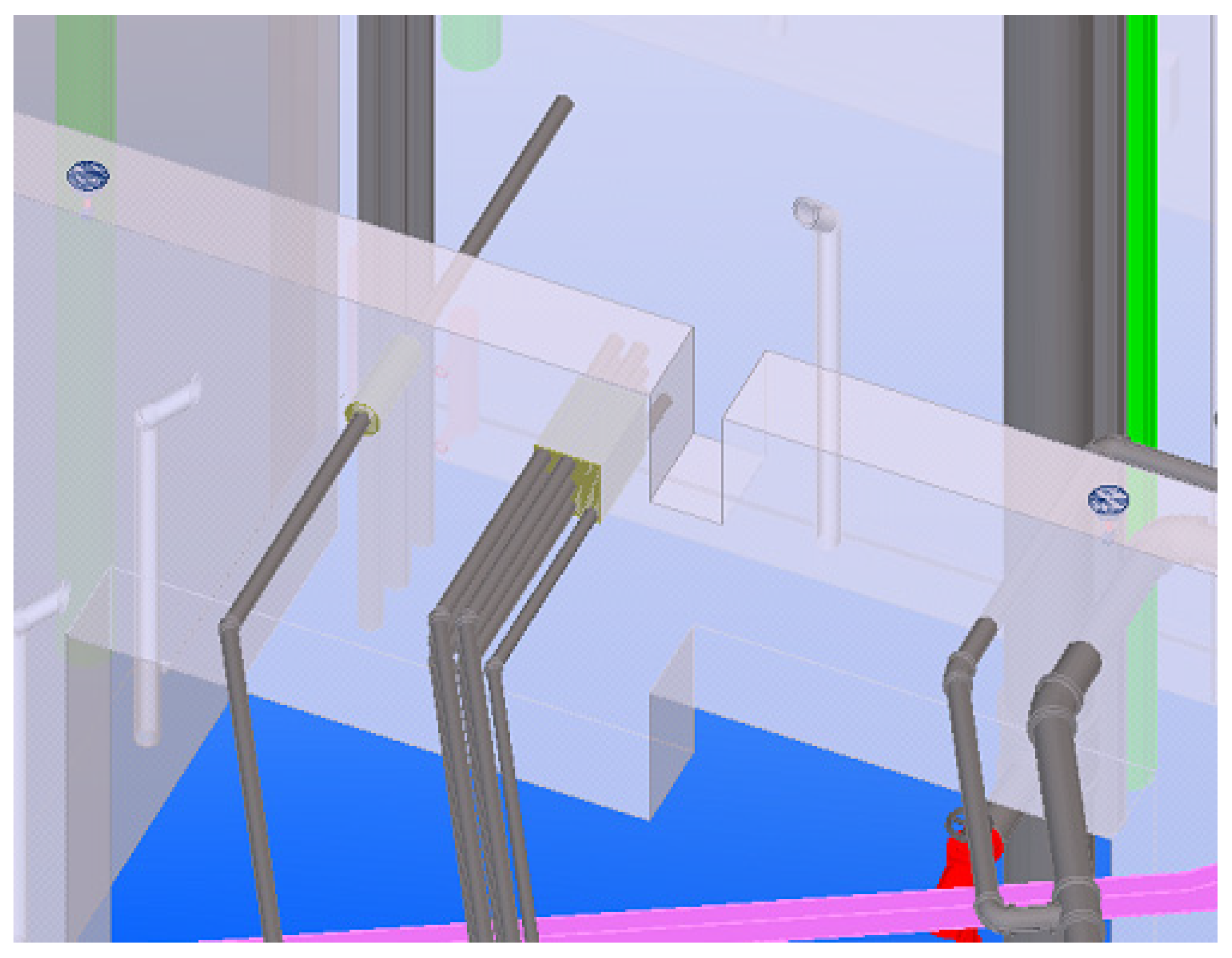
This subworkflow is dedicated to precast concrete components for design, production, logistic, and onsite assembly. It is a fully integrated external workflow with input needs of 3D BIM models and an erection sequence from the internal workflow. The precast concrete design team develops more detailed 3D components like shear wall, plank, staircase, etc., based on 2D drawings and 3D models as inputs from the design team and the in-house digital engineering team, respectively. Particularly, MEP models from the in-house digital engineering team can contribute into accurate pipe penetrations in precast concrete components through clash detection (
Figure 8). This federated interdisciplinary model coordination helps decrease potential conflicts in onsite assembly operations after concrete components are produced precisely and shipped to project sites.
Another collaboration within this workflow involves the in-house digital engineering team, the project team, and the precast plant for preconstruction simulation. It is necessary to clarify relevant erection sequences from the project team beforehand so that the precast plan can prioritize related components’ production to satisfy onsite assembly sequence. The in-house digital engineering team needs related erection sequence plans and precast components models as inputs. This leads to a dynamic 4D erection sequence being generated to examine the project constructability as well as health and safety in operations.
4.3.5. Integrated 5D Cost Management
The purpose of this subworkflow is to integrate cost management into procurement, contract management, and interface with a general enterprise resource planning (ERP) system. As such, all cost-related work can be managed in a coherent progress. To fulfil this demand, the in-house digital engineering team needs to create a dedicated BIM model as input into a 5D BIM system according to the cost team requirements. Subsequently, the 5D BIM system is expected to parse the BIM model to generate quantity takeoffs and bills of quantities. This information can be further processed for procurement, contract management, and connect the ERP system to gain a final project cost report including direct and indirect expenditures.
4.4. Process Digitization
The process digitization is implemented at the planned work nodes in the digitalized workflow across the project lifecycle phases. To achieve digital deliverables, related software packages are applied to satisfy not only individual work nodes but also the creation of reusable inputs to streamline subsequent processes. These software packages include stand-alone systems of Autodesk Revit, Navisworks, and Trimble Tekla Structures, as well as vertical cloud systems of ERPbos, YTWO Formative, Ecodomus, and FinalCAD. All these stand-alone and vertical cloud systems constitute a bespoke digital construction ecosystem for process applications at varying LODs (
Table 2).
4.5. Implementation Results
A range of findings are gained from the implementation of digitalized workflows and digitized processes in the Forest City construction. This section discusses revealed insights from the fundamental subworkflows of design quality checking, project optimization, asset data collection, and defect management, as well as the advanced subworkflows of erection sequence simulation and 5D cost estimation to analyze their adoptability.
4.5.1. Result of Design Quality Checking
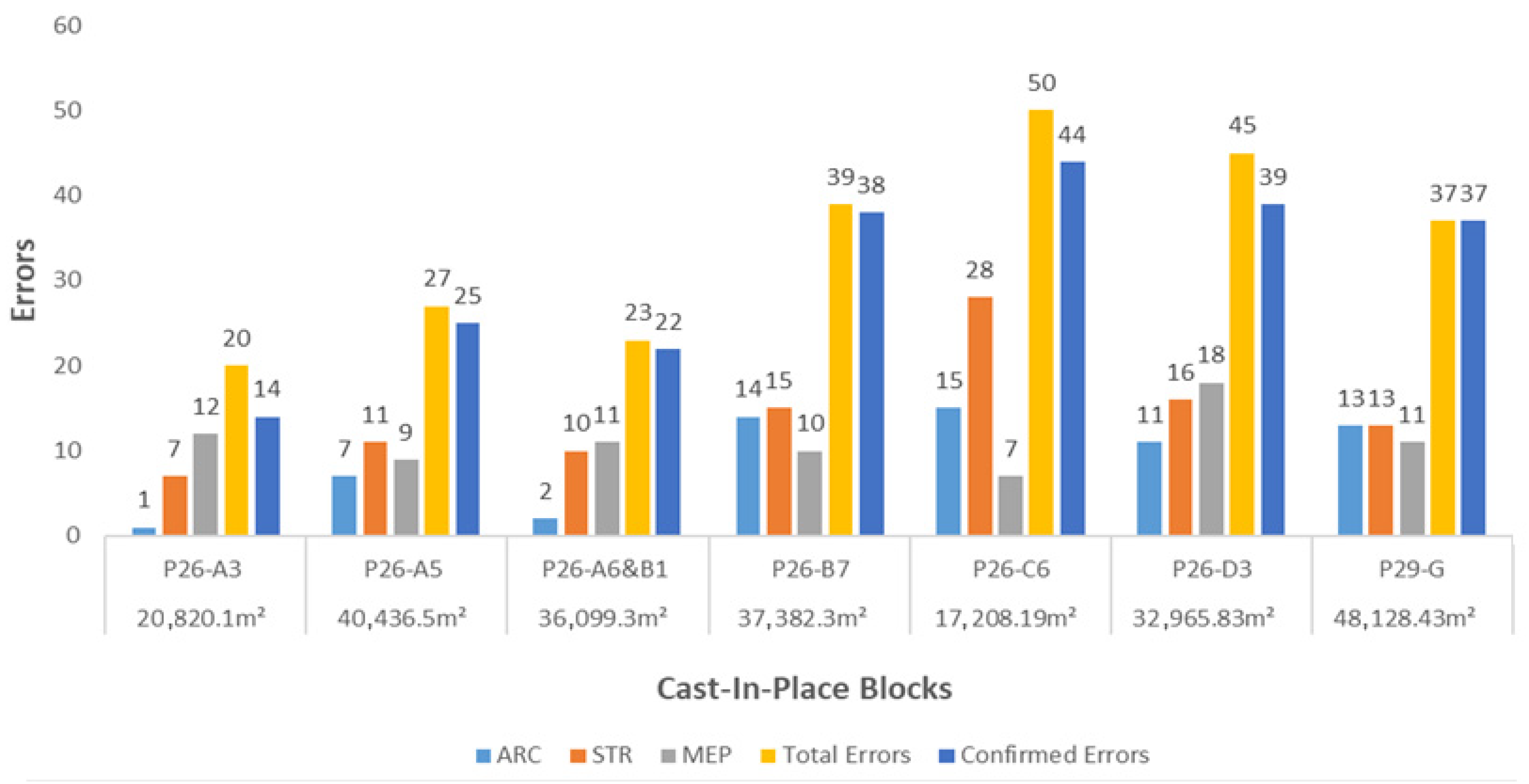
The design representation conversion from 2D CAD drawings to 3D digital models eliminates significant conflicts for rework before a project gets started. All design pitfalls are checked through 3D modelling based on 2D CAD drawings of architecture, structure, and MEP. These checking results are communicated using RFIs to be verified by the design team, and afterwards statistically recorded by the in-house digital engineering team. By applying the BIM Beneficial Index (BBI) to represent the ratio of confirmed errors being divided by total identified errors, it can further measure the accuracy of identified design pitfalls.
Figure 9 shows this partial result information for cast-in-place projects, in which BBIs range from 70% to 100%, indicating the high rate of effectiveness of this 2D to 3D conversion approach. There were, in total, 1100 discovered and confirmed design conflicts for all ongoing projects in the Forest City construction during 2017 to 2018.
4.5.2. Result of Project Optimization
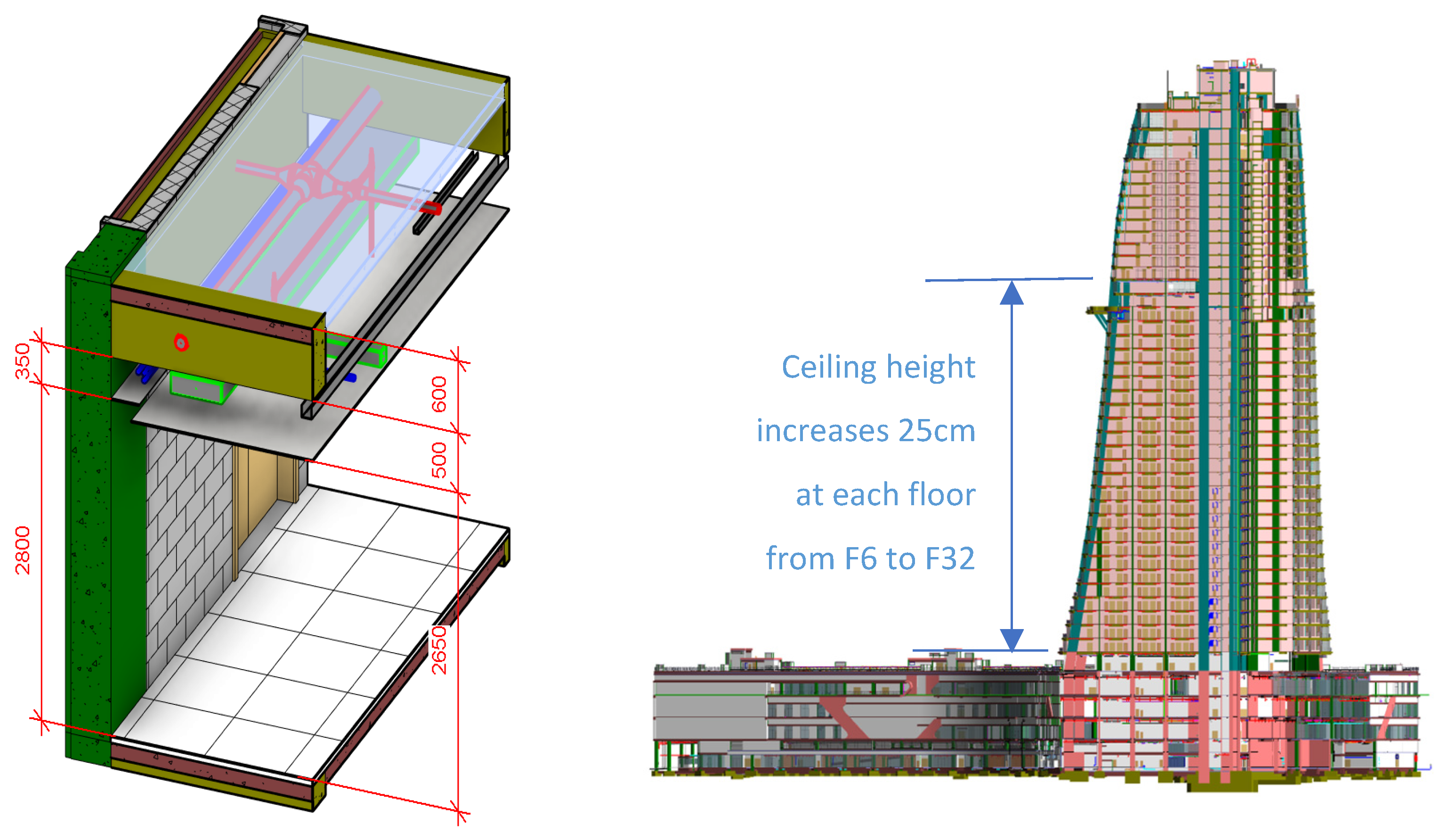
The aim of this work is to estimate cost savings on reduced floor height to make an informed decision on other ongoing projects to apply the same design strategy. It targets the completed P3 residential tower to compare its podium construction cost between the actual project and its optimized virtual project. 3D modelling is hence performed to create the federated podium model at LOD 300 to combine structure with MEP models. The use of MEP models helps identify the most crowded car park areas for the optimization in the podium floors. Applying Autodesk Navisworks, it is practical to measure the height between the floor surface and a lowest part like sprinklers or pipes under ceilings. After design optimization, the height of the lowest part to the surfaces of Floor 1 and 2 can increase by 200 and 325 respectively. This means that this optimized space is redundant to fulfil the design requirements and hence can be reduced. The cost team concludes on the basis of calculation that decreasing 10 centimeters for a floor height can save 30 Malaysian Ringgits (approximately 10 Australian dollars) per square meter in the podium of the P3 residential tower project.
The floor heigh optimization of the P3 podium serves a quantifiable benchmark of cost saving for the Forest City developer in its Landmark building project, in which ceiling height is a target for design optimization of related MEP above the ceilings (
Figure 10).
Table 3 illustrates the results that the increased ceiling height achieved for 250 from the design ceiling height to the target ceiling height in the range of Floor 6 to 32 main functional spaces except the Floor 31 lobby. The actual ceiling height is measured by applying a laser distance meter as final confirmation. Referring to the cost-saving benchmark result, this confirmed ceiling height increasement is equivalent to decreasing the same amount of floor height for 250 from Floor 6 to 32. The created significant values contribute to the building quality and occupants’ experiences instead of decreasing the floor height in the Landmark building project.
4.5.3. Result of Asset Data Collection
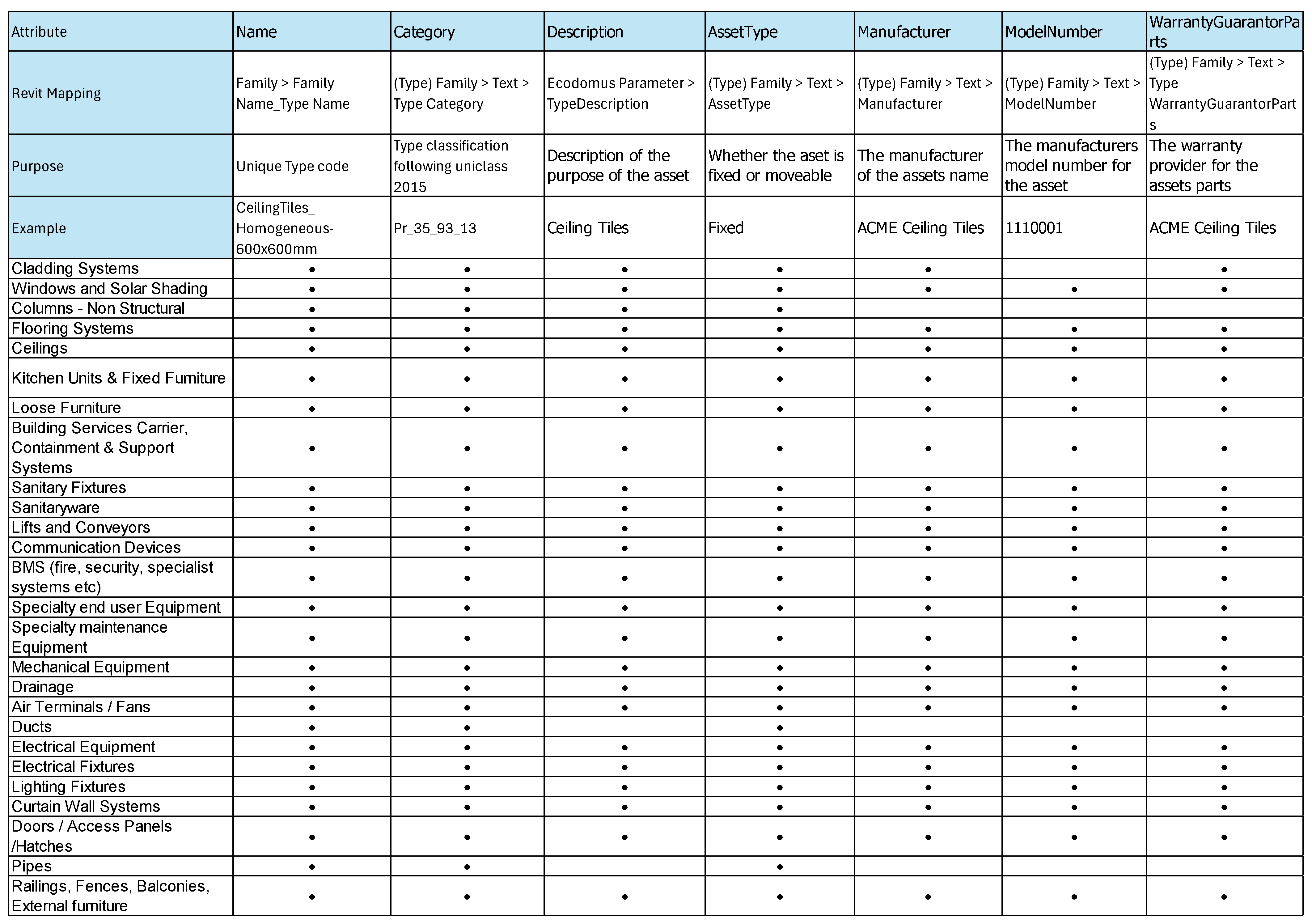
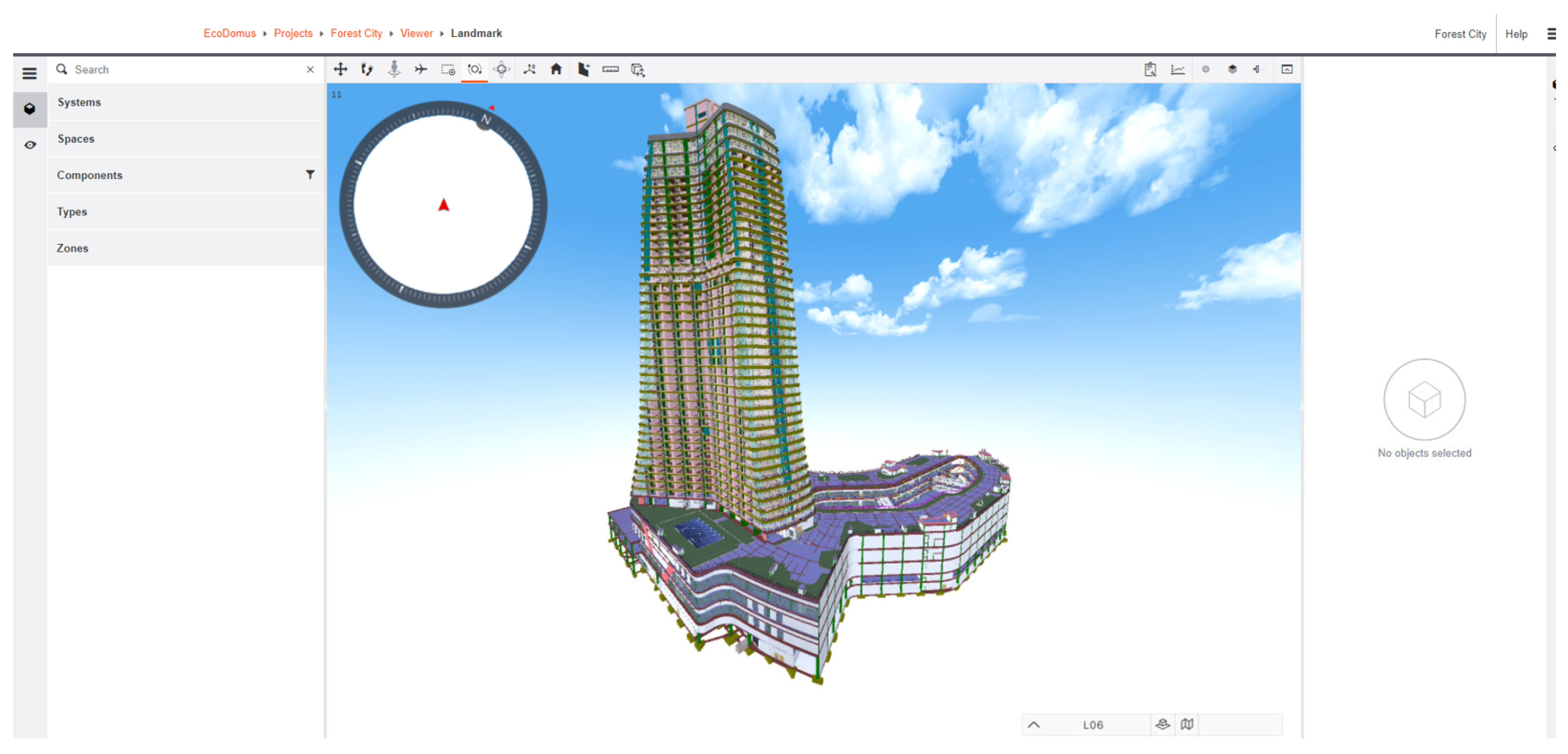
The digital built assets for the Landmark building are fully obtained and stored in the Ecodomus system, which contains both graphical and non-graphical details of architecture components and facilities. This expected outcome is facilitated and guided by external consultancy services to establish four interrelated processes, which include defining asset information requirements—AIR, establishing modelling protocol, collecting asset data, and uploading asset data to the system. The AIR lists a series of items that serve as targeted asset components for the later work of building operation and maintenance. Their relevant attributes need to be associated with its PIM objects in the Revit model. Therefore, a PIM modelling protocol needs to be in place to guide BIM modelers’ work.
Figure 11 illustrates the AIR list with corresponding denoted attributes with black dots to be written into the Revit model objects.
In the processes of collecting asset data and uploading it to Ecodomus, the former is dependent on the collaboration between the in-house digital engineering team and the project management team, which provides the PIM objects’ attributes information along with the progression of the project. Subsequently, the in-house digital engineering team takes responsibility for synthesizing the provided attributes information in spreadsheets with related PIM objects in the Revit model and uploading it to Ecodomus on a weekly basis.
Figure 12 illustrates the final landmark building AIM in the Ecodomus.
It encounters a difficulty in the uploading of attribute-rich PIM since the digital landmark building project is over-sized at around 1.5 Gigabytes of its federated Revit model, which is a heavy burden for the Ecodomus system to run smoothly. It has been verified that a LOD of 500 for high-fidelity graphics is unnecessary to reduce system performance. Reducing the model accuracy to LOD 300 plus full required attribute information is realistic to enable the system to run as normal. As such, the digital built assets of the landmark building are successfully stored and managed within Ecodomus. It lays a practical foundation to support future smart services by incorporating the digital twin technology for advanced building operation, maintenance, and asset management.
4.5.4. Result of Defect Management
At the build phase, the project management team applies FinalCAD into onsite defect inspections to record, report, collaborate, and solve project issues. FinalCAD is a cloud-based mobile app that allows operations to be performed in a 4G network condition to adapt onsite demands. The P26 tower project adopts this tool into defect management. Its implementation is supported by relevant consultancy services that 2D CAD drawings are preprocessed for importing into the system as initialization based on the 3D modelling’s checking and coordination in advance. Training is also included in the consultancy services to enable the project management team and stakeholders to master relevant functions and features of the App. The P26 tower project implementation result shows positive results in defect management among stakeholders facilitated by its ease-of-use, onsite adaptability, and cloud-based information integration for effective communication in teamwork.
4.5.5. Result of Erection Sequence Simulation
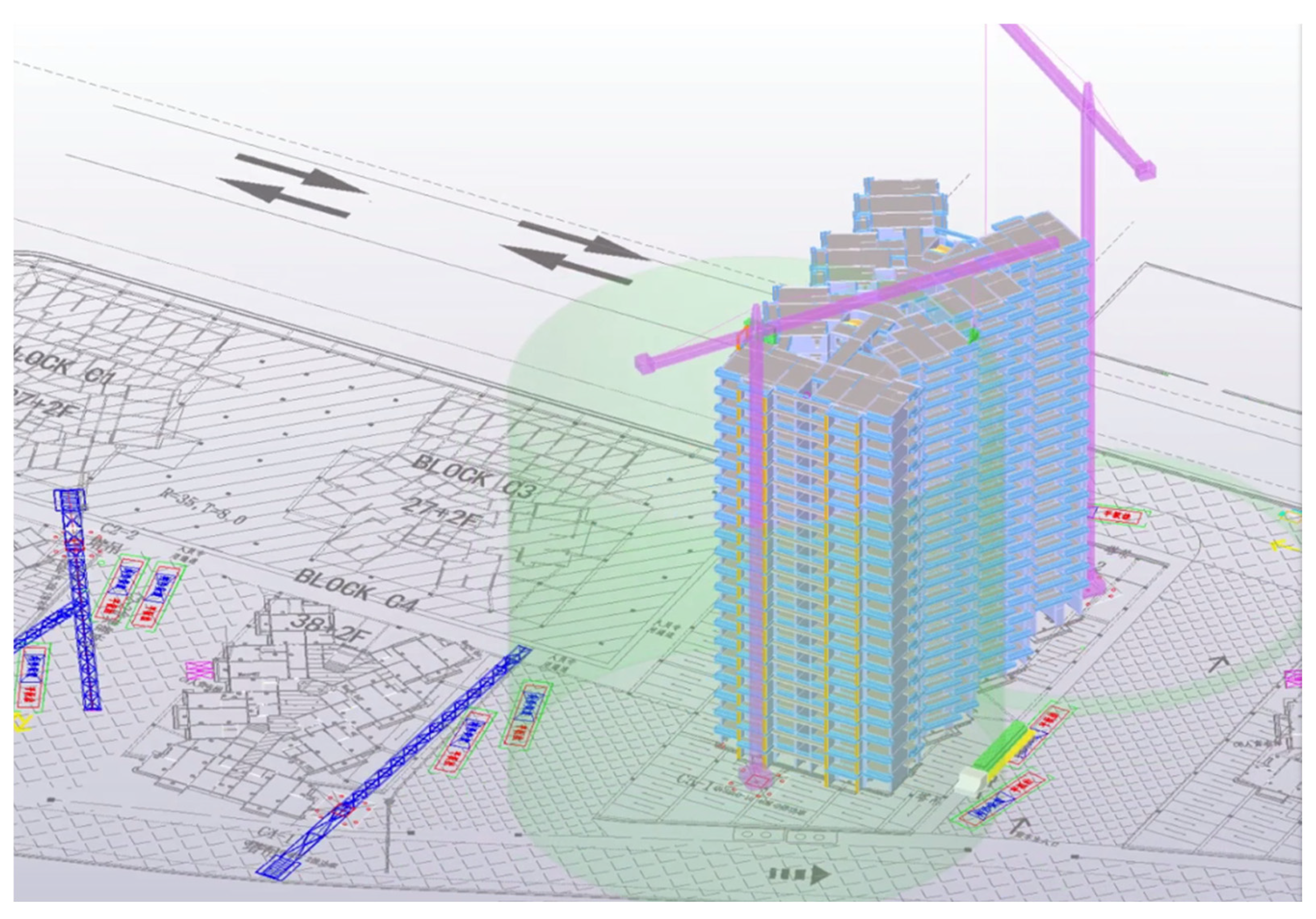
Trimble creates a commercial crane app as plug-in for the Tekla Structures to perform such modelling. To examine its applicability for an erection sequence plan, the P26 residential tower project is selected for trial in conjunction with other processes of the external precast concrete design and production workflow. The project management team provides the inputs of potential tower cranes with specific types and load capacity, a related 2D CAD site layout plan, and an erection sequence plan. Subsequently, the in-house digital engineering team utilizes Tekla Structures models at LOD 400 to create erection sequence scenarios by adopting the inputs into the app (
Figure 13).
It identifies that the tower crane functions within the Tekla Structures environment enable users to customize their preferred cranes. By inputting parameters’ values to control jib, boom length, and range cylinder within crane’s capacity, various what-if scenarios can be investigated to check the proposed erection sequence plan, unload location for precast concrete components, and suitability of a selected crane for lifting loads. As a result, its visualization confirms that planks’ lifting paths in P26 tower assembly work can encounter spatial conflicts with other onsite operations. Therefore, the proposed erection sequence plan needs to be updated to avoid potential conflicts. This suggestion assumes that all precast concrete components supplied in P26 are continuously and steadily available for the lifting work onsite.
4.5.6. Result of Integrated 5D Cost Management
During the preconstruction phase, a vertical cloud system named YTWO Formative is tested to integrate 5D cost management work with supply chain solution by combining RIB iTWO 4.0 with Flex Ltd., Austin, TX, USA. The P31 residential tower is selected as a trial project driven by consultants from the software vendor to examine YTWO. The system is deployed and operated in a multiuser environment underpinned by a central database, which stores BIM models for quantity takeoff (QTO), bill of quantity (BOQ) generation, procurement, and contract management, as well as supply chain management.
Unlike traditional fragmented workflow using independent spreadsheets in associated processes, YTWO strives to integrate cost-related work into a networked coherent process to eventually connect the ERP system of SAP. Such a highly synthesized workflow involves dedicated personnels from 3D modelling, cost estimation, procurement, contract management, and finance into the process. Revit discipline models as inputs are enhanced from LOD 300 to 400 by following its modelling protocol to satisfy the QTO requirements. The trial result shows positive outcomes that 76% out of 96 tested functions are applicable in the project, 100% data interoperability, high QTO accuracy, and supply chain integration with finance. Nevertheless, the developer’s existing organization needs to be well-prepared before its deployment in business operations due to its disruptive nature.
4.6. Digitalized Workflow Assessment
This section discusses applicability of the subworkflows in the project context to analyze their usefulness. Furthermore, adoptability using the TOE framework is applied to identify potential barriers to accessing the subworkflows. The assessment applies the proposed indicators in
Section 3.2. through relevant ratings.
4.6.1. Applicability Assessment
The applicability of the subworkflows in the project context shows consistent success in their implementation result indicators. In terms of project benefit indicators, their values are dependent on related benchmark establishment and supply chain maturity. Therefore, the overall applicability of each subworkflow differs in
Table 4.
The design quality checking for related projects is success in identifying hidden design conflicts that potentially cause onsite mistakes for rework. Its project benefit is significant based on further rework costs for quantification. The project optimization applicability indicators’ values are the same as those of design quality checking. Particularly, the project benefit is quantified in the Landmark building project by referring to the established benchmark of reduced floor height in the P3 podium project. This is a concrete incentive for this organization to implement digital construction in the Forest City development.
The asset data collection was successful in retaining the required built assets digitally, as planned during the observation. Project benefit is significant in the long run for clients’ interests and needs relevant benchmarks to be established by the owner. The defect management is also successful based on internal reports with significant project benefit although its relevant benchmark is not released by the contractors. Moreover, the implementation results show success in both the erection sequence simulation for precast design and production and the integrated 5D cost management. Nevertheless, their project benefit indicators are unclarified due to the lack of specific comparable information to be referred. Being highly dependent on related supply chain maturity, these two subworkflows’ further benchmarks are worth establishing for verification by the organization.
4.6.2. Adoptability Assessment
Given the applicability for the subworkflows in the project context, their adoptability can be rated to further discern related barriers from technology and environment dimensions.
Table 5 shows the rating values for the indictors of Extra Cost, Application Complexity, and Disruption Level based on the TOE framework.
Design quality checking and project optimization are the most adoptable because of low cost, easy application using stand-alone systems, and internal teamwork to collaborate in the IPD delivery situations. Meanwhile, defect management and asset collection are both rated as Medium for their adoptability. This result is due to extra cost from additional consultancy services, and more advanced but complex technological applications using cloud systems for multiusers in single disciplines. Their application complexity is also medium because of the cloud-based system applied in the facility and asset management as well as the defect management field.
Compared with the traditional workflow for collecting drawings to retain as-built information in documents, the involved stakeholders and processes require timely data collection throughout project progress without introducing additional activities. The more sophisticated DT and IoT-based data collection approaches are not yet applied into the process to decrease the workload. Its disruption level is considered as low. Overall, its adoptability is regarded as medium.
Despite the power of integrated 5D cost management and precast design and production, these two advanced workflows both rely on significant investment into software, hardware, infrastructure, and a trained professional team to establish a mature supply chain. Hence, their indicators all received High in Extra Cost, Application Complexity, and Disruption Level, respectively. There are thus considered as having a low adoptability.
5. Implications and Recommendations
The Forest City development, implementing digital construction, implicates transformative impacts on traditional workflows from multiple perspectives. This section discusses those effects on organizational structure, digitalized workflows and work nodes for role-responsibility clarifications, CDE implementation, interoperability in the digital construction ecosystem, and LOD/LOI in the following contents.
5.1. Organizational Structure
The in-house digital engineering team is a new layer in the developer’s organizational structure. It is helpful to convert traditional business activities into modern digital practices, which apply relevant digitalized workflows and digitized work nodes to translate analogue information of CAD drawings into digital representations using Autodesk Revit and Trimble Tekla Structures. This conversion layer for an organization is an inevitable step towards digitally enabled business direction. Although this upgrade cannot cover full business activities initially, it is a catalyst to facilitate digital technologies adoption. Compared with contracting external BIM/digital services, an in-house digital engineering team for large organizations is more than beneficial to specific project deliveries. It will be also positive to retain expertise in knowledge, techniques, organization culture recognition, and a long-term impact on promoting digital transformation.
5.2. Digitalization and Digitization of Workflows
The discussed workflows digitalization and work nodes digitization are irreplaceable elements to drive digital transformation for the organization to adopt digital technologies. These digital delivery approaches in the Forest City construction highlight not only novel business activities but also relevant stakeholders, who undertake tasks, play specific roles, and take corresponding responsibilities. The involved parties and individuals can be further allocated into the RACI (Responsible, Accountable, Consulted, and Informed) matrix for delivering related tasks. Although ISO 19650 serves as information management guidance using BIM, its BEP needs details on stakeholders’ role-responsibility. It is an effective approach to identify role-responsibility when specifying digitalized workflows and digitized work nodes to contextualize BEP for ISO 19650 implementation.
Workflows digitalization and work nodes digitization in the Forest City construction also exhibit an agile approach to implementing digital construction including BIM. It is noted that ISO 19650 implementation should root on a mature digital competency foundation. It is unrealistic to embed required digital expertise, skills, and underlying supports of hardware and software overnight into all involved traditional workflows and activities. Establishing the fundamental workflows’ digitalization like design quality checking, project optimization, and asset collection can be an affordable and practical approach for the quick adoption of digital construction. Demonstrated by the foregoing discussions on those workflows, they are short of some typical BIM implementation documentations like OIR/PIR/AIR/EIR/MIDP/TIDP/BEP but also application tools, digital engineers, and clarified stakeholders. This indicates a truth that digital construction/BIM implementation is practice-centric, underpinned by contract clauses such as information management, which would be skipped in the IPD situation of the Forest City construction.
5.3. Aggressive Versus Conservative Implementation
As an external workflow for precast concrete production, its initial implementation strategy is aggressive, targeting all villa and residential tower projects. The whole system is fully configured with brand new essences, including team players, bespoke production lines with hardware, software, and peripheral machinery supports. Its precast design and production are dependent on the inputs of purpose-built Tekla Structures models and robust erection sequence plans from the internal workflow. Although related MEP Revit models and the crane simulation app ensure the inputs to be flawless based on internal work nodes, subsequent supply chains in the precast concrete production remain constraints to decrease its productivity. This system problem, caused by an immature workflow, results in robust erection sequence plans that require no precast concrete components to be supplied in practice. Therefore, it verifies a general understanding that complex workflows like the precast concrete production needs time to improve involved procedures in processes. Decision makers ought to be realistic for project implementation when adopting systems that are technology-ready but supply-chain fragile.
On the contrary, the pilot project of the YTWO Formative application follows a conservative strategy to examine integrated 5D cost estimation in the P31 residential tower only. It shows significant disruptions in traditional workflows. The system’s applicability and integration, underpinned by its cloud-based central database, demonstrate strong capabilities, including BIM model parsing for proprietary data (e.g., Revit and Tekla Structures) and openBIM IFC, QTO, estimating, scheduling, contract management, supply chain management, project cost control, and finance. A dedicated multidisciplinary test team undertakes this pilot work from different disciplinary perspectives. Although advanced technologies like cloud computing are applied in its overall functions and software architecture, a critical issue is that related stakeholders need to adopt the same system using relevant licenses to streamline business activities. It therefore entails additional costs and coordination for external parties. This problem highlights the challenge of digital transformation that goes beyond management control of organizations [
39]. Choosing tools, e.g., the stand-alone 5D systems for QTO and BOQ, with fewer initial disruptions and easy adoption for stakeholders, needs to be within essential considerations.
5.4. CDE Implementation
CDE implementation for the Forest City construction project faces challenges related to collaboration among geographically dispersed project teams and the integration of heterogeneous software packages. As the in-house digital engineering team needs to provide relevant Revit models as inputs to the external workflow and work nodes in the precast concrete design and production, frequent document exchange of models and drawings is unavoidable in the teamwork. Simultaneously, the applied digital construction ecosystem includes standalone systems such as Autodesk Revit, Navisworks, and Trimble Tekla Structures, as well as vertical cloud systems such as YTWO Formative, ERPbos, Ecodomus, and FinalCAD. These vertical cloud systems are deployed into private, public, and hybrid clouds, respectively, but specialize in their dedicated fields. Full integration of these packages into a CDE is worth further investigation to support more complicated and diversified smart city applications. Since BIM model data storage and transfer using individual files are involved in all the subworkflows, a document management system with CDE features is an applicable choice, e.g., Bentley ProjectWise, to facilitate data transfer and exchange among stakeholders by proper interfaces with those vertical cloud systems.
5.5. Data Interoperability and Modelling Protocols
Applying proprietary data is a main approach in the Forest City construction to streamline the workflows when utilizing the digital construction ecosystem for data-level collaboration. To avoid interoperability issues among the stand-alone systems, exported 3D MEP models from Revit apply Autodesk DWG into the reference design in the Trimble Tekla Structures to create accurate penetrations across precast concrete components. Compared with openBIM using IFC for this purpose, CAD entity models as light-weighted alternatives demonstrate effectiveness and applicability without involving redundant attribute information. Using purpose-built plug-ins is another approach to overcome interoperability. In the stand-alone system of Trimble Tekla Structures, a plug-in is implemented to fetch required data into the ERPbos using the PXML format. As such, both upstream information of precast concrete components and rebars can be obtained from Tekla Structures and can be transferred to ERPbos, which can further drive downstream production systems for manufacturing. The same plug-in strategy is adopted in Revit-YTWO and Revit-Ecodomus to satisfy their requirements for data-level collaboration without interfering with interoperability.
Modelling protocols play an important role in standardizing BIM authoring work. In the subworkflows of design quality checking and project optimization, a general modelling protocol can be applied to translate what 2D drawings represent graphical information into 3D entities, which have fewer attributes information to be integrated. Nevertheless, further object-oriented information is mandatary to satisfy the subworkflows of integrated 5D cost management and asset collection. Both ask for substantial graphical and attribute information to be created as BIM objects in Revit according to respective modelling specifications, e.g.,
Figure 11, from YTWO and Ecodomus, which can verify and validate inputted BIM objects’ quality in downstream feedback and upstream BIM authoring work. The same logic is applied for the subworkflow of precast design and production. All these BIM objects ought to satisfy application needs from related subworkflows but not necessarily differentiate their LOD/LOI, which are useful for knowledge interpretation and communication in terms of level of information needed.
6. Discussion
The proposed digitalized workflow within the Stage 2 framework of ISO 19650 is explored through contextualization in each phase of design, preconstruction, construction, operation, and maintenance across the project lifecycle. The Forest City, as a specific example, illustrates this lifecycle project implementation underpinned by the established digital workflows in parallel projects. Under the guidance of the UK BIM Level 2 standard, these projects provide multiple perspectives of business strategy, process applications, applicability, and adoptability to examine their interconnected digital construction workflows. Since ISO 19650 essentially inherits the same framework from the UK BIM Level 2 standard, the examined aspects are still applicable for the ISO 19650 framework.
Regarding business strategy, the aspiration of the Forest City is to be a smart city that emphasizes digital construction technologies to be applied as a priority over traditional delivery approaches. Nevertheless, this business ambition is not fully standardized into documents as development requirements. It thus needs to have relevant EIR through its decision process of OIR→AIR→PIR to be available in the business layer to direct each project. In case of concrete smart city development requirements in place, it will facilitate dedicated strategies as project requirements for digital construction implementation in every single project. By default, retaining built assets as digital is the only requirement that creates flexibility for digital construction implementation without constraints from the client.
The established digital construction workflows interconnected in the information layer still verify their effectiveness in relevant tasks completion from design, preconstruction, to construction with digital built assets handover. Federated information models as PIM are fully applied into each subworkflow to facilitate project delivery. Particularly, each subworkflow involves relevant PIM inputs for process applications and subsequent outputs for reuse. This verified working mechanism allows for an outputted PIM in one process to be an input for another based on relevant modelling protocols, or model references. Although this streamlined digitalized workflow is not applied into a unique project to show integration for verification, its effectiveness is positive for future projects implementation within this organization. Its further investigation will be valuable to validate the entire considerations in individual projects.
Significantly, the overall projects in the case study features IPD that ensures the digital construction implementation is available at various phases in different projects with sufficient resources. It thus creates a valuable opportunity to scrutinize their applicability based on real-world project data. To explore more general situations for the workflow implementation without IPD advantages, the adoptability assessment applies the TOE framework to evaluate potential barriers from technology and environment dimensions using the indicators of extra cost, application complexity, and disruption level. It is meant to gain more analytical understandings for each subworkflow. As for barriers from organization, there are no indicators to be considered under the IPD circumstance. More relevant research is necessary to consider indicators for both applicability and adoptability when assessing workflows in digital construction implementation by other organizations.
The underlying technology layer for CDE is partially validated in creation and operation. In view of investment limitation in purchasing relevant software from the developer, fundamental IT infrastructures including networks and servers still support documents exchange and transferring manually to facilitate federated information model applications. Because multiple cloud-based systems are applied, like FinalCAD for defect management, ERPbos for precast concrete production, Ecodomus for facility and asset management, it is a realistic challenge to consider relevant CDE technological mechanisms for more efficient and effective solutions through integration and automation.
It is also noted that retaining digital built assets in the Forest City construction directly adopts the Ecodomus system to accommodate AIM instead of using COBie data or IFC to facilitate relevant workflows. The openBIM strategy has no effects on the implementation of all the subworkflows. This signifies that the flexibility of digital construction implementation exists in different phases across the project lifecycle. The examined digitalized workflows also highlight resilience to accommodate BIM-integrated digital technologies, such as cloud-computing, IoT, DT, and big data into the ISO 19650 framework. As all of them contribute more into CDE for the operation and maintenance phase after the project handover, the implementation of the subworkflows expose the need of integrated and automated CDE operations in the Forest City construction. It is worth further research to clarify the information repository constitution of CDE for future smart city management.
7. Conclusions and Future Work
Even though it has been slowly adopted, digital construction is a comprehensive approach to modernizing the AECO industry. BIM is one of the irreplaceable elements in this digital transformation journey. Although ISO 19650 standards provide guidance to implement BIM throughout the project lifecycle, transitional BIM adoption from Stage 1 to Stage 2 with other digital technologies into digital construction applications is worth careful consideration in the information management layers of business, information, technology, and standard. This report examines multiple projects in the Forest City construction applying the digitalized workflow as a contextualization within the Stage 2 framework of ISO 19650. The projects discussed, ranging from design, preconstruction, and build, to operation and maintenance, clarify related workflows and work nodes for the project lifecycle application purpose.
Evidence from the Forest City case indicates a forward-oriented approach to digital construction, integrating multiple workflows and technologies through collaboration models consistent with IPD principles. However, accommodating dynamic and evolving requirements remains a persistent challenge as digital technologies continue to advance rapidly in smart city development. This inherent tension necessitates scalable and resilient strategies that explicitly address the socio-technical complexity underpinning smart city systems. From an implementation perspective, the adoption of digital construction practices aligned with established standards, such as ISO 19650, constitutes a recognized best-practice framework for contractors in meeting owners’ information management and delivery requirements. The deployment of enabling digital technologies, including cloud computing, IoT, and DT, should be understood not as isolated or internally driven initiatives, but as proactive mechanisms that support the realization of owners’ strategic objectives within smart city development. Further owner-led initiatives are required to expand smart city functionality and to operationalize data-centric services, supported by the sustained and systematic application of digital technologies across future urban use cases.
The examined Forest City construction verifies that a streamlined digital construction implementation consists of three aspects, including a clear business vision, interconnected workflow digitalization, and process digitization. Its in-house digital engineering team is the propeller to drive the implementation of the workflow by supplying relevant BIM data across the multiple project phases. The discussed fundamental and advanced subworkflows from different projects also examine their applicability by considering related implementation results and project benefit, and their adoptability with respect to extra costs, technological complexity, and disruption levels as proposed indicators. These subworkflows are essential linkages for construction projects to contextualize ISO 19650 at the information layer. All these subworkflows are helpful to identify relevant role-responsibility for professionals to undertake corresponding tasks. As such, it helps clarify who will do what, when, and at which level and how, thereby enriching the Stage 2 Framework of ISO 19650 for contextualization. Future studies are expected along the current research trajectory to inspect integrated digitalized workflows’ performance and assessment throughout the whole project lifecycle.
From an evolutionary point of view, the fundamental subworkflows are recommended for industry, especially SMEs who seek a viable path towards digital construction, to implement as a priority because of being less disruptive, having affordable adoptability, and being a quantifiable benchmark, whilst the advanced subworkflows exhibit more disruptive and powerful features but higher threshold for adoptability and likely fragile supply chain impacts in a short term. Moreover, applying various digital application packages requires dedicated training for professionals to fulfil related duties. Hence, investors must consider relevant costs for the digitalized workflow implementation in addition to other expenditures for the project development. Last but not least, collaboration is essential to facilitate the digital construction implementation across the project lifecycle, into which different parties’ efforts are integrated for this innovative journey.