


Abstract
The promotion of uptake of building information modelling (BIM) and circular economy (CE) in the UK and Turkiye construction sectors can be enhanced with the addition of AI. Thus, AI-enabled BIM and CE must be addressed from the viewpoint of current practices and capabilities. This study conducted a comparative study of capability maturity modelling (CMM) backed by a state-of-the-art (SOTA) review of 24 peer-reviewed publications via a validatory approach using a focus group webinar of eight experts in the UK and Turkiye. The findings, as extracted through a validated CMM framework of seven dimensions, were used to identify the position of the UK and Turkiye in terms of AI in BIM and CE. It was discovered that the UK is in a position regarding adoption, government policies and incentives at a defined level. AI growth is required in terms of technological advancement, education and training, industry readiness, cultural attitudes and resistance because they are in a managed phase. It was confirmed that Turkiye is at the initial stage of AI adoption, education, training, incentives, policies, technology and cultural attitudes. The originality of this study lies in the recommendations for a 10-year CMM adoption timeframe towards an optimised level. The conclusions of this manuscript will influence government, education, research and technological policies in the UK and Turkiye.
1. Introduction
The construction industry has benefited from the paradigm shift from the traditional approach to working to new digital transformations such as artificial intelligence (AI) and building information modelling (BIM), which have improved productivity, accuracy, reliability, and efficiency globally [1,2]. AI, BIM, and circular economy adoption present both prospects and obstacles for the UK and Turkiye. Studies have reported that the UK leads in digital innovations and sustainable practices [3]; on the other hand, Turkiye demonstrates significant potential for technological advancements but lagging behind the UK [4]. Consequently, barriers such as technological infrastructure limitations, skill gaps, and institutional resistance exist in both countries [5].
Abdirad and Mathur [6] state that BIM involves digital objects that drive graphics, geometry, spatial relationships, quantities, material properties, cost estimates and information for concepts and products relevant to the AEC industry, as their flexible and usable templates are conducive for production designs and engineering tasks. Current technologies have advanced and are incorporating AI into BIM. Bassir et al. [7] define AI as the study of “intelligent agents”, which are systems that understand and sense their surroundings and aim at achieving success. AI encompasses various techniques, methodologies, and technologies to enable machines to simulate human-like intelligence. Furthermore, the industry is moving towards a circular economy (CE), which is an economic system or model that promotes a more appropriate and environmentally sound use of resources that is aimed at eliminating urban and industrial waste and increasing the efficiency of resource use to achieve harmony and a better balance between environment, economy, and society [7]. In a circular economy, resources are used more efficiently, waste and emissions are minimised, and the value of products and materials is maximised throughout their lifecycle. The interplay between AI, BIM and CE presents a lever for furthering digital innovation and sustainable construction practices. Adopting large language models in BIM and CE can resolve uptake issues in small- and medium-scale enterprises (SMEs) through prompt engineering for design, construction and management applications.
This study uses theoretical cases to develop a validated capability maturity model to drive the tripartite acceptance of AI and BIM through circularity in the UK and Turkiye construction sectors. The following section justifies the choice of the UK and Turkiye for this study and establishes and critiques the attributes of AI, BIM, and circular economy.
2. Materials and Methods
A phenomenological approach, where expert opinions validated the events, was applied in this study through a focus group approach [8]. The expert validation approach was selected to ensure the practicality of the research outcomes for policy development and improvements for construction research, education and industry application. The research method employed a combination of state-of-the-art review (SOTA) and comparative analysis. A SOTA review was chosen for this study instead of systematic or PRISMA reviews because it provides contemporary and valid opinions on a phenomenon [8,9]. This study used significant keywords, exclusion and inclusion criteria and a 10-year time frame of 2014 to 2024 within the contexts of the UK and Turkiye. The keyword search using Scopus included the following terms: “adoption” OR “integration” OR “implementation”, “BIM” OR “Building Information Modeling”, “Artificial Intelligence”, “technological advancements” OR “technology development” OR “innovation”, “government policies” OR “public policy” OR “regulations” OR “policy framework” OR “legislation” OR “government support”, “education” OR “training” OR “capacity building” OR “skill development” OR “workforce training” OR “higher education” OR “professional training”, “industry readiness” OR “technology adoption” OR “organisational readiness” OR “digital transformation” OR “industry preparedness”, “incentives” OR “government incentives” OR “financial support” OR “funding” OR “subsidies” OR “tax incentives”, “cultural attitudes” OR “organisational culture” OR “perception”.
Scopus is the largest database of peer-reviewed publications with over 100 million outputs globally. Unlike Google Scholar, which may have unreviewed publications, Scopus provides researchers with higher-quality and transparent document selection criteria. Clarivate (Web of Science) has a limited range of publications when compared with Scopus. Hence, Scopus was selected because it offers academic integrity, risk reduction in terms of non-peer-reviewed publications and standardised indexing.
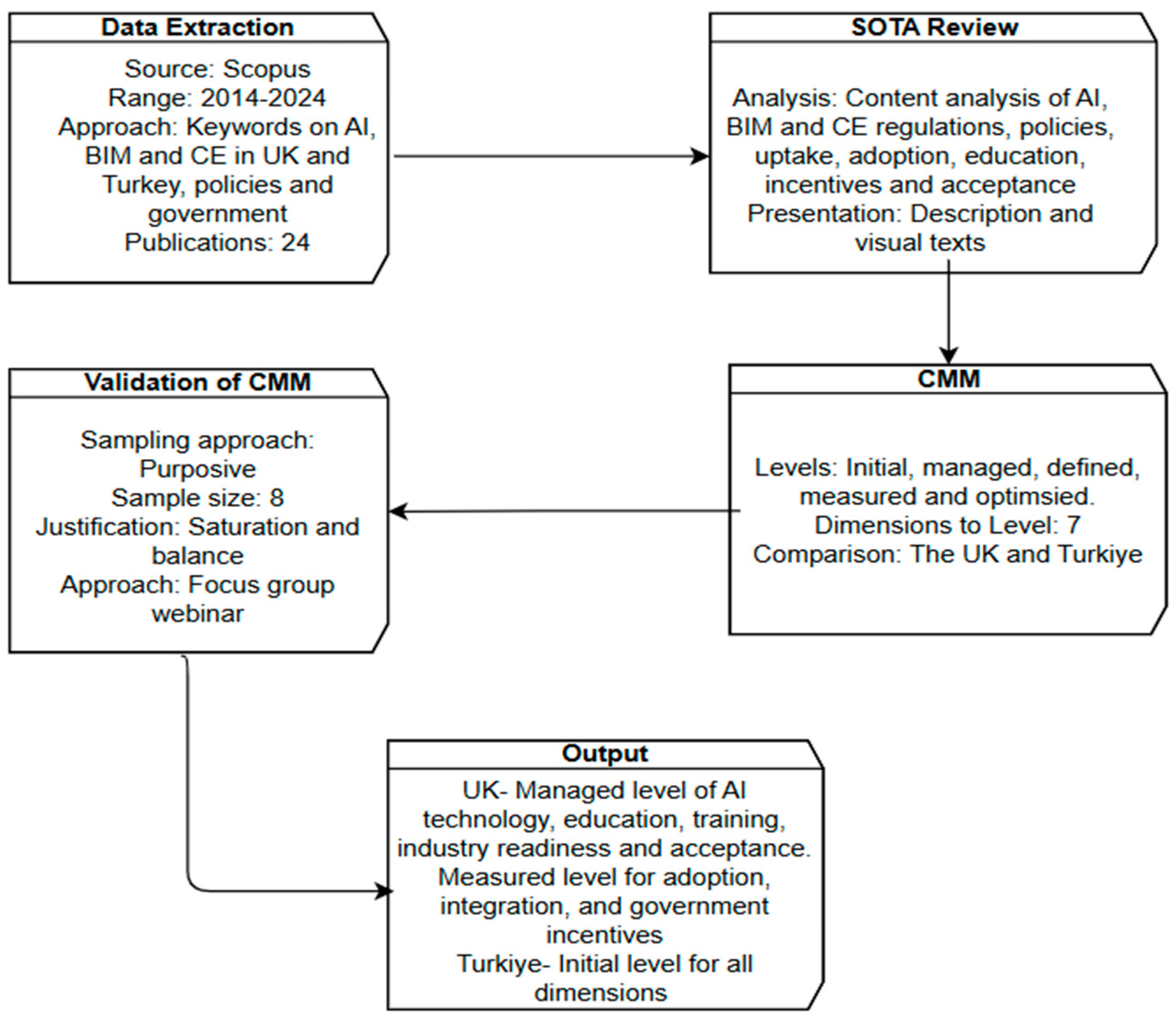
The data extraction process produced 54 relevant publications on the contexts of the UK and Turkiye. However, upon manual review, only 24 publications were relevant to add to the SOTA review. The SOTA review was applied by extracting existing knowledge on AI, BIM, and circular economy applications. Therefore, the SOTA review included AI, BIM and circular economy applications in the construction sectors of the UK and Turkiye. The data analysis following SOTA review used the qualitative content analysis approach in identifying significant texts associated with AI, BIM and CE in the UK and Turkiye. A qualitative approach to presenting the findings of the SOTA review was adopted to ensure readability of the output. The UK and Turkiye were selected for this study because of their diverse economic models in Europe, demographic contracts, geographical positioning and institutional diversity in terms of AI, BIM and CE. According to Ghisellini et al. [10] and Dellermann et al. [11], the UK has a Gross Domestic Product (GDP) of USD 3.1 trillion, while Turkiye has a GDP of USD 906 billion. Further, the UK is an EU and global financial hub, while Turkiye is close to Europe and the Middle East [10,11]. This provides a compelling and unique framework approach to the comparison. The findings, presented in tables and figures, led to the creating of a capability maturity model (CMM) for the UK and Turkiye, which was validated using expert opinions. A final CMM diagram was produced to recommend further research and policy applications. Eight experts in the construction industry were selected from the UK and Turkiye. The limitations in selecting more experts were due to the data extraction timeframe, availability and the application of purpose sampling in identifying key stakeholders in both countries. During the focus group webinar, saturation and consensus were reached regarding the responses. The respondents were selected for validation based on the purpose sampling approach and a benchmark of 15 years of experience in IT, construction leadership and academia (please refer to Section 5 for profile of the experts). An equal number of respondents were selected from the UK and Turkiye with the justification of saturation points. A focus group webinar was conducted separately for the UK and Turkiye to extract validation opinions from the respondents.
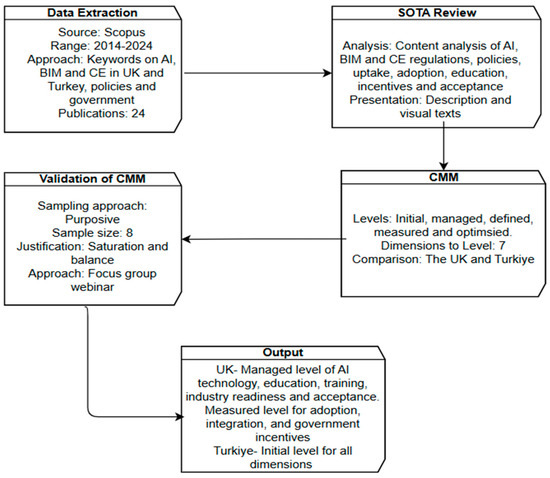
Figure 1 illustrates the data extraction from Scopus, SOTA review process, validation using the expert opinions of 8 samples the CMM with 5 maturity levels and 7 dimensions to compare the UK and Turkiye and the outputs.
Figure 1.
Research structure.
3. Results
3.1. State-of-the-Art (SOTA) Review
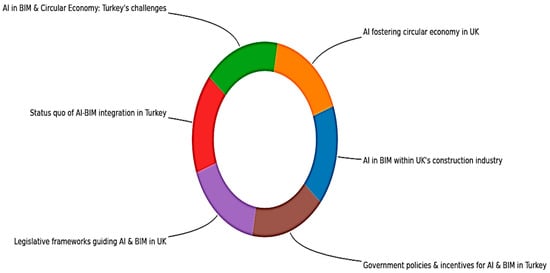
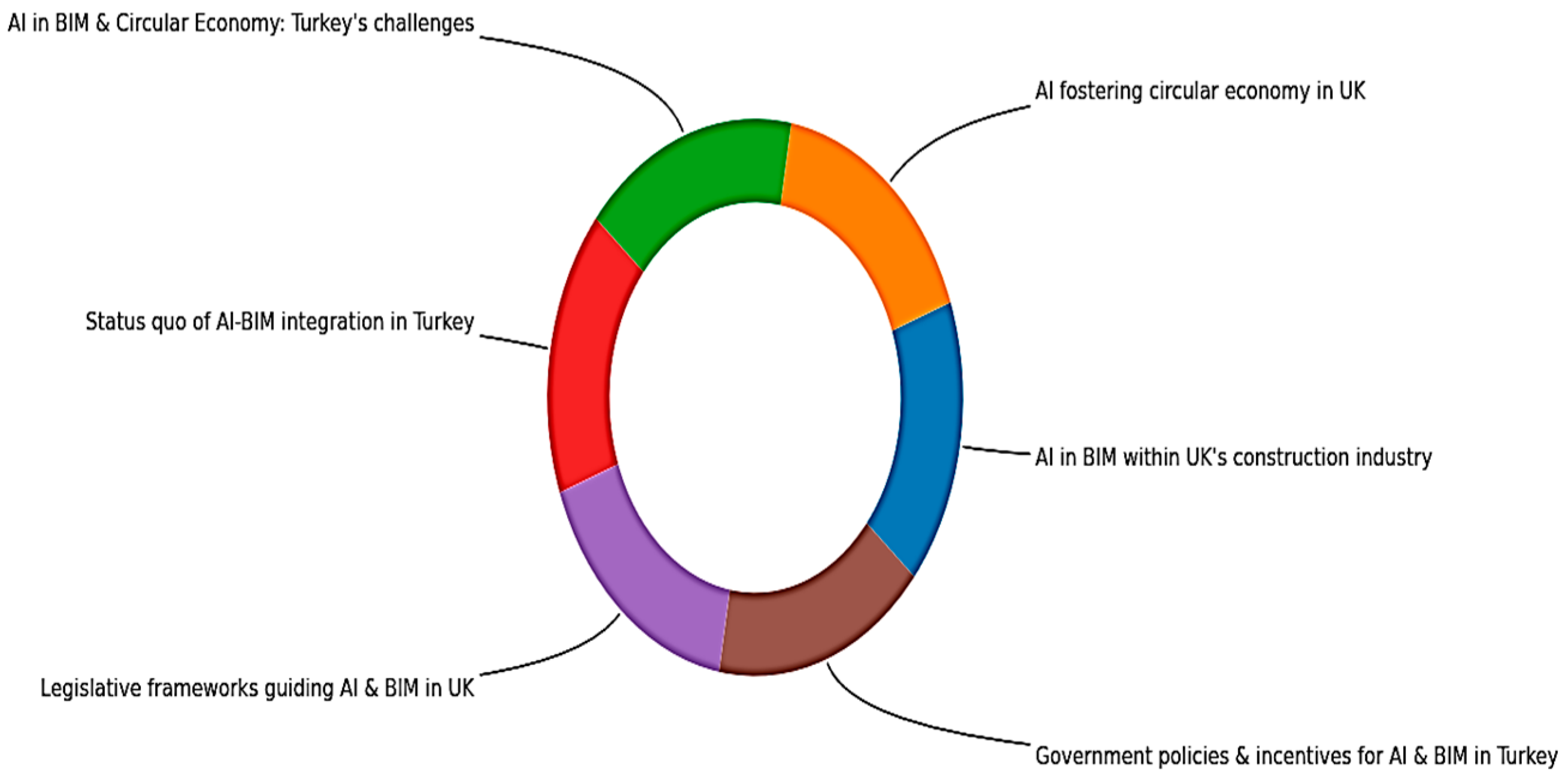
This SOTA review demonstrate the current state of AI in BIM within the UK and Turkiye’s construction industry with implications for the circular economy, government, policies, incentives, education, regulations and training requirements. As indicated in Figure 2 below, the qualitative findings present AI in BIM and CE in terms of Turkiye’s perspective, AI, fostering CE in the UK, status quo of AI–BIM integration in Turkiye, AI in BIM within the UK, legislative frameworks, and government policies on AI and BIM in Turkiye. These will be explained in the following sections.
Figure 2.
Result of the SOTA analysis.
3.1.1. The Current State of AI in BIM Within the UK’s Construction Industry
The United Kingdom’s construction sector is increasingly embracing the integration of AI within building information modelling (BIM) processes. Current researchers state that several construction firms in the UK are advancing AI-driven BIM solutions to enhance project efficiency and sustainability [12]. These software platforms utilise AI algorithms for design optimisation, clash detection, and scheduling, streamlining project workflows and improving outcomes. AI is being used to optimise design and construction processes within the BIM framework. AI can analyse project data to produce results on trends, thus fostering improved decision-making [13]. AI-powered BIM platforms enable predictive analytics for project management, allowing construction companies to forecast project timelines, budgetary requirements, and resource allocations more accurately. AI-driven BIM tools enhance communication among project stakeholders, including architects, engineers, contractors, and clients [13,14]. AI is playing a significant role in promoting sustainability and energy efficiency within the construction sector. AI-driven BIM software can produce building performance under different environmental conditions, allowing designers to optimise energy usage and reduce environmental impact [15]. Additionally, AI algorithms can analyse material properties and lifecycle data to identify opportunities for using recycled or sustainable materials in construction projects [16]. AI-powered BIM platforms offer advanced visualisation and simulation capabilities, allowing stakeholders to visualise project designs in 3D and simulate various scenarios before construction begins [17]. This enables better understanding of project requirements, early identification of design flaws, and building performance optimisation. The adoption of AI in BIM is driving the need for specialised skills and training within the construction sector. According to Aliu and Aigbavboa [18], UK educational institutions and training providers offer courses and certifications in AI-driven BIM technologies to train construction professionals with the necessary knowledge and skills. The UK’s construction sector is witnessing a rapid evolution with the integration of AI within BIM processes. As technology advances and adoption increases, AI is expected to be more significant in driving innovation, efficiency, and sustainability across the construction lifecycle.
3.1.2. AI in Fostering the Circular Economy in the UK
The United Kingdom embraces AI technologies to foster a circular economy across various sectors. AI is contributing to the advancement of circular economy principles in the UK through the following ways: 1. Waste management and recycling, where AI optimises waste management and recycling processes, enabling better sorting and separating materials [19]. AI-powered systems can identify and sort different types of waste more efficiently, increasing recycling rates and reducing waste sent to landfills. 2. Resource optimisation, where AI algorithms are helping businesses optimise the use of resources by predicting demand, reducing waste, and improving efficiency in production processes [20]. By using data on resource consumption and production, AI can identify opportunities for resource conservation and circularity [21]. AI is facilitating the design of products that are more sustainable and circular. By analysing data on product usage and lifecycle, AI algorithms can provide insights to designers for creating durable, repairable, and recyclable [22]. AI-powered supply chain management systems enable real-time tracking, monitoring and of goods throughout their lifecycle [23]. This helps in transportation costs, reducing emissions, and facilitating the reuse and recycling of products. 3. Smart manufacturing, where AI technologies are transforming manufacturing processes to be more sustainable and circular. AI-driven systems can improve production processes, reduce energy consumption, and minimise waste generation, leading to a more efficient use of resources. AI is being used to engage consumers in sustainable behaviors and circular economy practices [24]. AI-powered applications can provide personalised recommendations for sustainable products and services, encourage recycling, and reuse, and raise awareness about environmental issues. AI analytics can support policymakers and regulators in implementing and monitoring circular economy initiatives. By analysing data on resource consumption, waste generation, and environmental impact, AI can provide insights to inform policy decisions and track progress towards sustainability goals [25,26]. According to Bag and Pretorius [26], adopting AI in fostering the circular economy in the UK is helping to drive innovation, increase efficiency, and accelerate the transition towards a more sustainable and resource-efficient future. However, it is important to address challenges such as data privacy, ethical considerations, and equitable access to technology to ensure that AI contributes positively to the goals of the circular economy.
3.1.3. AI in BIM and Circular Economy: Turkiye’s Challenges and Practices
Like many countries, Turkiye faces challenges and opportunities in integrating AI into building information modelling (BIM) practices within the circular economy framework. According to Karaca et al. [27], lack of awareness and education is one of the primary challenges regarding the potential of AI in BIM and its role in fostering a circular economy. Initiatives to educate professionals, policymakers, and the public about these technologies and their benefits are crucial. Turkiye may need to develop or update regulations and standards to ensure the effective integration of AI in BIM processes while adhering to principles of sustainability and circularity [28]. This involves creating guidelines for AI-powered BIM tools and ensuring compliance with environmental standards. Access to high-quality data is essential for training AI algorithms used in BIM applications. Turkiye, just like the UK, may need to invest in data infrastructure and management systems to ensure the availability and quality of data for AI-driven BIM projects [29]. Turkiye can benefit from fostering collaboration between government, industry, academia, and international partners to drive investment in AI research and development for BIM applications [29,30]. Public–private partnerships can accelerate innovation and the adoption of sustainable practices. Encouraging the adoption of AI-enabled BIM technologies among construction firms and professionals is critical. This may involve providing incentives, subsidies, or training programs to facilitate the transition to AI-driven workflows. Like other countries, Turkiye can leverage AI in BIM to optimise resource utilisation, reduce waste, and design buildings with a lifecycle perspective [31]. AI algorithms can help identify opportunities for material reuse, recycling, and repurposing throughout the building lifecycle, contributing to the principles of a circular economy. Sharing case studies and best practices from other countries or regions where AI in BIM is successfully integrated into circular economy principles can provide valuable insights for Turkiye. Learning from these examples can inform policy decisions and implementation strategies. Tailoring AI-enabled BIM solutions to the specific needs and challenges of Turkiye’s construction industry and built environment is essential. This may involve adapting existing technologies to local contexts or developing custom solutions that address unique requirements.
3.1.4. The Status Quo of AI-BIM Integration in Turkiye’s Construction Sector
Integrating AI into BIM practices within Turkiye’s construction sector is still emerging, though with significant potential and interest. Awareness of AI and BIM technologies is growing within Turkiye’s construction industry, driven by recognising the potential benefits of efficiency, cost savings, and sustainability [32,33]. However, widespread adoption of AI-powered BIM solutions is still early. Universities, research institutions, and some forward-thinking companies in Turkiye are conducting research and development initiatives focused on AI applications in BIM [34]. These efforts aim to develop innovative solutions tailored to the local context and address the construction sector’s specific challenges. Some pilot projects and initiatives across Turkiye showcase the potential of AI-BIM integration in construction. These projects often demonstrate how AI algorithms can optimise design processes, improve construction scheduling, and enhance project management. The Turkish government has shown interest in promoting digitalisation and innovation in the construction sector, which includes AI and BIM technologies [35]. Policies and initiatives to support the adoption of digital tools and foster collaboration between industry stakeholders can create an enabling environment for AI-BIM integration. Collaboration between construction companies, technology providers, and research institutions is key to advancing AI-BIM integration in Turkiye. Partnerships and knowledge-sharing initiatives help accelerate the development and adoption of AI-powered solutions tailored to the needs of the local construction industry. Despite the growing interest and momentum, several challenges hinder the widespread adoption of AI-BIM integration in Turkiye. These challenges include limited awareness among industry stakeholders, concerns about data privacy and security, the need for skilled professionals proficient in both AI and BIM, and the upfront investment required for implementing new technologies. Turkiye’s construction sector is influenced by global trends and best practices in AI and BIM. Collaboration with international partners, participation in conferences and workshops, and knowledge exchange with leading experts contribute to the adoption and adaptation of AI-powered BIM solutions within the country. In summary, while the integration of AI into BIM practices is still evolving in Turkiye’s construction sector, there is growing awareness, research activity, and collaboration aimed at harnessing the potential of these technologies. Overcoming challenges and fostering a supportive ecosystem will be crucial for realising the full benefits of AI-BIM integration in Turkiye. Generally, the BIM has become a data source for AI. The question of interoperability in data transfer, which was resolved through industry foundation class (IFC) files, has been enhanced through AI. For instance, Autodesk has developed an AI-generated design application that eases interoperability-related issues.
3.1.5. Legislative and Regulatory Frameworks Guiding AI and BIM in the UK
The UK does not have specific legislation dedicated to AI and BIM; several existing laws and regulations govern aspects of these technologies. Some of the regulations include the General Data Protection Regulation (GDPR) governs the processing of personal data in the UK and the EU [36,37]. When AI and BIM systems handle personal data, they must comply with GDPR requirements, including ensuring data security, transparency, and obtaining appropriate consent [38]. The UK has various health and safety regulations for construction projects, such as the Health and Safety at Work Act. While these regulations may not directly address AI and BIM, they influence building regulations in the UK and set standards for the design and construction of buildings to ensure safety, accessibility, and energy efficiency. AI and BIM technologies can help comply with these regulations by facilitating design optimisation, energy performance analysis, and regulatory compliance checks regarding how these technologies are implemented to ensure worker safety and mitigate risks [39]. According to Shojaei et al. [40], the UK government has a Digital Construction Strategy to promote digital technologies, including BIM, across the construction sector. While not legally binding, this strategy provides guidance and support for adopting digital tools and processes in construction projects. Various organisations in the UK, such as the British Standards Institution (BSI) and the UK BIM Alliance, develop guidelines and standards for the ethical use of AI and BIM. These guidelines address data privacy, transparency, fairness, and accountability in AI-driven processes. Government procurement guidelines may require the use of BIM in public construction projects [37,39]. For example, the UK government mandates using BIM Level 2 in all centrally procured public projects to improve efficiency and collaboration [41]. Industry organisations and professional bodies in the UK, such as the Royal Institution of Chartered Surveyors (RICS) and the Institution of Civil Engineers (ICE), develop standards and best practices for using AI and BIM in construction and engineering projects. While the UK currently relies on a combination of existing laws, regulations, and industry standards to govern AI and BIM, there is ongoing discussion about the need for more specific legislation to address emerging challenges and opportunities in these areas. As technology continues to evolve, policymakers are likely to consider updates to the regulatory framework to ensure that AI and BIM are used responsibly and ethically across various sectors, including construction.
3.1.6. Government Policies and Incentives for AI and BIM in Turkiye
Turkiye has been showing increasing interest in promoting the adoption of digital technologies, including AI and BIM, across various sectors, including construction. While specific policies and incentives targeting AI and BIM integration may not have been extensively detailed, several broader initiatives and measures have been undertaken to support digital transformation and innovation in Turkiye’s economy. Some government policies and incentives that indirectly support the adoption of AI and BIM in the construction sector include a digital transformation strategy: Turkiye has been developing a national digital transformation strategy to modernise various economic sectors, including construction. This strategy emphasises adopting digital technologies such as AI and BIM to improve efficiency, productivity, and competitiveness. The Turkish government has been promoting Industry 4.0 principles, which advocate for integrating digital technologies into manufacturing and other industries [42]. While initially focused on manufacturing, these initiatives also have implications for the construction sector, encouraging the adoption of AI, BIM, and other digital tools. The government provides funding and support for research and development (R&D) activities in various sectors, including construction and technology [43]. Companies and research institutions engaged in AI and BIM research may benefit from these funding opportunities to develop innovative solutions and technologies. Companies investing in AI and BIM technologies, such as purchasing software or training employees, may be eligible for tax credits or deductions. The Turkish government can influence the adoption of AI and BIM in the construction sector through public procurement policies [44]. The government can incentivise contractors and firms to adopt AI and BIM solutions by including requirements or preferences for digital technologies in public construction projects. The government supports initiatives to enhance digital skills and education among the workforce [45]. Training programs and educational initiatives focused on AI, BIM, and other digital technologies can help build the talent pool needed to drive innovation in the construction sector. The government may collaborate with private sector companies and industry associations to promote the adoption of AI and BIM in construction through PPPs [46]. These partnerships can involve joint initiatives, funding schemes, and knowledge-sharing efforts to support technology adoption and innovation. While these policies and incentives may not explicitly target AI and BIM integration in the construction sector, they create a supportive environment for digital transformation and innovation, which can indirectly benefit from adopting these technologies. As the importance of AI and BIM continues to grow, policymakers may develop more targeted measures to accelerate their adoption in Turkiye’s construction industry.
4. Capability Maturity Modelling
Capability maturity modelling (CMM) is utilised in built environment research and decision-making to assess and enhance abilities, project outcomes and the transformation process [47]. Initially created for software development purposes, the CMM framework has been adjusted for construction and infrastructure management to gauge maturity levels regarding implementation, sustainability practices and integration within the supply chain. The model consists of five maturity stages in progression: the first stage with ad hoc and unstructured processes; the managed stage, where basic project management practices are set up; the defined stage featuring organization-wide standardised processes; the quantitatively managed stage, where performance metrics guide decision-making; and the optimizing phase, where continuous improvement becomes ingrained in the organisational culture. Construction organisations use CMM to compare their abilities and create plans for enhancement in fields like building information modelling (BIM) construction practices and transitioning towards a circular economy. It supports decision-makers and stakeholders in allocating resources for risk management and promoting standardisation initiatives. By incorporating CMM into decision-making processes, the construction industry can improve project efficiency and lower risks while achieving sustainability objectives.
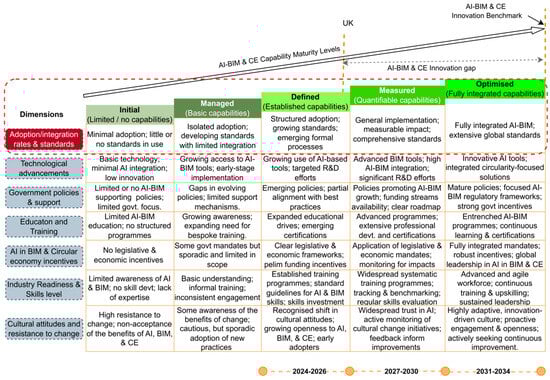
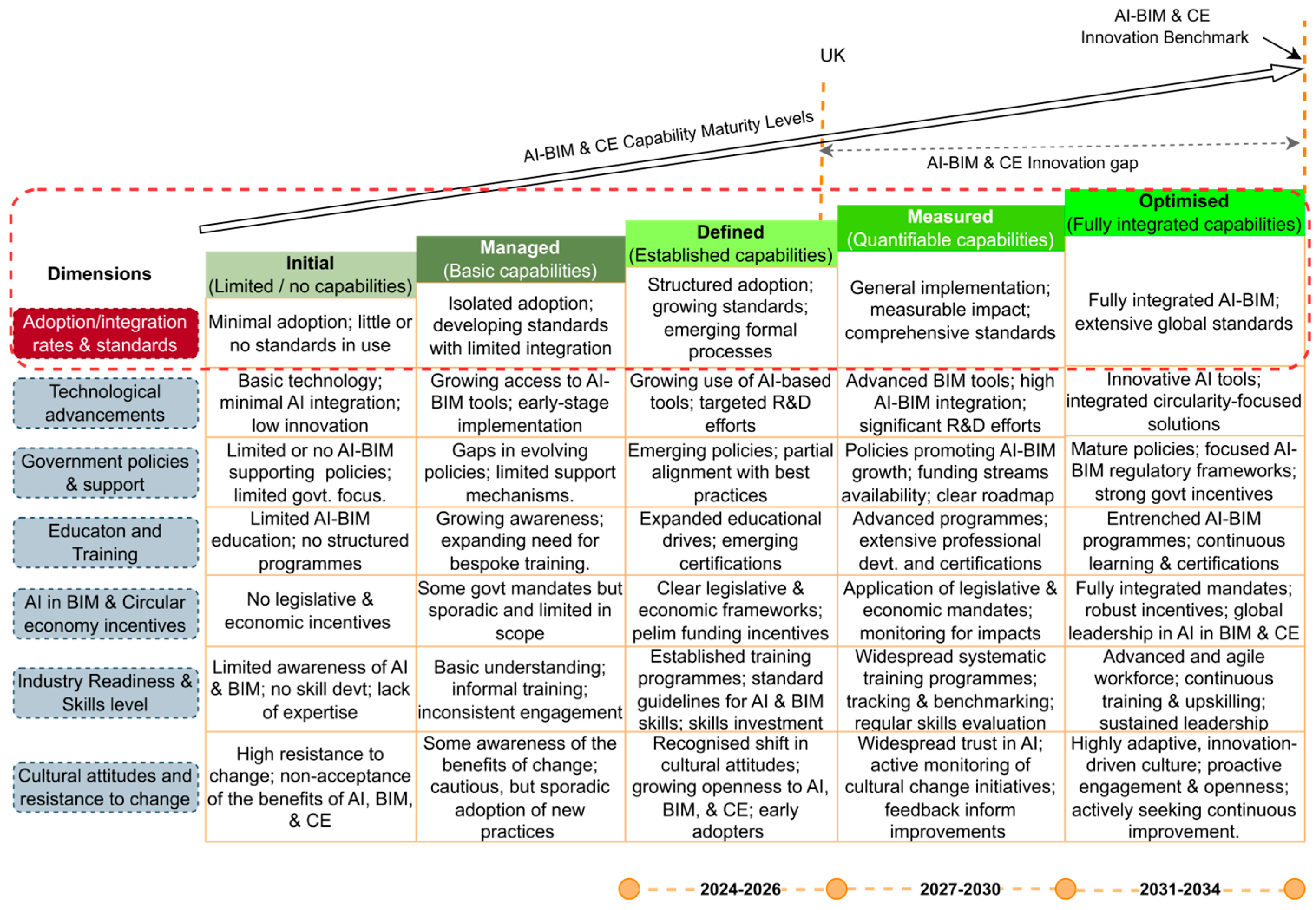
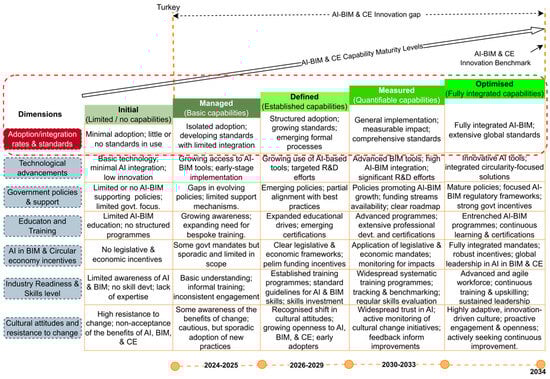
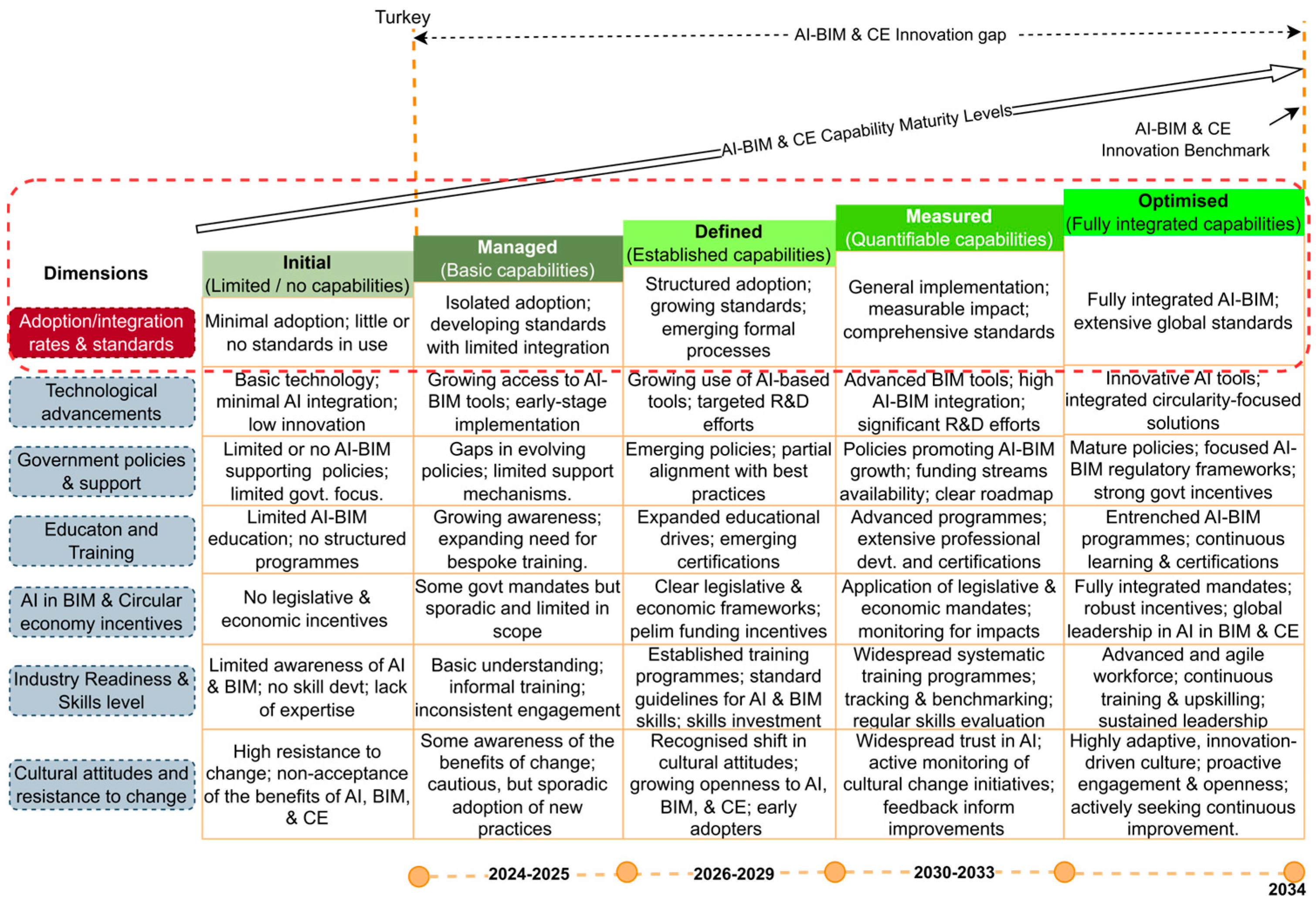
Based on the output of Figure 3 and Figure 4, the UK is currently in the managed phase, while Turkiye is in the initial phase of adopting AI in BIM and CE, respectively. Table 1 explains and compares the positions of both countries. The explanations of Figure 3 and Figure 4 are provided below.
Figure 3.
CMM for UK’s position on AI in BIM and CE.
Figure 4.
Turkiye’s position on AI in BIM and CE.
Table 1.
Comparative study of AI-BIM maturity levels in the UK and Turkiye.
4.1. Comparative Study of AI-BIM Maturity Levels in the UK and Turkiye
Comparative study of AI-BIM maturity levels in the UK and Turkiye involves analysing several aspects, including the adoption rates, technological advancements, industry standards, governmental policies, and educational initiatives in both countries. Table 1 below shows a comparative study of AI-BIM maturity levels in the UK and Turkiye.
4.1.1. Adoption and Integration
The adoption of BIM has been increasing worldwide because building information modelling has become essential for efficient project management, communication, better coordination, and visualisation. Cheng and Lu [46] state that the strong and early commitment of the UK government to BIM makes the UK the world leader in BIM adoption. The government-driven approach, where the UK government took a leading role in mandating BIM Level 2 use in 2016, has led to high involvement of BIM in the AEC industry and other sectors [48,49,50,51]. In addition, BIM has developed into a backbone of the AEC industry in leveraging AI in BIM-AI integration to improve project management [49]. Comprehensive standards such as ISO 19650 have been developed to support BIM implementation and facilitate a higher maturity level [58,59,60,61,62,63]. Recently, BIM systems, frequently used in many developed countries such as the UK, have increased in Turkiye [50,51]. However, lack of knowledge in this regard, lack of expertise and experience limit the use of BIM in Turkiye [51,52,53]. Despite this, some projects are adopting BIM, several universities are teaching BIM, and certificate programs and BIM specialists are being worked on. There is no legal regulation regarding the use of BIM; the Turkish industry is in its infancy, and it is foreseen that BIM will be mandatory [33,49].
4.1.2. Technological Advancements
Adopting digital information advanced tools in the UK construction sector has also led to the growth of companies that specialise in applications of technologies to design and construction [54]. Digital construction innovations, with significant R&D investments, are leading to advancements in AI applications within BIM, such as automated clash detection, generative design, and smart building management systems [57]. Turkish firms are increasingly gaining access to global BIM and AI tools. Still, the access is not as deep as in the UK, and the overall investment in R&D specific to AI-BIM is lower, leading to slower technological advancements [55].
4.1.3. Governmental Policies and Support
The UK government’s mandates and support for BIM adoption have driven maturity levels [58]. Policies such as the Government Construction Strategy have laid a clear roadmap. The Turkish government increasingly recognises the importance of BIM and AI, with recent initiatives aimed at promoting digital transformation in the construction industry [60].
4.1.4. Educational and Training Initiatives
Discussions around construction education (CE) and engineering education (EE) have continued to stimulate the interest of higher education institutions (HEIs), policymakers, researchers, parents, educators, and even students alike. Several universities and institutions offer specialised BIM and AI programs, contributing to a well-educated workforce [61]. Turkish universities are trying to incorporate BIM and AI into their curricula, though the scope and depth are less extensive than in the UK [63,64,65].
The UK leads in AI-BIM maturity levels, with widespread adoption, advanced technological integration, strong governmental support, and comprehensive educational initiatives. While making significant strides, Turkiye remains at an earlier stage of maturity, with ongoing efforts to develop standards, policies, and educational frameworks to catch up with global leaders like the UK. Turkiye should implement and enforce national BIM standards and mandates. There is a need for Turkiye to increase R&D Investment by encouraging investment in AI-BIM research and development. Furthermore, Turkiye should expand Educational Programs to develop and expand BIM and AI courses in universities and vocational training. There is a need to promote Industry Collaboration and foster partnerships between academia, government, and the construction industry to drive innovation and knowledge sharing. By focusing on these areas, Turkiye can accelerate its AI-BIM maturity and leverage the full potential of these technologies in the construction industry.
5. Construction Industry Validation of CMMs
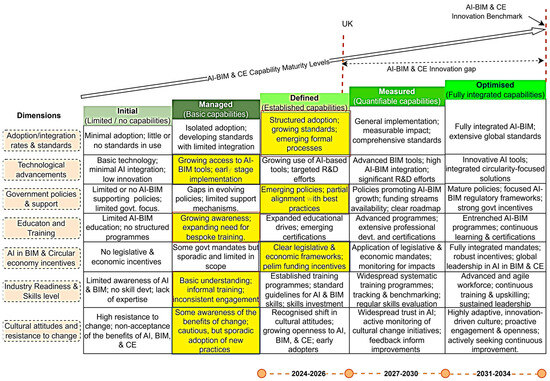
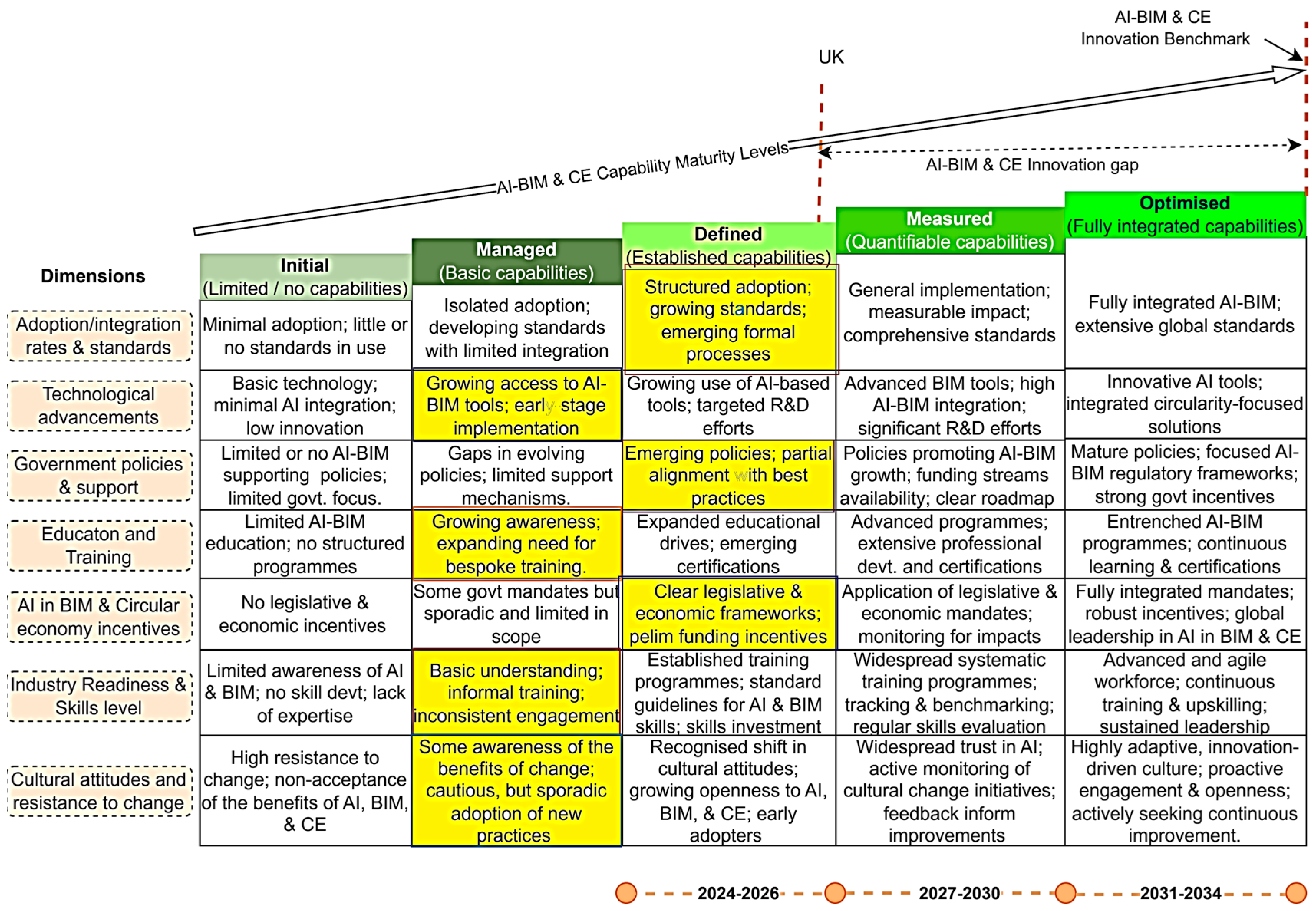
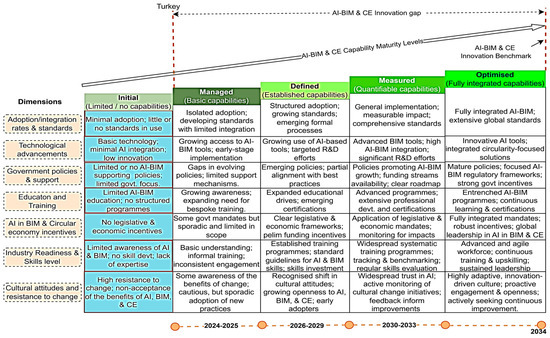
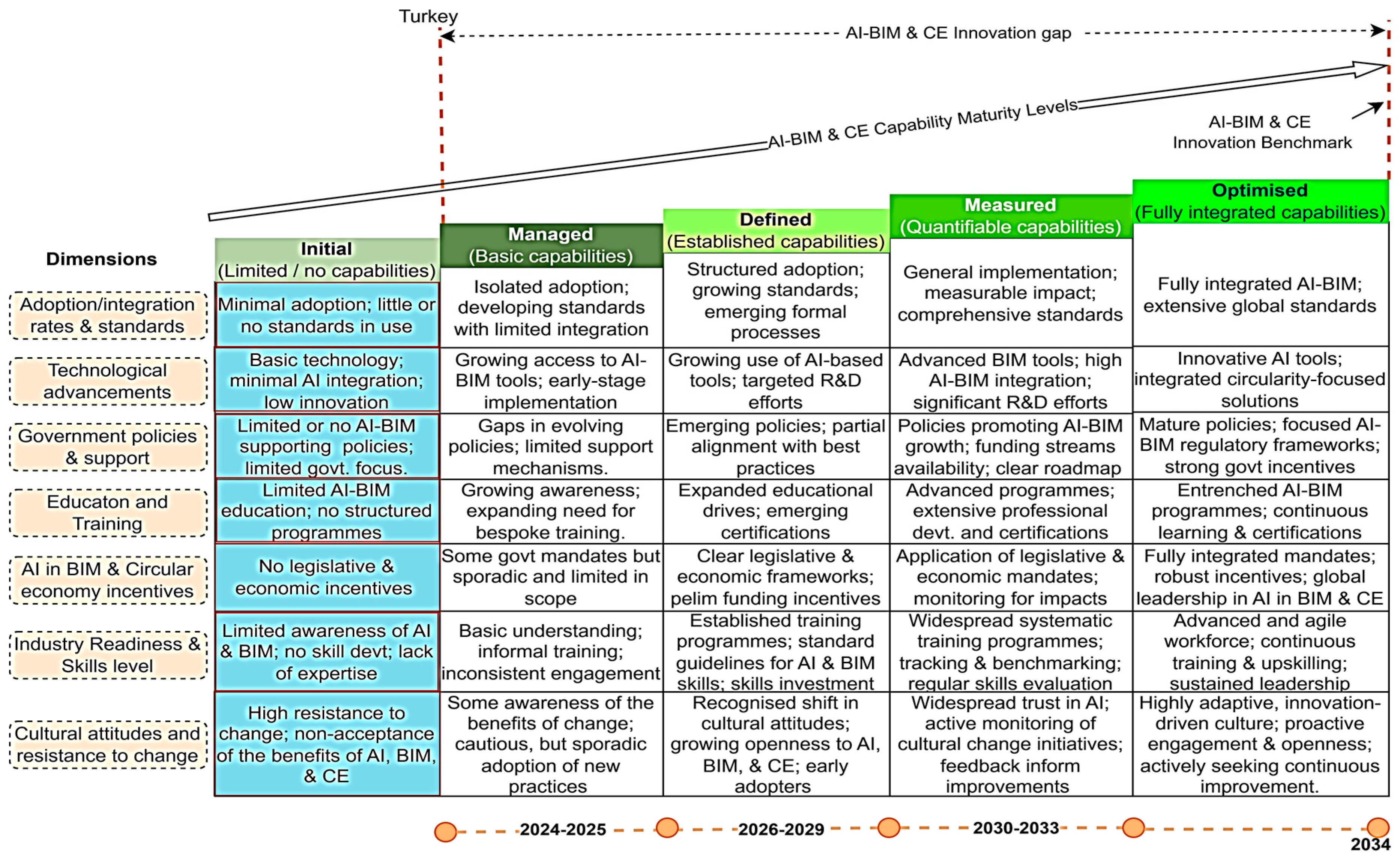
The expert validation focus group webinars were conducted for UK and Turkish CMMs of Figure 3 and Figure 4 to address the level of maturity within a space of 1 h each. Table 2 shows that the minimum years of experience for each participant was 15 years. This was purposely selected to explore their subject-matter expertise in AI, BIM and CE. The CMMs were presented to the validation participants in PowerPoint presentations, and the experts were asked to comment on the state of AI in their construction sectors. The final and revised CMMs are presented in Figure 5 and Figure 6.
Table 2.
Summary of the expert profile involved in the validation webinar.
Figure 5.
Validated CMM for the UK.
Figure 6.
Validated CMM for Turkiye.
The summary of Table 3, which aligns with the output of Figure 4 and Figure 5 in a comparative approach, presented the UK as more open to AI inclusion in BIM and CE with a confirmation of Turkiye’s position as same of Figure 3 where the initial phase of adoption, technological advancement, government policies and support, education and training, AI in BIM and CE incentives, industry readiness and skill level along with cultural attitudes are still limited. In the UK, the respondents confirmed that AI adoption and integration into construction businesses, processes and projects have established capabilities. New UK government policies such as the National AI strategy, the CE packaged deal, Digital Built Britain and emerging investment in AI position the UK’s policies and incentives in a much stronger position when compared with Turkiye and other EU countries. Additional efforts are required in AI technologies, education and training, industry readiness and cultural attitudes in the construction sector towards AI. The next section explains the implications of the findings for practical application.
Table 3.
Summary of responses.
Figure 5 illustrates the CMM for the UK with the green headings as the levels from initial to optimised. The dimensions are in the left brown colour and in yellow, the dimension of adoption and integration and standards was confirmed to be defined with established capabilities. Technological advancement has basic capabilities under the managed phase. Government policies and support in the UK, along with AI in BIM and CE incentives, are also defined. Education, training, industry readiness and cultural attitudes towards AI are colour coded yellow under managed CMM level. Figure 6 has the same arrangement as Figure 5, however, all the dimensions with the blue colour coding are at the initial phase. Hence, it was confirmed by the experts that Turkiye is at the initial phases of adoption, technology advancement in terms of AI, government policies, education and training, AI in BIM and CE incentives, industry readiness and skill level, cultural attitudes and resistance to change.
6. Discussion: Implications of Findings
According to Bassir et al. [7], the concept of BIM was first introduced in the 1960s, whereas AI came into existence around the 1950s. However, the processes have improved recently as many industries have realised the opportunities such technologies offer instead of traditional methodologies. Currently, most structures are built digitally, and building materials and structural components can be visualised, bought, and sold using such technologies. Driven by global trends, the AEC industry is in a time of transformation to deliver projects more efficiently and design better buildings, hence the need for a powerful solution such as AI in enhancing BIM for sustainable development. AI greatly impacts BIM by studying and developing algorithms to learn and predict data without being explicitly programmed. Furthermore, AI coordinates effectively calculate and accurately process the information humans provide to machines, which is the core of BIM [9]. AI has been considered the science and technology of developing intelligent machines with reasoning, knowledge, thinking, perception, learning, communicating, planning and the capacity to manipulate and move things just like humans [17]. Applying AI techniques to process large amounts of data is considered a necessity and not a luxury within the construction business practices and other industries, as it studies and develops algorithms that learn and predict data without being explicitly programmed [38]. The construction industry is fragmented and complex. However, the cost-effective and streamlined processes of BIM have proven to save cost and enhance quality when assisted by AI [27]. Furthermore, AI positively impacts decision-making applications such as algorithmic, deep learning, artificial neural networks, deep neural networks, decision support systems, expert and learning systems [1]. AI uses Machine Learning (ML) as its subfield when a computer observes a given dataset and generates a model based on the input data to solve problems. In contrast, ML uses Deep Learning (DL) as its subfield. Due to long computational paths, DL studies artificial neural networks that are useful with higher-dimensional data, such as videos, audio, and images [14,15,16].
Substantial technological development has succeeded in the manual processes and tasks humans complete in various intellectual, industrial, and social applications. Schlüter et al. [21] state that AI offers several opportunities for productivity improvements through an accurate analysis of large volumes of data, tackling nonlinear, complex practical problems, and undertaking predictions and generalisations when trained. Furthermore, AI uses sophisticated deep learning algorithms to learn from large datasets and uses the knowledge acquired to assist the industry. Additionally, AI can acquire historical data, real-time data, and geospatial data for facility management, and it can also be used in scheduling and planning using the infrastructure and landscape in BIM. Most of all, AI aids decision-making, planning and predictions through the collaborating views of all stakeholders, including the owner [15]. The industry is experiencing significant benefits as these technologies have improved productivity and effectiveness by identifying potential design and construction issues, enabling collaboration among stakeholders and enhancing the integration of processes, context, and people within the industry.
6.1. The Role of AI in Advancing Circular Economy Principles
In recent decades, the CE development has received increasing attention from policymakers, academicians, and industry stakeholders. CE takes resource conservation and cleaner production at its core; it entails an integrated approach to designing processes, products or services, and business models, harmonising environmental protection and economic growth [20,21,22,23]. The CE aims to enhance sustainable production and consumption diffusion through restorative and regenerative eco-design principles of products. According to Oluleye et al. [23], data-driven technologies such as AI are considered an essential enabler of CE in the building product lifecycle in areas such as material selection, design for waste prevention, deconstruction/disassembly, hazardous material prediction, the technical and economical circularity of material prediction; operation of circular business models; estimation of building construction demolition waste generation; onsite waste recycling; pre-demolition auditing in CE; material strength prediction for reuse and recycling; demolition waste sorting; composition and segmentation; missing building construction demolition waste data management and analysis; and optimisation of waste collection and site selection for building construction demolition waste recycling plants and reverse logistics in the building construction industry (BCI).
6.2. The Convergence of AI with Circular Economy Practices
The convergence of AI with circular economy practices represents a powerful opportunity to address sustainability challenges and optimise resource use [19,20,21,22]. By leveraging AI technologies, businesses, governments, and other stakeholders can enhance circular economy initiatives’ efficiency, effectiveness, and impact. AI algorithms can analyse vast amounts of data to identify inefficiencies and opportunities for improvement in resource management. By optimising production, distribution, and consumption processes, AI can help minimise waste, reduce resource consumption, and maximise the value extracted from materials and resources. AI-powered technologies such as robotics, computer vision, and machine learning can revolutionise waste management processes. For example, AI-enabled sorting systems can accurately identify and sort different types of materials, increasing recycling rates and reducing contamination. Additionally, AI algorithms can optimise waste collection routes, leading to more efficient and cost-effective waste management practices. AI can inform product design decisions to align with circular economy principles. By analysing consumer preferences, usage patterns, and product lifecycles, AI algorithms can help design products that are easier to repair, reuse, and recycle. Additionally, AI can facilitate the tracking and management of products throughout their lifecycle, enabling better resource management and end-of-life strategies. AI can enable innovative circular business models such as product-as-a-service and sharing platforms [23,24,25,26]. For example, AI algorithms can optimise asset utilisation and facilitate matchmaking between supply and demand in sharing economy platforms. These business models promote resource efficiency, extend product lifecycles, and reduce waste generation. AI can optimise supply chain operations to minimise environmental impact and promote circularity. By analysing supply chain data, AI algorithms can identify opportunities to reduce waste, optimise transportation routes, and improve inventory management. Additionally, AI can help businesses track and trace materials throughout the supply chain, ensuring transparency and accountability. AI-powered predictive maintenance systems can anticipate equipment failures and schedule maintenance activities proactively. By preventing breakdowns and extending the lifespan of machinery and equipment, predictive maintenance can reduce downtime, minimise resource use, and promote circularity. AI can drive innovation in circular economy practices by enabling the discovery of new materials, processes, and technologies. For example, AI algorithms can analyse scientific research and experimentation data to identify novel materials with desirable properties for circular applications. Additionally, AI can simulate and optimise processes such as material recycling and remanufacturing, accelerating the development and adoption of circular solutions. By harnessing the power of AI to optimise resource use, improve efficiency, and foster innovation, stakeholders can create a more prosperous and resilient future for both people and the planet [24,25,26,27,28].
6.3. Implications for AI in BIM and CE for Construction Government Policies, Industry and Research in the UK and Turkiye
The findings of this study portend consistent implications for government policies on AI in the UK and Turkiye in terms of additional investments into AI research and education. Both countries are yet to have an optimised level of adoption and industry readiness. Additional research and incentives for using AI in CE to foster sustainable practices will bolster positive cultural attitudes towards AI. The UK and Turkiye’s construction sectors are behind in educational training. The UK has the National AI strategy, which can be adapted for Turkiye. Hence, the construction sector will adopt an AI-driven system through education in the next 10 years. Additionally, research and development (R&D) into how BIM can be transformed into a multimodal data source for AI development is essential. This will support SMEs not just in the UK but globally. The focal areas of research are AI-driven decision support in procurement, cost management, health and safety, industrialised construction, and decarbonisation will be gamechangers in the next few years.
7. Conclusions
The UK can move adoption and integration of AI, education and training and construction industry readiness through new more specific policies on AI adoption for SMEs. The existing National AI strategy is more generic and only considers the construction section as a business and not a system within a system. The Turkish construction section needs an AI and CE roadmap for the integration that will leverage existing BIM policies. The UK BIM framework for 2030 and the General Data Protection Regulation Act must be revised to implement AI adoption. In Turkiye, the National Digital Transformation Strategy and material passport integration in construction are new policies that may be enacted to support the adoption of AI. New education policies and programmes on AI in both countries are essential. The Turkish construction industry actively seeks to adopt international best practices and standards in BIM and AI. Participating in global industry forums and partnerships can facilitate knowledge transfer and the adoption of proven methodologies. Additionally, accessible AI and BIM tools can be used to improve project efficiency and sustainability. The government and leading construction organisations must collaborate with technology providers and industry leaders to gain access to advanced tools and platforms. Furthermore, companies can invest in training programs to upskill their workforce in AI and BIM technologies and encourage continuous learning and professional development. The UK also needs increased investment in digital infrastructure, particularly in underserved areas, to facilitate the deployment of AI and BIM technologies. Enhancing internet connectivity and cloud computing capabilities is crucial. The UK government must continue to support and expand existing educational and professional development programs, ensuring that the workforce remains at the cutting edge of AI and BIM technologies. More extensive educational programs focused on AI, BIM, and digital construction technologies must be developed, along with the establishment of partnerships with universities and vocational training centres to create a skilled workforce. To promote cultural change and acceptance, dialogue between stakeholders to address ethical concerns and build trust in AI applications is crucial. Before 2034, the UK may become a leader in the AI digital space for the construction sector. Turkiye has immense potential to attain a quantifiable phase of digitalising construction activities and waste minimisation measures. The limitations of this study are the small sample size in the expert focus group webinar. A larger sample size may have provided alternate opinions. However, these were justified in terms of the saturation of recurring responses by the experts. The limitation in the cross-sectional time horizon of the study may have affected the results. A longitudinal study will provide a more detailed reflection of AI adoption in BIM and CE practices.
Author Contributions
Conceptualization, T.O., A.K. and A.M.T.; methodology, T.O., A.K. and J.D.; software, T.O.; validation, A.M.T., S.S., T.O. and A.A.; formal analysis, T.O. and A.K.; investigation, T.O. and A.M.T.; resources, T.O. and A.M.T.; data curation, A.K.; writing—original draft preparation, A.K, M.O. and T.O.; writing—review and editing, M.O., J.D., T.O. and M.K.P.; visualization, A.A. and T.O.; supervision, M.K.P. and T.O.; project administration, T.O. and A.M.T.; funding acquisition, T.O. and A.M.T. All authors have read and agreed to the published version of the manuscript.
Funding
This research was funded by the British Council, grant number: RE2023-065.
Data Availability Statement
Data is available on request.
Conflicts of Interest
The authors declare no conflict of interest.
References
- Hughes, L.; Ismagilova, E.; Aarts, G.; Coombs, C.; Crick, T.; Duan, Y.; Dwivedi, R.; Edwards, J.; Eirug, A.; Galanos, V.; et al. Multidisciplinary Perspectives on Emerging Challenges, Opportunities, and Agenda for Research, Practice and Policy. Int. J. Inf. Manag. 2021, 57, 101994. [Google Scholar]
- Naji, K.K.; Gunduz, M.; Alhenzab, F.H.; Al-Hababi, H.; Al-Qahtani, A.H. A Systematic Review of the Digital Transformation of the Building Construction Industry. IEEE Access 2024, 12, 31461–31487. [Google Scholar] [CrossRef] [Scilit]
- Akinade, O.O.; Oyedele, L.O.; Munir, K.; Bilal, M.; Ajayi, S.O.; Owolabi, H.A.; Alaka, H.A.; Bello, S.A. Evaluation Criteria for Construction Waste Management Tools: Towards a Holistic BIM Framework. Int. J. Sustain. Build. Technol. Urban Dev. 2016, 7, 3–21. [Google Scholar] [CrossRef] [Scilit]
- Cetin, M.A.; Bakirtas, I. The Long-Run Environmental Impacts of Economic Growth, Financial Development, and Energy Consumption: Evidence from Emerging Markets. Energy Environ. 2020, 31, 634–655. [Google Scholar] [CrossRef] [Scilit]
- Shen, L.; Zhang, X.; Liu, H. Digital Technology Adoption, Digital Dynamic Capability, and Digital Transformation Performance of Textile Industry: Moderating Role of Digital Innovation Orientation. MDE Manag. Decis. Econ. 2022, 43, 2038–2054. [Google Scholar] [CrossRef] [Scilit]
- Abdirad, H.; Mathur, P. Artificial Intelligence for BIM Content Management and Delivery: Case Study of Association Rule Mining for Construction Detailing. Adv. Eng. Inform. 2021, 50, 101414. [Google Scholar] [CrossRef] [Scilit]
- Bassir, D.; Lodge, H.; Chang, H.; Majak, J.; Chen, G. Application of Artificial Intelligence and Machine Learning for BIM: Review. Int. J. Simul. Multidiscip. Des. Optim. 2023, 14, 8. [Google Scholar] [CrossRef] [Scilit]
- Sagoo, J.; Tiwari, A.; Alcock, J. Reviewing the state-of-the-art design rationale definitions, representations and capabilities. Int. J. Des. Eng. 2014, 5, 211–231. [Google Scholar] [CrossRef] [Scilit]
- Sarker, I.H. AI-Based Modeling: Techniques, Applications and Research Issues towards Automation, Intelligent and Smart Systems. SN Comput. Sci. 2022, 3, 158. [Google Scholar] [CrossRef] [Scilit]
- Ghisellini, P.; Cialani, C.; Ulgiati, S. A Review on Circular Economy: The Expected Transition to a Balanced Interplay of Environmental and Economic Systems. J. Clean. Prod. 2016, 114, 11–32. [Google Scholar] [CrossRef] [Scilit]
- Dellermann, D.; Ebel, P.; Söllner, M.; Leimeister, J.M. Hybrid Intelligence. Bus. Inf. Syst. Eng. 2019, 61, 637–643. [Google Scholar] [CrossRef] [Scilit]
- Sarker, I.H. Machine Learning: Algorithms, Real-World Applications and Research Directions. SN Comput. Sci. 2021, 2, 160. [Google Scholar] [CrossRef] [Scilit] [PubMed]
- Zhang, J.; Tao, D. Empowering Things with Intelligence: A Survey of the Progress, Challenges, and Opportunities in Artificial Intelligence of Things. IEEE Internet Things J. 2021, 8, 7789–7817. [Google Scholar] [CrossRef] [Scilit]
- Zhang, Z.; Wen, F.; Sun, Z.; Guo, X.; He, T.; Lee, C. Artificial Intelligence-enabled Sensing Technologies in the 5G/Internet of Things Era: From Virtual Reality/Augmented Reality to the Digital Twin. Adv. Intell. Syst. 2022, 4, 2100228. [Google Scholar] [CrossRef] [Scilit]
- Jain, A.; Kulkarni, G.; Shah, V. Natural Language Processing. Int. J. Comput. Sci. Eng. 2018, 6, 161–167. [Google Scholar] [CrossRef] [Scilit]
- Javaid, M.; Haleem, A.; Singh, R.P.; Suman, R.; Gonzalez, E.S. Understanding the Adoption of Industry 4.0 Technologies in Improving Environmental Sustainability. Sustain. Oper. Comput. 2022, 3, 203–217. [Google Scholar] [CrossRef] [Scilit]
- Sarker, I.H. Deep Learning: A Comprehensive Overview on Techniques, Taxonomy, Applications and Research Directions. SN Comput. Sci. 2021, 2, 420. [Google Scholar] [CrossRef] [Scilit]
- Aliu, J.; Aigbavboa, C. Reviewing the Trends of Construction Education Research in the Last Decade: A Bibliometric Analysis. Int. J. Constr. Manag. 2021, 23, 1571–1580. [Google Scholar] [CrossRef] [Scilit]
- Darko, A.; Chan, A.P.C.; Adabre, M.A.; Edwards, D.J.; Hosseini, M.R.; Ameyaw, E.E. Artificial Intelligence in the AEC Industry: Scientometric Analysis and Visualization of Research Activities. Autom. Constr. 2020, 112, 103081. [Google Scholar] [CrossRef] [Scilit]
- Baduge, S.K.; Thilakarathna, S.; Perera, J.S.; Arashpour, M.; Sharafi, P.; Teodosio, B.; Shringi, A.; Mendis, P. Artificial Intelligence and Smart Vision for Building and Construction 4.0: Machine and Deep Learning Methods and Applications. Autom. Constr. 2022, 141, 104440. [Google Scholar] [CrossRef] [Scilit]
- Oluleye, M.; Lickert, H.; Schweitzer, K.; Bilge, P.; Briese, C.; Dietrich, F.; Krüger, J. AI-Enhanced Identification, Inspection and Sorting for Reverse Logistics in Remanufacturing. Procedia CIRP 2021, 98, 300–305. [Google Scholar] [CrossRef] [Scilit]
- Yu, Y.; Yazan, D.M.; Junjan, V.; Iacob, M.-E. Circular Economy in the Construction Industry: A Review of Decision Support Tools Based on Information & Communication Technologies. J. Clean. Prod. 2022, 349, 131335. [Google Scholar] [CrossRef] [Scilit]
- Oluleye, B.I.; Chan, D.W.M.; Antwi-Afari, P. Adopting Artificial Intelligence for Enhancing the Implementation of Systemic Circularity in the Construction Industry: A Critical Review. Sustain. Prod. Consum. 2023, 35, 509–524. [Google Scholar] [CrossRef] [Scilit]
- Kristoffersen, E.; Blomsma, F.; Mikalef, P.; Li, J. The Smart Circular Economy: A Digital-Enabled Circular Strategies Framework for Manufacturing Companies. J. Bus. Res. 2020, 120, 241–261. [Google Scholar] [CrossRef] [Scilit]
- Dantas, T.E.T.; de-Souza, E.D.; Destro, I.R.; Hammes, G.; Rodriguez, C.M.T.; Soares, S.R. How the Combination of Circular Economy and Industry 4.0 Can Contribute towards Achieving the Sustainable Development Goals. Sustain. Prod. Consum. 2021, 26, 213–227. [Google Scholar] [CrossRef] [Scilit]
- Bag, S.; Pretorius, J.H.C. Relationships between Industry 4.0, Sustainable Manufacturing and Circular Economy: Proposal of a Research Framework. Int. J. Organ. Anal. 2022, 30, 864–898. [Google Scholar] [CrossRef] [Scilit]
- Karaca, F.; Tleuken, A.; Pineda-Martos, R.; Ros Cardoso, S.; Orel, D.; Askar, R.; Agibayeva, A.; Güemez, E.G.; Salles, A.; Varol, H.A.; et al. Cultivating Sustainable Construction: Stakeholder Insights Driving Circular Economy Innovation for Inclusive Resource Equity. Buildings 2024, 14, 935. [Google Scholar] [CrossRef] [Scilit]
- Fraga-Lamas, P.; Lopes, S.I.; Fernández-Caramés, T.M. Green IoT and Edge AI as Key Technological Enablers for a Sustainable Digital Transition towards a Smart Circular Economy: An Industry 5.0 Use Case. Sensors 2021, 21, 5745. [Google Scholar] [CrossRef] [Scilit]
- Kar, A.K.; Choudhary, S.K.; Singh, V.K. How Can Artificial Intelligence Impact Sustainability: A Systematic Literature Review. J. Clean. Prod. 2022, 376, 134120. [Google Scholar] [CrossRef] [Scilit]
- Koc, K.; Durdyev, S.; Tleuken, A.; Ekmekcioglu, O.; Mbachu, J.; Karaca, F. Critical Success Factors for Construction Industry Transition to Circular Economy: Developing Countries; Emerald Publishing: Leeds, UK, 2023. [Google Scholar]
- Na, S.; Heo, S.; Choi, W.; Kim, C.; Whang, S.W. Artificial Intelligence (AI)-Based Technology Adoption in the Construction Industry: A Cross-National Perspective Using the Technology Acceptance Model. Buildings 2023, 13, 2518. [Google Scholar] [CrossRef] [Scilit]
- Koseoglu, O.; Keskin, B.; Ozorhon, B. Challenges and Enablers in BIM-Enabled Digital Transformation in Mega Projects: The Istanbul New Airport Project Case Study. Buildings 2019, 9, 115. [Google Scholar] [CrossRef] [Scilit]
- Çetin, S.; De Wolf, C.; Bocken, N. Circular Digital Built Environment: An Emerging Framework. Sustainability 2021, 13, 6348. [Google Scholar] [CrossRef] [Scilit]
- Aladag, H.; Demirdögen, G.; Isık, Z. Building Information Modeling (BIM) Use in Turkish Construction Industry. Procedia Eng. 2016, 161, 174–179. [Google Scholar] [CrossRef] [Scilit]
- Tan, S.; Gumusburun Ayalp, G.; Tel, M.Z.; Serter, M.; Metinal, Y.B. Modeling the Critical Success Factors for BIM Implementation in Developing Countries: Sampling the Turkish AEC Industry. Sustainability 2022, 14, 9537. [Google Scholar] [CrossRef] [Scilit]
- Boarin, P.; Martinez-Molina, A. Integration of Environmental Sustainability Considerations within Architectural Programmes in Higher Education: A Review of Teaching and Implementation Approaches. J. Clean. Prod. 2022, 342, 130989. [Google Scholar] [CrossRef] [Scilit]
- Tikkinen-Piri, C.; Rohunen, A.; Markkula, J. EU General Data Protection Regulation: Changes and Implications for Personal Data Collecting Companies. Comput. Law Secur. Rep. 2018, 34, 134–153. [Google Scholar] [CrossRef] [Scilit]
- Seyman-Güray, T. Investigating AI Applications in Construction Industry: A Systematic Review. In Proceedings of the 6th International Conference of Contemporary Affairs in Architecture and Urbanism—Full Paper Proceedings of ICCAUA2023, Istanbul, Turkey, 14–15 June 2023; pp. 14–16. [Google Scholar]
- Hoofnagle, C.J.; van der Sloot, B.; Borgesius, F.Z. The European Union General Data Protection Regulation: What It Is and What It Means. Inf. Commun. Technol. Law 2019, 28, 65–98. [Google Scholar] [CrossRef] [Scilit]
- Shojaei, R.S.; Oti-Sarpong, K.; Burgess, G. Enablers for the Adoption and Use of BIM in Main Contractor Companies in the UK. Eng. Constr. Archit. Manag. 2023, 30, 1726–1745. [Google Scholar] [CrossRef] [Scilit]
- Jiang, R.; Wu, C.; Lei, X.; Shemery, A.; Hampson, K.D.; Wu, P. Government Efforts and Roadmaps for Building Information Modeling Implementation: Lessons from Singapore, the UK and the US. Eng. Constr. Archit. Manag. 2022, 29, 782–818. [Google Scholar] [CrossRef] [Scilit]
- Alkhazaleh, R.; Mykoniatis, K.; Alahmer, A. The Success of Technology Transfer in the Industry 4.0 Era: A Systematic Literature Review. J. Open Innov. 2022, 8, 202. [Google Scholar] [CrossRef] [Scilit]
- Özçelik, E.; Taymaz, E. R&D Support Programs in Developing Countries: The Turkish Experience. Res. Policy 2008, 37, 258–275. [Google Scholar] [CrossRef] [Scilit]
- Elmalı, Ö.; Bayram, S. Adoption of BIM Concept in the Turkish AEC Industry. Iran. J. Sci. Technol. Trans. Civ. Eng. 2022, 46, 435–452. [Google Scholar] [CrossRef] [Scilit]
- Karaboğa, T.; Gürol, Y.; Binici, C.M.; Sarp, P. Sustainable Digital Talent Ecosystem in the New Era: Impacts on Businesses, Governments and Universities; Istanbul Business Research: Istanbul, Turkey, 2021. [Google Scholar] [CrossRef] [Scilit]
- Cheng, J.; Lu, Q. A Review of the Efforts and Roles of the Public Sector for BIM Adoption Worldwide. J. Inf. Technol. Constr. 2015, 20, 442–478. [Google Scholar]
- Omotayo, T.S.; Boateng, P.; Osobajo, O.; Oke, A.; Obi, L.I. Systems thinking and CMM for continuous improvement in the construction industry. Int. J. Product. Perform. Manag. 2020, 69, 271–296. [Google Scholar] [CrossRef] [Scilit]
- Helo, P.; Hao, Y. Artificial Intelligence in Operations Management and Supply Chain Management: An Exploratory Case Study. Prod. Plan. Control 2022, 33, 1573–1590. [Google Scholar] [CrossRef] [Scilit]
- Regona, M.; Yigitcanlar, T.; Xia, B.; Li, R.Y.M. Opportunities and Adoption Challenges of AI in the Construction Industry: A PRISMA Review. J. Open Innov. 2022, 8, 45. [Google Scholar] [CrossRef] [Scilit]
- Abioye, S.O.; Oyedele, L.O.; Akanbi, L.; Ajayi, A.; Davila Delgado, J.M.; Bilal, M.; Akinade, O.O.; Ahmed, A. Artificial Intelligence in the Construction Industry: A Review of Present Status, Opportunities and Future Challenges. J. Build. Eng. 2021, 44, 103299. [Google Scholar] [CrossRef] [Scilit]
- Ogunmakinde, O.; Emmanuel, T.; Egbelakin, W.; Sher, T.; Omotayo, M. Establishing the Limitations of Sustainable Construction in Developing Countries: A Systematic Literature Review Using PRISMA. Smart Sustain. Built Environ. 2024, 13, 609–624. [Google Scholar] [CrossRef] [Scilit]
- Vinuesa, R.; Azizpour, H.; Leite, I.; Balaam, M.; Dignum, V.; Domisch, S.; Felländer, A.; Langhans, S.D.; Tegmark, M.; Fuso Nerini, F. The Role of Artificial Intelligence in Achieving the Sustainable Development Goals. Nat. Commun. 2020, 11, 233. [Google Scholar] [CrossRef] [Scilit]
- Giwa, F.; Omotayo, T.; Tzortzopoulos, P.; Malalgoda, C. BIM-Enabled Claims Management Concept: Implications for Dispute Avoidance and Management. J. Leg. Aff. Disput. Resolut. Eng. Constr. 2024, 16, 04524009. [Google Scholar] [CrossRef] [Scilit]
- Wilts, H.; Garcia, B.R.; Garlito, R.G.; Gómez, L.S.; Prieto, E.G. Artificial Intelligence in the Sorting of Municipal Waste as an Enabler of the Circular Economy. Resources 2021, 10, 28. [Google Scholar] [CrossRef] [Scilit]
- Boateng, P.; Omotayo, T.; Osunsanmi, T.; Ekundayo, D. Socio-Ecological Risks Management Dynamic Simulation in Megaproject Development of the Edinburgh Tram Network. Int. J. Build. Pathol. Adapt. 2022, 43, 75–92. [Google Scholar] [CrossRef] [Scilit]
- Zhang, Y.; Wu, M.; Tian, G.Y.; Zhang, G.; Lu, J. Ethics and Privacy of Artificial Intelligence: Understandings from Bibliometrics. Knowl. Based Syst. 2021, 222, 106994. [Google Scholar] [CrossRef] [Scilit]
- Zhang, F.; Chan, A.P.C.; Darko, A.; Chen, Z.; Li, D. Integrated Applications of Building Information Modeling and Artificial Intelligence Techniques in the AEC/FM Industry. Autom. Constr. 2022, 139, 104289. [Google Scholar] [CrossRef] [Scilit]
- Weber-Lewerenz, B. Corporate Digital Responsibility (CDR) in Construction Engineering—Ethical Guidelines for the Application of Digital Transformation and Artificial Intelligence (AI) in User Practice. SN Appl. Sci. 2021, 3, 801. [Google Scholar] [CrossRef] [Scilit]
- Omotayo, T.; Egbelakin, T.; Ogunmakinde, O.; Sojobi, A. Innovations, Disruptions and Future Trends in the Global Construction Industry; Routledge: London, UK, 2024. [Google Scholar] [CrossRef] [Scilit]
- Georgiadou, M.C. An Overview of Benefits and Challenges of Building Information Modelling (BIM) Adoption in UK Residential Projects. Constr. Innov. 2019, 19, 298–320. [Google Scholar] [CrossRef] [Scilit]
- Kalfa, S.M. Building Information Modeling (BIM) Systems and Their Applications in Turkey. J. Constr. Eng. Manag. Innov. 2018, 1, 55–66. [Google Scholar] [CrossRef] [Scilit]
- Sacks, R.; Girolami, M.; Brilakis, I. Building Information Modelling, Artificial Intelligence and Construction Tech. Dev. Built Environ. 2020, 4, 100011. [Google Scholar] [CrossRef] [Scilit]
- Aydin, S.; Aktaş, B. Developing an Integrated VR Infrastructure in Architectural Design Education. Front. Robot. AI 2020, 7, 495468. [Google Scholar] [CrossRef] [Scilit]
- Domenech, T.; Bahn-Walkowiak, B. Transition towards a Resource Efficient Circular Economy in Europe: Policy Lessons from the EU and the Member States. Ecol. Econ. 2019, 155, 7–19. [Google Scholar] [CrossRef] [Scilit]
- Morseletto, P. Targets for a Circular Economy. Resour. Conserv. Recycl. 2020, 153, 104553. [Google Scholar] [CrossRef] [Scilit]
- Ayçin, E.; Kayapinar Kaya, S. Towards the Circular Economy: Analysis of Barriers to Implementation of Turkey’s Zero Waste Management Using the Fuzzy DEMATEL Method. Waste Manag. Res. 2021, 39, 1078–1089. [Google Scholar] [CrossRef] [Scilit] [PubMed]
- Kazancoglu, I.; Sagnak, M.; Kumar Mangla, S.; Kazancoglu, Y. Circular Economy and the Policy: A Framework for Improving the Corporate Environmental Management in Supply Chains. Bus. Strat. Environ. 2021, 30, 590–608. [Google Scholar] [CrossRef] [Scilit]
- Feijóo, C.; Kwon, Y.; Bauer, J.M.; Bohlin, E.; Howell, B.; Jain, R.; Potgieter, P.; Vu, K.; Whalley, J.; Xia, J. Harnessing Artificial Intelligence (AI) to Increase Wellbeing for All: The Case for a New Technology Diplomacy. Telecomm. Policy 2020, 44, 101988. [Google Scholar] [CrossRef] [Scilit]
- Chatterjee, S.; Bhattacharjee, K.K. Adoption of Artificial Intelligence in Higher Education: A Quantitative Analysis Using Structural Equation Modelling. Educ. Inf. Technol. 2020, 25, 3443–3463. [Google Scholar] [CrossRef] [Scilit]
- Ernst, E.; Merola, R.; Samaan, D. Economics of Artificial Intelligence: Implications for the Future of Work. IZA J. Labor Policy 2019, 9, 4. [Google Scholar] [CrossRef] [Scilit]
- Mhlanga, D. Artificial Intelligence in the Industry 4.0, and Its Impact on Poverty, Innovation, Infrastructure Development, and the Sustainable Development Goals: Lessons from Emerging Economies? Sustainability 2021, 13, 5788. [Google Scholar] [CrossRef] [Scilit]
- Schiff, D. Education for AI, Not AI for Education: The Role of Education and Ethics in National AI Policy Strategies. Int. J. Artif. Intell. Educ. 2022, 32, 527–563. [Google Scholar] [CrossRef] [Scilit]
- Lee, G.; Borrmann, A. BIM Policy and Management. Constr. Manag. Econ. 2020, 38, 413–419. [Google Scholar] [CrossRef] [Scilit]
- Brozovsky, J.; Labonnote, N.; Vigren, O. Digital Technologies in Architecture, Engineering, and Construction. Autom. Constr. 2024, 158, 105212. [Google Scholar] [CrossRef] [Scilit]
- Gamidullaeva, L.; Tolstykh, T.; Bystrov, A.; Radaykin, A.; Shmeleva, N. Cross-Sectoral Digital Platform as a Tool for Innovation Ecosystem Development. Sustainability 2021, 13, 11686. [Google Scholar] [CrossRef] [Scilit]

Disclaimer/Publisher’s Note: The statements, opinions and data contained in all publications are solely those of the individual author(s) and contributor(s) and not of MDPI and/or the editor(s). MDPI and/or the editor(s) disclaim responsibility for any injury to people or property resulting from any ideas, methods, instructions or products referred to in the content. |
© 2025 by the authors. Licensee MDPI, Basel, Switzerland. This article is an open access article distributed under the terms and conditions of the Creative Commons Attribution (CC BY) license (https://creativecommons.org/licenses/by/4.0/).