


Abstract
In the context of green building development, the lighting design of campus living rooms in hot summer and cold winter areas faces the dual challenges of glare control in summer and insufficient daylight in winter. Based on BIM technology, this study uses Revit 2016 modeling and the HYBPA 2024 performance analysis platform to simulate and optimize the daylighting performance of the campus activity center of Hunan City College in multiple rounds of iterations. It is found that the traditional single large-area external window design leads to uneven lighting in 70% of the area, and the average value of the lighting coefficient is only 2.1%, which is lower than the national standard requirement of 3.3%. Through the introduction of the hybrid system of “side lighting + top light guide”, combined with adjustable inner louver shading, the optimized average value of the lighting coefficient is increased to 4.8%, the uniformity of indoor illuminance is increased from 0.35 to 0.68, the proportion of annual standard sunshine hours (≥300 lx) reaches 68.7%, and the energy consumption of the artificial lighting is reduced by 27.3%. Dynamic simulation shows that the uncomfortable glare index at noon on the summer solstice is reduced from 30.2 to 22.7, which meets the visual comfort requirements. The study confirms that the BIM-driven “static-dynamic” simulation coupling method can effectively address climate adaptability issues. However, it has limitations such as insufficient integration with international healthy building standards, insufficient accuracy of meteorological data, and simplification of indoor dynamic shading factors. Future research can focus on improving meteorological data accuracy, incorporating indoor dynamic factors, and exploring intelligent daylighting systems to deepen and expand the method, promote the integration of cross-standard evaluation systems, and provide a technical pathway for healthy lighting environment design in summer-hot and winter-cold regions.
1. Introduction
The hot-summer and cold-winter region is a unique climate zone. In summer, the region is often controlled by subtropical high pressure, with high temperatures and high humidity leading to heat accumulation inside buildings; in winter, there is a lack of stable heating and high air humidity. Such complex climatic conditions put forward higher requirements for thermal comfort, energy consumption control, and the indoor environmental quality of buildings, prompting building design to take into account multiple factors such as thermal insulation, heat preservation, ventilation, and lighting.
There is a large research base on natural daylighting and thermal comfort in educational buildings in similar climate zones in different countries. For example, a combined system of shading louvers and light guides was used to significantly improve indoor illuminance uniformity in the southern region of the United States [1]; and Italian studies have shown that an integrated adjustable shading system can help to reduce the cooling load by up to 30% in a Mediterranean climate with hot summers and cold winters [2]. Chinese scholars Ma, Z et al. also achieved improved winter daylight compliance for school buildings in areas such as Hangzhou through thermal-optical multi-objective optimization [3]. In addition, an empirical study in the Brisbane region of Australia showed good predictability of natural light design using BIM and meteorological data fusion modeling [4]. These studies provide valuable experience, but the synergistic optimization of dynamic shading systems and static daylighting performance in complex spaces such as campus living rooms still needs to be deepened.
As an important part of the campus public space, the campus living room plays a key role in promoting faculty and student communication, academic seminars, and cultural activities. High-quality natural lighting not only reduces the energy consumption of artificial lighting, saving 20–30% of electricity per square meter [5], but also improves the indoor light environment and enhances the sense of transparency and openness of the space. Relevant studies have shown that in a well-lit indoor space, people’s work efficiency can be increased by about 25% [6], and learning efficiency can be increased by 15–20% [7]. However, in hot summer and cold winter areas, traditional design methods have difficulties in accurately balancing the contradiction between daylighting and thermal insulation and heat preservation, resulting in insufficient daylighting performance or excessive energy consumption.
Few existing studies have systematically explored the coupling effect of daylighting and thermal regulation strategies in campus buildings in hot summer and cold winter regions, and most of them focus on the analysis of static lighting coefficients, and lack of research on the dynamic regulation of adjustable shading systems. At the same time, there is a lack of research on the optimization of daylighting for the specific space of the campus living room, especially the lack of systematic optimization strategies adapted to the climatic characteristics of the region. Therefore, the simulation and optimization of the lighting performance of the “campus living room” based on BIM technology is not only a technical demand to adapt to the local climatic conditions and improve the energy efficiency of the building but is also an inevitable choice to meet the high-quality development of modern educational spaces.
The national “Tenth Five-Year Plan” clearly proposes to improve the level of industrialization, digitalization, and intelligence of buildings, and realize green and low-carbon development [8]. In this context, the design of the campus living room is changing from focusing on the physical environment to the all-around comfortable experience of mental health and social health. This study aims to systematically evaluate the lighting and thermal comfort performance of campus living rooms in hot summer and cold winter regions under different design interventions through BIM technology, explore optimization strategies adapted to this region, and provide systematic research ideas for green campus construction.
2. Literature Review
2.1. Current Status of BIM Technology Application in Daylighting Simulation
This study focuses on the optimization of daylighting in campus living rooms in regions with hot summers and cold winters. BIM technology serves as the core tool, and its integration with daylighting simulation is a crucial foundation. Early studies primarily focused on the compatibility between BIM and daylighting simulation softwares. Sacks, R. et al. (2011) utilized the interface between Revit and Radiance to calculate daylighting coefficients for three-dimensional models, verifying the feasibility of BIM data-driven simulation [9], laying the technical foundation for subsequent research. From the perspective of research method classification, Zhang, Jianjian et al. proposed a visualization programming framework based on Grasshopper, coupling parameters such as window-to-wall ratio and glass transmittance with genetic algorithms, which belongs to the category of parametric optimization methods, achieving multi-objective optimization of daylighting performance [10].
In the field of dynamic daylight simulation, the Daysim software developed by Dr. Christoph Reinhart and his team [11] integrates meteorological data and building models to dynamically assess the impact of shading systems on daylight uniformity. From a temporal perspective, this provides technical support for seasonal shading designs in regions with hot summers and cold winters [11]. Meanwhile, Dong, B et al. integrated BIM models with the building energy simulation software EnergyPlus [12], representing a multi-software collaborative research method, revealing the quantitative relationship between natural daylighting and artificial lighting energy consumption, and providing a quantitative basis for energy-saving designs. These studies demonstrate that the integration of BIM technology with daylighting simulation tools significantly enhances the accuracy and efficiency of building lighting environment design, closely aligning with the technical approach adopted in this study for dynamic daylighting simulation using BIM.
2.2. Key Issues in Lighting Design for Hot-Summer and Cold-Winter Areas
Based on the scope of this study, which focuses on campus living rooms in summer-hot and winter-cold regions, the climate characteristics of this region impose special requirements on daylighting designs, which are the core considerations. From a climatic data perspective, the region has an annual average sunshine duration of 1475.88 h, with an average of 6.4 h per day in summer and approximately 2.5 h in winter [13]. The seasonal variations in solar altitude angle and radiation intensity are significant, directly influencing the daylighting strategies for campus living rooms.
From the perspective of building types, lighting issues are particularly prominent in campus buildings. Sun Jing’s research on teaching buildings indicates that the daylight factor in teaching spaces generally falls below 2.0 (ideal value ≥ 3.3), primarily due to an imbalance between the height of the atrium and the window-to-wall ratio [14]. This conclusion provides valuable insights into the window design of public spaces such as campus living rooms. From a methodological perspective, Wu Ruilong et al. found through simulation that building layouts significantly affect group daylighting, and a rational layout can improve natural daylighting levels [15], providing insights for optimizing the overall layout of campus lounges.
Traditional fixed shading designs in this region often result in insufficient daylighting in winter and excessive daylighting in summer. Initial simulations indicate that the Discomfort Glare Index (DGI) for south-facing windows can reach 28–30 at noon in summer, exceeding the maximum comfort threshold (DGI ≤ 28). This suggests that the design of dynamic shading systems is critical for optimizing daylighting in campus lounges in this region, aligning closely with the optimization direction of this study.
2.3. Inadequacy of Existing Research and Breakthrough Points of This Topic
Through a systematic review of the aforementioned literature and in conjunction with the research theme of this study, the existing research has the following shortcomings: (1) In terms of research content, there is a greater focus on static daylighting coefficient analysis with limited dynamic simulation analysis, particularly lacking research on dynamic design involving changes in the angle of adjustable shading panels. Campus living rooms, however, have flexible usage times and thus require a higher dynamic daylighting performance. (2) From the perspective of research methods, optimization design primarily employs single-variable analysis, failing to fully leverage BIM’s multi-variable characteristics for comprehensive integrated optimization, making it difficult to address the complex spatial forms of campus living rooms. (3) From the perspective of research objects, studies on daylighting optimization for campus living rooms are scarce, and there is a lack of adaptive optimization strategies tailored to the climatic characteristics of regions with hot summers and cold winters.
Based on the above shortcomings, the breakthrough of this study lies in the following: combining special meteorological data from regions with hot summers and cold winters to construct a BIM-based dynamic daylighting simulation framework; introducing multi-objective optimization algorithms to establish a daylighting performance evaluation system suitable for campus public buildings; exploring innovative optimization strategies such as irregular window openings and integrated shading systems to achieve a synergistic optimization of daylighting and thermal comfort; and providing, through case studies, reference design solutions and technical pathways for daylighting design in campus living rooms in regions with similar climates.
3. Research Methodology
3.1. Research Framework
This study adopts the Performance-Driven Design (PDD) methodology to construct a closed-loop research system of “modeling-simulation-assessment-optimization”. Taking the campus living room in hot-summer and cold-winter areas as the research object, the study integrates geometric modeling and physical simulation based on BIM technology and improves daylighting performance through multiple rounds of iterative optimization. The research framework follows the Building Lighting Design Standard GB 50033-2013 [16] (hereafter referred to as the Building Lighting Design Standard) and the Green Building Evaluation Standard GB/T 50378-2019 (2024 Edition) [17] (hereafter referred to as the Green Building Evaluation Standard), and combines the dynamic meteorological data with visual comfort indicators to form a lighting optimization strategy applicable to the climate zone. Climate zone’s lighting optimization strategy.
3.2. Modeling Tools and Parameter Settings
3.2.1. BIM Modeling Platforms
Construct a 3D building information model using Autodesk Revit 2016. Integrate the geometric parameters (e.g., wall thickness, door and window sizes), physical properties (e.g., material thermal parameters), and functional properties (e.g., room usage type) of the building components. The accuracy of the model reaches LOD300, including major components such as walls, floor slabs, doors, windows, roofs, etc., and divides the space (activity room, reading room, etc.) according to function to ensure the accuracy of the subsequent simulation. After the modeling is completed, it is exported in gbXML format and checked for geometric integrity (adjacency errors, hollow body exclusion) to ensure the quality of the model.
3.2.2. Meteorological Data and Geographical Location
The project location is located in Heshan District, Yiyang City, Hunan Province (28.68° N, 112.43° E). The typical meteorological year (TMY) data from the HYBPA 2024 platform is used, including hourly solar radiation, temperature, humidity, and other parameters. This dataset is compiled and calibrated based on actual meteorological data collected from 270 ground meteorological stations across China by the Meteorological Data Room of the China Meteorological Information Center from 1971 to 2003, meeting the simulation requirements for the climate characteristics of regions with hot summers and cold winters. However, it may not include extreme weather events caused by global climate change over the past two decades (such as prolonged high temperatures in summer and abnormally low temperatures in winter), which could lead to an underestimation of summer glare risks in the simulation results. Future improvements could involve integrating recent meteorological data to enhance simulation accuracy and enhance the design scheme’s adaptability to long-term climate change.
3.2.3. Material and Construction Parameters
- The materials used in the enclosure structure are shown in Table 1.
 Table 1. Material construction parameters of enclosure structure.
- 2.
- Door and window system: uniformly adopt 6Low-E + 12A + 6C double silver Low-E glass (visible light transmission ratio 0.76, shading coefficient 0.42); window frames are broken-bridge aluminum alloy (structural light-blocking discount coefficient 0.80), and the door light-transmitting area ratio is 0.3.
- 3.
- Interior finishes: beige blending paint for the walls (reflection ratio of 0.70) and neutral stone for the floor (reflection ratio of 0.30) to enhance the effect of secondary lighting through the optimization of the reflection ratio.
3.3. Lighting Simulation Method and Index System
3.3.1. Simulation Platforms and Engines
HYBPA 2024, the building performance analysis platform of Quanta, was selected for daylighting simulation and analysis. The software uses Radiance as the simulation engine to simulate the indoor natural lighting, natural lighting + artificial lighting, and other working conditions in the campus living room. The software generates a dynamic lighting analysis report based on the “Building Lighting Design Standards” and “Green Building Evaluation Standards”, which provide technical bases for the evaluation and optimization of the design scheme.
3.3.2. Simulation Types and Parameters
- Static simulation: set CIE full cloudy sky conditions (outdoor illuminance 13,500 lx); grid accuracy is set to “actuarial” (0.5 m × 0.5 m); calculate the average value of the lighting coefficient and uniformity.
- Dynamic simulation: based on the annual meteorological data, calculate the annual average illuminance and the proportion of hours meeting the standard (the number of hours ≥300 lx/the total number of hours per year), and verify the requirement of “the average number of hours of lighting illuminance ≥ 300 lx ≥ 4 h/d” in the “Green Building Evaluation Standard”.
- Glare analysis: midday (12:00) on the summer solstice was selected as a typical moment to calculate the uncomfortable glare index (DGI) of the critical area and assess the visual comfort (threshold DGI ≤ 28) [18].
3.3.3. Assessment of the Indicator System
The system of assessment indicators is shown in Table 2 below.
Table 2.
System of assessment indicators.
3.4. Optimization Strategies and Iterative Methods
3.4.1. Multi-Objective Optimization Framework
Adopting the iterative model of “parameterization adjustment-simulation verification-comprehensive evaluation”, the optimization objectives include the following: improving lighting uniformity; controlling summer glare and winter daylight balance; and reducing artificial lighting energy consumption.
3.4.2. Iterative Optimization Process
- Problem diagnosis: based on the initial simulation results, identify the lighting shortage areas (e.g., DF < 2% in the inner zone), glare exceeding points (DGI > 28), and energy consumption bottlenecks.
- Strategy generation:
- (1)
- Window opening optimization: adjust the window–wall ratio, sill height (e.g., from 0.6 m to 0.2 m), and window opening ratio (height/width optimized from 2:1 to 1:2).
- (2)
- Spatial intervention: add 8 m × 12 m lighting courtyard and introduce top light guide tube (tube diameter 300–400 mm, bending angle 12°).
- (3)
- Sunshade design: adopt adjustable inner louvers (45° during the summer solstice, 90° during the winter solstice), combined with fixed sunshade boards (width of 2 m, spacing of 2 m).
- Simulation verification: update Revit model after each optimization, re-export the gbXML file and import it into HYBPA 2024, and compare the DF, DGI, and hours of compliance before and after optimization.
- Termination condition: terminate the iteration [19] when all rooms have a DF of ≥3.3% (Class III) [16] and a DGI of ≤25 [16], and the proportion of annual compliance hours is ≥60% [19].
3.5. Description of Methodological Limitations
- Meteorological data accuracy: The current simulation is based on typical annual data and does not take into account the effects of extreme weather (e.g., continuous overcast).
- Simplification of the dynamic environment: the shading effect of indoor furniture and people’s activities on lighting is not fully quantified.
- Multi-physical field coupling: unlinked energy consumption simulation (e.g., the interaction between lighting and air-conditioning loads), which can be deepened subsequently in combination with EnergyPlus.
4. Case Design
4.1. Design Overview
The Campus Activity Center Design Project is located in Hunan City College, Heshan District, Yiyang City, Hunan Province, with a planned site area of 6200 m2 and a total building area of about 3000 m2, and the area indexes of each functional space are shown in Table 3. The project base (Figure 1) is surrounded by Qingshan Lake on the north side, the development site on the south side, a natural mountainous area on the west side, and an artificial greenland and teaching buildings on the east side, which is in a good condition of the natural environment. Heshan District, Yiyang City, belongs to the monsoon humid climate in the transition from central subtropical to northern subtropical (Figure 2), with four distinct seasons—hot and rainy summers, cold and wet winters, late springs, short autumns—as well as more southerly winds in the summer, and northerly winds as the dominant winds during other seasons, with a large yearly difference in temperatures and a small day-to-day difference, with obvious regional differences.
Table 3.
Main functional components and design requirements of the building.
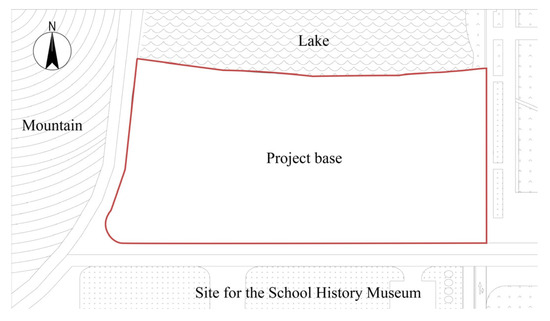
Figure 1.
Schematic diagram of the project base (Photo credit: self-painted by the author).
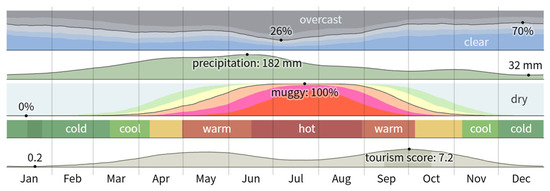
Figure 2.
Year-round climate map of Yiyang City (image source: https://weatherspark.com/, accessed on 14 August 2025).
As an educational public building, the Campus Activity Center is designed in strict accordance with the requirements of the “Building Lighting Design Standards” and “Green Building Evaluation Standards” to reduce energy consumption from the selection of materials, layout planning, and other aspects, scientifically designing the location, area, and form of lighting outlets to ensure that the natural light uniformly penetrates into the indoor areas and to create a comfortable activity space for teachers and students.
4.2. Design Options
4.2.1. Construction Program
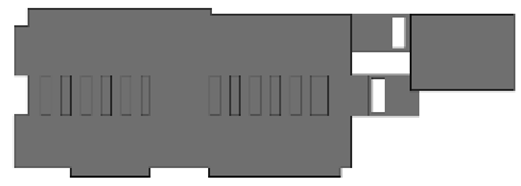
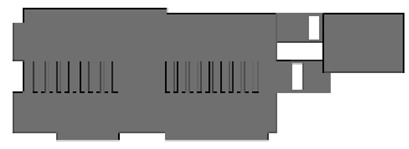
The architectural program adheres to the principles of green building design, combined with the demand for use, and follows the design concepts of low-carbon building, a sponge city, and smart building, adapting to local conditions. The program selects steel as the structural material; the column network is 12 m × 12 m, and double side lighting is adopted. Activity rooms, display rooms, and other rooms adopt an open layout, and a courtyard, with a depth of 8 m is reserved between the north and south, spans 12 m. Initially, to avoid other factors affecting the daylight simulation data, this space is assumed to be enclosed and without natural light. For details, refer to the first-floor plan (Figure 3) and the second-floor plan (Figure 4).
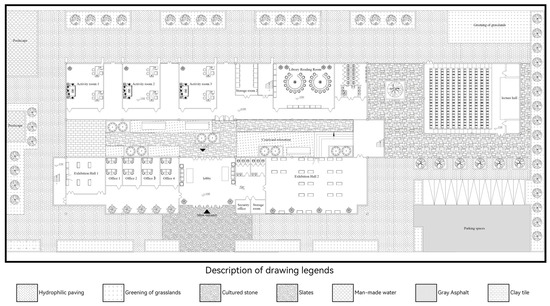
Figure 3.
First Floor Plan (Image source: Author’s design, self-drawn).
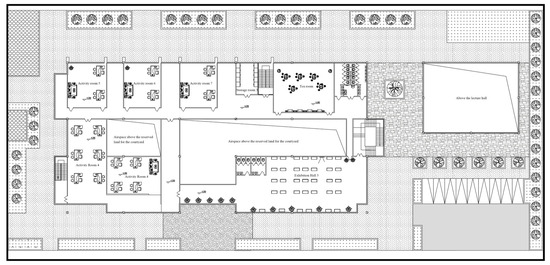
Figure 4.
Second Floor Plan (Image Source: Author’s Design, Self-Drawn).
The floor height of the building is designed to be 4.2 m, and the window design is based on the change in solar altitude angle of the base. The bathroom bay height is 1.5 m and the window height is 1.9 m; for other types of rooms, the bay height is 0.6 m and the window height is 2.8 m; via the formula:
calculate the indoor projection length of the sun’s rays of the openings at noon; the results show that the projection length of each major time of the day are in line with the expected requirements (Table 4).
Table 4.
Indoor projected length of sun rays for building scheme window opening design.
4.2.2. BIM Modeling
Based on the preliminary design scheme, model in Revit 2016 according to the above research method, export to gbXML format file after completion, and then import into HYBPA 2024 for lighting simulation analysis.
4.2.3. Setting Simulation Parameters
Set the project location as Heshan District, Yiyang City, Hunan Province, in the software to call local meteorological data. According to the lighting requirements of the different functional rooms on each floor, the room information is batch modified in the lighting simulation interface. In order to satisfy the lighting coefficient calculation formula:
in the “Building Lighting Design Standards”, the simulation parameters are set as follows: sky conditions are CIE overcast, the reflectance ratio of the external surface of the building is 0.32, the reflectance ratio of the ground is 0.3, the windows and doors use 6Low-E + 12A + 6C double-silver Low-E glass [20], the door transmittance ratio is 0.3, the window structural light-blocking reduction coefficient is 0.80, the ceiling reflectance ratio is 0.84, the wall reflectance ratio is 0.85, the window structural light-blocking reduction coefficient is 0.80, and wall reflection ratio 0.70. See Table 5 for details of the specific settings.
Table 5.
Reference limits for simulation parameters for each room.
4.2.4. Simulation Results and Discussion
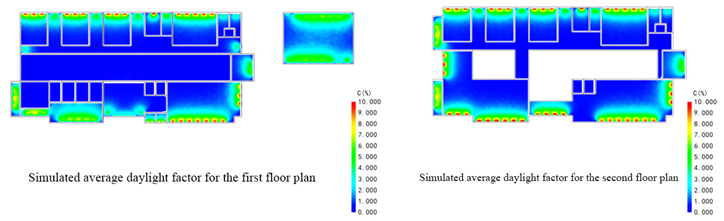
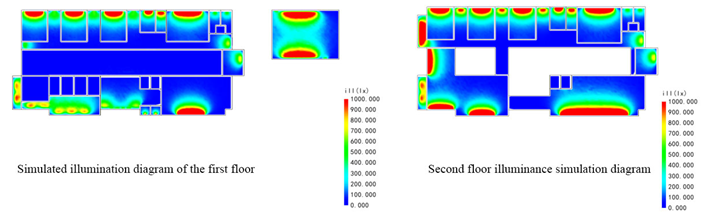
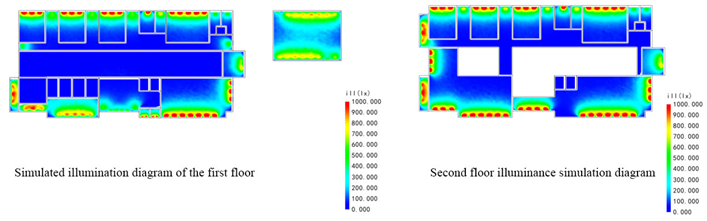
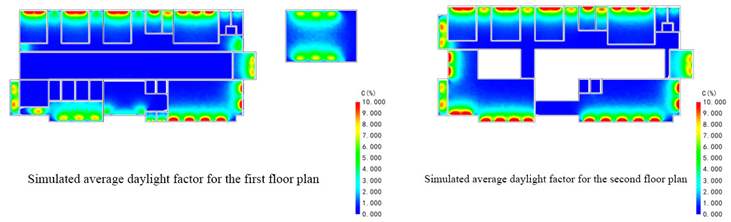
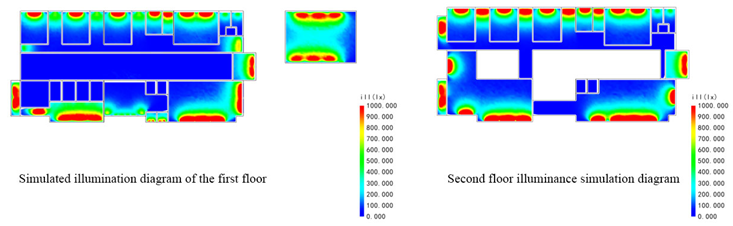
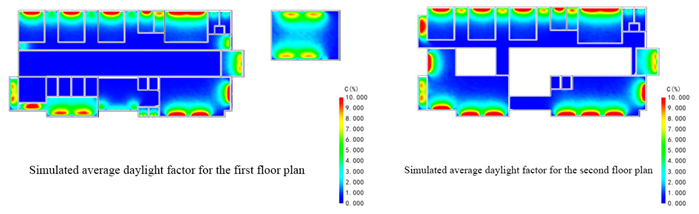
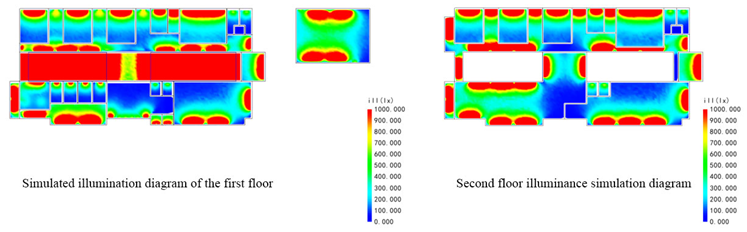
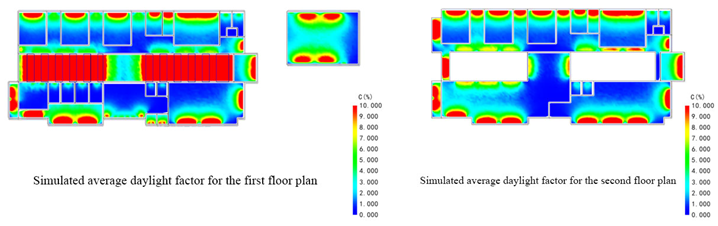
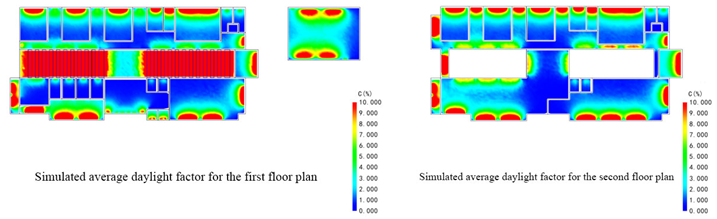
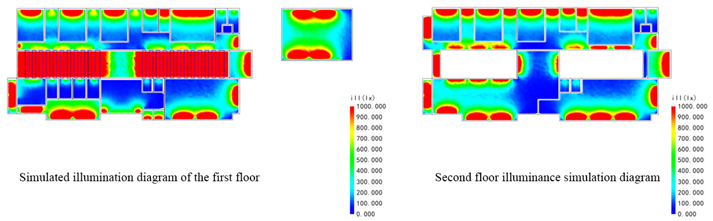
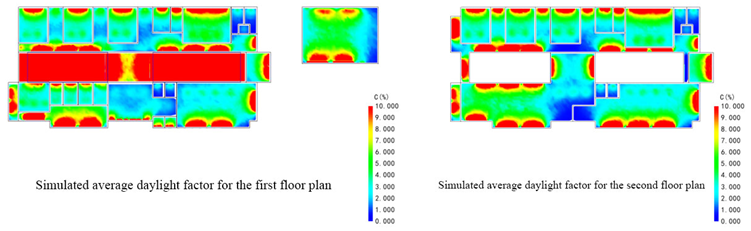
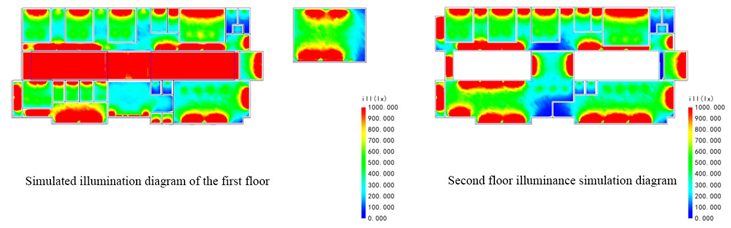
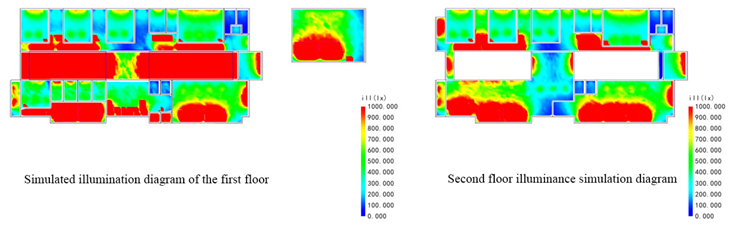
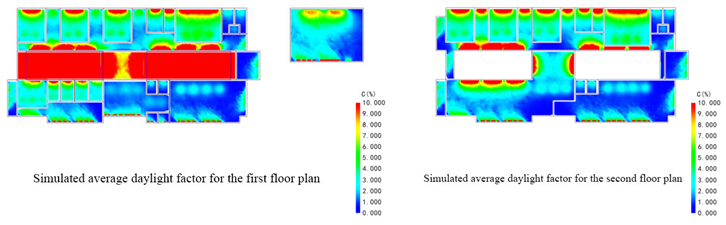
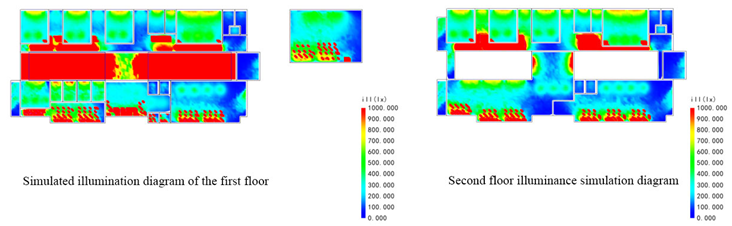
Lighting simulation results show that the distribution of lighting coefficients and illuminance in each space shows obvious gradient changes: the lighting coefficients and illuminance in the area close to the external wall are higher, up to 8–10% and 800–1000 lx; the internal area away from the windows is lower, only 0–2% and 0–200 lx (Figure 5 and Figure 6). This suggests that the traditional single large-area glass curtain wall window opening form, although allowing good lighting in the exterior wall area, leads to serious uneven lighting in the room and fails to meet the lighting needs of the building’s interior space.
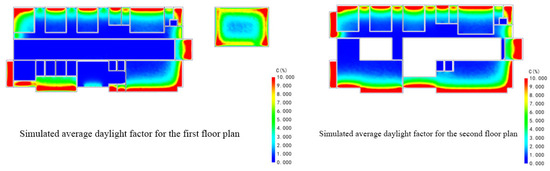
Figure 5.
Simulation of mean values of daylighting coefficients (Photo credit: Author’s own drawing).
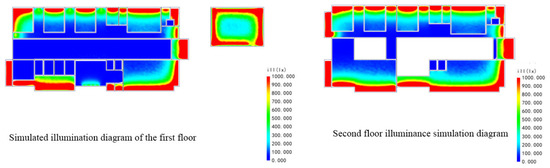
Figure 6.
Simulation of indoor illuminance (Photo credit: Author’s own drawing).
4.3. Optimization of Design Measures
In order to solve the problem of uneven indoor lighting, the initial window design was modified with reference to the recommended window-to-ground ratio of each functional room. A variety of window ratios are set and analyzed in simulation one by one to compare the lighting coefficients and illuminance distributions, and a scheme with good lighting uniformity is selected. On this basis, a courtyard is added to meet the lighting needs of non-external wall lighting rooms.
4.4. Simulation of Optimized Design of Facade Window Openings
4.4.1. Exterior Window Opening Program Design
Except for special rooms, the height of the window sill of the rest of the rooms is uniformly set at 0.6 m. For rooms with a depth greater than 6 m, the window height is maintained at 2.8 m, and for rooms with smaller depths—bathrooms, lecture halls, and so on—the height of the window is set at 1.5 m. A centralized window opening scheme is proposed and four window openings with different aspect ratios are proposed (Table 6). Among them, the centralized window opening is a single large-area window for each major functional room, the other schemes are decentralized window openings with different aspect ratios, and the wall between the windows is set at 0.3 m, 0.9 m, or 1.5 m, according to the room width.
Table 6.
Four window opening options with different aspect ratios.
4.4.2. Discussion of Simulation Results
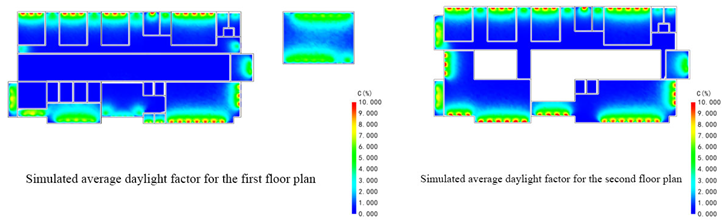
The centralized window opening scheme, due to the single centralized window opening, leads to uneven lighting in each room and lower lighting efficiency, with the average value of the lighting coefficient below the limit value in most rooms. Among the four window openings with different aspect ratios, the mean value of the lighting coefficient and the illuminance compliance rate of Scheme 4 (1:2 window opening ratio) are higher, and the lighting uniformity is better, but the activity room on the north side still has the problem of the lighting area ratio not meeting the standard and insufficient lighting on the inside of each room (Table 7).
Table 7.
Average Daylight Factor Simulation Diagram.
4.5. Secondary Optimization Design Simulation
4.5.1. Adjustment of Sill Height
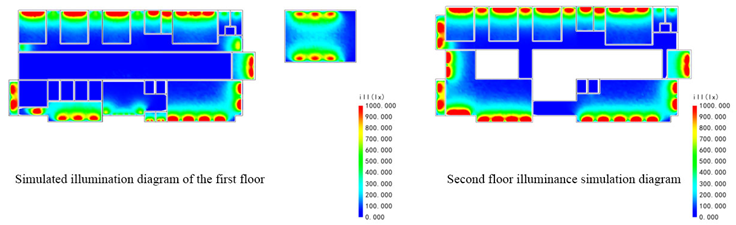
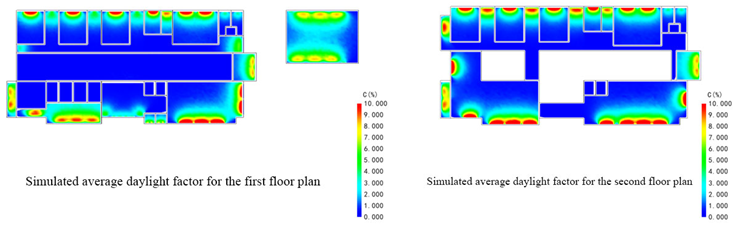
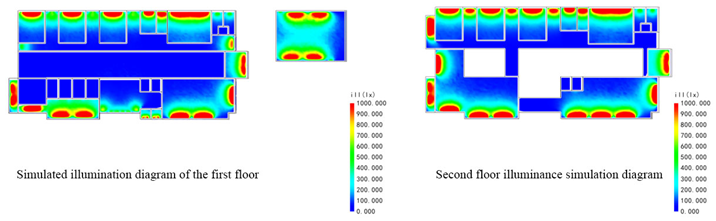
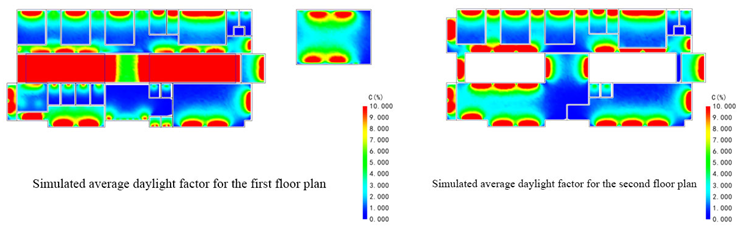
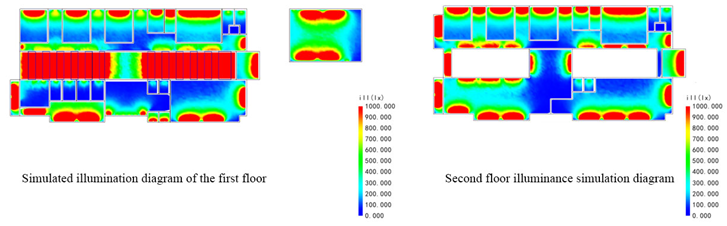
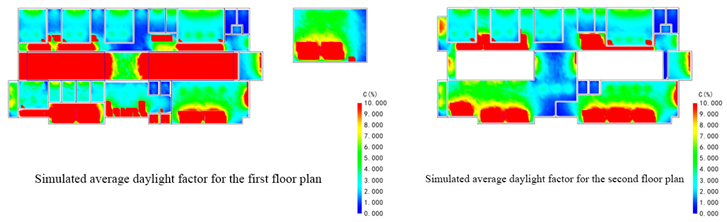
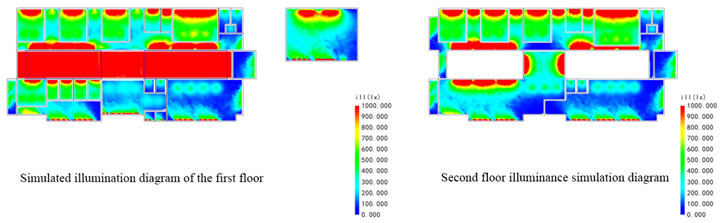
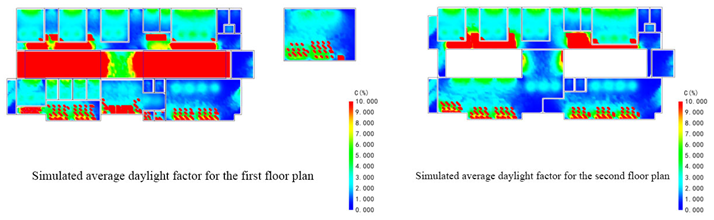
On the basis of Scheme 4, the height of the window sill is adjusted downward by 0.4 m to increase the window height, while the lecture hall keeps the height of the window sill unchanged and adjusts the top of the window upward by 0.4 m. High-transmittance Low-E glass, with a transmittance ratio of 0.76 and a reflectance ratio of 0.11, is used to enhance the visible light transmittance rate. The simulation results (Figure 7 and Figure 8) show that the lighting coefficients and illuminance values of the rooms against the outer wall have been improved, but a few rooms such as the exhibition hall and activity room still do not meet the lighting standards, so it was decided to set up a courtyard.
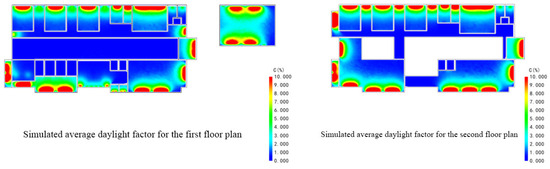
Figure 7.
Simulation of the mean value of the daylighting factor after adjusting the height of the window sill (Photo credit: Author’s own drawing).
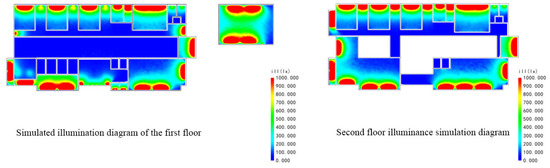
Figure 8.
Simulation of interior illuminance after adjusting the height of the window sill (Photo credit: Author’s own drawing).
4.5.2. Addition of Courtyard Space
A courtyard with a ratio of 1:1 (height/width) is set up in the interior of the building, and three scenarios are proposed: scenario A without shading, and scenarios B and C with steel shading panels of different sizes and densities. The simulation results (Table 8) show that Scenario A has an outstanding lighting effect, and Scenarios B and C are not suitable due to the decrease in the quality of the light environment in the surrounding rooms caused by the sun shading panels. However, the rooms such as the north-facing office in Scheme A still fail to meet the lighting requirements due to the limitation of the north-facing lighting conditions, and the inner area of the space with a large depth on the north side has insufficient lighting.
Table 8.
Simulation of three scenarios for the design of additional courtyard space.
4.5.3. Adding Top Lighting
Because light guide tubes have the advantages of introducing natural light, avoiding direct sunlight, and reducing heat gain [5], light guide tubes are used instead of traditional skylights for the top lighting design. Light guide tubes of different diameters and spacing are set according to the room area, with an installation height of 2.75 m, a bending angle of 12°, and a light inlet angle of 30° [21], in order to adapt to the climatic characteristics of the hot-summer and cold-winter regions.
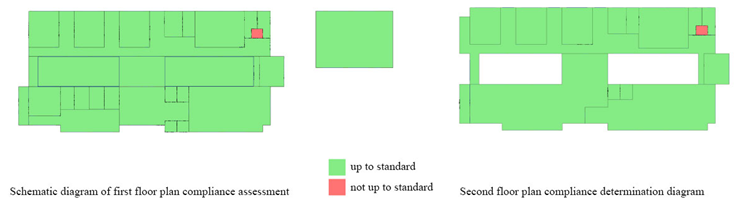
After two lighting simulations, static and dynamic, the dynamic lighting simulation is more reasonable. The results of the dynamic daylighting simulation (Table 7) show that the annual average hours of most of the rooms in over 60% of the area reach 4–10 h, which meets the requirements of the Green Building Evaluation Standards. However, the offices near the inner court have only 1.56–2.06 h/d of annual average daylight hours, ranging from 38.54% to 51.19% of the area that meets the standard, which has not yet met the standard. Therefore, the ratio of window openings on the outer wall of the office was expanded, the size of the window opening was enlarged from 1600 mm × 3200 mm to 3200 mm × 3200 mm, and the annual average illuminance and sunshine hours of the main functional spaces met the requirements after optimization (Table 9).
Table 9.
Schematic diagram of dynamic simulation after adding top lighting.
4.5.4. Glare Simulation and Sunshade Design
The results of the glare simulation at 12:00 noon on the summer solstice (Table 10) show that the calculated DGI values of the rooms with various levels of lighting are all within the limits, indicating that the main functional spaces of the building are less affected by the uncomfortable glare, and the visual comfort of the indoor environment [18] can be guaranteed. However, the illuminance in the window area of each room exceeds 1000 lx, which can easily lead to visual fatigue, so the design adopts low-reflection vertical internal shutters as a shading measure, with a shutter length of 0.20 m and a spacing of 0.15 m.
Table 10.
Calculated Values for Scenario A Glare Simulation.
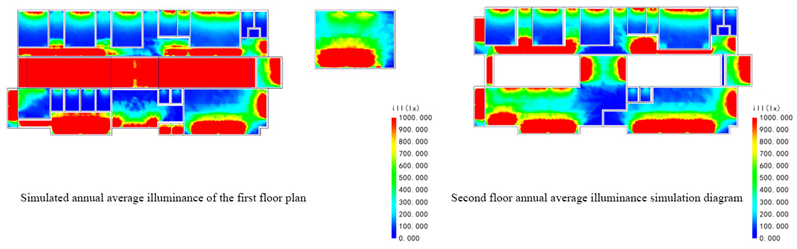
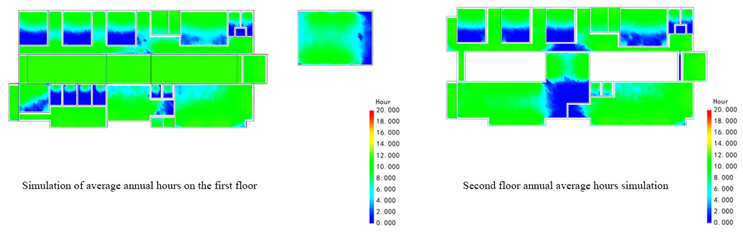
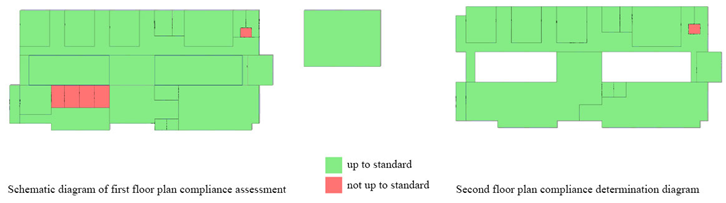
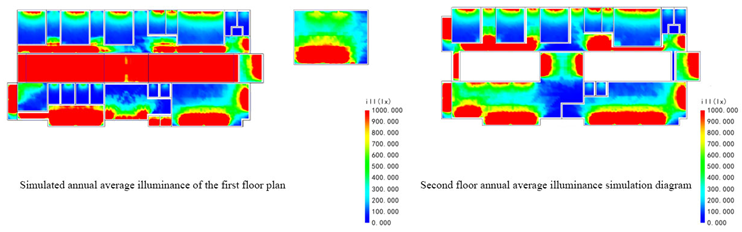
Comparison of the static (Table 11) and dynamic daylighting simulation shows that the shutters achieve a good shading effect during the summer solstice, and although the winter solstice reduces the lighting, the main functional spaces still meet the average lighting coefficient requirements and avoid the problem of excessive winter lighting in the window areas. The dynamic lighting simulation results of Scheme B (Figure 9) show that the uniformity of indoor light illumination [22] improves throughout the year, and the area above 1000 lx decreases significantly, which is in line with the requirements of the Green Building Evaluation Standards.
Table 11.
Comparison of static daylighting simulations for schemes.
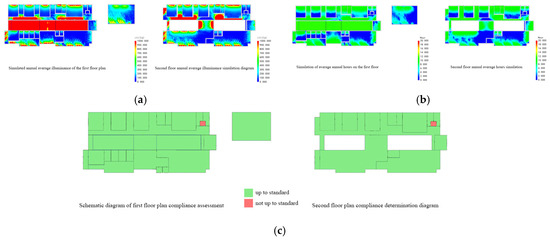
Figure 9.
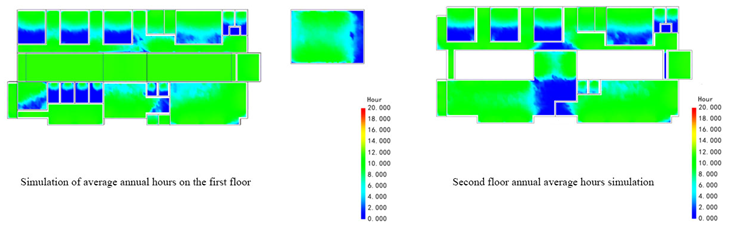
Schematic diagram of the dynamic daylighting simulation results for Scenario B. (Photo credit: Author’s own drawing). (a) Simulation of average annual illuminance. (b) Simulation of average annual hours. (c) Schematic diagram of compliance determination.
5. Conclusions and Outlook
5.1. Main Findings
In this study, with the help of BIM technology and a building performance analysis platform, we conducted multiple rounds of iterative simulation and optimization for daylighting design of campus living rooms in hot-summer and cold-winter areas and came up with the following conclusions:
- (1)
- Traditional empirical daylighting design methods are difficult to adapt to green building needs. The quantitative analysis of indicators such as mean value of lighting coefficient [23], indoor illuminance [24], uncomfortable glare index [25], and average annual sunshine hours [26] based on BIM technology provides a scientific reference for the lighting design of living rooms in campus in hot-summer and cold-winter areas.
- (2)
- A single large-area external window lighting method cannot meet the lighting requirements of green buildings, and the use of a hybrid lighting method of the side [27] and top [28] and the setting of appropriate shading measures according to the simulation results can significantly improve the indoor light environment.
- (3)
- Single static simulation has limited support for building energy efficiency and comfort improvement. The combination of static and dynamic daylighting simulation and glare numerical calculation can provide more comprehensive data support and optimization direction for building design.
5.2. Research Limitations
This study has the following limitations: first, it primarily relies on the “Building Daylighting Design Standards” and the “Green Building Evaluation Standards,” with insufficient integration of international healthy building standards; second, the meteorological data used in the simulation software lacks precision, failing to adequately consider the long-term dynamic changes in regional climate and local microclimate effects; third, the impact of dynamic factors such as indoor pedestrian flow distribution and furniture arrangement on daylighting effects has not been thoroughly investigated; and finally, the exploration of intelligent daylighting systems is insufficient.
5.3. Research Outlook
Future research could be deepened in the following directions:
- (1)
- Promote the integration of cross-standard evaluation systems: In optimization strategies, further deepen the synergistic application of WELL standards with domestic standards. This should not only reference their higher-level requirements for “visual comfort” (e.g., DGI ≤ 25) and introduce new indicators such as “per capita effective daylighting area” (≥3.5 m2/person), but also incorporate detailed indicators from WELL v2, such as “circadian rhythm lighting design” and “the impact of light environments on cognitive performance” [29], to establish a multi-tiered evaluation system covering basic performance, health benefits, and human adaptability and achieve systematic application in campus buildings in regions with hot summers and cold winters.
- (2)
- Improve the accuracy and adaptability of meteorological data. Future research should focus on the long-term impact of climate change on building light environments, conduct future light environment prediction simulations for the site where the building design is located, such as incorporating future climate scenario prediction data to simulate light environment changes around 2050, and assess the long-term adaptability of building designs to help buildings better adapt to climate change.
- (3)
- Incorporate dynamic indoor environmental factors. Convert dynamic factors such as pedestrian flow and furniture arrangement into corresponding daylighting simulation parameters to further enhance the practicality and comfort of daylighting design.
- (4)
- Explore intelligent building daylighting systems. With the help of the Internet of Things [30], artificial intelligence [31], and other technologies, further explore the application of intelligent control systems in building daylighting design, such as automatically adjusting window shading [32], light intensity [33], and indoor temperature and humidity [34] based on weather conditions, light changes, and usage requirements to achieve real-time and accurate control of the light environment.
Author Contributions
Methodology, Q.Z. and G.O.; Software, Q.Z. and G.O.; Resources, Q.Z.; Data curation, G.O.; Writing—original draft, Q.Z. and G.O.; Project administration, G.O.; Funding acquisition, Q.Z. All authors have read and agreed to the published version of the manuscript.
Funding
Hunan Provincial Social Science Achievement Review Committee: Research on the Evolution Characteristics and Optimization Strategies of Rural Public Space in the Dongting Lake Area under the Theory of “Smart Shrinkage” (XSP25YBC651).
Data Availability Statement
The original contributions presented in this study are included in the article. Further inquiries can be directed to the corresponding author.
Conflicts of Interest
The authors declare no conflict of interest.
References
- Kim, D.; Kim, J.; Lim, J. Integration of Light Shelf and Tubular Daylighting Device for Efficient Daylighting in Educational Buildings. Renew. Energy 2020, 148, 1325–1335. [Google Scholar] [CrossRef]
- Gou, Z.; Lau, S.S.Y.; Zhang, Y. The Effectiveness of Shading Devices in Reducing Cooling Loads in Mediterranean Climates. Energy Build. 2018, 173, 191–202. [Google Scholar] [CrossRef]
- Ma, Z.; Wang, J.; Zhang, X. Daylight Optimization for School Buildings in the Hot Summer and Cold Winter Zone of China. Build. Simul. 2021, 14, 555–566. [Google Scholar]
- Fung, A.; Shukla, A.; Thomas, P. BIM-Based Daylight Performance Prediction in University Buildings: A Brisbane Case Study. J. Build. Perform. 2022, 13, 85–94. [Google Scholar] [CrossRef]
- Huo, H.M.; Gao, H.Y.; Li, H.; Wu, J.; Mao, J. Comprehensive Evaluation of Daylighting and Ventilation in Building Basements in Regions with Hot Summers and Cold Winters. Archit. Sci. 2024, 291–301. [Google Scholar]
- Heschong, L.; Wright, R.L.; Okura, S. Daylighting impacts on human performance in school. J. Illum. Eng. Soc. 2002, 31, 101. [Google Scholar] [CrossRef]
- Alimoglu, M.K.; Donmez, L. Daylight exposure and the other predictors of burnout among nurses in a University Hospital. Int. J. Nurs. Stud. 2005, 42, 549–555. [Google Scholar] [CrossRef] [PubMed]
- Feng, B. Building “Good Houses” in Line with New Expectations. China Construction News, 11 March 2025. Available online: https://news.cctv.cn/2025/03/11/ARTIVTx35LcJoJDFCLP1TQVr250311.shtml (accessed on 14 August 2025).
- Sacks, R.; Eastman, C.; Lee, G.; Teicholz, P. BIM Handbook: A Guide to Building Information Modeling for Owners, Designers, Engineers, Contractors, and Facility Managers; Wile: Hoboken, NJ, USA, 2018; ISBN 9781119287537. [Google Scholar]
- Zhang, J.; Ji, L. Optimization and Prediction of Energy Consumption, Daylighting, and Thermal Comfort of Buildings in Tropical Areas. Adv. Civ. Eng. 2022, 2022, 3178269. [Google Scholar] [CrossRef]
- Reinhart, C.F.; Walkenhorst, O. Validation of dynamic RADIANCE-based daylight simulations for a test office with external blinds. Energy Build. 2001, 33, 683–697. [Google Scholar] [CrossRef]
- Dong, B.; Lam, K.P. A comparative study of the IFC and gbXML informational infrastructures for data exchange in computational design support environments. In Proceedings of the Building Simulation 2005, Montreal, QC, Canada, 15–18 August 2015; IBPSA: Sydney, Australia, 2005; pp. 1530–1537. [Google Scholar]
- He, X.; Gong, H. Research on the coupled and coordinated relationship between tourism climate comfort and passenger flow change in Yiyang City. J. Sichuan Inst. Tour. 2022, 79–86. [Google Scholar]
- Sun, J. Research on indoor light environment of campus buildings based on Ecotect simulation analysis. J. Hebei Eng. Univ. (Nat. Sci. Ed.) 2015, 32, 78–82. [Google Scholar]
- Wu, R.; Zhou, P.; Li, T. An investigation of building layout design based on ENVI-Met and Ecotect software simulation—A residential area in Luoyang City as an example. Model. Simul. 2023, 12, 2450–2461. [Google Scholar] [CrossRef]
- GB 50033-2013; Ministry of Housing and Urban-Rural Development of the People’s Republic of China. Building Lighting Design Standards; China Building Industry Press: Beijing, China, 2012.
- Ministry of Housing and Urban-Rural Development of the People’s Republic of China. Announcement of the Ministry of Housing and Urban–Rural Development on the Publication of Partial Revision of the National Standard “Green Building Evaluation Standard”; Engineering Construction Standardization; Ministry of Housing and Urban-Rural Development of the People’s Republic of China: Beijing, China, 2025; pp. 69–79. [Google Scholar]
- Xu, J.; Xiang, Z.; Zhi, J.; Chen, Y.; He, S. A review of visual comfort measurement methods for optical environments. J. Chongqing Univ. Technol. (Nat. Sci.) 2020, 190–198. [Google Scholar]
- Xu, S.; Chen, Y.; Wang, S.; Li, G. Optimized design of typical classroom space forms for primary and secondary schools in hot summer and cold winter regions under the objective of light and heat performance. Build. Energy Conserv. 2024, 52, 24–33, (In Chinese and English). [Google Scholar]
- Jia, Q. Research on the Applicability of LOW-E Glass in Energy Saving of High-Rise Office Buildings in Hot Summer and Warm Winter Regions. Master’s Thesis, South China University of Technology, Guangzhou, China, 2021. [Google Scholar]
- Wu, Y.; Jin, M.; Liu, M.; Li, S. Integrated Systems of Light Pipes in Buildings: A State-of-the-Art Review. Buildings 2024, 14, 425. [Google Scholar] [CrossRef]
- Weng, J.; Guo, L.; Zhang, X. Study on the visual safety of public transportation space in old residences from the perspective of aging—A case study of old residences in Chongqing. China Illum. Eng. J. 2024, 35, 125–132. [Google Scholar]
- Guo, J.; Zhou, Y.; Jiang, Z.; Lu, D.; Zhou, K.; Wu, C. A study on the design of library atrium skylight lighting based on pre-planning and post-use evaluation—Taking the library of North China University of Science and Technology as an example. China Illum. Eng. J. 2021, 32, 118–125. [Google Scholar]
- You, Y.; Wu, L.; Guo, J.; Guo, C. Study on the impact of building external shading forms on indoor light environment. J. Tianjin Univ. Urban Constr. 2022, 28, 317–321. [Google Scholar]
- Zhang, X.; Tian, T. Research on uncomfortable glare measurement methods for indoor natural lighting and artificial light source lighting scenes. Value Eng. 2023, 42, 144–146. [Google Scholar]
- Li, H.-Q.; Fu, Z.-T.; Wen, X.-Y.; Huang, J.-B. Characteristics of regional sunshine hours in China over the past 50 years. Clim. Environ. Res. 2013, 18, 203–209. [Google Scholar]
- Wang, J.; Liu, X.; Zhang, Z. Research on daylighting of side windows in the context of ultra-low energy consumption. Urban Archit. 2023, 20, 7–9. [Google Scholar]
- Wang, H.; Lu, Y.; Ma, C.; Wang, W. Experimental study on the light harvesting performance of the top of solar conduit. J. Eng. Thermophys. 2008, 1039–1041. [Google Scholar]
- WELL Building Standard v2. International WELL Building Institute. Available online: https://v2.wellcertified.com/en (accessed on 14 August 2025).
- Guo, J.; Chen, G. Research on intelligent monitoring system of green building based on BIM and Internet of Things. Green Constr. Intell. Build. 2024, 41–43+52. [Google Scholar]
- Dounis, A.I. Artificial intelligence for energy conservation in buildings. Adv. Build. Energy Res. 2010, 4, 267–299. [Google Scholar] [CrossRef]
- Lee, S.; Lee, S.; Jeong, J. Building energy savings by developing complex smart windows with dimming control. Electronics 2024, 13, 9647. [Google Scholar]
- Kowalska, M.; Szymańska, M. Indoor environment, lighting conditions and productivity in educational buildings. Cent. Eur. J. Eng. 2022, 2, 55–62. [Google Scholar] [CrossRef]
- Yang, Z.; Li, Z.; Zhuo, X.; Yang, Y. Comparison of simulated and measured indoor temperature and humidity in near-zero energy residential buildings. Build. Energy Conserv. 2023, 51, 8–13, (In Chinese and English). [Google Scholar]

Disclaimer/Publisher’s Note: The statements, opinions and data contained in all publications are solely those of the individual author(s) and contributor(s) and not of MDPI and/or the editor(s). MDPI and/or the editor(s) disclaim responsibility for any injury to people or property resulting from any ideas, methods, instructions or products referred to in the content. |
© 2025 by the authors. Licensee MDPI, Basel, Switzerland. This article is an open access article distributed under the terms and conditions of the Creative Commons Attribution (CC BY) license (https://creativecommons.org/licenses/by/4.0/).