Article

BIM and Ontology-Based DfMA Framework for Prefabricated Component

1
MineralWare, SS&C Technologies, 777 Taylor St, Penthouse I-A, Fort Worth, TX 76102, USA
2
M. E. Rinker, Sr. School of Construction Management, University of Florida, Gainesville, FL 32611, USA
*
Author to whom correspondence should be addressed.
Buildings 2023, 13(2), 394; https://doi.org/10.3390/buildings13020394

Submission received: 29 December 2022 / Revised: 28 January 2023 / Accepted: 30 January 2023 / Published: 1 February 2023
(This article belongs to the Special Issue Advanced Studies in Prefabricated Buildings)

Abstract

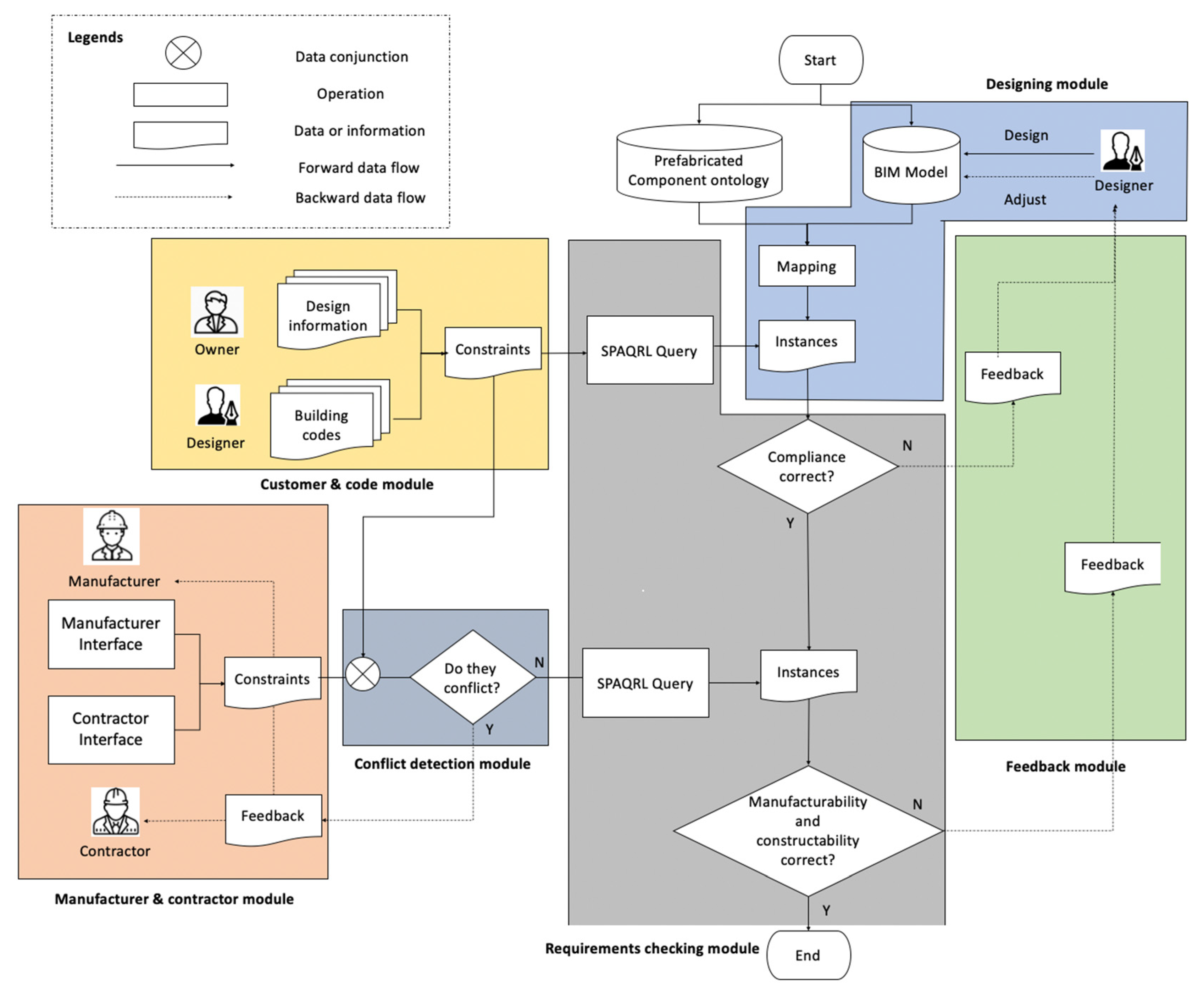
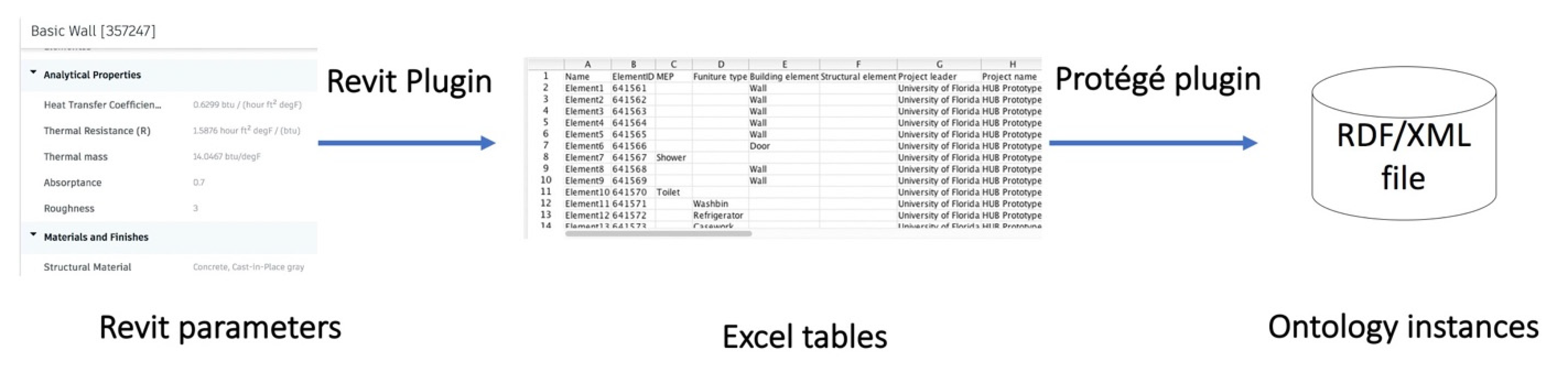
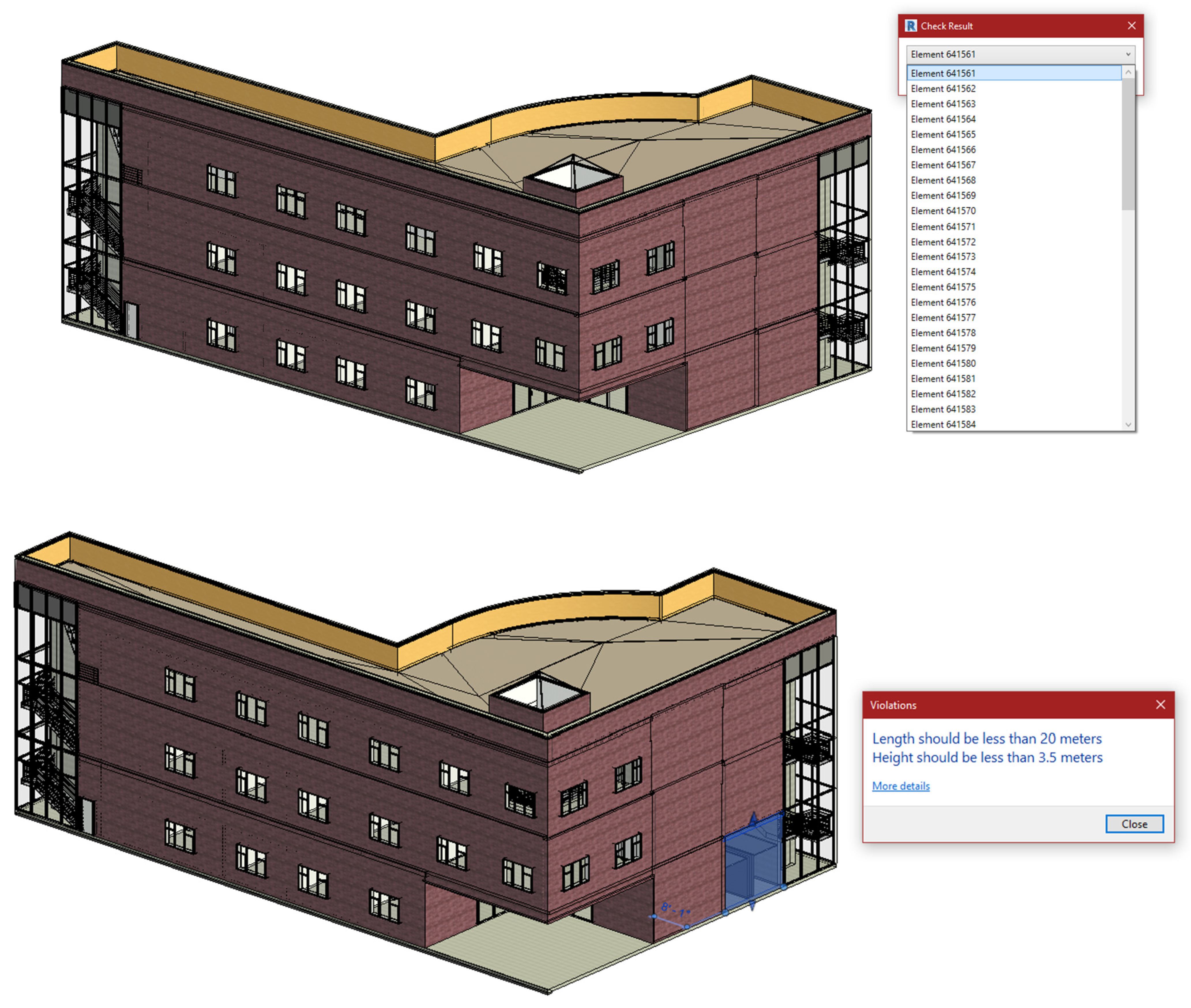
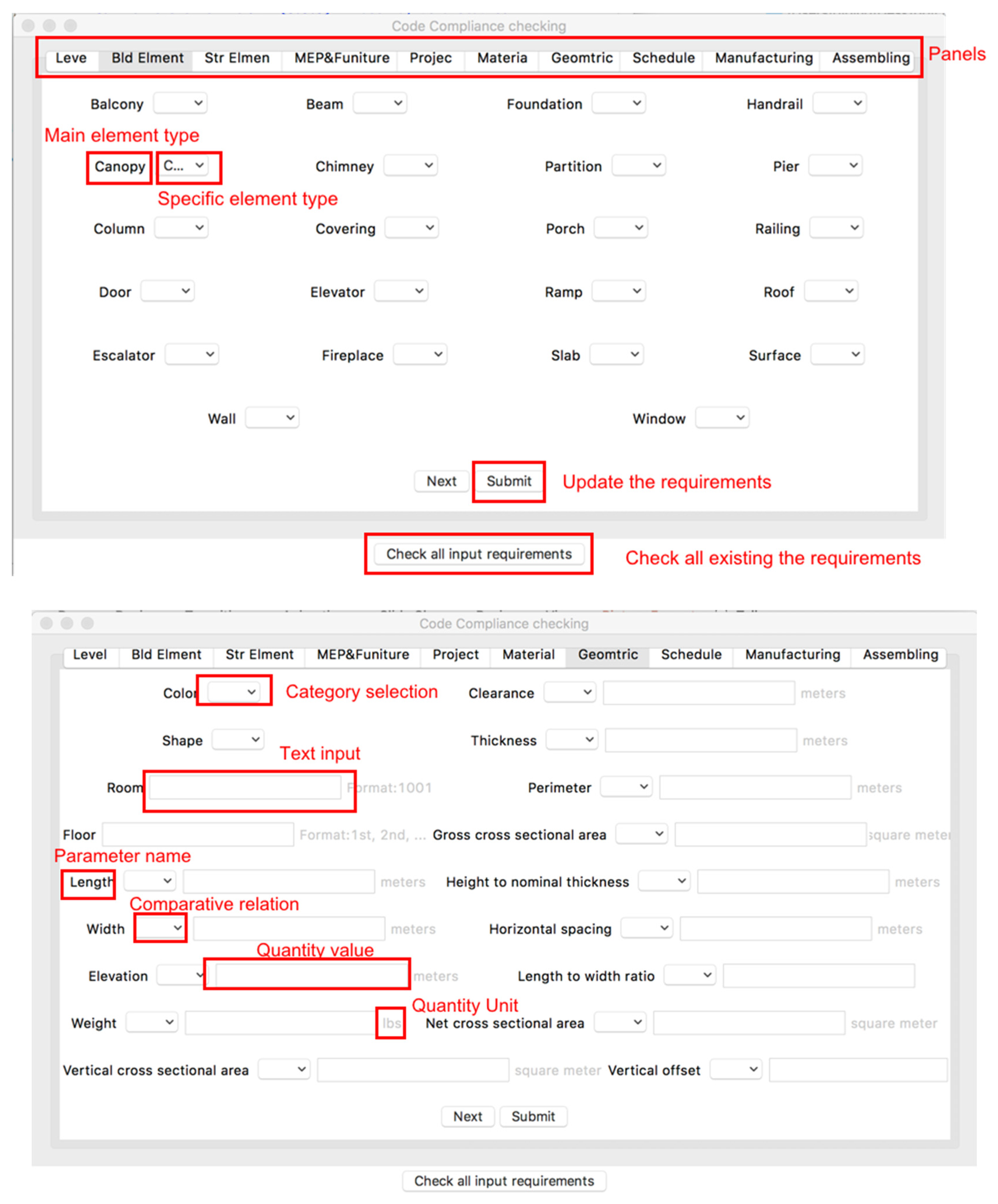
The integration of Design for Manufacture and Assembly (DfMA) into the design process of industrialized construction has the potential to reduce errors and changes occurring after the design has been finalized, ultimately improving overall productivity. Based on DfMA, the designers would need to consider whether their designs meet the architectural and performance requirements, as well as the manufacturing and assembly requirements from assembly and manufacturing technicians. However, some limitations present challenges for DfMA-oriented prefabricated design, such as lack of information interoperability, lack of conflict detection and management, and inefficient data processing and requirement checking. Thus, this research presents a novel BIM and ontology-based framework for DfMA of prefabricated and modular components. Various types of algorithms, plugins, and programming are also integrated to support the operation of the framework. The primary functions of this framework include: (1) collection of various stakeholder requirements in a standardized data format; (2) conflict detection and resolution between the design, manufacturing, and assembly requirements; and (3) automated compliance checking of whether the designed BIM models meet DfMA requirements. This research applies the framework on a prefabricated hotel project as a case study to validate the feasibility of the framework. Based on the results of a user experience survey, the developed framework shows promise for improving the DfMA process and stakeholder communication. Although a few limitations were encountered, such as the low computer operating speed and the limited ontology, the framework has been validated and shows great potential in advancing prefabricated component design applications
Keywords: DfMA; BIM; ontology; prefabricated components DfMA; BIM; ontology; prefabricated components