3.1. Microstructural Analysis
Optical microscopy at low magnification (
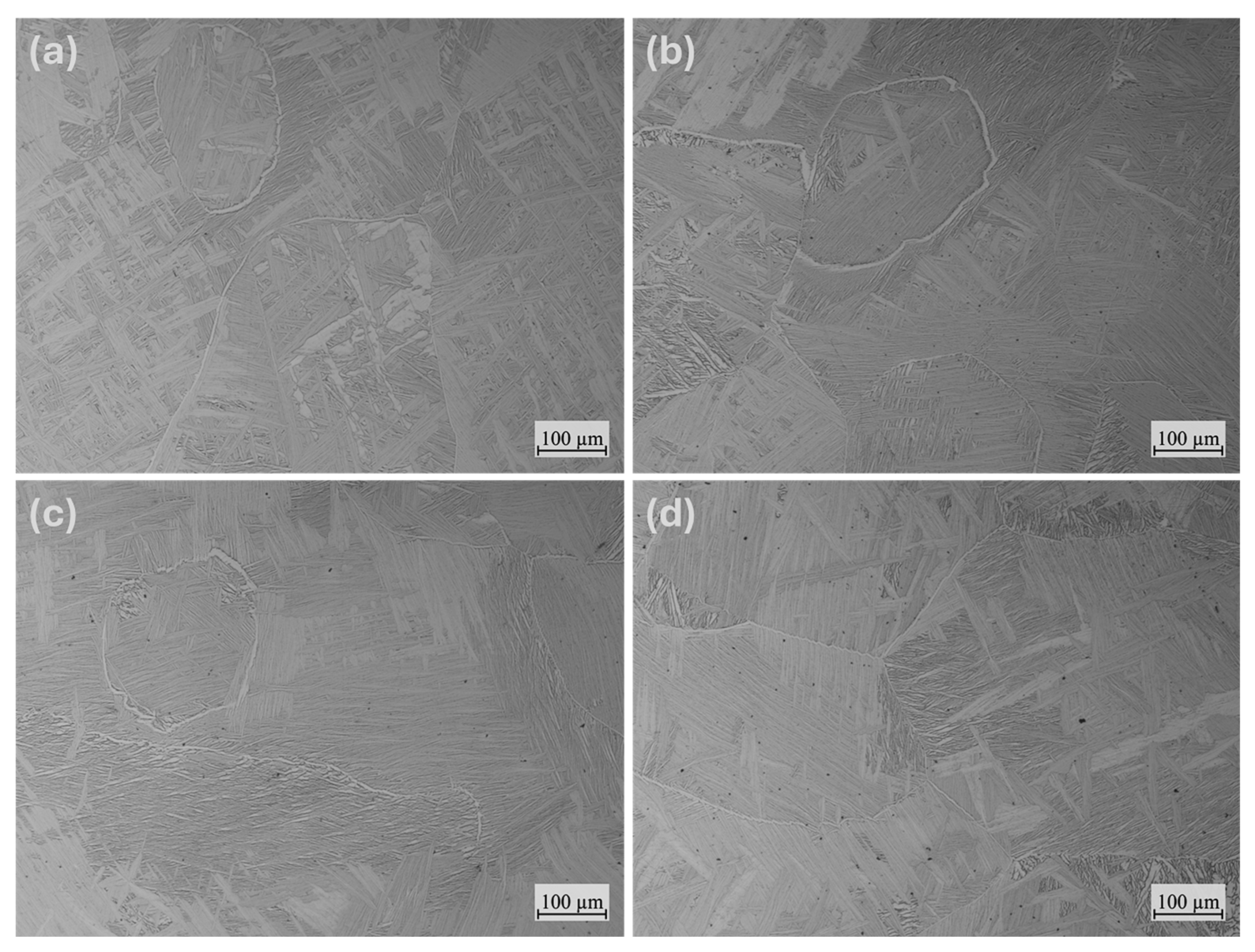
Figure 1) reveals the characteristic melt pool architecture of the LB-DED process. The semicircular melt pools are clearly visible, demonstrating the layer-by-layer build sequence typical of LB-DED. Successive layers overlap consistently, and the top regions of each layer show evidence of partial remelting from the subsequent pass. The absence of porosity, lack-of-fusion defects, or unmolten particles in both the upskin and downskin areas indicates that the selected process parameters provided uniform energy input and efficient powder melting, resulting in a stable melt pool and complete layer build. The defined and continuous melt pool boundaries confirm the process’s stability and thermal control throughout deposition. Within these melt pools, epitaxial solidification of the prior-β phase occurred in the direction of the maximum thermal gradient, that is, predominantly along the build direction. The resulting microstructure is composed of elongated columnar prior-β grains, aligned parallel to the deposition direction, producing the strong anisotropy typical of LB-DED-processed Ti6Al4V components.
The XZ cross-sections reveal these columnar grains in profile, whereas the XY sections capture them in plan view, displaying a more equiaxed projection of the same elongated structure. The microstructure within the β grains is characterised by lamellar α colonies separated by thin β films, formed during the β → α + β transformation upon cooling. The rapid solidification rates intrinsic to LB-DED, typically in the order of 10
4–10
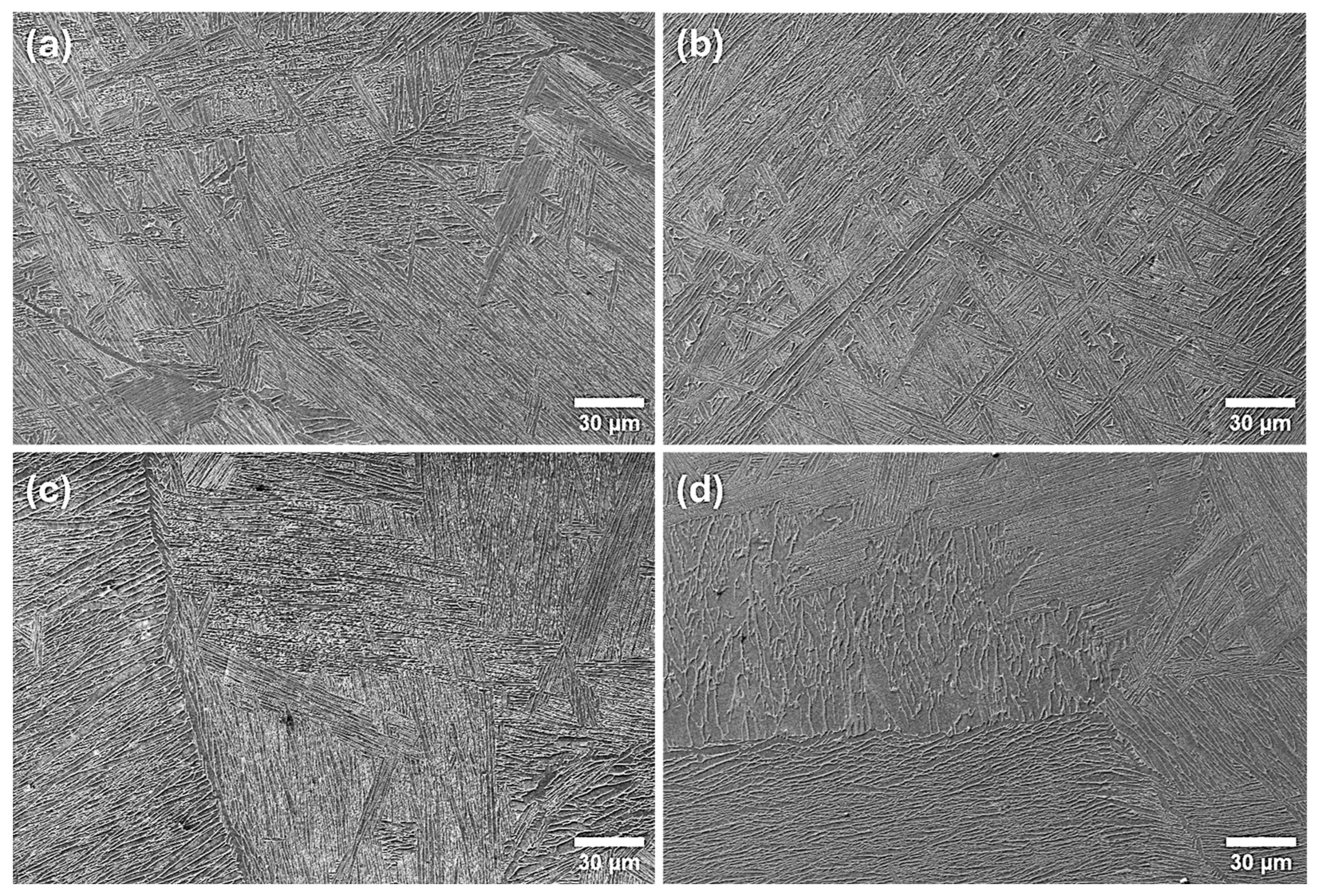
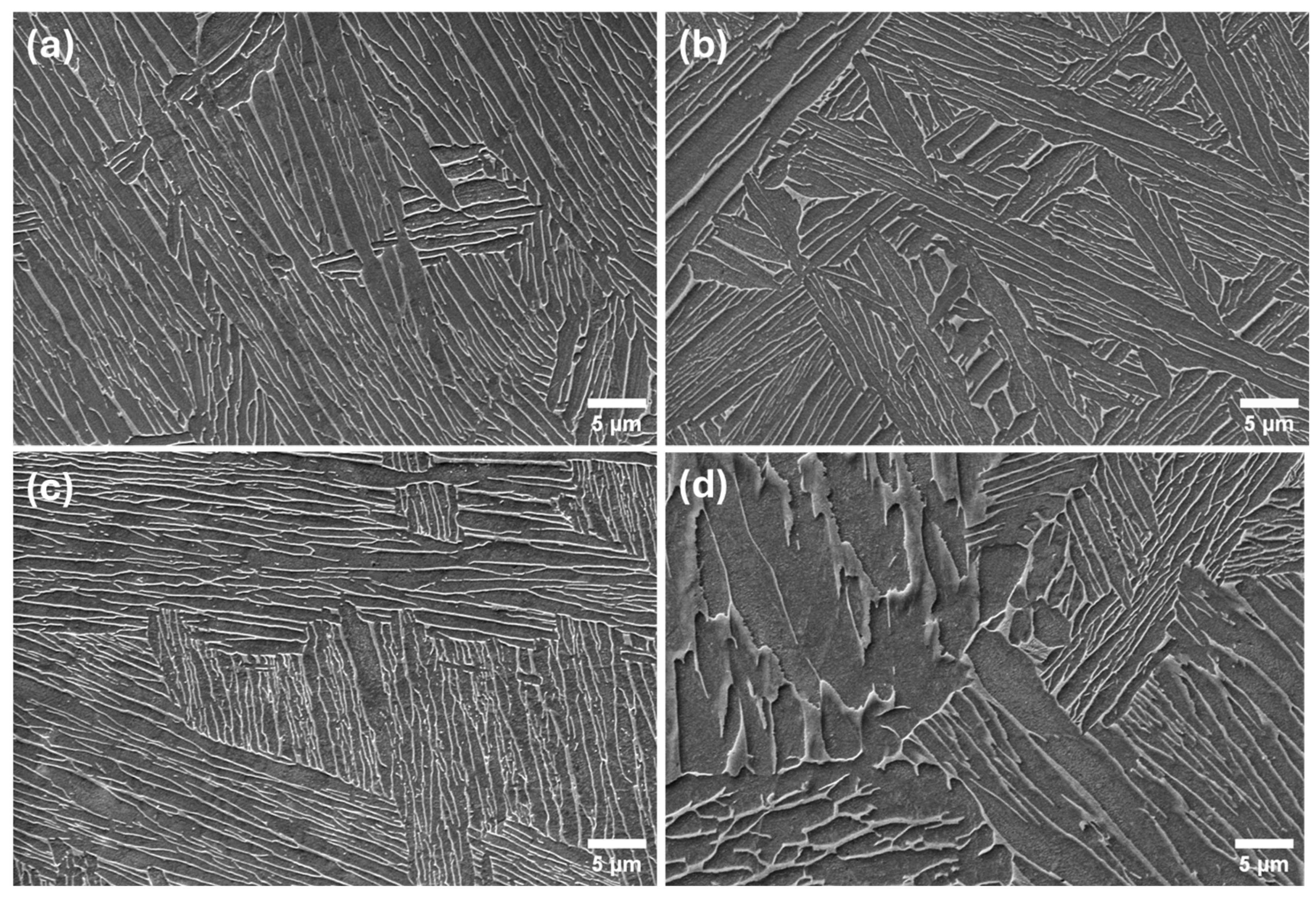
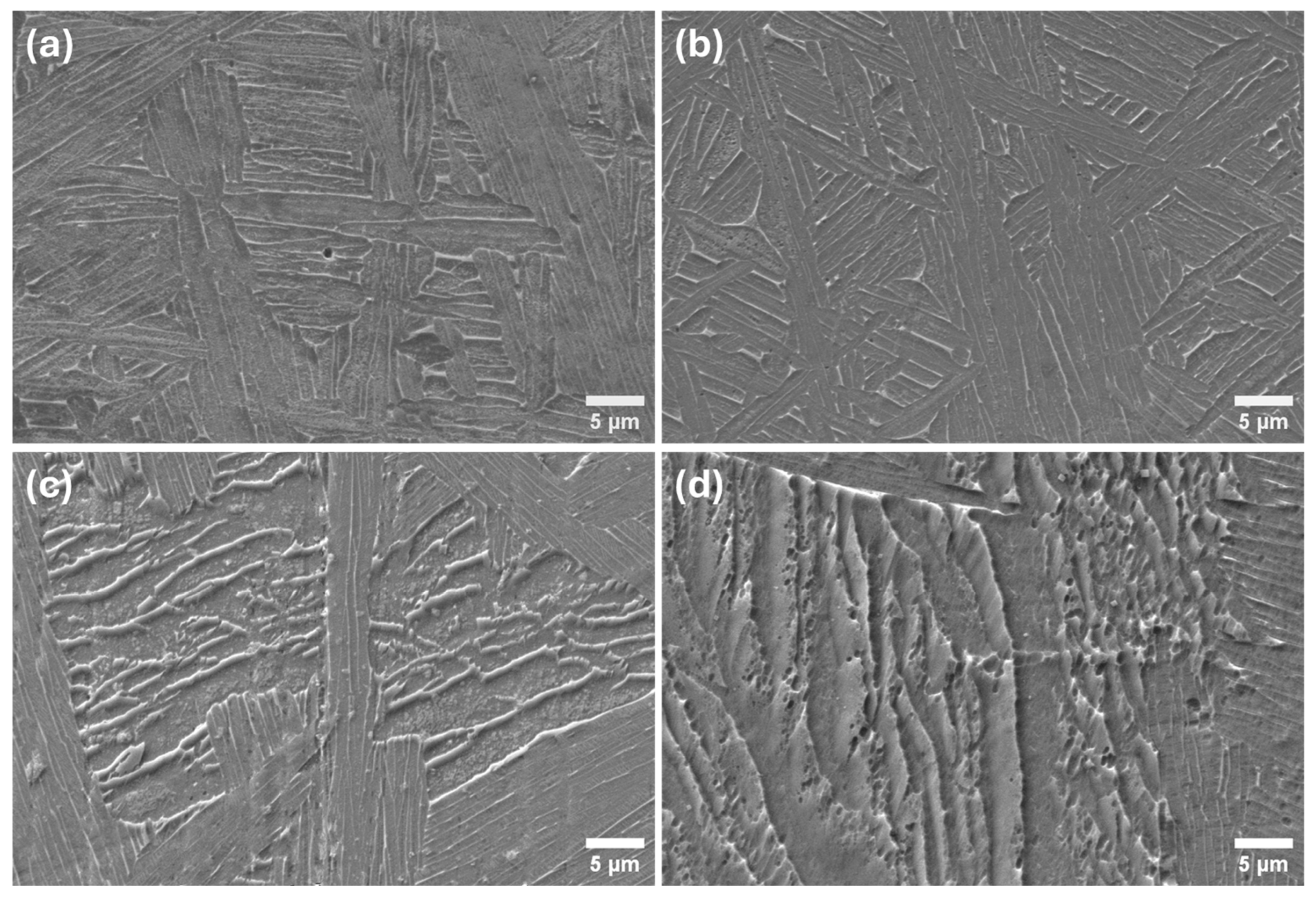
5 K/s, favour the formation of fine lamellar α rather than martensitic α′, as observed in higher-cooling-rate techniques such as laser powder bed fusion. Consequently, the SEM images (
Figure 2 and
Figure 3) reveal a lamellar morphology of α within β grains, with distinct α colonies following the Burgers orientation relationship between the parent and product phases. Each β grain contains multiple α variants, leading to a characteristic pattern interspersed with larger colonies where specific variants dominate [
51,
52,
53].
The morphology and distribution of α variants are not random but are influenced by the direction and magnitude of the thermal gradient during solidification. In regions of steep and unidirectional heat flow, such as those parallel to the build direction, variant selection favours alignment of the α plates along the temperature gradient. This behaviour is particularly pronounced in the XZ orientation, where the lamellae exhibit strong directional alignment and anisotropic texture, whereas in the XY plane, the projection of multiple columns produces a more interwoven structure. This directional solidification in the XZ section reduces the frequency of column boundary intersections and increases the aspect ratio of the β grains, thereby intensifying the structural anisotropy. Such microstructural directionality is characteristic of LB-DED processing and forms the foundation of orientation-dependent mechanical and electrochemical behaviour observed in titanium alloys [
53].
Significant differences are also evident between the upskin and downskin regions. In the XY upskin condition (
Figure 2a and
Figure 3a), the microstructure consists of fine, uniform α lamellae within relatively narrow prior-β columns. The upskin region, being the final layer exposed to the shielding gas environment, cools more rapidly due to more efficient convective and radiative heat dissipation, and experiences minimal reheating from subsequent passes. This results in a finer lamellar spacing and a more homogeneous microstructure. In contrast, the XY downskin (
Figure 2b and
Figure 3b) shows coarser and more heterogeneous lamellae, with noticeable variations in α-colony size and interlamellar β thickness. This difference arises because the downskin area is enclosed by previously deposited material, which limits heat dissipation and leads to lower cooling rates and longer dwell times at elevated temperatures. Consequently, the downskin region experiences partial reheating and slower solid-state transformations, promoting the coarsening of α lamellae and thickening of the β films.
A similar trend is observed in the XZ-oriented specimens. The XZ upskin (
Figure 2c and
Figure 3c) exhibits fine, directionally aligned α lamellae oriented parallel to the build direction, confirming the strong influence of the vertical temperature gradient. Conversely, the XZ downskin (
Figure 2d and
Figure 3d) shows the coarsest and most heterogeneous microstructure among all conditions. In this region, the lamellae are thicker and less uniformly distributed, with localised areas appearing almost massive or Widmanstätten-like, indicating locally reduced cooling rates and extended thermal exposure [
54]. The downskin, in this orientation, experiences the most complex thermal history due to limited heat extraction and repeated sub-critical thermal cycling from subsequent layers. These conditions also stabilise vanadium-enriched β films at grain boundaries, resulting in the observed coarser morphology.
Careful inspection of the SEM micrographs also reveals distinct triple points (
Figure 2) at the intersection of melt pool boundaries and prior-β grains, where significant microstructural heterogeneity is present. At these junctions, the direction of heat flow becomes multidirectional, producing regions of variant competition and non-uniform solute redistribution. The local curvature of the solidification front at these points promotes vanadium segregation into the β phase and aluminium enrichment in the α phase. As a result, thickened β films and abrupt changes in α-plate orientation are observed. These triple junctions are mechanically and chemically active regions, as they tend to concentrate residual stresses and micro-segregation, both of which can affect the local electrochemical stability of the passive film. Such heterogeneity is particularly pronounced in the XZ downskin, where the overlap of melt pools and variable heat flux intensify the differences between neighbouring colonies.
In summary, the microstructural evaluation demonstrates that the LB-DED process produces a strongly anisotropic Ti–6Al–4V microstructure consisting of columnar prior-β grains and lamellar α + β colonies. The upskin regions cool faster and develop finer, more uniform lamellae, whereas the downskin areas, subjected to slower cooling and repeated thermal cycling, exhibit coarser and more heterogeneous microstructures. These microstructural differences are further accentuated in the XZ orientation due to the unidirectional heat flow along the build direction. The triple points and melt pool intersections display pronounced microstructural gradients that may locally alter corrosion susceptibility. Collectively, these observations provide a clear microstructural basis for the orientation- and surface-dependent electrochemical behaviour discussed in the following sections.
3.2. Electrochemical Analysis
During electrochemical testing, the anodic and cathodic reactions governing the behaviour of Ti6Al4V in borate buffer and artificial saliva follow well-established mechanisms. In borate buffer, a non-aggressive medium, the anodic process is dominated by the formation and thickening of a stable TiO2 passive film:
This passive film limits further dissolution. The corresponding cathodic reaction is oxygen reduction:
Cathodic (borate buffer):
In artificial saliva containing 2.5 wt.% NaF, the anodic reaction begins similarly with TiO2 formation, but fluoride ions destabilise the passive film by forming soluble fluoride complexes:
Anodic (fluoride-rich saliva):
These reactions lead to passive film thinning and, under sufficiently high fluoride concentrations, active dissolution of titanium. The predominant cathodic reaction under near-neutral pH conditions again involves oxygen reduction:
Cathodic (artificial saliva):
Together, these reactions describe the electrochemical environment driving the passivation, film breakdown, and dissolution processes captured in the potentiodynamic, potentiostatic, and Mott–Schottky analyses.
It should be noted that the corrosion behaviour of Ti6Al4V in both borate buffer and fluoride-containing artificial saliva is dominated by the rapid formation and subsequent stability or degradation of a passive TiO2-based film, rather than by activation-controlled electrochemical kinetics. As a result, neither the anodic nor the cathodic branches of the polarisation curves exhibit extended linear Tafel regions suitable for reliable Tafel slope extraction. This is consistent with the well-documented behaviour of passive titanium alloys, where current–potential relationships deviate from classical exponential kinetics due to film growth, defect generation, and fluoride-induced complexation processes. Consequently, corrosion current density trends are more accurately interpreted through passivity-related parameters, such as passive current density, passivation onset potential, potentiostatic film growth behaviour, and Mott–Schottky defect density, rather than through traditional Tafel kinetic analysis. This approach ensures that the corrosion mechanisms are assessed using parameters that reflect the passive nature of the alloy and the governing dissolution–repassivation phenomena.
Prior to electrochemical testing, all samples were ground and polished to a mirror finish using SiC papers followed by a colloidal silica suspension, achieving a final surface roughness of approximately 0.02 µm. This preparation removes all as-built topographical features, including the characteristic roughness differences between upskin and downskin regions, ensuring that any variations in corrosion behaviour arise solely from microstructural anisotropy and subsurface thermal history rather than from surface roughness effects.
3.2.1. Potentiodynamic Polarisation in Borate Buffer Solution
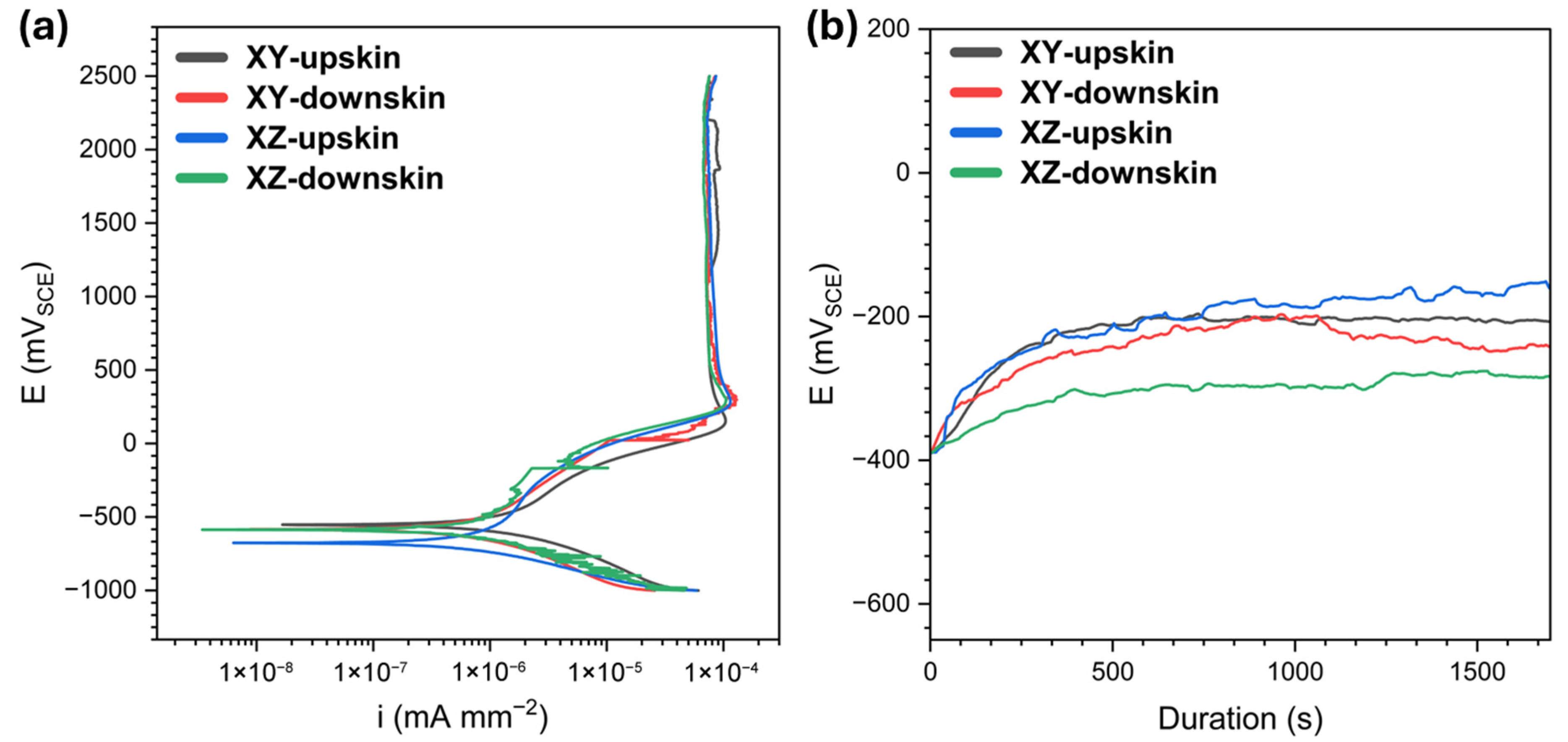
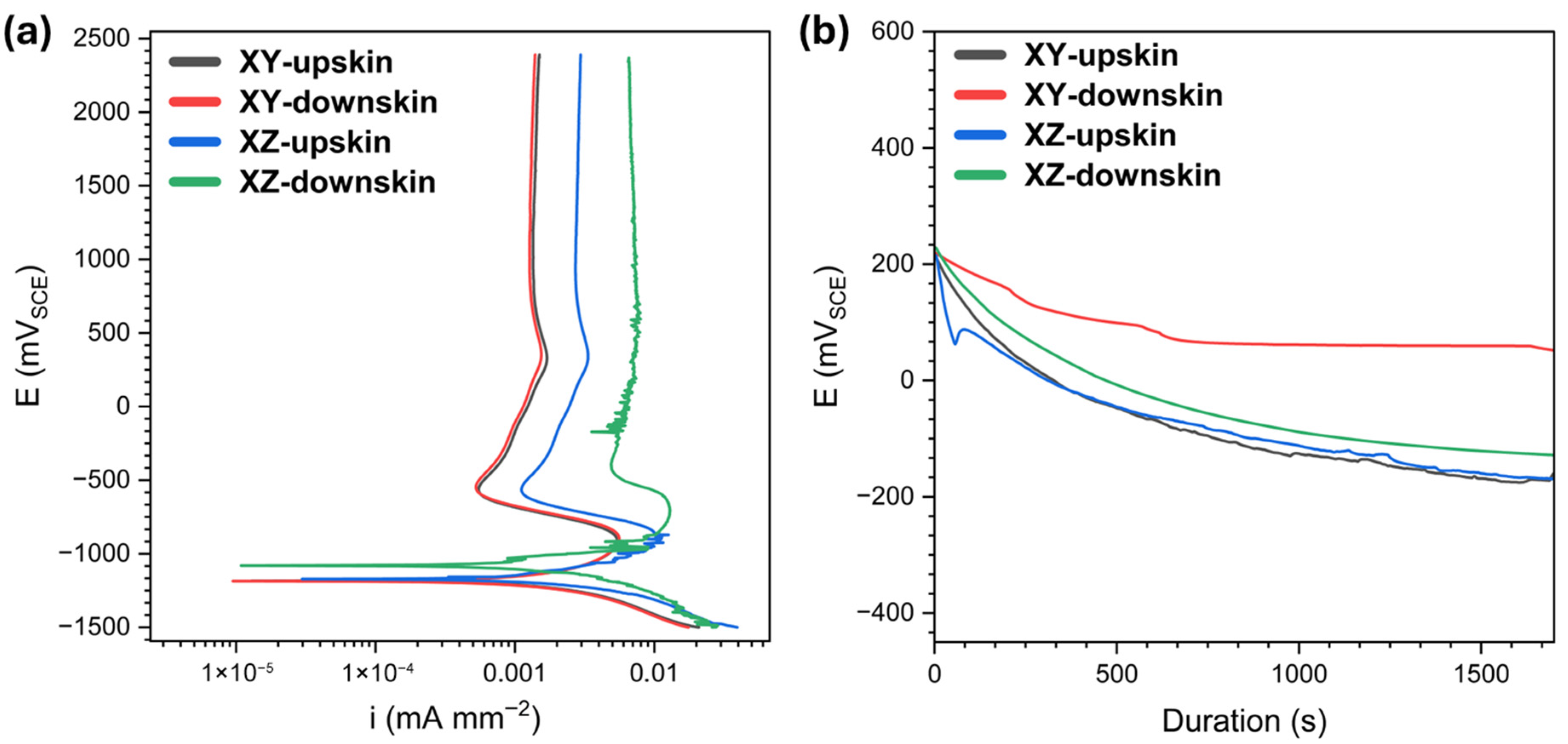
To evaluate the influence of build orientation and surface condition on the passivation behaviour of LB-DED Ti6Al4V, potentiodynamic polarisation tests were conducted in a non-aggressive borate buffer solution. The resulting curves are presented in
Figure 4, and the key electrochemical parameters, including corrosion potential (E
corr), corrosion current density (i
corr), passive potential (E
pass), and passive current density (i
pass), are summarised in
Table 1. The corrosion current density and potential were determined using Tafel extrapolation applied to the linear portions of the anodic and cathodic branches of the potentiodynamic polarisation curves. The borate buffer environment was intentionally selected for its non-corrosive nature and chemical stability, which allows the intrinsic properties of the passive film to be evaluated without interference from active dissolution processes. In this medium, titanium forms a highly adherent TiO
2-based passive layer that dominates the electrochemical response, rendering the conventional corrosion parameters (E
corr and i
corr) less representative of actual corrosion rates. Instead, emphasis is placed on the passive parameters, E
pass and i
pass, which better describe the stability and protective characteristics of the oxide layer.
All specimens exhibited typical passivation behaviour characteristic of titanium alloys, showing a rapid current decrease following initial oxidation and a broad passive region with low and nearly constant current density. As shown in
Table 1, the i
corr values ranged from 2.07 × 10
−7 to 3.49 × 10
−7 mA.mm
−2, and the E
corr values varied between −675.85 and −551.88 mV
SCE, confirming that the corrosion potential lies well within the passive regime of Ti6Al4V. Although the numerical differences in i
corr among the samples are minor, they provide qualitative insight into the slight variations in oxide film compactness and the initial reactivity of the surfaces. The XY upskin sample displayed the highest i
corr (3.49 × 10
−7 mA.mm
−2) and the most positive E
corr (−551.88 mV
SCE), indicating a faster attainment of equilibrium and an early transition to passivation. In contrast, the XZ upskin exhibited the most negative E
corr (−675.85 mV
SCE), implying a delayed shift from the active to the passive state, likely due to the stronger texture and directional α/β alignment that influence oxide nucleation kinetics.
The stability of the passive region can be evaluated by considering Epass and ipass. A low passive current density signifies a compact, self-healing oxide film, while the Epass indicates the potential at which passivation becomes fully established. Among the tested samples, ipass values ranged narrowly between 1.04 × 10⁻⁴ and 1.29 × 10⁻⁴ mA.mm−2, indicating that all surfaces developed stable and protective passive layers. However, small differences still reflect microstructural influences. The XY upskin exhibited the lowest ipass (1.04 × 10⁻⁴ mA.mm−2), confirming that it possesses the most stable and least defective oxide film among the investigated conditions. This result aligns with the fine and homogeneous microstructure observed earlier, where the higher density of α/β interfaces provides efficient diffusion paths for rapid oxide growth and self-repair, leading to enhanced film uniformity and compactness.
Conversely, the XY downskin showed the highest ipass (1.29 × 10⁻⁴ mA.mm−2) and the most delayed passivation potential (Epass = 300.36 mVSCE). The slightly elevated passive current suggests a higher defect density within the passive layer, potentially resulting from the coarser lamellar microstructure and larger prior β grains observed in the downskin region. These microstructural features, associated with slower cooling and non-uniform heat extraction during LB-DED, can produce more heterogeneous distributions of alloying elements such as vanadium and aluminium, affecting the chemical composition and electronic properties of the oxide film.
The XZ upskin and XZ downskin samples displayed intermediate passive responses with i
pass values of 1.15 × 10
−4 and 1.05 × 10
−4 mA.mm
−2, respectively, and comparable E
pass values (287.94 and 293.22 mV
SCE). Although both specimens demonstrated stable passivation behaviour, distinct features were observed in the polarisation curves. The XZ upskin showed a broader passive plateau, indicating a uniform oxide layer formation, while the XZ downskin exhibited small current fluctuations within the active-to-passive transition region. These instabilities are indicative of localised film breakdown and repassivation events, consistent with the presence of microstructural heterogeneities and triple junctions previously identified in the downskin region. Such microstructural irregularities can cause localised differences in potential and current distribution, leading to transient instabilities during anodic polarisation [
30].
Overall, the polarisation results demonstrate that all conditions formed stable passive films in borate buffer solution, with only subtle distinctions among the samples. The XY upskin condition clearly exhibited the most favourable electrochemical response, achieving passivation at lower potentials and maintaining the lowest passive current density, indicating a dense, adherent, and self-repairing oxide film. The XZ downskin, in contrast, revealed the least stable transition to passivity and the greatest degree of current fluctuation, reflecting the influence of microstructural coarsening, higher β-phase content, and non-uniform heat-affected microzones on oxide formation kinetics. These observations confirm that surface position and build orientation clearly modulate the passive behaviour of LB-DED Ti6Al4V, even under non-aggressive conditions. The combination of rapid cooling in the upskin regions and the fine α/β microstructure leads to more homogeneous oxide growth, while slower cooling and structural heterogeneity in the downskin surfaces increase defect density within the passive film. Although the differences are modest in borate buffer solution due to its gentle nature, the trends observed here provide an essential baseline for understanding how these same microstructural features influence the alloy’s corrosion response under more aggressive, fluoride-rich environments, as discussed in the following section.
3.2.2. Mott-Schottky Analysis
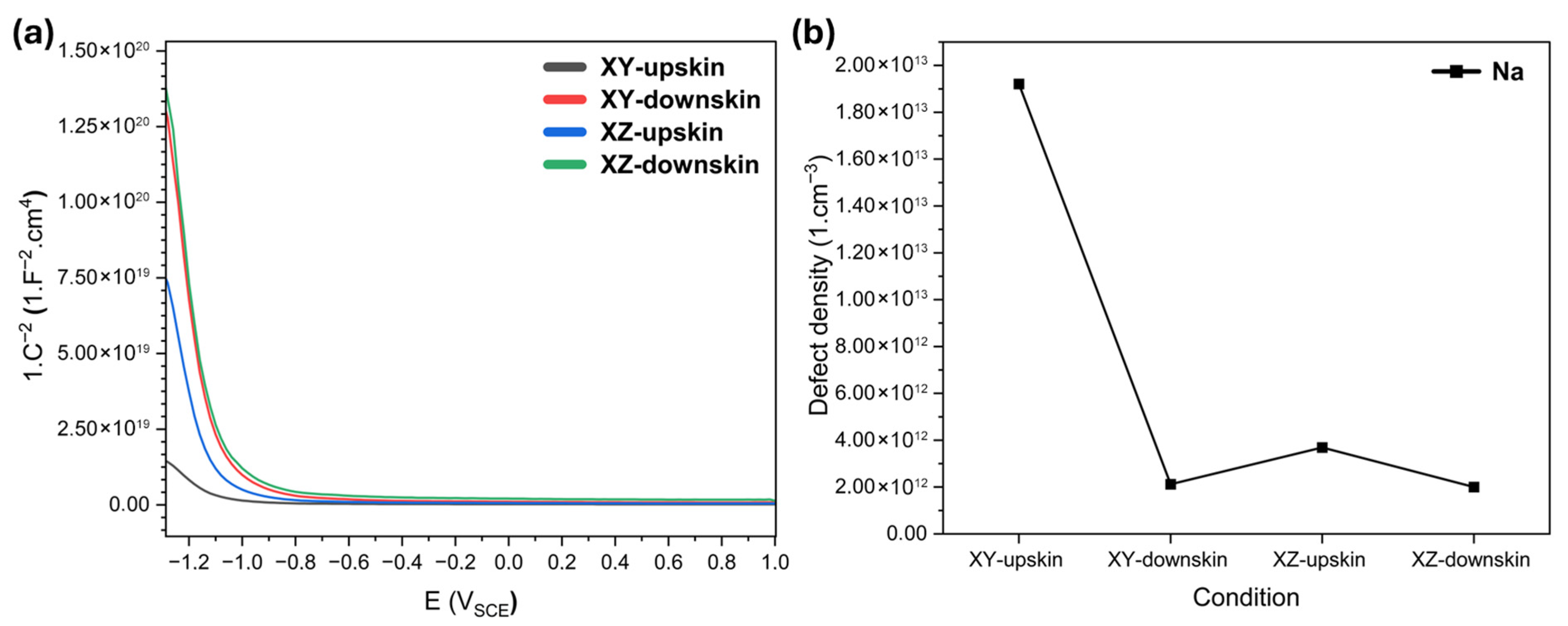
Mott–Schottky measurements were used to probe the electronic structure of the passive films grown on LB-DED Ti6Al4V in borate buffer, by plotting the reciprocal square of the interfacial capacitance, 1.C
−2, against the applied potential. In this representation, a linear region with negative slope denotes
p type semiconductivity, that is, the dominant charge carriers in the space charge layer are acceptors. As shown in
Figure 5a, all four conditions exhibit a single linear branch with consistently negative slope over the analysed potential window, demonstrating that the passive film behaves as a
p type semiconductor under these conditions. For titanium alloys in near neutral, mildly alkaline media, this response is widely rationalised by a passive film comprising a compact inner TiO
2 layer. When the inner barrier is slightly metal deficient due to titanium vacancy formation, or when oxygen interstitials are stabilised by hydroxylation, the band structure shifts so that acceptor states dominate the charge transport. The borate buffer environment, with stable pH and strong surface hydroxylation, favours this defect chemistry, hence the uniform
p type response across all samples.
From the linear segments of the Mott–Schottky plots, acceptor defect densities, N
a, were estimated using the standard relation taking the passive film dielectric constant, ε, as 81.2 [
55], and ε
0 and e as the permittivity of free space and the elementary charge respectively [
56,
57]. The comparative values are presented in
Figure 5b. A clear trend emerges, upskin surfaces exhibit higher acceptor densities than their downskin counterparts, with the XY upskin condition showing the largest N
a on the order of 1.8 × 10
13 cm
−3, followed by XZ upskin at 5 × 10
12 cm
−3, while XZ downskin and XY downskin fall in the lower 3 × 10
12 cm
−3 and 2 × 10
12 cm
−3 range respectively. Although all values lie within the typical 10
12–10
14 cm
−3 envelope reported for titania barrier layers formed on titanium in neutral media, the ranking is consistent and meaningful.
These differences align with the microstructural and thermal history established earlier. Upskin regions solidify and cool more rapidly, experience fewer reheating cycles, and retain higher residual stresses and dislocation density near the surface. Such elastic strain fields increase the density of oxygen interstitials and titanium vacancies necessary to accommodate lattice distortion in the oxide, thereby raising the acceptor population that the Mott–Schottky analysis detects. Rapid oxide nucleation on a fine α, β lamellar substrate also produces a higher density of grain boundaries and interphase interfaces at the metal-oxide interface, which act as fast paths for point defect injection and short circuit diffusion, again elevating N
a. By contrast, downskin regions cool more slowly and undergo repeated thermal exposure, which partially relieves surface stress and allows subtle coarsening and chemical homogenisation at the interface. The resulting barrier layer incorporates fewer point defects, giving the lower acceptor densities measured [
58,
59]. The orientation effect is superposed on this surface effect. XZ sections, with their stronger directional texture and aligned α plate morphology, impose more anisotropic lattice matching conditions on the growing oxide. Where the upskin in XZ shows somewhat higher Nₐ than the downskin, this likely reflects the combination of residual stress and variant alignment, whereas in XY, the upskin, downskin contrast is sharper because the plan view averages over many columnar grains and the thermal history difference dominates [
60].
It is important, however, to emphasise that defect density is not a direct correlation with corrosion performance under service conditions. First, the Mott–Schottky method probes the electronic defect population within the space charge region of the compact inner film, under small signal, high frequency perturbation. It does not directly quantify ionic transport through the whole film, nor does it capture the role of outer hydrated layers, adsorbed species, or solution chemistry that govern breakdown and repassivation in aggressive environments. Secondly, higher Na can have dual implications. A greater acceptor population may increase electronic conductivity of the barrier, which could raise passive current slightly. At the same time, a defect rich but finely distributed lattice can enhance film healing kinetics because point defects enable rapid rearrangement and densification during anodic growth. This helps to explain why, in the gentle borate buffer, the passive current densities for all conditions remain very similar, despite the clear Na ranking, and why the XY upskin, while exhibiting the highest Na, also reached passivity earliest and maintained the lowest ipass in the polarisation tests.
Thirdly, Mott–Schottky interpretation assumes a uniformly thick, homogeneous, non-porous barrier with frequency independent capacitance. Real passive films on LB-DED Ti6Al4V are duplex and heterogeneous, thickness may vary locally near melt pool boundaries and triple junctions, and frequency dispersion can occur. These factors can shift the apparent slope and the extracted Nₐ without reflecting an equal change in breakdown susceptibility. Consequently, while the upskin greater than downskin ranking in defect density is physically consistent with residual stress arguments and interfacial structure, it should be viewed as an electronic descriptor of the barrier layer rather than a standalone predictor of corrosion risk. In practical applications, especially in media that challenge passivity, for example, fluoride containing saliva, the chemistry of the environment, the continuity of β networks, and the density of microstructural junctions will weigh as heavily as the electronic defect density in determining stability.
3.2.3. Potentiostatic Polarisation in Borate Buffer Solution
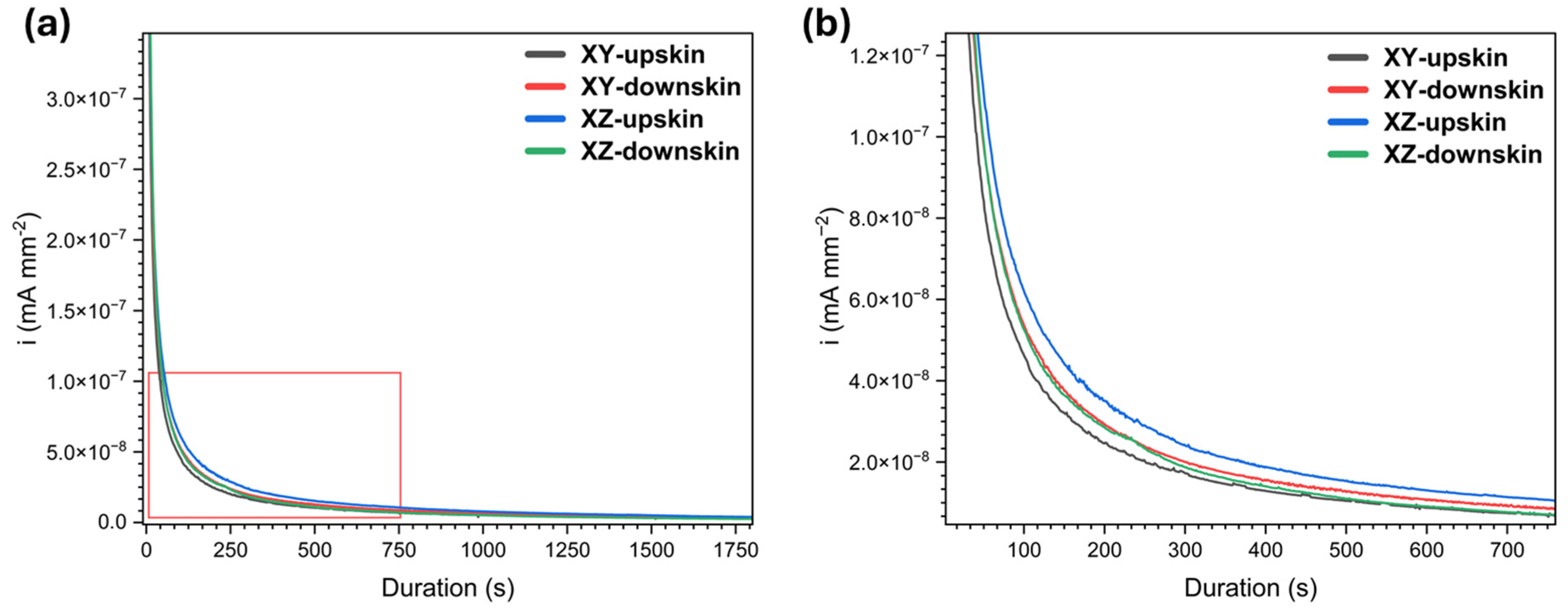
Potentiostatic polarisation tests were conducted to evaluate the time-dependent kinetics of passive film formation and stabilisation on LB-DED Ti6Al4V surfaces under a constant anodic potential in borate buffer solution. The evolution of current density as a function of time is presented in
Figure 6 for the different build orientations and surface conditions. These measurements complement the potentiodynamic and Mott–Schottky analyses by providing dynamic information on oxide growth and repassivation behaviour once a steady passive potential is applied.
When the potential was stepped to +1.0 VSCE, all specimens exhibited a rapid initial decrease in current density, characteristic of the fast nucleation and growth of an oxide layer on an active metallic surface. This sharp decline corresponds to the transition from the initial oxidation of metallic titanium to the formation of a dense, electronically insulating TiO2 film that progressively limits charge transfer through the interface. Following this transient phase, the current density gradually approached a stable plateau, indicating that the passive film had thickened to a limiting value where further oxidation was controlled by diffusion of point defects or charge carriers through the oxide. The current-time behaviour is typical of titanium alloys in non-aggressive environments, where film formation follows a high-field growth mechanism driven by the applied potential and moderated by ionic transport within the oxide.
The overall magnitude and rate of current decay differed slightly among the tested conditions. The XY upskin sample consistently showed the lowest current density throughout the entire polarisation period, with a rapid initial decay and early stabilisation at approximately 1.0 × 10
−8 mA.mm
−2 (
Figure 6a). This behaviour confirms the findings from the potentiodynamic tests, indicating that the passive layer on this surface forms more readily and achieves stability faster than on other specimens. The finer and more homogeneous microstructure of the XY upskin region, combined with the higher density of α/β interfaces, likely facilitates uniform oxide nucleation and rapid lateral growth, producing a compact film with fewer structural defects. Additionally, the residual stress gradient in this region reduces lattice strain at the oxide–metal interface, enabling the formation of a mechanically stable passive layer. In contrast, the XZ upskin specimen displayed a noticeably slower current decay and a higher steady-state current density, suggesting a slower passivation kinetics and a slightly less compact oxide structure. The directional microstructure and pronounced texture in the XZ orientation may contribute to anisotropic oxide growth, where certain crystallographic orientations offer less favourable conditions for uniform oxide coverage. This effect, coupled with the stronger columnar alignment of the β grains in this orientation, can locally hinder oxide growth and result in small differences in current transients, as reflected by the extended decay time and marginally higher steady current density observed.
The XY downskin and XZ downskin samples exhibited intermediate behaviour between these two extremes. Their initial current densities were slightly higher than those of the XY upskin, but the decay profiles converged after approximately 400–500 s, ultimately stabilising at similar steady-state values (
Figure 6a). This behaviour implies that, although downskin regions initially present slower film formation due to surface heterogeneity, the oxide layers eventually reach comparable stability to those of upskin surfaces in the noncorrosive borate environment. The subtle differences in initial current decay may be attributed to the coarser microstructure and thicker β phase films in the downskin regions, which affect local oxidation kinetics and electronic properties of the forming oxide. However, the convergence of the steady-state currents after prolonged polarisation confirms that the passive films on all surfaces possess comparable compactness and overall protective characteristics once fully developed.
The absolute current densities in all samples are in the range of 10−8–10−7 mA.mm−2, consistent with highly passive titanium alloys, indicating that the passive films formed are dense, adherent, and stable under the applied potential. The small magnitude of the steady-state current differences reinforces that the borate buffer environment is non-aggressive and primarily supports film growth rather than dissolution. As a result, even subtle microstructural and orientation-related variations influence only the early kinetics of oxide formation, not the long-term stability of the passive layer. From a mechanistic standpoint, the initial current decay reflects the electric field-assisted migration of oxygen anions and titanium cations through the forming oxide. The faster decay observed in the XY upskin condition suggests a more efficient defect annihilation process and a lower concentration of transport-active defects within the oxide, correlating with the lower acceptor densities determined from the Mott–Schottky analysis. Conversely, the slower decay in the XZ upskin condition indicates that a higher proportion of point defects, possibly generated by residual stress or microstructural anisotropy, contributes to sustained charge transport during film thickening.
In summary, the potentiostatic polarisation results demonstrate that all LB-DED Ti6Al4V surfaces form stable and protective passive films in borate buffer solution, with only minor differences in their formation kinetics. The XY upskin exhibits the most rapid film formation and lowest steady-state current, confirming superior passive film compactness and stability. The XZ upskin displays slightly slower kinetics, likely due to microstructural anisotropy and directional solidification effects, while both downskin surfaces achieve comparable stability after prolonged polarisation. Overall, the borate buffer tests confirm that all surfaces develop robust TiO2-based passive layers, and that microstructural variations primarily influence the early stages of passivation rather than the long-term film protectiveness.
3.2.4. Electrochemical Polarization in NaF Containing Solution
To assess the corrosion performance of the LB-DED Ti6Al4V alloy in a more aggressive and application-relevant environment, potentiodynamic polarisation tests were conducted in artificial saliva containing 2.5% NaF. This medium simulates the chemical conditions that dental implants may experience due to prolonged exposure to fluoride-rich oral care products. Unlike borate buffer, which is non-aggressive and primarily supports passive film characterisation, fluoride ions in saliva can interact chemically with the titanium oxide film, forming soluble titanium–fluoride complexes such as (TiF
6)
2− that compromise the film’s integrity and stability [
48]. Therefore, this test environment allows evaluation of both passive film degradation and active corrosion processes that are critical for biomedical applications.
The corresponding polarisation curves are presented in
Figure 7, and the key electrochemical parameters, E
corr, i
corr, E
pass, and i
pass, are summarised in
Table 2. Compared with the results in borate buffer, the curves in the NaF-containing solution show substantially higher current densities across both the active and passive regions, reflecting the detrimental effect of fluoride ions on the protective titanium oxide layer. The passive regions are narrower, and the transpassive behaviour appears earlier, confirming that fluoride exposure significantly destabilises the oxide film, promoting local dissolution. Among the four investigated conditions, the XY orientation, both upskin and downskin, displayed the best corrosion resistance, exhibiting the lowest i
corr and i
pass values. The corrosion current densities for XY upskin and XY downskin were almost identical (8.57 × 10
−4 and 8.46 × 10
−4 mA.mm
−2, respectively), and their corrosion potentials were also similar (−1180.01 and −1186.11 mV
SCE), suggesting that the build orientation in the XY plane promotes the formation of a relatively homogeneous oxide film, less susceptible to aggressive ion attack. The passive current densities (5.49 × 10
−4 and 5.24 × 10
−4 mA.mm
−2) were the lowest among all conditions, indicating that the passive layers on XY samples retained good compactness and self-repairing capability despite the presence of fluoride ions. These results correlate well with the microstructural observations described earlier in which both XY surfaces exhibit a fine and homogeneous α + β lamellar microstructure, which supports uniform oxide growth and limits galvanic heterogeneities between α and β regions. The absence of extensive β networks in these specimens reduces the local cathodic activity that could otherwise accelerate dissolution of the α matrix in fluoride-rich environments.
In contrast, the XZ-oriented samples exhibited notably higher corrosion activity. The XZ upskin showed an increased icorr of 1.41 × 10⁻³ mA.mm−2 and a corresponding rise in ipass to 1.10 × 10⁻³ mA.mm−2, while maintaining a similar Ecorr (–1178.7 mVSCE) to the XY specimens. This indicates that although passivation initiated at comparable potentials, the stability of the oxide film was reduced, allowing higher ionic transport and sustained anodic dissolution. The directional solidification structure characteristic of the XZ orientation, with elongated prior β columns aligned with the build direction, likely contributes to this behaviour. The strong anisotropy and preferential alignment of β phase boundaries create channels of compositional heterogeneity and strain fields at the α/β interfaces, which can act as preferential fluoride adsorption and dissolution sites. Furthermore, the presence of continuous β films along the grain boundaries enhances local cathodic behaviour, increasing the galvanic driving force for α-phase dissolution in the adjacent regions.
The XZ downskin condition demonstrated the poorest corrosion performance, with the highest passive current density (ipass = 4.87 × 10⁻³ mA.mm−2) and the least noble corrosion potential (Ecorr = −1079.42 mVSCE). The elevated anodic currents observed across the entire polarisation curve confirm extensive passive film breakdown and accelerated dissolution. This behaviour is consistent with the microstructural characteristics of the XZ downskin region described previously which showed coarser α lamellae, thicker β films, and pronounced microstructural heterogeneity resulting from slower cooling and repeated thermal cycling. The reduced cooling rate in the downskin leads to the retention of vanadium-rich β films, which are electrochemically more noble than α and therefore exacerbate galvanic coupling when the passive film is compromised. Additionally, the residual tensile stresses concentrated near the melt pool boundaries and triple junctions in the downskin can promote microcrack formation or localised thinning of the oxide layer, further accelerating film degradation in the fluoride-containing solution. The combination of these factors explains why the XZ downskin sample exhibited nearly one order of magnitude higher passive current density than the XY samples, confirming its inferior corrosion resistance under aggressive conditions.
The comparison between orientations also highlights the role of the build direction on the electrochemical behaviour. In the XY orientation, the layer deposition is perpendicular to the electrolyte exposure plane, producing a microstructure with a more uniform heat flow and consistent solidification conditions across the surface. This promotes the development of a homogeneous passive film with fewer structural or compositional discontinuities. In contrast, the XZ orientation exposes cross-sections of columnar grains and melt pool boundaries directly to the electrolyte, introducing microstructural anisotropy at the exposed surface. These boundaries are often regions of enhanced solute segregation and local residual stress, making them more reactive under aggressive chemical attack. Thus, the orientation dependence observed here reflects a fundamental link between the additive manufacturing process-induced microstructure and the corrosion response in complex environments. The overall electrochemical ranking derived from the polarisation data can be summarised as XY upskin, XY downskin, XZ upskin, and XZ downskin. This sequence highlights that, while surface position (upskin vs. downskin) has a secondary influence in the relatively homogeneous XY orientation, it becomes more significant in the anisotropic XZ direction. The microstructural uniformity and fine lamellar structure in the XY samples present superior corrosion resistance, whereas the directionally solidified and coarser microstructure of the XZ downskin severely limits the protective efficiency of the passive film when challenged by fluoride ions.
Mechanistically, the degradation of TiO2 in fluoride-rich environments proceeds through complexation reactions where fluoride ions substitute surface hydroxyl groups and form soluble [TiF6]2− species. The rate of this process depends on both the composition and defect structure of the passive film and the underlying metal microstructure. Fine, homogeneous α/β distributions support uniform film composition and lower defect densities, reducing the availability of sites for fluoride adsorption. Conversely, coarser microstructures and residual stress concentrations promote oxide heterogeneity and increase the population of active sites for fluoride-induced attack.
In conclusion, the potentiodynamic polarisation tests in 2.5% NaF artificial saliva demonstrate that all LB-DED Ti–6Al–4V samples experience substantial reduction in passivity compared to the borate buffer environment, due to fluoride-induced dissolution of the titanium oxide film. However, the extent of degradation varies strongly with build orientation and surface condition. The XY-oriented samples, both upskin and downskin, retain the best corrosion resistance, attributed to their fine and homogeneous microstructure and limited β-phase connectivity. The XZ orientation, especially the downskin region, shows the highest susceptibility to corrosion, resulting from its coarser, directionally solidified structure and higher degree of residual stress and β-phase continuity. These results emphasise that both microstructural anisotropy and local surface thermal history critically determine the corrosion behaviour of LB-DED Ti6Al4V in fluoride-containing environments relevant to biomedical applications.
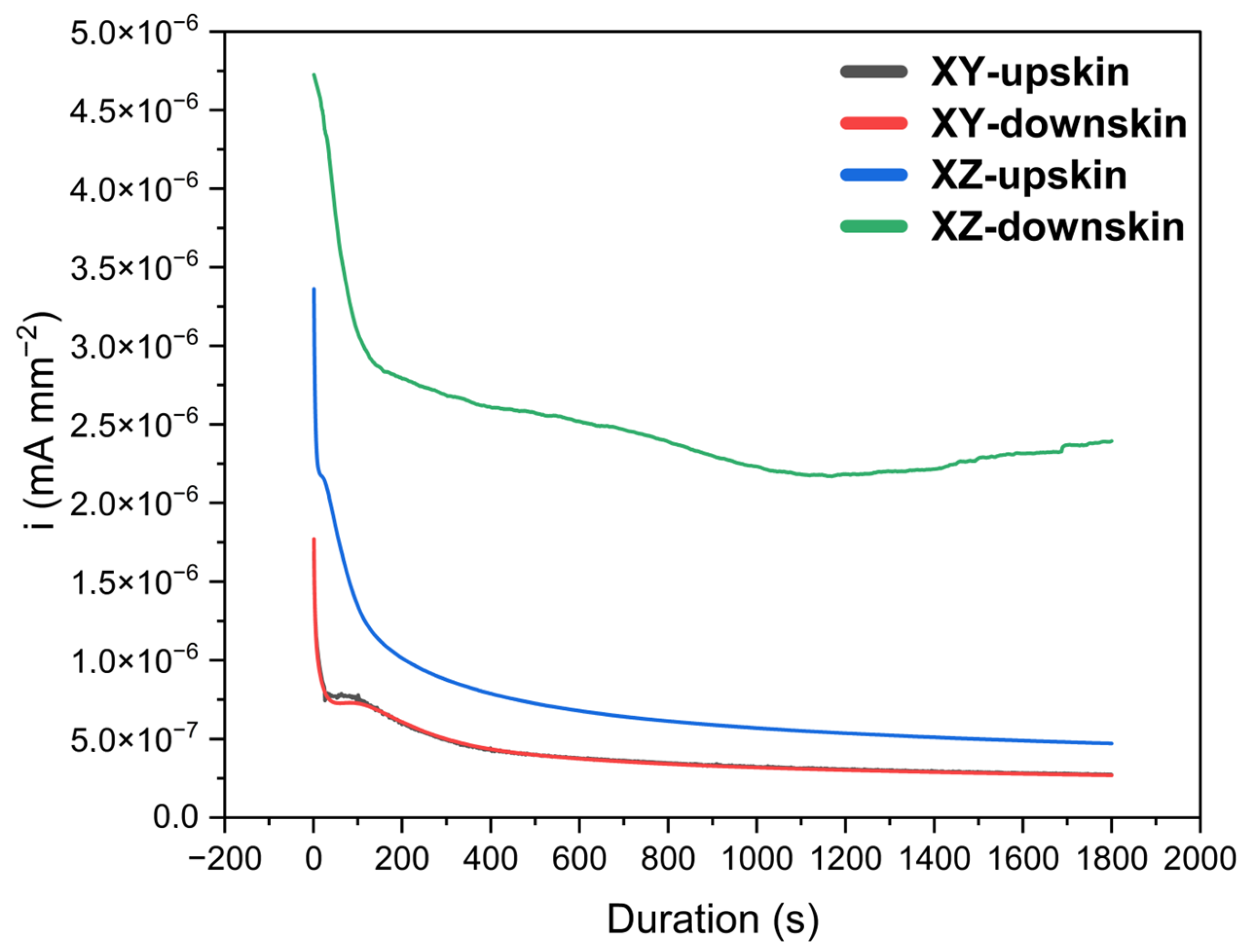
Furthermore, potentiostatic transients at a fixed anodic potential provide a direct view of how each surface reaches, and then attempts to maintain, passivity in a fluoride rich medium.
Figure 8 shows current density versus time behaviour for all four conditions. Immediately after the potential step, every specimen exhibits a decay in current, reflecting rapid nucleation of oxide and initial thickening. Thereafter, the curves diverge, revealing distinct steady behaviours that are fully consistent with the potentiodynamic results, while adding kinetic detail. The XY specimens display the lowest currents throughout. Both XY upskin and XY downskin show nearly overlapping transients, with a short initial decay that reaches a low, gently declining current within a few hundred seconds. The close superposition of these two conditions indicates that, in fluoride, the surface position has little practical influence for the XY orientation once the film has formed, in line with their nearly identical i
corr and i
pass from the potentiodynamic tests. The residual current is small and slowly decreases with time, which is characteristic of a compact barrier that undergoes limited, field-assisted growth while resisting fluoride-driven dissolution.
On the other hand, the XZ upskin exhibits a higher initial spike and a slower decay, settling to a steady current that remains clearly above the XY level for the entire duration. The transient retains a single stage, diffusion-controlled character, that is, a monotonic decrease without oscillations. This indicates that the oxide is able to form and thicken, but with a higher density of transport active sites that sustain greater ionic flow. The behaviour mirrors its higher icorr and ipass under potentiodynamic polarisation, and quantifies the kinetic drawback, a longer time to reach a quasi-steady state and a higher steady current. The most distinctive response arises for the XZ downskin. This sample starts at the highest current, decays only partially, then stabilises at a plateau that is an order of magnitude above the XY level and remains almost constant, with a slight upward drift in the final third of the test. The two-stage shape, a rapid initial drop followed by a long, shallow tail that fails to converge towards the other conditions, is diagnostic of competitive processes, local dissolution and repassivation occurring simultaneously. The small increase in current density over time, suggests progressive thinning or porosity development within the film, consistent with fluoride complexation of titanium and sustained exposure of reactive sites. This kinetic study complements the potentiodynamic curve of the same specimen, which showed the highest passive current and the least noble behaviour.
Taken together, the potentiostatic data confirm the following stability order for the fluoride environment: XY upskin ≈ XY downskin < XZ upskin < XZ downskin. They also clarify how that order emerges in time. The XY surfaces form a protective film quickly and maintain a low, slowly decreasing current. The XZ upskin forms passivity, but with a higher transport rate through the film. The XZ downskin fails to achieve a low current plateau, implying that film growth and dissolution remain in near balance under constant potential. Two additional kinetic features are worth noting. First, the initial decays for all conditions fit well to a t−n form with n between about 0.3 and 0.5 by visual inspection, typical of high field, ion migration-controlled growth in duplex titania. The lower apparent n for XZ downskin reflects the stronger contribution of concurrent dissolution. Second, none of the traces for the XY specimens show oscillations or bursts, whereas small irregularities are visible for XZ downskin during the mid to late stages. Such fluctuations are associated with local film rupture and repassivation cycles, in this case expected at melt pool boundary intersections and triple points that are more numerous and more chemically heterogeneous in that condition.
3.2.5. SEM Analysis of Corrosion Morphology
The corrosion morphology of the LB-DED Ti6Al4V specimens after potentiostatic polarisation in fluoride-rich artificial saliva was examined by scanning electron microscopy to assess the localised effects of passive film degradation. The representative micrographs are shown in
Figure 9. These images provide direct microstructural evidence of the corrosion processes inferred from the electrochemical analyses, allowing the relationship between local microstructural features, film stability, and corrosion mechanisms to be established.
In the XY-oriented specimens (
Figure 9a,b), the surfaces exhibit a uniformly smooth morphology with only minor surface etching along α/β interfaces. No significant pits or localised dissolution features are visible. The lamellar α colonies remain clearly discernible, and only slight preferential attack along prior-β boundaries is observed. This uniform surface condition is fully consistent with the electrochemical results, where both XY upskin and downskin samples demonstrated low corrosion and passive current densities, and nearly overlapping potentiodynamic and potentiostatic responses. The fine, homogeneous α + β microstructure typical of the XY orientation provides a consistent substrate for oxide growth, reducing micro-galvanic heterogeneities. The stable passive film formed on these surfaces, although partially dissolved by fluoride complexation, remains largely intact, resulting in minimal topographical alteration. These observations confirm that the XY build orientation provides superior corrosion resistance, independent of surface position (upskin or downskin).
By contrast, the XZ-oriented samples exhibit markedly more severe corrosion morphology, reflecting their higher recorded current densities and reduced passivity stability in both potentiodynamic and potentiostatic measurements. In the XZ upskin (
Figure 9c), the lamellar α structure is still distinguishable, but pronounced etching along the α/β interfaces and colony boundaries is evident. Shallow trenches and elongated grooves have formed preferentially along the direction of the prior-β columns. These features indicate selective dissolution of the α phase, which acts as the anodic constituent in micro-galvanic coupling with the β phase. The directionality of the attack mirrors the columnar grain alignment of the XZ orientation, confirming that the microstructural anisotropy established during solidification governs the local corrosion path. Although the surface degradation is significant compared with the XY samples, it remains moderate and continuous, suggesting that partial repassivation is still occurring during exposure, consistent with the intermediate steady-state currents recorded in potentiostatic testing.
The most severe damage is observed on the XZ downskin surface (
Figure 9d), which displays extensive and irregular topographical features indicative of intense localised corrosion. The micrograph reveals a highly degraded surface with pronounced grooves, deep micro-pits, and broad areas of preferential dissolution, where the underlying α lamellae are not clearly defined. Numerous small, hemispherical pits, typically 0.5–2 µm in diameter, are visible across the surface. These micro-pits are characteristic of local breakdown of the TiO
2 passive film, followed by rapid dissolution of the exposed titanium in the fluoride medium. The presence of such pits correlates directly with the exceptionally high anodic current density recorded for this condition in both the potentiodynamic (i
pass = 4.87 × 10
−3 mA.mm
−2) and potentiostatic tests, confirming that the film on this surface is the least protective and most prone to breakdown.
The morphology of the XZ downskin reflects the combined influence of microstructural heterogeneity and thermal history on corrosion behaviour. As previously discussed, the downskin region experiences slower cooling and repeated reheating during LB-DED, leading to a coarser α + β lamellar structure, thicker β films, and greater segregation of alloying elements. These β-rich regions, being more noble, serve as local cathodes, accelerating anodic dissolution of the adjacent α phase. The elongated and interconnected β networks along the columnar grain boundaries act as pathways for galvanic coupling and corrosion propagation, producing the observed directionally aligned grooves. Furthermore, the downskin surface is expected to retain higher residual tensile stresses and strain concentrations at melt pool boundaries, which locally thin the passive oxide and promote rupture under applied potential. The combination of these factors, micro-galvanic activity, compositional segregation, and stress-assisted film breakdown, explains the severe and localised corrosion morphology characteristic of the XZ downskin condition.
It is noteworthy that while the XZ upskin and downskin samples share a similar columnar microstructure, the magnitude of degradation differs significantly between them. The downskin’s inferior thermal dissipation during processing not only produced a coarser and more heterogeneous microstructure but also yielded a higher density of interfacial defects and pores that act as initiation sites for pitting. This is corroborated by the potentiostatic current transient of the same sample, which showed a persistent, non-decaying current with small oscillations over time—signatures of repeated localised film rupture and repassivation. The morphology observed here directly visualises those processes: the micro-pits correspond to the localised dissolution events driving those transient current fluctuations.
In contrast, the relatively smooth and uniformly etched surfaces of the XY specimens confirm that their lower steady-state currents correspond to less frequent film breakdown and more uniform repassivation. In the XZ upskin, the partial dissolution features correspond to intermediate stability, where film breakdown occurs along specific microstructural directions but remains self-limiting. In the XZ downskin, however, continuous dissolution dominates over repassivation, producing the highly irregular and roughened morphology observed. Overall, the corrosion morphology analysis provides strong microstructural confirmation of the electrochemical trends. The degradation follows the order: XY upskin ≈ XY downskin < XZ upskin < XZ downskin. The low degree of attack on the XY samples reflects stable passivity and uniform oxide growth, whereas the severe damage and extensive micro-pitting on the XZ downskin signify an unstable, defective oxide film prone to breakdown and fluoride-assisted dissolution. The spatial correlation between microstructural anisotropy, residual stress, and local corrosion morphology emphasises that in LB-DED Ti6Al4V, both build orientation and surface condition play critical roles in determining corrosion susceptibility under aggressive fluoride environments.



 ,
,