Abstract
Rare earth elements (REEs) are strategically critical in the manufacture of advanced materials. Red mud and end-of-life NdFeB magnets can be good secondary sources for REEs, but recovery is difficult due to the high iron oxide content and small amount of REEs. Oxide mixtures whose composition of Fe, Nd, and Ga was similar to that in red mud were employed in experiments. In this study, a relatively inexpensive non-aqueous system was used to selectively dissolve Nd2O3 in a mixture with Fe2O3 and Ga2O3. The addition of ethylene glycol (EG) to HCl and H2SO4 solution depressed the dissolution of Fe2O3 and Ga2O3 from the mixtures, and thus selective dissolution of Nd2O3 was possible. The optimum conditions were as follows: (a) 1.0 M HCl in EG, 25 °C ± 1 °C, 50 g/L pulp density, 120 min, 200 rpm; and (b) 0.05 M H2SO4 in EG, 25 °C ± 1 °C, 50 g/L pulp density, 60 min, 300 rpm. Under these conditions, Nd2O3 was completely dissolved, whereas no Fe2O3 or Ga2O3 was dissolved by the H2SO4 system, and the dissolution percentage of these two oxides by the HCl system was less than 1%. Due to the selective dissolution of Nd2O3 from the oxide mixtures, it is simple to recover Nd. An efficient process can be developed for the recovery of REEs from red mud and end-of-life NdFeB magnets by applying our results.
1. Introduction
The rare-earth elements (REEs) consist of seventeen metallic elements, namely, scandium, yttrium, and fifteen elements of the lanthanide group [1]. The REEs are critical in manufacturing advanced materials such as fuel cells, mobile phones, displays, hi-capacity batteries, permanent magnets for wind power generation, and green energy devices [2]. REEs have become important raw materials with the highest supply risk due to the increasing consumption of REEs resulting from the growing demand for green technology [3]. However, due to the dominance in the REEs market of China, which accounts for 90% of the world supply of REEs, the global supply of REEs is dependent on Chinese exports of REEs [4]. In order to address the supply challenge of REEs, rare earth recovery from secondary resources such as bauxite residue (as red mud) and end-of-life NdFeB magnets can be considered to be one of the solutions.
REEs in bauxite ores exist as oxides that are adsorbed on the surface of the minerals and are found in red mud after the Bayer process of bauxite ore [5]. Red mud contains a large number of valuable metals including rare earth elements, making it a potential and important resource for these metals in recent times [6]. Table 1 lists some investigated processes for the recovery of REEs from red mud and end-of-life NdFeB magnets [7,8,9,10,11,12,13,14,15,16,17,18,19]. In most processes, inorganic acid solutions such as HCl, HNO3, and H2SO4 as leaching agents are employed to effectively dissolve iron oxides from red mud [7,8,9]. However, a high concentration of iron in the leaching solutions poses some problems in the recovery of REEs and other valuable metals. Since the weight percentage of REEs in red mud is very low, the recovery of REEs from red mud consists of very complicated processes, such as alkaline roasting, smelting, and then acid leaching of the slag, which result in a very low recovery yield of REEs (<5%) [10].
Table 1.
Processes for the recovery of Ga and REE from red mud and NdFeB magnets.
Another resource for REEs recovery is end-of-life products such as NdFeB magnets. Depending on the application, REEs can make up about 31–32% by weight of NdFeB magnets; these REEs are mainly Nd and Pr, along with small amounts of Dy, Tb, and Gd [15]. Many studies indicate that the roasting treatment of NdFeB magnet powders before dissolution has a favorable effect on the dissolution of REEs from magnets [16]. Some processes to recover the REEs from these magnets, including acid or/and alkali leaching, solvent extraction, ion exchange, or ionic liquid techniques, are shown in Table 1. The crushed magnets are roasted at optimum conditions to obtain Nd2O3 and Fe2O3 instead of the complex oxide NdFeO3, which dissolves much more slowly than pure oxide. The leaching of magnet oxides after roasting treatment with ionic liquid [Hbet] [Tf2N], or/and HCl at high pressure results in a high leaching percentage of both REEs and iron oxides (Table 1) [18].
Eh-pH diagrams of Fe(III), Ga(III), and Nd(III) at 25 °C clearly indicate that there is some difference in the precipitation pH of these metal ions as hydroxides [20,21]. Therefore, it is possible to selectively dissolve Nd2O3 over Fe2O3 and Ga2O3 from the oxide mixtures of the three metals. From the recovery processes presented in Table 1, many methods exist to treat red mud and NdFeB by combining multiple methods including hydrometallurgy and pyrometallurgy. However, the amount of Nd2O3 in the red mud is very small and thus it is better to selectively dissolve Nd2O3 to yield the highest Nd recovery. In this work, the selective dissolution of Nd2O3 from the mixture with Fe2O3 and Ga2O3 was investigated using inorganic acid solutions containing ethylene glycol. Fe and Nd are two components that both exist in red mud and NdFeB magnets; thus, the oxides, including Fe2O3, Nd2O3, and Ga2O3, were selected as a mixture to simulate the metal composition of interest to conduct selective dissolution studies for REE recovery. Because the composition of the red mud is very complex, with different concentrations of metals and rare earth elements depending on the ore source, it is difficult to choose an exact value for the oxide content to prepare the oxide mixture for the experiment [22]. Based on typical deviations of mineral compositions in Table 2, oxide mixtures with Fe, Nd, and Ga compositions similar to those in red mud were used in the experiments. In general, the dissolution of ionic and covalent solids depends on the dielectric constant of the solution. As the dielectric constant of the solution decreases, the dissolution of solid oxides becomes difficult. By utilizing this relation, ethylene glycol (EG) was employed as a diluent to investigate the effect of a change in the dielectric constant of the solution on the dissolution of the three oxides. EG is a green solvent because it is nonvolatile (boiling point 197.3 °C) and water soluble (polar) [23]. Therefore, EG can be considered to be an efficient substitute for water in leaching experiments. For this purpose, the dissolution behavior of the three oxides was investigated using HCl and H2SO4 solutions containing EG. HNO3 should not be used because it can form explosives such as ethylene glycol dinitrate when mixed with EG [24]. However, a non-aqueous leaching system using EG as a diluent makes the resulting solution more viscous than using H2O, making it difficult to filter to remove impurities. The most important results were that Nd2O3 can be selectively dissolved by adjusting dissolution conditions such as HCl and H2SO4 concentration, temperature and time, stirring speed, and pulp density.
Table 2.
The composition of mineral components in the red mud [6,22] and in the oxide mixture in this study.
2. Materials and Methods
2.1. Materials
Powders of Nd2O3 (Strem Chemicals, Newburyport, United States, 99.99%), Ga2O3 (Alfa Aesar, Ward Hill, MA, USA, 99.99%), and Fe2O3 (Daejung Co., Shiheung, Korea, 99.99%) were mixed at a predetermined weight ratio, and the composition of the oxides in the mixtures is shown in Table 2 [6,22]. Inorganic acid solutions of HCl (Daejung Co., Shiheung, Korea, 35%), and H2SO4 (Daejung Co., Shiheung, Korea, 98%) were diluted with ethylene glycol (Daejung Co., Shiheung, Korea, >99.0%) to the desired concentrations. Standard solutions of gallium (Kanto Chemical Co., Inc., Tokyo, Japan), neodymium (Accu Standard, Inc., New Haven, CT, USA), and iron (Kriat Co., Ltd., Daejeon, Korea) were employed in ICP analysis.
2.2. Experimental Procedure and Analytical Methods
All leaching tests were run in a 250 cm3 three-neck round-bottom flask with the determined volume of concentrated HCl and H2SO4 in EG. A magnetic stirrer (WiseStir MSH-20D, Daihan Scientific Co., Seoul, Korea) was used to control the stirring speed, time, and temperature throughout the leaching experiments. The powder mixtures of Nd2O3, Ga2O3, and Fe2O3 were put into the reaction flask once the desired temperatures were reached. After leaching experiments, the solution was filtered using filter paper and diluted with doubly distilled water for inductively coupled plasma optical emission spectrometry (ICP-OES) analysis (Spectro Arcos, Cleve, Germany).
The dissolution percentage (%) of the oxides was calculated as:
where m*M and mM are the mass of metal ions in the leaching solution and the powder mixtures of oxides before the leaching experiments, respectively. Most of the leaching experiments were repeated two times and the error related to dissolution percentage was within ±5%.
3. Results and Discussion
3.1. Effect of Acid Concentration
The metallic oxides employed in this work are basic and thus dissolve in hydrochloric and sulfuric acid solutions according to the following reactions:
Nd2O3(s) + 6H+ = 2Nd3+ + 3H2O(l)
Fe2O3(s) + 6H+ = 2Fe3+ + 3H2O(l)
Ga2O3(s) + 6H+ = 2Ga3+ + 3H2O(l)
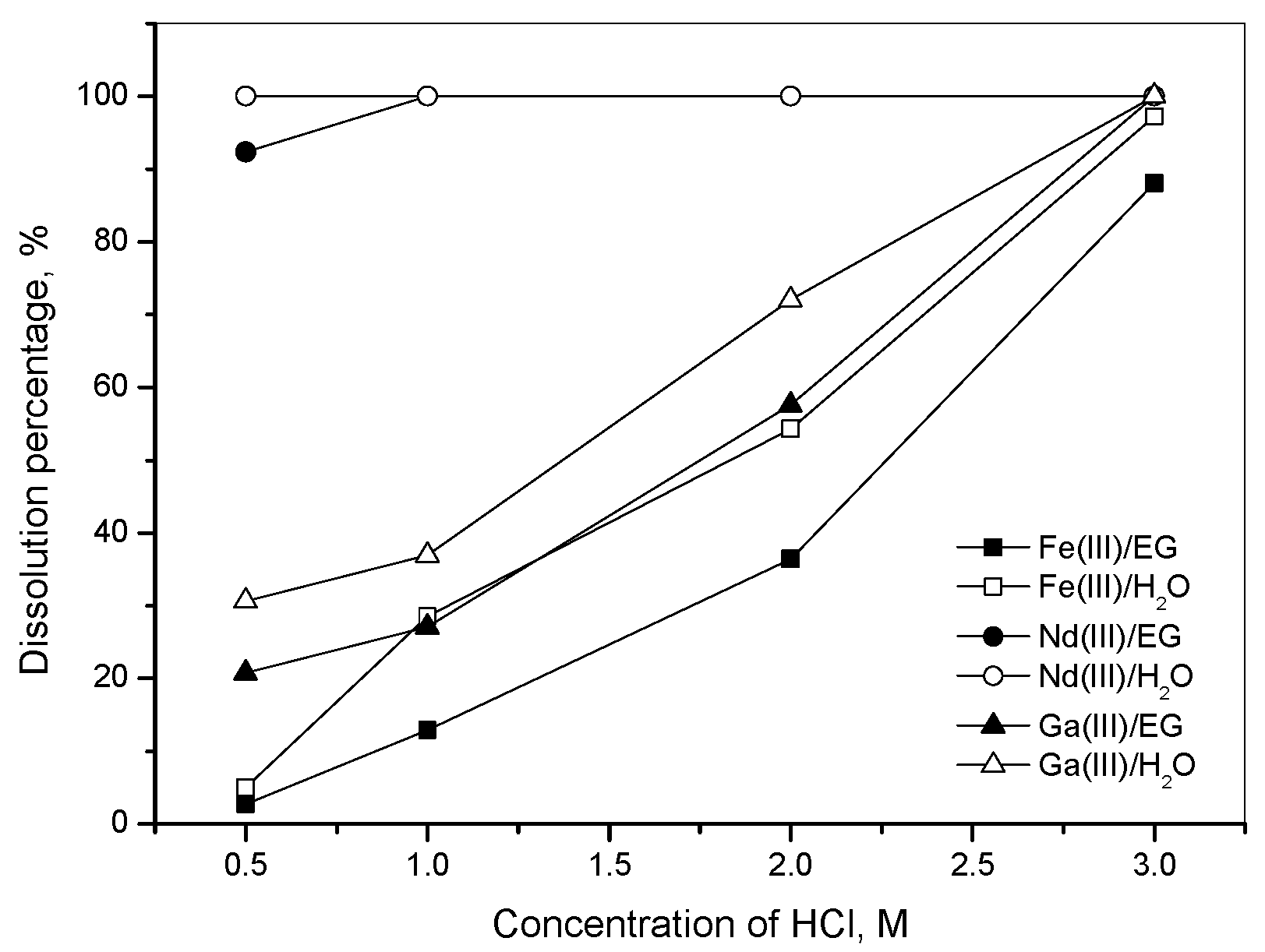
In order to investigate the influence of acid concentration and the role of EG, the concentration of HCl was varied from 0.5 to 3.0 M using either H2O or EG as a diluent, respectively. When concentrated HCl solution was diluted with EG to prepare the leaching solution, some of the water was inevitably introduced. However, the water content in the leaching solution containing EG was less than 50%, indicating that our system is a kind of non-aqueous system [23]. In these experiments, the conditions of other variables were controlled as follows: pulp density of 50 g/L, 80 °C, 90 min with stirring speed of 400 rpm. Figure 1 shows that there is a large difference in the dissolution behavior among the three oxides. Nd2O3 oxide was completely dissolved in the HCl concentration ranges irrespective of the nature of the diluent. Furthermore, the dissolution of Ga2O3 and Fe2O3 oxides was proportional to the HCl concentration. Moreover, the dissolution percentage of Ga2O3 was higher than that of Fe2O3. It is noticeable that the dissolution percentage of Ga2O3 and Fe2O3 oxides from the H2O solution was higher than that from the EG solution. The most important results of Figure 1 are that Nd2O3 can be selectively dissolved by adjusting the HCl concentration and the use of EG as a diluent depressed the dissolution of the Ga2O3 and Fe2O3 oxides, which would be favorable for the selective dissolution of Nd2O3 from the oxide mixtures. A concentration of 1.0 M HCl in EG is the optimal condition to dissolve 100% Nd2O3, together with 16% Fe2O3 and 24% Ga2O3.
Figure 1.
Effect of HCl concentration in either EG or H2O on the leaching of the oxide mixtures. Operation conditions: pulp density = 50 g/L, T = 80 °C, time = 90 min, stirring speed = 400 rpm.
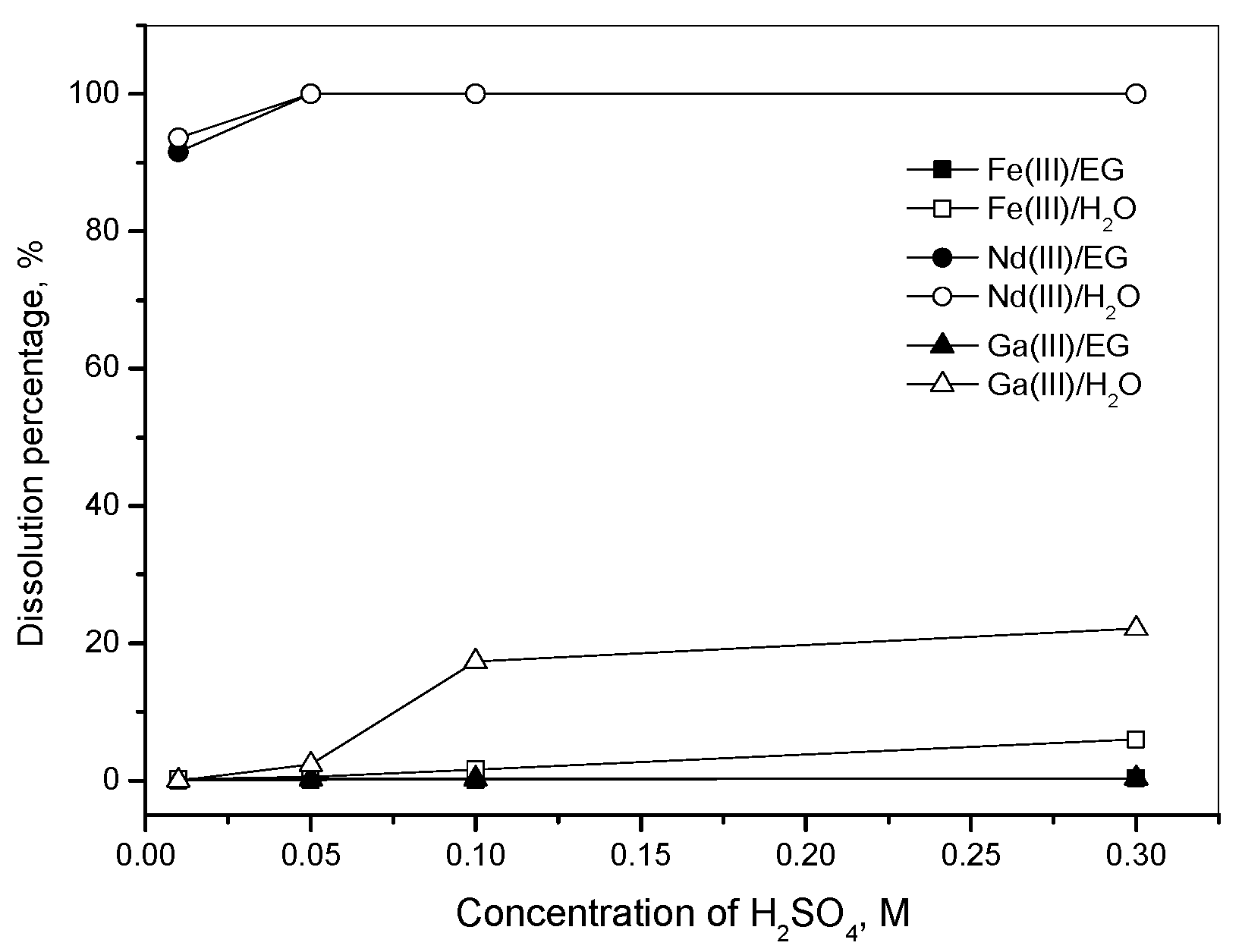
According to Figure 1, the low acid concentration is favorable for the selective dissolution of Nd2O3 from the oxide mixtures. Therefore, the concentration of H2SO4 varied from 0.01 to 0.3 M and the conditions of other variables were the same as those used in the experiments with HCl reported in Figure 1. Concentrated H2SO4 solutions diluted with either H2O or EG were used to investigate the effect of H2SO4 concentration on the leaching of the oxide mixtures. When H2SO4 concentration was higher than 0.05 M, Nd2O3 was completely dissolved from the oxide mixtures irrespective of the nature of the diluent (see Figure 2). In the case of Ga2O3 and Fe2O3, the dissolution behavior of these two oxides was similar to that of the HCl solution; namely, the dissolution percentage of Ga2O3 was higher than that of Fe2O3, and the use of EG as a diluent reduced the dissolution percentage of these two oxides. Moreover, when H2SO4 concentration was 0.05 M, the dissolution of Ga2O3 and Fe2O3 was negligible, while most of Nd2O3 was dissolved. In particular, Ga2O3 and Fe2O3 were not dissolved by the H2SO4 solution in EG. Due to the simultaneous dissolution of all three oxides, dissolving 100% of Nd2O3 required a concentration of HCl/EG acid of 1.0 M, which was higher than the concentration of H2SO4/EG of 0.05 M.
Figure 2.
Effect of H2SO4 concentration in either EG or H2O on the leaching of oxide mixtures. Operation conditions: pulp density = 50 g/L, T = 80 °C, time = 90 min, stirring speed = 400 rpm.
Dissolution of metal oxides into solution increases the entropy of the dissolution reaction and thus it is necessary to think about the enthalpy change accompanying the dissolution in order to explain the dissolution of metal oxides. In solution, the dissolution of metal oxides is related to the lattice energy of the oxides and the solvation enthalpy of the resulting cations and oxide ions. In general, the lattice energy of metal oxides has a positive value, whereas the solvation energy of the resulting ions by the solvent is exothermic [25]. Table 3 shows that Ga2O3 has the highest lattice energy, whereas the lattice energy of Nd2O3 is the lowest among the three oxides [25,26]. Solvation enthalpy of ions is related to the ionic radius and charge, and the dielectric constant of the solvent, as represented in Equation (5) [25]:
where Z is the charge of the ion, r is its radius, and is the dielectric constant of the solvent ( = 78.2 for water and = 41 for EG at 25 °C) [27,28].
Table 3.
Ionic radius and solvation enthalpy of ions, lattice energy, and heat of solution of the oxides [25,26].
The ionic radius and the corresponding solvation enthalpies of the three ions in water and EG, which were calculated by Equation (5), are represented in Table 3. From the lattice energies of the oxides and the solvation enthalpies of the ions, the heat of solution () of each oxide in H2O and EG can be obtained by using the following equation [26]:
where H+ and H− are solvation enthalpies of the cations and oxide ion.
The heat of solution of the oxides in H2O and EG calculated by Equation (6) is listed in Table 3. Although the heat of solution of Fe2O3 is the lowest and that of Ga2O3 is the highest, the difference is within 1045 kJ/mol. Therefore, the selective dissolution of Nd2O3 in low concentrations of HCl and H2SO4 may be ascribed to other factors. Since the heat of solution of the oxides in EG is slightly larger than that of water, the reduction in the dissolution percentage of the oxides when EG was employed as a diluent can be explained. Table 4 shows that Nd(III) has the highest polarizability, whereas the polarizability of Ga(III) is the lowest among the three ions [29]. In general, the ions with high polarizability have a tendency to be dissolved in a medium with a lower dielectric constant. Therefore, Nd(III) has the strongest tendency to be dissolved when EG is employed as a diluent. By contrast, the difference in the polarizability of Fe(III) and Ga(III) is only 0.78, and thus the dissolution behavior of Fe2O3 and Ga2O3 may be similar in our experiments.
Table 4.
The polarizabilities of ions [29].
3.2. Effect of Reaction Temperature
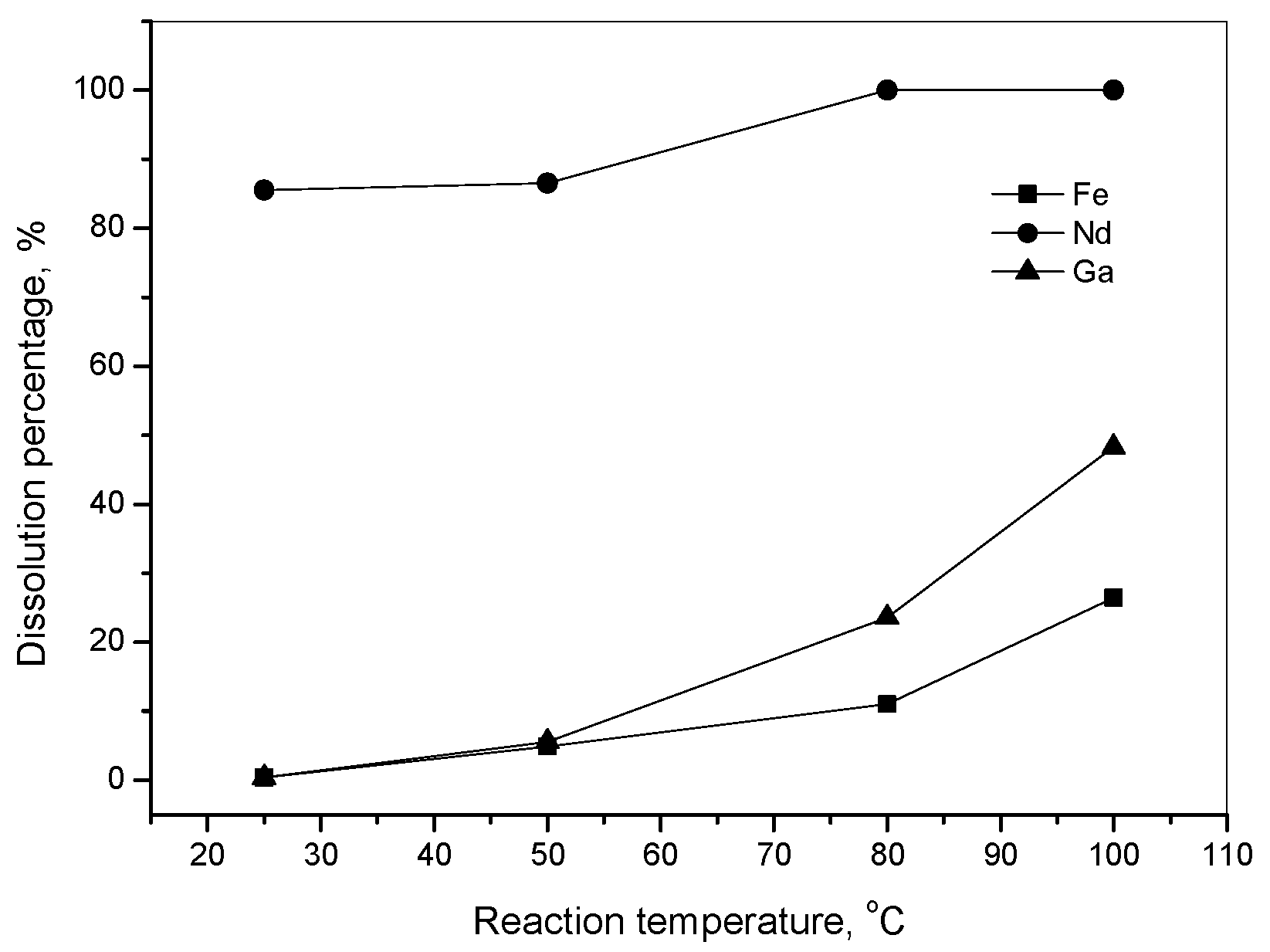
According to the previous section’s results, 1.0 M HCl in EG and 0.05 M H2SO4 in EG were the optimum conditions to selectively dissolve Nd2O3 from the oxide mixtures. Since the heat of solution of the oxides is positive, the dissolution percentage of the oxides increases with reaction temperature. The effect of temperature on the dissolution of the oxides was investigated over a temperature range of 25–100 °C at an acid concentration of 1.0 M HCl in EG and 0.05 M H2SO4 in EG, a stirring speed of 400 rpm for 90 min, and a pulp density of 50 g/L. Figure 3 shows that the dissolution percentage of Nd2O3 by 1.0 M HCl in EG increased from 85.5% to completeness as the reaction temperature increased from 25 and 100 °C. The dissolution percentage of Fe2O3 and Ga2O3 was 0.4% at 25 °C and increased sharply when the temperature was higher than 50 °C. When the reaction temperature reached 100 °C, 26.4% of Fe2O3 and 48.3% of Ga2O3 were dissolved by HCl in EG. The increase in dissolution percentage of the oxides with reaction temperature agreed well with the endothermic nature of the dissolution of the oxides in EG, as represented in Table 3. Figure 3 shows that reaction temperature is important in the selective dissolution of Nd2O3 from the oxide mixtures.
Figure 3.
Effect of temperature on the leaching of the oxide mixtures by 1.0 M HCl in EG. Operation conditions: pulp density = 50 g/L, time = 90 min, stirring speed = 400 rpm.
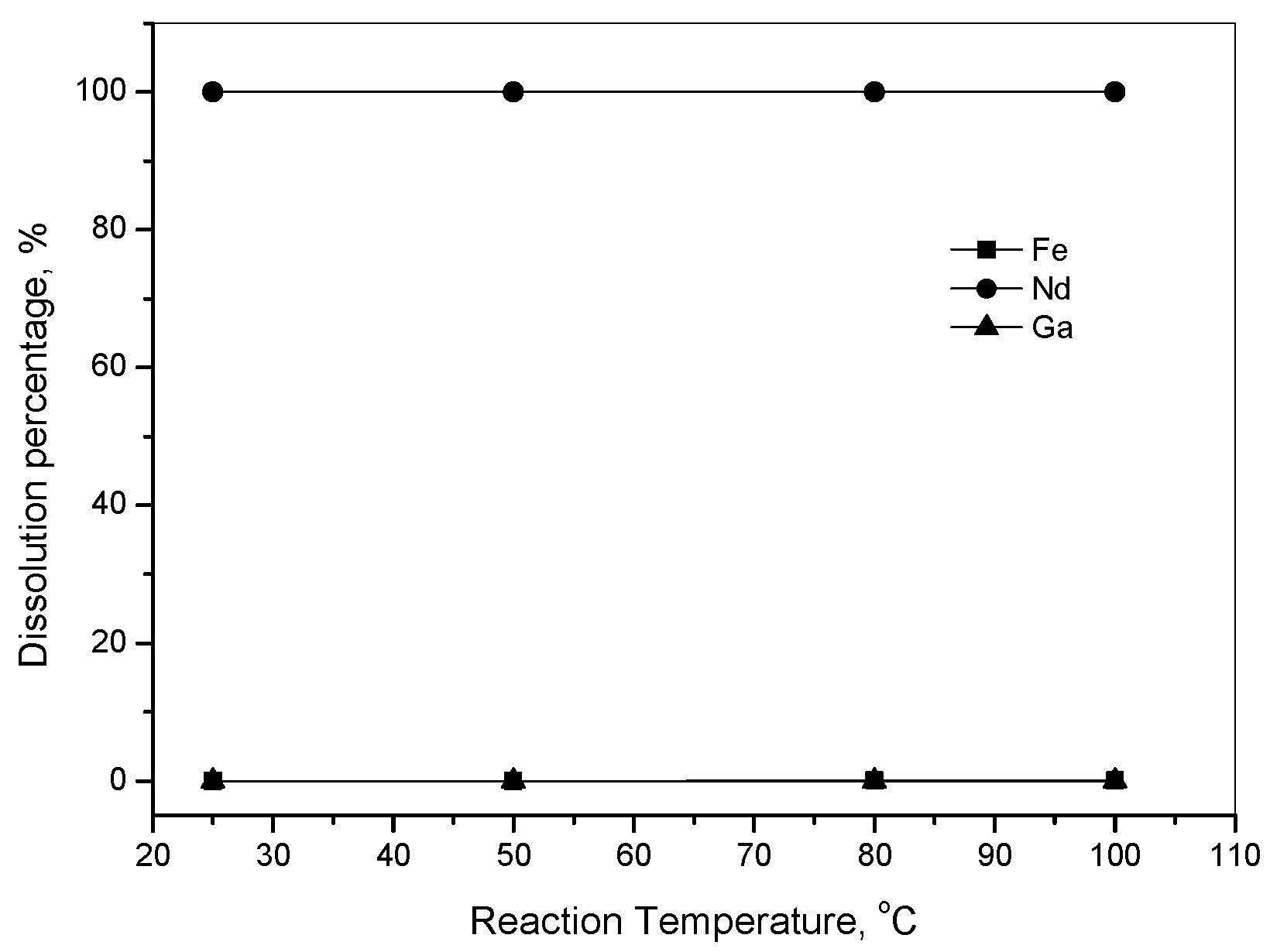
Figure 4 shows the variation in the dissolution percentage of the oxides by 0.05 M H2SO4 in EG when the temperature was varied from 25 to 10 °C. Unlike the data obtained from 1.0 M HCl in EG, only Nd2O3 was dissolved from the oxide mixtures, and thus it is possible to selectively recover Nd(III) from the oxide mixtures using 0.05 M H2SO4 in EG. In the case of dissolution by HCl, the lower temperature was effective in the selective dissolution of Nd2O3 but the effect of temperature was negligible in dissolution with H2SO4 in EG.
Figure 4.
Effect of temperature on the leaching of oxide mixtures by 0.05 M H2SO4 in EG. Operation conditions: pulp density = 50 g/L, time = 90 min, stirring speed = 400 rpm.
3.3. Effect of Reaction Time
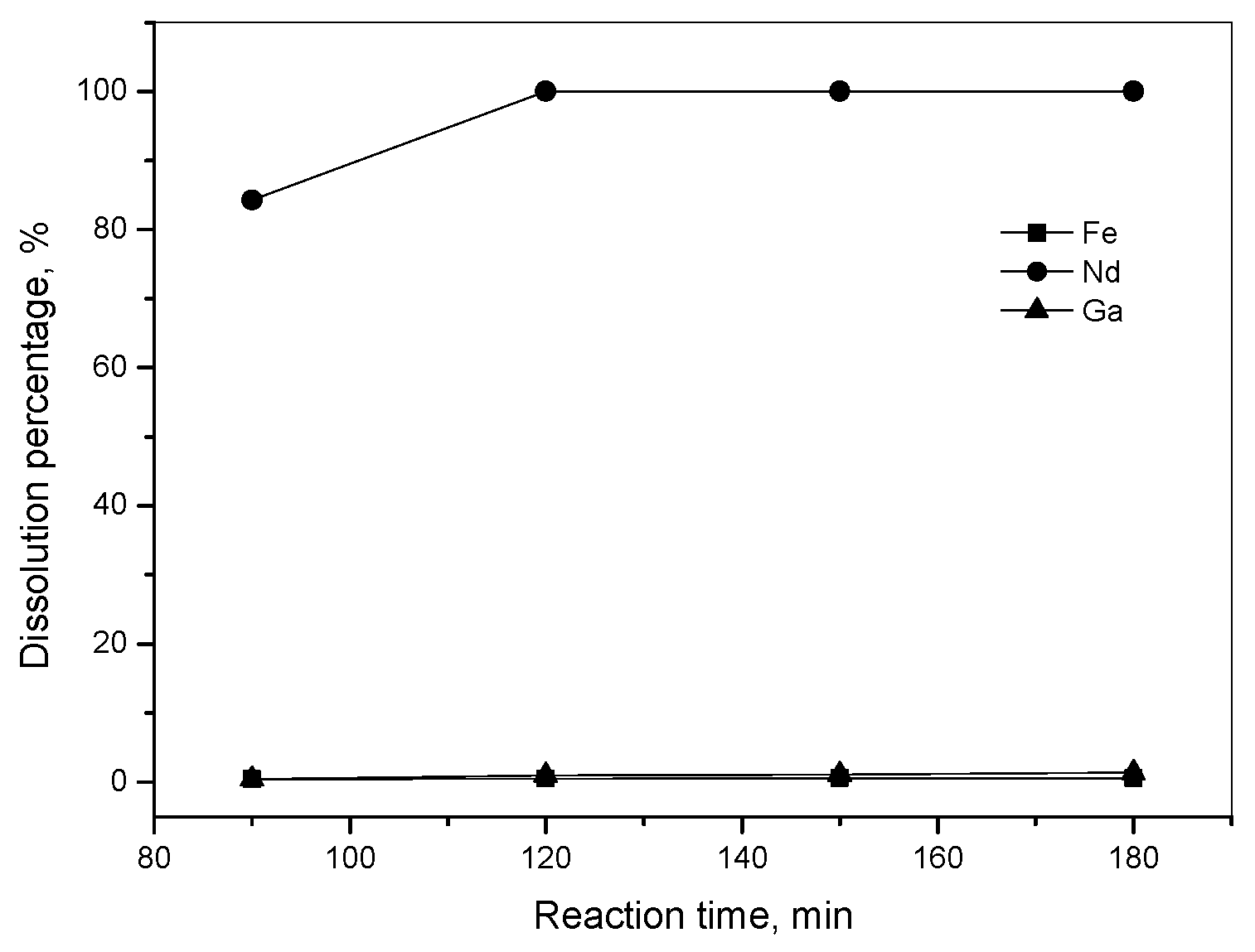
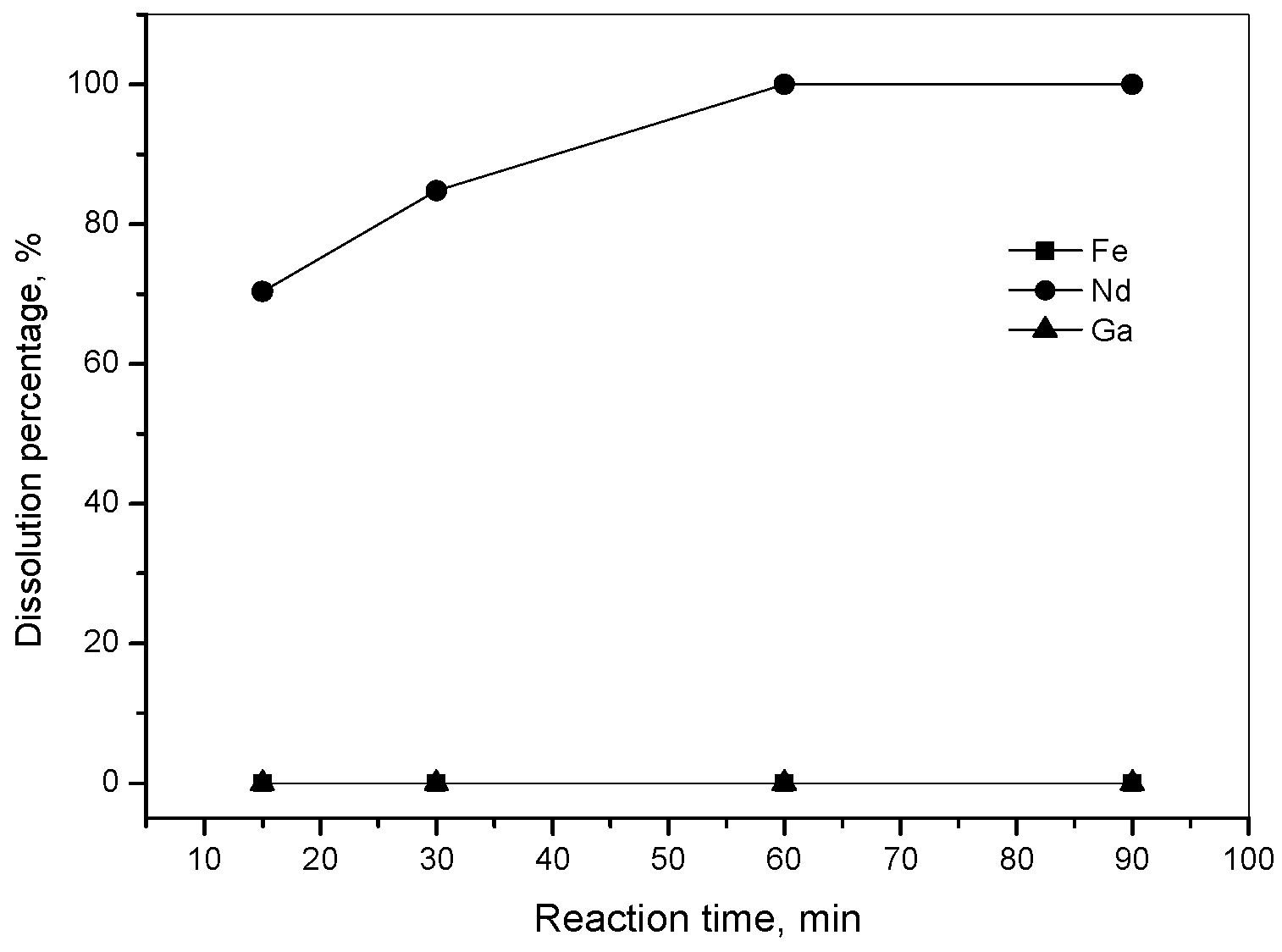
The effect of time on the dissolution by both HCl and H2SO4 solutions in EG was investigated by varying reaction times at room temperature. In the experiments, pulp density and stirring speed were controlled at 50 g/L and 400 rpm, respectively. Figure 5 shows the data for dissolution by 1.0 M HCl in EG. Nd2O3 was completely dissolved after 120 min, whereas the dissolution percentage of Fe2O3 and Ga2O3 at this reaction time was 0.5% and 1.4%, respectively. Dissolution experiments with 0.05 M H2SO4 in EG were carried out in the reaction time range from 15 to 90 min at room temperature. Reaction time did not affect the dissolution of Ga2O3 and Fe2O3, whereas the dissolution of Nd2O3 was affected by reaction time. Figure 5 and Figure 6 clearly show that the selective dissolution of Nd2O3 from the oxide mixtures by HCl and H2SO4 is not related to the kinetics.
Figure 5.
Effect of time on the leaching of the oxide mixtures by 1.0 M HCl in EG. Operation conditions: pulp density = 50 g/L, T = 25 °C, stirring speed = 400 rpm.
Figure 6.
Effect of time on the leaching of oxide mixtures by 0.05 M H2SO4 in EG. Operation conditions: pulp density = 50 g/L, T = 25 °C, stirring speed = 400 rpm.
3.4. Effect of Pulp Density
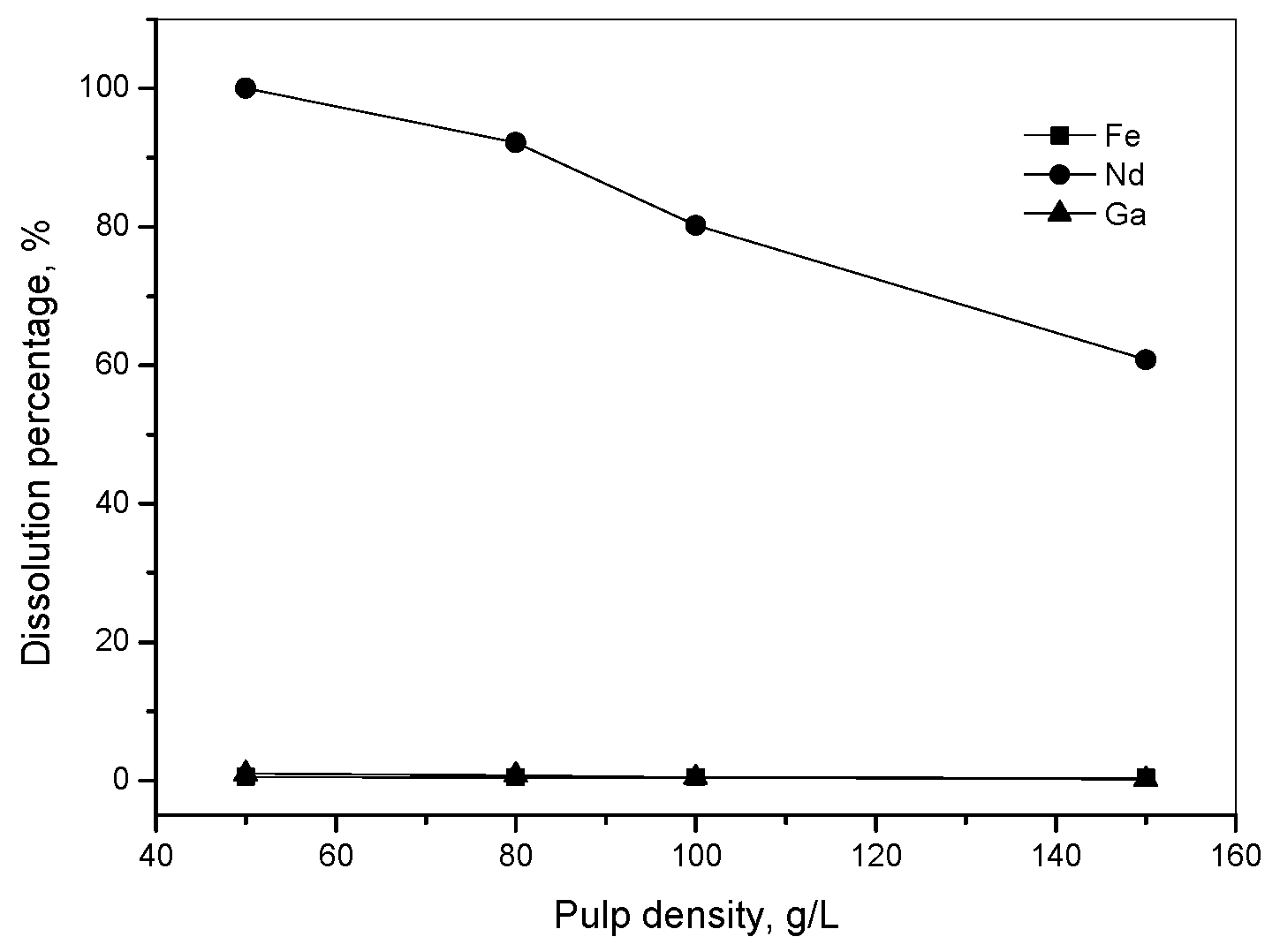
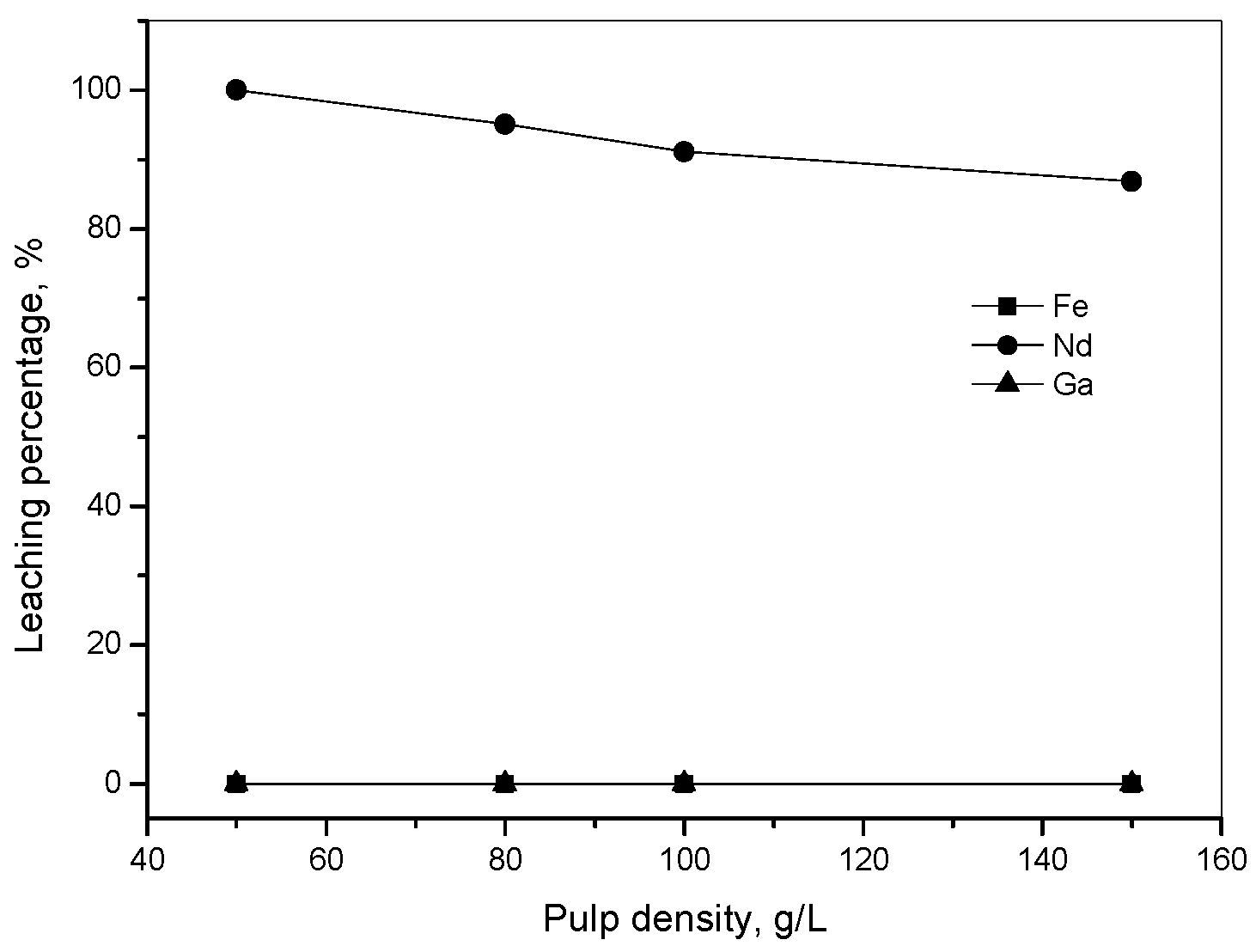
Pulp density is usually expressed as the ratio of the mass of the solid reactant to the volume of the leaching agent (g/L). In general, the use of larger amounts of leaching solution increases the dissolution performance [30,31]. Pulp density was varied from 50 to 150 g/L at room temperature and at a stirring speed of 400 rpm. In experiments with 1.0 M HCl in EG and 0.05 M H2SO4 in EG, reaction times were fixed at 120 and 60 min, respectively. Figure 7 and Figure 8 show the same trends in both acids, namely, that lower pulp density enhances the selective dissolution of Nd2O3, whereas dissolution percentage decreases at higher pulp density. Nd2O3 was completely dissolved at a pulp density of 50 g/L but decreased to 61% as the pulp density increased to 150 g/L (Figure 7). In these experiments, the dissolution percentage of Fe2O3 and Ga2O3 was only 0.4% irrespective of the pulp density (Figure 7). In the H2SO4/EG system, the dissolution of Nd2O3 decreased from 100% to 87% when the pulp density increased from 50 to 150 g/L, and there was no dissolution of Fe2O3 and Ga2O3 (Figure 8). The lower pulp density was beneficial in the selective and complete dissolution of Nd2O3. Therefore, it can be said that the optimum pulp density for the complete dissolution of Nd2O3 using HCl and H2SO4 solution was 50 g/L.
Figure 7.
Effect of pulp density on the leaching of the oxide mixtures by 1.0 M HCl in EG. Operation conditions: T = 25 °C, time = 120 min, stirring speed = 400 rpm.
Figure 8.
Effect of pulp density on the leaching of oxide mixtures by 0.05 M H2SO4 in EG. Operation conditions: T = 25 °C, time = 60 min, stirring speed = 400 rpm.
3.5. Effect of Stirring Speed
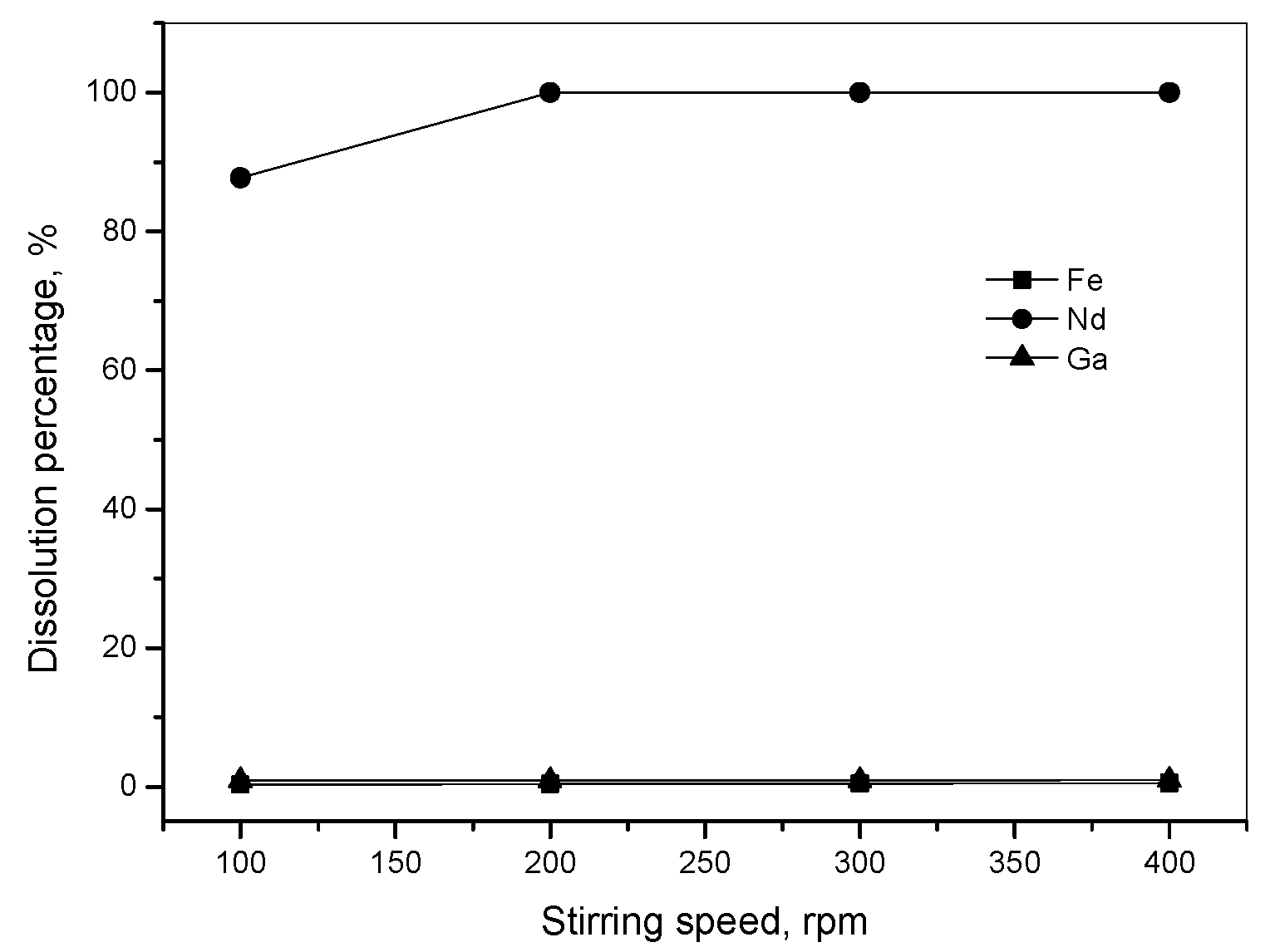
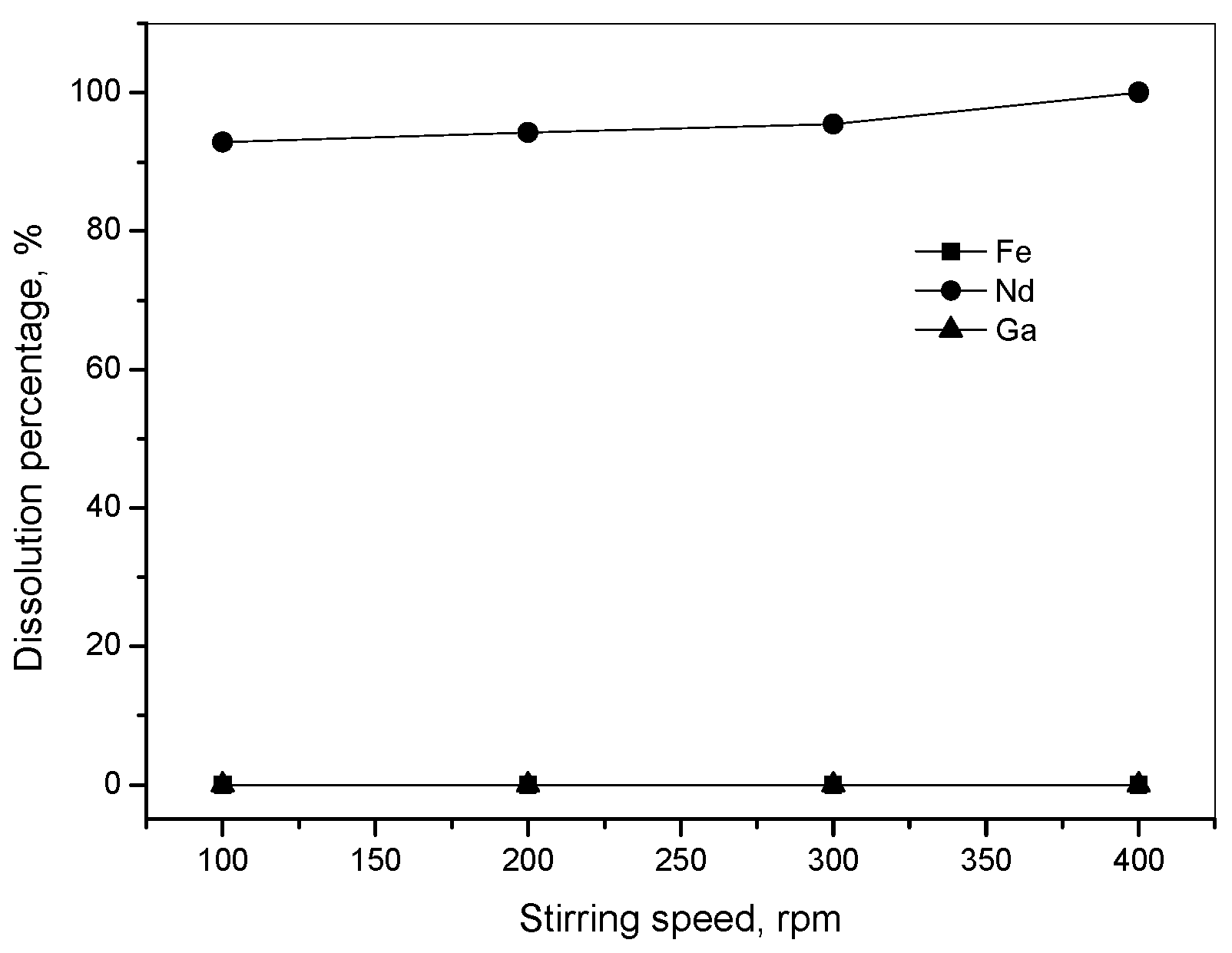
When the reaction temperature is low, the chemical reaction is more important than the mass transfer of the reactant to the reaction interface. In order to check the importance of mass transfer in the dissolution of the oxides, the stirring speed was changed from 100 to 400 rpm for both HCl and H2SO4 solutions at room temperature. In these experiments, the pulp density was fixed at 50 g/L and the concentration of HCl and H2SO4 in EG was controlled to 1.0 and 0.05 M, respectively. Figure 9 and Figure 10 show that stirring speed affected little the dissolution of Nd2O3 from both HCl and H2SO4 solution when stirring speed was higher than 200 rpm. Therefore, it might be said that the chemical reaction is more important than the mass transfer of the leaching solution during the dissolution reaction of Nd2O3 from the oxide mixtures by HCl and H2SO4 solutions at room temperature.
Figure 9.
Effect of stirring speed on the leaching of the oxide mixtures by 1.0 M HCl in EG. Operation conditions: pulp density = 50 g/L, T = 25 °C, time = 120 min.
Figure 10.
Effect of stirring speed on the leaching of oxide mixtures by 0.05 M H2SO4 in EG. Operation conditions: pulp density = 50 g/L, T = 25 °C, time = 60 min.
3.6. Effect of Solution Acidity
When metal oxides are dissolved by inorganic solutions such as HCl and H2SO4, the stability of the dissolved ions is related to the acidity of the solution and the nature of the ligands. Since metal ions are Lewis acids, they have a strong tendency to form complexes with ligands. First, the metal ions can be solvated with water and then hydroxides of the metal would be precipitated. In an aqueous solution, the Eh–pH diagram shows the pH at which the hydroxides of metal begin to precipitate thermodynamically. Table 5 shows the solubility product of the three hydroxides [31]. From these values, the precipitation pH of the hydroxides was calculated on the assumption that the concentration of the ions was 0.01 M, and the calculated results are listed in Table 6. Fe(III) and Ga(III) would be precipitated when the solution pH is around 3, whereas Nd(III) would be precipitated at pH 6.5 (Table 6). Second, the metal ions can form complexes with the anions of inorganic acids, which act as Lewis bases. The complex formation constants of the ions with chloride and sulfate ions are listed in Table 7 [25,32,33,34,35]. It is well known that Fe(III) has a strong tendency to form complexes with chloride ions so that the anionic complex, FeCl4−, exists in concentrated HCl solution. Table 7 indicates that sulfate ions have a stronger tendency to form complexes with the metal ions, with the exception of Fe(III) in HCl solution.
Table 5.
Solubility products of the hydroxides at 25 °C [31].
Table 6.
The precipitation pH of the metal hydroxides when the concentration of metal ions is 0.01 M [29].
Table 7.
Complex formation constants of the ions with sulfate and chloride ions [25,32,33,34,35].
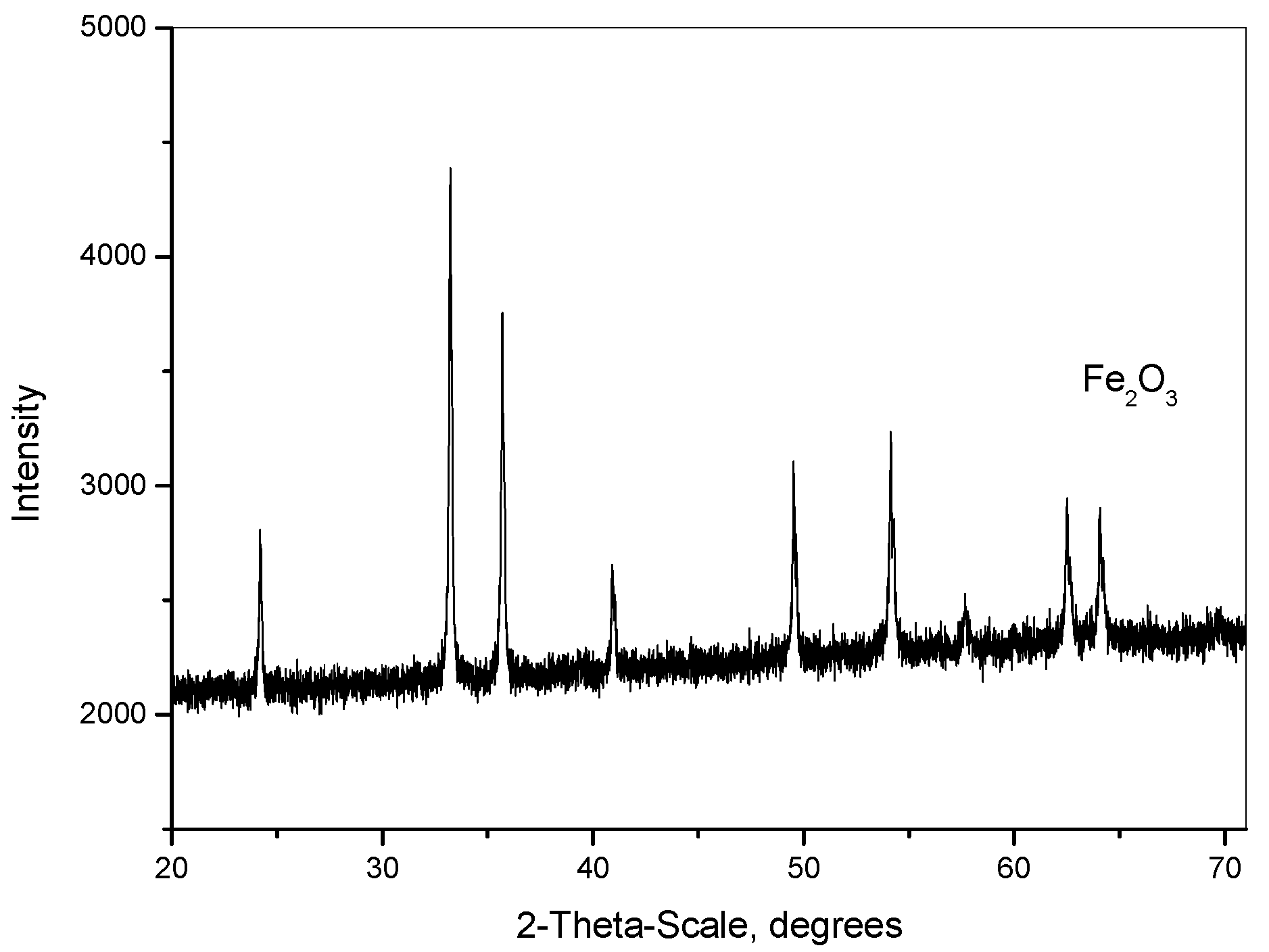
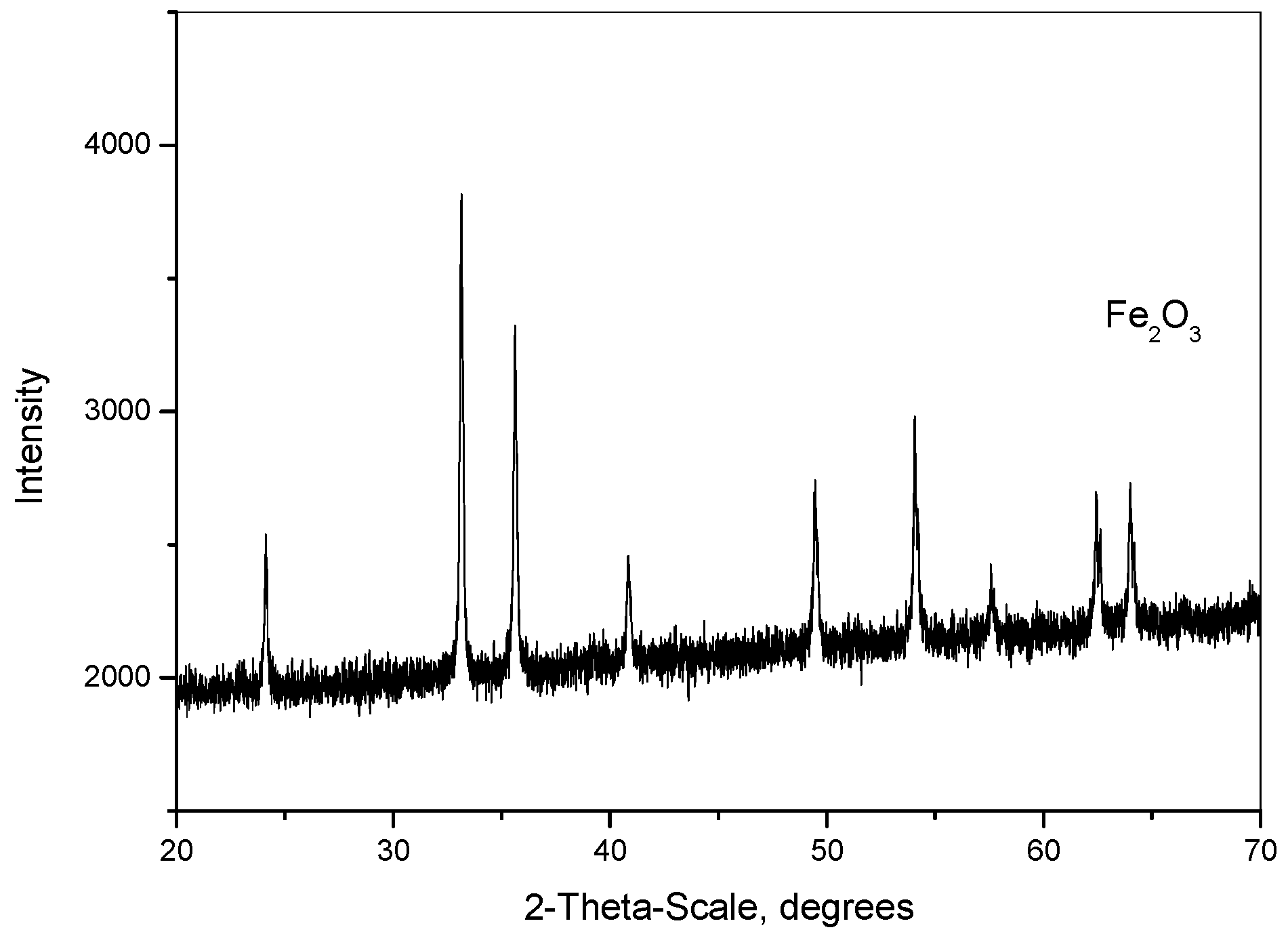
Considering the acidity of the 1 M HCl solution employed in the leaching, it can be said that no precipitates of Fe(III) and Ga(III) can be formed in our experimental conditions. However, Fe(III) and Ga(III) can form hydroxides, and then these hydroxides would be precipitated during the leaching with 0.05 M H2SO4 in EG. In order to check the formation of Fe(III) hydroxides during the leaching, the XRD data of the leaching residues by HCl and H2SO4 solutions are represented in Figure 11 and Figure 12. In both cases, most of the iron existed as Fe2O3 and the existence of Fe(III) hydroxides was difficult to detect. Therefore, it can be said that the precipitation of the dissolved Fe(III) and Ga(III) did not occur in our experimental conditions. Although the heat of solution of the oxides cannot explain the selective dissolution of Nd2O3 from the oxide mixtures, the combined effect of acid concentration and reaction temperature, together with the highest polarizability of Nd(III), can explain our results.
Figure 11.
XRD pattern of the residue by leaching with 1.0 M HCl in EG. Operation conditions: pulp density = 50 g/L, T = 25 °C, time = 120 min, stirring speed = 200 rpm.
Figure 12.
XRD pattern of the residue by leaching with 0.05 M H2SO4 in EG. Operation conditions: pulp density = 50 g/L, T = 25 °C, time = 60 min, stirring speed = 400 rpm.
4. Conclusions
In this work, the dissolution behavior of the oxide mixtures of Nd2O3, Fe2O3, and Ga2O3 was investigated by employing HCl and H2SO4 solutions containing ethylene glycol. The addition of ethylene glycol depressed the dissolution of Fe2O3 and Ga2O3 from the oxide mixtures, and thus selective dissolution of Nd2O3 was possible. High polarizability of Nd(III) together with the combined effect of reaction conditions, such as acid concentration, reaction time, and temperature, resulted in the selective dissolution of Nd2O3 from the oxide mixtures. The optimum conditions for the selective dissolution of Nd2O3 by either HCl or H2SO4 solution were as follows: (a) 1.0 M HCl in EG, at 25 °C ± 1 °C, pulp density = 50 g/L, 120 min, 200 rpm; and (b) 0.05 M H2SO4 in EG, at 25 °C ± 1 °C, pulp density = 50 g/L, 60 min, 300 rpm. Under these conditions, the dissolution percentage of Fe2O3 and Ga2O3 was less than 1% by HCl solution, whereas only Nd2O3 was dissolved by the H2SO4 system. Since H2SO4 has a lower cost than HCl and is used at low concentrations, the H2SO4/EG process offers better economic value for the rare earth recovery process, specifically that for Nd. In particular, the selective dissolution of Nd2O3 over Fe2O3 and Ga2O3 by H2SO4 in EG led to a solution containing Nd(III) having high purity, which can be easily recovered from the solution. Further studies are needed on the application of these results to the treatment of red mud and end-of-life NdFeB magnets.
Author Contributions
Methodology and editing, M.S.L.; data support, Y.H.K.; writing-original draft preparation, T.T.H.N. All authors have read and agreed to the published version of the manuscript.
Funding
This work was supported by National Research Foundation of Korea (2018R1D1A1BO7044951).
Institutional Review Board Statement
Not applicable.
Informed Consent Statement
Not applicable.
Data Availability Statement
Not applicable.
Acknowledgments
We gratefully thank the Gwangju Branch of the Korea Basic Science (KBSI) for ICP data.
Conflicts of Interest
The authors declare no conflict of interest.
References
- Wall, F. Rare Earth Elements. Reference Module in Earth Systems and Environment, 2nd ed.; Elsevier Inc.: Cornwall, UK, 2020. [Google Scholar]
- Massari, S.; Ruberti, M. Rare earth elements as critical raw materials: Focus on international markets and future strategies. Resour. Policy 2012, 38, 36–43. [Google Scholar] [CrossRef]
- Bobba, S.; Carrara, S.; Huisman, J.; Mathieux, F.; Pavel, C. European Commission, Critical Materials for Strategic Technologies and Sectors in the EU—A Foresight Study. 2020. Available online: https://ec.europa.eu/docsroom/documents/42881 (accessed on 3 September 2020).
- Wubbeke, J. Rare earth elements in China: Policies and narratives of reinventing an industry. Resour. Policy 2013, 38, 384–394. [Google Scholar] [CrossRef]
- Binnemans, K.; Jones, P.T.; Blanpain, B.; Van Gerven, T.; Pontikes, Y. Towards zero-waste valorisation of rare-earth-containing industrial process residues: A critical review. Clean. Prod. 2015, 99, 17–38. [Google Scholar] [CrossRef] [Green Version]
- Agrawal, S.; Dhawan, N. Evaluation of red mud as a polymetallic source—A review. Miner. Eng. 2021, 171, 107084. [Google Scholar] [CrossRef]
- Ochsenkühn-Petropulu, M.; Lyberopulu, T.; Ochsenkühn, K.M.; Parissakis, G. Recovery of lanthanides and yttrium from red mud by selective leaching. Anal. Chim. Acta 1996, 319, 249–254. [Google Scholar] [CrossRef]
- Borra, C.R.; Pontikes, Y.; Binnemans, K.; Van Gerven, T. Leaching of rare earths from bauxite residue (red mud). Miner. Eng. 2015, 76, 20–27. [Google Scholar] [CrossRef] [Green Version]
- Borra, C.R.; Mermans, J.; Blanpain, B.; Pontikes, Y.; Binnemans, K.; Van Gerven, T. Selective recovery of rare earths from bauxite residue by combination of sulfation, roasting and leaching. Miner. Eng. 2016, 92, 151–159. [Google Scholar] [CrossRef]
- Borra, C.R.; Blanpain, B.; Pontikes, Y.; Binnemans, K.; Van Gerven, T. Recovery of Rare Earths and Major Metals from Bauxite Residue (Red Mud) by Alkali Roasting, Smelting, and Leaching. J. Sustain. Metall. 2017, 3, 393–404. [Google Scholar]
- Abhilash; Sinha, S.; Sinha, M.K.; Pandey, B.D. Extraction of lanthanum and cerium from Indian red mud. Int. J. Miner. Process. 2014, 127, 70–73. [Google Scholar] [CrossRef]
- Rivera, R.; Ulenaers, B.; Ounoughene, G.; Binnemans, K.; Van Gerven, T. Extraction of rare earths from bauxite residue (red mud) by dry digestion followed by water leaching. Miner. Eng. 2018, 119, 82–92. [Google Scholar] [CrossRef]
- Lu, F.; Xiao, T.; Lin, J.; Li, A.; Long, Q.; Huang, F.; Xiao, L.; Li, X.; Wang, J.; Xiao, Q.; et al. Recovery of gallium from Bayer red mud through acidic-leaching-ion-exchange process under normal atmospheric pressure. Hydrometallurgy 2018, 175, 124–132. [Google Scholar] [CrossRef]
- Zhang, X.; Zhou, K.; Chen, W.; Lei, Q.; Huang, Y.; Peng, C. Recovery of iron and rare earth elements from red mud through an acid leaching-stepwise extraction approach. J. Cent. South Univ. 2019, 26, 458–466. [Google Scholar] [CrossRef]
- Yang, Y.; Walton, A.; Sheridan, R.; Güth, K.; Gauß, R.; Gutfleisch, O.; Buchert, M.; Steenari, B.M.; Van Gerven, T.; Jones, P.T.; et al. REE Recovery from End-of-Life NdFeB Permanent Magnet Scrap: A Critical Review. J. Sustain. Metall. 2017, 3, 122–149. [Google Scholar] [CrossRef]
- Vander Hoogerstraete, T.; Blanpain, B.; Van Gerven, T.; Binnemans, K. From NdFeB magnets towards the rare-earth oxides: A recycling process consuming only oxalic acid. RSC. Adv. 2014, 4, 64099–64111. [Google Scholar] [CrossRef] [Green Version]
- Yoon, H.S.; Kim, C.J.; Chung, K.; Jeon, S.; Park, I.; Yoo, K.; Jha, M.K. The Effect of Grinding and Roasting Conditions on the Selective Leaching of Nd and Dy from NdFeB Magnet Scraps. Metals 2015, 5, 1306–1314. [Google Scholar] [CrossRef]
- Orefice, M.; Binnemans, K.; Vander Hoogerstraete, T. Metal coordination in the high-temperature leaching of roasted NdFeB magnets with the ionic liquid betainium bis(trifluoromethylsulfonyl)imide. RSC. Adv. 2018, 8, 9299–9310. [Google Scholar] [CrossRef] [PubMed] [Green Version]
- Jiang, Y.; Deng, Y.; Xin, W.; Guo, C. Oxidative Roasting–Selective Pressure Leaching Process for Rare Earth Recovery from NdFeB Magnet Scrap. Trans. Indian Inst. Met. 2020, 73, 703–711. [Google Scholar] [CrossRef]
- Eunyoung, K.; Osseo-Asare, K. Aqueous stability of thorium and rare earth metals in monazite hydrometallurgy: Eh–pH diagrams for the systems Th–, Ce–, La–, Nd– (PO4)–(SO4)–H2O at 25 °C. Hydrometallurgy 2012, 113–114, 67–68. [Google Scholar]
- Yonghwa, C.; Chi-Woo, L. Electrochemistry of Gallium. J. Electrochem. Sci. Technol. 2013, 4, 1–18. [Google Scholar]
- Archambo, M.; Kawatra, S.K. Red mud: Fundamentals and new avenues for utilization. Miner. Process. Extr. Metall. 2020, 42, 427–450. [Google Scholar] [CrossRef]
- Binnemans, K.; Jones, P.T. Solvometallurgy: An Emerging Branch of Extractive Metallurgy. J. Sustain. Metall. 2017, 3, 570–600. [Google Scholar] [CrossRef] [Green Version]
- Rinkenbach, W.H. The Properties of Glycol Dinitrate. Ind. Eng. Chem. 1926, 18, 1195–1197. [Google Scholar] [CrossRef]
- David, R.L. Handbook of Chemistry and Physics, 88th ed.; Taylor & Francis Inc.: Oxfordshire, UK, 2007. [Google Scholar]
- Shannon, R.D.; Fischer, R.X. Empirical electronic polarizabilities of ions for the prediction and interpretation of refractive indices: Oxides and oxysalts. Am. Miner. 2016, 101, 2288–2300. [Google Scholar] [CrossRef]
- Li, Z.; Li, X.; Raiguel, S.; Binnemans, K. Separation of transition metals from rare earths by non-aqueous solvent extraction from ethylene glycol solutions using Aliquat 336. Sep. Purif. Technol. 2018, 201, 318–326. [Google Scholar] [CrossRef]
- Zahn, M.; Ohki, Y.; Fenneman, D.B.; Gripshover, R.J.; Gehman, V.H. Dielectric properties of water and water/ethylene glycol mixtures for use in pulsed power system design. Proc. IEEE 1986, 74, 1182–1221. [Google Scholar] [CrossRef]
- Shannon, R.D. Dielectric polarizabilities of ions in oxides and fluorides. Int. J. Appl. Phys. 1993, 73, 348–366. [Google Scholar] [CrossRef]
- Gharabaghi, M.; Irannajad, M.; Azadmehr, A.R. Leaching kinetics of nickel extraction from hazardous waste by sulphuric acid and optimization dissolution conditions. Chem. Eng. Res. Des. 2013, 91, 325–331. [Google Scholar] [CrossRef]
- Kocan, F.; Hicsonmez, U. Leaching kinetics of celestite in nitric acid solutions. Int. J. Miner. Metall. Mater. 2019, 26, 11–20. [Google Scholar] [CrossRef]
- James, G. Lange’s Handbook of Chemistry, 16th ed.; McGraw-Hill Education: New York, NY, USA, 2005; pp. 1357–1362. [Google Scholar]
- Johnson, R.H.; Everett, L.S.; David, C.S. Rare earth elements in hydrothermal systems: Estimates of standard partial molal thermodynamic properties of aqueous complexes of the rare earth elements at high pressures and temperatures. Geochim. Cosmochim. Acta 1995, 59, 4329–4350. [Google Scholar]
- Robert, M.S. Critical Stability Constants; Kluwer Academic Publishers Group: New York, NY, USA, 1995; Volume 4, pp. 104–112. [Google Scholar]
- Mihaylov, I.; Distin, P.A. Solvent Extraction of Gallium With D2EHPA From Acidic Sulphate Solutions—Equilibria and Complexation. Can. Metall. Q. 1993, 32, 21–30. [Google Scholar] [CrossRef]
Publisher’s Note: MDPI stays neutral with regard to jurisdictional claims in published maps and institutional affiliations. |
© 2022 by the authors. Licensee MDPI, Basel, Switzerland. This article is an open access article distributed under the terms and conditions of the Creative Commons Attribution (CC BY) license (https://creativecommons.org/licenses/by/4.0/).