Adaptability of Yuanjiang River Valley Danaus genutia to Different Host Plants in Yunan

1
Key Laboratory of Breeding and Utilization of Resource Insects of National Forestry and Grassland Administration, Institute of Highland Forest Science, Chinese Academy of Forestry, Kunming 650224, China
2
Yunnan Key Laboratory of Breeding and Utilization of Resource Insects, Kunming 650224, China
3
Graduate School, Nanjing Forestry University, Nanjing 210037, China
*
Authors to whom correspondence should be addressed.
Insects 2025, 16(4), 368; https://doi.org/10.3390/insects16040368
Submission received: 3 February 2025
/
Revised: 25 March 2025
/
Accepted: 27 March 2025
/
Published: 1 April 2025
(This article belongs to the Collection Butterfly Diversity and Conservation)
Simple Summary
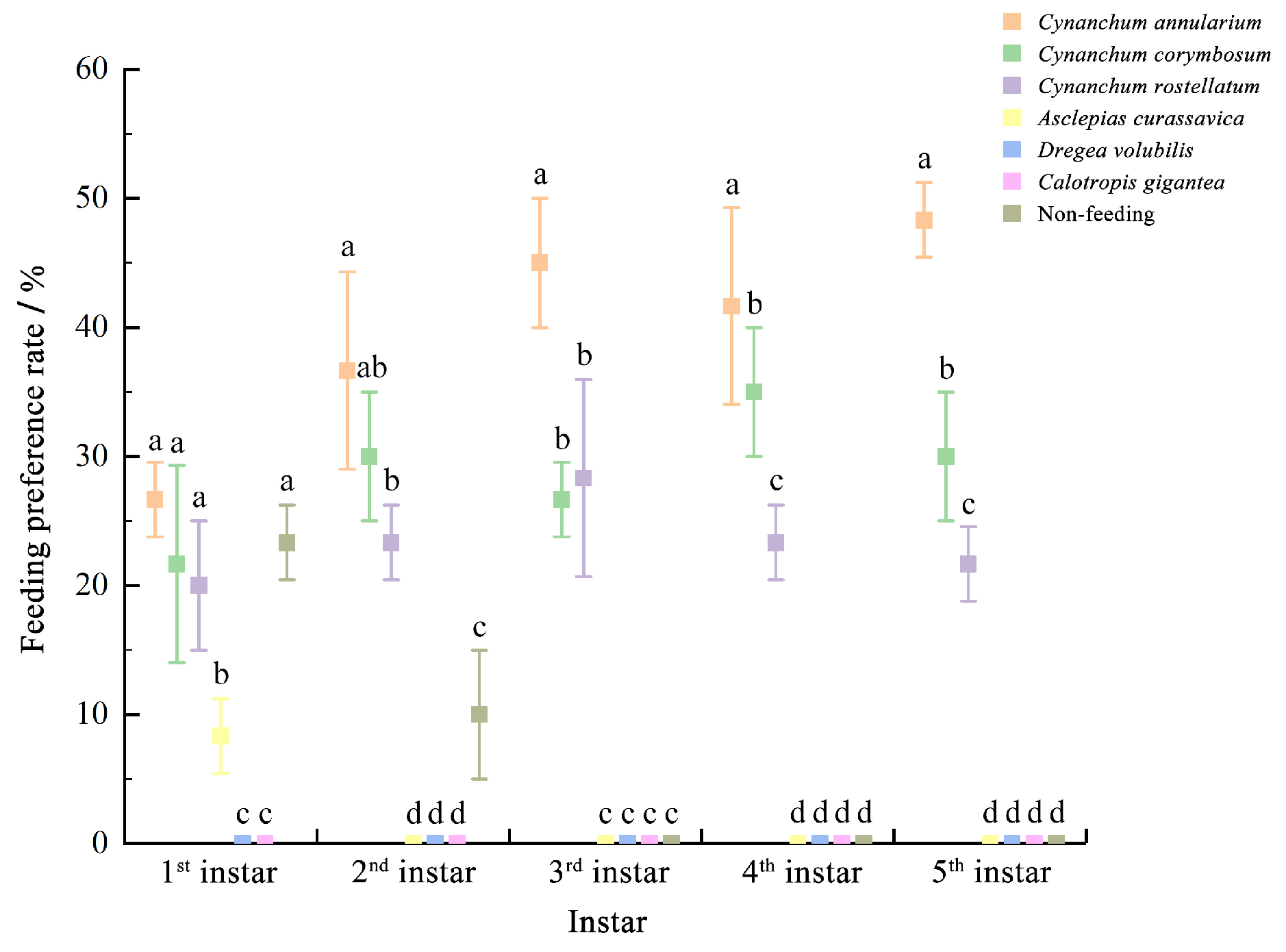
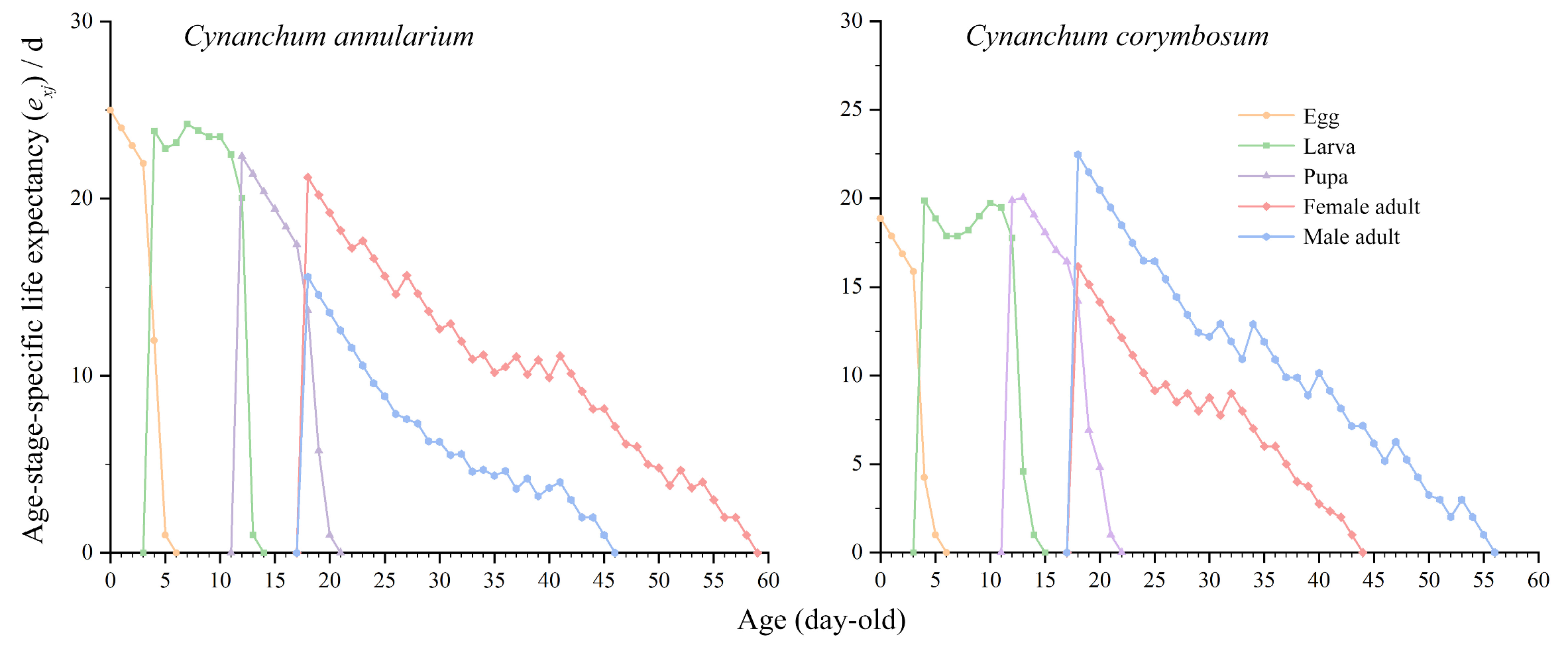
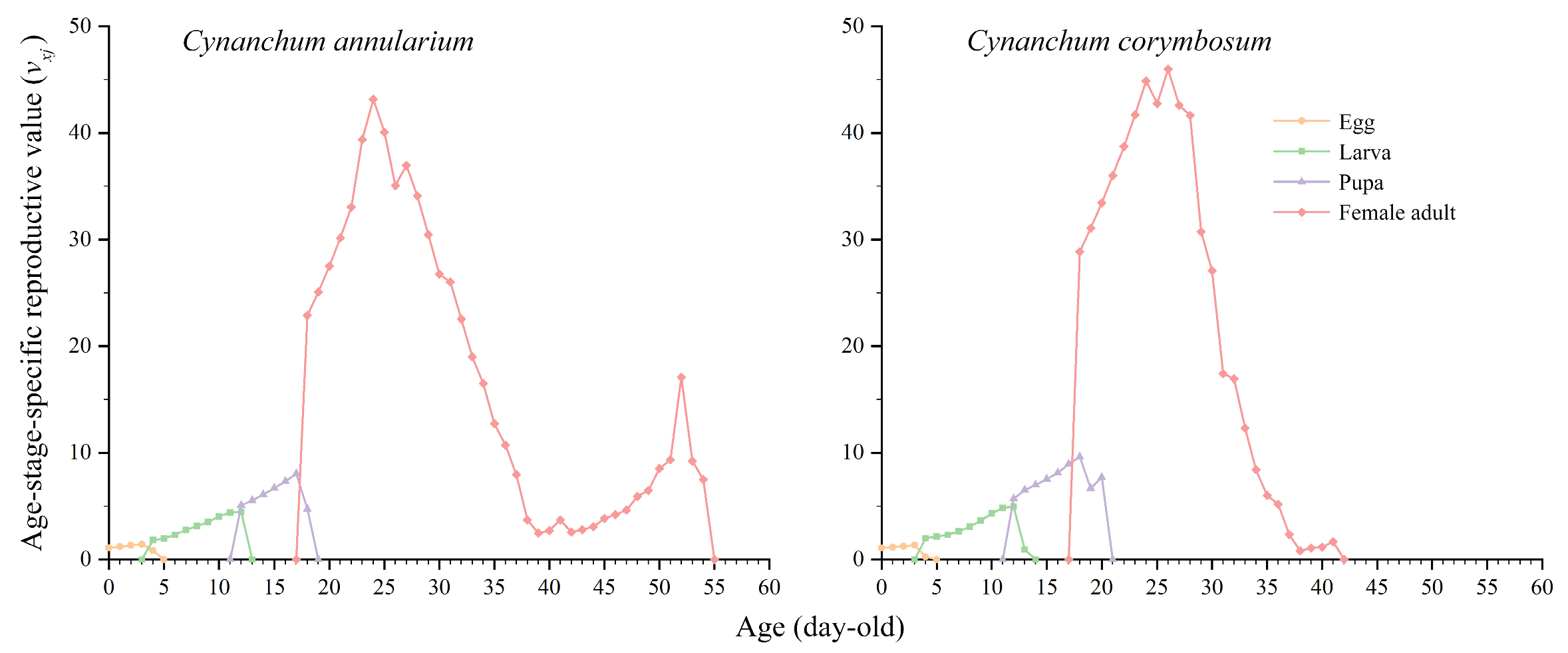
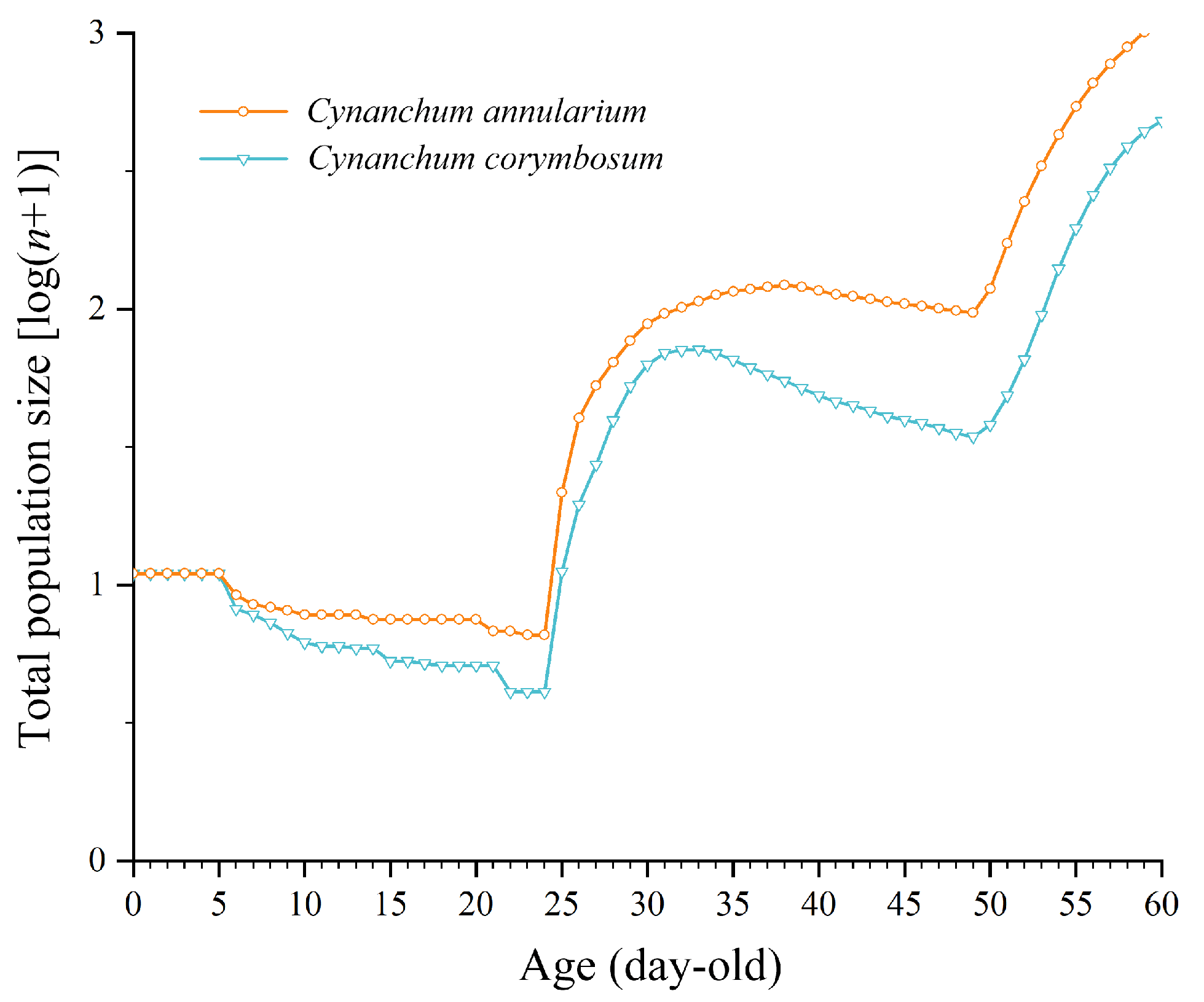
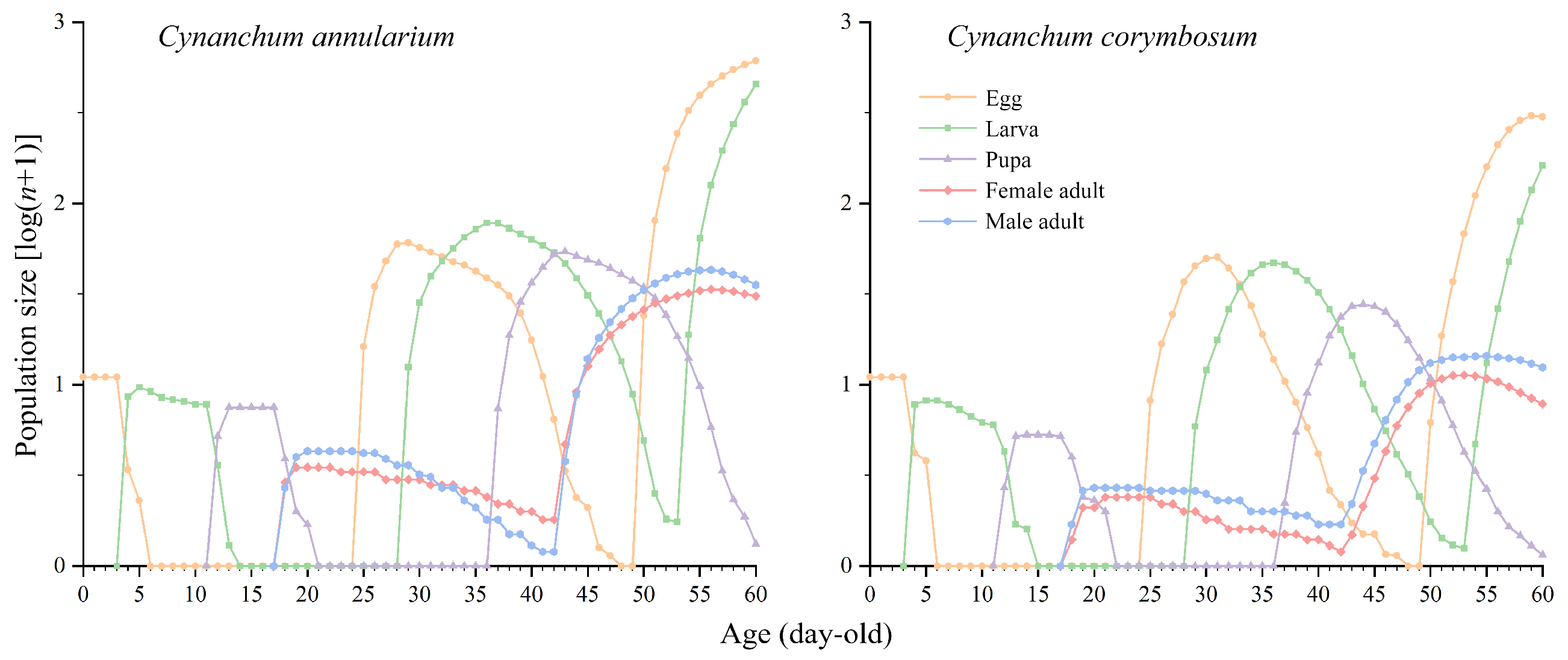
This research seeks to identify the local host plants of Yuanjiang River Valley Danaus genutia and assess the suitability of various host plants for the butterfly, thereby offering a scientific basis for the conservation of its population in the region. Two documented host plants, two plants with observed larval feeding, and two additional host plants recorded for other butterfly species were selected. Based on tests of adult oviposition and larval feeding preferences, Cynanchum annularium and Cynanchum corymbosum were found to be the most appropriate host plants. These species are also found locally in Yuanjiang. An age-stage, two-sex life table was created to examine physiological indicators after the butterfly uses these host plants, and population dynamics were simulated for the next 60 days. The results confirmed that C. annularium and C. corymbosum are local host plants for D. genutia, with C. annularium being the more suitable of the two.
Abstract
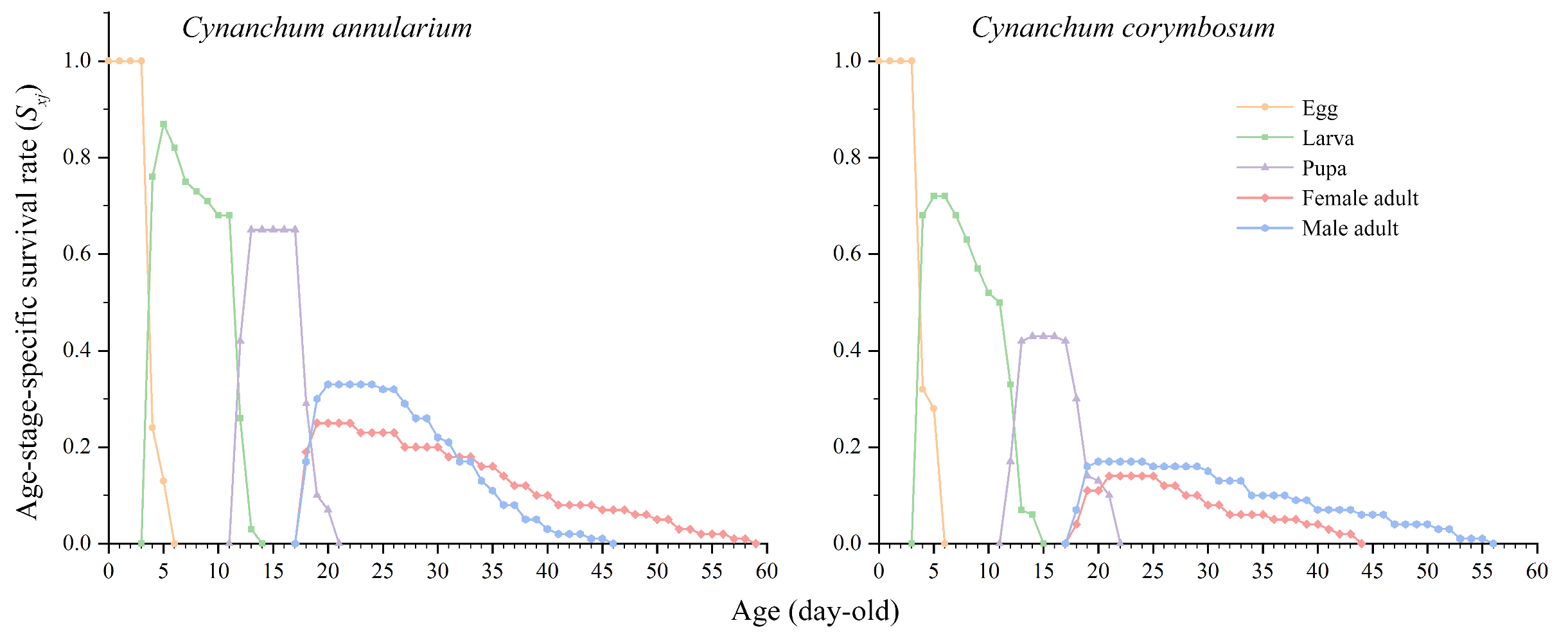
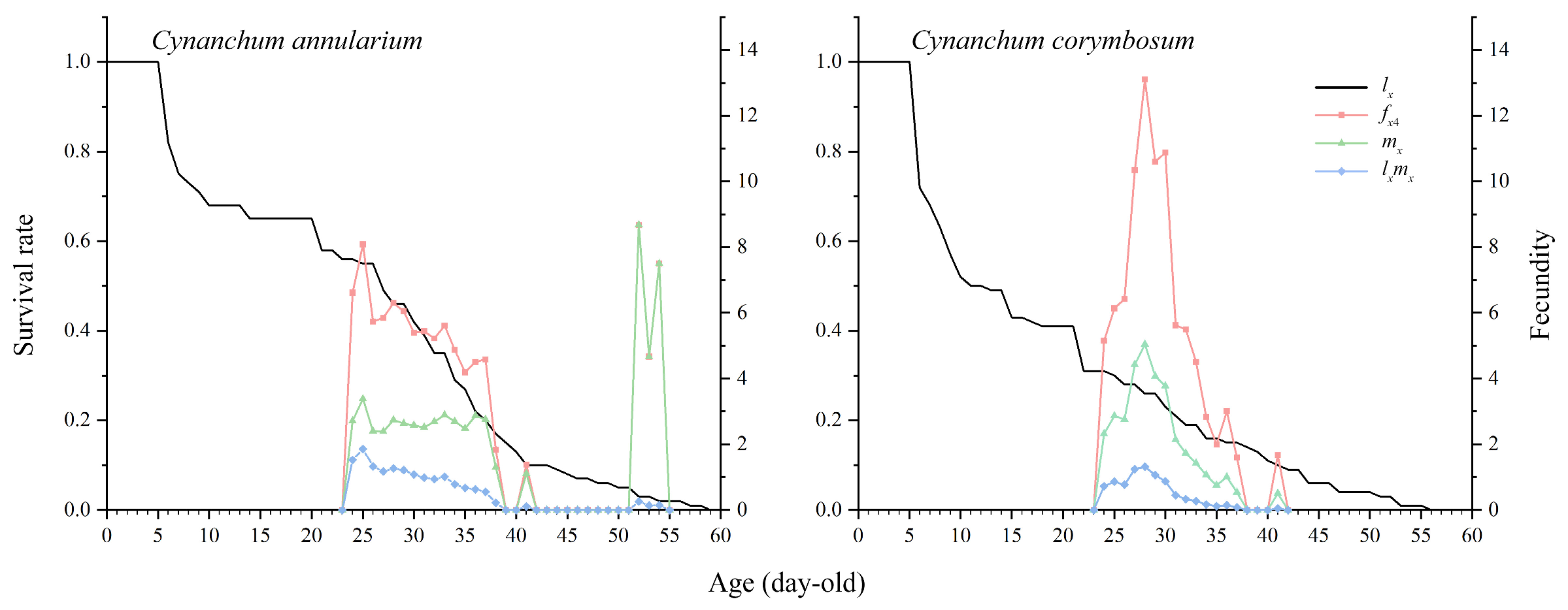
This study aims to determine the local host plant range for Yuanjiang River Valley Danaus genutia (Cramer, 1779) and evaluate the effects of different host plants on its growth, development, and reproductive success. This research assesses adult oviposition preferences and larval feeding tendencies on various host plants. An age-stage, two-sex life table was constructed to analyze the butterfly’s growth, development, reproductive success, survival rates, and other physiological aspects on different host plants. Population dynamics over the next 60 days were simulated to offer a comprehensive evaluation of the host plant suitability for D. genutia. The results indicated that D. genutia adults preferred laying eggs on Cynanchum corymbosum, followed by C. annularium, C. rostellatum, and Asclepias curassavica, with very few eggs laid on Calotropis gigantea and Dregea volubilis. Larval feeding preferences were observed in the order of C. annularium > C. corymbosum > C. rostellatum, with A. curassavica consumed only by first-instar larvae, while C. gigantea and D. volubilis were avoided. Under identical room temperature conditions, larvae feeding on C. annularium and C. corymbosum completed a full generation. Larvae feeding on C. annularium exhibited shorter developmental periods and higher early survival rates compared to those feeding on C. corymbosum, with no significant differences in adult longevity, sex ratio, or number of eggs per female. Female adults did not die immediately after laying eggs. No significant differences in the intrinsic rate of increase (r), finite rate of increase (λ), net reproduction rate (R0), or doubling time (Td) were found between populations feeding on the two host plants. However, the gross reproductive rate (GRR) and mean generation time (T) were significantly lower in the population feeding on C. corymbosum. These results confirm C. annularium and C. corymbosum as host plants for D. genutia larvae and provide a theoretical and scientific basis for the conservation of the Yuanjiang River Valley D. genutia population.