Efficacy of Hermetic Bags in Preserving Canary Beans and Purple Maize Quality in Arequipa, Peru

 , , and
Simple Summary
Abstract
1. Introduction
2. Materials and Methods
2.1. Pest Identification in Field Samples
2.2. Storage Experimental Setup
2.3. Data Collection
2.3.1. Pest Identification in Field Samples
2.3.2. Storage Experiment
- (i)
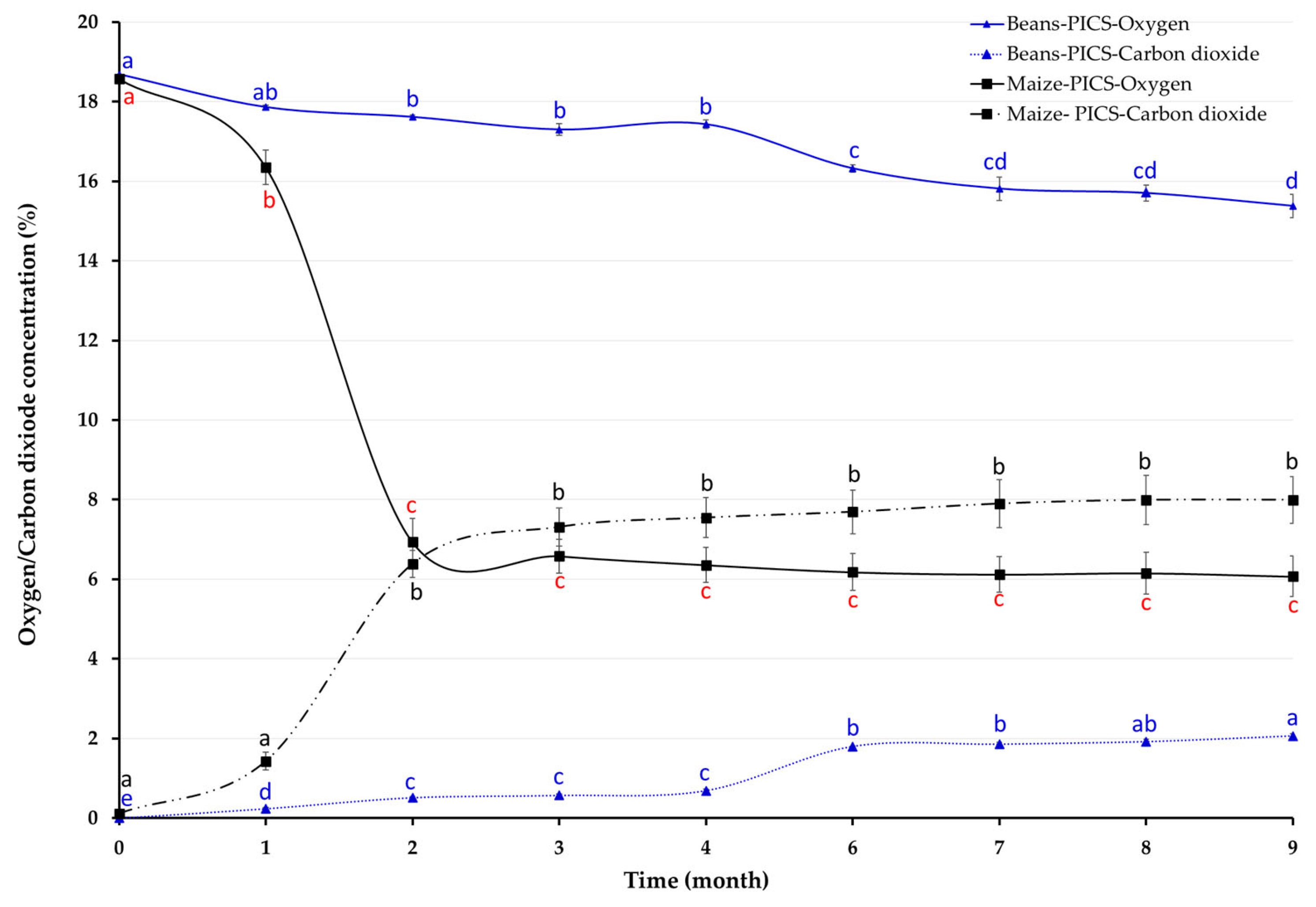
- Oxygen (O2) and carbon dioxide (CO2): The Mocon Pac Check® 325 device (Mocon, Minneapolis, MN, USA) was used to measure the O2 and CO2 levels in each replicate of the PICS and PP bags every month. This device measures the O2 and CO2 composition of a closed bag by extracting a small sample of air from the inside environment. The Mocon device uses a 20-gauge hypodermic needle to sample the gas inside the bag. For the PICS bag measurement, the outer bag was opened, and the inner liners were pierced near the top with the analyzer needle. The punctures were sealed with 10 mm adhesive pads and reinforced with packing tape after each reading. For subsequent measurements, the same site was accessed by briefly unsealing and then resealing the adhesive tape. PP bag measurements were taken at the same spots without sealing, as they are not airtight.
- (ii)
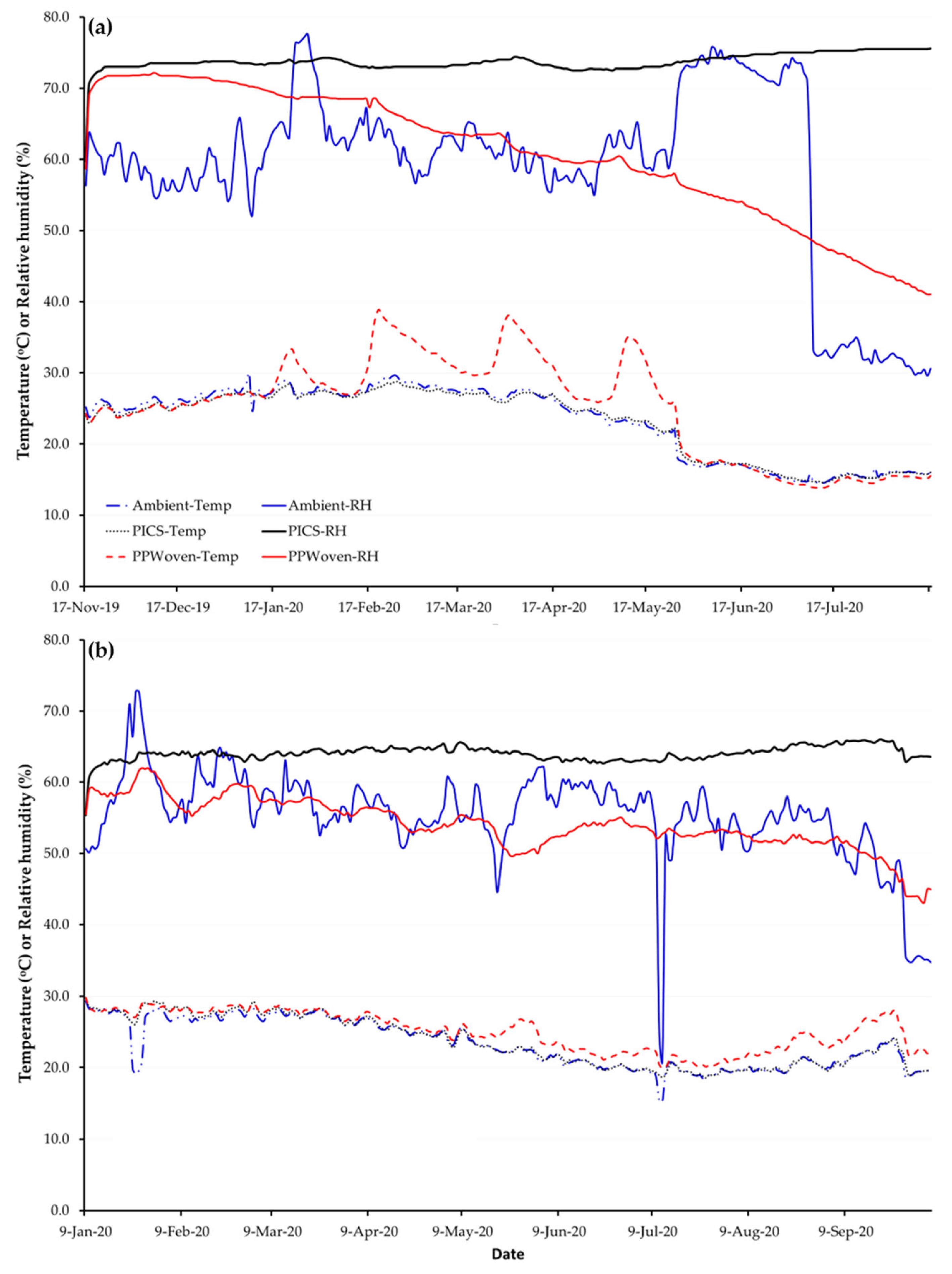
- Relative Humidity and Temperature: Relative humidity and temperature were recorded using EasyLog EL-USB-2 USB data loggers (Lascar, Erie, PA, USA). Data were recorded every 6 h throughout the storage period. Due to the limited number of data loggers, one was placed in a single replicate of each treatment and in the room where the experiments were conducted (ambient) to monitor environmental conditions inside and outside of the bags during the experiment.
- (iii)
- Live and dead insects: We followed [25] to assess the total count. We counted live and dead insects in three 200 g sub-samples per replicate (12 sub-samples per treatment).
- (iv)
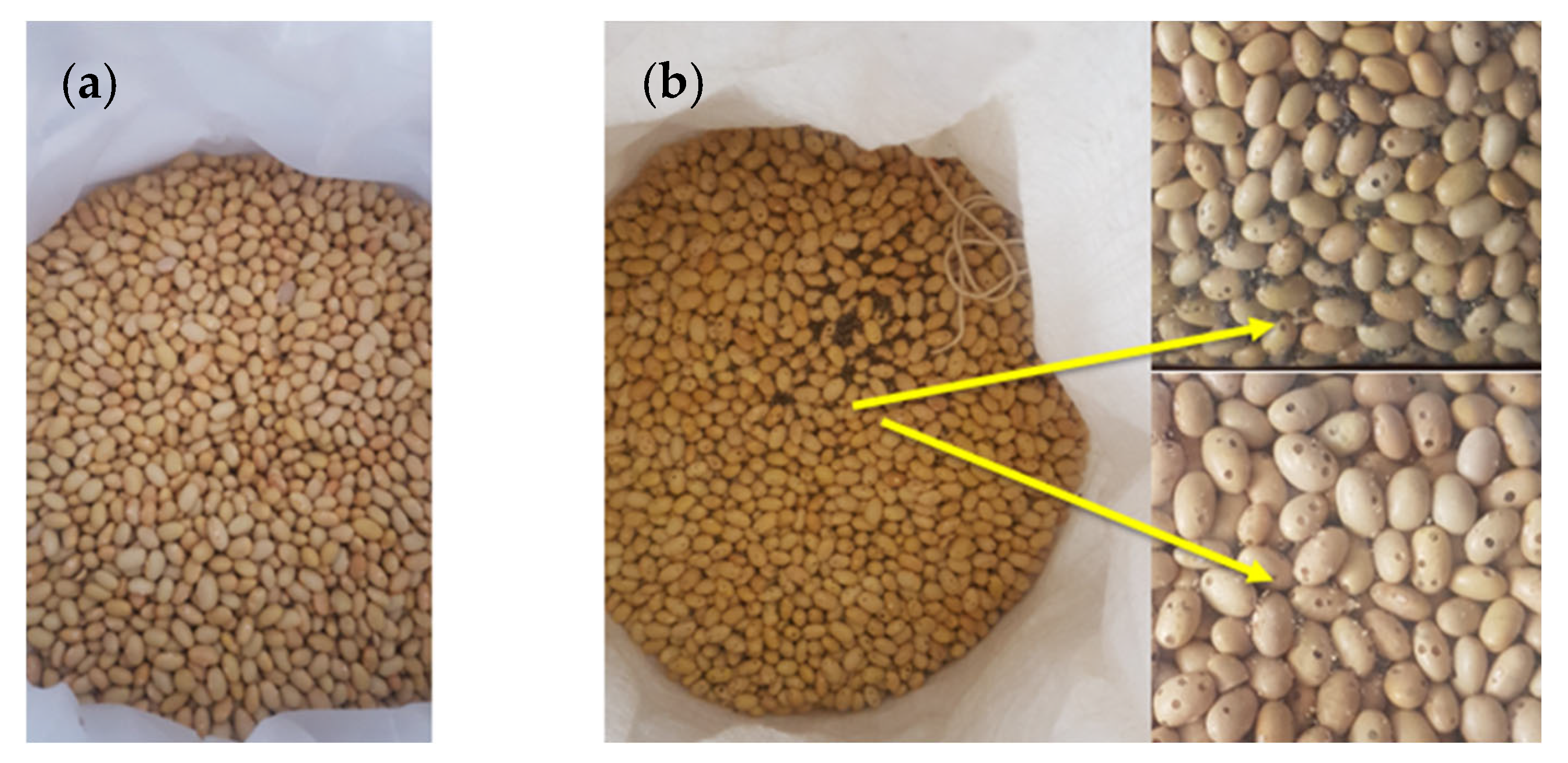
- Damaged and undamaged grains: Three 200 g sub-samples per replicate (12 per treatment) were used to measure the weight of undamaged (Wu) and damaged (Wd) grains by insects and the number of undamaged (Nu) and damaged (Nd) grains by insects. The percentage of damage was calculated according to [26]:
- (v)
- Weight loss (%): It was calculated using the count and weight method [27]:
- (vi)
- Seed germination: One hundred seeds in good phytosanitary condition were selected from each replicate and divided into four sub-samples of 25 seeds. Each sub-sample was placed in a Petri dish lined with filter paper moistened with sterile water; moisture was maintained throughout the test. Seeds were examined daily. A seed was considered germinated when the radicle reached 1–2 cm in length. The test concluded after five days, at which point germinated and non-germinated seeds were counted. To determine the germination percentage (GP), we used the following formula:
- (vii)
- Moisture content: Moisture content of the grains was determined according to the NTP 205.002 1979—Rev. 2016 [28] using the oven-drying method. The procedure involved grinding the grain so that 99% of particles passed through a 0.841 mm sieve. A 5 g sample was collected from each of the 200 g sub-samples, weighed, and dried in a forced-air oven at 130 °C for 60 min, cooled in a desiccator, and reweighed. The moisture content was then calculated as the percentage of weight loss relative to the initial sample mass.
- (viii)
- Sugar content and peroxide index: Sugar content was determined following the method described by [29]. Grain samples (200 g) were hydrolyzed, and sugar content was quantified using Fehling’s solution titration. During the procedure, a prepared sample solution was titrated against a mixed Fehling solution under heat, with methylene blue as the indicator. The appearance of a bright red copper oxide precipitate identified the endpoint. The peroxide index was determined according to NTP 209.006 [30], which measures lipid oxidation. Ground grain samples were dissolved in acetic acid and chloroform, then treated with potassium iodide solution. The released iodine was titrated with standardized sodium thiosulfate using starch as an indicator.
- (ix)
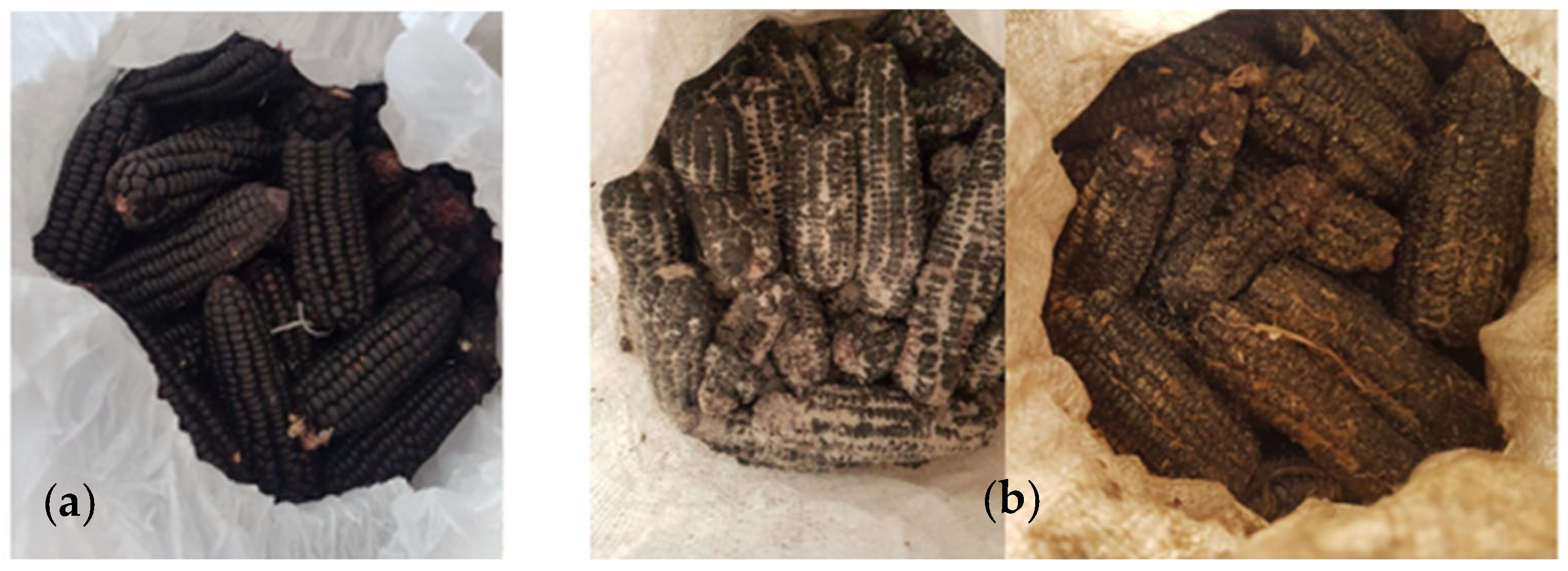
- Mold Colony-Forming Units: Fungal incidence was assessed only in purple maize due to its high susceptibility to mold under elevated moisture. Total mold counts were performed following the ICMSF serial dilution protocol (2000) at BHIOS Laboratories (https://bhioslabs.com/). A serial dilution of 10 g of grains collected from each replicate was performed on peptone water and plated in duplicates on Oxytetracycline–Glucose Yeast Extract Agar (OGYE) culture medium. The samples were incubated at 25 °C for 5 days in the dark. Mold and yeast colonies on each plate were observed, differentiated, and identified following the laboratory’s quality control protocols. The results were expressed in colony-forming units (CFU)/g. We made observations of colonies to determine the genus to which the mold belongs, following descriptive illustrations from [31]. These observations were made using an optical microscope, Primostar (Zeiss, Oberkochen, Germany).
2.4. Statistical Analysis
3. Results
3.1. Insect Identification
3.2. Oxygen and Carbon Dioxide
3.3. Relative Humidity and Temperature
3.4. Grain Infestation and Quality
3.5. Germination
3.6. Physicochemical Assessment
3.7. Incidence of Postharvest Pathogens
4. Discussion
5. Conclusions
Author Contributions
Funding
Data Availability Statement
Conflicts of Interest
References
- Wainaina, I.; Wafula, E.; Kyomugasho, C.; Sila, D.; Hendrickx, M. Application of State Diagrams to Understand the Nature and Kinetics of (Bio) Chemical Reactions in Dry Common Bean Seeds: A Scientific Guide to Establish Suitable Postharvest Storage Conditions. Food Res. Int. 2023, 173, 113418. [Google Scholar] [CrossRef] [PubMed]
- Nath, B.; Chen, G.; O’Sullivan, C.M.; Zare, D. Research and Technologies to Reduce Grain Postharvest Losses: A Review. Foods 2024, 13, 1875. [Google Scholar] [CrossRef] [PubMed]
- Kumar, D.; Kalita, P. Reducing Postharvest Losses during Storage of Grain Crops to Strengthen Food Security in Developing Countries. Foods 2017, 6, 8. [Google Scholar] [CrossRef] [PubMed]
- García-Lara, S.; Bergvinson, D.J. Programa Integral Para Reducir Pérdidas Poscosecha En Maíz. Agric. Técnica México 2007, 33, 181–189. [Google Scholar]
- Langyintuo, A.S.S.; Lowenberg-DeBoer, J.; Faye, M.; Lambert, D.; Ibro, G.; Moussa, B.; Kergna, A.; Kushwaha, S.; Musa, S.; Ntoukam, G. Cowpea Supply and Demand in West and Central Africa. Field Crops Res. 2003, 82, 215–231. [Google Scholar] [CrossRef]
- Stathers, T.E.; Arnold, S.E.J.; Rumney, C.J.; Hopson, C. Measuring the Nutritional Cost of Insect Infestation of Stored Maize and Cowpea. Food Secur. 2020, 12, 285–308. [Google Scholar] [CrossRef]
- Salvador-Reyes, R.; Clerici, M.T.P.S. Peruvian Andean Maize: General Characteristics, Nutritional Properties, Bioactive Compounds, and Culinary Uses. Food Res. Int. 2020, 130, 108934. [Google Scholar] [CrossRef]
- Vargas-Yana, D.; Aguilar-Morón, B.; Pezo-Torres, N.; Shetty, K.; Ranilla, L.G. Ancestral Peruvian Ethnic Fermented Beverage “Chicha” Based on Purple Corn (Zea mays L.): Unraveling the Health-Relevant Functional Benefits. J. Ethn. Foods 2020, 7, 35. [Google Scholar] [CrossRef]
- Ramos Guerrero, F.G.; López Flores, B.C.; Ramos Gorbeña, J.C.; Silva Jaimes, M.I. Factors That Affect the Microbiological Stability of Chicha Morada during Its Production on an Industrial Scale: A Review. J. Food Prot. 2021, 84, 2151–2158. [Google Scholar] [CrossRef]
- Tepixtle-Colohua, V.V.; Reyes-Trejo, B.; Saucedo, A.L. El Compuestos Químicos Funcionales En El Maíz Morado (Zea mays): Una Revisión Bibliográfica. Acta Botánica Mex. 2025, 132, e2439. [Google Scholar] [CrossRef]
- Díaz-Valderrama, J.R.; Njoroge, A.W.; Macedo-Valdivia, D.; Orihuela-Ordóñez, N.; Smith, B.W.; Casa-Coila, V.; Ramírez-Calderón, N.; Zanabria-Gálvez, J.; Woloshuk, C.; Baributsa, D. Postharvest Practices, Challenges and Opportunities for Grain Producers in Arequipa, Peru. PLoS ONE 2020, 15, e.0240857. [Google Scholar] [CrossRef]
- Mbofung, G.C.Y.Y.; Goggi, A.S.; Leandro, L.F.S.S.; Mullen, R.E. Effects of Storage Temperature and Relative Humidity on Viability and Vigor of Treated Soybean Seeds. Crop Sci. 2013, 53, 1086–1095. [Google Scholar] [CrossRef]
- Ali, M.; Rahman, M.; Ahammad, K. Effect of Relative Humidity, Initial Seed Moisture Content and Storage Container on Soybean (Glycine max L. Meril.) Seed Quality. Bangladesh J. Agric. Res. 2015, 39, 461–469. [Google Scholar] [CrossRef]
- Martinez, N. Evaluación Del Empleo de Vasijas de Arcilla Con La Aplicación de “Nanocompueto Homa” Respecto Al Envase Convencional Para El Almacenamiento de Granos de Quinua (Chenopodium quinoa Willd); Universidad Nacional del Altiplano: Puno, Peru, 2015. [Google Scholar]
- Mena Munguía, S.; Ceballos Cárdenas, F.; Ramírez Martínez, M. Almacenamiento y Conservación de Granos; Universidad de Guadalajara: Guadalajara, Mexico, 2013; ISBN 9786074507430. [Google Scholar]
- Lane, B.; Sharma, S.; Niu, C.; Maina, A.W.; Wagacha, J.M.; Bluhm, B.H.; Woloshuk, C.P. Changes in the Fungal Microbiome of Maize During Hermetic Storage in the United States and Kenya. Front. Microbiol. 2018, 9, 2336. [Google Scholar] [CrossRef] [PubMed]
- Higuchi, A.; Maehara, R.; Merino, R.; Ibáñez, F.; Schwalb, M.M. Presence of internationally banned pesticides in domestic peruvian quinoa during COVID-19 pandemic. Agrociencia 2023, 57, 564–588. [Google Scholar] [CrossRef]
- Mujica, N.; Kroschel, J. Ecological, Economic, and Environmental Assessments of Integrated Pest Management in Potato: A Case Study from the Cañete Valley, Peru. Food Energy Secur. 2019, 8, e00153. [Google Scholar] [CrossRef]
- Yucra, S.; Steenland, K.; Chung, A.; Choque, F.; Gonzales, G.F. Dialkyl Phosphate Metabolites of Organophosphorus in Applicators of Agricultural Pesticides in Majes-Arequipa (Peru). J. Occup. Med. Toxicol. 2006, 1, 27. [Google Scholar] [CrossRef]
- Williams, S.B.; Murdock, L.L.; Baributsa, D. Sorghum Seed Storage in Purdue Improved Crop Storage (PICS) Bags and Improvised Containers. J. Stored Prod. Res. 2017, 72, 138–142. [Google Scholar] [CrossRef]
- Odjo, S.; Burgueño, J.; Rivers, A.; Verhulst, N. Hermetic Storage Technologies Reduce Maize Pest Damage in Smallholder Farming Systems in Mexico. J. Stored Prod. Res. 2020, 88, 101664. [Google Scholar] [CrossRef]
- Donga, T.K.; Baributsa, D. Effect of Temperature and Insect Infestation Levels on Oxygen Depletion in Hermetic Storage. Insects 2023, 14, 621. [Google Scholar] [CrossRef]
- Coffi, H.; Nyabicha, J.; Ouma, J.O. The Use of Hermetic Bags for on Farm Storage of Grains and Pulses Against Insect Pests. Outlooks Pest Manag. 2016, 27, 231–235. [Google Scholar] [CrossRef]
- MINAGRI. Sistema Integrado de Estadistica Agraria-Calendario de Siembras de Maiz Morado; MINAGRI: Lima, Peru, 2021. [Google Scholar]
- Ng’ang’a, J.; Mutungi, C.; Imathiu, S.M.; Affognon, H. Low Permeability Triple-Layer Plastic Bags Prevent Losses of Maize Caused by Insects in Rural on-Farm Stores. Food Secur. 2016, 8, 621–633. [Google Scholar] [CrossRef]
- Bourne-Murrieta, L.R.; Wong-Corral, F.J.; Borboa-Flores, J.; Cinco-Moroyoqui, F.J. Daños causados por el barrenador mayor de los granos Prostephanus truncatus (Horn) (Coleoptera: Bostrichidae) en maíz y ramas de plantas silvestres. Rev. Chapingo Ser. Ciencias For. Ambient. 2014, 20, 63–75. [Google Scholar] [CrossRef]
- Gwinner, J.; Harnisch, R.; Műck, O. Manual of the Prevention of Post-Harvest Grain Losses. Available online: https://www.cd3wdproject.org/INPHO/VLIBRARY/GTZHTML/X0065E/X0065E00.HTM (accessed on 25 June 2025).
- NTP 205.002 1979; Determinación del Contenido de Humedad. Método Usual. Una Norma Técnica Peruana: Lima, Perú, 2016.
- Lees, R. Análisis de Los Alimentos: Métodos Analíticos y de Control de Calidad, 2nd ed.; Acribia, Ed.; Editorial Acribia: Zaragoza, Spain, 1982; ISBN 9788420004976. [Google Scholar]
- NTP 209.006 1968; Método de Determinación del Índice de Peróxido. Una Norma Técnica Peruana: Lima, Perú, 2011.
- Barnett, L.; Hunter, B.B. Illustrated Genera of Imperfect Fungi, 4th ed.; Macmillan, Publ Co.: New York, NY, USA, 1998. [Google Scholar]
- Coradi, P.C.; Maldaner, V.; Lutz, É.; da Silva Daí, P.V.; Teodoro, P.E. Influences of Drying Temperature and Storage Conditions for Preserving the Quality of Maize Postharvest on Laboratory and Field Scales. Sci. Rep. 2020, 10, 22006. [Google Scholar] [CrossRef]
- Meeme, H.; Nakimbugwe, D.; Baributsa, D. Effective Hermetic Storage Technology for Preserving Common Dry Beans. Int. J. Postharvest Technol. Innov. 2024, 9, 291–304. [Google Scholar] [CrossRef]
- Mutungi, C.; Chamwilambo, M.; Masanja, S.; Massam, C.; Wayda, P.; Tungu, J.; Gaspar, A.; Bekunda, M.; Abass, A. Quality and Storability of Common Beans in Small-Holders Farm Stores in Northern Tanzania: A Multivariate Analysis of Agro-Location, Variety, and Storage Method Effects. J. Stored Prod. Res. 2020, 89, 101723. [Google Scholar] [CrossRef]
- Okori, F.; Cherotich, S.; Baidhe, E.; Komakech, A.J.; Banadda, N. Grain Hermetic Storage and Post-Harvest Loss Reduction in Sub-Saharan Africa: Effects on Grain Damage, Weight Loss, Germination, Insect Infestation, and Mold and Mycotoxin Contamination. J. Biosyst. Eng. 2022, 47, 48–68. [Google Scholar] [CrossRef]
- Njoroge, A.W.; Affognon, H.D.; Mutungi, C.M.; Manono, J.; Lamuka, P.O.; Murdock, L.L. Triple Bag Hermetic Storage Delivers a Lethal Punch to Prostephanus truncatus (Horn) (Coleoptera: Bostrichidae) in Stored Maize. J. Stored Prod. Res. 2014, 58, 12–19. [Google Scholar] [CrossRef]
- Murdock, L.L.; Margam, V.; Baoua, I.; Balfe, S.; Shade, R.E. Death by Desiccation: Effects of Hermetic Storage on Cowpea Bruchids. J. Stored Prod. Res. 2012, 49, 166–170. [Google Scholar] [CrossRef]
- Li, W.; Yaninek, J.S.; Baributsa, D. Hand Warmer-Induced Hypoxia Accelerates Pest Control in Hermetic Storage. Insects 2024, 15, 821. [Google Scholar] [CrossRef]
- Yewle, N.R.; Gupta, S.V.; Patil, B.N.; Mann, S.; Kandasamy, P. Hermetic SuperGrain Bags for Controlling Storage Losses Caused by Callosobruchus maculatus Fabricius (Coleoptera: Bruchinae) in Stored Mung Bean (Vigna radiata). Bull. Entomol. Res. 2023, 113, 98–106. [Google Scholar] [CrossRef] [PubMed]
- Kharel, K.; Mason, L.J.; Murdock, L.L.; Baributsa, D. Efficacy of Hypoxia against Tribolium castaneum (Coleoptera: Tenebrionidae) throughout Ontogeny. J. Econ. Entomol. 2019, 112, 1463–1468. [Google Scholar] [CrossRef] [PubMed]
- Carvalho, M.O.; Fradinho, P.; Martins, M.J.; Magro, A.; Raymundo, A.; de Sousa, I. Paddy Rice Stored under Hermetic Conditions: The Effect of Relative Humidity, Temperature and Storage Time in Suppressing Sitophilus zeamais and Impact on Rice Quality. J. Stored Prod. Res. 2019, 80, 21–27. [Google Scholar] [CrossRef]
- Fischler, M.; Berlin, R.; Bokusheva, R.; Finger, R.; Martin, Y.; Pais, F.; Pavon, K.; Perez, F. 5 Year Ex-Post Impact Study: POSTCOSECHA Programme Central America; Final Report; Swiss Agency for Development and Cooperation (SDC): Bern, Switzerland, 2011. [Google Scholar]
- Mutungi, C.; Affognon, H.D.; Njoroge, A.W.; Manono, J.; Baributsa, D.; Murdock, L.L. Triple-Layer Plastic Bags Protect Dry Common Beans (Phaseolus vulgaris) Against Damage by Acanthoscelides obtectus (Coleoptera: Chrysomelidae) During Storage. J. Econ. Entomol. 2015, 108, 2479–2488. [Google Scholar] [CrossRef]
- Hagstrum, D.W.; Klejdysz, T.; Subramanyam, B.; Nawrot, J. Stored-Product Insects. In Atlas of Stored-Product Insects and Mites; Elsevier: Amsterdam, The Netherlands, 2013; pp. 3–198. [Google Scholar]
- Yust, H.R. Biology and Habits of Pagiocerus fiorii in Ecuador1. J. Econ. Entomol. 1957, 50, 92–96. [Google Scholar] [CrossRef]
- Bonjour, E.L. Stored Grain Insect Pests That Feed inside Kernels and Seeds; Oklahoma State University: Stillwater, OK, USA, 2019; pp. 3–6. [Google Scholar]
- Singh, B.K.P. Study on the Life Cycle of Sitophilus oryzae on Rice Cultivar Pusa 2-21 in Laboratory Condition. Int. J. Educ. Appl. Sci. Res. 2017, 4, 37–42. [Google Scholar]
- Susana Ramírez, M.S. Ciclo de Vida de Acanthoscelides obtectus (Say.) Sobre Frijol Negro (Phaseolus vulgaris L.) En Condiciones de Laboratorio. Rev. Protección Veg. 2015, 30, 158–160. [Google Scholar]
- Tefera, T.; Kanampiu, F.; De Groote, H.; Hellin, J.; Mugo, S.; Kimenju, S.; Beyene, Y.; Boddupalli, P.M.; Shiferaw, B.; Banziger, M. The Metal Silo: An Effective Grain Storage Technology for Reducing Post-Harvest Insect and Pathogen Losses in Maize While Improving Smallholder Farmers’ Food Security in Developing Countries. Crop Prot. 2011, 30, 240–245. [Google Scholar] [CrossRef]
- Peske, S.T.; Lucca Filho, O.A.; Souza Albuquerque Barros, A.C. Sementes: Fundamentos Científicos Tecnológicos; Universidade Federal de Pelotas: Pelotas, Brazil, 2006. [Google Scholar]
- Mesele, T.; Dibaba, K.; Garbaba, C.A.; Mendesil, E. Effectiveness of Different Storage Structures for the Management of Mexican Bean Weevil, Zabrotes subfasciatus (Boheman) (Coleoptera: Bruchidae) on Stored Common Bean, Phaseolus vulgaris L. (Fabaceae). J. Stored Prod. Res. 2022, 96, 101928. [Google Scholar] [CrossRef]
- Baributsa, D.; Baoua, I.B. Hermetic Bags Maintain Soybean Seed Quality under High Relative Humidity Environments. J. Stored Prod. Res. 2022, 96, 101952. [Google Scholar] [CrossRef]
- Abadía, M.B.; Castillo, L.A.; Alonso, Y.N.; Monterubbianesi, M.G.; Maciel, G.; Bartosik, R.E. Germination and Vigor of Maize Seeds: Pilot-Scale Comparison of Low-Oxygen and Traditional Storage Methods. Agriculture 2024, 14, 1268. [Google Scholar] [CrossRef]
- Abadía, M.B.; San Martino, S.; Bartosik, R.E. Can Anoxic Atmospheres Protect the Quality of Maize Seeds during Storage? J. Stored Prod. Res. 2022, 96, 101927. [Google Scholar] [CrossRef]
- Freitas, R.D.S.; Faroni, L.R.D.; Sousa, A.H.; Cecon, P.R.; Carvalho, M.S. Quality of Beans Stored under Hermetic Conditions. Eng. Agrícola 2011, 31, 1136–1149. [Google Scholar] [CrossRef][Green Version]
- Aguirre, R. Efecto de La Humedad En El Almacenamiento Hermético a Corto Plazo de Semillas de Frijol (Phaseolus vulgaris). Agron. Mesoam. 2016, 1, 35. [Google Scholar] [CrossRef]
- De Vitis, M.; Hay, F.R.; Dickie, J.B.; Trivedi, C.; Choi, J.; Fiegener, R. Seed Storage: Maintaining Seed Viability and Vigor for Restoration Use. Restor. Ecol. 2020, 28, S249–S255. [Google Scholar] [CrossRef]
- Williams, S.B.; Baributsa, D.; Woloshuk, C. Assessing Purdue Improved Crop Storage (PICS) Bags to Mitigate Fungal Growth and Aflatoxin Contamination. J. Stored Prod. Res. 2014, 59, 190–196. [Google Scholar] [CrossRef]
- Shelar, V.R.; Shaikh, R.S.; Nikam, A.S. Soybean Seed Quality during Storage: A Review. Agric. Rev. 2008, 29, 125–131. [Google Scholar]
- Miah, M.A.B.; Rahman, M.M.; Hoque, M.M.; Baque, M.A. Effect of Storage Relative Humidity on Germination and Vigour of Soybean Seed. Int. J. Eng. Technol. 2006, 3, 17–24. [Google Scholar]
- Popoola, G.B.; Okungbowa, F.I. Enzyme Activity of Fungi Associated with Stored Maize Grains Obtained from Some Selected Farms near Benin City, Nigeria. Afr. J. Health Saf. Environ. 2021, 2, 45–54. [Google Scholar] [CrossRef]
- Rehman, Z.U. Storage Effects on Nutritional Quality of Commonly Consumed Cereals. Food Chem. 2006, 95, 53–57. [Google Scholar] [CrossRef]
- Liu, Z.; Wang, Z.; Fu, Y.; Zhao, Q.; Wang, H.; Xue, Y.; Diao, X.; Shen, Q. The Role of Long-Term Storage and Temperature in Modulating Cooking Qualities and Physicochemical Properties of Foxtail Millet. J. Cereal Sci. 2023, 110, 103644. [Google Scholar] [CrossRef]
- Santos, J.F.; Dirk, L.M.A.; Downie, A.B.; Sanches, M.F.G.; Vieira, R.D. Reciprocal Effect of Parental Lines on the Physiological Potential and Seed Composition of Corn Hybrid Seeds. Seed Sci. Res. 2017, 27, 206–216. [Google Scholar] [CrossRef]
- Martín, M.P. Efectos de Diferentes Condiciones de Envasado y Almacenamiento Sobre La Calidad de Maní de Origen Argentino. Ph.D. Thesis, Universidad Nacional de Córdoba, Córdoba, Argentina, 2017. [Google Scholar]
- Mejía Cárdenas, A.L. Evaluación Del Tiempo de Vida Útil y Estabilidad de Las Propiedades de Calidad de Grano Reventado de Amaranto y Sus Dos Productos. Master’s Thesis, Universidad Técnica del Norte, Ibarra, Ecuador, 2003. [Google Scholar]
- Hernández, C.; Rodríguez, Y.; Niño, Z. Efecto Del Almacenamiento de Granos de Maíz (Zea mays) Sobre La Calidad Del Aceite Extraído. Inf. Tecnol. 2009, 20, 21–30. [Google Scholar] [CrossRef]
- Castellari, C.; Valle, F.M.; Mutti, J.; Cardoso, L.; Bartosik, R. Hongos Toxigénicos En Maíz Almacenado En Bolsas de Plástico Herméticas; Engormix: Buenos Aires, Argentina, 2013; Available online: https://www.engormix.com/micotoxinas/micotoxinas-silaje/hongos-toxigenicos-maiz-almacenado_a51192/ (accessed on 25 June 2025).
- Tubbs, T.; Baributsa, D.; Woloshuk, C. Impact of Opening Hermetic Storage Bags on Grain Quality, Fungal Growth and Aflatoxin Accumulation. J. Stored Prod. Res. 2016, 69, 276–281. [Google Scholar] [CrossRef]
- Reyes De la Cruz, V.J.; Yábar Villanueva, E.F. Detección de hongos toxigénicos en la cadena productiva del maíz (Zea maíz L.). Prospect. Univ. 2022, 7, 50–53. [Google Scholar] [CrossRef]
- Ng’ang’a, J.; Mutungi, C.; Imathiu, S.; Affognon, H. Effect of Triple-Layer Hermetic Bagging on Mould Infection and Aflatoxin Contamination of Maize during Multi-Month on-Farm Storage in Kenya. J. Stored Prod. Res. 2016, 69, 119–128. [Google Scholar] [CrossRef]



| Variable | Sampling Time | Purple Maize * | Canary Beans | ||
|---|---|---|---|---|---|
| PICS Bags | PP Bags | PICS Bags | PP Bags | ||
| Damage (%) | Initial | 0.66 ± 0.09 b | 0.63 ± 0.11 b | 0.31 ± 0.07 b | 0.21 ± 0.06 b |
| 9 months | 0.85 ± 0.13 b | 87.16 ± 6.16 a | 1.34 ± 0.54 b | 82.39 ± 1.19 a | |
| Weight loss (%) | Initial | 0.24 ± 0.03 b | 0.31 ± 0.05 b | 0.06 ± 0.02 b | 0.10 ± 0.03 b |
| 9 months | 0.25 ± 0.04 b | 19.87 ± 10.22 a | 0.41 ± 0.22 b | 19.27 ± 4.08 a | |
| Live insects | Initial | 0.0 ± 0.0 b | 0.0 ± 0.0 b | 0.0 ± 0.0 b | 0.1 ± 0.1 b |
| 9 months | 0.0 ± 0.0 b | 77.2 ± 10.1 a | 0.0 ± 0.0 b | 4.8 ± 0.7 a | |
| Dead insects | Initial | 0.0 ± 0.0 b | 0.0 ± 0.0 b | 0.0 ± 0.0 b | 0.0 ± 0.0 b |
| 9 months | 0.4 ± 0.2 b | 9.1 ± 1.2 a | 0.3 ± 0.2 b | 177.3 ± 7.1 a | |
| Sampling Time | Purple Maize * | Canary Beans | ||
|---|---|---|---|---|
| PICS Bags | PP Bags | PICS Bags | PP Bags | |
| Initial | 96.50 ± 0.50 a | 97.25 ± 0.85 a | 100.00 ± 0.00 a | 99.50 ± 0.29 a |
| 9 months | 87.50 ± 1.85 a | 20.25 ± 20.25 b | 20.75 ± 0.85 b | 14.00 ± 1.87 c |
| Variable | Sampling Time | Purple Maize * | Canary Beans | ||
|---|---|---|---|---|---|
| PICS Bags | PP Bags | PICS Bags | PP Bags | ||
| Moisture (%) | Initial | 9.77 ± 0.03 c | 9.77 ± 0.02 c | 12.78 ± 0.06 b | 12.77 ± 0.05 b |
| 9 months | 12.64 ± 0.08 a | 10.39 ± 0.11 b | 14.13 ± 0.11 a | 9.88 ± 0.11 c | |
| Sugar content (%) | Initial | 0.76 ± 0.00 c | 0.78 ± 0.01 c | 0.07 ± 0.00 a | 0.08 ± 0.00 a |
| 9 months | 2.45 ± 0.08 b | 3.37 ± 0.15 a | 0.03 ± 0.00 b | 0.04 ± 0.00 b | |
| Peroxide index (mEq/kg) | Initial | 0.48 ± 0.00 b | 0.48 ± 0.00 b | 0.27 ± 0.01 b | 0.27 ± 0.00 b |
| 9 months | 0.72 ± 0.06 b | 1.23 ± 0.12 a | 0.30 ± 0.00 a | 0.30 ± 0.00 a | |
Disclaimer/Publisher’s Note: The statements, opinions and data contained in all publications are solely those of the individual author(s) and contributor(s) and not of MDPI and/or the editor(s). MDPI and/or the editor(s) disclaim responsibility for any injury to people or property resulting from any ideas, methods, instructions or products referred to in the content. |
© 2025 by the authors. Licensee MDPI, Basel, Switzerland. This article is an open access article distributed under the terms and conditions of the Creative Commons Attribution (CC BY) license (https://creativecommons.org/licenses/by/4.0/).
Share and Cite
Coronel-Rojas, K.; Baributsa, D.; Zanabria-Galvez, S.J.; Díaz-Valderrama, J.R.; Casa-Coila, V.H. Efficacy of Hermetic Bags in Preserving Canary Beans and Purple Maize Quality in Arequipa, Peru. Insects 2025, 16, 1240. https://doi.org/10.3390/insects16121240
Coronel-Rojas K, Baributsa D, Zanabria-Galvez SJ, Díaz-Valderrama JR, Casa-Coila VH. Efficacy of Hermetic Bags in Preserving Canary Beans and Purple Maize Quality in Arequipa, Peru. Insects. 2025; 16(12):1240. https://doi.org/10.3390/insects16121240
Chicago/Turabian StyleCoronel-Rojas, Katherine, Dieudonne Baributsa, Sonia J. Zanabria-Galvez, Jorge R. Díaz-Valderrama, and Victor H. Casa-Coila. 2025. "Efficacy of Hermetic Bags in Preserving Canary Beans and Purple Maize Quality in Arequipa, Peru" Insects 16, no. 12: 1240. https://doi.org/10.3390/insects16121240
APA StyleCoronel-Rojas, K., Baributsa, D., Zanabria-Galvez, S. J., Díaz-Valderrama, J. R., & Casa-Coila, V. H. (2025). Efficacy of Hermetic Bags in Preserving Canary Beans and Purple Maize Quality in Arequipa, Peru. Insects, 16(12), 1240. https://doi.org/10.3390/insects16121240