Fraser Syndrome: A Narrative Review Based on a Case from Vietnam and the Past 20 Years of Research



Abstract
1. Introduction
2. Case Presentation
3. Discussion

| Reports (Authors, Published Year, Country) | GA at Detection | Age of Parent | Pregnancy Characteristics | History | Risk Factors | Newborn’s Gene Mutation | Parent Gene Mutation | Outcomes | |
|---|---|---|---|---|---|---|---|---|---|
| Vijayaraghavan et al. (2005), India [22] | Antenatal at 26 weeks | 24 yo | G2P1 | First baby died on 2nd day due to congenital heart disease | - | - | - | Termination of pregnancy | |
| Allali et al. (2006), Casablanca [35] | Postnatal | 24 yo | G2P2 | First newborn died after birth | Consanguineous marriage | - | - | - SVD - Term - Alive | |
| Slavotinek et al. (2006), USA [33] | Case 1 | Postnatal | - | - | - | - | c.5446delTCTTTC in exon 40 and c.6992insGG in exon 49 | - | Survival of 2 years |
| Case 2 | Postnatal | 14 yo | - | - | Unknown history of consanguinity or exposures during the pregnancy. | c.G3095A, predicting p.G1032E in heterozygous form in exon 24 | - | - SVD at 42 weeks of GA - Survival at 13 years | |
| Kumari et al. (2008), India [32] | Postnatal | - | First child | - | Second-degree consanguineous parents | - | - | - CS at full-term - Death | |
| Eskander et al. (2008), USA [12] | Postnatal | 28 yo | Primipara | - | - | - | - | IOL for postdate CS due to failed IOL Died after birth due to ARI. | |
| Dilli et al. (2010), Turkey [18] | Postnatal | 27 yo | G5P4 | - | - | - | - | Male 2420 g 46 cm Poor outcome | |
| Yassin et al. (2010), Sudan [7] | Postnatal | 25 yo | Second child | Healthy | Consanguineous parents paternal cousins had FS No regular antenatal US | - | - | SVD at term | |
| Pasu et al. (2011), England [14] | Postnatal day 1 | - | Primipara | - | Non-consanguineous parents of Southeast Asian origin. | - | - | - Vaginal ventouse delivery at 39 + 2 weeks - Male, 2.8 kg - Alive | |
| Vogel et al. (2012), Netherlands [6] | Case 1 | Prenatal | - | Third pregnancy | - | - | - Mutation analysis of GRIP1 revealed that Chr12 (GRCh37):g.66786456C/G, NM_021150.3:c.2113 + 1G/C substitution - Homozygous for the mutation | the parents and two unaffected siblings were heterozygous. | Stillborn 20 weeks |
| Case 2 | Prenatal | - | - | - | Consanguineous | - | - | Stillborn boy after 30 weeks | |
| Case 3 | Prenatal | - | - | - | Consanguineous | - | Heterozygous for a 4-bp deletion in exon 10 of GRIP1 (NM_021150.3:c.1181_1184del) (p.Lys394ThrfsX8) | Pregnancy termination at 30 weeks | |
| Hoefele et al. (2013), Germany [36] | Prenatal at 11 weeks | - | G2P0 | Stillborn at 29 weeks, suspicion of FS | Healthy | Mutation of FRAS1 gene | Both parents are heterozygous for a FRAS1 mutation. | Abortion at 13 weeks | |
| Lorena et al. (2014), Brazil [26] | Postnatal at 9 months | - | - | - | Consanguineous | - | - | Female child Alive | |
| De Bernardo et al. (2015), Italy [29] | Postnatal | - | - | - | - | Mutations c.[5752dup]; [8544 + 1G>T] p.[(Cy51918fs)], in the gene FREM2 | - | - Natural birth at 40 weeks, 3 d - Female - 3220 g - 46 cm - Apgar score 4/6 - Tracheostomy | |
| Saleem et al. (2015), Pakistan [37] | Postnatal at 3 months | - | Sixth pregnancy | Healthy | Consanguineous | Genetic analysis was not done due to financial constraints | - | -SVD at home - 2 kg | |
| Sangtani et al. (2015), India [2] | Postnatal | - | Second child | Healthy | Consanguineous | - | - | SVD Term Male | |
| Abdalla et al. (2016), Egypt [11] | Case 1 | Postnatal at 6 months | Second child | Healthy | Consanguineous | - | - | Female | |
| Case 2 | Postnatal | - | First child | Healthy | Consanguineous | - | - | Term Death after birth | |
| Case 3 | Antenatal at 28 weeks | 30 yo | Second child | Healthy | Consanguineous | - | Normal karyotype | Termination Male | |
| Case 4 | Postnatal | - | Pregnancy after 7 first trimester abortions | - | Non-consanguineous | - | - | Full term Stillborn Male | |
| Case 5 | Antenatal at 24 weeks | - | Pregnancy after 7 first trimester abortions and full-term with FS | - | Non-consanguineous | - | - | Termination | |
| Case 6 | Antenatal at 24 weeks | 21 yo | Primigravida | Healthy | - | - | - | Termination | |
| Selvaraj et al. (2016), India [38] | Antenatal at 22 weeks | 22 yo | G4P4 | - First pregnancy was terminated at 24 weeks due to suspicion of bladder outlet obstruction and ascites. - Second pregnancy was diagnosed with FS | - Consanguineous marriage - History of pregnancy with FS | - | - | Termination of pregnancy | |
| Dumitru et al. (2016), Romania [13] | Postnatal | - | G2P2 | Healthy parents | Non-consanguineous marriage | - | - | - CS - Female -1480 g - 38 cm - Death due to ARI | |
| Dar Parvez Mohi Ud Din et al. (2017), India [39] | Postnatal at 6 months | - | Second child | - | Non-consanguineous marriage | Mutation of the FRAM2 | - | - CS at 40 weeks - 2.8 kg | |
| Mbonda et al. (2019), Cameroon [24] | Postnatal at 6 months | 29 yo | Primipara | - HIV - Psychiatric disorders - Bilateral club foot. | - No antenatal care - No consanguinity - Separated parents | - | - | - SVD at term of 9 months - Female - Severe illness at age of 6 months due to pneumonia. | |
| Alsaman et al. (2020), Syria [25] | Postnal | 19 yo | G2P1 | - | Non-consanguineous marriage | - | - | - CS at 39 weeks due to cephalopelvic disproportion - 3600 g - Death due to respiratory insufficiency | |
| Ikeda et al. (2020), Japan [4] | Antenatal | 38 yo | G2P0 | - | Non-consanguineous marriage | - | - | - Terminated pregnancy at 21 weeks - Male - 520 g - 29.5 cm | |
| Waseem et al. (2021), Pakistan [28] | Posnatal at 2 months | - | Primipara | - | - Consanguineous - Low socioeconomic background | - | - | SVD Term Male 3 kg | |
| Shrestha et al. (2022), Nepal [40] | Posnatal | 24 yo | - | - | - Low socioeconomic condition - Non-consanguineous | - | - | - SVD - 1400 g - 45 cm - Apgar score of 3 pts at 1 min and 4 pts at 5 min. - Death after 3 h of birth. | |
| Golshahi et al. (2022), Iran [41] | Antenatal at 18 weeks and 3 days | 26 yo | Primipara | - | - Consanguineous marriage - No pregnancy follow-up | Absent due to high expenses | - Heterozygous mutations in the FRAS1 gene - Some other genes, including NBAS, MYL3, PKD1L1, and NUP160 | - Abortion with PGE1 - Death 600 g | |
| Laminou et al. (2022), Nigeria [15] | Postnatal day 1 | - | Sixth pregnancy | - | - Consanguineous marriage - Poorly monitored | Refused | - | - SVD - Term - Female - 2800 g - 49 cm | |
| Neri et al. (2023), Colombia [20] | Antenatal at 35 weeks | 19 yo | Primipara | Healthy | Non-consanguineous marriage | - | - | - CS for breech presentation - 36 weeks - Female - 2550 g - Apgar 2/1 min and 0/5 min - Death | |
| Ramadugu et al. (2023), India [23] | Postnatal | 23 yo | Primipara | High blood glucose levels during 6 to 7 months of pregnancy | No history of consanguineous marriage | Lack of resource settings | - | - CS - female - 3416 g - NICU admission for 2 days due to ARI. - Alive | |
| Bouba Traore et al. (2024), Nigeria [19] | Case 1 | Postnatal day 15 | 22 yo | Second child | Healthy | - | - | - | SVD Male Term 3200 g 50 cm Alive |
| Case 2 | Postnatal day 3 | 34 yo | Eighth child | Healthy | Consanguinity | - | - | SVD Female Term 2980 g 51 cm Alive | |
| Mohamed et al. (2024), Sudan [42] | Postnatal | 22 yo 24 yo | - | Malaria and urinary tract infection during pregnancy | - Poorly Monitored - Non-consanguineous marriage | - | - | Female | |
| Sajoura et al. (2024), Morocco [16] | Postnatal day 1 | 34 yo 35 yo | Primiparous | Healthy | - Non-consanguineous marriage - Poor follow-up during pregnancy | - | - | CS at 42 weeks Death at the age of 40 days due to severe ARI + hypovolaemic shock | |
| Mangla et al. (2024), India [10] | Antenatal | 21 yo | Primigravida | - | - | - | - | Pregnancy termination | |
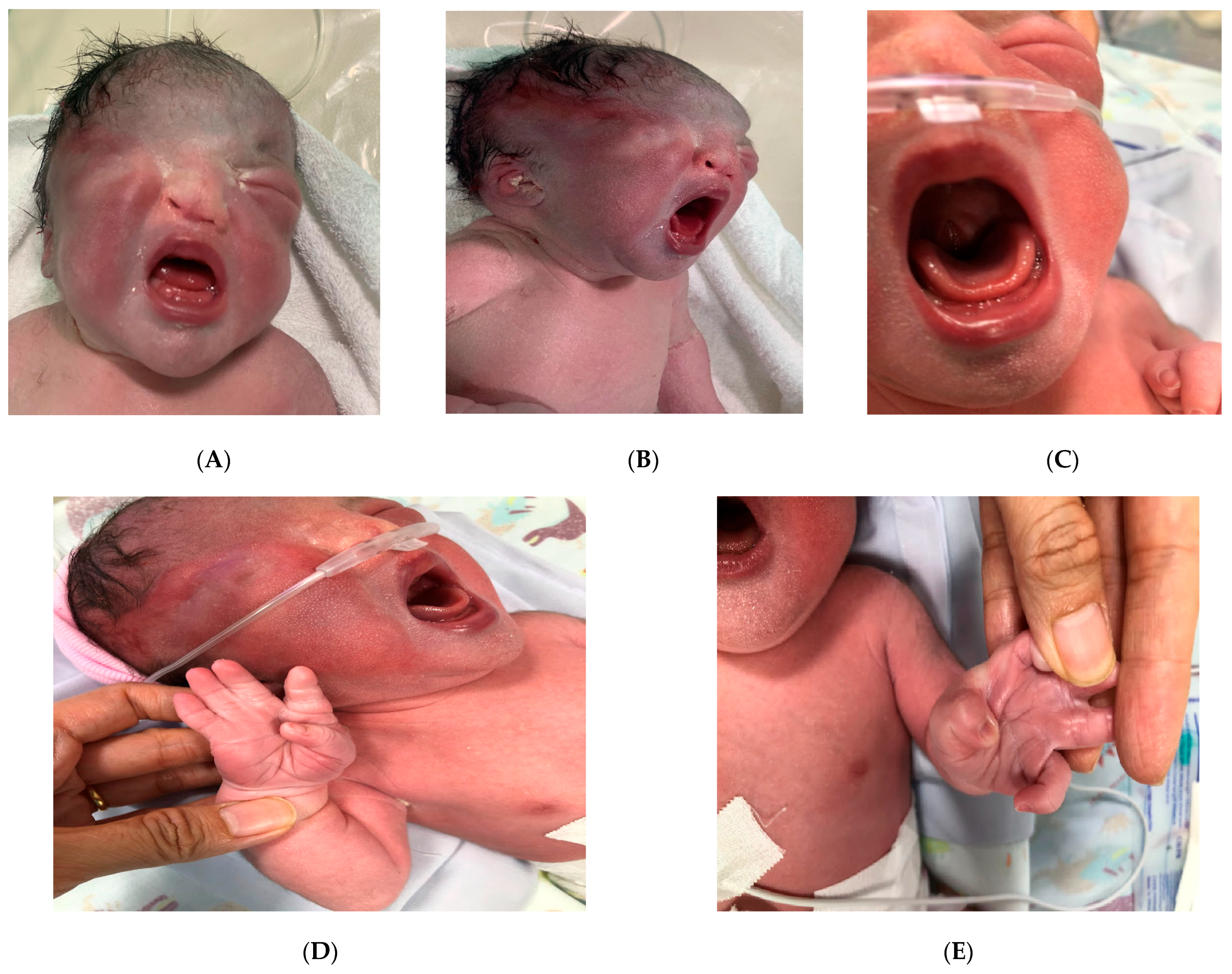
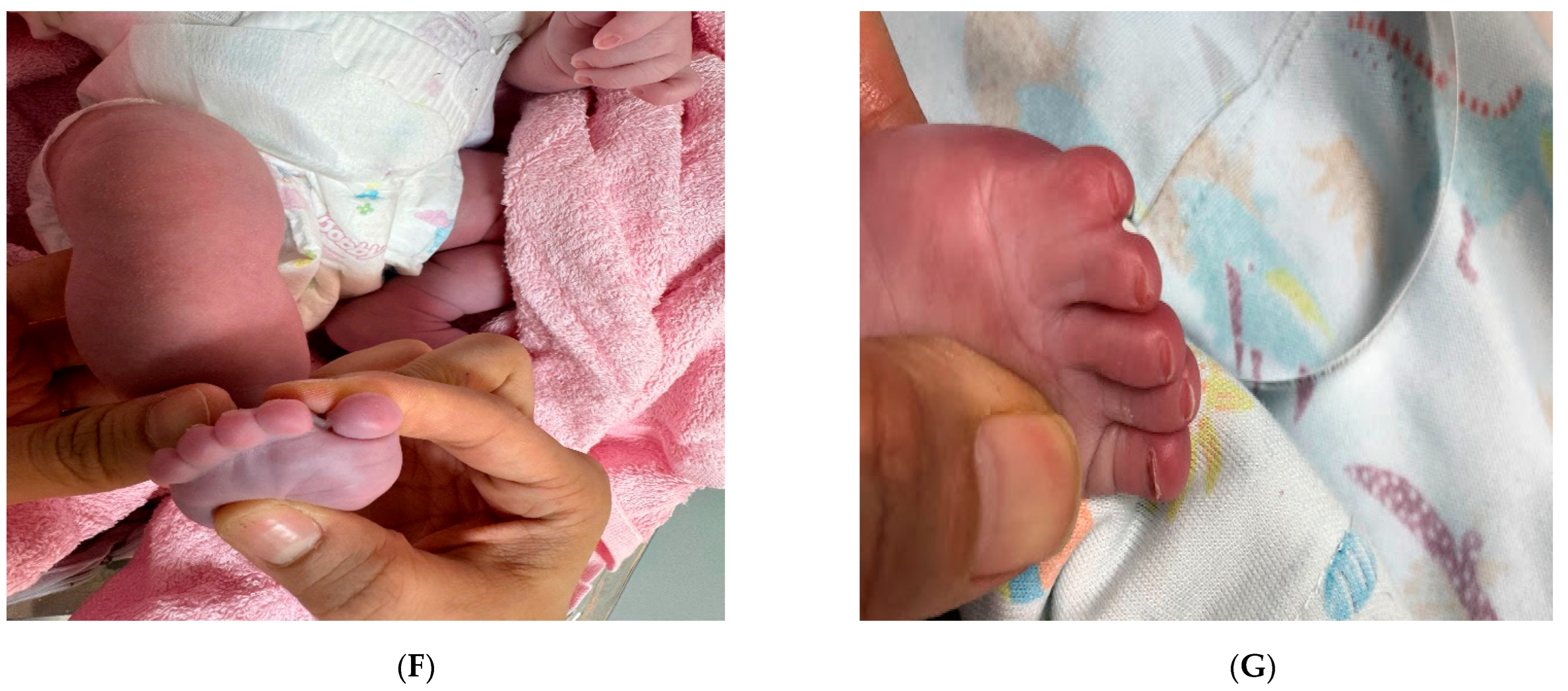
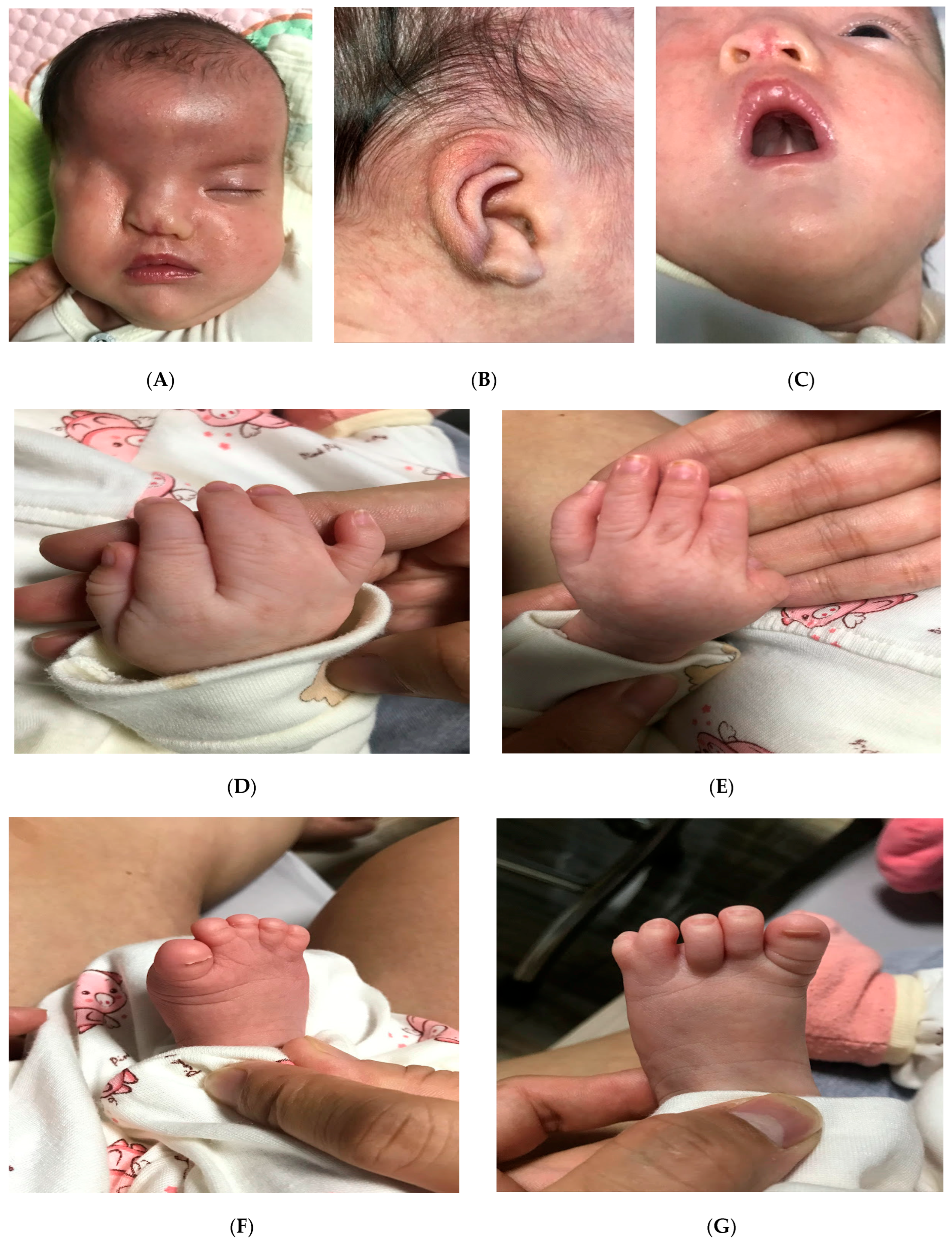
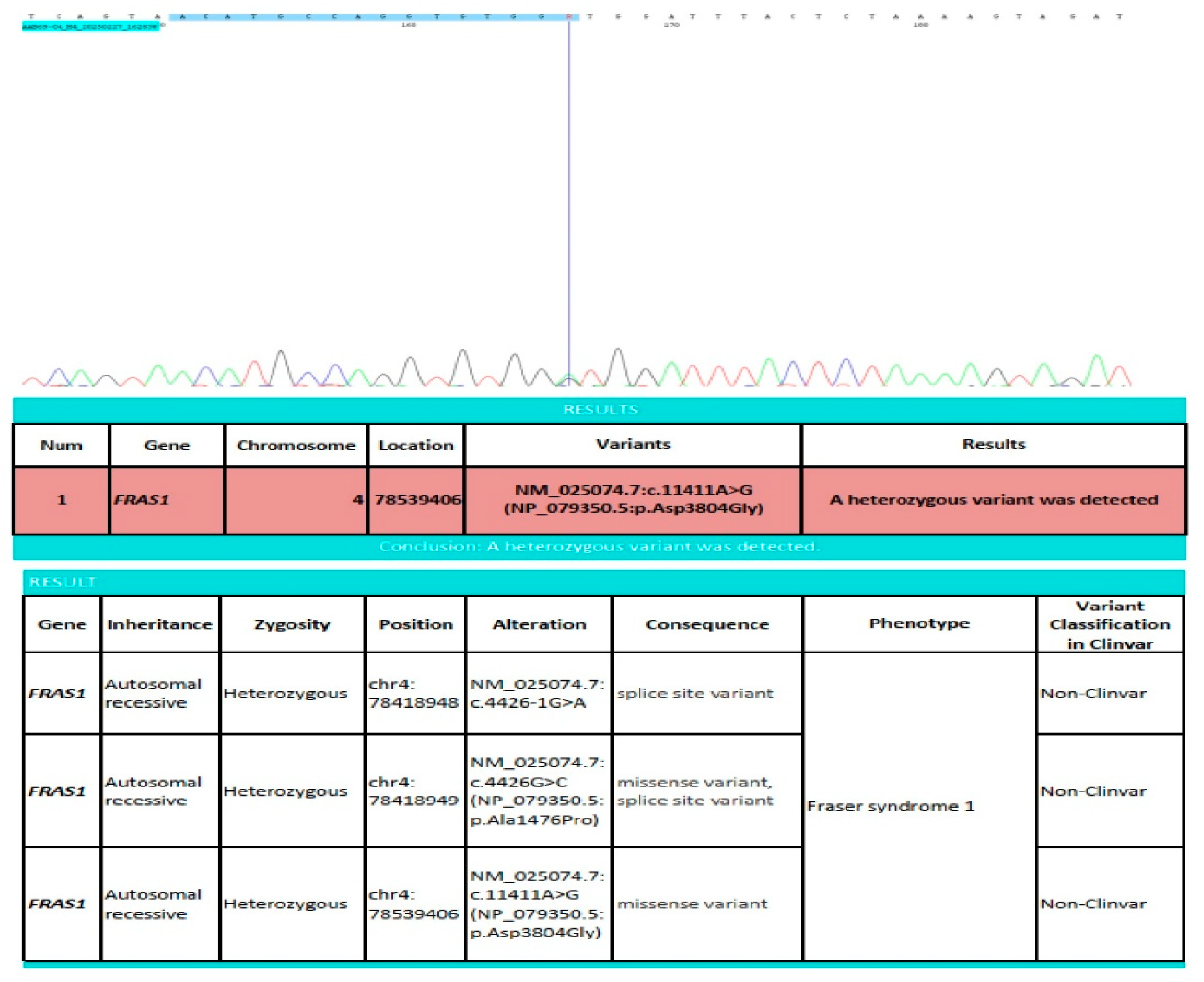
| Present case (2015), Vietnam | Postnatal | 29 yo | Primipara | Healthy | No | Heterozygous variation of FRAS1 gene on chr4, location 78539406, variants NM_025074.7:c.11411A>G (NP_079350.5:p.Asp3804Gly) | Parental gene analysis revealed a heterozygous variant of FRAS1 gene on chromosome 4, location 78418948 and 78539406 | - IOL for SGA - CS due to failed IOL Alive | |
| Reports (Authors, Published Year, Country) | Time Point | Cryptoph Thalmos | Syndactyly | Urinary Abnormality | Respiratory Abnormality | Ear Malformation | Genital Abnormality | Others | |
|---|---|---|---|---|---|---|---|---|---|
| Vijayaraghavan et al. (2005), India [22] | 26 weeks | + Unilateral microphthalmos Skin over the eyeballs on both sides and unidentified palpebral fissure | + Bilateral cutaneous syndactyly of all fingers | + Agenesis of the right kidney | - | + Small ears and deformed | + Short penis and lacked preputial cover | SGA small omphalocele | |
| Allali et al. (2006), Casablanca [35] | - | - | - | - | - | - | - | - | |
| Slavotinek et al. (2006), USA [1] | Case 1 | - | - | - | - | - | - | - | - |
| Case 2 | - | - | - | - | - | - | - | - | |
| Eskander et al. (2008), USA [12] | - | - | - | - | - | - | - | - | |
| Kumari et al. (2008), India [32] | - | - | - | - | - | - | - | Severe intrauterine growth retardation Oligohydramnios | |
| Dilli et al. (2010), Turkey [18] | - | - | - | - | - | - | - | - | |
| Yassin et al. (2010), Sudan [7] | - | - | - | - | - | - | - | - | |
| Pasu et al. (2011), England [14] | 20 weeks | - | - | + Unilateral right renal agenesis | - | - | - | - | |
| Vogel et al. (2012), Netherlands [6] | Case 1 | - | - | - | - | + Tracheal atresia | - | - | Severely hydropic fetus and ascites. |
| Case 2 | - | + Cryptophthalmos | + Absence of bladder and kidneys | + Hyperechogenic lungs | - | - | - | ||
| Case 3 | - | - | - | + Bilateral renal agenesis | - | - | - | Severe oligohydramnios | |
| Hoefele et al. (2013), Germany [36] | 11 weeks | - | - | - | - | - | - | Bilateral cleft lip and palate. | |
| Lorena et al. (2014), Brazil [26] | - | - | - | - | - | - | - | - | |
| De Bernardo et al. (2015), Japan [29] | - | - | - | - | - | - | - | - | |
| Saleem et al. (2015), Pakistan [37] | - | - | - | - | - | - | - | - | |
| Sangtani et al. (2015), India [2] | - | - | - | - | - | - | - | - | |
| Selvaraj et al. (2016) [38] | Case 1 | 22 weeks | - | - | + Unilateral renal agenesis | + Bilateral hyperechoic enlarged lungs. Diaphragmatic inversion and flattening were seen. Congenital high airway obstruction | - | - | - Fetal heart was seen in midline, appeared compressed - Ascites - Single umbilical artery - Reduced amniotic fluid |
| Case 2 | 13–16 weeks | - | - | + Unilateral renal agenesis | + Bilateral enlarged hyperechoic lungs CHAOS | - | - | - Single umbilical artery - Ascites - Transverse section of kidney | |
| Dumitru et al. (2016), Romania [13] | - | - | - | - | - | - | - | - | |
| Dar Parvez Mohi Ud Din et al. (2017), India [22] | - | - | - | - | - | - | - | - | |
| Mbonda et al. (2019), Cameroon [24] | - | - | - | - | - | - | - | - | |
| Alsaman et al. (2020), Syria [25] | 20 and 25 weeks | - | + Bilateral syndactyly on both hands and feet | - | + Hyperechoic lungs Enlargement of the lungs | - | - | - Ascites - Shortness in upper and lower limbs, nuchal edema, hydrops fetalis - Cardiac compression - Intrahepatic biliary atresia | |
| Ikeda et al. (2020), Japan [4] | 19 weeks | - | - | + Bilateral Renal agenesis, no urinary bladder, | + Distended trachea from the caudal of the carina to the bronchi Enlarged lungs - CHAOS | - | - | Severe oligohydramnios, high volume of ascites Hepatomegaly | |
| Waseem et al. (2021), Pakistan [28] | - | - | - | - | - | - | - | - | |
| Shrestha et al. (2022), Nepal [40] | - | - | - | - | - | - | - | - | |
| Golshahi et al. (2022) [41] | 18 weeks 3 d | + Unilateral microphthalmos | + Bilateral syndactyly | + Renal agenesis (found as a lying down the adrenal sign) | + - Hyper-echogenic lungs - CHAOS | - | - | Single umbilical artery, severe oligohydramnios | |
| Laminou et al. (2022), Nigeria [15] | - | - | - | - | - | - | - | - | |
| Neri et al. (2023), Colombia [20] | 36 weeks | + Microphthalmia | - | - | - | - | - | Hypotelorism | |
| Ramadugu et al. (2023), India [23] | - | - | - | - | - | - | - | Mild oligohydramnios | |
| Bouba Traore et al. (2024), Nigeria [19] | Case 1 | - | - | - | - | - | - | - | - |
| Case 2 | - | - | - | - | - | - | - | - | |
| Mohamed et al. (2024), Sudan [42] | - | - | - | - | - | - | - | - | |
| Sajoura et al. (2024), Morocco [16] | - | - | - | - | - | - | - | - | |
| Mangla et al. (2024), India [10] | Antenatal | + Absence of an eye globe and lens | - | + Renal agenesis (sleeping adrenals sign) - Non-visualization of the urinary bladder, and Doppler of renal arteries. | - | - | - | - Severe oligohydramnios - Non-visualization of the urinary bladder | |
| Present case (2025), Vietnam | - | - | - | - | - | - | - | - FGR - Reduced AFI | |
| Report (Authors, Published Year, Country) | Eyes | Limbs | Urinary Tract | Respiratory Tract | Others | ||
|---|---|---|---|---|---|---|---|
| Vijayaraghavan et al. (2005), India [22] | Bilateral cryptophthalmos | Syndactyly of the fingers | Right kidney was absent | - | - Low frontal hairline - Bilateral low-set ears with abnormal pinna - Broad abnormal nose - Micrognathia - Micropenis - Small omphalocele containing a Meckel’s diverticulum. | ||
| Allali et al. (2006), Casablanca [35] | - Ankyloblepharon on the left side - Cryptophthalmos on the right side - A cornea reduced to an opaque thin plate clinging to the iris without an anterior chamber and a non-individualized eyeball | Syndactyly | Renal abnormalities | Laryngeal stenosis tracheal abnormality | - Anorectal abnormalities - Ambiguous genitalia - Ear malformations - CT scan of the cranium and orbits and the transfontanelle ultrasound were normal | ||
| Slavotinek et al. (2006), USA [33] | Case 1 | Unilateral cryptophthalmos | No syndactyly | Hydronephrosis | Laryngeal stenosis/webs | - Tongue of hair extending from the anterior scalp hairline to the eyebrow - Asymmetry of the nares, stridor with minor webbing of the vocal cords, hearing impairment, hydronephrosis, and a bicornuate uterus - Inner ear dysplasia | |
| Case 2 | Cryptophthalmos with small and fused palpebral fissures bilaterally, bilateral anophthalmia | - | - | - | - Bilateral cleft lip and palate. - An extension of the anterior hairline across the lateral forehead and the nares were hypoplastic with a groove to the left of the midline of the nasal tip and a right preauricular pit - Absence of the corpus callosum with abnormal folding of the gyri, partial fusion of the thalami, dysplasia of the hippocampi and lateral ventricles, and prominent caudate heads | ||
| Eskander et al. (2008), USA [12] | Bilateral cryptophthalmos | Upper and lower extremities demonstrated prominent soft-tissue syndactyly | Left kidney and ureter agenesis | Pulmonary hypoplasia | - A flat forehead - Small nose with depressed nasal bridge - External genitalia were ambiguous and show labial malformation with clitoral enlargement Vagina was atretic and anus was patent Large intestine showed markedly distended rectosigmoid area and left adrenal gland was slightly hemorrhagic | ||
| Kumari et al. (2008), India [32] | Complete cryptophthalmos of the right eye | Complete cutaneous syndactyly of both the hands and feet | Bilateral renal agenesis | Tracheal stenosis | The ears were malformed and low-set. The nose was flat with a wide nasal bridge. The testes were found at the pelvic brim. | ||
| Dilli et al. (2010), Turkey [18] | Bilateral cryptophthalmos | Syndactyly | Bilateral polycystic kidney | Laryngeal stenosis | - Flat nose, hypoplastic nose and ears, mycrostomy, bifid uvula and cleft palate - Perineal fistula and anal atresia - Ambiguous genitalia | ||
| Yassin et al. (2010), Sudan [7] | Bilateral cryptophtalmos | Syndactyly in both hands and feet | Bilateral dysplatic kidney | - Clitoromegaly with hypoplasia of the labia - Low-set umbilicus - Depressed nasal bridge, broad nose with midline nasal groove | |||
| Pasu et al. (2011), England [14] | Right complete cryptophthalmos was noted with a palpable eyeball beneath | Clinodactyly of the right fourth and fifth toes | - | - | - Umbilical hernia, widely spaced fontanelle, bulbous nose | ||
| Vogel et al. (2012), Netherlands [6] | Case 1 | Bilateral cryptophthalmos | The fingers and toes were short with partial bilateral cutaneous syndactyly | There were no kidneys and a severely hypoplastic bladder. | The larynx was malformed and atretic; there was bilateral pulmonary hyperplasia with abnormal lung lobation. | - Low-set simple ears, micrognathia and a beaked nose with notched alae nasi - External genitalia were male with hypoplastic scrotum and malformed hypoplastic penis - Anus was abnormally positioned and appeared stenotic | |
| Case 2 | Bilateral complete cryptophthalmos, | - | - Absence of autopsy | - Absence of autopsy | Abnormal frontal hairline and broad nose | ||
| Case 3 | - | - | Bilateral renal agenesis bilateral ureter agenesis hypoplasia of the bladder | - | Hydrocephaly and dysmorphic features typical for FS | ||
| Hoefele et al. (2013), Germany [36] | - | Syndactyly of the second to the fourth finger on the right hand and between the second and the fifth toe on both feet | Atresia of the epiglottis resulting in an occlusion of the trachea | - | - | ||
| Lorena et al. (2014), Brazil [26] | Total unilateral cryptophthalmos (left side), epiphora (right side) with mucopurulent discharge | Syndactyly of the fingers and toes | - | - | - Depressed nasal bridge, low-set ears, atresia of the external auditory canal, prominent labia majora - Brachycephaly, absent septum pellucidum, prominent lateral ventricles, major skull bone defect, thinning of the brain mantle, small posterior fossa | ||
| De Bernardo et al. (2015), Japan [29] | - Bilateral cryptophthalmos Occipitofrontal circumference 34.5 cm - Left microphthalmos and malformation-like coloboma into right ocular globe with cysts and small calcification parietal anterior | Syndactyly | Right kidney agenesis | - Sub-stenosis laryngeal - Respiratory distress | - Bradycardia - Bilateral microtia - Ambiguous genitalia - Incomplete myelination of the brain | ||
| Saleem et al. (2015), Pakistan [37] | - Bilateral cryptophthalmos - Microphthalmic | Bilaterally complete syndactyly | - | - | - Spaced nipples and an umbilical hernia - Genitalia were ambiguous with phallus, complete labial fusion, and absent testes - Hypertelorism | ||
| Sangtani et al. (2015), India [2] | - | Syndactyly of hands and feet, | Enlarged hydronephrotic left kidney, and dilated left ureter Right renal agenesis | - | Bilateral cleft lip and palate | ||
| Selvaraj et al. (2016) [38] | Case 1 | - | - Partial syndactyly of fingers - Complete syndactyly of toes | - | - | - Abnormal genitalia with imperforate anus - Face was severely dysmorphic with marked hypertelorism, depressed nasal bridge, and low-set ears | |
| Case 2 | - | - Partial syndactyly of 3rd and 4th fingers - Complete syndactyly of toes | - | - | - Abnormal genitalia with imperforate anus - Abortus showing wide open eyes with dysmorphic facies | ||
| Dumitru et al. (2016), Romania [13] | Complete bilateral cryptophthalmos | Complete bilateral syndactyly on both hands and feet | Bilateral renal agenesia with agenesis of the ureters, hypertrophic adrenal glands, hypoplasic bladder. | Hypoplastic lungs | - Severe facial dysmorphism with low-set ears, flat nasal bridge, micrognathia and incomplete ossification of the skull bones. - An umbilical hernia, imperforate anus, and ambiguous genitalia - Patent ductus arteriosus and foramen ovale. | ||
| Dar Parvez Mohi Ud Din et al. (2017), India [39] | - Normal anterior and posterior segment of the right eye with coloboma of the right upper eyelid - Left complete cryptophthalmos with a palpable eyeball beneath | Syndactyly of all fingers of bilateral hands and all toes of bilateral feet | Left renal agenesis | - | - Nasal deformity - Absence of bilateral testes in the scrotum | ||
| Mbonda et al. (2019), Cameroon [24] | Bilateral cryptophthalmos | Syndactyly | - | - | - Nasal malformation - Anal imperforation with a nearby anal fistula - External genitalia anomaly | ||
| Alsaman et al. (2020), Syria [25] | Bilateral anophthalmia | Bilateral syndactyly on hands and feet | Right renal agenesis | -Lung enlargement -Autopsy: Dilated pleural lymphatic vessels, interstitial fibroblast hypertrophy and vascular wall thickening in the lung. | - Pseudo-hypertelorism - Low-set ears, flat nasal bridge - Cutaneous and subcutaneous edema, large-volume ascites - Ambiguous genitalia - Gonad and Mullerian structures were found on the left posterior pelvic wall - Autopsy: Congestion of red pulp with hemosiderin accumulation and immature white pulp of the spleen | ||
| Ikeda et al. (2020), Japan [4] | Bilateral cryptophthalmos | Syndactyly of both hands (I–IV) | Autopsy: Agenesis of the kidneys, ureters, and bladder. | Autopsy: Pleural effusion and ascites, atresia of the epiglottis with a dilated trachea, hyperinflated and heavy lungs. | Low-set, malformed ears | ||
| Waseem et al. (2021), Pakistan [28] | - Complete cryptophthalmos in the right eye with partially formed eyebrow and absence of eyelids and eyelashes - Conjunctivitis in the left eye | Cutaneous syndactyly of hands | - | - | - Hypertelorism - Low-set ears - High-arched palate with ankyloglossia - Cryptorchidism and hypospadias | ||
| Shrestha et al. (2022), Nepal [40] | Absent eyelashes | Syndactyly of toes of both feet | - | - | - Wide anterior fontanelle - Ambiguous genitalia with phallus and complete labial fusion - Abnormal face bones, flat nasal bridge, prominent occiput, hypertelorism, and dysplastic low-set ears - Single umbilical artery - Sacral dimpling with tuft of hair and protrusion of tail-like appendages at back in sacrum; likely lipomeningocele - Widely spaced nipples and low hair line - Congenital cardiac defect - Club foot | ||
| Golshahi et al. (2022) [41] | Unilateral cryptophthalmos | Cutaneous syndactyly of the four limbs | - | - | Low-set umbilicus containing a single umbilical artery | ||
| Laminou et al. (2022), Nigeria [15] | Complete bilateral cryptophthalmia | Polydactyly | - | - | Nasal depression Umbilical hernia | ||
| Neri et al. (2023), Colombia [20] | Bilateral anophthalmia | Syndactyly in upper and lower limbs | - | - | - Low-set ears - Micrognathia, broad nasal bridge - Ballooning abdomen - External female genitalia with imperforate hymen - Vaginal atresia - Uterus and vagina had cystic appearance | ||
| Ramadugu et al. (2023), India [23] | Unilateral cryptophthalmos | - | - Mild hydronephrosis in the right kidney - Irregular urinary bladder walls | - | - | ||
| Bouba Traore et al. (2024), Nigeria [19] | Case 1 | Bilateral cryptophthalmos | Syndactyly | - | - | - Elongated skull with part of the forehead invaded by hair - Nasal depression - Shape anomaly of the thorax | |
| Case 2 | Bilateral cryptophthalmos | Syndactyly | - | - | - Pseudo-bald, low-set ears - Depressed nasal root - Shape anomaly of the thorax - Anal imperforation with genital anomaly | ||
| Mohamed et al. (2024), Sudan [42] | Bilateral partial cryptophthalmos | Syndactyly Overlapping fingers Rocker-bottom feet | - | - | Multiple small atrial septal defects and ventricular septal defects. | ||
| Sajoura et al. (2024), Morocco [16] | Bilateral anophthalmia | Syndactyly | - | - | - Cleft palate - Dysmorphic facies with domed forehead, hypertelorism, micrognathia, low-set ears, and short neck. - Bilateral cryptorchidism. - Triventricular hydrocephalus. - Malformative tri-ventricular hydrocephalus, hypoplasia of brainstem and cerebellum, and poly-microgyria | ||
| Mangla et al. (2024), India [10] | Cryptophthalmos | - | Renal agenesis | - | - | ||
| Present case (2025), Vietnam | Bilateral cryptophthalmos | Syndactyly on hands and feet | Absence of the right kidney | - | - Nasal depression - Low-setears and dysplasia - Cleft palate - Tracheal stenosis, glottic web - Smaller eyeball of the right eye without crystalline lens. | ||
4. Conclusions
Supplementary Materials
Author Contributions
Funding
Institutional Review Board Statement
Informed Consent Statement
Data Availability Statement
Acknowledgments
Conflicts of Interest
Abbreviations
| AC | Abdominal circumference |
| AFI | Amniotic fluid index |
| ARI | Acute respiratory insufficiency |
| BPD | Biparietal diameter |
| CMV | Cytomegalovirus |
| CHAOS | Congenital high airway obstruction syndrome |
| CT | Computed tomography |
| CS | Cesarean section |
| ENT | Ear-nose throat |
| MRI | Magnetic resonance imaging |
| G6PD | Glucose-6-phosphate dehydrogenase deficiency |
| GA | Gestational age |
| HC | Head circumference |
| NIPT | Non-invasive prenatal test |
| IOL | Induction of labor |
| FL | Femoral length |
| FGR | Fetal growth restriction |
| FS | Fraser syndrome |
| FRAS1 | Fraser extracellular matrix complex subunit 1 |
| FREM2 | FRAS1 related extracellular matrix protein 2 |
| GRIP1 | Glutamate receptor interacting protein 1 |
| SLC25A13 | Solute carrier family 25 member 13 |
| SGA | Small gestational age |
| SVD | Spontaneous vaginal delivery |
References
- Slavotinek, A.M.; Tifft, C.J. Fraser syndrome and cryptophthalmos: Review of the diagnostic criteria and evidence for phenotypic modules in complex malformation syndromes. J. Med. Genet. 2002, 39, 623. [Google Scholar] [CrossRef] [Scilit] [PubMed]
- Sangtani, J.K.; Kamble, R.H.; Shrivastav, S.; Sharma, N. Fraser syndrome without cryptophthalmos: A rare case report. J. Cleft Lip Palate Craniofacial Anom. 2015, 2, 139–142. [Google Scholar] [CrossRef] [Scilit]
- Bouaoud, J.; Olivetto, M.; Testelin, S.; Dakpe, S.; Bettoni, J.; Devauchelle, B. Fraser syndrome: Review of the literature illustrated by a historical adult case. Int. J. Oral. Maxillofac. Surg. 2020, 49, 1245–1253. [Google Scholar] [CrossRef] [Scilit] [PubMed]
- Ikeda, S.; Akamatsu, C.; Ijuin, A.; Nagashima, A.; Sasaki, M.; Mochizuki, A.; Nagase, H.; Enomoto, Y.; Kuroda, Y.; Kurosawa, K.; et al. Prenatal diagnosis of Fraser syndrome caused by novel variants of FREM2. Hum. Genome Var. 2020, 7, 32. [Google Scholar] [CrossRef] [Scilit] [PubMed]
- Smyth, I.; Du, X.; Taylor, M.S.; Justice, M.J.; Beutler, B.; Jackson, I.J. The extracellular matrix gene Frem1 is essential for the normal adhesion of the embryonic epidermis. Proc. Natl. Acad. Sci. USA 2004, 101, 13560–13565. [Google Scholar] [CrossRef] [Scilit] [PubMed]
- Vogel, M.J.; van Zon, P.; Brueton, L.; Gijzen, M.; van Tuil, M.C.; Cox, P.; Schanze, D.; Kariminejad, A.; Ghaderi-Sohi, S.; Blair, E.; et al. Mutations in GRIP1 cause Fraser syndrome. J. Med. Genet. 2012, 49, 303. [Google Scholar] [CrossRef] [Scilit]
- Yassin, A.; Abdulmonim, S.; Al-asad, S.; Hashim, A.; Hassan, A. Sudanese infant with Fraser syndrome. Sudan J. Med. Sci. 2010, 5, 303–305. [Google Scholar] [CrossRef] [Scilit]
- van Haelst, M.M.; Scambler, P.J.; Fraser Syndrome Collaboration Group Hennekam, R.C.M. Fraser syndrome: A clinical study of 59 cases and evaluation of diagnostic criteria. Am. J. Med. Genet. Part A 2007, 143A, 3194–3203. [Google Scholar] [CrossRef] [Scilit]
- Berg, C.; Geipel, A.; Germer, U.; Pertersen-Hansen, A.; Koch-Dörfler, M.; Gembruch, U. Prenatal detection of Fraser syndrome without cryptophthalmos: Case report and review of the literature. Ultrasound Obstet. Gynecol. 2001, 18, 76–80. [Google Scholar] [CrossRef] [Scilit]
- Mangla, M.; Kaliappan, A.; Srirambhatla, A.; Chandrupatla, M.; Motwani, R.; Kumar, N. Fraser syndrome with limb reduction defect: A rare and unique anatomic variation. Surg. Radiol. Anat. 2024, 46, 501–506. [Google Scholar] [CrossRef] [Scilit]
- Abdalla, E.M.; Zayed, L.H.; Issa, N.M.; Amin, A.K. Fraser syndrome: Phenotypic variability and unusual findings in four Egyptian families. Egypt. J. Med. Hum. Genet. 2016, 17, 233–238. [Google Scholar] [CrossRef] [Scilit]
- Eskander, B.S.; Shehata, B.M. Fraser syndrome: A new case report with review of the literature. Fetal Pediatr. Pathol. 2008, 27, 99–104. [Google Scholar] [CrossRef] [Scilit] [PubMed]
- Dumitru, A.; Costache, M.; Lazaroiu, A.M.; Simion, G.; Secara, D.; Cirstoiu, M.; Emanoil, A.; Georgescu, T.A.; Sajin, M. Fraser Syndrome—A Case Report and Review of Literature. Maedica 2016, 11, 80–83. [Google Scholar]
- Pasu, S.; Dhir, L.; Mackenzie, S.; Thompson, G. Fraser Syndrome: Case Report with Review of Literature. J. Surg. Res. 2011, 1, 1–3. [Google Scholar] [CrossRef]
- Laminou, L.; Habou, O.; Amadou, M.; Hadjia, A.K.Y.; Abdou, A. Fraser syndrome: About a Case and Review of the Literature. J. Surg. Res. 2022, 5, 585–587. [Google Scholar] [CrossRef] [Scilit]
- Sajoura, C.; Ech-Chebab, M.; Ayyad, A.; Messaoudi, S.; Amrani, R. Fraser Syndrome: A Case Report. Open J. Pediatr. 2024, 14, 476–481. [Google Scholar] [CrossRef]
- Bustillo-Sierra, C.M.; Alvarenga-Calidonio, R.H. Fraser syndrome: A case report. Rev. Mex. Pediatr. 2019, 86, 155–158. [Google Scholar]
- Dilli, D.; Kanmaz, H.; Oğuz, Ş.; Dilmen, U. A Case Report of Fraser Syndrome. J. Child 2010, 10, 144–148. [Google Scholar] [CrossRef] [Scilit]
- Traore, H.A.B.; Issiaka, M.; Laouali, L.; Yakoura, A.K.; Amza, A. Differential Contribution of Fraser Syndrome and Anophthalmos: 4 Cases and Review of the Literature. Adv. Clin. Med. Res. 2024, 5, 1–11. [Google Scholar] [CrossRef] [Scilit]
- Dávila Neri, I.; Farias Vela, A.P.; Aragón Mendoza, R.L.; Gallo Roa, R.; Russo Vizcaino, G.C. Prenatal hydrometrocolpos as an unusual finding in Fraser syndrome. Case Rep. 2023, 12, 20220038. [Google Scholar] [CrossRef] [Scilit]
- Searle, A.; Shetty, P.; Melov, S.J.; Alahakoon, T.I. Prenatal diagnosis and implications of microphthalmia and anophthalmia with a review of current ultrasound guidelines: Two case reports. J. Med. Case Rep. 2018, 12, 250. [Google Scholar] [CrossRef] [Scilit] [PubMed]
- Vijayaraghavan, S.B.; Suma, N.; Lata, S.; Kamakshi, K. Prenatal sonographic appearance of cryptophthalmos in Fraser syndrome. Ultrasound Obstet. Gynecol. 2005, 25, 629–630. [Google Scholar] [CrossRef] [Scilit] [PubMed]
- Ramadugu, R.; Kuppili, S.; Suvvari, T.K.; Lella, V.V.; Thomas, V. A Rare Case of Complete Cryptophthalmos and Suspected Fraser’s Syndrome in a Female Neonate. Clin. Med. Insights Case Rep. 2023, 16, 11795476231189042. [Google Scholar] [CrossRef] [Scilit]
- Mbonda, A.; Endomba, F.T.; Kanmounye, U.S.; Nkeck, J.R.; Tochie, J.N. Diagnosis of Fraser syndrome missed out until the age of six months old in a low-resource setting: A case report. BMC Pediatr. 2019, 19, 292. [Google Scholar] [CrossRef] [Scilit] [PubMed]
- Alsaman, M.Z.B.; Agha, S.; Sallah, H.; Badawi, R.; Kitaz, M.N.; Assani, A.; Nawfal, H. Bilateral anophthalmia and intrahepatic biliary atresia, two unusual components of Fraser syndrome: A case report. BMC Pregnancy Childbirth 2020, 20, 358. [Google Scholar] [CrossRef] [Scilit]
- Lorena, S.H.T.; Gonçalves, E.D.; Machado, M.A.C.; Jablinski, C.E.C.; Briceño, C.A.; Silva, J.A.F. Fraser Syndrome: Case report in lacrimal system. Rev. Bras. Oftalmol. 2014, 73, 123–125. [Google Scholar] [CrossRef] [Scilit]
- Das, D.; Modaboyina, S.; Raj, S.; Agrawal, S.; Bajaj, M.S. Clinical features and orbital anomalies in Fraser syndrome and a review of management options. Indian J. Ophthalmol. 2022, 70, 2559–2563. Available online: https://journals.lww.com/ijo/fulltext/2022/07000/clinical_features_and_orbital_anomalies_in_fraser.63.aspx (accessed on 12 May 2025). [CrossRef] [Scilit]
- Waseem, M.; Waseem, H.; Khani, M.N. Fraser syndrome: A case report. KHYBER Med. Univ. J. 2021, 13, 47–48. [Google Scholar]
- De Bernardo, G.; Giordano, M.; Di Toro, A.; Sordino, D.; De Brasi, D. Prenatal diagnosis of Fraser syndrome: A matter of life or death? Ital. J. Pediatr. 2015, 41, 86. [Google Scholar] [CrossRef] [Scilit]
- Saleh, G.M.; Hussain, B.; Verity, D.H.; Collin, J.R.O. A Surgical Strategy for the Correction of Fraser Syndrome Cryptophthalmos. Ophthalmology 2009, 116, 1707–1712.e1. [Google Scholar] [CrossRef] [Scilit]
- Falls, M.E.; Rabinowitz, M.P.; Carrasco, J.R.; Rabinowitz, M.R. Endoscopic Management of Lacrimal System Dysgenesis and Dacryocystoceles in Fraser Syndrome: A Case Report and Literature Review. Allergy Rhinol. 2018, 9, 2152656718804905. [Google Scholar] [CrossRef] [Scilit] [PubMed]
- Cavoretto, P.; Molina, F.; Poggi, S.; Davenport, M.; Nicolaides, K.H. Prenatal diagnosis and outcome of echogenic fetal lung lesions. Ultrasound Obstet. Gynecol. 2008, 32, 769–783. [Google Scholar] [CrossRef] [Scilit] [PubMed]
- Kalpana Kumari, M.K.; Kamath, S.; Mysorekar, V.V.; Nandini, G. Fraser syndrome. Indian J Pathol Microbiol. 2008, 51, 228–229. [Google Scholar] [CrossRef] [Scilit] [PubMed]
- Slavotinek, A.; Li, C.; Sherr, E.H.; Chudley, A.E. Mutation analysis of the FRAS1 gene demonstrates new mutations in a propositus with Fraser syndrome. Am J Med Genet. A 2006, 140A, 1909–1914. [Google Scholar] [CrossRef] [Scilit]
- Allali, B.; Hamdani, M.; Lamari, H.; Rais, L.; Benhaddou, M.; Kettani, A.; Lahbil, D.; Amraoui, A.; Zaghloul, K. Syndrome de Fraser: À propos d′un cas. J. Fr. Ophtalmol. 2006, 29, 184–187. [Google Scholar] [CrossRef] [Scilit]
- Hoefele, J.; Wilhelm, C.; Schiesser, M.; Mack, R.; Heinrich, U.; Weber, L.T.; Biskup, S.; Daumer-Haas, C.; Klein, H.G.; Rost, I. Expanding the mutation spectrum for Fraser syndrome: Identification of a novel heterozygous deletion in FRAS1. Gene 2013, 520, 194–197. [Google Scholar] [CrossRef] [Scilit] [PubMed]
- Saleem, A.A.; Siddiqui, S.N. Fraser Syndrome. J. Coll. Physicians Surg. Pak. 2015, 25 (Suppl. 2), S124–S126. [Google Scholar]
- Shahid, S.L.R. Fraser Syndrome: Prenatal Detection at 16 Weeks of Gestation. J. Fetal Med. 2016, 3, 97–100. [Google Scholar]
- Din, D.P.M.U.; Ahmad, M.L.; Anjum, W.A.; Ali, L.F.; Ahmad, B.B.; Yasir, M.; Gulshan, W.N. Fraser syndrome: Case report with review of literature. Int. J. Adv. Res. 2016, 5, 588–591. [Google Scholar] [CrossRef] [Scilit]
- Shrestha, S.; Thani, K.P.; Keshari, M.; Shrestha, A. Fraser Syndrome: A Rare Case Report. J. Karnali Acad. Health Sci. 2022, 5, 3. [Google Scholar] [CrossRef] [Scilit]
- Golshahi, F.; Moradi, B.; Jabbari, F.; Ahmadi, M. A case of Fraser Syndrome Diagnosed by Ultrasound as a Single Modality; Necessity of Genetic Confirmation? J. Obstet. Gynecol. Cancer Res. 2022, 7, 574–577. [Google Scholar] [CrossRef] [Scilit]
- Altayeb, M.A.M.; Kheir, A.E.M.; Abbadi, N.S.; Elkhazin, A.A.S. Fraser Syndrome; Case report and Literature Review. Sudan. J. Health Sci. 2024, 2, 85–92. [Google Scholar]
- Trinh, N.B.; Vuong, A.D.B.; Nguyen, P.N. Successful Management by Selective Embryo in the Carnitine-Acylcarnitine Translocase Deficiency with SLC25A20 C. 199-10T> G Variation: The First Case Report from Vietnam and Literature. Oman Med. J. 2023, 27, 6809–6823. [Google Scholar] [PubMed]
- Bich Trinh, N.; Dinh Bao Vuong, A.; Nhon Nguyen, P. Successful management of pregnancy in Turner syndrome (Monosomy X): A rare condition-based learning experience from Vietnam. Int. J. Reprod. Biomed. 2024, 22, 411–416. [Google Scholar] [CrossRef] [Scilit] [PubMed]
- Gullo, G.; Scaglione, M.; Cucinella, G.; Perino, A.; Chiantera, V.; D’Anna, R.; Laganà, A.S.; Buzzaccarini, G. Impact of assisted reproduction techniques on the neuro-psycho-motor outcome of newborns: A critical appraisal. J. Obstet. Gynaecol. 2022, 42, 2583–2587. [Google Scholar] [CrossRef] [Scilit] [PubMed]
- Gullo, G.; Basile, G.; Cucinella, G.; Greco, M.E.; Perino, A.; Chiantera, V. Marinelli S. Fresh vs. frozen embryo transfer in assisted reproductive techniques: A single center retrospective cohort study and ethical-legal implications. Eur. Rev. Med. Pharmacol. Sci. 2023, 27, 6809–6823. [Google Scholar] [CrossRef] [Scilit] [PubMed]
- Gullo, G.; Scaglione, M.; Laganà, A.S.; Perino, A.; Andrisani, A.; Chiantera, V.; Cucinella, G.; Gitas, G.; Barra, F.; Riemma, G. Assisted Reproductive Techniques and Risk of Congenital Heart Diseases in Children: A Systematic Review and Meta-analysis. Reprod. Sci. 2023, 30, 2896–2906. [Google Scholar] [CrossRef] [Scilit]
- Alteri, A.; Cermisoni, G.C.; Pozzoni, M.; Gaeta, G.; Cavoretto, P.I.; Viganò, P. Obstetric, neonatal, and child health outcomes following embryo biopsy for preimplantation genetic testing. Hum. Reprod. Update 2023, 29, 291–306. [Google Scholar] [CrossRef] [Scilit] [PubMed] [PubMed Central]

| Criteria | Thomas Criteria | Van Healst Criteria | The Present Case |
|---|---|---|---|
| Major | - Cryptophthalmos - Syndactyly - Abnormal genitalia - Sib with cryptophthalmos syndrome | - Syndactyly - Cryptophthalmos spectrum - Urinary tract abnormalities - Ambiguous genitalia - Laryngeal and tracheal anomalies - Positive family history | - Unilateral cryptophthalmos - Partial/complete syndactyly on fingers and toes |
| Minor | - Congenital malformation of nose - Congenital malformation of ears - Congenital malformation of larynx - Cleft lip and/or palate - Skeletal defects - Umbilical hernia - Renal agenesis - Intellectual disability | - Anorectal defects - Dysplastic ears- Skull ossification defects - Umbilical abnormalities (umbilical hernia, omphalocele, low-set umbilicus) - Nasal anomalies | - Congenital malformation of ears (low-set ears, dysplastic ears) - Depressed nasal bridge - Tracheal stenosis/vocal fold web - Cleft palate - Absence of the right kidney |
| Diagnostic confirmation | 2 majors + 1 minor or 1 major + 4 minors | 3 majors or 2 majors +2 minors or 1 major + 3 minors | 2 majors + 5 minors |
Disclaimer/Publisher’s Note: The statements, opinions and data contained in all publications are solely those of the individual author(s) and contributor(s) and not of MDPI and/or the editor(s). MDPI and/or the editor(s) disclaim responsibility for any injury to people or property resulting from any ideas, methods, instructions or products referred to in the content. |
© 2025 by the authors. Licensee MDPI, Basel, Switzerland. This article is an open access article distributed under the terms and conditions of the Creative Commons Attribution (CC BY) license (https://creativecommons.org/licenses/by/4.0/).
Share and Cite
Thi Pham, X.T.; Nguyen, P.N.; Hoang, X.S. Fraser Syndrome: A Narrative Review Based on a Case from Vietnam and the Past 20 Years of Research. Diagnostics 2025, 15, 1606. https://doi.org/10.3390/diagnostics15131606
Thi Pham XT, Nguyen PN, Hoang XS. Fraser Syndrome: A Narrative Review Based on a Case from Vietnam and the Past 20 Years of Research. Diagnostics. 2025; 15(13):1606. https://doi.org/10.3390/diagnostics15131606
Chicago/Turabian StyleThi Pham, Xuan Trang, Phuc Nhon Nguyen, and Xuan Song Hoang. 2025. "Fraser Syndrome: A Narrative Review Based on a Case from Vietnam and the Past 20 Years of Research" Diagnostics 15, no. 13: 1606. https://doi.org/10.3390/diagnostics15131606
APA StyleThi Pham, X. T., Nguyen, P. N., & Hoang, X. S. (2025). Fraser Syndrome: A Narrative Review Based on a Case from Vietnam and the Past 20 Years of Research. Diagnostics, 15(13), 1606. https://doi.org/10.3390/diagnostics15131606