Intravitreal Fluocinolone Acetonide for Diabetic Macular Edema: Long-Term Effect and Structure/Function Correlation


 ,
, 
Abstract
1. Introduction
2. Materials and Methods
2.1. Subjects
2.2. Ophthalmological Examination
2.3. Outcome Measures
2.4. Data Registration and Acquisition
2.5. Statistical Analysis
3. Results
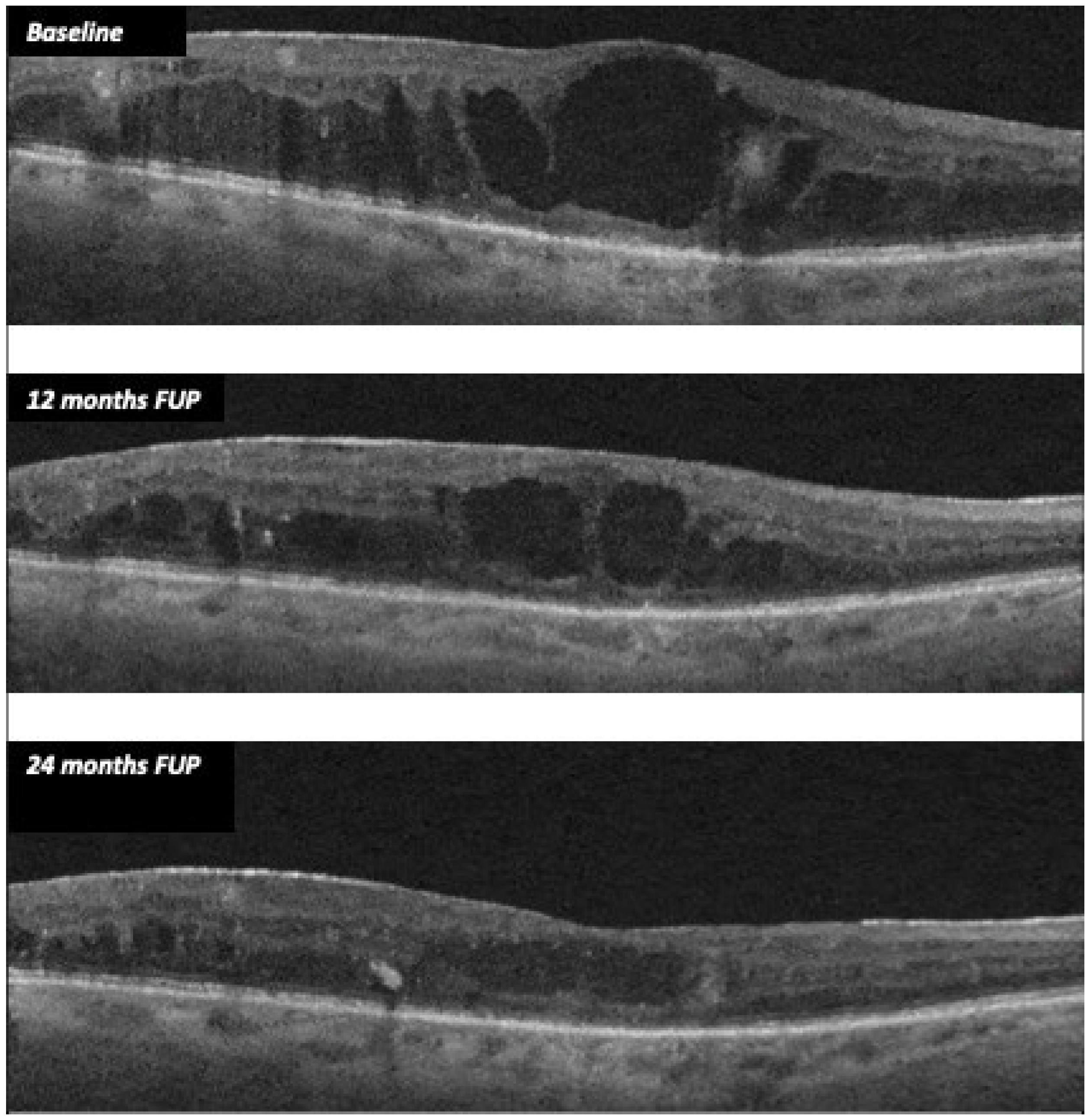
3.1. Effects of the FAc Implant on Retinal Morphology and Function at 24 Months
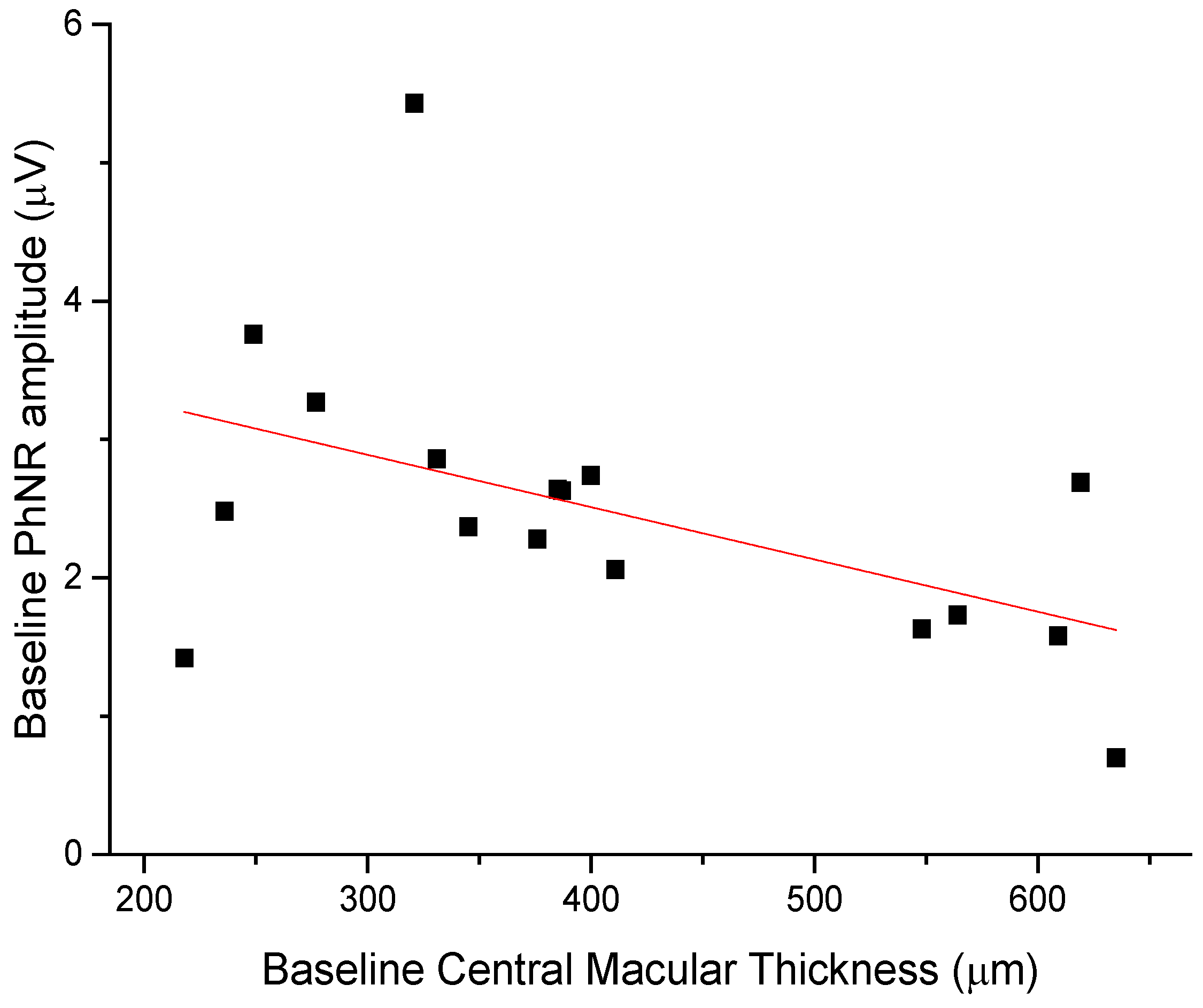
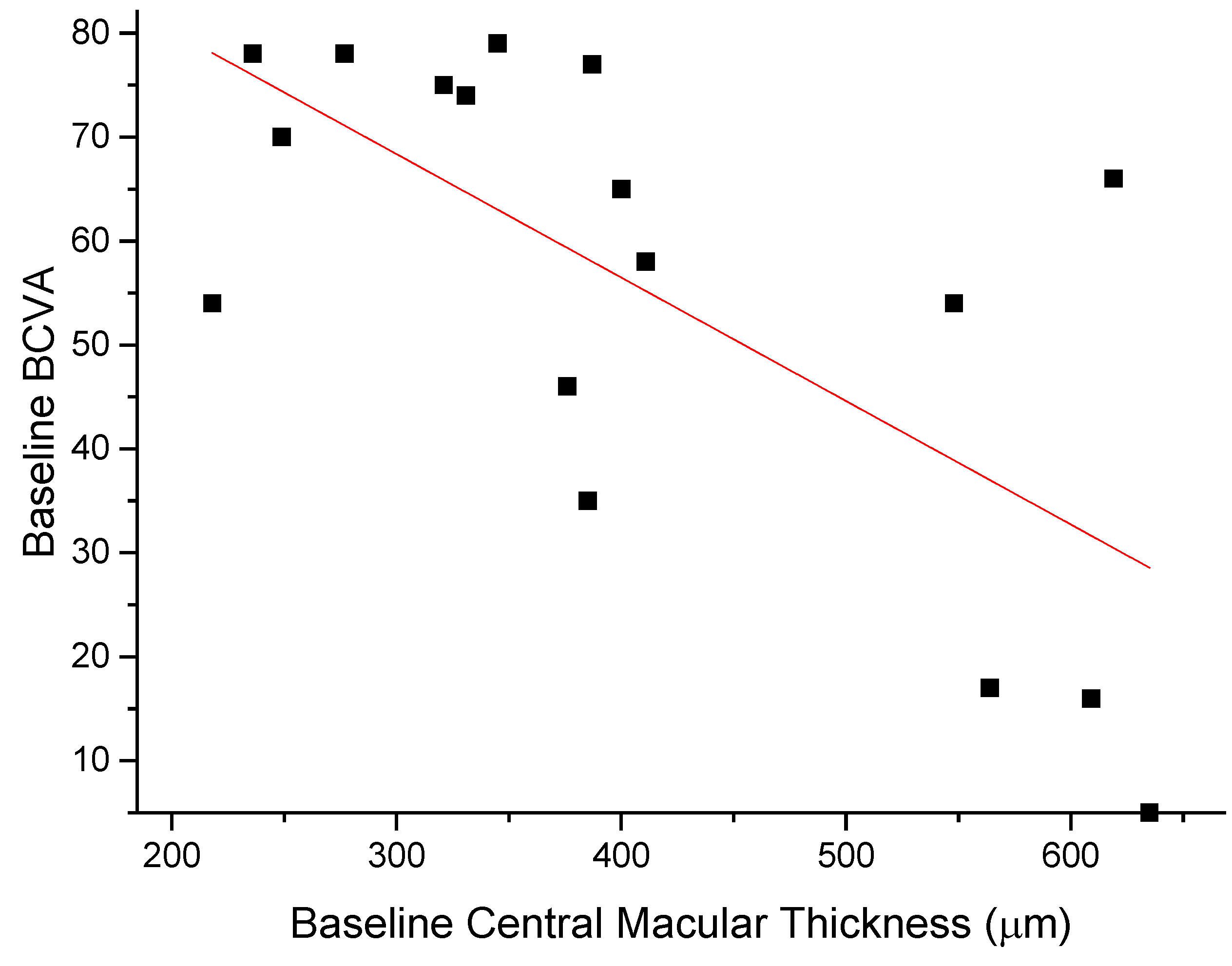
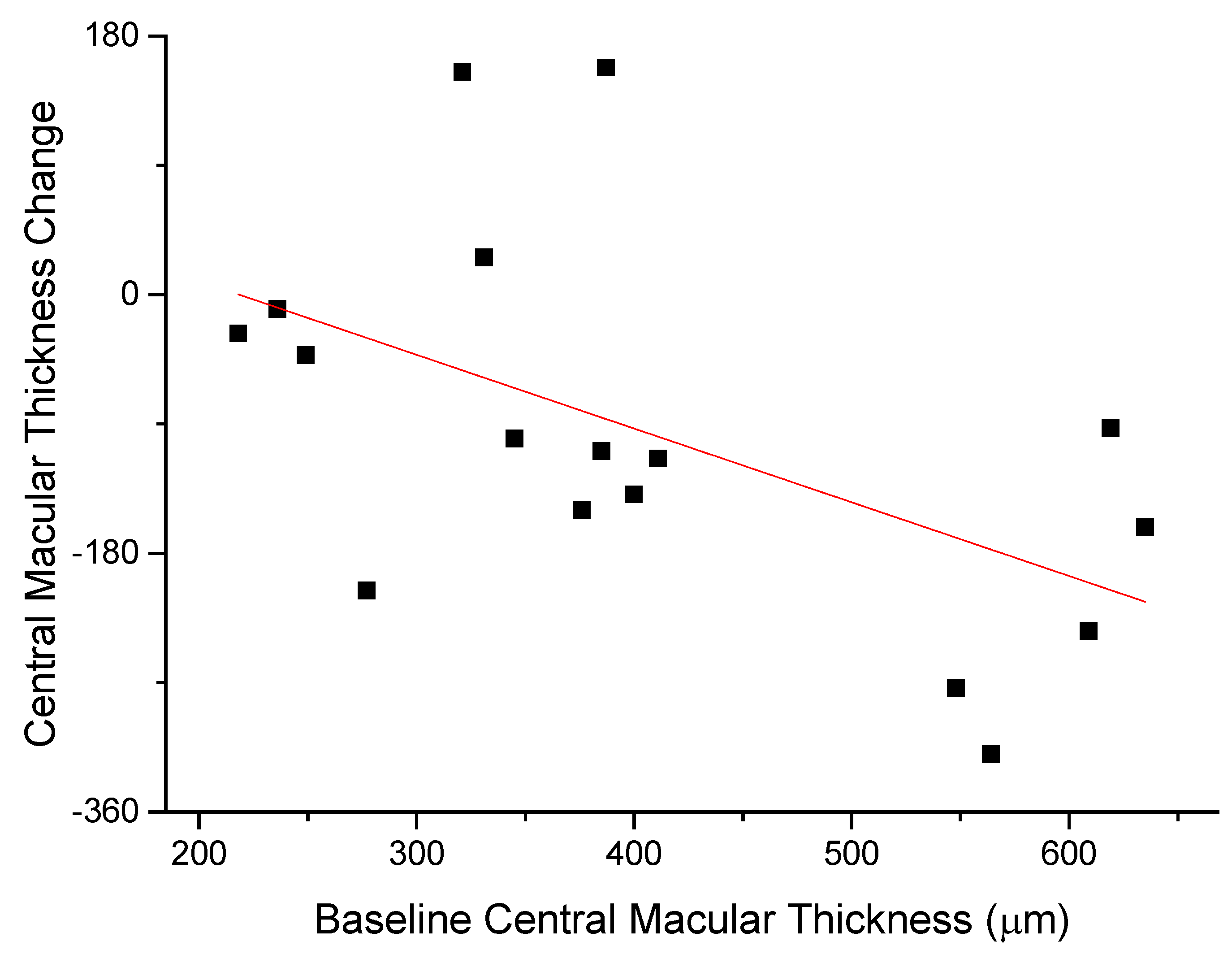
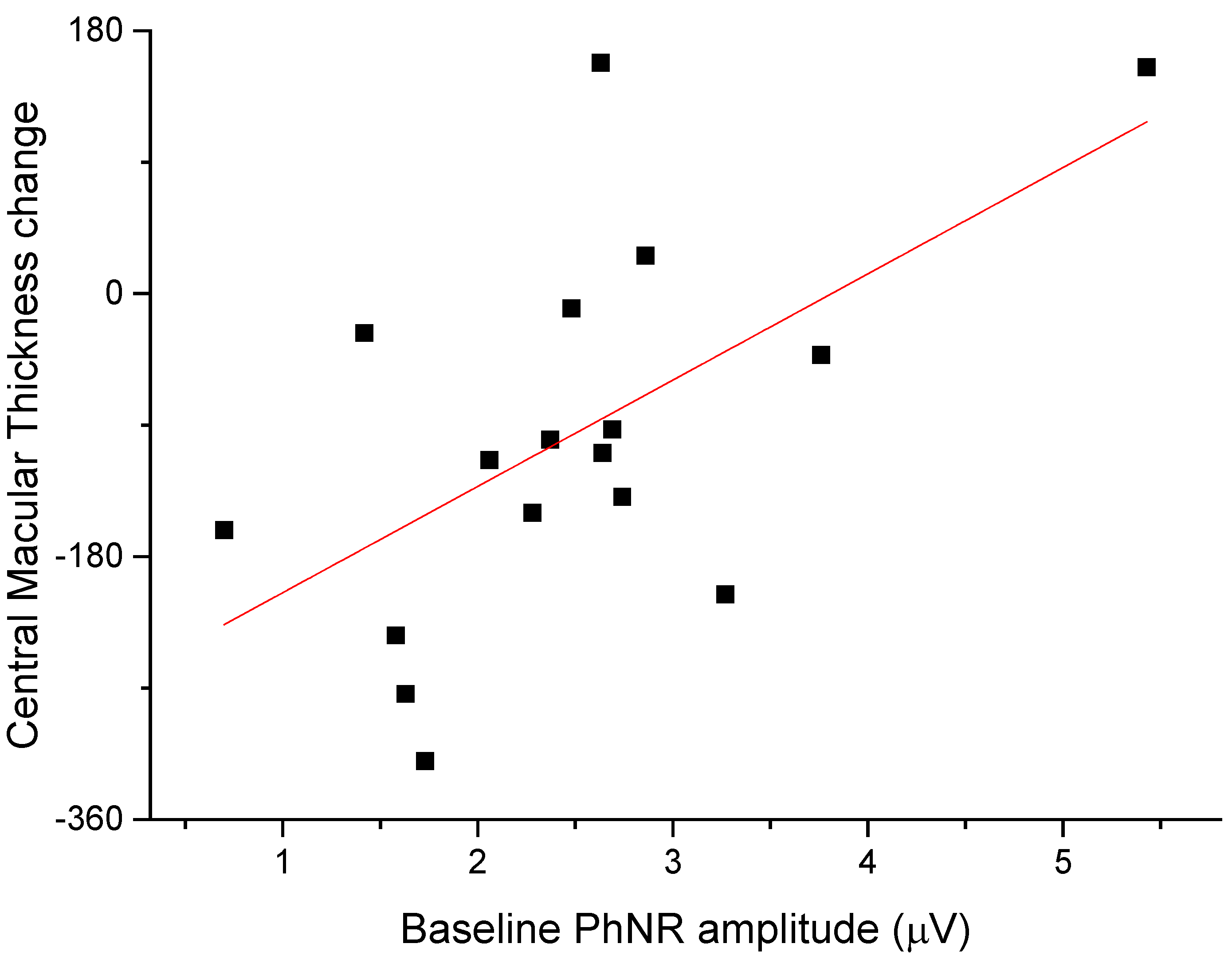
3.2. Correlations among Morphological and Functional Parameters at Baseline and End of Follow-Up
4. Discussion
5. Conclusions
Author Contributions
Funding
Institutional Review Board Statement
Informed Consent Statement
Data Availability Statement
Acknowledgments
Conflicts of Interest
References
- Das, A.; McGuire, P.G.; Rangasamy, S. Diabetic macular edema: Pathophysiology and novel therapeutic targets. Ophthalmology 2015, 122, 1375–1394. [Google Scholar] [CrossRef] [Scilit] [PubMed]
- Tan, G.S.; Cheung, N.; Simo, R.; Cheung, G.C.M.; Wong, T.Y. Diabetic macular oedema. Lancet Diabetes Endocrinol. 2017, 5, 143–155. [Google Scholar] [CrossRef] [Scilit]
- Early Treatment Diabetic Retinopathy Study Research Group. Techniques for scatter and local photocoagulation treatment of diabetic retinopathy: Early Treatment Diabetic Retinopathy Study Report no. 3. Int. Ophthalmol. Clin. 1987, 27, 254–264. [Google Scholar] [CrossRef] [Scilit] [PubMed]
- Midena, E.; Micera, A.; Frizziero, L.; Pilotto, E.; Esposito, G.; Bini, S. Sub-threshold micropulse laser treatment reduces inflammatory biomarkers in aqueous humour of diabetic patients with macular edema. Sci. Rep. 2019, 9, 10034. [Google Scholar] [CrossRef] [Scilit]
- Akhlaghi, M.; Dehghani, A.; Pourmohammadi, R.; Asadpour, L.; Pourazizi, M. Effects of subthreshold diode micropulse laser photocoagulation on treating patients with refractory diabetic macular edema. J. Curr. Ophthalmol. 2018, 31, 157–160. [Google Scholar] [CrossRef] [Scilit]
- Stefanini, F.R.; Badaro, E.; Falabella, P.; Koss, M.; Farah, M.E.; Maia, M. Anti-VEGF for the management of diabetic macular edema. J. Immunol. Res. 2014, 2014, 632307. [Google Scholar] [CrossRef] [Scilit]
- Bonfiglio, V.; Reibaldi, M.; Pizzo, A.; Russo, A.; Macchi, I.; Faro, G.; Avitabile, T.; Longo, A. Dexamethasone for unresponsive diabetic macular oedema: Optical coherence tomography biomarkers. Acta Ophthalmol. 2019, 97, 540–544. [Google Scholar] [CrossRef] [Scilit]
- Campochiaro, P.A.; Brown, D.M.; Pearson, A.; Chen, S.; Boyer, D.; Ruiz-Moreno, J.; Garretson, B.; Gupta, A.; Hariprasad, S.M.; Bailey, C.; et al. Sustained delivery fluocinolone acetonide vitreous inserts provide benefit for at least 3 years in patients with diabetic macular edema. Ophthalmology 2012, 119, 2125–2132. [Google Scholar] [CrossRef] [Scilit]
- Campochiaro, P.A.; Nguyen, Q.D.; Hafiz, G.; Bloom, S.; Brown, S.; Brown, D.M.; Busquets, M.; Ciulla, T.; Feiner, L.; Sabates, N.; et al. Aqueous Levels of Fluocinolone Acetonide after Administration of Fluocinolone Acetonide Inserts or Fluocinolone Acetonide Implants. Ophthalmology 2013, 120, 583–587. [Google Scholar] [CrossRef] [Scilit]
- Alimera Sciences Inc. Iluvien (Fluocinolone Acetonide Intravitrealimplant) 0.19 mg for Intravitreal Injection: US Prescribing Information. 2014. Available online: http://www.fda.gov (accessed on 22 February 2017).
- Ayalasomayajula, S.P.; Ashton, P.; Kompella, U.B. Fluocinolone inhibits VEGF expression via glucocorticoid receptor in human retinal pigment epithelial (ARPE-19) cells and TNF-alpha-induced angiogenesis in chick chorioallantoic membrane (CAM). J. Ocul. Pharmacol. Ther. 2009, 25, 97–103. [Google Scholar] [CrossRef] [Scilit]
- Veritti, D.; Sarao, V.; Diplotti, L.; Samassa, F.; Lanzetta, P. Fluocinolone acetonide for the treatment of diabetic macular edema. Expert Opin. Pharmacother. 2017, 18, 1507–1516. [Google Scholar] [CrossRef] [Scilit]
- Glybina, I.V.; Kennedy, A.; Ashton, P.; Abrams, G.W.; Iezzi, R. Photoreceptor neuroprotection in RCS rats via low-dose intravitreal sustained-delivery of fluocinolone acetonide. Investig. Ophthalmol. Vis. Sci. 2009, 50, 4847–4857. [Google Scholar] [CrossRef] [Scilit]
- Abed, E.; Placidi, G.; Campagna, F.; Federici, M.; Minnella, A.; Guerri, G.; Bertelli, M.; Piccardi, M.; Galli-Resta, L.; Falsini, B. Early impairment of the full-field photopic negative response in patients with Stargardt disease and pathogenic variants of the ABCA4 gene. Clin. Exp. Ophthalmol. 2018, 46, 519–530. [Google Scholar] [CrossRef] [Scilit]
- Abed, E.; Piccardi, M.; Rizzo, D.; Chiaretti, A.; Ambrosio, L.; Petroni, S.; Parrilla, R.; Dickmann, A.; Riccardi, R.; Falsini, B. Functional Loss of the Inner Retina in Childhood Optic Gliomas Detected by Photopic Negative Response. Investig. Ophthalmol. Vis. Sci. 2015, 56, 2469–2474. [Google Scholar] [CrossRef] [Scilit]
- Falsini, B.; Chiaretti, A.; Rizzo, D.; Piccardi, M.; Ruggiero, A.; Manni, L.; Soligo, M.; Dickmann, A.; Federici, M.; Salerni, A.; et al. Nerve growth factor improves visual loss in childhood optic gliomas: A randomized, double-blind, phase II clinical trial. Brain 2016, 139 Pt 2, 404–414. [Google Scholar] [CrossRef] [Scilit]
- Bailey, C.; Chakravarthy, U.; Lotery, A.; Menon, G.; Talks, J.; Medisoft Audit Group. Real-world experience with 0.2 μg/day fluocinolone acetonide intravitreal implant (ILUVIEN) in the United Kingdom. Eye 2017, 31, 1707–1715. [Google Scholar] [CrossRef] [Scilit]
- Bailey, C.; Chakravarthy, U.; Lotery, A.; Menon, G.; Talks, J.; Medisoft Audit Group. Extended real-world experience with the ILUVIEN® (fluocinolone acetonide) implant in the United Kingdom: 3-year results from the Medisoft® audit study. Eye 2022, 36, 1012–1018. [Google Scholar] [CrossRef] [Scilit]
- Kodjikian, L.; Baillif, S.; Creuzot-Garcher, C.; Delyfer, M.N.; Matonti, F.; Weber, M.; Mathis, T. Real-World Efficacy and Safety of Fluocinolone Acetonide Implant for Diabetic Macular Edema: A Systematic Review. Pharmaceutics 2021, 13, 72. [Google Scholar] [CrossRef] [Scilit]
- Figueira, J.; Henriques, J.; Amaro, M.; Rosas, V.; Alves, D.; Cunha-Vaz, J. A Nonrandomized, Open-Label, Multicenter, Phase 4 Pilot Study on the Effect and Safety of ILUVIEN® in Chronic Diabetic Macular Edema Patients Considered Insufficiently Responsive to Available Therapies (RESPOND). Ophthalmic Res. 2017, 57, 166–172. [Google Scholar] [CrossRef] [Scilit]
- Lynch, S.K.; Lee, K.; Chen, Z.; Folk, J.C.; Schmidt-Erfurth, U.; Gerendas, B.S.; Wahle, A.; Wykoff, C.C.; Abràmoff, M.D. Intravitreal fluocinolone acetonide may decelerate diabetic retinal neurodegeneration. Investig. Ophthalmol. Vis. Sci. 2019, 60, 2134–2139. [Google Scholar] [CrossRef] [Scilit]
- Pessoa, B.; Castro, C.; Ferreira, A.; Leite, J.; Heitor, J.; Menéres, P.; Figueira, J.; Meireles, A.; Beirão, J.M. Changes in Ganglion Cell Layer Thickness after Treatment with the 0.2 µg/day Fluocinolone Acetonide Implant in Vitrectomized and Nonvitrectomized Eyes with Diabetic Macular Edema. Ophthalmic Res. 2022, 65, 310–320. [Google Scholar] [CrossRef] [Scilit] [PubMed]
- Minnella, A.M.; Picardi, S.M.; Maceroni, M.; Albanesi, F.; De Siena, E.; Placidi, G.; Caputo, C.G.; De Vico, U.; Rizzo, S.; Falsini, B. Retinal Morpho-Functional Changes Following 0.19 mg Fluocinolone Acetonide Intravitreal Implant for Chronic Diabetic Macular Edema. Adv. Ther. 2021, 38, 3143–3153. [Google Scholar] [CrossRef] [Scilit] [PubMed]
- Chen, H.; Zhang, M.; Huang, S.; Wu, D. The photopic negative response of flash ERG in nonproliferative diabetic retinopathy. Doc. Ophthalmol. 2008, 117, 129–135. [Google Scholar] [CrossRef] [Scilit] [PubMed]



| Age at Baseline (Years) | Type of Diabetes | Duration of Diabetes (Years) | Therapy | Type of DR | Previous PRP (YES/NO) | Washout Period from Previous IVI before FAc (Months) | |
|---|---|---|---|---|---|---|---|
| Case 1 | 74 | II | 24 | Insulin | NPDR | YES | 4 |
| Case 2 | 79 | II | 28 | Insulin | NPDR | YES | 5 |
| Case 3 | 80 | II | 28 | Insulin | PDR | YES | 9 |
| Case 4 | 70 | II | 40 | Insulin | PDR | YES | 23 |
| Case 5 | 70 | II | 40 | Insulin | PDR | YES | 26 |
| Case 6 | 70 | II | 29 | Insulin | PDR | YES | 12 |
| Case 7 | 73 | II | 10 | Insulin + Linagliptin | NPDR | YES | 6 |
| Case 8 | 73 | II | 10 | Insulin + Linagliptin | NPDR | YES | 7 |
| Case 9 | 77 | II | 40 | Insulin | NPDR | YES | 6 |
| Case 10 | 87 | I | 35 | Insulin | NPDR | YES | 34 |
| Case 11 | 87 | I | 35 | Insulin | NPDR | YES | 26 |
| Case 12 | 90 | II | 15 | Metformin | NPDR | NO | 2 |
| Case 13 | 71 | II | 30 | Insulin | NPDR | YES | 8 |
| Case 14 | 72 | II | 30 | Insulin | NPDR | YES | 15 |
| Case 15 | 64 | II | 33 | Insulin + Metformin | PDR | NO | 3 |
| Case 16 | 74 | II | 25 | Insulin | PDR | YES | 9 |
| Case 17 | 66 | II | 30 | Insulin | NPDR | YES | 13 |
| PN | CMT (µm) | BCVA (ETDRS) | PhNR Amplitude (µV) | B-Wave Amplitude (µV) | IOP (mmHg) |
|---|---|---|---|---|---|
| Case 1 | |||||
| Baseline | 387 | 77 | 2.63 | 12.25 | 10 |
| 3–6 months | 425 | 64 | 4.20 | 15.97 | 13 |
| 12 months | 624 | 64 | 4.15 | 14.45 | 17 |
| 24 months | 545 | 65 | 3.87 | 12.87 | 15 |
| Case 2 | |||||
| Baseline | 411 | 58 | 2.06 | 2.99 | 11 |
| 3–6 months | 331 | 70 | 1.94 | 4.77 | 18 |
| 12 months | 314 | 65 | 2.05 | 3.58 | 12 |
| 24 months | 297 | 64 | 1.63 | 2.96 | 15 |
| Case 3 | |||||
| Baseline | 376 | 46 | 2.28 | 5.53 | 12 |
| 3–6 months | 219 | 35 | 2.85 | 10.12 | 10 |
| 12 months | 233 | 47 | 2.01 | 6.95 | 14 |
| 24 months | 233 | 48 | 1.3 | 4.06 | 15 |
| Case 4 | |||||
| Baseline | 345 | 79 | 2.37 | 12.05 | 18 |
| 3–6 months | 296 | 70 | 4.82 | 14.36 | 18 |
| 12 months | 272 | 65 | 4.10 | 10.80 | 17 |
| 24 months | 245 | 77 | 3.45 | 7.97 | 32 |
| Case 5 | |||||
| Baseline | 249 | 70 | 3.76 | 15.93 | 19 |
| 3–6 months | 215 | 72 | 4.73 | 12.38 | 19 |
| 12 months | 207 | 62 | 3.10 | 10.38 | 17 |
| 24 months | 207 | 74 | 1.70 | 8.40 | 34 |
| Case 6 | |||||
| Baseline | 635 | 5 | 0.70 | 6.46 | 14 |
| 3–6 months | 509 | 35 | 0.80 | 6.02 | 19 |
| 12 months | 548 | 40 | 0.94 | 4.37 | 15 |
| 24 months | 473 | 28 | 1.35 | 7.70 | 13.7 |
| Case 7 | |||||
| Baseline | 277 | 78 | 3.27 | 7.82 | 16 |
| 3–6 months | 218 | 78 | 3.12 | 7.20 | 14 |
| 12 months | 232 | 78 | 2.64 | 7.19 | 15 |
| 24 months | 271 | 76 | 2.14 | 7.16 | 15 |
| Case 8 | |||||
| Baseline | 236 | 78 | 2.48 | 6.28 | 14 |
| 3–6 months | 235 | 78 | 1.89 | 8.17 | 15 |
| 12 months | 231 | 78 | 1.87 | 8.14 | 15 |
| 24 months | 226 | 77 | 1.87 | 8.1 | 15 |
| Case 9 | |||||
| Baseline | 218 | 54 | 1.42 | 3.59 | 16 |
| 3–6 months | 204 | 60 | 1.82 | 3.85 | 16 |
| 12 months | 197 | 67 | 2.31 | 4.32 | 16 |
| 24 months | 191 | 65 | 1.58 | 3.99 | 16 |
| Case 10 | |||||
| Baseline | 400 | 65 | 2.74 | 9.85 | 18 |
| 3–6 months | 256 | 60 | 4.18 | 9.62 | 16 |
| 12 months | 261 | 64 | 3.44 | 6.31 | 16 |
| 24 months | 261 | 64 | 1.1 | 5.27 | 14 |
| Case 11 | |||||
| Baseline | 609 | 16 | 1.58 | 5.84 | 16 |
| 3–6 months | 543 | 17 | 2.57 | 8.02 | 17 |
| 12 months | 511 | 18 | 1.68 | 5.33 | 15 |
| 24 months | 375 | 10 | 3.09 | 6.32 | 13 |
| Case 12 | |||||
| Baseline | 321 | 75 | 5.43 | 15.28 | 16 |
| 3–6 months | 349 | 69 | 4.96 | 18.48 | 12 |
| 12 months | 356 | 69 | 4.54 | 17.01 | 17 |
| 24 months | 476 | 57 | 3.72 | 16.99 | 17 |
| Case 13 | |||||
| Baseline | 385 | 35 | 2.64 | 8.52 | 13 |
| 3–6 months | 281 | 50 | 1.61 | 7.79 | 13 |
| 12 months | 253 | 46 | 0.74 | 6.92 | 16 |
| 24 months | 276 | 19 | 2.64 | 7.48 | 15 |
| Case 14 | |||||
| Baseline | 548 | 54 | 1.63 | 4.70 | 14 |
| 3–6 months | 263 | 49 | 0.55 | 9.28 | 21 |
| 12 months | 275 | 35 | 1.15 | 6.37 | 11 |
| 24 months | 274 | 32 | 1.15 | 6.37 | 11 |
| Case 15 | |||||
| B Baseline | 619 | 66 | 2.69 | 12.73 | 19 |
| 3–6 months | 490 | 70 | 2.69 | 14.40 | 18 |
| 12 months | 552 | 74 | 7.45 | 17.08 | 14 |
| 24 months | 526 | 75 | 3.18 | 12,99 | 19 |
| Case 16 | |||||
| Baseline | 564 | 17 | 1.73 | 5.62 | 19 |
| 3–6 months | 386 | 21 | 4.29 | 5.39 | 18 |
| 12 months | 368 | 21 | 7.86 | 7.66 | 17 |
| 24 months | 244 | 28 | 4.00 | 4.20 | 14.3 |
| Case 17 | |||||
| Baseline | 331 | 74 | 2.86 | 25.12 | 12 |
| 3–6 months | 314 | 82 | 3.31 | 4.88 | 15 |
| 12 months | 335 | 80 | 3.34 | 4.97 | 16 |
| 24 months | 357 | 77 | 3.19 | 4.41 | 15 |
Publisher’s Note: MDPI stays neutral with regard to jurisdictional claims in published maps and institutional affiliations. |
© 2022 by the authors. Licensee MDPI, Basel, Switzerland. This article is an open access article distributed under the terms and conditions of the Creative Commons Attribution (CC BY) license (https://creativecommons.org/licenses/by/4.0/).
Share and Cite
Minnella, A.M.; Maceroni, M.; Zagami, C.; Quarato, E.; Rizzo, S.; Giarletti, M.; Placidi, G.; Falsini, B. Intravitreal Fluocinolone Acetonide for Diabetic Macular Edema: Long-Term Effect and Structure/Function Correlation. Diagnostics 2022, 12, 2415. https://doi.org/10.3390/diagnostics12102415
Minnella AM, Maceroni M, Zagami C, Quarato E, Rizzo S, Giarletti M, Placidi G, Falsini B. Intravitreal Fluocinolone Acetonide for Diabetic Macular Edema: Long-Term Effect and Structure/Function Correlation. Diagnostics. 2022; 12(10):2415. https://doi.org/10.3390/diagnostics12102415
Chicago/Turabian StyleMinnella, Angelo Maria, Martina Maceroni, Claudia Zagami, Elena Quarato, Stanislao Rizzo, Matteo Giarletti, Giorgio Placidi, and Benedetto Falsini. 2022. "Intravitreal Fluocinolone Acetonide for Diabetic Macular Edema: Long-Term Effect and Structure/Function Correlation" Diagnostics 12, no. 10: 2415. https://doi.org/10.3390/diagnostics12102415
APA StyleMinnella, A. M., Maceroni, M., Zagami, C., Quarato, E., Rizzo, S., Giarletti, M., Placidi, G., & Falsini, B. (2022). Intravitreal Fluocinolone Acetonide for Diabetic Macular Edema: Long-Term Effect and Structure/Function Correlation. Diagnostics, 12(10), 2415. https://doi.org/10.3390/diagnostics12102415