Neuromuscular Electrical Stimulation to Combat Muscle Atrophy During Spaceflight: A Narrative Review of Mechanisms and Potential Applications


Abstract
1. Introduction
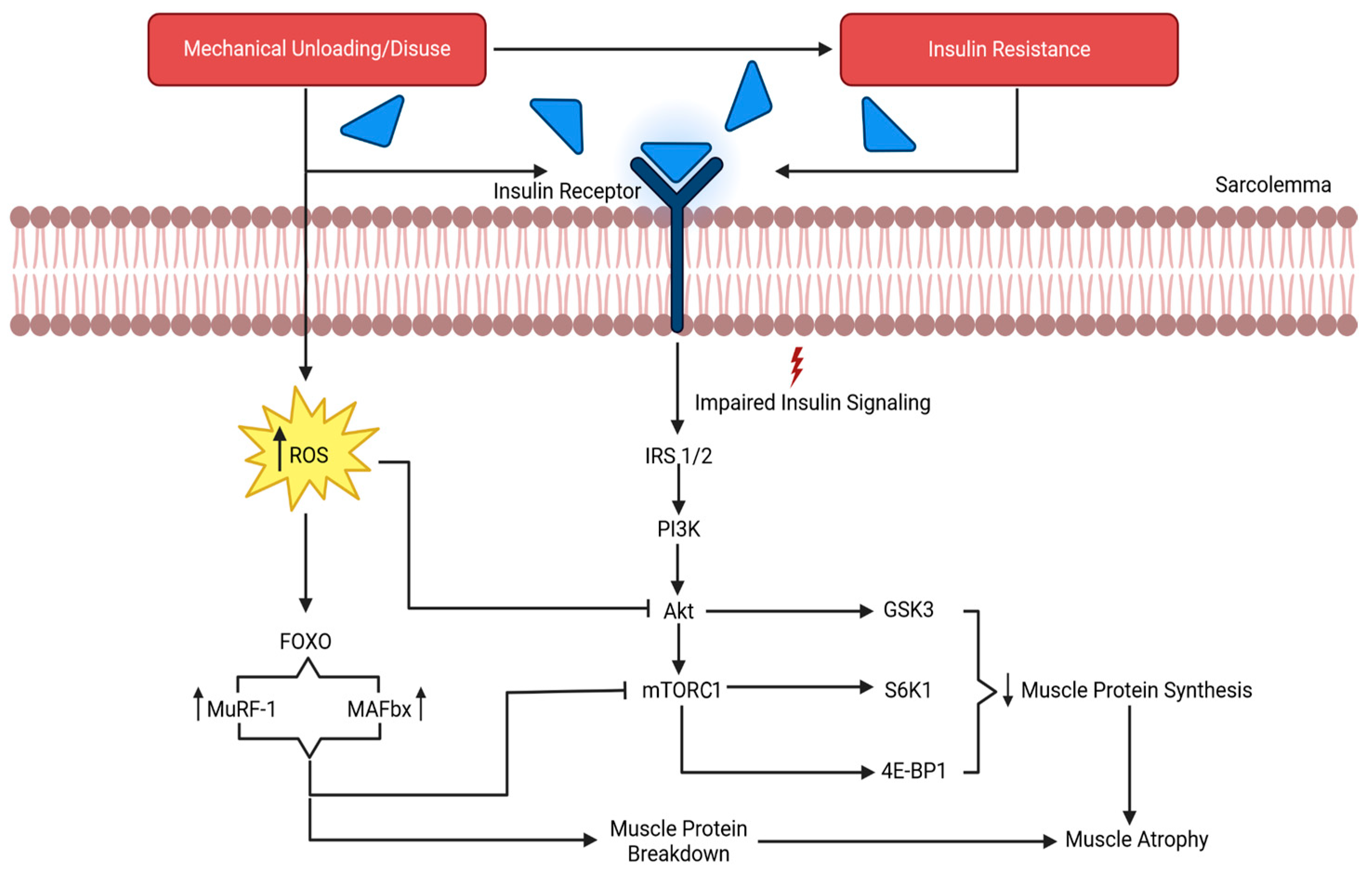
2. Methods
3. Spaceflight and Muscle Degradation
4. Utilizing NMES in Disease and Microgravity
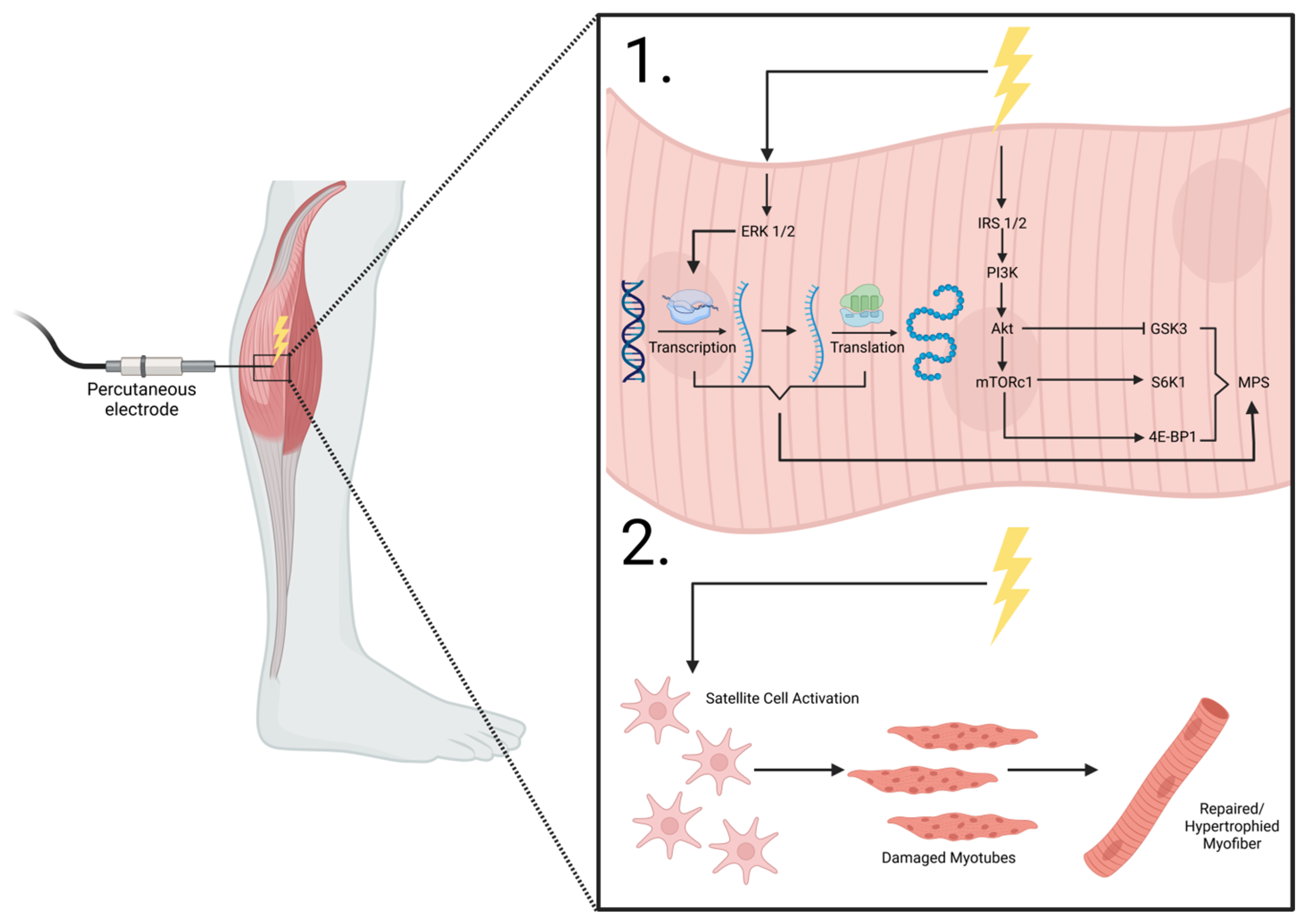
5. Mechanisms of NMES That Elicit Muscle Preservation
6. Future Directions
7. Conclusions
Author Contributions
Funding
Institutional Review Board Statement
Informed Consent Statement
Data Availability Statement
Acknowledgments
Conflicts of Interest
Abbreviations
| 4E-BP1 | 4 eukaryotic initiation factor binding protein 1 |
| Akt | Protein kinase B |
| ARED | Advanced Resistive Exercise Device |
| BFRT | Blood flow restriction training |
| COPD | Chronic obstructive pulmonary disorder |
| DOMS | Delayed onset muscle soreness |
| EIF2B | Eukaryotic initiation factor 2b |
| EIF4E | Eukaryotic translation initiation factor 4E |
| ERK1/2 | Extracellular signal-regulated protein kinase 1 and 2 |
| EVA | Extravehicular activities |
| FOXO1 | Forkhead box O1 |
| GSK-3β | Glycogen synthase kinase 3β |
| HDAC4 | Histone deacetylase 4 |
| HDT | Head-down tilt |
| HF | High frequency |
| IGF-1 | Insulin-like growth factor 1 |
| IRS 1/2 | Insulin receptor substrate 1 and 2 |
| ISS | International Space Station |
| LEO | Low Earth orbit |
| LDS | Long-duration spaceflight |
| LF | Low frequency |
| MAPK | Mitogen activated protein kinase |
| MAFbx/atrogin-1 | Muscle atrophy F-box |
| MHC | Myosin heavy chain |
| MiR | miRNA |
| M-MED | Multi-modal Exercise Device |
| MPD | Muscle protein degradation |
| MPS | Muscle protein synthesis |
| mTORC | Mechanistic target of rapamycin complex 1 |
| MuRF1 | Muscle RING-finger protein 1 |
| MYF5 | Myogenic factor 5 |
| MyoD | Myoblast determination protein-1 |
| NASA | National Aeronautics and Space Administration |
| NMES | Neuromuscular electrical stimulation |
| p70S6K | 70 kDa ribosomal protein S6 kinase |
| PAX3 | Paired box protein 3 |
| PAX7 | Paired box protein 7 |
| PI3K | Phosphatidylinositol 3 kinase |
| PTEN | Phosphatase and tensin homolog |
| RhoA | Ras homolog family member A |
| ROCK | Rho-associated protein kinase |
| ROS | Reactive oxygen species |
| SRF | Serum response factor |
| S6K1 | Ribosomal protein S6 kinase 1 |
| TNF-α | Tumor necrosis factor-alpha |
References
- Caiozzo, V.J.; Baldwin, K.M.I.; Young, L.R.; Sutton, J.P. (Eds.) Handbook of Bioastronautics; Springer International Publishing: Cham, Switzerland, 2021. [Google Scholar]
- Adams, G.R.; Caiozzo, V.J.; Baldwin, K.M. Skeletal muscle unweighting: Spaceflight and ground-based models. J. Appl. Physiol. 2003, 95, 2185–2201. [Google Scholar] [CrossRef]
- Caiozzo, V.J.; Baker, M.J.; Herrick, R.E.; Tao, M.; Baldwin, K.M. Effect of spaceflight on skeletal muscle: Mechanical properties and myosin isoform content of a slow muscle. J. Appl. Physiol. 1994, 76, 1764–1773. [Google Scholar] [CrossRef]
- Hargens, A.R.; Vico, L. Long-duration bed rest as an analog to microgravity. J. Appl. Physiol. 2016, 120, 891–903. [Google Scholar] [CrossRef]
- LeBlanc, A.; Rowe, R.; Evans, H.; West, S.; Shackelford, L.; Schneider, V. Muscle atrophy during long duration bed rest. Int. J. Sports Med. 1997, 18, S283–S285. [Google Scholar] [CrossRef] [PubMed]
- Eggelbusch, M.; Charlton, B.T.; Bosutti, A.; Ganse, B.; Giakoumaki, I.; Grootemaat, A.E.; Hendrickse, P.W.; Jaspers, Y.; Kemp, S.; Kerkhoff, T.J. The impact of bed rest on human skeletal muscle metabolism. Cell Rep. Med. 2024, 5, 101372. [Google Scholar] [CrossRef] [PubMed]
- Brower, R.G. Consequences of bed rest. Crit. Care Med. 2009, 37, S422–S428. [Google Scholar] [CrossRef] [PubMed]
- Smith, J.D.; Cromwell, R.L.; Kundrot, C.E.; Charles, J.B. (Eds.) Six-degree head-down tilt bed rest: Forty years of development as a physiological analog for weightlessness. In American Society for Gravitational and Space Biology Conference; American Society for Gravitational and Space Biology: Colorado Springs, CO, USA, 2011. [Google Scholar]
- Watenpaugh, D.E. Analogs of microgravity: Head-down tilt and water immersion. J. Appl. Physiol. 2016, 120, 904–914. [Google Scholar] [CrossRef]
- Conley, M.S.; Foley, J.M.; Ploutz-Snyder, L.L.; Meyer, R.A.; Dudley, G.A. Effect of acute head-down tilt on skeletal muscle cross-sectional area and proton transverse relaxation time. J. Appl. Physiol. 1996, 81, 1572–1577. [Google Scholar] [CrossRef][Green Version]
- Prokopidis, K.; Morgan, P.T.; Deane, C.S.; Witard, O.C.; Church, D.D. The effect of bed rest, unilateral limb immobilization and head-down tilt on muscle protein synthesis: A systematic review and meta-analysis. Exp. Physiol. 2025; Epub ahead of printing. [Google Scholar]
- Martin, T.P.; Edgerton, V.R.; Grindeland, R.E. Influence of spaceflight on rat skeletal muscle. J. Appl. Physiol. 1988, 65, 2318–2325. [Google Scholar] [CrossRef]
- Ohira, Y.; Jiang, B.; Roy, R.R.; Oganov, V.; Ilyina-Kakueva, E.; Marini, J.F.; Edgerton, V.R. Rat soleus muscle fiber responses to 14 days of spaceflight and hindlimb suspension. J. Appl. Physiol. 1992, 73, S51–S57. [Google Scholar] [CrossRef]
- Globus, R.K.; Morey-Holton, E. Hindlimb unloading: Rodent analog for microgravity. J. Appl. Physiol. 2016, 120, 1196–1206. [Google Scholar] [CrossRef]
- Shenkman, B.S.; Kozlovskaya, I.B.; Nemirovskaya, T.L.; Tcheglova, I.A. Human muscle atrophy in supportlessness: Effects of short-term exposure to dry immersion. J. Gravitational Physiol. A J. Int. Soc. Gravitational Physiol. 1997, 4, P137–P138. [Google Scholar]
- Navasiolava, N.M.; Custaud, M.A.; Tomilovskaya, E.S.; Larina, I.M.; Mano, T.; Gauquelin-Koch, G.; Gharib, C.; Kozlovskaya, I.B. Long-term dry immersion: Review and prospects. Eur. J. Appl. Physiol. 2011, 111, 1235–1260. [Google Scholar] [CrossRef]
- Alkner, B.A.; Tesch, P.A. Knee extensor and plantar flexor muscle size and function following 90 days of bed rest with or without resistance exercise. Eur. J. Appl. Physiol. 2004, 93, 294–305. [Google Scholar] [CrossRef] [PubMed]
- Cotter, J.A.; Yu, A.; Haddad, F.; Kreitenberg, A.; Baker, M.J.; Tesch, P.A.; Baldwin, K.M.; Caiozzo, V.J.; Adams, G.R. Concurrent exercise on a gravity-independent device during simulated microgravity. Med. Sci. Sports Exerc. 2015, 47, 990–1000. [Google Scholar] [CrossRef]
- Owerkowicz, T.; Cotter, J.A.; Haddad, F.; Yu, A.M.; Camilon, M.L.; Hoang, T.N.; Jimenez, D.J.; Kreitenberg, A.; Tesch, P.A.; Caiozzo, V.J.; et al. Exercise Responses to Gravity-Independent Flywheel Aerobic and Resistance Training. Aerosp. Med. Hum. Perform. 2016, 87, 93–101. [Google Scholar] [CrossRef] [PubMed]
- Fernandez-Gonzalo, R.; Irimia, J.M.; Cusso, R.; Gustafsson, T.; Linné, A.; Tesch, P.A. Flywheel Resistance Exercise to Maintain Muscle Oxidative Potential During Unloading. Aviat. Space Environ. Med. 2014, 85, 694–699. [Google Scholar] [CrossRef] [PubMed]
- Yang, Y.; Kaplan, A.; Pierre, M.; Adams, G.; Cavanagh, P.; Takahashi, C.; Kreitenberg, A.; Hicks, J.; Keyak, J.; Caiozzo, V. Space cycle: A human-powered centrifuge that can be used for hypergravity resistance training. Aviat. Space Environ. Med. 2007, 78, 2–9. [Google Scholar]
- Laflamme, Y.; Chassé, E.; Hughes, L. Blood flow restriction exercise during microgravity exposure in parabolic flight. Exp. Physiol. 2025; Epub ahead of printing. [Google Scholar]
- Hu, M.; Li, W.; Yin, Q.; Liu, Y.; Chen, L.; Ru, Q.; Xu, G.; Wu, Y. Blood flow restriction training in microgravity: A review of multisystem physiological benefits and implementation challenges for long-duration space missions. npj Microgravity 2025, 11, 53. [Google Scholar] [CrossRef]
- Behringer, M.; Willberg, C. Application of Blood Flow Restriction to Optimize Exercise Countermeasures for Human Space Flight. Front. Physiol. 2019, 10, 33. [Google Scholar] [CrossRef] [PubMed]
- Gondin, J.; Cozzone, P.J.; Bendahan, D. Is high-frequency neuromuscular electrical stimulation a suitable tool for muscle performance improvement in both healthy humans and athletes? Eur. J. Appl. Physiol. 2011, 111, 2473–2487. [Google Scholar] [CrossRef] [PubMed]
- Veldman, M.P.; Gondin, J.; Place, N.; Maffiuletti, N.A. Effects of neuromuscular electrical stimulation training on endurance performance. Front. Physiol. 2016, 7, 544. [Google Scholar] [CrossRef] [PubMed]
- Jones, S.; Man, W.D.C.; Gao, W.; Higginson, I.J.; Wilcock, A.; Maddocks, M. Neuromuscular electrical stimulation for muscle weakness in adults with advanced disease. Cochrane Database Syst. Rev. 2016, 2016, CD009419. [Google Scholar] [CrossRef]
- Maffiuletti, N.A.; Green, D.A.; Vaz, M.A.; Dirks, M.L. Neuromuscular electrical stimulation as a potential countermeasure for skeletal muscle atrophy and weakness during human spaceflight. Front. Physiol. 2019, 10, 1031. [Google Scholar] [CrossRef]
- Pacy, P.; Hesp, R.; Halliday, D.; Katz, D.; Cameron, G.; Reeve, J. Muscle and bone in paraplegic patients, and the effect of functional electrical stimulation. Clin. Sci. 1988, 75, 481–487. [Google Scholar] [CrossRef]
- Marsolais, E.B.; Kobetic, R. Functional electrical stimulation for walking in paraplegia. J. Bone Jt. Surg. 1987, 69, 728–733. [Google Scholar] [CrossRef]
- Kagaya, H.; Shimada, Y.; Sato, K.; Sato, M. Changes in muscle force following therapeutic electrical stimulation in patients with complete paraplegia. Spinal Cord. 1996, 34, 24–29. [Google Scholar] [CrossRef]
- Kouzaki, K.; Isemura, M.; Tamura, Y.; Uno, H.; Tadano, S.; Akimoto, R.; Hosoki, K.; Nakazato, K. Belt-type electrical muscle stimulation preserves muscle fiber size but does not improve muscle function in a rat model of cancer cachexia. PLoS ONE 2025, 20, e0336391. [Google Scholar] [CrossRef]
- Fusagawa, H.; Sato, T.; Yamada, T.; Naito, A.; Tokuda, N.; Yamauchi, N.; Ichise, N.; Ogawa, T.; Karaushi, T.; Teramoto, A. High-intensity interval training using electrical stimulation ameliorates muscle fatigue in chronic kidney disease-related cachexia by restoring mitochondrial respiratory dysfunction. Front. Physiol. 2024, 15, 1423504. [Google Scholar] [CrossRef]
- Tanaka, K.; Tanaka, M.; Takegaki, J.; Fujino, H. Preventive effects of electrical stimulation on inflammation-induced muscle mitochondrial dysfunction. Acta Histochem. 2016, 118, 464–470. [Google Scholar] [CrossRef]
- Scott, O.; Vrbová, G.; Hyde, S.; Dubowitz, V. Responses of muscles of patients with Duchenne muscular dystrophy to chronic electrical stimulation. J. Neurol. Neurosurg. Psychiatry 1986, 49, 1427–1434. [Google Scholar] [CrossRef]
- Zupan, A.; Gregorič, M.; Valenčic, V. Long-lasting effects of electrical stimulation upon muscles of patients suffering from progressive muscular dystrophy. Clin. Rehabil. 1995, 9, 102–109. [Google Scholar] [CrossRef]
- Maddocks, M.; Gao, W.; Higginson, I.J.; Wilcock, A. Neuromuscular electrical stimulation for muscle weakness in adults with advanced disease. Cochrane Database Syst. Rev. 2013, CD009419. [Google Scholar]
- Vivodtzev, I.; Lacasse, Y.; Maltais, F. Neuromuscular electrical stimulation of the lower limbs in patients with chronic obstructive pulmonary disease. J. Cardiopulm. Rehabil. Prev. 2008, 28, 79–91. [Google Scholar] [CrossRef] [PubMed]
- Gordon, T.; Amirjani, N.; Edwards, D.C.; Chan, K.M. Brief post-surgical electrical stimulation accelerates axon regeneration and muscle reinnervation without affecting the functional measures in carpal tunnel syndrome patients. Exp. Neurol. 2010, 223, 192–202. [Google Scholar] [CrossRef] [PubMed]
- Wall, B.T.; Dirks, M.L.; Verdijk, L.B.; Snijders, T.; Hansen, D.; Vranckx, P.; Burd, N.A.; Dendale, P.; Loon, L.J.C.V. Neuromuscular electrical stimulation increases muscle protein synthesis in elderly type 2 diabetic men. Am. J. Physiol. Endocrinol. Metab. 2012, 303, E614–E623. [Google Scholar] [CrossRef]
- Polidori, P.; Vincenzetti, S. The use of electrical stimulation in meat production. In Meat and Meat Processing; Nova Publishers Inc.: Hauppauge, NY, USA, 2017; pp. 133–154. [Google Scholar]
- Hwang, I.; Devine, C.; Hopkins, D. The biochemical and physical effects of electrical stimulation on beef and sheep meat tenderness. Meat Sci. 2003, 65, 677–691. [Google Scholar] [CrossRef]
- Li, C.; Li, J.-s.; Zhou, G.; Lametsch, R.; Ertbjerg, P.; Brüggemann, D.; Huang, H.; Karlsson, A.; Hviid, M.; Lundström, K. Electrical stimulation affects metabolic enzyme phosphorylation, protease activation, and meat tenderization in beef. J. Anim. Sci. 2012, 90, 1638–1649. [Google Scholar] [CrossRef] [PubMed]
- Hardy, E.J.; Hatt, J.; Doleman, B.; Smart, T.F.; Piasecki, M.; Lund, J.N.; Phillips, B.E. Post-operative electrical muscle stimulation attenuates loss of muscle mass and function following major abdominal surgery in older adults: A split body randomised control trial. Age Ageing 2022, 51, afac234. [Google Scholar] [CrossRef]
- Sumin, A.N.; Oleinik, P.A.; Bezdenezhnykh, A.V.; Ivanova, A.V. Neuromuscular electrical stimulation in early rehabilitation of patients with postoperative complications after cardiovascular surgery: A randomized controlled trial. Medicine 2020, 99, e22769. [Google Scholar] [CrossRef]
- Rebai, H.; Barra, V.; Laborde, A.; Bonny, J.-M.; Poumarat, G.; Coudert, J. Effects of two electrical stimulation frequencies in thigh muscle after knee surgery. Int. J. Sports Med. 2002, 23, 604–609. [Google Scholar] [CrossRef]
- Fu, T.; Jiang, L.; Peng, Y.; Li, Z.; Liu, S.; Lu, J.; Zhang, F.; Zhang, J. Electrical muscle stimulation accelerates functional recovery after nerve injury. Neuroscience 2020, 426, 179–188. [Google Scholar] [CrossRef]
- Lake, D.A. Neuromuscular electrical stimulation: An overview and its application in the treatment of sports injuries. Sports Med. 1992, 13, 320–336. [Google Scholar] [CrossRef] [PubMed]
- Chen, J. Bioelectrical stimulation therapy for muscle injuries in aerobics athletes. Mol. Cell. Biomech. 2024, 21, 268. [Google Scholar] [CrossRef]
- Zorn, C.; Szekeres, T.; Keilani, M.; Fialka-Moser, V.; Crevenna, R. Effects of neuromuscular electrical stimulation of the knee extensor muscles on muscle soreness and different serum parameters in young male athletes: Preliminary data. Br. J. Sports Med. 2007, 41, 914–916. [Google Scholar] [CrossRef][Green Version]
- Reidy, P.; McKenzie, A.I.; Brunker, P.; Nelson, D.S.; Barrows, K.M.; Supiano, M.; LaStayo, P.C.; Drummond, M.J. Neuromuscular Electrical Stimulation Combined with Protein Ingestion Preserves Thigh Muscle Mass But Not Muscle Function in Healthy Older Adults During 5 Days of Bed Rest. Rejuvenation Res. 2017, 20, 449–461. [Google Scholar] [CrossRef]
- Zanotti, E.; Felicetti, G.; Maini, M.; Fracchia, C. Peripheral muscle strength training in bed-bound patients with COPD receiving mechanical ventilation: Effect of electrical stimulation. Chest 2003, 124, 292–296. [Google Scholar] [CrossRef] [PubMed]
- Carkner, J. The Role of Neuromuscular Electrical Stimulation in Improving Peripheral Muscle Strength in Chronically Ill Bedbound Patients. Master’s Thesis, McGill University, Montreal, QC, Canada, 2011. [Google Scholar]
- Dirks, M.L.; Hansen, D.; Van Assche, A.; Dendale, P.; Van Loon, L.J.C. Neuromuscular electrical stimulation prevents muscle wasting in critically ill comatose patients. Clin. Sci. 2014, 128, 357–365. [Google Scholar] [CrossRef]
- Nonoyama, T.; Shigemi, H.; Kubota, M.; Matsumine, A.; Shigemi, K.; Ishizuka, T. Neuromuscular electrical stimulation in the intensive care unit prevents muscle atrophy in critically ill older patients: A retrospective cohort study. Medicine 2022, 101, e29451. [Google Scholar] [CrossRef]
- Laws, J.M.; Caplan, N.; Bruce, C.; McGrogan, C.; Lindsay, K.; Wild, B.; Debuse, D.; Wotring, V.; Winnard, A. Systematic review of the technical and physiological constraints of the Orion Multi-Purpose Crew Vehicle that affect the capability of astronauts to exercise effectively during spaceflight. Acta Astronaut. 2020, 170, 665–677. [Google Scholar] [CrossRef]
- De la Torre, G.G. Cognitive neuroscience in space. Life 2014, 4, 281–294. [Google Scholar] [CrossRef] [PubMed]
- Scott, J.P.R.; Weber, T.; Green, D.A. Introduction to the Frontiers Research Topic: Optimization of Exercise Countermeasures for Human Space Flight—Lessons From Terrestrial Physiology and Operational Considerations. Front. Physiol. 2019, 10, 173. [Google Scholar] [CrossRef]
- Fitts, R.H.; Riley, D.R.; Widrick, J.J. Physiology of a microgravity environment invited review: Microgravity and skeletal muscle. J. Appl. Physiol. 2000, 89, 823–839. [Google Scholar] [CrossRef] [PubMed]
- Fitts, R.; Trappe, S.; Costill, D.; Gallagher, P.M.; Creer, A.C.; Colloton, P.; Peters, J.R.; Romatowski, J.; Bain, J.; Riley, D.A. Prolonged space flight-induced alterations in the structure and function of human skeletal muscle fibres. J. Physiol. 2010, 588, 3567–3592. [Google Scholar] [CrossRef]
- Phillips, S.M.; Glover, E.I.; Rennie, M.J. Alterations of protein turnover underlying disuse atrophy in human skeletal muscle. J. Appl. Physiol. 2009, 107, 645–654. [Google Scholar] [CrossRef]
- Wall, B.T.; van Loon, L.J. Nutritional strategies to attenuate muscle disuse atrophy. Nutr. Rev. 2013, 71, 195–208. [Google Scholar] [CrossRef] [PubMed]
- Abdulla, H.; Smith, K.; Atherton, P.J.; Idris, I. Role of insulin in the regulation of human skeletal muscle protein synthesis and breakdown: A systematic review and meta-analysis. Diabetologia 2016, 59, 44–55. [Google Scholar] [CrossRef]
- Gao, Y.; Arfat, Y.; Wang, H.; Goswami, N. Muscle Atrophy Induced by Mechanical Unloading: Mechanisms and Potential Countermeasures. Front. Physiol. 2018, 9, 235. [Google Scholar] [CrossRef]
- Alexandrov, A.; Gharib, C.; Grigoriev, A.; Güell, A.; Kojarinov, Y.; Ruvinova, L.; Smirnov, K. Oral glucose tolerance tests in man during a 150-day space flight (Salyut 7-Soyuz T9). C. R. Seances Soc. Biol. Ses Fil. 1985, 179, 192–195. [Google Scholar]
- Stein, T.; Boden, G. Development of insulin resistance by astronauts during spaceflight. Aviat. Space Environ. Med. 1994, 65, 1091–1096. [Google Scholar]
- Smith, S.M.; Zwart, S.R.; Heer, M.; Douglas, G.L. Human Adaptation to Spaceflight: The Role of Food and Nutrition; National Aeronautics and Space Administration: Washington, DC, USA, 2021. [Google Scholar]
- Smith, S.M.; Zwart, S.R.; Block, G.; Rice, B.L.; Davis-Street, J.E. The Nutritional Status of Astronauts Is Altered after Long-Term Space Flight Aboard the International Space Station. J. Nutr. 2005, 135, 437–443. [Google Scholar] [CrossRef]
- Smith, S.M.; Heer, M.A.; Shackelford, L.C.; Sibonga, J.D.; Ploutz-Snyder, L.; Zwart, S.R. Benefits for bone from resistance exercise and nutrition in long-duration spaceflight: Evidence from biochemistry and densitometry. J. Bone Min. Res. 2012, 27, 1896–1906. [Google Scholar] [CrossRef]
- Yoshida, T.; Delafontaine, P. Mechanisms of IGF-1-Mediated Regulation of Skeletal Muscle Hypertrophy and Atrophy. Cells 2020, 9, 1970. [Google Scholar] [CrossRef]
- Baek, M.O.; Ahn, C.B.; Cho, H.J.; Choi, J.Y.; Son, K.H.; Yoon, M.S. Simulated microgravity inhibits C2C12 myogenesis via phospholipase D2-induced Akt/FOXO1 regulation. Sci. Rep. 2019, 9, 14910. [Google Scholar] [CrossRef] [PubMed]
- Allen, D.L.; Bandstra, E.R.; Harrison, B.C.; Thorng, S.; Stodieck, L.S.; Kostenuik, P.J.; Morony, S.; Lacey, D.L.; Hammond, T.G.; Leinwand, L.L.; et al. Effects of spaceflight on murine skeletal muscle gene expression. J. Appl. Physiol. 2009, 106, 582–595. [Google Scholar] [CrossRef]
- Zou, J.; Lei, T.; Guo, P.; Yu, J.; Xu, Q.; Luo, Y.; Ke, R.; Huang, D. Mechanisms shaping the role of ERK1/2 in cellular senescence. Mol. Med. Rep. 2019, 19, 759–770. [Google Scholar] [PubMed]
- Liang, L.; Li, H.; Cao, T.; Qu, L.; Zhang, L.; Fan, G.-C.; Greer, P.A.; Li, J.; Jones, D.L.; Peng, T. Calpain activation mediates microgravity-induced myocardial abnormalities in mice via p38 and ERK1/2 MAPK pathways. J. Biol. Chem. 2020, 295, 16840–16851. [Google Scholar] [CrossRef]
- Liu, Y.; Cao, X.; Zhou, Q.; Deng, C.; Yang, Y.; Huang, D.; Luo, H.; Zhang, S.; Li, Y.; Xu, J. Mechanisms and Countermeasures for Muscle Atrophy in Microgravity. Cells 2024, 13, 2120. [Google Scholar] [CrossRef] [PubMed]
- Fitts, R.H.; Riley, D.R.; Widrick, J.J. Functional and structural adaptations of skeletal muscle to microgravity. J. Exp. Biol. 2001, 204, 3201–3208. [Google Scholar] [CrossRef] [PubMed]
- Parafati, M.; Thwin, Z.; Malany, L.K.; Coen, P.M.; Malany, S. Microgravity accelerates skeletal muscle degeneration: Functional and transcriptomic insights from an ISS muscle lab-on-chip model. Stem Cell Rep. 2025, 20, 102550. [Google Scholar] [CrossRef]
- Furukawa, S.; Chatani, M.; Higashitani, A.; Higashibata, A.; Kawano, F.; Nikawa, T.; Numaga-Tomita, T.; Ogura, T.; Sato, F.; Sehara-Fujisawa, A.; et al. Findings from recent studies by the Japan Aerospace Exploration Agency examining musculoskeletal atrophy in space and on Earth. npj Microgravity 2021, 7, 18. [Google Scholar] [CrossRef]
- Koopman, R.; Gleeson, B.G.; Gijsen, A.P.; Groen, B.; Senden, J.M.; Rennie, M.J.; van Loon, L.J. Post-exercise protein synthesis rates are only marginally higher in type I compared with type II muscle fibres following resistance-type exercise. Eur. J. Appl. Physiol. 2011, 111, 1871–1878. [Google Scholar] [CrossRef] [PubMed][Green Version]
- Campos, C.; Flores-Opazo, M.; Valladares-Ide, D.; Cabello-Verrugio, C.; Parada, P.; Morales, F.; Arredondo, J.; Peñailillo, L. Fiber-specific differences in protein content of pathways related to mTORC1 signaling and oxidative metabolism in individuals with obesity. Sci. Rep. 2025, 15, 23839. [Google Scholar] [CrossRef]
- Goll, D.E.; Thompson, V.F.; Li, H.; Wei, W.; Cong, J. The Calpain System. Physiol. Rev. 2003, 83, 731–801. [Google Scholar] [CrossRef]
- Perrin, B.; Huttenlocher, A. Calpain. Int. J. Biochem. Cell Biol. 2002, 34, 722–725. [Google Scholar] [CrossRef]
- Turk, V.; Stoka, V.; Vasiljeva, O.; Renko, M.; Sun, T.; Turk, B.; Turk, D. Cysteine cathepsins: From structure, function and regulation to new frontiers. Biochim. Biophys. Acta (BBA) Proteins Proteom. 2012, 1824, 68–88. [Google Scholar] [CrossRef]
- Yadati, T.; Houben, T.; Bitorina, A.; Shiri-Sverdlov, R. The Ins and Outs of Cathepsins: Physiological Function and Role in Disease Management. Cells 2020, 9, 1679. [Google Scholar] [CrossRef]
- Ogasawara, S.; Cheng, X.W.; Inoue, A.; Hu, L.; Piao, L.; Yu, C.; Goto, H.; Xu, W.; Zhao, G.; Lei, Y. Cathepsin K activity controls cardiotoxin-induced skeletal muscle repair in mice. J. Cachexia Sarcopenia Muscle 2018, 9, 160–175. [Google Scholar] [CrossRef]
- Tjondrokoesoemo, A.; Schips, T.G.; Sargent, M.A.; Vanhoutte, D.; Kanisicak, O.; Prasad, V.; Lin, S.-C.J.; Maillet, M.; Molkentin, J.D. Cathepsin S contributes to the pathogenesis of muscular dystrophy in mice. J. Biol. Chem. 2016, 291, 9920–9928. [Google Scholar] [CrossRef]
- Meng, X.; Huang, Z.; Inoue, A.; Wang, H.; Wan, Y.; Yue, X.; Xu, S.; Jin, X.; Shi, G.P.; Kuzuya, M. Cathepsin K activity controls cachexia-induced muscle atrophy via the modulation of IRS1 ubiquitination. J. Cachexia Sarcopenia Muscle 2022, 13, 1197–1209. [Google Scholar] [CrossRef]
- Goto, H.; Inoue, A.; Piao, L.; Hu, L.; Huang, Z.; Meng, X.; Suzuki, Y.; Umegaki, H.; Kuzuya, M.; Cheng, X.W. Proliferin-1 ameliorates cardiotoxin-related skeletal muscle repair in mice. Stem Cells Int. 2021, 2021, 9202990. [Google Scholar] [CrossRef]
- Hou, Y.; Deng, H.; Liu, W.; Liu, Y. Exploring the role of cathepsins in sarcopenia-related traits: Insights from a Mendelian randomization study. Medicine 2025, 104, e42700. [Google Scholar] [CrossRef] [PubMed]
- Gupta, S.; Singh, R.K.; Dastidar, S.; Ray, A. Cysteine cathepsin S as an immunomodulatory target: Present and future trends. Expert Opin. Ther. Targets 2008, 12, 291–299. [Google Scholar] [CrossRef] [PubMed]
- Pietschmann, P.; Foger-Samwald, U.; Sipos, W.; Rauner, M. The role of cathepsins in osteoimmunology. Crit. Rev. Eukaryot. Gene Expr. 2013, 23, 11–26. [Google Scholar] [CrossRef]
- Wan, Y.; Piao, L.; Xu, S.; Inoue, A.; Meng, X.; Lei, Y.; Huang, Z.; Wang, H.; Yue, X.; Shi, G.P. Cathepsin S deficiency improves muscle mass loss and dysfunction via the modulation of protein metabolism in mice under pathological stress conditions. FASEB J. 2023, 37, e23086. [Google Scholar] [CrossRef]
- Wan, Y.; Piao, L.; Xu, S.; Meng, X.; Huang, Z.; Inoue, A.; Wang, H.; Yue, X.; Jin, X.; Nan, Y. Cathepsin S activity controls chronic stress-induced muscle atrophy and dysfunction in mice. Cell. Mol. Life Sci. 2023, 80, 254. [Google Scholar] [CrossRef]
- Ogneva, I.V. Transversal stiffness of fibers and desmin content in leg muscles of rats under gravitational unloading of various durations. J. Appl. Physiol. 2010, 109, 1702–1709. [Google Scholar] [CrossRef] [PubMed]
- Enns, D.L.; Belcastro, A.N. Early activation and redistribution of calpain activity in skeletal muscle during hindlimb unweighting and reweighting. Can. J. Physiol. Pharmacol. 2006, 84, 601–609. [Google Scholar] [CrossRef] [PubMed]
- Enns, D.L.; Raastad, T.; Ugelstad, I.; Belcastro, A.N. Calpain/calpastatin activities and substrate depletion patterns during hindlimb unweighting and reweighting in skeletal muscle. Eur. J. Appl. Physiol. 2007, 100, 445–455. [Google Scholar] [CrossRef] [PubMed]
- Takaya, K.; Asou, T.; Kishi, K. Cathepsin F is a potential marker for senescent human skin fibroblasts and keratinocytes associated with skin aging. GeroScience 2023, 45, 427–437. [Google Scholar] [CrossRef]
- Kolesova, E.P.; Egorova, V.S.; Syrocheva, A.O.; Frolova, A.S.; Kostyushev, D.; Kostyusheva, A.; Brezgin, S.; Trushina, D.B.; Fatkhutdinova, L.; Zyuzin, M. Proteolytic resistance determines albumin nanoparticle drug delivery properties and increases cathepsin B, D, and G expression. Int. J. Mol. Sci. 2023, 24, 10245. [Google Scholar] [CrossRef]
- Ikemoto, M.; Nikawa, T.; Takeda, S.i.; Watanabe, C.; Kitano, T.; Baldwin, K.M.; Izumi, R.; Nonaka, I.; Towatari, T.; Teshima, S. Space shuttle flight (STS-90) enhances degradation of rat myosin heavy chain in association with activation of ubiquitin-proteasome pathway. FASEB J. 2001, 15, 1279–1281. [Google Scholar] [CrossRef] [PubMed]
- Feger, B.J.; Thompson, J.W.; Dubois, L.G.; Kommaddi, R.P.; Foster, M.W.; Mishra, R.; Shenoy, S.K.; Shibata, Y.; Kidane, Y.H.; Moseley, M.A. Microgravity induces proteomics changes involved in endoplasmic reticulum stress and mitochondrial protection. Sci. Rep. 2016, 6, 34091. [Google Scholar] [CrossRef]
- Belova, S.P.; Lomonosova, Y.N.; Shenkman, B.S.; Nemirovskaya, T.L. The blockade of dihydropyridine channels prevents an increase in μ-calpain level under m. soleus unloading. Dokl. Biochem. Biophys. 2015, 460, 1–3. [Google Scholar] [CrossRef]
- Ciechanover, A. The ubiquitin-proteasome proteolytic pathway. Cell 1994, 79, 13–21. [Google Scholar] [CrossRef]
- Bodine, S.C.; Baehr, L.M. Skeletal muscle atrophy and the E3 ubiquitin ligases MuRF1 and MAFbx/atrogin-1. Am. J. Physiol. Endocrinol. Metab. 2014, 307, E469–E484. [Google Scholar] [CrossRef]
- Rom, O.; Reznick, A.Z. The role of E3 ubiquitin-ligases MuRF-1 and MAFbx in loss of skeletal muscle mass. Free Radic. Biol. Med. 2016, 98, 218–230. [Google Scholar] [CrossRef]
- Shimkus, K.L.; Jefferson, L.S.; Gordon, B.S.; Kimball, S.R. Repressors of mTORC1 act to blunt the anabolic response to feeding in the soleus muscle of a cast-immobilized mouse hindlimb. Physiol. Rep. 2018, 6, e13891. [Google Scholar] [CrossRef] [PubMed]
- Baehr, L.M.; Hughes, D.C.; Lynch, S.A.; Van Haver, D.; Maia, T.M.; Marshall, A.G.; Radoshevich, L.; Impens, F.; Waddell, D.S.; Bodine, S.C. Identification of the MuRF1 Skeletal Muscle Ubiquitylome Through Quantitative Proteomics. Function 2021, 2, zqab029. [Google Scholar] [CrossRef] [PubMed]
- Baehr, L.M.; West, D.W.D.; Marshall, A.G.; Marcotte, G.R.; Baar, K.; Bodine, S.C. Muscle-specific and age-related changes in protein synthesis and protein degradation in response to hindlimb unloading in rats. J. Appl. Physiol. 2017, 122, 1336–1350. [Google Scholar] [CrossRef]
- Chopard, A.; Hillock, S.; Jasmin, B.J. Molecular events and signalling pathways involved in skeletal muscle disuse-induced atrophy and the impact of countermeasures. J. Cell Mol. Med. 2009, 13, 3032–3050. [Google Scholar] [CrossRef] [PubMed]
- Trappe, S.; Costill, D.; Gallagher, P.; Creer, A.; Peters, J.R.; Evans, H.; Riley, D.A.; Fitts, R.H. Exercise in space: Human skeletal muscle after 6 months aboard the International Space Station. J. Appl. Physiol. 2009, 106, 1159–1168. [Google Scholar] [CrossRef]
- Caiozzo, V.J.; Haddad, F.; Baker, M.J.; Herrick, R.E.; Prietto, N.; Baldwin, K.M. Microgravity-induced transformations of myosin isoforms and contractile properties of skeletal muscle. J. Appl. Physiol. 1985, 81, 123–132. [Google Scholar] [CrossRef]
- Zhou, M.Y.; Klitgaard, H.; Saltin, B.; Roy, R.R.; Edgerton, V.R.; Gollnick, P.D. Myosin heavy chain isoforms of human muscle after short-term spaceflight. J. Appl. Physiol. 1995, 78, 1740–1744. [Google Scholar] [CrossRef]
- Murgia, M.; Rittweger, J.; Reggiani, C.; Bottinelli, R.; Mann, M.; Schiaffino, S.; Narici, M.V. Spaceflight on the ISS changed the skeletal muscle proteome of two astronauts. npj Microgravity 2024, 10, 60. [Google Scholar] [CrossRef]
- Widrick, J.J.; Knuth, S.T.; Norenberg, K.M.; Romatowski, J.; Bain, J.L.; Riley, D.A.; Karhanek, M.; Trappe, S.; Trappe, T.A.; Costill, D. Effect of a 17 day spaceflight on contractile properties of human soleus muscle fibres. J. Physiol. 1999, 516, 915. [Google Scholar] [CrossRef]
- Doucet, B.M.; Lam, A.; Griffin, L. Neuromuscular electrical stimulation for skeletal muscle function. Yale J. Biol. Med. 2012, 85, 201–215. [Google Scholar]
- Sheffler, L.R.; Chae, J. Neuromuscular electrical stimulation in neurorehabilitation. Muscle Nerve 2007, 35, 562–590. [Google Scholar] [CrossRef] [PubMed]
- Peckham, P.H.; Knutson, J.S. Functional Electrical Stimulation for Neuromuscular Applications*. Annu. Rev. Biomed. Eng. 2005, 7, 327–360. [Google Scholar] [CrossRef]
- MacDiarmid, S.A.; John, M.S.; Yoo, P.B. A pilot feasibility study of treating overactive bladder patients with percutaneous saphenous nerve stimulation. Neurourol. Urodyn. 2018, 37, 1815–1820. [Google Scholar] [CrossRef]
- Barberi, L.; Scicchitano, B.M.; Musaro, A. Molecular and cellular mechanisms of muscle aging and sarcopenia and effects of electrical stimulation in seniors. Eur. J. Transl. Myol. 2015, 25, 5227. [Google Scholar] [CrossRef]
- Dirks, M.L.; Wall, B.T.; Snijders, T.; Ottenbros, C.L.P.; Verdijk, L.B.; van Loon, L.J.C. Neuromuscular electrical stimulation prevents muscle disuse atrophy during leg immobilization in humans. Acta Physiol. 2014, 210, 628–641. [Google Scholar] [CrossRef]
- Shiba, N.; Matsuse, H.; Takano, Y.; Yoshimitsu, K.; Omoto, M.; Hashida, R.; Tagawa, Y.; Inada, T.; Yamada, S.; Ohshima, H. Electrically Stimulated Antagonist Muscle Contraction Increased Muscle Mass and Bone Mineral Density of One Astronaut—Initial Verification on the International Space Station. PLoS ONE 2015, 10, 0134736. [Google Scholar]
- Leite, M.A.; Osaku, E.F.; Albert, J.; Costa, C.; Garcia, A.M.; Czapiesvski, F.D.N.; Ogasawara, S.M.; Bertolini, G.R.F.; Jorge, A.C.; Duarte, P.A.D. Effects of Neuromuscular Electrical Stimulation of the Quadriceps and Diaphragm in Critically Ill Patients: A Pilot Study. Crit. Care Res. Pract. 2018, 2018, 4298583. [Google Scholar] [CrossRef]
- Hansen, S.K.; Hansen, P.; Berry, T.W.; Grønbæk, H.D.; Olsen, C.M.; Merhi, Y.; Agarwala, S.; Aagaard, P.; Hvid, L.G.; Agergaard, J.; et al. Effects of neuromuscular electrical stimulation on voluntary muscle activation and peripheral muscle contractility following short-term bed rest. Exp. Physiol. 2025, 110, 1966–1977. [Google Scholar] [CrossRef] [PubMed]
- Boncompagni, S.; Kern, H.; Rossini, K.; Hofer, C.; Mayr, W.; Carraro, U.; Protasi, F. Structural differentiation of skeletal muscle fibers in the absence of innervation in humans. Proc. Natl. Acad. Sci. USA 2007, 104, 19339–19344. [Google Scholar] [CrossRef] [PubMed]
- Kern, H.; Carraro, U.; Adami, N.; Biral, D.; Hofer, C.; Forstner, C.; Mödlin, M.; Vogelauer, M.; Pond, A.; Boncompagni, S. Home-based functional electrical stimulation rescues permanently denervated muscles in paraplegic patients with complete lower motor neuron lesion. Neurorehabilit. Neural Repair 2010, 24, 709–721. [Google Scholar] [CrossRef]
- Kern, H.; Boncompagni, S.; Rossini, K.; Mayr, W.; Fanò, G.; Zanin, M.E.; Podhorska-Okolow, M.; Protasi, F.; Carraro, U. Long-term denervation in humans causes degeneration of both contractile and excitation-contraction coupling apparatus, which is reversible by functional electrical stimulation (FES): A role for myofiber regeneration? J. Neuropathol. Exp. Neurol. 2004, 63, 919–931. [Google Scholar] [CrossRef]
- Trimble, M.H.; Enoka, R.M. Mechanisms underlying the training effects associated with neuromuscular electrical stimulation. Phys. Ther. 1991, 71, 273–282. [Google Scholar] [CrossRef]
- Martin, T.P.; Stein, R.B.; Hoeppner, P.H.; Reid, D.C. Influence of electrical stimulation on the morphological and metabolic properties of paralyzed muscle. J. Appl. Physiol. 1992, 72, 1401–1406. [Google Scholar] [CrossRef] [PubMed]
- Kilinç, M.; Yildirim, S.A.; Tan, E. The effects of electrical stimulation and exercise therapy in patients with limb girdle muscular dystrophy. Neurosciences 2015, 20, 259–266. [Google Scholar] [CrossRef]
- Gibson, J.N.A.; Smith, K.; Rennie, M.J. PREVENTION OF DISUSE MUSCLE ATROPHY BY MEANS OF ELECTRICAL STIMULATION: MAINTENANCE OF PROTEIN SYNTHESIS. Lancet 1988, 332, 767–770. [Google Scholar] [CrossRef]
- Gould, N.; Donnermeyer, D.; Pope, M.; Ashikaga, T. Transcutaneous muscle stimulation as a method to retard disuse atrophy. Clin. Orthop. Relat. Res. 1982, 164, 215–220. [Google Scholar] [CrossRef]
- Zange, J.; Schopen, K.; Albracht, K.; Gerlach, D.A.; Frings-Meuthen, P.; Maffiuletti, N.A.; Bloch, W.; Rittweger, J. Using the Hephaistos orthotic device to study countermeasure effectiveness of neuromuscular electrical stimulation and dietary lupin protein supplementation, a randomised controlled trial. PLoS ONE 2017, 12, 0171562. [Google Scholar] [CrossRef]
- Koryak, Y. Influence of 7-Day Simulated Microgravity on Human Mechanical Properties Calf and Architecture and the Effect of Electromyostimulation Training. Int. J. Sports Exerc. Med. 2017, 3, 080. [Google Scholar] [CrossRef] [PubMed][Green Version]
- Duvoisin, M.R.; Convertino, V.A.; Buchanan, P.; Gollnick, P.D.; Dudley, G.A. Characteristics and preliminary observations of the influence of electromyostimulation on the size and function of human skeletal muscle during 30 days of simulated microgravity. Aviat. Space Environ. Med. 1989, 60, 671–678. [Google Scholar] [PubMed]
- Abitante, T.J.; Rutkove, S.B.; Duda, K.R.; Newman, D.J. Muscle Fatigue During Neuromuscular Electrical Stimulation is Dependent on Training: A Basis for Microgravity Musculoskeletal Countermeasure Design. In ASCEND 2020; American Institute of Aeronautics and Astronautics: Reston, VA, USA, 2020. [Google Scholar]
- Kozlovskaia, I.B. Fundamental and applied objectives of investigations in immersion. Aviakosm Ekol. Med. 2008, 42, 3–7. [Google Scholar] [CrossRef]
- Yarmanova, E.N.; Kozlovskaya, I.B.; Khimoroda, N.N.; Fomina, E.V. Evolution of Russian Microgravity Countermeasures. Aerosp. Med. Hum. Perform. 2015, 86, A32–A37. [Google Scholar] [CrossRef]
- Kozlovskaya, I.; Yarmanova, E.N.; Vinogradova, O.L.; Shipov, A.A.; Tomilovskaya, E.S.; Fomina, E.V. Prospects for using an exercise device to support and rehabilitate the condition of the musculature in various professional and age groups of the population. Teor. I Prakt. Fiz. Kult. 2009, 3, 18–20. [Google Scholar]
- Mayr, W.; Bijak, M.; Girsch, W.; Hofer, C.; Lanmüller, H.; Rafolt, D.; Rakos, M.; Sauermann, S.; Schmutterer, C.; Schnetz, G.; et al. MYOSTIM-FES to prevent muscle atrophy in microgravity and bed rest: Preliminary report. Artif. Organs 1999, 23, 428–431. [Google Scholar] [CrossRef]
- Freilinger, G.; Mayr, W. (Eds.) Electrical stimulation as a countermeasure to muscle alterations in space. In Life in Space for Life on Earth; European Space Agency: Noordwijk, The Netherlands, 2002; pp. 53–56. [Google Scholar]
- Koryak, Y.A.; Kozlovskaya, I.; Khimoroda, N. Low-frequency neuromuscular electrical stimulation training of human skeletal muscles in conditions of gravitational unloading. Eur. J. Nat. Hist. 2008, 2008, 86–90. [Google Scholar]
- Nussbaum, E.L.; Houghton, P.; Anthony, J.; Rennie, S.; Shay, B.L.; Hoens, A.M. Neuromuscular Electrical Stimulation for Treatment of Muscle Impairment: Critical Review and Recommendations for Clinical Practice. Physiother. Can. 2017, 69, 1–76. [Google Scholar] [CrossRef] [PubMed]
- Sakamoto, K.; Arnolds, D.E.W.; Ekberg, I.; Thorell, A.; Goodyear, L.J. Exercise regulates Akt and glycogen synthase kinase-3 activities in human skeletal muscle. Biochem. Biophys. Res. Commun. 2004, 319, 419–425. [Google Scholar] [CrossRef]
- Kimball, S.R.; O’Malley, J.P.; Anthony, J.C.; Crozier, S.J.; Jefferson, L.S. Assessment of biomarkers of protein anabolism in skeletal muscle during the life span of the rat: Sarcopenia despite elevated protein synthesis. Am. J. Physiol. Endocrinol. Metab. 2004, 287, E772–E780. [Google Scholar] [CrossRef]
- Sonenberg, N. eIF4E, the mRNA cap-binding protein: From basic discovery to translational research. Biochem. Cell Biol. 2008, 86, 178–183. [Google Scholar] [CrossRef]
- Yang, X.; Zhong, W.; Cao, R. Phosphorylation of the mRNA cap-binding protein eIF4E and cancer. Cell. Signal. 2020, 73, 109689. [Google Scholar] [CrossRef]
- Welsh, G.I.; Miller, C.M.; Loughlin, A.J.; Price, N.T.; Proud, C.G. Regulation of eukaryotic initiation factor eIF2B: Glycogen synthase kinase-3 phosphorylates a conserved serine which undergoes dephosphorylation in response to insulin. FEBS Lett. 1998, 421, 125–130. [Google Scholar] [CrossRef]
- Ginjupalli, G.K.; Rice, K.M.; Katta, A.; Manne, N.D.; Arvapalli, R.; Wu, M.; Asano, S.; Blough, E.R. High-frequency electrical stimulation (HFES) data lean and obese Zucker rat tibialis anterior muscle: Regulation of glycogen synthase kinase 3 beta (GSK3B) associated proteins. Data Brief 2018, 16, 423–429. [Google Scholar] [CrossRef]
- Wang, D.A.; Li, Q.Z.; Jia, D.M. Low-Frequency Electrical Stimulation Promotes Satellite Cell Activities to Facilitate Muscle Regeneration at an Early Phase in a Rat Model of Muscle Strain. Biomed. Res. Int. 2021, 2021, 4218086. [Google Scholar] [CrossRef] [PubMed]
- Guo, B.S.; Cheung, K.K.; Yeung, S.S.; Zhang, B.T.; Yeung, E.W. Electrical stimulation influences satellite cell proliferation and apoptosis in unloading-induced muscle atrophy in mice. PLoS ONE 2012, 7, 30348. [Google Scholar] [CrossRef]
- Zhang, B.-T.; Yeung, S.S.; Liu, Y.; Wang, H.-H.; Wan, Y.-M.; Ling, S.-K.; Zhang, H.-Y.; Li, Y.-H.; Yeung, E.W. The effects of low frequency electrical stimulation on satellite cell activity in rat skeletal muscle during hindlimb suspension. BMC Cell Biol. 2010, 11, 87. [Google Scholar] [CrossRef] [PubMed]
- Di Filippo, E.S.; Mancinelli, R.; Marrone, M.; Doria, C.; Verratti, V.; Toniolo, L.; Dantas, J.L.; Fulle, S.; Pietrangelo, T. Neuromuscular electrical stimulation improves skeletal muscle regeneration through satellite cell fusion with myofibers in healthy elderly subjects. J. Appl. Physiol. 2017, 123, 501–512. [Google Scholar] [CrossRef]
- Yablonka-Reuveni, Z. The skeletal muscle satellite cell: Still young and fascinating at 50. J. Histochem. Cytochem. 2011, 59, 1041–1059. [Google Scholar] [CrossRef] [PubMed]
- Chu, X.L.; Song, X.Z.; Li, Q.; Li, Y.R.; He, F.; Gu, X.S.; Ming, D. Basic mechanisms of peripheral nerve injury and treatment via electrical stimulation. Neural Regen. Res. 2022, 17, 2185–2193. [Google Scholar] [CrossRef]
- Di Filippo, E.S.; Chiappalupi, S.; Falone, S.; Dolo, V.; Amicarelli, F.; Marchianò, S.; Carino, A.; Mascetti, G.; Valentini, G.; Piccirillo, S. The MyoGravity project to study real microgravity effects on human muscle precursor cells and tissue. npj Microgravity 2024, 10, 92. [Google Scholar] [CrossRef] [PubMed]
- Mancinelli, R.; Toniolo, L.; Di Filippo, E.S.; Doria, C.; Marrone, M.; Maroni, C.R.; Verratti, V.; Bondi, D.; Maccatrozzo, L.; Pietrangelo, T.; et al. Neuromuscular Electrical Stimulation Induces Skeletal Muscle Fiber Remodeling and Specific Gene Expression Profile in Healthy Elderly. Front. Physiol. 2019, 10, 1459. [Google Scholar] [CrossRef]
- Katoh, K. Effects of Electrical Stimulation on the Signal Transduction-Related Proteins, c-Src and Focal Adhesion Kinase, in Fibroblasts. Life 2022, 12, 531. [Google Scholar] [CrossRef] [PubMed]
- Kim, S.; Ayan, B.; Shayan, M.; Rando, T.A.; Huang, N.F. Skeletal muscle-on-a-chip in microgravity as a platform for regeneration modeling and drug screening. Stem Cell Rep. 2024, 19, 1061–1073. [Google Scholar] [CrossRef]
- Wang, X.H. MicroRNA in myogenesis and muscle atrophy. Curr. Opin. Clin. Nutr. Metab. Care 2013, 16, 258–266. [Google Scholar] [CrossRef] [PubMed]
- Pan, L.-L.; Ke, J.-Q.; Zhao, C.-C.; Huang, S.-Y.; Shen, J.; Jiang, X.-X.; Wang, X.-T. Electrical Stimulation Improves Rat Muscle Dysfunction Caused by Chronic Intermittent Hypoxia-Hypercapnia via Regulation of miRNA-Related Signaling Pathways. PLoS ONE 2016, 11, e0152525. [Google Scholar] [CrossRef]
- Safa, A.; Bahroudi, Z.; Shoorei, H.; Majidpoor, J.; Abak, A.; Taheri, M.; Ghafouri-Fard, S. miR-1: A comprehensive review of its role in normal development and diverse disorders. Biomed. Pharmacother. 2020, 132, 110903. [Google Scholar] [CrossRef]
- Jaitovich, A.; Barreiro, E. Skeletal Muscle Dysfunction in Chronic Obstructive Pulmonary Disease. What We Know and Can Do for Our Patients. Am. J. Respir. Crit. Care Med. 2018, 198, 175–186. [Google Scholar] [CrossRef]
- Shen, J.; Nie, X.; Huang, S.-Y.; Qin, Y.-Q.; Pan, L.-L.; Wang, X.-T. Neuromuscular electrical stimulation improves muscle atrophy induced by chronic hypoxia-hypercapnia through the MicroRNA-486/PTEN/FoxO1 pathway. Biochem. Biophys. Res. Commun. 2019, 509, 1021–1027. [Google Scholar] [CrossRef]
- Chen, J.F.; Mandel, E.M.; Thomson, J.M.; Wu, Q.; Callis, T.E.; Hammond, S.M.; Conlon, F.L.; Wang, D.Z. The role of microRNA-1 and microRNA-133 in skeletal muscle proliferation and differentiation. Nat. Genet. 2006, 38, 228–233. [Google Scholar] [CrossRef] [PubMed]
- Horak, M.; Novak, J.; Bienertova-Vasku, J. Muscle-specific microRNAs in skeletal muscle development. Dev. Biol. 2016, 410, 1–13. [Google Scholar] [CrossRef]
- Small, E.M.; O’Rourke, J.R.; Moresi, V.; Sutherland, L.B.; McAnally, J.; Gerard, R.D.; Richardson, J.A.; Olson, E.N. Regulation of PI3-kinase/Akt signaling by muscle-enriched microRNA-486. Proc. Natl. Acad. Sci. USA 2010, 107, 4218–4223. [Google Scholar] [CrossRef]
- Margolis, L.M.; Berryman, C.E.; Murphy, N.E.; Carrigan, C.T.; Young, A.J.; Carbone, J.W.; Pasiakos, S.M. PI3K-AKT-FOXO1 pathway targeted by skeletal muscle microRNA to suppress proteolytic gene expression in response to carbohydrate intake during aerobic exercise. Physiol. Rep. 2018, 6, e13931. [Google Scholar] [CrossRef]
- Jeon, S.; Sontag, S.A.; Richardson, L.D.; Olmos, A.A.; Trevino, M.A. Neuromuscular electrical stimulation producing low evoked force elicits the repeated bout effect on muscle damage markers of the elbow flexors. Sports Med. Health Sci. 2025, 7, 124–131. [Google Scholar] [CrossRef] [PubMed]
- Reid, M.B. Response of the ubiquitin-proteasome pathway to changes in muscle activity. Am. J. Physiol. Regul. Integr. Comp. Physiol. 2005, 288, R1423–R1431. [Google Scholar] [CrossRef] [PubMed]



| Model | Intervention | ES Protocol | Study Groups | Significant Findings | Reference |
|---|---|---|---|---|---|
| Human Diseased Models: | |||||
| Male + female overactive bladder patients [18 individuals] | Percutaneous saphenous nerve ES | 30 min weekly, 3 months; 20 Hz, | One experimental ES group |
| [117] |
| Male children with MD [6 individuals] | Chronic transcutaneous LFES on TA | 1 h, 3 ×/d for 7–11 weeks; 5–10 Hz | One experimental ES group Split into two phases |
| [35] |
| Male + female MD patients [10 individuals] | Transcutaneous ES on TA | 2 × 1 h/day, 2–3 months; 8 Hz or 20 Hz, 6 s on, 6 s off | One experimental group All patients received ES |
| [36] |
| Male + female LGMD patients [24 individuals] | HVPG Transcutaneous ES on deltoid and quadriceps | 5 s on, 10 s off for 10 min/d | One ES group One exercise therapy group |
| [128] |
| Elderly males w/T2D [6 individuals] | Unilateral quadricep transcutaneous NMES | 1 h of 500 ms pulse trains from 10 to 100 Hz | One ES leg One non-stimulated control leg |
| [40] |
| Male + female colorectal surgery patients [15 individuals] | Unilateral transcutaneous VL NMES | 2 × 15 min., 30 Hz, 1 s on, 1 s off; 4 days post-op. | One ES leg One non-stimulated control leg |
| [44] |
| Male + female post-op. CV patients [37 individuals] | Bilateral transcutaneous rectus femoris NMES | 90 min 12 s on, 5 s off, POD day 3 until discharge At least 12 sessions | One NMES group One standard rehabilitation therapy group |
| [45] |
| Male + female critically ill patients on MV [67 individuals] | Bilateral transcutaneous quadricep or diaphragm NMES | 45 min/day until discharge: quadriceps, 50 Hz, 8 s on, 30 s off diaphragm, 30 Hz, 1 s on, 30 s off | One control group One group with ES on diaphragm One group with ES on quadriceps |
| [121] |
| Male + female comatose patients [6 individuals] | Unilateral transcutaneous quadricep NMES | 3–10 days; 2 × 30 min/day; 100 Hz, 5 s on, 10 s off | One NMES leg One non-stimulated control leg |
| [54] |
| Male + female critically ill elderly ICU patients [42 individuals] | Bilateral transcutaneous proximal and distal thigh and ankle NMES | 12 days of 30 min/day, 5 day/week 20 Hz, 5 s on, 2 s off | One NMES group One control group |
| [55] |
| Human Injury Models: | |||||
| Males w/fractured tibia [13 individuals] | Bilateral quadriceps percutaneous ES | 1 h/day/6 weeks, 30 Hz, 2 s on, 9 s off | Two groups: One control group; control leg, immobilized leg One ES group; control leg, immobilized leg |
| [129] |
| Male + female CTS patients [13 individuals] | Percutaneous median nerve ES | 1 h 20 Hz bipolar ES post-CTRS surgery | One ES group One control group |
| [39] |
| Patients post-meniscectomy [10 individuals] | Unilateral upper-leg and calf transcutaneous ES | 16 h/day/2 weeks; 35 Hz, 5 s on, 2.5 min off | One ES group One control isometric exercise group |
| [130] |
| Male athletes with ACL injury [10 individuals] | Percutaneous rectus femoris ES | 5 day/week for 12 weeks of: 20 Hz, 15 s on, 10 s off; 60 min or 80 Hz, 15 s on, 75 s off; 60 min | One 20 Hz ES group One 80 Hz ES group |
| [46] |
| Male SCI patients [10 individuals] | 2.4–9.3 years quadricep transcutaneous FES | 17–25 Hz | One FES group One control group |
| [123] |
| Male + female SCI patients [22 individuals] | Up to 9 months quadricep transcutaneous FES | Four-phase training program (reader is directed to source) | One FES group One control group |
| [125] |
| Male + female SCI patients [25 individuals] | 2 years bilateral quadricep transcutaneous FES | Four-phase training program (reader is directed to source) | One experimental FES group |
| [124] |
| Human Microgravity Analog Models: | |||||
| Male + female healthy adults [20 individuals] | 5 days bed rest; bilateral quadricep NMES + protein supplementation (51 g/day) | 2 × 20 min for 4 days, 75 Hz, 4 s on, 10 s off | NMES + protein group Control group |
| [51] |
| Healthy young adult males [24 individuals] | 5 days unilateral knee immobilization, transcutaneous quadricep NMES | 5 days of 2 × 30 min/day; 100 Hz, 5 s on, 10 s off | One NMES group One control group Both groups subjected to single-leg immobilization |
| [119] |
| Male + female healthy adults [13 young, 14 older individuals] | 5 days bed rest; unilateral transcutaneous quadricep NMES | 5 days of 3 × 30 min/day; 60 Hz, 5 s contraction, 1 s relaxation, 10 s passive rest | One NMES leg One control leg |
| [122] |
| Healthy males [13 individuals] | 60 days lower-limb unloading; transcutaneous soleus and gastrocnemius NMES | 60 days, 2 × 20 min/day; 30 Hz, 5 s on, 5 s off | One control limb—unloaded group One NMES limb—unloaded group |
| [131] |
| Healthy males [6 individuals] | 7 days DI; Transcutaneous thigh and calf NMES | 5 days, 3 h/day; 25 Hz, 1 s on, 1 s off | One NMES experimental group |
| [132] |
| Healthy males [3 individuals] | 30 day bedrest; unilateral transcutaneous thigh and calf NMES | 3 days on, 1 day off; 2 × 20 min/day, 60 Hz, 4 s on, 16 s off | One ES leg One control leg |
| [133] |
| Human Athlete Models: | |||||
| Male cyclists [5 individuals] | Transcutaneous VM and VL NMES | 30 min, 63.3 Hz, 3.5 s on, 4.5 s off | One NMES experimental group |
| [50] |
| Male + female athletes [33 individuals] | Transcutaneous VM NMES | 20 min, 60 Hz, 1 s on, 3 s off; 300 isometric contractions | One power athlete group One endurance athlete group One control group All groups received NMES |
| [134] |
| Astronaut Models: | |||||
| One male astronaut | 6 months spaceflight, unilateral upper-arm transcutaneous NMES during final 4 weeks; RT w/ES using HTS | 10 × 10 reps elbow curls, 3×/week; 21 V on triceps, 15.5 V on biceps | - |
| [120] |
| Animal: | |||||
| ICR cachexic mice | Transcutaneous ES on TA | 4 days of 2 × 6 sessions/day; 100 Hz, 1 s on, 2 s off | LPS group LPS + ES group Age-matched control group |
| [34] |
| Swedish red cattle | Post-mortem unilateral ES on longissimus lumborum | 30 min direct current 80 V stimulation | NA |
| [43] |
| Sprague-Dawley rats | Bilateral gastrocnemius ES post-sciatic nerve injury | 30 min; 100 Hz, 5 s on, 10 s off | IR group IR + ES group Non-repaired group Control group |
| [47] |
Disclaimer/Publisher’s Note: The statements, opinions and data contained in all publications are solely those of the individual author(s) and contributor(s) and not of MDPI and/or the editor(s). MDPI and/or the editor(s) disclaim responsibility for any injury to people or property resulting from any ideas, methods, instructions or products referred to in the content. |
© 2026 by the authors. Licensee MDPI, Basel, Switzerland. This article is an open access article distributed under the terms and conditions of the Creative Commons Attribution (CC BY) license.
Share and Cite
Dickerson, B.L.; Sowinski, R.J.; Gonzalez, D.E. Neuromuscular Electrical Stimulation to Combat Muscle Atrophy During Spaceflight: A Narrative Review of Mechanisms and Potential Applications. Life 2026, 16, 258. https://doi.org/10.3390/life16020258
Dickerson BL, Sowinski RJ, Gonzalez DE. Neuromuscular Electrical Stimulation to Combat Muscle Atrophy During Spaceflight: A Narrative Review of Mechanisms and Potential Applications. Life. 2026; 16(2):258. https://doi.org/10.3390/life16020258
Chicago/Turabian StyleDickerson, Broderick L., Ryan J. Sowinski, and Drew E. Gonzalez. 2026. "Neuromuscular Electrical Stimulation to Combat Muscle Atrophy During Spaceflight: A Narrative Review of Mechanisms and Potential Applications" Life 16, no. 2: 258. https://doi.org/10.3390/life16020258
APA StyleDickerson, B. L., Sowinski, R. J., & Gonzalez, D. E. (2026). Neuromuscular Electrical Stimulation to Combat Muscle Atrophy During Spaceflight: A Narrative Review of Mechanisms and Potential Applications. Life, 16(2), 258. https://doi.org/10.3390/life16020258