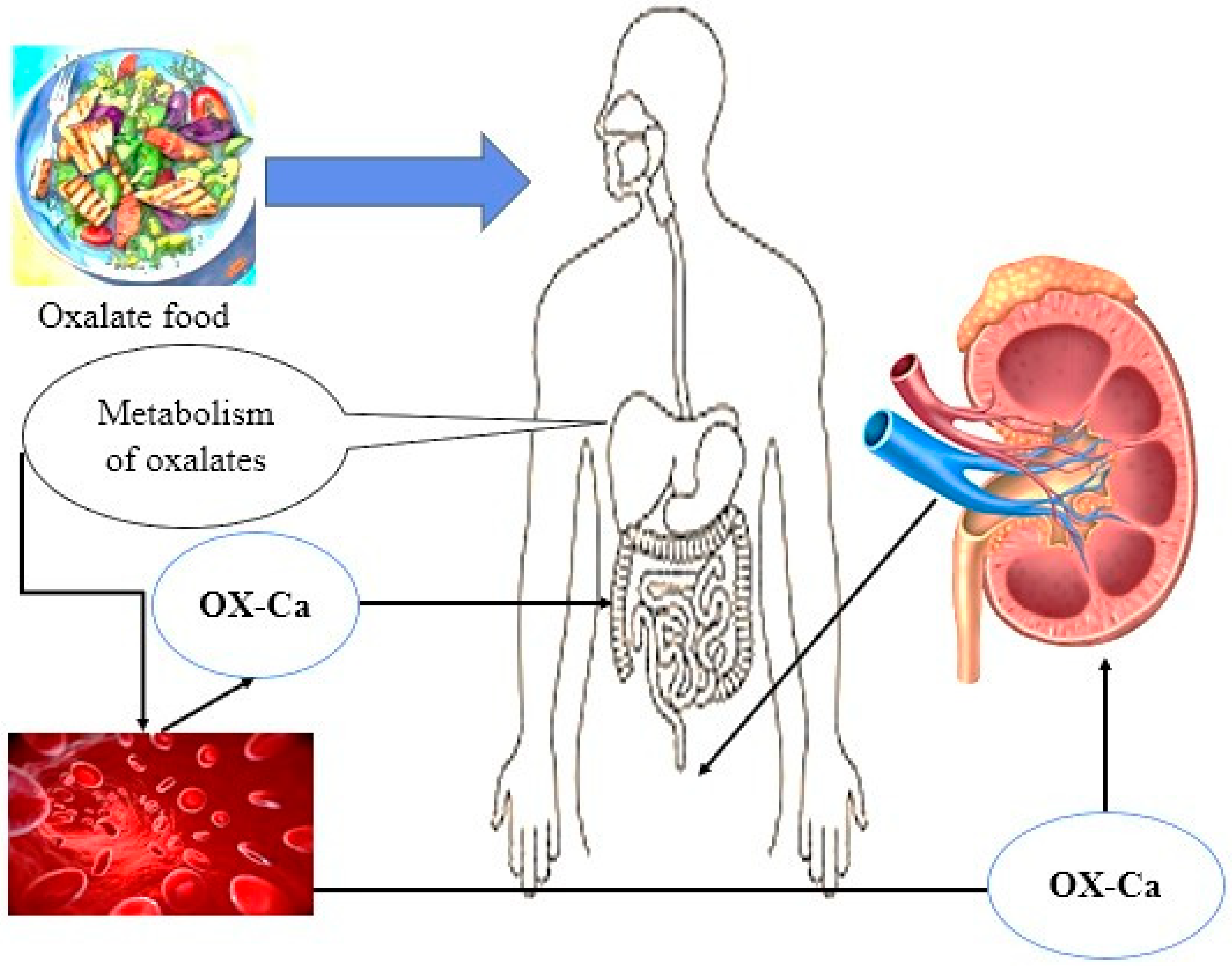
Current Trends and Technological Advancements in the Use of Oxalate-Degrading Bacteria as Starters in Fermented Foods—A Review



Abstract
1. Introduction

| Food and Beverage Types | Concentration of Oxalate (mg/100 g or mL) | References |
|---|---|---|
| Citrus aurantium | 2.07–10.64 | [14] |
| Musa acuminata Musa balbisiana | 0.00–9.90 | |
| Spinacia oleracea | 364.44–1145.00 | |
| Beta vulgaris | 36.90–794.12 | |
| Arachis hypogaea | 64.57–348.58 | |
| Glycyrrhiza glabra | 3343.20–3795.40 | [15] |
| Phaseolus vulgaris | 500.60–593.20 | |
| Oryza sativa | <10 | |
| Ipomoea batatas | 467.30–523.90 | |
| Abelmoschus esculentus | 56.30–317.20 | |
| Glycine max | 33.40–42.50 | |
| Pisum sativum | 244.70–294.00 | [16] |
| Lens culinaris | 168.60–289.10 | |
| Vicia faba | 241.50–291.40 | |
| Cicer arietinum | 92.20–214.00 | |
| Black Tea | 78.00–112.00 | [17] |
| Green Tea | 40.00–50.00 | |
| Red wine and beer | <1 | |
| Carrot juice | 5.81–6.20 | |
| Tomato juice | 1.43–4.43 | |
| Milk | <10 |
2. Oxalate Utilization by Flora Intestinal Bacteria
2.1. Oxalobacter formigenes
2.2. Lactic Acid Bacteria and Bifidobacteria
2.3. Other Gut Bacteria
2.4. Mechanisms of Bacterial Oxalate Degradation
3. Health Implications
3.1. Inflammatory Bowel Disease (IBD)
3.2. Kidney Stone Disease
4. Future Perspectives and Directions
5. Conclusions
Author Contributions
Funding
Institutional Review Board Statement
Informed Consent Statement
Data Availability Statement
Conflicts of Interest
References
- Wigner, P.; Bijak, M.; Saluk-Bijak, J. Probiotics in the Prevention of the Calcium Oxalate Urolithiasis. Cells 2022, 11, 284. [Google Scholar] [CrossRef] [PubMed]
- Alelign, T.; Petros, B. Kidney Stone Disease: An Update on Current Concepts. Adv. Urol. 2018, 2018, 3068365. [Google Scholar] [CrossRef] [PubMed]
- Williams, H.E. Oxalic Acid and the Hyperoxaluric Syndromes. Kidney Int. 1978, 13, 410–417. [Google Scholar] [CrossRef] [PubMed]
- Brzica, H.; Breljak, D.; Burckhardt, B.C.; Burckhardt, G.; Sabolić, I. Oxalate: From the Environment to Kidney Stones. Arh. Hig. Rada Toksikol. 2013, 64, 609–630. [Google Scholar] [CrossRef] [PubMed]
- Huynh, N.K.; Nguyen, D.H.; Nguyen, H.V. Effects of processing on oxalate contents in plant foods: A review. J. Food Compos. Anal. 2022, 112, 104685. [Google Scholar] [CrossRef]
- Holmes, R.P.; Knight, J.; Assimos, D.G. Lowering Urinary Oxalate Excretion to Decrease Calcium Oxalate Stone Disease. Urolithiasis 2016, 44, 27–32. [Google Scholar] [CrossRef]
- Kumar, P.; Patel, M.; Oster, R.A.; Yarlagadda, V.; Ambrosetti, A.; Assimos, D.G.; Mitchell, T. Dietary Oxalate Loading Impacts Monocyte Metabolism and Inflammatory Signaling in Humans. Front. Immunol. 2021, 12, 617508. [Google Scholar] [CrossRef]
- Stepanova, N. Oxalate Homeostasis in Non-Stone-Forming Chronic Kidney Disease: A Review of Key Findings and Perspectives. Biomedicines 2023, 11, 1654. [Google Scholar] [CrossRef]
- Cowan, D.A.; Babenko, D.; Bird, R.; Botha, A.; Breecker, D.O.; Clarke, C.E.; Francis, M.L.; Gallagher, T.; Lebre, P.H.; Nel, T.; et al. al. Oxalate and oxalotrophy: An environmental perspective. Sustain. Microbiol. 2024, 1, qvad004. [Google Scholar] [CrossRef]
- Niamah, A.K.; Sahi, A.A.; Al-Sharifi, A.S.N. Effect of Feeding Soy Milk Fermented by Probiotic Bacteria on Some Blood Criteria and Weight of Experimental Animals. Probiotics Antimicrob. Proteins 2017, 9, 284–291. [Google Scholar] [CrossRef]
- Hussein, K.A.; Niamah, A.K.; Majeed, K.R. Strategies and Trends for Application Exopolysaccharides of Lactic Acid Bacteria in the Food and Biomedical. IOP Conf. Ser. Earth Environ. Sci. 2024, 1371, 062017. [Google Scholar] [CrossRef]
- Noonin, C.; Putpim, A.; Thongboonkerd, V. The direct inhibitory effects of Lactobacillus acidophilus, a commensal urinary bacterium, on calcium oxalate stone development. Microbiome 2024, 12, 175. [Google Scholar] [CrossRef] [PubMed]
- Gomathi, S.; Sasikumar, P.; Anbazhagan, K.; Sasikumar, S.; Kavitha, M.; Selvi, M.S.; Selvam, G.S. Screening of Indigenous Oxalate Degrading Lactic Acid Bacteria from Human Faeces and South Indian Fermented Foods: Assessment of Probiotic Potential. Sci. World J. 2014, 2014, 648059. [Google Scholar] [CrossRef] [PubMed]
- Attalla, K.; De, S.; Monga, M. Oxalate Content of Food: A Tangled Web. Urology 2014, 84, 555–560. [Google Scholar] [CrossRef]
- Siener, R.; Seidler, A.; Hönow, R. Oxalate-Rich Foods. Food Sci. Technol. (Braz.) 2021, 41, 169–173. [Google Scholar] [CrossRef]
- Shi, L.; Arntfield, S.D.; Nickerson, M. Changes in Levels of Phytic Acid, Lectins and Oxalates during Soaking and Cooking of Canadian Pulses. Food Res. Int. 2018, 107, 660–668. [Google Scholar] [CrossRef]
- Siener, R.; Seidler, A.; Voss, S.; Hesse, A. The Oxalate Content of Fruit and Vegetable Juices, Nectars and Drinks. J. Food Compos. Anal. 2016, 45, 108–112. [Google Scholar] [CrossRef]
- Sadaf, H.; Raza, S.I.; Hassan, S.W. Role of Gut Microbiota against Calcium Oxalate. Microb. Pathog. 2017, 109, 287–291. [Google Scholar] [CrossRef]
- Rajilić-Stojanović, M.; de Vos, W.M. The First 1000 Cultured Species of the Human Gastrointestinal Microbiota. FEMS Microbiol. Rev. 2014, 38, 996–1047. [Google Scholar] [CrossRef]
- Weersma, R.K.; Zhernakova, A.; Fu, J. Interaction between Drugs and the Gut Microbiome. Gut 2020, 69, 1510–1519. [Google Scholar] [CrossRef]
- Kaur, I.P.; Chopra, K.; Saini, A. Probiotics: Potential Pharmaceutical Applications. Eur. J. Pharm. Sci. 2002, 15, 1–9. [Google Scholar] [CrossRef] [PubMed]
- Sharifi-Rad, J.; Rodrigues, C.F.; Stojanović-Radić, Z.; Dimitrijević, M.; Aleksić, A.; Neffe-Skocińska, K.; Zielińska, D.; Kołożyn-Krajewska, D.; Salehi, B.; Prabu, S.M.; et al. Probiotics: Versatile Bioactive Components in Promoting Human Health. Medicina 2020, 56, 433. [Google Scholar] [CrossRef] [PubMed]
- Al-Sahlany, S.T.G.; Niamah, A.K. Bacterial Viability, Antioxidant Stability, Antimutagenicity and Sensory Properties of Onion Types Fermentation by Using Probiotic Starter During Storage. Nutr. Food Sci. 2022, 52, 901–916. [Google Scholar] [CrossRef]
- Sotelo, A.; González-Osnaya, L.; Snchez-Chinchillas, A.; Trejo, A. Role of Oxate, Phytate, Tannins and Cooking on Iron Bioavailability from Foods Commonly Consumed in Mexico. Int. J. Food Sci. Nutr. 2010, 61, 29–39. [Google Scholar] [CrossRef]
- Sonke, A.; Trembath-Reichert, E. Expanding the Taxonomic and Environmental Extent of an Underexplored Carbon Metabolism—Oxalotrophy. Front. Microbiol. 2023, 14, 1161937. [Google Scholar] [CrossRef]
- Daniel, S.L.; Moradi, L.; Paiste, H.; Wood, K.D.; Assimos, D.G.; Holmes, R.P.; Nazzal, L.; Hatch, M.; Knight, J. Forty Years of Oxalobacter formigenes, a Gutsy Oxalate Degrading Specialist. Appl. Environ. Microbiol. 2021, 87, e00544-21. [Google Scholar] [CrossRef]
- Garrity, G.M.; Brenner, D.J.; Krieg, N.R.; Staley, J.R. Bergey’s Manual® of Systematic Bacteriology. The Proteobacteria, Part C: The Alpha-, Beta-, Delta-, and Epsilonproteobacteria; Springer: New York, NY, USA, 2005; Volume 2. [Google Scholar]
- Stewart, C.S.; Duncan, S.H.; Cave, D.R. Oxalobacter formigenes and Its Role in Oxalate Metabolism in the Human Gut. FEMS Microbiol. Lett. 2004, 230, 1–7. [Google Scholar] [CrossRef]
- Karamad, D.; Khosravi-Darani, K.; Hosseini, H.; Tavasoli, S.; Miller, A.W. Evaluation of Oxalobacter formigenes DSM 4420 Biodegradation Activity for High Oxalate Media Content: An In Vitro Model. Biocatal. Agric. Biotechnol. 2019, 22, 101378. [Google Scholar] [CrossRef]
- Mogna, L.; Pane, M.; Nicola, S.; Raiteri, E. Screening of Different Probiotic Strains for Their In Vitro Ability to Metabolise Oxalates Any Prospective Use in Humans? J. Clin. Gastroenterol. 2014, 48, S91–S95. [Google Scholar] [CrossRef]
- Giardina, S.; Scilironi, C.; Michelotti, A.; Samuele, A.; Borella, F.; Daglia, M.; Marzatico, F. In Vitro Anti-Inflammatory Activity of Selected Oxalate-Degrading Probiotic Bacteria: Potential Applications in the Prevention and Treatment of Hyperoxaluria. J. Food Sci. 2014, 79, M384–M390. [Google Scholar] [CrossRef]
- Sidhu, H.; Allison, M.J.; Chow, J.M.; Clark, A.; Peck, A.B. Rapid reversal of hyperoxaluria in a rat model after probiotic administration of Oxlobacter formigenes. J. Urol. 2001, 166, 1487–1491. [Google Scholar] [CrossRef] [PubMed]
- Hatch, M.; Cornelius, J.; Allison, M.; Sidhu, H.; Peck, A.; Freel, R.W. Oxalobacter sp. Reduces Urinary Oxalate Excretion by Promoting Enteric Oxalate Secretion. Kidney Int. 2006, 69, 691–698. [Google Scholar] [CrossRef] [PubMed]
- Kaufman, D.W.; Kelly, J.P.; Curhan, G.C.; Anderson, T.E.; Dretler, S.P.; Preminger, G.M.; Cave, D.R. Oxalobacter formigenes May Reduce the Risk of Calcium Oxalate Kidney Stones. J. Am. Soc. Nephrol. 2008, 19, 1197–1203. [Google Scholar] [CrossRef] [PubMed]
- Siener, R.; Bangen, U.; Sidhu, H.; Hönow, R.; Von Unruh, G.; Hesse, A. The Role of Oxalobacter formigenes Colonization in Calcium Oxalate Stone Disease. Kidney Int. 2013, 83, 1144–1149. [Google Scholar] [CrossRef]
- Jiang, J.; Knight, J.; Easter, L.H.; Neiberg, R.; Holmes, R.P.; Assimos, D.G. Impact of Dietary Calcium and Oxalate, and Oxalobacter formigenes Colonization on Urinary Oxalate Excretion. J. Urol. 2011, 186, 135–139. [Google Scholar] [CrossRef]
- Arvans, D.; Jung, Y.C.; Antonopoulos, D.; Koval, J.; Granja, I.; Bashir, M.; Karrar, E.; Roy-Chowdhury, J.; Musch, M.; Asplin, J.; et al. Oxalobacter formigenes-Derived Bioactive Factors Stimulate Oxalate Transport by Intestinal Epithelial Cells. J. Am. Soc. Nephrol. 2017, 28, 876–887. [Google Scholar] [CrossRef]
- Ayivi, R.D.; Gyawali, R.; Krastanov, A.; Aljaloud, S.O.; Worku, M.; Tahergorabi, R.; da Silva, R.C.; Ibrahim, S.A. Lactic Acid Bacteria: Food Safety and Human Health Applications. Dairy 2020, 1, 202–232. [Google Scholar] [CrossRef]
- Al-Sahlany, S.T.G.; Khassaf, W.H.; Niamah, A.K.; Abd Al-Manhel, A.J. Date Juice Addition to Bio-Yogurt: The Effects on Physicochemical and Microbiological Properties during Storage, as well as Blood Parameters In Vivo. J. Saudi Soc. Agric. Sci. 2023, 22, 71–77. [Google Scholar] [CrossRef]
- Parte, A.; Krieg, N.R.; Ludwig, W.; Whitman, W.B.; Hedlund, B.P.; Paster, B.J.; Ward, N.L.; Ludwig, W.; Brown, D. (Eds.) Bergey’s Manual of Systematic Bacteriology: Volume 4: The Bacteroidetes, Spirochaetes, Tenericutes (Mollicutes), Acidobacteria, Fibrobacteres, Fusobacteria, Dictyoglomi, Gemmatimonadetes, Lentisphaerae, Verrucomicrobia, Chlamydiae, and Planctomycetes; Springer Science & Business Media: New York, NY, USA, 2011; Volume 4. [Google Scholar]
- Madigan, M.T.; Imhoff, J.F. Phylum BXIII. Firmicutes. In Bergey’s Manual® of Systematic Bacteriology; Springer: New York, NY, USA, 2001; pp. 625–637. [Google Scholar]
- Zheng, J.; Wittouck, S.; Salvetti, E.; Franz, C.M.A.P.; Harris, H.M.B.; Mattarelli, P.; O’toole, P.W.; Pot, B.; Vandamme, P.; Walter, J.; et al. A Taxonomic Note on the Genus Lactobacillus: Description of 23 Novel Genera, Emended Description of the Genus Lactobacillus Beijerinck 1901, and Union of Lactobacillaceae and Leuconostocaceae. Int. J. Syst. EvolMicrobiol. 2020, 70, 2782–2858. [Google Scholar] [CrossRef]
- Goodfellow, M.; Kämpfer, P.; Busse, H.-J.; Trujillo, M.E.; Suzuki, K.-i.; Ludwig, W.; Whitman, W.B. (Eds.) Bergey’s Manual of Systematic Bacteriology. Volume 5: The Actinobacteria; Springer Science & Business Media: New York, NY, USA, 2012. [Google Scholar]
- Murru, N.; Blaiotta, G.; Peruzy, M.F.; Santonicola, S.; Mercogliano, R.; Aponte, M. Screening of Oxalate Degrading Lactic Acid Bacteria of Food Origin. Ital. J. Food Saf. 2017, 6, 6345. [Google Scholar] [CrossRef]
- Chamberlain, C.A.; Hatch, M.; Garrett, T.J. Metabolomic Profiling of Oxalate-Degrading Probiotic Lactobacillus acidophilus and Lactobacillus gasseri. PLoS ONE 2019, 14, e0222393. [Google Scholar] [CrossRef] [PubMed]
- Sadaf, H.; Waqas Hassan, S.; Nawaz, F.; Irfan Raza, S.; Jillani, G. Biodegradation of Calcium Phosphate and Calcium Oxalate by Lactobacillus Strains. Univ. Wah J. Sci. Technol. (UWJST) 2019, 3, 29–34. [Google Scholar]
- Karamad, D.; Khosravi-Darani, K.; Hosseini, H.; Tavasoli, S.; Miller, A.W. Assessment of the Process Variables for Degradation of Oxalate by Lactobacillus acidophilus ATCC 4356 Using Simulated Rumen Fluid Media and Tea. Appl. Food Biotechnol. 2020, 7, 195–204. [Google Scholar] [CrossRef]
- Anbazhagan, K.; Sasikumar, P.; Gomathi, S.; Priya, H.P.; Selvam, G.S. In Vitro Degradation of Oxalate by Recombinant Lactobacillus plantarum Expressing Heterologous Oxalate Decarboxylase. J. Appl. Microbiol. 2013, 115, 880–887. [Google Scholar] [CrossRef] [PubMed]
- Kargar, M.; Afkari, R.; Sadegh Ghorbani-Dalinip, P. Oxalate-Degrading Capacities of Gastrointestinal Lactic Acid Bacteria and Urinary Tract Stone Formation. Zahedan J. Res. Med. Sci. 2013, 15, e92834. [Google Scholar]
- Mehra, Y.; Viswanathan, P. High-Quality Whole-Genome Sequence Analysis of Lactobacillus paragasseri UBLG-36 Reveals Oxalate-Degrading Potential of the Strain. PLoS ONE 2021, 16, e0260116. [Google Scholar] [CrossRef]
- Al Othaim, A. Probiotic Lactobacillus Strains Isolated from Date Waste and Wastewater for the Kidney Stone, Intestinal Oxalate-Degradation and Antioxidant Activity. J. King Saud. Univ. Sci. 2023, 35, 102888. [Google Scholar] [CrossRef]
- Soliman, N.R.; Elbakry, H.F.H.; Effat, B.A.M.; Mehanna, N.S.; Tawfik, N.F.; Ibrahim, M.K. The Oxalate-Lowering Effect of Functional Stirred Yogurt in a Rat Model. Biocatal. Agric. Biotechnol. 2024, 58, 103196. [Google Scholar] [CrossRef]
- Turroni, S.; Bendazzoli, C.; Dipalo, S.C.F.; Candela, M.; Vitali, B.; Gotti, R.; Brigidi, P. Oxalate-Degrading Activity in Bifidobacterium animalis Subsp. lactis: Impact of Acidic Conditions on the Transcriptional Levels of the Oxalyl Coenzyme A (CoA) Decarboxylase and Formyl-CoA Transferase Oxalate-Degrading Activity in. Appl. Environ. Microbiol. 2010, 76, 5609–5620. [Google Scholar] [CrossRef]
- Klimesova, K.; Whittamore, J.M.; Hatch, M. Bifidobacterium animalis Subsp. lactis Decreases Urinary Oxalate Excretion in a Mouse Model of Primary Hyperoxaluria. Urolithiasis 2015, 43, 107–117. [Google Scholar] [CrossRef]
- Ferraz, R.R.N.; Marques, N.C.; Froeder, L.; Menon, V.B.; Siliano, P.R.; Baxmann, A.C.; Heilberg, I.P. Effects of Lactobacillus casei and Bifidobacterium breve on Urinary Oxalate Excretion in Nephrolithiasis Patients. Urol. Res. 2009, 37, 95–100. [Google Scholar] [CrossRef] [PubMed]
- Hokama, S.; Honma, Y.; Toma, C.; Ogawa, Y. Oxalate-Degrading Enterococcus faecalis. Microbiol. Immunol. 2000, 44, 235–240. [Google Scholar] [CrossRef] [PubMed]
- Patil, A.; Paikrao, H.; Sheikh, R.; Dhakate, L. Isolation, Screening, and Partial Characterization of Oxalate Oxidase Enzyme from Pseudomonas Strain Under Induced Oxalate Stress Condition. J. Microbiol. Biotechnol. Food Sci. 2022, 11, e4174. [Google Scholar] [CrossRef]
- Gupta, S.; Kanwar, S.S. Molecular Characterization and in Silico Analysis of Oxalate Decarboxylase of Pseudomonas sp. OXDC12. J. Biomol. Struct. Dyn. 2023, 41, 1495–1509. [Google Scholar] [CrossRef] [PubMed]
- Karamad, D.; Khosravi-Darani, K.; Khaneghah, A.M.; Miller, A.W. Probiotic Oxalate-Degrading Bacteria: New Insight of Environmental Variables and Expression of the Oxc and Frc Genes on Oxalate Degradation Activity. Foods 2022, 11, 2876. [Google Scholar] [CrossRef]
- Youssef, H.A.I.A.E. Detection of Oxalyl-CoA Decarboxylase (Oxc) and Formyl-CoA Transferase (Frc) Genes in Novel Probiotic Isolates Capable of Oxalate Degradation in Vitro. Folia Microbiol. (Praha) 2024, 69, 423–432. [Google Scholar] [CrossRef]
- Azcarate-Peril, M.A.; Bruno-Bárcena, J.M.; Hassan, H.M.; Klaenhammer, T.R. Transcriptional and Functional Analysis of Oxalyl-Coenzyme A (CoA) Decarboxylase and Formyl-CoA Transferase Genes from Lactobacillus acidophilus. Appl. Environ. Microbiol. 2006, 72, 1891–1899. [Google Scholar] [CrossRef]
- Sidhu, H.; Ogden, S.D.; Lung, H.-Y.; Luttge, B.G.; Baetz, A.L.; Peck, A.B. DNA Sequencing and Expression of the Formyl Coenzyme A Transferase Gene, Frc, from Oxalobacter formigenes. J. Bacteriol. 1997, 179, 3378–3381. [Google Scholar] [CrossRef]
- Pisani, A.; Rausch, P.; Bang, C.; Ellul, S.; Tabone, T.; Marantidis Cordina, C.; Zahra, G.; Franke, A.; Ellul, P. Dysbiosis in the gut microbiota in patients with inflammatory bowel disease during remission. Microbiol. Spectr. 2022, 10, e00616-22. [Google Scholar] [CrossRef]
- Vich Vila, A.; Imhann, F.; Collij, V.; Jankipersadsing, S.A.; Gurry, T.; Mujagic, Z.; Kurilshikov, A.; Bonder, M.J.; Jiang, X.; Tigchelaar, E.F.; et al. Gut microbiota composition and functional changes in inflammatory bowel disease and irritable bowel syndrome. Sci. Transl. Med. 2018, 10, eaap8914. [Google Scholar] [CrossRef]
- Al-Amrah, H.; Saadah, O.I.; Mosli, M.; Annese, V.; Al-Hindi, R.; Edris, S.; Alshehri, D.; Alatawi, H.; Alatawy, M.; Bahieldin, A. Composition of the gut microbiota in patients with inflammatory bowel disease in Saudi Arabia: A pilot study. Saudi J. Gastroenterol. 2023, 29, 102–110. [Google Scholar] [CrossRef] [PubMed]
- Sorokin, I.; Mamoulakis, C.; Miyazawa, K.; Rodgers, A.; Talati, J.; Lotan, Y. Epidemiology of stone disease across the world. World J. Urol. 2017, 35, 1301–1320. [Google Scholar] [CrossRef] [PubMed]
- Khan, S.R.; Pearle, M.S.; Robertson, W.G.; Gambaro, G.; Canales, B.K.; Doizi, S.; Traxer, O.; Tiselius, H.-G. Kidney stones. Nat. Rev. Dis. Primers 2016, 2, 16008. [Google Scholar] [CrossRef] [PubMed]
- Lemberger, U.; Pjevac, P.; Hausmann, B.; Berry, D.; Moser, D.; Jahrreis, V.; Özsoy, M.; Shariat, S.F.; Veser, J. The microbiome of kidney stones and urine of patients with nephrolithiasis. Urolithiasis 2023, 51, 27. [Google Scholar] [CrossRef]
- Shastri, S.; Patel, J.; Sambandam, K.K.; Lederer, E.D. Kidney stone pathophysiology, evaluation and management: Core curriculum. Am. J. Kidney Dis. 2023, 82, 617–634. [Google Scholar] [CrossRef]

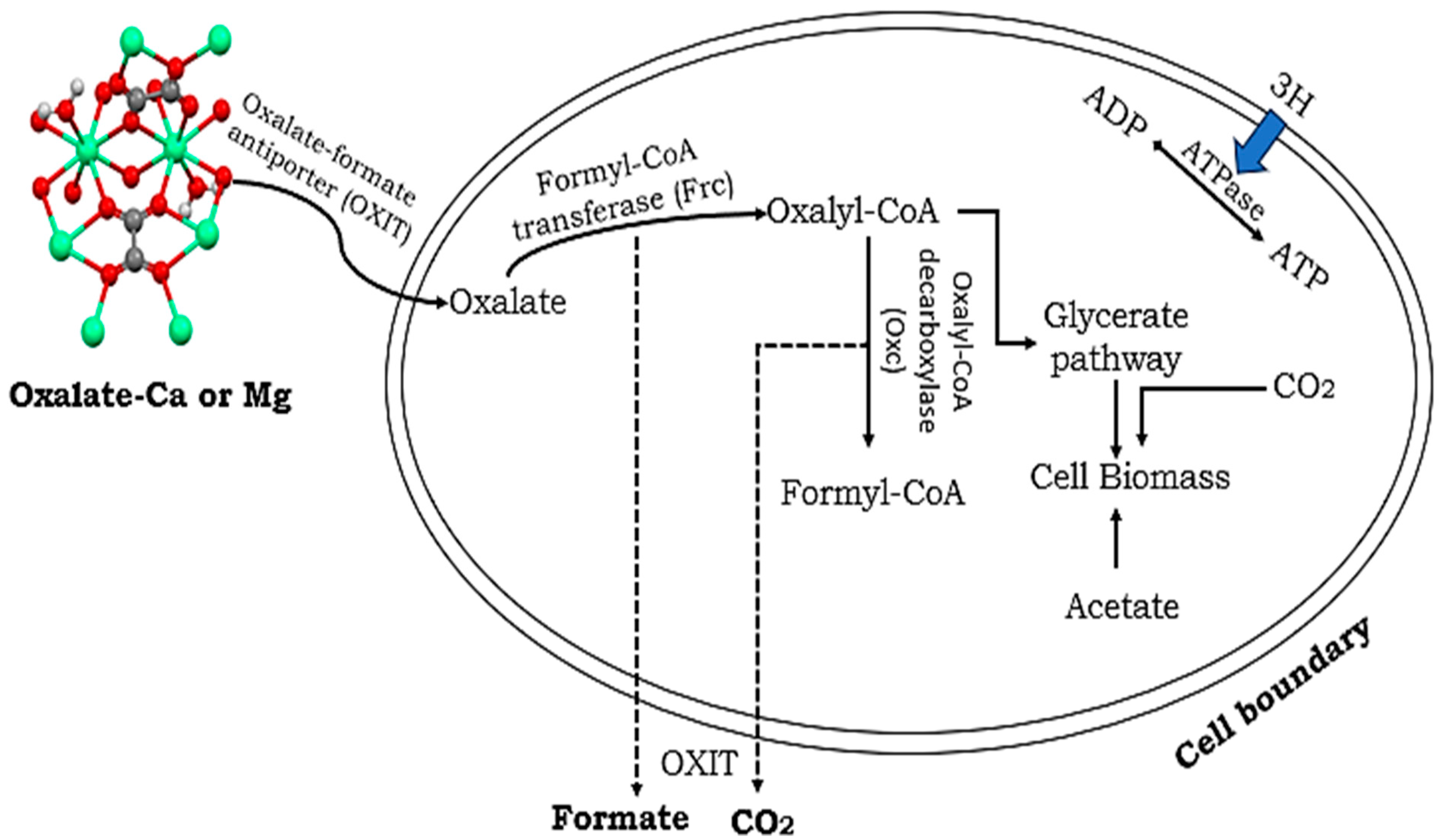
| Bacteria Strains | Study Type | Study Condition | Study Outcome | References |
|---|---|---|---|---|
| O. formigenes DSM 4420 | In vitro | Growth on 1.35 (g/L) inulin, 36.56 (g/L) glucose, 26 (mmol/L) ammonium oxalate, pH = 6 | The achievement of reducing the levels of oxalate has resulted in reaching 61.74% | [29] |
| O. formigenes DSM 4420 | In vitro | Growth on SM medium was composed of 5 mL of filtered sterilized 20 mmol/L ammonium oxalate and 40 g/L dextrose) added to 5 mL of base medium | The achievement of reducing the levels of oxalate has resulted in reaching 98.22% | [30] |
| O. formigenes DSM 4420 | In vitro | Growth on SM medium was composed of 5 mL of filtered sterilized 20 mmol/L ammonium oxalate and 40 g/L dextrose) added to 5 mL of base medium | The achievement of reducing the levels of oxalate has resulted in reaching 98.00% | [31] |
| O. formigenes strain OxWR | In vivo | Male rats were segregated into 6 subcategories: the first subgroup received a standard diet; the second subgroup was provided with a diet rich in oxalate; subgroups three to six were administered an oxalate-rich diet along with an esophageal gavage of 103, 105, 107, and 109 CFU/g O. formigenes, respectively, with each feeding lasting for two weeks. Samples of urine were also gathered to evaluate the extent of oxalate extraction. | The group that received an oxalate-rich diet and O. formigenes exhibited decreased levels of urine oxalate compared to the group that solely received an oxalate-rich diet. | [32] |
| Oxalobacter sp. | In vivo | Male rats were segregated into two distinct cohorts. The first cohort underwent colonization through esophageal gavage with a 1.5 mL inoculum containing 2 × 10⁹ CFU derived from a 24 h culture of a wild rat strain of O. formigenes, whereas the second cohort remained noncolonized. The diet administered to both cohorts of rats was consistent. Furthermore, urinary samples were collected to evaluate the extent of oxalate extraction. | Rats colonized by Oxalobacter sp. exhibited a reduction in urinary oxalate levels compared to non-colonized rats fed the same diet. | [33] |
| O. formigenes | In vivo | A total of 247 stool samples from patients were obtained to evaluate the existence of O. formigenes. Additionally, samples of urine were obtained to evaluate the extent of oxalate extraction. | The frequency of O. formigenes was found to be 17% in individuals diagnosed with the condition, while among the control group, it was 38%. Additionally, harboring O. formigenes was linked to a 70% decrease in the likelihood of experiencing repeated occurrences of calcium oxalate stones. | [34] |
| O. formigenes | In vivo | A total of 37 individuals who form calcium oxalate stones, 26 were found to have a negative test result for O. formigenes and were then analyzed in comparison to the remaining 11 patients who tested positive. These patients were requested to provide 24 h urine samples while following both a diet of their own choice and a standardized diet. | According to the results, O. formigenes reduces the amount of oxalate in the intestinal solution that is accessible for absorption at steady rates, which lowers the amount of oxalate excreted in the urine. | [35] |
| O. formigenes | In vivo | The research was segmented into two distinct dietary phases, each lasting for a three-week duration. During the initial phase, the participants’ intake of dietary oxalate was manipulated, with a daily consumption ranging from 50 mg in the first week to 250 mg in the second week and 750 mg in the third week. Subsequently, in the second phase of the study, the focus shifted towards varying dietary calcium intake levels, with participants consuming 400 mg daily in the first week, 1000 mg in the second week, and 2000 mg in the third week. Following the completion of these dietary interventions, samples of urine and stool were collected from the participants to be analyzed for stone risk parameters and the levels of O. formigenes, a key bacterium involved in oxalate metabolism in the gut. The utilization of these samples allowed for the assessment of potential correlations between dietary oxalate and calcium intake levels and their impact on stone formation risk factors and O. formigenes abundance in the participants’ microbiota. | Levels of O. formigenes significantly rose by a factor of 10 as the dietary oxalate intake surged by 15 times. However, a decline in the O. formigenes content was observed with the escalation in calcium consumption. | [36] |
| O. formigenes ATCC 35274 | In vivo | O. formigenes has been observed to engage with the colonic epithelium, resulting in the stimulation of colonic oxalate secretion, consequently leading to a reduction in urinary oxalate excretion. In this research article, the influence of O. formigenes culture conditioned medium on the uptake of apical 14C-oxalate by human intestinal Caco-2-BBE cells was examined. The findings revealed significant differences in apical 14C-oxalate uptake when compared to the control medium, suggesting a potential role of O. formigenes in modulating oxalate transport mechanisms in the intestinal cells. | O. formigenes-derived bioactive factors stimulate oxalate transport in intestinal cells through mechanisms. The reduction in urinary oxalate excretion in hyperoxaluric mice treated with O. formigenes conditioned medium reflects the in-via retention of biological activity and the therapeutic potential of these factors. | [37] |
| Bacteria Strains | Study Type | Study Condition | Study Outcome | References |
|---|---|---|---|---|
| Lactiplantibacillus plantarum | in vivo | In this work, researchers used a host lactate dehydrogenase promoter to create a recombinant strain of Lb. plantarum that constitutively over-expressed B. subtilis oxalate decarboxylase. | The recombinant Lb. plantarum was able to break down almost 90% of the oxalate. Furthermore, the recombinant strain exhibited a greater tolerance to oxalate up to 500 mmol/L. | [48] |
| Lactobacillus acidophilus ATCC 4356, | In vivo | Utilizing Lb. acidophilus, oxalate degradation activity was measured where a Box–Behnken method was used with four major variables: pH, glucose, sodium oxalate, inulin, ammonium, yeast extract, sodium acetate, inoculum age, and size. | Under optimized conditions of major variables, including pH, glucose, inoculum age & size, the breakdown of oxalate attained 48.94% of its starting concentration. Additionally, the breakdown of oxalate in tea (the most popular hot beverage in many nations) was studied at different temperatures, times of day, and concentrations of glucose. Under ideal circumstances, oxalate content increased from 264 to 24 mg/100 mL, or 98.86%. | [47] |
| Lactobacillus | Clinical study (200 patients) | Serum, urine, and feces samples were used in this case-control investigation. There were two equal groups of 200 participants in total that made up the research population. They were chosen from among urologists’ patients who had urinary tract stones, regular folks, and visiting patients. The evaluation included the amount of calcium, oxalate, and citrate in the urine samples, parathyroid and calcium in the blood samples, and the degrading activity of all the participants’ fecal Lactobacillus strains. | The findings showed that compared to normal individuals, the patients had greater blood levels of parathyroid hormone and higher levels of oxalate and calcium in their urine. On the other hand, normal individuals had greater urine levels of citrate. The ability of Lactobacillus isolated from the patients to degrade oxalate differed significantly from that of their normal counterparts. | [49] |
| Lactobacillus acidophilus and Lb. gasseri | in vitro | Using ultra-high-performance liquid chromatography-high resolution mass spectrometry, authors compared and characterized the metabolomes and lipidomes of the oxalate-degrading Lb. acidophilus and Lb. gasseri. | Many species-specific differences in the metabolic profiles of these bacteria were observed. Further, using 14C liquid scintillation counting, the oxalate-degrading capacity of Lb. acidophilus and Lb. gasseri in vitro, even in the presence of other preferred carbon sources, was also validated. | [45] |
| Lactobacillus paragasseri UBLG-36 | in vitro | Lb. paragasseri UBLG-36 had genes encoding for oxalate catabolic enzymes, including oxalyl coenzyme A decarboxylase (oxc) and formyl coenzyme A transferase (frc). The in vitro oxalate degradation experiment demonstrated the great efficacy of UBLG-36 in oxalate breakdown. | Lb. paragasseri had a previously unreported oxalate degradation rate of 45%. Since Lb. paragasseri is a relatively new bacterium; there are not many genomic papers on it. The genome sequence study is the first to highlight and explain this species’ probiotic potential as well as its capacity to break down oxalate. | [50] |
| Lacticaseibacillus casei, Limosilactobacillus fermentum, Lb. acidophilus and Lb. gasseri | in vitro | Twenty-four of the 62 oxalate-degrading bacteria showed a zone larger than 10 mm, according to early characteristics. It was determined that lactic acid bacteria were the most powerful bacterial strains. | At a concentration of 50 µg of calcium oxalate, Lb. acidophilus was able to degrade the material to 75.6 ± 0.865%. A date waste-derived lactic acid bacterium shown to encourage anti-urolithiasis action. | [51] |
| Streptococcus thermophilus, Limosilactobacillus fermentum NRAMJ5, and Lb. gastricus NRAMJ5 | in vitro and in vivo | In this study, rats given a diet rich in oxalate were used as test subjects, and the effects of two probiotic preparations were seen on urine functions. Five groups, each including eight rats, were formed from a total of forty male Sprague-Dawley rats. There were two sets of participants: one was utilized as a high-oxalate positive control group and was fed a regular, balanced diet; the other was used as a negative control group. A diet high in oxalate was also given to the remaining three groups, along with oral dosages of the probiotic preparations. | Different measurements, including urine pH, aspartate transaminase (AST) activity, urea, uric acid, phosphorus, calcium, magnesium, and creatinine, were measured from blood and urine samples from rats. The study’s conclusions demonstrated the beneficial effects of these probiotic formulations on kidney function, perhaps through increased intestinal oxalate metabolism and/or decreased gastrointestinal tract oxalate absorption. Furthermore, both preparations resulted in a rise in the counts of lactobacilli numbers in the fecal samples, whereas coliform counts dropped in comparison to the baseline. | [52] |
| Bifidobacterium adolescentis ATCC 15703, B. animalis subsp. lactis DSM 10140, BA30, Bb12, BI07, and L15, B. bifidum S16, B. breve ATCC 15700 and BBSF, B. catenulatum B665, B. longum biotype longum S123, ATCC 15707, and W11, and B. longum ATCC 27533 | in vitro | The enzymatic breakdown of oxalate by 14 Bifidobacterium strains, grown in media rich in oxalate, was quantified using capillary electrophoresis. The detection of the oxc gene was achieved through PCR. | Out of 14, the oxalate-degrading activity was observed only in the five B. animalis subsp. lactis strains (DSM 10140, BA30, Bb12, BI07, and L15), resulting in complete consumption of oxalate after 5 days of incubation. In contrast, none of the other tested Bifidobacterium strains displayed any oxalate degrading activity. | [53] |
| Bifidobacterium animalis subsp. lactis DSM 10140 and B. adolescentis ATCC 15703 | in vivo | Two strains of Bifidobacterium were administered to both wild-type mice and mice lacking the hepatic enzyme alanine-glyoxylate aminotransferase while being fed a diet supplemented with oxalate. Subsequently, urine samples were obtained to evaluate oxalate extraction levels, and fecal samples were collected to monitor the colonization status of mice with Bifidobacterium through weekly PCR analysis. | The introduction of B. animalis subsp. lactis resulted in a notable reduction in the excretion of urinary oxalate in both wild-type and Agxt−/− mice when compared to the use of B. adolescentis. The wild-type mice exhibited a greater degree of colonization by B. animalis subsp. lactis in comparison to Agxt−/− mice. | [54] |
| Lacticaseibacillus casei and Bifidobacterium breve | Clinical study 14 patients | For four weeks, the patients were given an oxalate-supplemented diet; in the final two weeks, they were given a lyophilized mixture of Lacticaseibacillus casei and Bifidobacterium breve after meals. Lastly, urine samples were taken to evaluate the extraction amount of oxalate. | Compared to pre-treatment, seven out of fourteen patients showed a decrease in oxaluria following probiotic preparation; in four cases, this reduction was greater than 25%, and in two cases, it was as high as 50%. | [55] |
Disclaimer/Publisher’s Note: The statements, opinions and data contained in all publications are solely those of the individual author(s) and contributor(s) and not of MDPI and/or the editor(s). MDPI and/or the editor(s) disclaim responsibility for any injury to people or property resulting from any ideas, methods, instructions or products referred to in the content. |
© 2024 by the authors. Licensee MDPI, Basel, Switzerland. This article is an open access article distributed under the terms and conditions of the Creative Commons Attribution (CC BY) license (https://creativecommons.org/licenses/by/4.0/).
Share and Cite
Al-Kabe, S.H.; Niamah, A.K. Current Trends and Technological Advancements in the Use of Oxalate-Degrading Bacteria as Starters in Fermented Foods—A Review. Life 2024, 14, 1338. https://doi.org/10.3390/life14101338
Al-Kabe SH, Niamah AK. Current Trends and Technological Advancements in the Use of Oxalate-Degrading Bacteria as Starters in Fermented Foods—A Review. Life. 2024; 14(10):1338. https://doi.org/10.3390/life14101338
Chicago/Turabian StyleAl-Kabe, Sajad Hamid, and Alaa Kareem Niamah. 2024. "Current Trends and Technological Advancements in the Use of Oxalate-Degrading Bacteria as Starters in Fermented Foods—A Review" Life 14, no. 10: 1338. https://doi.org/10.3390/life14101338
APA StyleAl-Kabe, S. H., & Niamah, A. K. (2024). Current Trends and Technological Advancements in the Use of Oxalate-Degrading Bacteria as Starters in Fermented Foods—A Review. Life, 14(10), 1338. https://doi.org/10.3390/life14101338