


Abstract
This paper explores simulation application functions for the computer monitoring system of a hydro–wind–solar integrated control center, focusing on five core areas: platform management, operational training, performance optimization, exception handling, and emergency drills. Against the “dual carbon” backdrop, multi-energy complementary system simulation faces key challenges including multi-energy coupling, real-time response, and cybersecurity protection. Research shows that integrating digital twin, heterogeneous computing, and artificial intelligence technologies markedly improve simulation accuracy and intelligent decision-making. Dispatch strategies have shifted from single-energy optimization to system-level coordination, while cybersecurity frameworks now provide comprehensive safeguards covering algorithms, data, systems, user behavior, and architecture. Intelligent operation and maintenance with fault diagnosis—powered by big data and deep learning—enables equipment condition prediction, and emergency drill platforms boost response capacity via 3D visualization and scriptless modeling. Current hurdles include absent multi-energy modeling standards, poor extreme-condition adaptability, and inadequate knowledge transfer mechanisms. Future research should prioritize hybrid physical–data-driven approaches, multi-dimensional robust scheduling, federated learning-based diagnostics, and integrated digital twin, edge computing, and decentralized ledger technologies. These advances will drive simulation platforms toward greater intelligence, interoperability, and reliability, laying the technical foundation for unified hydro–wind–solar control centers.
1. Introduction
Motivated by the national agenda for carbon peaking and long-term neutrality, renewable resources—such as hydro, wind, and solar power—are increasingly emerging as central components in the restructuring of China’s energy system [1]. Internationally, addressing climate change and energy security has become a global consensus. The EU’s “Carbon Neutrality 2050,” the U.S. Inflation Reduction Act (IRA), and the International Energy Agency’s (IEA) proposed “Net Zero Emissions Scenario (NZE)” all explicitly designate hydropower, wind power, and photovoltaics as the primary power sources for future electricity systems. Leveraging their complementary spatiotemporal characteristics, water–wind–solar resources can significantly enhance renewable energy integration efficiency and grid stability through multi-energy complementary integration systems, particularly by utilizing hydropower’s flexible regulation capabilities to mitigate the fluctuations in wind and solar [2]. Serving as the essential nexus for managing multiple forms of energy supply, the computer monitoring system of the integrated hydro–wind–solar control center undertakes core functions including multi-energy coordinated control, optimized scheduling, and maintaining the secure and stable performance of the power system.
By 2025, the combined generation capacity stemming from China’s hydro, wind, and solar sectors has risen to more than forty percent of the nation’s overall power-system portfolio. In the global power structure, cumulative renewable energy generation now accounts for nearly 30% of global electricity production. The continuous expansion of renewable energy grid integration has significantly increased system complexity, presenting four major challenges for traditional simulation platforms. First, the intermittency and volatility of multiple energy sources—the strong stochastic characteristics of wind and solar generation demand higher-precision forecasting and more flexible regulation mechanisms. Second, increasingly stringent real-time operational demands call for ultra-fast response and decision-making capabilities to achieve coordinated control across diverse energy types. Third, escalating cybersecurity risks have made central control centers—the “nerve centers” of modern energy systems—prime targets for cyberattacks. Finally, limitations in modeling complex operating conditions hinder the ability to realistically simulate abnormal and fault scenarios directly impacts the system verification [3,4].
Simulation platforms exhibit significant limitations in three core functional domains: operational optimization, personnel training, and anomaly handling. Operational optimization faces persistent bottlenecks, including delays in multi-timescale coordination and low-efficiency solutions to high-dimensional constraints. Personnel training urgently requires transitioning away from traditional approaches—such as centralized instruction and tabletop exercises—which are characterized by high substitution costs, rigid scenarios, and limited engagement. Anomaly handling is constrained by incomplete fault injection mechanisms, inadequate diagnostic accuracy, and abnormal control command responses, necessitating urgent improvements in system robustness.
This paper focuses on six functional areas: architecture design, intelligent scheduling, high-fidelity simulation, security protection, intelligent operations and maintenance, and emergency drills. The full text first analyzes the platform architecture, key technological evolution, and foundational support capabilities such as cybersecurity and intelligent operations and maintenance from the perspective of simulation platform management. Second, it systematically discusses the functional composition and application models of simulation platforms in routine operation training, addressing centralized control operation and personnel development needs. Building on this foundation, it further explores the role and typical applications of simulation platforms in optimizing operational strategies, focusing on multi-energy complementary operation characteristics. Subsequently, it examines the technical support capabilities of simulation platforms in handling complex abnormal situations under conditions of high renewable energy penetration. Finally, it analyzes the core functions and implementation methods of the simulation exercise platform in relation to emergency response and drill requirements. This study systematically reviews the research progress of integrated hydro–wind–solar control simulation platforms. By dissecting key technical bottlenecks such as weak adaptability to complex scenarios and insufficient multi-scale coordination, it clarifies the development trends toward intelligence, coordination, and high reliability. This provides theoretical support for deepening platform functionality, thereby advancing the construction of the energy internet and the achievement of the “dual carbon” goals.
2. Simulation Platform Management
This chapter examines the management challenges associated with the simulation platform for the computer monitoring system of the integrated hydro–wind–solar control center. The discussion highlights several key areas: high-precision modeling and real-time simulation technologies for multi-energy complementary systems; optimization and scheduling strategies accounting for uncertainties; intelligent operation and maintenance models based on digital-twin technologies; and cybersecurity protection frameworks designed for emerging new-type power systems.
2.1. Simulation Platform Architecture and Key Technology Evolution
Hardware-in-the-loop (HIL) simulation technology substantially improves the efficiency and reliability of system verification by integrating physical controllers with virtual simulation models. Zhao et al. [5] developed a multi-controller HIL platform for photovoltaic–hydrogen storage microgrids. Employing the Typhoon HIL real-time simulator, the platform enabled collaborative verification of transient control algorithms and steady-state energy management strategies. Experimental results demonstrated that this platform could improve simulation efficiency by over 30%. Similarly, the developed virtual simulation platform for high-penetration renewable energy integration, employs a joint optimization mechanisms for wind, solar, and storage units in combination with flexible interconnection technologies—researchers have shown that the platform can visually assess renewable energy integration performance under various operating scenarios using dynamic curves, thereby enhancing the operational stability of distribution networks [6].
For multi-timescale coupling challenges, hybrid simulation technology exhibits strong advantages. Yan et al. [7] addressed the low efficiency of mechanical–electrical co-simulation for wind turbines by establishing a joint platform using GH Bladed and MATLAB/Simulink. Through electrical model order reduction and step-size optimization, they increased simulation speed by 40%. In addition, they proposed a step-size selection method based on residual similarity, offering new perspectives for real-time simulation of complex systems. Jia et al. [8] developed a real-time coupled simulation platform integrating RTDS with Bladed. By distributing the turbine’s aerodynamic–mechanical representation and its electrical regulation model across separate computational platforms and facilitating their interaction through a PLC-based communication link, the study demonstrated that the coordinated adjustment of torque and blade pitch can significantly enhance the unit’s energy-production efficiency.
Digital twin technology enables precise simulation and prediction of equipment conditions through virtual–physical mapping, making it a research hotspot in current simulation platforms. For the digital twin system of pump-turbines, an intrinsic orthogonal decomposition–based reduced-order model, combined with Open3D point-cloud visualization, achieved a real-time response of 728.6 ms. Moreover, the applied LSTM-based forecasting framework achieved a prediction accuracy exceeding 96% for pressure-pulsation signals [9]. To mitigate the scarcity of malfunction-related datasets in photovoltaic module systems, a deep generative digital twin framework was constructed. By using mechanistic models to generate baseline fault samples and combining it with a 1DPCC-UNet diffusion model to enhance data diversity, ultimately achieving a fault-diagnosis accuracy of 97.9% [10].
In energy storage system simulation, Feng et al. [11] introduced an approach grounded in digital-twin technology for joint estimation of the state-of-charge (SOC) and temperature. They constructed a battery model on the Simulink/Simscape platform that accounts for multiple factors including temperature and charge/discharge rate. Under dynamic stress test (DST) conditions, the SOC estimation error was reduced to as low as 0.0034%, providing a reliable verification platform for the development of intelligent battery management systems (BMS). Zhang et al. [12] applied digital twin technology to hybrid microgrid scheduling. By establishing a multi-objective optimization model on the Cloud PSS platform, the economic efficiency of the microgrid improved by 15% while ensuring the operational condition and service lifespan of the stored-energy subsystem.
Faced with the computational challenges of large-scale wind farm simulations, heterogeneous computing architecture demonstrates significant advantages. By implementing a CPU-GPU-FPGA heterogeneous computing platform and employing task partitioning and parallel computing techniques, achieved efficient computation with microsecond-level step in wind farm simulations, fulfilling the stringent timing constraints required in practical engineering contexts [13]. Chen et al. [14] advanced the field by introducing a simulation approach that leverages FPGA-driven parallel processing. By employing block-wise dimensionality reduction in the node admittance matrix and a unit-level parallel framework, they achieved full-topology, high-fidelity simulation of wind farms with hundreds of generating units, maintaining an error rate below 0.5%. Table 1 summarizes the characteristics of existing simulation platforms.

Table 1.
Existing Simulation Platforms.
2.2. Multi-Energy Complementary Optimization Dispatch Strategy
Coordinating the operation of hybrid energy systems that combine hydro, wind, and solar resources necessitates an integrated scheduling framework capable of handling source intermittency, multiple uncertainties, and multi-objective conflicts [15]. In recent years, research has focused on a technological progression from reliability assurance, uncertainty modeling, intelligent decision-making algorithms, and cross-regional coordination, driving the evolution of dispatch models from single-source optimization toward multi-spatiotemporal scale coordination.
In reliability-driven complementary mechanism design, researchers optimize system infrastructure by quantifying the characteristics of different energy sources. Zhao et al. [16] developed a reliability assessment framework based on multivariate stochastic simulation and stochastic dynamic programming, revealing that system reliability optimizes when the ratio of photovoltaic to wind power installations is 3:7, as the aggregate deployment scale of wind and photovoltaic resources plays an increasingly dominant role in shaping overall system reliability. Meanwhile, the flood-season dynamic scheduling model proposed by Zhang et al. [17] utilizes the reservoir’s dynamic control range as wind–solar regulation storage capacity. This method reduces no-load periods by 37% and increases the average hydraulic head for hydropower generation by 4.39%.
However, the multiple uncertainties inherent in hydro–wind–solar systems necessitate precise modeling and advanced decision-making tools [18]. By integrating Markov chains with Copula functions to generate joint wind–solar–hydrological scenarios, and employing Benders decomposition-based two-stage optimization approach, an additional 55.2 million kWh of power generation was achieved while reducing curtailed water by 169.4 million m3 [19]. Additionally, a clustering scheme grounded in the K-means algorithm is utilized to represent uncertainties in coupled energy-load patterns, and the formulation of a robust planning framework demonstrates the performance gains achievable in integrated energy systems operating under multi-energy complementary conditions [20].
Against this backdrop, artificial intelligence (AI) algorithms have emerged as the key to overcoming complex decision-making challenges. On one hand, significant progress has been made in collaborative optimization architectures: a multi-agent deep policy gradient algorithms was utilized, employing a two-layer framework of upper-layer reinforcement learning and lower-layer mixed-integer programming to realize joint optimization of real and reactive power flows within isolated microgrid environments [21]. Similarly, An et al. [22] proposed a multi-objective economic scheduling method based on consensus algorithms, utilizing a leader-follower consensus algorithm to drive incremental cost convergence. This approach facilitates rapid optimization of microgrids while ensuring convergence accuracy. On the other hand, multi-objective optimization techniques have been continuously refined: Xun et al. [23] proposed a PSO-SQP two-layer algorithm to optimize economic and environmental objectives, achieving collaborative optimization of microgrid economic benefits and energy storage health within a digital twin framework.
Research is increasingly expanding toward system-level scheduling that emphasizes cross-spatiotemporal coordination. At the interregional complementarity level, Zhang et al. [24] introduced risk-value theory into multi-energy scheduling, reducing cross-regional gas costs by 4.96%, while Meng et al. [25] established an integrated operational paradigm through a stakeholder-oriented intelligence platform to enhance cross-regional collaboration. At the energy coupling level, electricity storage, thermal storage, and flexible loads are collectively conceptualized as generalized energy storage. Economic performance is improved through combined cooling, heating, and power (CCHP) integration, while multi-type energy storage coordination strategies further optimize multi-dimensional objectives encompassing economic, environmental, and energy efficiency [26,27].
2.3. Building a Cybersecurity Protection System
In the security upgrade of power monitoring systems, domestic cryptographic algorithms have become a core pillar due to their self-controlled and independent characteristics. Current research has progressed layer by layer from cryptographic system transformation, data encryption, and integrated platform construction to active defense and virtualization architecture innovation, forming a comprehensive protection system covering the entire chain: “Algorithms–Data–Systems–Behavior–Architecture”.
At the foundational cryptographic system level, national cryptographic algorithms have rebuilt the security framework of power monitoring systems. Based on national standards, Luo et al. [28] proposed a national cryptographic upgrade plan for hydropower station monitoring systems, designing a cryptographic fallback mechanism to ensure compatibility between legacy and upgraded systems, thereby establishing a cryptographic application paradigm for the hydropower sector. Meanwhile, for pumped-storage power stations, a trusted application system was constructed based on trusted hardware and operating systems, enabling credible analysis of the operational behavior of the monitoring system and providing technical support for proactive defense [29].
Extending to the dimension of data security, encryption technologies enable cross-domain collaborative protection. On one hand, a multi-biometric key encryption method that combines iris and fingerprint features has been proposed, enhancing encryption security through a hybrid vector algorithm. Experimental results indicate that its decoding performance—both in accuracy and operational stability—surpasses that of conventional methods [30,31]. On the other hand, a distributed anomaly detection solutions combines deep learning with blockchain technology to identify unauthorized transactions within power grid blockchain networks, providing security assurance for cross-domain data circulation [32].
Further integration into a system-level protection platform positions comprehensive security management as a critical hub. By establishing an integrated security management platform for computer monitoring systems, unified security monitoring, management, and operational control are achieved. Through real-time risk monitoring and enhanced emergency response plans, the security protection capabilities of the Jiaodong Water Diversion System have been significantly enhanced [33]. Regarding the protection for critical information infrastructure at hydropower stations, challenges in cybersecurity under the Industry 4.0 context were addressed through a trusted security architecture and integrated management strategies [34].
In response to increasingly sophisticated cyber-attack threats, significant breakthroughs have been achieved in proactive defense and perimeter fortification technologies. On the attack identification front, an active defense strategy based on Dempster–Shafer (D–S) evidence theory effectively distinguishes multiple types of network attacks through locally linearly weighted evidence combinations, achieving over 95% accuracy in identifying individual attack sources [35]. At the network perimeter, the application of Layer 3 switches in large-scale wind farm monitoring systems has been validated. By employing Layer 3 switching technology, communication flash interruptions and network segment interconnection issues were resolved, reducing system construction costs by 20% [36]. Furthermore, through the multi-dimensional protection mechanisms for smart substations, the introduction of multi-level identity authentication and inverse matrix technology effectively addresses threats such as unauthorized access and data tampering without compromising transmission efficiency [37].
At the level of architectural innovation, virtualization and pan-security technologies are leading transformative changes. Tang et al. [38] validated the advantages of a dual virtualization architecture in terms of cost and resource efficiency. More innovatively, Guo et al. [39] utilized dedicated data processors (DPUs) to achieve traffic orchestration and security gateway coordination, establishing a pan-security boundary protection framework for modern power systems.
2.4. Intelligent Operations and Maintenance with Digital Twin Applications
The intelligent operation and maintenance platform enhances management efficiency through big data and artificial intelligence technologies. By adopting a big data-supported energy storage system operation and maintenance model, which leverages multi-source data fusion and machine learning algorithms, equipment health status prediction and potential fault early warning have been achieved, improving operational efficiency by 30% [40]. For wind farm operation and maintenance strategies focusing on proactive prevention, the adoption of intelligent maintenance platforms and advanced methods reduces operational costs and enhances equipment reliability [41].
Fault diagnosis technologies are widely applied in new energy equipment. An integrated adaptive VMD and multi-head attention PCNN method optimizes VMD parameters via the Frost-Ice algorithm, combined with a dual-channel PCNN–MATT network, significantly improves accuracy in small-current ground fault line selection and demonstrates superior noise resistance compared to traditional approaches [42]. Additionally, an intelligent alarm method for hydropower stations based on RBFNN classifies faults into seven levels with color-coded distinctions, resulting in only one misclassification in experiments and enhancing the intuitiveness and reliability of fault identification [43].
Large language models offer a new pathway for intelligent operation and maintenance. By constructing an intelligent operation and maintenance assistant system for pumped-storage power stations utilizing retrieval-enhanced generation and prompt engineering techniques, and enhancing professional terminology comprehension through an external knowledge base, the response satisfaction rate of this system will significantly surpass that of general-purpose large language models [44]. the ontological knowledge repository constructed for operation and maintenance activities in hydropower stations, established by Zhang et al., enables visualized applications for knowledge retrieval and emergency drills through ontology construction in areas such as equipment maintenance and fault prediction, thereby improving knowledge reuse efficiency [45]. As shown in Figure 1, Kopacz et al. [46] proposed that the monitoring system can simultaneously supervise photovoltaic installations of diverse configurations and geographical distributions by exploiting the intrinsic sensing functions of inverters in combination with their network-based communication links.
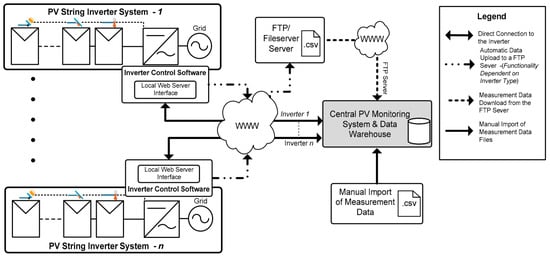
Figure 1.
Operational framework and information exchange processes of the photovoltaic monitoring platform [46].
In knowledge model construction, the Intelligent Operation Knowledge Model (IOKM) designed by Zhu et al. employs a three-tier architecture integrating first-order predicate logic and knowledge ontologies to achieve machine intelligence for scheduling operations. Its effectiveness has been validated in actual power grid maintenance planning [47]. Qiu’s research on intelligent monitoring systems in the big data era enables rapid operation and maintenance along with coordinated early warning for hydropower stations through real-time data collection and algorithmic modeling, thereby reducing management costs [48]. As shown in Figure 2, KASAPBAŞI et al. [49] developed a control system to monitor, control, and oversee operations addressing power shortages in remote areas.
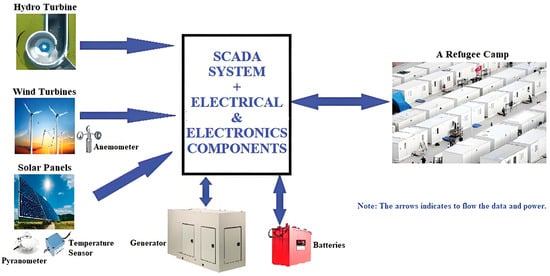
Figure 2.
The architectural design of the presented system [49].
Edge computing enhances data processing efficiency and real-time capabilities. By analyzing its application in supply-demand interactions, edge-side data processing reduces latency, thereby improving both the efficiency of interactions and data security [50]. Jin et al. [51] proposed a hydropower data management approach utilizing the Dameng database, combining a distributed real-time database with a relational database to address issues of slow query speeds and high storage costs.
In terms of supporting simulation platform operation through real-time data management technology, the concurrent processing capability of wide-area measurement systems has been significantly enhanced by employing granularity-controlled concurrent access synchronization algorithms and optimizing lock conditions and wait queues [52]. Feng et al.’s microservices architecture real-time database achieves high-performance data access for automated scheduling systems through data sharding and service virtualization [53].
2.5. Summary
Research on simulation platforms for computer monitoring systems in integrated hydro–wind–solar control centers currently exhibits three key characteristics. First, a pronounced trend toward technological convergence, where the cross-application of digital twins, heterogeneous computing, and large language models drives the evolution of simulation platforms toward integrated development encompassing “high-precision modeling—intelligent optimization—secure operations and maintenance.” Second, multi-energy complementary dispatch is shifting from single-energy optimization to whole-system coordination, with uncertainty handling and dynamic scheduling models becoming central research focuses. Third, cybersecurity protection is evolving from passive defense to active immunity, where the deep application of national cryptographic standards and trusted computing enhances system security, as summarized in Table 2. Future research trends include the following: (1) Whole-system real-time simulation based on digital twins, enabling multi-scale coordination from equipment to power grids. (2) Distributed optimization scheduling integrating federated learning and edge computing, enhancing adaptability for large-scale renewable energy grid integration. (3) Intelligent security protection systems merging AI and blockchain technologies to address emerging cyberattack challenges.
Table 2.
Research Characteristics of Simulation Platforms.
Despite significant progress in existing research, three key shortcomings remain. First, there is still no unified standard for detailed modeling of multi-energy complementary systems, particularly in studies on the coupling mechanisms between hydropower, wind power, and photovoltaics, where parameter matching and quantitative analysis of dynamic response characteristics are insufficient. Second, robustness research addressing extreme operating conditions, such as severe weather or equipment aging, in long-term scheduling optimization is relatively scarce. Existing models predominantly rely on historical data predictions, lacking adaptability to unforeseen events. Third, knowledge transfer capabilities in intelligent operations and maintenance remain inadequate, making it difficult to effectively reuse operational experience across different basins and energy station types. The generalization capabilities of large language models in specialized domains require improvement. In addition, issues such as the trade-off between real-time performance and accuracy in simulation platforms, and standardization in multi-source data fusion, require urgent resolution.
To address the aforementioned shortcomings, future investigations could progress along several avenues: (1) Establish hybrid modeling frameworks that integrate fundamental physical principles with data-informed analytical techniques, integrating quantum computing technologies to enhance simulation efficiency for large-scale systems. (2) Develop robust scheduling models accounting for multidimensional uncertainties in climate, energy, and load, incorporating generative AI for extreme scenario simulations. (3) Establish cross-domain knowledge graphs and transfer learning frameworks to enable efficient reuse of operational experience across different energy stations. (4) Design a secure and trustworthy simulation environment integrating “digital twins—edge computing—blockchain” to ensure data security throughout its entire lifecycle. In addition, research on coupling simulation platforms with electricity market mechanisms should be strengthened to explore optimal dispatch strategies for multi-energy complementary systems in electricity spot markets, thereby advancing simulation technology from technical validation to commercial application.
3. Routine Operation Training
The integrated control center for hydro, wind, and solar power achieves complementary multi-energy dispatch through unified monitoring. Its safe and stable operation heavily relies on the professional skills of operators, while the traditional training methods face bottlenecks such as high costs, significant risks, and limited scenarios. The simulation training platform provides operators with risk-free, reproducible, and comprehensive operational training by accurately simulating the real monitoring environment, holding significant practical value for enhancing the operational efficiency of the integrated control centers and ensuring grid security. This chapter focuses on the technical framework and application progress of the simulation platform for the computer monitoring system at the integrated control center for hydro, wind, and solar power during routine operation training. Core issues include methods for multi-energy monitoring data fusion and status assessment, modeling and interaction technologies for the simulation platform, and functional design and effectiveness validation of the operation training system.
3.1. Evolution of Intelligent Technologies for Unit Status Monitoring and Evaluation
Wind turbines, as the core units of integrated hydro–wind–solar control systems, are undergoing technological evolution along a three-tier progression: equipment-level condition awareness, system-level coordinated dispatch, and virtual-physical interactive simulation. High-precision condition monitoring driven by deep learning, intelligent dispatch framework for multi-energy complementarity, and dynamic simulation enabled by digital twins collectively form a technical closed loop of “perception–decision–verification” within the central control center.
Wind turbine condition monitoring technology has achieved significant accuracy improvements by leveraging deep learning models to analyze the spatiotemporal correlation characteristics of SCADA data. By constructing variational graph autoencoders to model parameter coupling network and dynamically setting thresholds using adaptive symbolic transmission entropy, the robustness of anomaly detection is significantly enhanced [54]. The integration of Vine-Copula and BiLSTM algorithms enables the analysis of parameter coupling patterns, achieving gearbox failure prediction 90–1186 min in advance [55]. As shown in Figure 3, Li et al. [56] developed a BO-BiLSTM network model, in which a health-index trajectory was constructed and a suitable predictive model was chosen to estimate the degradation trend of wind-turbine bearing conditions. By integrating the ViT and LSTM frameworks, traditional recognition bottlenecks are overcome through the KL divergence metric and kernel density estimation [57]. Convolutional twin networks facilitate offline training and online monitoring collaboration, accurately predicting operational failures. Collectively, these studies validate that from graph neural networks to time-sequence fusion models, deep learning has become the core technological pathway for unit status perception by mining spatiotemporal coupling features in data [58].
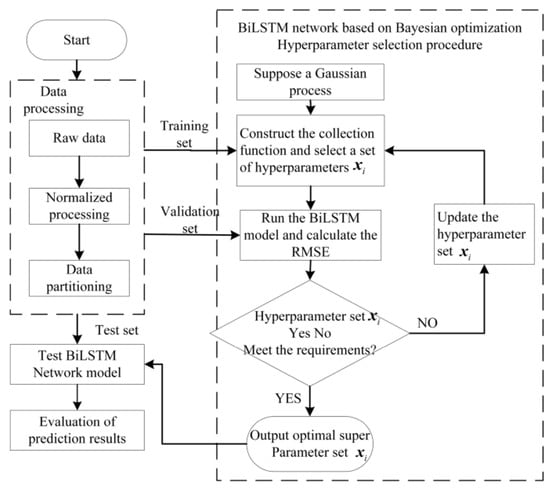
Figure 3.
Bayesian optimization of BiLSTM network hyperparameters [56].
Within the domain of integrated optimization for wind, solar, and hydro power, the dual-loop framework of “load forecasting–multi-objective decision-making” has become pivotal for ensuring system economic efficiency. A dual-layer optimization architecture, comprising a renewable energy allocation model and particle swarm optimization, reduces electricity transaction costs and enhances adaptability to price fluctuations by dynamically adjusting the wind–solar power ratios [59]. Tang et al. [60] further integrated Holt-Winters load forecasting with an improved multi-objective particle swarm optimization algorithm. By targeting minimized operating costs and maximized renewable energy integration, they achieved a 5.23–8.59% increase in wind and solar power utilization rates while reducing total system costs by 8.29–8.89%. This framework highlights the system-level value of synergistic prediction accuracy and optimization strategies in mitigating wind and solar fluctuations and enhancing the economic efficiency of integrated wind, solar, and hydro power control.
Digital twin technology enables dynamic mapping and closed-loop verification of complex unit characteristics through semi-physical simulation. Hu et al. [61] proposed a MIMO-FDD-HSM hybrid semi-mechanistic modeling approach, constructing a digital twin system incorporating physical controllers. Hardware-in-the-loop experiments validated its high-precision approximation of wind turbine nonlinear characteristics. The platform establishes a live communication link connecting physical systems and virtual models, providing operators with authentic dynamic environments. This breakthrough not only supports the strategic validation of condition monitoring data but also serves as a technical hub for the “perception–decision–simulation” closed-loop in integrated control centers, driving the evolution of dispatch optimization from static analysis to dynamic interaction.
3.2. Evolution of Simulation Platform Architecture and Key Technological Breakthroughs
The efficient construction of simulation platforms relies on the synergistic integration of three core technologies: precise kernel modeling, elastic computing architectures, and immersive interactive experiences. Current research progresses incrementally—from data–mechanism integrated modeling and cloud-edge collaborative computing support to three-dimensional visualization-based human–computer interaction—collectively propelling simulation systems from basic functional emulation toward high-fidelity, large-scale, and immersive capabilities.
The construction of simulation platforms relies on high-precision mathematical models and efficient computational architectures. At the modeling methodology level, Chen et al. established a variable operating condition performance prediction model for ORC systems based on BP neural networks, achieving a maximum error of only 3.30% and enabling the output of operating parameters that optimize net power and thermal efficiency [62]. Kou et al. [63] developed a dual-closed-loop PID controller on the MATLAB/Simulink platform for hydraulic turbine speed control, achieving precise regulation of both rotational speed and guide vane opening. Their work also revealed how the lag time of electrohydraulic servo systems constrains load regulation amplitude. These studies collectively demonstrate that the integration of data-driven approaches and mechanism-based models effectively enhances the simulation fidelity of complex systems.
To meet the demands of large-scale system simulation, cloud computing and parallel computing technologies are widely adopted. Pu et al. [64] proposed a cloud-based power grid training simulation architecture, leveraging virtual resource pool management, unified network modeling, and parallel simulation techniques to address the issues of low computational efficiency in traditional systems and data mismatches in multi-level joint simulations. As shown in Figure 4, Kumar et al. [65] introduced a monitoring system framework for hydropower plants, leveraging data-driven methodologies alongside IoT devices and cloud-computing infrastructure, utilizing ThingSpeak for cloud-based parameter monitoring and comparing real-time and predicted efficiency. As shown in Figure 5, Akkur et al. [66] employed industrial Internet of Things (IoT) and distributed control systems to coordinate energy control and monitoring operations effectively. Zhang et al. [67] further enhanced multi-agent collaborative simulation by constructing hierarchical behavioral models for intelligent agents and reinforcement learning-based decision mechanisms, thereby comprehensively simulating market interactions among power generators, consumers, aggregators, and other entities within new power systems. This architecture provides a scalable technical foundation for the simulation training of multi-agent, multi-level systems like integrated hydro, wind, and solar power control centers.
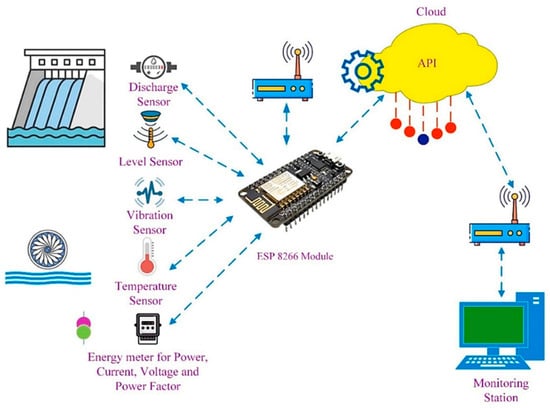
Figure 4.
Designed framework for monitoring operations in a hydropower facility [65].
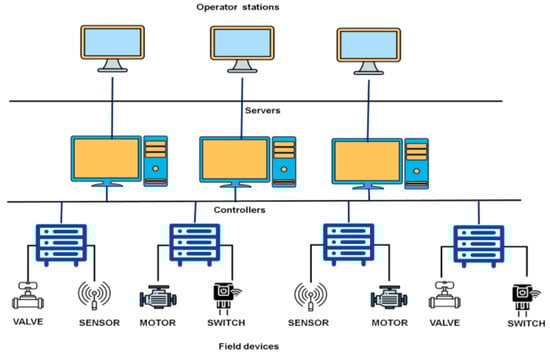
Figure 5.
Architecture of DCS system [66].
Breakthroughs in 3D visualization and human–computer interaction technologies have significantly enhanced the immersive experience of training. A virtual platform integrating operation and maintenance for hydro turbine regulation systems, developed using the Unity 3D engine, enables full system navigation, three-dimensional interactive maintenance, and virtual operation capabilities, overcoming the operational limitations of traditional two-dimensional interfaces [68,69]. Li et al. developed maintenance simulation systems for mixed-flow and cross-flow hydro turbine units using the Open Scene Graph and Virtools engines, supporting hoisting process simulation and component disassembly interaction [70]. In interface design, Liu [71] emphasized the inheritance and openness of the human–machine interface for the Three Gorges Right Bank Power Station monitoring system, enhancing multi-power-station cluster monitoring efficiency through optimized configuration layout. Diao et al. [72] developed an embedded wireless monitoring interface based on MiniGUI, achieving user-friendly human–machine interaction on the S3C2410X hardware platform. Collectively, these technologies have propelled simulation training from “functional simulation” to “immersive experience”.
3.3. Industry Applications and Functional Enhancements of Simulation Training Systems
Operator simulation training systems have been widely applied in power generation, chemical processing, and energy sectors, with their core value lying in the risk-free reproduction of complex operational scenarios. In the hydropower sector, an integrated intelligent control platform for cascade hydropower stations has been developed, incorporating multi-source heterogeneous data processing, object-oriented intelligent alarm systems, and optimized operation modules, significantly enhancing the efficiency of hydropower dispatch coordination [73]. Wang et al. [74] (2017) designed a comprehensive a multi-level dispatch training system for the North China Power Grid, featuring integrated model management and full-coverage grid simulation to support collaborative drills across multiple roles, including dispatch, monitoring, and planning. This effectively addresses the fragmentation issues in traditional training approaches.
In process industries, operator training system (OTS) has become an essential tool to address the shortage of skilled operators. A gas pipeline operator training system developed based on pipeline network dynamic simulation employs Force Control configuration software to simulate SCADA interfaces. Combined with OPC communication for real-time responses to operational commands, this system reduced training cycles by over 30% in the Sinopec Sichuan-East Gas Transmission Pipeline application [75]. Gu’s desulfurization simulation system demonstrates that scoring mechanism and accident scenario simulations can systematically enhance operators’ emergency response capabilities [76]. As shown in Figure 6 and Figure 7, Abdulsalam et al. [77] designed a SCADA framework to enable remote supervision and operational control of inverters connected to the power grid.
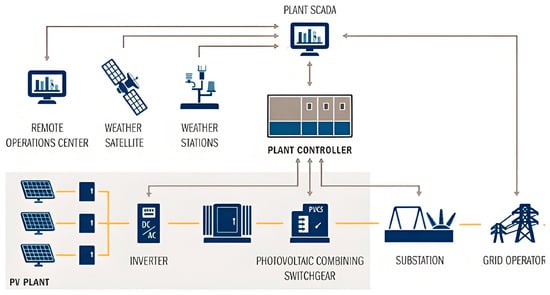
Figure 6.
Solar photovoltaic SCADA-based system [77].
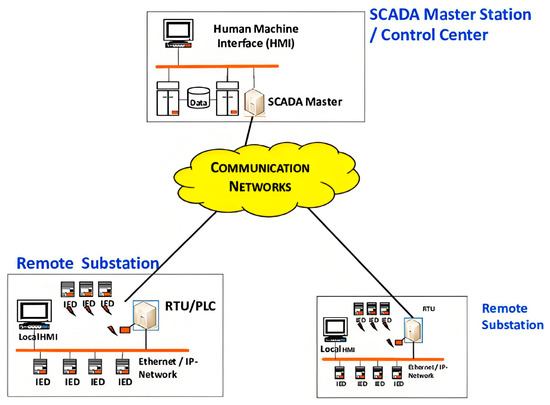
Figure 7.
Data–communication framework for SCADA-enabled photovoltaic grid systems [73].
Notably, Ren [78] emphasized that operator training system (OTS) for coal chemical plants must prioritize a balance between model accuracy and operational condition coverage. The data replay technology developed by Ma Jianxin et al. for nuclear power plant DCS simulators enables instructors to trace and analyze operational errors by storing operational events and system states. This technology has been validated in the full-scope simulators at the Yangjiang Nuclear Power Plant [79]. These practices demonstrate that modern OTSs must not only simulate operational interfaces but also incorporate advanced functionalities such as traceable training processes, quantifiable operational outcomes, and customizable abnormal operating conditions.
3.4. Summary
Current research in clean energy monitoring, simulation, and operational training exhibits three key characteristics. First, the deepening technological convergence, where SCADA data-driven AI models significantly enhance equipment condition assessment accuracy, while digital twins and semi-physical simulation technologies (such as MIMO-FDD-HSM) strengthen system dynamic mapping capabilities. Second, the upgrades of platform architecture, where cloud-based integrated simulation frameworks (such as the resource pool management proposed by Pu et al.,) have resolved large-scale system concurrency bottlenecks, while 3D engines (e.g., Unity 3D, Virtools) and interactive design (e.g., the optimized interface for the Three Gorges) have substantially enhanced training immersion. Third, application scenarios have expanded from single hydropower monitoring to coordinated optimization of wind, solar, and hydro resources, with training modes evolving from basic operational drills to multi-service coordination and incident traceability analysis.
However, current research still faces significant limitations. First, cross-energy monitoring integration remains insufficient, with most studies focusing on simulation modeling of single energy sources, such as wind or hydropower, lacking methods for monitoring data fusion methods and joint dispatch training scenarios for multi-energy flow coupling involving hydro, wind, and solar power. Second, training intelligence is limited, with most systems still relying on preset training plans, such as static load curves described by Xie et al., lacking adaptive training strategies based on trainee behavior and real-time evaluation feedback mechanisms. Finally, the depth of virtual-physical interaction remains inadequate. While existing OTS can simulate SCADA interfaces, they inadequately replicate core operational functions unique to central control centers, including cross-security zone data transmission and interconnection of heterogeneous systems (e.g., data synchronization challenges highlighted by Wang).
Based on these considerations, this study will construct a comprehensive simulation training platform for the integrated control center of hydro, wind, and solar power. At the data layer, it will integrate multi-parameter coupling networks of wind turbine SCADA systems, variable-speed hydro turbine control models, and wind–solar complementary optimization algorithms to establish a multi-energy collaborative monitoring database. At the platform layer, a cloud computing architecture will support high-concurrency simulation, while a 3D visualization engine enables immersive interaction with control center equipment and processes. At the application layer, adaptive training modules will be developed, combining operation replay technology and dynamic scenario generation to provide multi-dimensional assessment and personalized guidance for trainees’ operational performance, ultimately addressing the technical gap in multi-energy joint simulation training.
4. Operational Strategy Optimization
The computer monitoring system at the Water—Wind—Solar Integrated Control Center serves as the “nerve center” for achieving coordinated optimization of multi-energy systems. The optimization of its simulation platform operation strategies directly affects the system’s economic efficiency, reliability, and response speed. This chapter focuses on complementary dispatch model construction, the application of intelligent optimization algorithms, the empowerment of digital twin technology, and adaptation to power market mechanisms. Nevertheless, significant challenges remain, including limited adaptability to complex scenarios, delays in multi-timescale coordination, and low efficiency in solving high-dimensional constraints.
4.1. Research Progress on Multi-Energy Complementary Operation Optimization Algorithms
Optimization algorithms constitute the core tools for enhancing the economic efficiency and operational stability of integrated hydro–wind–solar systems. Recent research has concentrated on the integration of distributed computing and intelligent optimization methods. Particle Swarm Optimization (PSO) and its improved variants are widely adopted due to their simple structure and rapid convergence. Ren et al. proposed a distributed multi-strategy PSO algorithm, which partitions the population through a competition mechanism and implements multiple strategy schemes. Its effectiveness in solving multi-region interconnected economic dispatch problems was validated on an IEEE 39-node system, enhancing global search capabilities while preserving regional privacy [80]. Liu et al. innovatively reconfigured cascade hydropower stations as dual function “power source + battery” systems. They applied an improved Deep Deterministic Policy Gradient (DDPG) algorithm to solve short-term optimization models, enhancing renewable energy integration and overall power generation efficiency through a “low storage, high output” strategy [81]. As illustrated in Figure 8, Liu et al. [82] proposed and compared the NSGA-II and NSGA-III algorithms, offering theoretical insights to support the design and operational enhancement of multi-energy complementary dispatch systems (MCDES). Significant results have also been achieved in the adaptive extensions of classical optimization methods. By focusing on the characteristics of daily regulated reservoirs, a short-term model for hydro–wind–solar complementary power generation systems was constructed. Dynamic programming solved water level changes and unit start-stop strategies, enhancing non-flood-season generation benefits [83]. Road-electricity coupled network source-load coordination optimization can construct EV dispatchable load models via the Minkowski sum method, combining carbon emission flow theory to achieve low-carbon economic optimized system operation [84].
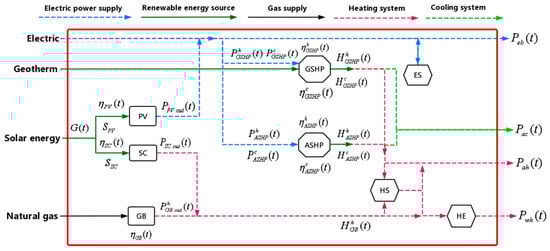
Figure 8.
MCDES energy chain [82].
4.2. Innovative Applications of Digital Twin Technology in Monitoring and Simulation
Digital twin techniques provide a high-fidelity simulation environment and real-time decision-making support for operational strategy optimization by constructing virtual mappings of physical systems. In the domain of fault diagnosis and condition monitoring, a residual-based fault location method for distribution networks utilizes digital twins. By integrating μPMU and smart meter data to construct an IEEE 33-node twin model, it employs Kalman residual analysis to achieve precise fault section localization, effectively overcoming challenges posed by limited sparse sensing and transmission delays [85]. A digital twin-driven remote monitoring system for wind turbine integrates physical modeling, dynamic operational rules, and Unity3D visualization to enable real-time status monitoring, fault alarms, and human–machine operation interaction [86]. At the system-level collaborative control stage, a digital twin framework for mega-urban virtual power plants addresses modeling and decision-making challenges in scenarios involving massive distributed energy resources with multiple entities, objectives, and high uncertainty. This framework has been successfully demonstrated in the Lingang New Area project [87]. These technologies provide critical capabilities such as dynamic simulation, fault prediction, and strategy validation for control center simulation platforms. Nevertheless, further efforts are needed to address bottlenecks in real-time synchronization of multi-source heterogeneous data and model self-updating.
4.3. Operation Strategies and Market Mechanisms for Integrated Wind–Solar–Storage Systems
Harmonized management of wind, solar, and storage units is vital for alleviating fluctuations in power output fluctuations and enhancing grid adaptability. Relevant Strategies must balance technical feasibility with economic optimality. Quantifying complementary characteristics and optimizing capacity allocation are key research priorities. Based on meteorological data from Qinghai, K-means weather classification and complementary rate indicators were employed to reveal patterns of enhanced wind–solar complementarity during summer/autumn and under abrupt weather conditions. The Secretary Bird Optimization algorithm was applied to determine the optimal grid-connected capacity ratio [88].
For hybrid photovoltaic-wind energy storage microgrids, the variational modal decomposition method was applied to define the operational boundaries between supercapacitor and battery usage. Optimization results demonstrate that this approach significantly extends battery lifespan while effectively reducing annual comprehensive costs [89]. Electricity market mechanism design directly impacts system profitability. By analyzing the integrated wind–solar–pumped storage business model, a strategy was proposed: actively bidding during high-price periods in medium-to-long-term transactions and forming an optimal curve through spot market integration with optimization algorithms. It was indicated that prices below 200 yuan·MWh−1 may result in losses, while prices exceeding 225 yuan·MWh−1 ensure stable profitability [90].
Additionally, a peer-to-peer trading mechanism for virtual power plants based on leader-follower-cooperative game theory was developed, utilizing a two-level optimization model to enhance the response benefits of distributed resources and increases user participation [91]. As illustrated in Figure 9, Leng et al. [92] proposed the Digital Twin Monitoring and Simulation Integrated Platform (DTMSIP), which supports simultaneous real-time monitoring and high-fidelity offline simulation to assess planned configurations and identify optimal system setups. Moreover, Zheng et al. [93] systematically reviewed frequency regulation technologies for wind–storage systems, emphasizing the critical role of virtual inertia and VSG (Virtual Synchronous Generator) control for frequency stability in high-penetration grids.
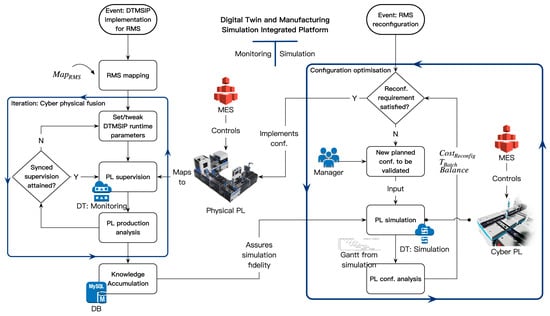
Figure 9.
Procedure of DTMSIP-driven RMS reconfiguration [92].
4.4. System Stability Control and Constraint Handling Techniques
The integration of high-penetration renewable energy poses severe challenges to system dynamic response, necessitating innovative control strategies and constraint handling methods. Frequency regulation in isolated microgrids is critical for ensuring reliable operation. To address the limitations of traditional FOPID controllers, a variable domain hybrid fuzzy fractional-order PID controller was developed. Combined with dynamic data correction filtering technology, it significantly suppresses frequency fluctuations under measurement noise interference [94]. As illustrated in Figure 10, Arya et al. [95] designed and implemented a fractional-order fuzzy PID (FOFPID) controller for single- and dual-region multi-source hydropower systems. Comparative analyses with optimal and newly developed controllers, including hSFS-PS, DE, TLBO, and IPSO, demonstrate that FOFPID exhibits superior performance in frequency regulation and control precision. For low-frequency load shedding strategies in isolated island microgrids, rapid frequency stability recovery is achieved by estimating the relationship between active power deficits and equivalent rotational inertia [96]. Regarding constrained optimization and topology adjustment, an opportunity-constrained model for microgrid dynamic economic was established. Three power adjustment strategies—grid priority, unit priority, and hybrid priority—were employed to balance reliability and economic risk [97]. Qie et al. proposed dynamically adjusting system topology to limit short-circuit currents, employing feeder-mounted fast-acting circuit breakers in 500 kV systems and busbar sectioning in 220 kV systems, thereby minimizing the impact of current-limiting measures on normal operation [98]. Hu et al. integrated dynamic adjustment strategies with integer particle swarm optimization, efficiently solving distribution network reconfiguration problems through dynamic adjustment of the solution-space truncated optimization methods [99].
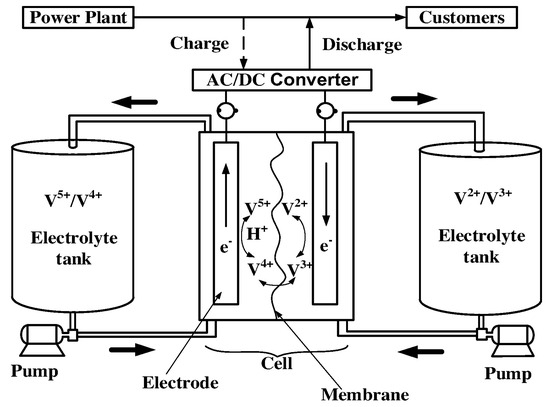
Figure 10.
Block diagram describing configuration of RFB in power system [95].
4.5. Summary
Existing research on operational strategy optimization for integrated hydro–wind–solar control centers simulation platforms has established a technical framework centered on intelligent algorithms, supported by digital twins, and guided by multi-energy complementarity, as shown in Figure 11. This framework exhibits three prominent trends. First, algorithm design has evolved from single-objective optimization toward integrated distributed-parallel-reinforcement learning approaches. Second, technical architectures have advanced from offline simulation to real-time closed-loop “perception-decision-control” systems, enabling dynamic interaction between data acquisition, strategy computation, and operational execution. Third, research perspectives are expanding from technical optimization toward “technology-market-policy” coordination.
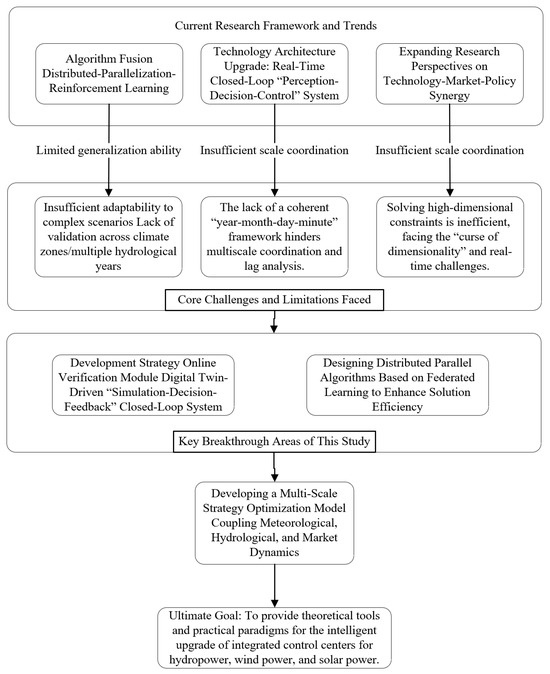
Figure 11.
Current Research Status on Operational Strategy Optimization.
However, several critical limitations persist. First, adaptability to complex operational scenarios is insufficient. Most optimization models focus on specific regions or typical operational days, lacking generalized validation across diverse climate zones, multiple hydrological years, and extreme weather events. Second, multi-time-scale coordinates. Medium-to-long-term scheduling and real-time control strategies are often disjointed, and a coherent “year-month-day-minute” optimization framework has yet to be established. Third, low efficiency in solving high-dimensional constraints. Models incorporating cybersecurity, equipment lifespan, and market regulations are prone to the “curse of dimensionality,” and existing algorithms frequently struggle with convergence and real-time performance.
To address these bottlenecks, this study proposes three key directions. First, the construction of a cross-scale strategy optimization model integrating meteorological, hydrological, and market dynamics to enable holistic decision-making. Second, the design of a distributed parallel algorithm framework based on federated learning, enhancing computational efficiency and robust handling of complex constraints. Third, the development of a digital twin-driven online strategy verification module to implement a dynamic “simulation-decision-feedback” closed loop. Collectively, these methods seek to deliver both conceptual frameworks and practical implementation models for the intelligent upgrade of integrated hydro–wind–solar control centers.
5. Complex Exception Handling
As a critical tool for system design verification and operator training, the authenticity and processing capabilities of simulation platforms in replicating complex operating conditions—particularly abnormal and fault scenarios—directly influence the reliability of actual systems. Currently, simulation platforms face multidimensional challenges including incomplete anomaly injection, insufficient fault diagnosis accuracy, and abnormal control commands responses, necessitating a comprehensive assessment and synthesis of the latest technological advancements. This chapter focuses on identifying key technical bottlenecks and emerging research trends in handling complex handling anomalies, providing theoretical support for enhancing the robustness and operational realism of integrated hydro–wind–solar control simulation platforms.
5.1. Complex Anomaly Detection and Testing Technologies Face Methodological Innovation
Simulation platforms require precise replication of real-world anomalies; however, injecting anomalies into large-scale systems and evaluating their states pose significant technical challenges. Traditional testing methods, constrained by resource limitations and controllability of disturbances, creating challenges for fulfilling the evaluation requirements of next-generation dispatch system support platforms [100]. Similarly, addressing specific AGC intensity compensation anomalies in airborne laser scanning (ALS) systems, a “bidirectional moving local weighted intensity correction” method was developed. This approach integrates terrain information with scan line segmentation, identifies anomalous zones via the Kolmogorov–Smirnov test, and achieves high-precision correction through joint weighting of adjacent scan lines. The method effectively lowered the mean absolute percentage error of intensity measurements by 0.27 and reduced the root mean square error by 693 DN, significantly improving data quality [101]. At the data processing architecture level, Lu et al. explored the application of edge computing in AGC performance evaluation for power plants, constructing a “cloud–edge–end” hierarchical framework that offloads anomaly detection and certain computational tasks to the plant’s edge side. Practical cases demonstrate that this approach reduces data processing load at the dispatch center by approximately 40%, effectively alleviating the storage and computational pressure associated with centralized processing [102]. As shown in Figure 12, Cheng et al. [103] developed a real-time anomaly detection system on the Hadoop platform, leveraging big data streams from power grids and employing clustering algorithms for intelligent identification of abnormal events. Collectively, these studies point toward the distributed, intelligent, and high-precision trends in testing and detection technologies. However, their adaptability to dynamic system topology changes and operational conditions still requires further validation.
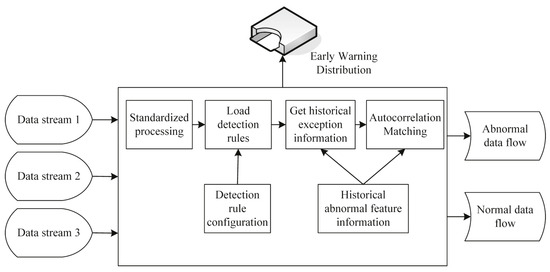
Figure 12.
Flow chart of abnormal information detection [103].
5.2. Intelligent Diagnostic Algorithms Have Become the Core Driving Force in Faulty Handling
Rapid and precise fault diagnosis is a critical component of anomaly handling, where both machine-learning and deep-learning techniques exhibit considerable benefits. Current literature indicates that Support Vector Machines (SVMs) and their optimized variants remain the mainstream choice. For instance, a transformer mechanical fault diagnosis model based on vibration signals with υ-SVM achieved effective identification of winding deformation and core loosening through small-sample training [104]. To address challenges of limited sample sizes and complex structures in smart substations, principal component analysis (PCA) for dimensionality reduction can be integrated with the Imperial Competition Algorithm to fine-tune SVM parameters, thereby enhancing diagnostic efficiency and accuracy [105]. Liu further introduced a quantum genetic algorithm to optimize the SVM penalty factor and kernel function coefficient, enhancing the accuracy of fault diagnosis in wind-turbine transmission chains (e.g., missing teeth in gears) by approximately 12% [106]. Notably, deep learning models are rapidly gaining prominence due to their powerful feature extraction capabilities. A Hilbert-wavelet stacked denoising autoencoder (HWSDAE) model was proposed, which constructs features through Hilbert vibration decomposition (HVD) modal selection and constructing wavelet packet energy entropy. Combined with a stacked denoising autoencoder, it achieved an average accuracy of 99.49% in bearing fault diagnosis, representing a 13.52% improvement over models without preprocessing [107]. The integration of Whale Optimization Algorithm (WOA) and Kernel Extreme Learning Machine (KELM) established a multi-system fault diagnosis model for wind turbines. After Laplace fractal feature selection, the diagnostic accuracy reached up to 96.0% [108]. Xiao et al. pioneered the integration of swarm intelligence with clustering, proposing an electromagnetic-inspired weighted kernel clustering algorithm. By optimizing kernel parameters and feature weights, they successfully applied this method to vibration fault identification in hydroelectric units, achieving higher accuracy than traditional methods [109]. Notably, digital twin technology is being leveraged to generate virtual fault data. By constructing digital replicas of physical equipment and injecting virtual faults, this approach validated the reliability of models trained on “virtual data” in bearing diagnosis cases. This provides a new paradigm to address the challenges of acquiring real fault samples, which are often difficult to obtain and costly. offering a promising solution to sample scarcity [110]. As shown in Figure 13, Jaen-Cuellar et al. [111] further explored fault detection in renewable energy power generation systems, analyzing the advantages, limitations, and emerging trends in monitoring and classification strategies. While current algorithms demonstrate strong performance in specific scenarios, their generalization capabilities across device types and operating conditions, along with interpretability, remain common shortcomings.
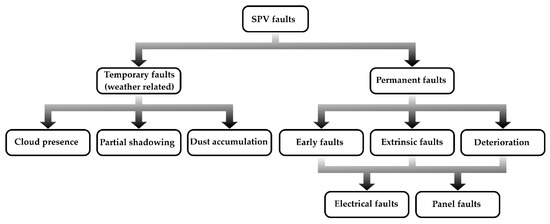
Figure 13.
Type of faults in SPV systems [111].
5.3. AGC Anomalies and Control Optimization: Key Challenges for System Stability
Abnormalities in Automatic Generation Control (AGC) commands directly impact grid frequency stability and power balance, with diverse underlying causes that require timely and precise handling. Sun et al. conducted an in-depth analysis of AGC command anomalies triggered by UHV DC lockout incidents, identifying deficiencies in power reception value mechanism, improper low-frequency control logic, and dynamic dead zones as primary causes. Three optimization measures proposed accordingly (e.g., improving the power reception value acquisition algorithm) were successfully implemented in the Zhejiang power grid, enhancing the system’s resilience against major disturbances [112]. Li investigated abnormal load regulation issues in the AGC system at the Longtan Hydropower Station. Through testing, he revealed that the original load allocation strategy failed under specific operating conditions, highlighting the need for logical reinforcement in strategies to address extreme boundary scenarios [113]. As illustrated in Figure 14, Wang et al. [114] proposed a line-space, data-driven approach for detecting cyberattacks in power system balancing and frequency control networks. This method employs semi-supervised K-means clustering to perform offline grouping of behavioral pattern instances, followed by iterative multi-class anomaly detection using the resulting model. Regarding control performance enhancement, Peng Tao et al. developed a control method based on finite-set model prediction to address slow fault current tracking issue in motor simulators. This method predicts current values for all switching states during each sampling cycle and dynamically selects the optimal switching state via an evaluation function. Experiments demonstrated that its dynamic response speed improved by over 50% compared to traditional PI control, with tracking error reduced by 40% [115]. The edge computing framework previously mentioned by Lu et al. also serves to optimize AGC performance assessment by offloading computational tasks to distributed nodes, alleviating pressure on the cloud. Earlier work by Wang et al. on a substation anomaly handling guidance system integrated background data to provide intelligent processing recommendations. Although its level of intelligence was limited, it established the foundation for subsequent AGC anomaly auxiliary decision-making [116]. Despite these advances, most existing optimization approaches focus on single causes or local control loops, leaving a gap in research on complex AGC anomalies induced by the coupling of wind and solar fluctuations with hydropower regulation in integrated hydro–wind–solar scenarios.
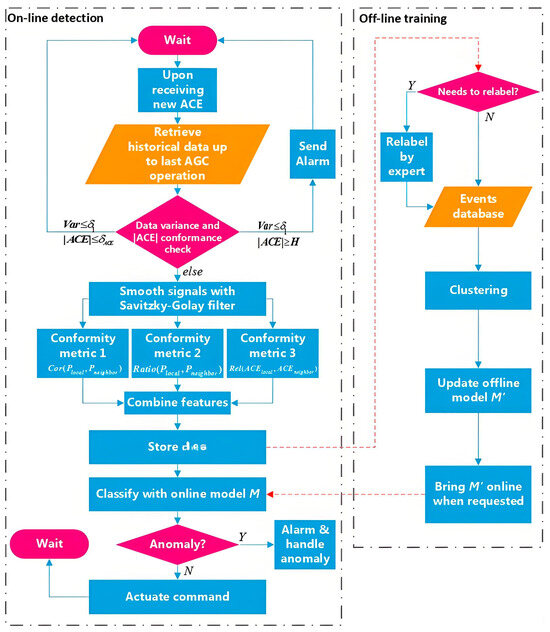
Figure 14.
Overall flowchart of anomaly detection [114].
5.4. Summary
The current research achievements in simulation, fault diagnosis, and AGC anomaly handling exhibit three notable characteristics, as shown in Figure 15. First, testing and detection methods are increasingly intelligent and distributed, such as fault injection based on complex network models and edge-computing-assisted anomaly detection, which significantly improve the feasibility and efficiency of large-scale systems evaluation. Second, fault diagnosis algorithms are continuously deepening, evolving from classical SVM optimization toward deep learning and digital twin-driven approaches, achieving breakthroughs in diagnostic accuracy and data acquisition methods. Third, AGC anomaly attribution and control strategies are becoming more refined, with accident analysis and advanced control theories enhancing command reliability. However, significant limitations persist in current research. First, there is insufficient coverage of dynamic coupling scenarios. Most existing testing and diagnostic models focus on single devices or subsystems, lacking the capability to simulate and validate complex cascading anomalies under multi-energy flow coupling of hydro, wind, solar, and grid systems. Second, the generalization and adaptability of algorithms require improvement. Most intelligent diagnostic models rely on training with specific datasets, raising concerns about their robustness when applied to real-time data streams from diverse equipment across different regions in integrated control centers. Third, AGC optimization does not adequately account for wind and solar volatility. Current strategies are primarily designed for steady states or single faults, leaving a gap in research on frequent AGC command adjustments and anomaly prevention triggered by strong fluctuations of renewable energy. To address these gaps, this study will pursue new explorations in the following three directions: (1) constructing a multi-energy coupling simulation and testing platform that integrates the dynamic characteristics of hydro, wind, and solar power to simulate complex source-grid-load interaction anomalies; (2) developing a federated learning-based diagnostic framework with cross-equipment generalization capabilities to enhance model adaptability through collaborative training using distributed data; and (3) designing a robust adaptive AGC algorithms that considers wind and solar forecast uncertainties to strengthen the disturbance resistance of the command system under fluctuating scenarios. These efforts are expected to systematically address existing deficiencies and provide critical technical support for the stable operation of integrated control centers under high penetration of renewable energy.
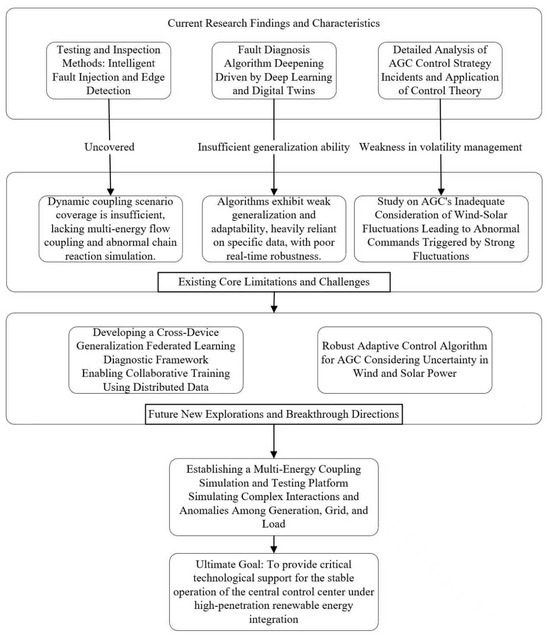
Figure 15.
Current State of Complex Exception Handling in Simulation Platforms.
6. Emergency Drill
With the continuous growth of installed capacity in clean energy sources such as hydropower, wind, and solar power in China, the safe and stable operation of large centralized control centers—as core hubs for energy dispatch—is crucial to national energy security. The computer monitoring system within these hydro, wind, and solar control centers feature complex structures and high coupling levels. Once an incident occurs, it may trigger chain reactions, leading to significant economic losses and social impacts. Traditional emergency drill methods, such as centralized training, tabletop exercises, and on-site simulations, are generally constrained by fixed scenarios, high costs, spatiotemporal limitations, difficulties in multi-person coordination, and highly subjective evaluation. In response to these limitations, simulation-based, scriptless and intelligent emergency drill platforms have become a pivotal approach to enhance the emergency response capabilities of operators in integrated control centers. This review aims to synthesize existing research, clarify technological trajectories, and provide theoretical guidance for the design and implementation of intelligent emergency drill platforms in hydro–wind–solar integrated control centers.
6.1. Core Technology Evolution and System Implementation of Simulation Drill Platforms
The technological core of emergency drill simulation platforms lies in 3D visualization modeling, interactive logic implementation, and system integration. Yu Hui et al. designed an emergency-response simulation platform using the Unity3D engine to support accident management at pumped-storage hydropower facilities. The system first systematically organized accident response procedures and knowledge frameworks. Using 3Ds Max to construct high-precision 3D models of power plant equipment and environments. Through Unity3D engine, it integrated these model resources to build virtual scenarios for typical accidents, such as unit failures and hydraulic structure emergencies [117]. As illustrated in Figure 16, Strasser et al. [118] proposed a collaborative simulation-based training platform that connects multiple engineering domains through tool interfaces, allowing learners to navigate complex scenarios via collaborative simulation components. Functionally, the system employs C# scripting language to implement human–machine interfaces and functional modules (e.g., system management, task scheduling, and training assessment) and incorporates a simulation data analysis module that records detailed drill details, identifies operational issues, and assists maintenance personnel in quickly mastering emergency procedures. The standout advantage lies in overcoming the reliance of traditional drills on physical equipment and spatiotemporal constraints, enabling unlimited low-cost reproduction of complex accident scenarios and significantly improving personnel proficiency and psychological resilience in handling unexpected incidents.
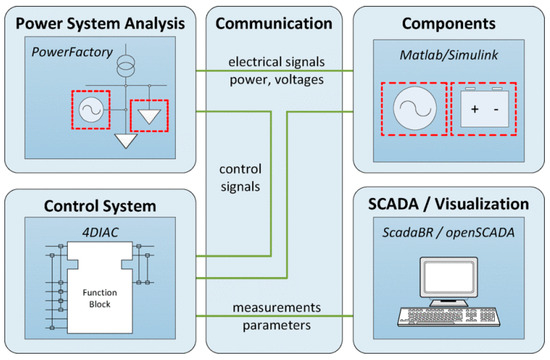
Figure 16.
A co-simulation training and educational platform encompassing electrical systems, power devices, communication networks, and automation topics [118].
Similarly, Wu Yu et al., developed an integrated VR-based “training and assessment” platform for emergency response to lithium battery fires in aircraft cabins. Grounded in the Crew Competency-Based Training and Assessment (CBTA-CRM) model, the platform leverages the Unity3D engine for scene, character, and task development, while using 3Dmax to enhance the rendering of disaster effects such as flames and smoke, creating a highly immersive and realistic environment. Through modular software design and seamless integration with hardware systems (e.g., VR headsets, controllers), the platform enables multi-person collaborative, script-free full-process emergency drills. It also facilitates objective and quantitative evaluation of participants’ operations, effectively addressing the limitations of traditional drills, such as scenario monotony, coordination challenges, and subjective evaluation [119].
Collectively, these two studies validate the efficiency and universality of the Unity3D + 3DMax technical combination in constructing emergency drill simulation platforms for complex industrial scenarios. Their modular development approach and hardware integration solutions offer important guidance for the development of simulation platforms for hydro–wind–solar integrated control centers.
6.2. Theoretical and Practical Breakthroughs in Building Unscripted Drill Scenario Models
The key to achieving flexible and realistic emergency drills lies in breaking the constraints of predefined scripts and constructing scenario models that can dynamically respond to disposal decisions. Feng et al., addressing the pain points of emergency drills in power enterprise drills, innovatively proposed a three-dimensional scriptless drill scenario model based on coordinated interaction [120]. Drawing on Hall’s three-dimensional structure theory, this model constructs a drill logic framework. At the organizational level, it clearly defines the responsibilities, authorities, and coordination relationships among command structures, functional departments, and on-site personnel involved in the drill, ensuring a smooth chain for emergency response. At the knowledge level, it systematically integrates diverse information sources, such as emergency plans, operational procedures, equipment parameters, and historical cases, providing immediate and accurate information support for decision-making during the drill. At the scenario evolution level, the model represents the dynamic progression of incidents by introducing critical time nodes and trigger mechanisms, guiding exercises to unfold synchronously with the evolving accident conditions. By integrating these dimensions, the approach effectively overcomes the limitations of conventional, script-dependent exercises, enabling the construction of responsive, process-driven emergency scenarios that more realistically reflect the complexity of actual power system incidents.
The model notably incorporates “scenario rule” as a core element. Through predefined event trigger logic, resource constraints, and consequence feedback mechanisms, the drill scenario can evolve in real time based on the participants’ actions, significantly enhancing the realism and challenge of the exercise. The framework has been successfully applied in power emergency drill practices, providing a solid theoretical framework and methodological guidance for constructing complex, dynamic accident scenarios in integrated hydro–wind–solar centers. Example includes equipment failures caused by frequent start–stops of hydro units triggered by wind–solar power fluctuations, or monitoring disruptions caused by cyberattacks on the integrated control network. Its core value lies in transforming static emergency plans into an intelligent rule base capable of dynamic simulation, thereby making drills an effective tool for testing and enhancing collaborative emergency response capabilities.
6.3. Exploring the Application of Intelligent Technologies in Exercise Evaluation and System Testing
Enhancing the intelligence level of simulation platforms, particularly their automated assessment and system vulnerability detection capabilities, has been a key research focus in recent years. Chen et al. systematically reviewed the latest advancements in automated penetration testing (APT) technology, which deeply integrates artificial intelligence into the entire penetration testing process [121]. The study indicates that automated penetration testing can be divided into two primary types.
Model-based approach: This core lies in constructing precise attack scenario models (e.g., network topology, asset status) and efficient attack decision models (e.g., reinforcement learning, game theory) to simulate hackers for automated attack path exploration and vulnerability exploitation. As illustrated in Figure 17, Guang et al. [122] examined the deployment of large-scale AI frameworks for safety and emergency management in the power sector. By utilizing key functionalities—such as natural language processing (NLP), knowledge inference, multimodal interaction, and decision-support tools—the system achieved end-to-end optimization from data fusion to intelligent decision-making.
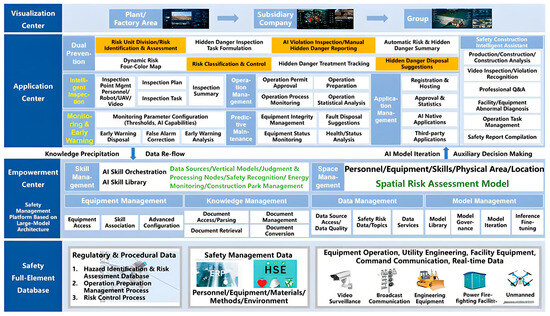
Figure 17.
Comprehensive deployment of large-scale AI frameworks for safety and emergency management [122].
Rule-based approach: This approach emphasizes establishing a comprehensive attack rule database (e.g., vulnerability characteristics, exploitation conditions) and achieving rapid matching of rules with specific scenarios. Although this technology is primarily applied in cybersecurity, its core concepts—such as attack scenario perception, intelligent decision-making reasoning, and rule matching—hold significant implications for achieving intelligent exercise guidance (dynamically adjusting exercise difficulty based on participants’ skill levels), automated attack simulation (e.g., simulating hacker intrusions into centralized control monitoring systems), and post-exercise automated effectiveness evaluation based on rules or models within training platforms. At the level of underlying system testing and fault simulation, the circuit fault simulation method proposed by Zhao et al. (2007) [123]—combining EDA simulation with fault injection—provides critical technical support. This method involves three key stages: fault modeling (defining fault types and locations), fault injection (simulating fault occurrence in the system), and fault determination (monitoring system responses to confirm fault impacts). Its engineering value in identifying system design flaws and assessing reliability has been validated through typical case studies [123]. As illustrated in Figure 18, Pérez et al. [124] employed a LabVIEW-based SCADA framework to enable both local and remote supervision of a self-contained hybrid energy system integrating renewable energy and hydrogen. Meanwhile, the security vulnerability detection system designed by Wang et al. elaborates on the principles of system vulnerability scanning and risk assessment through client/server architecture and database technology from the perspective of network vulnerability identification. These technologies establish the foundation for simulating equipment hardware failures, software defects, or network attack injection points within centralized control monitoring system simulation platforms. They enable the evaluation of a system’s emergency response capabilities and robustness under faults or attacks, allowing drills to not only train personnel operations but also test the system’s inherent security defenses [125]. As shown in Figure 19, Xu et al. [126] developed an intelligent system (IS) for real-time dynamic security assessment (DSA) in power systems. This system can rapidly learn and operate, evaluating the reliability of DSA results to achieve an accurate and dependable pre-failure DSA mechanism.
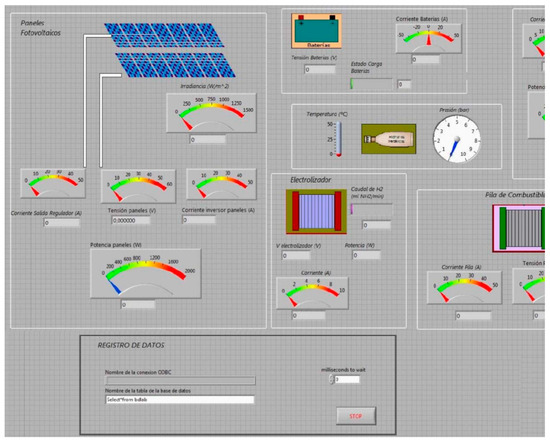
Figure 18.
Screen of LabVIEW-based SCADA [124].
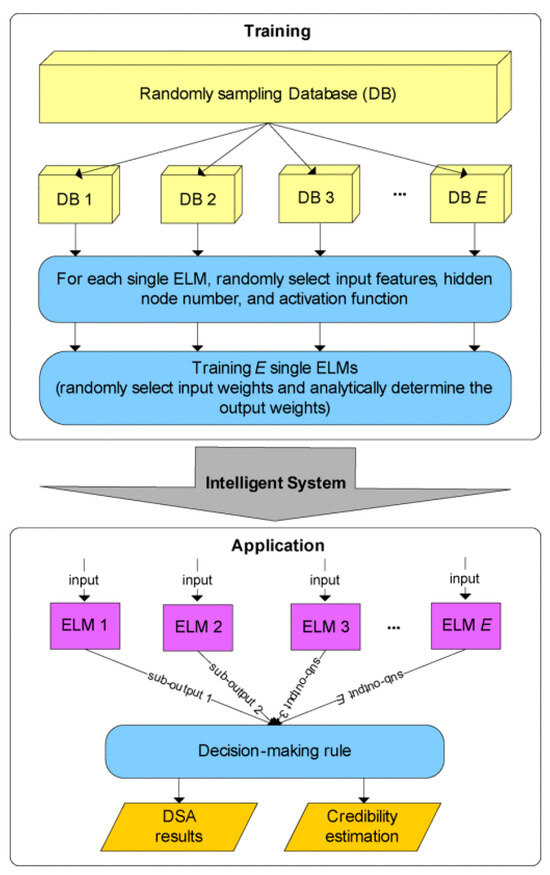
Figure 19.
Description of training and application of proposed IS [126].
6.4. Summary
Existing research has focused on the development and application of emergency drill simulation platforms for monitoring systems in integrated control centers for hydropower, wind power, and solar power. Considerable progress has been realized in fields including virtual reality technology integration, dynamic modeling of unscripted scenarios, intelligent assessment, and underlying fault and safety simulation. These efforts demonstrate distinct characteristics and evolving trends toward technology-driven, immersive interaction, dynamic flexibility, and intelligent evaluation. The combination of Unity3D engine with 3D modeling tools has become the mainstream choice for constructing highly realistic, industrial-grade drill scenarios. The three-dimensional scenario model proposed by Feng Jie et al. provides a critical theoretical framework for designing script-free drills that reflect the complex coordination relationships and dynamic evolution of accidents in integrated control centers. Meanwhile, automated penetration testing and circuit fault simulation technologies inject intelligent capabilities into platforms, enhancing the level of automation and objectivity in drill evaluation.
However, current research still exhibits significant limitations.
Insufficient cross-domain integration: There is a lack of close integration between script-free drill models in the power sector and VR/simulation platform technologies. Specifically, a comprehensive drill scenario model tailored to the characteristics of integrated hydro–wind–solar control centers, such as multi-energy coupling and deep cyber–physical system interactions.
Limited level of intelligence: Current platforms mostly rely on predefined rules for automated and intelligent assessment of drill processes, lacking data-driven deep analytical capabilities, such as mining personnel behavioral patterns or predicting response bottlenecks from extensive drill data. In addition, their capacity for dynamic simulation and intelligent orchestration of complex attack chains (e.g., APT attacks) or compound fault scenarios (e.g., wind–solar fluctuations compounded by equipment faults) remains underdeveloped.
Insufficient support for multi-level collaborative drills: Emergency response in integrated control centers involves multi-level coordination among power stations, central control, and system dispatch. Existing platforms exhibit insufficient research on mechanisms that support seamless collaborative drills across geographic regions, departments, and multiple roles (operation, maintenance, dispatch, safety supervision).
Based on these limitations, the future development of the integrated hydro–wind–solar control center simulation platform should focus on the following directions. First, deeply integrating the 3D scriptless models with advanced VR and simulation technologies to construct dynamic incident scenario libraries and rule engine that closely aligns with the coupled characteristics of hydro, wind, and solar power systems. Second, actively introducing AI technologies such as reinforcement-learning algorithms and large-scale data analytics to enable intelligent assessment of drill processes and outcomes, dynamic difficulty adjustment, and optimization suggestions for response strategies. Third, making key breakthroughs in distributed architectures and communication mechanisms that support large-scale, cross-regional, multi-role online collaborative drills, accurately simulating the entire emergency command and coordination processes of integrated control centers under complex accident scenarios. Only through such efforts can we forge an elite emergency response force for centralized control operations and maintenance capable of effectively addressing the complex challenges of the new power system.
7. Conclusions
This paper systematically reviews and comprehensively analyzes the development and application requirements of simulation functions for computer monitoring systems in integrated hydro–wind–solar control centers, covering relevant research progress, key technical approaches, and typical application scenarios. Research indicates that driven by next-generation information technologies such as digital twins, artificial intelligence, and heterogeneous parallel computing, simulation technology for integrated hydro–wind–solar control centers has evolved from early single-function simulations to a comprehensive simulation system encompassing modeling, operational optimization, intelligent operation and maintenance, and system security. In multi-energy complementary dispatch, the coordinated operation model of wind–solar–hydro effectively enhances system economic efficiency and stability. In intelligent operation and maintenance and fault diagnosis, methods based on big data and deep learning have significantly enhanced equipment condition assessment and anomaly detection capabilities. For emergency drills and personnel training, simulation platforms integrating 3D visualization and scriptless scenario simulation provide effective support for operational decision-making under complex conditions. Concurrently, addressing cybersecurity requirements for centralized control systems, security protection frameworks centered on national cryptographic algorithms and trusted computing are continuously refined, driving overall improvements in system security capabilities.
In summary, the simulation application functions of the computer monitoring system at the integrated wind–solar–hydro power control center hold significant engineering value in supporting multi-energy complementary operation, elevating operational management standards, and ensuring system security and stability. They provide a critical technological foundation for the safe and efficient operation of power systems with high renewable energy penetration.
8. Discussion
Despite significant progress in both theoretical research and engineering applications of simulation technology for computer monitoring systems in hydro–wind–solar integrated control centers, several issues warrant further exploration based on the practical demands of high-penetration renewable energy grid integration and new power system development. First, unified, refined modeling standards for multi-energy coupling between hydro, wind, and solar resources have yet to be established. Second, existing dispatch optimization and fault diagnosis models exhibit limited adaptability when confronting complex operating conditions such as extreme weather events, equipment aging, and frequent operational mode switching. In intelligent operation and maintenance and fault diagnosis applications, the insufficient cross-site transferability of models and knowledge remains a key factor constraining the engineering deployment of simulation platforms.
To address these research gaps and technical bottlenecks, future research on integrated hydropower–wind–solar control center simulation should focus on the following directions: First, develop hybrid modeling methods that integrate physical mechanisms with data-driven approaches. Second, construct robust scheduling models that comprehensively account for multiple uncertainties, including climate change, load fluctuations, and electricity market mechanisms. Third, incorporate distributed intelligence technologies such as federated learning. Fourth, promote the integrated application of technologies like digital twins, edge computing, and blockchain. Overall, simulation technology for computer monitoring systems in hydro–wind–solar integrated control centers is continuously evolving toward greater intelligence, coordination, and reliability. In-depth research on key issues, including multi-energy coupling modeling, adaptability to complex operating conditions, and generalized capabilities for intelligent operation and maintenance, will provide more robust theoretical foundations and engineering practice support for constructing new power systems and transforming energy structures.
Author Contributions
Conceptualization, J.C. and Y.M.; methodology, X.L., C.C. and Y.R.; investigation, F.H. and L.D.; writing—original draft preparation, J.C., W.Z. and F.Z.; writing—review and editing, L.D. and X.L. All authors have read and agreed to the published version of the manuscript.
Funding
This work is supported by the technology project of China Huaneng Group Co., Ltd.: Research and Demonstration of Autonomous Controllable Computer Monitoring System for Clean Energy in Large River Basins (No. HNKJ24-H135) and the Technology Talent and Platform Program of Yunnan Province (202405AK340002).
Data Availability Statement
The original contributions presented in this study are included in the article. Further inquiries can be directed to the corresponding author.
Conflicts of Interest
Authors Jingwei Cao, Xin Liu, and Liwei Deng were employed by the company Huaneng Clean Energy Research Institute and National Energy R&D Center for Efficient Utilization of Hydropower & Dam Safety. Authors Yuejiao Ma, Feng Hu, and Chuan Chen were employed by the company Huaneng Lancangjiang River Hydropower Inc. The remaining authors declare that the research was conducted in the absence of any commercial or financial relationships that could be construed as a potential conflict of interest.
References
- Wang, Y.; Wang, R.; Tanaka, K.; Ciais, P.; Penuelas, J.; Balkanski, Y.; Sardans, J.; Hauglustaine, D.; Liu, W.; Xing, X.; et al. Accelerating the energy transition towards photovoltaic and wind in China. Nature 2023, 619, 761–767. [Google Scholar] [CrossRef]
- Ren, Y.; Sun, K.; Zhang, K.; Han, Y.; Zhang, H.; Wang, M.; Jing, X.; Mo, J.; Zou, W.; Xing, X. Optimization of the capacity configuration of an abandoned mine pumped storage/wind/photovoltaic integrated system. Appl. Energy 2024, 374, 124089. [Google Scholar] [CrossRef]
- Liu, Z.; Liu, B.; Ding, X.; Wang, F. Research on optimization of energy storage regulation model considering wind–solar and multi-energy complementary intermittent energy interconnection. Energy Rep. 2022, 8, 490–501. [Google Scholar] [CrossRef]
- Tan, Q.; Zhang, Z.; Wen, X.; Fang, G.; Xu, S.; Nie, Z.; Wang, Y. Risk control of hydropower-photovoltaic multi-energy complementary scheduling based on energy storage allocation. Appl. Energy 2024, 358, 122610. [Google Scholar] [CrossRef]
- Zhao, J.; Yu, Y.; Chen, L.; Wu, M.; Nian, H.; Sun, D. Design of HIL Simulation Experimental Platform for Multi-Controller of the Wind-Solar-BESS-HESS Microgrid System. Res. Explor. Lab. 2025, 44, 55–60. [Google Scholar] [CrossRef]
- Wu, C. A High Ratio Distributed New Energy Consumption Method Based on Cooperative Scheduling of Integrated Energy Systems. In Proceedings of the 2025 2nd International Conference on Electrical Technology and Automation Engineering (ETAE), Guangzhou, China, 23–25 May 2025; IEEE: Piscataway, NJ, USA, 2025; pp. 37–40. [Google Scholar] [CrossRef]
- Yan, X.; Ren, H.; Cai, G.; Zhang, S.; Jia, J. Research on Joint Simulation Modeling Optimization and Step Selection for Wind Turbine Generators Toward Efficiency Improvement. Trans. China Electrotech. Soc. 2025, 40, 4189–4199. [Google Scholar] [CrossRef]
- Jia, F.; Cai, X.; Li, Z.; Lou, X. Refined Modeling of Wind Energy Conversion Systems and Real-time Co-simulation with Hardware-in-loop. Proc. CSEE 2017, 37, 1239–1251. [Google Scholar] [CrossRef]
- Li, Q.; Li, R.; Xin, L.; Chen, X. Digital twin-based real-time monitoring system for pump-turbines. Fluid Mach. 2025, 53, 102–109. [Google Scholar] [CrossRef]
- Wang, J.; Gao, D.; Zhu, S.; Wang, S.; Liu, H. Fault diagnosis method of photovoltaic array based on support vector machine. Energy Sources Part A Recovery Util. Environ. Eff. 2023, 45, 5380–5395. [Google Scholar] [CrossRef]
- Feng, J.; Zhang, C.; Chen, Y. A High-Precision SOC and Temperature Joint Estimation Method Based on Rapid Prototype Modeling. Energy Storage Sci. Technol. 2025, 14, 3567–3580. [Google Scholar] [CrossRef]
- Zhang, D.; Liu, H.; Li, C. Digital Twin-Based Multi-Objective Optimal Scheduling for Hybrid Microgrids. Acta Energiae Solaris Sin. 2025, 46, 184–192. [Google Scholar] [CrossRef]
- Zou, J.; Peng, C.; Yan, Y.; Zheng, H.; Li, Y. A survey of dynamic equivalent modeling for wind farm. Renew. Sustain. Energy Rev. 2014, 40, 956–963. [Google Scholar] [CrossRef]
- Chen, J.; Xu, J.; Liu, Y.; Xia, S.; Zhao, C. FPGA Parallel Simulation Method for Power Generation Units in Doubly-Fed Wind Farms. Proc. CSEE 2025, 1–11. [Google Scholar] [CrossRef]
- Ren, Y.; Jin, K.; Gong, C.; Hu, J.; Liu, D.; Jing, X.; Zhang, K. Modelling and capacity allocation optimization of a combined pumped storage/wind/photovoltaic/hydrogen production system based on the consumption of surplus wind and photovoltaics and reduction of hydrogen production cost. Energy Convers. Manag. 2023, 296, 117662. [Google Scholar] [CrossRef]
- Zhao, L.; Zhang, S.; Zhao, W.; Yuan, C.; You, Z. Reliability Evaluation and Sensitivity Analysis of Hydro-Wind-Solar Multi-energy Complementary System. Water Resour. Hydropower Eng. 2025, 56, 948–953. [Google Scholar] [CrossRef]
- Zhang, Y.; Wu, W.; Wang, Y.; Xie, R. Study on dynamic scheduling model for multi-energy complementarity of hydro, wind and solar power during flood season. Yangtze River 2024, 55, 35–43. [Google Scholar] [CrossRef]
- Ren, Y.; Yao, X.; Liu, D.; Qiao, R.; Zhang, L.; Zhang, K.; Jin, K.; Li, H.; Ran, Y.; Li, F. Optimal design of hydro-wind-PV multi-energy complementary systems considering smooth power output. Sustain. Energy Technol. Assess. 2022, 50, 101832. [Google Scholar] [CrossRef]
- Cao, H.; Mou, C.; Yang, Y.; Xu, Y.; Zhang, Z.; Cheng, C. Long-term optimization scheduling method for hydro-wind-PV multi energy complementary systems considering multi uncertainty. Yangtze River 2024, 55, 26–34. [Google Scholar] [CrossRef]
- Miraftabzadeh, S.M.; Colombo, C.G.; Longo, M.; Foiadelli, F. K-means and alternative clustering methods in modern power systems. IEEE Access 2023, 11, 119596–119633. [Google Scholar] [CrossRef]
- Fan, H.; Duan, Z.; Chen, Z.; Zhu, S.; Liu, H.; Li, W.; Yang, Y. Two-layer Optimization Scheduling for Off-grid Microgrids Based on Multi-agent Deep Policy Gradient. Electr. Power 2025, 58, 11–20+32. [Google Scholar] [CrossRef]
- An, B.; Chen, Z.; He, W.; Fu, B. Consensus-Based Multi-Objective Economic Dispatch Method in Smart Microgrid. Comput. Simul. 2023, 40, 86–93+171. [Google Scholar] [CrossRef]
- Xun, T.; Lei, S.; Ding, X.; Sun, K.; Huang, K.; Yang, J.; Hu, W. Multi-objective Optimal Power Flow Algorithms for Integrated Community Energy Systems. Smart Power 2019, 47, 19–28. [Google Scholar] [CrossRef]
- Zhang, J.; Fan, H.; Zhang, X.; Dong, Y.; Li, M.; Yu, X. Optimal model of cross-regional integrated energy system dispatching considering risk cost. Therm. Power Gener. 2021, 50, 121–130. [Google Scholar] [CrossRef]
- Meng, X.; Zhou, H.; Peng, Y.; Tang, W. Integrated operation management of clean energy power stations from partnering perspective. J. Hydropower Eng. 2025, 44, 130–142. [Google Scholar] [CrossRef]
- Cheng, S.; Wang, R.; Xu, J.; Wei, Z. Multi-time scale coordinated optimization of an energy hub in the integrated energy system with multi-type energy storage systems. Sustain. Energy Technol. Assess. 2021, 47, 101327. [Google Scholar] [CrossRef]
- Gao, M.; Han, Z.; Zhao, B.; Li, P.; Wu, D. Coordinated Optimization and Operational Strategy for Multi-type Energy Storage in Regional Integrated Energy Systems. Electr. Power 2024, 57, 205–216. [Google Scholar] [CrossRef]
- Luo, J.; Chi, H.; Liu, S.; Hong, F.; Yang, Y.; Zhang, J. Application and Adaptive application and research of computer monitoring system based on national secret technology. Mech. Electr. Tech. Hydropower Stn. 2025, 48, 33–35. [Google Scholar] [CrossRef]
- Cai, J.; Wu, Z.; Zhang, X.; Zhao, Y.; Li, X.; Liu, M. Research on Trusted Applications in SCADA for Pumped Storage Power Station. Water Resour. Power 2023, 41, 220–223. [Google Scholar] [CrossRef]
- Dinca, L.M.; Hancke, G.P. The fall of one, the rise of many: A survey on multi-biometric fusion methods. IEEE Access 2017, 5, 6247–6289. [Google Scholar] [CrossRef]
- Dong, Y.; Yang, S.; Kong, L.; Li, J.; Shang, Y. Multi Biometric Key Encryption Method for Computer Monitoring System of Hydropower Station. Value Eng. 2024, 43, 8–10. [Google Scholar] [CrossRef]
- Wang, D.; Zhang, X.; Li, D.; Guo, Q.; Chang, X.; Feng, J. Blockchain security protection scheme for power grid based on distributed anomaly detection. J. Comput. Appl. 2023, 43, 139–146. [Google Scholar] [CrossRef]
- Zhang, Z.; Lu, Z. Research on the construction of integrated safety management platform for computer monitoring system. Mech. Electr. Tech. Hydropower Stn. 2025, 48, 50–52+72. [Google Scholar] [CrossRef]
- Varadharajan, V.; Tupakula, U. On the design and implementation of an integrated security architecture for cloud with improved resilience. IEEE Trans. Cloud Comput. 2016, 5, 375–389. [Google Scholar] [CrossRef]
- Zhu, H.; Zhao, L.; Qin, K.; Wang, Y. Active protection strategy of power monitoring network security based on big data analysis. Electr. Meas. Instrum. 2020, 57, 133–139. [Google Scholar] [CrossRef]
- Wu, K.; Tang, L.; Zhang, Z.; He, Y.; Hu, C.; You, K. Application of Three-Layer Switch in Monitoring System of Large-Scale Wind Farm. Ship Eng. 2024, 46, 65–70. [Google Scholar] [CrossRef]
- Gaspar, J.; Cruz, T.; Lam, C.-T.; Simões, P. Smart substation communications and cybersecurity: A comprehensive survey. IEEE Commun. Surv. Tutor. 2023, 25, 2456–2493. [Google Scholar] [CrossRef]
- Tang, X.; Wang, Y.; Zhang, J.; Zhu, J. Design and Implementation of Computer Monitoring System for Hydropower Plants based on Dual Virtualization. Hydropower New Energy 2025, 39, 13–16+79. [Google Scholar] [CrossRef]
- Guo, S.; Liu, Y.; Shao, S.; Zang, Z.; Yang, C.; Qi, F. Ubiquitous Security Boundary Protection Technology for Cross-domain Data Circulation in New Power System. Autom. Electr. Power Syst. 2024, 48, 96–111. [Google Scholar] [CrossRef]
- Yan, B.; Xu, H.; Li, Z. Research on intelligent operation and maintenance model of energy storage systems supported by big data. Energy Storage Sci. Technol. 2025, 14, 2010–2012. [Google Scholar] [CrossRef]
- Xu, J.; Sun, J.; Niu, Q. Solution on Intelligent Operation and Maintenance of Wind Farm Based on Active Prevention Strategy. Water Power 2020, 46, 104–107. [Google Scholar] [CrossRef]
- Han, G.; Han, R.; Jia, Y.; Jiang, J. Low current grounding fault line selection method based on the fusion of adaptive VMD and multi-head attention PCNN. Electron. Meas. Technol. 2025, 48, 77–86. Available online: https://link.cnki.net/urlid/11.2175.TN.20250617.1528.042 (accessed on 6 January 2026).
- Yang, S.; Dong, Y.; Kong, L.; Shang, Y.; Li, J. Intelligent Alarm Method for Hydropower Station Monitoring System Based on Radial Basis Function Neural Network. Tech. Autom. Appl. 2025, 1–5. Available online: https://link.cnki.net/urlid/23.1474.tp.20241223.1117.010 (accessed on 6 January 2026).
- Yan, Y.; Li, H.; Liu, M.; Song, B.; Li, Y. Application of Artificial Intelligence in Optimizing the Operation of Pumped Storage Plants. In Proceedings of the 2024 International Conference on Big Data Mining and Information Processing, Xiamen, China, 13–15 December 2024; pp. 246–250. [Google Scholar] [CrossRef]
- Zhang, B.; Yang, W.; Ge, S.; Dong, X. Construction and application of ontology knowledge base for hydropower plant operation and maintenance. J. Hydroelectr. Eng. 2022, 41, 86–98. [Google Scholar] [CrossRef]
- Kopacz, C.; Spataru, S.; Sera, D.; Kerekes, T. Remote and centralized monitoring of PV power plants. In Proceedings of the 2014 International Conference on Optimization of Electrical and Electronic Equipment (OPTIM), Bran, Romania, 22–24 May 2014; IEEE: Piscataway, NJ, USA, 2014; pp. 721–728. [Google Scholar] [CrossRef]
- Zhu, S.; Guan, L.; Xu, Y.; Song, X.; Zhang, W.; Li, X. Intelligent Operation Knowledge Model and Realization Technology of Power Dispatching. South. Power Syst. Technol. 2022, 16, 98–108+133. [Google Scholar] [CrossRef]
- Qiu, S. Research and Application of Computer Intelligent Hydropower Station Monitoring System in Big Data Era. In Proceedings of the 2022 Annual Meeting of the Automation Professional Committee of China Society of Hydropower Engineering and the National Academic Exchange Conference on Intelligent Applications in Hydropower Plants, Nanjing, China, 24 December 2022; Yalong River Hydropower Development Co., Ltd.: Chengdu, China, 2022; pp. 39–41. [Google Scholar] [CrossRef]
- Kasapbaşi, A.; Canbolat, H. Design of a smart control system for the management of sustainable energy supplies in remote areas: A case study. Energy Sources Part A Recovery Util. Environ. Eff. 2022, 44, 321–339. [Google Scholar] [CrossRef]
- Zhu, M.; Liang, M.; Li, H.; Lu, Y.; Pang, M. Intelligent acceptance systems for distribution automation terminals: An overview of edge computing technologies and applications. J. Cloud Comput. 2023, 12, 149. [Google Scholar] [CrossRef]
- Jin, Y.; Xi, F.; Gao, S.; Luo, M.; Zhang, L.; Ping, J. The Intelligent Data Storage Strategy of Hydropower Plants Based on the Damon Database. China Rural Water Hydropower 2023, 181–184. [Google Scholar] [CrossRef]
- An, S.; Wu, K.; Bi, T.; Zhang, T.; Li, Y. Synchronization Algorithm for Real-Time Data Concurrent Access Applicable to WAMS. Proc. CSEE 2014, 34, 3226–3233. [Google Scholar] [CrossRef]
- Feng, X.; Wei, H.; Wei, H.; Zhang, Y. Distributed real-time database for dispatching automation system with micro-services. Power Syst. Prot. Control 2018, 46, 138–144. [Google Scholar] [CrossRef]
- Slavic, G.; Baydoun, M.; Campo, D.; Marcenaro, L.; Regazzoni, C. Multilevel anomaly detection through variational autoencoders and bayesian models for self-aware embodied agents. IEEE Trans. Multimed. 2021, 24, 1399–1414. [Google Scholar] [CrossRef]
- Liu, J.; Cao, J. Wind Turbine Gearbox Health Status Assessment Based on Vine Copula BiLSTM. Acta Energiae Solaris Sin. 2025, 46, 494–503. [Google Scholar] [CrossRef]
- Li, Z.; Xue, Y. Health assessment and health trend prediction of wind turbine bearing based on BO-BiLSTM model. Sci. Rep. 2025, 15, 9169. [Google Scholar] [CrossRef]
- Xiang, L.; Gao, X.; Yao, Q.; Su, H.; Hu, A.; Cheng, L. Abnormal Condition Monitoring of Wind Turbine Based on Vision Transformer Multi-model Fusion. Acta Energiae Solaris Sin. 2025, 46, 522–529. [Google Scholar] [CrossRef]
- Li, Y.; Shen, X. A novel wind speed-sensing methodology for wind turbines based on digital twin technology. IEEE Trans. Instrum. Meas. 2021, 71, 1–13. [Google Scholar] [CrossRef]
- Wei, D.; Zhang, Z.; Zhang, W.; Yang, Y.; Yang, Z. Optimization of multi-energy complementary power generation system configuration based on particle swarm optimization. Energy Rep. 2024, 12, 2257–2269. [Google Scholar] [CrossRef]
- Tang, X.; Zhu, X.; Chen, J.; Yuan, R. Operation Optimization of Wind-solar-diesel-storage Hybrid Power System Considering Load Forecasting. J. Electr. Eng. 2024, 19, 412–422. [Google Scholar] [CrossRef]
- Hu, Y.; Wang, W.; Fang, F.; Song, Z.; Xu, Y.; Liu, J. Dynamic Digital Twin Modelling and Semi-Physical Simulation of Wind Turbine Operation. J. Syst. Simul. 2024, 36, 636–648. [Google Scholar] [CrossRef]
- Chen, K.; Lu, P.; Luo, X.; Chen, Y. ORC System Simulation and Variable Operation Prediction based on BP Neural Network. J. Eng. Therm. Energy Power 2023, 38, 56–62. [Google Scholar] [CrossRef]
- Kou, P.; Zhu, G. Simulation study of variable speed hydraulic turbine operation in load adjusting conditions. J. Hydroelectr. Eng. 2022, 41, 87–97. [Google Scholar] [CrossRef]
- Pu, T.; Wang, X.; Li, Z.; Ge, X.; Chen, N. Architecture and Key Technology of Power Grid Dispatch Training Simulation Based on Cloud Computing. Power Syst. Technol. 2016, 40, 2533–2540. [Google Scholar] [CrossRef]
- Kumar, K.; Saini, R.P. Data-driven internet of things and cloud computing enabled hydropower plant monitoring system. Sustain. Comput. Inform. Syst. 2022, 36, 100823. [Google Scholar] [CrossRef]
- Akkur, M.S.; Panwar, V.; Barve, A.; Misra, D.D. IOT-based monitoring and control system for renewable energy generation. Int. J. Syst. Assur. Eng. Manag. 2024, 1–10. [Google Scholar] [CrossRef]
- Zhang, S.; Zhang, J.; Li, Y.; Xiao, Y.; Xu, Z.; Zeng, M. Key Simulation Technology for Market-based Operation of New Power System Driven by Multiple Agents. Electr. Power Constr. 2024, 45, 178–188. [Google Scholar] [CrossRef]
- Cao, J.; Luo, Y.; Liu, X.; Presas, A.; Deng, L.; Zhao, W.; Xia, M.; Wang, Z. Numerical theory and method on the modal behavior of a pump-turbine rotor system considering gyro-effect and added mass effect. J. Energy Storage 2024, 85, 111064. [Google Scholar] [CrossRef]
- de Sousa, M.P.A.; Filho, M.R.; Nunes, M.V.A.; Lopes, A.d.C. Maintenance and operation of a hydroelectric unit of energy in a power system using virtual reality. Int. J. Electr. Power Energy Syst. 2010, 32, 599–606. [Google Scholar] [CrossRef]
- Li, Z.; Li, S.; Lv, B.; Gao, Y. Simulation Training System for Maintenance Practice of Typical Turbine Generator Sets. Water Resour. Power 2014, 32, 151–154+158. [Google Scholar] [CrossRef]
- Liu, H.; Wu, C. Interface Design and Optimization on Computer Monitoring System of Three Gorges Right Bank Power Station. Water Power 2009, 35, 82–84. [Google Scholar] [CrossRef]
- Diao, Z.; Zhao, C.; Guo, X.; Wu, G. Design of Man Machine Interface for Embedded Wireless Monitoring System. Process Autom. Instrum. 2009, 30, 20–21+24. [Google Scholar] [CrossRef]
- Lijuan, B.; Zhang, Y.; Shuming, L. Research on Real-Time Intelligent Control Technology for Runoff Cascade Hydropower Station Group. In Proceedings of the International Hydropower Development Conference, Beijing, China, 29–31 October 2024; Springer Nature: Singapore, 2024; pp. 165–175. [Google Scholar] [CrossRef]
- Wang, Z.; Shi, L.; Min, L.; Dai, P.; Chu, H.; Liu, Q. Multiservice Training Simulation System for Multilevel Power Grid Dispatching and Operation Part Three Implementation of Dispatching Training Simulation Technology. Autom. Electr. Power Syst. 2017, 41, 95–99. [Google Scholar] [CrossRef]
- Lee, Y.; Ko, C.; Lee, H.; Jeon, K.; Shin, S.; Han, C. Interactive plant simulation modeling for developing an operator training system in a natural gas pressure-regulating station. Pet. Sci. 2017, 14, 529–538. [Google Scholar] [CrossRef]
- Gu, Y. Development and Application of Desulfurization Operator Simulation Training System. Chem. Eng. Manag. 2019, 18–19. [Google Scholar] [CrossRef]
- Abdulsalam, A.B.; Alsaadi, H.A.J.; Hamodat, Z. Control and management of solar pv grid using scada system. In Proceedings of the 2022 International Congress on Human-Computer Interaction, Optimization and Robotic Applications (HORA), Ankara, Turkey, 9–11 June 2022; IEEE: Piscataway, NJ, USA, 2022; pp. 1–5. [Google Scholar] [CrossRef]
- Ren, Y. Design and Application of Operator Simulation Training System OTS in Coal Chemical Plant. Yunnan Chem. Technol. 2019, 46, 110–111. [Google Scholar] [CrossRef]
- Ma, J.; Peng, L.; Dong, X. Design and Practice of Data Replay in DCS Simulatorof Nuclear Power Plants. Nucl. Power Eng. 2019, 40, 129–132. [Google Scholar] [CrossRef]
- Ren, X.; Bu, X.; Yin, Y.; Liu, J. Distributed Multi-strategy Particle Swarm Optimization Algorithm for Multi-area Interconnection Economic Dispatching. Acta Energiae Solaris Sin. 2025, 46, 99–108. [Google Scholar] [CrossRef]
- Liu, J.; Liu, F. Research on Optimized Dispatching Strategy of Cascade Hydropower-pumping-storage-wind- photovoltaic Multi-energy Complementary System Based on Deep Reinforcement Learning. Guangdong Electr. Power 2024, 37, 10–22. [Google Scholar] [CrossRef]
- Liu, C.; Wang, H.; Tang, Y.; Wang, Z. Optimization of a multi-energy complementary distributed energy system based on comparisons of two genetic optimization algorithms. Processes 2021, 9, 1388. [Google Scholar] [CrossRef]
- Yi, R.; Zou, C.; Wang, X. The Study on Short-term Optimal Scheduling of the Duobu Hydropower Station′s Hydro-wind-solar Complementary Systems. China Rural Water Hydropower 2025, 208–211+218. [Google Scholar] [CrossRef]
- Peng, C.; Liu, J.; Fan, G.; Sun, H.; Duan, W.; Lou, Y. Optimization Operation Strategy for Low-carbon Economy Through Source-load Coordination in Traffic-grid Coupling Network. Power Syst. Technol. 2025, 49, 3334–3344. [Google Scholar] [CrossRef]
- Zhi, H.; Mao, R.; Hao, L.; Chang, X.; Guo, X.; Ji, L. Digital Twin for Modern Distribution Networks by Improved State Estimation with Consideration of Bad Date Identification. Electronics 2024, 13, 3613. [Google Scholar] [CrossRef]
- Bao, S.; Sun, W.; Liu, H.; Jiang, L.; Wang, B.; Wang, Y. Research on Remote Monitoring Sysytem of Wind Turbine Driven by Digitial. Acta Energiae Solaris Sin. 2025, 46, 78–87. [Google Scholar] [CrossRef]
- Zhou, X.; Zhou, M.; Chen, Y.; Wang, J.; Luo, X.; Ma, S. Exploration and practice of virtual power plant under mega city power grid. In Proceedings of the 2024 IEEE 2nd International Conference on Power Science and Technology (ICPST), Dali, China, 9–11 May 2024; IEEE: Piscataway, NJ, USA, 2024; pp. 1411–1416. [Google Scholar] [CrossRef]
- Zhang, J.; Wan, H.; Gao, J.; Zhu, F.; Lu, P.; Liu, W.; Xu, B.; Fan, Y.; Zhong, P. Evaluation of regional wind and photovoltaic power output complementarity and grid-connected capacity optimization method based on weather type classification. Water Resour. Hydropower Eng. 2025, 56, 111–122. [Google Scholar] [CrossRef]
- Wang, Y.; Wang, H.; Hu, Y.; Zhao, P.; Li, X. Microgrid Optimization and Power Quality Improvement Based on Wind-Solar Hybrid Energy Storage System. Electr. Power 2025, 58, 162–167. [Google Scholar] [CrossRef]
- Qin, F.; Shao, J.; Guo, T.; Yuan, W. Optimization Strategy for Integrated Grid Connected Operation of Wind-photovoltaic-pumped Hydro Storage in the Electricity Energy Market. J. Glob. Energy Interconnect. 2025, 8, 336–346. [Google Scholar] [CrossRef]
- Wan, J.; Tang, J.; Chen, R.; Suo, L.; Yang, H.; Song, Y.; Zhang, H. Energy Trading Strategy for Virtual Power Plants with Incomplete Resource Aggregation Based on Hybrid Game Theory. Appl. Sci. 2025, 15, 2100. [Google Scholar] [CrossRef]
- Leng, B.; Gao, S.; Xia, T.; Pan, E.; Seidelmann, J.; Wang, H.; Xi, L. Digital twin monitoring and simulation integrated platform for reconfigurable manufacturing systems. Adv. Eng. Inform. 2023, 58, 102141. [Google Scholar] [CrossRef]
- Zheng, B.; Miao, W.; Wang, Y.; Zhang, L.; Li, P.; Zuo, Z. Research Progress and Perspectives on Wind-Storage Hybrid Sys-tems for Power System Frequency Regulation. Clean Coal Technol. 2025, 1–16. Available online: https://link.cnki.net/urlid/11.3676.TD.20241227.1401.002 (accessed on 6 January 2026).
- Li, J.; Xiong, R.; Yang, Q.; Liang, F.; Zhang, M.; Yuan, W. Design/test of a hybrid energy storage system for primary frequency control using a dynamic droop method in an isolated microgrid power system. Appl. Energy 2017, 201, 257–269. [Google Scholar] [CrossRef]
- Arya, Y. AGC performance enrichment of multi-source hydrothermal gas power systems using new optimized FOFPID controller and redox flow batteries. Energy 2017, 127, 704–715. [Google Scholar] [CrossRef]
- Xu, B.; Paduani, V.D.; Xiao, Q.; Song, L.; Lubkeman, D.; Lu, N. Under-Frequency Load Shedding for Power Reserve Management in Islanded Microgrids. IEEE Trans. Smart Grid 2024, 15, 4662–4673. [Google Scholar] [CrossRef]
- Tong, X.; Yi, G.; Zhou, P.; Zhou, R. Dynamic Economic Dispatch for Microgrid Considering Priority Strategy of Power Adjustment. Power Syst. Technol. 2015, 39, 2173–2179. [Google Scholar] [CrossRef]
- Qie, X.; Han, B.; Jin, Y.; Xu, G.; Hu, J.; Xiang, Z. Configuration Scheme and Control Strategy of Short-circuit Current Limiting by Dynamic Adjustment of System Topology. Power Syst. Technol. 2024, 48, 325–334. [Google Scholar] [CrossRef]
- Hu, G.; Bie, Z. Dynamic Adjustment Strategy for Distribution Network Reconfiguration. J. Xi’an Jiaotong Univ. 2012, 46, 78–84. [Google Scholar]
- Tang, X.; Li, K.; Li, R.; Veeravalli, B. Reliability-aware scheduling strategy for heterogeneous distributed computing systems. J. Parallel Distrib. Comput. 2010, 70, 941–952. [Google Scholar] [CrossRef]
- Ji, X.; Dong, Z.; Zhang, J.; Wang, M.; Li, Y. Identification and correction of airborne laser bathymetry intensity data in AGC compensated abnormalzone. Haiyang Xuebao 2023, 45, 159–167. [Google Scholar] [CrossRef]
- Lu, W.; He, S.; Wang, H.; Song, X. Application of Edge Computing in the Assessment on Automatic Generation Control in Power Plant. Proc. CSU-EPSA 2021, 33, 32–39. [Google Scholar] [CrossRef]
- Cheng, M.; Zhang, D.; Yan, W.; He, L.; Zhang, R.; Xu, M. Power system abnormal pattern detection for new energy big data. Int. J. Emerg. Electr. Power Syst. 2023, 24, 91–102. [Google Scholar] [CrossRef]
- Zang, C.; Zeng, J.; Li, P.; Liu, H.; Zhang, Z.; Sun, L.; Liu, Y. Intelligent Diagnosis Model of Mechanical Fault for Power Transformer Based on SVM Algorithm. High Volt. Appar. 2023, 59, 216–222+229. [Google Scholar] [CrossRef]
- Zhang, C.; Wang, G.; Xu, H.; She, W.; Tian, Z. Fault Diagnosis of Intelligent Substation Based on PCA and Optimized Parameter SVM. Comput. Appl. Softw. 2022, 39, 80–88. [Google Scholar] [CrossRef]
- Liu, Z.; Zhao, X.; Zhang, T.; Ao, B.; Wang, J.; Dang, Q. Study on the Intelligent Fault Recognition Algorithm for Wind Power Unit Drivetrain. J. Mech. Transm. 2018, 42, 164–167. [Google Scholar] [CrossRef]
- Shi, P.; Fan, Y.; Yi, S.; Han, D. A study on wind turbine intelligent diagnosis based on HVD wavelet packet de noising coding deep learning. J. Vib. Shock 2022, 41, 196–201. [Google Scholar] [CrossRef]
- An, L.; Sha, D.; Zhang, Q.; Li, Q.; Liu, X.; Zhang, X. Research on intelligent fault diagnosis of wind turbine based on WOA-KELM algorithm. Therm. Power Gener. 2023, 52, 131–139. [Google Scholar] [CrossRef]
- Xiao, H.; Fu, J.; Cai, D.; Zhou, J.; Xiao, J.; Fu, W. Fault Diagnosis for Hydroelectric Generator Unit Based on Electromagnetism-Like Artificial Bee Colony Weighted Kernel Clustering. J. Vib. Meas. Diagn. 2015, 35, 649–654+795. [Google Scholar] [CrossRef]
- Xia, P.; Huang, Y.; Tao, Z.; Liu, C.; Liu, J. A digital twin-enhanced semi-supervised framework for motor fault diagnosis based on phase-contrastive current dot pattern. Reliab. Eng. Syst. Saf. 2023, 235, 109256. [Google Scholar] [CrossRef]
- Jaen-Cuellar, A.Y.; Elvira-Ortiz, D.A.; Osornio-Rios, R.A.; Antonino-Daviu, J.A. Advances in fault condition monitoring for solar photovoltaic and wind turbine energy generation: A review. Energies 2022, 15, 5404. [Google Scholar] [CrossRef]
- Sun, W.; Lu, M.; Xiang, Z.; Ni, Q.; Liu, J.; Gao, Q.; Jin, X. Analysis and Treatment of Abnormal AGC Orders Caused by a UHVDC Block Fault. Electr. Power 2017, 50, 33–38. [Google Scholar] [CrossRef]
- Li, S. Discussion on Abnormal Load Regulation of AGC in Longtan Hydropower Station. Water Power 2017, 43, 58–60+78. [Google Scholar] [CrossRef]
- Wang, P.; Govindarasu, M.; Ashok, A.; Sridhar, S.; McKinnon, D. Data-driven anomaly detection for power system generation control. In Proceedings of the 2017 IEEE International Conference on Data Mining Workshops (ICDMW), New Orleans, LA, USA, 18–21 November 2017; IEEE: Piscataway, NJ, USA, 2017; pp. 1082–1089. [Google Scholar] [CrossRef]
- Peng, T.; Liu, B.; Yang, C.; Qin, R.; Yang, C. Fault current tracking method of motor simulator based on finite set model prediction. J. Cent. South Univ. (Sci. Technol.) 2019, 50, 1098–1104. [Google Scholar] [CrossRef]
- Wang, L.; Ge, L. Design and Implementation of Directing System for Disposing of Substation Abnormity. Electr. Power Autom. Equip. 2002, 62–63+69. [Google Scholar] [CrossRef]
- Yu, H.; Wang, S.; Liu, L.; Zhou, L.; Huang, H.; Feng, L.; Li, L. Unity3D based simulation system for operation accident emergency handling of pumped storage power station. Water Resour. Hydropower Eng. 2022, 53, 407–411. [Google Scholar] [CrossRef]
- Strasser, T.; Stifter, M.; Andrén, F.; Palensky, P. Co-simulation training platform for smart grids. IEEE Trans. Power Syst. 2014, 29, 1989–1997. [Google Scholar] [CrossRef]
- Wu, Y.; Yang, M.; Zhang, Q. Establishment and application of VR emergency drill platform of cabin lithium battery fire based on CBTA-CRM. Fire Sci. Technol. 2025, 44, 88–96+102. [Google Scholar] [CrossRef]
- Feng, J.; Luo, X.; Zhang, J.; Yu, Z.; Liu, C. Research on scenario model of no script emergency drill in power enterprise based on coordinated interaction. J. Saf. Sci. Technol. 2016, 12, 164–169. [Google Scholar] [CrossRef]
- Chen, K.; Lu, H.; Fang, B.X.; Sun, Y.B.; Su, S.; Tian, Z.H. Survey on Automated Penetration Testing Technology Research. Ruan Jian Xue Bao/J. Softw. 2024, 35, 2268–2288. (In Chinese) [Google Scholar] [CrossRef]
- Guang, W.; Yuan, Y.; Huang, S.; Zhang, F.; Zhao, J.; Hu, F. Application of Large AI Models in Safety and Emergency Management of the Power Industry in China. Processes 2025, 13, 2569. [Google Scholar] [CrossRef]
- Zhao, G.; Sun, Y.; Kang, R.; Wu, Y. Methodology of Fault Modeling, Injection and Judgment of Circuit Fault Simulation. Microelectron. Comput. 2007, 143–146. [Google Scholar] [CrossRef]
- Pérez, I.G.; Godoy, A.J.C.; Godoy, M.C.; Agustín, J.L.H. Monitoring of electric power systems: Application to self-sufficient hybrid renewable energy systems. In Proceedings of the 2015 9th International Conference on Compatibility and Power Electronics (CPE), Costa da Caparica, Portugal, 24–26 June 2015; IEEE: Piscataway, NJ, USA, 2015; pp. 560–565. [Google Scholar] [CrossRef]
- Wang, Q.; Yu, J.; Chen, X.; Xie, S. Design and Implementation of Security Vulnerability Detecting System. Microcomput. Inf. 2005, 3–4+50. [Google Scholar] [CrossRef]
- Xu, Y.; Dong, Z.Y.; Zhao, J.H.; Zhang, P.; Wong, K.P. A reliable intelligent system for real-time dynamic security assessment of power systems. IEEE Trans. Power Syst. 2012, 27, 1253–1263. [Google Scholar] [CrossRef]
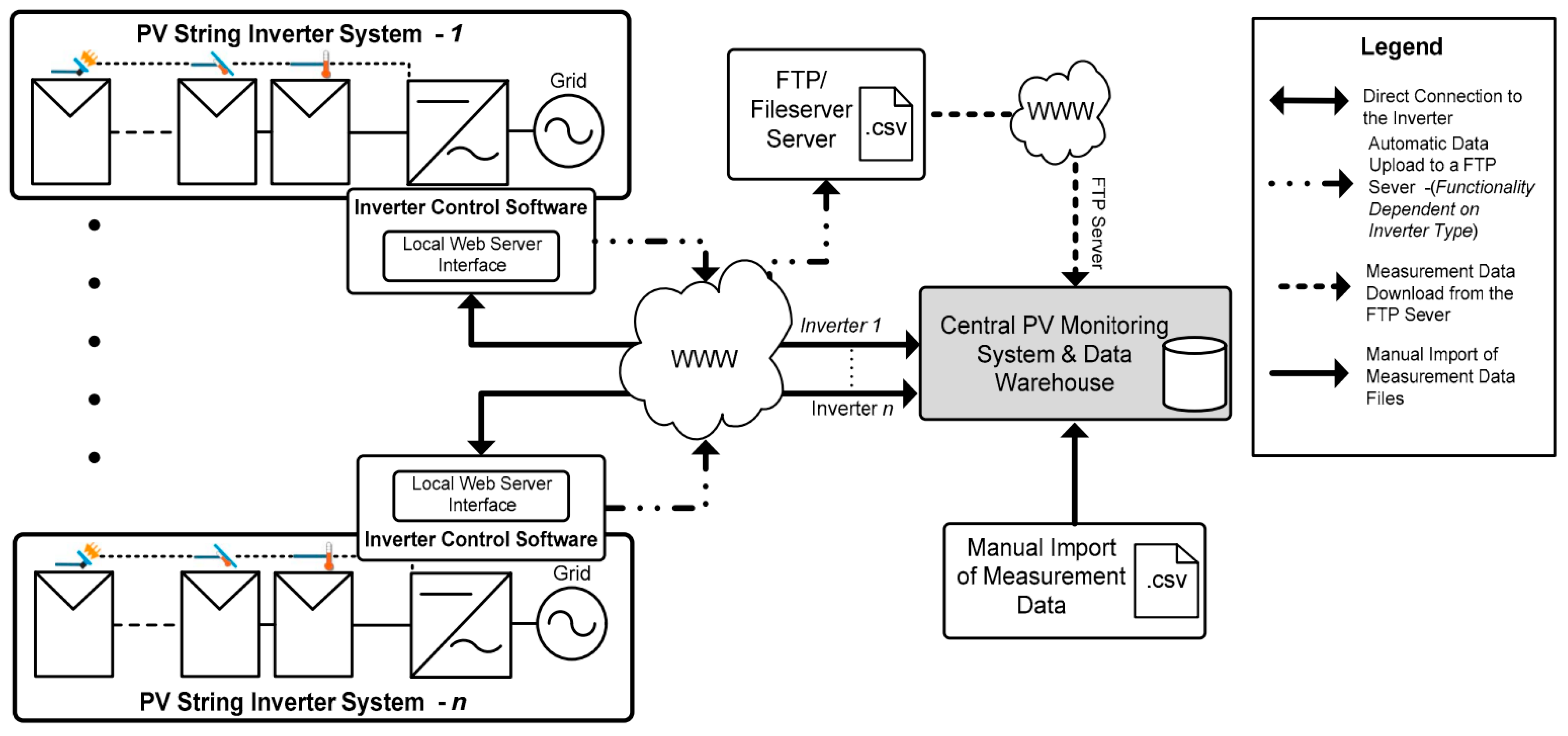
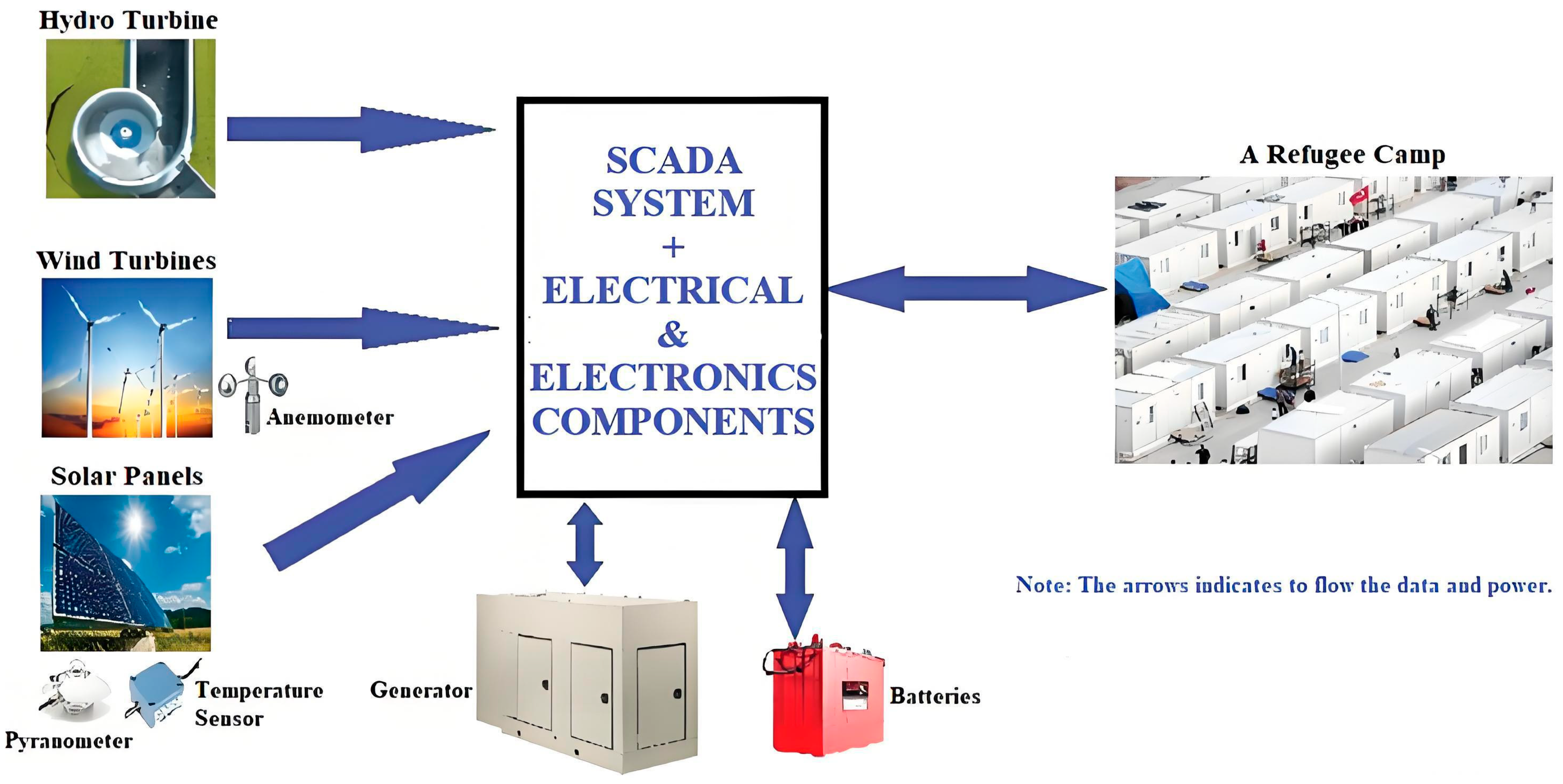
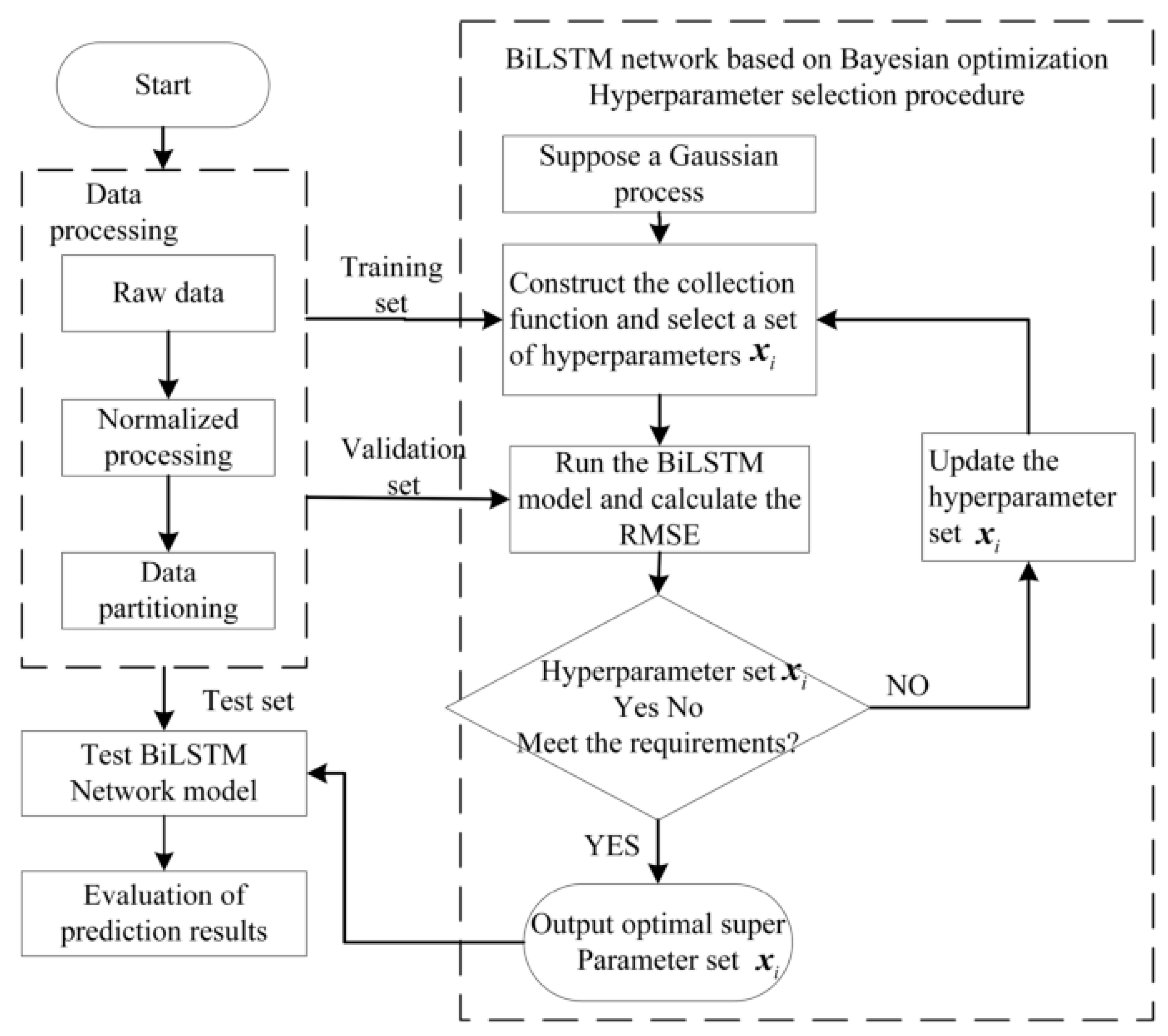
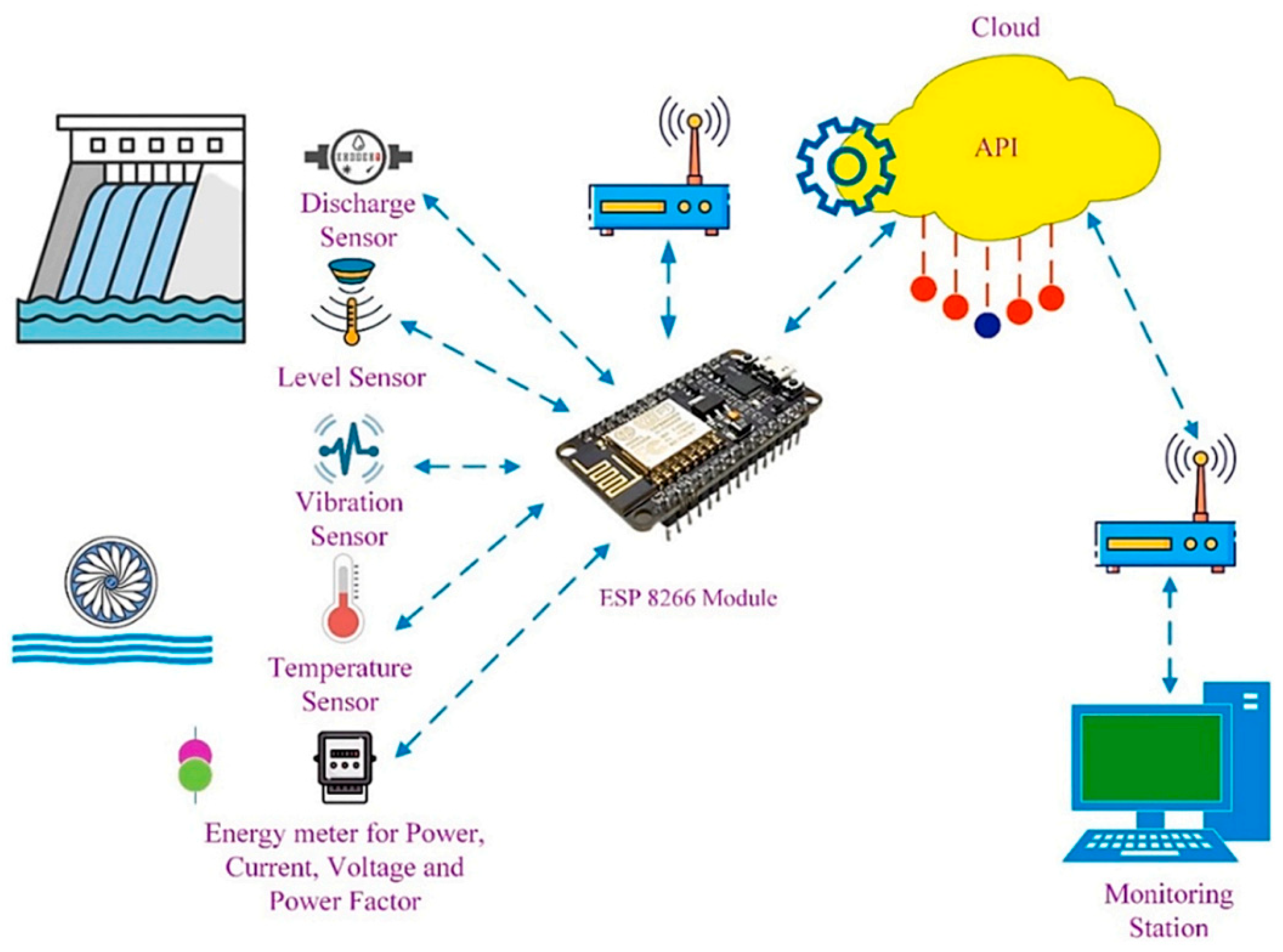
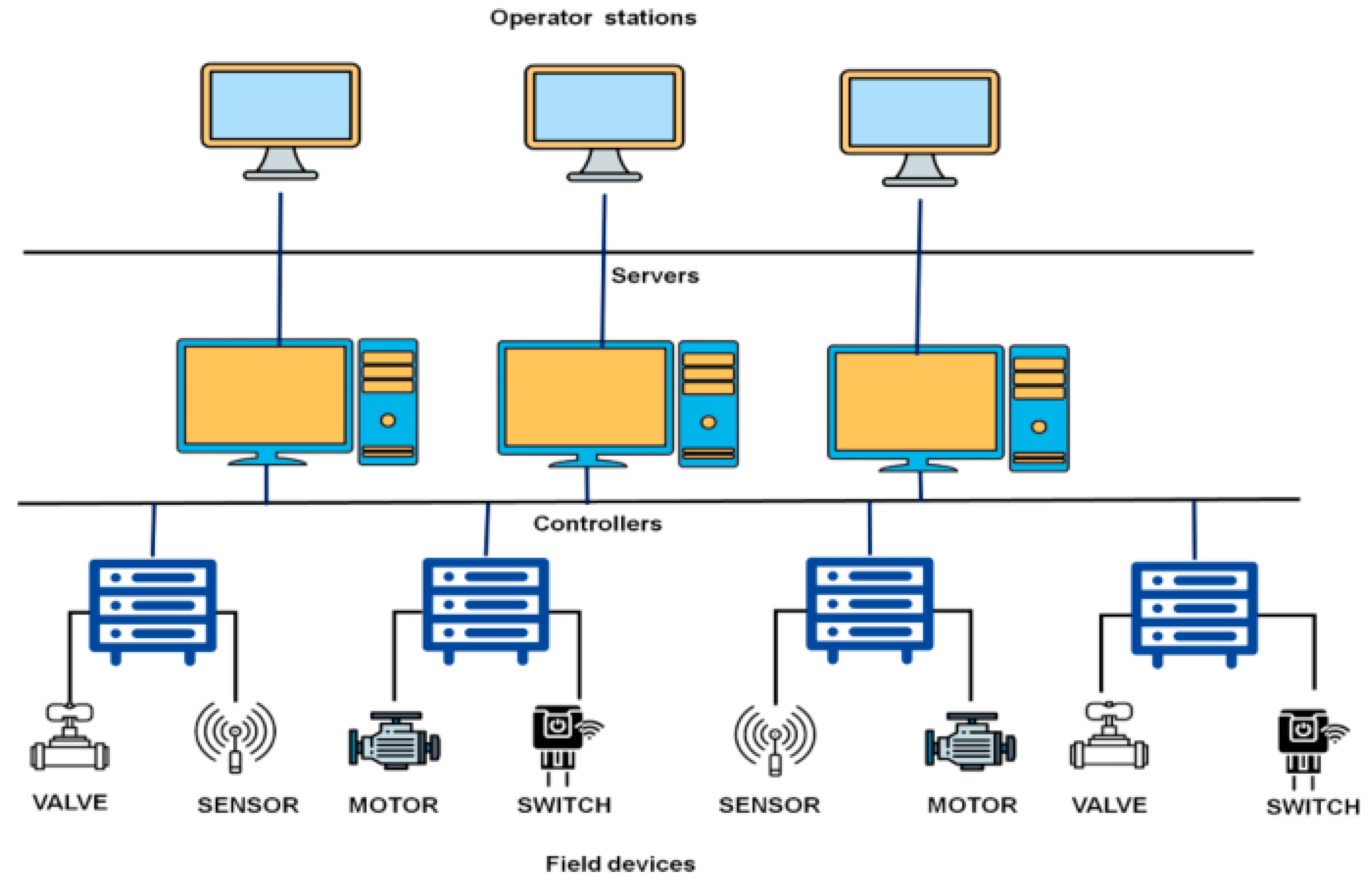
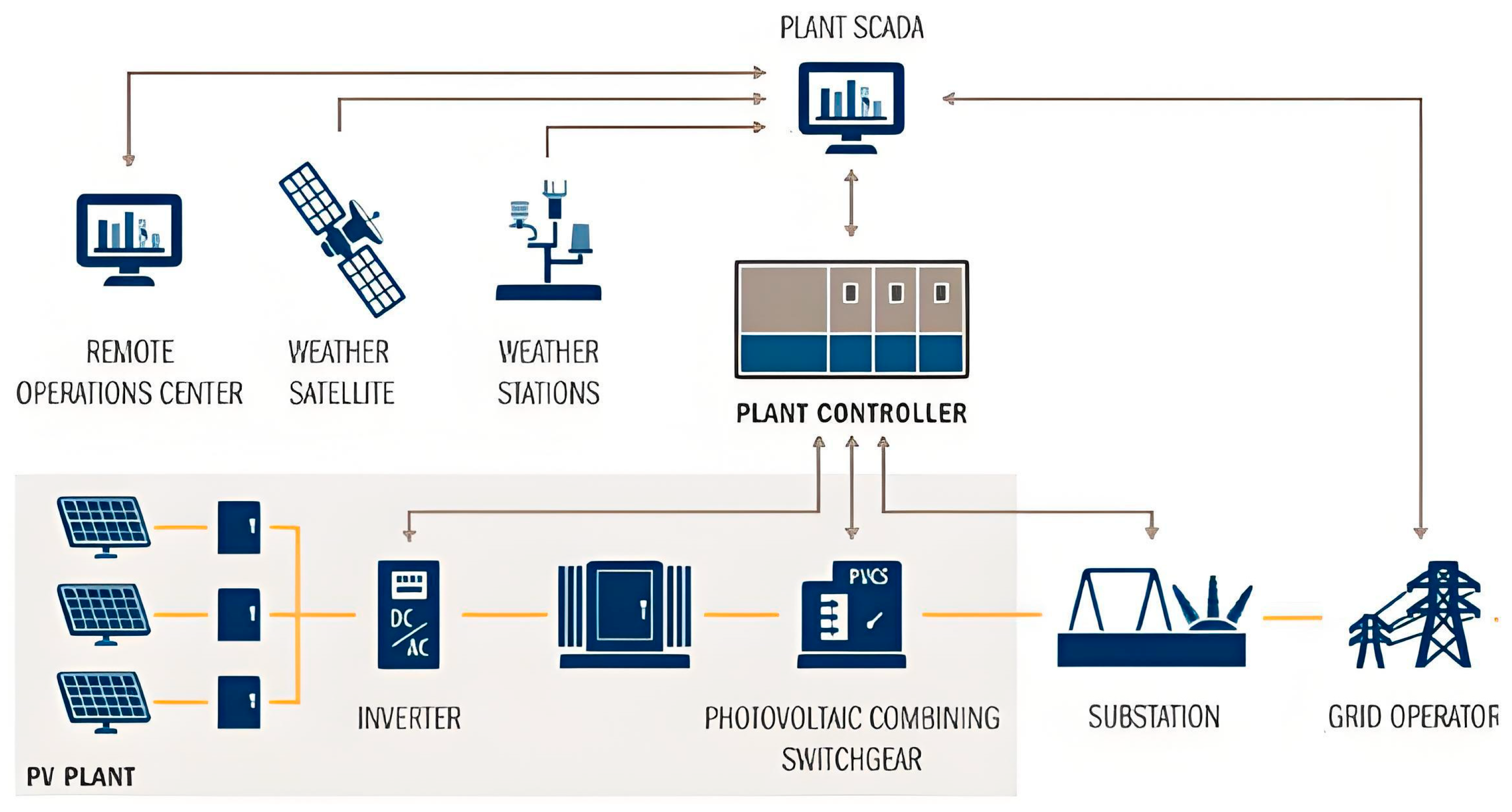
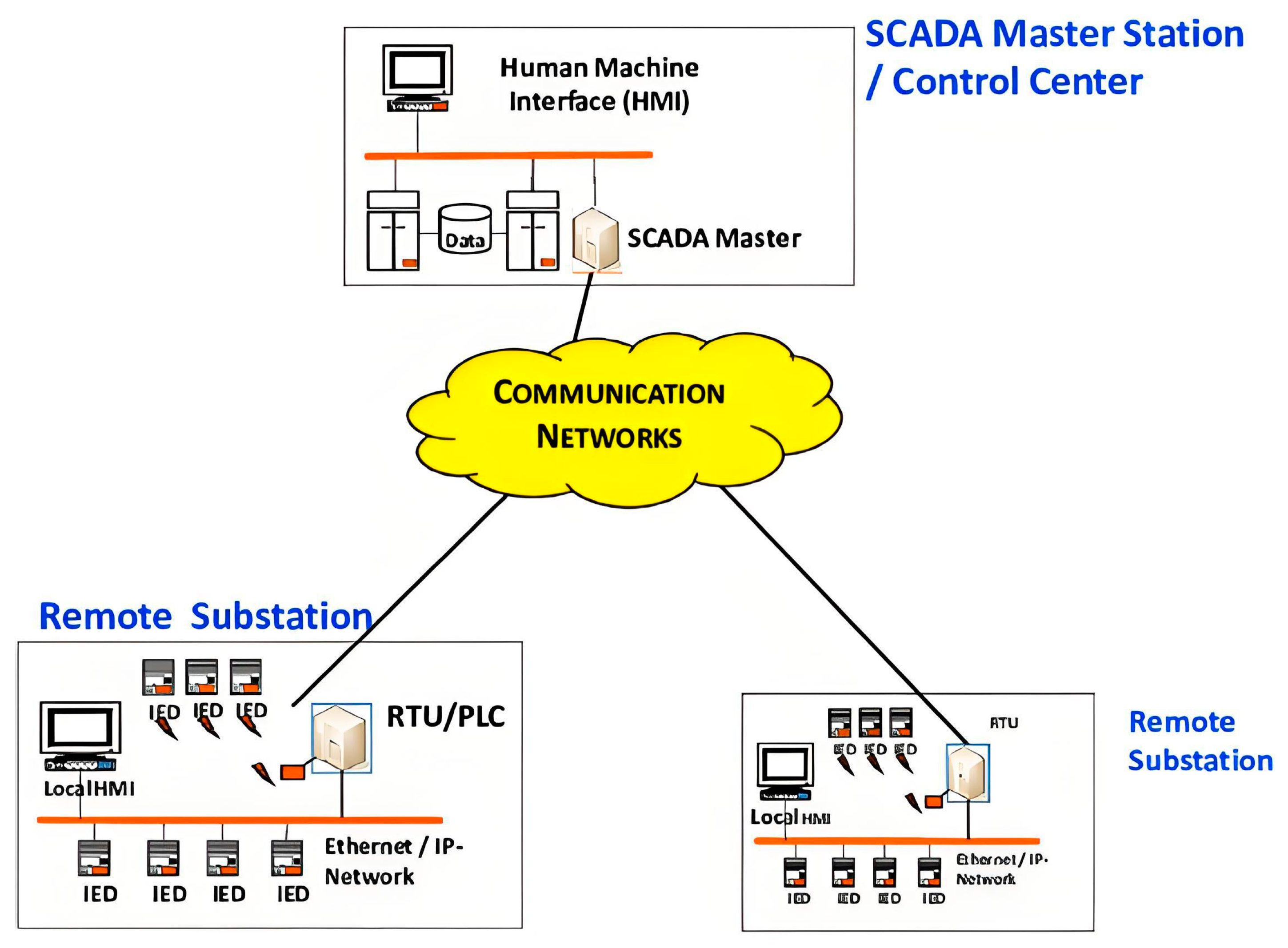
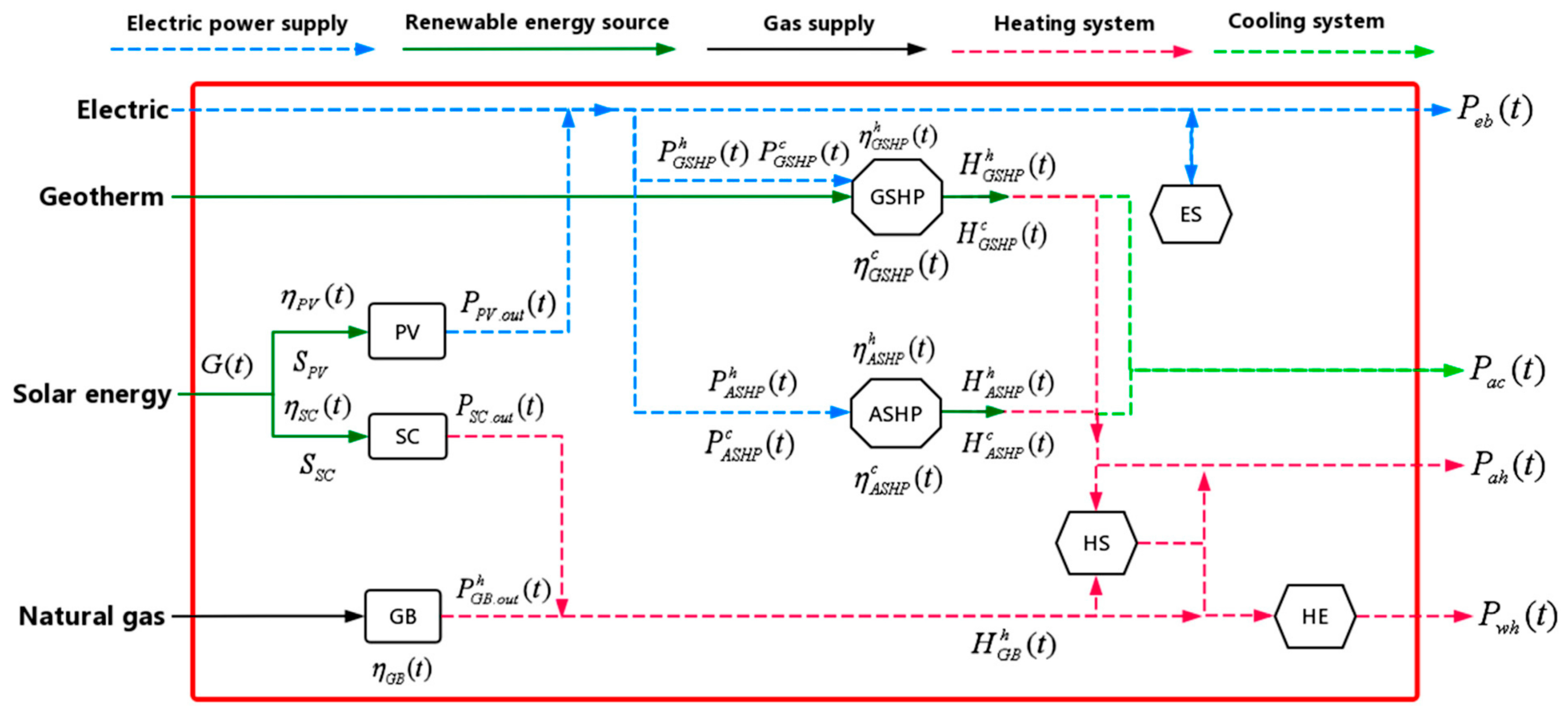
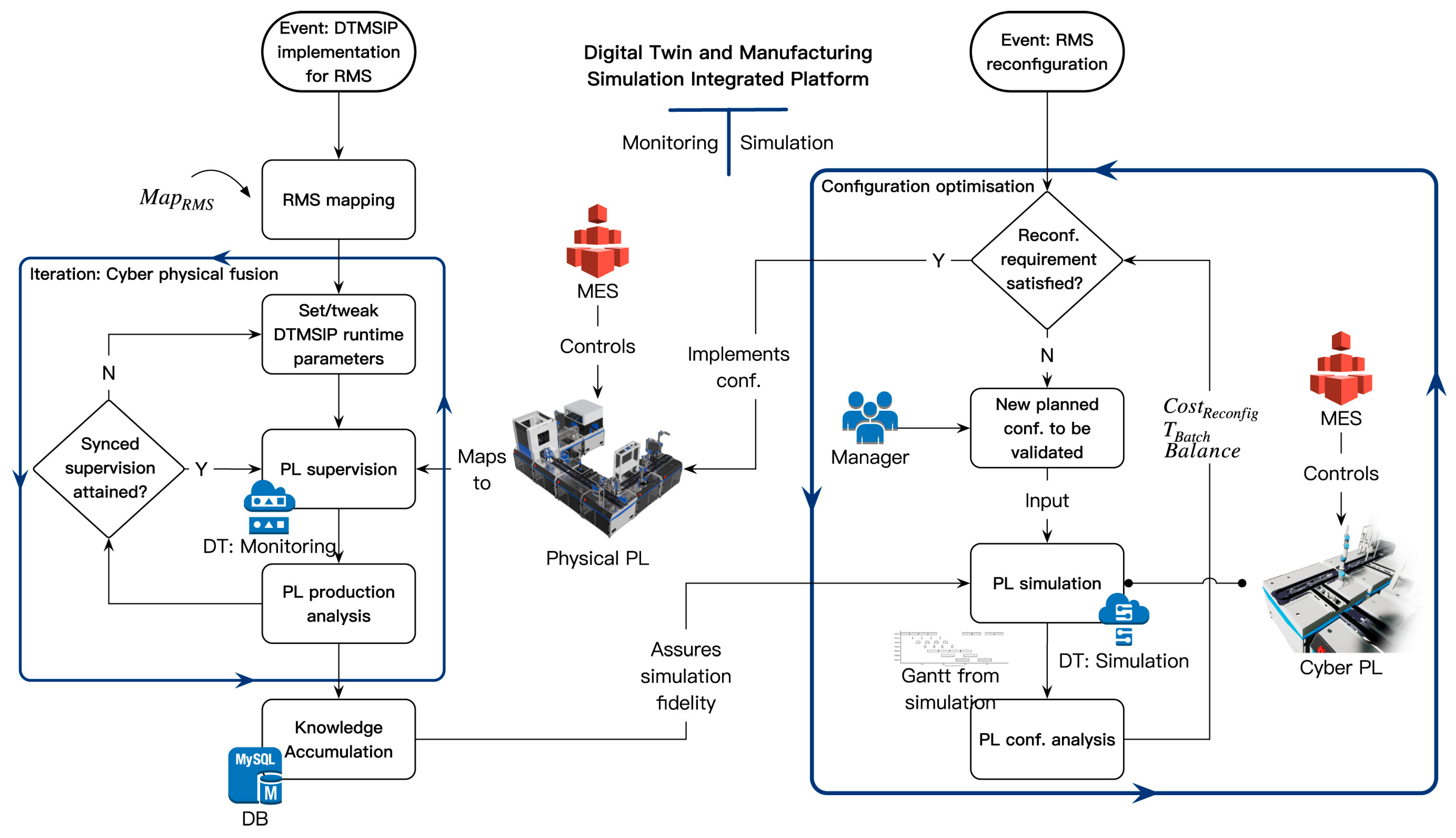
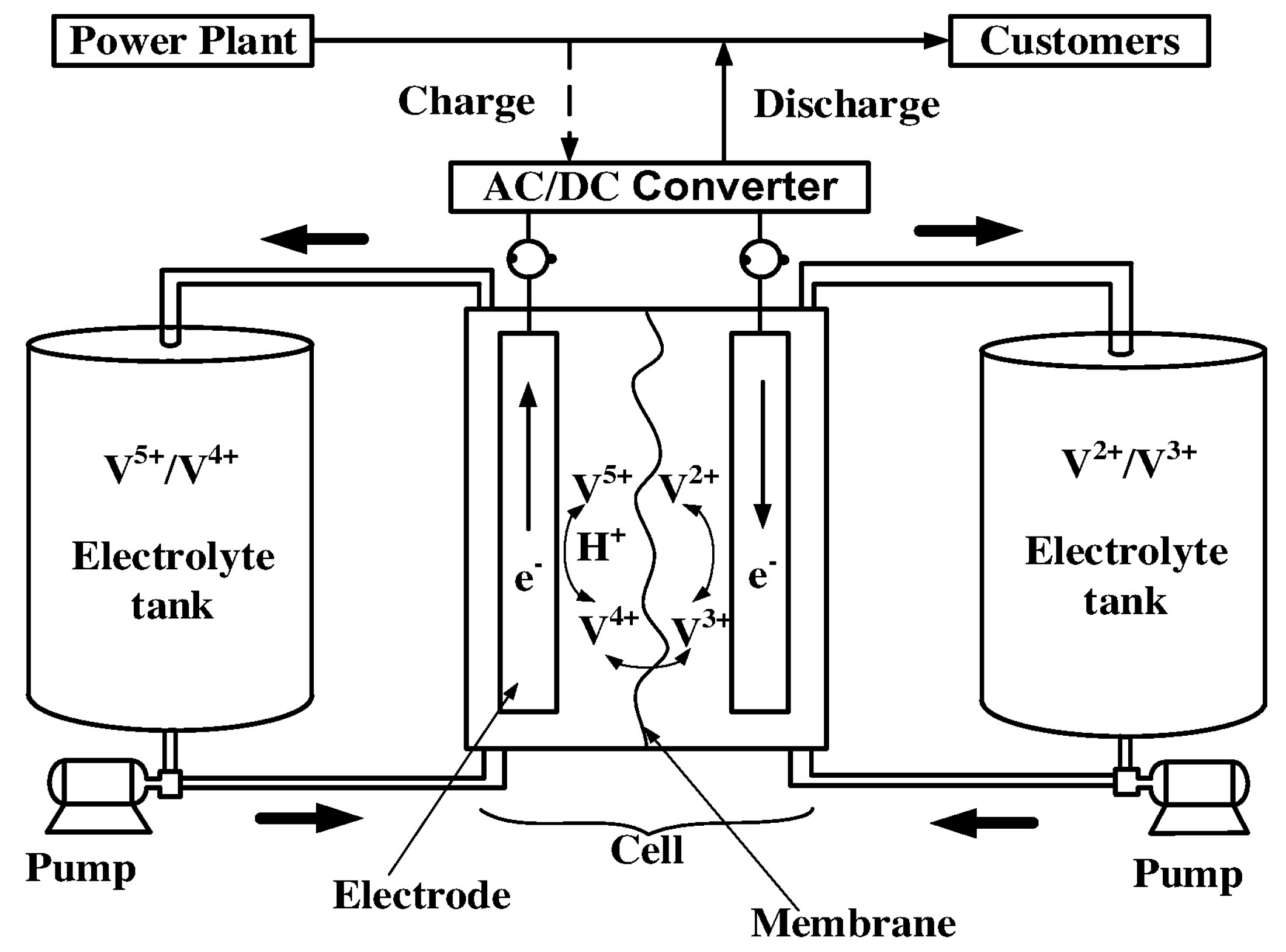
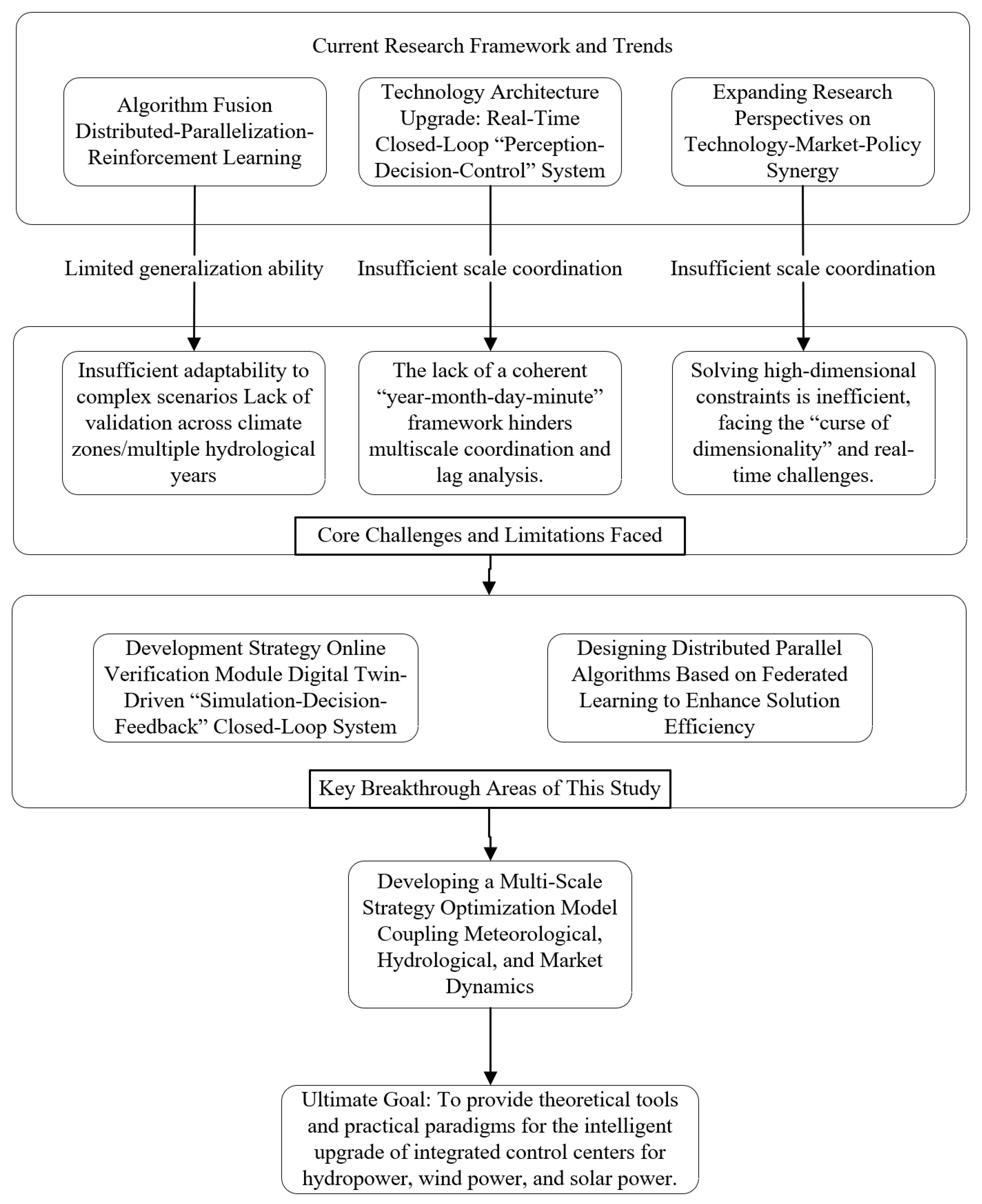
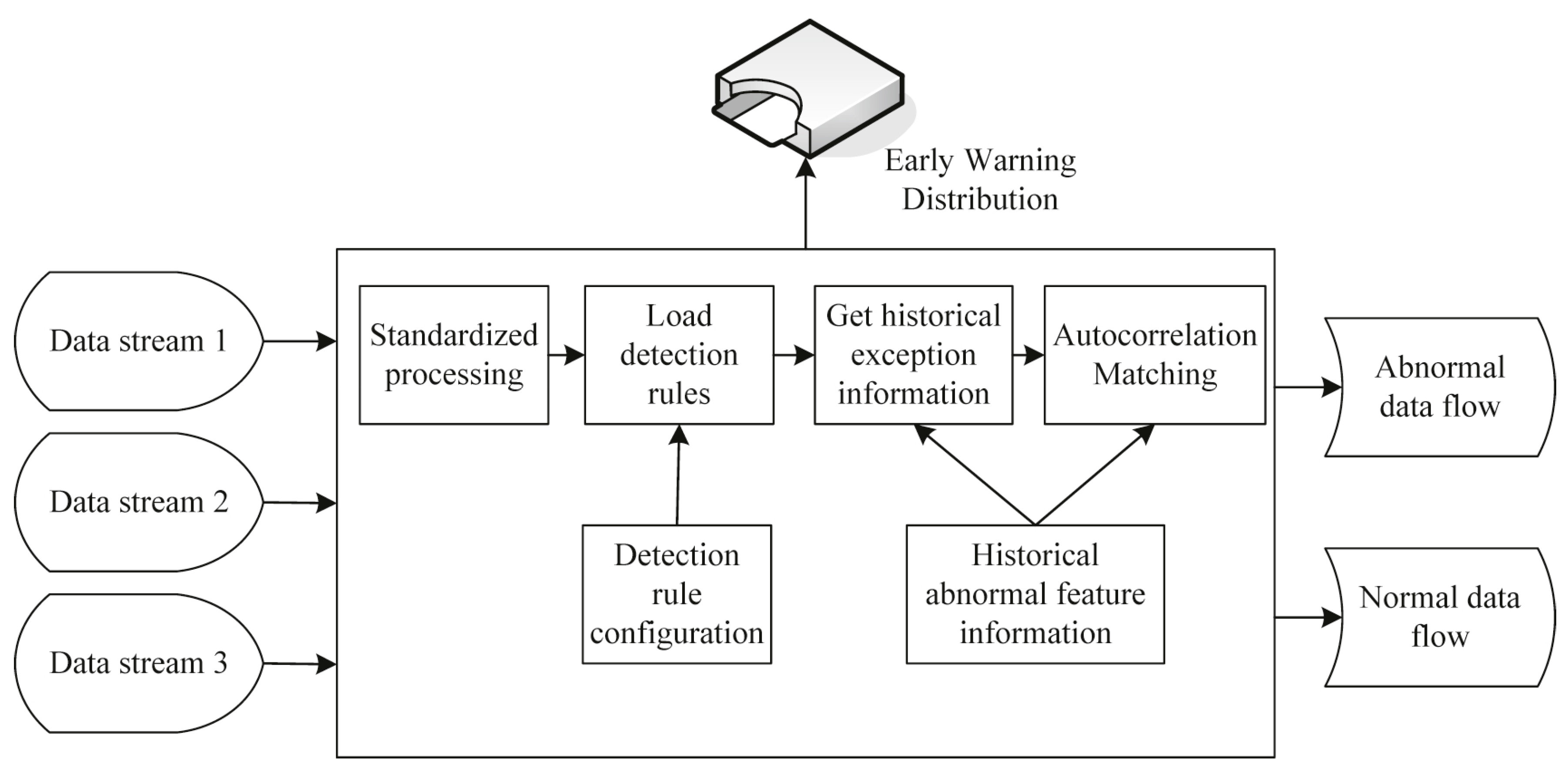
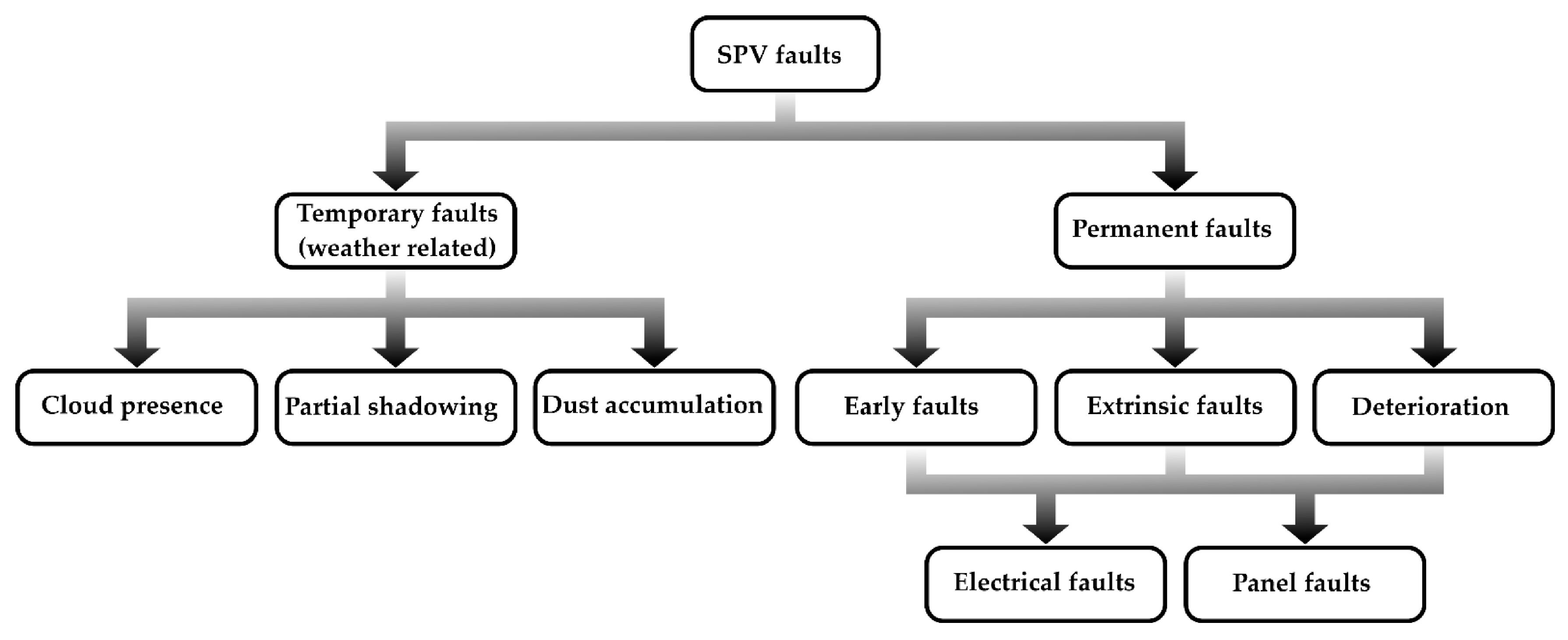
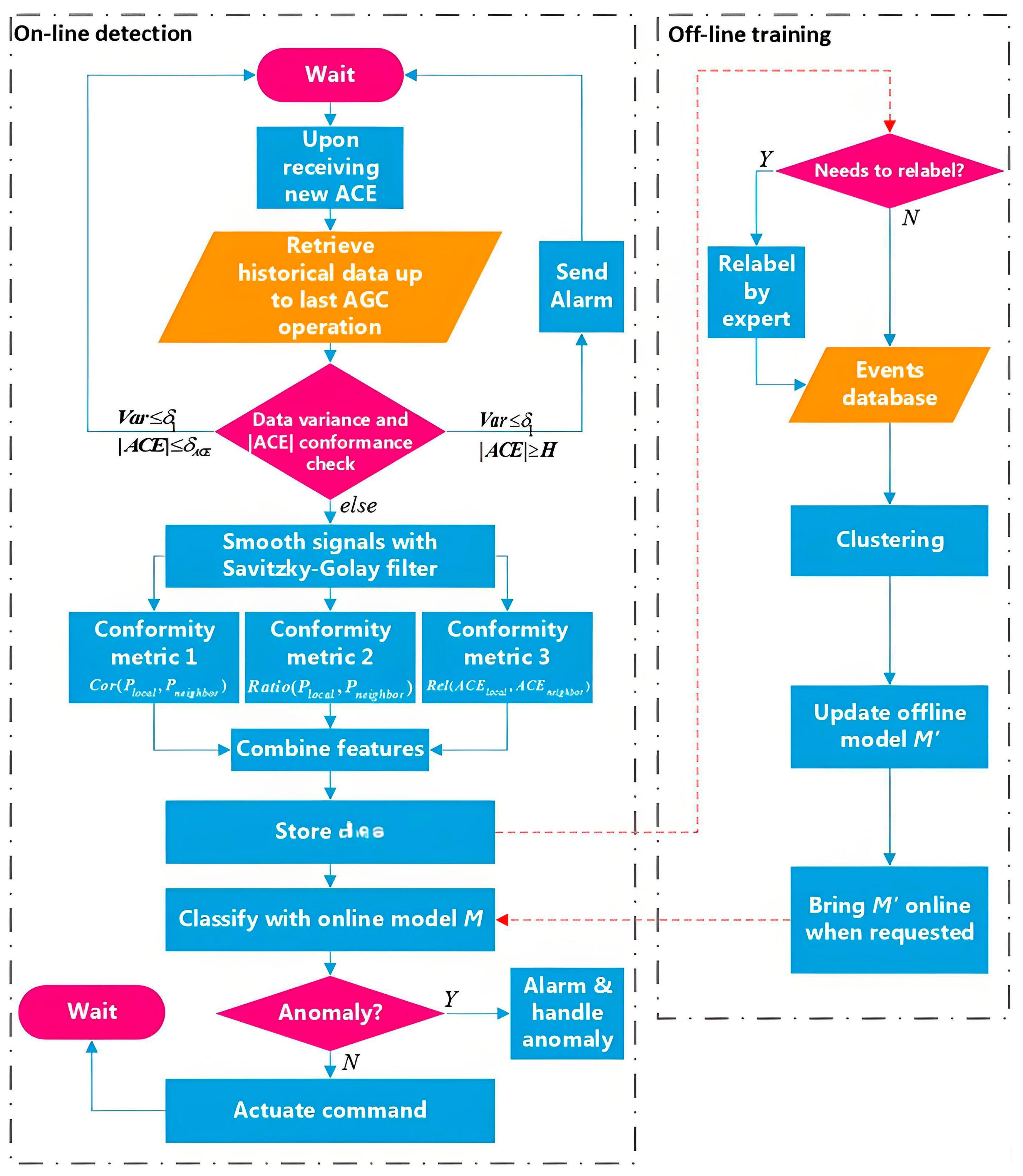
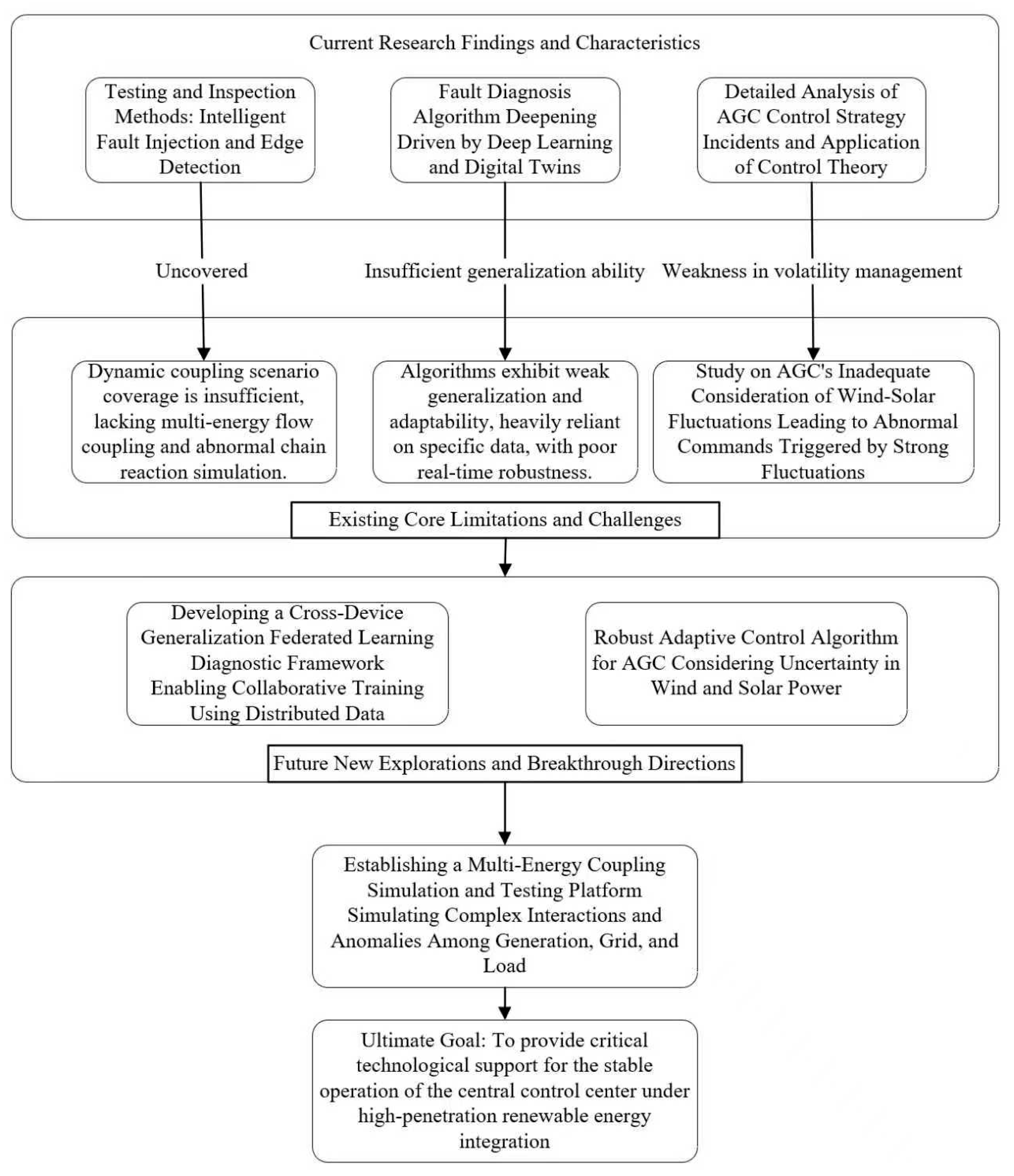
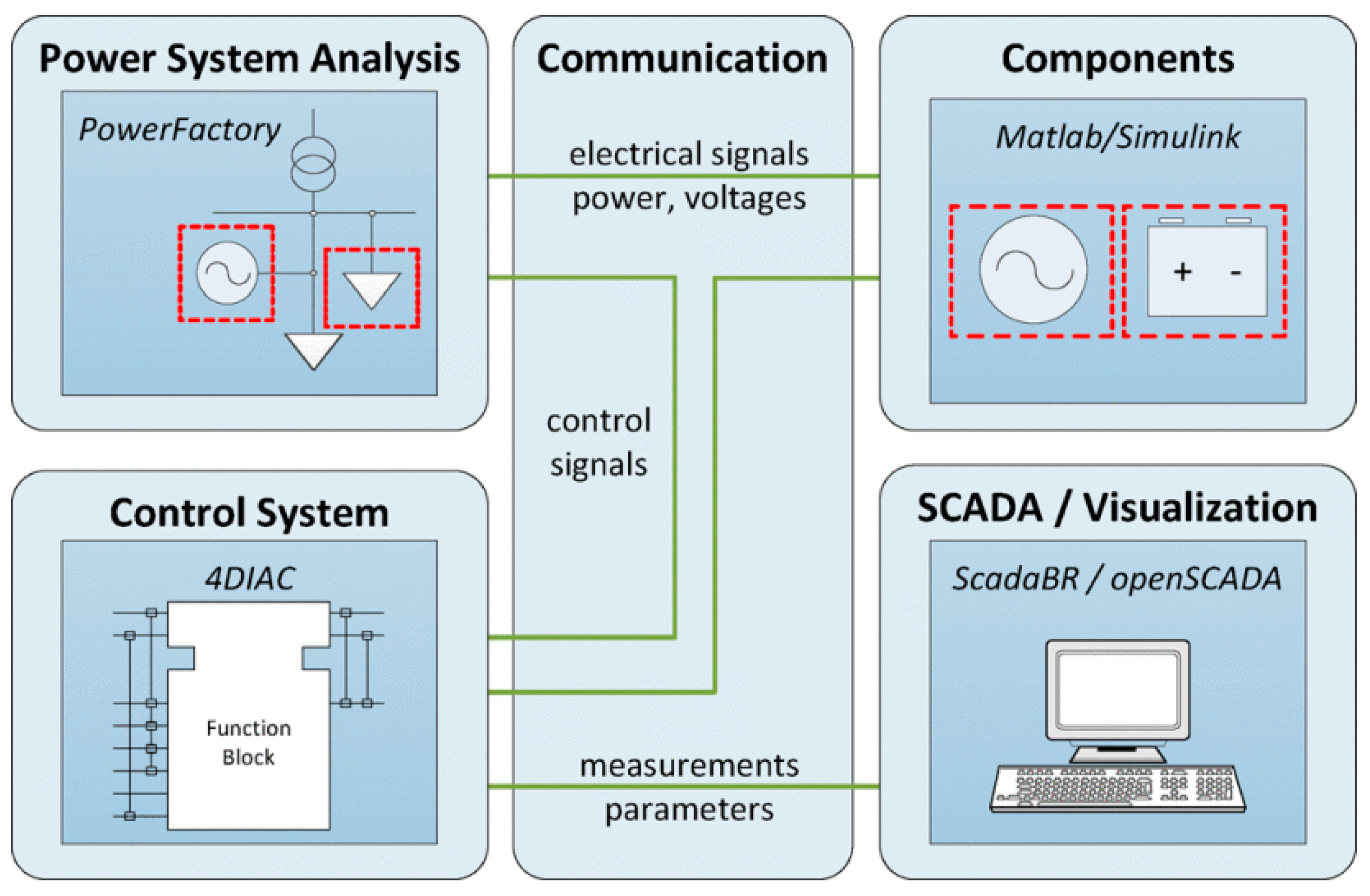
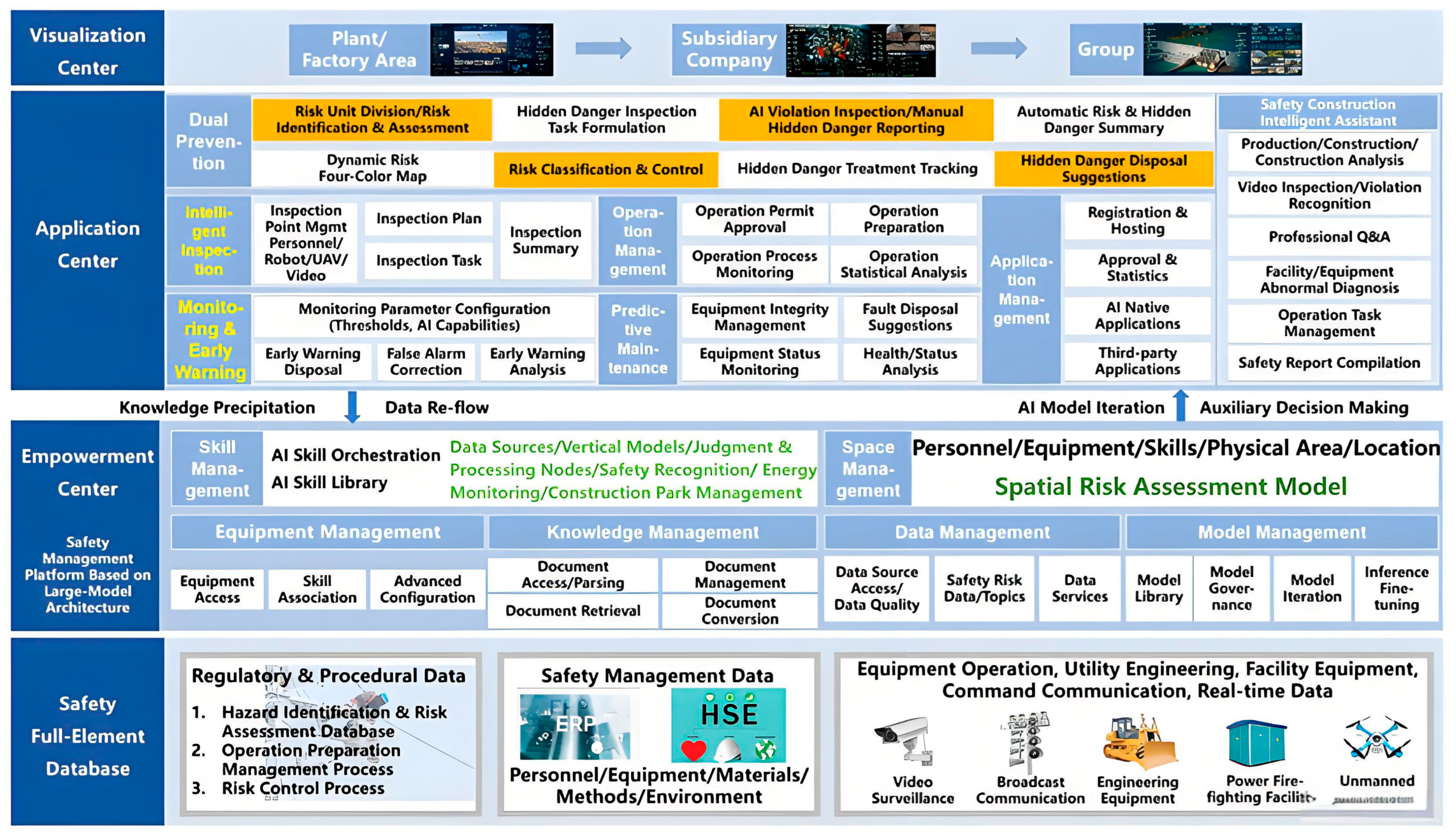
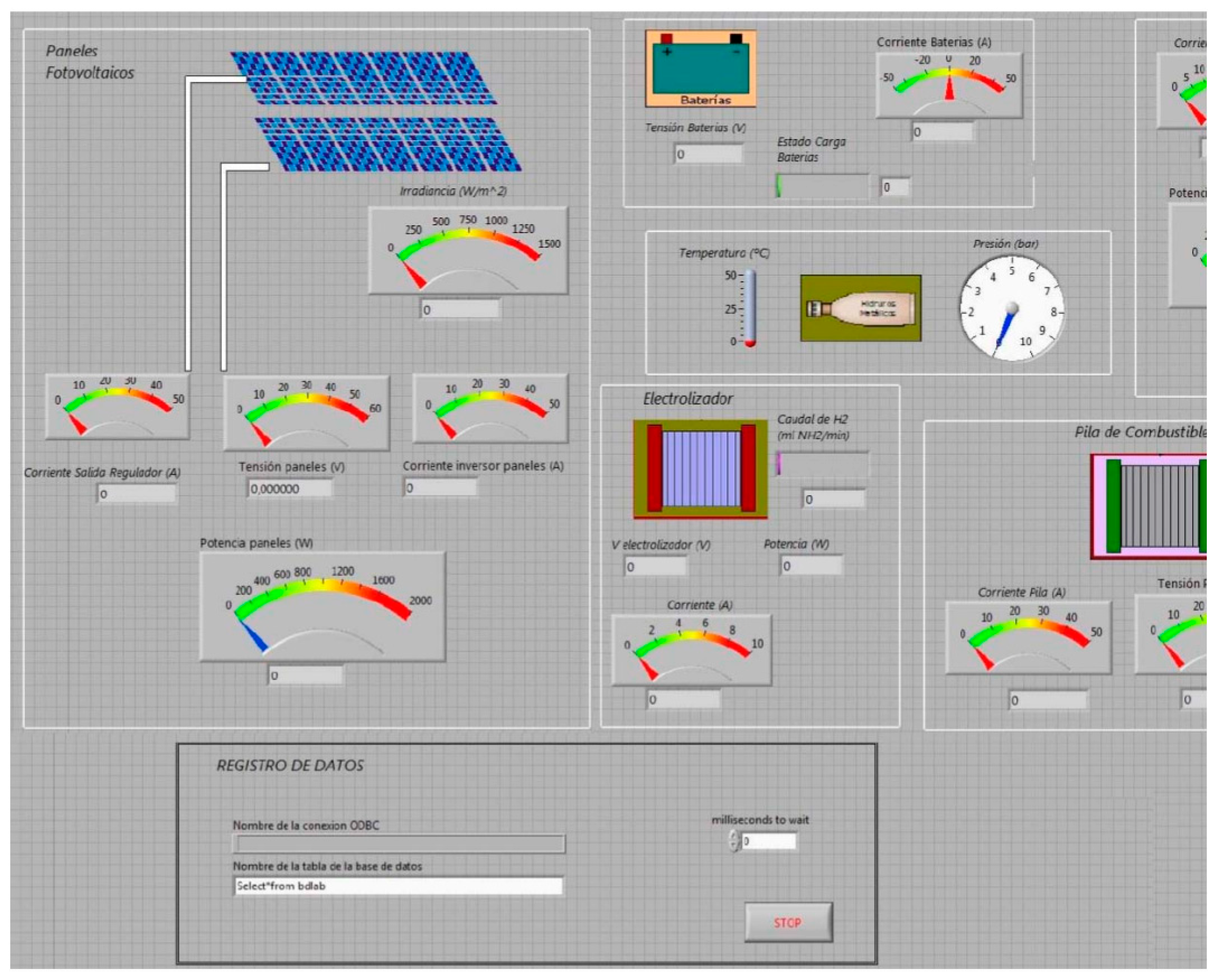
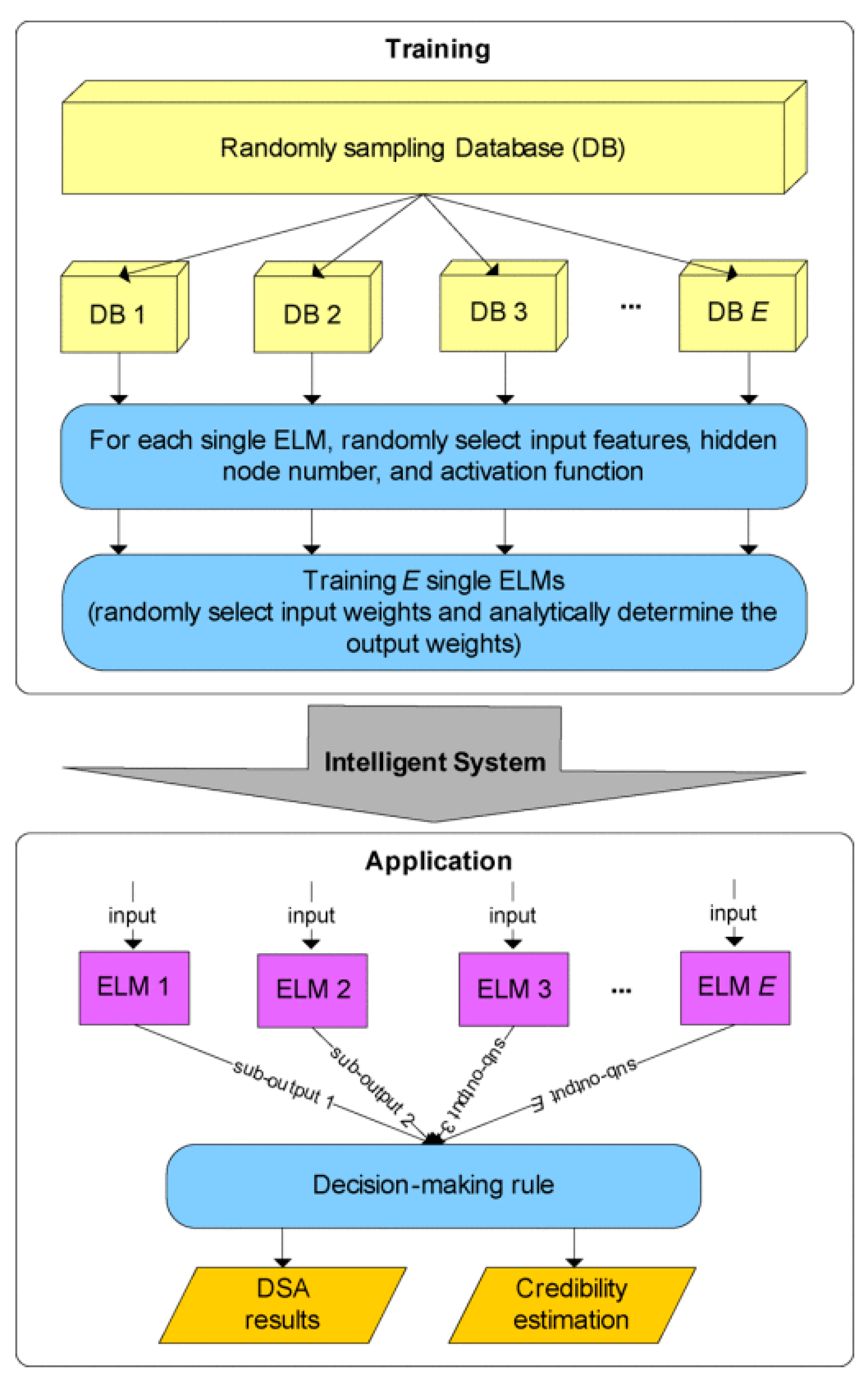
Disclaimer/Publisher’s Note: The statements, opinions and data contained in all publications are solely those of the individual author(s) and contributor(s) and not of MDPI and/or the editor(s). MDPI and/or the editor(s) disclaim responsibility for any injury to people or property resulting from any ideas, methods, instructions or products referred to in the content. |
© 2026 by the authors. Licensee MDPI, Basel, Switzerland. This article is an open access article distributed under the terms and conditions of the Creative Commons Attribution (CC BY) license.