Article

Third-Order Functional Differential Equations with Damping Term: Oscillatory Behavior of Solutions

1
Department of Mathematical Sciences, College of Science, Princess Nourah bint Abdulrahman University, P.O. Box 84428, Riyadh 11671, Saudi Arabia
2
Department of Mathematics, Faculty of Sciences, Umm Al-Qura University, P.O. Box 14035, Makkah 21955, Saudi Arabia
3
Department of Mathematics, Faculty of Science, Mansoura University, Mansoura 35516, Egypt
4
Scientific Computing Group, Universidad de Salamanca, Plaza de la Merced, 37008 Salamanca, Spain
5
Department of Mathematics, Escuela Politecnica Superior de Zamora, Campus Viriato, 49022 Zamora, Spain
*
Authors to whom correspondence should be addressed.
Axioms 2025, 14(12), 877; https://doi.org/10.3390/axioms14120877
Submission received: 13 October 2025 / Revised: 19 November 2025 / Accepted: 22 November 2025 / Published: 28 November 2025
(This article belongs to the Special Issue Special Functions and Related Topics, 2nd Edition)

Abstract

In this paper, we investigate the asymptotic and oscillatory behavior of a specific class of third-order functional differential equations with damping terms and deviating arguments. By employing the comparison principle, Riccati transformation, and the integral averaging technique, we derive new criteria that guarantee all solutions to the studied equation oscillate when 0 1 / γ 1 / α d = and ϱ ϱ 0 < . This study introduces novel conditions and effective analytical tools, which enhance our understanding of such equations and broaden their range of applications. Illustrative examples are provided to demonstrate the applicability of the results.

1. Introduction

In this article, we consider the class of third-order neutral differential equations with damping of the form
γ y α + p y α + i = 1 k q i ϝ χ b i = 0 ,  
where
y = χ + ϱ χ ι , 0 > 0 .
We also assume that
(h1)
α is a quotient of odd positive integers;
(h2)
γ ,   p ,   ϱ ,   q i C 0 , , ( 0 , ) , b i ,   ι C 1 0 , , ( 0 , ) , i = 1 , 2 , , k and
0 1 γ 1 / α d = ;
(h3)
ϱ ϱ 0 < ,   b i ,   ι ,   ι ι 0 > 0 ,   b i ι = ι b i , lim b i = for 1 i k , and lim ι = ;
(h4)
ϝ C R , R such that ϝ χ β χ α for χ 0 ,   β > 0 .
Definition 1.
The damping term of Equation (1) is given by p y α , where p > 0 .
Definition 2.
By a solution of Equation (1), we mean a function χ C [ a , ) , R for some a 0 , with
y , γ y α , γ y α C 1 [ a , ) , [ 0 , ) ,
which satisfies Equation (1) on [ T a , ) . We will only consider those solutions of (1) which satisfy sup { χ : m < } > 0 for a m < .
Definition 3.
We say that a solution χ is an oscillatory if it has arbitrarily large zeros, that is, it changes sign infinitely often on [ T a , ) . Otherwise, if χ is eventually of one sign (positive or negative) for sufficiently large, it is called nonoscillatory. If every solution of Equation (1) is oscillatory, then Equation (1) is called oscillatory.
Recent advances in the theory of oscillation have significantly influenced modern technological sciences. This area of research has expanded our understanding of dynamic systems, particularly in the context of vibration analysis, signal processing, and quantum mechanics. By integrating advanced mathematical models and computational methods, scientists have achieved remarkable breakthroughs in controlling and predicting oscillatory behavior across a broad range of applications.
These innovations have contributed to the development of more efficient technologies in areas such as communication systems, precision engineering, and even the emerging field of quantum computing. By improving the ability to manipulate oscillations at both macroscopic and microscopic scales, these advancements continue to open new frontiers in technology, enhancing the performance, stability, and design of complex systems [1,2,3].
Environmental systems rarely respond instantly; capturing dynamic and multiple time-varying delays makes models reflect real cause-and-effect lags. Accounting for them sharpens forecasts of algal blooms, invasive spread, disease outbreaks, wildfire risk, and nutrient pulses, enabling proactive management. It also reveals hidden feedback and tipping risks, guiding resilient, timely interventions, smarter monitoring, and mitigation strategies [4,5].
The study of oscillatory behavior in solutions of higher-order differential equations is deeply intertwined with the theory of special functions. Many classical special functions, such as Bessel, Airy, and Legendre functions, naturally arise as solutions to canonical higher-order or singular differential equations, and their properties encode the oscillatory patterns intrinsic to these systems. For instance, the zeros of Bessel functions describe oscillations with variable frequency and amplitude, reflecting physical phenomena such as wave propagation in cylindrical geometries. Similarly, Airy functions capture the transition between oscillatory and exponential regimes in turning-point problems. By leveraging the well-established analytic and asymptotic properties of these special functions, one gains a rigorous framework for describing and quantifying oscillations in higher-order models, providing both qualitative insight and precise quantitative tools across applied mathematics and physics [6,7].
In recent years, considerable attention has been devoted to a new class of nonlinear differential equations describing oscillators that incorporate memory-based elements, such as memristors, memcapacitors, and meminductors. The intrinsic memory properties of these devices, combined with nonlinear feedback mechanisms, give rise to diverse and intricate dynamical behaviors. These include multistability, chaotic and hyperchaotic oscillations, and other forms of complex dynamics. Such systems provide a powerful framework for investigating the emergence of complexity in dynamical processes and hold promising potential for applications in nonlinear circuits, neuromorphic systems, and advanced signal processing [8,9,10].
Third-order equations are a vital component of mathematical modeling. These equations, which involve the third derivative, provide insights into the behavior of systems that exhibit intricate responses to changes in their environment. Understanding and solving third-order equations are crucial in various domains, including physics, engineering, economics, and biology. In engineering, they are used to model vibrations, control systems, and wave propagation. In physics, third-order differential equations appear in the analysis of fluid dynamics, electrical circuits, and quantum mechanics. Their applications also extend to areas such as structural analysis, signal processing, and population dynamics, where systems exhibit nonlinear behaviors and higher-order interactions. The ability to analyze and solve these equations equips researchers and practitioners with the tools necessary to predict system behavior, optimize processes, and design innovative solutions [11,12,13,14,15].
Research on third-order neutral differential equations has historically been limited, with relatively few comprehensive results available in the literature. Although the study of third-order equations began at a comparatively early stage in the development of differential equation theory [16,17,18], substantial progress in understanding their qualitative behavior, such as oscillatory properties, stability, boundedness of solutions, and asymptotic characteristics, has only been achieved within the last three decades. This delay is partly due to the intrinsic complexity of neutral equations, where the highest derivative of the unknown function appears both with and without delay, making their analysis more challenging than for ordinary or even standard delay differential equations [19,20,21]. For important contributions, we refer the reader to [22,23,24,25], and the references therein.
Equation (1) and its special cases have significant physical relevance, as such equations commonly model nonlinear dynamical systems exhibiting energy dissipation and feedback effects. The term p y α represents the damping component, which characterizes resistive forces or energy losses due to friction, viscosity, or other dissipative mechanisms. The summation term i = 1 k q i ϝ χ b i acts as a restoring or feedback term, often associated with delayed or nonlocal influences that govern oscillatory behavior. From a physical standpoint, the established oscillation criteria provide valuable theoretical insight into the interplay between inertia, damping, and restoring forces, highlighting conditions under which sustained or periodic oscillations occur. These results thus form a mathematical foundation that can be further utilized by specialists to analyze stability and oscillation phenomena in complex mechanical, electrical, or viscoelastic systems [26,27].
The study of the qualitative properties of the differential equations of type (1) and their special cases, for example,
γ y α + p y α + q ϝ χ b = 0 ,
and their generalizations, has attracted the interest of many researchers [28,29,30,31,32].
In [33], Candan and Dahiya introduced new criteria to assess the oscillatory behavior of differential equation
γ 1 γ 2 y + i = 1 k q i ϝ χ b i d ζ = h ,
where
0 γ 1 1 d = 0 γ 2 1 d = .
Tiryaki and Aktas [32] obtained important results about the oscillation of solutions of Equation (1), under the assumptions
i = 1 k q i ϝ χ b i = q ϝ χ b ,
ϱ = 0 and α = 1 .
They established some new sufficient conditions ensuring that every solution of (1) either oscillates or converges to zero, by employing the Riccati transformation and the integral averaging technique, under conditions
0 1 γ s d s = ,
b 0 .
The authors in [31] examined the oscillatory behavior of (1) with (3), (4) under the condition
1 γ 1 / α s d s = .
In this work, we establish new criteria to guarantee that any solution of (1) oscillate whenever all solutions of the following second-order equation are nonoscillatory:
γ χ + p χ = 0 ,
where
γ , p C 0 , , ( 0 , )
and 0 γ 1 ν d ν = .
It is worth noting that a broad research interest has emerged related to the study of the oscillatory and asymptotic properties of second-order neutral differential equations [34,35,36]. In particular, Equation (5) has attracted wide attention.
In this paper, we replace the condition 0 ϱ < 1 , in [32,37,38], with the condition 0 ϱ ϱ 0 < . So, our results extend those in [28,29,30,31,32].
In the following theorem, we introduce two different conditions to ensure that all solutions of the following equation are oscillatory
χ M χ ι = 0 .
Theorem 1
([31] (Lemmas 2.4 and 2.5)). Let M C 0 , , 0 , . If
lim sup ι M ν d ν > 1
or
lim sup ι u M ν d ν d u > 1 ,
then (7) is oscillatory.
The comparison principle for Equation (7) will enable us to obtain our main result, given in Theorem 4.
The remainder of this paper is organized as follows: Section 2 introduces several preliminary results. In Section 3, the Riccati method along with comparison technique is applied to eliminate nonoscillatory solutions. Section 4 combines the outcomes of Section 3 to establish criteria, ensuring the oscillation of the solutions of Equation (1). In Section 5, the integral averaging technique is utilized to derive additional oscillation criteria. Section 6 provides illustrative examples that support and verify the validity of the obtained results. Finally, Section 7 offers a concise summary of the main results presented in the paper.

2. Auxiliary Results

This section presents some definitions and results that will be used later, and establishes the notation used throughout the manuscript. For brevity, we use the following notations:

Notations and Definitions

1.
U 1 y : = γ y α ,   U 2 y : = U 1 y ,   U 3 y : = U 2 y .
2.
q ^ i = q i 1 ϱ b i α ,   i = 1 , 2 , k .
3.
O ˘ = i = 1 k q ^ i ,   q ˜ = min i = 1 , , k { q i , q i ι } .
4.
V ˜ , 2 = 2 ν 2 γ ν 1 / α d ν ,   θ = exp 2 p ν γ ν d ν
5.
M ¯ i = β O ˘ V ˜ α ι , b i p γ + ϱ 0 α p ι ι 0 γ ι ,   i = 1 , 2 , k .
Definition 4.
We say that Equation (1) satisfies property S if U 2 y = γ y α is an oscillatory function.
Definition 5.
Following [2], we define the class P as follows:
  • Let
D ^ = , ξ , 0 < ξ and D ^ 0 = , ξ : 0 < ξ < .
Then, B ^ P if B ^ , ξ is positive for all ,   ξ D ^ 0 ,   B ^ , = 0 and B ^ has a non-positive and continuous partial derivative with respect to ξ on D ^ 0 , such that for a continuous and positive function h ¯ > 0 we have B ^ , ξ / ξ = h ¯ ( , ξ ) B ^ , ξ ) 1 / 2 for all , ξ D ^ 0 . For the choice B ^ , ξ = ξ n ,   n N , we obtain conditions of the Kamenev type.
Remark 1.
Without loss of generality, since the negative solutions are similar to the positive solutions, we will only discuss the positive solutions.
Lemma 1.
Suppose that Equation (5) with (6) is a nonoscillatory equation. If χ is a nonoscillatory solution of Equation (1) on [ 2 , ) where 2 1 , then there exists 3 [ 2 , ) such that either
y U 1 y > 0
or
y U 1 y < 0 ,
for 3 .
Proof. 
Assume that χ > 0 is a solution of (1) on [ 2 , ) . Then, y ,   y ι , and y b i are positive functions for 2 1 . By (h4), we see that
i = 1 k q i ϝ χ b i β i = 1 k q i χ α b i ,
in (1), we obtain
U 3 y + p γ U 1 y + β i = 1 k q i χ α b i 0 .
Setting =   U 1 y , Equation (12) may be written as
+ p γ β i = 1 k q i χ α b i 0 , 2 .
Let ψ ( ) > 0 be a solution of Equation (5). Suppose that ( ) is an oscillatory solution of Equation (13), and denote two consecutive zeros of ( ) as a 1 and a 2 with ( 2 < a 1 < a 2 ) . Let also assume that ( a 1 ) 0 ,   ( a 2 ) 0 and ( ) 0 , for ( a 1 , a 2 ) . This implies
0 < a 1 a 2 ψ + p γ ψ d = a 1 a 2 p γ ψ d a 1 a 2 ψ d + ψ a 1 a 2 = a 1 a 2 ψ d + a 1 a 2 p γ ψ d + ψ a 1 a 2 ψ a 1 a 2 = ψ a 1 a 2 + a 1 a 2 ψ + p γ ψ d = ψ a 1 a 2 0 .
This contradicts our assumption that ( ) is oscillatory. Thus, we complete the proof. □
In the following lemma, we will take N 1 to be the set of all solutions χ of Equation (1) and y has property (10), and N 2 as the set of all solutions χ of Equation (1) and y has property (11).
Lemma 2.
Assume that χ is a positive solution of Equation (1). If y N 1 and ϱ < 1 , then
U 3 y + p γ U 1 y + β i = 1 k q ^ i y α b i 0 .
Also, if y N 2 , then
U 1 , 3 y + β i = 1 k q ˜ i y α b i 0 ,
where
U 1 , 3 y = U 3 y + ϱ 0 α ι 0 U 3 y ι + p γ U 1 y + ϱ 0 α ι 0 p ι γ ι U 1 y ι .
Proof. 
Let χ > 0 be a solution of Equation (1). Then, y ,   y ι , and y b i are positive functions for 2 1 . First, let suppose that y satisfies (10). Since the corresponding y ( ) satisfies
χ = y ϱ χ ι y ϱ y ι y 1 ϱ ,
this implies that
χ y 1 ϱ ,
from which it follows that
χ α b i y α b i 1 ϱ b i α .
From (12) and (16), the inequality (14) follows, that is,
U 3 y + p γ U 1 y + β i = 1 k q i y α b i 1 ϱ b i α 0 ,
that is,
U 3 y + p γ U 1 y + β i = 1 k q ^ i y α b i 0 .
Now, suppose that y satisfies (11). According to [39] (Lemmas 1 and 2), we find
Z 1 + Z 2 j μ j Z 1 j + Z 2 j , where μ j = 2 j 1 if j > 1 1 if j 1 .
and Z 1 = χ α , Z 2 = χ α ι . It follows that
y α μ χ α + ϱ 0 α χ α ι
and,
y α b i μ χ α b i + ϱ 0 α χ α b i ι .
From (12), we have
ϱ 0 α ι 0 U 3 y ι + ϱ 0 α p ι ι 0 1 α γ ι U 1 y ι ϱ 0 α β i = 1 k q i ι χ α b i ι .
Combining (12) and (19), we obtain
0 U 3 y + ϱ 0 α ι 0 U 3 y ι + p γ U 1 y + ϱ 0 α ι 0 p ι γ ι U 1 y ι + β i = 1 k q ˜ i χ α b i + ϱ 0 α χ α b i ι ,
and hence,
0 U 3 y + ϱ 0 α ι 0 U 3 y ι + p γ U 1 y + ϱ 0 α ι 0 p ι γ ι U 1 y ι + β μ α i = 1 k q ˜ i y α b i .
Thus, the proof is complete. □
Lemma 3.
Suppose that χ is a nonoscillatory solution of (1) and y N 1 . Then
U 1 y U 2 y 2
and
y U 2 1 / α y V ˜ , 2
for all 2 . On the other hand, if y N 2 , then
y u V ˜ ν , u U 1 y ν 1 / α for ν u .
Proof. 
Let χ > 0 be a solution of (1). Without loss of generality, we may assume that y ,   y ι , and y b i are positive functions for 2 1 . Hence, U 1 y > 0 ,   U 2 y > 0 and U 3 y 0 . Let y N 1 . As in Lemma (2), we have that (12) holds, and that U 2 y 0 on [ 2 , ) . Thus, we have
U 1 y = U 1 y 2 + 2 U 1 y ν d ν 2 U 1 y ν d ν U 2 y 2 d ν = U 2 y 2 ,
and consequently,
y U 2 1 / α y 2 1 / α γ 1 / α .
Now, let y N 2 . By integrating (23) from 2 to ⊤, we obtain
y 2 ν 2 1 / α U 2 1 / α y ν γ 1 / α ν d ν U 2 1 / α y V ˜ , 2 .
Since U 2 y 0 , we obtain
y u = y ν u ν 1 γ 1 α ν U 1 y ν 1 / α d ν U 1 y ν 1 / α u ν 1 γ 1 1 α ν d ν = U 1 y ν 1 / α V ˜ ν , u , for u ν ,
that is,
y u U 1 y ν 1 / α V ˜ ν , u , for 2 .

3. Riccati Transformation Method

Lemma 4
([40]). Let Y > 0 and X be constants. If ρ is a ratio of two odd positive integers, then
X u Y u ρ + 1 / ρ ρ ρ ρ + 1 ρ + 1 X ρ + 1 Y ρ , u R .
Theorem 2.
Suppose that (5) is nonoscillatory. If there exists 𝚥 C 1 0 , , 0 , , such that for all sufficiently large 2 0 and 2 3
lim sup 3 β 𝚥 ξ O ˘ ξ μ α 𝚥 ξ γ ξ 𝚥 ξ p ξ 2 V ˜ 1 α b i ξ , 2 4 α 𝚥 ξ γ 2 ξ b i ξ d ξ = ,
where
μ α = 2 α 1 i f α > 1 1 i f α 1 ,
then we have that N 1 = or property S is satisfied.
Proof. 
Let χ > 0 be a solution of (1). Then, y ,   y ι , and y b i are positive functions for 2 . Let y N 1 . Since U 3 y 0 , it is easy to see that, for any 3 2 , we obtain
U 1 y = 3 U 2 y ξ d ξ + U 1 y 2 = U 1 y 3 + U 2 y 3 3 .
This implies that U 2 y 3 > 0 , otherwise we will have lim   U 1 y = , which contradicts U 1 y > 0 . Since U 2 y > 0 on [ 2 , ), we set
W = 𝚥 γ y α y α b i > 0 on [ 2 , ) .
We note that
β i = 1 k q ^ y α b i β y α b i O ˘ .
Substituting in (14), we find that
U 3 y + p γ U 1 y + β y α b i O ˘ 0 ,
from which we obtain
β y α b i i = 1 k q ^ W U 2 y β 𝚥 O ˘ .
From (23), we obtain
y b i 1 γ 1 / α b i U 2 1 / α y b i 1 γ 1 / α b i U 2 1 / α y .
Thus,
y b i y b i 1 γ 1 / α b i 𝚥 1 / α 𝚥 U 2 y 1 / α y b i = 1 γ 1 / α b i 𝚥 1 / α W 1 / α .
From (21) and since b i , we have
W = 𝚥 U 2 y y α b i 𝚥 U 2 y b i y α b i 𝚥 V ˜ α b i , 2 ,
which can be written as
W 1 α / α 𝚥 1 α / α V ˜ α 1 b i , 2 .
Differentiating (25) and using (20), (26) and (27), we obtain
W = 𝚥 U 2 y y α b i + 𝚥 U 3 y y α b i α 𝚥 y α 1 b y b b U 2 y y 2 α b i = 𝚥 W 𝚥 + U 3 y W U 2 y α b i y b i W y b i 𝚥 W 𝚥 p W γ β 𝚥 O ˘ α b i y b i W y b i 𝚥 𝚥 p γ W β 𝚥 O ˘ α b i y b i y b i W .
From (28) and (29), we obtain
W 𝚥 𝚥 p γ W β 𝚥 O ˘ α b i γ 1 / α b i 𝚥 1 / α W 1 / α + 1 𝚥 𝚥 p γ W α b i V ˜ α 1 b i , 2 𝚥 γ 1 / α b i W 2 β μ 𝚥 O ˘ .
In Lemma 4, setting u = W ,   ρ = 1 and
X = 𝚥 𝚥 p γ and Y = α b i V ˜ α 1 b i , 2 𝚥 ˜ γ 1 / α b i ,
from (30), we obtain
W β μ α 𝚥 O ˘ + 𝚥 γ p 𝚥 2 𝚥 γ 2 𝚥 γ 1 / α b i α b i V ˜ α 1 b i , 2 .
Thus
W β 𝚥 O ˘ , ζ μ + 𝚥 γ 𝚥 p 2 4 α 𝚥 γ 2 b i V ˜ α 1 b i , 2 .
Integrating (32) from 3 to ⊤, gives that
3 β 𝚥 ξ O ˘ ξ μ α 𝚥 ξ γ ξ 𝚥 p ξ 2 4 α 𝚥 ξ γ ξ 2 b i ξ V ˜ α 1 b i ξ , ξ 2 d ξ W 2 .
This contradicts (24), thereby establishing the theorem. □
Theorem 3.
Assume that (5) is nonoscillatory. If all solutions of
ϖ ¯ + β V ˜ α , 2 O ˘ ϖ ¯ b i = 0
are oscillatory, then N 1 = or Equation (1) satisfies property S.
Proof. 
Suppose that χ > 0 is a solution of (1). Then, y ,   y ι , and y b i are positive functions for 2 . Suppose that y N 1 on [ 2 , ). As in Theorem 2, we have U 2 y > 0 on [ 2 , ). Using (20) and (21) in (14), we have
U 3 y + p γ U 2 y β O ˘ V ˜ α b i , 2 U 2 y b i ,
and thus
ϖ + p γ ϖ β O ˘ V ˜ α b i , 2 ϖ b i ,
where ϖ =   U 2 y . Multiplying (34) by μ , we obtain
μ ϖ β μ O ˘ V ˜ α , 2 ϖ b i .
Set ϖ ¯ = μ ϖ and since γ 0 , we have
ϖ ¯ β μ γ b i O ˘ V ˜ α , 2 ϖ ¯ b i ,
and hence
ϖ ¯ β O ˘ V ˜ α , 2 ϖ ¯ b i .
According to [41] ([Lemma 1]), Equation (33) has a positive solution ϖ ¯ . This contradicts the assumption of the theorem, thus completes the proof. □
Theorem 4.
Assume that (5) is nonoscillatory and b i ι for 0 . If (8) or (9) holds and
M ¯ i 0 , f o r i = 1 , 2 , , k .
then it is N 2 = or Equation (1) satisfies property S.
Proof. 
Let χ > 0 be a solution of (1). Then, y ,   y ι , and y b i are positive functions for 2 . Let y N 2 on [ 2 , ). We have
y = γ 1 / α U 1 1 / α y γ 1 / α U 1 1 / α y 3 , 3 .
This would imply that, U 2 y 0 which is impossible. Integrating (36) twice, we see that y   < 0 and contradicting y > 0 . We assume U 2 y 0 for all large ,   2 3 such that u = b i , and ξ = ι in (22). This implies that
y χ V ˜ ι ,   b i U 1 y ι 1 / α = V ˜ ι ,   b i g ι ,
where g = U 1 y 1 / α > 0 for 4 . Since U 3 y 0 and U 2 y 0 , we obtain
p γ U 1 y + ϱ 0 α ι 0 p ι γ ι U 1 y ι p γ + ϱ 0 α p ι ι 0 γ ι U 1 y ι .
Setting G = g α , we have
U 2 y ι 0 + ϱ 0 α ι 0 U 2 y + ϱ 0 α ι 0 U 2 y ι .
From (15) and since g < 0 , and using (37), (38) and (39), we obtain
G ι 0 + ϱ 0 α ι 0 + p γ + ϱ 0 α ι 0 p ι γ ι G ι β y α b i i = 1 k q ^ β V ˜ α ι , b i O ˘ b i ι .
Hence
ι 0 + ϱ 0 α ι 0 G β V ˜ α ι ,   b i O ˘ + ϱ 0 α p ι ι 0 γ ι p γ G ι 0 .
According to equation (7), we note that (40) is oscillatory if either (8) or (9) is satisfied. This completes the proof. □

4. Applications

Currently, we have criteria that exclude any positive solution of type N 1 and N 2 . By combining these criteria, as demonstrated in the subsequent theorems, we can determine oscillation conditions for Equation (1).
Theorem 5.
Suppose that (5) is nonoscillatory such that b i ι for all 1 . If there exists 𝚥 C 1 0 , , 0 , satisfying (24), (35), and either (8) or (9) holds, then every solution of (1) is oscillatory, or property S is satisfied.
Theorem 6.
Suppose that (5) is nonoscillatory and b i ι . If every solution of Equation (33) is oscillatory and either (8) or (9) holds, then every solution of (1) is oscillatory, or property S is satisfied.
Corollary 1.
Assume that (5) is nonoscillatory and b i ι . If there ∃  𝚥 C 1 0 , , 0 , , for all sufficiently large 2 0 , such that
lim sup 3 𝚥 ξ O ˘ ξ d ξ = , for 3 2
and either (8) or (9) holds, and
γ 𝚥 p 𝚥 0 ,
then every solution of (1) is oscillatory, or property S is satisfied.
Corollary 2.
Assume that (5) is nonoscillatory and b i ι . If
lim inf b ˜ O ˘ ξ V ˜ α , 2 d ξ > 1 e ,
where b ˜ = min { b i , i = 1 , 2 , , k } , and either (8) or (9) holds, then every solution of (1) is oscillatory, or property S is satisfied.
Corollary 3.
Assume that (5) is nonoscillatory. such that b i ι for 0 . If (8) or (9) holds,
0 V ˜ α , 2 O ˘ ζ ln e + b O ˘ ξ V ˜ α , 2 d ξ d ζ = ,
and
+ b V ˜ α , 2 O ˘ ξ d ξ > 0 f o r 0 ,
where b = max { b i , i = 1 , 2 , , k } , then every solution of (1) is oscillatory, or property S is satisfied.

5. Integral Averaging Technique

By using the integral averaging technique, we obtain a new oscillation condition for (1).
Theorem 7.
Suppose that (5) is nonoscillatory, and that there exist functions 𝚥 ,   N ¯ C 1 0 , , 0 , , with b i N ¯ , 𝚥 > 0 and N ¯ 0 , such that
lim sup 3 1 B ^ , 1 1 4 β Y ξ 𝚥 ξ O ˘ B ^ , ξ μ Ψ 2 4 μ Y ξ d ξ = ,
for B ^ and 0 , where
Ψ = h ¯ ( , ξ ) X ξ B ^ , ξ 1 / 2 .
If either (8) or (9) holds, then either every solution of (1) is oscillatory, or Equation (1) satisfies property S.
Proof. 
Let χ be a positive solution of (1). As in Theorem 2, y ,   y ι and y b i are positive functions for 2 . Set
D ˇ = 1 β μ 𝚥 ξ O ˘ B ^ , ξ d ξ .
From (30), we obtain
D ˇ 1 B ^ , ξ W ξ + X ξ q ξ Y ξ W 2 ξ d ξ B ^ , ξ W ξ ξ 1 ξ + 1 ( B ^ , ξ ξ W ξ + B ^ , ξ X ξ q ξ Y ξ W 2 ξ ) d ξ = B ^ , 1 W 1 1 ( B ^ , ξ Y ξ W 2 ξ + h ¯ ( , ξ ) B ^ , ξ ) 1 / 2 W ξ ) d ξ 1 B ^ , ξ X ξ W ξ d ξ ,
that is,
D ˇ = B ^ , 1 q 1 1 B ^ , ξ 1 / 2 Y 1 / 2 ξ q ξ + h ¯ ( , ξ ) X ξ B ^ , ξ 2 Y 1 / 2 ξ 2 d ξ + 1 h ¯ ( , ξ ) X ξ B ^ , ξ 2 4 Y ξ d ξ = B ^ , 1 q 1 + 1 h ¯ ( , ξ ) X ξ B ^ , ξ 2 4 Y ξ d ξ .
Thus,
1 B ^ , 1 1 β μ 𝚥 ξ O ˘ ξ B ^ , ξ h ¯ ( , ξ ) X ξ B ^ , ξ 2 4 Y ξ d ξ W 1 ,
which contradicts (42). The rest of the proof follows as in Theorem 4. □

6. Examples

Example 1.
Consider the equations
y 3 + 9 y 3 + 6 y 1.5 π = 0 .
We note that γ = 1 ,   α = 3 ,   p = 9 ,   q = 6 and b = 1.5 . Also,
y + 0.5 y + 0.5 y 1.5 π = 0 .
Here, we take γ = 1 , b = 1.5 π , α = 1 , p = 0.5 , q = 0.5 and b = 1.5 . Set 𝚥 = 1 , condition (41) leads to
lim sup 3 𝚥 ξ O ˘ ξ d ξ = lim sup 3 O ˘ ξ d ξ = lim sup 3 6 d ξ = ,
and
p 𝚥 = 9 < 0 .
By Corollary 1, we see that all solutions of (43) are oscillatory.
  • By setting ι = π , it is easy to see that all conditions are satisfied. Thus, all solutions of (44) are oscillatory. One solution of Equation (44) is
    y = sin .
Remark 2.
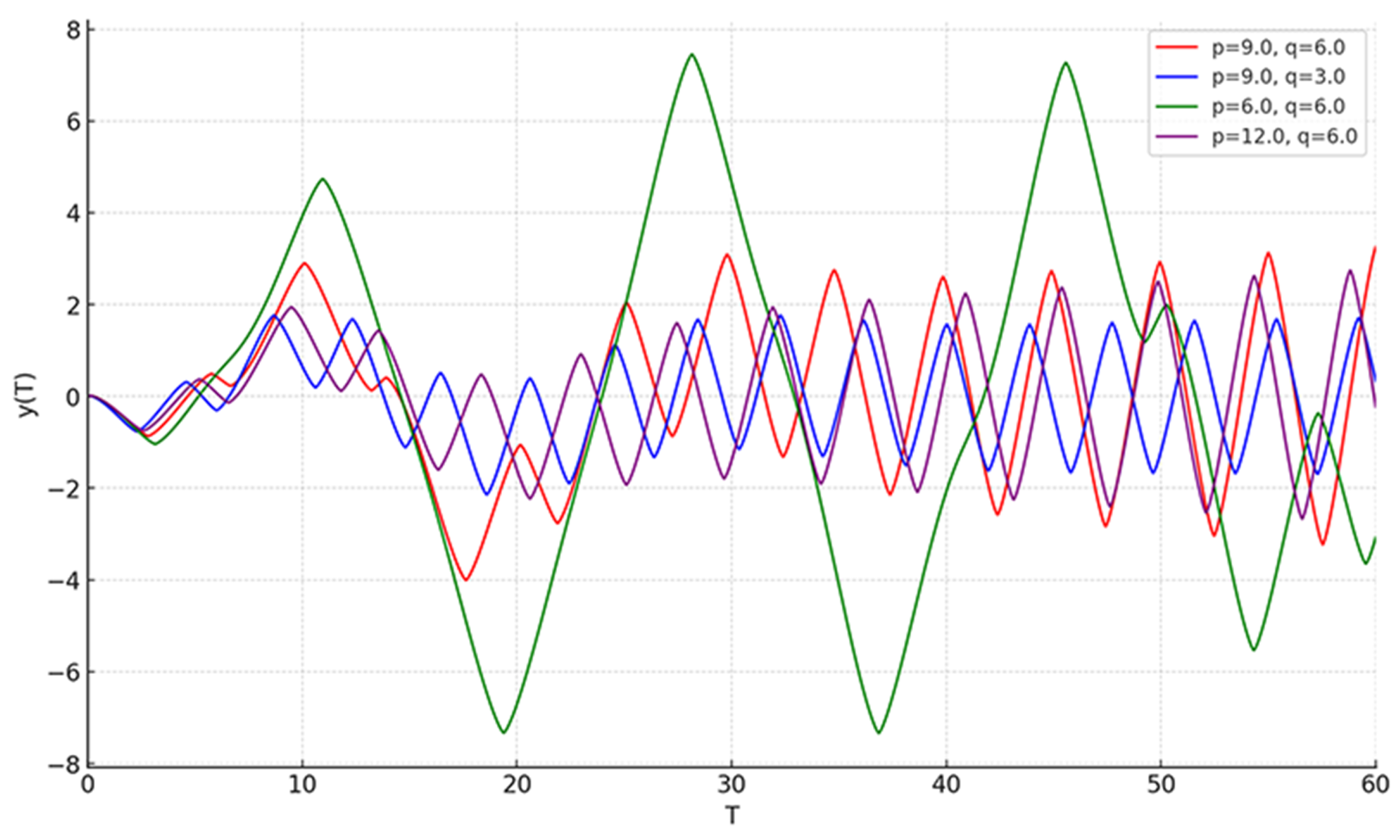
Figure 1. illustrates several approximate numerical solutions of the special cases of Equation (1) for different values of the parameters p and q , including case (43) when p = 9 and q = 6 .
Example 2.
Consider the equation
y 3 + y 3 + 10 e 3 χ 3 1 = 0 ,
where
y = χ + ϱ χ ι ,
and ϱ = 0.25 , ι = 0.5 and 𝚥 = 1 . We note that all hypotheses of Theorem 5 are satisfied except (35). By Theorem 5, we do not have M ¯ i 0 . Therefore, Theorem 5 holds. Furthermore, (45) has nonoscillatory solution, given by
y = A e k , A > 0 , k 0.6693951780 .
On the other hand, if we set ϱ = 0 in (45), we see that, (45) has nonoscillatory solution,
y = 1 e .
Example 3.
Consider the equation
χ + 1 4 χ 1 2 + 1 2 y + χ 3 2 π = 0 ,
where 𝚥 = 1 . Since all the conditions of Theorem 5 are met, then all solutions of (46) are oscillatory.
Remark 3.
We note that the results in [42,43,44] are not applicable to (46).

7. Conclusions

We have presented new criteria that ensure the oscillation of Equation (1) when Equation (5) is nonoscillatory. Equation (1) has a high degree of generality, and we do not impose any restrictions on the function ϱ . Thus, our results extend and improve upon those previously available in the literature. In particular, the results in [32] are applicable to Equation (1) when b i < , while the oscillation results obtained in this paper are applicable to Equation (1) when b i . Thus, the delay in the studied equation is the key factor responsible for generating oscillations.
The main results and contributions of this study can be summarized as follows: In Lemma 1, the possible nonoscillatory solutions were classified into two classes, N 1 and N 2 . In Lemmas 2 and 3, we derived several important properties related to the two classes N 1 and N 2 , which are utilized in the proofs of the main theorems. In Theorems 2 and 3, we presented the criteria that exclude the solutions belonging to class N 1 , while in Theorem 4, we excluded the solutions belonging to class N 2 or property S is satisfied. By combining previous results, we concluded some theorems and corollaries that are presented in Section 4 and Section 5; we provided the criteria that ensure the oscillation of the solutions of Equation (1).
This study investigates the oscillatory behavior of the solutions to Equation (1) under specific assumptions imposed on the functions γ ,   p ,   q i ,   b i ˆ and ϱ . While the derived results offer significant insights into the qualitative characteristics of these solutions, future research could extend this analysis to *fractional-order differential equations*, which play a crucial role in modeling diverse real-world phenomena. Furthermore, constructing *stochastic versions* of Equation (1)—where randomness is incorporated into the coefficients or external perturbations—may yield more realistic representations and introduce new challenges in formulating oscillation criteria within probabilistic settings. On the other hand, it will be useful to study Equation (1) where p , q i are negative, and to attempt to establish oscillation criteria in that setting. Also, this work could be extended to more general equations of the form
y = χ + i = 1 k ϱ i χ ι i .
Finally, we note that the conditions derived in this study are sufficient to guarantee the oscillatory behavior of solutions to Equation (1). However, they are not necessarily necessary conditions. Therefore, further research should focus on identifying the necessary conditions for oscillation, which would both refine the present results and expand their applicability.

Author Contributions

Conceptualization, A.A.-J., E.A. and B.Q.; methodology, A.A.-J., B.Q. and E.A.; validation, A.A.-J., B.Q. and E.A.; investigation, A.A.-J. and B.Q.; resources, B.Q. and A.A.-J.; data curation, A.A.-J. and B.Q.; writing—original draft preparation, A.A.-J., E.A. and B.Q.; writing—review and editing, B.Q., A.A.-J., H.R. and E.A.; visualization, A.A.-J., E.A. and B.Q.; supervision, A.A.-J., E.A. and B.Q.; project administration, B.Q. and H.R. All authors have read and agreed to the published version of the manuscript.

Funding

This research was funded by Researchers Supporting Project number (PNURSP2025R406), Princess Nourah Bint Abdulrahman University, Riyadh, Saudi Arabia.

Data Availability Statement

Data are contained within the article.

Acknowledgments

The authors would like to thank Princess Nourah bint Abdulrahman University Researchers Supporting Project number (PNURSP2025R406), Princess Nourah bint Abdulrahman University, Riyadh, Saudi Arabia.

Conflicts of Interest

The authors declare no conflicts of interest.

References

  1. Hale, J.K. Theory of Functional Differential Equations; Springer: New York, NY, USA, 1977. [Google Scholar]
  2. Philos, C.G. Oscillation theorems for linear differential equations of second order. Arch. Math. 1989, 53, 482–492. [Google Scholar] [CrossRef]
  3. Bazighifan, O.; Kumam, P. Oscillation Theorems for Advanced Differential Equations with p-Laplacian Like Operators. Mathematics 2020, 8, 821. [Google Scholar] [CrossRef]
  4. Huang, C.; Liu, B.; Yang, H.; Cao, J. Positive almost periodicity on SICNNs incorporating mixed delays and D operator. Nonlinear Anal. Model. Control 2022, 27, 719–739. [Google Scholar] [CrossRef]
  5. Huang, C.; Liu, B. Exponential stability of a diffusive Nicholson’s blowflies equation accompanying multiple time-varying delays. Appl. Math. Lett. 2025, 163, 109451. [Google Scholar] [CrossRef]
  6. Olver, F.W.J.; Maximon, L.C.; Lozier, D.W.; Boisvert, R.F.; Clark, C.W. Bessel Functions. NIST Handbook of Mathematical Functions; Cambridge University Press: Cambridge, UK, 2010; pp. 215–286. [Google Scholar]
  7. Elbert, A. Some recent results on the zeros of Bessel functions and classical orthogonal functions. J. Comput. Appl. Math. 2001, 133, 65–83. [Google Scholar] [CrossRef]
  8. Petráš, I. Oscillators Based on Fractional-Order Memory Elements. Fractal Fract. 2022, 6, 283. [Google Scholar] [CrossRef]
  9. Datsko, B.; Luchko, Y. Complex oscillations and limit cycles in autonomous two-component incommensurate fractional dynamical systems. Math. Balk. 2012, 26, 65–78. [Google Scholar]
  10. Yalçın Uzun, T.; Öztürk, S. Oscillation criteria for fractional differential equations with a distributed delay. Soft Comput. 2023, 27, 8517–8523. [Google Scholar] [CrossRef]
  11. Al-Jaser, A.; Saoud, I.F.B.; Ramos, H.; Qaraad, B. Investigation of the Oscillatory Behavior of the Solutions of a Class of Third-Order Delay Differential Equations with Several Terms. Axioms 2024, 13, 703. [Google Scholar] [CrossRef]
  12. Omar, N.; Serra-Capizzano, S.; Qaraad, B.; Alharbi, F.; Moaaz, O.; Elabbasy, E.M. More Effective Criteria for Testing the Oscillation of Solutions of Third-Order Differential Equations. Axioms 2024, 13, 139. [Google Scholar] [CrossRef]
  13. Grace, S.R.; Jadlovská, I.; Chhatria, G.N. Oscillation criteria for general third-order delay dynamic equations. Qual. Theory Dyn. Syst. 2025, 24, 107. [Google Scholar] [CrossRef]
  14. Masood, F.; Batiha, B.; Bazighifan, O. Asymptotic and oscillatory characteristics of solutions of neutral differential equations. J. Math. Comput. Sci. 2025, 39, 418–436. [Google Scholar] [CrossRef]
  15. Jadlovská, I.; Li, T. A note on the oscillation of third-order delay differential equations. Appl. Math. Lett. 2025, 167, 109555. [Google Scholar] [CrossRef]
  16. Džurina, J.; Kotorova, R. Comparison theorems for the third-order trinomial differential equations with argument. Czech. Math. J. 2009, 59, 353–370. [Google Scholar] [CrossRef][Green Version]
  17. Swanson, C.A. Comparison and Oscillation Theory of Linear Differential Equations; Academic Press: New York, NY, USA, 1968. [Google Scholar]
  18. Baculíková, B.; Džurina, J. Oscillation of third-order neutral differential equations. Math. Comput. Model. 2010, 52, 215–226. [Google Scholar] [CrossRef]
  19. Bazighifan, O.; Alotaibi, H.; Mousa, A.A.A. Neutral Delay Differential Equations: Oscillation Conditions for the Solutions. Symmetry 2021, 13, 101. [Google Scholar] [CrossRef]
  20. Moaaz, O.; Elabbasy, E.M.; Shaaban, E. Oscillation Criteria for a Class of Third Order Damped Differential Equations. Arab J. Math. Sci. 2018, 24, 16–30. [Google Scholar] [CrossRef]
  21. Qaraad, B.; Moaaz, O.; Baleanu, D.; Santra, S.S.; Ali, R.; Elabbasy, E.M. Third-order neutral differential equations of the mixed type: Oscillatory and asymptotic behavior. Math. Biosci. Eng. 2021, 19, 1649–1658. [Google Scholar] [CrossRef]
  22. Sui, Y.; Han, Z.L. Oscillation of third-order nonlinear delay dynamic equation with damping term on time scales. J. Appl. Math. Comput. 2018, 58, 577–599. [Google Scholar] [CrossRef]
  23. Zhang, C.; Agarwal, R.P.; Li, T. Oscillation and asymptotic behavior of higher-order delay differential equations with p-Laplacian like operators. J. Math. Anal. Appl. 2014, 409, 1093–1106. [Google Scholar] [CrossRef]
  24. Li, T.; Rogovchenko, Y.V. Asymptotic behavior of an odd-order delay differential equation. Bound. Value Probl. 2014, 107, 2014. [Google Scholar] [CrossRef]
  25. Batiha, B.; Alshammari, N.; Aldosari, F.; Masood, F.; Bazighifan, O. Nonlinear Neutral Delay Differential Equations: Novel Criteria for Oscillation and Asymptotic Behavior. Mathematics 2025, 13, 147. [Google Scholar] [CrossRef]
  26. Fidlin, A. Nonlinear Oscillations in Mechanical Engineering; Springer: Berlin/Heidelberg, Germany, 2006. [Google Scholar] [CrossRef]
  27. Al-Hababi, T.; Cao, M.; Saleh, B.; Alkayem, N.F.; Xu, H. A critical review of nonlinear damping identification in structural dynamics: Methods, applications, and challenges. Sensors 2020, 20, 7303. [Google Scholar] [CrossRef]
  28. Aktas, M.F.; Ckmak, D.; Tiryaki, A. On the qualitative behaviors of solutions of third order nonlinear functional differential equations. Appl. Math. Lett. 2011, 24, 1849–1855. [Google Scholar] [CrossRef][Green Version]
  29. Grace, S.R.; Graef, J.R.; Tunc, E. On the oscillation of certain third order nonlinear dynamic equations with a nonlinear damping term. Math. Slovaca. 2017, 67, 501–508. [Google Scholar] [CrossRef]
  30. Grace, S.R. Oscillation criteria for third-order nonlinear delay differential equations with damping. Opusc. Math. 2015, 35, 485–497. [Google Scholar] [CrossRef]
  31. Bohner, M.; Grace, S.R.; Sagera, I.; Tunc, E. Oscillation of third-order nonlinear damped delay differential equations. Appl. Math. Comput. 2016, 278, 21–32. [Google Scholar] [CrossRef]
  32. Tiryaki, A.; Aktas, M.F. Oscillation criteria of a certain class of third order nonlinear delay differential equations with damping. J. Math. Anal. Appl. 2007, 325, 54–68. [Google Scholar] [CrossRef]
  33. Candan, T.; Dahiya, R.S. Oscillation of Third Order Functional Differential Equations with Delay. Electron. J. Differ. Equ. 2003, 10, 79–88. [Google Scholar]
  34. Baculíková, B. Oscillatory behavior of the second order functional differential equations. Appl. Math. Lett. 2017, 72, 35–41. [Google Scholar] [CrossRef]
  35. Chatzarakis, G.E.; Moaaz, O.; Li, T.; Qaraad, B. Some oscillation theorems for nonlinear second-order differential equations with an advanced argument. Adv. Differ. Equ. 2020, 2020, 160. [Google Scholar] [CrossRef]
  36. Moaaz, O.; Elabbasy, E.M.; Qaraad, B. An improved approach for studying oscillation of generalized Emden–Fowler neutral differential equation. J. Inequal. Appl. 2020, 2020, 69. [Google Scholar] [CrossRef]
  37. Chitra, L.; Alagesan, K.; Das, S.; Bhattacharjee, A.; Govindan, V. Oscillatory Properties of Third-order Neutral Delay Difference Equations. J. Phys. Conf. Ser. 2022, 2286, 012015. [Google Scholar] [CrossRef]
  38. Zhang, Q.X.; Gao, L.; Yu, Y.H. Oscillation criteria for third-order neutral differential equations with continuously distributed delay. Appl. Math. Lett. 2012, 25, 1514–1519. [Google Scholar] [CrossRef]
  39. Thandapani, E.; Li, T. On the oscillation of third-order quasi-linear neutral functional differential equations. Arch. Math. 2011, 47, 181–199. [Google Scholar]
  40. Zhang, S.; Wang, Q. Oscillation of second-order nonlinear neutral dynamic equations on times cales. Appl. Math. Comput. 2010, 216, 2837–2848. [Google Scholar] [CrossRef]
  41. Tang, X.H. Oscillation for first order superlinear delay differential equations. J. London Math. Soc. 2002, 65, 115–122. [Google Scholar] [CrossRef]
  42. Györi, I.; Ladas, G. Oscillation Theory of Delay Differential Equations: With Applications; Oxford Mathematical Monographs, The Clarendon Press, Oxford University Press: New York, NY, USA, 1991. [Google Scholar]
  43. Parhi, N.; Das, P. Asymptotic property of solutions of a class of third-order differential equations. Proc. Amer. Math. Soc. 1990, 110, 387–393. [Google Scholar] [CrossRef]
  44. Parhi, N.; Das, P. Oscillation criteria for a class of nonlinear differential equations of third order. Ann. Polon. Math. 1992, 57, 219–229. [Google Scholar] [CrossRef]
Figure 1. Numerical simulation of some oscillatory solutions to Equation (1) for various ( p , q ).
Axioms 14 00877 g001
Disclaimer/Publisher’s Note: The statements, opinions and data contained in all publications are solely those of the individual author(s) and contributor(s) and not of MDPI and/or the editor(s). MDPI and/or the editor(s) disclaim responsibility for any injury to people or property resulting from any ideas, methods, instructions or products referred to in the content.