


Abstract
The effect of microwave pre-treatment on the magnetic properties of tennantite and enargite was investigated. Magnetic susceptibility, XRD, and XPS characterization of tennantite and enargite before and after treatment were conducted to explore the changes in their magnetic properties. Moreover, magnetic separation of chalcopyrite binary mixtures with enargite and tennantite was performed. The results showed insignificant effects on the magnetic susceptibility of the two minerals after microwave pre-treatment. Magnetic separation results showed arsenic rejection by 84.2%, and 76.3% in the case of enargite and tennantite binary mixtures with chalcopyrite; respectively.
1. Introduction
Base metals are mostly obtained from sulphide minerals. Sulphide minerals usually exist as complicated ores made up of several minerals. The primary method used to separate them from one another is froth flotation. Flotation occasionally has trouble reaching the desired grade and recovery, especially when seawater is used. Using seawater is growing due to limited supplies of fresh water in remote regions [1]. Therefore, finding an alternative selective method for separating sulphide minerals is of high importance.
The removal of arsenic bearing sulphide minerals is very essential to comply with environmental regulations. Failure to do so will result in penalties at smelters if the arsenic concentration exceeds certain limit. Tennantite (Cu12As4S13), arsenopyrite (FeAsS), and enargite (Cu3AsS4) are the main arsenic-copper bearing minerals usually associated with pyrite (FeS2). Because they are copper bearing minerals, tennantite and enargite behave in a similar way to chalcopyrite that makes their separation by froth flotation a difficult task [2,3].
In addition to flotation, magnetic separation was used to upgrade some sulphide minerals. Iron-rich sphalerite was preconcentrated by high intensity magnetic separation [4]. Recently, selective heating property of some sulphide minerals by microwave irradiation treatment caused dramatic physical and/or physicochemical changes which in turns enhanced their separation efficiency either via flotation [5] or magnetic separation techniques [6].
Farahat et al. [7] investigated the effect of microwave heating on the magnetic properties of arsenopyrite and molybdenite. They found that molybdenite magnetic properties were not affected whereas arsenopyrite became more magnetic. Elmahdy et al. [8] studied the effect of both conventional heat treatment and microwave irradiation on the magnetic properties of chalcopyrite and pyrite. They found that both conventional and microwave heating increases the magnetic properties of chalcopyrite and pyrite.
Due to the lack of studies on the effect of microwave treatment on the possibility of tennantite and enargite separation from chalcopyrite, this work aims to investigate the effect of microwave treatment on their magnetic properties. The possibility of chalcopyrite magnetic separation from enargite and tennantite was examined.
2. Experimental
2.1. Materials
A pure enargite sample from mountain Butte (MT, USA), a pure tennantite sample from Tsumem mine (Namibia), and a pure chalcopyrite sample from Shakanai mine (Japan) were used for all experiments as single and binary synthetic mineral mixtures.
2.2. Methods
2.2.1. Microwave Pre-Treatments
First, 0.5 g of single pure mineral with particle size −125 + 38 μm were placed in a crucible made from pure alumina and inserted in a microwave oven. An Iris Ohyama kitchen microwave (IMG-T177-6-W) model was used in this study. Samples size reduction was performed using mortar in a glove box under nitrogen atmosphere to avoid samples’ oxidation. Microwave treatment of samples was carried out for a period of 60 s at the specified power level. All tests were made under normal atmospheric conditions. The microwave pretreatment power was set at 100 watts for 60 s for the pretreatment of binary mixtures of chalcopyrite with both tennantite and enargite.
2.2.2. Magnetic Susceptibility Experiments
Magnetic susceptibility measurements were made using MS3 USB meter (Bartington Instruments Ltd., Oxford, UK) ‘‘susceptibility metre assembled with a MS2G metre. The measurement procedure was given in earlier communications [7,8].
2.2.3. X-ray Photoelectron Spectroscopy (XPS)
Mineral samples were characterized before and after microwave treatment using X-ray photoelectron spectroscopy (XPS) model AXIS 165 (Shimadzu-Kratos Co., Ltd., Kyoto, Japan). The binding energy was calibrated to carbon C1s at 284.8 eV and the spectra were fitted using CasaXPS software. Other details are described elsewhere [8].
2.2.4. Magnetic Separation Experiments
One g samples of microwave treated synthetic binary mixtures (1:1) of chalcopyrite – tennatite and chalcopyrite-enargite minerals were used for magnetic separation experiments using the “Nippon Magnetic Dressing Co. Ltd., Fukuoka, Japan, G-type” dry magnetic separator at 0.5 Tesla. The magnetic and non-magnetic fractions were collected, weighed, and chemically analysed.
3. Results
The results of all tests represent the average of three runs with standard deviation within the 95% confidence interval.
3.1. Magnetic Susceptibility
Magnetic susceptibility measurements of both tennantite and enargite before and after microwave treatment are presented in Table 1. It is clear that microwave treatment has insignificant effects on the magnetic susceptibility of both minerals.

Table 1.
Magnetic susceptibility of tennantite and enargite before and after microwave irradiation.
3.2. XRF Analysis
The XRF analyses of the investigated minerals that show the presence of a low percentage of iron impurities in enargite (2.28%) and tennantite (1.56%) are shown in Table 2.
Table 2.
XRF analyses of the studied minerals.
3.3. XRD Analysis
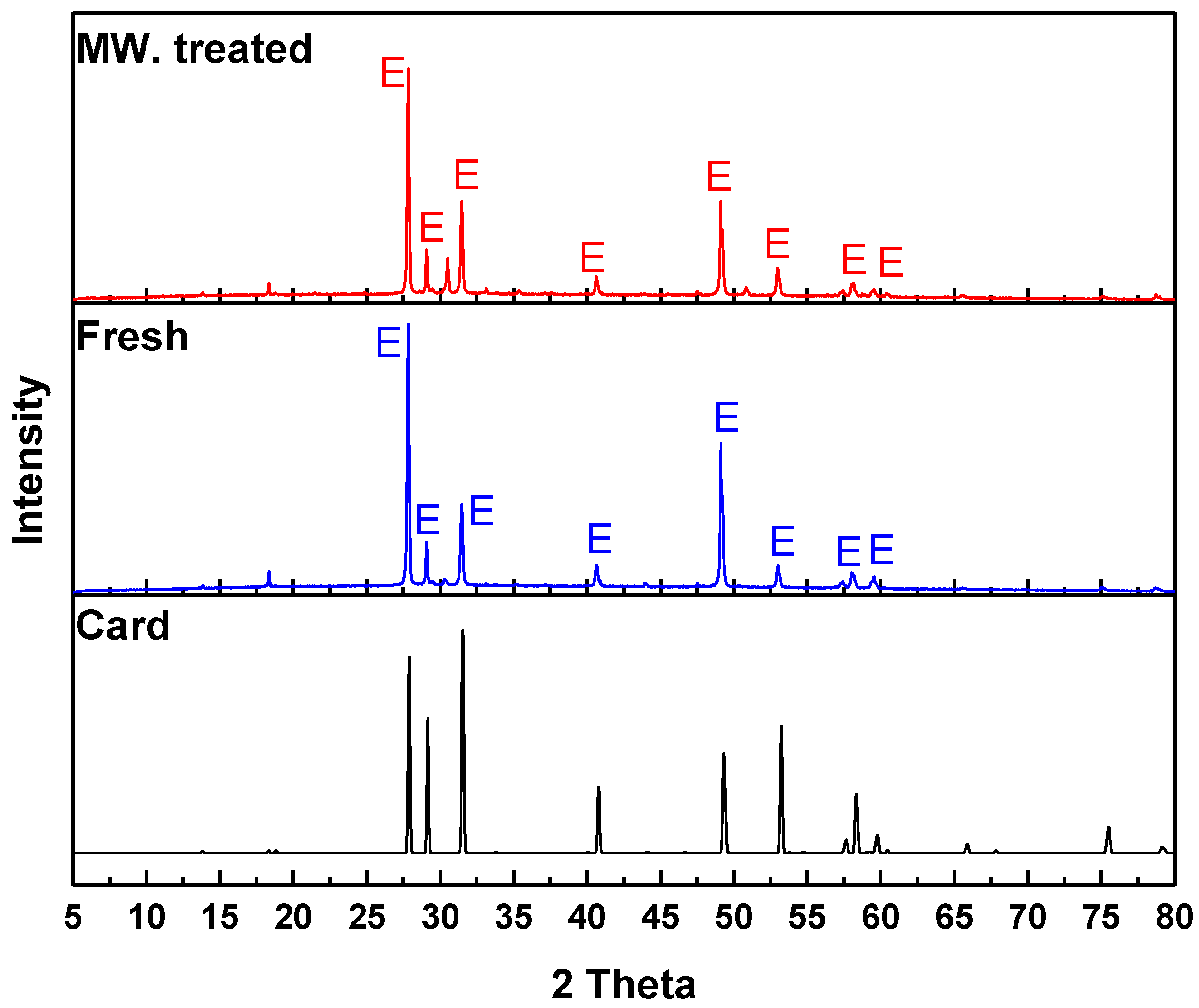
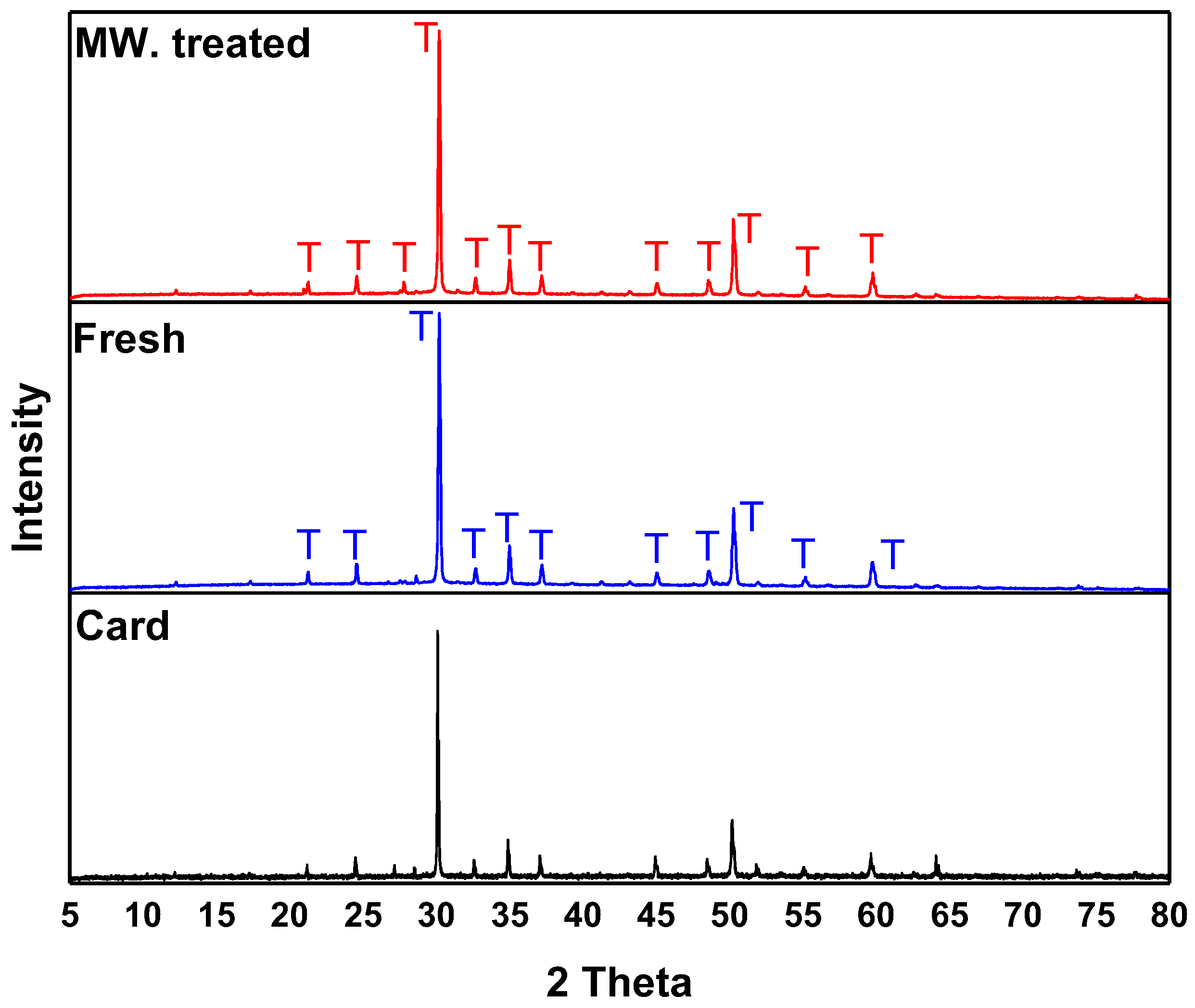
Figure 1 and Figure 2 show the XRD analysis for enargite and tennantite. The patterns of the fresh samples coincide with those of the pure enargite (JCPDS card No. 01-072-4427) and tennantite (JCPDS No. 00-043-1478). Moreover, the XRD patterns were identical before and after microwave treatment and no new phases appeared after microwave treatment of both minerals. The XRD results confirm the magnetic susceptibility results that showed no change before and after treatment.
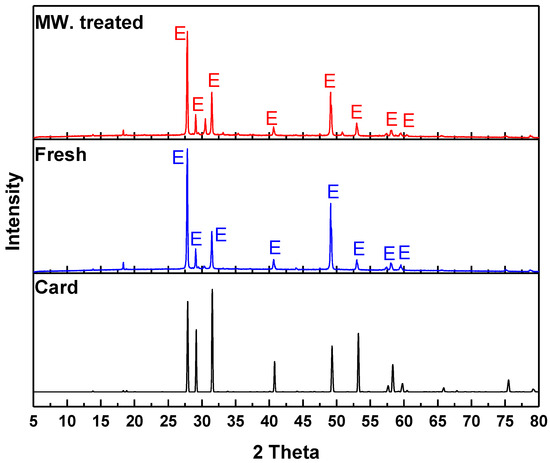
Figure 1.
XRD patterns for fresh and microwave treated enargite. E denotes enargite.
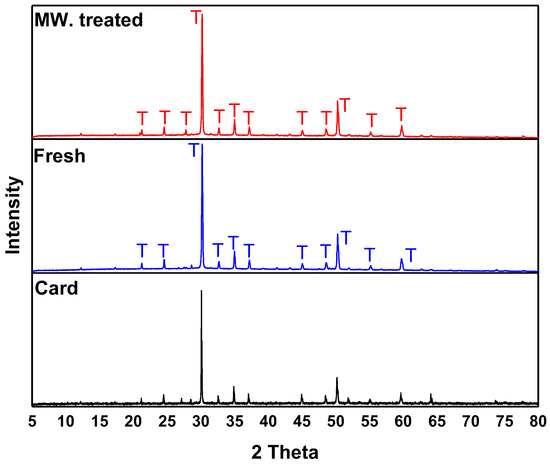
Figure 2.
XRD patterns for fresh and microwave treated tennantite. T denotes tennantite.
3.4. X-ray Photoelectron Spectroscopy
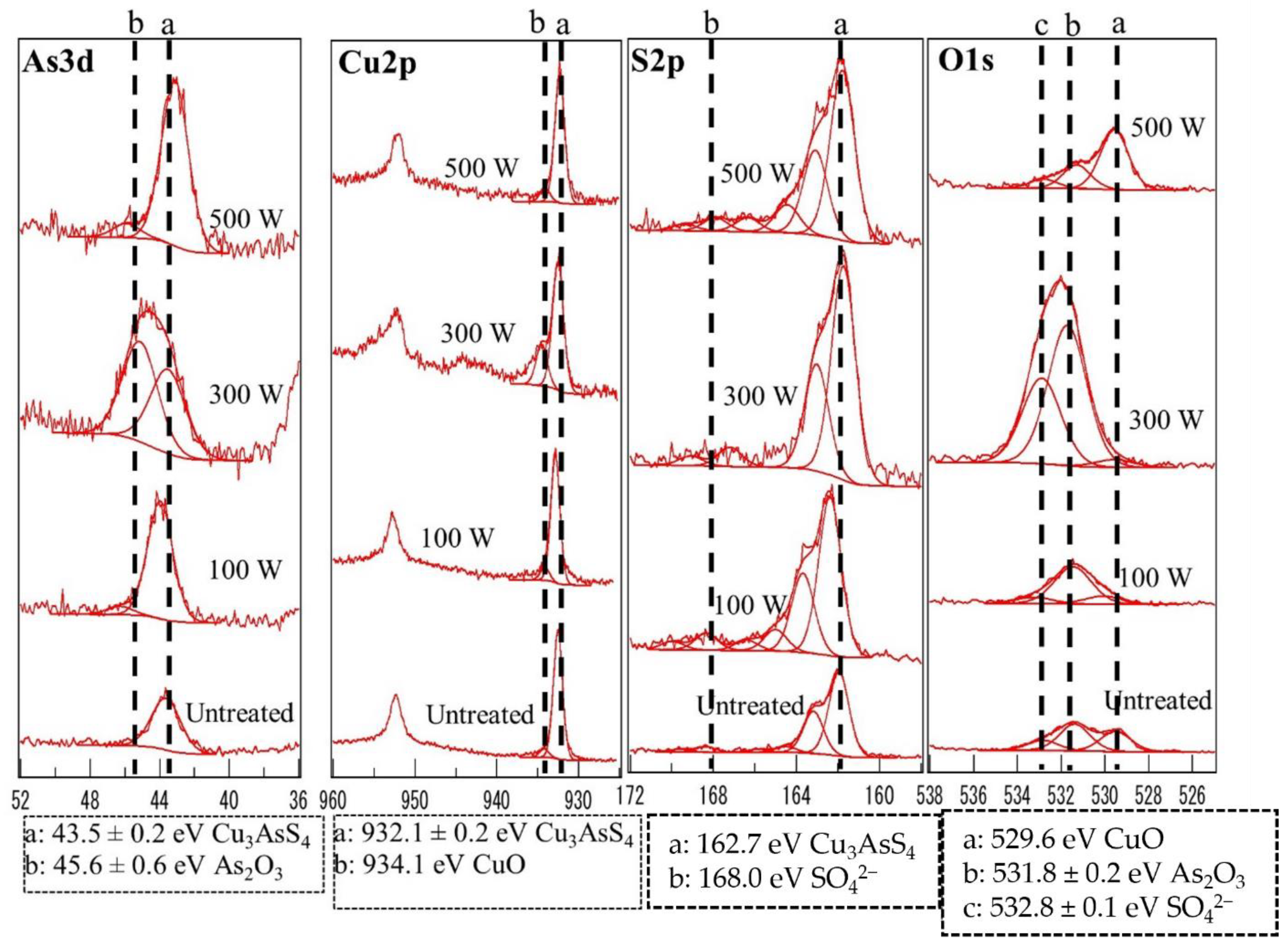
Figure 3 indicates XPS analysis for enargite before and after microwave treatment for 60 seconds. The arsenic 3d peaks show that the formation of arsenic trioxide is observed at 45.6 eV [9] in addition to enargite at 43.5 eV [10]. Copper 2p peaks do not indicate a significant change in enargite at 932.1 eV [10] and cupric oxide at 934.1 eV [11] with increasing microwave power. S2p peaks show enargite at 162.7 eV [10] and the appearance of SO42− at 168 eV [12]. O1s peaks show the presence of cupric oxide at 529.6 eV [13] on enargite surface before treatment and at 500 watts. An arsenic trioxide peak was detected at 531.8 ± 0.2 eV [14] on an enargite and increased after microwave treatment until 300 watts, and then decreased at 500s watt. The decrease in the area of arsenic oxide spectra O1s (531.8 eV) and As3d (45.6 eV) at 500 W compared to 300 W can be attributed to arsenic trioxide (As2O3) having a low boiling point (about 465 °C), and at 500 W, the temperature was enough to evaporate the produced As2O3, decreasing its concentration in the sample. SO4 peak at 532.8 ± 0.1 eV [15] had a similar trend to that of arsenic trioxide, where it increased until 300 watts and then decreased at 500 W.
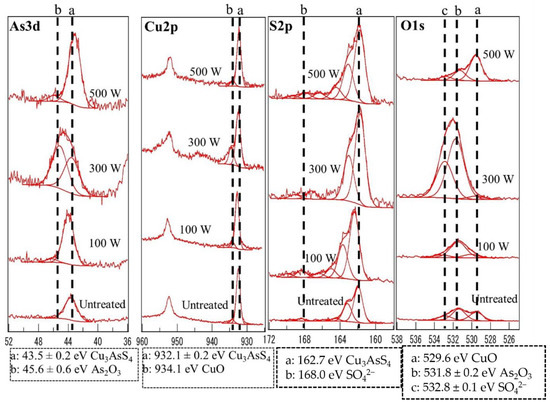
Figure 3.
XPS spectra of enargite before and after microwave treatment for 60 s.
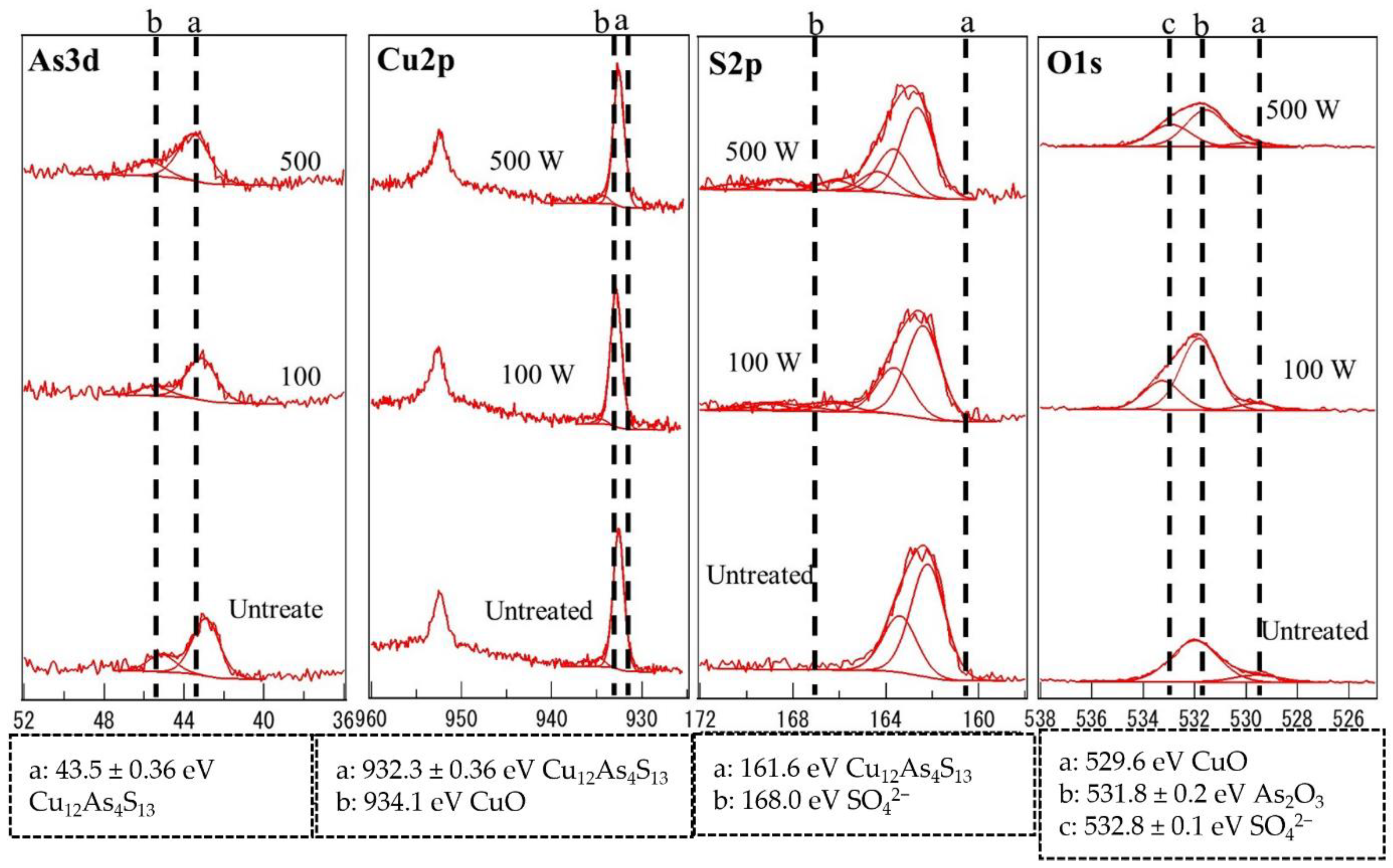
XPS analysis of tennantite before and after microwave treatment for 60 seconds is illustrated in Figure 4. Arsenic 3d peaks show arsenic trioxide (As2O3) peak intensity at 45.6 eV [9] and tennantite (Cu12As4S13) at 43.5 eV [16] were not affected after the microwave treatment. Cu2p peaks show insignificant change after heating for both tennantite at 932.4 eV [16] and cupric oxide at 934.1 eV [11]. S2p peaks indicate the presence of tennantite at 161.6 eV [17] and showing surface oxidation through increased SO42− peak intensity at 168.0 eV [12]. O1s peaks illustrate significant oxidation of tennantite surface after heat treatment as indicated by the increased peak intensity of arsenic trioxide at 531.8 eV [14]. The cupric oxide peak at 529.6 eV [13] is detected on fresh tennantite sample and its intensity remained almost unchanged up to 750 °C. In addition, oxidation can be seen from the appearance of SO42− at 532.8 eV [15] peaks after heat treatment compared to its absence before heating.
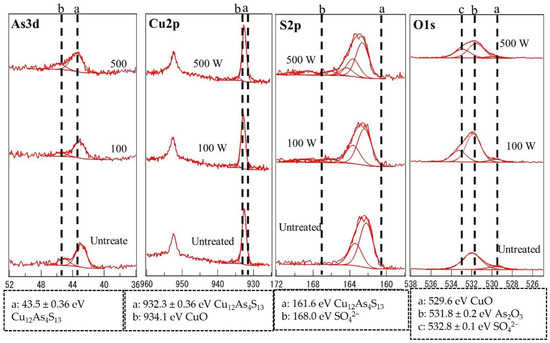
Figure 4.
XPS spectra of tennantite before and after microwave treatment for 60 s.
3.5. Magnetic Separation Experiments
Table 3 presents the chemical analyses of the feed mixture and the magnetic separation products of the chalcopyrite–enargite system after microwave treatment. Arsenic content was reduced from 11.4% in the feed to 4.8% in the magnetic fraction with 84.2% rejection percentage to the non-magnetic fraction after only one rougher separation stage.
Table 3.
XRF assays and distributions of magnetic separation feed and products of Chalcopyrite/Enargite system after microwave treatment.
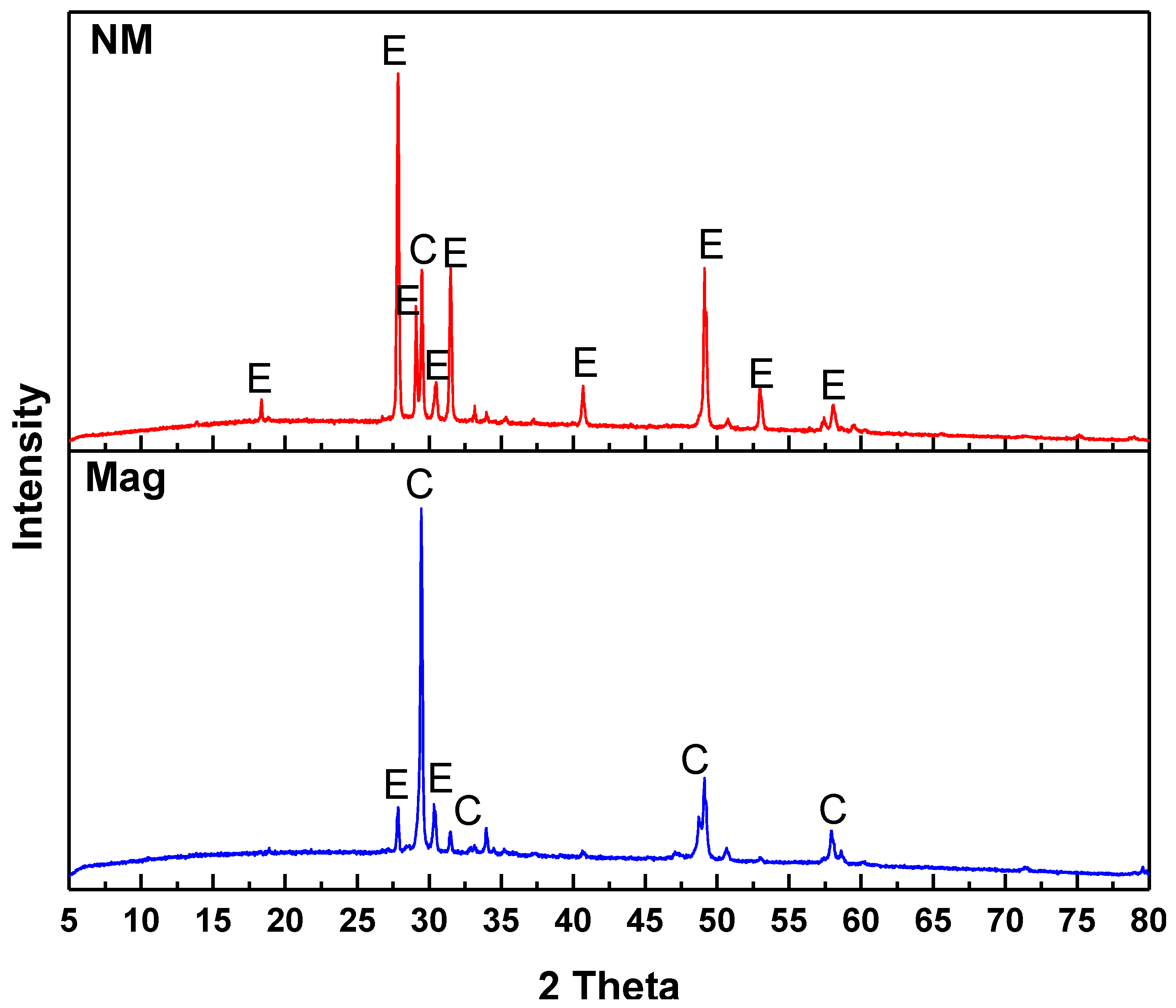
Figure 5 compares the XRD analysis of the magnetic and nonmagnetic fractions. The enargite phase is predominant in the non-magnetic fraction, confirming XRF results and indicating the successful separation of enargite from its binary mixture with chalcopyrite.
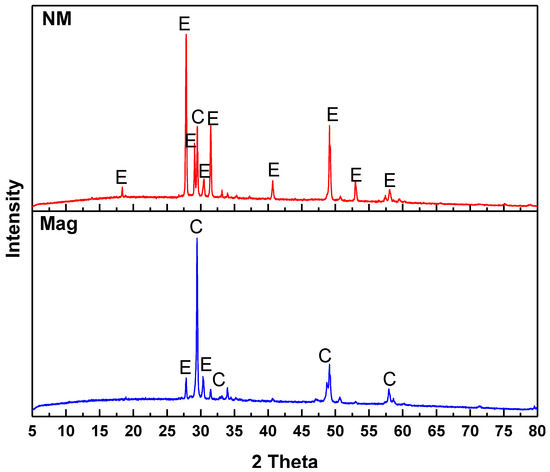
Figure 5.
XRD patterns for magnetic and nonmagnetic fraction, C for chalcopyrite, and E for enargite.
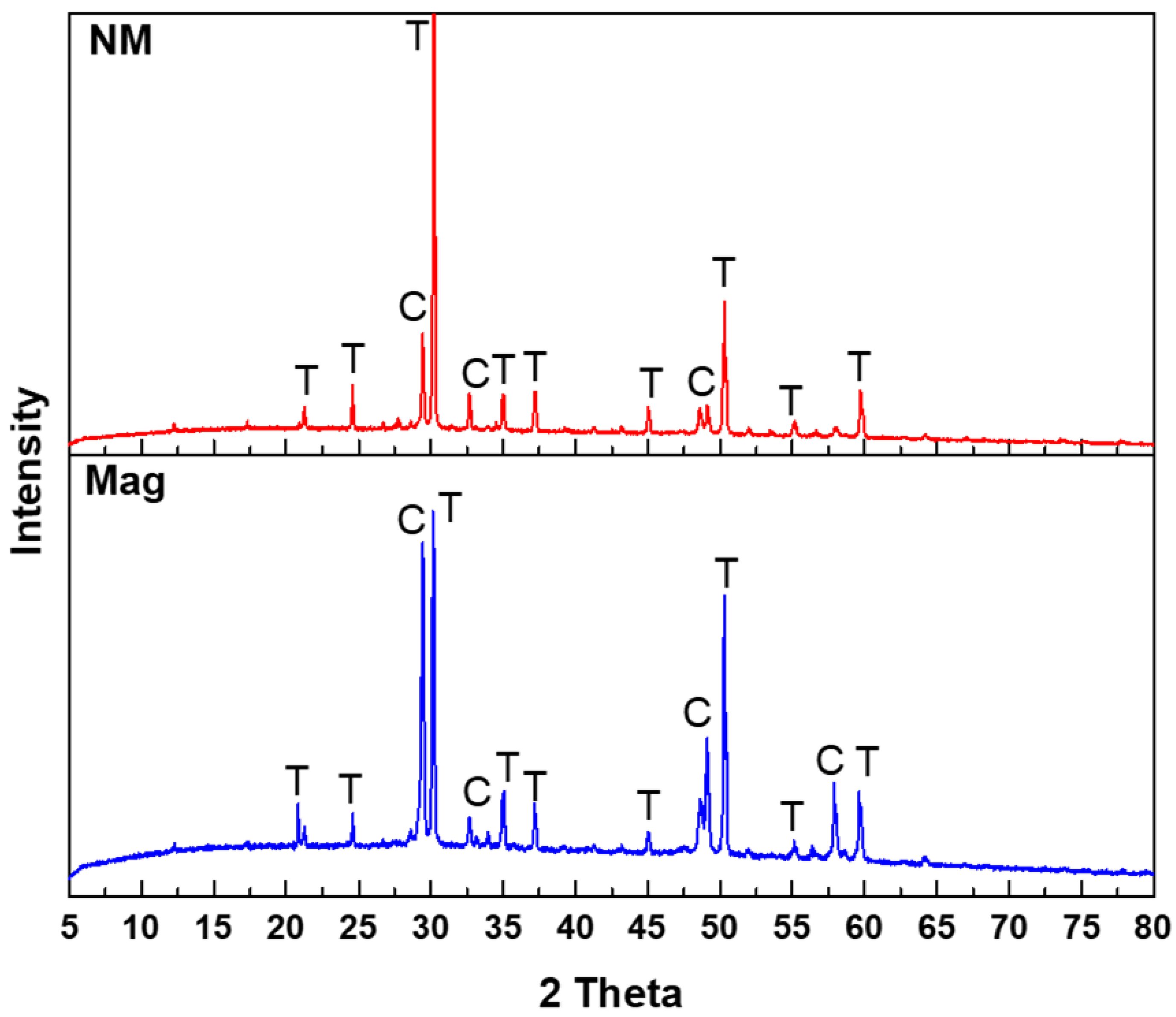
Table 4 shows the chemical analyses of feed mixture and the magnetic separation products of the chalcopyrite–tennantite system after microwave treatment. Arsenic content was decreased from 7.4% in the feed to 3.6% in the magnetic fraction with 76.3% rejection percentage to the non-magnetic fraction after one rougher separation step only. The XRD patterns of magnetic and non-magnetic fractions of this experiment are shown in Figure 6. It is clear that low arsenic content chalcopyrite was successfully recovered in the magnetic fraction.
Table 4.
XRF assays and distributions of magnetic separation feed and products of chalcopyrite/tennantite system after microwave treatment.
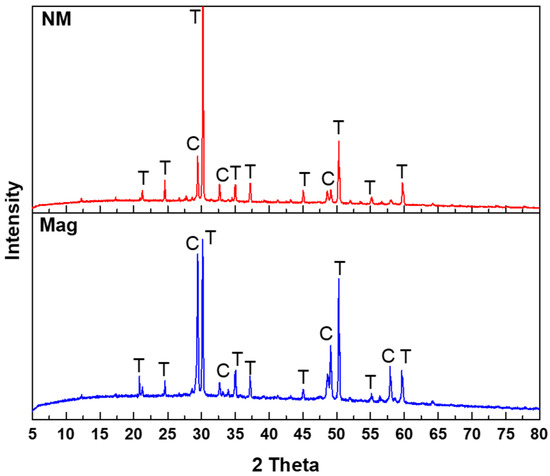
Figure 6.
XRD patterns for magnetic and nonmagnetic fraction, C for chalcopyrite, and T for tennantite.
It can be seen that arsenic rejection in case of enargite mixture with chalcopyrite is more than that of tennantite, but the yield is higher in case of tennantite. It can be concluded that, in both cases, satisfactory arsenic removal efficiencies were obtained in only one separation step. Performing cleaning and scavenging steps is expected to further reduce arsenic content and increase copper recovery, respectively.
4. Discussion
The results indicated that the magnetic properties of both enargite and tennantite are not significantly affected by microwave treatment. Magnetic susceptibility results indicated that tennantite and enargite before treatment are diamagnetic. Tennantite remained diamagnetic after microwave irradiation treatment as indicated in Table 1. Enargite gained slight magnetic susceptibility after microwave treatments, most probably due to the presence of minor iron bearing sulphide mineral (as chalcopyrite or arsenopyrite). The impurities were not detected, as they are lower than the threshold limit of the XRD.
The XPS results confirmed this finding as there are no magnetic phases formed on the surface of any of the two minerals after microwave treatment. The results suggest that enargite and tennantite removal via magnetic separation will be possible from chalcopyrite and pyrite after microwave treatment. Chalcopyrite and pyrite gain strong magnetic properties after conventional and microwave irradiation thermal treatments [8]. The increased magnetism of chalcopyrite after microwave treatment is due to the transformation of chalcopyrite to ferromagnetic phases, namely, magnetite and maghemite [8]. This phase change enables its separation from enargite and tennantite via magnetic separation. On the other hand, it can be concluded that enargite and tennantite cannot be removed from molybdenite using this route as molybdenite is not acquiring magnetic properties after microwave treatment as well [7,8].
A conclusion can be made that removal of tennantite and enargite from sulphide ore-containing iron bearing minerals such as chalcopyrite and pyrite is possible through magnetic separation following microwave treatment. The economic feasibility of this procedure needs to be investigated further.
5. Conclusions
The effect of microwave thermal treatment on enargite and tennantite was investigated. Magnetic susceptibility, XRD, and XPS characterization were performed and showed that the magnetic properties of the two minerals were insignificantly affected. Magnetic separation of binary mineral mixtures indicated the possibility of chalcopyrite separation from enargite and tennantite. Good arsenic rejection was obtained in just one magnetic separation step from binary mineral mixtures.
Author Contributions
Conceptualization, A.M.E. and M.F.; methodology, A.M.E. and M.F.; formal analysis, A.M.E. and M.F.; data curation, H.M. and K.S.; writing—original draft preparation, A.M.E. and M.F.; writing—review and editing, H.M. and K.S. All authors have read and agreed to the published version of the manuscript.
Funding
This research was funded by Sumitomo Metal Mining, Co., Ltd. (AK159044) and by Japan Society for the Promotion of Science (JSPS) Kakenhi Grant Nos. 15H02333 and 26.04378.
Data Availability Statement
The data presented in this study are available on request from the corresponding author.
Acknowledgments
The authors would like to acknowledge the fund provided by the Japan Society for the Promotion of Science (JSPS) and by Sumitomo Metal Mining, Co., Ltd.
Conflicts of Interest
The authors declare that they have no known competing of financial interests or personal relationships that could have appeared to influence the work reported in this paper.
References
- Wang, B.; Peng, Y. The Effect of Saline Water on Mineral Flotation—A Critical Review. Miner. Eng. 2014, 66–68, 13–24. [Google Scholar] [CrossRef]
- Suyantara, G.P.W.; Hirajima, T.; Miki, H.; Sasaki, K.; Kuroiwa, S.; Aoki, Y. Effect of H2O2 and Potassium Amyl Xanthate on Separation of Enargite and Tennantite from Chalcopyrite and Bornite Using Flotation. Miner. Eng. 2020, 152, 106371. [Google Scholar] [CrossRef]
- Li, T.; Zhang, Y.; Zhang, B.; Jiao, F.; Qin, W. Flotation Separation of Enargite from Complex Copper Concentrates by Selective Surface Oxidation. Physicochem. Probl. Miner. Process. 2019, 55, 852–864. [Google Scholar] [CrossRef]
- Jeong, S.; Kim, K. Pre-Concentration of Iron-Rich Sphalerite by Magnetic Separation. Minerals 2018, 8, 272. [Google Scholar] [CrossRef]
- Gholami, H.; Rezai, B.; Mehdilo, A.; Hassanzadeh, A.; Yarahmadi, M. Effect of Microwave System Location on Floatability of Chalcopyrite and Pyrite in a Copper Ore Processing Circuit. Physicochem. Probl. Miner. Process. 2020, 56, 432–448. [Google Scholar] [CrossRef]
- Roy, S.K.; Nayak, D.; Dash, N.; Dhawan, N.; Rath, S.S. Microwave-Assisted Reduction Roasting—Magnetic Separation Studies of Two Mineralogically Different Low-Grade Iron Ores. Int. J. Miner. Metall. Mater. 2020, 27, 1449–1461. [Google Scholar] [CrossRef]
- Farahat, M.; Elmahdy, A.M.; Hirajima, T. Influence of Microwave Radiation on the Magnetic Properties of Molybdenite and Arsenopyrite. Powder Technol. 2017, 315, 276–281. [Google Scholar] [CrossRef]
- Elmahdy, A.M.; Farahat, M.; Hirajima, T. Comparison between the Effect of Microwave Irradiation and Conventional Heat Treatments on the Magnetic Properties of Chalcopyrite and Pyrite. Adv. Powder Technol. 2016, 27, 2424–2431. [Google Scholar] [CrossRef]
- Stec, W.J.; Morgan, W.E.; Albridge, R.G.; Van Wazer, J.R. Measured Binding Energy Shifts of the “3p” and “3d” Electrons1 in Arsenic Compounds. Inorg. Chem. 1972, 11, 219–225. [Google Scholar] [CrossRef]
- Rossi, A.; Atzei, D.; Da Pelo, S.; Frau, F.; Lattanzi, P.; England, K.E.R.; Vaughan, D.J. Quantitative X-ray Photoelectron Spectroscopy Study of Enargite (Cu3AsS4) Surface. Surf. Interface Anal. 2001, 31, 465–470. [Google Scholar] [CrossRef]
- Capece, F.M.; Di Castro, V.; Furlani, C.; Mattogno, G.; Fragale, C.; Gargano, M.; Rossi, M. “Copper Chromite” Catalysts: XPS Structure Elucidation and Correlation with Catalytic Activity. J. Electron Spectros. Relat. Phenom. 1982, 27, 119–128. [Google Scholar] [CrossRef]
- Siriwardane, R.V.; Cook, J.M. Interactions of NO and SO2 with Iron Deposited on Silica. J. Colloid Interface Sci. 1985, 104, 250–257. [Google Scholar] [CrossRef]
- Deroubaix, G.; Marcus, P. X-ray Photoelectron Spectroscopy Analysis of Copper and Zinc Oxides and Sulphides. Surf. Interface Anal. 1992, 18, 39–46. [Google Scholar] [CrossRef]
- Mizokawa, Y.; Iwasaki, H.; Nishitani, R.; Nakamura, S. Esca Studies of Ga, As, GaAs, Ga2O3, As2O3 and As2O5. J. Electron Spectros. Relat. Phenom. 1978, 14, 129–141. [Google Scholar] [CrossRef]
- Ghahremaninezhad, A.; Dixon, D.G.; Asselin, E. Electrochemical and XPS Analysis of Chalcopyrite (CuFeS2) Dissolution in Sulfuric Acid Solution. Electrochim. Acta 2013, 87, 97–112. [Google Scholar] [CrossRef]
- Sasaki, K.; Takatsugi, K.; Ishikura, K.; Hirajima, T. Spectroscopic Study on Oxidative Dissolution of Chalcopyrite, Enargite and Tennantite at Different PH Values. Hydrometallurgy 2010, 100, 144–151. [Google Scholar] [CrossRef]
- Fullston, D.; Fornasiero, D.; Ralston, J. Oxidation of Synthetic and Natural Samples of Enargite and Tennantite: 1. Dissolution and Zeta Potential Study. Langmuir 1999, 15, 4524–4529. [Google Scholar] [CrossRef]
Disclaimer/Publisher’s Note: The statements, opinions and data contained in all publications are solely those of the individual author(s) and contributor(s) and not of MDPI and/or the editor(s). MDPI and/or the editor(s) disclaim responsibility for any injury to people or property resulting from any ideas, methods, instructions or products referred to in the content. |
© 2023 by the authors. Licensee MDPI, Basel, Switzerland. This article is an open access article distributed under the terms and conditions of the Creative Commons Attribution (CC BY) license (https://creativecommons.org/licenses/by/4.0/).