


Abstract
This study examines the origin, tectonic setting, and Cu–Pb–Zn polymetallic mineralization of the Yangjiayu Complex, situated on the southwestern margin of the Jiaolai Basin. We present detailed geochemical, zircon U–Pb geochronological, and Hf isotopic data for rhyolite porphyry and monzodiorite samples. Zircon U–Pb dating reveals that the emplacement of both intrusions occurred in the Early Cretaceous. While the monzodiorite (122.5 ± 0.7 Ma) is numerically slightly older than the rhyolite porphyry (121.2 ± 0.6 Ma), considering the error ranges, their ages are essentially similar. The rhyolite porphyry displays higher SiO2 and Na2O + K2O contents and a lower Al2O3 content relative to the monzodiorite. Geochemically, both intrusions are classified as high-K calc-alkaline and peraluminous, characterized by enrichment in large-ion lithophile elements (LILEs; e.g., Ba, Rb, Pb) and light rare earth elements (LREEs), along with depletion in high-field-strength elements (HFSEs; e.g., Nb, P, Ta) and heavy rare earth elements (HREEs). The rhyolite porphyry further exhibits middle rare earth elements (MREEs; e.g., Eu, Gd, Tb, Dy) depletion. Similar zircon εHf(t) values (monzodiorite: −23.0 to −26.1; rhyolite porphyry: −23.2 to −25.0) suggest a shared source derived from partial melting of the thickened lower crustal rocks. In comparison to the monzodiorite, the rhyolite porphyry shows lower total REE contents, a more pronounced negative Eu anomaly and stronger MREE depletion, higher Rb, Th, and U concentrations, and more significant P depletion, features indicative of more extensive assimilation-fractional crystallization (AFC). These geochemical and geochronological data indicate that the Yangjiayu Complex originated within an extensional tectonic setting associated with the Early Cretaceous subduction of the Paleo-Pacific Plate underneath the Eurasian Plate. Cu–Pb–Zn mineralization, primarily localized within the monzodiorite, is interpreted to be generated by magmatic-hydrothermal fluids. Therefore, ~120 Ma dioritic intrusions within the Jiaolai Basin constitute prospective targets for (Cu)–Pb–Zn polymetallic exploration.
1. Introduction
The North China Craton (NCC), recognized as one of the Earth’s oldest cratons, underwent a complex geological evolution influenced by Paleozoic and Mesozoic tectonic events, including Pacific Plate subduction and Yangtze–North China Block collision [1,2,3,4,5,6,7]. Mesozoic lithospheric thinning in eastern North China led to widespread magmatic activity, peaking in the Early Cretaceous [8,9,10,11,12,13]. As an important part of the southeastern margin of the NCC, Shandong Province has developed a large number of Mesozoic magmatic rocks and associated ore deposits, such as the gold deposits in the Jiaodong area and the skarn-type iron deposits in the Luxi area [14,15,16,17,18,19,20,21]. However, the Ludong area remains comparatively poorly understood, with primarily small nonferrous metal occurrences. The Qibaoshan gold–copper polymetallic deposit in the Jiaolai Basin is one of the important deposits in the Ludong area, and its metallogenesis has received extensive attention. Numerous studies have shown that the formation of the Qibaoshan deposit is closely related to the regional tectonic setting, magmatic activity, and the evolution of ore-forming fluids [22,23,24,25]. However, significant knowledge gaps exist regarding other contemporaneous volcanic structures.
The recent discovery of Cu–Pb–Zn polymetallic mineralization in the Yangjiayu area, 30 km southeast of Qibaoshan, presents an opportunity to address this gap in knowledge. To investigate the metallogenesis of this newly recognized area, we present new zircon U–Pb geochronological, Hf isotopic, and geochemical data from monzodiorite and rhyolite porphyry samples. This study aims to precisely determine the emplacement ages of these intrusions, thereby refining the chronological framework of regional magmatic activity. Furthermore, we seek to characterize the magma source region and magmatic evolution, elucidate the prevailing tectonic setting, and ultimately clarify the potential link between magmatism and mineralization. This research endeavors to provide novel insights into the genesis of polymetallic mineralization in the Yangjiayu area and contribute to a broader understanding of mineralization processes within the Ludong region.
Regional Geology
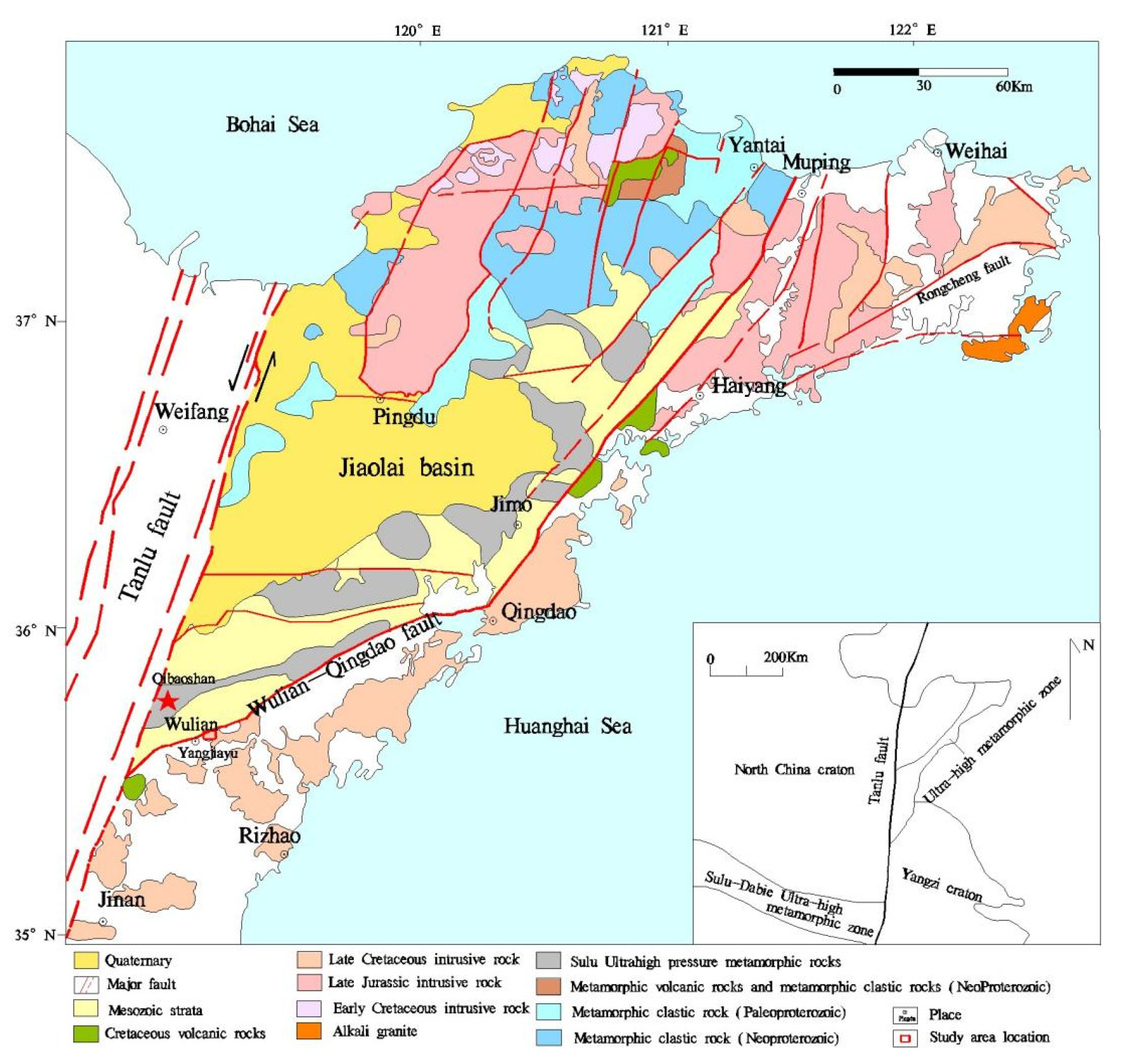
The Jiaodong region, situated on the southeastern margin of the North China Craton (NCC), encompasses the Jiaobei and Su–Lu Blocks, delineated from the Luxi area to the west by the Tan–Lu Fault Zone. The Jiaobei Block is further subdivided into the Jiaobei Uplift (north) and the Jiaolai Basin (south) [26,27]. The Jiaolai Basin represents the largest Mesozoic terrestrial sedimentary basin in Shandong Province. Its basement is primarily composed of the Paleoproterozoic Fenzishan and Jingshan Groups. The overlying strata are dominated by Cretaceous and Paleogene sequences, including the Cretaceous Laiyang, Qingshan, and Wangshi Groups, and the Paleogene Huangxian Formation. The Cretaceous sequence exhibits distinct stratigraphic characteristics: the lower Laiyang Group consists of terrestrial clastic sedimentary rocks; the middle Qingshan Group is characterized by interbedded volcanic, volcaniclastic, and sedimentary rocks; and the upper Wangshi Group comprises clastic rocks. Since the Late Mesozoic, the region east of the Tan–Lu Fault Zone has undergone significant lithospheric thinning and concomitant large-scale magmatic intrusions, resulting in Late Jurassic to Early Cretaceous granitic intrusions. The Jiaolai Basin experienced a complex history of tectonic evolution from the Cretaceous to the Paleocene, manifested by NW–SE extension during the Early Cretaceous (Laiyang period); E–W extension during the Qingshan period; NW–SE compression at the end of the Early Cretaceous; near N–S extension during the Late Cretaceous; and NE–SW compression during the Paleocene [28,29,30,31]. The Wulian–Qingdao Fault Zone, a major regional fault demarcating the boundary between the Su–Lu and Jiaobei Blocks, is a consequence of the Yangtze–North China Block collision and amalgamation. This fault zone and its associated NE-trending secondary faults control the formation and distribution of numerous volcanic structures (Figure 1).
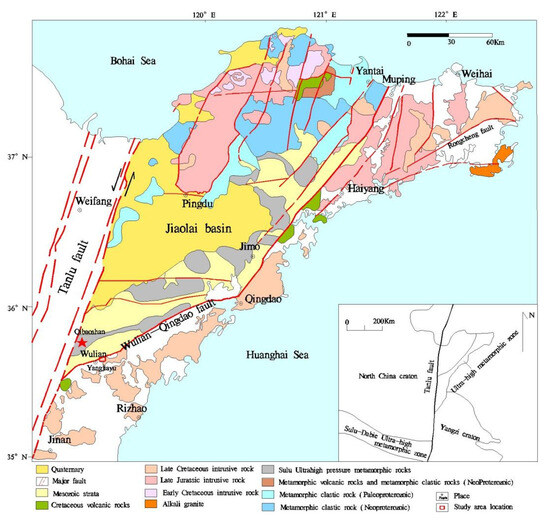
Figure 1.
Geological sketch map of the Jiaodong region, according to Li et al. (2023) [32].
2. Geological Characteristics of the Yangjiayu Area
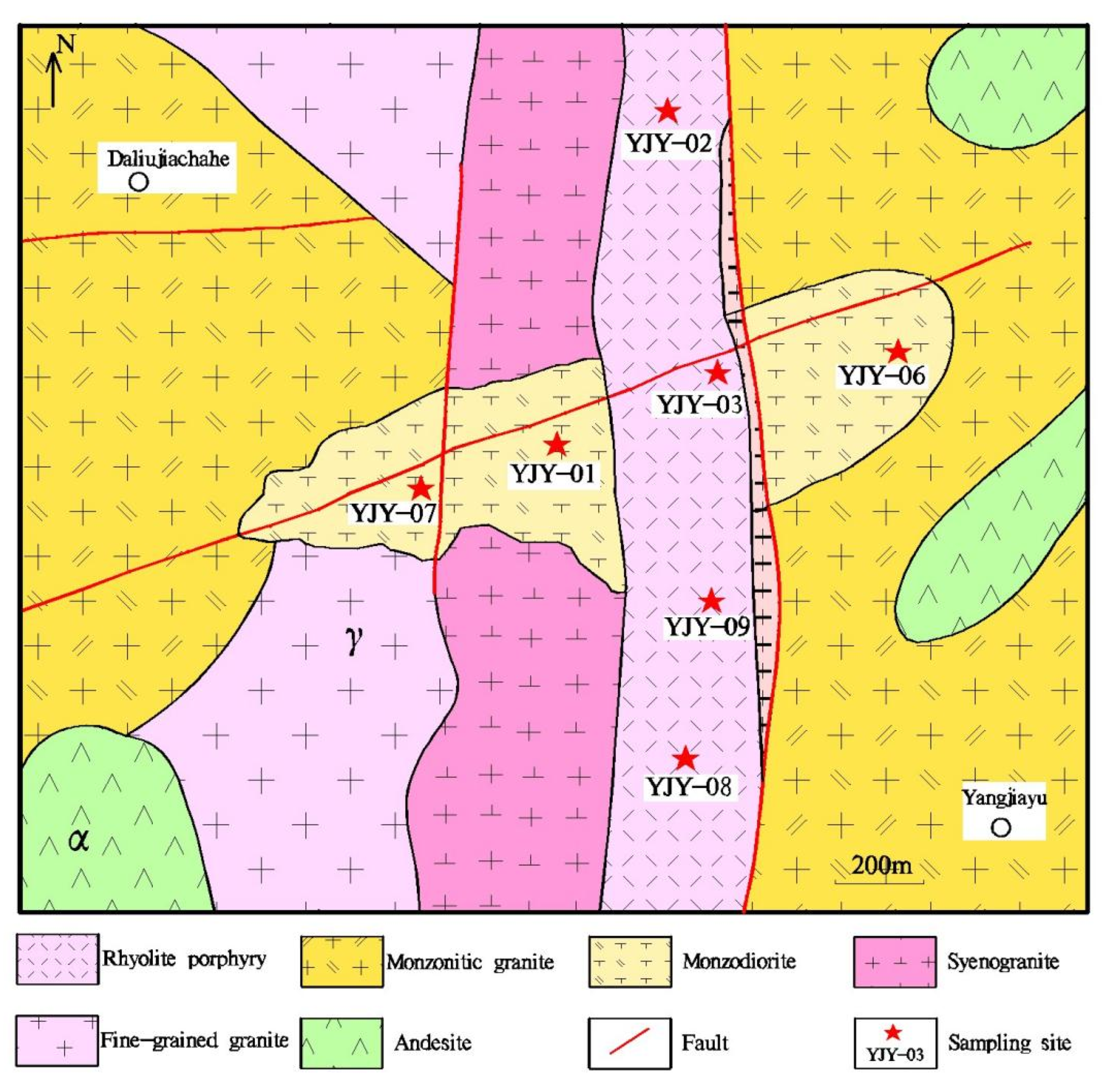
The Yangjiayu area is located on the southwestern margin of the Jiaolai Basin, northwest of the Gaogezhuang–Taolin volcanic structure in Wulian County, Rizhao City. The predominantly exposed strata consist of andesitic volcaniclastic rocks belonging to the Baimudi Formation of the Cretaceous Qingshan Group (Figure 2). This terrestrial intermediate volcanic sequence is further divided into upper and lower sections: the lower section is primarily composed of intermediate lavas (hornblende andesite, biotite andesite, andesitic volcanic breccia lava, and tuffaceous andesite) with minor volcaniclastic rocks; the upper section is dominated by purplish-gray andesite containing volcanic breccia. Intense volcanic–subvolcanic hydrothermal activity has led to pervasive planar kaolinization, sericitization, and chloritization alteration of the Baimudi Formation volcanic rocks.
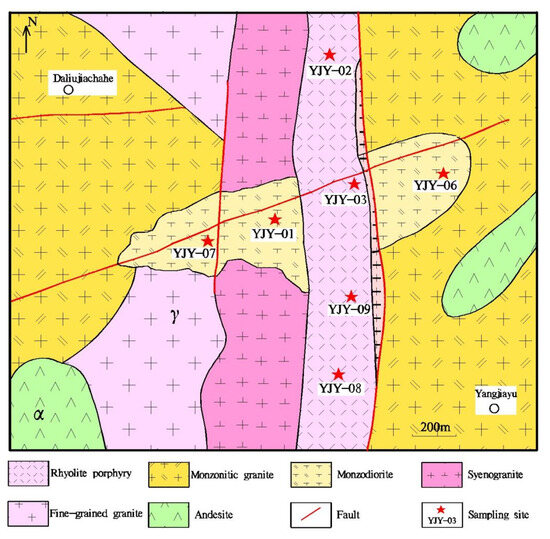
Figure 2.
Simplified geological map of the Yangjiayu area and sampling locations.
Two main fault sets are present in the study area: approximately E–W and N–NE trending. The approximately E–W trending faults constitute the primary ore-controlling structures, and are host to the Yangjiayu Cu–Pb–Zn polymetallic deposit. The N–NE trending faults are considered secondary structures that govern smaller-scale mineralization within the area. The study area is located within the uplifted northwestern part of the Gaogezhuang–Taolin caldera. Intrusive rocks, primarily rhyolite porphyry and monzodiorite, are observed, with the rhyolite porphyry crosscutting the monzodiorite, demonstrating its later emplacement (Figure 2).
The Cu–Pb–Zn mineralization in Yangjiayu is predominantly hosted within the monzodiorite, and this mineralization exhibits a close association with a series of alteration processes. The principal metallic minerals in the ore include galena, sphalerite, chalcopyrite, and magnetite. Galena and sphalerite commonly occur as massive aggregates, intimately intergrown with gangue minerals such as quartz and calcite, resulting in massive, banded, and vein-like textures. The ore textures are mainly granular and relict replacement textures.
Based on the mineral assemblages and replacement relationships, the alteration and mineralization in the Yangjiayu mining area can be divided into four stages:
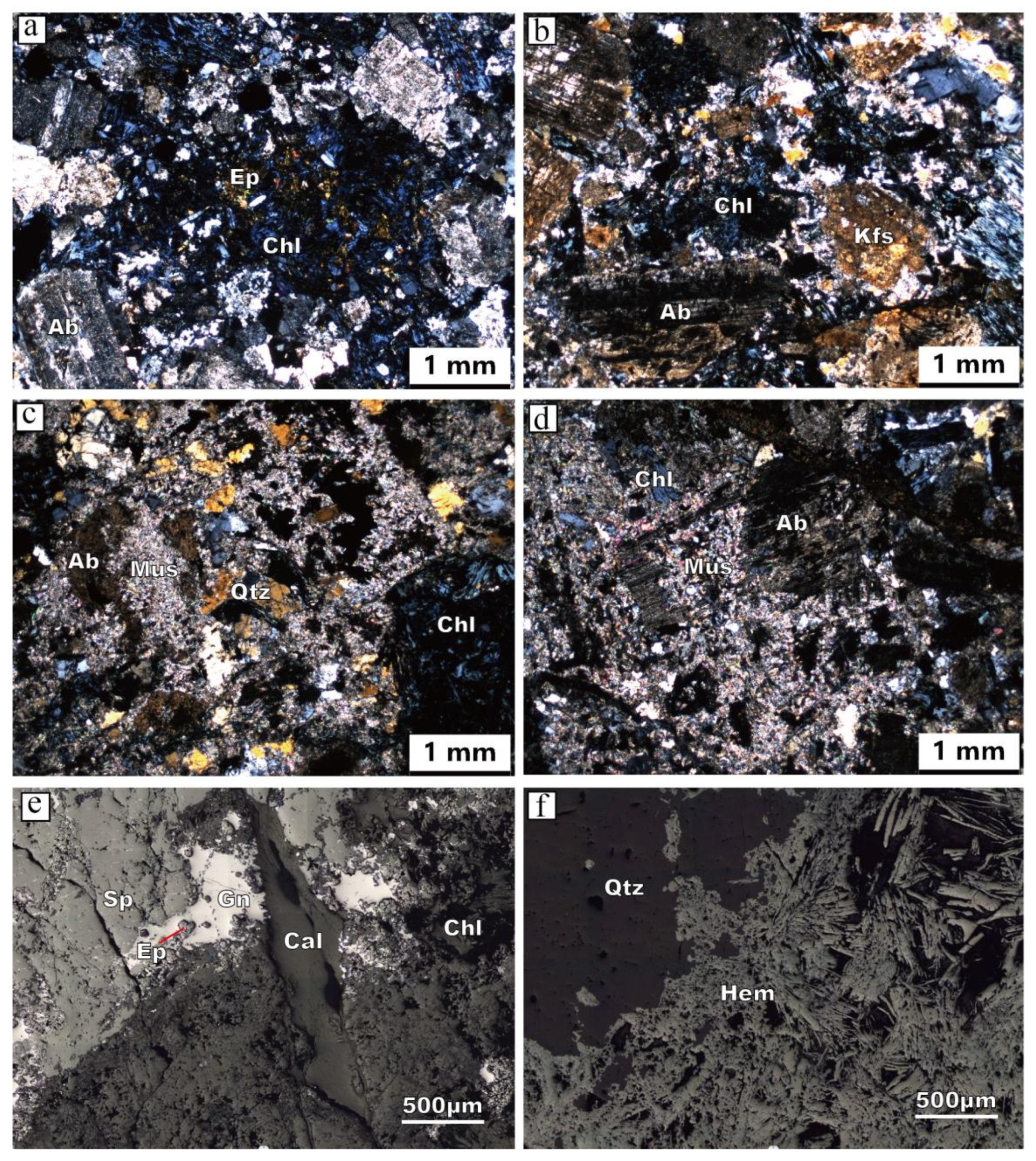
Alkali Feldspar Stage: This stage is defined by albite and K-feldspar as the main alteration minerals. This stage imparts a generally flesh-colored appearance to the monzodiorite. Albite replaces plagioclase, resulting in the plagioclase crystal faces exhibiting a yellowish-white color (Figure 3a–d).
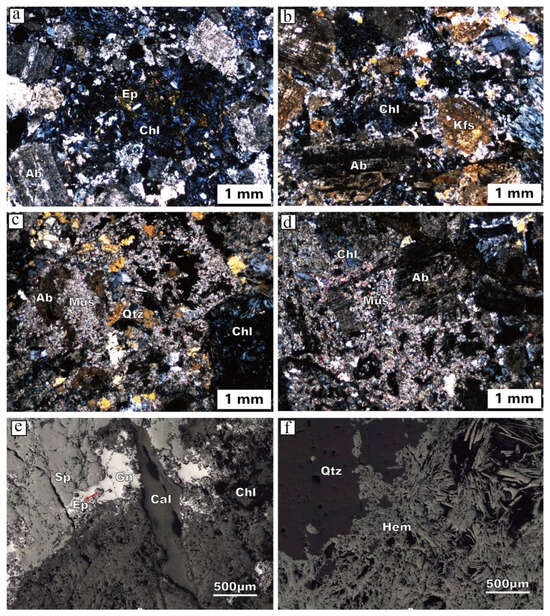
Figure 3.
Photomicrographs of altered and mineralized monzonitic diorite samples from Yangjiayu. (a,b): Chlorite and epidote replacing early-stage albite and K-feldspar in monzodiorite (crossed-polarized light); (c,d): quartz and muscovite replacing early-stage albite and chlorite (crossed polarized light); (e): sphalerite and galena coexisting with chlorite and epidote (reflected light); (f): late-stage quartz–hematite mineral assemblage (reflected light). Ab—Albite; Cal—Calcite; Chl—Chlorite; Ep—Epidote; Gn—Galena; Hem—Hematite; Kfs—Potassium feldspar; Mus—Muscovite; Qtz—Quartz; Sp—Sphalerite.
Chlorite–Sulfide Stage: This represents the main mineralization stage. Chlorite and epidote are the characteristic minerals of this stage (Figure 3a,b). Regions of intense alteration develop chlorite alteration rock, concurrent with the enrichment of sphalerite and galena (Figure 3e). Chalcopyrite is relatively minor and occurs sporadically.
Sericitization Stage: This predominantly occurs in alkali-feldspathized monzodiorite. Muscovite and quartz replace albite or plagioclase (Figure 3c,d), forming sericitization alteration.
Quartz–Hematite Stage: This stage is distinguished by quartz and hematite as the main minerals (Figure 3f), typically manifesting as large veins in the periphery of the mining area, demonstrating obvious structural control.
3. Samples and Analytical Methods
3.1. Petrographic Characteristics of Samples
Seven samples were collected from the Yangjiayu intrusive rocks, encompassing both the ore-bearing monzodiorite and the surrounding rhyolite porphyry (Figure 2).
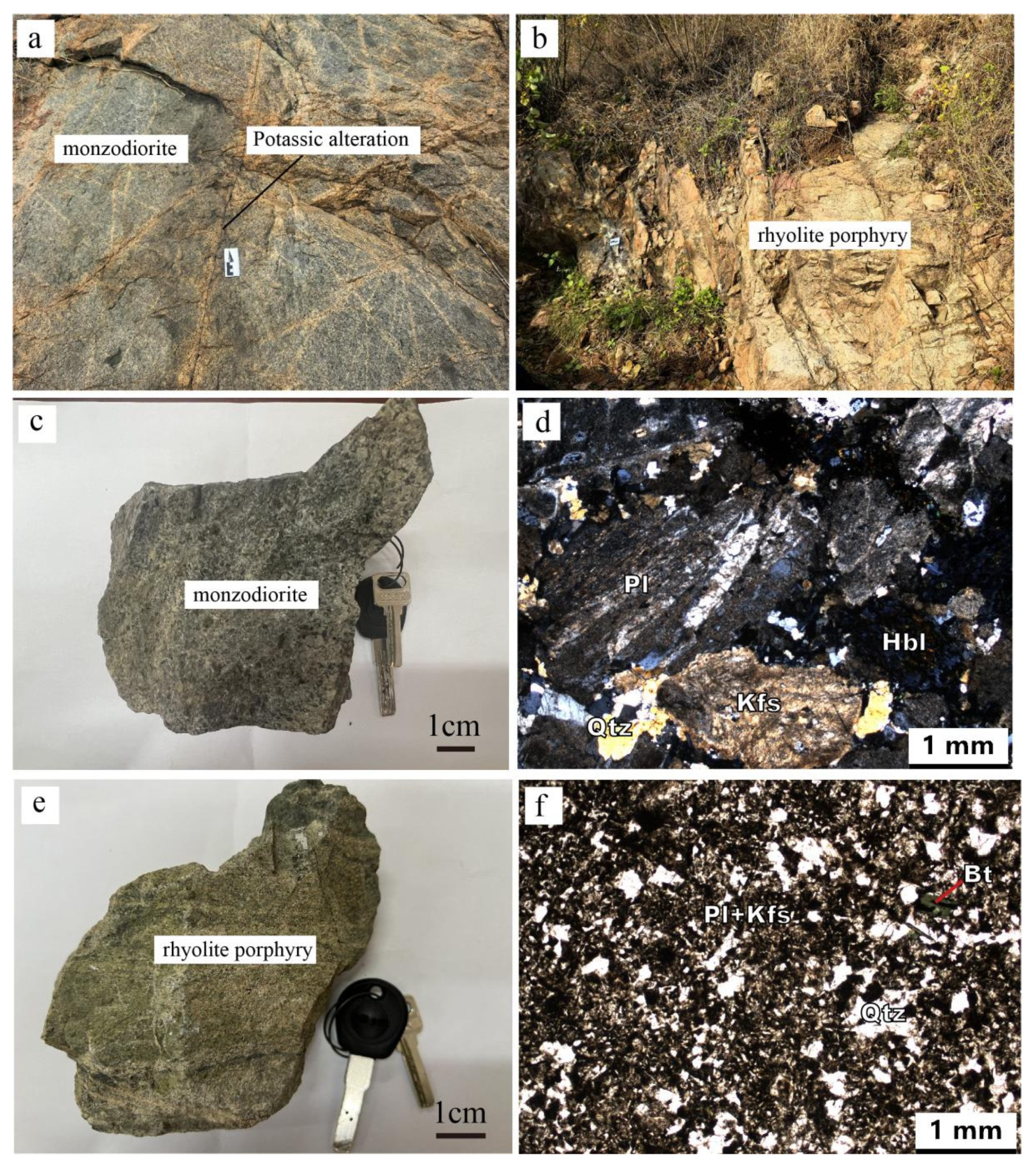
Monzodiorite: The monzodiorite is grayish-black, possessing an equigranular texture and a massive structure (Figure 4a,c). Its primary mineral constituents comprise plagioclase (50%–55%), K-feldspar (20%–30%), hornblende (10%–15%), and quartz (5%–10%) (Figure 4d). Plagioclase typically occurs as euhedral tabular crystals, displaying polysynthetic twinning and exhibiting grayish-white interference colors. K-feldspar is observed as irregular, granular crystals exhibiting altered surfaces. Hornblende is present as prismatic aggregates, appearing green under plane-polarized light and exhibiting blue interference colors, frequently displaying localized chloritization. Quartz occurs as smaller, anhedral, irregular grains with high-order white interference colors and occupies interstices between other mineral grains (Figure 4b).
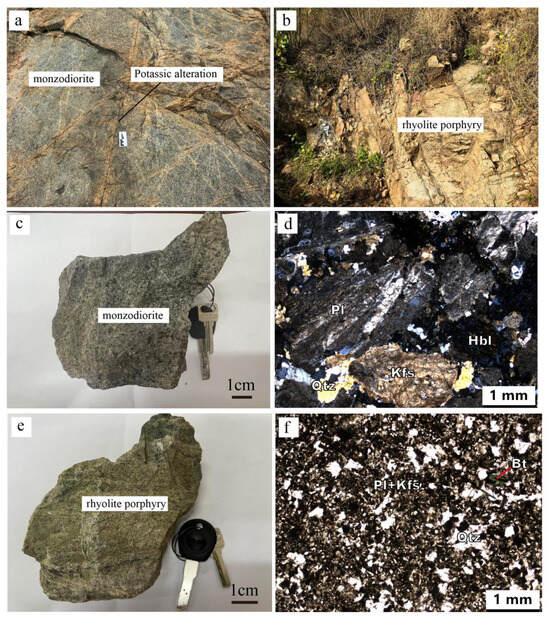
Figure 4.
Macroscopic and microscopic photographs of zircon dating samples from Yangjiayu monzonitic diorite and rhyolite porphyry. (a,b): Field photographs of monzodiorite and rhyolite porphyry, with veinlet potassic alteration developed in monzodiorite; (c,d): photographs of the monzodiorite dating sample and corresponding microscopic photographs (crossed-polarized light); (e,f): photographs of the rhyolite porphyry dating sample and corresponding microscopic photographs (crossed-polarized light). Bt—Biotite; Hbl—Hornblende; Kfs—Potassium feldspar; Pl—Plagioclase; Qtz—Quartz.
Rhyolite Porphyry: The rhyolite porphyry is light flesh-red, characterized by a fine-grained texture and a massive structure, with localized flow banding (Figure 4b,e). Phenocrysts are predominantly quartz, presenting as irregular, colorless, transparent grains, approximately 0.5 mm in size. The matrix is microcrystalline and is composed of fine-grained quartz and feldspar. Biotite is occasionally observed as dark-green flakes under plane-polarized light (Figure 4f).
3.2. Analytical Methods
3.2.1. CL Method
Scanning electron microscopy cathodoluminescence (SEM-CL) imaging were performed on resin targets to distinguish different zircon bands at Nanjing Hongchuang Geological Exploration Technology Service Co., Ltd. (Nanjing, China). CL images were obtained using a Tescan MIRA3 LM instrument (TESCAN, Brno, Czech Republic) equipped with a CL detector. Zircons were mounted in epoxy discs, polished to expose the grains, cleaned ultrasonically in ultrapure water, then cleaned again prior to analysis using AR-grade methanol. Pre-ablation was conducted for each spot analysis using 5 laser shots (~0.3 μm in depth) to remove potential surface contamination. The analysis was performed using a 30 μm diameter spot at 5 Hz with a fluence of 2.5 J/cm2.
3.2.2. Zircon LA-ICP-MS U–Pb Dating
Zircon U–Pb dating was conducted using LA-ICP-MS in Nanjing Hongchuang Exploration Technology Service Co., Ltd. (Nanjing, China). The Resolution SE model laser ablation system (Applied Spectra, Sacramento, CA, USA) was equipped with ATL (ATLEX 300) excimer laser and a Two Volume S155 ablation cell. The laser ablation system was coupled to an Agilent 7900 ICP-MS (Agilent, Santa Clara, CA, USA).
The Iolite software package (v4.10.1) was used for data reduction [33]. Zircon 91,500 and GJ-1 were used as primary and secondary reference materials, respectively. Triplets of 91,500 and GJ-1 were bracketed between multiple groups of 10 to 12 sample unknowns. Typically, 35–40 s of the sample signals were acquired after a 20-s gas background measurement. The exponential function was used to calibrate the downhole fractionation [34]. NIST 610 and 91Zr were used to calibrate the trace element concentrations as external reference materials and internal standard elements, respectively. Common lead correction was conducted using the method of Andersen [35]. Measured ages of 91,500 (1061.5 ± 3.2 Ma, 2σ) and GJ-1 (604 ± 6 Ma, 2σ) are well within 1% of the accepted age.
3.2.3. Zircon Lu–Hf Isotopic Analysis
In situ zircon Hf isotope ratio analysis was conducted at Nanjing Hongchuang Geological Exploration Technical Services Co., Ltd. using Laser Ablation-Multi-Collector Inductively Coupled Plasma Mass Spectrometry (LA-MC-ICP-MS). The laser ablation platform employed a Resolution SE 193-nm laser ablation system (Applied Spectra, Sacramento, CA, USA), equipped with an S155 dual-volume sample cell. The MC-ICP-MS instrument used was the Neptune Plus (Thermo Fisher Scientific, Bremen, Germany). The analysis process included a signal-smoothing device to enhance signal stability and isotopic ratio measurement precision. Helium gas was used as the carrier gas, and a small amount of nitrogen gas was introduced to enhance the sensitivity of the Hf element. The analysis was carried out in single-point mode with a laser spot size of 50 μm, a laser ablation frequency of 8 Hz, and a laser energy density of 6 J/cm2.
Accurate measurement of zircon Hf isotopes faces challenges due to the interference of 176Yb and 176Lu on the measurement of 176Hf. Research indicates that the mass fractionation coefficient (βYb) for Yb is not a fixed value during long-term testing, and the βYb obtained through solution nebulization is not suitable for interference correction in laser ablation mode for zircon Hf isotope analysis. Incorrect estimation of βYb can significantly impact the interference correction of 176Yb on 176Hf, subsequently affecting the accurate determination of 176Hf/177Hf ratios. In practice, we obtained real-time βYb values from the zircon samples themselves for interference correction [36]. Values of 179Hf/177Hf = 0.7325 and 173Yb/171Yb = 1.132685 were used to calculate the mass fractionation coefficients βHf and βYb for Hf and Yb, respectively. A value of 176Yb/173Yb = 0.79639 was used to correct for the isobaric interference of 176Yb on 176Hf. Additionally, a value of 176Lu/175Lu = 0.02656 was used to correct for the relatively minor isobaric interference of 176Lu on 176Hf. Since Yb and Lu share similar physical and chemical properties, the mass fractionation coefficient βYb for Yb was employed to correct the mass fractionation behavior of Lu in this experiment. Offline data processing of the analytical data, including sample and blank signal selection and isotopic mass fractionation correction, was performed using the Iolite software [33]. To ensure the reliability of the analytical data, three zircon standards, Qinghu [37], 91500, and GJ-1, were analyzed simultaneously with the samples, and the resulting data agreed with reference values within the range of error.
3.2.4. Geochemical Analysis of Intrusion
Major element geochemical analysis of the rocks was conducted at ALS Chemex (Guangzhou) Co., Ltd. (Guangzhou, China) using the XRF method. Samples were first prepared by fusing powdered rock into glass beads. Analysis was then performed using a ZSX Primus II wavelength dispersive X-ray fluorescence spectrometer (PANalytical, the Netherlands). Data correction was carried out using the α coefficient method. Trace element analysis was performed by dissolving powdered samples in a mixture of HNO3 and HF using a heating process, followed by analysis using an Agilent 7700e (Agilent, Singapore) inductively coupled plasma mass spectrometer (ICP-MS).
4. Results
4.1. U–Pb Geochronology
The zircon U–Pb dating results for the Yangjiayu intrusive rocks are presented in Table 1.

Table 1.
The zircon U–Pb dating results for the Yangjiayu intrusive rocks.
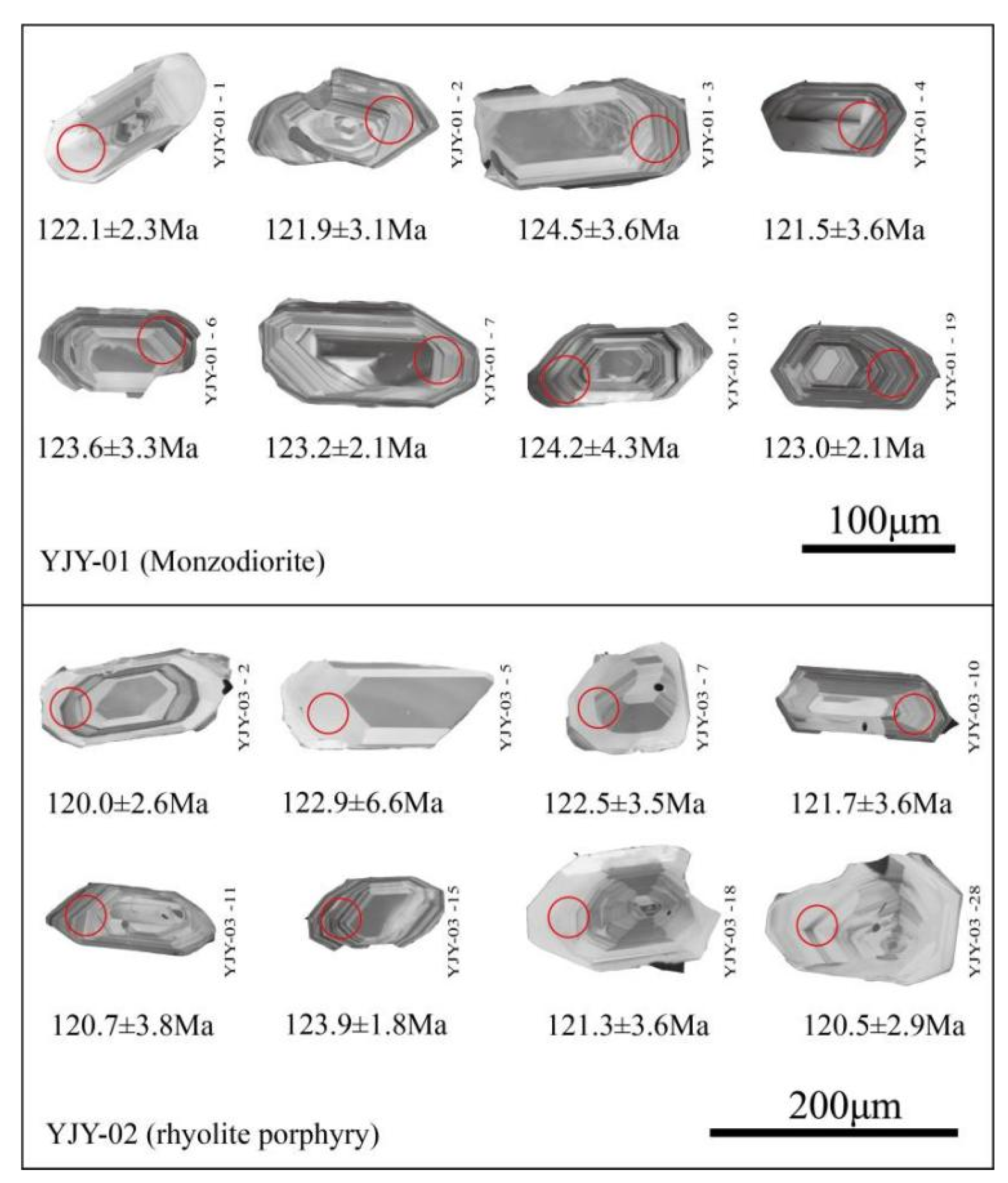
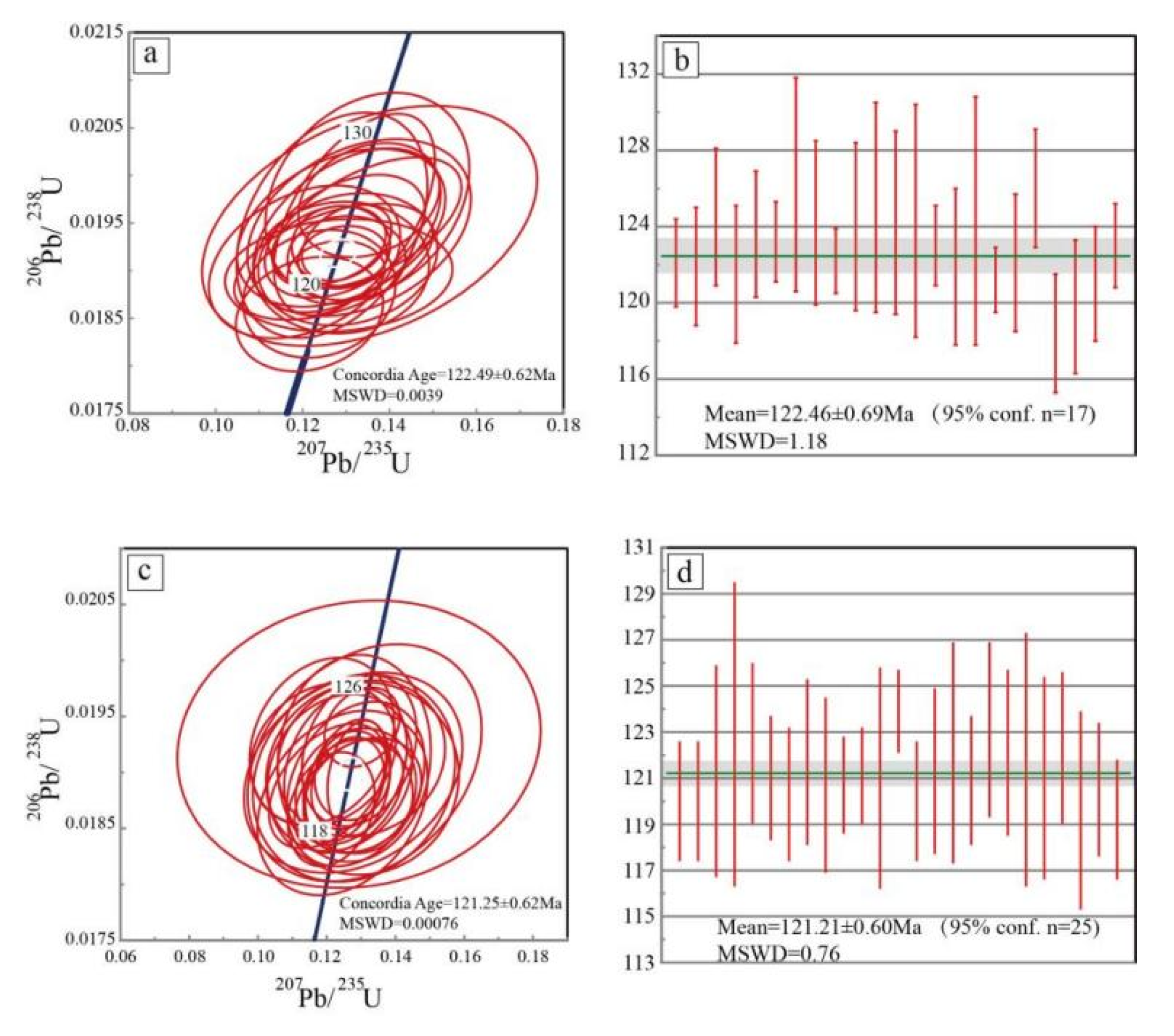
Sample YJY-01 (Monzodiorite): The grain sizes of zircons from sample YJY-01 (monzodiorite) range from 50 to 150 μm. Cathodoluminescence (CL) images reveal parallel zoning or a lack of internal structure (Figure 5). Twenty-three zircons with well-defined crystal forms, minimal to no fracturing, and clear zoning were selected for age determination. Analyses were conducted on the zircon rims. Measured Th and U concentrations varied from 53 ppm to 931 ppm and 41 ppm to 408 ppm, respectively, yielding Th/U ratios of 0.67 to 3.04. On the concordia diagram, all data points plot on or near the concordia curve. The 206Pb/238U ages range from 118.4 ± 1.6 Ma to 126.2 ± 2.8 Ma. The calculated concordia age is 122.5 ± 0.6 Ma (MSWD = 0.0039), and the weighted average age is 122.5 ± 0.7 Ma (MSWD = 1.18) (Figure 6a,b).
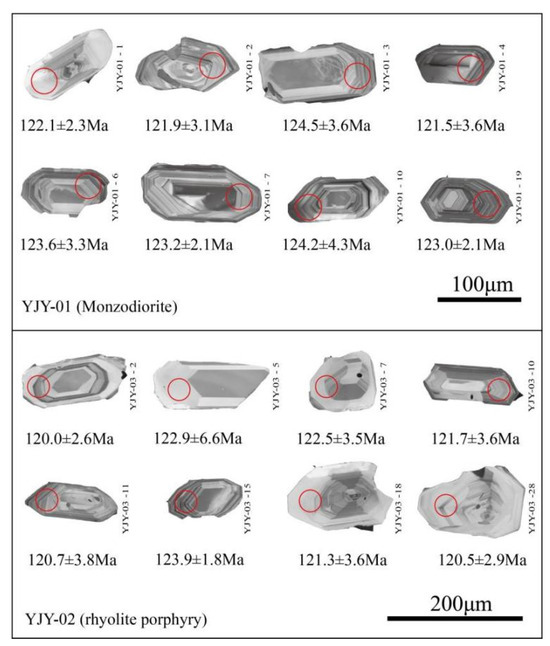
Figure 5.
Cathodoluminescence (CL) images of zircons and dating spots from Yangjiayu monzonitic diorite and rhyolite porphyry.
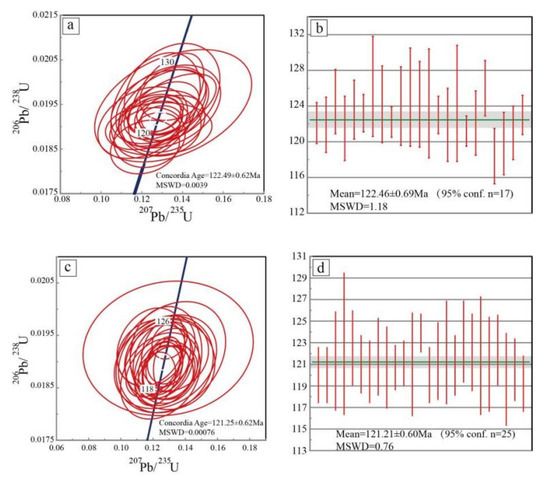
Figure 6.
U–Pb concordia diagrams (a,c) and weighted average age diagrams (b,d) of zircons from Yangjiayu pluton samples YJY-01 (a,b) and YJY-03 (c,d).
Sample YJY-02 (Rhyolite Porphyry): The grain sizes of zircons from sample YJY-02 (rhyolite porphyry) range from 100 to 200 μm. CL images of these zircons show parallel zoning or an absence of internal structure (Figure 5). Twenty-five zircons exhibiting well-formed crystal shapes, few to no fractures, and distinct zoning were chosen for age determination. Measurements were performed on the zircon rims. The measured Th and U concentrations range from 35 ppm to 686 ppm and 28 ppm to 418 ppm, respectively, resulting in Th/U ratios of 1.02 to 2.40. As shown on the concordia diagram, all data points fall on or close to the concordia curve. The 206Pb/238U ages range from 119.2 ± 1.3 Ma to 123.9 ± 0.9 Ma. The determined concordia age is 121.3 ± 0.6 Ma (MSWD = 0.00076), and the weighted average age is 121.2 ± 0.6 Ma (MSWD = 0.79) (Figure 6c,d).
4.2. Rock Geochemical Characteristics
The analytical results for major, trace, and rare earth elements of the Yangjiayu intrusive rocks are presented in Table 2.
Table 2.
The analytical results for major, trace, and rare earth elements of the Yangjiayu intrusive rocks.
4.2.1. Major Elements
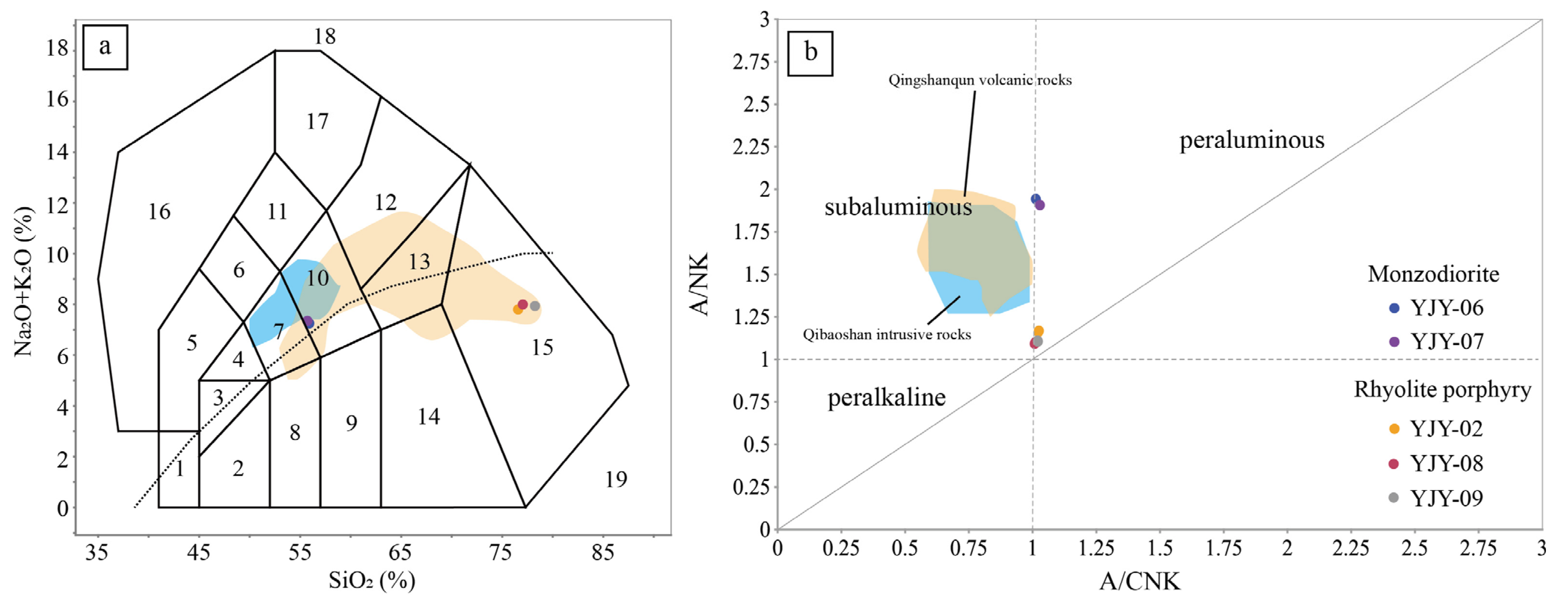
Samples YJY-02, 08, and 09 (rhyolite porphyry) exhibit SiO2 contents ranging from 76.57% to 78.24%, classifying them as typical acidic rocks. On the TAS diagram for intrusive rocks, these samples plot within the granite field, exhibiting compositional similarity to regional rhyolites (Figure 7a). Their Rittmann Index (δ) ranges from 1.79 to 1.88, averaging 1.83, classifying them as belonging to the high-K calc-alkaline series. Their Al2O3 contents range from 11.99% to 12.33% (average: 12.11%), and their Na2O + K2O contents range from 7.80% to 8.00% (average: 7.91%). Therefore, the rhyolite porphyry is classified as a high-K calc-alkaline rock. The K2O/Na2O ratios of the rhyolite porphyry range from 0.89 to 1.42, averaging 1.24, indicating a potassic affinity. The Al2O3 saturation molar ratios [A/CNK = Al2O3/(CaO + Na2O + K2O)] range from 1.01 to 1.05, classifying them as peraluminous granites (Figure 7b).
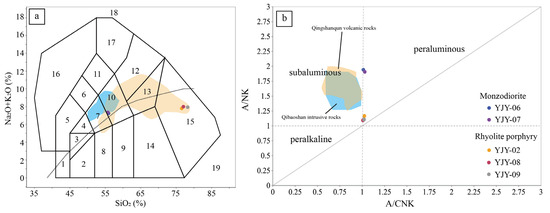
Figure 7.
TAS diagram (a) and Al2O3 saturation diagram (b) for analyzed rock samples from Yangjiayu, according to Le et al. (1986); Maniar et al. (1989) [38,39], Qingshanqun and Qibaoshan data reported by Cao (2018) and Li et al. (2022) [40,41]. 1—Peridotgabbro; 2—Gabbro; 3—Akalic Basalt/Akalic Gabbro; 4—Monzogabbro; 5—Foid Gabbro; 6—Foid Monzodiorite; 7—Monzodiorite; 8—Gabbroic Diorite; 9—Diorite; 10—Monzonite; 11—Foid Monzosyenite; 12—Syenite; 13—Quartz Monzonite; 14—Granodiorite; 15—Granite; 16—Foidolite; 17—Foid Syenite; 18—Tawite/Uritite/Italite; 19—Quartzolite.
Samples YJY-06 and 07 (monzodiorite) have SiO2 contents ranging from 55.78% to 55.87%, indicating that they are typical intermediate rocks. On the TAS diagram for intrusive rocks, these samples plot near the monzodiorite/monzonite boundary, and also close to the boundary between regional volcanic rocks and the Qibaoshan intrusive rocks (Figure 7a). Their Rittmann Index (δ) ranges from 4.10 to 4.18, averaging 4.14, classifying them as belonging to the high-K calc-alkaline series. Their Al2O3 contents range from 19.36% to 19.45% (average: 19.41%), and their Na2O + K2O contents range from 7.26% to 7.31% (average: 7.29%). Consequently, the monzodiorite is classified as a high-K calc-alkaline rock. Furthermore, the K2O/Na2O ratios of the monzodiorite range from 0.68 to 0.74, averaging 0.71. The Al2O3 saturation molar ratios range from 1.01 to 1.02, classifying them as peraluminous (Figure 7b). Compared to regional igneous rocks, both lithologies tested in this study exhibit higher Al2O3 saturation molar ratios.
4.2.2. Trace and Rare Earth Elements
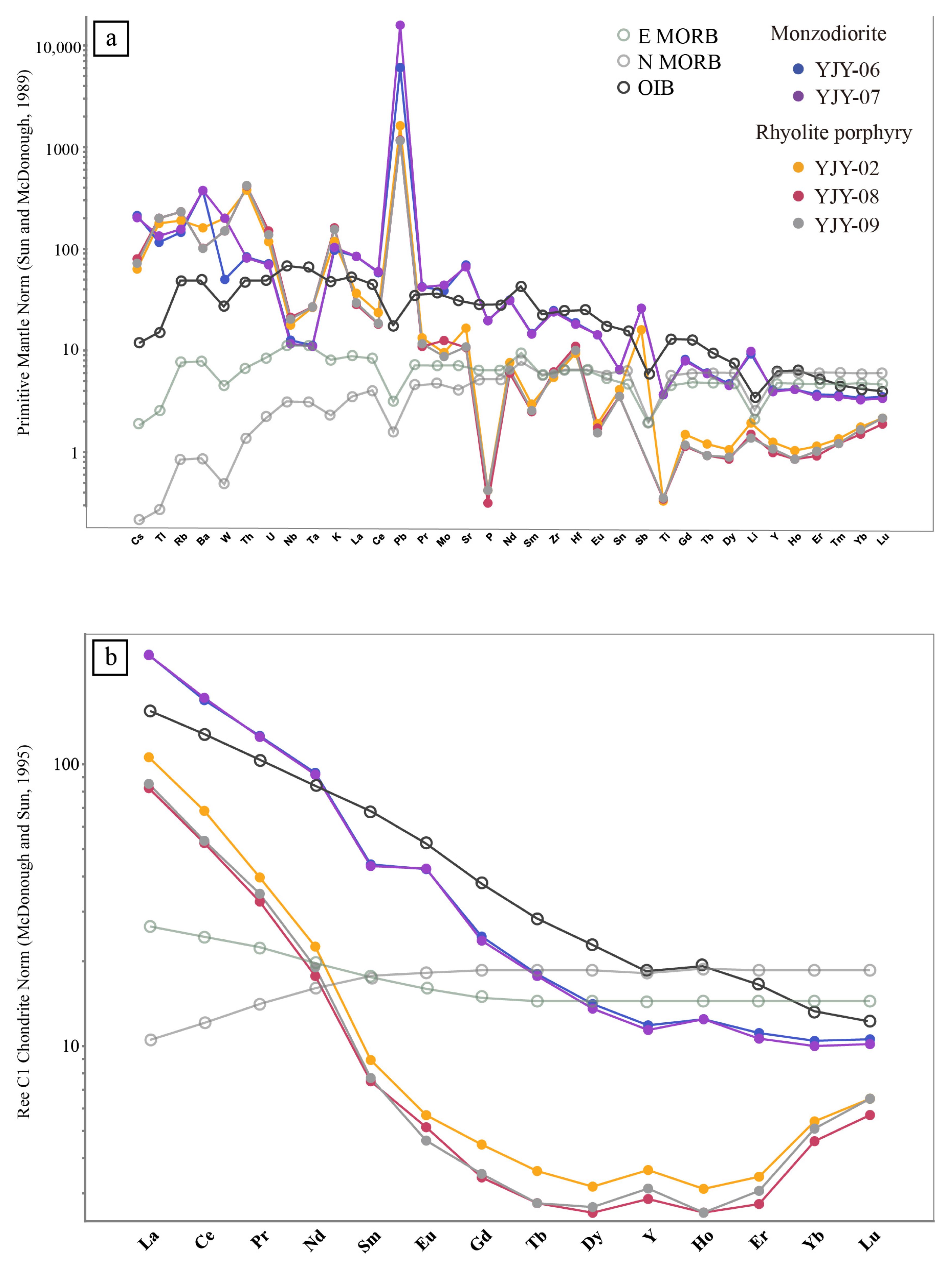
Samples YJY-02, 08, and 09 (rhyolite porphyry) exhibit total rare earth element (ΣREE) concentrations ranging from 72.28 × 10⁻⁶ to 92.87 × 10⁻⁶, indicating moderate total REE abundance, with (La/Yb)N ratios of 11.05 to 11.96 and ΣLREE/ΣHREE ratios of 7.40 to 8.06. Samples YJY-06 and 07 (monzodiorite) show ΣREE concentrations ranging from 264.78 × 10⁻⁶ to 264.93 × 10⁻⁶, indicating relatively high total REE abundance, with (La/Yb)N ratios of 5.58 to 5.65 and ΣLREE/ΣHREE ratios of 5.59 to 5.76. These data indicate enrichment in light rare earth elements (LREEs) relative to heavy rare earth elements (HREEs) in both rock types, with significant fractionation between LREEs and HREEs. The LREE fractionation coefficient (La/Sm)N for the rhyolite porphyry ranges from 16.61 to 19.45, with La/Yb ratios of 4.1 to 4.4 and La/Sm ratios of 17.6 to 19.0. The REE distribution patterns are generally rightward-sloping, with a degree of HREE depletion. The LREE fractionation coefficient (La/Sm)N for the monzodiorite ranges from 23.24 to 24.20, indicating pronounced LREE fractionation. The rhyolite porphyry has δEu values of 0.89 to 1.02 and δCe values of 1.03 to 1.07, whereas the monzodiorite has δEu values of 1.30 to 1.33 and δCe values of 0.95 to 0.97. Chondrite-normalized REE distribution patterns reveal LREE enrichment and HREE depletion, with rightward-sloping distribution curves.
When the analytical results for the rhyolite porphyry and monzodiorite are plotted on a primitive mantle-normalized trace element spider diagram, a serrated or saw-toothed pattern, characterized by alternating peaks and troughs, is observed. Five troughs occur at Nb, P, Ta, K, and Sn, indicating relative enrichment in large ion lithophile elements (LILEs) such as Ba, Rb, and Pb, and relative depletion in high field strength elements (HFSEs) such as Nb, P, and Ta (Figure 8), the trace element distribution pattern shows a certain similarity to the Late Cretaceous volcanic rocks in southern Turkey [42].
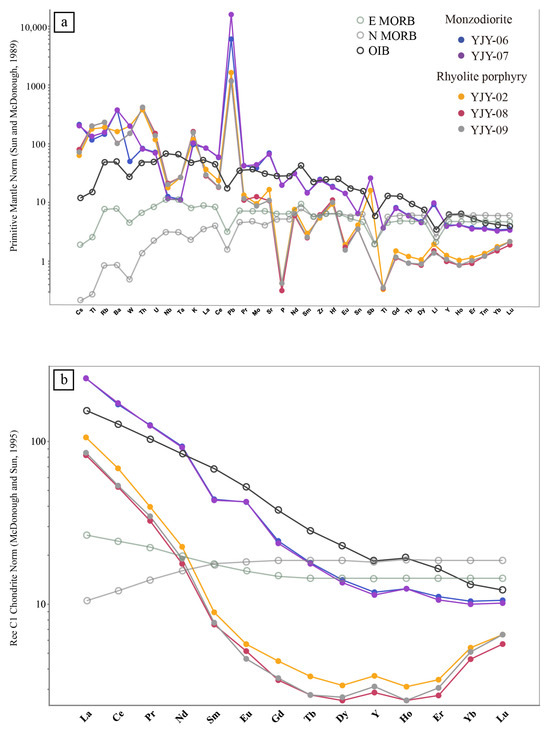
Figure 8.
Trace element spider diagrams (a) and Rare Earth Element (REE) patterns (b) for analyzed rock samples from Yangjiayu, according to Sun (1989) and McDonough (1995) [43,44].
4.3. Zircon Hf Isotopic Characteristics
Zircon is commonly found in intermediate-acidic magmatic rocks. It possesses stable physical and chemical properties, making it resistant to erosion and weathering. Partial melting of rocks has minimal impact on zircon, and it crystallizes relatively early during magmatic petrogenesis. Furthermore, due to its low Lu/Hf ratio, the Hf isotopic composition of zircon can represent the initial Hf isotopic composition at the time of zircon crystallization during rock formation [45,46]. In recent years, Hf isotopic tracing has become an important method for studying magma sources, evolution, and crust-mantle interaction processes [47,48].
Following zircon U–Pb isotopic dating, Lu–Hf isotopic analyses were performed on the dated zircons using LA-MC-ICP-MS. The results are presented in Table 3.
Table 3.
The Lu–Hf isotopic analyses results for the Yangjiayu intrusive rocks.
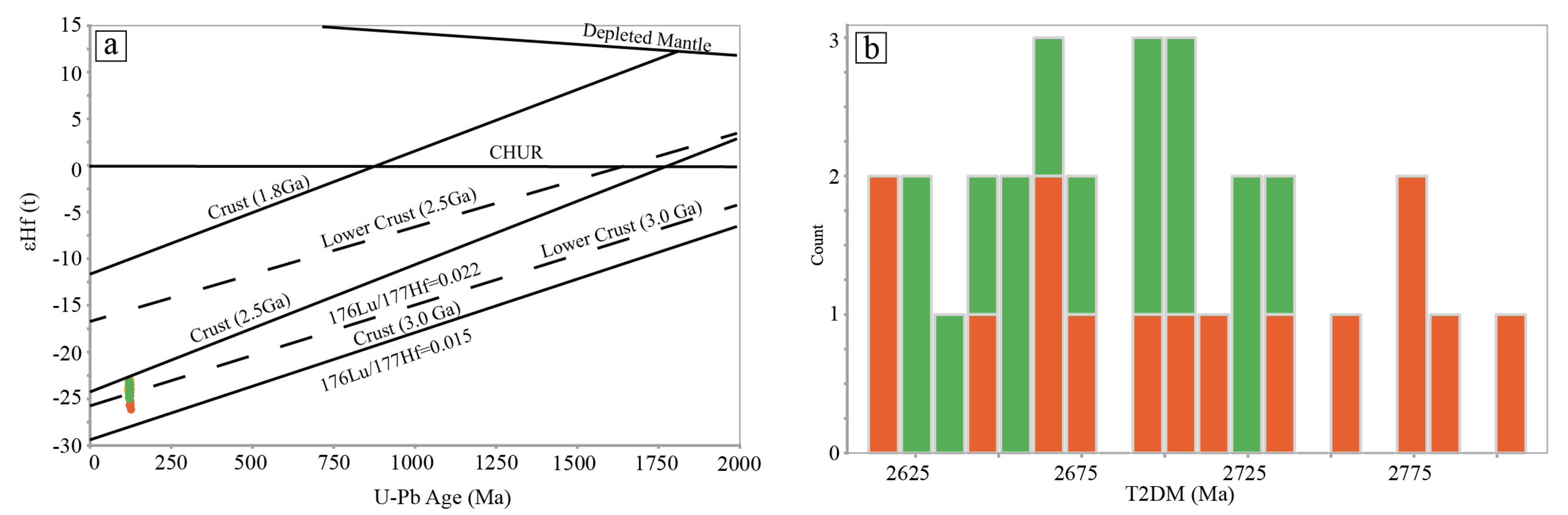
The 176Lu/177Hf ratios of the rhyolite porphyry range from 0.000671 to 0.001724 (averaging 0.001094), while those of the monzodiorite range from 0.000475 to 0.001402 (averaging 0.001497), indicating low accumulation of radiogenic Hf in the later stages, and thus minimal 177Hf production from 176Lu decay. Consequently, the 176Lu/177Hf ratios of zircon can be used to investigate the petrogenesis of the intrusive body at the time of its formation (47). The 176Hf/177Hf ratios of the rhyolite porphyry range from 0.281958 to 0.282049 (averaging 0.282019), and those of the monzodiorite range from 0.281994 to 0.282046 (averaging 0.282019), exhibiting a narrow range of variation. The εHf(t) values for the rhyolite porphyry are concentrated between −23 and −26.1 (averaging −24.31), and those for the monzodiorite are concentrated between −23.2 and −25 (averaging −24.06), also showing a narrow range of variation and plotting close to the average value of the continental crust (Figure 9a). The two-stage Hf model ages (TDM2) of the rhyolite porphyry range from 2610 Ma to 2809 Ma (averaging 2693 Ma), and those of the monzodiorite range from 2621 Ma to 2734 Ma (averaging 2677 Ma) (Figure 9b).
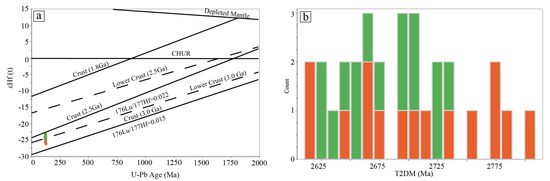
Figure 9.
Hf isotope distribution (a) and two-stage Hf model ages (TDM2) (b) of the Yangjiayu rock samples; the base map is based on Griffin et al. (2000, 2002), Haukesworth et al. (2010) [49,50,51].
5. Discussion
5.1. Petrogenetic Age of the Yangjiayu Pluton
In this study, LA-ICP-MS U–Pb weighted mean ages of zircons from the Yangjiayu rhyolite porphyry and monzodiorite are determined to be 121.2 ± 0.6 Ma and 122.5 ± 0.7 Ma, respectively. The observed oscillatory zoning in the zircon samples, combined with their relatively high Th/U ratios (1.02–2.40, averaging 1.54 for the rhyolite porphyry and 0.67–3.04, averaging 1.36 for the monzodiorite), substantiates their magmatic origin. Furthermore, the age data used for the weighted mean age calculations are tightly clustered within a 2 Ma range, and all data points plot on the concordia curve, collectively indicating a single magmatic event. Therefore, these ages represent the emplacement ages of the intrusions in the study area. Previous studies have divided Mesozoic magmatism in Shandong Province into five periods [52]. The first period occurred in the Late Triassic (225–200 Ma) in the Rongcheng area, represented by the Jiazishan pluton, which comprises a suite of alkaline gabbro-syenite [53]. The second period, occurring in the Early Jurassic (190–175 Ma), is represented by the Tongshi pluton in southwestern Shandong, composed of monzonite, diorite, and syenite [54]. The third period occurred in the Late Jurassic (163–140 Ma), represented by the Wendeng and Linglong plutons in the Jiaodong area, which are composed of monzonitic granite and quartz monzonite [55]. The fourth period, dated to the Early Cretaceous (132–115 Ma), was characterized by widespread and intense regional magmatism. In western Shandong, numerous gabbros, diorites, syenites, and monzonites were emplaced during this period [56]. In the Jiaodong area, monzonite, monzonitic granite, and diorite were emplaced between 146 and 106 Ma [57]. Basic dikes were also emplaced during this period, mainly between 130 and 110 Ma [58]. The fifth and final period, taking place in the Late Cretaceous (95–67 Ma), saw the emplacement of only minor basic rocks. The dating results of this study place the Yangjiayu rhyolite porphyry and monzodiorite within the Early Cretaceous magmatic activity, specifically the fourth period of magmatism in Shandong Province.
5.2. Petrogenesis of Yangjiayu Pluton
Both the rhyolite porphyry and monzodiorite in the Yangjiayu area are enriched in large ion lithophile elements (LILEs) and light rare earth elements (LREEs), while demonstrating relative depletion in high field strength elements (HFSEs), and both have low MgO contents. The zircon εHf(t) values of the rhyolite porphyry range from −23.0 to −26.1, and those of the monzodiorite range from −23.2 to −25, both indicating depleted Hf isotopic compositions. On a T-εHf(t) diagram, both rock types plot below the chondritic Hf isotopic evolution line and between the 2.5 Ga and 3.0 Ga crustal evolution lines, exhibiting Hf isotopic characteristics comparable to those of the Tongshi monzonitic granite [48]. Zircon two-stage Hf model ages (TDM2) range from 2.61 to 2.80 Ga (averaging 2.69 Ga) for the rhyolite porphyry and from 2.62 to 2.73 Ga (averaging 2.67 Ga) for the monzodiorite. These combined characteristics suggest that the Yangjiayu rhyolite porphyry and monzodiorite were primarily derived from partial melting of the Late Archean lower crust of the North China Craton.
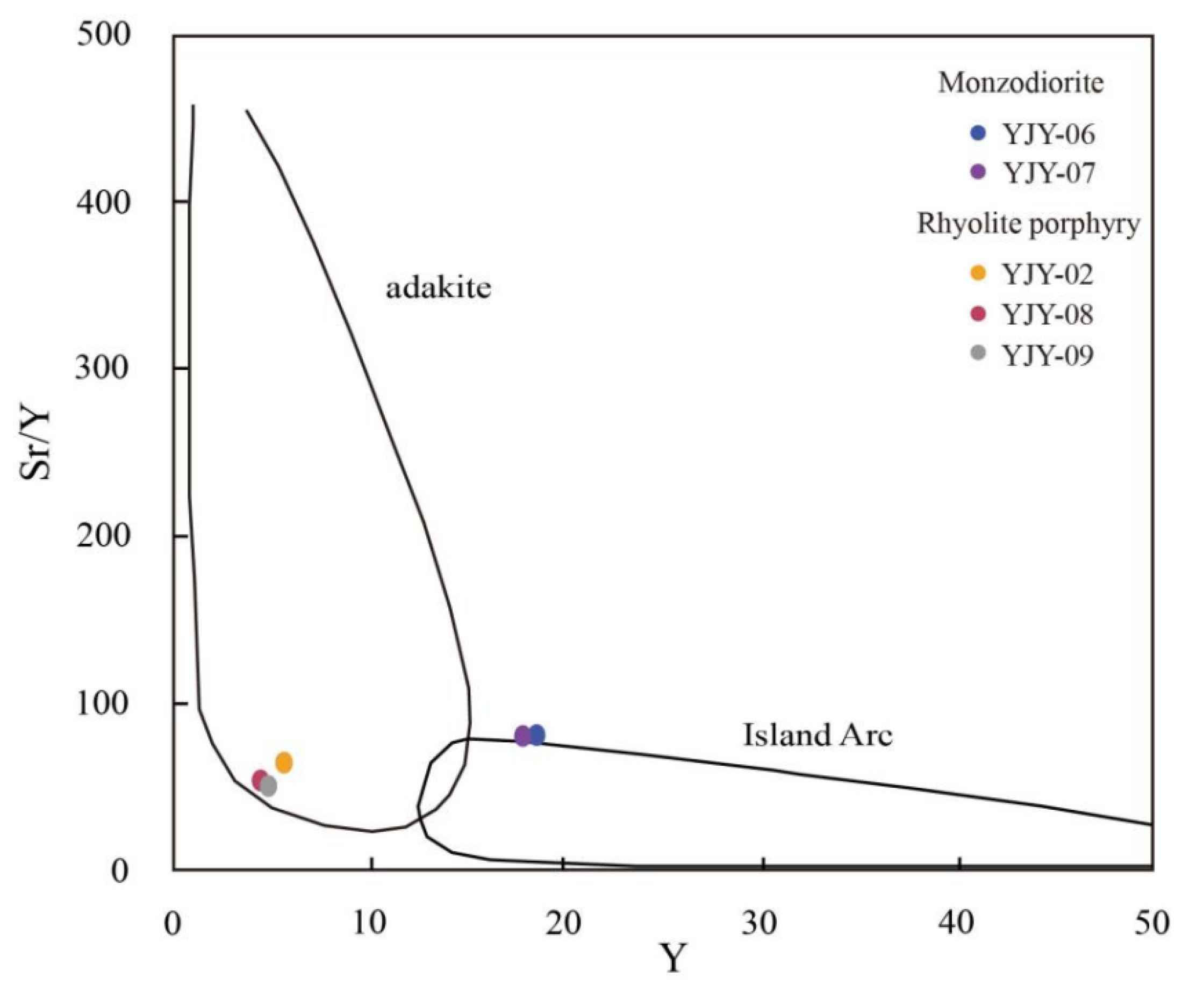
It is worth noting that the analyzed monzodiorite exhibits higher Y concentrations and Sr/Y ratios, whereas the rhyolite porphyry, owing to its extremely low Y concentrations, plots within the adakite field (Figure 10). The petrogenesis of adakitic magmas is complex, encompassing dehydration melting of subducted oceanic crust, melting of delaminated lower crust, partial melting of thickened lower crust, and assimilation-fractional crystallization (AFC) of basaltic magma [59,60,61]. However, the zircon Hf isotopic characteristics of the Yangjiayu pluton differ significantly from those of mid-ocean ridge basalt (MORB), thereby precluding a typical subduction setting. Furthermore, adakitic magmas generated by partial melting of delaminated lower crust typically have higher MgO, Cr, and Ni concentrations, while the Yangjiayu rhyolite porphyry exhibits low MgO (0.07–0.13 wt%), Cr (8–11 ppm), and Ni (2–4 ppm) concentrations. Based on this evidence, we conclude that the Yangjiayu pluton originated from partial melting of thickened lower crust.
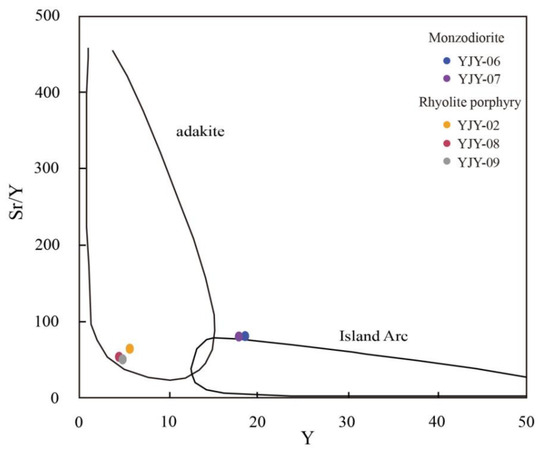
Figure 10.
Y vs. Sr/Y diagram for Yangjiayu monzonitic diorite and rhyolite porphyry, according to Defant et al. (1990) [62].
The Yangjiayu monzodiorite and rhyolite porphyry both exhibit subtle Eu and Sr anomalies. The monzodiorite presents a weak positive Eu anomaly, whereas the rhyolite porphyry generally displays a weak negative Eu anomaly (Figure 8b). The relatively enriched Rb, Th, and U concentrations in the rhyolite porphyry imply minor plagioclase fractional crystallization and contamination by the middle to upper crust. Given that amphibole and pyroxene strongly partition middle rare earth elements (MREEs), they typically exhibit MREE enrichment and LREE and HREE depletion [58]. The Yangjiayu rhyolite porphyry, however, is depleted in MREEs relative to LREEs and HREEs (Figure 8b), with (Dy/Yb)N ratios less than 1, indicative of significant amphibole crystallization during magma ascent, which is not observed in the monzodiorite. The depletion of P, Ti, Nb, and Ta in both rock types suggests apatite and rutile fractional crystallization during magma evolution (Figure 8a). The more pronounced P depletion in the rhyolite porphyry compared with the monzodiorite indicates continued apatite crystallization during the evolution from monzodiorite to rhyolite porphyry. In summary, both the Yangjiayu monzodiorite and rhyolite porphyry originated from the ancient lower crust of the North China Craton. During magma ascent, the rhyolite porphyry was likely contaminated by the middle to upper crust and underwent fractional crystallization of amphibole, apatite, and rutile.
5.3. Tectonic Setting of Rock Formation
Previous studies have classified the volcanic rocks in the Wulian area as low-Mg adakitic rocks [40], proposing a source region characterized by partially melted thickened lower crust. This study demonstrates that both the Yangjiayu monzodiorite and rhyolite porphyry present low Y concentrations (<20 ppm) and high Sr/Y ratios, implying significant garnet retention and limited plagioclase in the source region, thereby exhibiting some affinity with adakitic rocks. These characteristics, coupled with low Mg# values (<40) in the samples, further support the presence of thickened lower crust in the study area during the Early Cretaceous. Geochronological studies of lower crustal eclogite xenoliths in high-Mg diorites from western Shandong indicate that thickening of the southeastern North China Craton crust may be attributed to the Late Triassic collision between the Yangtze and North China Blocks [59].
During the Mesozoic Yanshanian orogeny, eastern North China experienced intense lithospheric thinning [9]. With the shift from a compressional to an extensional tectonic regime [11], Pacific Plate rollback led to North China Craton destruction and asthenospheric upwelling, which, in turn, triggered partial delamination/melting of the thickened lower crust, ultimately leading to large-scale Early Cretaceous magmatic-metallogenic events [10]. Consequently, the Yangjiayu monzodiorite and rhyolite porphyry are interpreted as products of this lithospheric thinning and intra-continental extensional tectonic setting.
5.4. Alteration-Mineralization Characteristics and Metallogenic Potential of the Pluton
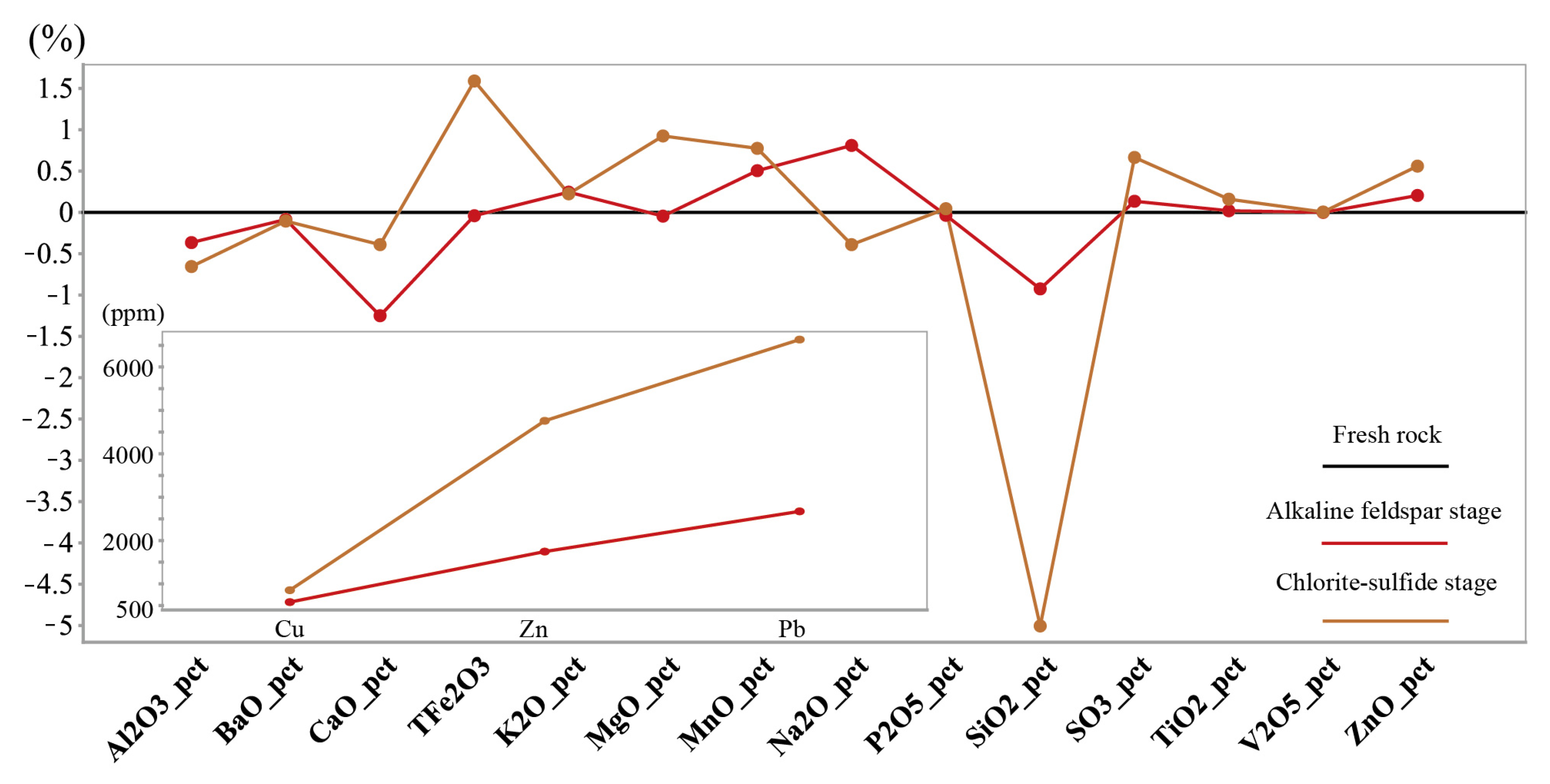
In this study, whole-rock analyses were performed on monzodiorite samples representing different alteration-mineralization stages and compared with fresh monzodiorite in order to quantify elemental gains and losses (Table 4). The results indicate that during the alkali-feldspar alteration stage, significant leaching of CaO and SiO2 occurred, accompanied by significant enrichment in Na2O, K2O, and MnO. Notably, Na2O enrichment markedly exceeded that of K2O (Table 4, Figure 11), indicating that albitization was the dominant alteration process at this stage. During the chlorite-sulfide stage, significant leaching of Al2O3, CaO, Na2O, and SiO2 occurred, with SiO2 depletion reaching 5 wt%. Concurrently, TFe2O3, MgO, MnO, and SO3 were significantly enriched (Table 4, Figure 11), consistent with the abundant precipitation of chlorite and pyrite observed at this stage. The continuous SiO2 leaching across both stages provided a source for subsequent quartz-hematite precipitation. Importantly, in contrast to the trend observed for SiO2, Cu, Zn, and Pb concentrations progressively increased from the fresh rock through the alkali-feldspar alteration stage to the chlorite-sulfide stage (Table 4, Figure 11). This suggests that ore-forming element enrichment was not primarily driven by hydrothermal alteration of the pluton but rather resulted from exsolution of deep magmatic fluids.
Table 4.
Percentage of elemental mass gain and loss (%) in altered rocks compared to fresh monzodiorite.
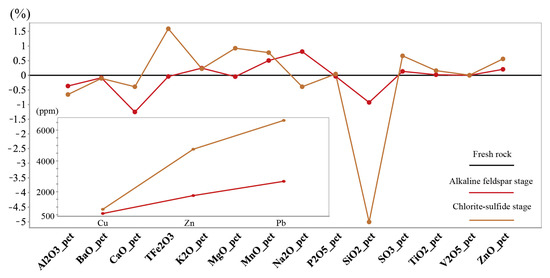
Figure 11.
Major and Cu, Pb, Zn element gains and losses (%) during different alteration stages of the Yangjiayu monzonitic diorite.
Recent prospecting in the southwest margin of the Jiaolai Basin has identified gold-copper and polymetallic deposits within the Wulian-Qibaoshan volcanic structure. Furthermore, multiple Cu, Pb, and Zn mineralization occurrences have also been discovered in Yangjiayu, Chahe, and Hubuling within the Gaogezhuang-Taolin volcanic structure, underscoring significant metallogenic potential in this area. Previous geochronological studies of ore-bearing plutons in the Qibaoshan area have yielded ages of 129–125 Ma for the granodiorite-quartz diorite associated with copper-gold mineralization and approximately 112 Ma for the andesite porphyry-diorite porphyry associated with lead-zinc mineralization [24,32]. The formation age of the Cu–Pb–Zn mineralized monzodiorite in Yangjiayu, to be approximately 122 Ma in this study, falls between these two Qibaoshan magmatic-mineralization events and may represent a transitional stage. The Yangjiayu monzodiorite exhibits a whole-rock Fe2+/Fe3+ ratio greater than 1. Previous research has demonstrated that high oxygen fugacity can minimize Cu loss during magma ascent, thereby promoting Cu enrichment and mineralization at shallow levels [63,64,65]. Conversely, magma oxygen fugacity is not a primary control on lead-zinc mineralization [66]. The elevated Fe2+/Fe3+ ratio observed in the monzodiorite suggests relatively low oxygen fugacity, which may account for the relatively weak Cu mineralization observed in the Yangjiayu monzodiorite. In summary, within the Jiaolai Basin, 129–125 Ma acidic to intermediate-acidic plutons are predominantly associated with copper-gold mineralization, ~112 Ma intermediate to intermediate-basic plutons are predominantly associated with lead-zinc mineralization, and ~120 Ma intermediate-acidic to intermediate plutons are associated with lead-zinc mineralization with subordinate copper mineralization.
6. Conclusions
- The Yangjiayu pluton consists of rhyolite porphyry and monzodiorite, with emplacement ages of 121.2 ± 0.6 Ma and 122.5 ± 0.7 Ma, respectively.
- Both the Yangjiayu monzodiorite and rhyolite porphyry are interpreted to have originated from partial melting of the Archean lower crust of the North China Craton. The monzodiorite preserves more source characteristics, whereas the rhyolite porphyry experienced extensive amphibole fractional crystallization during its evolution and was likely contaminated by the middle to upper crust.
- The Yangjiayu monzodiorite and rhyolite porphyry formed within the context of late Mesozoic lithospheric thinning and intra-continental extension in eastern North China.
- Cu, Pb, and Zn mineralization within the Yangjiayu monzodiorite is attributed to exsolved magmatic fluids. Approximately 120 Ma dioritic magmatism in the Jiaolai Basin exhibits the potential to host lead-zinc mineralization.
Author Contributions
Conceptualization, H.Z.; methodology, H.Z., Y.H. and Y.L. (Yinan Liu); software, L.C. and Y.L. (Yang Liu); validation, Y.H. and G.M.; formal analysis, Y.C.; investigation, Q.J. and L.W.; resources, H.Z. and L.C.; data curation, Y.L. (Yang Liu), Y.L. (Yongming Liu) and Y.H.; writing original draft preparation, Y.H. and Y.L. (Yinan Liu); writing—review and editing, G.M. and H.Z.; visualization, L.W.; supervision, L.C. and Y.H.; project administration, Q.J. and Y.L. (Yongming Liu); funding acquisition, L.C. and Y.H. All authors have read and agreed to the published version of the manuscript.
Funding
This research was funded by the National Natural Science Foundation of China (42172087), the Shandong Engineering Research Center of Application and Development of Big Data for Deep Gold Exploration (SDK202208), and the Shandong Provincial Geological Exploration Project (Lu Kanzi 2024 (48)).
Data Availability Statement
The data presented in this study are available upon request from the corresponding author.
Conflicts of Interest
Yuanyuan Cui and Yongming Liu are employees of Shandong Provincial Geo-Mineral Engineering Co., Ltd. The paper reflects the views of the scientists and not the company.
References
- Liu, J.H.; Li, Y.S.; Xu, W.N.; Ding, Z.J. The formation and geodynamic evolution of the Paleoproterozoic Jiao-Liao-Ji tectonic belt, North China craton. Acta Geol. Sin. 2025, 99, 23–43. [Google Scholar]
- Liu, J.L.; Ji, L.; Ni, J.L.; Chen, X.Y. Dynamics of the Early Cretaceous lithospheric thinning and destruction of the North China craton as the consequence of Paleo-Pacific type active continental margin. Acta Geol. Sin. 2022, 96, 3360–3380. [Google Scholar]
- Zhu, R.; Xu, Y. The subduction of the west Pacific plate and the destruction of the North China Craton. Sci. China Earth Sci. 2019, 62, 1340–1350. [Google Scholar] [CrossRef]
- Zhai, M.G. Tectonic evolution of the North China Craton. J. Geomech. 2019, 25, 722–745. [Google Scholar]
- Chang, Z.G.; Dong, G.C.; Scott, J.M. Early Cretaceous basalts record the modification of the North China Craton lithospheric mantle: Implications for lithospheric thinning. Int. Geol. Rev. 2022, 64, 1330–1346. [Google Scholar] [CrossRef]
- Li, S.R.; Santosh, M.; Zhang, H.F.; Luo, J.Y.; Zhang, J.Q.; Li, C.L.; Song, J.Y.; Zhang, X.B. Metallogeny in response to lithospheric thinning and craton destruction: Geochemistry and U–Pb zircon chronology of the Yixingzhai gold deposit, central North China Craton. Ore Geol. Rev. 2014, 56, 457–471. [Google Scholar]
- Zhu, R.X.; Zhang, H.F.; Zhu, G.; Meng, Q.R.; Fan, H.R.; Yang, J.H.; Wu, F.Y.; Zhang, Z.Y.; Zheng, T.Y. Craton destruction and related resources. Int. J. Earth Sci. 2017, 106, 2233–2257. [Google Scholar] [CrossRef]
- Guo, J.; Huang, X.L.; He, P.L.; Zhong, J.W. Compositional and Textural Characteristics of Pyroxenes and Amphiboles in Mesozoic High-Mg Diorites from Western Shandong: Insights into Lithospheric Modifications in Continental Interior of the North China Craton. Geotecton. Metallog. 2024, 109, 1–30. [Google Scholar]
- Ma, Q.; Guo, J.F.; Xu, Y.G.; Zheng, J.P. Mesozoic Volcanism in the North China Craton: Constraints for the Deep Processes and Shallow Responses of the Cratonic Destruction. Bull. Mineral. Petrol. Geochem. 2022, 41, 776–787. [Google Scholar]
- Zhang, Q.; Jin, W.J.; Li, C.D. Yanshanian large-scale magmatism and lithosphere thinning in Eastern China: Relation to large igneous province. Earth Sci. Front. 2009, 16, 021–051. [Google Scholar]
- Song, M.C.; Li, J.; Li, S.Y. Late Mesozoic Thermal Upwelling-Extension Structure and Its Dynamics Back-ground in Eastern Shandong Province. J. Jilin Univ. (Earth Sci. Ed.) 2018, 48, 941–964. [Google Scholar]
- Zhang, S.H.; Zhao, Y.; Davis, G.A. Temporal and spatial variations of Mesozoic magmatism and deformation in the North China Craton: Implications for lithospheric thinning and decratonization. Earth-Sci. Rev. 2014, 131, 49–87. [Google Scholar] [CrossRef]
- Xu, Y.G. Thermo-tectonic destruction of the archaean lithospheric keel beneath the Sino-Korean craton in China: Evidence, timing and mechanism. Phys. Chem. Earth Part A Solid Earth Geod. 2001, 26, 747–757. [Google Scholar] [CrossRef]
- Zhang, B.T.; Mei, Z.H.; Li, X.Z.; Jiang, X.P.; Hu, Z.G.; Wang, X.Y.; Zhao, X.B.; Hu, J.B.; Liu, S. Key Ore-controlling Factors of the Skarn Type High-grade Iron Deposits in North China Craton: Constraints from Stratigraphy. Geoscience 2024, 38, 98–116. [Google Scholar]
- Gao, M.B.; Gao, J.L.; Zhang, Y.M.; Zhang, Z.L.; Liu, L.P.; Li, Y.D.; Ma, M.; Liu, X. Magma Source and Genesis of the Kuangshan Complex in Laiwu County of the Western Shandong: Constraints from Geochronology, Geochemistry, Bulk Rock Sr-Nd-Pb Isotopes and Zircon Hf Isotopes. Bull. Mineral. Petrol. Geochem. 2022, 41, 287–306. [Google Scholar]
- Wang, Z.C.; Wang, X.; Zong, K.Q.; Cheng, H.; Wang, C.Y.; Li, J.W.; Yang, J.H. The secular crust-mantle evolution of the North China Craton and the formation of giant Jiaodong gold deposits. Bull. Mineral. Petrol. Geochem. 2023, 42, 1231–1247. [Google Scholar]
- Yang, L.Q.; Deng, J.; Zhang, L.; Yang, W.; Xie, D.; Wang, L.; Qiu, K.F.; Li, D.P. Jiaodong-type gold deposit. Acta Petrol. Sin. 2024, 40, 1691–1711. [Google Scholar] [CrossRef]
- Xiao, J.; Xie, Z.; Xia, Y. Predominant fracture gold in the Jiaodong gold province, China: Constraints on gold mineralization processes. Ore Geol. Rev. 2024, 165, 105915. [Google Scholar] [CrossRef]
- Yu, X.W.; Wang, L.M.; Liu, H.D.; Zhang, W.; Guo, R.P.; Ren, T.L.; Hou, J.H.; Yang, Z.Y.; Wang, L.G.; Liang, T.T. The relationship between Mesozoic granite, gold deposits and the division of metallogenic period in eastern Shandong. Acta Geol. Sin. 2023, 97, 1848–1873. [Google Scholar]
- Song, M.C.; Song, Y.X. Geometry and origin of supergiant gold deposits in the Jiaodong gold province, eastern China. J. Asian Earth Sci. 2023, 254, 105744. [Google Scholar] [CrossRef]
- Zhou, T.H.; Lu, G.X. Tectonics. Granitoidsand Mesozoic GoldDepositsin East Shandong, China. Ore Geol. Rev. 2000, 16, 71–90. [Google Scholar] [CrossRef]
- Li, S.D.; Chen, C.; Xia, F. Fluid evolution and mineralization mechanism in qibaoshan Au-Cu deposit, Shandong province. J. Xinjiang Univ. (Nat. Sci. Ed. Chin. Engl.) 2021, 38, 321–333. [Google Scholar]
- Wang, Y.; Fan, H.R.; Hu, F.F.; Lan, T.G. Ore-forming fluids and metallogenesis of the Qibaoshan Cu-Au deposit in the Wulian County, Shandong Province, China. Acta Petrol. Sin. 2008, 24, 2029–2036. [Google Scholar]
- Yu, G.Y. Metallogenesis and Metallogenic Prognosis of Gold-Copper Polymetallic Deposits in Qibaoshan Orefield, Wulian County, Shandong Province; Jilin University: Changchun, China, 2020. [Google Scholar]
- Zhang, M. Geological Characteristics and Genesis of Qibaoshan Iron Oxide-Copper-Gold (IOCG) Deposit, Wulian County, Shandong Province; Jilin University: Changchun, China, 2016. [Google Scholar]
- He, C.Y.; Yao, Z.; Guo, G.Q. Deep structural features of the Jiaobei terrane of Jiaodong and the North Sulu orogenic belt: The inspiration from deep exploration of the geophysics. Prog. Geophys. 2022, 37, 1392–1404. (In Chinese) [Google Scholar]
- Song, M.C. The Composing, Setting and Evolution of Tectonic Units in Shandong Province. Geol. Surv. Res. 2008, 3, 165–175. [Google Scholar]
- Shen, W.J.; Liu, S.F.; Zhang, B.; Wang, Y.; Wang, Z.H.; Fang, M.; Li, X.Y. Cretaceous Tectonic Evolution of the Jiaolai Basin, North China. Geotecton. Metallog. 2020, 44, 325–339. [Google Scholar]
- Sun, X.Y.; Han, Z.Z.; Ai, L. Study on the geochemical characteristics and genesis of mesozoic volcanic rocks in central and southwestern margin of Jiaolai Basin. Period. Ocean. Univ. China 2018, 48 (Suppl. SI), 93–105. [Google Scholar]
- Zhou, Y.Q.; Zhang, Z.K.; Liang, W.D. Late Mesozoic tectono-magmatic activities and prototype basin resto-ration in Eastern Shandong Province, China. Earth Sci. Front. 2015, 22, 137–156. [Google Scholar]
- Ding, Z.J. Study on Metallogenic Regularity of Mesozoic Precious and Non-Ferrous Deposits in Jiaodong Area; Jilin University: Changchun, China, 2014. [Google Scholar]
- Li, S.f.; Chen, J.; Tang, M.Y. Rb-Sr Age of Sulfides of Qibaoshan Polymetallic Deposit in Wulian Area, the Southern Margin of Jiaolai Basin, China and Its Geological Significance. J. Earth Sci. Environ. 2023, 45, 1149–1161. [Google Scholar]
- Paton, C.; Hellstrom, J.; Paul, B.; Woodhead, J.; Hergt, J. Iolite: Freeware for the visualisation and processing of mass spectrometric data. J. Anal. At. Spectrom. 2011, 26, 2508–2518. [Google Scholar] [CrossRef]
- Paton, C.; Woodhead, J.D.; Hellstrom, J.C.; Hergt, J.M.; Greig, A.; Maas, R. Improved laser ablation U-Pb zircon geochronology through robust downhole fractionation correction. Geochem. Geophys. Geosystems 2010, 11, Q0AA06. [Google Scholar] [CrossRef]
- Gu, H.O.; Sun, H.; Wang, F.; Ge, C.; Zhou, T. A new practical isobaric interference correction model for the in situ Hf isotopic analysis using laser ablation-multi-collector-ICP-mass spectrometry of zircons with high Yb/Hf ratios. J. Anal. At. Spectrom. 2019, 34, 1223–1232. [Google Scholar] [CrossRef]
- Andersen, T. Correction of common lead in U–Pb analyses that do not report 204Pb. Chem. Geol. 2002, 192, 59–79. [Google Scholar] [CrossRef]
- Li, X.H.; Tang, G.Q.; Guo, B. Qinghu zircon: A working reference for microbeam analysis of U-Pb age and Hf and O isotopes. Chin. Sci. Bull. 2013, 58, 4647–4654. [Google Scholar] [CrossRef]
- Le Bas, M.J.; Le Maitre, R.W.; Streckeisen, A.; Zanettin, B. A chemical classification of volcanic rocks based on the total alkali-silica diagram. J. Petrol. 1986, 27, 745–750. [Google Scholar] [CrossRef]
- Maniar, P.D.; Piccoli, P.M. Tectonic discrimination of granitoids. Geol. Soc. Am. Bull. 1989, 101, 635–643. [Google Scholar] [CrossRef]
- Cao, G.Y. Geochronology and Geochemistry of the Mesozoic Qingshan Group Volcanic Rocks in Shandong Province; Chinese Academy of Geological Science: Beijing, China, 2018. [Google Scholar]
- Li, X.W.; Shan, W.; Yu, X.F. Petrogenesis of Early Cretaceous Qibaoshan alkaline intrusive rocks in the Wulian area and its geological significance. Earth Sci. 2022, 29, 438–463. [Google Scholar]
- Nurlu, N. Petrology and LA-ICP-MS zircon geochronology for Late Cretaceous felsic dikes and intermediate volcanic rocks hosted in Mersin ophiolite, South Turkey and its implications. Geosci. J. 2021, 25, 157–171. [Google Scholar] [CrossRef]
- McDonough, W.F.; Sun, S.S. The composition of the Earth. Chem. Geol. 1995, 120, 223–253. [Google Scholar] [CrossRef]
- Sun, S.S.; McDonough, W.F. Chemical and Isotopic Systematics of Oceanic Basalts: Implications for Mantle Composition and Processes. In Magmatism in the Ocean Basin; Special Publications; Geological Society: London, UK, 1989; Volume 42, pp. 313–345. [Google Scholar]
- Geng, J.Z.; Li, H.K.; Zhang, J.; Zhou, H.Y.; Li, H.M. Zircon Hf isotope analysis by means of LA-MC-ICP-MS. Geol. Bull. China 2011, 30, 1508–1513. [Google Scholar]
- Wu, F.Y.; Li, X.H.; Zheng, Y.F.; Gao, S. Lu-Hf isotopic systematics and their applications in petrology. Acta Petrol. Sin. 2007, 23, 185–220. [Google Scholar]
- Kinny, P.D.; Maas, R. Lu-Hf and Sm-Nd isotope systems in zircon. Rev. Mineral. Geochem. 2003, 53, 327–341. [Google Scholar] [CrossRef]
- Hawkesworth, C.J.; Kemp, A.I.S. Using hafnium and oxygen isotopes in zircons to unravel the record of crustal evolution. J. Chem. Geol. 2006, 226, 144–162. [Google Scholar] [CrossRef]
- Griffin, W.L.; Wang, X.; Jackson, S.E.; Pearson, N.J.; O’Reilly, S.Y.; Xu, X.; Zhou, X. Zircon chemistry and magma mixing, SE China: In-situ analysis of Hf isotopes, Tonglu and Pingtan igneous complexes. Lithos 2002, 61, 237–269. [Google Scholar] [CrossRef]
- Griffin, W.L.; Pearson, N.J.; Belousova, E.; Jackson, S.E.; van Achterbergh, E.; O’Reilly, S.Y.; Shee, S.R. The Hf isotope composition of cratonic mantle: LAM-MC-ICPMS analysis of zircon megacrysts in kimberlites. Geochim. Cosmochim. Acta 2000, 64, 133–147. [Google Scholar] [CrossRef]
- Hawkesworth, C.J.; Dhuime, B.; Pietranik, A.B.; Cawood, P.A.; Kemp, A.I.S.; Storey, C.D. The generation and evolution of the continental crust. J. Geol. Soc. 2010, 167, 229–248. [Google Scholar] [CrossRef]
- Zhao, L.X.; Ding, Z.J.; Zhang, Q.B.; Fan, J.M.; Teng, J.E.; Sun, J.L.; Qian, Y. Chronology and geochemical characteristics of Mesozoic granites in Jiaodong area and their relationship with gold silver polymetallic mineralization. GOLD 2024, 45, 57–64. [Google Scholar]
- Xu, Y.G.; Wu, X.Y.; Luo, Z.Y.; Ma, J.L.; Huang, X.L.; Xie, L.W. Zircon Hf isotope compositions of Middle Jurassic-Early Cretaceous intrusions in Shandong Province and its implications. Acta Petrol. Sin. 2007, 23, 307–316. [Google Scholar]
- Hu, H.B.; Mao, J.W.; Liu, D.Y.; Niu, S.Y.; Wang, T.; Li, Y.F.; Shi, Y.R. The shrimp of zircon from Tongshi magmatic complex in western Shandong and its geological implications. Earth Sci. Front. 2004, 11, 453–460. [Google Scholar]
- Wang, S.J.; Wang, Y.S.; Song, Z.Y.; Wang, W.; Dong, C.Y.; Zhang, G.L. SHRIMP Zircon Geochronology of Wendeng Type Granites in Wendeng City in Ludong Area. Shandong Land Resour. 2012, 28, 1–5,+10. [Google Scholar]
- Yang, H.T.; Yang, D.B.; Shi, J.P.; Xu, W.L.; Wang, F.; Chen, Y. Nature of the Early Cretaceous lithospheric mantle in western Shangdong: Constraints from geochronology, geochemistry and Sr-Nd-Pb-Hf isotopic data of Dakunlun gabbros and diabases. Acta Petrol. Sin. 2018, 34, 3327–3340. [Google Scholar]
- Song, M.C.; Li, J.; Zhou, J.B.; Song, Y.X.; Li, S.Y.; Wang, B.; Ding, Z.J.; Zhang, Z.L. The discovery and tectonic setting of the Early Cretaceous high-Mg diorites in the Jiaodong Peninsula. Acta Petrol. Sin. 2020, 36, 279–296. [Google Scholar]
- Liu, P.R.; Xiong, Y.X.; Ma, X.D.; Wang, K.F.; Dong, Y.Y.; Li, M. SHRIMP zircon U-Pb and molybdenite Re-Os age of the copper polymetallic deposit in Zouping volcanic basin, Shandong Province. Geol. Bull. China 2013, 32, 1621–1630. [Google Scholar]
- Guo, J.H.; Chen, F.K.; Zhang, X.M.; Siebel, W.; Zhai, M.G. Evolution of syn-to post-colisional magmatism from north Sulu UHP belt, eastern China: Zircon U-Pb geochronology. Acta Petrol. Sin. 2005, 21, 1281–1301. [Google Scholar]
- Song, S.G.; Wang, M.J.; Wang, C.; Niu, Y.L. Magmatism during continental collision, subduction, exhumation and mountain collapse in collisional orogenic belts and continental net growth: A perspective. Sci. China Earth Sci. 2015, 58, 1284–1304. [Google Scholar] [CrossRef]
- Wang, Q.; Hao, L.; Zhang, X.; Zhou, J.; Wang, J.; Li, Q.; Ma, L.; Zhang, L.; Qi, Y.; Tang, G.; et al. Adakitic rocks at convergent plate boundaries: Compositions and petrogenesis. Sci. China Earth Sci. 2020, 63, 1992–2016. [Google Scholar] [CrossRef]
- Defant, M.J.; Drummond, M.S. Derivation of Some Modern Arc Magmas by Melting of Young Subducted Lithosphere. Nature 1990, 347, 662–665. [Google Scholar]
- Cui, X.L.; Su, S.G.; Meng, W.Y.; Liu, L.L.; Chen, C. The mineralogical characteristics of amphiboles in monzonite porphyry from the Wuan area, Hebei Province and their indications for the genesis of the skarn iron deposit. Acta Petrol. Sin. 2020, 36, 2215–2231. [Google Scholar]
- Zhou, J.B.; Zheng, Y.F.; Zhao, Z.F. Zircon U-Pb Dating on Mesozoic Granitoids at Wulian, Shangdong Province. Geol. J. China Univ. 2003, 9, 185–194. [Google Scholar]
- Sillitoe, R.H. Porphyry copper systems. Econ. Geol. 2010, 105, 3–41. [Google Scholar] [CrossRef]
- Chang, Z.; Meinert, L.D. The magmatic-hydrothermal transition-evidence from quartz phenocryst textures and endoskarn abundance in Cu-Zn skarns at the Empire Mine, Idaho, USA. Chem. Geol. 2004, 210, 149–171. [Google Scholar] [CrossRef]
Disclaimer/Publisher’s Note: The statements, opinions and data contained in all publications are solely those of the individual author(s) and contributor(s) and not of MDPI and/or the editor(s). MDPI and/or the editor(s) disclaim responsibility for any injury to people or property resulting from any ideas, methods, instructions or products referred to in the content. |
© 2025 by the authors. Licensee MDPI, Basel, Switzerland. This article is an open access article distributed under the terms and conditions of the Creative Commons Attribution (CC BY) license (https://creativecommons.org/licenses/by/4.0/).