Evaluation of Pyrite Recovery via Bench-Scale Froth Flotation from a Sulfide Ore Deposit in Southwestern Spain

 , ,
, ,  ,
,  and
and
Abstract
1. Introduction
2. Materials and Methods
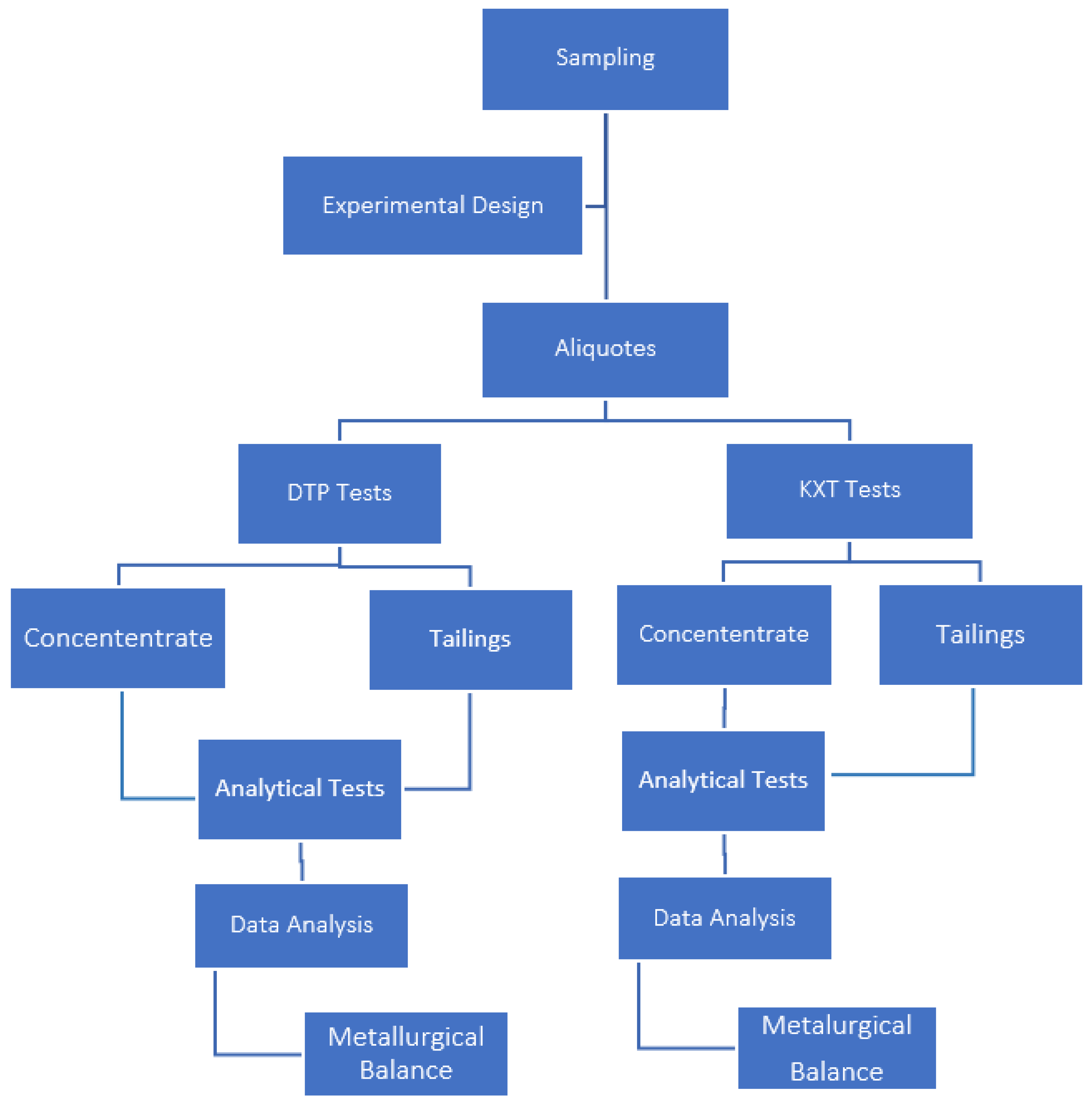
Experimental Design
- -
- Critical main effects: solids concentration (A), pH (B) and frother dosage (F).
- -
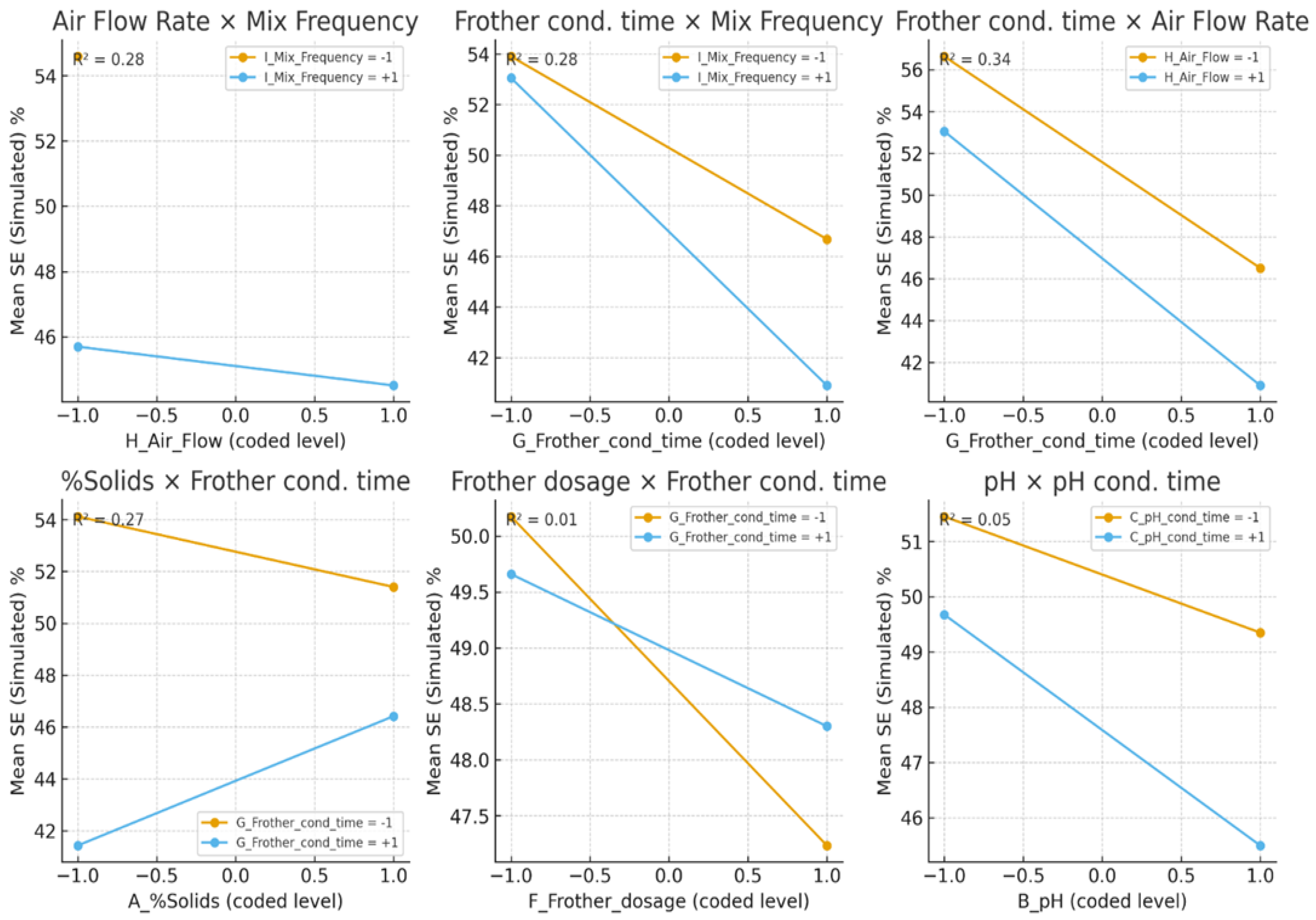
- The strongest interactions were: A × B, B × F, D × E, and G × H.
- -
- The optimization strategy revealed that efficiency is maximized under dilute conditions with carefully tuned pH and reagent regimes.
3. Methodology
3.1. Flotation Recovery Efficiency DTP
3.2. Flotation Recovery Efficiency KXT

4. Results and Discussions
4.1. Zeta Potential
4.2. Results of DTP
4.2.1. Content
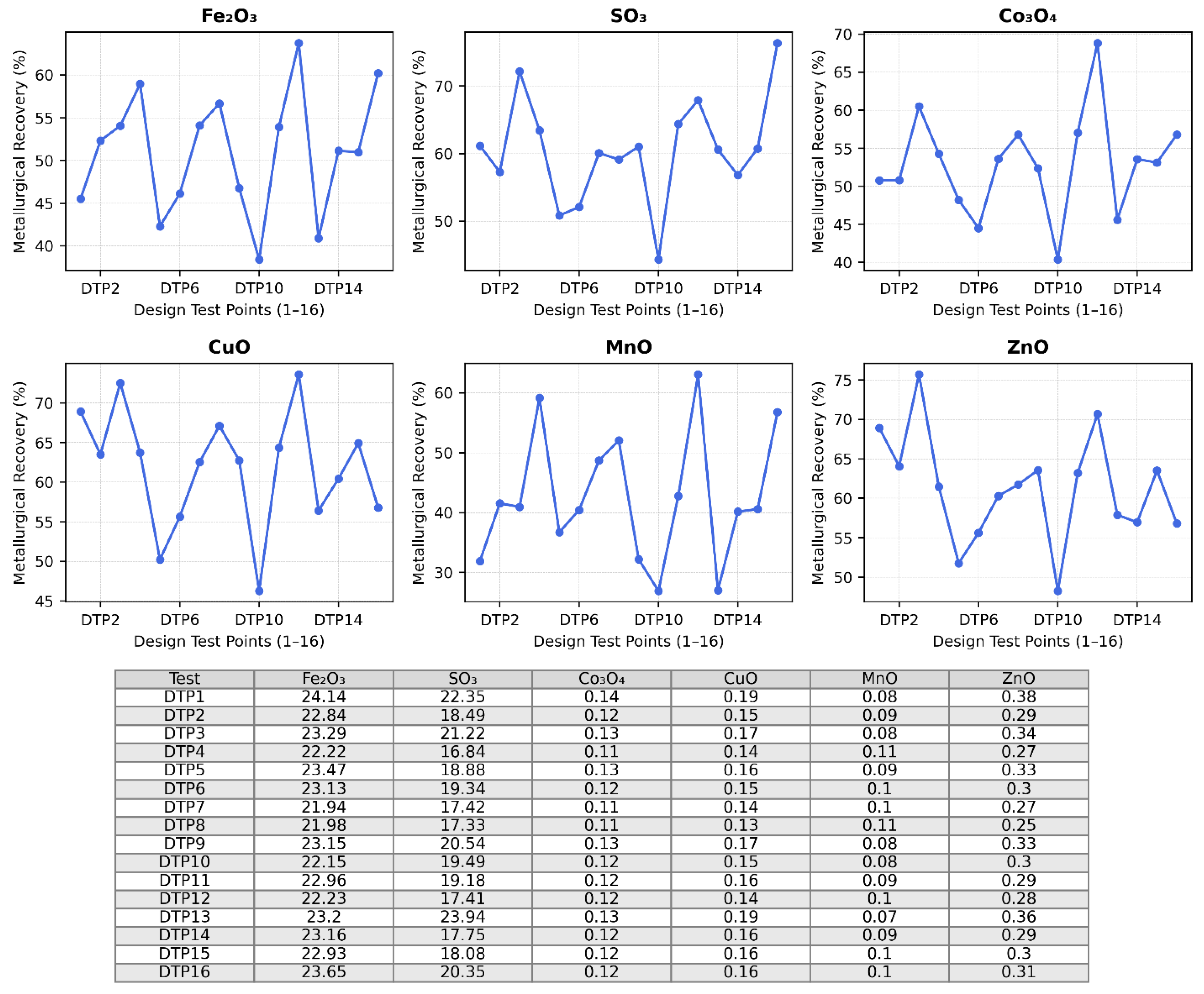
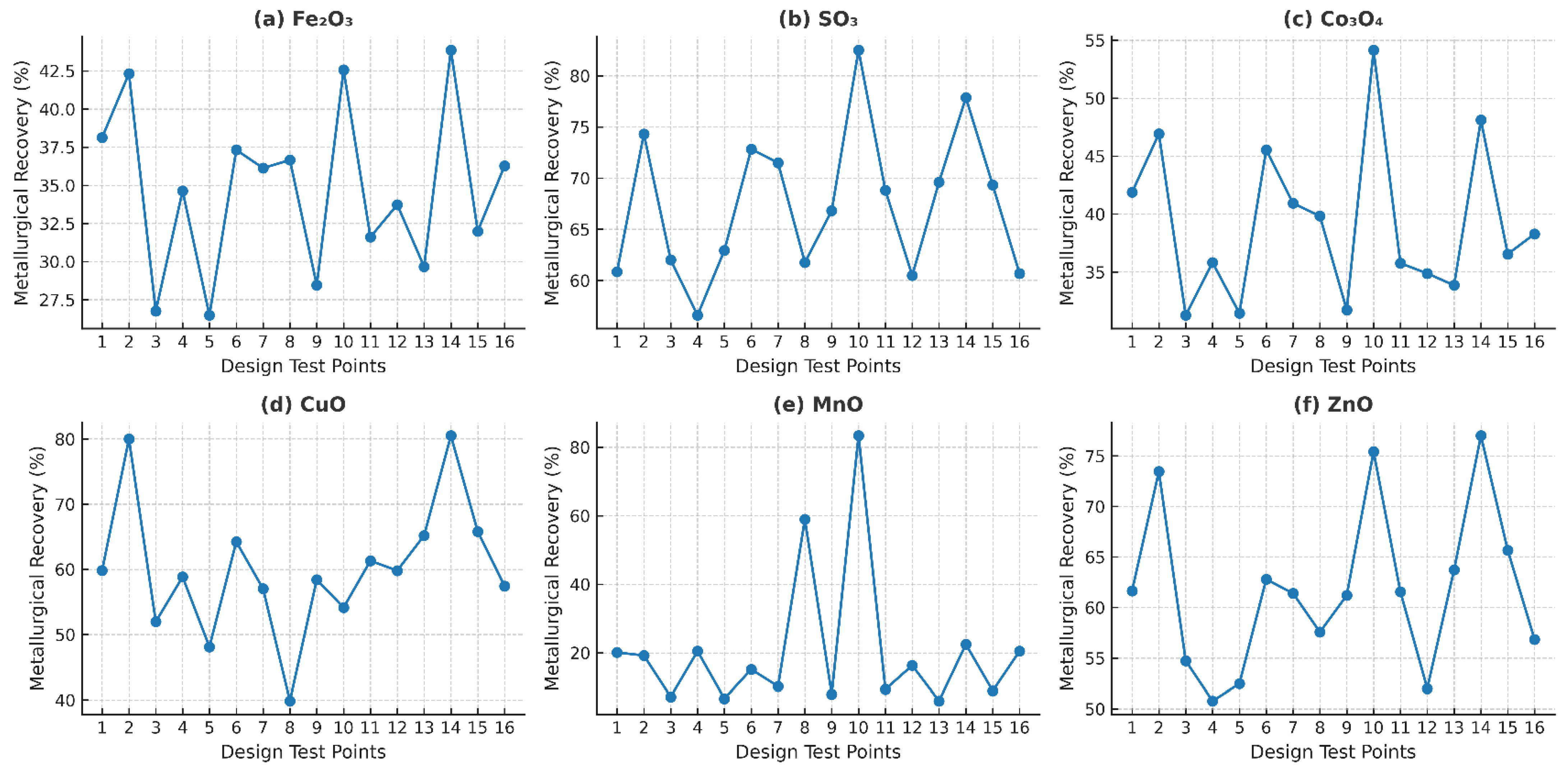
4.2.2. DTP Metallurgical Recovery
4.2.3. DTP Metallurgical Mass Balance
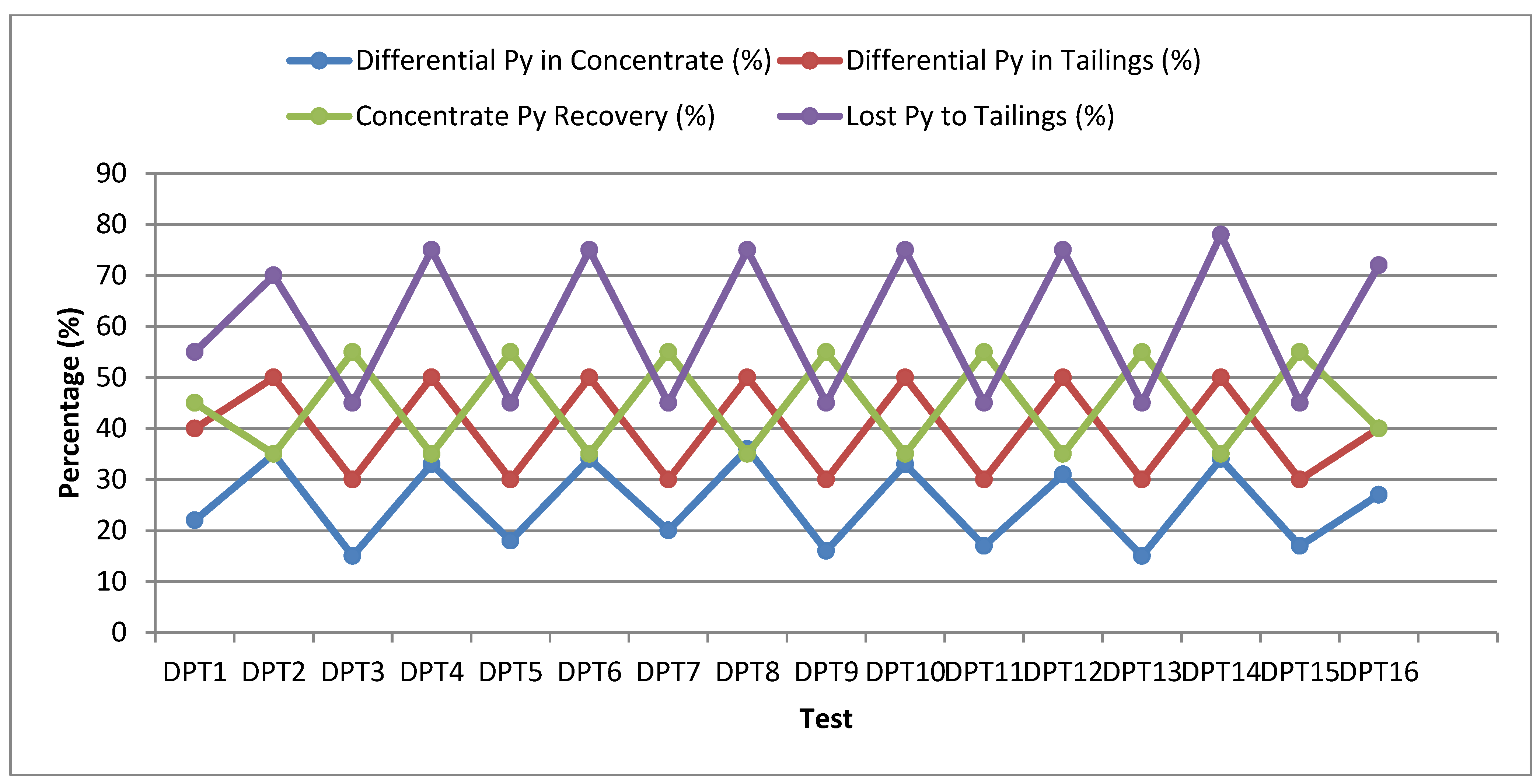
4.2.4. DTP Pyrite Recovery
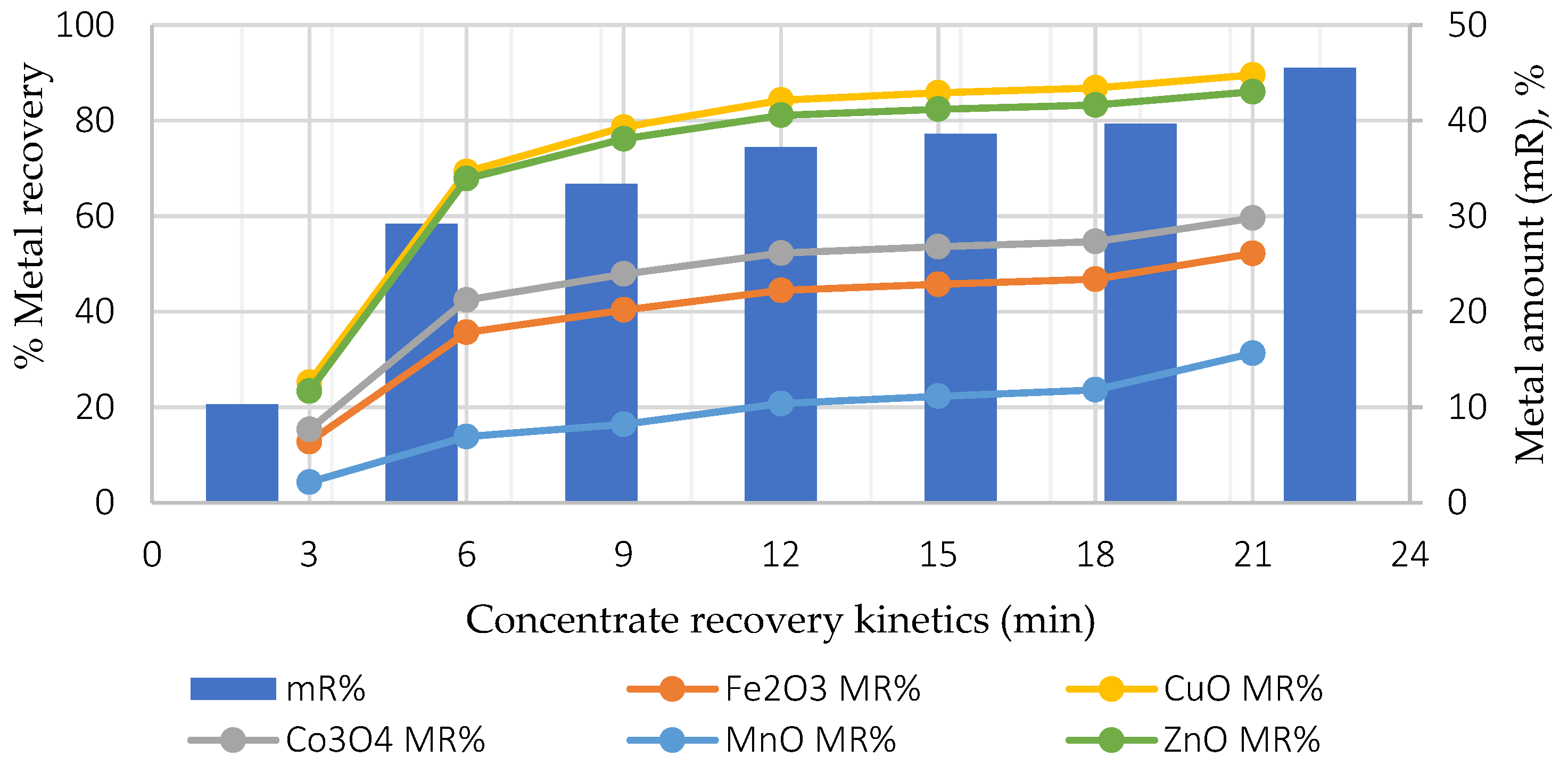
4.2.5. DTP Flotation Kinetic (FK): Metallurgical Recovery
4.3. Results of the K-Xanthate Collector (KXT)
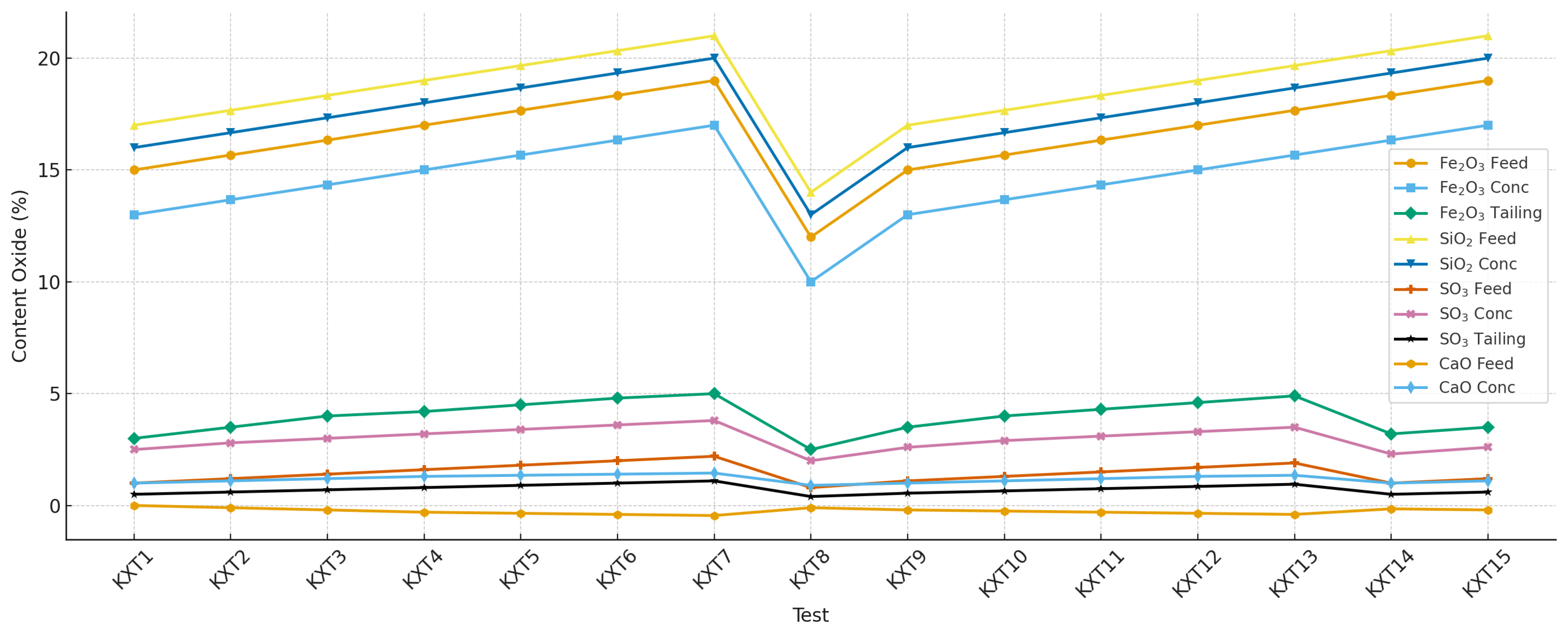
4.3.1. Content
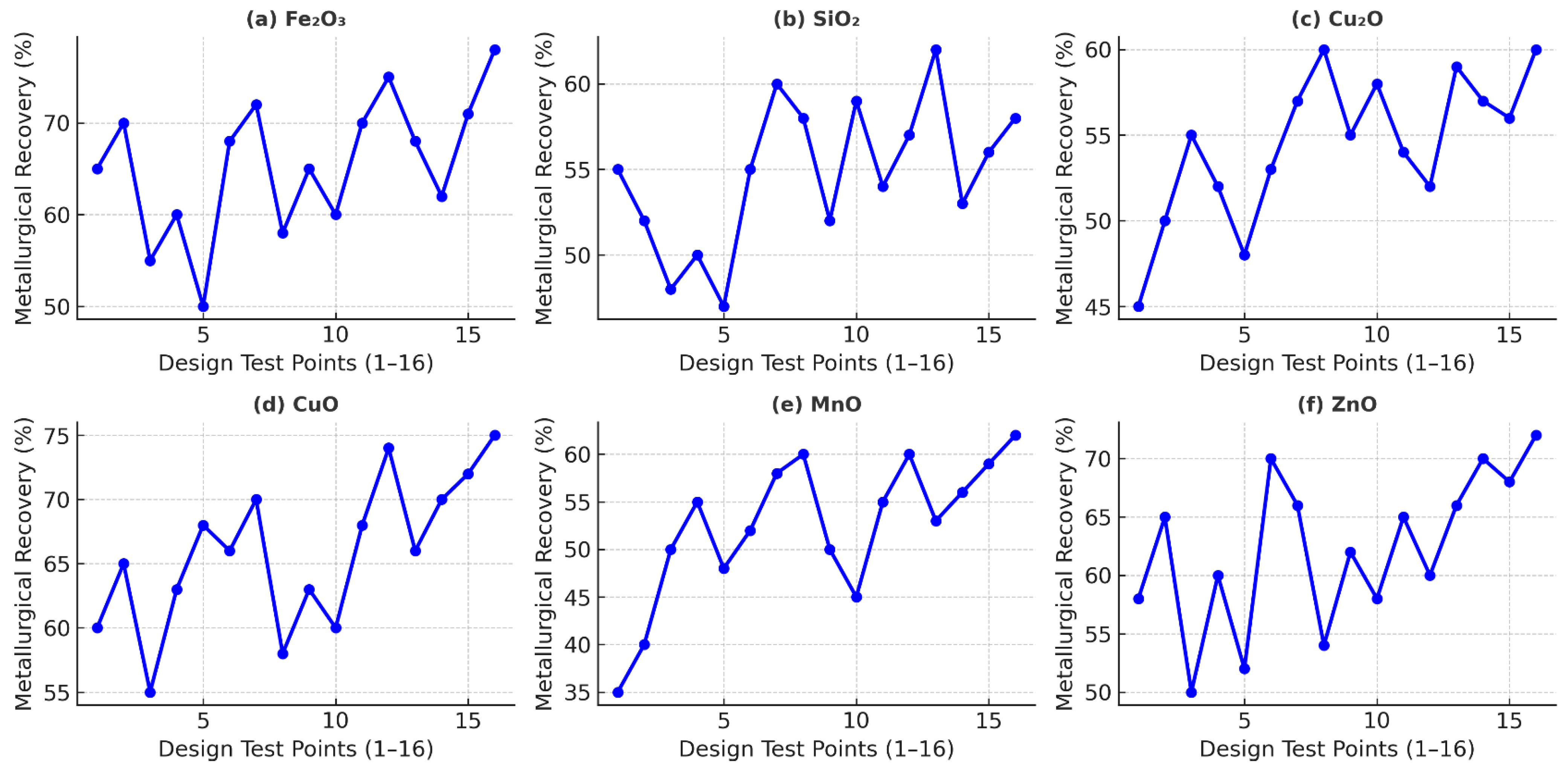
4.3.2. KXT Metallurgical Recovery
4.3.3. KXT Metallurgical Mass Balance
4.3.4. KXT Pyrite Recovery
4.3.5. KXT Flotation Kinetic (FK): Metallurgical Recovery
- An additional flotation bench test
- b.
- Metallurgical Recovery
- a
- Reducing the top size resulted in a significant increase in pyrite content.
- b
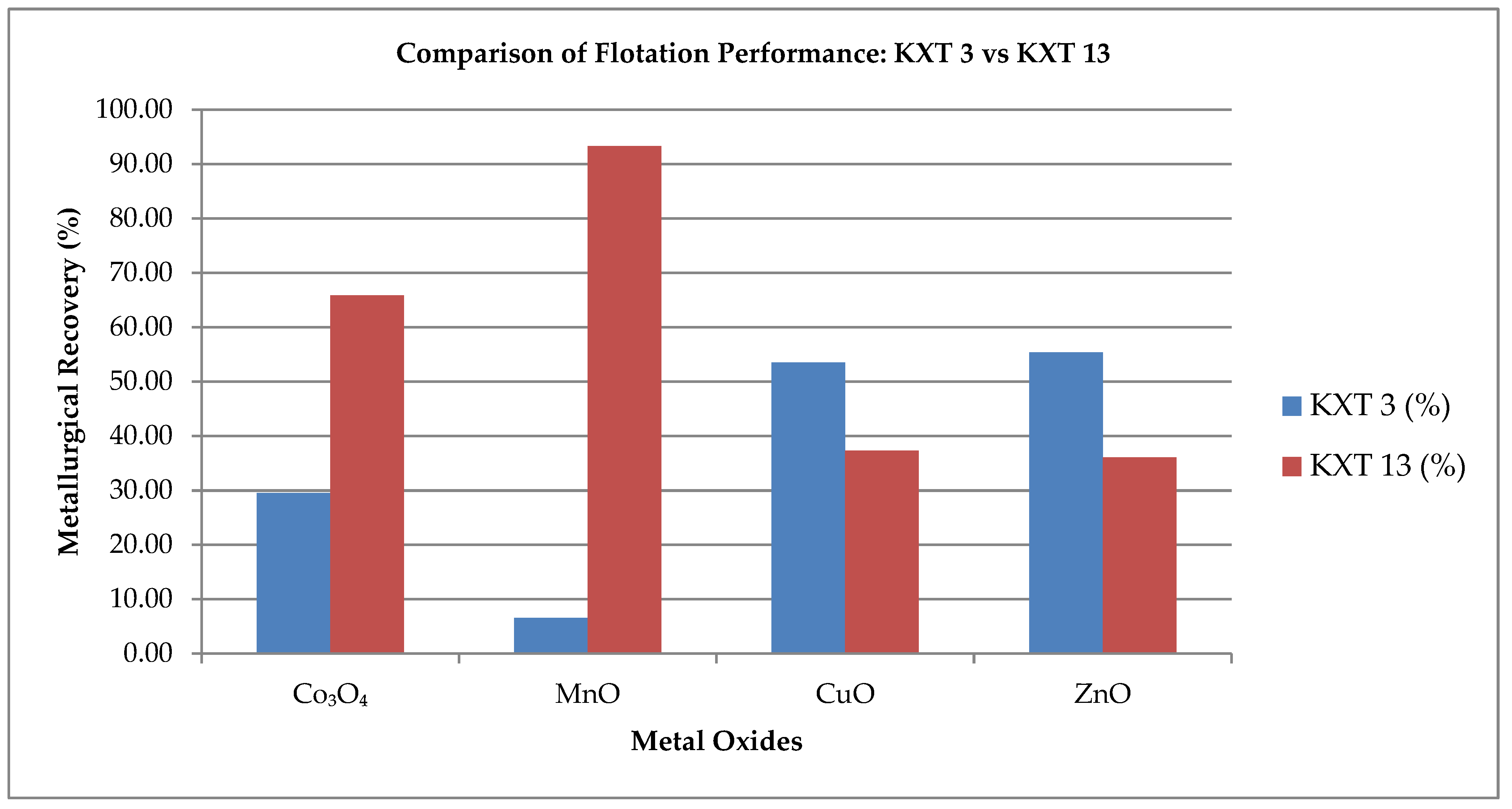
- Metallurgical recovery had a greater effect on MnO recovery compared to the use of KXT. These data should be further investigated, as the MnO levels at the feed are economically insignificant (0.006%) and do not justify using the configuration in test A as a reference.
- c
- The enrichment information projects incremental but not significant increases for the oxides of interest in polymetallic ores associated with pyrite.
- d
- In summary, a more in-depth study is strongly recommended to confirm significant percentage gains, along with an economic evaluation study to justify this methodology.
5. Conclusions
- a
- Ore characteristics: The sulfide ore deposit under scrutiny is constituted primarily of pyrite, accompanied by finely disseminated Co, Cu, Mn, and Zn oxides. These oxides are closely associated with pyrite grains, thus supporting the strategy of targeting pyrite as the primary carrier mineral for valuable elements.
- b
- Surface Chemistry: Zeta potential tests demonstrated that augmenting the pH above 8.5 generates a stable ionic environment, thereby enhancing the adhesion of collectors to pyrite surfaces. In such cases, xanthate has been shown to display enhanced electrostatic and chemical interaction with pyrite, thereby demonstrating a superior flotation response.
- c
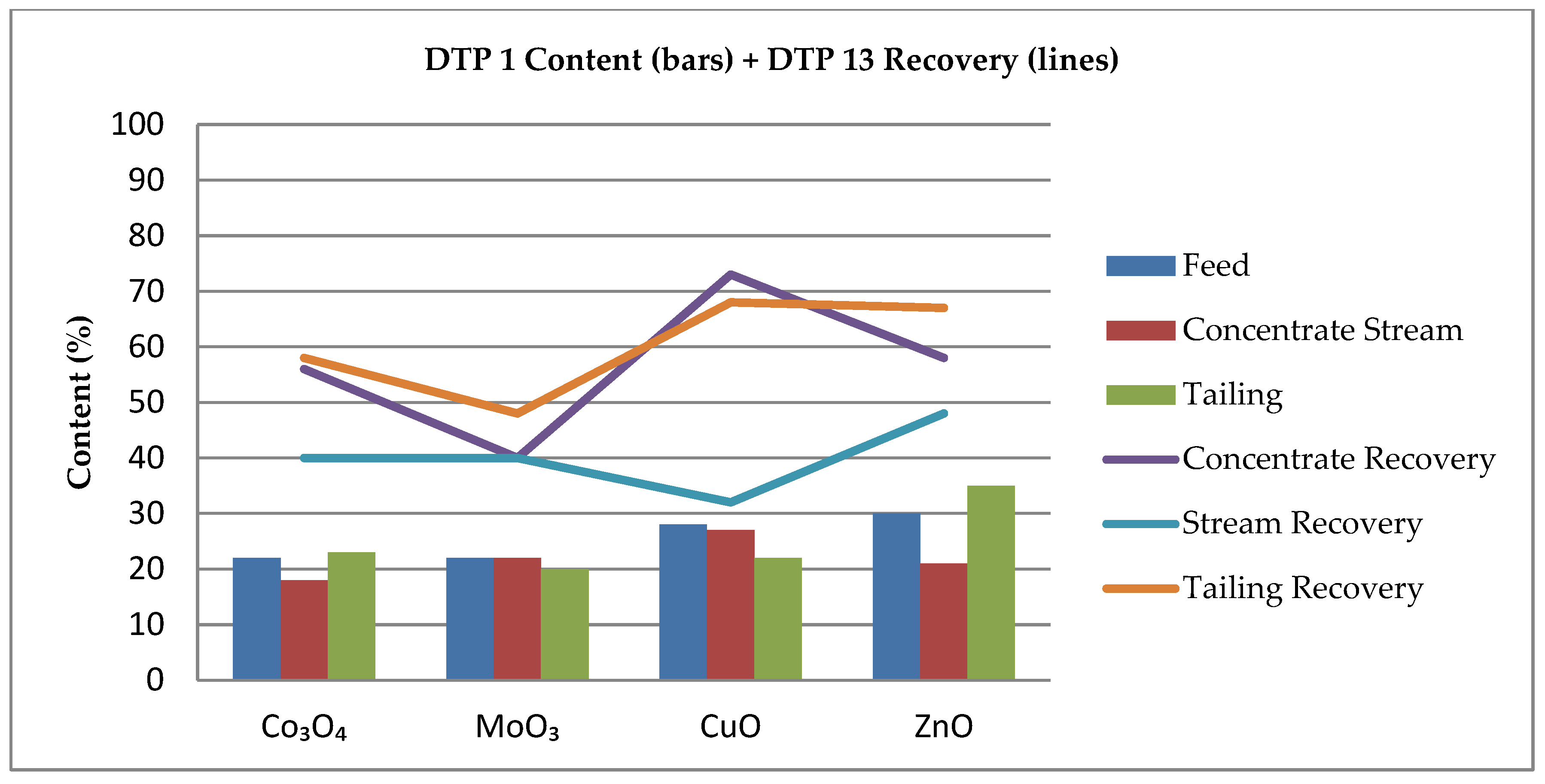
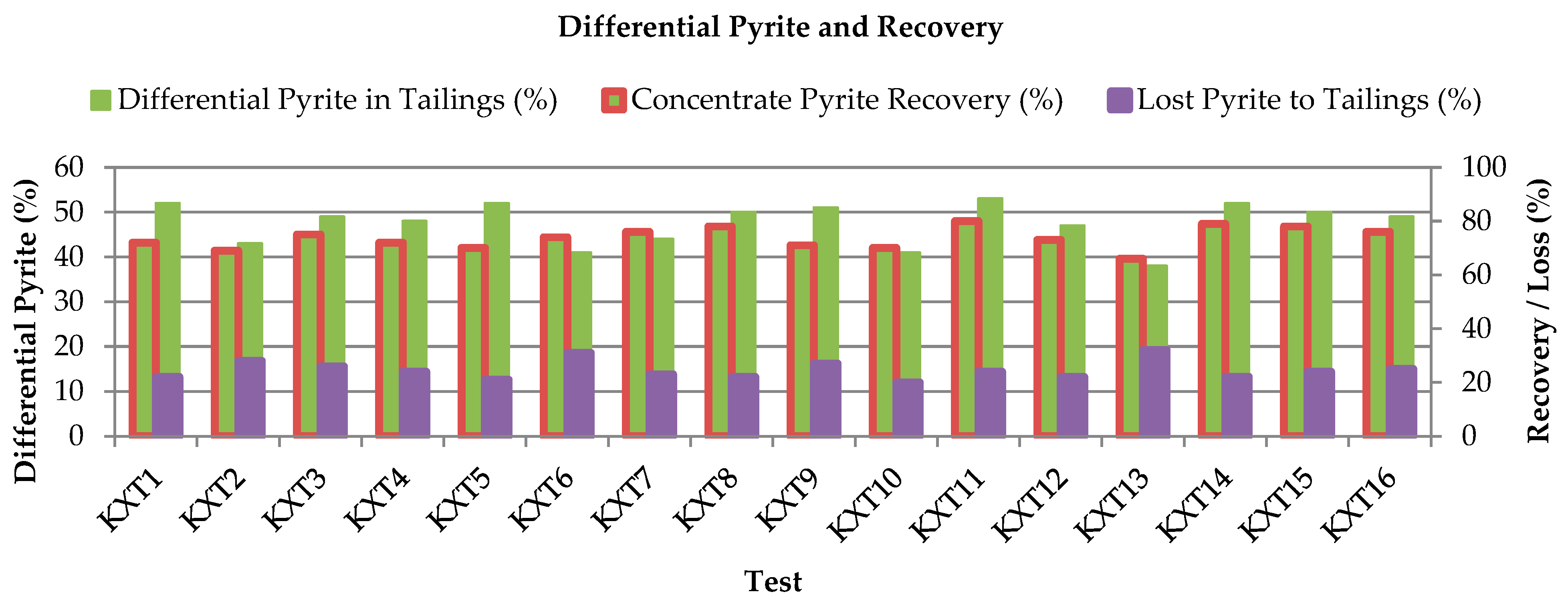
- Collector performance: In the present study, the performance of two collectors was evaluated. The two collectors in question were DTP and xanthate. The study found that xanthate provided superior performance in selectivity and metallurgical recovery. The experimental conditions of Experiment 13 are recommended as a reference for pilot-scale optimization.
- d
- Due to variations in pyrite content, the flotation concentrate is expected to contain approximately 25% floated pyrite by mass. Flotation tests resulted in the following oxide mass recoveries (Table 4): Co3O4 ~88%, MnO ~88%, CuO ~57%, and ZnO ~39%. The studied metals occur associated with pyrite grains. Estimated recoveries in the concentrate are: Co, 60%–70%; Mn, around 90%; Cu, 35%–45%; and Zn, 30%–40%. Significant variability is likely in flotation results.
- e
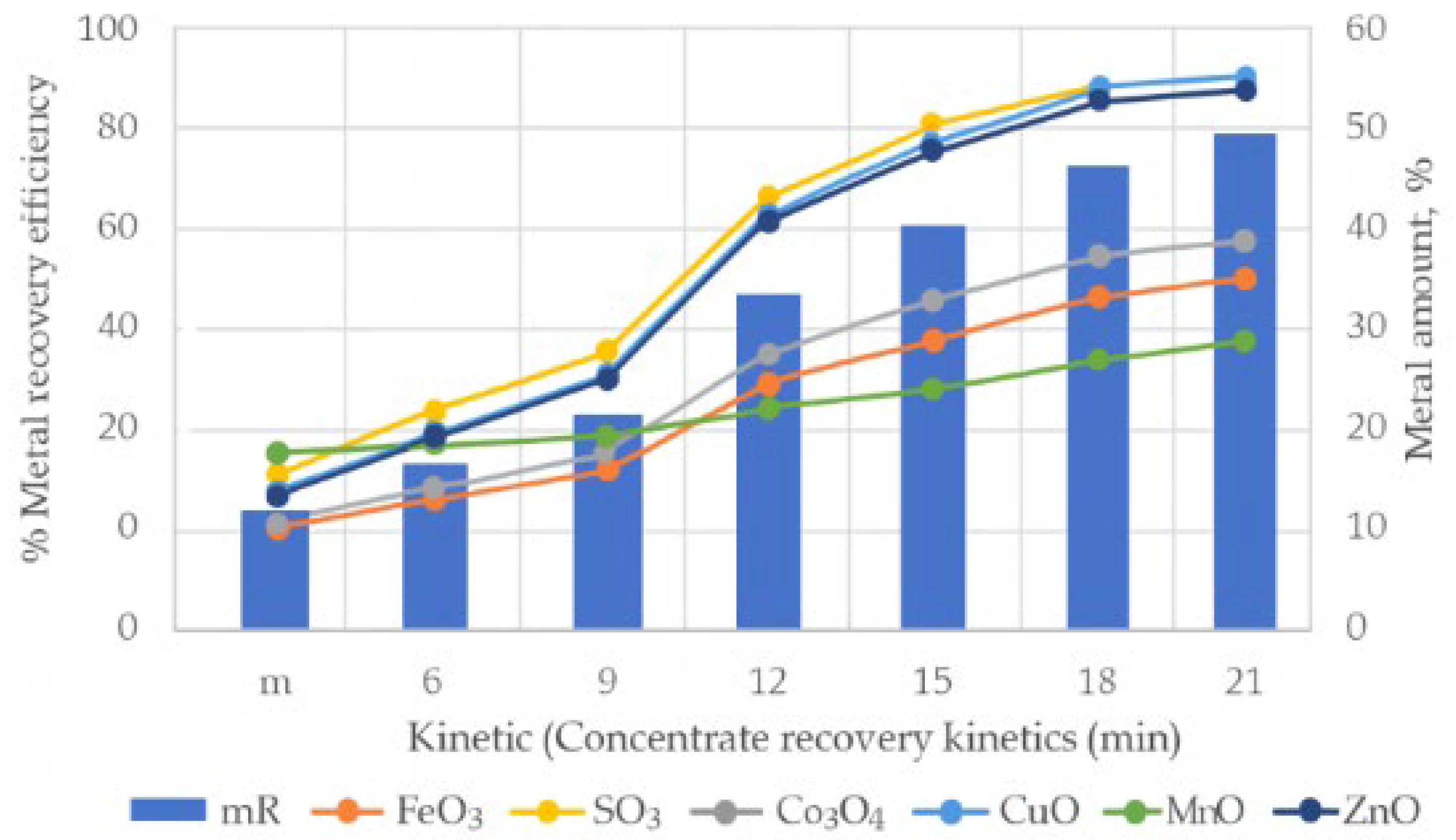
- Kinetic behavior: The optimal flotation times were established as 12 min for DTP and 18 min for xanthate. Xanthate demonstrated an overall recovery efficiency of over 50% for total metallic oxides, with MnO exhibiting a recovery of 37%.
- f
- The following limitations and outlook are to be considered: The low recovery of manganese oxide (MnO) is attributed to two factors. Firstly, the feed grade of MnO is low. Secondly, there is a possibility that MnO is weakly associated with pyrite. It is therefore suggested that targeted mineralogical and reagent interaction studies be conducted in future work.
Author Contributions
Funding
Data Availability Statement
Acknowledgments
Conflicts of Interest
References
- van Hinsberg, V.J. WILLS’ MINERAL PROCESSING TECHNOLOGY: AN INTRODUCTION TO THE PRACTICAL ASPECTS OF ORE TREATMENT AND MINERAL RECOVERY: Seventh Edition, by B.A. Wills and T.J. Napier-Munn. (2006) Butterworth-Heinemann (Elsevier), Burlington, Massachusetts. 456 p. ISBN: 978-0-7506-4450-1. $59.95. Am. Mineral. 2008, 93, 259–260. [Google Scholar] [CrossRef]
- Fuerstenau, D.W.; Pradip. A Century of Research Leading to Understanding the Scientific Basis of Selective Mineral Flotation and Design of Flotation Collectors. Min. Metall. Explor. 2019, 36, 3–20. [Google Scholar] [CrossRef]
- Muanda, M.M.; Omalanga, P.P.D.; Mitonga, V.M. Comparative Cleaning Stages in Recovery of Copper and Cobalt from Tailings Using Potassium Amylxanthate as Collector. Eur. J. Eng. Technol. Res. 2021, 6, 96–100. [Google Scholar] [CrossRef]
- Chander, S. Electrochemistry of Sulfide Flotation: Growth Characteristics of Surface Coatings and Their Properties, with Special Reference to Chalcopyrite and Pyrite. Int. J. Miner. Process. 1991, 33, 121–134. [Google Scholar] [CrossRef]
- Bulatovic, S.M. Handbook of Flotation Reagents: Chemistry, Theory and Practice: Flotation of Sulfide Ores; Elsevier Science: Amsterdam, The Netherlands, 2007; ISBN OCLC:921194078. [Google Scholar]
- Wang, X.-H.; Eric Forssberg, K.S. Mechanisms of Pyrite Flotation with Xanthates. Int. J. Miner. Process. 1991, 33, 275–290. [Google Scholar] [CrossRef]
- O’Connor, C.T.; Bradshaw, D.J.; Upton, A.E. The Use of Dithiophosphates and Dithiocarbamates for the Flotation of Arsenopyrite. Miner. Eng. 1990, 3, 447–459. [Google Scholar] [CrossRef]
- Jiang, C.L.; Wang, X.H.; Parekh, B.K.; Leonard, J.W. The Surface and Solution Chemistry of Pyrite Flotation with Xanthate in the Presence of Iron Ions. Colloids Surf. A Physicochem. Eng. Asp. 1998, 136, 51–62. [Google Scholar] [CrossRef]
- Castellón, C.I.; Toro, N.; Gálvez, E.; Robles, P.; Leiva, W.H.; Jeldres, R.I. Froth Flotation of Chalcopyrite/Pyrite Ore: A Critical Review. Materials 2022, 15, 6536. [Google Scholar] [CrossRef]
- Tornos, F.; Solomon, M.; Conde, C.; Spiro, B.F. Formation of the Tharsis Massive Sulfide Deposit, Iberian Pyrite Belt: Geological, Lithogeochemical, and Stable Isotope Evidence for Deposition in a Brine Pool. Econ. Geol. 2008, 103, 185–214. [Google Scholar] [CrossRef]
- Özçelik, S.; Ekmekçi, Z. Surface Chemistry and Flotation of Gold-Bearing Pyrite. Minerals 2024, 14, 914. [Google Scholar] [CrossRef]
- Cheng, W.; Deng, Z.; Tong, X.; Lu, T. Hydrophobic Agglomeration of Fine Pyrite Particles Induced by Flotation Reagents. Minerals 2020, 10, 801. [Google Scholar] [CrossRef]
- Ozdemir, O.; Ercelik, G.; Terzi, M.; Kursun, I. Surface chemistry and flotation properties of galena and pyrite: Role of pH and reagent ad-sorption. Physicochem. Probl. Miner. Process. 2023, 59, 167947. [Google Scholar]
- Özcan, D. Classification of Zinc Recovery Quality from EAF Dust Using Machine Learning: A Waelz Process Study. Eng. Perspect. 2024, 4, 171–177. [Google Scholar] [CrossRef]
- Wiese, J.; Harris, P.; Bradshaw, D. Investigation of the Role and Interactions of a Dithiophosphate Collector in the Flotation of Sulphides from the Merensky Reef. Miner. Eng. 2005, 18, 791–800. [Google Scholar] [CrossRef]
- Güler, T.; Hiçyilmaz, C.; Gökağaç, G.; Ekmeçi, Z. Adsorption of Dithiophosphate and Dithiophosphinate on Chalcopyrite. Miner. Eng. 2006, 19, 62–71. [Google Scholar] [CrossRef]
- Grano, S.R.; Cnossen, H.; Skinner, W.; Prestidge, C.A.; Ralston, J. Surface Modifications in the Chalcopyrite-Sulphite Ion System, II. Dithiophosphate Collector Adsorption Study. Int. J. Miner. Process. 1997, 50, 27–45. [Google Scholar] [CrossRef]
- Buckley, A.N.; Hope, G.A.; Parker, G.K.; Steyn, J.; Woods, R. Mechanism of Mixed Dithiophosphate and Mercaptobenzothiazole Collectors for Cu Sulfide Ore Minerals. Miner. Eng. 2017, 109, 80–97. [Google Scholar] [CrossRef]
- Tijsseling, L.T.; Dehaine, Q.; Rollinson, G.K.; Glass, H.J. Flotation of Mixed Oxide Sulphide Copper-Cobalt Minerals Using Xanthate, Dithiophosphate, Thiocarbamate and Blended Collectors. Miner. Eng. 2019, 138, 246–256. [Google Scholar] [CrossRef]
- Rao, N.D.; Chakraborty, D.P.; Shukla, V.; Kumar, N. Iron Ore Beneficiation: An Overview. In Mineral Processing; Elsevier: Amsterdam, The Netherlands, 2023; pp. 55–77. [Google Scholar]
- Li, P.; Luo, S.; Wang, X.; Wang, L.; Wang, J.; Teng, F.; Wang, Q.; Zhang, Y.; Liu, X.; Zhang, H.; et al. Study on the High-Efficiency Separation of Fe and Mn from Low-Grade Pyrolusite and the Preparation of LiMn2O4 Materials for Lithium-Ion Batteries. Sep. Purif. Technol. 2021, 278, 119611. [Google Scholar] [CrossRef]
- Lee, K.; Archibald, D.; McLean, J.; Reuter, M.A. Flotation of Mixed Copper Oxide and Sulphide Minerals with Xanthate and Hydroxamate Collectors. Miner. Eng. 2009, 22, 395–401. [Google Scholar] [CrossRef]
- Mukunga, M.M. Recovery of Copper and Cobalt in the Comparative Flotation of a Sulfide Ore Using Xanthate and Dithiophosphate as Collectors. Int. J. Eng. Appl. Sci. 2019, 6, 26–29. [Google Scholar] [CrossRef]
- Ozturk, Y.; Bicak, O.; Ekmekci, Z. Effects of Residual Xanthate on Flotation Efficiency of a Cu-Zn Sulfide Ore. Minerals 2022, 12, 279. [Google Scholar] [CrossRef]
- Ni, C.; Bu, X.; Xia, W.; Peng, Y.; Xie, G. Effect of Slimes on the Flotation Recovery and Kinetics of Coal Particles. Fuel 2018, 220, 159–166. [Google Scholar] [CrossRef]
- Giovannetti, R.; Bartocci, V. High-Performance Liquid Chromatographic Determination of Mn(II), Co(II), Zn(II), Ni(II), Cu(II) As Coproporphyrin-I Complexes. J. Liq. Chromatogr. Relat. Technol. 1998, 21, 2607–2617. [Google Scholar] [CrossRef]
- Dehaine, Q.; Tijsseling, L.T.; Glass, H.J.; Törmänen, T.; Butcher, A.R. Geometallurgy of Cobalt Ores: A Review. Miner. Eng. 2021, 160, 106656. [Google Scholar] [CrossRef]
- Dehaine, Q.; Tijsseling, L.T.; Rollinson, G.K.; Glass, H.J. Flotation of a Copper-Cobalt Sulphide Ore: Quantitative Insights into the Role of Mineralogy. Miner. Eng. 2024, 218, 108958. [Google Scholar] [CrossRef]
- Hua, Q.; Guo, H.; Wang, D.; Huang, Y.; Cao, Y.; Peng, W.; Fan, G. A New Strategy for Selective Recovery of Low Concentration Cobalt Ions from Wastewater: Based on Selective Chelating Precipitation-Flotation Process. J. Taiwan Inst. Chem. Eng. 2022, 141, 104605. [Google Scholar] [CrossRef]
- Essakhraoui, M.; Boukhair, A.; Bentiss, F.; Mazouz, H.; Beniazza, R.; Haneklaus, N. Advances in Heavy Metal Extraction Using Organophosphorus Compounds: A Comprehensive Review. Metals 2025, 15, 524. [Google Scholar] [CrossRef]
- Merroune, A.; Ait Brahim, J.; Achiou, B.; Kada, C.; Mazouz, H.; Beniazza, R. Closed-Loop Purification Process of Industrial Phosphoric Acid: Selective Recovery of Heavy Metals and Rare Earth Elements Via Solvent Extraction. Desalination 2024, 580, 117515. [Google Scholar] [CrossRef]
- Özçelik, S.; Ekmekçi, Z. Reducing Negative Effects of Oxidation on Flotation of Complex Cu–Zn Sulfide Ores. Minerals 2022, 12, 1016. [Google Scholar] [CrossRef]
- Yucel, E.; Yucel, M. REMOVAL OF HEAVY METAL Cr (II), Ni (II), Cu (II), Zn (II), Cd (II), Pb (II) IONS FROM AQUEOUS SOLUTION BY MENTHA PIPERITA EXTRACT. Ecol. Eng. Environ. Prot. 2020, 15–20. [Google Scholar] [CrossRef]
- Binnemans, K.; Jones, P.T.; Manjón Fernández, Á.; Masaguer Torres, V. Hydrometallurgical Processes for the Recovery of Metals from Steel Industry By-Products: A Critical Review. J. Sustain. Metall. 2020, 6, 505–540. [Google Scholar] [CrossRef]
- Wei, L.; Xu, H.; Wu, J.; Shen, C.; Sun, X. Circular Economy-Driven Metal Recovery from Tailings: Synergistic Optimization of Waste Phosphoric Acid Leaching Via Response Surface Methodology. SSRN 2025, 5174754. [Google Scholar] [CrossRef]
- Ozer, M. Cobalt and Copper Recovery from the Ancient Flotation Tailings by Selective Sulfation Roast—Leaching Process. J. Min. Metall. Sect. B Metall. 2019, 55, 315–324. [Google Scholar] [CrossRef]
- Wen, K.; Jiang, F.; Zhou, X.; Sun, Z. Recovery of Gallium from Corundum Flue Dust by Two-Stage Alkali Leaching, Carbonation, Acid Leaching and Solvent Extraction Process. Metals 2018, 8, 545. [Google Scholar] [CrossRef]
- He, H.; Yang, B.; Wu, D.; Gao, X.; Fei, X. Applications of Crushing and Grinding-Based Treatments for Typical Metal-Containing Solid Wastes: Detoxification and Resource Recovery Potentials. Environ. Pollut. 2022, 314, 120034. [Google Scholar] [CrossRef] [PubMed]
- Chen, W.; Yin, S.; Zhou, G.; Li, Z.; Song, Q. Copper Recovery from Tailings through Bioleaching and Further Application of Bioleached Tailings Residue: Comprehensive Utilization of Tailings. J. Clean. Prod. 2022, 332, 130129. [Google Scholar] [CrossRef]
- Durance, M.-V.; Botané, P.; Cailleau, A. Reprocessing of a French Guyana Operation’s Tailings Using Flotation for Gold Concentration. Min. Metall. Explor. 2010, 27, 55–59. [Google Scholar] [CrossRef]
- Gupta, A.; Yan, D. (Eds.) Solid—Liquid Separation—Thickening. In Mineral Processing Design and Operations; Elsevier: Amsterdam, The Netherlands, 2016; pp. 471–506. [Google Scholar]
- Friedri, B. (Ed.) Sustainable Utilization of Metals; MDPI: Basel, Switzerland, 2020. [Google Scholar] [CrossRef]
- Steinlechner, S.; Antrekowitsch, J. Thermodynamic Considerations for a Pyrometallurgical Extraction of Indium and Silver from a Jarosite Residue. Metals 2018, 8, 335. [Google Scholar] [CrossRef]
- Johnson, B.G.; Sargent, C.S. Impact of Formulas, Language and Instruction on Student Performance on Cost-Volume-Profit Problems. Account. Educ. 2013, 23, 22–41. [Google Scholar] [CrossRef]
- Runge, M. Recovery of Silver, Lead and Zinc from Lead/Zinc Flotation Tailings. Master’s Thesis, The University of Queensland, Brisbane, Australia, 2006. [Google Scholar]
- Adeseye, T.A.; Suara, G. 3D-Position Determination Using GNSS Techniques—A Comparative Analysis. Eur. J. Eng. Technol. Res. 2021, 6, 1–5. [Google Scholar] [CrossRef]



| Parameter | Level A | Level B | Remarks |
|---|---|---|---|
| Particle size (µm) | −200 | −200 | Constant for all tests |
| % Solids | 20 | 40 | Adjusted to assess pulp density effect |
| Temperature (°C) | 24.0 | 24.0 | Room temperature |
| pH | 4 | 9 | |
| pH conditioning time (min) | 2 | 10 | Longer conditioning for alkaline pH |
| Activator (g/t) | 190 | 190 | Constant dosage |
| Depressor (g/t) | 0 | 0 | Not used |
| Collector (g/t) | 50 | 300 | Varied to study reagent dosage |
| Collector conditioning time (min) | 2 | 10 | Increased for Test B |
| Frother (g/t) | 100 | 100 | Constant |
| Frother conditioning time (min) | 2 | 5 | Increased for Test B |
| Air flow rate (L/min) | 6 | 10 | Higher airflow in Test B |
| Mixing frequency (rpm) | 1000 | 1450 | Agitation control |
| Flotation time (min) | 2 | 2 | Constant for both tests |
| Test | pHr | pHi | pHf | ΔpH | ζi (mV) |
|---|---|---|---|---|---|
| 1 | 2 | 2.09 | 4.01 | 1.92 | 2.46 |
| 2 | 4 | 4.02 | 4.73 | 0.71 | 1.59 |
| 3 | 6 | 5.58 | 5.25 | −0.33 | 0.77 |
| 4 | 8 | 8.20 | 6.10 | −2.10 | −0.73 |
| 5 | 10 | 9.98 | 6.91 | −3.07 | −1.71 |
| 6 | 12 | 12.16 | 8.23 | −3.93 | −2.98 |
| Parameters | A | B | C |
|---|---|---|---|
| Top Size (µm) | −10 | −10 | −200 |
| % Solids | 20% | 20% | 20% |
| Temperature | 24.0 °C | 24.0 °C | 24.0 °C |
| pH | 9.5 | 9.5 | 9.5 |
| pH Conditioning Time | 15 min | 15 min | 15 min |
| pH reagent | CaCo3 | CaCo3 | CaCo3 |
| Depressor | 0 g/t | 0 g/t | 0 g/t |
| Collector DanaFloat 527E | 1300 g/t | 0 g/t | 1300 g/t |
| Collector Aerophine 3418A | 700 g/t | 700 g/t | 700 g/t |
| Collector k-Xanthate | 0 g/t | 1300 g/t | 0 g/t |
| Collector Conditioning Time | 5 min | 5 min | 5 min |
| Frother | 0 g/t | 0 g/t | 0 g/t |
| Frother Conditioning Time | 0 min | 0 min | 0 min |
| Air Flow Rate | 6 LPM | 6 LPM | 6 LPM |
| Mix Frequency | 1000 RPM | 1000 RPM | 1000 RPM |
| Test | Product | Fe2O3, % | SO3, % | Co3O4, % | CuO, % | MnO, % | ZnO, % |
|---|---|---|---|---|---|---|---|
| A | Conc. | 43.60 | 58.67 | 87.54 | 56.95 | 88.39 | 38.45 |
| Tailings | 56.40 | 41.33 | 12.46 | 43.05 | 11.61 | 61.55 | |
| B | Conc. | 53.67 | 64.57 | 87.38 | 67.99 | 88.89 | 49.03 |
| Tailings | 46.33 | 35.43 | 12.62 | 32.01 | 11.11 | 50.97 | |
| C | Conc. | 38.28 | 51.45 | 83.04 | 56.78 | 84.76 | 34.27 |
| Tailings | 61.72 | 48.55 | 16.96 | 43.22 | 15.24 | 65.73 |
Disclaimer/Publisher’s Note: The statements, opinions and data contained in all publications are solely those of the individual author(s) and contributor(s) and not of MDPI and/or the editor(s). MDPI and/or the editor(s) disclaim responsibility for any injury to people or property resulting from any ideas, methods, instructions or products referred to in the content. |
© 2025 by the authors. Licensee MDPI, Basel, Switzerland. This article is an open access article distributed under the terms and conditions of the Creative Commons Attribution (CC BY) license (https://creativecommons.org/licenses/by/4.0/).
Share and Cite
Eljoudiani, A.; Veras, M.M.; Sampaio, C.H.; Moncunill, J.O.; Cortina Pallas, J.L. Evaluation of Pyrite Recovery via Bench-Scale Froth Flotation from a Sulfide Ore Deposit in Southwestern Spain. Minerals 2025, 15, 1234. https://doi.org/10.3390/min15121234
Eljoudiani A, Veras MM, Sampaio CH, Moncunill JO, Cortina Pallas JL. Evaluation of Pyrite Recovery via Bench-Scale Froth Flotation from a Sulfide Ore Deposit in Southwestern Spain. Minerals. 2025; 15(12):1234. https://doi.org/10.3390/min15121234
Chicago/Turabian StyleEljoudiani, Amina, Moacir Medeiros Veras, Carlos Hoffmann Sampaio, Josep Oliva Moncunill, and Jose Luis Cortina Pallas. 2025. "Evaluation of Pyrite Recovery via Bench-Scale Froth Flotation from a Sulfide Ore Deposit in Southwestern Spain" Minerals 15, no. 12: 1234. https://doi.org/10.3390/min15121234
APA StyleEljoudiani, A., Veras, M. M., Sampaio, C. H., Moncunill, J. O., & Cortina Pallas, J. L. (2025). Evaluation of Pyrite Recovery via Bench-Scale Froth Flotation from a Sulfide Ore Deposit in Southwestern Spain. Minerals, 15(12), 1234. https://doi.org/10.3390/min15121234