


Abstract
In the present study, we introduce the two-dimensional Chlodovsky-type Bernstein operators based on the -integer. By leveraging the inherent symmetry properties of -integers, we examine the approximation properties of our new operator with the help of a Korovkin-type theorem. Further, we present the local approximation properties and establish the rates of convergence utilizing the modulus of continuity and the Lipschitz-type maximal function. Additionally, a Voronovskaja-type theorem is provided for these operators. We also investigate the weighted approximation properties and estimate the rate of convergence in the same space. Finally, illustrative graphics generated with Maple demonstrate the convergence rate of these operators to certain functions. The optimization of approximation speeds by these symmetric operators during system control provides significant improvements in stability and performance. Consequently, the control and modeling of dynamic systems become more efficient and effective through these symmetry-oriented innovative methods. These advancements in the fields of modeling fractional differential equations and control theory offer substantial benefits to both modeling and optimization processes, expanding the range of applications within these areas.
1. Introduction
The study provides a comprehensive examination of the theory and applications of mathematical operators, aligning with the content areas of mathematics, engineering, physics, and computer science. The investigation of the convergence properties of Chlodovsky-type Bernstein operators using the Korovkin-type theorem is directly part of mathematical analysis and approximation theory. Such studies yield significant results applicable to fields like mathematical modeling and optimization. Furthermore, the optimization of convergence rates of operators through system control contributes to the more efficient and stable management of systems within control engineering. Lastly, visual illustrations created using Maple demonstrate the convergence rates of operators on specific functions, contributing to modeling and simulation techniques used in computer science. Furthermore, the symmetric properties of -integers and their integration into our operator framework expand the applicability of these operators, offering new insights into balanced and symmetrical system behaviors. This symmetry-oriented approach supports more precise modeling and control strategies, which are essential for stable and efficient solutions.
Approximation theory is rapidly emerging as an essential tool, extending its influence beyond classical domains to other mathematical areas such as differential equations, orthogonal polynomials, and geometric design. Following the introduction of Korovkin’s renowned theorem in 1950, the topic of approximating functions using linear positive operators has become an increasingly significant focus within approximation theory. A wealth of literature has been produced on this subject [1,2,3,4,5,6,7,8,9,10].
In recent years, particularly over the last twenty years, the role of q-calculus in approximation theory has been thoroughly investigated. The initial work on Bernstein polynomials derived from q-integers was conducted by Lupaş [11]. His findings indicated that q-Bernstein polynomials can provide superior approximations compared with classical methods when an appropriate choice of q is made. This discovery has encouraged numerous researchers to develop q-generalizations of various operators and to explore their approximation properties further. Numerous studies have contributed to this field [12,13,14,15].
Lately, Mursaleen et al. have been concentrating on utilizing -calculus for approximations through linear positive operators, introducing the -analogs of Bernstein operators [16]. They analyzed the uniform convergence of these operators and determined their rates of convergence. For additional recent studies related to -operators, readers can refer to [17,18,19,20,21].
The main motivation behind this study is that, to the authors’ knowledge, there have been no investigations into approximating two-variable operators using -calculus thus far. In this context, we introduce two-dimensional Chlodovsky-type Bernstein operators based on -integers. We investigate the approximation properties of our newly defined operators with the aid of the Korovkin-type theorem. Furthermore, we delve into the local approximation characteristics and determine the rates of convergence through the modulus of continuity and a Lipschitz-type maximal function. A Voronovskaja-type theorem relevant to these operators is also presented. Another significant aim of this research is to examine the weighted approximation properties of our operators in the first quadrant of , specifically within the range of . To achieve these results, we intend to apply a weighted Korovkin-type theorem. We begin by revisiting some definitions and notations pertinent to the concept of -calculus. The -integer associated with a given number n is defined as
The -factorial and the -binomial coefficients are defined as:
and
Further, the -binomial expansions are given as
and
Further information related to -calculus can be found in [22,23].
2. Construction of the Operators
Recently, Ansari and Karaisa [24] have defined and studied -analog of Chlodovsky operators as follows:
where
For , we define Chlodovsky-type two-dimensional Bernstein operator based on -integers as follows:
for all , with and . Here, and be increasing unbounded sequences of positive real numbers such that
Also, the basis elements are
We require the following lemmas to establish our main results.
Lemma 1
([24]).
From Lemma 1, we have the following:
Lemma 2.
Using Lemma 2, and by the linearity of , we have
Remark 1.
Theorem 1.
Let , , ,
such that . If
the sequence convergence uniformly to , on for each , where be real numbers such that , and be the space of all real-valued continuous functions on with the norm
3. Rate of Convergence
In this section, we analyze the convergence rates of the operators to the function using the modulus of continuity. Furthermore, we present a summary of the relevant notations and definitions concerning the modulus of continuity and Peetre’s K-functional for bivariate real-valued functions.
For a function , the complete modulus of continuity in the bivariate context is defined as follows:
for every . Additionally, the partial moduli of continuity concerning x and y are defined as follows:
It is evident that they fulfill the properties of the standard modulus of continuity [26].
For , the Peetre K-functional [27] is defined as follows:
where is the space of functions of f such that f, and in . The norm on the space is defined by
We now provide an estimate for the rate of convergence of the operators .
Theorem 2.
Let . For all , we have
where
Proof.
By definition, the complete modulus of continuity of , along with the linearity and positivity of our operator, allows us to express:
Using Cauchy–Schwarz inequality, from (5) and (6), one can write the following:
Choosing , for all , we obtain the desired result. □
Theorem 3.
Let ; then, the following inequalities satisfy
where
Proof.
By definition, the partial moduli of continuity of and the application of the Cauchy–Schwarz inequality imply that
Consider
we reach the result. □
For and , we define the Lipschitz class for the bivariate case as follows:
Theorem 4.
Proof.
As , it follows that
For
and applying the Hölder’s inequality, we obtain
Hence, we obtain the desired result. □
Theorem 5.
Let and . Then, we have
Proof.
For , we obtain
By applying our operator to both sides of the above equation, we deduce
As
we have
Using the Cauchy–Schwarz inequality, we can write the following:
Form (5) and (6), we obtain the desired result. □
Below, we obtained three-dimensional graphs illustrating the convergence rates of operators to specific functions using the Maple [28] software.
Example 1.
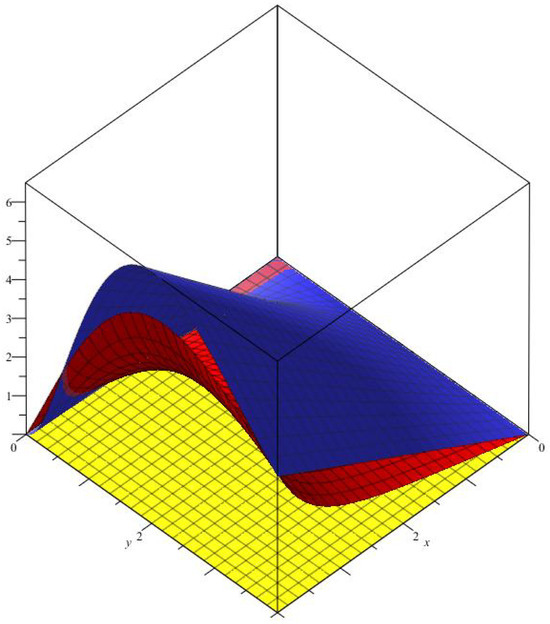
Figure 1 shows the optimal approximation of operators
Figure 1.
Convergence of two−dimensional -Bernstein–Chlodowsky polynomials.
(red), (yellow)
with , to function (blue).
Example 2.
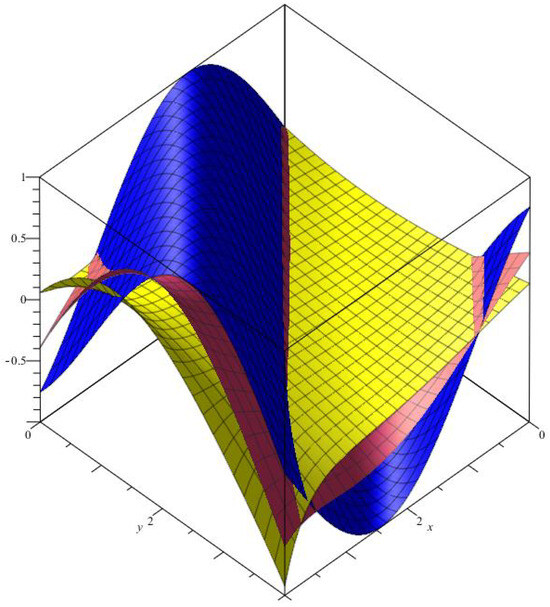
Figure 2 shows the optimal approximation of operators
Figure 2.
Convergence of two−dimensional -Bernstein–Chlodowsky polynomials.
(red), (yellow)
with , to function (blue).
Example 3.
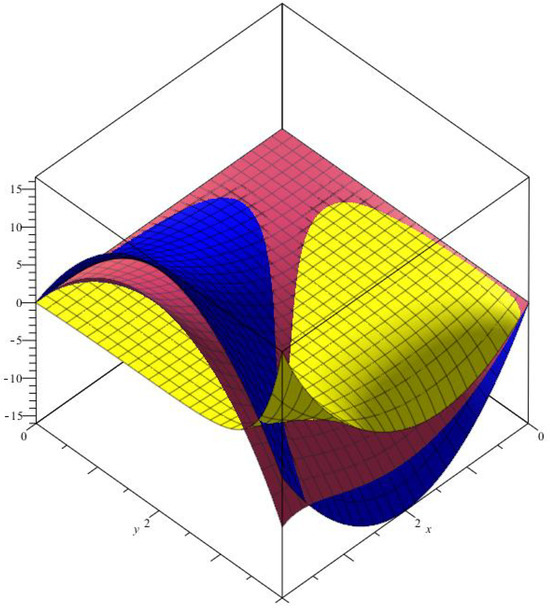
Figure 3 shows the optimal approximation of operators
Figure 3.
Convergence of two−dimensional -Bernstein–Chlodowsky polynomials.
(red), (yellow)
with , to function (blue).
Theorem 6.
Let , then we have
where
Proof.
Let . Utilizing Taylor’s formula, we derive
By applying to both sides of the above equation, we obtain
As and , one can write the following:
By (5), (6), we deduce
By the linearity , we obtain
This step completes the proof. □
Initially, we need to establish the auxiliary result found in the subsequent lemma.
Lemma 3.
Let be sequences such that and as . Then, we have the following limits:
- (i)
- (ii)
- .
Proof.
(i) Using Lemma 1, we have
Then, we obtain
Takingthe limit of both sides of the above equality as , we can write:
(ii) Utilizing Lemma 1 along with the linearity of the operators , we arrive at
where
It is clear that
Taking the limit of both sides of , we arrive at
Similarly, we can show that
Now, we are ready to present a Voronovskaja-type theorem for .
Theorem 7.
Let . Then, we have
Proof.
Let . Then, we write Taylor’s formula of f as follows:
where and as .
If we apply the operator on (17), we obtain
Applying the limit of both sides of the above equality, we obtain , □
By Cauchy–Schwarz inequality, we can write the following
As and from Lemma 3(ii)
is finite, then we have
Hence, we deduce
Thisstep completes the proof.
4. Weighted Approximation Properties of Two-Variable Function
In this section, we investigate the convergence of the sequence of linear positive operators to a function of two variables defined within a weighted space. We also compute the rate of convergence using the weighted modulus of continuity.
Let , and define as the space of all functions f defined on the real axis that satisfy , where is a positive constant dependent solely on f. The subspace of consists of all continuous functions and is equipped with the norm
Let represent the subspace of all functions for which exists and is finite. For every , the weighted modulus of continuity is defined as
Lemma 4.
The operators defined (2) act from to if and only if the inequality
holds for some positive constant c.
Theorem 8.
Consider the sequence of linear positive operators defined in (2). For any function and for all points , it follows that
Proof.
From Lemma 2, we obtain
Again by Lemma 2, we can write the following
Considering the limit of both sides of the preceding inequality as and applying (3) and (4), we derive
By applying the weighted Korovkin theorem for functions of two variables as established by Gadzhiev in references [29,30], we derive the intended results. □
To estimate the rate of convergence, we need the following lemma:
Now, compute the rate of convergence of the operator in weighted spaces.
Theorem 9.
If then we have
where is a constant independent of and , .
Proof.
Taking into account the following inequality given in [31], we deduce
Applying to both sides above inequality and using Cauchy–Schwarz inequality, one can write following:
Taking , one can write the following:
where is a constant independent of Since for sufficiently large we obtain
This step completes the proof. □
Author Contributions
Ü.K. was responsible for conceptualization; A.K. conducted the validation and formal analysis; A.A. handled the writing process. All authors have reviewed and approved the final version of the manuscript.
Funding
This study did not receive any external funding.
Data Availability Statement
The data are available within the article itself.
Acknowledgments
We appreciate the referees for their meticulous examination of the original manuscript and for their constructive suggestions.
Conflicts of Interest
The authors declare no conflicts of interest.
References
- Karaisa, A. Approximation by Durrmeyer type Jakimoski–Leviatan operators. Math. Methods Appl. Sci. 2015, 39, 2401–2410. [Google Scholar] [CrossRef]
- Karaisa, A.; Karakoc, F. Stancu type generalization of Dunkl analogue of Szàsz operators. Adv. Appl. 2016, 26, 1235–1248. [Google Scholar] [CrossRef]
- Barbosu, D. Some Generalized Bivariate Bernstein Operators. Math. Notes Miskolc. 2000, 1, 3–10. [Google Scholar] [CrossRef]
- Karsli, H. A Voronovskaya type theory for the second derivative of the Bernstein-Chlodovsky polynomials. Proc. Est. Acad. Sci. 2012, 61, 9–19. [Google Scholar] [CrossRef]
- Büyükyazıcı, I.; Sharma, H. Approximation properties of two-dimensional q-Bernstein–Chlodowsky–Durrmeyer operators. Numer. Funct. Anal. Optim. 2012, 33, 1351–1371. [Google Scholar] [CrossRef]
- Büyükyazıcı, I. Approximation by Stancu–Chlodowsky polynomials. Comput. Math. Appl. 2010, 59, 274–282. [Google Scholar] [CrossRef]
- Butzer, P.L.; Karsli, H. Voronovskaya-type theorems for derivatives of the Bernstein-Chlodovsky polynomials and the Szász–Mirakyan operator. Comment. Math. 2009, 49, 33–58. [Google Scholar]
- Agrawal, P.N.; Ispir, N. Degree of Approximation for Bivariate Chlodowsky–Szász-Charlier Type Operator. Results Math. 2016, 69, 369–385. [Google Scholar] [CrossRef]
- Mammadova, A.N.; Abdullayeva, A.E. Approximation properties of generalized Szasz and Bernstein-Chlodowsky operators. Tbil. Math. J. 2021, 14, 179–192. [Google Scholar] [CrossRef]
- Gupta, V. A new type of exponential operator. Filomat 2023, 37, 4629–4638. [Google Scholar] [CrossRef]
- Lupaş, A. q-analogue of the Bernstein operator. In Seminar on Numerical and Statistical Calculus; University of Cluj-Napoca: Cluj-Napoca, Romania, 1987; Volume 9, pp. 85–92. [Google Scholar]
- Karaisa, A.; Tollu, D.T.; Asar, Y. Stancu type generalization of q-Favard-Szàsz operators. Appl. Math. Comput. 2015, 264, 249–257. [Google Scholar] [CrossRef]
- Acu, A.M.; Muraru, C.V. Approximation Properties of bivariate extension of q-Bernstein-Schurer-Kantorovich operators. Result Math. 2015, 67, 265–279. [Google Scholar] [CrossRef]
- Aral, A.; Gupta, V.; Agarwal, R.P. Applications of q-Calculus in Operator Theory; Springer: Berlin, Germany, 2013. [Google Scholar]
- Büyükyazıcı, I. On the approximation properties of two-dimensional q-Bernstein-Chlodowsky polynomials. Math. Commun. 2009, 14, 255–269. [Google Scholar]
- Mursaleen, M.; Ansari, K.J.; Khan, A. On (p, q)-analogue of Bernstein operators. Appl. Math. Comput. 2015, 266, 874–882, Erratum in Appl. Math. Comput. 2016, 278, 70–71. [Google Scholar] [CrossRef]
- Mursaleen, M.; Nasiuzzaman, M.D.; Nurgali, A. Some approximation results on Bernstein–Schurer operators defined by (p, q)-integers. J. Ineq. Appl. 2015, 249, 1–15. [Google Scholar] [CrossRef][Green Version]
- Mursaleen, M.; Ansari, K.J.; Khan, A. Some approximation results by (p, q)-analogue of Bernstein–Stancu operators. Appl. Math. Comput. 2015, 64, 392–402. [Google Scholar] [CrossRef]
- Mursaleen, M.; Nasiruzzaman, M.; Khan, A.; Ansari, K.J. Some Approximation Results on Bleimann-Butzer-Hahn Operators Defined by (p, q)-Integers. Filomat 2016, 30, 639–648. [Google Scholar] [CrossRef]
- Acar, T.; Aral, A.; Mohiuddine, S.A. Approximation by bivariate (p, q)-Bernstein–Kantorovich operator. Iran. J. Sci. Technol. Trans. A Sci. 2018, 42, 655–662. [Google Scholar] [CrossRef]
- Gupta, V. (p, q)-Szàsz-Mirakyan-Baskakov operators. Complex Anal. Oper. Theory 2018, 12, 17–25. [Google Scholar] [CrossRef]
- Sadjang, P.N. On the fundamental theorem of (p, q)-calculus and some (p, q)-Taylor formulas. arXiv 2015, arXiv:1309.3934. [Google Scholar]
- Sahai, V.; Yadav, S. Representations of two parameter quantum algebras and p, q-special functions. J. Math. Anal. Appl. 2007, 335, 268–279. [Google Scholar] [CrossRef]
- Ansari, K.J.; Karaisa, A. On the approximation by Chlodowsky type generalization of (p, q)-Bernstein operators. Int. J. Nonlinear Anal. Appl. 2017, 8, 181–200. [Google Scholar]
- Volkov, V.J. On the convergence of linear positive operators in the space of continuous functions of two variables. Dokl. Nauk SSSR 1957, 115, 17–19. [Google Scholar]
- Anastassiou, G.A.; Gal, S.G. Approximation Theory: Moduli of Continuity and Global Smoothness Preservation; Birkhäuser: Boston, MA, USA, 2000. [Google Scholar]
- Butzer, P.L.; Berens, H. Semi-Groups of Operators and Approximation; Springer: New York, NY, USA, 1967. [Google Scholar]
- Maplesoft, version 2023.0. Computer Software. Maplesoft: Waterloo, ON, Canada, 2024. Available online: https://www.maplesoft.com (accessed on 29 January 2024).
- Gadjiev, A.D. Linear positive operators in weighted space of functions of several variables. Izv. Acad. Sci. Azerbaijan 1980, 1, 32–37. [Google Scholar]
- Gadjiev, A.D.; Hacýsalihoglu, H. On Convergence of the Sequences of Linear Positive Operators. Ph.D. Thesis, Ankara University, Ankara, Turkey, 1995. (In Turkish). [Google Scholar]
- Atakut, C.; Ispir, N. Approximation by modified Szász-Mirakjan operators on weighted spaces. Proc. Indian Acad. Sci. Math. 2002, 112, 571–578. [Google Scholar]
Disclaimer/Publisher’s Note: The statements, opinions and data contained in all publications are solely those of the individual author(s) and contributor(s) and not of MDPI and/or the editor(s). MDPI and/or the editor(s) disclaim responsibility for any injury to people or property resulting from any ideas, methods, instructions or products referred to in the content. |
© 2024 by the authors. Licensee MDPI, Basel, Switzerland. This article is an open access article distributed under the terms and conditions of the Creative Commons Attribution (CC BY) license (https://creativecommons.org/licenses/by/4.0/).