Abstract
In this paper, we aim to give some results for third-order differential subordination for analytic functions in the open unit disk involving the new integral operator . The results are obtained by examining pertinent classes of acceptable functions. New findings on differential subordination have been obtained. Additionally, some specific cases are documented. This work investigates appropriate classes of admissible functions, presents a novel of new integral operator, and discusses the properties of third-order differential subordination. The properties and results of the differential subordination are symmetrical to the properties of the differential superordination to form the sandwich theorems.
MSC:
30C45
1. Introduction
Several authors, such as Antonino and Miller [1], have expanded the scope of second-order differential subordinations, which were initially formulated by Mocanu and Miller [2], to encompass third-order differential subordinations. Approaches suggested by Miller and Antonino offer a possibility of acquiring intriguing novel findings. Furthermore, some authors have commenced their work in this specific line of investigation [3,4]. The concept of expanding the pair theory of differential superordination [5] to third-order differential superordination was introduced in 2014 [6], with novel and intriguing outcomes soon following [7,8]. The next symbols and concepts serve as the fundamental framework in this study.
Many scholars have discussed and dealt with second-order differential subordination and superordination, see [9,10,11,12,13,14,15,16,17,18,19,20,21]. Several authors have recently written about superordination and the principle of third-order differential subordination. For examples of asymmetrical subordination and superordination on a third-order case, see [1,3,4,6,7,8,22,23,24,25,26,27,28,29]. Antonino and Miller [1] presented basic concepts and expanded Miller and Mocanu’s [30] principle of second-order differential subordination in the open unit disk to the third-order case.
The family of analytic functions is denoted as , when the open unit disk , and also Let will be a positive integer as well, will be a complex number, and the next major subfamilies of are defined as follows:
such that and
Let be a subclass of consisting of functions that are analytic in and possess the normalized Taylor–Maclaurin series:
Assume the functions and . If is subordinate to , or is superordinate to , it is defined as
if there exists a Schwarz function which is analytic in with and , such that .
Furthermore, if is a univalent function in , it satisfies the following equivalence relationship [27]:
Example 1.
Consider and . Choose . We note that and , hence is a Schwarz function. Using the function , we observe that
Therefore, .
Example 2.
It is well known that the properties of the sine function qualify it to satisfy the conditions of a Schwarz function, i.e., and . Therefore, with .
Example 3.
Here, we will take two functions that cannot subordinate one another. Assume that and . We will prove by contradiction. Suppose that for some Schwarz function , yields , and this a contradiction.
If is given by (1), and defined by
the Hadamard product (or convolution) of and is given by
Differential subordination is an extension of multiple inequalities related to complex variables. Additional concepts and terminologies from the theory of differential subordinations are presented through the introduction of novel operators.
In this paper, we define a new integral operator , which is defined as follows:
where
In general,
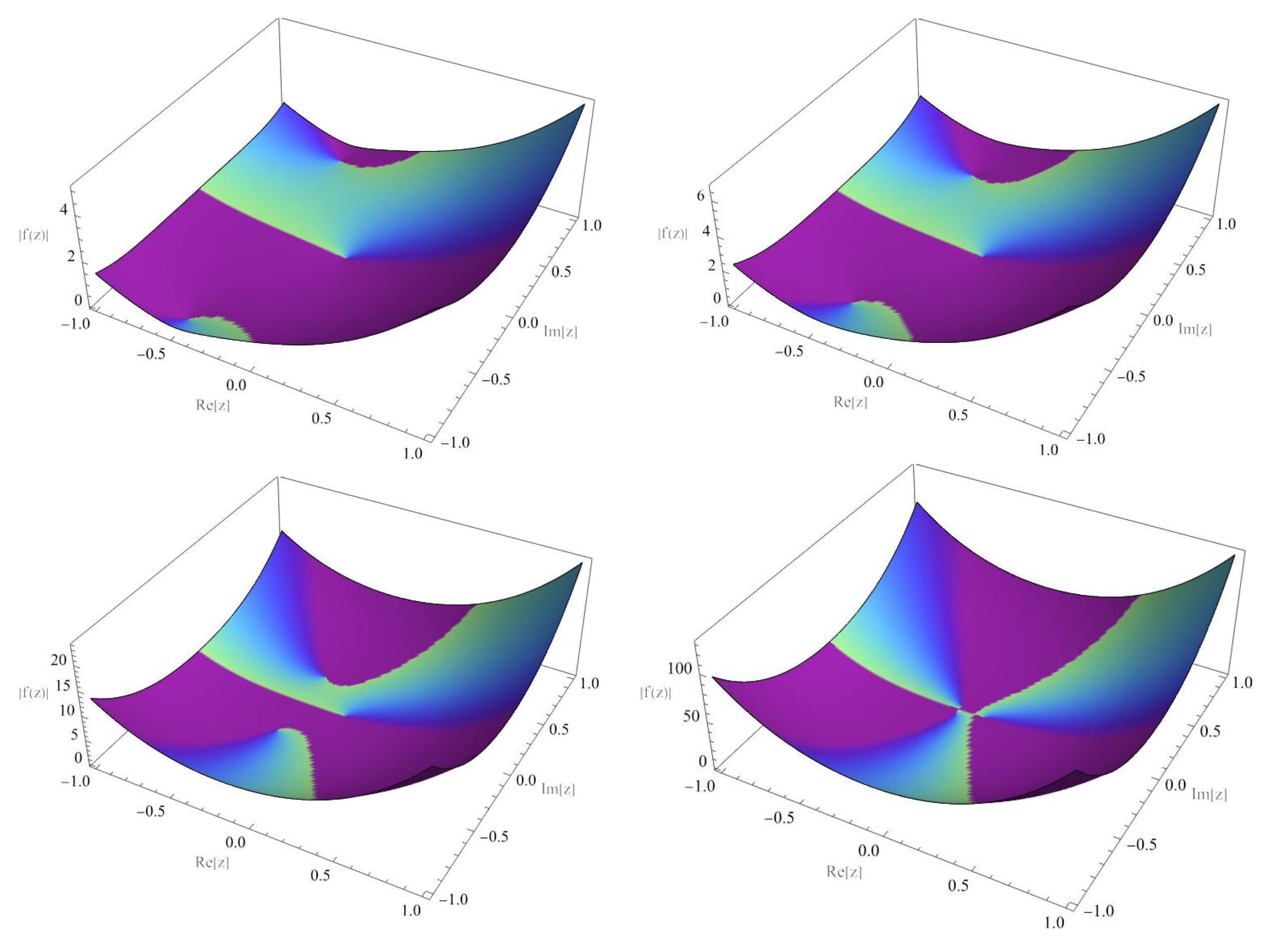
Figure 1 below describe the geometric changes on under whenever , , and
Figure 1.
, ,, and of .
Colors play an important role in visualizing complex functions. In a plot of a complex function , colors are used to represent the angle (or phase) of the function’s values. The angle is determined by the following formula:
This angle helps us to understand the direction of points in the complex plane. To represent the angle with colors, we use a color gradient like the rainbow, which maps different angles to specific colors. The angle is normalized to a range between 0 and 2π. The resulting plot shows how colors change with the angle. Areas with similar angles will have similar colors, while different angles will display contrasting colors. This visual representation helps researchers analyze the behavior of complex functions more effectively. However, the simple calculations give
The idea of third-order differential subordination is discussed in the study conducted by Ponnusamy and Juneja [29] and recent works by some authors (for instance, [4,8]). The second- and third-order differential subordination has garnered significant attention from authors in this field. (for instance, [1,9,10,11,12,13,14,15,16,17,18,22,30,31,32,33]). In this study, we examine a specific family of admissible functions involved in the new integral operator and establish adequate criteria for the normalized analytic function known as the differential subordination condition. There are advantages of creating a new operator for the purpose of obtaining new applications about the differential subordination and superordination of the third order, which are important in medical physics applications such as, brain diseases.
2. Preliminary Results
The acquisition of the next definitions and lemmas is an important to fulfil our outcomes.
Definition 1.
[1]: Let and suppose that the function is univalent in . If the function is analytic in and it satisfies the following third-order differential subordination
then
is called a solution of the differential subordination n (3). Furthermore, a given univalent function
is called a dominant of the solutions of (3) or, more simply, a dominant if
for all
satisfying (3). A dominant
that satisfies
for all dominants
of (3) is said to be the best dominant.
Definition 2.
[1]: Suppose that , the set of all functions , which is analytic and injective on , when, where for . Additionally, let the subclass of for which be denoted as, and,
Applications of the subordination methodology are applied to suitable classes of admissible functions. According to Antonino and Miller [1], the following class of admissible functions is defined.
Definition 3.
[1]: Let be a set in , and {1} be the set of positive integers. The class of admissible functions consists of those functions , which satisfy the following admissibility conditions:
where
and
The following lemma is a foundation result in the theory of third-order differential subordination.
Lemma 1.
[1]:
Let and are satisfying the following conditions:
where and then if , and
Novelty of the Study for Third-Order Differential Subordination and Superordination
An essential method within the research of third-order differential subordination involves utilizing a fundamental notion of an admissible function, as presented within [15]. Utilizing that approach, notable outcomes were attained by several authors investigating suitable classes of admissible functions including generalized Bessel functions [8], some operators [7,31], the Srivastava–Attiya operator [27,28], linear operators [25,26], meromorphic functions [14], or Mittag–Leffler functions [26]. The two pairs of hypotheses of third-order differential subordination with superordination are developing well. Very recent outcomes acquired utilizing this approach can be found in papers such as [19,23,24,25,34]. A novel approach for third-order differential subordination has been obtained within modern study taking another essential notion within the theory of differential subordination, which is the best dominant of the differential subordination. From [27,28], approaches to determine the dominant of a third-order differential subordination’s best dominant are also provided. Creating a new operator for the purpose of obtaining new applications about the differential subordination and superordination of the third order is important in medical physics applications such as, brain diseases.
3. Results Related to the Third-Order Differential Subordination
In this context, we present a set of differential subordination outcomes utilizing the new integral operator.
Definition 4.
Let be a set in and The class of admissible functions consists of those functions which satisfy the following admissibility conditions:
whenever
and
where
Theorem 1.
Let . If the functions and, are satisfying the following conditions:
and
then
Proof 1.
Define the analytic function in by
Form Equations (2) and (4), we have
By a similar argument, yields
and
Define the transformation from by
and
Let
The proof will utilize the Lemma 1. Applying (6)–(9) and by (10), we acquire
Hence,
leads to
We observed that
and
Thus, the admissibility conditions for in Definition 4 is equivalent to admissibility condition as given in Definition 3 with
Therefore, using (4) and Lemma 1, we have
This completes the proof. □
The subsequent outcome is a continuation of Theorem 1, for the situation when the conduct of on is unknown.
Corollary 1.
Let and Let where If the functions with satisfy the following conditions:
and
then
Proof 2.
Applying Theorem 1, to get
The result asserted by Corollary 1 is now deduced from the following subordination property
This completes the proof □
If is a simply connected domain, the for some conformal mapping on to In this case the class is written as . This leads to the following immediate consequence of Theorem 1.
Theorem 2.
Let
If the functions
satisfying the following conditions:
and
then
The subsequent result is a direct consequence of Corollary 2.
Corollary 2.
Let and let the function be univalent within Assume for some where If the functions and satisfiing the following conditions:
and
then
The following result yields the best dominant of differential subordination (12).
Theorem 3.
Suppose that be univalent function within Also, assume that such that is given in (10). Consider that subsequent differential equation
Possesses a solution
such that
, which fulfils condition (4). When meets the criterion (12), and , is analytic within , thus
withis the best dominant.
Proof 3.
According to Theorem 1, it is evident that is a dominant of (12). Given that satisfies (11), it consequently serves as a solution to (12). Consequently, will be overshadowed by all dominant entities. Therefore, is the optimal dominant. This concludes the proof. □
In view of Definition 4, a special case when the class of admissible functions, denoted by is expressed as follows.
Definition 5.
Let and The class of admissible functions consists of those functions such that
where
and
Corollary 3.
Assume belongs to . If the functions and belong to and satisfy the following requirements:
and
then
When
the class
is simple denoted by
Corollary 3 can now be rewritten as follows.
Corollary 4.
Let If the functions satisfies the following conditions:
and
then
Definition 6.
Let The class of admissible functions consists of those functions satisfying the following admissibility conditions:
whenever
and
where
Theorem 4.
Let If the functions are satisfying the following conditions:
and
then
Proof 4.
Define the analytic function by
From Equations (2) and (15), we have
By similar argument, we get
and
Define the transformation from
by
and
Let
Using Lemma 1 with the Equations (15)–(18) and (20), we have
Hence, clearly (14) becomes
We observed that
and
Therefore, the admissibility criterion for in Definition 6 is similar to the admissibility criterion for , as specified in Definition 3 with .
Consequently, employing (13) and Lemma 1, we obtain
If is a simply connected domain, the for some conformal mapping onto In this case, the class is written as which leads to the following immediate consequence of Theorem 4.
Theorem 5.
Let If and satisfy the following conditions:
and
then
In view of Definition 6, and in special case when
the class
of admissible functions, denoted by
is expressed follows.
Definition 7.
Let be set in and The class of admissible functions consists of those functions such that
whenever, and
Corollary 5.
Let If the functions are satisfied the following conditions
and
then
When
the class
is simple and denoted by
Corollary 6 can now be rewritten in the following from.
Corollary 6.
Let If the functions are satisfied the following conditions
and
then
4. Conclusions
In this paper, we have established new results on third-order differential subordination for analytic functions within the open unit disk, utilizing the newly introduced integral operator . Through the examination of admissible function classes, we derived significant findings that enhance the understanding of differential subordination. Additionally, specific cases were highlighted to demonstrate the applicability of the results. The introduced operator and its associated properties open up further avenues for research in the field of differential subordination, providing valuable insights for future studies. In the future, fractional operators or those with probabilistic parameters (see [20,21,35]) can be used to expand the scope of these results and explore new applications.
5. Discussion
Our research enhances the comprehensive understanding of univalent functions, their subclasses, and their prospective applications across several mathematical domains, such as concepts the differential subordination and superordination using new operators. The data acquired may provide a basis for subsequent research into the characteristics and uses of univalent functions and their subclasses. Future research endeavors may investigate more improvements of the boundaries and analyze other subclasses of univalent functions to reveal new insights into their properties and potential applications defined by fractional operators, or those with probabilistic parameters can be used to expand the scope of these results and explore new applications. This study facilitates a more profound investigation of the intriguing domain of bi-univalent functions and their significance in mathematics.
Author Contributions
Conceptualization, S.F.M. and W.G.A.; methodology, A.N.A.; software, S.F.M.; validation, W.G.A. and A.N.A.; formal analysis, S.F.M. and A.N.A.; investigation, W.G.A. and A.N.A.; resources, S.F.M. and A.N.A.; data curation, S.F.M. and W.G.A.; writing—original draft preparation, S.F.M. and W.G.A.; writing—review and editing, A.N.A.; visualization, S.F.M. and A.N.A.; supervision, W.G.A.; project administration, S.F.M. and A.N.A.; funding acquisition, W.G.A. and S.F.M. All authors have read and agreed to the published version of the manuscript.
Funding
This research received no external funding.
Data Availability Statement
Data are contained within the article.
Conflicts of Interest
The authors declare no conflicts of interest.
References
- Antonion, J.A.; Miller, S.S. Third-order differential inequalities and subordination in complex plane. Complex Var. Elliptic Equ. 2011, 56, 439–454. [Google Scholar] [CrossRef]
- Miller, S.S.; Mocanu, P.T. Differential Subordinations: Theory and Applications; Series on Monographs and Textbooks in Pure and Applied Mathematics, No. 225; Marcel Dekker: New York, NY, USA; Basel, Switzerland, 2000. [Google Scholar]
- Jeyaraman, M.P.; Suresh, T.K. Third-order differential subordination of analytic functions. Acta Univ. Apulensis Math. Inform. 2013, 35, 187–202. [Google Scholar]
- Tang, H.; Deniz, E. Third-order differential subordination results for analytic functions involving the generalized Bessel functions. Acta Math. Sci. Ser. B Engl. Ed. 2014, 34, 1707–1719. [Google Scholar] [CrossRef]
- Miller, S.S.; Macanu, P.T. Subordinates of differential superordinations. Complex Var. Theory Appl. 2003, 48, 815–826. [Google Scholar]
- Tang, H.; Srivastava, H.M.; Li, S.; Ma, L. Third-order differential subordination and superordination results for meromorphically multivalent functions associated with the Liu-Srivastava operator. Abstr. Appl. Anal. 2014, 2014, 792175. [Google Scholar] [CrossRef]
- Ibrahim, R.W.; Ahmad, M.Z.; Al-Janaby, H.F. Third-order differential subordination and superordination involving a fractional operator. Open Math. 2015, 13, 706–728. [Google Scholar] [CrossRef]
- Tang, H.; Srivastava, H.M.; Deniz, E.; Li, S. Third-order differential superordination involving the generalized Bessel functions. Bull. Malays. Math. Sci. Soc. 2015, 38, 1669–1688. [Google Scholar] [CrossRef]
- Al-Ameedee, S.A.; Atshan, W.G.; Al-Maamori, F.A. Some new results of differential subordinations for Higher-order derivatives of multivalent functions. J. Phys. Conf. Ser. 2021, 1804, 012111. [Google Scholar] [CrossRef]
- Atshan, W.G.; Ali, A.A.R. On Sandwich theorems results for certain univalent functions defined by generalized operators. Iraqi J. Sci. 2021, 62, 2376–2383. [Google Scholar] [CrossRef]
- Ali, E.E.; Srivastava, H.M.; El-Ashwah, R.M.; Albalahi, A.M. Differential subordination and differential superordination for classes of admissible multivalent functions associated with a linear operator. Mathematics 2022, 10, 4690. [Google Scholar] [CrossRef]
- Aouf, M.K.; Mostafa, A.O. Subordination results for analytic functions associated with fractional q-calculus operators with complex order. Afr. Mat. 2020, 31, 1387–1396. [Google Scholar] [CrossRef]
- Aouf, M.K.; Madian, S.M. Subordination factor sequence results for starlike and convex classes defined by q-Cătaş operator. Afr. Mat. 2021, 32, 1239–1251. [Google Scholar] [CrossRef]
- Hadi, S.H.; Darus, M.; Ghanim, F.; Alb Lupaş, A. Sandwich-Type Theorems for a Family of Non-Bazilevič Functions Involving a q-Analog Integral Operator. Mathematics 2023, 11, 2479. [Google Scholar] [CrossRef]
- Bulboaca, T. Differential Subordinations and Superordinations: Recent Results; House of Scientific Book Publishing: Cluj-Napoca, Romania, 2005. [Google Scholar]
- Cho, N.E.; Bulboacă, T.; Srivastava, H.M. A general family of integral and associated subordination and superordination properties of some special analytic function classes. Appl. Math. Comput. 2012, 219, 2278–2288. [Google Scholar] [CrossRef]
- Darweesh, A.M.; Atshan, W.G.; Battor, A.H. On sandwich results of meromorphic univalent functions defined by new operator. AIP Conf. Proc. 2023, 2845, 050035. [Google Scholar]
- Aouf, M.K.; Mostafa, A.O.; Zayed, H.M. Subordination and superordination properties of p-valent functions defined by a generalized fractional differintegral operator. Quaest. Math. 2016, 39, 545–560. [Google Scholar] [CrossRef]
- Swamy, S.R. Sandwich theorems for p-valent functions defined by certain integral operator. Int. J. Math. Arch. 2013, 4, 101–107. [Google Scholar]
- El-Deeb, S.M.; Bulboacă, T. Differential Sandwich-Type Results for Symmetric Functions Associated with Pascal Distribution Series. J. Contemp. Math. Anal. (Armen. Acad. Sci.) 2021, 56, 214–224. [Google Scholar] [CrossRef]
- Zayed, H.M.; Mohammadein, S.A.; Aouf, M.K. Sandwich results of p-valent functions defined by a generalized fractional derivative operator with application to vortex motion. Rev. Real Acad. Cienc. Exactas Físicas Nat. Ser. A Matemáticas 2019, 113, 1499–1514. [Google Scholar] [CrossRef]
- Seoudy, T.M. Some applications of third-order differential subordination for analytic functions involving k-Ruscheweyh derivative operator. Afr. Mat. 2023, 34, 29. [Google Scholar] [CrossRef]
- Atshan, W.G.; Hiress, R.A.; Altinkaya, S. On third-order differential subordination and superordination properties of analytic functions defined by a generalized operator. Symmetry 2022, 14, 418. [Google Scholar] [CrossRef]
- Darweesh, A.M.; Atshan, W.G.; Battor, A.H.; Lupas, A.A. Third-order differential subordination results for analytic functions associated with a certain differential operator. Symmetry 2022, 14, 99. [Google Scholar] [CrossRef]
- Farzana, H.A.; Stephen, B.A.; Jeyaramam, M.P. Third-order differential subordination of analytic function defined by functional derivative operator. Analele Stiintifice Univ. Al I Cuza Iasi Mat. (New Ser.) 2016, 62, 105–120. [Google Scholar]
- Răducanu, D. Third-order differential subordinations for analytic functions associated with generalized Mittag-Leffler functions. Mediterr. J. Math. 2017, 14, 167. [Google Scholar] [CrossRef]
- Oros, G.I.; Oros, G.; Preluca, L.F. New applications of Gaussian Hypergeometric function for developments on third-order differential subordinations. Symmetry 2023, 15, 1306. [Google Scholar] [CrossRef]
- Oros, G.I.; Oros, G.; Preluca, L.F. Third-order differential subordinations using fractional integral of Gaussian Hypergeometric function. Axioms 2023, 12, 133. [Google Scholar] [CrossRef]
- Ponnusamy, S.; Juneja, O.P. Third-order differential inequalities in the complex plane. In Current Topics in Analytic Function Theory; World Scientific Publishing Company: Singapore; London, UK, 1992. [Google Scholar]
- Miller, S.S.; Macanu, P.T. Differential subordinations and univalent functions. Mich. Math. J. 1981, 28, 157–171. [Google Scholar] [CrossRef]
- Zayed, H.M.; Bulboaca, T. Applications of differential subordinations involving a generalized fractional differintegral operator. J. Inequal. Appl. 2019, 2019, 242. [Google Scholar] [CrossRef]
- Rao, N.; Ayman-Mursaleen, M.; Aslan, R. A note on a general sequence of λ-Szász Kantorovich type operators. Comput. Appl. Math. 2024, 43, 428. [Google Scholar] [CrossRef]
- Ayman-Mursaleen, M.; Heshamuddin, M.; Rao, N.; Sinha, B.K.; Yadav, A.K. Hermite polynomials linking Szász–Durrmeyer operators. Comput. Appl. Math. 2024, 43, 223. [Google Scholar] [CrossRef]
- Theyab, S.D.; Atshan, W.G.; Lupas, A.A.; Abdullah, H.K. New results on higher-order differential Subordination and superordination for univalent analytic functions using a new operator. Symmetry 2022, 14, 1576. [Google Scholar] [CrossRef]
- Tayyah, A.S.; Atshan, W.G. New Results on (r, k, μ)-Riemann–Liouville Fractional Operators in Complex Domain with Applications. Fractal Fract. 2024, 8, 165. [Google Scholar] [CrossRef]
Disclaimer/Publisher’s Note: The statements, opinions and data contained in all publications are solely those of the individual author(s) and contributor(s) and not of MDPI and/or the editor(s). MDPI and/or the editor(s) disclaim responsibility for any injury to people or property resulting from any ideas, methods, instructions or products referred to in the content. |
© 2024 by the authors. Licensee MDPI, Basel, Switzerland. This article is an open access article distributed under the terms and conditions of the Creative Commons Attribution (CC BY) license (https://creativecommons.org/licenses/by/4.0/).