1. Introduction
Controlled-source audio-frequency magnetotellurics (CSAMT) is a common electromagnetic prospecting method, which is mainly divided into the scalar method, vector method, and tensor method. Traditional scalar and vector CSAMT uses a grounded symmetric dipole (GSD) as a transmitting source. The symmetric dipole (SD) is one of the most straightforward antenna configurations that has a well-known symmetric radiation pattern. It can be realized with two metallic conductors that have a sinusoidal voltage difference applied between them. Due to the large transceiving distance (TD), the GSD should be treated as a point source with a symmetric radiation pattern. Significantly, when using the tensor method for observation, GSDs in two vertical directions will be employed to radiate energy. Because only a tiny fraction of the radiant energy from the GSD is utilized, while most of it is wasted, a shorter TD or higher transmitting power (TP) is necessary to generate an appropriate signal-to-noise ratio (SNR) at the receiving point. To enhance the SNR, traditional methods depend on increasing the TP or shortening the TD. On the one hand, due to the restriction of the current power electronics technology, the TP cannot be increased without limitation, and the higher the TP, the larger the weight and volume, which are not conducive to field exploration. On the other hand, shortening the TD will lead to some problems, such as the source effect that has been extensively studied by many scholars [
1,
2,
3,
4,
5]. However, when the receiver is located in the near-field, the distortion of apparent resistivity or the impedance phase caused by the source effect will complicate the processing of CSAMT data and often leads to errors in inferring the underground geological structure.
The electromagnetic wave will deflect and refract during its propagation in the underground medium, so the vibration direction and phase of the electromagnetic wave will change. In scalar and vector CSAMT, the source is a single GSD. When the scalar and vector CSAMT detects the plane electromagnetic wave, it ignores the changes in the vibration direction, phase, and frequency of the electromagnetic wave, so it can only reflect the one-dimensional electrical structure. In most cases, it only establishes a unidirectional current vector underground, which can only measure (or ) (scalar method) and (vector method) components and then calculate the impedance.
A one-way current vector does not comprehensively mirror the relevant geological structure information when the geological conditions are relatively complex. When the electromagnetic wave propagates underground, the electrical property changes, not only along the vertical direction, but also along the trend, which is a two-dimensional electrical structure. When the electrical property changes in both horizontal and vertical directions, it is a three-dimensional electrical structure.
and
are induced not only by
and
but also by
and
depending on
and
, respectively. According to the research results of tensor impedance [
6], the definition of a two-dimensional electrical structure requires four electrical parameters,
and
. The definition of the three-dimensional electrical structure requires nine electrical parameters, namely,
and
, where the electrical property is called tensor impedance. In the literature [
7], the general calculation formula of magnetotellurics tensor impedance is derived; Equation (1) shows the three-dimensional tensor impedance relationship:
Because the component of
is very small, it is difficult to observe. In practice, the following tensor impedance expression (Equation (2)) is often used:
After considering the magnetic transfer functions, we can obtain Equation (3):
where
,
represent the electric field component (EFc) in the
x,
y directions;
represent the magnetic field component (MFc) in the
x,
y, and
z directions;
is the impedance tensor;
,
are the magnetic transfer functions, and
is the tilt vector.
When conducting three-dimensional detection, it is required to take the impedances of the above nine tensors. Obviously, it is necessary to monitor the electromagnetic field components (EMFc) in two directions, which requires the emission of two groups of electromagnetic fields that vary independently with different polarization directions. The tensor CSAMT employs GSDs with EMFc changing independently in two vertical directions; the GSDs in both directions can measure a total of ten components.
The first five EMFc received in the region of concern (RoC) are recorded as
(delegating the EFc in the
x,
y directions and the MFc in the
x,
y, and
z directions of the GSD
1), and the last five EMFc are received and recorded as
in the same way. As shown in Equation (4) from the literature [
7], six linear equations can be built from Equation (3) to acquire the tensor impedance and tilt vector. Thus, the sophisticated geological body with a three-dimensional structure can be explored.
where
represent the EFc in the
x,
y directions and the MFc in the
x,
y, and
z directions of the GSD
1;
represent the EFc in the
x,
y directions and the MFc in the
x,
y, and
z directions of the GSD
2;
and
is the impedance tensor;
,
are the magnetic transfer functions.
Although the use of tensor CSAMT for exploration can better identify three-dimensional geological bodies, when using the tensor method for observation, if the geological conditions under the two GSDs vary widely, a series of problems will occur such as the asymmetry of the SNR in two vertical directions, i.e., an obvious feeble region in each component within the exploration area. When we utilize CSAMT for exploration, no matter how different the geological conditions are, we hope to maximize the use of radiant energy during the Ff observation to allow for high-quality data acquisition. Therefore, in order to improve the SNR in RoC, this paper introduces an asymmetric beamforming method (ABFM) based on arithmetic phase difference (APd) weighting in CSAMT, which maximizes the main lobe energy, reduces the sidelobe energy to an acceptable level, and achieves the required beam steering capability that traditional methods often cannot provide.
2. Principle and Methods of ABFM
The pattern of each unit in the antenna array is structurally in conjunction with the adjacent units to shape a main lobe, which radiates energy in the required direction. Generally speaking, in the normalized pattern, the maximum amplitude of the main lobe is 1, and the radiation lobes on both sides that are separated from the main lobe and have low amplitude are called side lobes. These radiations do not contribute to the radiation in the main direction. Therefore, it is always hoped that the lower, the better. The original intention of the antenna optimization is to suppress side lobes to a low level and guide the effective beam to point to the RoC. The array signal processing method is to achieve beam control by modulating the phase or amplitude of the signal. The ABFM in this paper is mainly used to control the phase of the array signal. A directional asymmetric beam can be shaped to improve energy utilization and achieve beam steering by adjusting the phase difference (Pd) weighting coefficient of each unit in the antenna array.
To achieve ABFM, the source needs to employ a GSD array rather than a single GSD because the beam of a single GSD is diffused in a spherical style and cannot be manually intervened, which is called the symmetric beamforming method (SBFM) in this paper. As for the antenna array, many scholars have conducted research in many fields, such as aerospace [
8,
9]; multi-channel GPR surveys [
10]; the improvement of SNR and the penetration depth of phased arrays [
11,
12]; and the optimization of the location accuracy of three dimensional (3D) objects [
13,
14,
15,
16,
17,
18,
19].
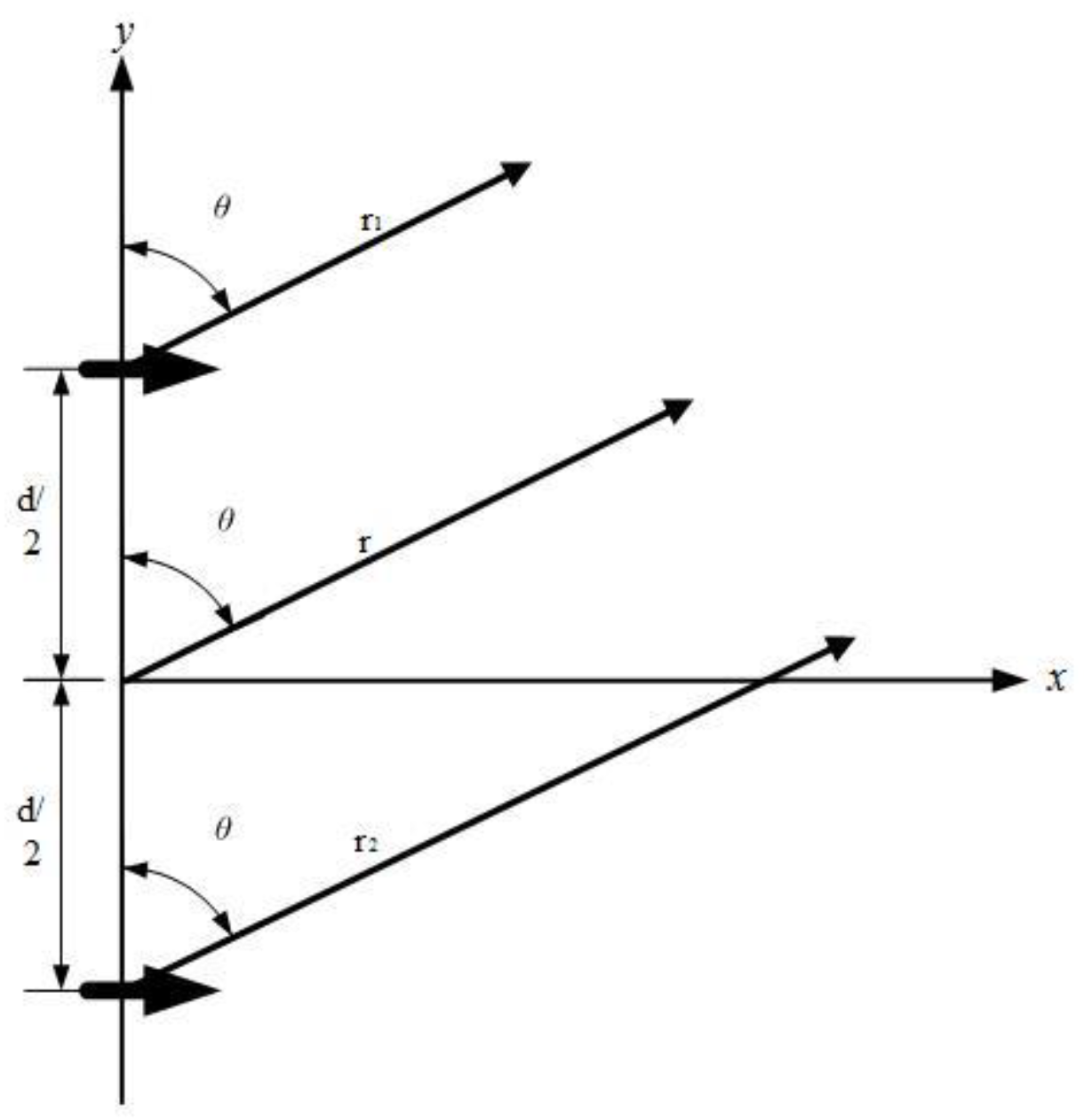
The two GSDs are placed along the
y-axis with a certain spacing
, and the current direction of the two GSDs is along the
x-axis, as depicted in
Figure 1. Assuming that the electromagnetic field between two GSDs is uncoupled, the global radiation is the sum of the field intensity vectors of the two GSDs [
20]. All array units are excited with the same voltage and different phases; then, the steering of the main lobe is guided by the APd values, that is, the deflection angle
has a linear correlation with the APd values. If the weighting coefficient of each array unit can be properly regulated according to the exploration conditions, the signal strength in the required direction can be enhanced as much as possible and the radiation in the unexpected direction can be weakened. That is, ABFM has been implemented because the beam points to the RoC.
Where is the angle between the line formed by the base point and the Ff point and the y-axis; is the distance between two GSDs; is the distance from the Ff point to the GSDs.
It goes without saying that the two GSDs are arranged in a line along the
y-axis, assuming that each unit has the same magnitude and a different phase (the phase of one unit is ahead of the adjacent one by a Pd
). Some researchers [
21] had provided the solution for the EFc radiated by a single GSD whose direction of current was along the
x-axis. During the near-field observations, we obtain the following:
When observing the middle of the field, it can be concluded that
During Ff observation, it can be inferred that
where
and
represent the EFc radiated by a single GSD,
is the distance from the observation point to the GSD,
is the angle between the line formed by the base point and the observation point and the
y-axis,
is wave impedance,
is the wave number,
is the distance between two GSDs, and
is the current distribution on the GSD.
When the voltage magnitudes of the two GSDs are equal and there is a specific Pd
between the adjacent units, during the Fr observation, due to the same direction, the field values of two GSDs should be added directly.
From the Ff assumption in
Figure 1, we can conclude that
Substitute the above Equation (12) into Equation (11) and extract the common factor to obtain the following:
Because the units of the array are consistent, the unit can be treated as a point source when calculating the array factor
. The pattern can be estimated by multiplying
by the Ff of one unit. After normalization, we obtain the following:
As can be seen from Equation (15), the array can control the characteristics of
and field density by adjusting the spacing or phase between units. When
GSDs are arranged in a line along the
y-axis, assuming that each unit has the same voltage magnitude and different phases, the
is
When
, it can be obtained by referring to the summation equation
:
If the array center is the base point, the
can be simplified to
When
approaches 0, Equation (18) can be obtained as follows:
Then, the
after normalization is
It is known that the
of the array is in the range of 0–180°; referring to Equation (19), when
,
has the maximum value, and we can calculate the angle
of the main lobe.
Finally, we can draw a conclusion as shown in Equation (22), and then ABFM can be realized.
4. ABFM Simulation in CSAMT
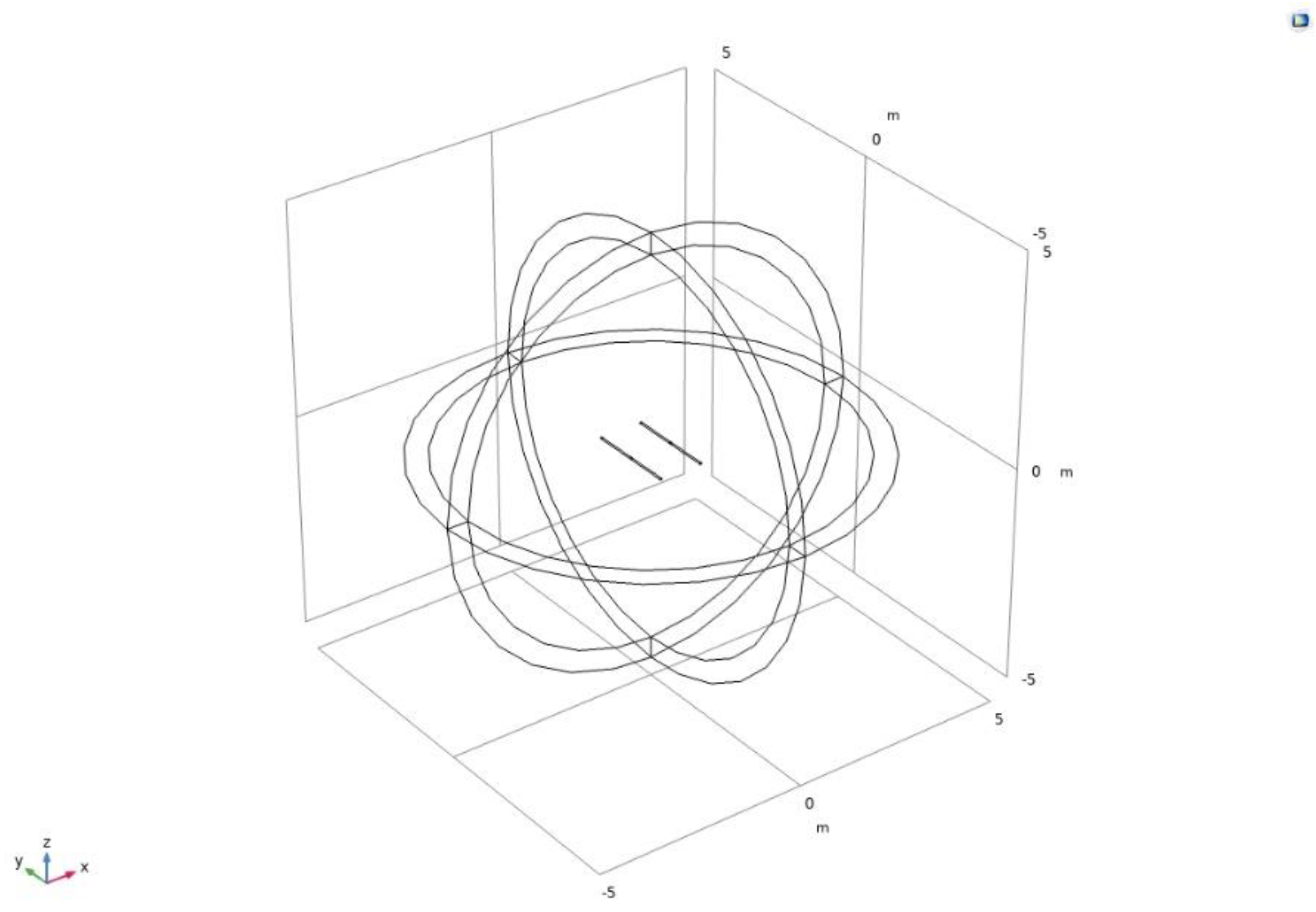
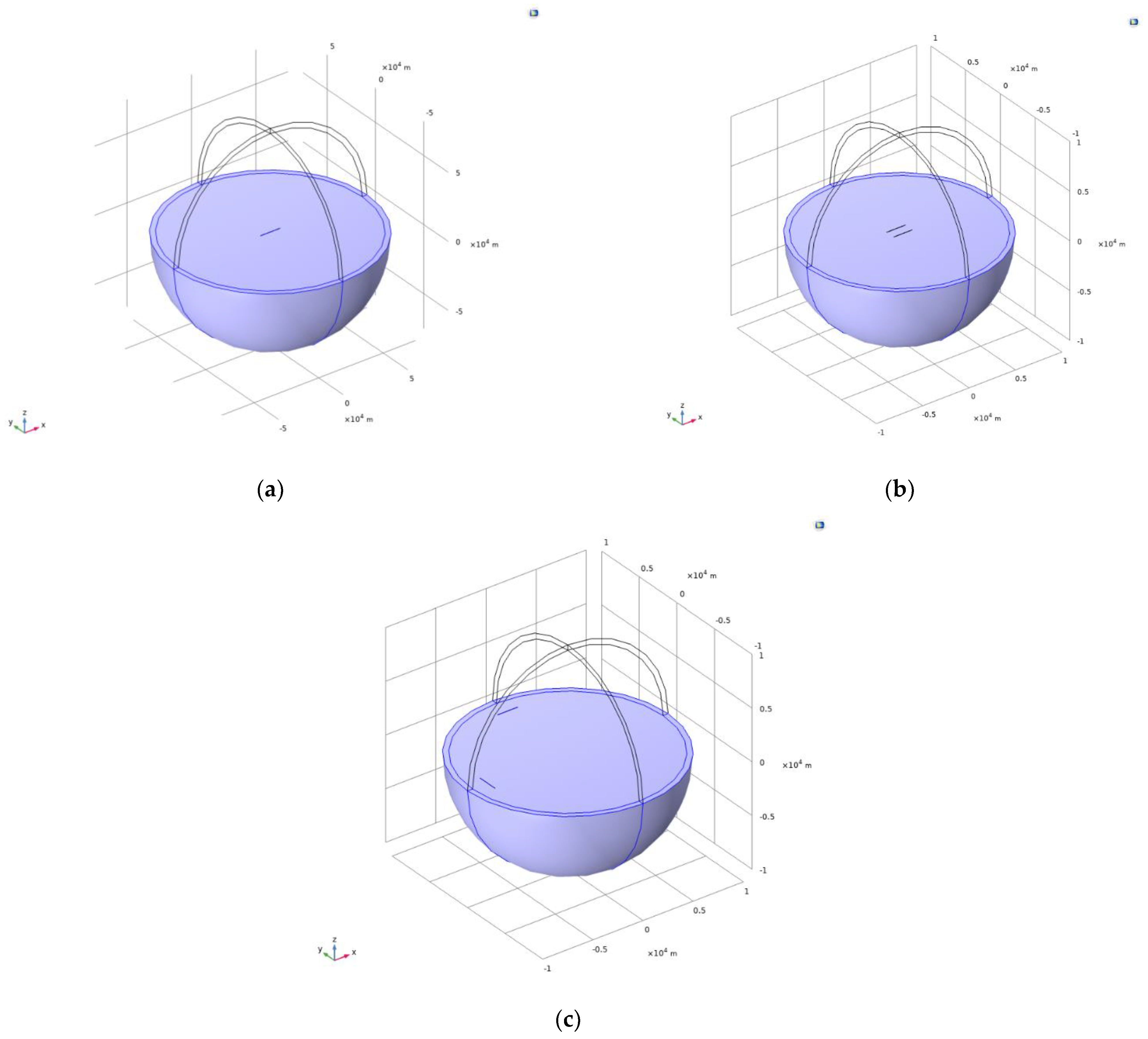
Figure 7 shows the traditional 1 × 1 CSAMT, 1 × 2 GSD array CSAMT, and GSD array tensor measurement CSAMT models, which are sphere models with a radius of 10 km. The upper half-space of the models is the air domain, of which the parameter settings are consistent with those in
Figure 2. The lower half-space of the models is the soil domain with
,
, and
. In
Figure 7a, a 1 × 1 GSD model with a 2 km length, a 0.04 m radius, and a 0.1 m gap between the two conductors is depicted.
Figure 7b shows a 1 × 2 GSD array with two GSDs separated by 1 km placed along the
y-axis on the ground, and other parameters are the same as those in
Figure 7a. The GSD array tensor measurement CSAMT model is shown in
Figure 7c, whose half-space and GSD parameters are consistent with the settings in
Figure 7a. The two GSDs of the tensor measurement CSAMT are placed on the two corners of an isosceles triangle with an edge of 8 km, which can ensure that the measurement point is located in the Ff.
4.1. Simulation Results of APd-Weighted ABFM Based on the 1 × 2 GSD Array CSAMT Model
According to the settings in
Figure 7b, the 1 × 2 GSD arrays were given AC signal excitations with the same amplitude but different phases. The Pd between each GSD is related by a specific law, which is used to guide the steering of the main lobe. The asymmetric beam steering ability of the 1 × 2 GSD array can be acquired by running a phase (ph) scan. The ph of GSD
1 is 0 deg, and that of GSD
2 changes from −90 to 90 deg, varying every 30 deg.
Figure 8 shows the symmetric beam is focused on the central axis without deflection when the 1 × 2 GSD arrays were given excitations with the same phases (0 deg) and voltage (800 V).
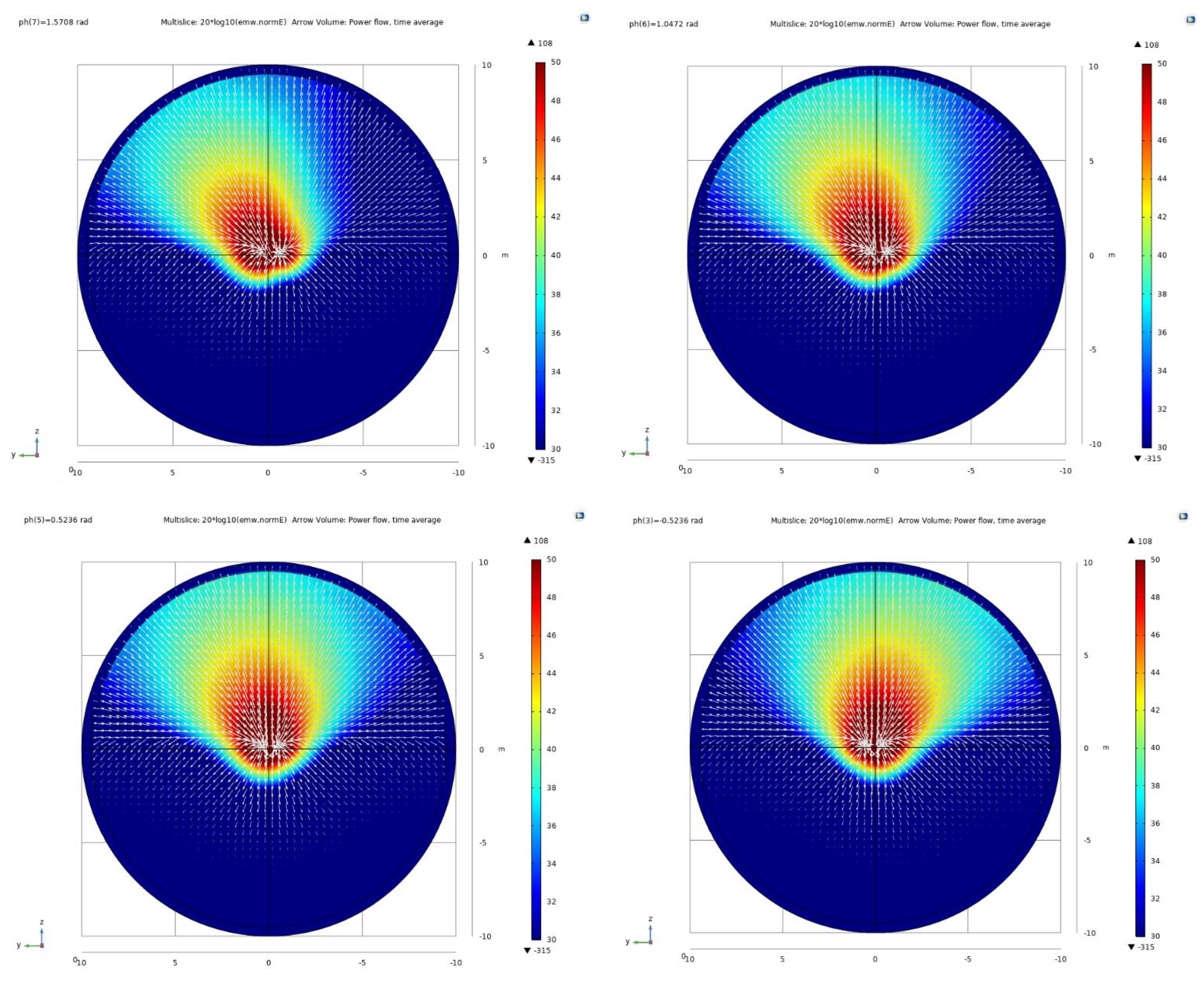
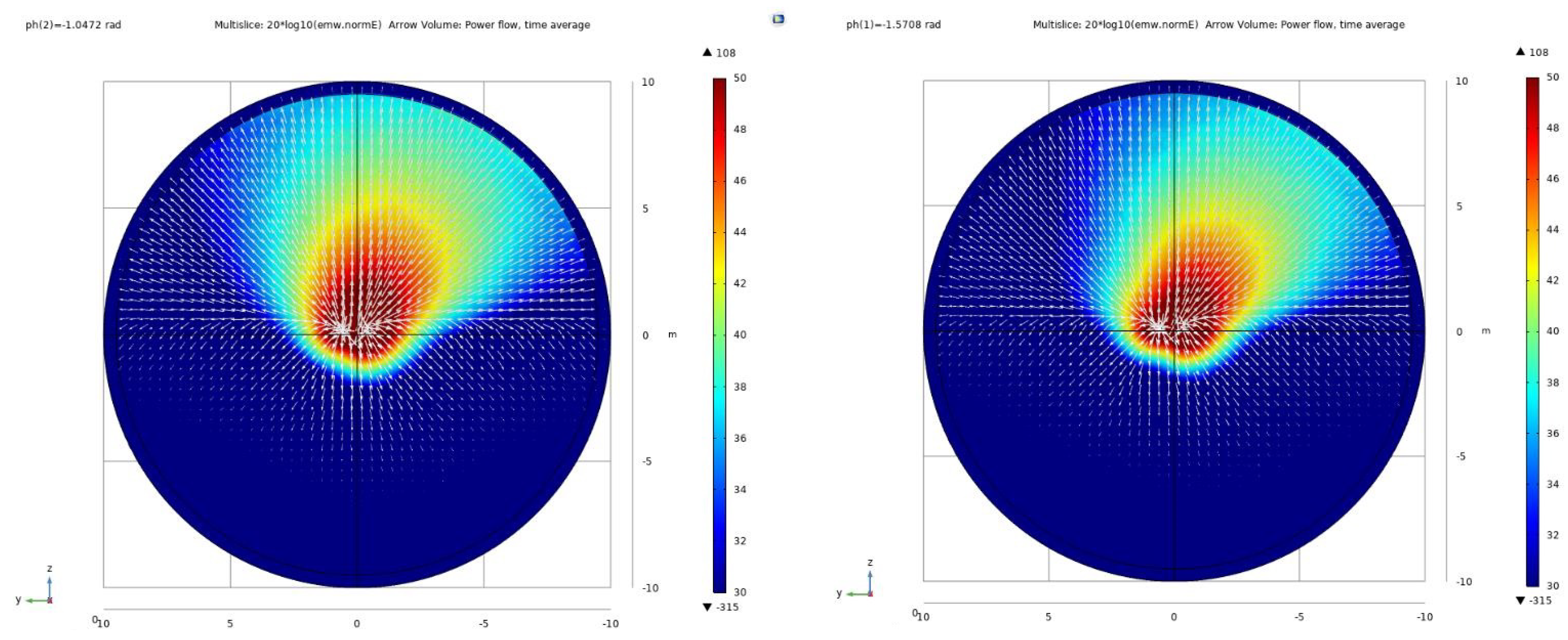
Figure 9 illustrates the 1 × 2 GSD array placed along the
y-axis, exciting the same amplitude (800 V) but different phases. For a special example, when the ph of GSD
1 is 0 deg and that of GSD
2 is −90 deg, the beam is deflected towards GSD
2 because the ph of GSD
2 lags behind that of GSD
1. On the contrary, when the ph of GSD
2 is ahead of that of GSD
1, the beam will steer towards GSD
1.
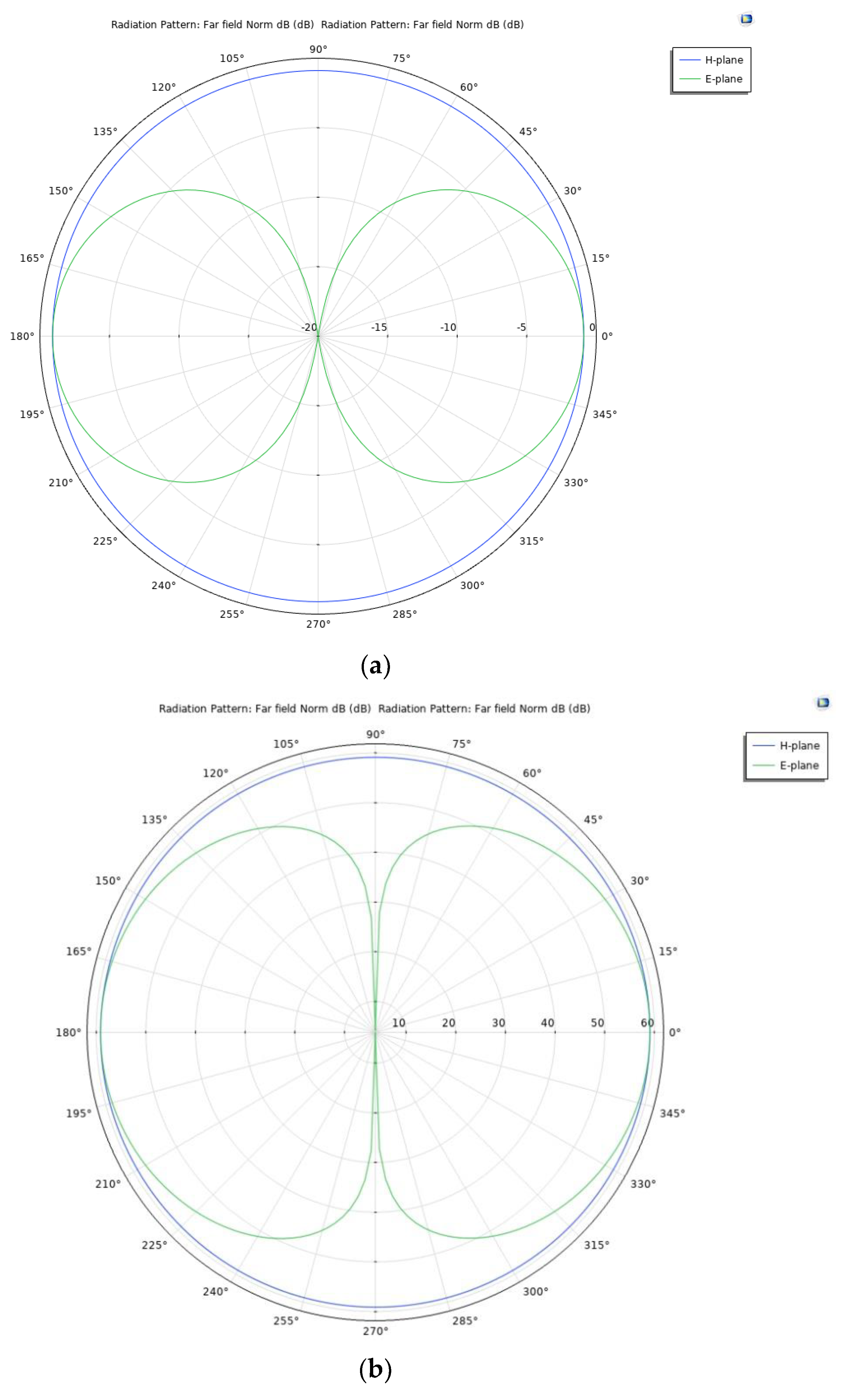
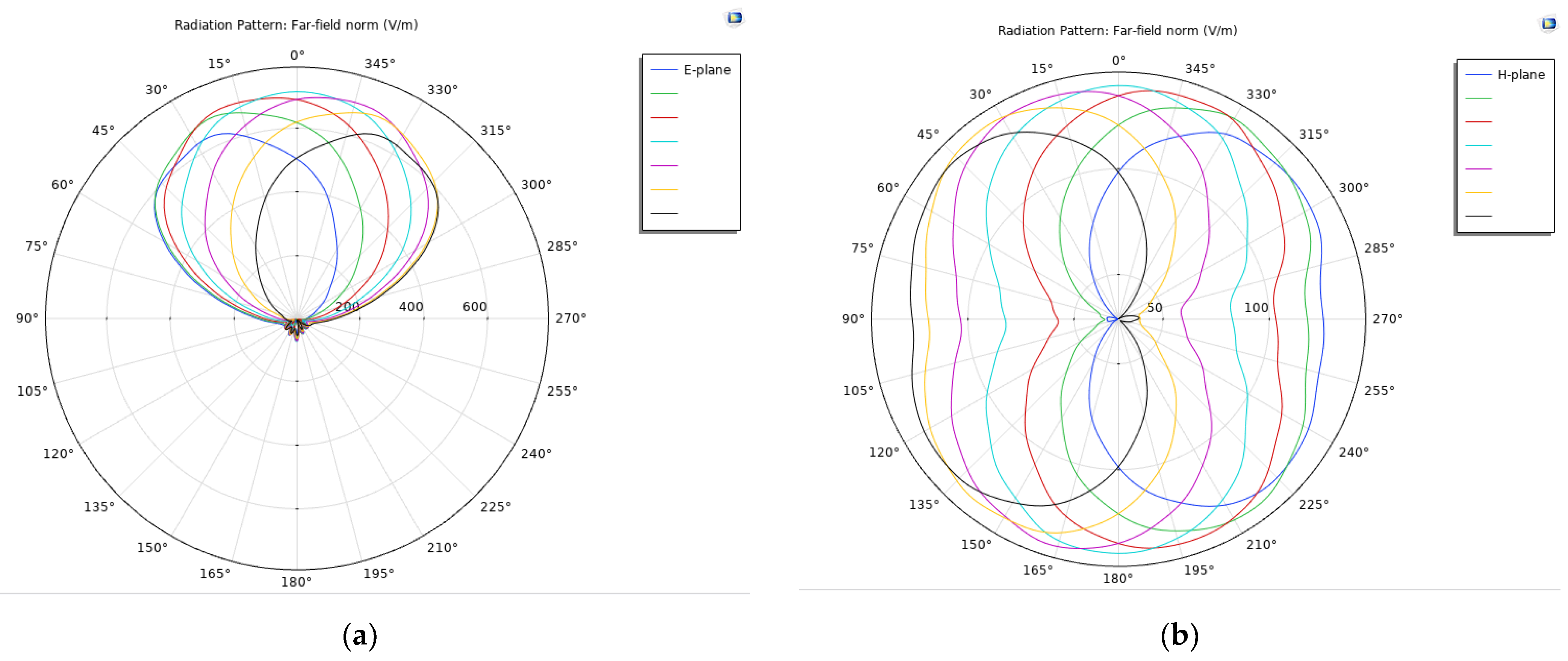
The asymmetric phenomenon is displayed as the E/H-plane multifaceted integration, as shown in
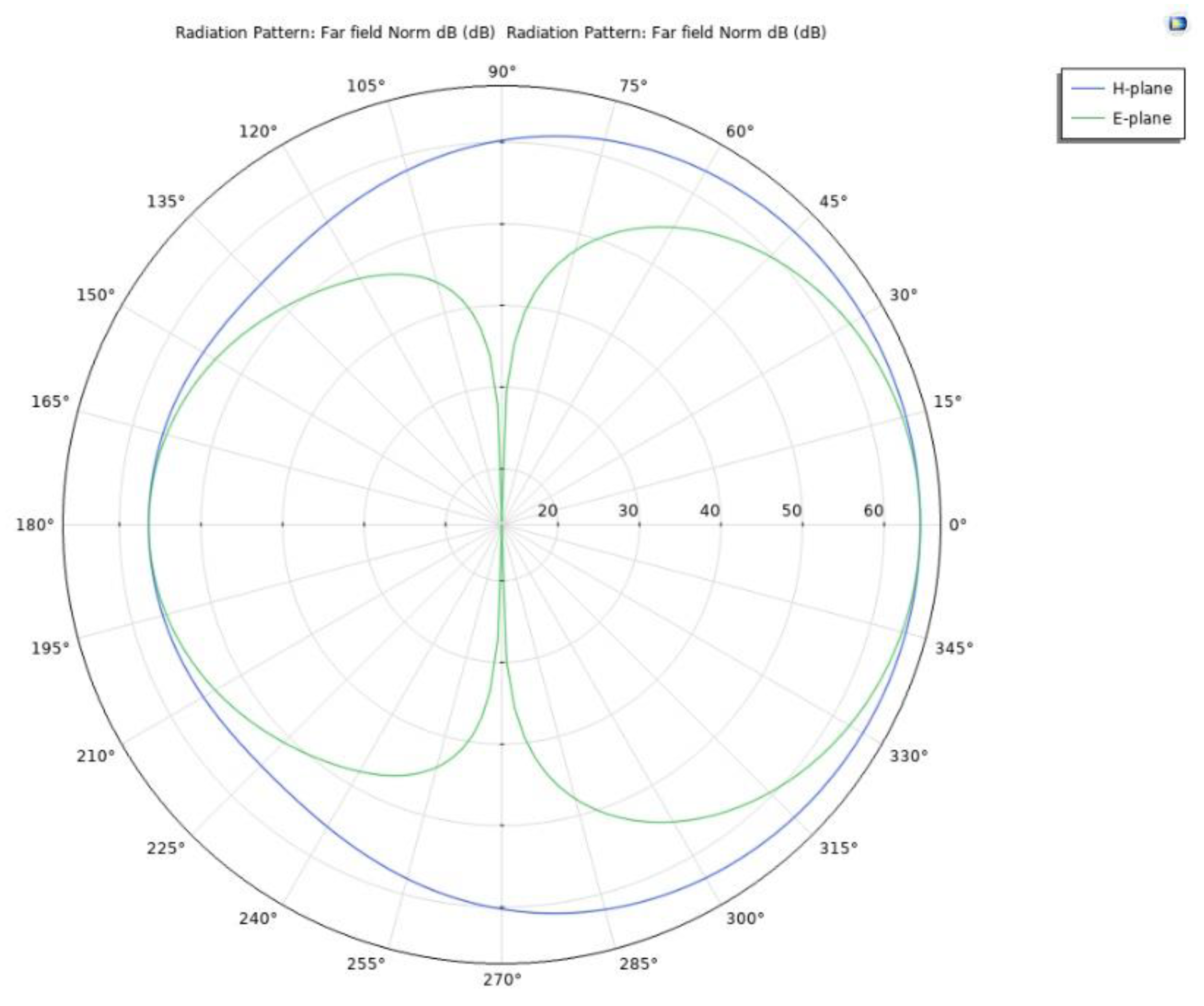
Figure 10, and the beam has varying deflection under different Pds. The larger the Pd, the greater the deflection angle. The beam can be adjusted to steer to the RoC by adjusting the Pd. When the 1 × 2 GSD arrays are excited with the same amplitude and phase, the beam propagates symmetrically along the central axis of two GSDs (wathet), and the asymmetric beam steering can be achieved by adjusting the APd (other colors).
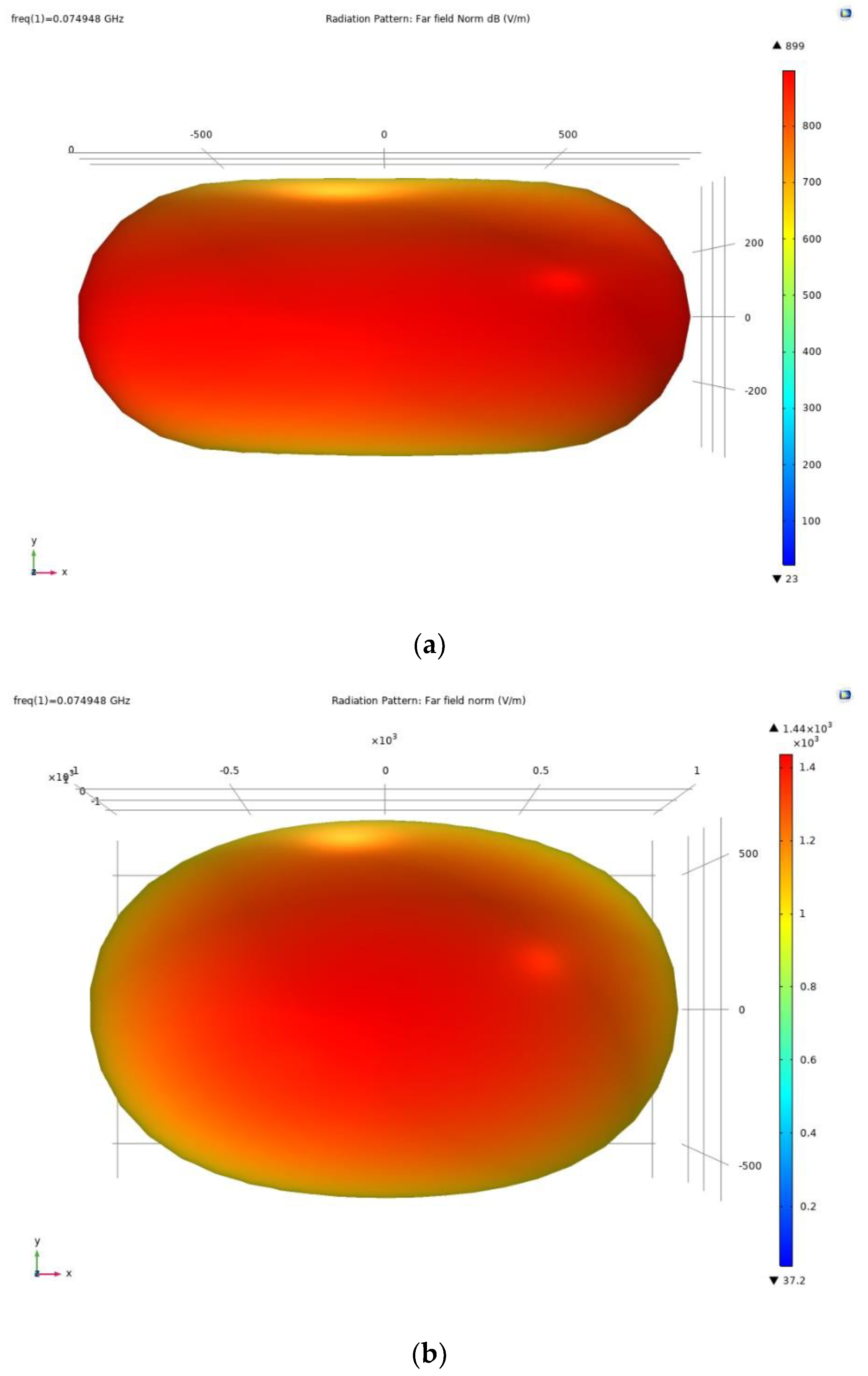
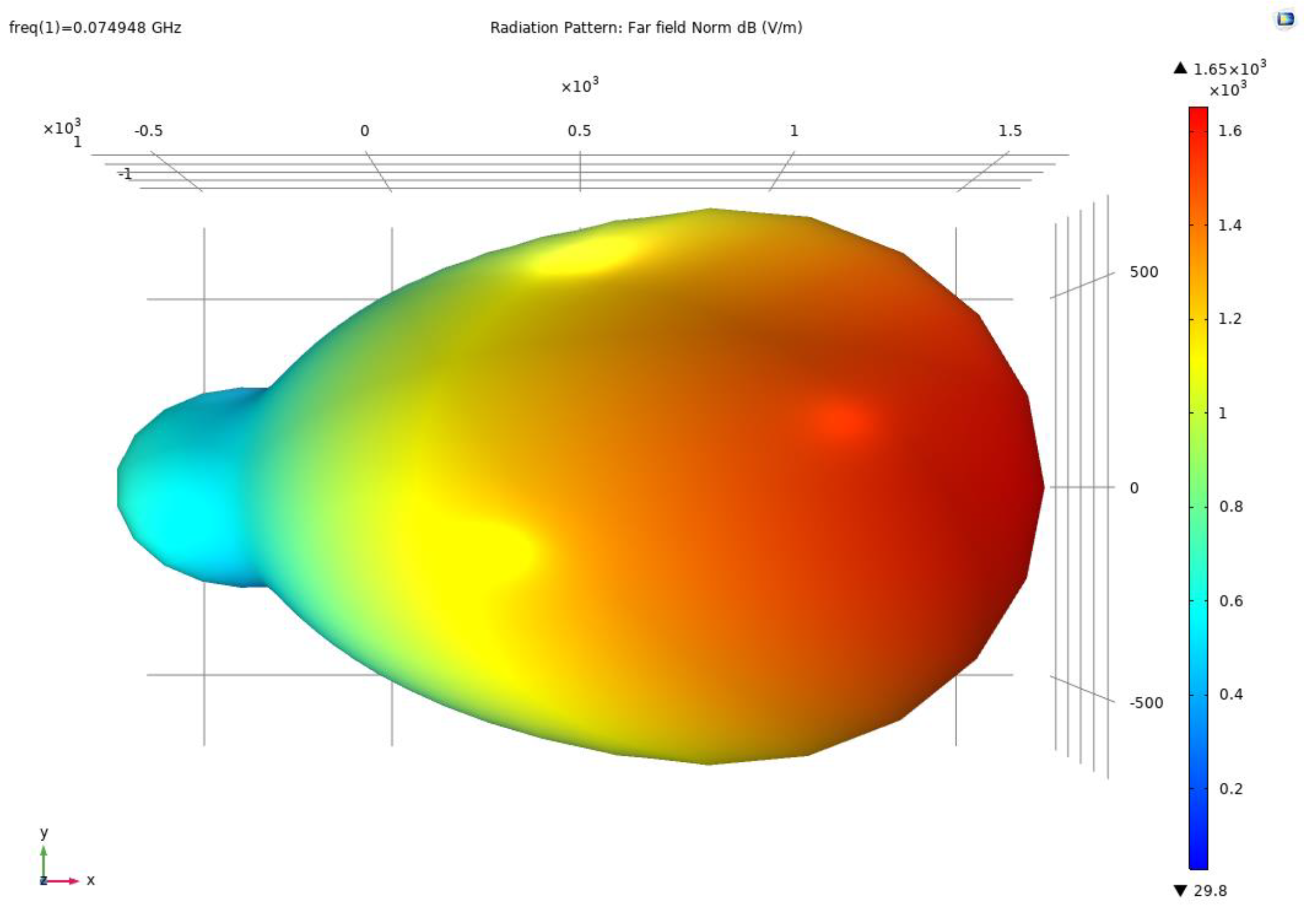
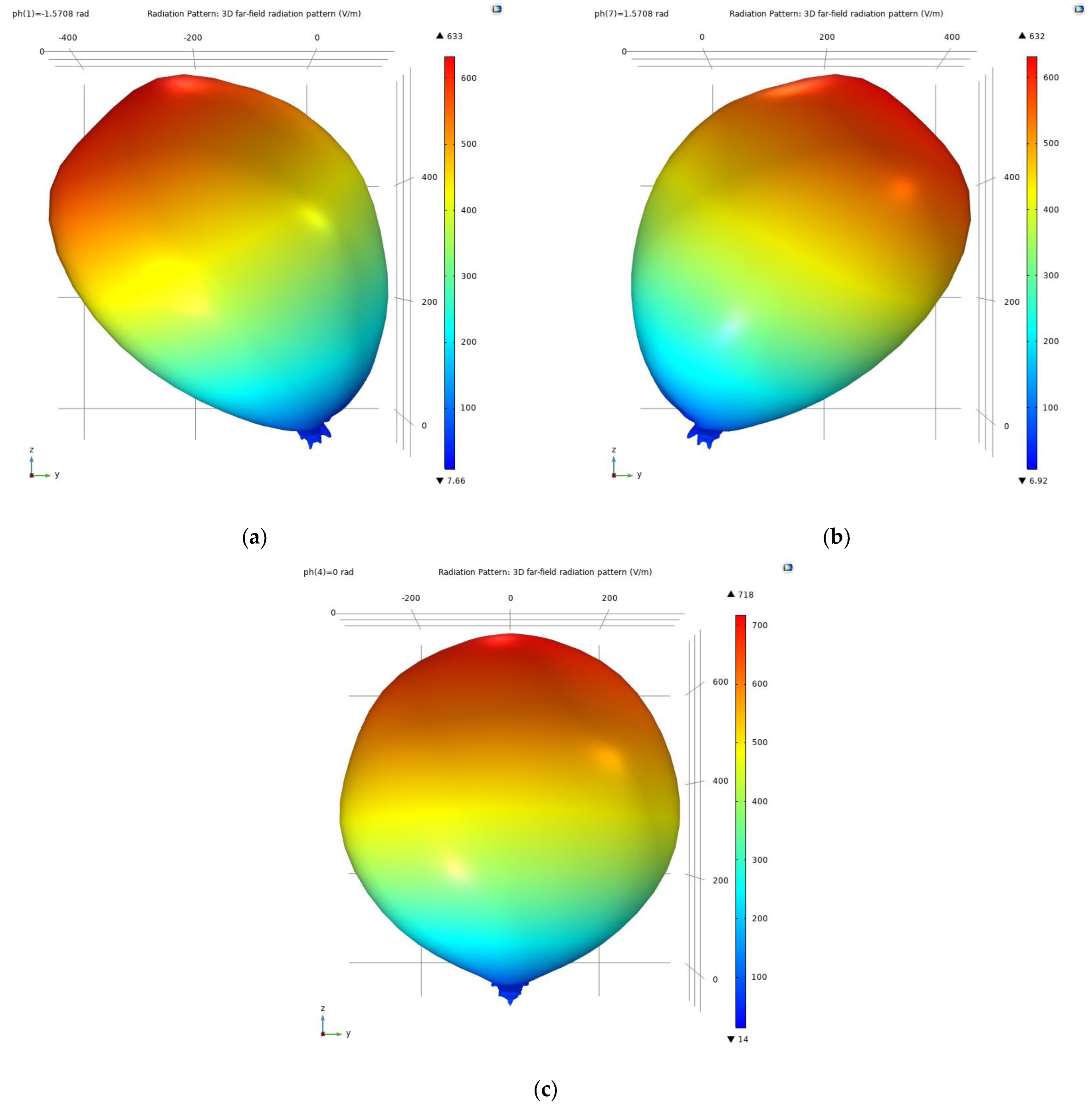
A properly optimized 1 × 2 GSD array CSAMT should have a higher main lobe and lower side lobe levels, which is not obvious when plotted on a polar plot. The 3D Ff pattern (
Figure 11) makes the ratio of the main lobe and side lobes more visible.
All of the above simulation results indicate that the application of APd-weighted ABFM is effective. In the 1 × 2 GSD array CSAMT, the beam can be steered to the RoC through different phase excitations. Compared to the non-directional radiation of a single GSD, the SNR received by the receiving point in the RoC can be effectively improved.
4.2. Simulation Results of APd-Weighted ABFM Based on the GSD Array Separated Tensor CSAMT Model
As mentioned earlier, if another GSD is added and the two GSDs are kept at a specific interval, intervention will come into being between the two wave trains, which means that the magnitude will increase in some directions and decrease in other directions. The half-space and 1 × 2 GSD array tensor measurement CSAMT model was set up according to the model shown in
Figure 7c.
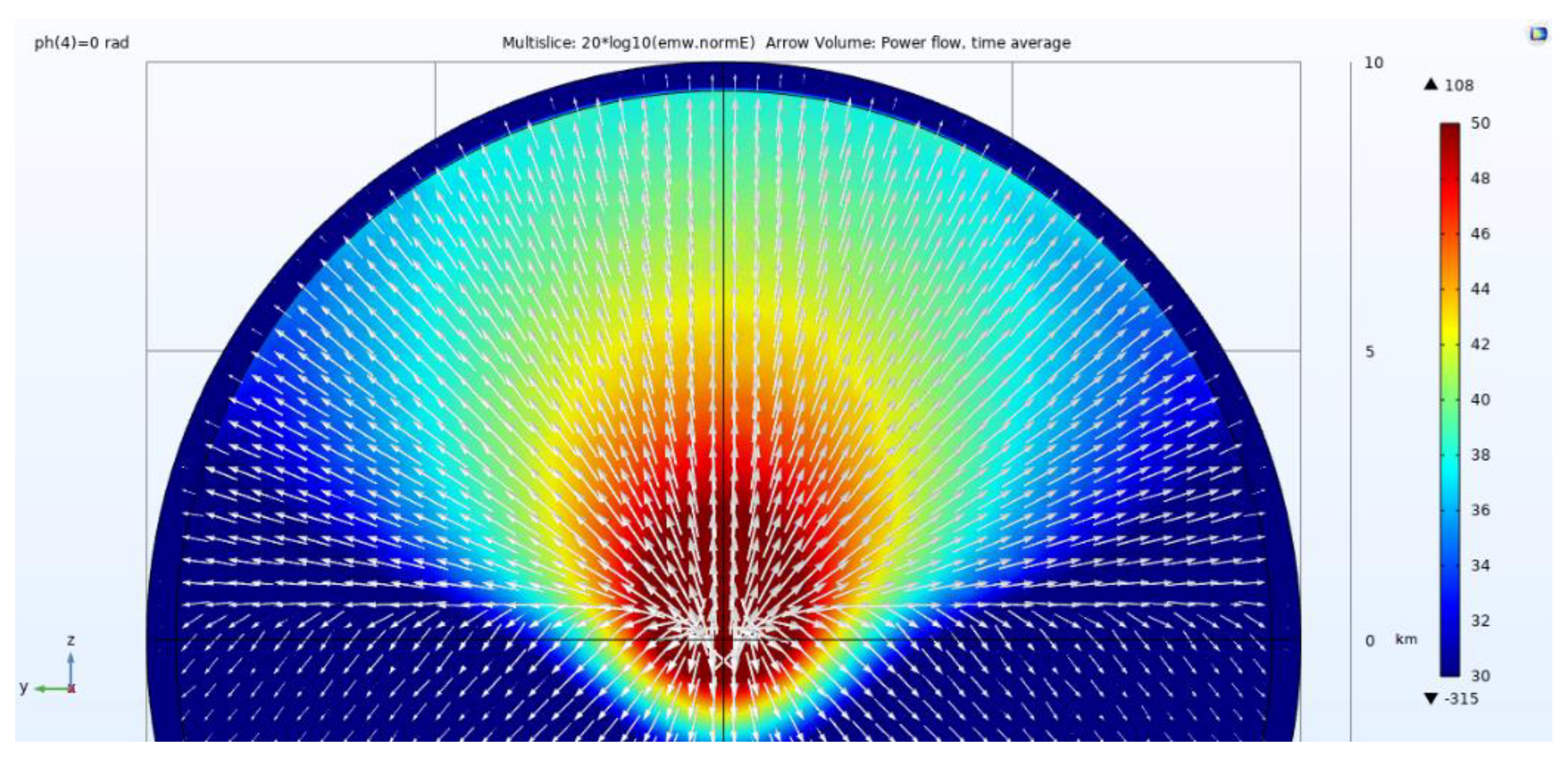
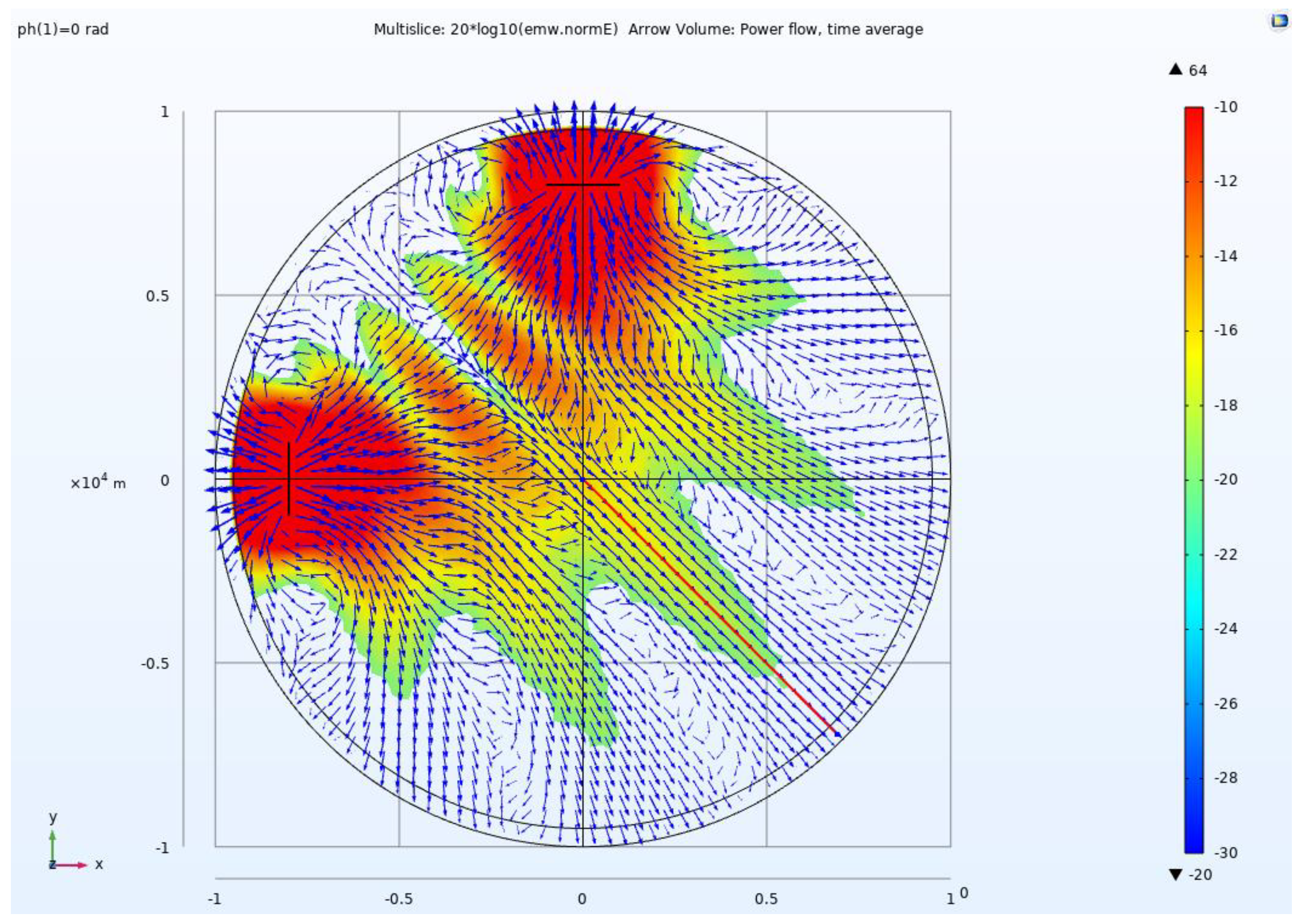
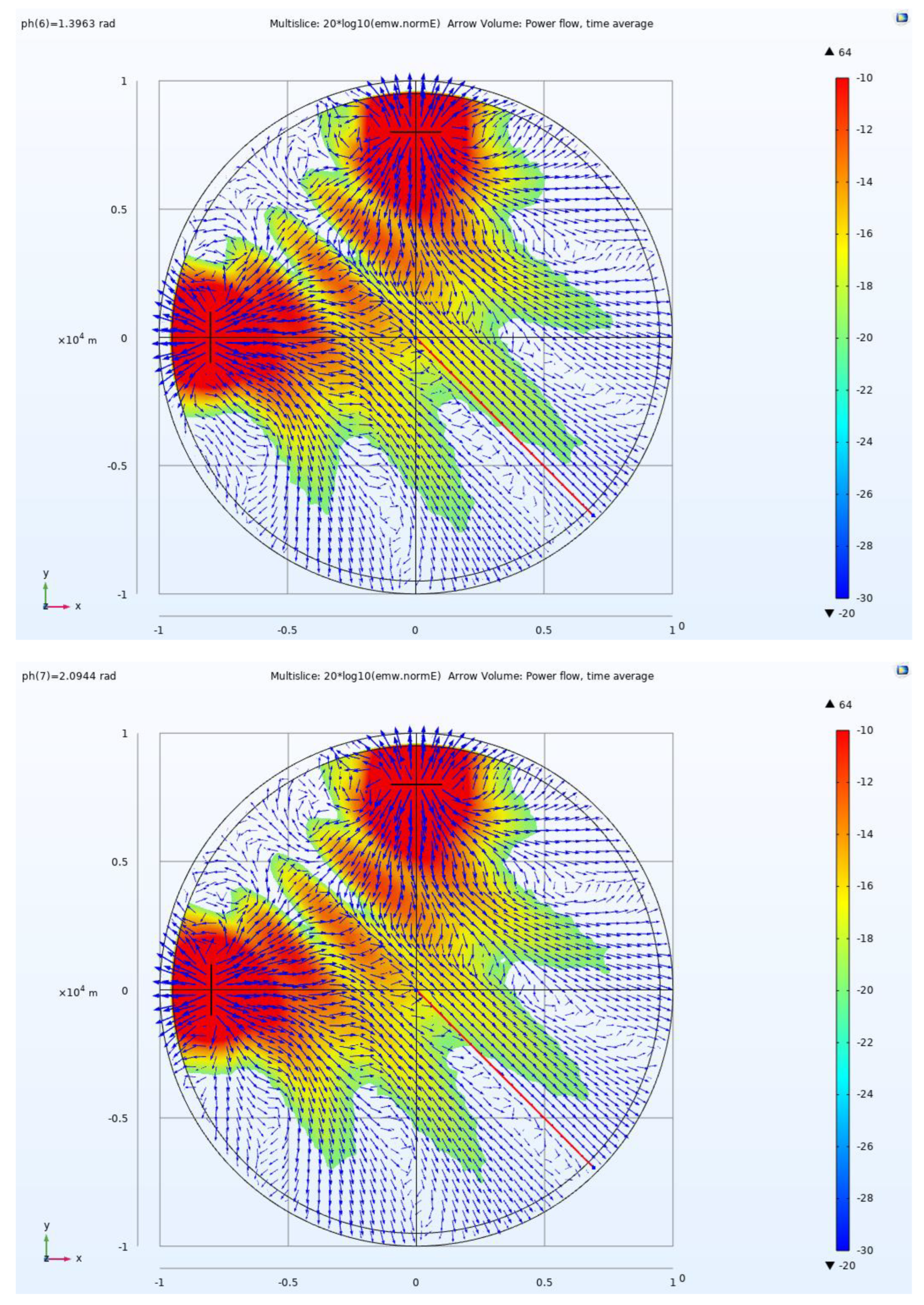
Figure 12 shows a 1 × 2 GSD array tensor measurement CSAMT model placed on the two corners of an isosceles triangle with an edge of 8 km. Electromagnetic interference phenomenon can occur under the excitation of the same phase and amplitude using traditional methods. When the excitation of two GSDs is in phase, under the influence of interference, the symmetric radiation energy flow is divided into multiple beams symmetrically distributed along the red line in the figure.
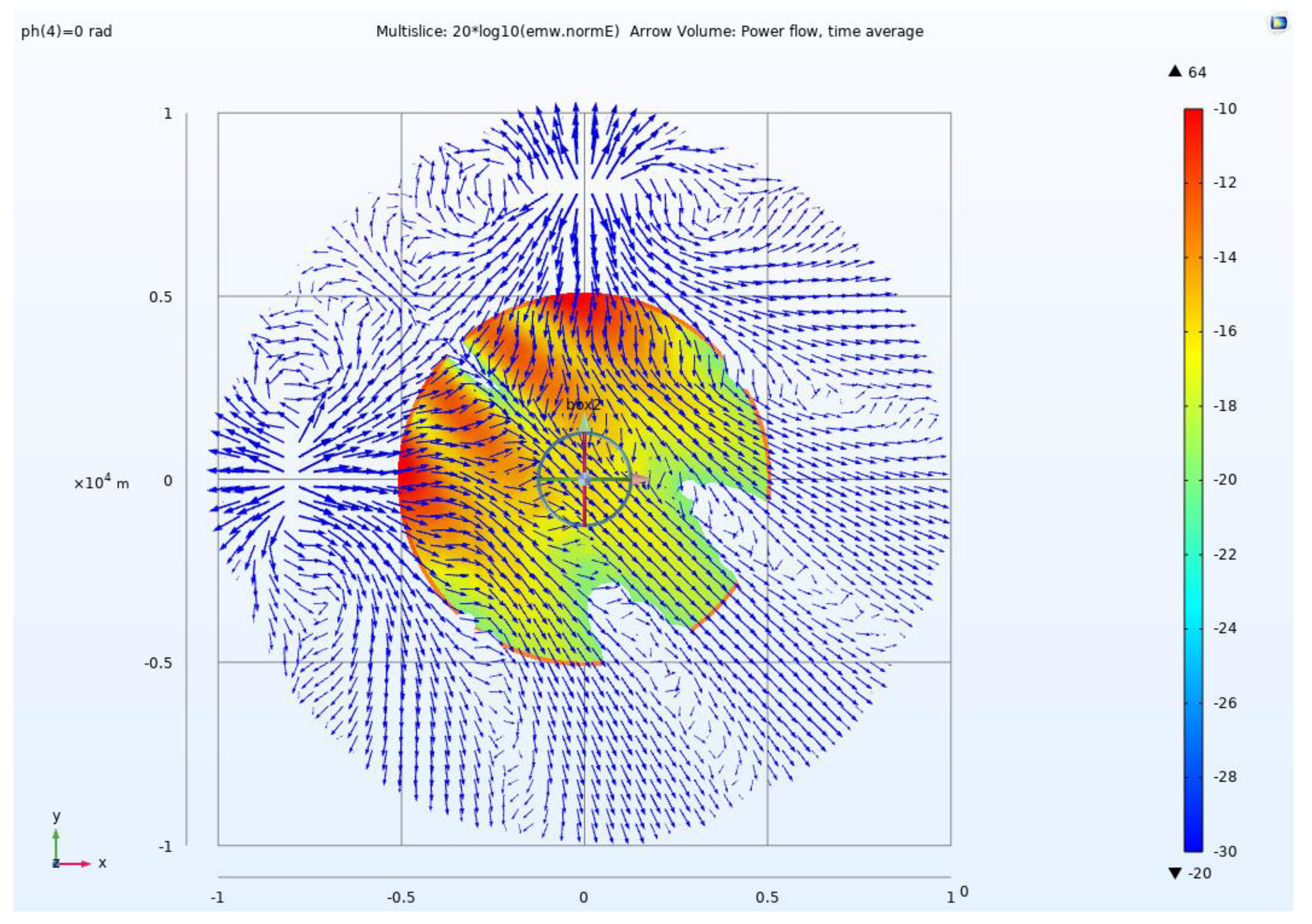
Generally speaking, the receiving point is typically located at the center position during the separation tensor CSAMT, as depicted in
Figure 13. At this location, the energy density is greater than that at other points, and the SNR of each EMFc in both directions is also higher and more symmetrical. Therefore, the tensor impedance calculated using the six linear equations mentioned above is more accurate.
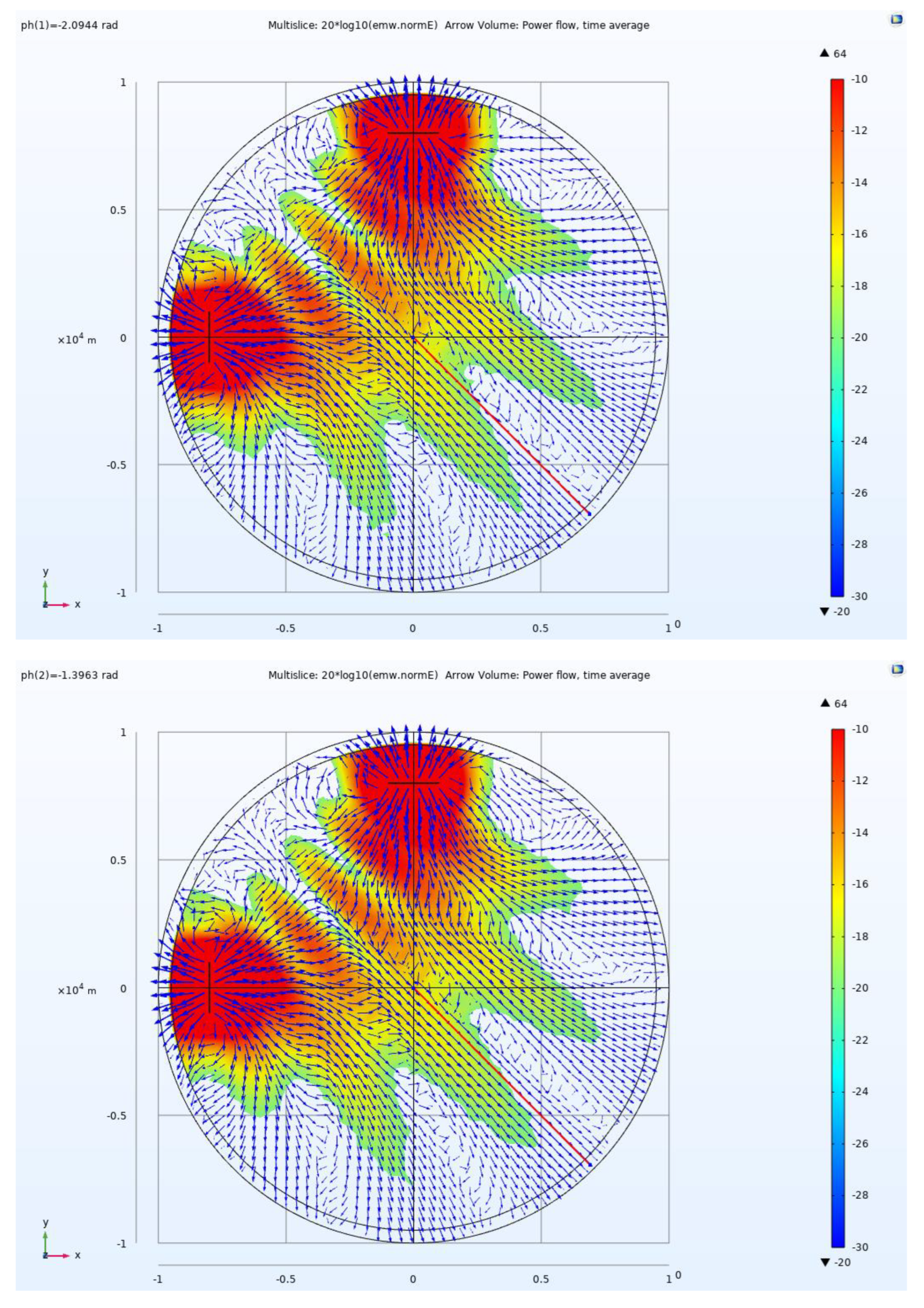
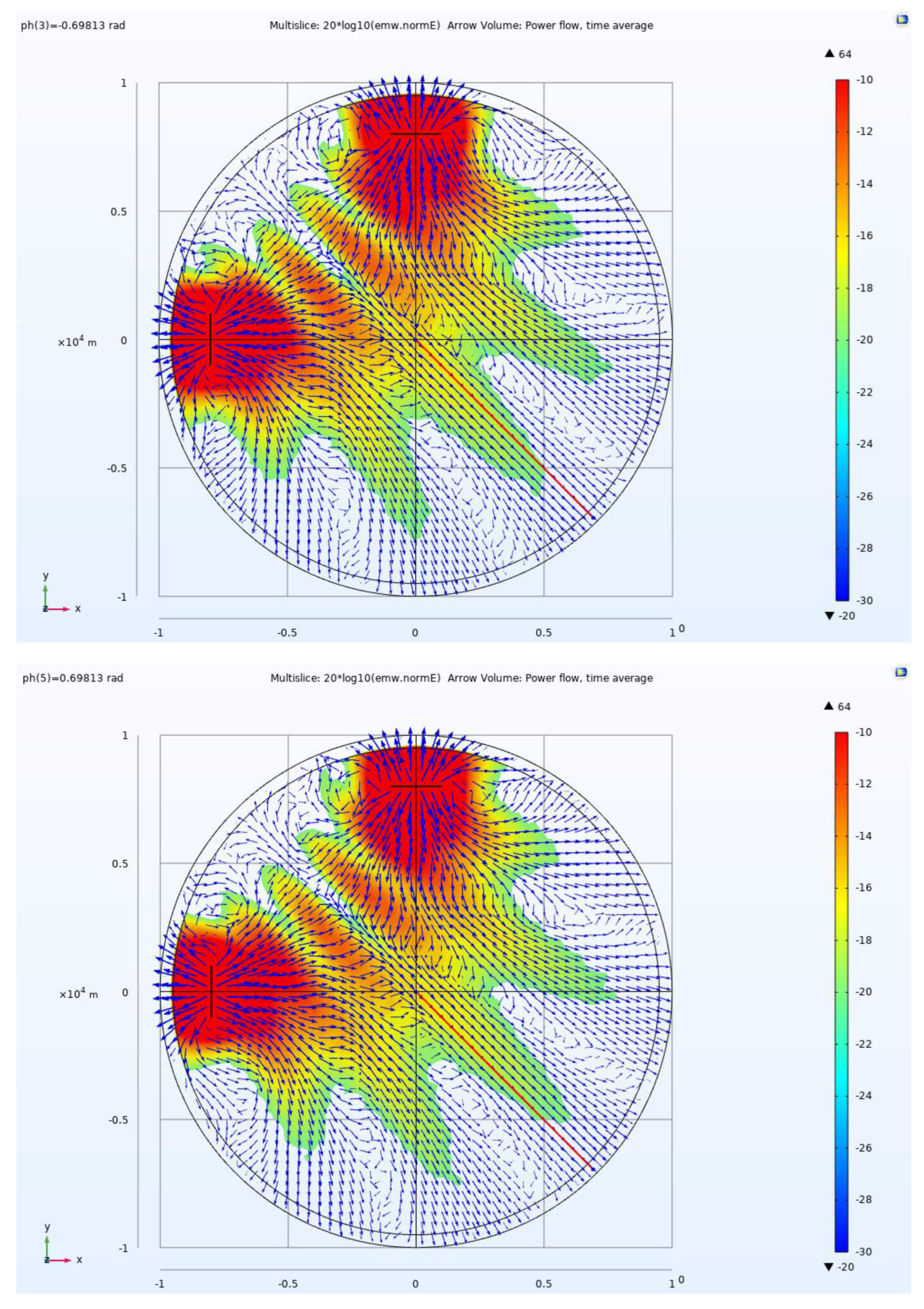
According to the above analysis, when the 1 × 2 GSD arrays are excited by different phases, the beam will deflect. The asymmetric beam steering ability of the 1 × 2 GSD array can be acquired by running a ph scan.
Figure 14 illustrates the 1 × 2 GSD array tensor measurement CSAMT model that is excited by different phases. The port ph of GSD
1 is 0 deg and that of GSD
2 changes from −120 to 120 deg. With the phase change of GSD
2, multiple beams are gradually scanned, which provides an opportunity to compensate for the differences caused by different geological conditions.
6. Conclusions
Herein, an asymmetric beamforming method based on arithmetic phase difference weighting in CSAMT is proposed, which uses a GSD array instead of a single GSD, and a signal with APd is transmitted to control the wavefront for beam steering. A significant enhancement (about 3 dB) of the SNR will occur by collecting the radiant energy in the RoC using ABFM. The analysis and simulation results demonstrate that under the premise of the same TD and TP, the ABFM has obvious advantages in improving energy utilization in CSAMT. In other words, using the APd-weighted ABFM can deal with a complex noise environment in the field better than the traditional method.
Firstly, the principle and methods of ABFM are presented. Furthermore, the SBFM and ABFM of SD are simulated. Then, on the basis of the aforementioned calculations and analysis of APd-weighted ABFM, several numerical models for the application of ABFM with analytical solutions in CSAMT are built. Finally, the effect of APd-weighted ABFM is compared with that of conventional methods. The theoretical analysis and simulation results were all consistent, verifying the correctness and effectiveness of the proposed APd-weighted ABFM in CSAMT.