

Investigational Monoclonal Antibodies in the Treatment of Multiple Myeloma: A Systematic Review of Agents under Clinical Development

 , , ,
, , ,
Abstract
1. Introduction
2. Methods
2.1. Search Strategy
2.2. Eligibility Criteria
2.3. Study Selection and Data Extraction
3. Results
3.1. Surface Receptor-Targeting Antibodies
3.1.1. CD38
3.1.2. CD40
3.1.3. KIR
3.1.4. CD74
3.1.5. ICAM-1 (CD54)
3.1.6. Insulin Like Growth Factor-1 (IGF-1)
3.1.7. GRP78
3.2. Non-Surface Receptor Targeting Antibodies
3.2.1. CXCR-4
3.2.2. Interleukin 6 (IL 6)
3.2.3. Vascular Endothelial Growth Factor (VEGF)
3.2.4. B-Cell Activating Factor (BAFF)
3.2.5. TRAIL
3.3. Immune Checkpoint Inhibitors
PD-1/PD-L1
3.4. Antibody Drug Conjugate (ADC)
3.4.1. CD56
3.4.2. CD138
3.5. Future Prospective Therapies
3.5.1. Bi-Specific Antibodies (BiAb)
3.5.2. CD47
4. Discussion
Author Contributions
Funding
Conflicts of Interest
References
- NIH. Cancer Stat Facts: Myeloma. Available online: https://seer.cancer.gov/statfacts/html/mulmy.html. (accessed on 28 October 2018).
- Pratt, G.; Goodyear, O.; Moss, P. Immunodeficiency and immunotherapy in multiple myeloma. Br. J. Haematol. 2007, 138, 563–579. [Google Scholar] [CrossRef] [PubMed]
- Neri, P.; Bahlis, N.J. Genomic instability in multiple myeloma: Mechanisms and therapeutic implications. Expert. Opin. Biol. Ther. 2013, 13, S69–S82. [Google Scholar] [CrossRef] [PubMed]
- Keats, J.J.; Chesi, M.; Egan, J.B.; Garbitt, V.M.; Palmer, S.E.; Braggio, E.; Van Wier, S.; Blackburn, P.R.; Baker, A.S.; Dispenzieri, A.; et al. Clonal competition with alternating dominance in multiple myeloma. Blood 2012, 120, 1067–1076. [Google Scholar] [CrossRef]
- Kumar, S.K.; Lee, J.H.; Lahuerta, J.J.; Morgan, G.; Richardson, P.G.; Crowley, J.; Haessler, J.; Feather, J.; Hoering, A.; Moreau, P. Risk of progression and survival in multiple myeloma relapsing after therapy with imids and bortezomib: A multicenter international myeloma working group study. Leukemia 2012, 26, 149. [Google Scholar] [CrossRef] [PubMed]
- Tai, Y.-T.; Anderson, K.C. Antibody-based therapies in multiple myeloma. Bone Marrow Res. 2011, 2011. [Google Scholar] [CrossRef] [PubMed]
- Ludwig, D.L.; Pereira, D.S.; Zhu, Z.; Hicklin, D.J.; Bohlen, P. Monoclonal antibody therapeutics and apoptosis. Oncogene 2003, 22, 9097. [Google Scholar] [CrossRef]
- Scott, A.M.; Allison, J.P.; Wolchok, J.D. Monoclonal antibodies in cancer therapy. Cancer Immun. Arch. 2012, 12, 14. [Google Scholar]
- Lonial, S.; Weiss, B.M.; Usmani, S.Z.; Singhal, S.; Chari, A.; Bahlis, N.J.; Belch, A.; Krishnan, A.; Vescio, R.A.; Mateos, M.V.; et al. Daratumumab monotherapy in patients with treatment-refractory multiple myeloma (sirius): An open-label, randomised, phase 2 trial. Lancet 2016, 387, 1551–1560. [Google Scholar] [CrossRef]
- Lonial, S.; Dimopoulos, M.A.; Palumbo, A.; White, D.; Grosicki, S.; Spicka, I.; Walter-Croneck, A.; Moreau, P.; Mateos, M.-V.; Magen-Nativ, H. Eloquent-2: A phase iii, randomized, open-label study of lenalidomide (len)/dexamethasone (dex) with/without elotuzumab (elo) in patients (pts) with relapsed/refractory multiple myeloma (rrmm). J. Clin. Oncol. 2015. [Google Scholar] [CrossRef]
- Palumbo, A.; Chanan-Khan, A.A.A.; Weisel, K.; Nooka, A.K.; Masszi, T.; Beksac, M.; Spicka, I.; Hungria, V.T.; Mateos, M.-V.; Mark, T.M. Phase iii randomized controlled study of daratumumab, bortezomib and dexamethasone (dvd) versus bortezomib and dexamethasone (vd) in patients (pts) with relapsed or refractory multiple myeloma (rrmm): Castor study. J. Clin. Oncol. 2016. [Google Scholar] [CrossRef]
- Dimopoulos, M.; Oriol, A.; Nahi, H.; San Miguel, J.; Bahlis, N.; Rabin, N.; Orlowski, R.; Komarnicki, M.; Suzuki, K.; Plesner, T. An open-label, randomised phase 3 study of daratumumab, lenalidomide and dexamethasone (drd) versus lenalidomide and dexamethasone (rd) in relapsed or refractory multiple myeloma (rrmm): Pollux. Haematologica 2016, 101, 342. [Google Scholar]
- Dimopoulos, M.A.; Dytfeld, D.; Grosicki, S.; Moreau, P.; Takezako, N.; Hori, M.; Leleu, X.; LeBlanc, R.; Suzuki, K.; Raab, M.S.; et al. Elotuzumab plus pomalidomide and dexamethasone for multiple myeloma. N. Engl. J. Med. 2018, 379, 1811–1822. [Google Scholar] [CrossRef]
- Mateos, M.-V.; Dimopoulos, M.A.; Cavo, M.; Suzuki, K.; Jakubowiak, A.; Knop, S.; Doyen, C.; Lucio, P.; Nagy, Z.; Kaplan, P.; et al. Daratumumab plus bortezomib, melphalan and prednisone for untreated myeloma. N. Engl. J. Med. 2018, 378, 518–528. [Google Scholar] [CrossRef]
- Munshi, N.C.; Avet-Loiseau, H.; Rawstron, A.C.; Owen, R.G.; Child, J.A.; Thakurta, A.; Sherrington, P.; Samur, M.K.; Georgieva, A.; Anderson, K.C.; et al. Association of minimal residual disease with superior survival outcomes in patients with multiple myeloma: A meta-analysis. JAMA Oncol. 2017, 3, 28–35. [Google Scholar] [CrossRef]
- Romano, A.; Conticello, C.; Cavalli, M.; Vetro, C.; La Fauci, A.; Parrinello, N.L.; Di Raimondo, F. Immunological dysregulation in multiple myeloma microenvironment. Biomed. Res. Int. 2014, 2014. [Google Scholar] [CrossRef]
- Farkona, S.; Diamandis, E.P.; Blasutig, I.M. Cancer immunotherapy: The beginning of the end of cancer? BMC Med. 2016, 14, 73. [Google Scholar] [CrossRef]
- Magarotto, V.; Salvini, M.; Bonello, F.; Bringhen, S.; Palumbo, A. Strategy for the treatment of multiple myeloma utilizing monoclonal antibodies: A new era begins. Leuk. Lymphoma 2016, 57, 537–556. [Google Scholar] [CrossRef]
- Chillemi, A.; Zaccarello, G.; Quarona, V.; Ferracin, M.; Ghimenti, C.; Massaia, M.; Horenstein, A.L.; Malavasi, F. Anti-cd38 antibody therapy: Windows of opportunity yielded by the functional characteristics of the target molecule. Mol. Med. 2013, 19, 99–108. [Google Scholar] [CrossRef]
- Martin, T.; Hsu, K.; Strickland, S.A.; Glenn, M.; Mikhael, J.; Charpentier, E. A phase i trial of sar650984, a cd38 monoclonal antibody, in relapsed or refractory multiple myeloma. J. Clin. Oncol. 2014, 32. [Google Scholar] [CrossRef]
- Richter, J.R.; Martin, T.G.; Vij, R.; Cole, C.; Atanackovic, D.; Zonder, J.A.; Kaufman, J.L.; Mikhael, J.; Bensinger, W.; Dimopoulos, M.A. Updated data from a phase ii dose finding trial of single agent isatuximab (sar650984, anti-cd38 mab) in relapsed/refractory multiple myeloma (rrmm). J. Clin. Oncol. 2016. [Google Scholar] [CrossRef]
- Martin, T.G.; Baz, R.; Benson, D.M.; Lendvai, N.; Campana, F.; Charpentier, E.; Vij, R. A phase ib dose escalation trial of sar650984 (anti-cd-38 mab) in combination with lenalidomide and dexamethasone in relapsed/refractory multiple myeloma. Blood 2014, 124, 83. [Google Scholar] [CrossRef]
- Martin, T.; Baz, R.; Benson, D.M.; Lendvai, N.; Wolf, J.; Munster, P.; Lesokhin, A.M.; Wack, C.; Charpentier, E.; Campana, F.; et al. A phase 1b study of isatuximab plus lenalidomide and dexamethasone for relapsed/refractory multiple myeloma. Blood 2017, 129, 3294–3303. [Google Scholar] [CrossRef]
- Lendvai, N.; Vij, R.; Martin, T.G.; Baz, R.; Campana, F.; Mazuir, F.; Charpentier, E.; Benson, D.M. A phase ib dose-escalation trial of isatuximab (sar650984, anti-cd38 mab) plus lenalidomide and dexamethasone in relapsed/refractory multiple myeloma (rrmm): Interim results from 2 new dose cohorts. J. Clin. Oncol. 2016, 101, 84. [Google Scholar] [CrossRef]
- Mikhael, J.; Richardson, P.; Usmani, S.; Raje, N.; Bensinger, W.; Kanagavel, D.; Gao, L.; Ziti-Ljajic, S.; Anderson, K. A phase ib study of isatuximab plus pomalidomide (pom) and dexamethasone (dex) in relapsed/refractory multiple myeloma (rrmm). In Haematologica; Via Giuseppe Belli: Pavia, Italy, 2017; p. 168. [Google Scholar]
- Richardson, P.G.; Attal, M.; San Miguel, J.; Campana, F.; Le-Guennec, S.; Hui, A.-M.; Risse, M.-L.; Anderson, K.C. A phase iii, randomized, open-label study of isatuximab (sar650984) plus pomalidomide (pom) and dexamethasone (dex) versus pom and dex in relapsed/refractory multiple myeloma. J. Clin. Oncol. 2017. [Google Scholar] [CrossRef]
- Raab, M.S.; Chatterjee, M.; Goldschmidt, H.; Agis, H.; Blau, I.; Einsele, H.; Engelhardt, M.; Ferstl, B.; Gramatzki, M.; Rollig, C.; et al. A phase i/iia study of the cd38 antibody mor202 alone and in combination with pomalidomide or lenalidomide in patients with relapsed or refractory multiple myeloma. Blood 2016, 128, 1152. [Google Scholar]
- Tong, A.W.; Stone, M.J. Prospects for cd40-directed experimental therapy of human cancer. Cancer Gene Ther. 2003, 10, 1–13. [Google Scholar] [CrossRef]
- Hussein, M.; Berenson, J.R.; Niesvizky, R.; Munshi, N.; Matous, J.; Sobecks, R.; Harrop, K.; Drachman, J.G.; Whiting, N. A phase i multidose study of dacetuzumab (sgn-40; humanized anti-cd40 monoclonal antibody) in patients with multiple myeloma. Haematologica 2010, 95, 845–848. [Google Scholar] [CrossRef]
- Agura, E.; Niesvizky, R.; Matous, J.; Munshi, N.; Hussein, M.; Parameswaran, R.V.; Tarantolo, S.; Whiting, N.C.; Drachman, J.G.; Zonder, J.A. Dacetuzumab (sgn-40), lenalidomide and weekly dexamethasone in relapsed or refractory multiple myeloma: Multiple responses observed in a phase 1b study. Blood 2009, 114, 2870. [Google Scholar]
- Bensinger, W.; Maziarz, R.T.; Jagannath, S.; Spencer, A.; Durrant, S.; Becker, P.S.; Ewald, B.; Bilic, S.; Rediske, J.; Baeck, J.; et al. A phase 1 study of lucatumumab, a fully human anti-cd40 antagonist monoclonal antibody administered intravenously to patients with relapsed or refractory multiple myeloma. Br. J. Haematol. 2012, 159, 58–66. [Google Scholar] [CrossRef]
- Benson Jr, D.M.; Hofmeister, C.C.; Padmanabhan, S.; Suvannasankha, A.; Jagannath, S.; Abonour, R.; Bakan, C.; Andre, P.; Efebera, Y.; Tiollier, J.; et al. Aphase 1 trial of the anti-kir antibody iph2101 in patients with relapsed/refractory multiple myeloma. Blood 2012, 120, 4324–4333. [Google Scholar] [CrossRef]
- Korde, N.; Carlsten, M.; Lee, M.J.; Minter, A.; Tan, E.; Kwok, M.; Manasanch, E.; Bhutani, M.; Tageja, N.; Roschewski, M.; et al. A phase ii trial of pan-kir2d blockade with iph2101 in smoldering multiple myeloma. Haematologica 2014, 99, e81–e83. [Google Scholar] [CrossRef]
- Benson, D.M., Jr.; Cohen, A.D.; Jagannath, S.; Munshi, N.C.; Spitzer, G.; Hofmeister, C.C.; Efebera, Y.A.; Andre, P.; Zerbib, R.; Caligiuri, M.A. A phase i trial of the anti-kir antibody iph2101 and lenalidomide in patients with relapsed/refractory multiple myeloma. Clin. Cancer Res. 2015, 21, 4055–4061. [Google Scholar] [CrossRef]
- Burton, J.D.; Ely, S.; Reddy, P.K.; Stein, R.; Gold, D.V.; Cardillo, T.M.; Goldenberg, D.M. Cd74 is expressed by multiple myeloma and is a promising target for therapy. Clin. Cancer Res. 2004, 10, 6606–6611. [Google Scholar] [CrossRef]
- Kaufman, J.L.; Niesvizky, R.; Stadtmauer, E.A.; Chanan-Khan, A.; Siegel, D.; Horne, H.; Wegener, W.A.; Goldenberg, D.M. Phase i, multicentre, dose-escalation trial of monotherapy with milatuzumab (humanized anti-cd 74 monoclonal antibody) in relapsed or refractory multiple myeloma. Br. J. Haematol. 2013, 163, 478–486. [Google Scholar] [CrossRef]
- Schmidmaier, R.; Morsdorf, K.; Baumann, P.; Emmerich, B.; Meinhardt, G. Evidence for cell adhesion-mediated drug resistance of multiple myeloma cells in vivo. Int. J. Biol. Markers 2006, 21, 218–222. [Google Scholar] [CrossRef]
- Terpos, E.; Migkou, M.; Christoulas, D.; Gavriatopoulou, M.; Eleutherakis-Papaiakovou, E.; Kanellias, N.; Iakovaki, M.; Panagiotidis, I.; Ziogas, D.C.; Fotiou, D.; et al. Increased circulating vcam-1 correlates with advanced disease and poor survival in patients with multiple myeloma: Reduction by post-bortezomib and lenalidomide treatment. Blood Cancer J. 2016, 6, e428. [Google Scholar] [CrossRef]
- Hansson, M.; Gimsing, P.; Badros, A.; Niskanen, T.M.; Nahi, H.; Offner, F.; Salomo, M.; Sonesson, E.; Mau-Sorensen, M.; Stenberg, Y.; et al. A phase i dose-escalation study of antibody bi-505 in relapsed/refractory multiple myeloma. Clin. Cancer Res. 2015, 21, 2730–2736. [Google Scholar] [CrossRef]
- Bieghs, L.; Johnsen, H.E.; Maes, K.; Menu, E.; Van Valckenborgh, E.; Overgaard, M.T.; Nyegaard, M.; Conover, C.A.; Vanderkerken, K.; De Bruyne, E. The insulin-like growth factor system in multiple myeloma: Diagnostic and therapeutic potential. Oncotarget 2016, 7, 48732–48752. [Google Scholar] [CrossRef]
- Lacy, M.Q.; Alsina, M.; Fonseca, R.; Paccagnella, M.L.; Melvin, C.L.; Yin, D.; Sharma, A.; Enriquez Sarano, M.; Pollak, M.; Jagannath, S.; et al. Phase i, pharmacokinetic and pharmacodynamic study of the anti-insulinlike growth factor type 1 receptor monoclonal antibody cp-751,871 in patients with multiple myeloma. J. Clin. Oncol. 2008, 26, 3196–3203. [Google Scholar] [CrossRef]
- Moreau, P.; Cavallo, F.; Leleu, X.; Hulin, C.; Amiot, M.; Descamps, G.; Facon, T.; Boccadoro, M.; Mignard, D.; Harousseau, J.L. Phase i study of the anti insulin-like growth factor 1 receptor (igf-1r) monoclonal antibody, ave1642, as single agent and in combination with bortezomib in patients with relapsed multiple myeloma. Leukemia 2011, 25, 872–874. [Google Scholar] [CrossRef]
- Lee, A.S. Glucose-regulated proteins in cancer: Molecular mechanisms and therapeutic potential. Nat. Rev. Cancer 2014, 14, 263–276. [Google Scholar] [CrossRef] [PubMed]
- Rasche, L.; Duell, J.; Castro, I.C.; Dubljevic, V.; Chatterjee, M.; Knop, S.; Hensel, F.; Rosenwald, A.; Einsele, H.; Topp, M.S.; et al. Grp78-directed immunotherapy in relapsed or refractory multiple myeloma—results from a phase 1 trial with the monoclonal immunoglobulin m antibody pat-sm6. Haematologica 2015, 100, 377–384. [Google Scholar] [CrossRef] [PubMed]
- Rasche, L.; Menoret, E.; Dubljevic, V.; Menu, E.; Vanderkerken, K.; Lapa, C.; Steinbrunn, T.; Chatterjee, M.; Knop, S.; Dull, J.; et al. A grp78-directed monoclonal antibody recaptures response in refractory multiple myeloma with extramedullary involvement. Clin. Cancer Res. 2016, 22, 4341–4349. [Google Scholar] [CrossRef] [PubMed]
- Burger, J.A.; Kipps, T.J. Cxcr4: A key receptor in the crosstalk between tumor cells and their microenvironment. Blood 2006, 107, 1761–1767. [Google Scholar] [CrossRef]
- Alsayed, Y.; Ngo, H.; Runnels, J.; Leleu, X.; Singha, U.K.; Pitsillides, C.M.; Spencer, J.A.; Kimlinger, T.; Ghobrial, J.M.; Jia, X.; et al. Mechanisms of regulation of cxcr4/sdf-1 (cxcl12)-dependent migration and homing in multiple myeloma. Blood 2007, 109, 2708–2717. [Google Scholar] [CrossRef]
- Fouquet, G.; Guidez, S.; Richez, V.; Stoppa, A.M.; Tourneau, C.L.; Macro, M.; Gruchet, C.; Bobin, A.; Moya, N.; Syshenko, T.; et al. Phase i dose-escalation study of f50067, a humanized anti-cxcr4 monoclonal antibody alone and in combination with lenalidomide and low-dose dexamethasone, in relapsed or refractory multiple myeloma. Oncotarget 2018, 9, 23890–23899. [Google Scholar] [CrossRef]
- Voorhees, P.M.; Chen, Q.; Kuhn, D.J.; Small, G.W.; Hunsucker, S.A.; Strader, J.S.; Corringham, R.E.; Zaki, M.H.; Nemeth, J.A.; Orlowski, R.Z. Inhibition of interleukin-6 signaling with cnto 328 enhances the activity of bortezomib in preclinical models of multiple myeloma. Clin. Cancer Res. 2007, 13, 6469–6478. [Google Scholar] [CrossRef] [PubMed]
- Voorhees, P.M.; Chen, Q.; Small, G.W.; Kuhn, D.J.; Hunsucker, S.A.; Nemeth, J.A.; Orlowski, R.Z. Targeted inhibition of interleukin-6 with cnto 328 sensitizes pre-clinical models of multiple myeloma to dexamethasone-mediated cell death. Br. J. Haematol. 2009, 145, 481–490. [Google Scholar] [CrossRef]
- Brighton, T.; Harrison, S.J.; Ghez, D.; Weiss, B.M.; Kirsch, A.; Magen, H.; Gironella, M.; Oriol, A.; Streetly, M.; Qin, X.; et al. A phase 2, randomized, double-blind, placebo-controlled, multicenter study of siltuximab (anti il-6 monoclonal antibody) in patients with high-risk smoldering multiple myeloma. Blood 2017, 130, 3155. [Google Scholar]
- Orlowski, R.Z.; Gercheva, L.; Williams, C.; Sutherland, H.; Robak, T.; Masszi, T.; Goranova-Marinova, V.; Dimopoulos, M.A.; Cavenagh, J.D.; Spicka, I.; et al. A phase 2, randomized, double-blind, placebo-controlled study of siltuximab (anti-il-6 mab) and bortezomib versus bortezomib alone in patients with relapsed or refractory multiple myeloma. Am. J. Hematol. 2015, 90, 42–49. [Google Scholar] [CrossRef]
- Voorhees, P.M.; Manges, R.F.; Sonneveld, P.; Jagannath, S.; Somlo, G.; Krishnan, A.; Lentzsch, S.; Frank, R.C.; Zweegman, S.; Wijermans, P.W. A phase 2 multicentre study of siltuximab, an anti-interleukin-6 monoclonal antibody, in patients with relapsed or refractory multiple myeloma. Br. J. Haematol. 2013, 161, 357–366. [Google Scholar] [CrossRef] [PubMed]
- Suzuki, K.; Ogura, M.; Abe, Y.; Suzuki, T.; Tobinai, K.; Ando, K.; Taniwaki, M.; Maruyama, D.; Kojima, M.; Kuroda, J.; et al. Phase 1 study in japan of siltuximab, an anti-il-6 monoclonal antibody, in relapsed/refractory multiple myeloma. Int. J. Hematol. 2015, 101, 286–294. [Google Scholar] [CrossRef] [PubMed]
- Rajkumar, S.V.; Leong, T.; Roche, P.C.; Fonseca, R.; Dispenzieri, A.; Lacy, M.Q.; Lust, J.A.; Witzig, T.E.; Kyle, R.A.; Gertz, M.A. Prognostic value of bone marrow angiogenesis in multiple myeloma. Clin. Cancer Res. 2000, 6, 3111–3116. [Google Scholar] [PubMed]
- Di Raimondo, F.; Azzaro, M.P.; Palumbo, G.; Bagnato, S.; Giustolisi, G.; Floridia, P.; Sortino, G.; Giustolisi, R. Angiogenic factors in multiple myeloma: Higher levels in bone marrow than in peripheral blood. Haematologica 2000, 85, 800–805. [Google Scholar] [PubMed]
- Sezer, O.; Jakob, C.; Eucker, J.; Niemöller, K.; Gatz, F.; Wernecke, K.D.; Possinger, K. Serum levels of the angiogenic cytokines basic fibroblast growth factor (bfgf), vascular endothelial growth factor (vegf) and hepatocyte growth factor (hgf) in multiple myeloma. Eur. J. Haematol. 2001, 66, 83–88. [Google Scholar] [CrossRef]
- Dankbar, B.; Padró, T.; Leo, R.; Feldmann, B.; Kropff, M.; Mesters, R.M.; Serve, H.; Berdel, W.E.; Kienast, J. Vascular endothelial growth factor and interleukin-6 in paracrine tumor-stromal cell interactions in multiple myeloma. Blood 2000, 95, 2630–2636. [Google Scholar]
- Ria, R.; Vacca, A.; Russo, F.; Cirulli, T.; Massaia, M.; Tosi, P.; Cavo, M.; Guidolin, D.; Ribatti, D.; Dammacco, F. A vegf-dependent autocrine loop mediates proliferation and capillarogenesis in bone marrow endothelial cells of patients with multiple myeloma. Thromb. Haemost. 2004, 92, 1438–1445. [Google Scholar] [CrossRef]
- Weber, D.M.; Chen, C.; Niesvizky, R.; Wang, M.; Belch, A.; Stadtmauer, E.A.; Siegel, D.; Borrello, I.; Rajkumar, S.V.; Chanan-Khan, A.A.; et al. Lenalidomide plus dexamethasone for relapsed multiple myeloma in north america. N. Engl. J. Med. 2007, 357, 2133–2142. [Google Scholar] [CrossRef]
- Somlo, G.; Lashkari, A.; Bellamy, W.; Zimmerman, T.; Tuscano, J.; O'Donnell, M.; Mohrbacher, A.; Forman, S.; Frankel, P.; Chen, H.; et al. Phase ii randomized trial of bevacizumab versus bevacizumab and thalidomide for relapsed/refractory multiple myeloma: A california cancer consortium trial. Br. J. Haematol. 2011, 154, 533–535. [Google Scholar] [CrossRef]
- White, D.; Kassim, A.; Bhaskar, B.; Yi, J.; Wamstad, K.; Paton, V.E. Results from amber, a randomized phase 2 study of bevacizumab and bortezomib versus bortezomib in relapsed or refractory multiple myeloma. Cancer 2013, 119, 339–347. [Google Scholar] [CrossRef]
- Moreaux, J.; Legouffe, E.; Jourdan, E.; Quittet, P.; Reme, T.; Lugagne, C.; Moine, P.; Rossi, J.F.; Klein, B.; Tarte, K. Baff and april protect myeloma cells from apoptosis induced by interleukin 6 deprivation and dexamethasone. Blood 2004, 103, 3148–3157. [Google Scholar] [CrossRef]
- Bolkun, L.; Lemancewicz, D.; Jablonska, E.; Kulczynska, A.; Bolkun-Skornicka, U.; Kloczko, J.; Dzieciol, J. Baff and april as tnf superfamily molecules and angiogenesis parallel progression of human multiple myeloma. Ann. Hematol. 2014, 93, 635–644. [Google Scholar] [CrossRef] [PubMed]
- Rossi, J.F.; Moreaux, J.; Hose, D.; Requirand, G.; Rose, M.; Rouillé, V.; Nestorov, I.; Mordenti, G.; Goldschmidt, H.; Ythier, A.; et al. Atacicept in relapsed/refractory multiple myeloma or active waldenström's macroglobulinemia: A phase i study. Br. J. Cancer 2009, 101, 1051–1058. [Google Scholar] [CrossRef]
- Iida, S.; Ogiya, D.; Abe, Y.; Taniwaki, M.; Asou, H.; Maeda, K.; Uenaka, K.; Nagaoka, S.; Ishiki, T.; Conti, I.; et al. Dose-escalation study of tabalumab with bortezomib and dexamethasone in japanese patients with multiple myeloma. Cancer Sci. 2016, 107, 1281–1289. [Google Scholar] [CrossRef]
- Raje, N.S.; Moreau, P.; Terpos, E.; Benboubker, L.; Grzasko, N.; Holstein, S.A.; Oriol, A.; Huang, S.Y.; Beksac, M.; Kuliczkowski, K.; et al. Phase 2 study of tabalumab, a human anti-b-cell activating factor antibody, with bortezomib and dexamethasone in patients with previously treated multiple myeloma. Br. J. Haematol. 2017, 176, 783–795. [Google Scholar] [CrossRef]
- Menoret, E.; Gomez-Bougie, P.; Geffroy-Luseau, A.; Daniels, S.; Moreau, P.; Le Gouill, S.; Harousseau, J.-L.; Bataille, R.; Amiot, M.; Pellat-Deceunynck, C. Mcl-1l cleavage is involved in trail-r1–and trail-r2–mediated apoptosis induced by hgs-etr1 and hgs-etr2 human mabs in myeloma cells. Blood 2006, 108, 1346–1352. [Google Scholar] [CrossRef]
- Belch, A.; Sharma, A.; Spencer, A.; Tarantolo, S.; Bahlis, N.; Doval, D.; Gallant, G.; Klein, J.; Chanan-Khan, A. Results of an international, randomized phase ii clinical trial of bortezomib +/- mapatumumab (trail-r1 agonist monoclonal antibody) for the treatment of relapsed/refractory multiple myeloma (mm). Haematologica 2011, 96, 419–420. [Google Scholar]
- Rosenblatt, J.; Avigan, D. Targeting the pd-1/pd-l1 axis in multiple myeloma: A dream or a reality? Blood 2017, 129, 275–279. [Google Scholar] [CrossRef] [PubMed]
- Keir, M.E.; Butte, M.J.; Freeman, G.J.; Sharpe, A.H. Pd-1 and its ligands in tolerance and immunity. Ann. Rev. Immunol. 2008, 26, 677–704. [Google Scholar] [CrossRef]
- Lesokhin, A.M.; Ansell, S.M.; Armand, P.; Scott, E.C.; Halwani, A.; Gutierrez, M.; Millenson, M.M.; Cohen, A.D.; Schuster, S.J.; Lebovic, D.; et al. Nivolumab in patients with relapsed or refractory hematologic malignancy: Preliminary results of a phase ib study. J. Clin. Oncol. 2016, 34, 2698. [Google Scholar] [CrossRef]
- Ansell, S.; Gutierrez, M.E.; Shipp, M.A.; Gladstone, D.; Moskowitz, A.; Borello, I.; Popa-Mckiver, M.; Farsaci, B.; Zhu, L.; Lesokhin, A.M.; et al. A phase 1 study of nivolumab in combination with ipilimumab for relapsed or refractory hematologic malignancies (checkmate 039). Blood 2016, 128, 183. [Google Scholar]
- Ribrag, V.; Avigan, D.E.; Martinelli, G.; Green, D.J.; Wise-Draper, T.; Posada, J.G.; Vij, R.; Zhu, Y.; Farooqui, M.Z.H.; Marinello, P.; et al. Pembrolizumab monotherapy for relapsed/refractory multiple myeloma: Phase 1b keynote-013 study. Haematologica 2017, 102, 114. [Google Scholar] [CrossRef] [PubMed]
- Badros, A.; Hyjek, E.; Ma, N.; Lesokhin, A.; Dogan, A.; Rapoport, A.P.; Kocoglu, M.; Lederer, E.; Philip, S.; Milliron, T.; et al. Pembrolizumab, pomalidomide and low dose dexamethasone for relapsed/refractory multiple myeloma. Blood 2017. [Google Scholar] [CrossRef] [PubMed]
- Efebera, Y.A.; Rosko, A.E.; Hofmeister, C.; Benner, J.; Bakan, C.; Stamper, K.; Lamb, T.; Hollie, D.; Sell, M.; Avigan, D.; et al. First interim results of a phase i/ii study of lenalidomide in combination with anti-pd-1 monoclonal antibody mdv9300 (ct-011) in patients with relapsed/refractory multiple myeloma. Blood 2015, 126, 1838. [Google Scholar]
- Al-Hujaily, E.M.; Oldham, R.A.A.; Hari, P.; Medin, J.A. Development of novel immunotherapies for multiple myeloma. Int. J. Mol. Sci. 2016, 17, 26. [Google Scholar] [CrossRef]
- Chanan-Khan, A.; Wolf, J.L.; Garcia, J.; Gharibo, M.; Jagannath, S.; Manfredi, D.; Sher, T.; Martin, C.; Zildjian, S.H.; O'Leary, J.; et al. Efficacy analysis from phase i study of lorvotuzumab mertansine (imgn901), used as monotherapy, in patients with heavily pre-treated cd56-positive multiple myeloma—A preliminary efficacy analysis. Blood 2010, 116, 1962. [Google Scholar]
- Ailawadhi, S.; Kelly, K.R.; Vescio, R.A.; Jagannath, S.; Wolf, J.; Gharibo, M.; Sher, T.; Bojanini, L.; Kirby, M.; Chanan-Khan, A. A phase i study to assess the safety and pharmacokinetics of single-agent lorvotuzumab mertansine (imgn901) in patients with relapsed and/or refractory cd-56-positive multiple myeloma. Clin. Lymphoma Myeloma Leuk. 2019, 19, 29–34. [Google Scholar] [CrossRef]
- Berdeja, J.G.; Ailawadhi, S.; Weitman, S.D.; Zildjian, S.; O'Leary, J.J.; O'Keeffe, J.; Guild, R.; Whiteman, K.; Chanan-Khan, A.A.A. Phase i study of lorvotuzumab mertansine (lm, imgn901) in combination with lenalidomide (len) and dexamethasone (dex) in patients with cd56-positive relapsed or relapsed/refractory multiple myeloma (mm). J. Clin. Oncol. 2011, 29. [Google Scholar] [CrossRef]
- Bayer-Garner, I.B.; Sanderson, R.D.; Dhodapkar, M.V.; Owens, R.B.; Wilson, C.S. Syndecan-1 (cd138) immunoreactivity in bone marrow biopsies of multiple myeloma: Shed syndecan-1 accumulates in fibrotic regions. Modern Pathol. 2001, 14, 1052. [Google Scholar] [CrossRef]
- Dhodapkar, M.V.; Abe, E.; Theus, A.; Lacy, M.; Langford, J.K.; Barlogie, B.; Sanderson, R.D. Syndecan-1 is a multifunctional regulator of myeloma pathobiology: Control of tumor cell survival, growth and bone cell differentiation. Blood 1998, 91, 2679–2688. [Google Scholar]
- Heffner, L.T.; Jagannath, S.; Zimmerman, T.M.; Lee, K.P.; Rosenblatt, J.; Lonial, S.; Lutz, R.J.; Czeloth, N.; Osterroth, F.; Ruehle, M.; et al. Bt062, an antibody-drug conjugate directed against cd138, given weekly for 3 weeks in each 4 week cycle: Safety and further evidence of clinical activity. Blood 2012, 120, 4042. [Google Scholar]
- Kelly, K.R.; Siegel, D.S.; Chanan-Khan, A.A.; Somlo, G.; Heffner, L.T.; Jagannath, S.; Zimmerman, T.; Munshi, N.C.; Madan, S.; Mohrbacher, A.; et al. Indatuximab ravtansine (bt062) in combination with low-dose dexamethasone and lenalidomide or pomalidomide: Clinical activity in patients with relapsed/refractory multiple myeloma. Blood 2016, 128. [Google Scholar]
- Baeuerle, P.A.; Reinhardt, C. Bispecific t-cell engaging antibodies for cancer therapy. Cancer Res. 2009, 69, 4941–4944. [Google Scholar] [CrossRef]
- Hipp, S.; Tai, Y.; Blanset, D.; Deegen, P.; Wahl, J.; Thomas, O.; Rattel, B.; Adam, P.; Anderson, K.; Friedrich, M. A novel bcma/cd3 bispecific t-cell engager for the treatment of multiple myeloma induces selective lysis in vitro and in vivo. Leukemia 2017, 31, 1743. [Google Scholar] [CrossRef] [PubMed]
- Seckinger, A.; Delgado, J.A.; Moser, S.; Moreno, L.; Neuber, B.; Grab, A.; Lipp, S.; Merino, J.; Prosper, F.; Emde, M. Target expression, generation, preclinical activity and pharmacokinetics of the bcma-t cell bispecific antibody em801 for multiple myeloma treatment. Cancer Cell 2017, 31, 396–410. [Google Scholar] [CrossRef] [PubMed]
- Zou, J.; Chen, D.; Zong, Y.; Ye, S.; Tang, J.; Meng, H.; An, G.; Zhang, X.; Yang, L. Immunotherapy based on bispecific t-cell engager with higg 1 fc sequence as a new therapeutic strategy in multiple myeloma. Cancer Sci. 2015, 106, 512–521. [Google Scholar] [CrossRef]
- Chan, W.K.; Kang, S.; Youssef, Y.; Glankler, E.N.; Barrett, E.R.; Carter, A.M.; Ahmed, E.H.; Prasad, A.; Chen, L.; Zhang, J. A cs1-nkg2d bispecific antibody collectively activates cytolytic immune cells against multiple myeloma. Cancer Immunol. Res. 2018, 6, 776–787. [Google Scholar] [CrossRef]
- Ramadoss, N.S.; Schulman, A.D.; Choi, S.-H.; Rodgers, D.T.; Kazane, S.A.; Kim, C.H.; Lawson, B.R.; Young, T.S. An anti-b cell maturation antigen bispecific antibody for multiple myeloma. J. Am. Chem. Soc. 2015, 137, 5288–5291. [Google Scholar] [CrossRef] [PubMed]
- A Trial of tti-622 in Patients with Advanced Relapsed or Refractory Lymphoma or Myeloma. Available online: https://clinicaltrials.gov/ct2/show/NCT03530683. (accessed on 1 May 2018).
- Botta, C.; Gullà, A.; Correale, P.; Tagliaferri, P.; Tassone, P. Myeloid-derived suppressor cells in multiple myeloma: Pre-clinical research and translational opportunities. Front. Oncol. 2014, 4, 348. [Google Scholar] [CrossRef]
- Hideshima, T.; Mitsiades, C.; Tonon, G.; Richardson, P.G.; Anderson, K.C. Understanding multiple myeloma pathogenesis in the bone marrow to identify new therapeutic targets. Nat. Rev. Cancer 2007, 7, 585. [Google Scholar] [CrossRef]
- Brown, R.D.; Pope, B.; Murray, A.; Esdale, W.; Sze, D.M.; Gibson, J.; Ho, P.J.; Hart, D.; Joshua, D. Dendritic cells from patients with myeloma are numerically normal but functionally defective as they fail to up-regulate cd80 (b7-1) expression after hucd40lt stimulation because of inhibition by transforming growth factor-β1 and interleukin-10. Blood 2001, 98, 2992–2998. [Google Scholar] [CrossRef]
- Palumbo, A.; Mateos, M.-V.; San Miguel, J.; Shah, J.; Thompson, S.; Marinello, P.M.; Jagannath, S. Keynote-185: A randomized, open-label phase 3 study of pembrolizumab in combination with lenalidomide and low-dose dexamethasone in newly diagnosed and treatment-naive multiple myeloma (mm). J. Clin. Oncol. 2016. [Google Scholar] [CrossRef]
- Badros, A.Z.; Kocoglu, M.H.; Ma, N.; Rapoport, A.P.; Lederer, E.; Philip, S.; Lesho, P.; Dell, C.; Hardy, N.M.; Yared, J. A phase ii study of anti pd-1 antibody pembrolizumab, pomalidomide and dexamethasone in patients with relapsed/refractory multiple myeloma (rrmm). Blood 2015, 126, 506. [Google Scholar]
- Lesokhin, A.M.; Ansell, S.M.; Armand, P.; Scott, E.C.; Halwani, A.; Gutierrez, M.; Millenson, M.M.; Cohen, A.D.; Schuster, S.J.; Lebovic, D. Preliminary results of a phase i study of nivolumab (bms-936558) in patients with relapsed or refractory lymphoid malignancies. Blood 2014, 124, 291. [Google Scholar]
- González-Calle, V.; Keane, N.; Braggio, E.; Fonseca, R. Precision medicine in myeloma: Challenges in defining an actionable approach. Clin. Lymphoma Myeloma Leuk. 2017, 17, 621–630. [Google Scholar]
- Nishihori, T.; Shain, K. Insights on genomic and molecular alterations in multiple myeloma and their incorporation towards risk-adapted treatment strategy: Concise clinical review. Int. J. Genom. 2017, 2017. [Google Scholar] [CrossRef]
- Nijhof, I.S.; Casneuf, T.; van Velzen, J.; van Kessel, B.; Axel, A.E.; Syed, K.; Groen, R.W.; van Duin, M.; Sonneveld, P.; Minnema, M.C. Cd38 expression and complement inhibitors affect response and resistance to daratumumab therapy in myeloma. Blood 2016, 128, 959–970. [Google Scholar] [CrossRef]
- Zhang, X.-D.; Baladandayuthapani, V.; Lin, H.; Mulligan, G.; Li, B.; Esseltine, D.-L.W.; Qi, L.; Xu, J.; Hunziker, W.; Barlogie, B. Tight junction protein 1 modulates proteasome capacity and proteasome inhibitor sensitivity in multiple myeloma via egfr/jak1/stat3 signaling. Cancer Cell 2016, 29, 639–652. [Google Scholar] [CrossRef]
- Zhu, Y.X.; Braggio, E.; Shi, C.-X.; Bruins, L.A.; Schmidt, J.E.; van Wier, S.; Chang, X.-B.; Bjorklund, C.C.; Fonseca, R.; Bergsagel, P.L. Cereblon expression is required for the anti-myeloma activity of lenalidomide and pomalidomide. Blood 2011, 118, 4771–4779. [Google Scholar] [CrossRef]
- Paiva, B.; van Dongen, J.J.; Orfao, A. New criteria for response assessment: Role of minimal residual disease in multiple myeloma. Blood 2015, 125, 3059–3068. [Google Scholar] [CrossRef]
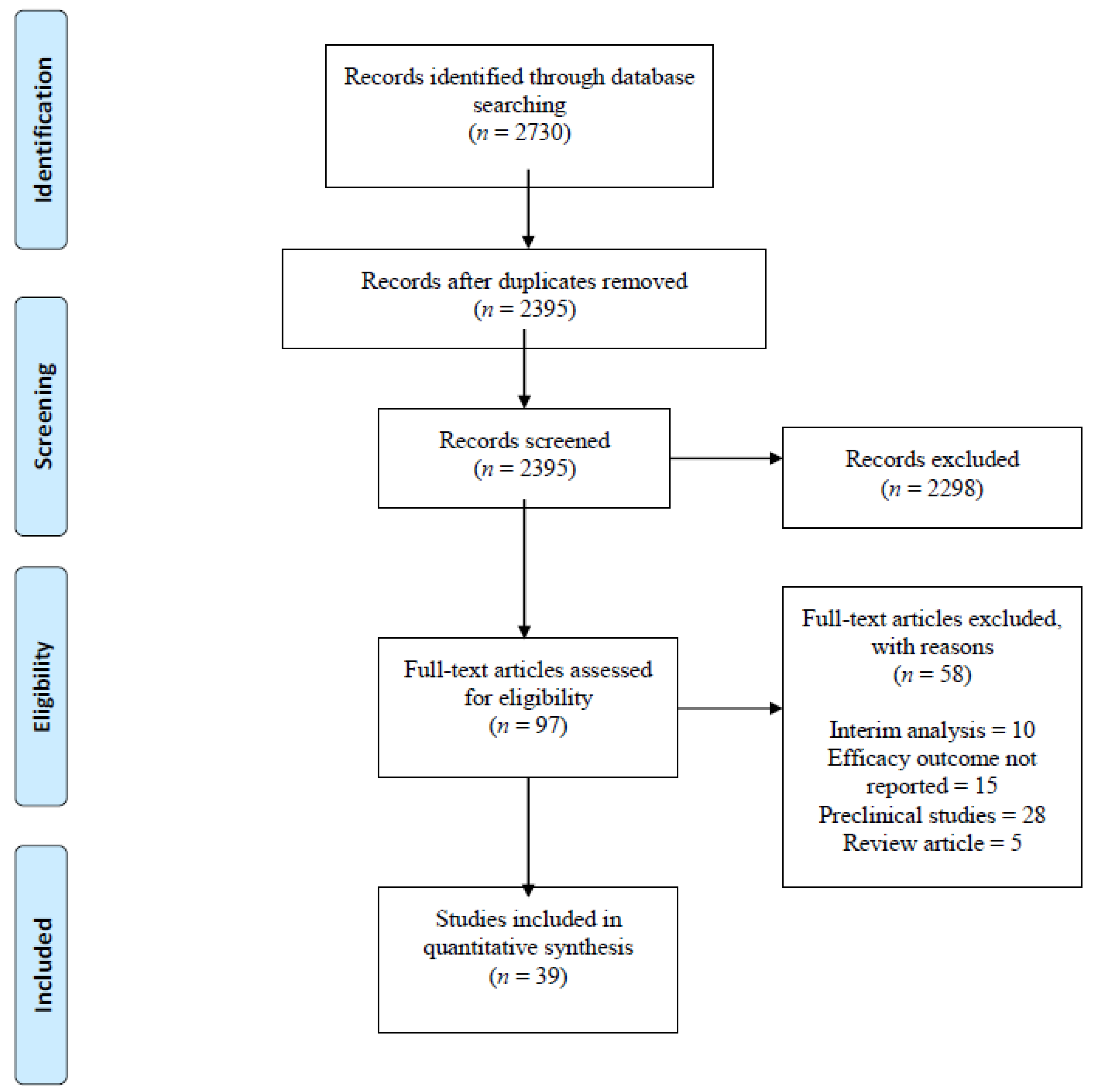
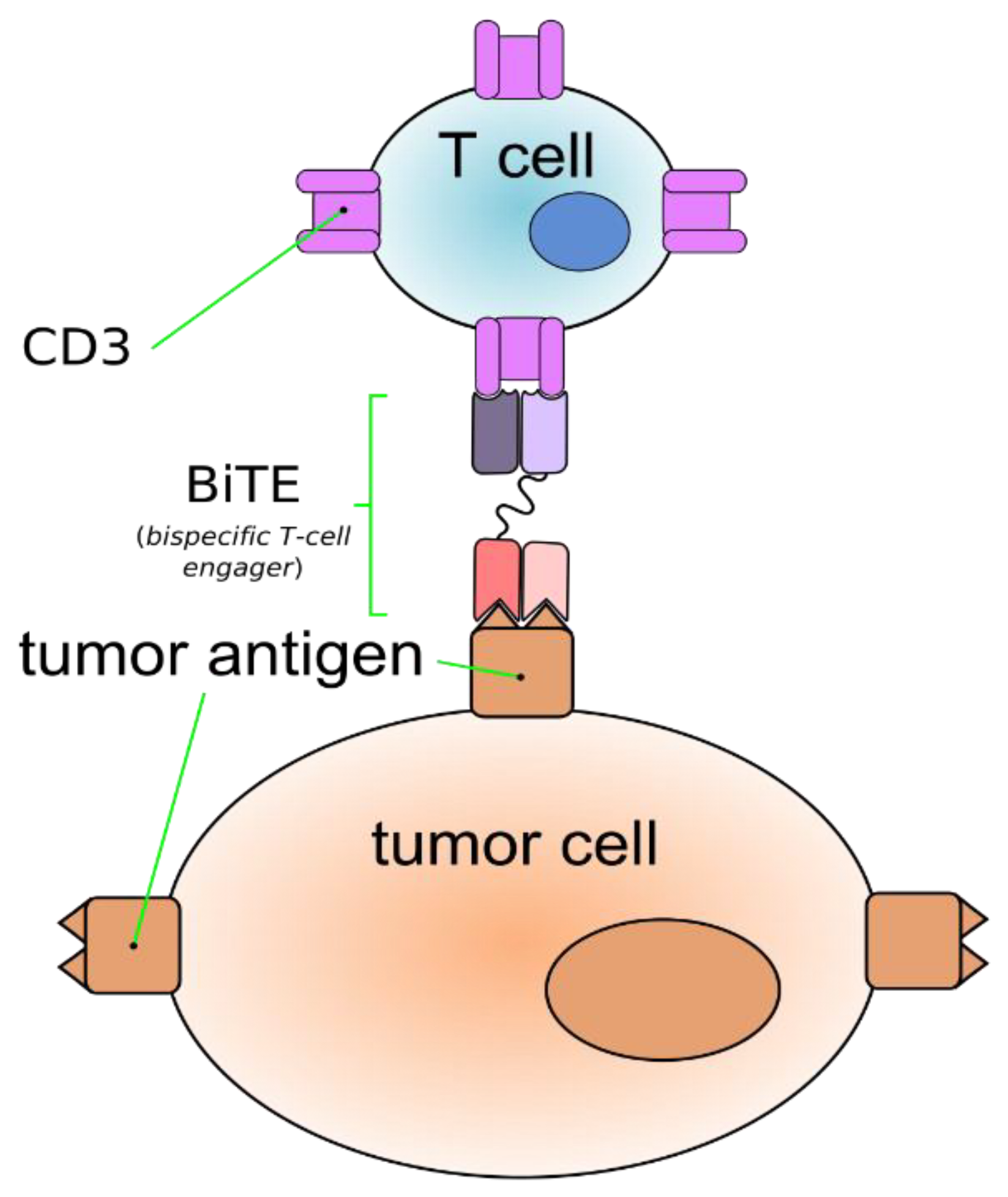

| Author, Year, Study Design, Journal. | No of Patients | Antibody | Target | Regimen | Median Prior Therapies | Dose | No. of Cycles | Clinical Outcome |
|---|---|---|---|---|---|---|---|---|
| Agura, 2009, Phase 1b, Blood. | 36/33 (REP) | Dacetuzumab (IgG1) | CD-40 | Dac + Len + Dex | 4 | 4–12 mg/kg | 4 | OR = 39%, CR = 3%, PR = 33%, MR = 12%, SD = 30%, PD = 6%, NE = 12% |
| Husein, 2010. Phase I, Haematologica. | 44 | Dacetuzumab (IgG1) | CD-40 | Dacetuzumab Monotherapy | 5 (2–14) | 4–12 mg/kg | 4–5 | SD = 20% |
| Bensinger, 2012, Phase I, British Journal of Haematology. | 28 | Lucatumumab (IgG1) | CD-40 | Lucatumumab Monotherapy | NR | 1–6 mg/kg | 4 | SD = 43%, PR = 4% > 8 m |
| Martin, 2014, Phase I, ASH. | 35 | Isatuximab (SAR650984) (IgG1-kappa) | CD-38 | Isatuximab Monotherapy | 6 (2–14) | 0.1–20mg/kg | 5–7 | ORR = 32%(>10mg), PR = 6, CR = 2 |
| Richter, 2016, Phase II, ASCO. | 97 | Isatuximab SAR650984 (IgG1-kappa) | CD-38 | Isatuximab Monotherapy | 5 (2–14) | 3–10 mg/kg | NR | ORR = 24% at dose > 10 mg/kg |
| Martin, 2014, Phase Ib, ASH. | 31 | Isatuximab SAR650984 (IgG1-kappa) | CD-38 | SAR + Len + Dex | 6 (2–12) | 3, 5, 10 mg/kg | NR | ORR = 64.5%, CBR = 70.8%, sCR = 6%, VGPR = 26%, PR = 32%, PFS = 6.2 m |
| Martin, Phase Ib, 2017, Blood. | 57 | Isatuximab (IgG1-kappa) | CD-38 | Isatuximab + Len + Dex | 5 [1–12] | 3, 5 or 10 mg/kg [Q2W] or 10 or 20 mg/kg weekly | 9 (1–37) | ORR = 56% (29/52), mPFS 8.5 months |
| Lendvai, 2016, Phase Ib, Haematologica | 26 | Isatuximab (IgG1-kappa) | CD-38 | Isatuximab+ Lenalidomide+ Dexa | 4.5(1–8) | 10 mg/kg+ 25 mg+40 mg | NR | ORR: 50%, VGPR: 25%, PR: 25% CBR (m > MR): 83% |
| Isatuximab (IgG1-kappa) | CD-38 | Isatuximab + Lenalidomide + Dexa | 6(3–10) | 20mg/kg + 25mg + 40mg | NR | ORR: 50%, VGPR: 20%, PR: 30% CBR (m > MR): 50% | ||
| Mikhael, 2017, Phase Ib, Haematologica. | 26 | Isatuximab (IgG1-kappa) | CD-38 | Isatuximab + Pomalidomide + Dexa | 4 (2–11) | 5, 10, 20 mg/kg+ 4 mg+ 40 mg | NR | CBR: 73%, PR: 62% (n = 16) {CR = 1; VGPR = 8, PR = 7} |
| Raab, 2016, Phase I/IIa, Blood. | 16 REP | MOR202 (IgG λ) | CD-38 | MOR202 monotherapy | 4 | 4, 8 and 16 mg/kg weekly. | NR | PR 19%, VGPR 13% |
| 7/5 (REP) | MOR202 (IgG λ) | CD-38 | MOR202 + LEN cohort | 4 | 4, 8 and 16 mg/kg weekly. | NR | PR 71% | |
| 5/3 (REP) | MOR202 IgG λ) | CD-38 | MOR202 + POM | 4 | 4, 8 and 16 mg/kg weekly. | NR | CR = 2 | |
| Benson, 2015, phase I, Clinical Cancer Research. | 15 | IPH 2101 (IgG4) | KIR | IPH 2101 + Len (10-25mg) | 1–2 | 0.2–2 mg/kg | 4 | VGPR 13%, PR 20%, MR 7%, SD 40%, PD 20% |
| Benson, 2012, Phase I, Blood. | 32 | IPH 2101 (IgG4) | KIR | IPH 2101 Monotherapy | 2 (1–7) | 0.0003–3 mg/kg every 28 days | 4 | No ORR, SD n = 11 (34%) |
| Kaufman, 2013, Phase I, British Journal of Haematology. | 25 | Milatuzumab (IgG1-kappa) | CD74 | IPH 2101 Monotherapy | 5 | 1.5–16 mg/kg × 2 or 4 weeks | 8 | No ORR, SD = 26% (5/19) >3 m, (1/19)>17 m |
| Hansson, 2015, Phase I, Clinical Cancer Research. | 35/29 (REP) | BI-505 (IgG1) | ICAM-1 | BI-505 Monotherapy | 6 | 0.0004 to 20 mg/kg | 1–2 | SD = 24% (2 m), PD = 65% |
| Lacy, 2008, Phase I, Journal of Clinical Oncology. | 47 | Figitumumab (CP 751,871) IgG2 | IGF-1 | Figitumumab + Dex if no PR on figitumumab monotherapy | 4 (0–8) | 0.025–20 mg/kg for 4 weeks | 4 | No objective response |
| 27 | Figitumumab (CP 751,871) IgG2 | IGF-1 | Figitumumab + Dex | 4 (0–8) | 0.025–20 mg/kg for 4 weeks + 40 mg /day Dex | PR = 6 | ||
| Moreau, 2011, Phase I, Leukemia. | 15 | AVE1642 (IgG1) | IGF-1 | AVE1642 monotherapy | 4 | 3–18 mg/kg | 2 | MR = 1, SD = 7, PD = 4 |
| 11 | AVE1642 (IgG1) | IGF-1 | AVE1642 + Bortezomib | 4 | 0.5–12 mg/kg + 1.3 mg/m2 | 4 | CR = 1, PR = 1, SD = 3 | |
| Rasche, 2015, Phase I, Haematologica. | 12 | PAT-SM6 (IgM) | GRP-78 | PAT-SM6 | 3.9 (2–7) | 1,3,6 mg/kg/day | 4 | No OR, SD: 33.3% |
| Author, Year, Study Design | No of Patients | Antibody | Target | Median Prior Therapies | Dose | No. of Cycles | Regimen | Outcome |
|---|---|---|---|---|---|---|---|---|
| Callander, 2009, NEJM. | 31/27(REP) | Bevacizumab (IgG1-kappa) | VEGF | 3 (1–7) | Bevacizumab 10 mg/kg × 2 weeks | 4 | Bevacizumab + Len (25mg) + Dex (40mg) | OR = 70%, CR = 15%, PR = 56%, PD = 11% |
| Somlo, 2011, Phase II, British Journal of Haematology. | 6 | Bevacizumab (IgG1-kappa) | VEGF-A | 3 (0–5) | Bevacizumab 10 mg/kg | 4 | Bevacizumab Monotherapy | PD = 29–69 days, SD = 238 days, SD = 16.6%, PD = 83% |
| 6 | Bevacizumab (IgG1-kappa) ± Thalidomide | VEGF-A | 4 | Bevacizumab ± Thalidomide | SD = 37–350 days, PR = 33%, PD = 67% | |||
| White, 2013, Phase II, Cancer. | 49 | Bevacizumab (IgG1-kappa) | VEGF | (1–3) | Bevacizumab 15 mg/kg I.V | 8 | Bevacizumab + Bor | ORR = 51%, PR = 16.3%, mPFS = 6.2 m |
| 53 | Placebo | Bor 1.3 mg/m2 | Placebo + Bor | ORR = 43.4%, PR = 7.5%, mPFS = 5.1 m | ||||
| Brighton, 2017, Phase II, ASH. | 74 | Siltuximab (IgG1) | IL-6 | NR | 15 mg/kg Q4 week vs. Placebo | NR | Siltuximab vs. placebo | 1-yr PFS 84.5% with siltuximab vs. 74.4% with placebo. |
| Orlowski, 2015, Phase II, American Journal of Hematology. | 142 | Siltuximab (IgG1) | IL-6 | 1–3 | Siltuximab 6 mg/kg | 4 | Siltuximab + Bor | mPFS = 8m, ORR = 55%, CR = 11%, OS = 30.8 m |
| 139 | Placebo | Placebo | Placebo + Bor | mPFS = 7.6, ORR = 47%, CR = 7%, OS = 36.8 m | ||||
| Voorhesse, 2009, Phase II, British Journal of Haematology. | 14 | Siltuximab (IgG1) | IL-6 | 4 | 6 mg/kg | 4 | Siltuximab monotherapy | No Response (CR/PR), SD = 62%, PD = 39% |
| 39 | Siltuximab (IgG1) | 6 mg/kg + 40g | Siltuximab + Dex | ORR = 23%, PR = 17%, MR = 6%, SD = 57%, PD = 17%, PFS = 3.7 m | ||||
| Suzuki, 2015, Phase I, International Journal of Hematology. | 9 | Siltuximab (IgG1) | IL-6 | 1–2 | 5.5/11 mg/kg | ≥ 9 | Siltuximab + Bor (1.3 mg/m2) + Dex (20 mg) | CR = 22%, PR = 44% |
| Rossi,2009, Phase I, British Journal of Cancer. | 12/11(REP) | Atacicept (IgG) | BAFF | NR | 2–10 mg/kg | 5 | Atacicept monotherapy | No ORR, PD = 54%, SD = 45% |
| Lida, 2016, Phase I, Cancer Science. | 4 | Tabalumab (IgG4) | BAFF | At least 1 | 100 mg + 1.3 mg/m2 + 20 mg | 3(2–11) | Tabalumab + Bor+ Dexa | ORR:100%, VGPR: 50% (n = 2), PR: 50% (n = 2) |
| 12 | Tabalumab (IgG4) | BAFF | At least 1 | 200 mg + 1.3 mg/m2 + 20 mg | 4.5 (1–15) | Tabalumab + Bor + Dexa | ORR: 41.7%, VGPR: 8.3% (n = 1), PR:33.3 %(n = 4), SD:16,7 %(n = 2), PD:25%(n = 3) | |
| Reje, 2017, Phase II, British Journal of Haematology. | 74 | Tabalumab (IgG4) | BAFF | 1–3 | 100 mg | 8 or 10 | Tab + Bor + Dex | ORR = 58.1% |
| 74 | Tabalumab (IgG4) | BAFF | 300 mg | Tab + Bor + Dex | ORR = 59.5% | |||
| 72 | Placebo | no mAb | Placebo + Bor + Dex | ORR = 61.6% | ||||
| Lesokhin, 2016, Phase Ib, JCO. | 27 | Nivolumab (IgG4) | PD-1 | 3 (1–12) | 1–3 mg/kg x 2wk | NR | Nivolumab monotherapy | mPFS = 10 wk=K8, OR = 4%, SD = 63%, CR = 4% |
| Ansell, 2016, Phase I, ASH. | 7 | Nivolumab (IgG4) + Ipilimumab (IgG1) | PD-1 + CTLA-4 | 5 (range 2–20) | 3 mg/kg IV and 1 mg/kg IV every 3 weeks × 4 followed by Nivo 3 mg/kg every 2 week for up to 2 years. | NR | Nivolumab + Ipilimumab | mPFS = 2.2, mOS = 7.6, No ORR. SD 1 (14%) |
| Badros, 2017, Phase II, Blood. | 48 | Pembrolizumab (IgG4) | PD-1 | 3 (2–5) | 200 mg IV × 2 wk | 28 | Pembrolizumab + pom + Dex | 27 of 48 pts (56%) ORR > PR; sCR (n = 4, 8%), nCR (n = 3, 6%), VGFR (n = 6, 13%), PR (n = 14, 29%). |
| Ribrag, 2017, Phase Ib, Haematologica. | 30 | Pembrolizumab (IgG4) | PD-L1 | 4(2–12) | 100–200 mg/kg Qweek or Q 2week. | 6 (2–15) | Pembrolizumab monotherapy | SD: 57%. PD: 43%. |
| Efebera, 2015, Phase I/II, Blood. | 12 | Pidilizumab (IgG4) | PD-1 | 2 (2–11) | 1.5–6 mg/kg every 28 days | NR | Pidilizumab + Len (15–25mg) | VGPR n = 3, PR n = 1 |
| Fouquet, 2018, Phase I, Oncotarget. | 10/6 (REP) | F50067 (IgG1) | CXCR4 | NR | Dose-Group (mg/kg)s were analyzed for MDD 0.03, 0.1, 0.3, 1.0 | 21 | F50067 Monotherapy | ORR 66.7% (>PR). Objective response 66.7% (>SD) |
| 4/3 (REP) | F50067 (IgG1) | CXCR4 | NR | 0.03, 0.1. weekly or Q2 week | 15 | F50067 + Len-LoDex | Objective response 33.3% (>SD) ORR not available | |
| Belch, 2011, Phase II, Haematologica. | Arm A = 35 | No mAb, only Bor | TRAILR1 | 1.6 | Velcade Dose: 1.3 mg/m2 on days 1, 4, 8, 11 Q21 D | Maximum 17 cycles (1year) | Bor | ORR 51.4% Median DOR 8.5 m. PR 18. Mean PFS 8.7 CI(7.6, 10.0) |
| Arm B10 = 33 | Mapatumumab (IgG1) | TRAILR1 | 1.6 | 10 mg/kg on d1 Q21 days | Maximum of 17 cycles (1year) | Bor + Mapatumumab | ORR 30.3%, Median DOR 9.3 m. PR 10. Mean PFS 4.7 CI(2.5, 7.4) p = 0.29 | |
| Arm B20 = 36 | Mapatumumab (IgG1) | TRAILR1 | 1.6 | 20 mg/kg on Day 1 Q21 days | Maximum of 17 cycles (1year) | Bor + Mapatumumab | ORR 52.8%, Median DOR 7.6 m. PR 17 Mean PFS 5.7 CI(5.2, 8.9) p = 0.21 | |
| Channan, 2010, Phase I, Blood. | 37 | Lorvotuzumab mertansine (ADC) (IgG1) | CD56 | 6 | 40–140 mg/m2 × wk | NR | Lorvotuzumab mertansine Monotherapy | SD = 41% |
| Berdeja. 2012, Phase I, JCO. | 44 (39REP) | Lorvotuzumab mertansine (IgG1) | CD56 | 2 (1–11) | 75–112 mg/m2 | NR | LM + LEN (20mg) + Dex (40mg) | ORR = 59%, sCR n = 1, CR n = 1, VGPR n = 8, PR n = 9 |
| Heffner, 2012, Phase I/IIa, Blood. | 29/23 (REP) | Indatuximab Ravtansine (ADC) (IgG1) | CD138 | 2 (1–11) | 40–160 mg/m2 | NR | Indatuximab Monotherapy | PR = 1, SD = 11, mPFS = 112 days (90–245) |
| Kelly K. R., 2014, PhaseI/IIa, Blood. | 45/36 (REP) | Indatuximab Ravtansine (ADC) (IgG1) | CD138 | 3 | 80, 100, 120 mg/m2 | NR | Indatuximab + dex + Len | ORR = 78%, sCR = 1, CR = 2, VGPR = 10, PR = 15, SD = 2 |
| Kelly K. R., 2016, PhaseI/IIa, Blood. | 47/43 (REP) | Indatuximab Ravtansine (ADC) (IgG1) | CD138 | 1–6 | 80–100 mg/m2 | NR | Indatuximab + dex + Len | ORR = 78%, PR = 33/47, mPFS 16.4m |
| 17 | > 2 | NR | Indatuximab + dex + Pomalidomide | ORR = 79%, VGPR = 4, PR = 7 |
| Author, Year, Study Design | Antibody | Adverse Effects ≥ Grade III | Common Adverse Effects |
|---|---|---|---|
| Hansson,2015, Phase I | BI-505 | Headache (n = 4), Pyrexia (n = 3), Infusion related reactions (n = 1), Fluid overload (n = 1), T-wave inversion (n = 1). | Fatigue (47%), Pyrexia (32%), Headache (32%), Nausea (29%), Chills (24%) |
| Callander, 2009 | Bevacizumab | DVT (n = 3), SOB (n = 2), A fib (n = 3) | Fatigue |
| Somlo, 2011, Phase II | Bevacizumab | Fatigue (16.6%), HTN (16.6%), Neutropenia (16.6%), Hyponatremia (16.6%) | NR |
| Bevacizumab ± Thalidomide | Lymphopenia (16.6%), Fatigue (16.6%), Pulmonary HTN (16.6%) | ||
| White, 2013, Phase II | Bevacizumab + Bortezomib | Thrombocytopenia (28%), Neutropenia (18%) | Anemia, Diarrhea, Fatigue, URTI, Neuralgia |
| Bortezomib + Placebo | Thrombocytopenia (30%), Diarrhea (10%) | Anemia, Diarrhea, Fatigue, URTI, Neuralgia | |
| Rasche, 2015, Phase I | PAT-SM6 | Neutropenia (8.3), Back pain (8.3), bile duct stone (8.3) | Neutropenia (50), Leukopenia (67) |
| Orlowski, 2015, Phase II | Siltuximab + Bortezomib | Neutropenia (49%), Thrombocytopenia (48%) | Infections (62%), Sensory neuropathy (49%) |
| Bortezomib + Placebo | Neutropenia (24%), Thrombocytopenia (34%) | Infections (49%), Sensory neuropathy (51%) | |
| Agura, 2009, Phase 1b | Dacetuzumab | Herpes Zoster, Renal failure | Infusion reactions, grade (I/II), Fatigue (47%), Neutropenia (28%), Thrombocytopenia (25%), Diarrhea (22%), Constipation (19%), Headache (19%) |
| Husein, 2010, Phase I | Dacetuzumab | Total grade 3 AE = 30 %, Thrombocytopenia (7%), Aseptic meningitis (5%), Renal failure (5%) | Fatigue (57%), headache (43%), nausea (23%), anemia (21%). Elevated LFTs (41%), anorexia, back pain, constipation, diarrhea, ocular hyperemia (21%) |
| Bensinger, 2012, Phase I | Lucatumumab | Thrombocytopenia (4%), Increased LFTs (4%), Increased Lipase (4%) | Infusion reactions, Anemia (7%), Hypercalcemia (7%), Pyrexia (7%) |
| Martin, 2014, Phase I | Isatuximab (SAR650984) | Pneumonia, Fever, Hyperglycemia, Hypophosphatemia, | Pneumonia 9%, fever (3%), apnea (3%), fatigue (3%), hyperglycemia (3%) |
| Richter, 2016, Phase II | Isatuximab SAR650984 | NR | Nausea (33%), Fatigue (30%), Dyspnea (26%), Infusion related 49% |
| Martin. Phase Ib, 2017 | Isatuximab + Len + Dex | pneumonia (9%), fatigue (7%). Hypokalemia, anaphylaxis, febrile neutropenia (5% each). | Thrombocytopenia (38%), anemia (25%), Neutropenia (60%), |
| Martin, 2014, Phase Ib | Isatuximab + Len + Dex | No DLT reported, IAR (6%) | Fatigue (41.9%), Nausea (38.7), URTI(38.7%), Diarrhea(35.5%) |
| Voorhesse, 2009, Phase II | Siltuximab | Thrombocytopenia, anemia, Neutropenia, abnormal LFTs, fatigue. | Diarrhea (29%), Nausea (22%), Constipation (20%), Fatigue (43%) Peripheral edema (29%) |
| Siltuximab + Dexamethasone | |||
| Suzuki, 2015, Phase I | Siltuximab | No DLT, Lymphopenia (89%), Neutropenia (44%) | Abnormal LFTs (44%), Rash (44%), Hyperlipidemia (44%) |
| Rossi,2009, Phase I | Atacicept | Neuropathy, Epiploic appendicitis. | Infections, Bone Pains |
| Shinsuke Iida, 2016, Phase I | Tabalumab | Febrile Neutropenia, Tumor lysis syndrome, Ileus. | Thrombocytopenia (81.3%), Lymphopenia (43.8%), Increased alanine aminotransferase (43.8%) |
| Reje, 2017, Phase II | Tabalumab | Thrombocytopenia (12 8%), Pneumonia (9.1%) | Thrombocytopenia (37%), Fatigue (37%), Diarrhea (35%), Constipation (32%) |
| Placebo | |||
| Lesokhin, 2016, Phase Ib | Nivolumab | Pneumonitis (4%), Myositis (4%), Raised CPK (4%) | seen in 52% patients |
| Badros, 2017, Phase II | Pembrolizumab | Hematologic (40%), Hyperglycemia (25%), pneumonia (15%) | Pancytopenia (13%), Hypothyroidism (10%) |
| Efebera, 2015, Phase I/II | Pidilizumab | Anemia 25%, neutropenia 23%, thrombocytopenia 34% | Fatigue (50%), anorexia (17%), hypophosphatemia (17%) |
| Channan, 2010, Phase I | Lorvotuzumab mertansine | Peripheral neuropathy, Fatigue, Acute renal failure | Fatigue, peripheral neuropathy, Headache, Raised AST |
| Berdeja, 2012, Phase I | Lorvotuzumab mertansine | Peripheral neuropathy, Neutropenia n = 1, Hyperuricemia Tumor lysis syndrome n = 2 | Peripheral neuropathy (42%) |
| Heffner, 2012, Phase I/IIa | Indatuximab Ravtansine (ADC) | Palmar-planter eryhtrodysesthesia syndrome (N = 1), Elevated LFTs | Fatigue, Anemia, Diarrhea |
| Kelly, 2014, PhaseI/IIa | Indatuximab Ravtansine (ADC) | Mucosal inflammation (n = 1), Anemia (n = 1) | Fatigue, Hypokalemia, Diarrhea |
| Kelly, 2016, PhaseI/IIa | Indatuximab Ravtansine (ADC) | NR | Diarrhea, Fatigue, Nausea |
| Benson, 2015, phase I | IPH 2101 | leucopenia n = 1, neutropenia n = 1 | Myelodysplasia n = 1, neutropenia, IRR |
| Benson, 2012, Phase I | IPH 2101 | NR | Fatigue n = 10, Chills n = 5, pyrexia n = 5 |
| Kaufman,2013, Phase I | Milatuzumab | Anemia 20%, CRS 4%, Hypokalemia 4%, Epistaxis 4% | Nausea (48%), Fever (36%), CRS (20%), Headache (20%), HTN (20%) |
| Lacy, 2008, Phase I | Figitumumab (CP 751,871) | Anemia (2.1%), Hyperglycemia (2.1%) | Anemia (6.4%), Increased AST (6.4%) |
| Lacy, 2008, Phase I | Figitumumab (CP 751,871) | Muscle weakness (3.7%), Increased AST (3.7%) | Anemia (7.4%), Increased ALT (11%) |
| Moreau,2011, Phase I | AVE1642 | Grade III hyperglycemia n = 1 | NR |
| Moreau,2011, Phase I | AVE1642 | Hypercalcemia n = 1, renal vein thrombosis n = 1 | NR |
| Miguel, 2014, Phase II | VMP + Placebo | All = 81%, Neutropenia (43%), Thrombocytopenia (25%), Pneumonia (17%), Median PFS = 17m | Infections (17%), GI disorders (11%) |
| Miguel, 2014, Phase II | Siltuximab + VMP | All = 92%, Neutropenia (62%), Thrombocytopenia (44%), Pneumonia (17%), Median PFS = 17m | Infections (29%), GI disorders (11.5%) |
| Siltuximab | Pneumonia, Thrombocytopenia | Fatigue (63.6%), Constipation (54.5%), Paresthesia (45.5%), Myalgia (56.4%) | |
| Baz, 2007, Phase II | Rituximab + MP | Diarrhea (31%), Neutropenia (51%), Anemia (47%), Thrombocytopenia (40%) | Fever, fatigue, cough, dyspnea, diarrhea, nausea, diarrhea and constipation. Possible AE related to rituximab were IRR (11%) |
| Vorhees, 2013, Phase II | Siltuximab | Thrombocytopenia 28%, Anemia 43%, Neutropenia 7% | Neutropenia 29%, Anemia 35%, Thrombocytopenia 49%, Fatigue 43%, Abnormal Hepatic Function 31%, Diarrhea 29%, Edema 29%, Dyspnea 27%, Dizziness 25%, Nausea 28%, Insomnia 28%, Weight increase 20% |
| Siltuximab + Dexa | Thrombocytopenia 26%, Anemia 16%, Neutropenia 18%, Fatigue 8% | NR | |
| Ribrag, 2017, Phase I | Pembrolizumab | Myalgia 3% | Asthenia 17%, Pruritus 3%, Arthralgia 3%, Fatigue 3%, Hyperglycemia 3%, Blurred vision 3%, Aspartate Aminotransferase increased 3% |
| Rasche, 2015, Phase I | PAT-SM6 | Neutropenia 8% | Neutropenia 50%, Leukopenia 66%, Increase in C reactive protein 8%, Hypertriglyceridemia 8% |
| Raje, 2016, Phase I | Tabalumab | Peripheral Sensory Neuropathy 15%, Fatigue 6%, Diarrhea 8%m Thrombocytopenia 31%m Anemia 6%, Neutropenia 15%, Pneumonia 13%, Hypokalemia 8%, Renal Failure 8%, Gi Hemorrhage 4%, Musculoskeletal pain 6% | Peripheral Sensory Neuropathy 63%, Fatigue 58%m Diarrhea 54%, Nausea 48%, Thrombocytopenia 33%, Anemia 23%, |
| Raab, 2016, Phase I/IIa | MOR 202 | NR | IRRs 10% |
| Patnaik, 2014, Phase I | Ficlatuzumab | Hyper/Hypokalemia, Diarrhea, Fatigue | Peripheral edema, fatigue, nausea |
| Orlowski, 2015, Phase II | Siltuximab + placebo | AE grade >3: 74%. Neutropenia 29%, Thrombocytopenia 34%, Bleeding events <2%, Infections 14% | Neutropenia 36%, Thrombocytopenia 45%, Peripheral Sensory Neuropathy 51%, Diarrhea 35%, Anemia 29%, Fatigue 27%, Infection 49% |
| Siltuximab + Bortezomib | AE grade >3: 91%. Neutropenia 49%, Thrombocytopenia 48%, Bleeding events <2%, infection 16% | Neutropenia 59%, Thrombocytopenia 57%, Peripheral Sensory Neuropathy 49%, Diarrhea 35 = 6%, Anemia 31%, Fatigue 27%, Infection 62% | |
| Mikhael, 2017, Phase IB | Isatuximab + Dexa Pomalidomide | Neutropenia 92%, Thrombocytopenia 32% | Fatigue 62%, Diarrhea 35%, Dyspnea 31% |
| Martin, 2017, Phase IB | Isatuximab + Lenalidomide + Dexa | Anemia 25%, Lymphopenia 58%, Neutropenia 60%, Leukopenia 53%, Thrombocytopenia 38%, Fatigue 7%, Pneumonia 9%, Febrile Neutropenia 5%, Anaphylactic Reaction 5%, Hypokalemia 5% | Anemia 98%, Lymphopenia 95%, Neutropenia 89%, Leukopenia 91%, Thrombocytopenia 91%, IARs 56%, Diarrhea 53%, Fatigue 49%, URTI 40%, Nausea 35%, Insomnia 32%, Cough 26%, Headache 23%, Muscle spasm 23%, Vomiting 23% |
| Lida, 2016, Phase I | Tabalumab + Bortezomib + Dexa | >Grade3 AE: 81.3% | Thrombocytopenia 81%, Lymphopenia 43%, Anemia 31%, Increase Alanine Aminotransferase 43%, GI disturbances 62%, Constipation 38% |
| Lendvai, 2016, Phase Ib | Isatuximab + Dexa Lenalidomide | NR | IARs 65%, Fatigue 46%, Pyrexia 35%, Diarrhea 31% |
| Fouquet, 2018, Phase I | F50067 + Dexa Lenalidomide | Thrombocytopenia 64%, Neutropenia 57%, Anemia 14% | Thrombocytopenia 100%, Neutropenia 93%, Asthenia 7%, Hyperhidrosis 7%, Pyrexia 7%, Dyspnea 7%, Pulmonary Embolism 7%, Femoral Neck Fracture 7%, Rectal hemorrhage 7% |
| Brighton, 2017, Phase II | Siltuximab | NR | Infections and Infestations 38%, Renal and Urinary Disorders 7% |
| Placebo | NR | Infections and Infestations 33%, Renal and Urinary Disorders 16% | |
| Belch, 2011, Phase II | Bortezomib +/- Mapatumumab | Overall >Grade 3 AE. Arm A: 88.6%, Arm B10: 69.7%, Arm B20: 61% | Hematological, Peripheral Sensory Neuropathy |
| Badros, 2016 | Pembrolizumab + Pomalidomide + Dexa | Anemia 21%, Neutropenia 40%, Lymphopenia 15%, Thrombocytopenia 8%, Fatigue 15%, Hyperglycemia 25%, URI 25%, Rash 10% | Dyspnea 54%, Dizziness 44%, Increased Creatinine 38%, Edema 35%, Rash 30%, Interstitial Pneumonitis 13%, Hypothyroidism 10% |
| Ansell, 2016, Phase I | Nivolumab + Ipilimumab | NR | NR |
© 2019 by the authors. Licensee MDPI, Basel, Switzerland. This article is an open access article distributed under the terms and conditions of the Creative Commons Attribution (CC BY) license (http://creativecommons.org/licenses/by/4.0/).
Share and Cite
Iftikhar, A.; Hassan, H.; Iftikhar, N.; Mushtaq, A.; Sohail, A.; Rosko, N.; Chakraborty, R.; Razzaq, F.; Sandeep, S.; Valent, J.N.; et al. Investigational Monoclonal Antibodies in the Treatment of Multiple Myeloma: A Systematic Review of Agents under Clinical Development. Antibodies 2019, 8, 34. https://doi.org/10.3390/antib8020034
Iftikhar A, Hassan H, Iftikhar N, Mushtaq A, Sohail A, Rosko N, Chakraborty R, Razzaq F, Sandeep S, Valent JN, et al. Investigational Monoclonal Antibodies in the Treatment of Multiple Myeloma: A Systematic Review of Agents under Clinical Development. Antibodies. 2019; 8(2):34. https://doi.org/10.3390/antib8020034
Chicago/Turabian StyleIftikhar, Ahmad, Hamza Hassan, Nimra Iftikhar, Adeela Mushtaq, Atif Sohail, Nathaniel Rosko, Rajshekhar Chakraborty, Faryal Razzaq, Sonia Sandeep, Jason Neil Valent, and et al. 2019. "Investigational Monoclonal Antibodies in the Treatment of Multiple Myeloma: A Systematic Review of Agents under Clinical Development" Antibodies 8, no. 2: 34. https://doi.org/10.3390/antib8020034
APA StyleIftikhar, A., Hassan, H., Iftikhar, N., Mushtaq, A., Sohail, A., Rosko, N., Chakraborty, R., Razzaq, F., Sandeep, S., Valent, J. N., Kanate, A. S., & Anwer, F. (2019). Investigational Monoclonal Antibodies in the Treatment of Multiple Myeloma: A Systematic Review of Agents under Clinical Development. Antibodies, 8(2), 34. https://doi.org/10.3390/antib8020034

