Integrating Microtopographic Engineering with Native Plant Functional Diversity to Support Restoration of Degraded Arid Ecosystems
 , ,
, ,
Abstract
1. Introduction
2. Materials and Methods
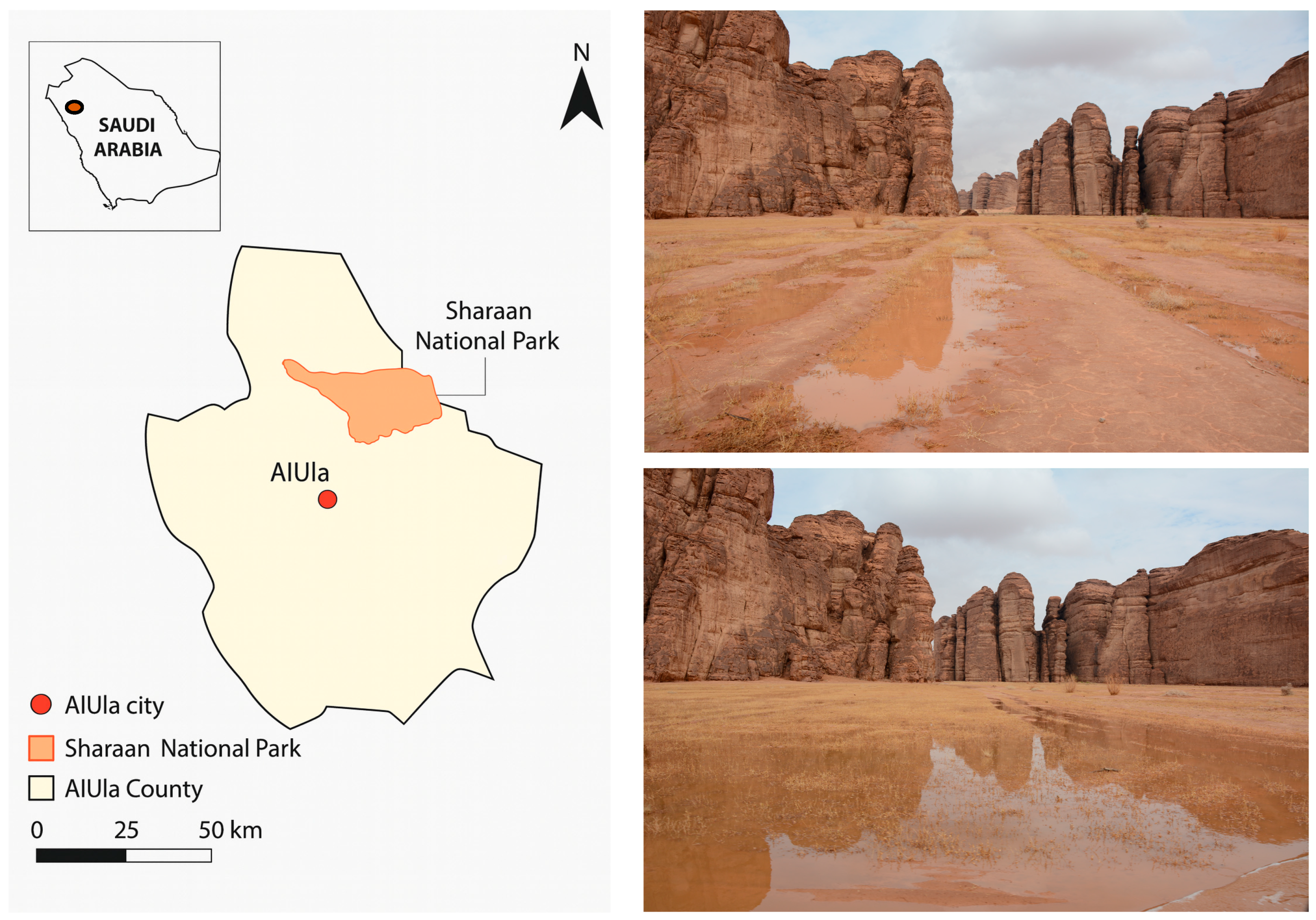
2.1. Study Area
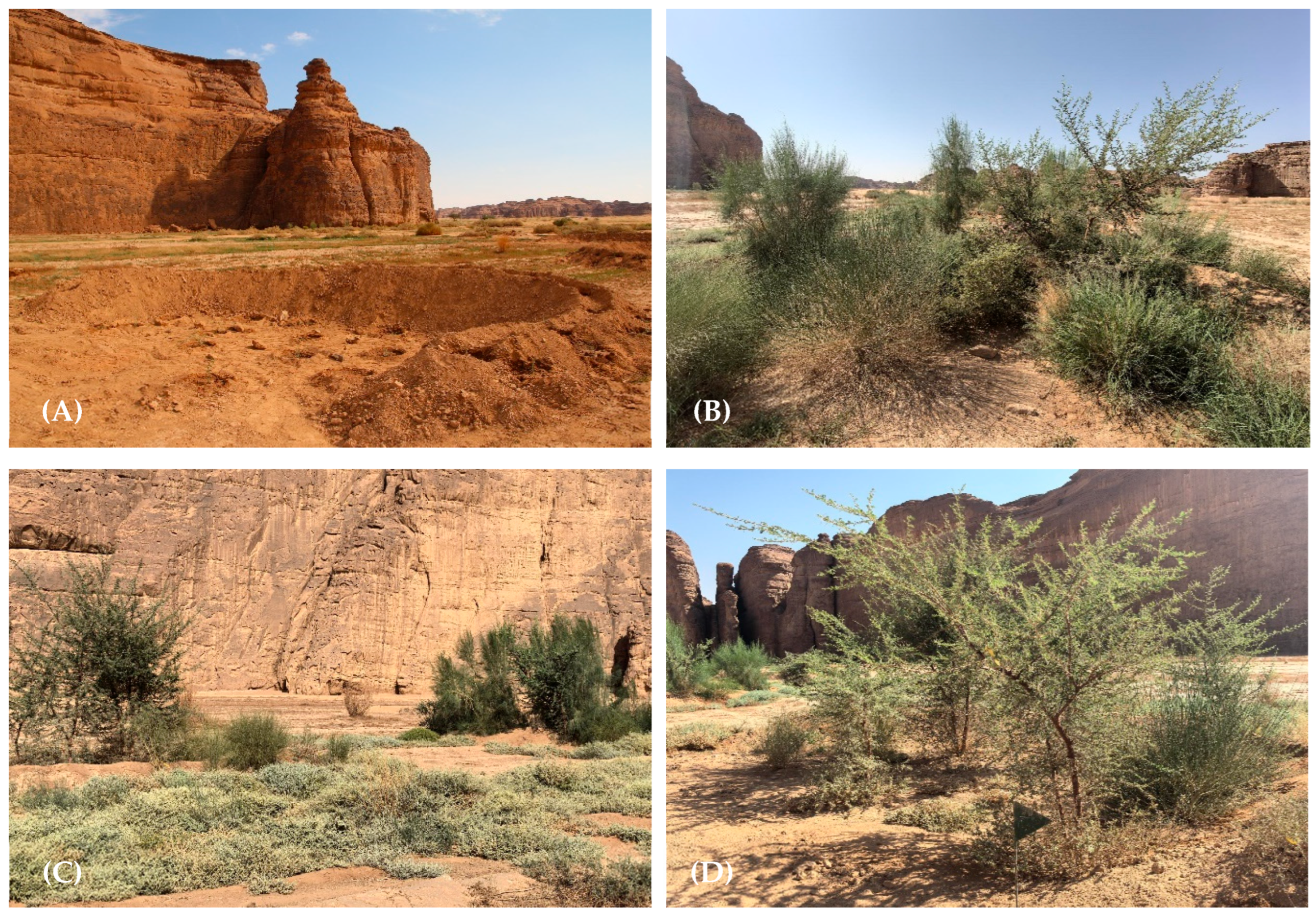
2.2. Experimental Design and Half-Moons Construction
2.3. Vegetation Treatments and Planting
2.4. Seedling and Spontaneous Vegetation Monitoring
2.5. Soil Sampling and Analyses
2.6. Statistical Analyses
3. Results
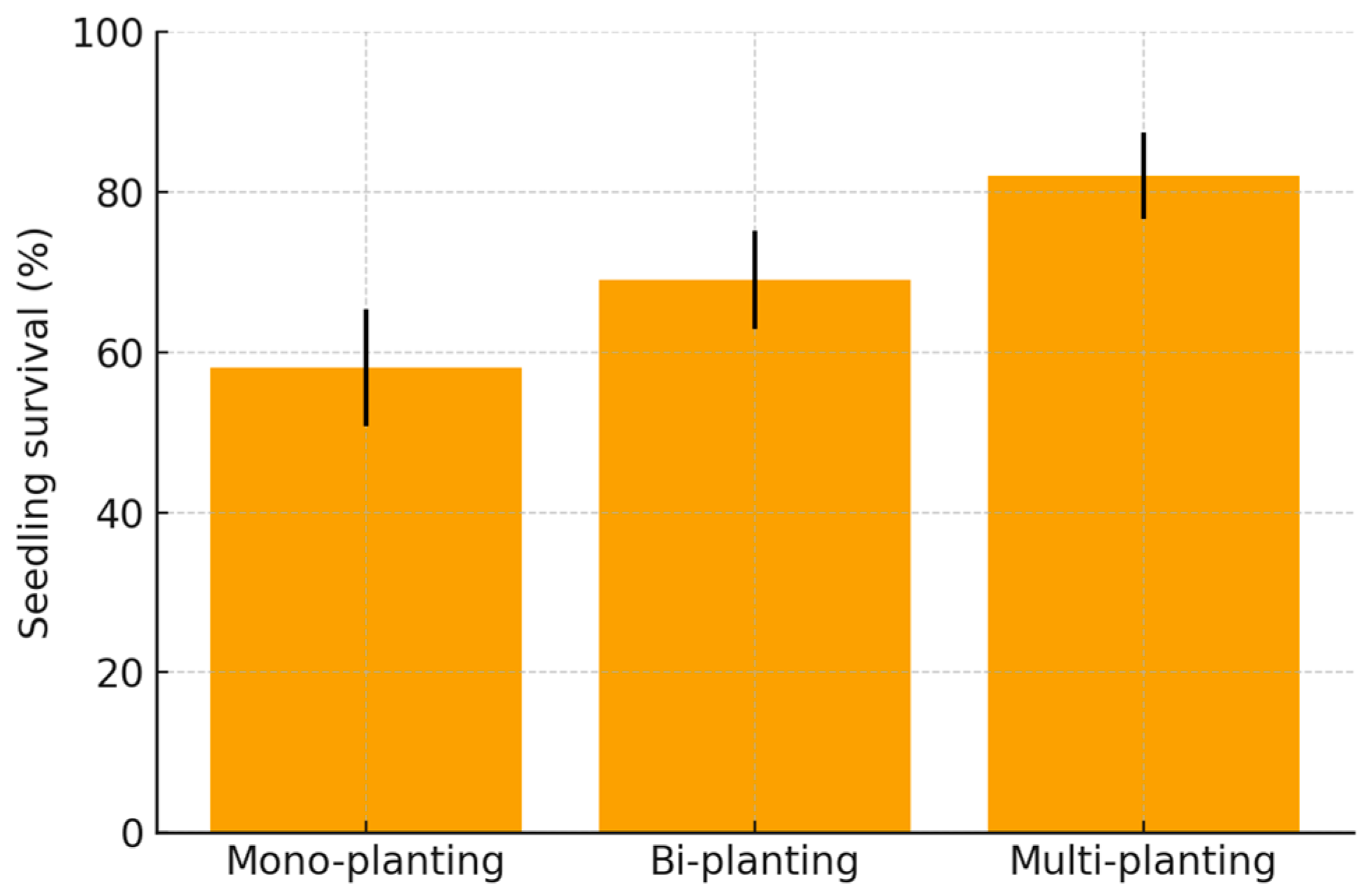
3.1. Seedling Survival Across Planting Treatments
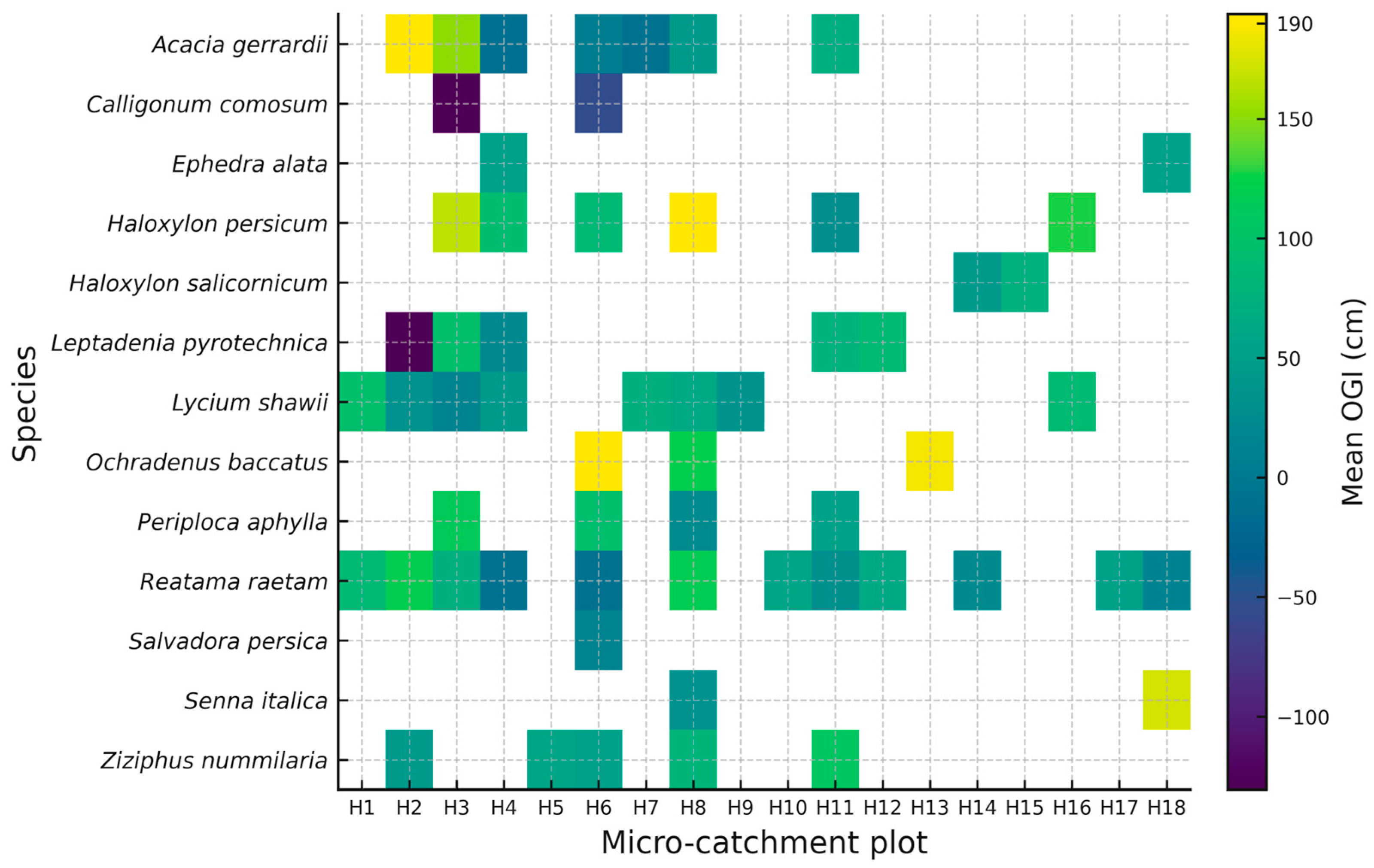
3.2. Growth Performance and Spatial Heterogeneity
3.3. Trait-Based Drivers
3.4. Functional Clustering
3.5. Spontaneous Species Recruitment
3.6. Soil Improvement
4. Discussion
4.1. Integrating Hydrological Design and Ecological Function
4.2. The Role of Species Identity and Functional Traits
4.3. Facilitation Under Extreme Stress: Testing the Stress-Gradient
4.4. Temporal Improvement in Soil Properties
4.5. Successional Pathways and Transition to Passive Restoration
5. Conclusions
Supplementary Materials
Author Contributions
Funding
Data Availability Statement
Acknowledgments
Conflicts of Interest
References
- Maestre, F.T.; Salguero-Gómez, R.; Quero, J.L. It is getting hotter in here: Determining and projecting the impacts of global environmental change on drylands. Philos. Trans. R. Soc. B 2012, 367, 3062–3075. [Google Scholar] [CrossRef]
- Middleton, N.; Thomas, D.S.G.; Arnold, E. World Atlas of Desertification; United Nations Environment Programme: London, UK, 1997. [Google Scholar]
- Schlesinger, W.H.; Reynolds, J.F.; Cunningham, G.L.; Huenneke, L.F.; Jarrell, W.M.; Virginia, R.A.; Whitford, W.G. Biological feedbacks in global desertification. Science 1990, 247, 1043–1048. [Google Scholar] [CrossRef]
- Stroosnijder, L. Rainfall and land degradation. In Climate and Land Degradation; Sivakumar, M.V.K., Ndiang’ui, N., Eds.; Springer: Berlin/Heidelberg, Germany, 2007; pp. 167–195. [Google Scholar]
- Tongway, D.J.; Ludwig, J.A. Restoring Disturbed Landscapes: Putting Principles into Practice; Island Press: Washington, DC, USA, 2011. [Google Scholar] [CrossRef]
- Brevik, E.C.; Sauer, T.J. The past, present, and future of soils and human health studies. Soil 2015, 1, 35–46. [Google Scholar] [CrossRef]
- Bengough, A.G.; McKenzie, B.M.; Hallett, P.D.; Valentine, T.A. Root elongation, water stress, and mechanical impedance: A review of limiting stresses and beneficial root tip traits. J. Exp. Bot. 2011, 62, 59–68. [Google Scholar] [CrossRef] [PubMed]
- Tracy, S.R.; Black, C.R.; Roberts, J.A.; Mooney, S.J. Soil compaction: A review of past and present techniques for investigating effects on root growth. J. Sci. Food Agric. 2011, 91, 1528–1537. [Google Scholar] [CrossRef]
- Clark, L.J.; Whalley, W.R.; Barraclough, P.B. How do roots penetrate strong soil? Plant Soil 2003, 255, 93–104. [Google Scholar] [CrossRef]
- Lynch, J.P. Steep, cheap and deep: An ideotype to optimize water and N acquisition by maize root systems. Ann. Bot. 2013, 112, 347–357. [Google Scholar] [CrossRef] [PubMed]
- Chen, L.; Wei, W.; Fu, B.; Lü, Y. Soil and water conservation on the Loess Plateau in China: Review and perspective. Prog. Phys. Geogr. 2007, 31, 389–403. [Google Scholar] [CrossRef]
- Reij, C.; Tappan, G.; Smale, M. Agroenvironmental Transformation in the Sahel: Another Kind of “Green Revolution”; IFPRI: Washington, DC, USA, 2010. [Google Scholar]
- Critchley, W.; Siegert, K. Water Harvesting: A Manual for the Design and Construction of Water Harvesting Schemes for Plant Production; FAO: Rome, Italy, 1991. [Google Scholar]
- Yang, L.; Chen, L.; Wei, W. Effects of vegetation restoration on the spatial distribution of soil moisture at the hillslope scale in semi-arid regions. Catena 2015, 124, 138–146. [Google Scholar] [CrossRef]
- Bautista, S.; Mayor, Á.G.; Bourakhouadar, J.; Bellot, J. Plant spatial pattern predicts hillslope semiarid runoff and erosion in a Mediterranean landscape. Ecosystems 2007, 10, 987–998. [Google Scholar] [CrossRef]
- Schlesinger, W.H. Evidence from chronosequence studies for a low carbon-storage potential of soils. Nature 1990, 348, 232–234. [Google Scholar] [CrossRef]
- Valentin, C.; Bresson, L.M. Morphology, genesis and classification of surface crusts in loamy and sandy soils. Geoderma 1992, 55, 225–245. [Google Scholar] [CrossRef]
- Pywell, R.F.; Bullock, J.M.; Hopkins, A.; Walker, K.J.; Sparks, T.H.; Burke, M.J.; Peel, S. Restoration of species-rich grassland on arable land: Assessing the limiting processes using a multi-site experiment. J. Appl. Ecol. 2002, 39, 294–309. [Google Scholar] [CrossRef]
- Suding, K.N. Toward an era of restoration in ecology: Successes, failures, and opportunities ahead. Annu. Rev. Ecol. Evol. Syst. 2011, 42, 465–487. [Google Scholar] [CrossRef]
- Tilman, D.; Knops, J.; Wedin, D.; Reich, P.; Ritchie, M.; Siemann, E. The influence of functional diversity and composition on ecosystem processes. Science 1997, 277, 1300–1302. [Google Scholar] [CrossRef]
- Loreau, M.; Hector, A. Partitioning selection and complementarity in biodiversity experiments. Nature 2001, 412, 72–76. [Google Scholar] [CrossRef]
- Cardinale, B.J.; Duffy, J.E.; Gonzalez, A.; Hooper, D.U.; Perrings, C.; Venail, P.; Narwani, A.; Mace, G.M.; Tilman, D.; Wardle, D.A.; et al. Biodiversity loss and its impact on humanity. Nature 2012, 486, 59–67. [Google Scholar] [CrossRef]
- Maestre, F.T.; Quero, J.L.; Gotelli, N.J.; Escudero, A.; Ochoa, V.; Delgado-Baquerizo, M.; García-Gómez, M.; Bowker, M.A.; Soliveres, S.; Escolar, C.; et al. Plant species richness and ecosystem multifunctionality in global drylands. Science 2012, 335, 214–218. [Google Scholar] [CrossRef] [PubMed]
- Whitford, W.G. Ecology of Desert Systems; Academic Press: London, UK, 2002. [Google Scholar]
- Schlesinger, W.H.; Reynolds, J.F.; Cunningham, G.L.; Huenneke, L.F.; Jarrell, W.M.; Virginia, R.A.; Whitford, W.G. On the spatial pattern of soil nutrients in desert ecosystems. Ecology 1996, 77, 364–374. [Google Scholar] [CrossRef]
- Maestre, F.T.; Valladares, F.; Reynolds, J.F. Is the change of plant–plant interactions with abiotic stress predictable? A meta-analysis of field results in arid environments. J. Ecol. 2005, 93, 748–757. [Google Scholar] [CrossRef]
- Callaway, R.M. Positive Interactions and Community Organization. In Positive Interactions and Interdependence in Plant Communities; Springer: Dordrecht, The Netherlands, 2007. [Google Scholar] [CrossRef]
- Butterfield, B.J.; Bradford, J.B.; Armas, C.; Prieto, I.; Pugnaire, F.I. Does the stress-gradient hypothesis hold water? Funct. Ecol. 2016, 30, 10–19. [Google Scholar] [CrossRef]
- Jones, C.G.; Lawton, J.H.; Shachak, M. Organisms as ecosystem engineers. Oikos 1994, 69, 373–386. [Google Scholar] [CrossRef]
- Danin, A. Plant adaptations to environmental stresses in desert dunes. In Plants of Desert Dunes. Adaptations of Desert Organisms; Springer: Berlin/Heidelberg, Germany, 1996. [Google Scholar] [CrossRef]
- El-Keblawy, A.; Al-Rawai, A. Impacts of the invasive exotic Prosopis juliflora (Sw.) DC. on the native flora and soils of the UAE. Plant Ecol. 2007, 190, 23–35. [Google Scholar] [CrossRef]
- Tielbörger, K.; Kadmon, R. Temporal environmental variation tips the balance between facilitation and interference in desert plants. Ecology 2000, 81, 1544–1553. [Google Scholar] [CrossRef]
- Jankju, M. Role of nurse shrubs in restoration of an arid rangeland: Effects of microclimate on grass establishment. J. Arid Environ. 2013, 89, 103–109. [Google Scholar] [CrossRef]
- Shmida, A. Biogeography of the desert flora. In Ecosystems of the World: Hot Deserts and Arid Shrublands; Evenari, M., Noy-Meir, I., Goodall, D.W., Eds.; Elsevier: Amsterdam, The Netherlands, 1985; pp. 23–77. [Google Scholar]
- Wickens, G.E. Role of Acacia species in the rural economy of dry Africa and the Near East. FAO Conserv. Guide 1995, 27, 176–185. [Google Scholar]
- Maestre, F.T.; Bautista, S.; Cortina, J. Positive, negative, and net effects in grass–shrub interactions in Mediterranean semiarid grasslands. Ecology 2003, 84, 3186–3197. [Google Scholar] [CrossRef]
- Armas, C.; Rodríguez-Echeverría, S.; Pugnaire, F.I. A field test of the stress-gradient hypothesis along an aridity gradient. J. Veg. Sci. 2011, 22, 818–827. [Google Scholar] [CrossRef]
- Callaway, R.M. Positive Interactions and Interdependence in Plant Communities; Springer: Dordrecht, The Netherlands, 2007. [Google Scholar] [CrossRef]
- Prach, K.; Walker, L.R. Four opportunities for studies of ecological succession. Trends Ecol. Evol. 2011, 26, 119–123. [Google Scholar] [CrossRef]
- Youssef, S.; Miara, M.D.; Boivin, S.; Sallio, R.; Nespoulous, J.; Boukcim, H.; Almalki, S.A.; Rees, S.K.; Lee, B.P.Y.-H.; Mohamed, A.H. Recovery of perennial plant communities in disturbed hyper-arid environments (Sharaan Nature Reserve, Saudi Arabia). Land 2024, 13, 2033. [Google Scholar] [CrossRef]
- Mandaville, J.P. Flora of Eastern Saudi Arabia; Kegan Paul International: London, UK; New York, NY, USA; National Commission for Wildlife Conservation and Development: Riyadh, Saudi Arabia, 1990; pp. 130–155. [Google Scholar]
- Chaudhary, S.A. Flora of the Kingdom of Saudi Arabia; Ministry of Agriculture and Water: Riyadh, Saudi Arabia, 1999; Volume I. [Google Scholar]
- Ghazanfar, S.A.; Fisher, M. Vegetation of the Arabian Peninsula; Springer: Berlin/Heidelberg, Germany, 2013; Volume 25. [Google Scholar]
- Bhandari, M.M. Flora of the Indian Desert; Scientific Publishers: Jodhpur, India, 1990. [Google Scholar]
- FAO. Arid Zone Forestry: A Guide for Field Technicians; FAO Conservation Guide 20; Food and Agriculture Organization of the United Nations: Rome, Italy, 1989. [Google Scholar]
- Duke, J.A. Handbook of Legumes of World Economic Importance; Plenum Press: New York, NY, USA, 1981. [Google Scholar] [CrossRef]
- Ghazanfar, S.A. Handbook of Arabian Medicinal Plants; CRC Press: Boca Raton, FL, USA, 1994. [Google Scholar]
- Pugnaire, F.I.; Haase, P.; Puigdefabregas, J. Facilitation between higher plant species in a semiarid environment. Ecology 1996, 77, 1420–1426. [Google Scholar] [CrossRef]
- Collenette, S. Wildflowers of Saudi Arabia; National Commission for Wildlife Conservation and Development: Riyadh, Saudi Arabia, 1999. [Google Scholar]
- POWO (Plants of the World Online). (Continuously Updated). Plants of the World Online. Facilitated by the Royal Botanic Gardens, Kew. Available online: http://www.plantsoftheworldonline.org (accessed on 10 April 2025).
- White, F.; Leonard, J. Phytogeographical links between Africa and Southwest Asia. Fl. Veg. Mundi. 1991, 9, 229–246. [Google Scholar]
- Boulos, L.; Al-Dosari, M. Checklist of the flora of Kuwait. J. Kuwait Univ. (Sci.) 1994, 21, 203–217. [Google Scholar]
- Bertness, M.D.; Callaway, R. Positive interactions in communities. Trends Ecol. Evol. 1994, 9, 191–193. [Google Scholar] [CrossRef]
- El-Juhany, L.I. Degradation of date palm trees and date production in Arab countries: Causes and potential rehabilitation. Aust. J. Basic Appl. Sci. 2010, 4, 3998–4010. [Google Scholar]
- Shaltout, K.H.; El-Sheikh, M.A. Vegetation of the urban habitats in the Nile Delta region, Egypt. Urban Ecosyst. 2003, 6, 205–221. [Google Scholar] [CrossRef]
- Shaltout, K.H.; Mady, M.A. Analysis of raudhas vegetation in central Saudi Arabia. J. Arid Environ. 1996, 34, 441–454. [Google Scholar] [CrossRef]
- Reynolds, J.F.; Stafford Smith, D.M.; Lambin, E.F.; Turner, B.L.; Mortimore, M.; Batterbury, S.P.; Downing, T.E.; Dowlatabadi, H.; Fernández, R.J.; Herrick, J.E.; et al. Global desertification: Building a science for dryland development. Science 2007, 316, 847–851. [Google Scholar] [CrossRef]
- Zougmoré, R.; Mando, A.; Stroosnijder, L. Effect of soil and water conservation and nutrient management on the soil–plant water balance in semi-arid Burkina Faso. Agric. Water Manag. 2004, 65, 103–110. [Google Scholar] [CrossRef]
- Griffiths, P.G.; Hereford, R.; Webb, R.H. Sediment yield and runoff frequency of small drainage basins in the Mojave Desert, U.S.A. Geomorphology 2006, 74, 232–244. [Google Scholar] [CrossRef]
- Prieto, I.; Armas, C.; Pugnaire, F.I. Water release through plant roots: New insights into its consequences at the plant and ecosystem level. New Phytol. 2012, 193, 830–841. [Google Scholar] [CrossRef] [PubMed]
- Scholes, R.J.; Archer, S.R. Tree–grass interactions in savannas. Annu. Rev. Ecol. Syst. 1997, 28, 517–544. [Google Scholar] [CrossRef]
- Verdú, M.; Valiente-Banuet, A. The nested assembly of plant facilitation networks prevents species extinctions. Am. Nat. 2008, 172, 751–760. [Google Scholar] [CrossRef]
- Holmgren, M.; Scheffer, M. Strong facilitation in mild environments: The stress gradient hypothesis revisited. J. Ecol. 2010, 98, 1269–1275. [Google Scholar] [CrossRef]
- Qadir, M.; Oster, J.D.; Schubert, S.; Noble, A.D.; Sahrawat, K.L. Phytoremediation of sodic and saline-sodic soils. Adv. Agron. 2007, 96, 197–247. [Google Scholar] [CrossRef]
- Herrick, J.E.; Schuman, G.E.; Rango, A. Monitoring ecological processes for restoration projects. J. Nat. Conserv. 2006, 14, 161–171. [Google Scholar] [CrossRef]
- Maestre, F.T.; Callaway, R.M.; Valladares, F.; Lortie, C.J. Refining the Stress-Gradient Hypothesis for competition and facilitation in plant communities. J. Ecol. 2009, 97, 199–205. [Google Scholar] [CrossRef]
- D’Odorico, P.; Bhattachan, A.; Davis, K.F.; Ravi, S.; Runyan, C.W. Global desertification: Drivers and feedbacks. Adv. Water Resour. 2013, 51, 326–344. [Google Scholar] [CrossRef]
- Studer, R.M.; Liniger, H. Water Harvesting: Guidelines to Good Practice; Centre for Development and Environment (CDE) and Institute of Geography, University of Bern: Bern, Switzerland; Rainwater Harvesting Implementation Network (RAIN): Amsterdam, The Netherlands; MetaMeta: Wageningen, The Netherlands; The International Fund for Agricultural Development (IFAD): Rome, Italy, 2013. [Google Scholar]
- Gross, K.; Cardinale, B.J.; Fox, J.W.; Gonzalez, A.; Loreau, M.; Polley, H.W.; Reich, P.B.; van Ruijven, J. Species richness and the temporal stability of biomass production: A new analysis of recent biodiversity experiments. Am. Nat. 2014, 183, 1–12. [Google Scholar] [CrossRef]
- Walker, B.; Kinzig, A.; Langridge, J. Plant functional types: Their relevance to ecosystem properties and global change. Glob. Change Biol. 1999, 5, 25–34. [Google Scholar] [CrossRef]
- Holl, K.D.; Aide, T.M. When and where to actively restore ecosystems? For. Ecol. Manag. 2011, 261, 1558–1563. [Google Scholar] [CrossRef]
- Olano, J.M.; Caballero, I.; Escudero, A. Soil seed bank recovery occurs more rapidly than expected in semi-arid Mediterranean gypsum vegetation. Ann. Bot. 2012, 109, 299–307. [Google Scholar] [CrossRef] [PubMed]
- Medeiros-Sarmento, P.S.; Ferreira, L.V.; Gastauer, M. Natural regeneration triggers compositional and functional shifts in soil seed banks. Sci. Total Environ. 2021, 753, 141934. [Google Scholar] [CrossRef] [PubMed]



| Scientific Name | Common Description/Functional Traits | Ecological Role/Relevance | Key References |
|---|---|---|---|
| Ochradenus baccatus | Evergreen shrub tolerant to arid and saline conditions; common colonizer of degraded lands | Acts as a pioneer species; improves soil moisture, micro-climate, and surface stability | [30,41,42,43] |
| Haloxylon persicum | Deep-rooted perennial tree with high sand-binding and windbreak capacity | Stabilizes dunes; enhances water infiltration and soil structure in sandy desert habitats | [34,41,42,43] |
| Acacia gerrardii | Drought-tolerant, nitrogen-fixing tree with deep root system | Enhances soil fertility; provides shade, litter, and structural diversity | [34,35,41,42] |
| Senna italica | Perennial leguminous subshrub/herb; nitrogen-fixing and tolerant to dry, nutrient-poor soils | Improves soil fertility and ground cover; useful in understory restoration and erosion control | [44,45,46] |
| Ziziphus nummularia | Deep-rooted, thorny shrub tolerant to drought and grazing; produces edible fruits | Functions as a nurse plant; provides fodder, fruits, and habitat for fauna | [42,44,47] |
| Periploca aphylla | Leafless climbing shrub with photosynthetic stems; highly drought-tolerant | Adds structural complexity; supports associated fauna and contributes to rocky slope cover | [41,42] |
| Haloxylon salicornicum | Perennial dwarf shrub adapted to extreme aridity and nutrient-poor soils | Survives in harsh conditions; contributes to soil stabilization and ecosystem resilience | [42,43] |
| Lycium shawii | Spiny, drought-tolerant shrub with deep roots and photosynthetic stems | Provides browse and shelter for wildlife and livestock; contributes to soil stabilization | [41,42,47] |
| Ephedra alata | Low, broom-like, drought-tolerant shrub with jointed photosynthetic stems and shallow fibrous roots | Occupies rocky and sandy microsites; contributes to surface stabilization and provides shelter and nectar/pollen for fauna | [41,42,47] |
| Leptadenia pyrotechnica | Leafless, deep-rooted shrub with extreme drought and heat tolerance | Acts as an important dune stabilizer; provides fodder and microhabitat in sandy deserts | [42,44,45] |
| Retama raetam | Woody legume with strong facilitative nurse-plant traits | Facilitates establishment of other species; improves micro-habitat and soil conditions | [33,36,38,48] |
| Salvadora persica | Evergreen, deep-rooted halophytic shrub/small tree; highly tolerant to salinity, drought, calcareous soils | Stabilizes soils in saline depressions and wadis; provides browse, fruits, and resources for wildlife and livestock | [41,42,45,47] |
| Calligonum comosum | Shrub with extensive root system and flexible branches; highly adapted to mobile sands | Key dune- and sand-binder; improves microhabitat conditions and reduces wind erosion | [42,44] |
| Species | Mean_dH (cm) | Mean_dCollar (cm) | Mean_dCrownS (cm) | Mean_dCrownL (cm) | Mean_OGI (cm) | Mean_EW_OGI |
|---|---|---|---|---|---|---|
| O. baccatus | 41.62 | 11.71 | 66.23 | 74.31 | 193.86 | 0.61 |
| H. persicum | 27.74 | 12.06 | 42.26 | 37.00 | 119.06 | 0.56 |
| S. italica | 7.00 | 9.80 | 44.50 | 42.50 | 103.80 | 0.54 |
| A. gerrardii | 24.93 | 5.86 | 29.83 | 33.21 | 93.83 | 0.52 |
| H. salicornicum | 21.00 | 8.05 | 17.23 | 19.43 | 65.72 | 0.51 |
| L. pyrotechnica | 8.11 | 6.40 | 21.35 | 20.06 | 55.91 | 0.50 |
| L. shawii | 15.05 | 5.87 | 19.41 | 18.34 | 58.68 | 0.50 |
| P. aphylla | 18.17 | 3.76 | 30.00 | 24.33 | 76.26 | 0.50 |
| Z. nummilaria | 16.00 | 2.99 | 33.33 | 26.80 | 79.12 | 0.50 |
| R. raetam | 12.25 | 5.43 | 15.47 | 13.53 | 46.68 | 0.49 |
| E. alata | 16.79 | 2.73 | 18.36 | 17.07 | 54.95 | 0.48 |
| S. persica | −4.00 | 4.68 | 11.50 | 2.50 | 14.68 | 0.46 |
| C. comosum | −35.75 | −5.48 | −30.75 | −58.50 | −130.48 | 0.32 |
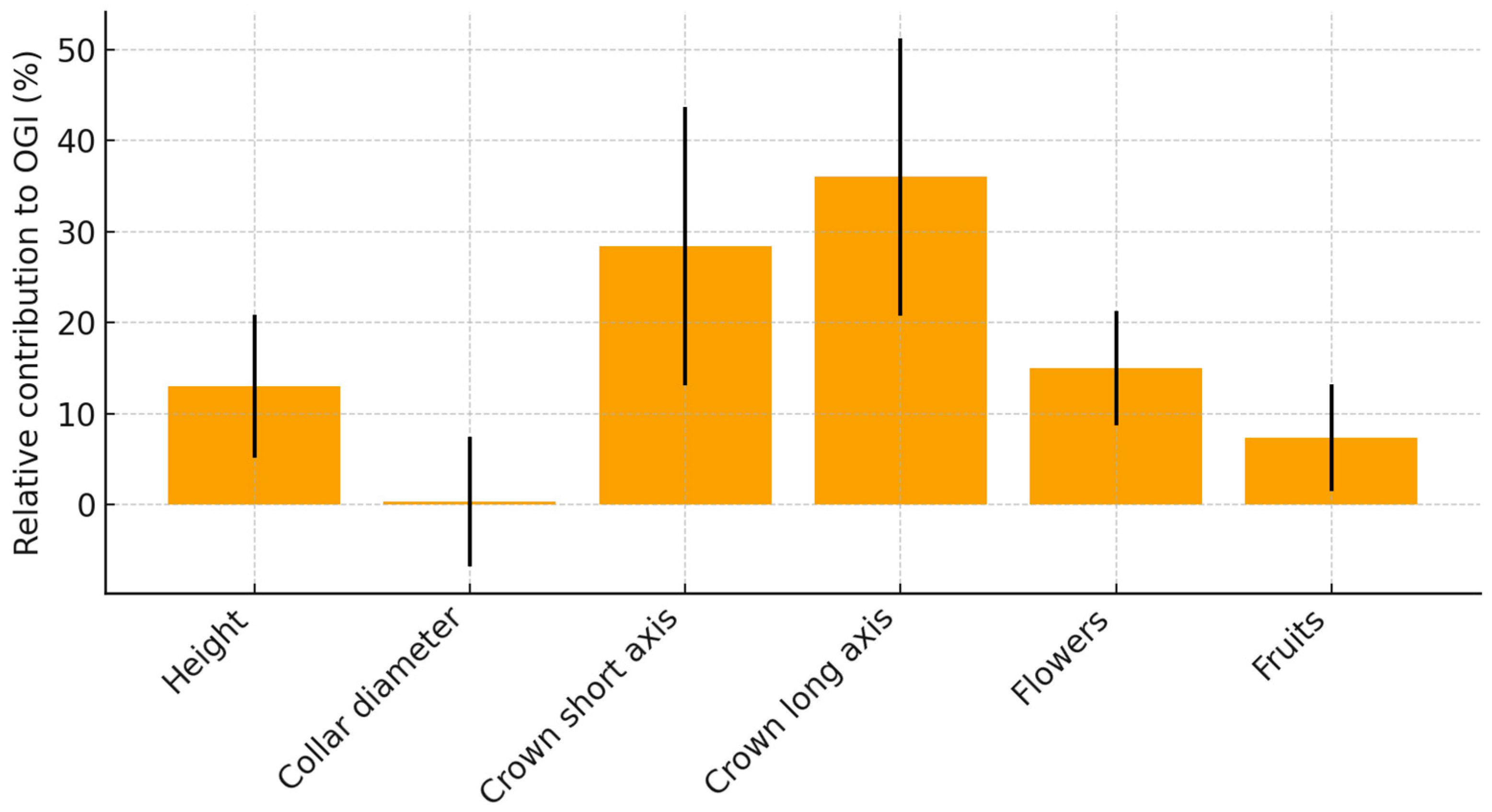
| Trait | Coefficient (Impact on Growth Index) | Interpretation |
|---|---|---|
| Crown long growth | 36.0 | The strongest driver species with large, long-axis crown expansion show the highest overall growth success. |
| Crown short growth | 28.4 | The short-axis crown expansion also significantly boosts success; canopy development in both directions matters. |
| Height growth | 13.0 | Vertical growth contributes substantially but less than crown spread. |
| Collar growth | 0.3 | Stem thickening has a smaller, secondary role. |
| Flowers and fruits | 14.9 and 7.4 | Reproductive output is statistically independent of structural success in this experiment. |
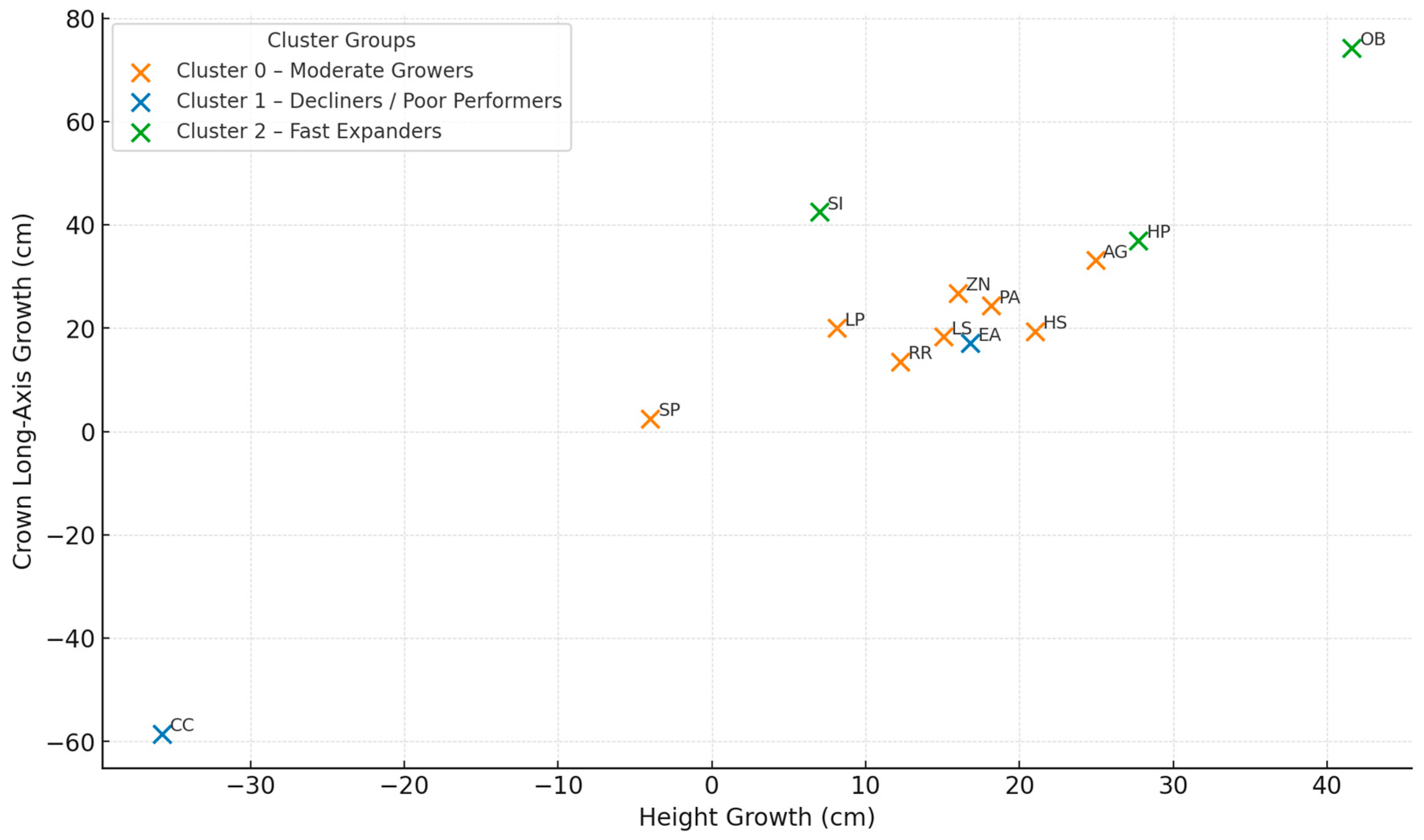
| Cluster | Description | Mean OGI | Mean EW-OGI | Structural Profile |
|---|---|---|---|---|
| Cluster 2—“Fast Expanders” | O. baccatus, H. persicum, S. italica | 138.91 | 0.57 | Very strong growth in both crown axes and height; highly vigorous, dominant species. Rapidly occupying space and contributing most to early structural development of the restored vegetation |
| Cluster 0—“Moderate Growers” | A. gerrardii, Z. nummilaria, P. aphylla, L. shawii | 76.97 | 0.50 | Steady but conservative growth; balanced height and crown expansion, suitable for stability. |
| Cluster 1—“Decliners/Poor Performers” | C. comosum, E. alata | –37.76 | 0.40 | Negative or stagnant growth; limited suitability for rapid structural recovery; possibly stress-sensitive or poorly adapted to local conditions. |
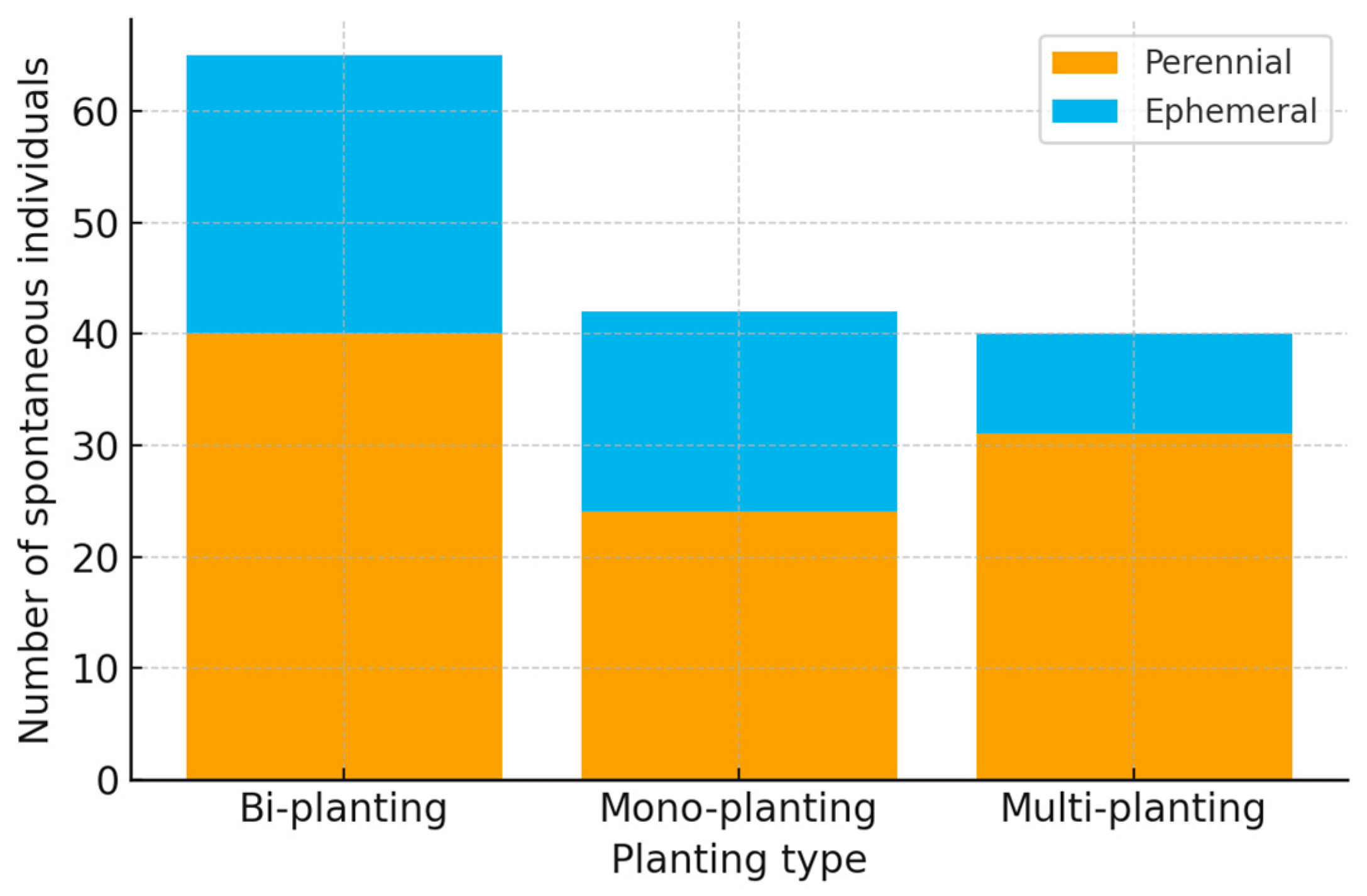
| Planting Type | Median% Ephemeral | Median% Perennial | Pattern/Interpretation |
|---|---|---|---|
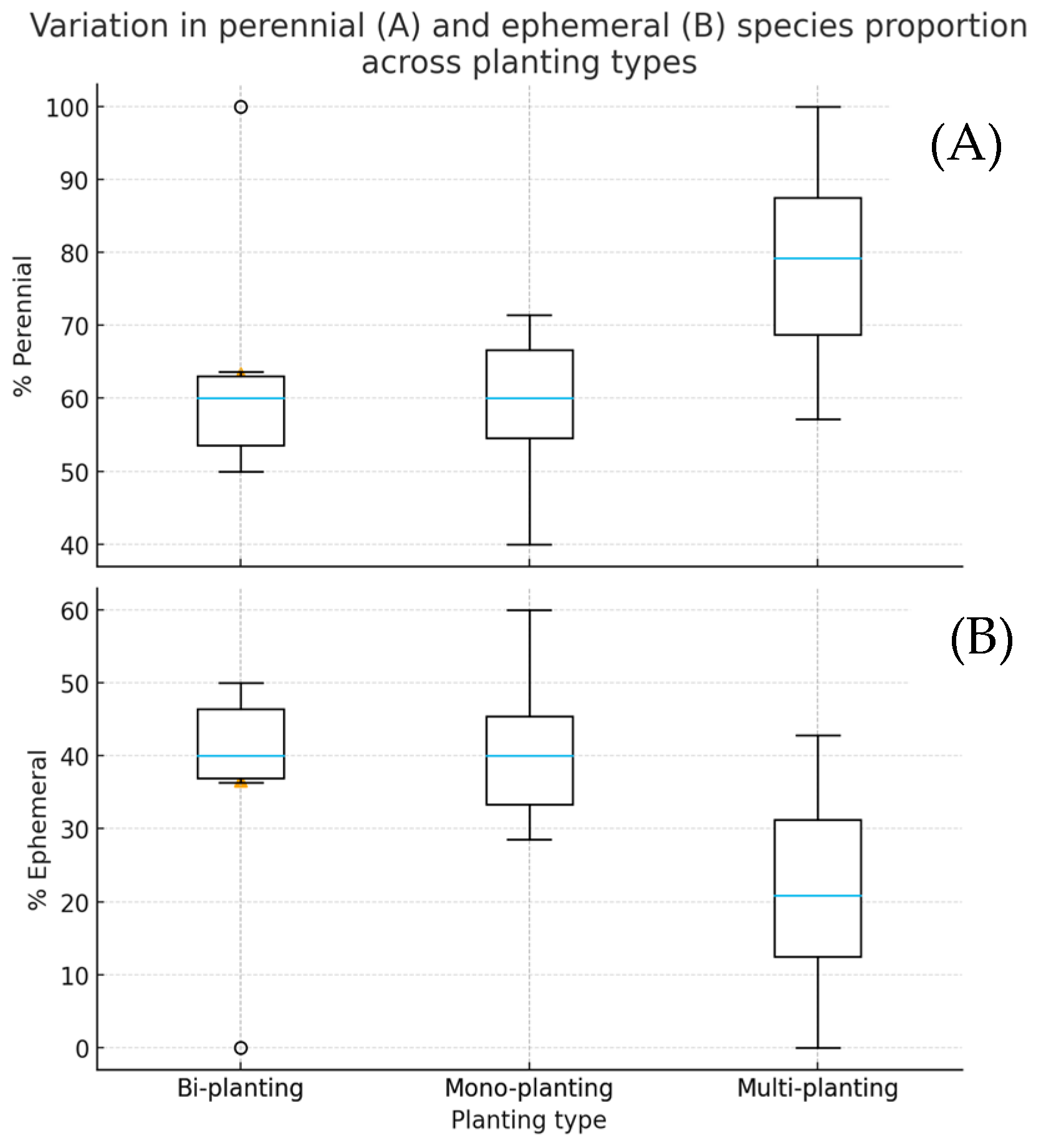
| Mono-planting | ≈40% | ≈60% | Early-successional mix. Ephemerals are still substantial, indicating active regeneration and incomplete canopy closure. |
| Bi-planting | ≈37% | ≈63% | Transitional stage. Slight decline in ephemeral dominance; perennials increasingly stabilize microhabitats. |
| Multi-planting | ≈20% | ≈80% | Mature restoration state. Strong perennial dominance and structural vegetation maturity; low ephemeral share shows stable, self-sustaining cover. |
| Parameter | 2022 | 2024 |
|---|---|---|
| pH (H2O) | 8.64 | 9.47 |
| pH (KCl) | 7.75 | 8.59 |
| CaCO3 (%) | 8.1 | 7.6 |
| CEC (Cation Exchange Capacity) | 13.8 | 14.0 |
| Ca (exchangeable mg/kg) | 12.31 | 11.56 |
| P (available P2O5 mg/kg) | 12.0 | 24.0 |
| K (exchangeable mg/kg) | 1065 | 1050 |
| Mg (exchangeable mg/kg) | 1138 | 980 |
| Na (exchangeable mg/kg) | 1008 | 380 |
| Conductivity (µS/cm) | 90 | 16 |
| Soil Organic Carbon (%) | 2.4 | 3.5 |
| Total N (mg/kg) | 370 | 280 |
| Resistivity (Ω·m) | 1111 | 6250 |
| Texture (from separate row) | 13% clay, 65% silt, 13% sand | Same |
Disclaimer/Publisher’s Note: The statements, opinions and data contained in all publications are solely those of the individual author(s) and contributor(s) and not of MDPI and/or the editor(s). MDPI and/or the editor(s) disclaim responsibility for any injury to people or property resulting from any ideas, methods, instructions or products referred to in the content. |
© 2025 by the authors. Licensee MDPI, Basel, Switzerland. This article is an open access article distributed under the terms and conditions of the Creative Commons Attribution (CC BY) license (https://creativecommons.org/licenses/by/4.0/).
Share and Cite
Fendane, Y.; Miara, M.D.; Boukcim, H.; Almalki, S.D.; Rees, S.K.; Aldabaa, A.; Abdulkareem, A.; Mohamed, A.H. Integrating Microtopographic Engineering with Native Plant Functional Diversity to Support Restoration of Degraded Arid Ecosystems. Land 2025, 14, 2445. https://doi.org/10.3390/land14122445
Fendane Y, Miara MD, Boukcim H, Almalki SD, Rees SK, Aldabaa A, Abdulkareem A, Mohamed AH. Integrating Microtopographic Engineering with Native Plant Functional Diversity to Support Restoration of Degraded Arid Ecosystems. Land. 2025; 14(12):2445. https://doi.org/10.3390/land14122445
Chicago/Turabian StyleFendane, Yassine, Mohamed Djamel Miara, Hassan Boukcim, Sami D. Almalki, Shauna K. Rees, Abdalsamad Aldabaa, Ayman Abdulkareem, and Ahmed H. Mohamed. 2025. "Integrating Microtopographic Engineering with Native Plant Functional Diversity to Support Restoration of Degraded Arid Ecosystems" Land 14, no. 12: 2445. https://doi.org/10.3390/land14122445
APA StyleFendane, Y., Miara, M. D., Boukcim, H., Almalki, S. D., Rees, S. K., Aldabaa, A., Abdulkareem, A., & Mohamed, A. H. (2025). Integrating Microtopographic Engineering with Native Plant Functional Diversity to Support Restoration of Degraded Arid Ecosystems. Land, 14(12), 2445. https://doi.org/10.3390/land14122445