Abstract
The process of urbanization leads to the rapid expansion of construction land and brings a series of ecological and environmental problems. The ecological network, as a linear landscape element, is of great significance to improve the quality of the regional ecological environment. In this study, the Morphological Spatial Pattern Analysis (MSPA) and the model of Minimum Cumulative Resistance (MCR) were used to construct the ecological corridors in the central city of Fuzhou, and the land use pattern under the constraints of the ecological network was simulated and quantified by the patch-level land use simulation (PLUS) tool with the results of the identification of ecological corridors. Meanwhile, with the help of InVEST habitat quality model, the regional habitat quality under different development scenarios was compared. The results show that (1) 19 ecological sources and 35 ecological corridors were identified; (2) under the constraints of ecological corridors, the area of forested land in the study area in 2027 was increased by 1.57% and the area of built-up land was reduced by 0.55% compared with that in 2022; (3) and under the constraints of ecological corridors, the mean value of habitat quality in Fuzhou City improved by 0.0055 and 0.0254 compared with 2022 and 2027 natural evolution scenarios, respectively. The study provides decision-making assistance for the construction of ecological corridors from the perspective of land use planning.
1. Introduction
With the accelerating urbanization process in China, the land use structure in the central urban area has changed dramatically in the past 20 years [1,2]. The phenomenon is mainly characterized by the reduction in ecological land use such as woodland and shrubs and the massive expansion and erosion of impervious surfaces. As a result, the quality of urban ecological environment has been affected, causing ecological and social problems such as urban heat island, noise pollution, and traffic congestion [3,4,5]. Relevant studies have shown that ecological corridors, as a linear landscape element, play an important role in maintaining regional biodiversity and enhancing the regional ecological environment by connecting large green patches in cities [6,7]. However, how does the construction of ecological networks guide the rational planning of real land use? How to evaluate and quantify the ecological benefits generated after planning is a difficult problem.
In terms of ecological corridor modeling, the predominant practice is based on landscape ecology, utilizing a framework system that includes patch resistance and surface corridors. The extraction of ecological patches is carried out through, for example, Morphological Spatial Pattern Analysis (MSPA) [8], or by utilizing the landscape pattern index, combined with the particle size backpropagation method [9]. Meanwhile, the connectivity index was utilized for the selection of patches, which in turn led to the final determination of suitable ecological source sites [10,11]. Meanwhile, related scholars have utilized the InVEST model and RSEI model to quantify the regional ecosystem service function and ecological environment quality and then make the determination of source sites [12,13]. As for the construction of resistance surfaces, most scholars adopted factors such as land use type, elevation, and slope as the key influencing factors affecting the direction of ecological corridors, and the Analytic Hierarchy Process (AHP) evaluation method was used for the determination of weights [14]. Minimum Cumulative Resistance (MCR), Least Cost Path (LCP), and current theory models are often used in the construction and optimization of ecological corridors, and the MCR model can visually express the layout of the corridor, while the current theory is used to judge the degree of connectivity of the overall landscape from the perspective of the overall landscape [15,16]. In terms of the prediction of future land use simulation, relevant studies have mainly used the CA_Markov model [17], FLUS model [18], and PLUS model [19]. It is mainly applied at the city scale, such as Nanjing [20], Shenzhen [21], and Wuhan [22] in China. All these models show good simulation results. Their general principle is to first quantitatively determine the future land use through Markov chain or linear regression model, and at the same time, under the quantitative constraints, combine with algorithms such as CA model to carry out spatial simulation of like elements, so as to realize the spatial quantification of land use in the future period. With the continuous deepening of research, the simulation of land use is not limited to the natural scenarios based on history, and more and more scholars began to carry out a certain degree of human “interference” to explore the future land use change rules under different scenarios, such as ecological protection scenarios, urban development scenarios, and synergistic co-development scenarios [23,24]. At the same time, it is the main research trend to combine relevant ecological models, such as the InVEST model, to explore the evaluation of ecosystem service function under different urban development scenarios [25,26,27].
Although, there are more studies on the construction of ecological corridors and land use simulation, there are still some shortcomings. For example, MSPA and other methods only carry out the determination of ecological sources from the perspective of the landscape structure, ignoring the attributes of the ecological source quality. Relevant studies combined MSPA and RSEI to perform ecological source determination from the perspective of structure and function, which more accurately identified the ecological source area [13], but it was also based on the current static construction idea, which ignored the influence of dynamic changes in the ecological source area. Second, in the evaluation and optimization of ecological corridors, most of the studies were conducted by reselecting source sites, identifying barrier and pinch points, or structurally grading and evaluating the network [28,29]. These processes are not sufficient to show the ecological benefits and ecological functions that ecological corridors can produce, which challenges the necessity of ecological corridor construction. Meanwhile, related scholars have quantified the future ecological corridor pattern of cities by simulating the future land use structure and realizing the future ecological corridor pattern on this basis [30,31]. In fact, this is still a result constructed based on a static period of time, which still restricts the rational planning and utilization of land in reality. In addition, related scholars have modified the transfer matrix of the PLUS model, combined with the ecological protection red line, urban development boundary, and so on, to carry out ecological priority land use simulation. However, these policy documents are difficult to obtain, and from the results, most of the studies are based on the model of reducing construction land and thus improving the quality of ecological environment [32,33]. Obviously, this is not in line with the current urban development law.
The purpose of our study is to explore how the construction of ecological corridors can guide the rational use of real land and conduct impact assessments. To this end, our study starts from the basic theoretical basis that the construction of ecological corridors changes land use types and land use types affect habitat quality. This study takes the central urban area of Fuzhou City as the study area, and based on the results of the land use classification in 2012, 2017, and 2022, quantifies the landscape types of each period and extracts the core patches by using MSPA, and combines the landscape connectivity analysis with the MCR model to construct the ecological corridor in the central city of Fuzhou. On this basis, using the PLUS model, the ecological corridor is taken as one of the driving factors affecting land use change, and the land use under future scenarios with ecological corridor constraints is simulated, while the InVEST model is used to explore the changing patterns of regional habitat quality and landscape pattern under ecological corridor constraints and natural development scenarios. The main contents of this study are as follows: (1) the construction of ecological corridor in Fuzhou City; (2) a land use simulation prediction based on PLUS model; (3) and a land use evaluation based on InVEST habitat quality. The study provides decision-making assistance for the construction of ecological corridors in Fuzhou City from the perspective of land resource planning and utilization.
2. Materials and Methods
2.1. Study Area
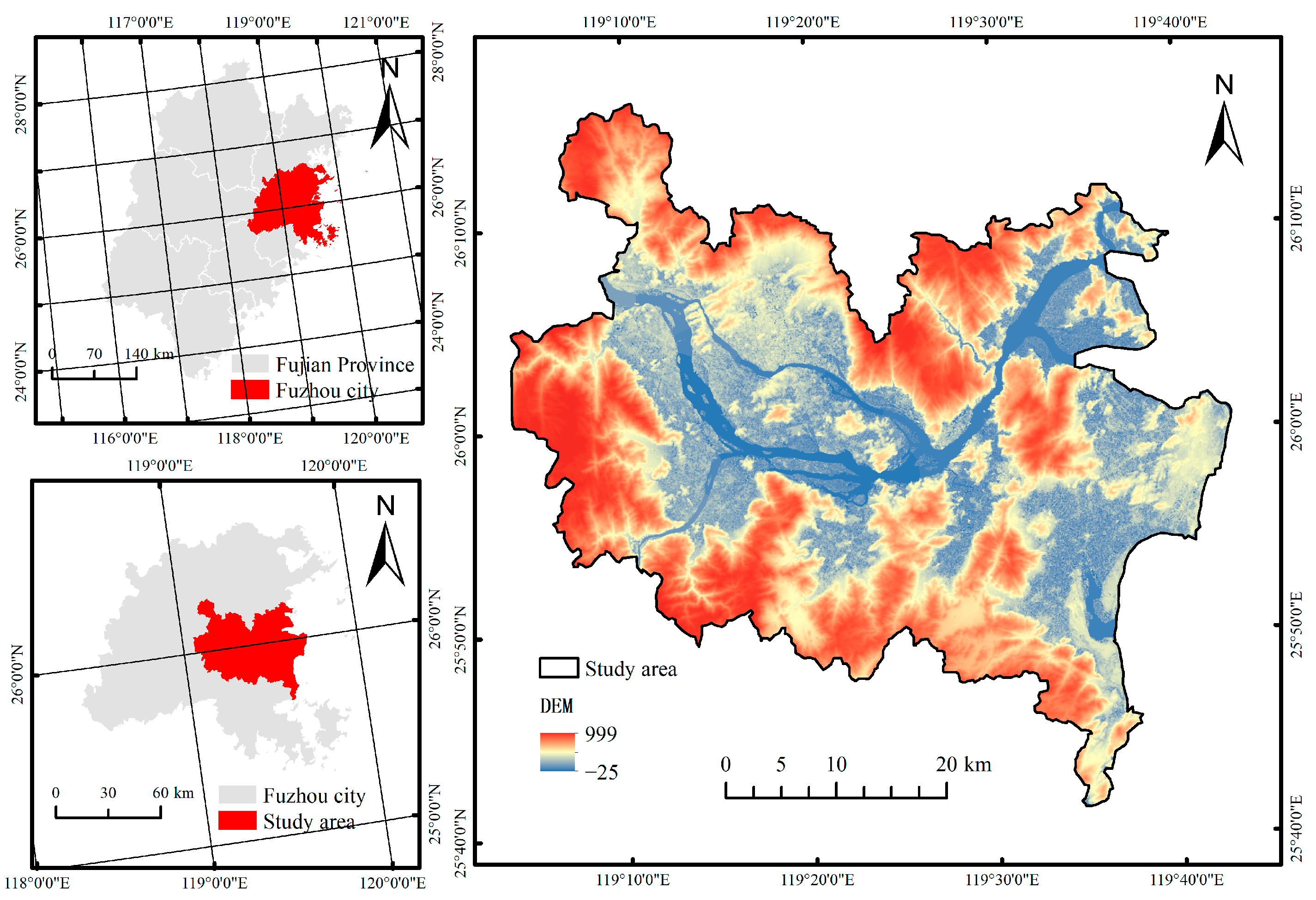
The downtown area of Fuzhou City is located on the southeast coast of China (25°15′–26° 39′ N ~118° 08′–120° 31′ E), with a total area of about 2212.94 km2. The climate is warm and humid, with an average annual temperature of 16–20 °C. It has a typical subtropical monsoon climate. The main city of Fuzhou is surrounded by mountains, with an elevation of 600–1000 m above sea level, which is a typical estuarine basin. With the continuous expansion of urbanization scale in recent years and the barrier of the mountains, the trend of its urban expansion is along the river to the sea, eastward, and southward (Figure 1).
Figure 1.
Study area location and DEM.
2.2. Data Sources
The 2012–2022 land use data were obtained from the open-source dataset published by Wuhan University [34], which categorizes China’s land use types into nine major categories: farmland, forest, shrubland, grassland, water bodies, snow and ice, bare land, impervious surface, and wetland. The spatial resolution of the data was 30 m. The DEM data of the study area were obtained from the Distributed Activity Archive of the Alaska Satellite Facility (ASF) in the United States with a spatial resolution of 12.5 m, and were used to calculate the elevation and slope factors. Vector data of urban roads, highway roads, railroads, and POIs were downloaded from open street map. The population density of the study area was obtained from the world population dataset, and the average annual precipitation data were obtained from the National Center for Earth System Data Science. The Gross Domestic Product (GDP) raster data were obtained from the Center for Resource and Environmental Science and Data, Chinese Academy of Sciences. Please see Table 1 for details.
Table 1.
Data types, formats, and sources.
2.3. Methodology
2.3.1. Identification of Ecological Source Areas
Morphological Spatial Pattern Analysis (MSPA) is a model based on mathematical morphology algorithms for processing binary images and is often used to determine forest geometry and extract ecological source sites. It is able to classify land classes with ecological value, such as woodland and grassland, into seven landscape structures, namely Core, Islet, Perforation, Edge, Loop, Bridge, and Branch [35,36]. In our study, woodland, shrubland, and grassland in 2012, 2017, and 2022 were selected as foreground data and pre-processing of the data was carried out using GuidoToolbox3.0 analysis software with 8-domain method and the edge width set to 1, which is the smallest unit of the raster, and 30 m. At the same time, the most ecologically valuable core areas of the seven landscape types were extracted, and the results of the three years were intersected to obtain the preliminary core area patches that were more stable in 10 years.
Landscape connectivity indices are often used to determine the degree of interaction between patches, of which the most commonly used index is the patch importance index (dPC). The formula is as follows:
where is the total area of the landscape; denotes the number of patches; and are the areas of patches and ; and denotes the maximum probability that a patch is connected between and . refers to the connectivity index, and takes the value in the range of 0 to 1. The higher the value of , the better and more useful it is on behalf of the connectivity of the patches. is the value of the probability of connectivity of a particular patch after removing it.
After obtaining the preliminary ecologically valuable core areas based on MSPA, we selected the patches with an area of more than 0.5 km2 and a dPC index of more than 0.1 as the ecological source sites for this study.
2.3.2. Construction of Integrated Resistance Surfaces and Ecological Corridors
The spatial movement of ecological material is affected by a variety of resistances. These include land use type, elevation, slope, and landscape pattern. Among them, ecological land such as woodland, shrubland, and grassland is more conducive to the construction of ecological corridors, and therefore the resistance value is lower. On the contrary, impervious surfaces are more difficult to construct and have more human interference, so the resistance value should be set higher. Landscape type as a further categorization of ecological land can distinguish the detailed parts of ecological land more precisely. For example, the core, as a large area of dominant ecological sources, should have a lower resistance value than ecological patches such as islet and edge. Similarly, the resistance effect of elevation is also obvious, for example, low elevation and low slope areas are more suitable for the construction of ecological corridors, so the resistance value should be set lower. We superimpose these resistance factors with the same weights, and the resistance value setting of each factor is shown in Table 2 [37,38,39].
Table 2.
Resistance factors and their resistance value settings.
The Minimum Cumulative Resistance (MCR) model is often used for the construction of ecological corridors [40], and LinkageMapper, an open-source ArcGIS toolkit, is able to quantify the ecological corridors in the study area quickly and efficiently [41]. Based on the constructed integrated resistance surface, the quantification of ecological corridors is achieved by calculating the minimum cost to be spent between ecological sources and thus the quantification of ecological corridors. The equation of the model can be written as
where is the Minimum Cumulative Resistance, is the positive correlation between the Minimum Cumulative Resistance and the ecological process, refers to the spatial distance from patch to , and denotes the resistance coefficient of spatial expansion of patch .
2.3.3. PLUS Model
The PLUS model is a cellular automata (CA) model based on raster data that can be used for the simulation of land use changes at the patch scale. It mainly extracts the transformation probability between the land use datasets of two periods, randomly extracts sampling points in the areas where each class changes for analysis, uses the random forest algorithm to excavate the driving mechanism of land use change, and then combines with the generation of random plaques and the setting of transfer matrices to ultimately realize the simulation of the future land use [19,42]. The PLUS model is mainly composed of the following modules:
- (1)
- Land Expansion Analysis Strategy (LEAS)
By extracting the expansion portion of each class of land in different periods and sampling from the increase portion, the expansion and driving mechanism of each class is subsequently mined using the random forest algorithm to obtain the development probability of each class and the degree of contribution of the driving factors, which is shown in Equation (4):
where takes the value of 0 or 1, the value of 1 indicates the shift of other land use types to the land use type , and the value of 0 indicates no shift. is a vector consisting of driving factors, is the number of decision trees, and is the predicted type of land use computed when the decision tree is . is the indicator function of the decision tree; is the probability of growth of the land use type at the spatial unit, and is the probability of the growth of the k land use types at the place.
- (2)
- CA model based on multi-class randomized patch seeding (CARS)
The CARS module performs land use simulation by inputting land use data and development probabilities for each type of expansion, which is the result calculated by LEAS above, and by setting the land use conversion matrix and domain weights. The development zone, as an essential component of the CARS module, aims to quantify the impact of land use simulation after the inclusion of planned development zones. In our study, by incorporating data on ecological corridor buffer zones and setting relevant parameters, it is possible to simulate and predict future land use under the constraints of ecological corridors. Land use type can be expressed by the following equation:
where is the growth probability of land use type on tuple , is the domain effect of tuple , and is the effect of future demand for land use type . The formula can be written as
where is the total number of grid cells occupied by the th land use type in the last iteration in the window and . is the weight between different land use types. is the difference between the current and future demands of land use type at and iterations, respectively.
- (3)
- Land use drivers
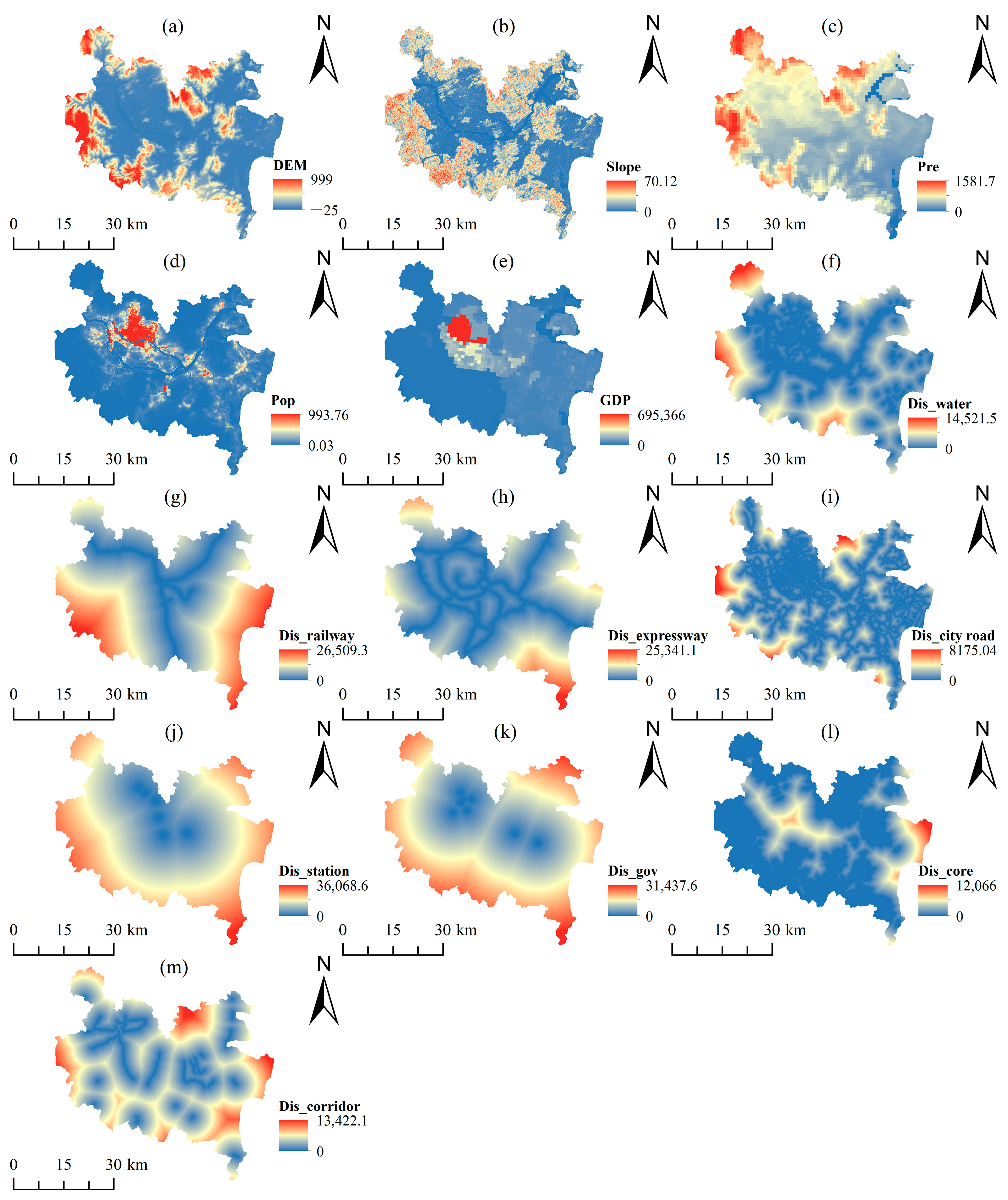
By referring to the results of previous research, the study selected a total of 13 topographic and geomorphological features, including socio-economic and demographic factors, transportation elevation, slope, precipitation, population density, GDP, distance from water bodies, distance from railroads, distance from highways, distance from other roads in the city, distance from railroad stations, distance from the government, and distance from ecological sources and ecological corridors, as the set of driving factors for simulating land use in 2027 (Figure 2). All data were resampled to 30 m spatial resolution and projected to the same coordinate system. Among them, in the natural state, the driving factors do not consider the influence of ecological sources and ecological corridors when we simulate the change in land use types in 2027 in downtown Fuzhou (Figure 2a–k). In contrast, as a control, under the ecological corridor constraint scenario, we consider all the driving factors (Figure 2a–m).
Figure 2.
Land use driving factors. (a) DEM; (b) slope; (c) precipitation; (d) POP; (e) GDP; (f) Dis_water; (g) Dis_railway; (h) Dis_expressway; (i) Dis_city road; (j) Dis_station, (k) Dis_government; (l) Dis_Core; (m) Dis_corridor.
- (4)
- Parameter setting
Since the construction of the ecological corridor will inevitably lead to the transformation of the land use type, in the development zone of the CARS module, we take the buffer zone of the ecological corridor of 150 m as the planned development zone and the extracted patches of the core zone as the transformation restriction zone to maintain the stability of the ecological source land. In the development type, we choose the ID value of woodland, and the development weight is set to 0.8 to emphasize the important role of woodland construction in the buffer zone of ecological corridor, the patch generation threshold is set to 0.1, and the expansion coefficient is set to 0.9. The transfer matrix is set to 0.1. The transfer matrix and neighborhood weight were set as shown in Table 3 and Table 4 below. At the same time, we also simulate the future land use structure change under the natural development state for comparison and verification, and the transfer matrix and neighborhood weight under the natural state are both at default.
Table 3.
Land use transfer matrix setup under ecological corridor constraints.
Table 4.
Domain weights for each category under ecological corridor constraints.
- (5)
- Accuracy test
Accuracy testing is a tool used to evaluate the reliability of PLUS results. The accuracy is obtained by calculating the proportion of correctly predicted samples to the total number of samples. We input the land use and driving factors of the study area in 2012 and 2017 into the CARS module. We simulate the land use structure of the study area in 2022 through a Markov chain to obtain the spatial distribution of land use in 2022 based on the PLUS model and compare it with the real land use in 2022. The results show that the Kappa coefficient reaches 91.82% and the overall accuracy reaches 94.52%, which meets the research needs.
2.3.4. Habitat Quality Model
The InVEST habitat quality model is mainly based on land use data and is used for the quantitative assessment of regional ecological environment quality by combining the ecological sensitivity of different feature types, the degree of coercion, and the mode of impact of threat sources [3,43]. Due to its high efficiency and good visualization, it is often used for the evaluation of regional ecological environment quality. In this regard, threat sources can be understood as non-ecological land uses in land use, such as impervious surfaces, bare ground, and transportation roads. The formula of the model is as follows:
where is the total number of raster cells for stressor ; is the number of stressors; is the normalized weight value; is the number of stressors on the raster cell; is the approachable level of raster ; denotes the sensitivity of the landscape to stressor ; and is the maximum distance of influence of the stressor.
where is the habitat quality of patch group in landscape type ; is the habitat suitability score for landscape type ; is the scaling factor, generally taken as 2.5; and k is the half-saturation constant, taken as 0.05.
The data to be inputted into the model mainly include the land use type data, the weights of the threat source factors and their attenuation distances, and the sensitivity table between landscape types and threat sources. We set the model-related parameters by referring to the related literature [43,44] and the InVEST user manual (Table 5 and Table 6).
Table 5.
Threat source impact distance and weights.
Table 6.
Habitat sensitivity by category.
3. Results
3.1. Landscape Type Dynamics and Ecological Source Extraction Results
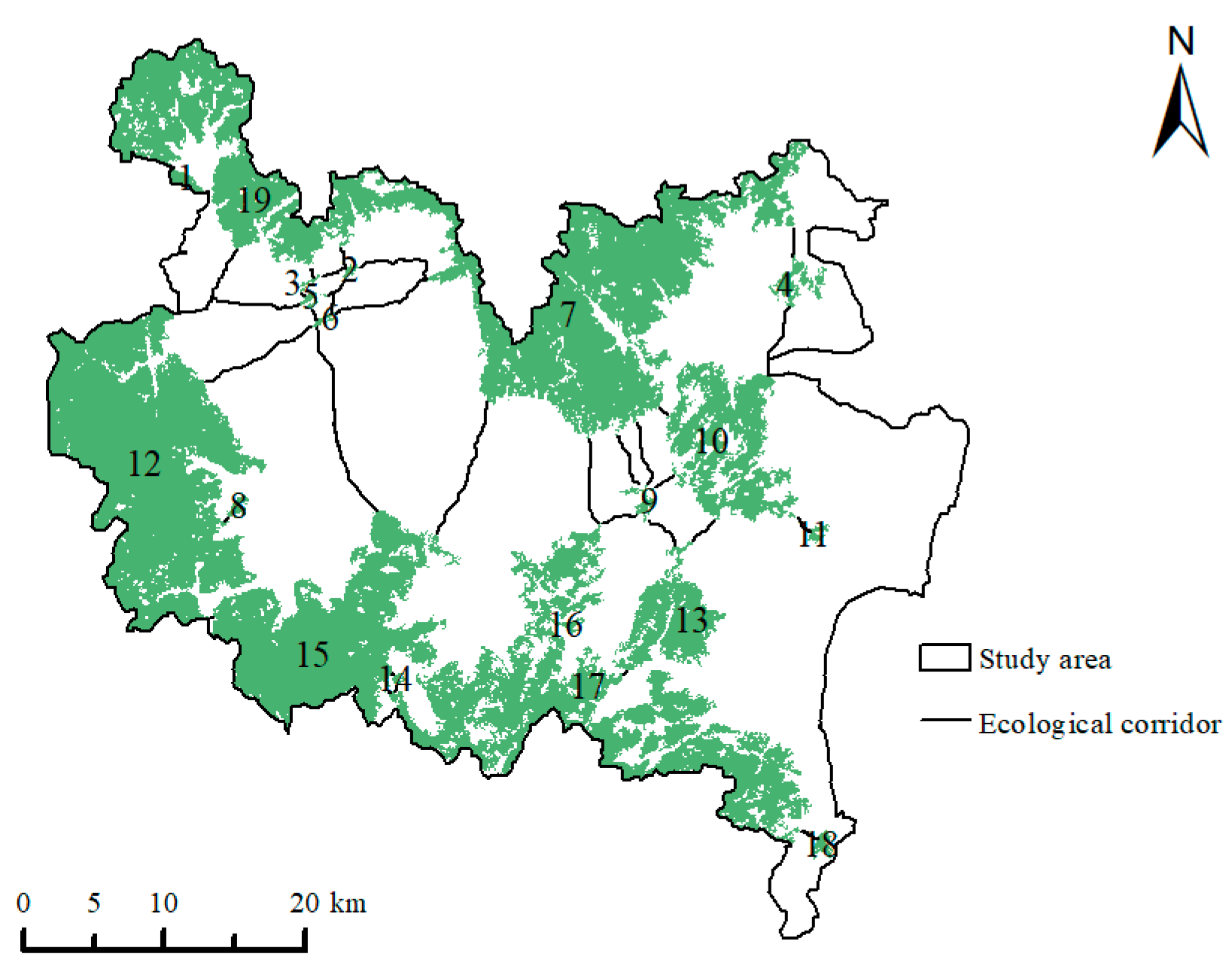
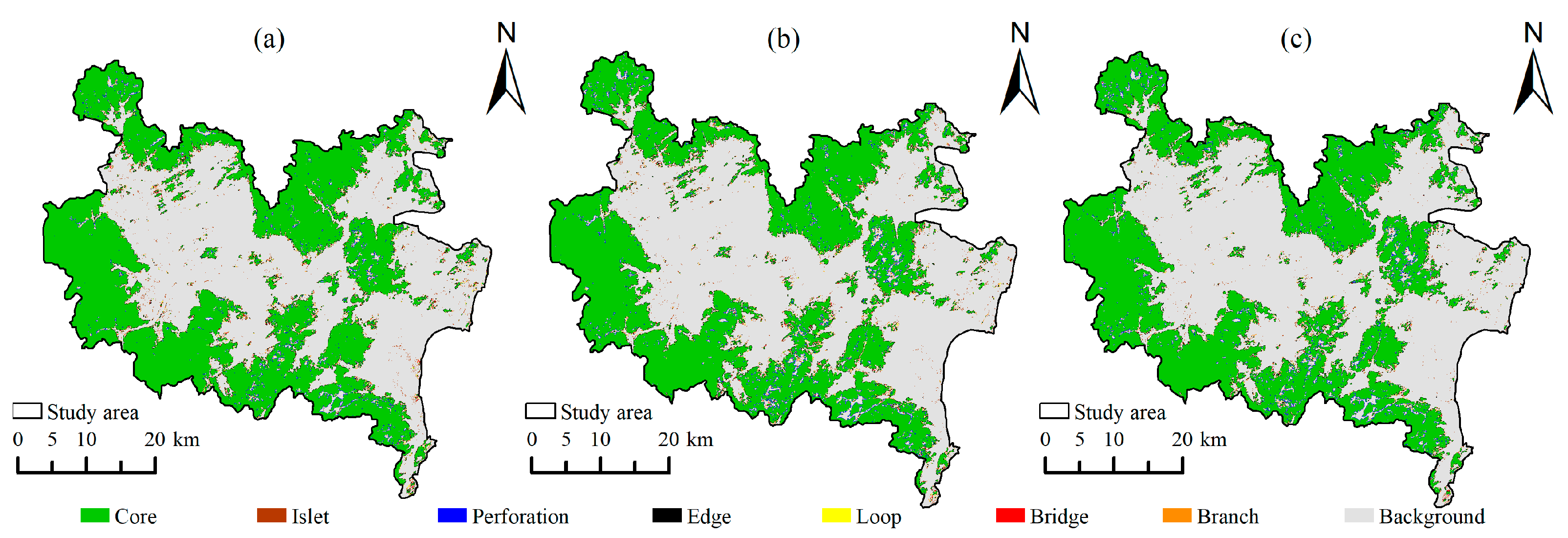
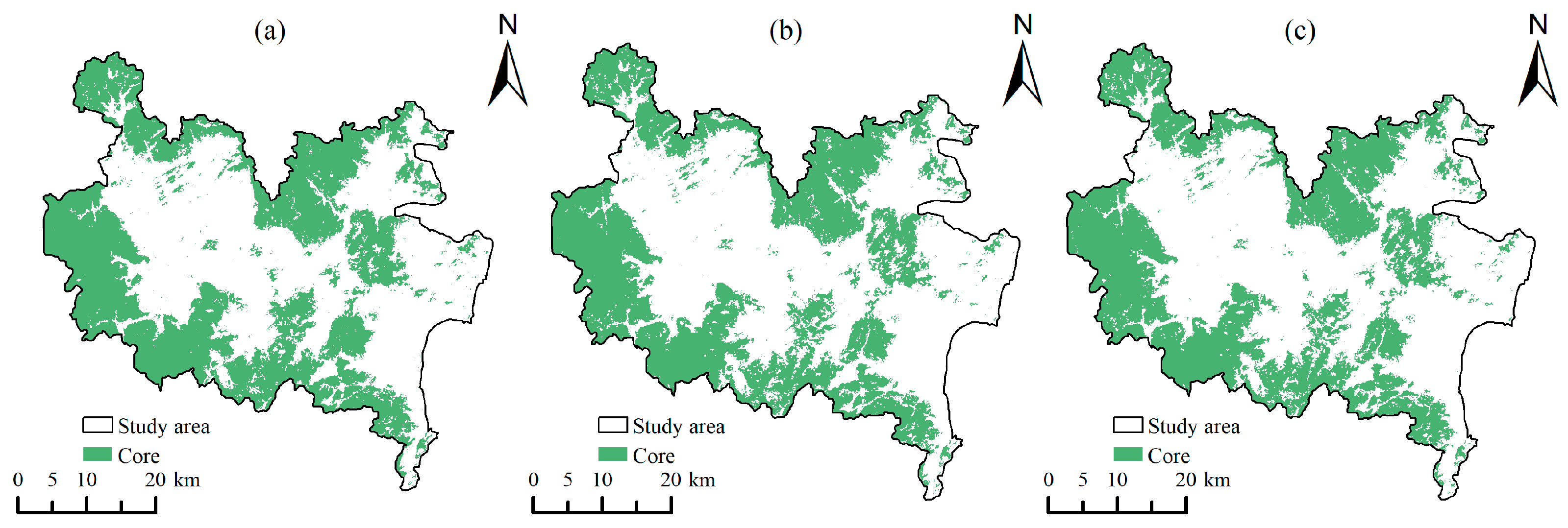
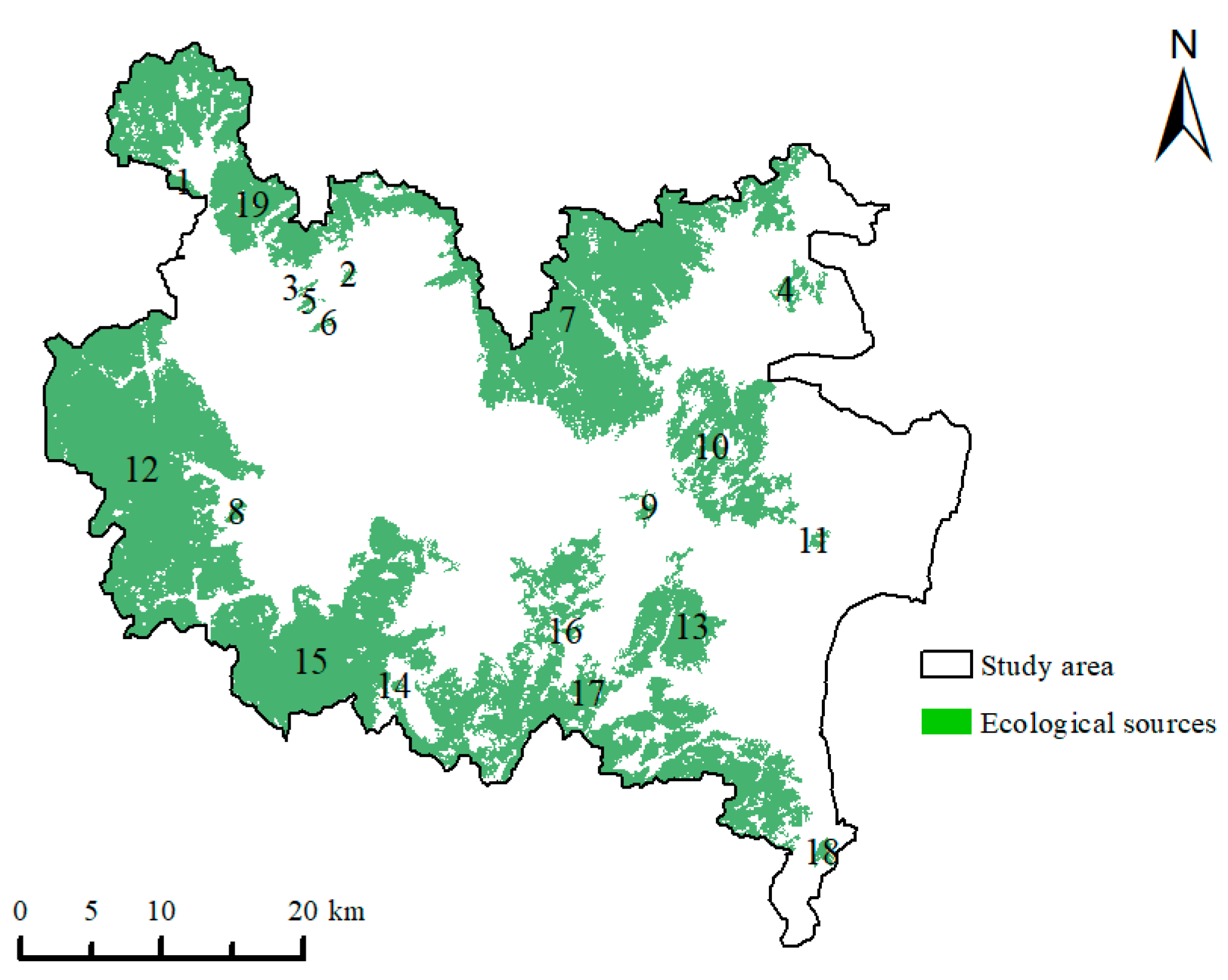
By extracting woodland, shrubland, and grassland with ecological value, the landscape types were extracted by using the MSPA method (Figure 3, Table 7). The results showed that the landscape types in the center of Fuzhou City were mainly dominated by Core, followed by Edge. However, with the advancement of urbanization, the areas of Core, Islet, Loop, Bridge, and Branch landscape types all decreased, while Perforation and Edge increased by 31.86% and 10.80%, respectively, during the 10-year period, indicating that the edge areas between the patches in the study area increased, and the integrity and connectivity deteriorated. In terms of spatial distribution, the core area is mainly distributed near the surrounding mountains in the study area, while the smaller core area in the center has been gradually affected by urban expansion in recent years, and its area has been gradually reduced (Figure 4). After overlaying the core areas of the three phases, we extracted a total of 19 ecological source sites, of which the largest ecological source site was No. 12, with an area of 118.22 km2, while the smallest source site was No. 3, with an area of 0.5049 km2 (Figure 5).
Figure 3.
Spatial distribution of MSPA landscape types. (a) 2012; (b) 2017; (c) 2022.
Table 7.
2012–2022 landscape area and rate of change by landscape type.
Figure 4.
Spatial distribution of the core area. (a) 2012; (b) 2017; (c) 2022.
Figure 5.
Spatial distribution of ecological source.
3.2. Resistive Surface Construction and Spatial Quantification of Ecological Corridors
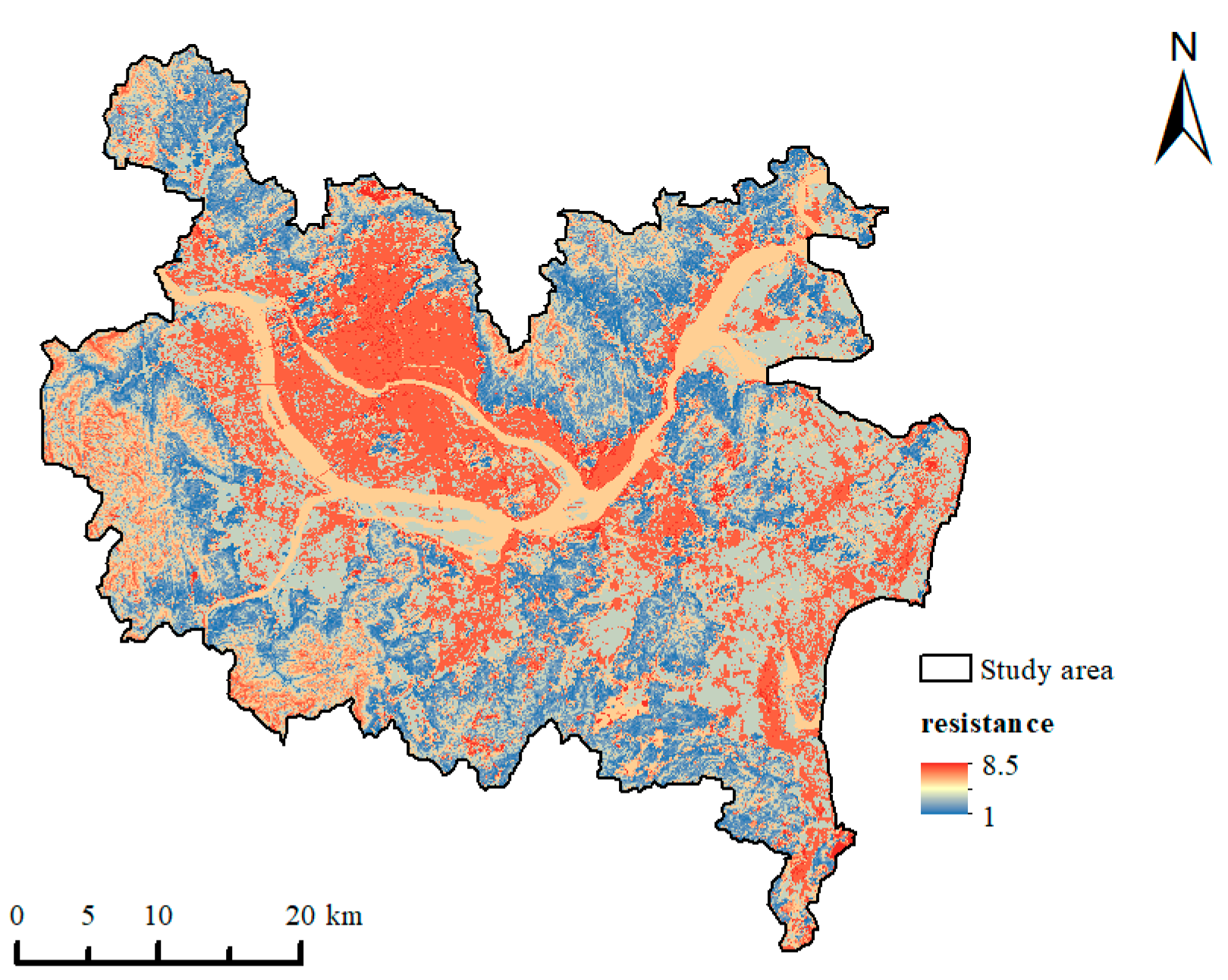
We obtained the integrated resistance surface by superimposing the resistance factors (Figure 6), and the results showed that the areas with high resistance values were mainly concentrated in the city, while the areas with low resistance were mainly concentrated in the peripheral boundaries of the city. Combined with the identification results of ecological source sites, we used the LinkageMapper toolkit to realize the quantification of the spatial pattern of ecological corridors in the study area, and a total of 35 ecological corridors were identified, with an average length of 3314.31 m. Among them, the longest corridor reaches 14,958.51 m, which connects the source sites 6–15, and the shortest is only 42.43 m, which connects the source sites 7–19. In terms of spatial distribution, it is mainly concentrated in the northwestern and eastern parts of the study area (Figure 7).
Figure 6.
Spatial distribution of integrated resistance surfaces.
Figure 7.
Spatial distribution of ecological corridors.
3.3. Land Use Modeling and Prediction
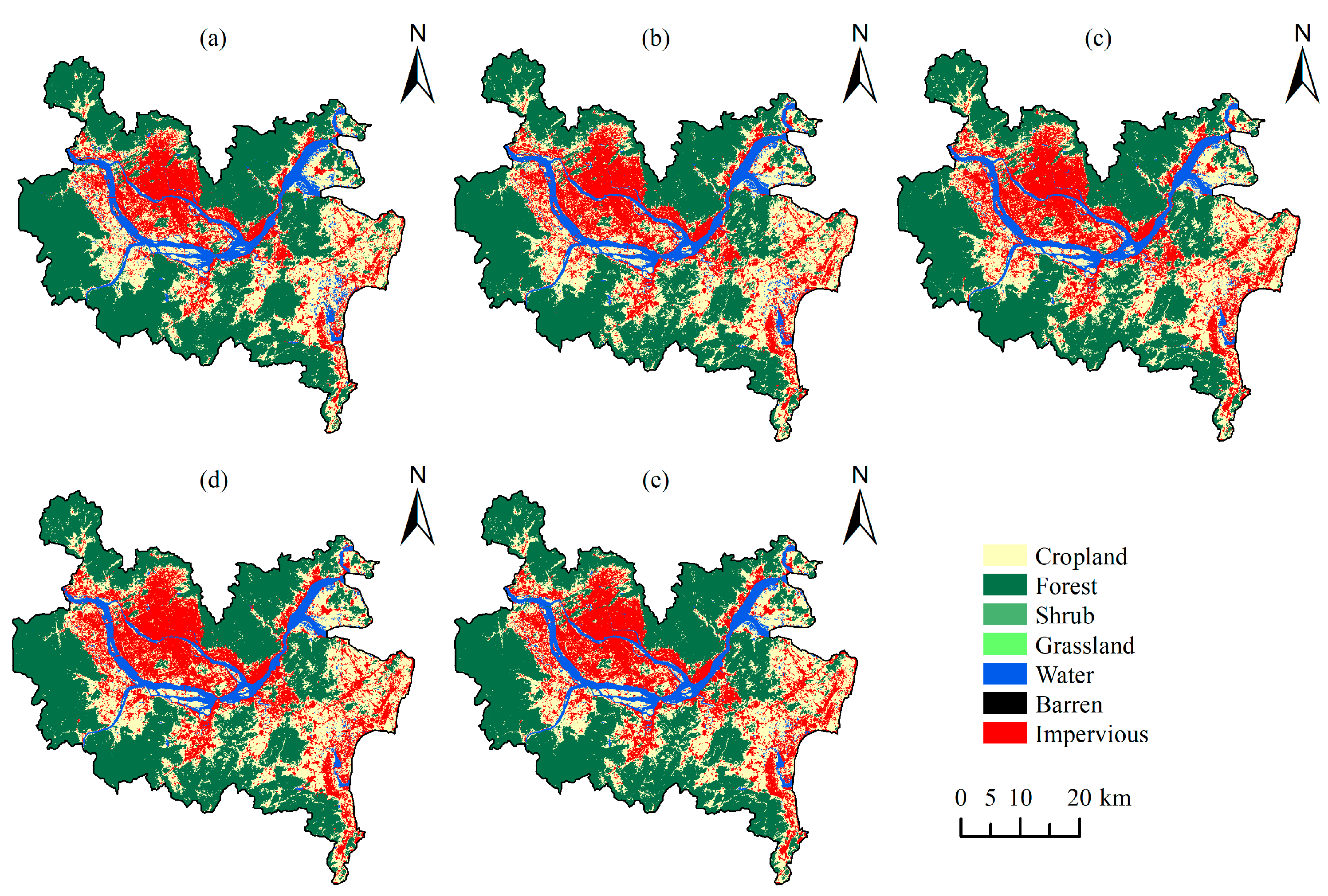
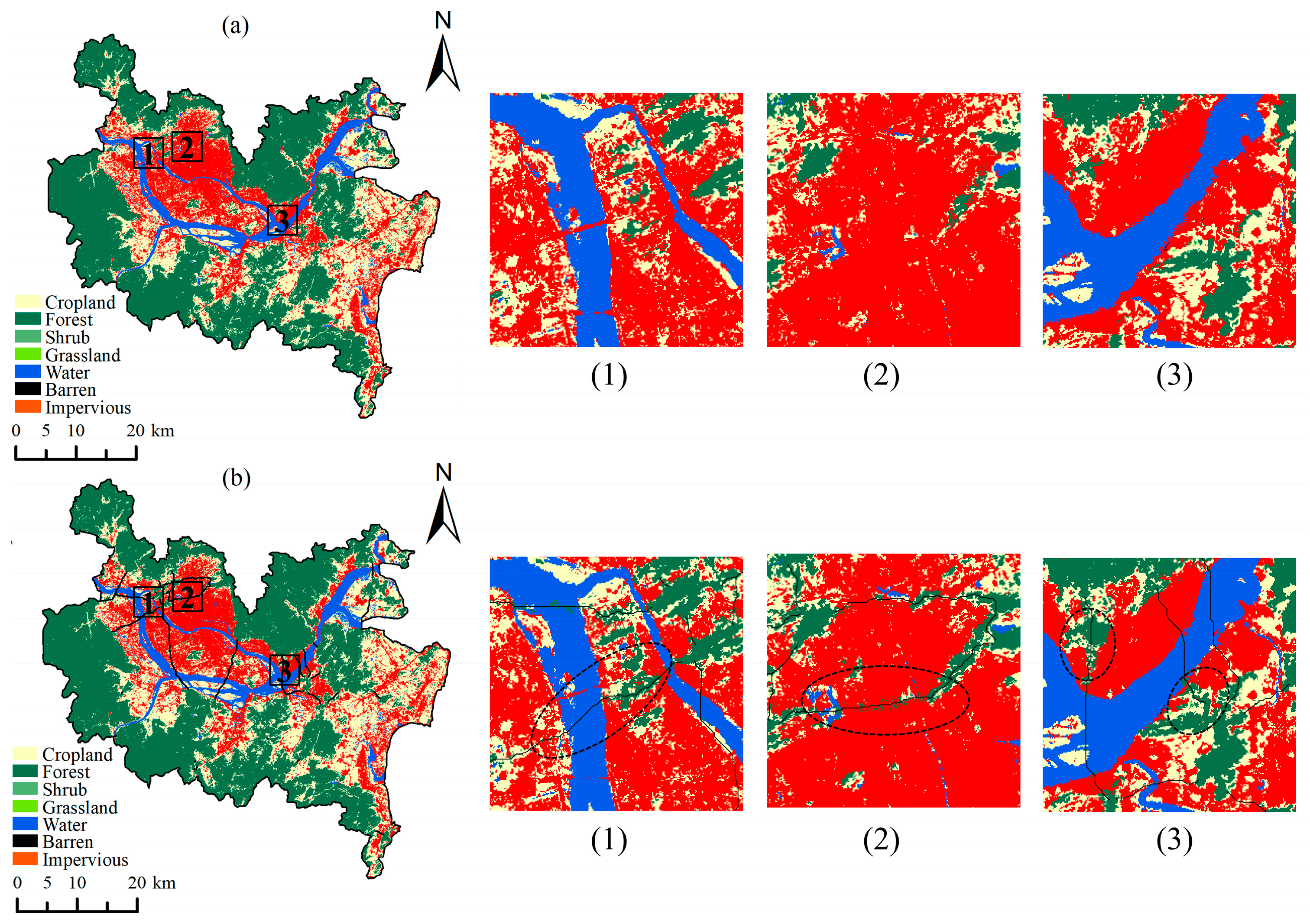
Using the PLUS model, the study simulated the land use of Fuzhou City center in 2027 under the natural state and ecological constraints by combining the historical evolution patterns of the three phases of 2012, 2017, and 2022 as well as the constraints of the ecological sources and ecological corridors (Figure 8 and Table 8). The results show that under different simulation scenarios, compared with 2022, cropland, shrub, grassland, and barren in 2027 are reduced because these land categories themselves have a smaller area advantage and are easily affected by other land categories; the second reduction in cropland is due to urban construction and the centralized remediation and planning of cropland. The changes in forest and impervious are not the same. It can be seen that compared to 2022, the area of forest in its natural state has decreased in 2027 by 1.47%, while impervious has increased by 7.27%. It can be seen that the natural scenario based on historical patterns will see further urban expansion accompanied by a decrease in forest. In contrast, among the land use types under the ecological corridor constraints, the area of forest has increased, and the area of impervious is also basically the same as in 2022. This also reflects the constraining effect of the overall ecological network.
Figure 8.
Land use maps by period. (a) 2012; (b) 2017; (c) 2022; (d) 2027 state of nature; (e) 2027 corridor constraints.
Table 8.
Land use area statistics by period.
3.4. Land Use Evaluation Based on Habitat Quality
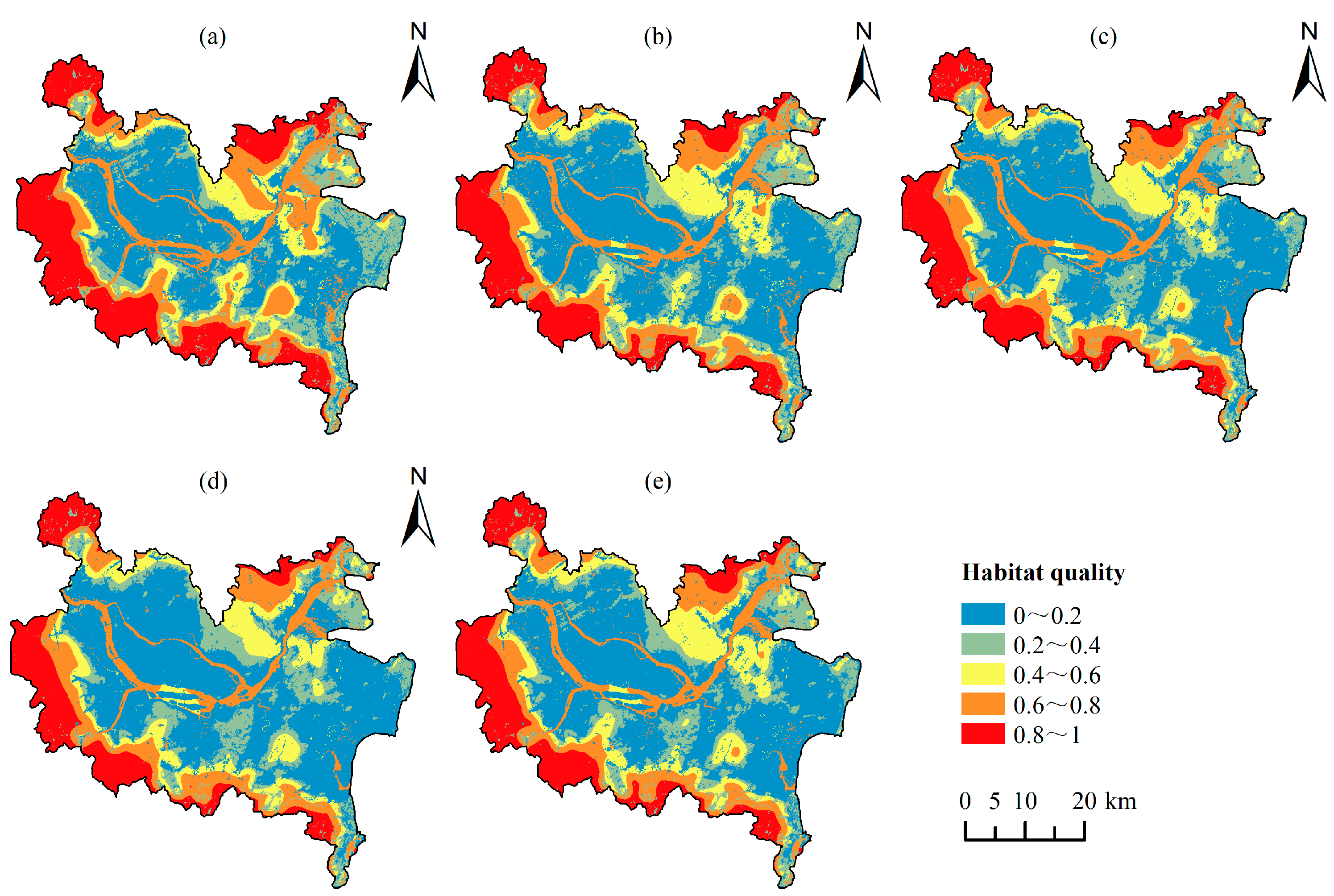
Based on the data of land use types in each period, we further clarified the dynamics of its ecological quality by quantifying its habitat quality (Figure 9). The results show that the mean values of habitat quality in each period are 0.4542, 0.3991, and 0.3754, respectively, which shows that the habitat quality decreases in the 10-year period from 2012 to 2022, and further decreases to 0.3555 in 2027 under the natural evolution scenario based on the historical pattern, while the habitat quality after the ecological corridor constraints is improved, with a mean value of 0.3809. Meanwhile, we reclassified the habitat quality according to the equal spacing method (Table 9), and it can be seen that the area with a low habitat quality rating continued to increase during the 10-year period, from 688.78 km2 in 2012 to 897.14 km2 in 2022, whereas the area with a high habitat quality area gradually decreased, from 455.45 km2 to a smaller area. The overall pattern still maintains the spatial distribution pattern of low in the center and high in the surroundings. In 2027, the area of low habitat quality under natural conditions will further expand, while the habitat quality under ecological corridor constraints will improve in 2027, which is mainly reflected in the reduction in the area of low habitat quality and the ecological restoration of high habitat quality areas.
Figure 9.
Habitat quality by period. (a) 2012; (b) 2017; (c) 2022; (d) 2027 natural state; (e) 2027 corridor constraints.
Table 9.
Changes in habitat quality rating by period.
4. Discussion
4.1. Impact of the Construction of Ecological Corridors on Land Use Modeling
In contrast to previous research ideas, related studies first construct ecological corridors for a certain period of time in the future by modeling future land use, and this approach neglects the impact of ecological corridor construction on land use types [45]. Starting from the basic theoretical basis that ecological corridor construction changes land use types and land use types affect regional ecological quality, our study proposes a modeling framework that integrates the ecological corridor, land use, and habitat quality, which provides a basis for corroborating the positive effects of corridor construction. This modeling framework integrating the ecological corridor, land use, and habitat quality is proposed, which provides a basis for proving the positive effects of corridor construction. The advantage of this framework is that it integrates the construction of ecological corridors into land use simulation and prediction from a dynamic perspective, which enriches the connotation of land use simulation and prediction and ecological corridor construction. Relevant scholars have strictly limited the transfer of forest land, reduced the expansion of construction land, and delineated the red line of ecological protection on the outskirts of the city in order to perform the land use simulation in an ecological context. Although this approach restores forest patches and improves the overall habitat quality, the improvement is still in the periphery of the city, and it is still difficult to restore and improve the habitat quality in the city. From the results of our study (Figure 10), it can be seen that the impervious surfaces of the city remain highly intensified under natural development scenarios based on historical patterns. Under the constraining effect of ecological corridors, more new woodland patches were generated around the corridors, especially around the impervious surfaces. Obviously, the constraining effect of ecological corridors has played a certain effect on the change in land use types. At the same time, ecological corridors in the city also enhance the quality of habitats within the city.
Figure 10.
2027 land use simulation projections. (a) Natural state; (b) corridor constraints.
4.2. Strategies for Planning and Construction of Ecological Corridors in Fuzhou City
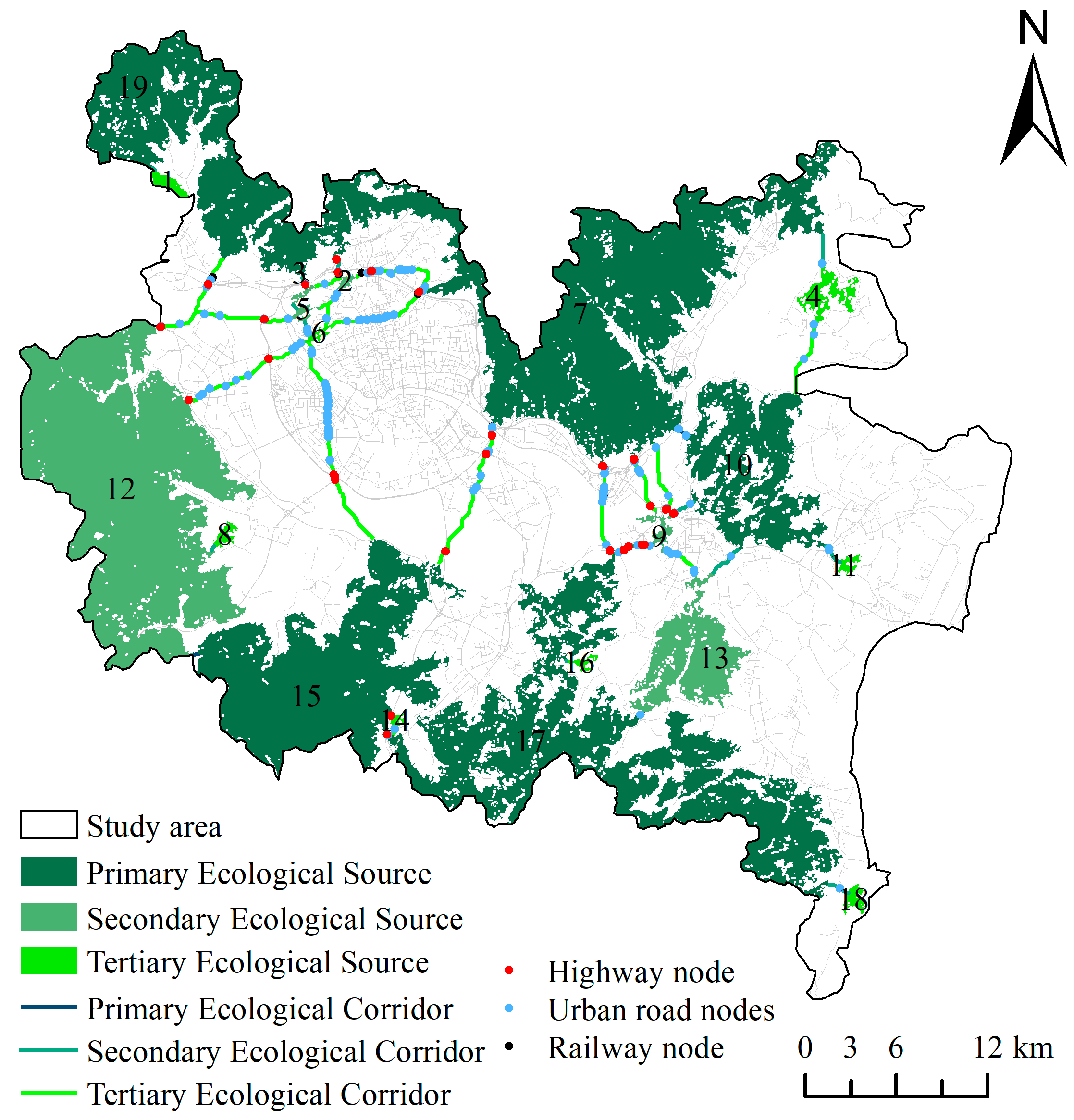
Our study classified the ecological corridors and ecological source areas in the central city of Fuzhou into three levels according to the natural discontinuity point method by using the current theory through the LinkageMapper module. Among them, there are six primary corridors, fourteen secondary corridors, and fifteen tertiary corridors and six primary source sites, six secondary source sites, and seven tertiary source sites. At the same time, the study intersected the ecological corridors with urban roads, highways, and railways in order to identify key nodes that impede the corridor connectivity, which resulted in the identification of a total of two hundred thirty-nine nodes of urban roads, ninety-one nodes of highways, and eight nodes of railways (Figure 11). In terms of spatial distribution, the primary corridor mainly connects the primary source area and part of the secondary source area, mainly distributed in the edge of the city, with an average length of 436.98 m. In the actual planning and design, the natural restoration should be taken as the main way to promote the integration between the adjacent primary source areas. As an important corridor connecting large ecological sources at the border and small sources within the city, the average length of the secondary corridor is 1150.80 m, and the integrity of the corridor should be guaranteed in the planning and design. For the nodes of some secondary corridors and road networks, the corridor design should adopt the sunken design to avoid the interference and destruction of road networks. The average length of the tertiary corridor is 6484.51 m, which plays the role of connecting the north and south ecological sources, and because of its long length, it has the most road nodes with the urban area. In the planning and design, the tertiary corridor should be attached to the city road, belt green space, and the river areas along the Min River and Wulong River as much as possible. For corridors that are too long, existing green space resources should be integrated, and the role of urban parks and street green spaces as stepping stones should be utilized to enhance the overall connectivity of the ecological corridor. For areas that are difficult to change, designs such as vertical greening and rooftop gardens can be implemented to reduce the negative impact of construction land on the ecological corridor. At the same time, ecological corridors can be organized and connected through landscape green belts, plant landscape belts, and bicycle and walking paths. Finally, for the ecological source areas in the downtown area of Fuzhou City, the red line of the 19 ecological source areas will be strictly regulated, and the internal quality of the source areas will be improved by increasing the vegetation cover and enriching the three-dimensional structure of the vegetation canopy. Protective buffer zones should be set up in the bridging and edge areas around the ecological source areas to reduce the negative impacts caused by human activities.
Figure 11.
Ecological corridor classification and spatial distribution of nodes.
4.3. Shortcomings and Prospects
The study simulates and predicts the future land use under the ecological situation by constructing the ecological corridor in the central city of Fuzhou and taking it as the key factor to constrain the development of the city. However, there are still some deficiencies in the research process; for example, in the construction of the ecological corridor resistance surface, we used the common land use types, MSPA landscape types, and elevations and slopes and did not take into account the differences caused by different land use properties and development intensities in the city. Meanwhile, in the simulation prediction, the study took 150 m as the area of future corridor development restriction. The ecological benefits brought by different width thresholds of the corridor and the trade-off relationship with the construction cost of different width thresholds of the corridor should be further determined in the future.
5. Conclusions
The study begins with the fundamental theoretical premise that the construction of ecological corridors alters the land use type, which in turn affects the quality of the ecological environment. It then explores the impact of the constraining effect of ecological corridors on the simulation prediction of land use, with a view to provide new ideas for the planning and construction of urban ecological corridors. The principal findings of the study are as follows: (1) This study identifies a total of 19 ecological sources and 35 ecological corridors in the central city of Fuzhou based on the MSPA and MCR models and (2) the PLUS model is used to simulate and predict the land use types in the year 2027 under the historical evolution scenario and ecological constraints. The results show that The forested area in the study area increased by 1.57% compared to the area in 2022. This was due to an increase in improved areas of 1.57% and a decrease in impervious surfaces of 0.55%. The forested land area exhibited a further decrease of 1.47% under the historical evolution scenario, while the impervious surface area increased by 7.27% in comparison to 2022. (3) The ecological environment in the study area demonstrated a deterioration between 2012 and 2022, with the mean values of habitat quality reaching 0. The mean values of habitat quality were 0.4542, 0.3991, and 0.3754, respectively. In contrast, the historical evolution scenario resulted in a further decrease in mean habitat quality to 0.3555. However, under the constraining effect of ecological corridors, the habitat quality of the study area improved to 0.3809.
Author Contributions
Conceptualization, Y.Z.; methodology, Y.Z., J.G. and X.L.; software, J.G. and X.L.; validation, Y.Z. and J.G.; formal analysis, J.G. and X.L.; investigation, J.G. and X.L.; resources, Y.Z.; data curation, Y.Z. and J.G.; writing—original draft preparation, Y.Z.; writing—review and editing, J.G. and X.L.; visualization, J.G., X.L. and Y.Z.; supervision, Y.Z.; project administration, Y.Z.; funding acquisition, Y.Z. All authors have read and agreed to the published version of the manuscript.
Funding
This work was supported by National Natural Science Foundation of China, Grant No. 31800401. The Response of Plant Carbon-Phosphorus Stoichiometry Characteristics to Urban-Rural Temperature Differences and Its Mechanism.
Data Availability Statement
The data that support the findings of this study are available from the author upon reasonable request.
Conflicts of Interest
The authors declare no conflicts of interest.
References
- Zhang, W.; Chang, W.J.; Zhu, Z.C.; Hui, Z. Landscape ecological risk assessment of Chinese coastal cities based on land use change. Appl. Geogr. 2020, 117, 102174. [Google Scholar] [CrossRef]
- Wu, W.; Zhao, S.; Zhu, C.; Jiang, J. A comparative study of urban expansion in Beijing, Tianjin and Shijiazhuang over the past three decades. Landsc. Urban Plan 2015, 134, 93–106. [Google Scholar] [CrossRef]
- Li, M.; Zhou, Y.; Xiao, P.; Tian, Y.; Huang, H.; Xiao, L. Evolution of habitat quality and its topographic gradient effect in northwest hubei province from 2000 to 2020 based on the invest model. Land 2021, 10, 857. [Google Scholar] [CrossRef]
- Wu, L.; Sun, C.; Fan, F. Estimating the characteristic spatiotemporal variation in habitat quality using the invest model—A case study from Guangdong–Hong Kong–Macao Greater Bay Area. Remote Sens. 2021, 13, 1008. [Google Scholar] [CrossRef]
- Yang, L.; Yu, K.; Ai, J.; Liu, Y.; Yang, W.; Liu, J. Dominant factors and spatial heterogeneity of land surface temperatures in urban areas: A case study in Fuzhou, China. Remote Sens. 2022, 14, 1266. [Google Scholar] [CrossRef]
- Dong, J.; Peng, J.; Liu, Y.; Qiu, S.; Han, Y. Integrating spatial continuous wavelet transform and kernel density estimation to identify ecological corridors in megacities. Landsc. Urban Plan 2020, 199, 103815. [Google Scholar] [CrossRef]
- Peng, J.; Zhao, H.; Liu, Y. Urban ecological corridors construction: A review. Acta Ecologica Sinica. 2017, 37, 23–30. [Google Scholar] [CrossRef]
- Hu, C.; Wang, Z.; Wang, Y.; Sun, D.; Zhang, J. Combining MSPA-MCR model to evaluate the ecological network in Wuhan, China. Land 2022, 11, 213. [Google Scholar] [CrossRef]
- Guan, D.; Jiang, Y.; Cheng, L. How can the landscape ecological security pattern be quantitatively optimized and effectively evaluated? An integrated analysis with the granularity inverse method and landscape indicators. Environ. Sci. Pollut. Res. 2022, 29, 41590–41616. [Google Scholar] [CrossRef]
- Lalechère, E.; Bergès, L. A validation procedure for ecological corridor locations. Land 2021, 10, 1320. [Google Scholar] [CrossRef]
- Wang, S.; Wu, M.; Hu, M.; Fan, C.; Wang, T.; Xia, B. Promoting landscape connectivity of highly urbanized area: An ecological network approach. Ecol. Indic. 2021, 125, 107487. [Google Scholar] [CrossRef]
- Dai, Y. Identifying the ecological security patterns of the Three Gorges Reservoir Region, China. Environ. Sci. Pollut. Res. 2022, 29, 45837–45847. [Google Scholar] [CrossRef] [PubMed]
- Geng, J.; Yu, K.; Sun, M.; Xie, Z.; Huang, R.; Wang, Y.; Zhao, Q.; Liu, J. Construction and Optimisation of Ecological Networks in High-Density Central Urban Areas: The Case of Fuzhou City, China. Remote Sens. 2023, 15, 5666. [Google Scholar] [CrossRef]
- Li, Y.; Zhang, Y.; Jiang, Z.; Guo, C.; Zhao, M.; Yang, Z.; Guo, M.; Wu, B.; Chen, Q. Integrating morphological spatial pattern analysis and the minimal cumulative resistance model to optimize urban ecological networks: A case study in Shenzhen City, China. Ecol. Process. 2021, 10, 63. [Google Scholar] [CrossRef]
- Huang, K.; Peng, L.; Wang, X.; Deng, W. Integrating circuit theory and landscape pattern index to identify and optimize ecological networks: A case study of the Sichuan Basin, China. Environ. Sci. Pollut. Res. 2022, 29, 66874–66887. [Google Scholar] [CrossRef] [PubMed]
- Wang, Y.; Qu, Z.; Zhong, Q.; Zhang, Q.; Zhang, L.; Zhang, R.; Yi, Y.; Zhang, G.; Li, X.; Liu, J. Delimitation of ecological corridors in a highly urbanizing region based on circuit theory and MSPA. Ecol. Indic. 2022, 142, 109258. [Google Scholar] [CrossRef]
- Hamad, R.; Balzter, H.; Kolo, K. Predicting land use/land cover changes using a CA-Markov model under two different scenarios. Sustainability 2018, 10, 3421. [Google Scholar] [CrossRef]
- Liu, X.; Liang, X.; Li, X.; Xu, X.; Ou, J.; Chen, Y.; Li, S.; Wang, S.; Pei, F. A future land use simulation model (FLUS) for simulating multiple land use scenarios by coupling human and natural effects. Landsc. Urban Plan 2017, 168, 94–116. [Google Scholar] [CrossRef]
- Liang, X.; Guan, Q.; Clarke, K.C.; Liu, S.; Wang, B.; Yao, Y. Understanding the drivers of sustainable land expansion using a patch-generating land use simulation (PLUS) model: A case study in Wuhan, China. Comput. Environ. Urban Syst. 2021, 85, 101569. [Google Scholar] [CrossRef]
- Gao, L.; Tao, F.; Liu, R.; Wang, Z.; Leng, H.; Zhou, T. Multi-scenario simulation and ecological risk analysis of land use based on the PLUS model: A case study of Nanjing. Sust. Cities Soc. 2022, 85, 104055. [Google Scholar] [CrossRef]
- Tang, W.; Cui, L.; Zheng, S.; Hu, W. Multi-scenario simulation of land use carbon emissions from energy consumption in Shenzhen, China. Land 2022, 11, 1673. [Google Scholar] [CrossRef]
- Wang, Z.; Zeng, J.; Chen, W. Impact of urban expansion on carbon storage under multi-scenario simulations in Wuhan, China. Environ. Sci. Pollut. Res. 2022, 29, 45507–45526. [Google Scholar] [CrossRef] [PubMed]
- Cao, M.; Chang, L.; Ma, S.; Zhao, Z.; Wu, K.; Hu, X.; Gu, Q.; Lü, G.; Chen, M. Multi-scenario simulation of land use for sustainable development goals. IEEE J. Sel. Top. Appl. Earth Observ. Remote Sens. 2022, 15, 2119–2127. [Google Scholar] [CrossRef]
- Xiong, N.; Yu, R.; Yan, F.; Wang, J.; Feng, Z. Land use and Land cover changes and prediction based on Multi-Scenario Simulation: A case study of Qishan County, China. Remote Sens. 2022, 14, 4041. [Google Scholar] [CrossRef]
- Li, Y.; Liu, Z.; Li, S.; Li, X. Multi-scenario simulation analysis of land use and carbon storage changes in changchun city based on FLUS and InVEST model. Land 2022, 11, 647. [Google Scholar] [CrossRef]
- Li, X.; Liu, Z.; Li, S.; Li, Y. Multi-scenario simulation analysis of land use impacts on habitat quality in Tianjin based on the PLUS model coupled with the InVEST model. Sustainability 2022, 14, 6923. [Google Scholar] [CrossRef]
- Liu, Y.; Jing, Y.; Han, S. Multi-scenario simulation of land use/land cover change and water yield evaluation coupled with the GMOP-PLUS-InVEST model: A case study of the Nansi Lake Basin in China. Ecol. Indic. 2023, 155, 110926. [Google Scholar] [CrossRef]
- Jiang, H.; Peng, J.; Zhao, Y.; Xu, D.; Dong, J. Zoning for ecosystem restoration based on ecological network in mountainous region. Ecol. Indic. 2022, 142, 109138. [Google Scholar] [CrossRef]
- Lv, L.; Zhang, S.; Zhu, J.; Wang, Z.; Wang, Z.; Li, G.; Yang, C. Ecological restoration strategies for mountainous cities based on ecological security patterns and circuit theory: A case of Central Urban Areas in Chongqing, China. Int. J. Environ. Res. Public Health 2022, 19, 16505. [Google Scholar] [CrossRef]
- Xu, X.; Wang, S.; Rong, W. Construction of ecological network in Suzhou based on the PLUS and MSPA models. Ecol. Indic. 2023, 154, 110740. [Google Scholar] [CrossRef]
- Li, L.; Huang, X.; Wu, D.; Yang, H. Construction of ecological security pattern adapting to future land use change in Pearl River Delta, China. Appl. Geogr. 2023, 154, 102946. [Google Scholar] [CrossRef]
- Liu, J.; Liu, B.; Wu, L.; Miao, H.; Liu, J.; Jiang, K.; Ding, H.; Gao, W.; Liu, T. Prediction of land use for the next 30 years using the PLUS model’s multi-scenario simulation in Guizhou Province, China. Sci. Rep. 2024, 14, 13143. [Google Scholar] [CrossRef] [PubMed]
- Wang, S.; Ge, Y. Ecological quality response to multi-scenario land-use changes in the Heihe River Basin. Sustainability 2022, 14, 2716. [Google Scholar] [CrossRef]
- Yang, J.; Huang, X. The 30 m Annual Land Cover Datasets and Its Dynamics in China from 1985 to 2022. Earth Syst. Sci. Data 2023, 13, 3907–3925. [Google Scholar] [CrossRef]
- Soille, P.; Vogt, P. Morphological segmentation of binary patterns. Pattern Recognit. Lett. 2009, 30, 456–459. [Google Scholar] [CrossRef]
- Vogt, P.; Ferrari, J.R.; Lookingbill, T.R.; Gardner, R.H.; Riitters, K.H.; Ostapowicz, K. Mapping functional connectivity. Ecol. Indic. 2009, 9, 64–71. [Google Scholar] [CrossRef]
- Tang, Y.; Gao, C.; Wu, X. Urban ecological corridor network construction: An integration of the least cost path model and the InVEST model. ISPRS Int. J. Geo-Inf. 2020, 9, 33. [Google Scholar] [CrossRef]
- Hou, W.; Zhou, W.; Li, J.; Li, C. Simulation of the potential impact of urban expansion on regional ecological corridors: A case study of Taiyuan, China. Sust. Cities Soc. 2022, 83, 103933. [Google Scholar] [CrossRef]
- Li, Q.; Zhou, Y.; Yi, S. An integrated approach to constructing ecological security patterns and identifying ecological restoration and protection areas: A case study of Jingmen, China. Ecol. Indic. 2022, 137, 108723. [Google Scholar] [CrossRef]
- Knaapen, J.P.; Scheffer, M.; Harms, B. Estimating habitat isolation in landscape planning. Landsc. Urban Plan 1992, 23, 1–16. [Google Scholar] [CrossRef]
- McRae, B.H.; Kavanagh, D.M. Linkage Mapper Connectivity Analysis Software; The Nature Conservancy: Seattle, WA, USA, 2011. [Google Scholar]
- Xu, L.; Liu, X.; Tong, D.; Liu, Z.; Yin, L.; Zheng, W. Forecasting urban land use change based on cellular automata and the PLUS model. Land 2022, 11, 652. [Google Scholar] [CrossRef]
- Chen, C.; Liu, J.; Bi, L. Spatial and temporal changes of habitat quality and its influential factors in China based on the InVEST model. Forests 2023, 14, 374. [Google Scholar] [CrossRef]
- Terrado, M.; Sabater, S.; Chaplin-Kramer, B.; Mandle, L.; Ziv, G.; Acuña, V. Model development for the assessment of terrestrial and aquatic habitat quality in conservation planning. Sci. Total Environ. 2016, 540, 63–70. [Google Scholar] [CrossRef] [PubMed]
- Luo, X.; Le, F.; Zhang, Y.; Zhang, H.; Zhai, J.; Luo, Y. Multi-scenario analysis and optimization strategy of ecological security pattern in the Weihe river basin. J. Environ. Manag. 2024, 366, 121813. [Google Scholar] [CrossRef] [PubMed]
Disclaimer/Publisher’s Note: The statements, opinions and data contained in all publications are solely those of the individual author(s) and contributor(s) and not of MDPI and/or the editor(s). MDPI and/or the editor(s) disclaim responsibility for any injury to people or property resulting from any ideas, methods, instructions or products referred to in the content. |
© 2024 by the authors. Licensee MDPI, Basel, Switzerland. This article is an open access article distributed under the terms and conditions of the Creative Commons Attribution (CC BY) license (https://creativecommons.org/licenses/by/4.0/).