Spatiotemporal Evolution of Compound Dry–Hot Events and Their Impacts on Vegetation Net Primary Productivity in the Yangtze River Basin

Abstract
1. Introduction
2. Materials and Methods
2.1. Study Area
2.2. Data Sources
2.3. Methods
2.3.1. Standardized Temperature Index
2.3.2. Standardized Precipitation Evapotranspiration Index
2.3.3. Standardized Compound Dry–Hot Index
2.3.4. Correlation Analysis and Response Timescale
2.3.5. Theil–Sen Median Slope Estimator and Mann–Kendall Trend Analysis
2.3.6. Assessment of Vegetation Resistance and Resilience Based on the NPP–SCDHI Framework
3. Results
3.1. Spatiotemporal Variations in NPP
3.1.1. Temporal Variations in NPP
3.1.2. Spatial Variations in NPP
3.2. Spatiotemporal Variations in SCDHI
3.2.1. Temporal Variations in SCDHI
3.2.2. Spatial Variations in SCDHI
3.3. Response of NPP to Compound Dry–Hot Events
3.3.1. Relationship Between NPP and Compound Dry–Hot Events
3.3.2. Response Time of NPP to Compound Dry–Hot Events
3.4. Resistance and Resilience of Vegetation in the Yangtze River Basin to Extreme Compound Dry–Hot Events
4. Discussion
5. Conclusions
- (1)
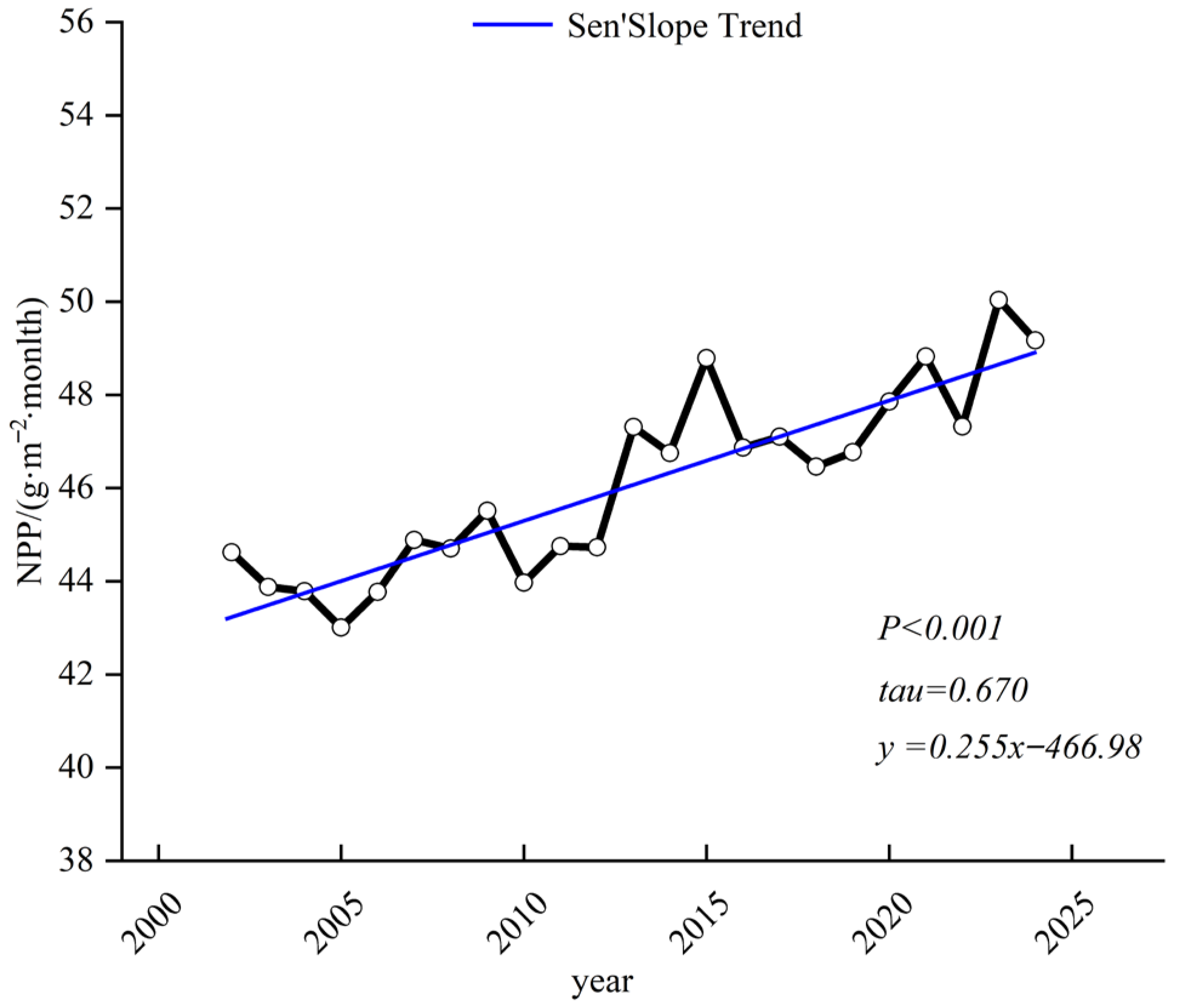
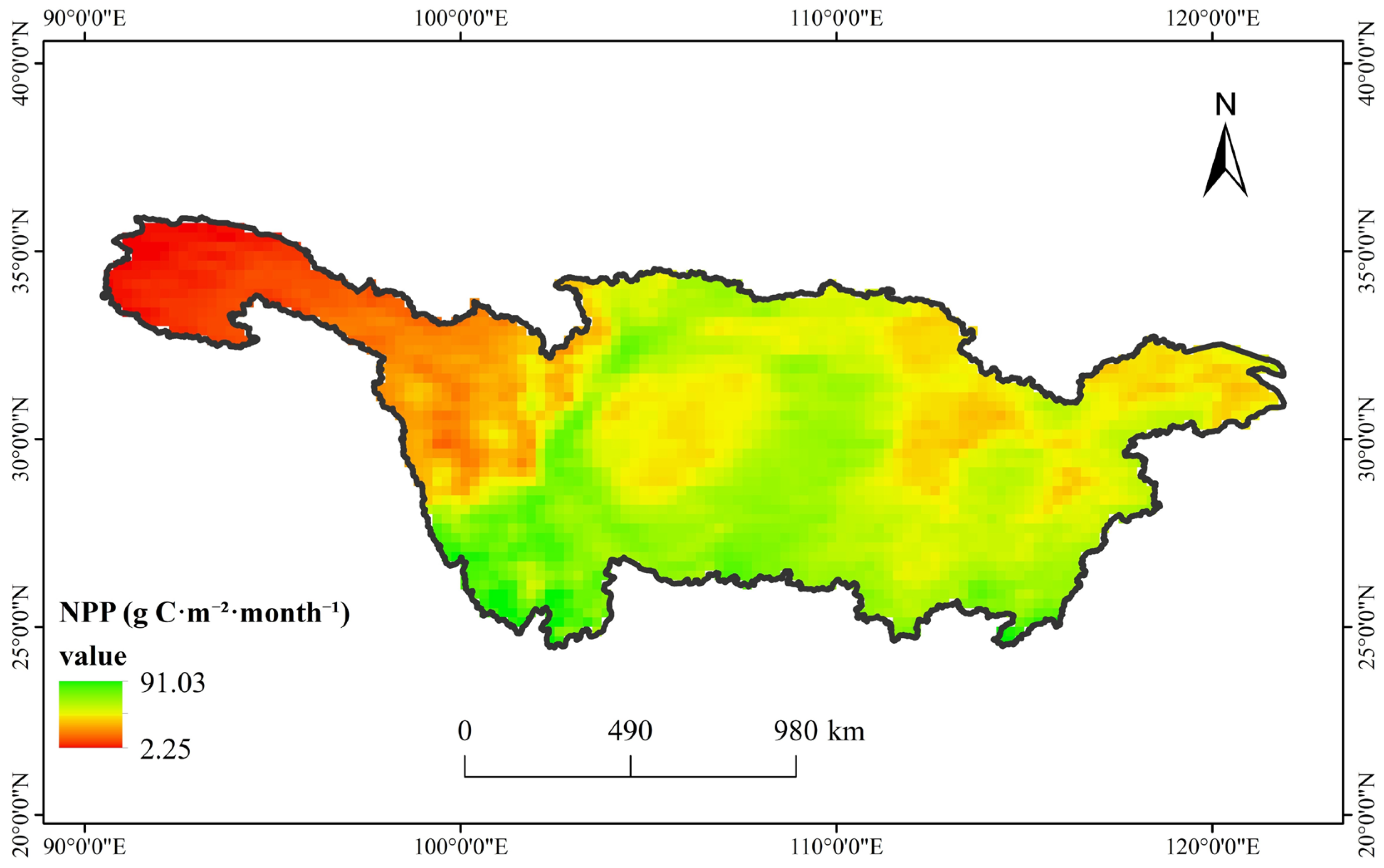
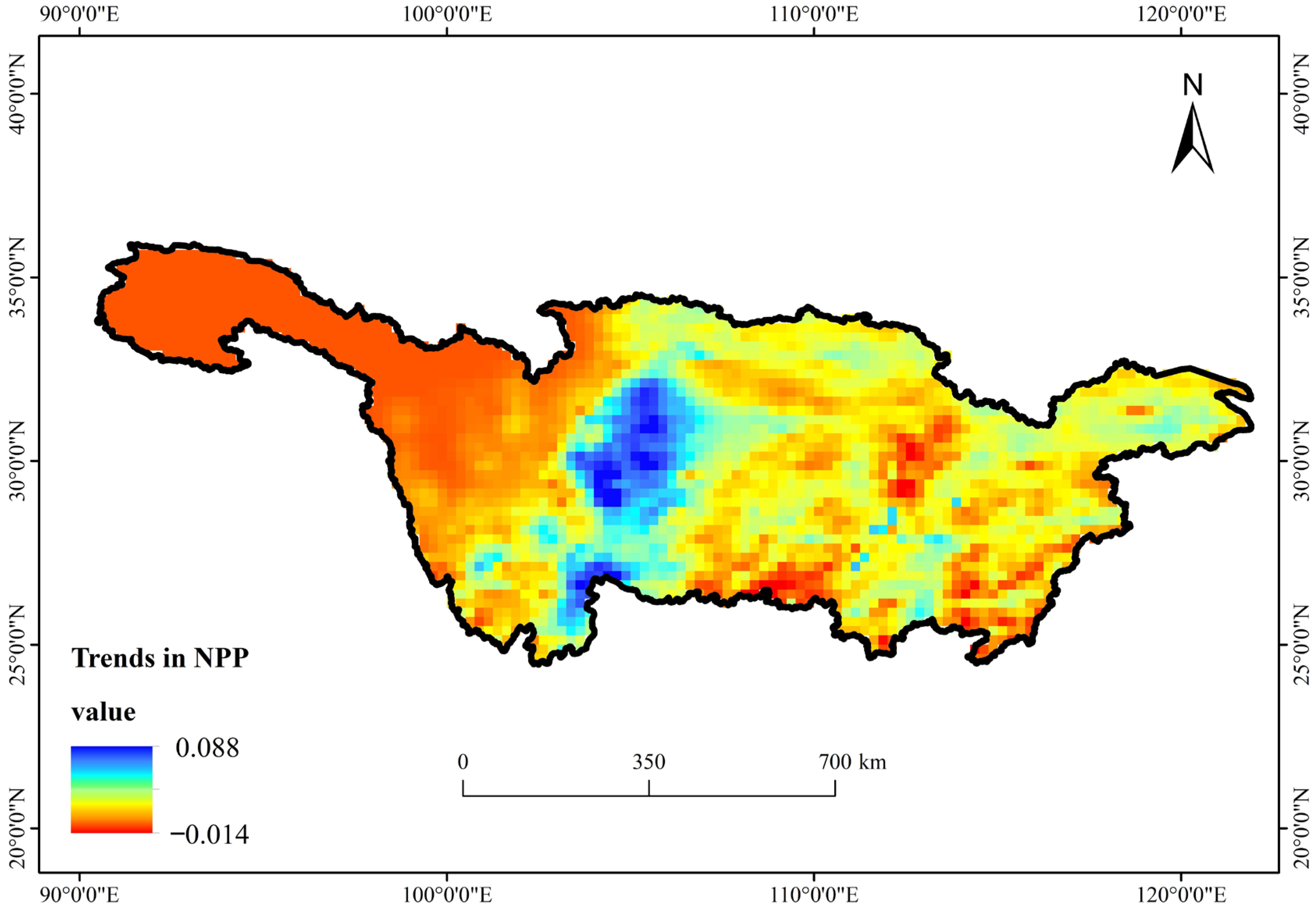
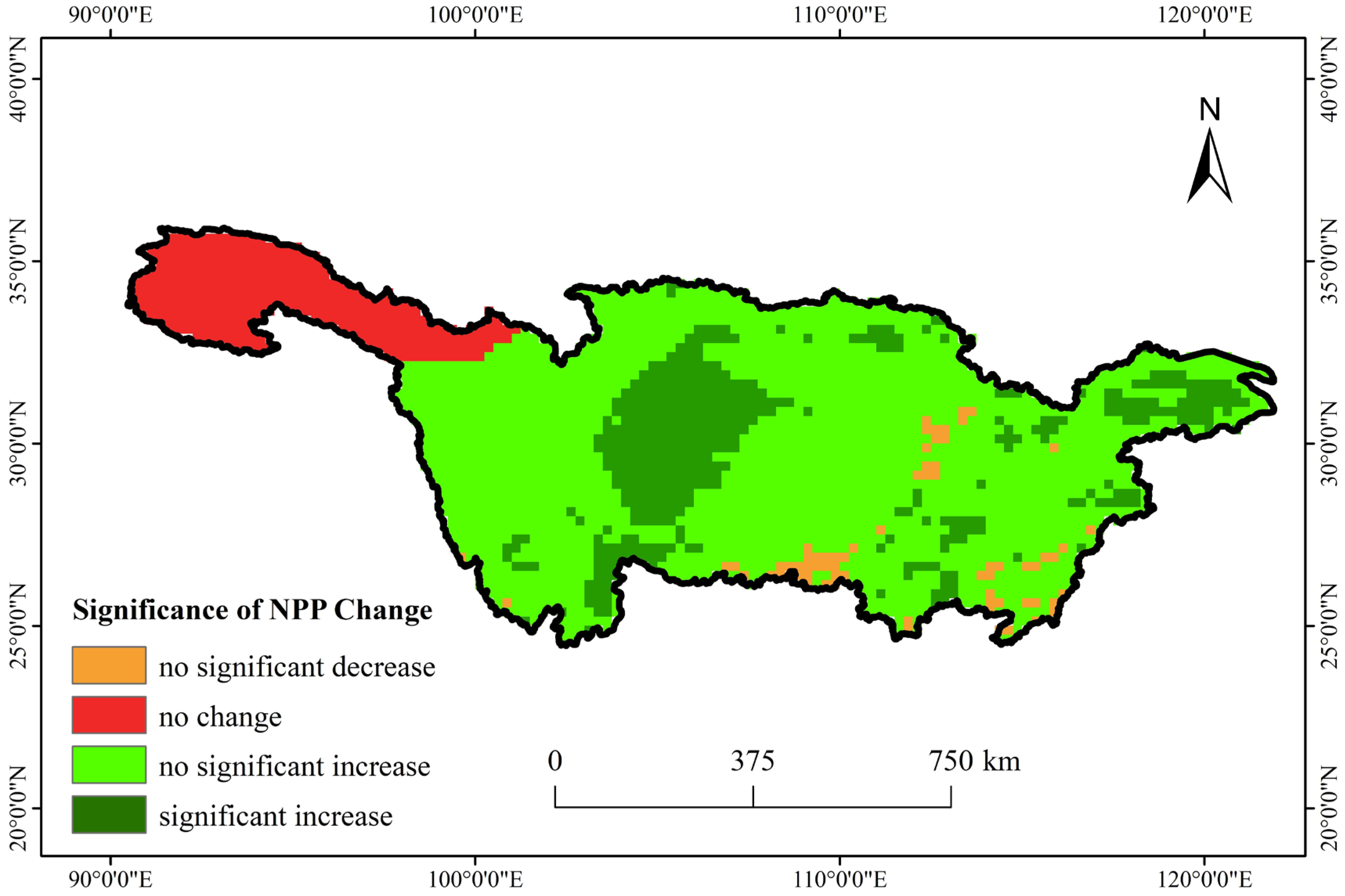
- Basin-wide annual mean of monthly NPP increased slightly from 2002 to 2024 (43.01–50.04 g m−2 month−1), peaking in 2023 and reaching a minimum in 2005. NPP increased from northwest to southeast and 85.8% of the basin exhibited an upward trend (16.7% significant), whereas only limited areas showed weak declines or remained stable.
- (2)
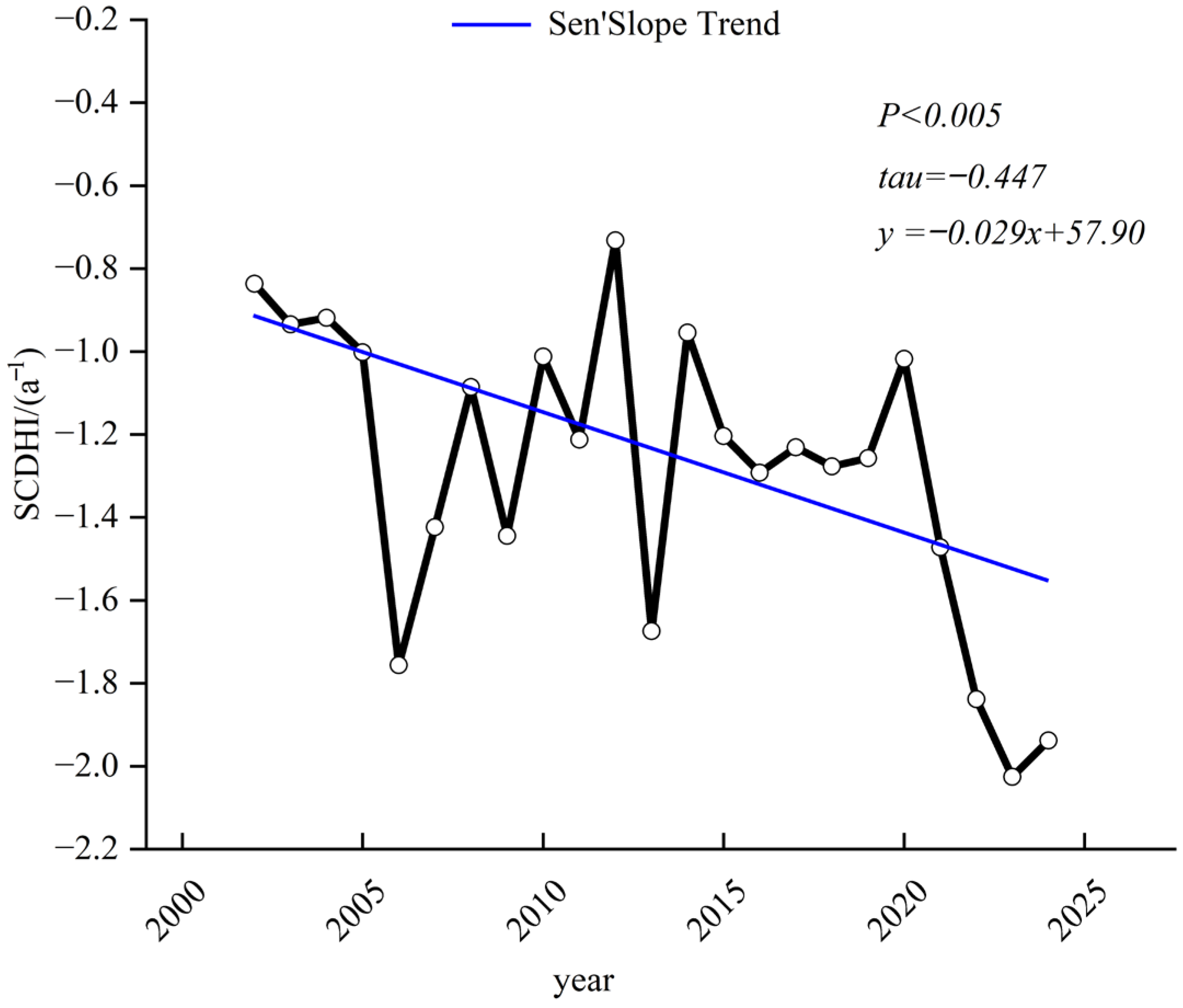
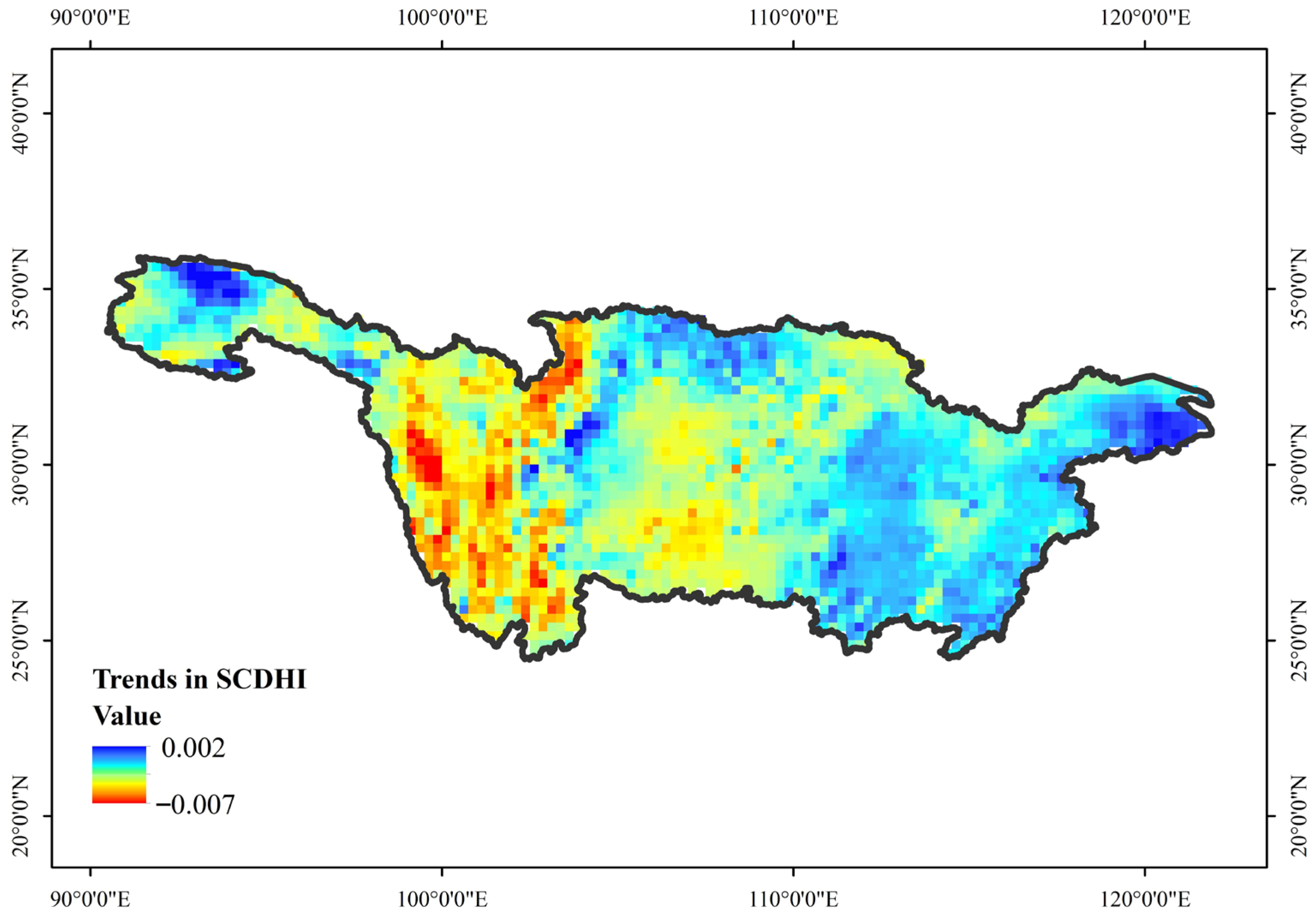
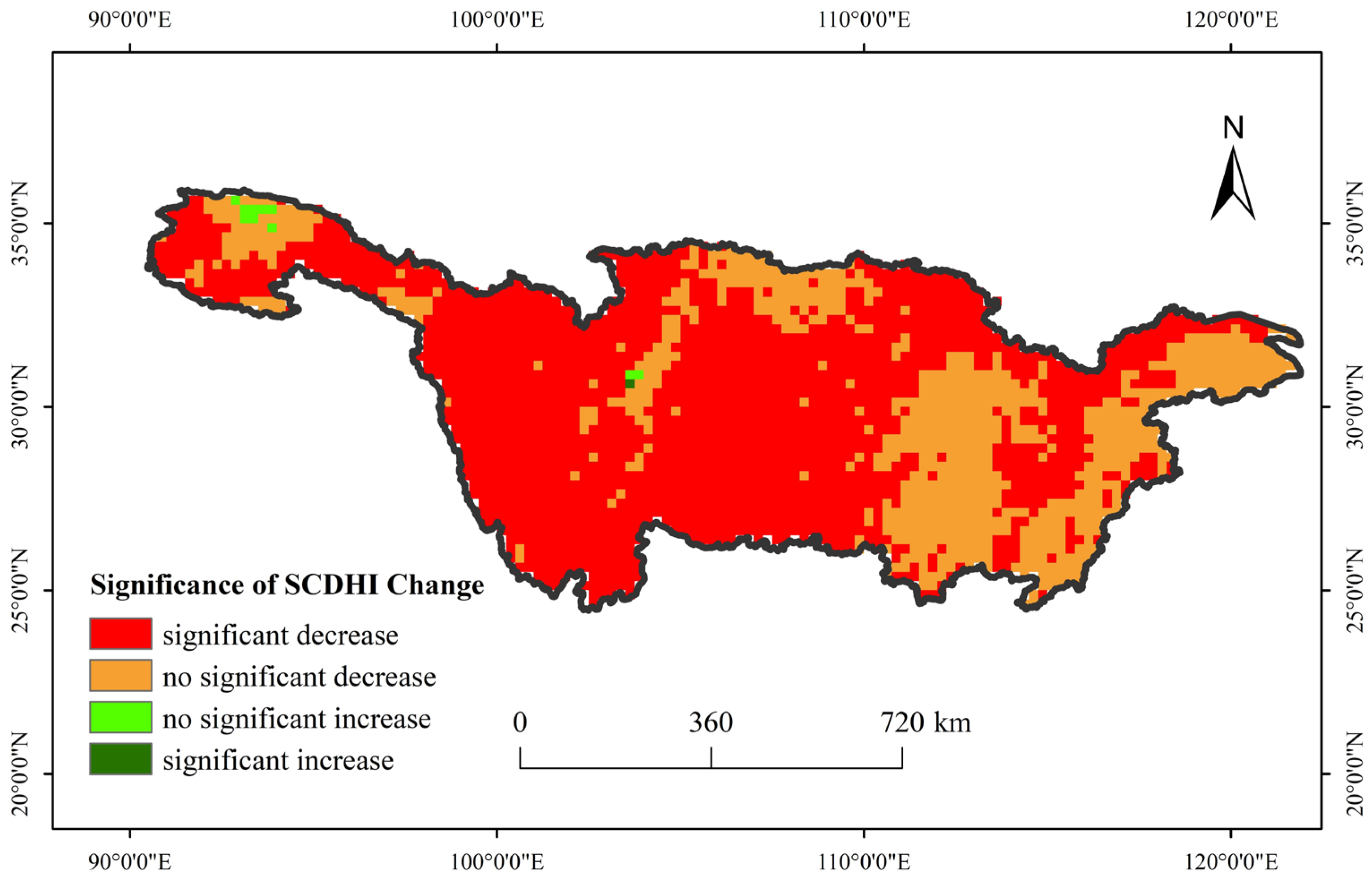
- Annual mean SCDHI decreased significantly (p < 0.005) at approximately −0.029 yr−1, indicating an overall drying and warming trend. The weakest dry–hot conditions occurred in 2012 and the most severe in 2023. Spatially, 99.6% of the basin showed decreasing SCDHI, with about 70% declining significantly.
- (3)
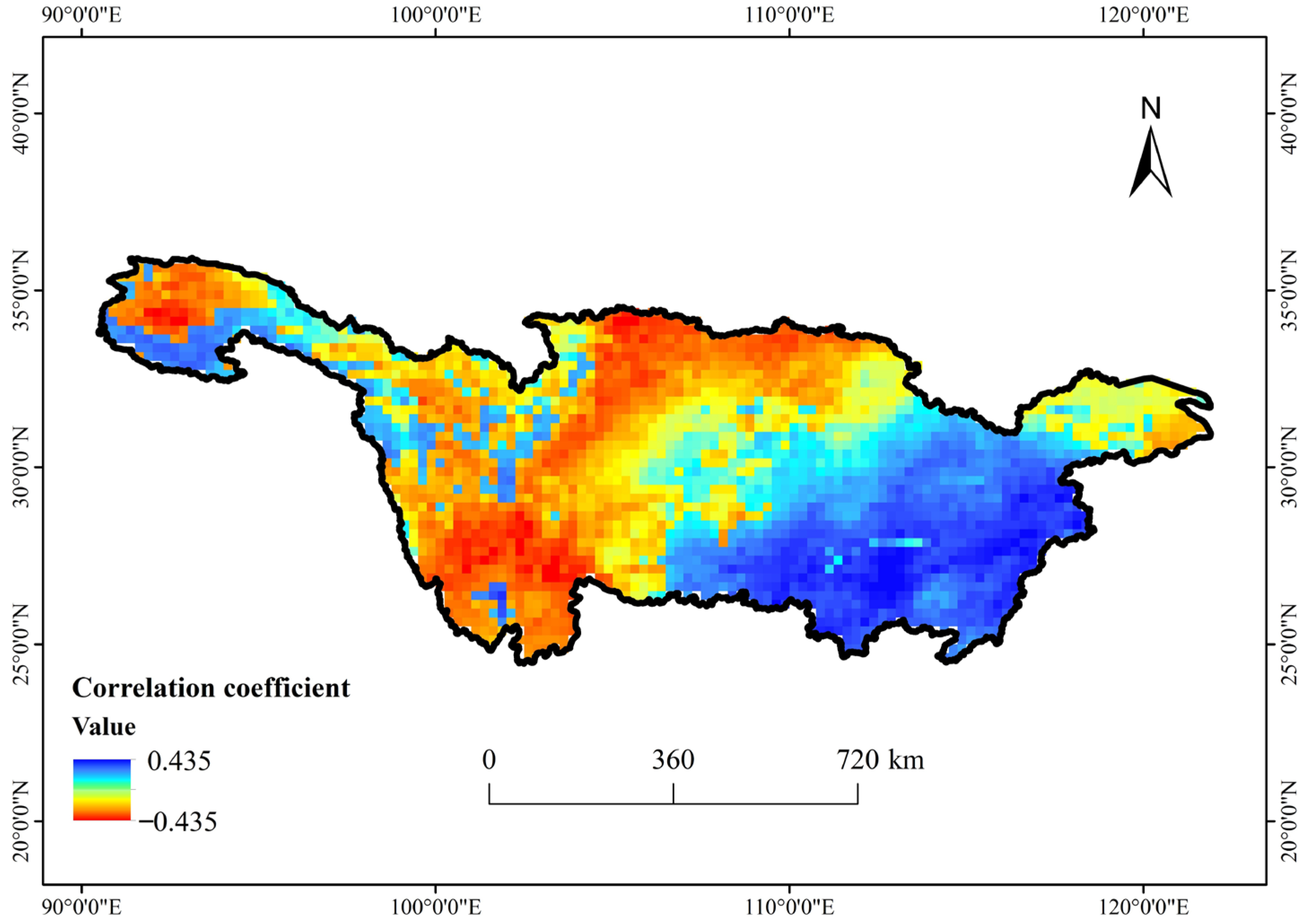
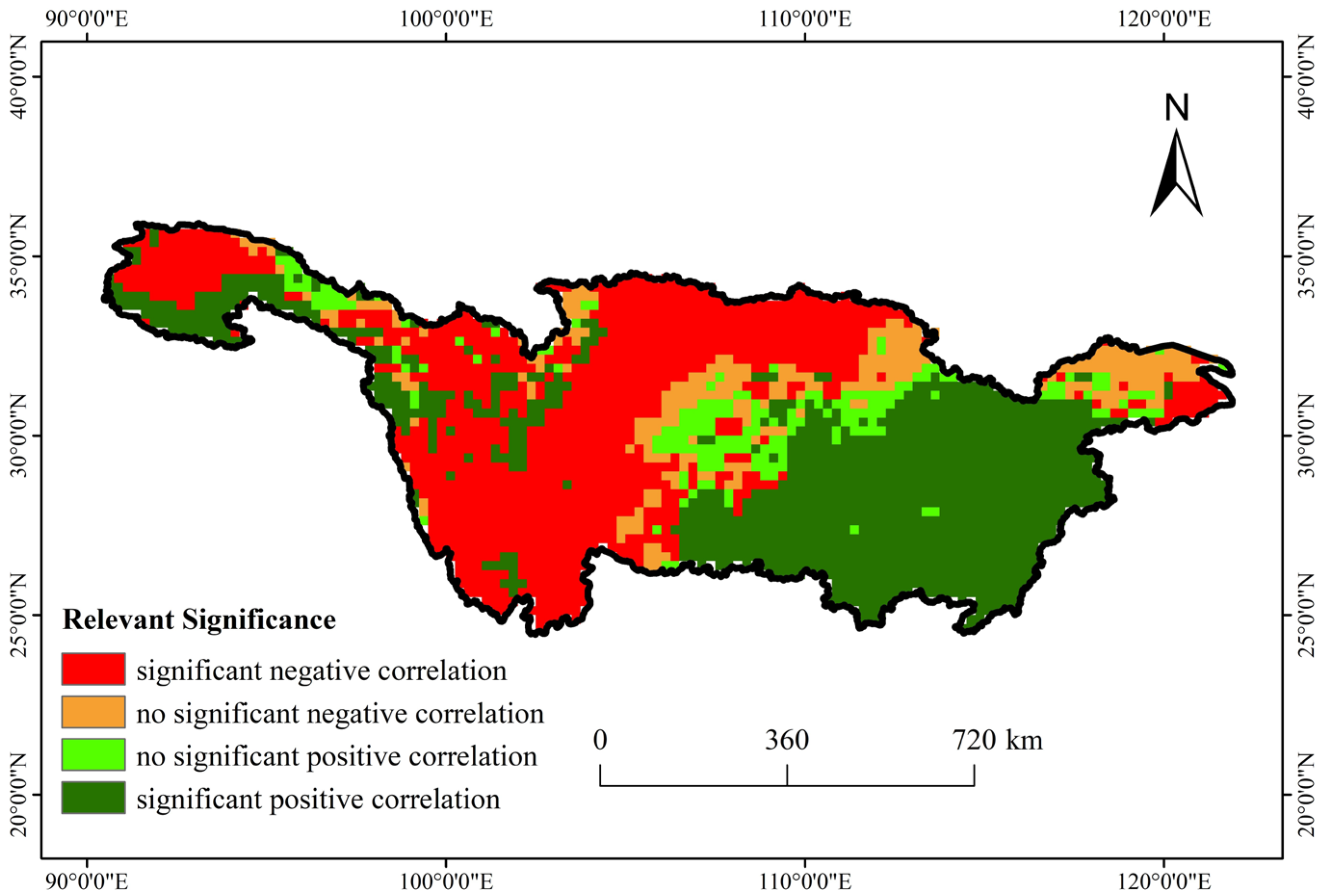
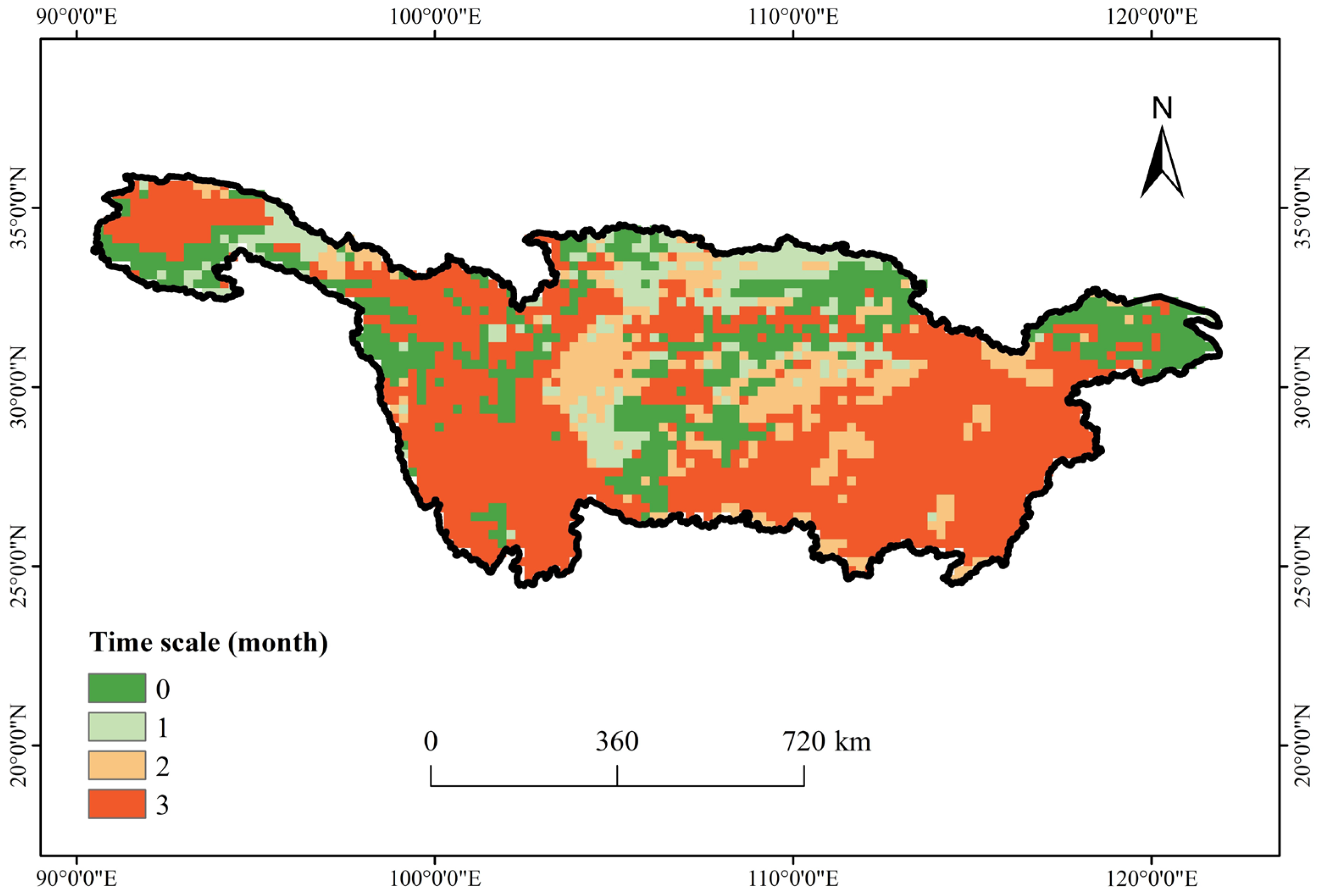
- Under dry–hot conditions (SCDHI < −0.5), NPP was positively correlated with dry–hot intensity over approximately 47% of the basin (mainly the middle and lower reaches and eastern areas) and negatively correlated over 53% (primarily the upper reaches and parts of the middle-reach hills). The mean response time was about 2 months, with faster responses in the upper and high-elevation western regions (0–1 month) and longer lags in the humid middle–lower reaches (2–3 months).
- (4)
- Extreme compound dry–hot events affected vegetation stability, with clear differences among vegetation types. Forests showed relatively high resistance but limited recovery, shrublands exhibited moderate resistance but low resilience, and cultivated vegetation had the lowest resistance and resilience and was therefore the most sensitive. Grasslands showed weak resistance but comparatively faster recovery, whereas alpine vegetation exhibited the highest resilience. Overall, these patterns suggest that cultivated vegetation and grasslands may represent high-risk vegetation types under extreme dry–hot stress.
Author Contributions
Funding
Data Availability Statement
Conflicts of Interest
References
- Mukherjee, S.; Mishra, A.K. Increase in Compound Drought and Heatwaves in a Warming World. Geophys. Res. Lett. 2021, 48, e2020GL090617. [Google Scholar] [CrossRef]
- Liu, T.; Zhang, Y.; Guo, B.; Yin, Y.; Ge, J. Projected changes of compound droughts and heatwaves in China under 1.5 °C, 2 °C, and 3 °C of global warming. Clim. Dyn. 2024, 62, 6417–6431. [Google Scholar] [CrossRef]
- Liu, M.; Yu, H.; Duan, W.; Wu, M. Differential impacts of compound dry- and humid-hot events on global vegetation productivity. Front. Environ. Sci. 2025, 13, 1597553. [Google Scholar] [CrossRef]
- Wang, A.; Tao, H.; Ding, G.; Zhang, B.; Huang, J.; Wu, Q. Global cropland exposure to extreme compound drought heatwave events under future climate change. Weather Clim. Extrem. 2023, 40, 100559. [Google Scholar] [CrossRef]
- Jiang, L.; Zhang, J.; Bai, L.; Han, J.; Meng, X.; Cao, D.; Al-Sakkaf, A.S. Increased frequency and severity of global compound dry and heat wave events in a daily scale. J. Hydrol. 2025, 654, 132857. [Google Scholar] [CrossRef]
- Ma, Z.; Wu, J.; Yang, H.; Hong, Z.; Yang, J.; Gao, L. Assessment of vegetation net primary productivity variation and influencing factors in the Beijing-Tianjin-Hebei region. J. Environ. Manag. 2024, 365, 121490. [Google Scholar] [CrossRef]
- Mehmood, K.; Anees, S.A.; Rehman, A.; Rehman, N.U.; Muhammad, S.; Shahzad, F.; Liu, Q.; Alharbi, S.A.; Alfarraj, S.; Ansari, M.J.; et al. Assessment of climatic influences on net primary productivity along elevation gradients in temperate ecoregions. Trees For. People 2024, 18, 100657. [Google Scholar] [CrossRef]
- Yang, J.; Zhang, X.; Luo, Z.; Yu, X. Nonlinear Variations of Net Primary Productivity and Its Relationship with Climate and Vegetation Phenology, China. Forests 2017, 8, 361. [Google Scholar] [CrossRef]
- Kamatchi, K.A.M.; Anitha, K.; Kumar, K.A.; Senthil, A.; Kalarani, M.K.; Djanaguiraman, M. Impacts of combined drought and high-temperature stress on growth, physiology, and yield of crops. Plant Physiol. Rep. 2023, 29, 28–36. [Google Scholar] [CrossRef]
- Ciais, P.; Reichstein, M.; Viovy, N.; Granier, A.; Ogee, J.; Allard, V.; Aubinet, M.; Buchmann, N.; Bernhofer, C.; Carrara, A.; et al. Europe-wide reduction in primary productivity caused by the heat and drought in 2003. Nature 2005, 437, 529–533. [Google Scholar] [CrossRef]
- Luo, M.; Meng, F.; Sa, C.; Bao, Y.; Liu, T.; De Maeyer, P. Detecting Drought-Related Temporal Effects on Global Net Primary Productivity. Remote Sens. 2024, 16, 3787. [Google Scholar] [CrossRef]
- Li, Y.; Ma, S.; Zhang, X.; Gao, L. ASD and ADHD: Divergent activating patterns of prefrontal cortex in executive function tasks? J. Psychiatr. Res. 2024, 172, 187–196. [Google Scholar] [CrossRef] [PubMed]
- Sun, H.; Wang, J.; Xiong, J.; Bian, J.; Jin, H.; Cheng, W.; Li, A.; García Mozo, H. Vegetation Change and Its Response to Climate Change in Yunnan Province, China. Adv. Meteorol. 2021, 2021, 8857589. [Google Scholar] [CrossRef]
- Han, J.; Singh, V.P. A review of widely used drought indices and the challenges of drought assessment under climate change. Environ. Monit. Assess. 2023, 195, 1438. [Google Scholar] [CrossRef] [PubMed]
- Li, J.; Wang, Z.; Wu, X.; Zscheischler, J.; Guo, S.; Chen, X. A standardized index for assessing sub-monthly compound dry and hot conditions with application in China. Hydrol. Earth Syst. Sci. 2021, 25, 1587–1601. [Google Scholar] [CrossRef]
- Liu, Y.; Hu, T.; Zuo, Q.; Yu, L.; Yang, J. Understanding copula-based multivariate standardized drought indices for characterizing meteorological, hydrological and agricultural droughts across global land areas. Agric. Water Manag. 2025, 320, 109864. [Google Scholar] [CrossRef]
- Zhang, Y.; Hao, Z.; Zhang, Y. Agricultural risk assessment of compound dry and hot events in China. Agric. Water Manag. 2023, 277, 108128. [Google Scholar] [CrossRef]
- Faiz, M.A.; Zhang, Y.; Zhang, X.; Ma, N.; Aryal, S.K.; Ha, T.T.V.; Baig, F.; Naz, F. A composite drought index developed for detecting large-scale drought characteristics. J. Hydrol. 2022, 605, 127308. [Google Scholar] [CrossRef]
- Zhu, M.; Zhang, Z.; Zhu, B.; Kong, R.; Zhang, F.; Tian, J.; Jiang, T. Population and Economic Projections in the Yangtze River Basin Based on Shared Socioeconomic Pathways. Sustainability 2020, 12, 127308. [Google Scholar] [CrossRef]
- Xia, J.; Li, Z.; Zeng, S.; Zou, L.; She, D.; Cheng, D. Perspectives on eco-water security and sustainable development in the Yangtze River Basin. Geosci. Lett. 2021, 8, 18. [Google Scholar] [CrossRef]
- Duan, A.; Wu, G.; Wang, B.; Turner, A.G.; Hu, J.; Hu, W.; Zhang, P.; Hu, D.; Tang, Y. Drivers of East Asian summer monsoon variability: Global oceans and the Tibetan Plateau. Sci. Bull. 2024, 69, 2487–2490. [Google Scholar] [CrossRef] [PubMed]
- Zhu, J.; Guo, H.; Sun, Y. Responses of Terrestrial GPP to Extreme Compound Heatwave and Drought Events of Different Intensities in the Yangtze River Basin. Remote Sens. 2025, 17, 848. [Google Scholar] [CrossRef]
- Bai, W.; Zhang, C.; Xiao, X.; Zou, Z.; Liu, Z.; Li, P.; Tang, J.; Li, T.; Zhou, X.; Peng, C. Characteristics of Meteorological Drought Evolution in the Yangtze River Basin. Water 2024, 16, 3391. [Google Scholar] [CrossRef]
- Huang, L.; Zhou, P.; Cheng, L.; Liu, Z. Dynamic drought recovery patterns over the Yangtze River Basin. Catena 2021, 201, 105194. [Google Scholar] [CrossRef]
- Zhang, Y.; Gong, J.; Yang, J.; Peng, J. Evaluation of Future Trends Based on the Characteristics of Net Primary Production (NPP) Changes over 21 Years in the Yangtze River Basin in China. Sustainability 2023, 15, 10606. [Google Scholar] [CrossRef]
- Song, S.; Niu, J.; Singh, S.K.; Du, T. Projection of net primary production under changing environment in Xinjiang using an improved wCASA model. J. Hydrol. 2023, 620, 129314. [Google Scholar] [CrossRef]
- Du, K.; Huang, J.; Wang, W.; Zeng, Y.; Li, X.; Zhao, F. Monitoring Low-Temperature Stress in Winter Wheat Using TROPOMI Solar-Induced Chlorophyll Fluorescence. IEEE Trans. Geosci. Remote Sens. 2024, 62, 4402111. [Google Scholar] [CrossRef]
- Zhang, Q.; Yu, X.; Qiu, R.; Liu, Z.; Yang, Z. Evolution, severity, and spatial extent of compound drought and heat events in north China based on copula model. Agric. Water Manag. 2022, 273, 107918. [Google Scholar] [CrossRef]
- Monteleone, B.; Borzí, I. Drought in the Po Valley: Identification, Impacts and Strategies to Manage the Events. Water 2024, 16, 1187. [Google Scholar] [CrossRef]
- Wang, H.; Zhang, G.; Zhang, S.; Shi, L.; Su, X.; Song, S.; Feng, K.; Zhang, T.; Fu, X. Development of a novel daily-scale compound dry and hot index and its application across seven climatic regions of China. Atmos. Res. 2023, 287, 106700. [Google Scholar] [CrossRef]
- Vicente-Serrano, S.M.; Beguería, S.; López-Moreno, J.I. A Multiscalar Drought Index Sensitive to Global Warming: The Standardized Precipitation Evapotranspiration Index. J. Clim. 2010, 23, 1696–1718. [Google Scholar] [CrossRef]
- Yang, Y.; Dai, E.; Yin, J.; Jia, L.; Zhang, P.; Sun, J. Spatial and Temporal Evolution Patterns of Droughts in China over the Past 61 Years Based on the Standardized Precipitation Evapotranspiration Index. Water 2024, 16, 1012. [Google Scholar] [CrossRef]
- Kong, J.; Zan, M.; Chen, Z.; Xue, C.; Yang, S. Study on the Response of Vegetation Water Use Efficiency to Drought in the Manas River Basin, Xinjiang, China. Forests 2024, 15, 114. [Google Scholar] [CrossRef]
- Zhan, C.; Liang, C.; Zhao, L.; Jiang, S.; Niu, K.; Zhang, Y. Drought-related cumulative and time-lag effects on vegetation dynamics across the Yellow River Basin, China. Ecol. Indic. 2022, 143, 109409. [Google Scholar] [CrossRef]
- Hao, Z.; AghaKouchak, A. Multivariate Standardized Drought Index: A parametric multi-index model. Adv. Water Resour. 2013, 57, 12–18. [Google Scholar] [CrossRef]
- Ayantobo, O.O.; Wei, J. Appraising regional multi-category and multi-scalar drought monitoring using standardized moisture anomaly index (SZI): A water-energy balance approach. J. Hydrol. 2019, 579, 124139. [Google Scholar] [CrossRef]
- Feng, K.; Su, X.; Singh, V.P.; Ayantobo, O.O.; Zhang, G.; Wu, H.; Zhang, Z. Dynamic evolution and frequency analysis of hydrological drought from a three-dimensional perspective. J. Hydrol. 2021, 600, 126675. [Google Scholar] [CrossRef]
- Wu, X.; Hao, Z.; Zhang, X.; Li, C.; Hao, F. Evaluation of severity changes of compound dry and hot events in China based on a multivariate multi-index approach. J. Hydrol. 2020, 583, 124580. [Google Scholar] [CrossRef]
- Wu, D.; Zhao, X.; Liang, S.; Zhou, T.; Huang, K.; Tang, B.; Zhao, W. Time-lag effects of global vegetation responses to climate change. Glob. Change Biol. 2015, 21, 3520–3531. [Google Scholar] [CrossRef]
- Wang, Y.; Dai, E.; Wu, C. Spatiotemporal heterogeneity of net primary productivity and response to climate change in the mountain regions of southwest China. Ecol. Indic. 2021, 132, 108273. [Google Scholar] [CrossRef]
- Yan, F.; Zhang, Y.; Wang, X.; Xu, Z.; Liang, Y.; Wang, Z.; Wang, J.; Chen, Y.; Zhu, Z. Characteristics of spatial and temporal non-stationarity of groundwater storage in different basins of China and its driving mechanisms. J. Hydrol. 2025, 655, 132882. [Google Scholar] [CrossRef]
- Cao, D.; Zhang, J.; Han, J.; Zhang, T.; Yang, S.; Wang, J.; Prodhan, F.A.; Yao, F. Projected Increases in Global Terrestrial Net Primary Productivity Loss Caused by Drought Under Climate Change. Earth’s Future 2022, 10, e2022EF002681. [Google Scholar] [CrossRef]
- Lloret, F.; Keeling, E.G.; Sala, A. Components of tree resilience: Effects of successive low-growth episodes in old ponderosa pine forests. OIKOS 2011, 120, 1909–1920. [Google Scholar] [CrossRef]
- Feng, S.; Wu, X.; Hao, Z.; Hao, Y.; Zhang, X.; Hao, F. A database for characteristics and variations of global compound dry and hot events. Weather Clim. Extrem. 2020, 30, 100299. [Google Scholar] [CrossRef]
- Yu, R.; Zhai, P. Changes in compound drought and hot extreme events in summer over populated eastern China. Weather Clim. Extrem. 2020, 30, 100295. [Google Scholar] [CrossRef]
- Shao, X.; Zhang, Y.; Ma, N.; Zhang, X.; Tian, J.; Xu, Z.; Liu, C. Drought-induced ecosystem resistance and recovery observed at 118 flux tower stations across the globe. Agric. For. Meteorol. 2024, 356, 110170. [Google Scholar] [CrossRef]
- Schwarz, J.; Skiadaresis, G.; Kohler, M.; Kunz, J.; Schnabel, F.; Vitali, V.; Bauhus, J. Quantifying Growth Responses of Trees to Drought—A Critique of Commonly Used Resilience Indices and Recommendations for Future Studies. Curr. For. Rep. 2020, 6, 185–200. [Google Scholar] [CrossRef]
- Serra-Maluquer, X.; Mencuccini, M.; Martinez-Vilalta, J. Changes in tree resistance, recovery and resilience across three successive extreme droughts in the northeast Iberian Peninsula. Oecologia 2018, 187, 343–354. [Google Scholar] [CrossRef]
- Dong, B.; Yu, Y.; Pereira, P. Non-growing season drought legacy effects on vegetation growth in southwestern China. Sci. Total Environ. 2022, 846, 157334. [Google Scholar] [CrossRef]
- Liu, C.; Shi, S.; Wang, T.; Gong, W.; Xu, L.; Shi, Z.; Du, J.; Qu, F. Analysis of Net Primary Productivity Variation and Quantitative Assessment of Driving Forces-A Case Study of the Yangtze River Basin. Plants 2023, 12, 3412. [Google Scholar] [CrossRef]
- Zhu, Z.; Piao, S.; Myneni, R.B.; Huang, M.; Zeng, Z.; Canadell, J.G.; Ciais, P.; Sitch, S.; Friedlingstein, P.; Arneth, A.; et al. Greening of the Earth and its drivers. Nat. Clim. Change 2016, 6, 791–795. [Google Scholar] [CrossRef]
- Chen, C.; Park, T.; Wang, X.; Piao, S.; Xu, B.; Chaturvedi, R.K.; Fuchs, R.; Brovkin, V.; Ciais, P.; Fensholt, R.; et al. China and India lead in greening of the world through land-use management. Nat. Sustain. 2019, 2, 122–129. [Google Scholar] [CrossRef]
- Yang, S.; Sun, H.; Zhao, R.; Xing, L.; Tan, Z.; Ning, Y.; Li, M. Was the 2022 drought in the Yangtze River Basin, China more severe than other typical drought events by considering the natural characteristics and the actual impacts? Theor. Appl. Climatol. 2023, 155, 5543–5556. [Google Scholar] [CrossRef]
- Wang, J.; Yan, R.; Wu, G.; Liu, Y.; Wang, M.; Zeng, N.; Jiang, F.; Wang, H.; He, W.; Wu, M.; et al. Unprecedented decline in photosynthesis caused by summer 2022 record-breaking compound drought-heatwave over Yangtze River Basin. Sci. Bull. 2023, 68, 2160–2163. [Google Scholar] [CrossRef] [PubMed]
- Chen, S.; Qiu, R.; Chen, Y.; Gong, W.; Han, G. Impacts of Drought and Heatwave on the Vegetation and Ecosystem in the Yangtze River Basin in 2022. Remote Sens. 2024, 16, 2889. [Google Scholar] [CrossRef]
- Yuan, W.; Zheng, Y.; Piao, S.; Ciais, P.; Lombardozzi, D.; Wang, Y.; Ryu, Y.; Chen, G.; Dong, W.; Hu, Z.; et al. Increased atmospheric vapor pressure deficit reduces global vegetation growth. Sci. Adv. 2019, 5, eaax1396. [Google Scholar] [CrossRef]
- Tian, S.; Van Dijk, A.; Tregoning, P.; Renzullo, L.J. Forecasting dryland vegetation condition months in advance through satellite data assimilation. Nat. Commun. 2019, 10, 469. [Google Scholar] [CrossRef]
- Lu, J.; Yan, F. The Divergent Resistance and Resilience of Forest and Grassland Ecosystems to Extreme Summer Drought in Carbon Sequestration. Land 2023, 12, 1672. [Google Scholar] [CrossRef]
- Xiao, C.; Zaehle, S.; Yang, H.; Wigneron, J.-P.; Schmullius, C.; Bastos, A. Land cover and management effects on ecosystem resistance to drought stress. Earth Syst. Dyn. 2023, 14, 1211–1237. [Google Scholar] [CrossRef]



| Vegetation Type | Mean Resistance | Mean Resilience |
|---|---|---|
| Coniferous forest | 0.65 | 0.21 |
| Mixed conifer–broadleaf forest | 0.53 | 0.31 |
| Broadleaved forest | 0.65 | 0.37 |
| Shrubland | 0.57 | 0.18 |
| Grassland | 0.43 | 0.32 |
| Alpine vegetation | 0.60 | 0.46 |
| Cultivated vegetation | 0.25 | 0.17 |
Disclaimer/Publisher’s Note: The statements, opinions and data contained in all publications are solely those of the individual author(s) and contributor(s) and not of MDPI and/or the editor(s). MDPI and/or the editor(s) disclaim responsibility for any injury to people or property resulting from any ideas, methods, instructions or products referred to in the content. |
© 2026 by the authors. Licensee MDPI, Basel, Switzerland. This article is an open access article distributed under the terms and conditions of the Creative Commons Attribution (CC BY) license.
Share and Cite
Xi, H.; Zhang, G.; Wang, H. Spatiotemporal Evolution of Compound Dry–Hot Events and Their Impacts on Vegetation Net Primary Productivity in the Yangtze River Basin. Water 2026, 18, 276. https://doi.org/10.3390/w18020276
Xi H, Zhang G, Wang H. Spatiotemporal Evolution of Compound Dry–Hot Events and Their Impacts on Vegetation Net Primary Productivity in the Yangtze River Basin. Water. 2026; 18(2):276. https://doi.org/10.3390/w18020276
Chicago/Turabian StyleXi, Hongqi, Gengxi Zhang, and Hongkai Wang. 2026. "Spatiotemporal Evolution of Compound Dry–Hot Events and Their Impacts on Vegetation Net Primary Productivity in the Yangtze River Basin" Water 18, no. 2: 276. https://doi.org/10.3390/w18020276
APA StyleXi, H., Zhang, G., & Wang, H. (2026). Spatiotemporal Evolution of Compound Dry–Hot Events and Their Impacts on Vegetation Net Primary Productivity in the Yangtze River Basin. Water, 18(2), 276. https://doi.org/10.3390/w18020276