Abstract
The effectiveness of runoff control infrastructure depends on infrastructure arrangement and the severity of the problem in the study area. Green infrastructure (GI) has been widely demonstrated as a practical approach to runoff reduction and ecological improvement. However, decision-makers usually consider the cost-efficacy of the GI layout scheme as a primary factor, leading to less consideration of GI’s environmental and ecological functions. Thus, a multifunctional decision-making framework for evaluating the suitability of GI infrastructure was established. First, the study area was described by regional pollution load intensity, slope, available space, and constructible area. Then, to assess the multifunctional performance of GI, a hierarchical evaluation framework comprising three objectives, seven indices, and sixteen sub-indices was established. Weights were assigned to different indices according to stakeholders’ preferences, including government managers, researchers, and residents. The proposed framework can be extended to other cities to detect GI preference.
1. Introduction
Flooding, water pollution, urban heat island effects, and ecological degradation have necessitated the development of multifunctional infrastructures for adjusting the urban layout. Green infrastructure (GI) effectively boosts cities’ sustainability and resilience as it expands a nature-based solution [1,2]. GI is frequently used to enhance the water retention and infiltration capability of urban underlying and can hence regulate urban runoff [3,4,5]. Additionally, GI can provide ecological functions such as habitat improvement, biodiversity compensation [6], and energy conservation [7]. The effectiveness of GI is highly dependent on the application site and the urgency of runoff-related problems [8,9]. In this context, a hierarchical and multifunctional evaluation of GI is critical for ensuring runoff control efficiency [10,11,12]. Past GI practice shows that GI is a site-specific runoff management strategy [13]. For example, the cost-effectiveness of GI is impacted by pollution severity, and site conditions constrain the GI construction scale. As a result of urban growth and ecological endowments [14,15], spatial heterogeneity affects the quantitative identification of regional characteristics and the suitable site for GI [10,16]. In detail, the intensity of the pollutant load, the catchment slope, and the constructible area are all important factors for quantifying site limits on runoff control infrastructure [17,18]. Balancing the restrictions of natural endowment and the inherent benefits of GI can facilitate evaluating the viability of runoff management techniques in specific sites. In addition, the preferences of different stakeholders are important for GI arrangements. For example, local managers take the responsible role in regional development, scholars are well-versed in the mechanics underlying runoff control infrastructure, and local citizens benefit directly from GI’s multiple functions.
Recently, GIs have been given more weight to urban development because of their multiple benefits. Along with controlling urban floods, GIs can help mitigate non-point source pollution and improve the quality of the aquatic environment [3,18,19]. Additionally, GIs offer significant ecological and aesthetic benefits [10], which improve residents’ well-being. Although multi-functionality is commonly assumed, only stormwater runoff management or aquatic environment improvement are considered benefits when implementing GIs [20]. Multiple functions of GI in runoff control, economy, and ecology urgently require joint assessment within a unified evaluation system.
By innovatively incorporating ecological benefits into the unified evaluation system, this study overcomes the limitation that traditional GI effectiveness evaluations focus exclusively on runoff control function and economic cost. The feasibility of the site for GI layout was thoroughly assessed in terms of pollutant load intensity, slope, available floor space, and GI constructible areas. Local stakeholders, such as environmental experts, architect experts, managers, and residents, were consulted regarding their desire for the multi-function of GI. Thus, a multi-objective decision-making framework for GI was developed that takes runoff control function, economic, and ecological considerations into account to balance the region’s natural endowments and stakeholder interests.
2. Method and Data
2.1. Study Area
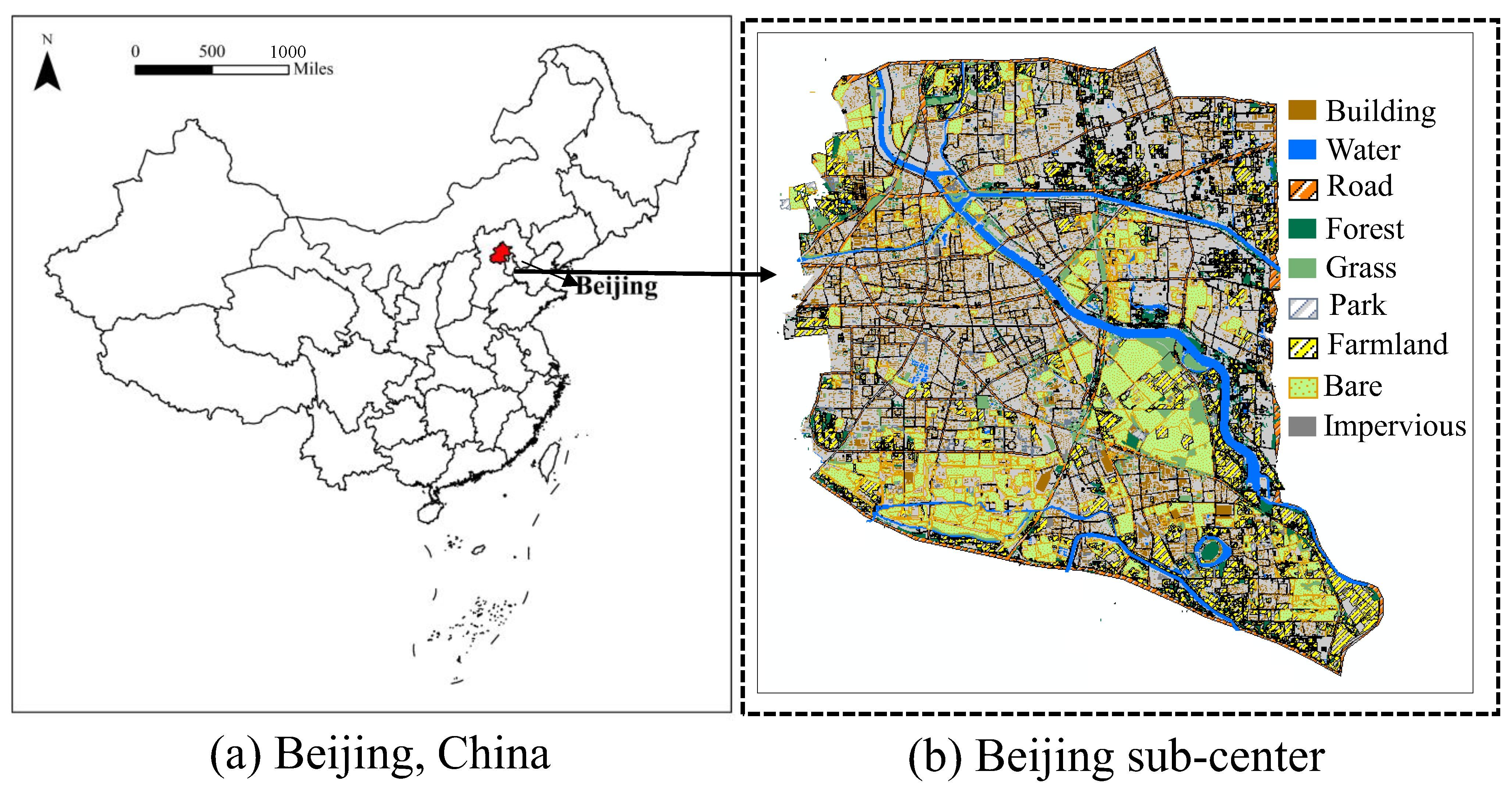
The research area is in Beijing’s sub-center (Figure 1), Figure 1a illustrates the location of Beijing in China, and Figure 1b depicts the case area of Beijing sub-center. Its elevations range between 9.5 and 26.9 meters. The mild slope allows for adequate retention time for GI, which makes the study area suitable for GI deployment. The primary local soil type is chalky soil, and the groundwater depth is between 5 and 10 m. Beijing’s sub-center is in the warm-temperate monsoon climate zone of the continental monsoon. The average temperature is 11.65 °C, and the relative mean humidity is 56.8%. The annual rainfall is 535.88 mm on average. The flood season lasts from June to September and accounts for approximately 80% of annual precipitation. The research area covers around 155 km2, with 27% covered by permeable land.
Figure 1.
Study area.
2.2. Methodology
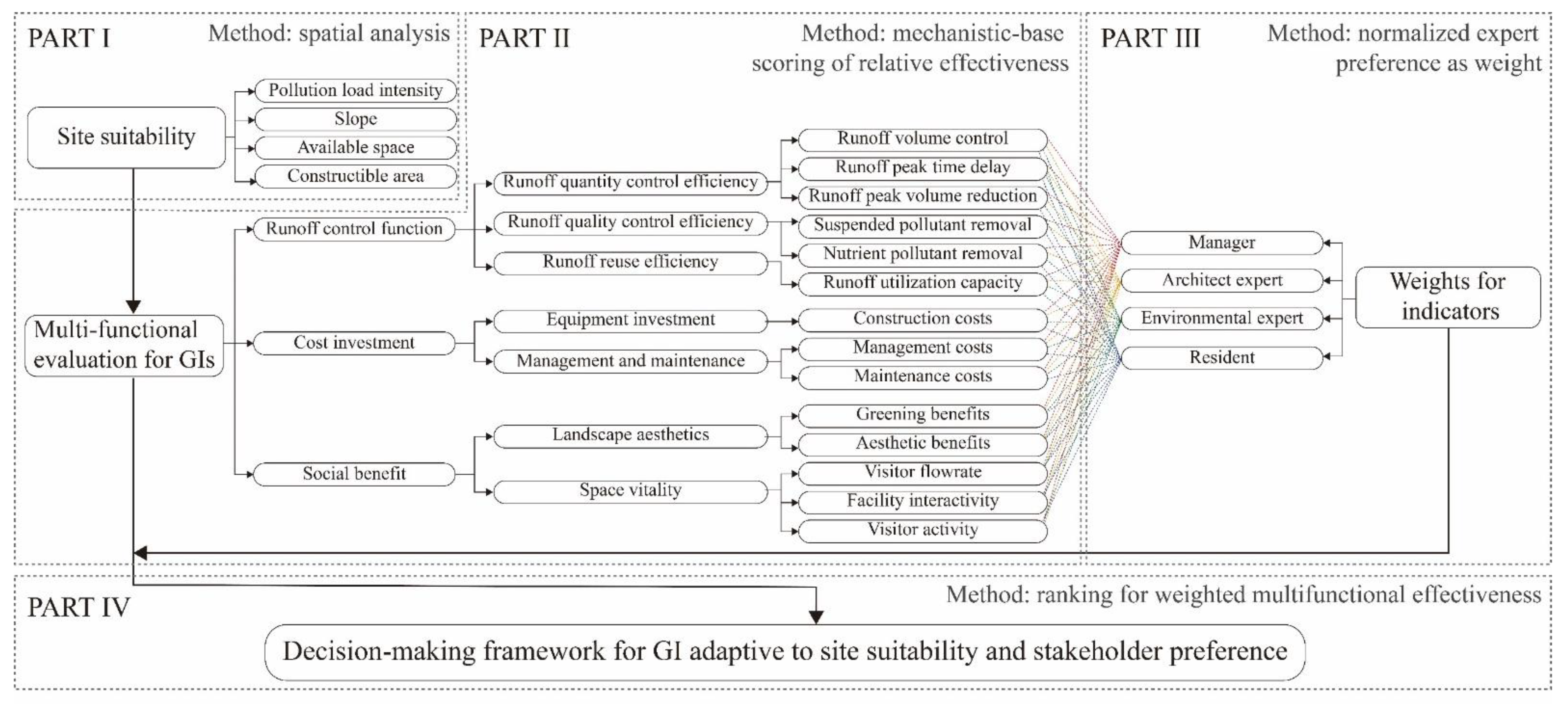
Methodological steps were taken as follows to establish an adaptive GI layout decision-making strategy, as illustrated in Figure 2: (I) The examination of site suitability is the first obstacle in the selection of GI. The intensity of the pollutant load, the catchment slope, the accessible space, and the GI constructible area are essential factors for evaluating the viability of GI site locations. (II) A brief explanation of a typical GI, including its functioning mechanisms, facility characteristics, operational and maintenance requirements, and how residents interact with it, is provided. Three-dimensional evaluation is proposed. This technique considers GI efficacy, cost, and social benefits. The approach for determining GI’s effectiveness uses three primary indicators, eight subsidiary indicators, and sixteen tertiary indicators. (III) Local urban managers, relevant professionals, and residents are the critical GI decision-makers and experiencers. This study analyzes stakeholder interests and collects construction intentions from city administrators, architects, environmentalists, and residents. Their preferences are represented hierarchically as weights. The weights correspond to the infrastructure effectiveness indicators. (IV) The selection of GI subjects depends on the suitability of the site. Then, a hierarchical evaluation of the GI’s intrinsic efficacy in its various domains and a weighing of the indicators according to local stakeholders are conducted. The decision-making framework for GI layout considered site suitability and weighted malfunction effectiveness are established.
Figure 2.
Methodological framework.
2.3. Typical GIs for Evaluation
In the multifunctional decision-making framework, eight commonly used GIs were analyzed. To quantitatively assess the runoff control capacity and the effect of GI, we categorized typical GIs into three types below, based on previous practice and runoff control mechanisms.
- (1)
- Source-oriented runoff control GIs: primarily focused on in-situ runoff dissipation and control. The runoff quantity and quality are regulated by modifying runoff infiltration, retention, and in-situ storage processes. Typical source-oriented runoff reduction measures include bioretention facilities, permeable pavement, green roofs, and sunken green spaces.
- (2)
- Transmission process control GIs: these facilities change runoff flows from sources to sinks, reducing runoff control pressure for the sources. Vegetation swales and infiltration trenches are two common facilities of transmission process control.
- (3)
- Terminal GIs: these are centralized runoff control facilities that are focused on comprehensive management. They are space constrained. Dry ponds and wet ponds are the two most common terminal facilities.
2.4. Site Suitability Evaluation System of GIs
The effectiveness of GI depends on its fitness for the site’s features. By incorporating site factors into the GI multifunctional decision-making system, the benefits of GI deployment can possibly be optimized. Table 1 summarizes the various site suitability indices [21]. Four indices serve as decision-making factors for site suitability: pollutant load intensity, catchment slope, available space, and GI constructible areas. The GI site suitability parameters (listed in Table 1) are based in part on the authors’ team’s previous research foundation [21,22] and in part on recent documents and literature [20,23,24,25,26]. The pollution load intensity was calculated by multiplying the runoff–wash-off pollution concentration in different land use (as shown in Table 2) and the corresponding land use area [27,28]. The pollutant load was normalized for comparison and was described as high, medium, and low-level pollution intensity. Owing to differences in structure and function, the GI’s ability to cope with pollutants varies, and tailored installation can improve the efficiency of system runoff control. Catchment slope indices influence the duration and rate of runoff overflow in GI-related pollution capture and removal efficiency. The limited available area constrains the size of GIs, and GIs with low space utilization are not desirable in land-shorted regions. The layout of the GI is constrained by indices such as ecological and aquatic reserve zones.
Table 1.
Site suitability indices for GI.
Table 2.
Site suitability indices for GI.
2.5. Establishment of a Multifunctional Evaluation System for GI
The multifunctional benefits of GI were assessed. GI aims to manage the quantity and quality of runoff. In terms of runoff control, GI enables the restoration of the source’s natural underlying, promotes infiltration and rapid discharge of runoff throughout the transfer process, and enables efficient centralized regulation of runoff quality. The indicators were created to examine the alleviation of strain on urban drainage networks, reduce the pollution of receiving water bodies, and limit peak flooding and pollutant impact on water bodies. The economic costs are associated with the necessity for financial assistance to create and maintain the efficacy of the GI. Efficient investment allocation is possible based on the close correlation between GI and site suitability. In addition, GIs provide various ecological benefits, including improving landscape aesthetics and resident well-being. As a result, a synergistic evaluation system was built for GI regarding functions including runoff control, investment, and ecological benefits. The descriptions of indices are displayed in Table 3.
Table 3.
Multi-function evaluation system for GI.
Three indexes are included in the runoff control function of the GI evaluation system. They describe separately the release of runoff volume control pressure in the urban drainage system, the effectiveness of runoff pollutant reduction, and the capacity to increase rainwater collection and reuse via GI. The cost investment in GI refers to the structural costs associated with the construction process and the maintenance costs associated with keeping normal regular operation. The social benefit metrics for GI quantify the extent to which the facilities improve the comfort and liveliness of residents. Urban inhabitants are the primary GI users and quantitative assessment of their perceptions serves as the foundation for assessing the social advantages of GI.
2.6. Quantification of the Multifunctional Effectiveness of GI
The GI functions are based on practical examples, mechanistic studies (Ying, 2010), and expert opinions regarding runoff control, economic costs, and ecological advantages. The values are derived based on each GI’s structure and technical parameters, and primarily reflect its intrinsic properties. Each GI was assigned a comparison score, indicating its relative performance to the corresponding index. Each GI indicator’s performance was graded as inappropriate, low, low-moderate, moderate, moderate-high, and high. The performance was quantified as 0, 1, 2, 3, 4, and 5, allowing for a mechanism-based assessment of the effects of GIs.
The GI runoff control function considers various structural characteristics and indexes that are influenced by the corresponding mechanism. Source-oriented GIs are based on an in-situ infiltration, detention, and storage mechanism with a hydraulic retention time of several hours. Transmission process control GIs rapidly convey runoff from the source to centralized facilities, alleviating pressure on drainage networks; nevertheless, their storage capacity, hydraulic residence time, and storage volume are limited. Systematically managed facilities focus on centralized runoff control. It is the primary mechanism for achieving quantitative and qualitative runoff control, with hydraulic retention times often lasting several days. The retention volume of GI affects the volume and quality of runoff. Their hydraulic retention techniques allow time for runoff quality enhancement mechanisms such as adsorption and degradation. The typical GI cost was calculated based on data from current research conducted both nationally and globally [29,30]. A higher score for a cost investment index corresponds to lower investment requirements, fewer management efforts, and more excellent operational stability in the evaluation system. Field monitoring was used to calculate the social benefit indices. Greening advantages were evaluated by calculating the green view rate [31].
The aesthetic benefits indexes quantify the GI’s capacity to attract occupants. Total visitor flow and the frequency of resident-facility contact were used to quantify spatial vitality. Wi-Fi probes, GoPro photography, and artificial observation were used for the indexes. Wi-Fi monitoring equipment was set up to scan the profusion of Wi-Fi signals emanating from mobile phones within a 30-m radius to measure the interaction between the GI and visitors. Table 4 summarizes the multifunctional evaluation scores for GI. The functions and costs of GI runoff control are based on the process shown in Supplementary Materials Tables S1–S3.
Table 4.
The multifunctional evaluation scores for GI.
2.7. Weight of Multifunctional Indexes for GI Decision-Making
Weights for the GI multifunctional indexes were quantified based on stakeholders’ preferences with different occupations. The opinions of experts and stakeholders were tallied and summarized to determine the weights for indicators. The process for acquiring and quantifying ideas was as follows: (1) Select typical stakeholders, including officers responsible for constructing GI projects, scholars of environment, scholars of architecture, and residents. (2) Explain to stakeholders the GI decision-making framework and the meaning of the indexes, and elicit their preferences for the indexes. (3) A comparative scoring system is applied, in which stakeholders assign relative importance to several indexes within the same category. After normalization, the weights for each indication were determined. The weights of indexes at each level are added together to a final performance score.
The GI multifunctional combined score is calculated by multiplying the weights by the index function values and then summing them. The total score was utilized to determine the most appropriate GI at different sites. The GIs with the highest total scores are listed first, with the highest total scores indicating the most recommended GI for the local conditions.
where denotes the weighted total score of GI multifunctional performance, denotes the weight of a specific index, denotes the score of a function for GI, denotes eight types of GI that are considered in this study, denotes an evaluation index.
3. Application of GI Decision-Making System in Beijing’s Urban Sub-Center
3.1. Site Suitability Indexes of Beijing’s Urban Sub-Center for GI
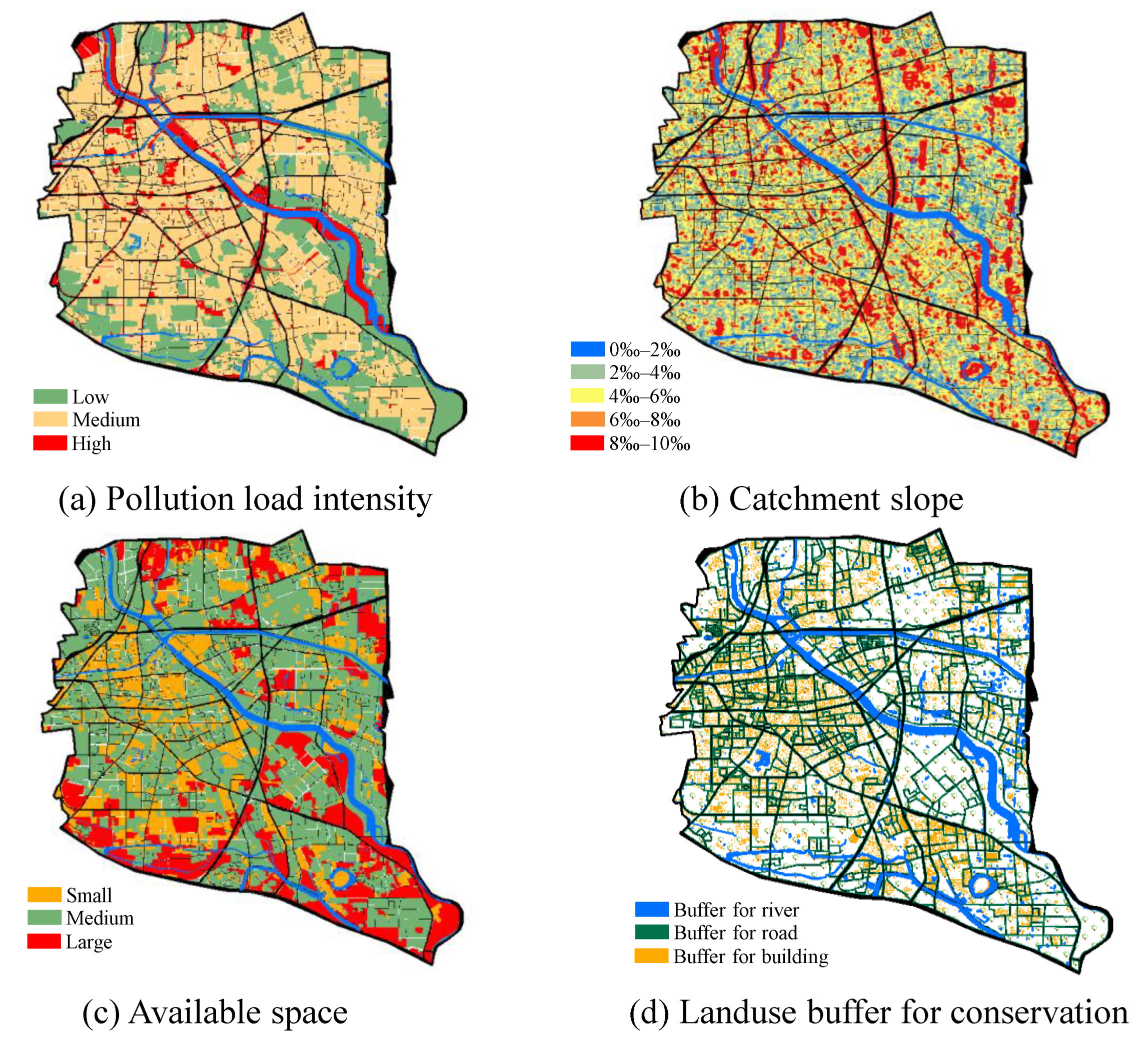
The concentration of suspended solid pollutants in runoff was used as a proxy for the level of site contamination. The land use distribution and runoff coefficients were considered by calculating the intensity of the pollutant load. Pollution load intensity in different blocks was compared. As seen in Figure 3a, the cumulative runoff pollution of each block in Beijing’s urban sub-center was statistically represented as low-medium-high. The study area is relatively flat, with an average slope of less than 10%. Blocks were categorized, as illustrated in Figure 3b, according to the slope indexes. The GI scale is constrained by available floor area, and the space use efficiency of GI facilities is an essential factor for heavily impervious underlying terrains. Owing to the structural and functional variances, it is vital to assure GI performance within the space of local sites. As seen in Figure 3c, blocks are categorized into three categories based on the area for GI construction and the site appropriateness evaluation criteria. Source-oriented GI is well-suited to small spaces. Transportation process regulation facilities provide mesoscale runoff control and are well suited for locations with medium available space. Systematic detention and regulation facilities provide centralized runoff regulation and are well suited to sites with large available space. The constructible area for GI development must include buffers from buildings, roads, and waters. As seen in Figure 3d, identifying suitable places for GI construction considers both site appropriateness criteria and the buffer distribution of the underlying surface.
Figure 3.
The distribution of site suitability indexes for GI.
3.2. Weights for the GI Multifunctional Indexes of Beijing’s Urban Sub-Center
The weights reflect the decision-making preferences of the construction managers, technical experts, and residents for the GI multifunctional indexes. The examination was conducted by stakeholders from four fields, including architect experts, environmental and ecological experts, local government administrators, and residents of Beijing’s sub-center. Table 5 summarizes the weights derived from the opinions of the four stakeholder groups. Stakeholders typically regarded the relevance of GI in the following order: runoff control function > cost input > societal benefit. According to all four stakeholder groups, runoff control is a dominant function for GIs. Environmental experts and urban planners make similar judgments on the critical nature of GI’s numerous functions. Among the four expert groups, architects are the only group that believes the social benefits of GI outweigh the expense. Residents choose GI for its social benefits. Because stakeholders assessed the indexes and sub-indexes in the evaluation method equally, only the average aggregate weighted results are provided in Table 5.
Table 5.
Weights for the GI multifunctional indexes.
GI’s runoff control effects are weighted similarly and are highly recognized by stakeholders. But the weight of runoff reuse is not as high as runoff quality and quantity control efficiency. The equipment investment and maintenance costs have relative weights in terms of GI cost. Landscape and space vitality plays a similar role in the social advantages of GI. GIs are given equal importance in landscape aesthetics and spatial vitality indicators. The weight values in Table 5 demonstrate that trade-offs between runoff control, cost input, and social benefit are required for GI layout.
3.3. Comprehensive Effectiveness Score Ranking for GI Decision-Making
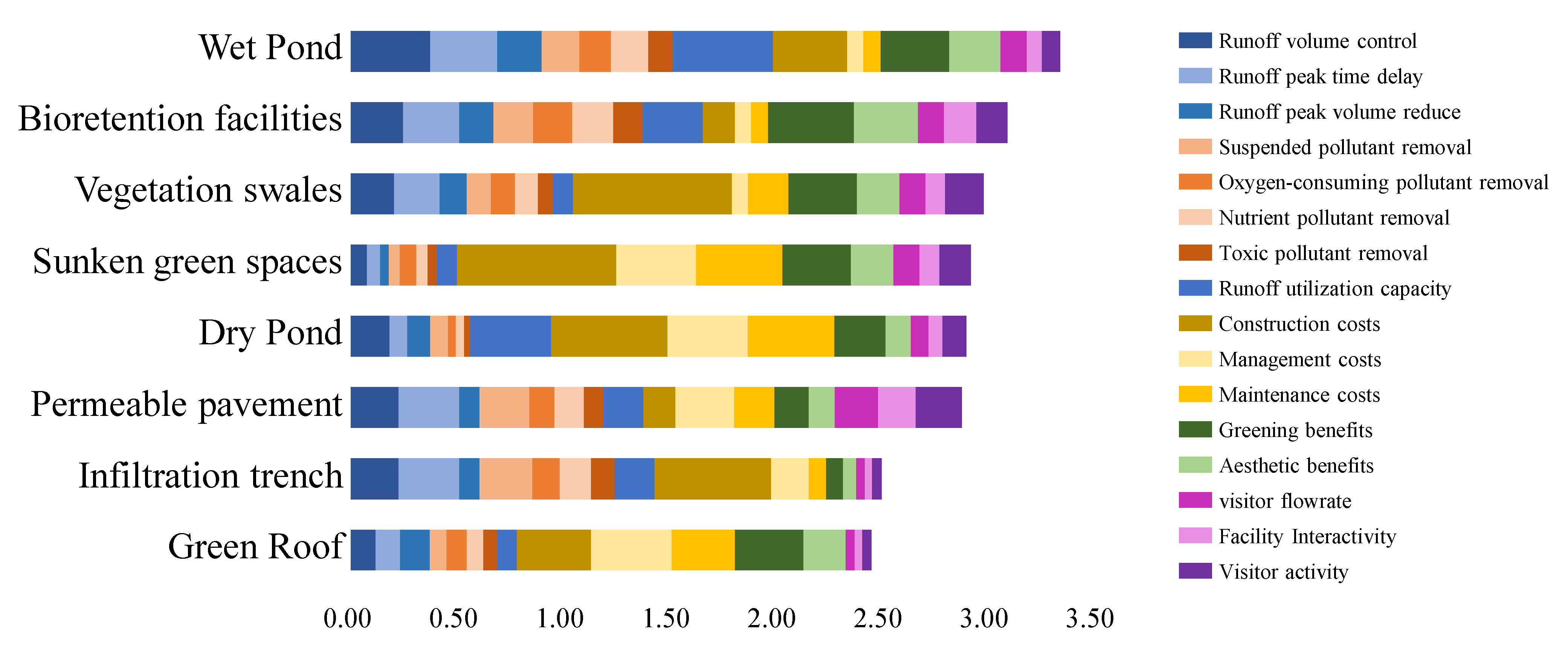
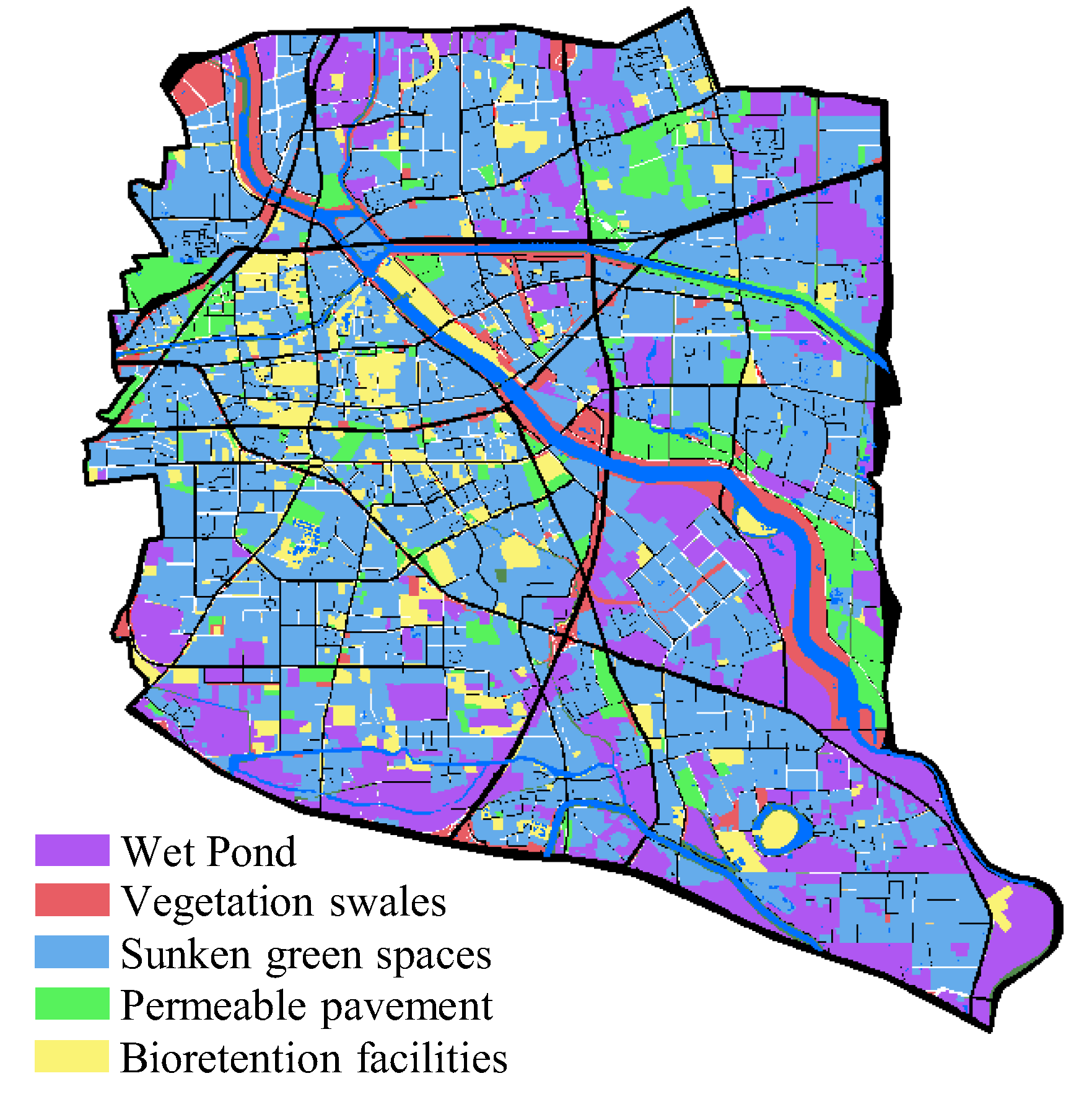
Figure 4 illustrates the combined effectiveness score ranking for GI, which considers diverse stakeholder perspectives and the inherent multifunctional benefits of GI. The study’s findings indicated that WP was the primary GI facility in the study area, followed by BF and VS. The highest-scoring GI is a systemic detention and regulation facility constrained by site space. The necessary hydraulic retention period can ensure a high runoff quantity and quality control and a considerable rainwater resource utilization capacity. Since WPs are highly self-healing during regular operation, management and maintenance need can be moderately eased, improving cost-effectiveness. Because WPs are primarily located in suburban regions with minimal population activity, they perform poorly in visitor flow and engagement with residents, resulting in a low social benefit score. The second-ranked BF is a source-oriented facility that is highly successful in regulating the quantity and quality of runoff. Owing to the expensive initial investment in equipment and ongoing management costs, its cost-effectiveness is compromised. In the core urban area, BF is chosen due to the high volume of visitors and the consequent opportunity to interact effectively with neighboring residents, resulting in more excellent social benefits. At a transport process control facility VS is the third-rated GI. VS requires less initial capital expenditure and minor maintenance and performs well in cost-effectiveness.
Figure 4.
Ranking for weighted multi-functional effectiveness combined score.
The region’s suitable GI facilities were selected based on the pollution load intensity, slope, available area, and reserved area. GIs with the highest scores in the multifunctional evaluation system are regarded as the most suited GI facilities in the study area, as shown in Figure 5. WP is preferable in places with a large area in the suburbs, where runoff control pressure arises from centered upstream. The most significant hurdle for WP is the space. However, affordable land property in the suburbs provides chances for WP and ecosystems. End-of-system wetland regulation of runoff quantity and quality has also been extensively shown in previous research [32,33]. According to the site appropriateness evaluation matrix, BF is the most recommended in blocks with little available space and significant pollutant loads. BF provides exceptional runoff quality control but is costly [7]. Despite eliminating budgetary constraints, as illustrated in Figure 5, some areas strongly need runoff quality reduction. In densely built-up places, VS is favored. Length impacts the performance of VS. Owing to its form and purpose, VS is utilized widely [4,34,35], as indicated in this study and previous research, along pathways, riverfronts, and major roads. Many GI systems in urban areas use SGS [36,37] because they store runoff economically and work with the landscape. SGS can control runoff, save money, and boost social benefits. SGS became the widest preferred mode of runoff control, as proved in this study.
Figure 5.
Regional most preferred GI distribution.
3.4. Discussion
This research presents a decision-making framework for the spatial layout of GI that considers aspects such as site suitability, multifunctional effectiveness, and weight assignment based on the desires of stakeholders. Promoting the technique requires highlighting three aspects. First, select and evaluate GI sites. GIs were traditionally allocated based only on managers’ opinions [2,21], ignoring the diverse stakeholders who directly profit from them. In GI layout planning, opportunistic site selection is insufficient without systematic analysis, robust data, and in-depth investigation [38]. This study considers the spatial heterogeneity offered by natural conditions, pollutant concentration characteristics, and constructible area of the region. These features are analyzed as prerequisites for an appropriate GI layout, ensuring that GI effectiveness can be maximized. Second, local monitoring data and parameters are integrated. This study’s GI layout decision-making frameworks could be replicated in other cities. The sophisticated site localization and GI efficacy evaluation system involves various indicators. Generalizing optimization insights depends mainly on geography, requiring localized experiments and data processing. It is also possible to streamline the evaluation system’s indicators by retaining only those essential indicators. During the systematic examination, consideration must be given to the synergistic application of data from numerous sources. Third, stakeholders are involved in decision-making. Residents, architects, and the government are GI stakeholders. Architects and residents are subject to government-imposed constraints [39]. Urban amenity as a resident’s objective has been disregarded. This study demonstrates in a novel manner the preferences of residents and industry academics for GI multifunctional effectiveness, ensuring that implementation benefits satisfy essential stakeholders.
4. Conclusions
An assessment index approach was developed to make it easier to identify a GI layout plan that meets the site’s characteristics. First, the usefulness of GI for a particular site was determined by the pollution load intensity, slope, available area, and constructible area. Then, the multifunctional benefits of a typical GI were quantified in terms of runoff control function, cost investment, and social benefits. The case study was conducted in the sub-center of Beijing. To determine the index weights for decision-making, we examined the GI multifunctional preferences of local stakeholders, including administrators, experts, and residents. BF is the most preferred in densely built-up areas with limited available space and significant pollutant loads. In the most urbanized region, VS is favored. WP is preferable in places with a large area in the suburbs, where runoff control pressure arises upstream. The optimal layout outcomes are consistent with the region’s natural resources and stakeholder interests. The GI is designed with a specific layout to maximize multifunctional benefits.
Supplementary Materials
The following supporting information can be downloaded at: https://www.mdpi.com/article/10.3390/w14111765/s1, Table S1: Control effectiveness of GI; Table S2: Runoff control mechanisms and effectiveness for common structural GIs; Table S3: Capital, operational, and maintenance cost of structural GIs.
Author Contributions
Z.L. Conceptualization, methodology, software, writing—original draft preparation; Y.Y. validation, writing—review and editing; J.H. writing—review and editing; H.J. supervision, project administration, funding acquisition. All authors have read and agreed to the published version of the manuscript.
Funding
This work was supported by the National Nature Science Foundation of China (Grant No. 41890823, 52070112, 7181101209).
Conflicts of Interest
The authors declare no conflict of interest.
References
- Choi, C.; Berry, P.; Smith, A. The climate benefits, co-benefits, and trade-offs of green infrastructure: A systematic literature review. J. Environ. Manag. 2021, 291, 112583. [Google Scholar] [CrossRef]
- Yin, D.; Chen, Y.; Jia, H.; Wang, Q.; Chen, Z.; Xu, C.; Li, Q.; Wang, W.; Yang, Y.; Fu, G.; et al. Sponge city practice in China: A review of construction, assessment, operational and maintenance. J. Clean. Prod. 2021, 280, 124963. [Google Scholar] [CrossRef]
- Gong, Y.; Zhang, X.; Li, J.; Fang, X.; Yin, D.; Xie, P.; Nie, L. Factors affecting the ability of extensive green roofs to reduce nutrient pollutants in rainfall runoff. Sci. Total Environ. 2020, 732, 139248. [Google Scholar] [CrossRef]
- Li, H.; Li, K.; Zhang, X. Performance Evaluation of Grassed Swales for Stormwater Pollution Control. Procedia Eng. 2016, 154, 898–910. [Google Scholar] [CrossRef] [Green Version]
- Liu, J.; Yan, H.; Liao, Z.; Zhang, K.; Schmidt, A.R.; Tao, T. Laboratory analysis on the surface runoff pollution reduction performance of permeable pavements. Sci. Total Environ. 2019, 691, 1–8. [Google Scholar] [CrossRef]
- Martin, D.M.; Piscopo, A.N.; Chintala, M.M.; Gleason, T.R.; Berry, W. Developing qualitative ecosystem service relationships with the Driver-Pressure-State-Impact-Response framework: A case study on Cape Cod, Massachusetts. Ecol. Indic. 2018, 84, 404–415. [Google Scholar] [CrossRef]
- Wang, M.; Zhang, D.; Adhityan, A.; Ng, W.J.; Dong, J.; Tan, S.K. Assessing cost-effectiveness of bioretention on stormwater in response to climate change and urbanization for future scenarios. J. Hydrol. 2016, 543, 423–432. [Google Scholar] [CrossRef]
- Zhang, X.; Chen, L.; Zhang, M.; Shen, Z. Prioritizing Sponge City Sites in Rapidly Urbanizing Watersheds Using Multi-Criteria Decision Model. Environ. Sci. Pollut. Res. 2021, 28, 63377–63390. [Google Scholar] [CrossRef]
- Zischg, J.; Zeisl, P.; Winkler, D.; Rauch, W.; Sitzenfrei, R. On the sensitivity of geospatial low impact development locations to the centralized sewer network. Water Sci. Technol. 2018, 77, 1851–1860. [Google Scholar] [CrossRef]
- Liu, Z.; Xu, C.; Xu, T.; Jia, H.; Zhang, X.; Chen, Z.; Yin, D. Integrating socioecological indexes in multiobjective intelligent optimization of green-grey coupled infrastructures. Resour. Conserv. Recycl. 2021, 174, 105801. [Google Scholar] [CrossRef]
- Raei, E.; Reza Alizadeh, M.; Reza Nikoo, M.; Adamowski, J. Multi-objective decision-making for green infrastructure planning (LID-BMPs) in urban storm water management under uncertainty. J. Hydrol. 2019, 579, 124091. [Google Scholar] [CrossRef]
- Wang, J.; Liu, J.; Mei, C.; Wang, H.; Lu, J. A multi-objective optimization model for synergistic effect analysis of integrated green-gray-blue drainage system in urban inundation control. J. Hydrol. 2022, 609, 127725. [Google Scholar] [CrossRef]
- Martin-Mikle, C.J.; de Beurs, K.M.; Julian, J.P.; Mayer, P.M. Identifying priority sites for low impact development (LID) in a mixed-use watershed. Landsc. Urban Plan. 2015, 140, 29–41. [Google Scholar] [CrossRef] [Green Version]
- Patault, E.; Ledun, J.; Landemaine, V.; Soulignac, A.; Richet, J.-B.; Fournier, M.; Ouvry, J.-F.; Cerdan, O.; Laignel, B. Analysis of off-site economic costs induced by runoff and soil erosion: Example of two areas in the northwestern European loess belt for the last two decades (Normandy, France). Land Use Policy 2021, 108, 105541. [Google Scholar] [CrossRef]
- Zhang, N.; Luo, Y.-J.; Chen, X.-Y.; Li, Q.; Jing, Y.-C.; Wang, X.; Feng, C.-H. Understanding the effects of composition and configuration of land covers on surface runoff in a highly urbanized area. Ecol. Eng. 2018, 125, 11–25. [Google Scholar] [CrossRef]
- Yao, L.; Wu, Z.; Wang, Y.; Sun, S.; Wei, W.; Xu, Y. Does the spatial location of green roofs affects runoff mitigation in small urbanized catchments? J. Environ. Manag. 2020, 268, 110707. [Google Scholar] [CrossRef]
- Eckart, K.; McPhee, Z.; Bolisetti, T. Performance and implementation of low impact development—A review. Sci. Total Environ. 2017, 607–608, 413–432. [Google Scholar] [CrossRef]
- Wang, X.; Tian, Y.; Zhao, X. The influence of dual-substrate-layer extensive green roofs on rainwater runoff quantity and quality. Sci. Total Environ. 2017, 592, 465–476. [Google Scholar] [CrossRef]
- Yang, W.; Wang, Z.; Hua, P.; Zhang, J.; Krebs, P. Impact of green infrastructure on the mitigation of road-deposited sediment induced stormwater pollution. Sci. Total Environ. 2021, 770, 145294. [Google Scholar] [CrossRef]
- Xu, C.; Jia, M.; Xu, M.; Long, Y.; Jia, H. Progress on environmental and economic evaluation of low-impact development type of best management practices through a life cycle perspective. J. Clean. Prod. 2019, 213, 1103–1114. [Google Scholar] [CrossRef]
- Jia, H.; Yao, H.; Tang, Y.; Yu, S.L.; Zhen, J.X.; Lu, Y. Development of a multi-criteria index ranking system for urban runoff best management practices (BMPs) selection. Environ. Monit. Assess. 2013, 185, 7915–7933. [Google Scholar] [CrossRef] [PubMed]
- Tang, Y. SUSTAIN-Supported BMP Planning Study for Optimal Management of Urban Rainfall Runoff. Master’s Thesis, Tsinghua University, Beijing, China, 2010. [Google Scholar]
- Gwak, J.H.; Lee, B.K.; Lee, W.K.; Sohn, S.Y. Optimal location selection for the installation of urban green roofs considering honeybee habitats along with socio-economic and environmental effects. J. Environ. Manag. 2017, 189, 125–133. [Google Scholar] [CrossRef] [PubMed]
- Jia, H.; Wang, Z.; Zhen, X.; Clar, M.; Yu, S.L. China’s sponge city construction: A discussion on technical approaches. Front. Environ. Sci. Eng. 2017, 11, 18. [Google Scholar] [CrossRef]
- Xu, C.; Hong, J.; Jia, H.; Liang, S.; Xu, T. Life cycle environmental and economic assessment of a LID-BMP treatment train system: A case study in China. J. Clean. Prod. 2017, 149, 227–237. [Google Scholar] [CrossRef]
- Xu, C.; Tang, T.; Jia, H.; Xu, M.; Xu, T.; Liu, Z.; Long, Y.; Zhang, R. Benefits of coupled green and grey infrastructure systems: Evidence based on analytic hierarchy process and life cycle costing. Resour. Conserv. Recycl. 2019, 151, 104478. [Google Scholar] [CrossRef]
- Ji, H.; Peng, D.; Fan, C.; Zhao, K.; Gu, Y.; Liang, Y. Assessing effects of non-point source pollution emission control schemes on Beijing’s sub-center with a water environment model. Urban Clim. 2022, 43, 101148. [Google Scholar] [CrossRef]
- Shajib, M.T.I.; Hansen, H.C.B.; Liang, T.; Holm, P.E. Rare earth elements in surface specific urban runoff in Northern Beijing. Sci. Total Environ. 2020, 717, 136969. [Google Scholar] [CrossRef]
- Muthukrishnan, S.; Field, R. The Use of Best Management Practices (BMPs) in Urban Watersheds; EPA/600/R-04; DEStech Publications, Inc.: Lancaster, PA, USA, 2004. [Google Scholar]
- Pradhan, S.; Al-Ghamdi, S.G.; Mackey, H.R. Greywater recycling in buildings using living walls and green roofs: A review of the applicability and challenges. Sci. Total Environ. 2019, 652, 330–344. [Google Scholar] [CrossRef]
- Hou, J.; Chen, L.; Zhang, E.; Jia, H.; Long, Y. Quantifying the usage of small public spaces using deep convolutional neural network. PLoS ONE 2020, 15, e0239390. [Google Scholar] [CrossRef]
- Boucher-Carrier, O.; Brisson, J.; Abas, K.; Duy, S.V.; Sauvé, S.; Kõiv-Vainik, M. Effects of macrophyte species and biochar on the performance of treatment wetlands for the removal of glyphosate from agricultural runoff. Sci. Total Environ. 2022, 838, 156061. [Google Scholar] [CrossRef]
- Kill, K.; Grinberga, L.; Koskiaho, J.; Mander, Ü.; Wahlroos, O.; Lauva, D.; Pärn, J.; Kasak, K. Phosphorus removal efficiency by in-stream constructed wetlands treating agricultural runoff: Influence of vegetation and design. Ecol. Eng. 2022, 180, 106664. [Google Scholar] [CrossRef]
- Huang, C.-L.; Hsu, N.-S.; Liu, H.-J.; Huang, Y.-H. Optimization of low impact development layout designs for megacity flood mitigation. J. Hydrol. 2018, 564, 542–558. [Google Scholar] [CrossRef]
- Tang, J.; Wang, W.; Feng, J.; Yang, L.; Ruan, T.; Xu, Y. Urban green infrastructure features influence the type and chemical composition of soil dissolved organic matter. Sci. Total Environ. 2021, 764, 144240. [Google Scholar] [CrossRef] [PubMed]
- Du, S.; Wang, C.; Shen, J.; Wen, J.; Gao, J.; Wu, J.; Lin, W.; Xu, H. Mapping the capacity of concave green land in mitigating urban pluvial floods and its beneficiaries. Sustain. Cities Soc. 2019, 44, 774–782. [Google Scholar] [CrossRef]
- Liu, W.; Chen, W.; Peng, C. Influences of setting sizes and combination of green infrastructures on community’s stormwater runoff reduction. Ecol. Model. 2015, 318, 236–244. [Google Scholar] [CrossRef]
- Starkl, M.; Brunner, N.; López, E.; Martínez-Ruiz, J.L. A planning-oriented sustainability assessment framework for peri-urban water management in developing countries. Water Res. 2013, 47, 7175–7183. [Google Scholar] [CrossRef]
- Chen, Y.; Chen, H. The Collective Strategies of Key Stakeholders in Sponge City Construction: A Tripartite Game Analysis of Governments, Developers, and Consumers. Water 2020, 12, 1087. [Google Scholar] [CrossRef] [Green Version]
Publisher’s Note: MDPI stays neutral with regard to jurisdictional claims in published maps and institutional affiliations. |
© 2022 by the authors. Licensee MDPI, Basel, Switzerland. This article is an open access article distributed under the terms and conditions of the Creative Commons Attribution (CC BY) license (https://creativecommons.org/licenses/by/4.0/).