


Abstract
This review investigates and analyzes the state of the art on scientific evidence related to educational interventions to improve air quality indoors and outdoors through a mapping review. The review followed proposed guidelines for mapping reviews in environmental sciences and the steps described in the Template for a Mapping Study Protocol. The search was conducted in PubMed, Web of Science, Embase, Cinahl, and Google Scholar with no language restrictions, and was completed in January 2025. Three filters were applied: search, selection with inclusion and exclusion criteria (PECOS strategy), and data extraction. Two independent reviewers assessed article eligibility, and disagreements were resolved by a third researcher. Twenty-four studies that met the eligibility criteria were included. Five research questions were answered. Studies published between 1977 and 2024 were included, totaling 7289 participants aged 12 to 85. The geographic distribution was concentrated in China (five studies) and the United States (four studies), followed by South Korea, India, Australia, and other countries, with fewer publications. The methodological predominance was experimental studies; observational studies were also analyzed, although less frequently. The period with the greatest increase in the number of publications was between 2020 and 2024. The educational methods most commonly used in the studies were lectures and the delivery of information leaflets. Particulate matter with diameters of 2.5 μm and 10 μm (PM2.5 and PM10) were the most widely investigated pollutants in the studies. From our analyses, it was observed that the educational interventions to improve air quality, adopted in the selected studies, resulted in the acquisition of knowledge about the environmental effects and the importance of individual actions. The changes in behavior included the adoption of more sustainable practices and an improvement in air quality in the environment, with a significant reduction in pollutant emissions. We conclude that interventions through environmental education demonstrate great potential to improve air quality. Based on the mapped evidence, governments and global policymakers can use this information to develop new strategies or improve existing ones to reduce air pollution in affected environments and regions.
1. Introduction
Air pollution has emerged as the leading environmental threat to human health and well-being today [1]. As highlighted by the World Health Organization (WHO), virtually the entire global population (99%) is exposed to unhealthy breathing conditions, facing inhalation of high levels of fine particulate matter (PM), nitrogen dioxide (NO2), ozone (O3), sulfur dioxide (SO2), and carbon monoxide (CO) [2]. Long-term exposure to these pollutants is associated with the development and worsening of various conditions, especially cardiovascular and respiratory diseases [3,4,5].
Although the harmful effects of air pollution have been widely studied, awareness of the topic in the general population is often nonexistent or limited. Many individuals underestimate the risks associated with chronic exposure to air pollutants, resulting in underreporting of air quality-related symptoms and diseases [6]. In addition, the “invisibility” aspect of air pollution may discourage people from acknowledging its direct connection to health problems. This lack of visual perception makes air pollution a less tangible threat, and as a result, many individuals dismiss the associated health problems as imaginary or attribute the cause to alternative factors, such as climate change, poor housing conditions, and pollen, among others [6,7].
Scientific evidence indicates that environmental education programs operate across multiple dimensions: they promote information and awareness about the sources and risks of air pollution; they encourage changes in individual behavior, such as adopting home ventilation practices, reducing waste burning, replacing wood-burning stoves, and reducing vehicle idling time in school areas; they strengthen community empowerment to monitor air quality and advocate for public policies; and they foster the integration of educational practices into school settings, stimulating institutional transformations at the municipal and community levels [8,9]. Recent literature, comprising experimental studies, systematic reviews, and citizen science experiences, has documented the relevance of these strategies in enhancing social participation and expanding the effects of environmental policies aimed at improving air quality [8,9]. Other evidence demonstrated that an augmented reality (AR) based environmental education program on fine dust for elementary and middle school students, to examine the impact of the program on their awareness and attitude, resulted in an improvement in students’ overall awareness of fine dust, and that attitudes changed positively after the program [10].
When there is some awareness of the health risks related to air pollution, an association is generally made only with pollutants present in the streets, from automobiles and industries (outdoor pollution), and there is a mistaken belief that the limits of an indoor space offer protection. This indicates a demand in the area of environmental education, since most of the time individuals are exposed to indoor pollution, as they spend an average of about 90% of their time in their homes, their work, and at school [11,12].
Due to growing evidence that exposure to poor air quality is linked to excess morbidity and mortality, there has been continued interest in evaluating the effectiveness of measures to reduce indoor and outdoor air pollution and promote changes in human behavior to reduce these impacts [13]. To date, we are unaware of comprehensive reviews in the literature that compile the evidence as a way to bring together the different methods of educational activities for behavior change, in order to reduce exposure to polluted environments. We also did not find reviews that ask specific questions on the subject, as a way to elucidate the state of the art on what has been studied and what gaps remain, which may well be answered by a mapping review. Thus, our objective with the present study was to investigate and analyze the state-of-the-art scientific evidence related to educational interventions to improve indoor and outdoor air quality through a mapping review.
2. Methods
2.1. Guidelines
The mapping review was carried out to analyze the state of the art of scientific evidence related to educational interventions to improve indoor and outdoor air quality. The work was based on the recommendations for mapping reviews in environmental sciences [14]. Three filters to gather (search procedure), select (inclusion and exclusion criteria), and extract (data extraction) relevant information from the literature were applied in this mapping review [15]. The steps outlined in the Template for a Mapping Study Protocol [16] were followed (see Supplementary Material Table S1).
2.2. Search Strategy
A comprehensive search for publications was conducted, considering only studies from peer-reviewed journals in the electronic databases: PubMed (National Library of Medicine and National Institutes of Health), Web of Science (Main Collection—Thomson Reuters Scientific), Cinahl, Embase, and Google Scholar. The search was carried out using the descriptors summarized in Table 1. The final literature search was completed on 24 January 2025.
Table 1.
Search strategy adopted for the mapping review.
The Web of Science database was prioritized in the decisions on duplicate articles, and searches were performed in the Main Collection with the terms related to environmental education and air pollution for the topic item and the stipulated time every year. Table S2 in the Supplementary Materials presents the search strategy used in the PubMed database.
2.3. Eligibility Criteria
Studies that met all the following criteria were included in the review: (a) Study design: interventions or experiments, retrospective or prospective cohort studies, cross-sectional studies, and case–control studies; (b) Subjects: Populations in general; (c) Exhibitions: Environmental education on air quality in different environments; (d) Results: Environmental education on air quality with individuals exposed or not to air pollutants (particulate matter (PM), nitrogen dioxide (NO2), ozone (O3), carbon monoxide (CO), sulfur dioxide (SO2), black carbon (BC), ultrafine particles (UFP), nitrogen oxides (NOx) and biomass fuels) in various environments; and (e) Language: All possible languages were included. The eligibility criteria for this mapping review were based on the PECOS strategy: Population, Exposure, Comparison, Outcome, and Study Design [17] and are described in Table 2.
Table 2.
Criteria for inclusion and exclusion of studies selected for review.
2.4. Data Extraction and Analysis
The authors (AD and RS) performed the search independently and evaluated the eligibility of each article. The discrepancies were resolved by a third researcher (AA). The authors examined all titles and abstracts and reviewed the full texts of the articles that met the predetermined inclusion and exclusion criteria (Table 2).
For the analysis and discussion of the results, the following data were extracted: first author and year of publication; countries and cities where the studies were carried out; sample characteristics (sample size, mean age, and age group); exposure (pollutants); study designs; protocols of educational activities related to air quality in human behavior; changes that occurred in human behavior on air quality after the educational activity protocols; changes in air quality after the educational activity protocols. All results were extracted into Microsoft Excel spreadsheets, where the authors evaluated the extracted results in common agreement.
Based on Fernández-Sotos et al. [18], a key methodological aspect of a successful mapping review is the definition of research questions (RQs) to be answered. For this mapping review, we defined five RQs:
RQ 1. How many articles have been published on educational interventions for improvements related to air quality? What are the characteristics of the studies and populations investigated? What is the geographical distribution of the research performed?
RQ 2. What are the methods and protocols of the educational interventions? What are the contexts of the application of educational interventions to improve air quality?
RQ 3. Which studies monitored the air quality in the environments? Which air pollutants and environments were most commonly investigated?
RQ 4. What were the objectives of the educational activities about air quality? What were the themes investigated based on the objectives of the studies?
RQ 5. What are the main outcomes of educational interventions for improving air quality, changing behavior, and acquiring knowledge?
3. Results
Below, the five research questions are answered on the basis of the synthesis of the analyses.
RQ 1. How many articles have been published on educational interventions for improvements related to air quality? What are the characteristics of the studies and populations investigated? What is the geographical distribution of the research performed?
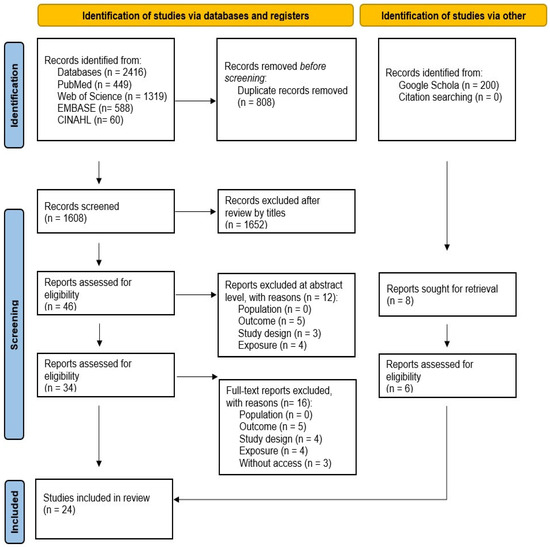
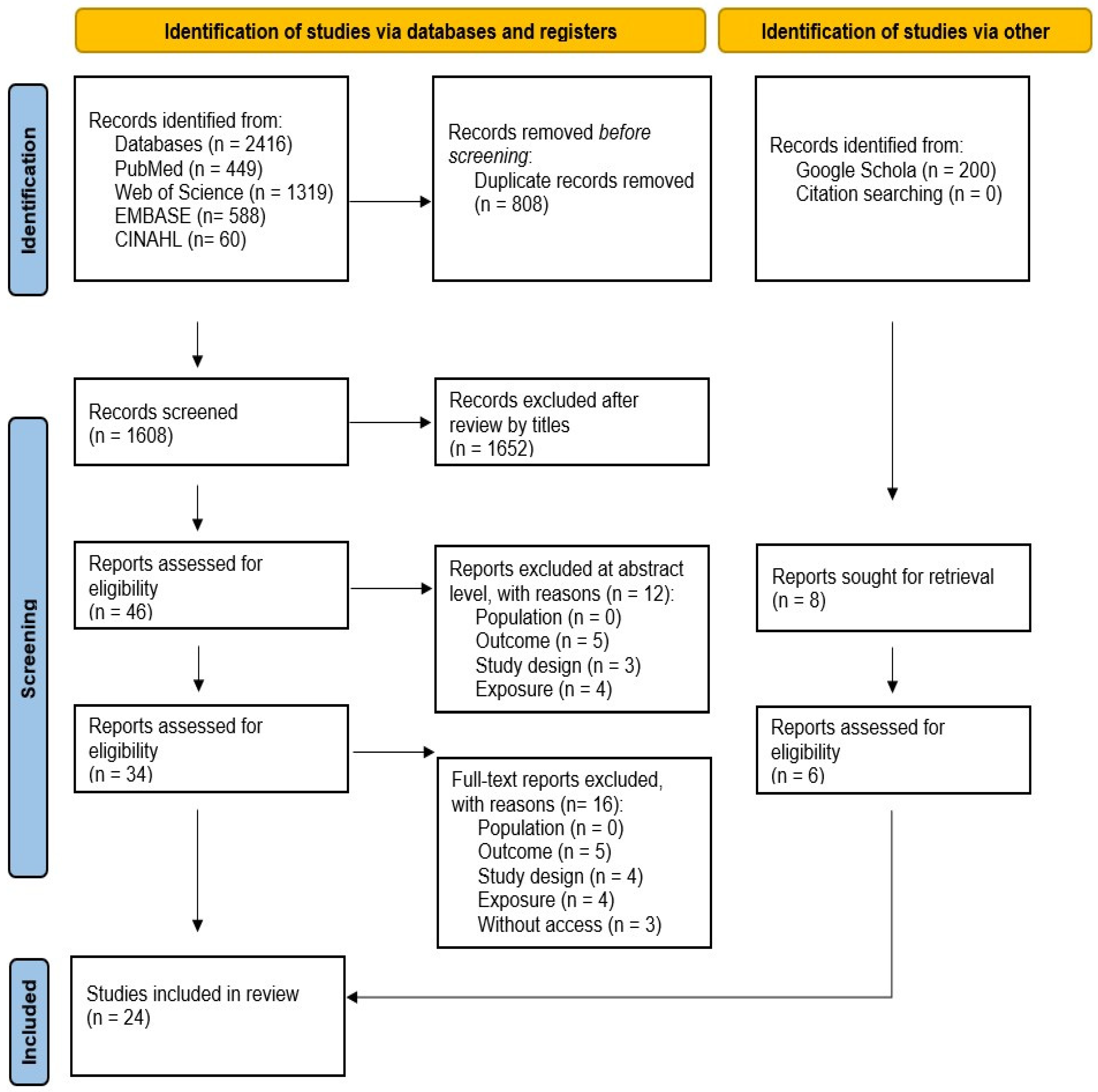
The literature search identified 2416 relevant articles. Of these, 34 full articles were evaluated for eligibility, and 24 studies were selected for synthesis (Figure 1).
Figure 1.
PRISMA flowchart illustrating the literature search and the selection process.
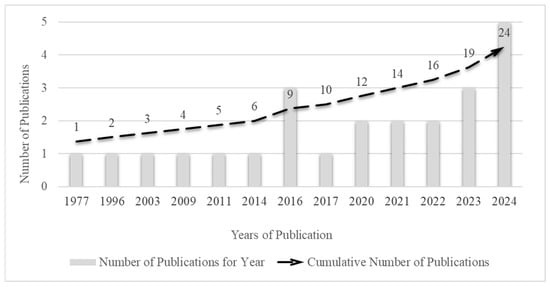
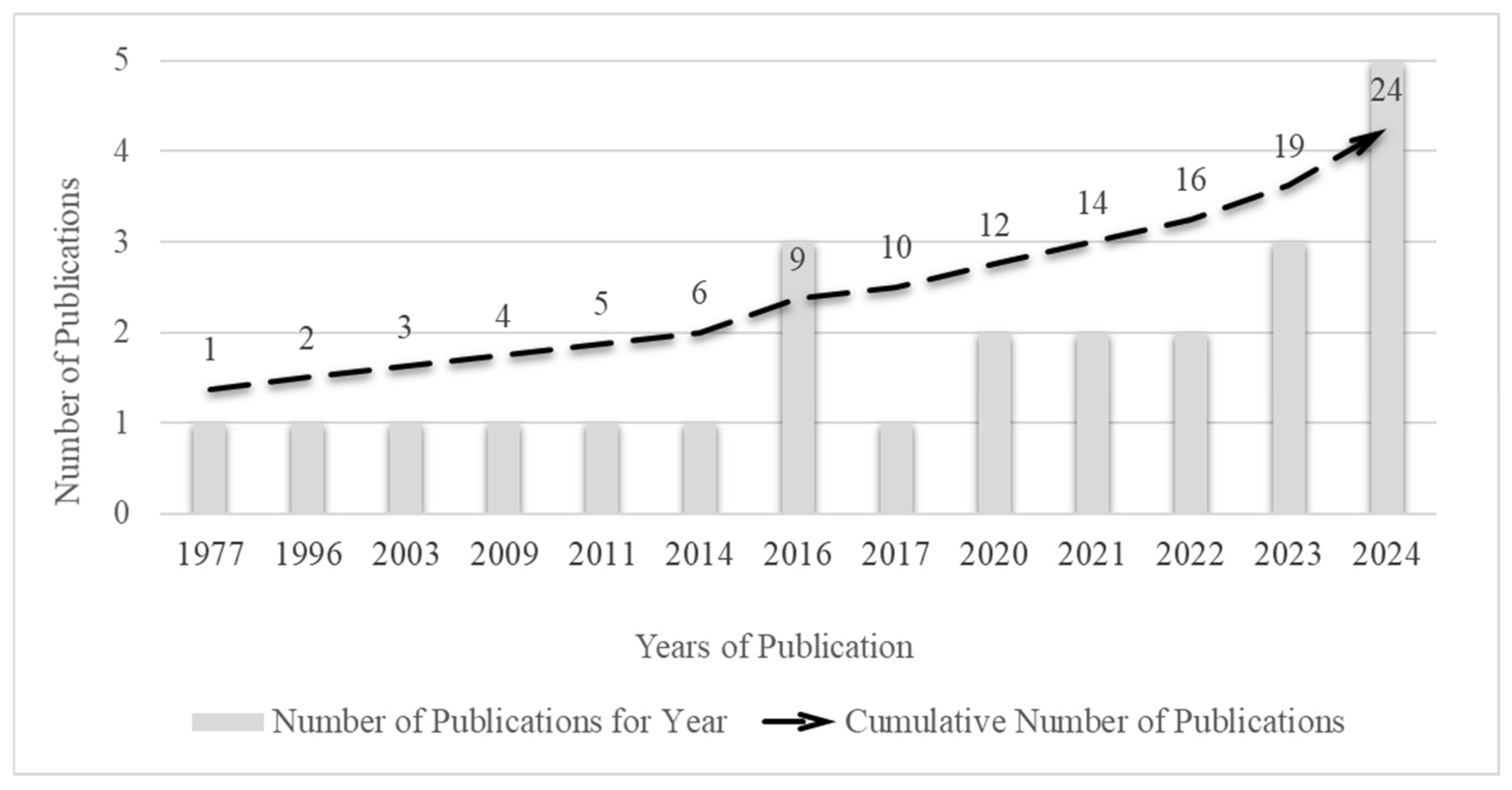
The oldest study found was published in 1977 by Force et al. [19]. Since then, 24 published studies have investigated the topic until 2024 (see Supplementary Materials Table S3 for a full list of selected studies). The year with the highest number of published studies was 2024, with five studies, followed by 2016 and 2023 with three studies, and 2020, 2021, and 2022 with two studies per year (Figure 2). The study with the longest duration was Suliman et al. [20], which lasted from 2016 to 2019.
Figure 2.
Number of articles published per year on environmental education related to air quality.
Twelve articles studied populations of students and university students, two studies investigated pre- or postnatal women and members of health teams, and the remaining studies investigated participants who lived close to highways and who lived in cities with high levels of pollution. Only two studies did not report the populations investigated.
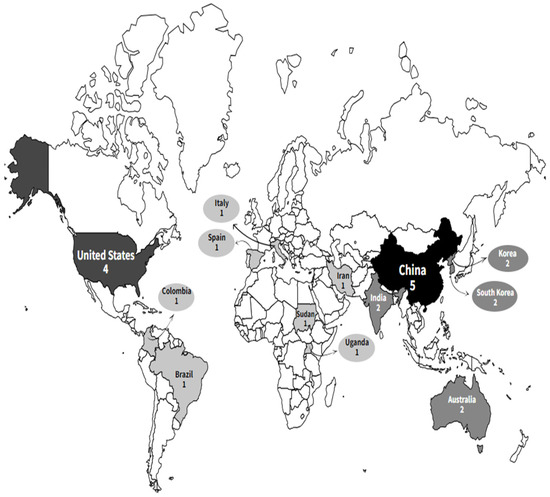
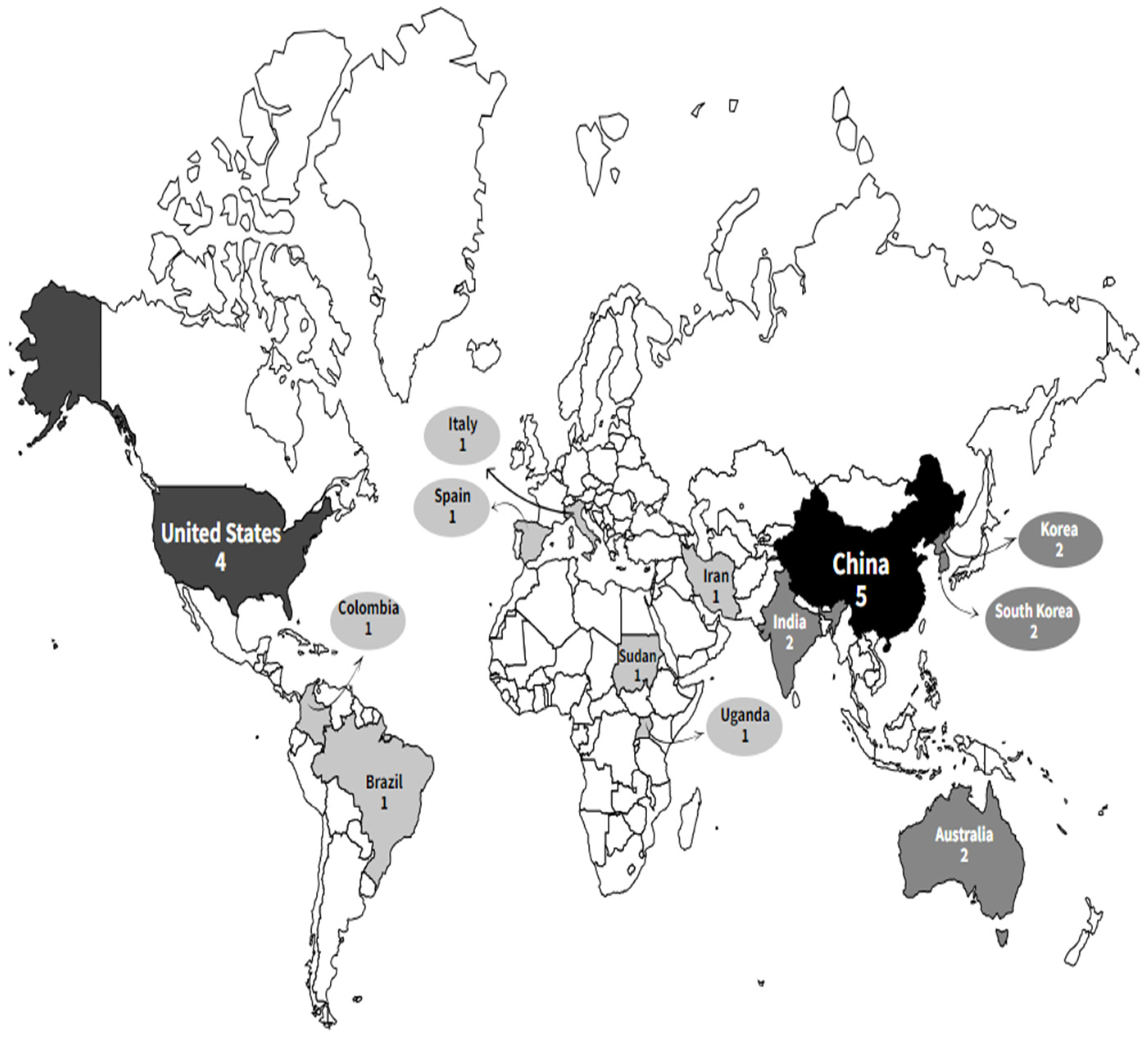
The countries where the topic was researched were China with 5 studies, followed by the USA with 4 studies, South Korea, Australia, Korea, and India with 2 studies each, and one study was performed in each of Brazil, Colombia, Spain, Italy, Iran, Sudan, and Uganda (Figure 3). Only one study did not report the country where the survey was conducted.
Figure 3.
Global geographic distribution of research on educational interventions to improve air quality.
Of the 24 studies included, 20 are experimental studies, two are observational, one is quasi-experimental, and one is descriptive.
The studies included a total of 7.289 participants; one study did not report the specific number of participants, but reported that 10 families participated in the research, and 3 studies did not report the number of participants. The study with the largest sample was Marín et al. [21] with 1676 participants. The majority of studies had a sample of men and women; 21 studies, two studies included only women, and one study did not report the sex of the participants. The age range of the participants varied, with the youngest sample, Alexandar & Poyyamoli [22], being 12 to 14 years of age. The study with the oldest sample was Hine et al. [23], which included individuals aged between 18 and 85 years. Ten studies did not report these data.
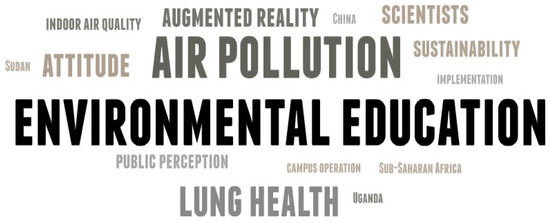
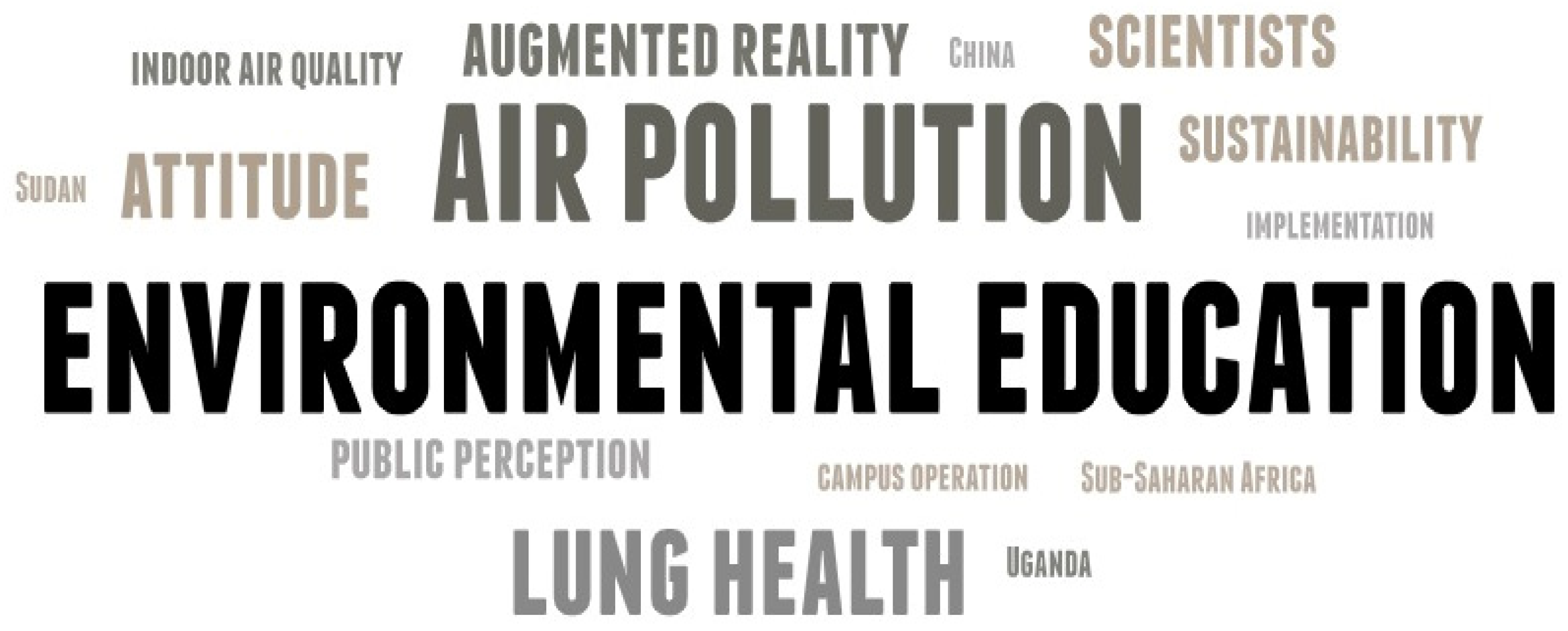
The studies presented a total of 123 keywords. In Figure 4, we present the keywords with the highest frequencies. The keywords were categorized by theme according to their frequency of use in the studies: environmental education (32), air pollution (30), behavior change (12), and health (13). The remaining keywords shown in the figure were used less frequently.
Figure 4.
Keywords used in published studies.
Below, the remaining research questions will be answered based on the synthesis of the analyses.
RQ 2. What are the methods and protocols of the educational interventions? What are the contexts of the application of educational interventions to improve air quality?
Fourteen studies carried out the educational interventions through lectures and classes, six studies delivered information leaflets, two studies used augmented reality for the educational interventions, and one study provided the link and QR Code to the environmental education. The complete description of the methods and protocols of the educational activities used in the studies can be seen in Table 3.
Table 3.
Methods and protocols of the studies that investigated educational activities related to educational interventions to improve air quality.
The study by Bhang & Huh [10] used an Augmented Reality application to address the process of fine dust entering the human body, its path, the danger to each organ, the time it takes for fine dust to be introduced and expelled from the body, and the principle of removing fine dust using artificial rain.
Huh et al. [31] carried out environmental education based on augmented reality, with the operation of the application and practice. Hine et al. [23] conducted a study using SmartBurn as a method of educational activity.
RQs 3. Which studies monitored the air quality in the environments? Which air pollutants and environments were most commonly investigated?
Of the 24 studies included, six monitored air quality. The study of Bej et al. [24] measured the concentration of PM2.5 using Plantower PMS5003 equipment. Kim et al. [26] monitored PM2.5, PM10, carbon dioxide, and volatile organic compounds with PiCOHOME equipment (PMM-130, Brilliant & Company). Caracci et al. [6] used Testo DiSCmini, DustTrak™ DRX (model 8534, TSI Inc.), and Testo—Ambient CO2 probes to collect the concentration of particle number concentration (PNC) and carbon dioxide indoors and outdoors. Suliman et al. [20] evaluated the concentration of carbon monoxide in closed environments using Masimo Rad-57 CO-oximeters, which measure the saturation of oxygen and carbon monoxide in the blood as an indirect indicator of exposure to CO. Mazutti et al. [32] measured the concentrations of carbon monoxide, sulfur dioxide, and nitrogen dioxide from outdoor environments using sensors from the company AlphaSense: CO-B4 (CO Sensor), SO2-B4 (SO2 Sensor), and NO2-B43F (NO2 Sensor). Griswold et al. [25] monitored air quality, but did not specify the pollutants or the equipment used, although the study refers to low-cost air sensors. The study of Hine et al. [23] did not use any equipment, but monitored the visible smoke emissions from the chimney of each household.
Regarding the most commonly investigated air pollutants, PM stood out (11 studies), followed by CO in four studies, CO2 in three studies, SO2 in two studies, NOX in three studies, and household air pollutants from biomass smoke generated by stoves, pollution produced by steel mills, and surgical fumes, in one study each. Five studies did not report the type of pollutant investigated.
Nine (37.5%) studies were conducted only outdoors, seven (29.17%) indoors, and only two (8.33%) studies were conducted both outdoors and indoors. Six (25%) studies did not mention the environment investigated.
RQs 4. What were the objectives of the educational activities about air quality? What were the themes investigated based on the objectives of the studies?
The objectives of the studies included in this Mapping Review are presented in Table 4. Based on the classification of the objectives by themes, we can observe that of the 24 objectives, the most commonly investigated are related to improving knowledge of air quality in nine studies, followed by addressing air quality in seven studies, and knowledge and coping with air quality in five studies. Other classifications of the objectives by themes can be seen in Table 4.
Table 4.
Scientific evidence related to educational interventions to improve air quality: objectives and themes of the selected studies.
RQs 5. What are the main results of educational interventions for improving air quality, changing behavior, and acquiring knowledge?
The study of Bej et al. [24] monitored air quality during a guided walk in various indoor and outdoor environments, exploring different sources of pollution. The results indicated a greater sense of understanding of air pollution among participants. Participants observed that the highest concentrations of PM2.5 indoors were in the kitchen of homes, while outdoors, the highest concentration was observed when participants stopped at a busy traffic intersection.
In the study of Caracci et al. [6], the quality-quantitative analysis revealed that a simple eco-feedback strategy based on awareness campaigns (i.e., reliable information campaign and experimental campaign) is able to increase the occupants’ IAQ awareness and reduce their exposure to different metrics of airborne particles, even during warm seasons (i.e., when higher exposures are expected in homes).
Suliman et al. [20] reported that after the start of an intensive program on reducing domestic air pollution, the CO levels of the women in the study group and the control group fell from 17.8% and 17.4% to normal levels of 2.9% and 3.1%, respectively. The women in the control group may have benefited from the education and modeled behavior of the people in the study group.
The results of Mazutti et al. [32] showed how the decrease in air quality is related to traffic emissions and how exposing students to a smart and learning environment could teach them about education for sustainability.
Hine et al. [23] revealed that education and SmartBurn were both associated with a significant reduction in wood smoke emissions during the post-intervention period. Follow-up analyses indicated that education reduced emissions by improving the operating practices of wood-burning heaters, but not by increasing perceptions of health risk.
More information on the main outcomes of educational interventions in behavior change and knowledge acquisition can be found in Table 5.
Table 5.
Scientific evidence from studies on the main outcomes of educational interventions: improving air quality, changing behavior, and acquiring knowledge.
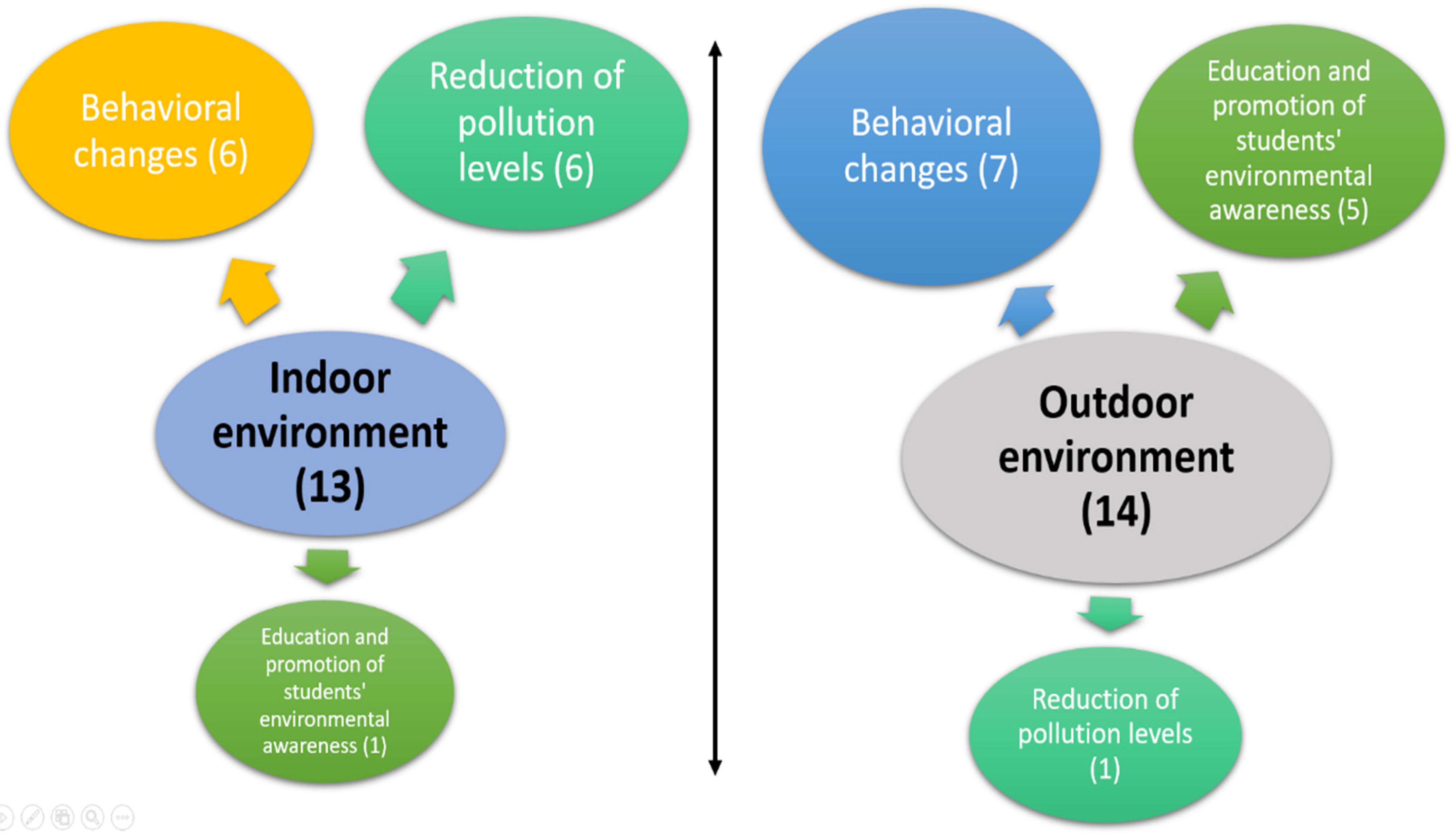
In Figure 5, we can see that the frequency of the outdoor and indoor environments investigated was similar, but it is possible to note that studies that focused on indoor environments more frequently demonstrated behavior change and reduced pollution levels. Similarly, studies that sought to study outdoor environments more frequently demonstrated behavior changes and the promotion of environmental education among students.
Figure 5.
Comparison of the environments studied and the frequency of the results achieved in the educational interventions.
4. Discussion
Our objective with this mapping review was to investigate and analyze the scientific evidence related to educational interventions to improve air quality. To our knowledge, this is the first review to bring together the published evidence on educational activities as a way to collect the state of the art on the subject. Twenty-four studies were selected for review, we then synthesized the results and from them, we answered the questions raised in the present mapping review. At this point, we will discuss the results divided by topics according to the issues addressed.
4.1. Educational Interventions to Improve Air Quality, Characteristics of the Studies and Populations Investigated, and Geographic Distribution of the Research Performed
Only four of the six studies that monitored air quality presented monitoring results after educational activities [6,20,23,26], all of which showed improvement in air quality, demonstrating the effectiveness of environmental education. However, in these four studies, the monitoring of pollutants came from culinary events, evidencing a gap in studies that address environmental education and air quality monitoring in other environments. The populations investigated in the study of Caracci et al. [6] and Hine et al. [23] are household residents. The households in the study of Caracci et al. [6] were located in urban, suburban, and rural areas. The populations investigated in the study Kim et al. [26] and Sulimam et al. [20] are women. However, the first author recruited young women of reproductive age, and the second author recruited women of lower socioeconomic status, with children between 1 and 5 years of age, and who cook with biomass fuels; both researchers recruited and collected the data with the women in their homes.
The choice to investigate women in the studies of Kim et al. [26] and Suliman et al. [20] can be explained by several relevant factors, since in many cultures, women are traditionally more responsible for domestic services and meal preparation [41]. Another important factor is that prolonged exposure to indoor air pollution can result in infertility, premature births, and low birth weight of babies, as well as fatal diseases in children [42,43]. The choice of women of low socioeconomic status may reflect the recognition that these women often have less access to resources to improve cooking and ventilation conditions, resulting in greater exposure to pollutants. This highlights an important issue of social justice and environmental health, considering that low-income populations often face poorer conditions and a higher pollution burden [44].
Another relevant aspect is that both studies recruited the participants in their homes, which suggests a practical approach to understanding real environmental exposure in everyday contexts. This allows for a more accurate assessment of living conditions and cooking practices that affect pollution exposure and the effectiveness of implemented educational and behavioral interventions.
The environmental education methods described in the four articles vary in approach and format, but have the common goal of informing and modifying behaviors related to pollution and air quality. In the study of Kim et al. [26], the experimental group received videos and messages of encouragement via smartphones, while the control group received a traditional pamphlet. Caracci et al. [6] used an illustrative leaflet and particulate matter data in the air to raise awareness among occupants about indoor pollution. Suliman et al. [20] implemented an intensive program, with discussions on household air pollution and weekly visits to ensure the adoption of best practices. In the article by Hine et al. [23], households received one of two different interventions: (1) a multimedia educational campaign highlighting the negative health effects of wood smoke exposure and advice on best practices for operating wood heaters, or (2) a “technological solution” that requires little change in attitude or behavior on the part of households burning wood.
Cooking activities are a significant source of submicron and UFPs in domestic environments. Therefore, adequate ventilation and opening of windows during cooking are strategies adopted in educational programs aimed at health prevention Zhang et al. [45]. In addition to domestic environments, air quality is monitored in a variety of other contexts [46], such as indoor environments for physical exercise and sports [3,47], classrooms [48,49], hospitals [50], offices [51], and health facilities [52]. However, environmental education programs must be adopted to encourage behavioral changes in different populations, areas, environments, and contexts that suffer from exposure to air pollutants.
A good example of poor air quality is in environments such as hospitals and health centers, which pose significant risks to patients, who are generally more vulnerable, as well as to health professionals themselves. Exposure to various indoor pollutants can aggravate existing health conditions and contribute to the spread of infectious diseases, so air quality is crucial for the safety of patients and staff [52,53,54].
Research on air quality and environmental education in places intended for physical activity is limited, but interest in the relationship between pollution and physical activity is growing due to the contrast between the benefits of exercise and the risks of polluted environments [3]. Studies show that the concentration of CO2 indoors is affected by physical activity, which reduces O2 and increases CO2. During moderate exercise, air inhalation can increase up to five times compared to rest [55,56]. With the increase in intense physical activity indoors, it is essential to ensure good ventilation and monitor the capacity of spaces to optimize benefits and reduce health risks.
Regarding the population investigated, most of the participants who received environmental education were students from schools and universities. Schools are environments that need to adopt air quality monitoring simultaneously with educational activities, since the inhalation of particles by children and adolescents is higher than in adults [57] due to higher levels of physical activity, higher basal metabolic rates, and higher ventilation rates [58].
Only one study, Dorevitch et al. [37], aimed to apply educational activities with populations at risk of asthma-related morbidity. The authors demonstrated that educational interventions can help reduce exposure to asthma triggers and improve asthma management. To date, no studies have specifically investigated populations with respiratory problems, such as those with chronic obstructive pulmonary disease (COPD) or cystic fibrosis, in the context of environmental education interventions. This is a promising field of research, since these populations are particularly vulnerable to the adverse effects of air pollution.
The countries that emit the most air pollution are China, the United States, and India [59]. These countries also presented the largest number of studies included in this review, reflecting the severity of air pollution, which affects not only the health of the population but also the economy of these countries. A notable example is recorded in the study by Hsu et al. [60], which documents how air pollution in China has had significant impacts on the transport sector, leading to the closure of Beijing’s Capital International Airport and the rerouting of hundreds of flights, highlighting the magnitude of the problem and its economic implications. Environmental education studies on air quality are extremely important in these countries, and it is necessary to raise awareness and change attitudes towards practices that contribute to air pollution [61].
According to the World Resources Institute [59], in 2022, the last year for which data are available, the ten countries that emitted the most CO2 were: China, the United States, India, Russia, Japan, Iran, Indonesia, Germany, Saudi Arabia, and South Korea. It can be observed that, among these ten countries responsible for the highest CO2 emissions in the world, 50% do not present research that contributes to the theme of this review.
CO2 emissions from human activities have reached all-time highs. Recent data indicate that in 2022, global CO2 emissions were 182 times higher than in 1850, during the Industrial Revolution [59].
By educating people about the causes and consequences of air pollution, it is possible to promote behavioral changes related to energy consumption, motor vehicle use, and agricultural and industrial practices, among other aspects that affect air quality [62]. Similar results were found in the systematic review by Ardoin et al. [63], who analyzed 105 studies and found that most research in environmental education generates indirect results, such as increased knowledge and intention to change, while few measure direct results, such as observed actions or environmental indicators. In addition, environmental education in countries where the population suffers the most due to air pollution could be a way to encourage the active participation of the community in identifying and solving air quality problems in the areas where they live. For example, the countries that have emitted the most pollutants in recent years: China, the United States, India, Russia, Japan, Iran, Indonesia, Germany, Saudi Arabia, and South Korea, as demonstrated above. This can include air quality monitoring, stricter public pollution control policies, and engagement in sustainable practices. Raising awareness of the importance of air quality can drive technological innovation in sectors that are the largest emitters of pollutants, such as transportation, energy, and industry. Increased awareness leads to the development and adoption of cleaner and more efficient technologies [61,64,65].
4.2. Methods and Protocols for Educational Interventions, Air Pollutants, and the Most Commonly Investigated Environments
The methods adopted in the majority of the studies were through expository and dialogued classes, lectures, and the delivery of information leaflets [6,10,19,20,21,22,23,26,27,28,29,30,31,33,35,36,37,38,39]. Studies that used augmented reality as a tool for educational intervention stand out. Recent studies highlight the importance of using innovative and effective methods to promote awareness of the seriousness of pollution and the urgency of concrete actions. A systematic review conducted by Hajj-Hassan et al. [66] emphasizes the use of digital tools to improve awareness of sustainability, showing that technologies such as virtual reality can increase concern about the sustainability of the planet.
The study by Bej et al. [24] stands out for introducing an innovative awareness tool, which consists of a guided walk to monitor air quality in different environments, both indoors and outdoors. This approach is in line with the literature on hands-on learning, which suggests that directly applying concepts in real-world contexts can improve understanding and retention of information compared to theoretical learning. Hands-on experience allows individuals to utilize concepts more effectively, reinforcing learning through practical application [67].
The method used by Kim et al. [26] evidences the effectiveness of educational activities by comparing the population in the study, divided into two samples: a control and an experimental group. Comparative analysis of indoor air quality measurements before and after the intervention revealed a significant reduction in concentrations of PM10, PM2.5, CO2, and total VOCs in the experimental group compared to the control group. In addition, the results confirmed a significant increase in environmental health literacy in the experimental group compared to the control group.
Regarding the most commonly investigated air pollutants, PM stood out, followed by CO and CO2, domestic air pollutants from biomass smoke generated by stoves, pollution produced by steel mills, and surgical smoke. These pollutants are consistently the subject of studies due to their adverse effects on human health and the environment [68,69].
It is worth noting that domestic pollutants from the burning of biomass in stoves are sources of UFPs, which are even more harmful to health than PM10 and PM2.5 particles [70]. While PM10 and PM2.5 particles are associated with respiratory and cardiovascular problems due to their ability to penetrate deep into the lungs, UFPs are so small that they can reach even more into lung tissues, even entering the bloodstream. This can result in systemic damage and additional adverse health effects, leading to genetic mutations and neurological problems [70,71,72].
Nine studies conducted their searches only in outdoor environments, highlighting ongoing concern for air quality in open spaces, such as urban areas, industrial areas, and regions close to significant pollution sources such as roads and industries. Research in these areas and environments is necessary to understand air quality variations in different regions and climatic conditions, which facilitates the identification of critical areas and the development of effective strategies to mitigate pollution [73]. Additionally, the emphasis on outdoor environments is driven by the need for regulation and public policymaking. Thus, governments and environmental organizations often use this information to guide decisions about regulations and pollution control strategies [60,73,74].
Indoor environments were investigated in seven of the studies included in this review, reflecting concerns about indoor air quality, as we spend 90% of our time in these environments [11]. Indoor air quality often reflects not only incoming outdoor pollution but also indoor sources of pollution, the main sources being indoor biomass burning for cooking and heating [75], as has already been noted in the studies included in this review. Thus, it is worth highlighting the importance of ventilation and air filtration strategies to improve occupational and residential health [76,77].
4.3. Knowledge Acquisition and Behavior Changes
In eleven studies, it was possible to observe the awareness of the air quality of the investigated populations after the environmental education interventions [19,21,24,25,26,32,33,36,37,38,39]. However, it can be considered that, in studies that did not evaluate the knowledge of the investigated population, knowledge was acquired indirectly, as positive changes were observed in both behavior and air quality.
Only the study by Marín et al. [21], which aimed to evaluate the knowledge of the students participating in the School Environmental Project, did not obtain positive results. The study showed that 87% of students perceived themselves as having little or no knowledge about air pollution, and only 5.3% were familiar with the Air Quality Index (AQI).
We highlight the importance of the literature in addressing this topic, given that the study conducted by Li et al. [33] demonstrates that the most reliable sources of information for research participants include academic journals, textbooks, television, radio, newspapers, lectures by experts, and brochures. However, television, radio, and newspapers should play an active role in raising awareness on the subject since they are the main means of information accessible to the population. Thus, these information sources would be a way to potentially improve knowledge about the population’s exposure to pollutants and foster more sustainable attitudes [63].
In the fifteen articles analyzed, it was possible to observe several changes in behavior related to environmental awareness and protection, as well as adaptation to pollution conditions. Overall, the implementation of environmental education programs had a significant positive impact, improving participants’ perceptions and behaviors regarding sustainability and air quality [6,10,20,21,22,23,27,28,29,30,31,32,34,35,40]. These results can be compared with the findings of Isenaj et al. [78], in a study conducted in public schools in Pristina, Kosovo, an educational intervention produced significant gains in knowledge and perception about air pollution, but changes in pro-environmental attitudes and behaviors were modest and not statistically significant between the experimental and control groups. In contrast, our study showed clear improvements not only in perceptions but also in participants’ behaviors, suggesting that more interactive and practical strategies, such as the use of digital technologies, guided walks, and direct pollutant monitoring, can enhance behavioral changes.
The students demonstrated a positive attitude toward paying taxes to combat air pollution and advocated for factories and transport companies to bear these costs. However, preventive practices, such as avoiding leaving the house or closing windows, were not widely adopted, especially among private school students [21]. Environmental education contributed to an increase in pollution awareness and encouraged conservation behaviors and public transportation use [34].
In addition, awareness of the relationship between traffic and air quality was amplified by smart learning environments [32], and actions such as tree planting were undertaken to improve local air quality [22]. While some practices, such as changing commuting times and wearing masks, still presented low adherence, continued efforts in education and adaptation demonstrated significant progress in environmental protection and public health [21].
It is important to highlight that environmental education is not a one-time event, but that it needs to be a continuous process of learning and action, since it helps people understand that air quality is a dynamic problem, requiring constant vigilance and participation to be solved effectively. As the study of Caracci et al. [6] pointed out, because the evaluation of the effectiveness of the eco-feedback strategy conducted was a short-term evaluation, behavioral changes need to be verified in the long term. However, according to the answers collected, the families investigated reported a greater propensity to maintain new habits in the long term (90%).
4.4. Changes in Air Quality
The four studies that monitored air quality revealed significant improvements after implementing educational activities, thus highlighting the effectiveness of environmental education. It is important to note, however, that three of the four studies carried out the monitoring of pollutants generated by cooking activities.
Kim et al. [26] sent videos and messages of encouragement to the experimental group three times through smartphones, every day from the second day to the fourth day of the experiment. On the fifth day, feedback was provided to the experimental group through an open chat room. The control group received a written pamphlet (traditional educational material) only on the first day. The results revealed that the concentrations of the pollutants PM10, PM2.5, CO2, and total VOCs of the group that received environmental health literacy were significantly decreased compared to those of the control group.
Caracci et al. [6] showed that, after an information campaign, the concentration of suspended particles (PNC), PM10, and CO2 during cooking events decreased significantly compared to the levels recorded before the campaign. Specifically, in one household, median concentrations of these pollutants were reduced by 50% for PNC, 35% for PM10, and 28% for CO2. These reductions were achieved by implementing only the simplest strategies recommended by the campaign, such as opening the windows and using the hood while cooking, without the need for air purifiers or mechanical ventilation systems.
In the experiment of Suliman et al. [20], women in the control and experimental groups, enrolled in 2016, had CO levels of 17.8% and 17.4%, respectively. One year later, CO levels varied among participants in the experimental group, with some showing decreases and others increases, while levels in the control group remained stable. An intensive home air pollution education program was then implemented for the women in the experimental group. In 2019, the final year of the study, the CO levels of women in the experimental and control groups reduced to normal values, 2.9% and 3.1%, respectively. It is possible that the women in the control group also benefited from the education about household air pollution and the observed behavior of the participants in the experimental group.
Hine et al. [23] experimented to compare the effectiveness of two strategies in reducing wood smoke emissions. The first strategy consisted of educating users of wood-burning heaters about the health risks of smoke pollution and providing practical guidance for the proper operation of heaters. This approach aimed to reduce emissions by offering a motivational incentive (health risk) and specific behavioral guidelines. The second strategy involved the implementation of SmartBurn, a simple, low-cost technology solution designed to directly reduce emissions without requiring major changes in user motivation or behavior. The results revealed that education and Smartburn significantly reduced wood smoke emissions, producing modest effects of similar magnitude. There was no significant interaction between education and SmartBurn, suggesting no significant performance advantage associated with combining the two interventions.
This use of technology applied to environmental education proves to be efficient, reflecting principles similar to those discussed by Zhu et al. [79] in their smart education framework, which emphasizes the integration of technological tools to create interactive, personalized learning environments capable of engaging participants practically.
Therefore, it is essential to conduct new experimental studies that integrate environmental education with air quality monitoring in various contexts. These surveys can demonstrate the effectiveness of environmental education in different scenarios as air quality varies. An example is the study carried out by Bej et al. [24], who proposed a guided walk to monitor air quality in different environments. During the walk, participants followed a specific route that included roads, food stalls, and traffic intersections, using a portable PM2.5 monitor. By touring different areas, participants were able to observe variations in air quality in real time and identify sources of pollution. This approach allows participants to recognize locations with higher levels of harmful emissions, helping them make more informed decisions about their exposure to polluted air.
Although the primary aim of this mapping review was to gather and describe the existing literature, it is important to reflect on the broader implications of these findings. The results indicate that educational interventions can not only improve knowledge and promote individual behavioral changes but also serve as strategic tools for educational policies that incorporate environmental health promotion from early education through higher education. Moreover, by revealing that socially vulnerable populations (such as low-income women or communities exposed to polluting fuels) are disproportionately affected, the studies analyzed highlight the need to integrate an environmental justice perspective into air pollution mitigation policies, ensuring equity in access to healthy environments. Finally, the diversity of contexts and methodologies observed suggests that future interventions should adopt a transdisciplinary approach, combining education, public health, technology, and environmental policy to enhance the effectiveness and sustainability of educational actions across different scales.
4.5. Limitations and Future Studies
Although 24 studies have been published since 1977, with a greater emphasis on publications in recent years, it is necessary to develop the production of scientific evidence related to educational interventions to improve air quality, because, despite the number of publications on the subject, there is a vast gap in the knowledge, in different environments, both indoors and outdoors.
Huge limitations were observed in the development of environmental education methods, especially considering the populations that suffer the most from the harmful effects of air quality, such as children, older adults, pregnant women, and people who are affected by COPD, cystic fibrosis, or other respiratory diseases. Studies that are not only observational in nature need to be carried out, in relation to the points raised, but that are also well-developed experimental studies, with methodological rigor.
The present mapping review design allows us to have a comprehensive view of the results found; however, it is limited in the specificity of populations, regions, and methods of interventions for environmental education. These need to be explored objectively in new systematic reviews, using quality assessment of the studies that enter the reviews, providing the possibility of verifying the power of the evidence.
4.6. Innovations, Study Strengths, and Practical Applications
After an extensive search in the literature and in international databases, we found that the present mapping review is the first to be developed in the literature on the present topic. In addition to this extremely relevant character, considering that air pollution is a global problem, and based on the evidence presented, little has been studied about it, and the evidence is limited. The current study is innovative by bringing these data to light based on the existing evidence, and thus demonstrating the need for investment in new studies to help solve global public health problems, as already mentioned, specifically caused by air pollutants.
We performed a deep, current, and unprecedented analysis of the main results of educational interventions in improving air quality, changing behavior, and acquiring knowledge and scientific evidence related to educational interventions to improve air quality.
When we consider that we are living in a Post-Pandemic scenario, there is a need for evidence Diotaiuti et al. [80], with the objective of preventing contamination by any pollutant or even a virus, we realize the real importance of further study of possible educational interventions to improve air quality. This is particularly important considering the knowledge of the negative impact that the COVID-19 pandemic has brought to several countries, and which still has repercussions. Thus, the present mapping review demonstrates several strengths and practical applications that can be replicated and even improved in new studies.
5. Conclusions
We conclude that the scientific evidence related to educational interventions to improve air quality identifies the need for expansion of these programs to different environments, both indoors and outdoors. We conclude with the main points of the findings:
- Based on the studies, it is possible to observe that the main sources of outdoor pollution are automobiles, and educational programs aim to reduce individuals’ exposure to pollution;
- On the other hand, the main sources of indoor pollutants are related to food cooking, highlighting the need for environmental programs focused on changing individuals’ behavior;
- On the other hand, with the results of the included 24 studies, we can see that the realization of interventions with environmental education can be promising for the improvement of air quality;
- However, the studies are heterogeneous and need to be explored in their contexts for future decision-making regarding the interventions to be chosen to improve air quality. These are ways to promote behavior change and knowledge acquisition to different populations, to raise awareness about the importance of studying and understanding the impacts of air pollutants.
Based on the evidence we mapped, government officials and leaders responsible for new forms of public policies at a global level can appropriate this new knowledge to be put into practice, or reformulate existing ones to change the reality of regions that are affected by high levels of air pollution.
Supplementary Materials
The following supporting information can be downloaded at: https://www.mdpi.com/article/10.3390/atmos16111229/s1, Table S1: Template for a Mapping Study Protocol; Table S2: Literature search strategy on PubMed; Table S3: Titles of included reviews.
Author Contributions
Data curation: R.T. and A.D.; Formal analysis: R.T. and A.D.; Investigation: R.T. and A.D.; Writing—Original Draft: R.T., A.D. and L.C.; Visualization: R.T., A.D., L.C., A.A.; Methodology: A.D. and A.A.; Writing—Review & Editing: L.C., L.S., A.A. and G.B.; Conceptualization: L.S., G.B. and A.A.; Validation: A.A.; Supervision: A.A. All authors have read and agreed to the published version of the manuscript.
Funding
This research did not receive any specific grant from funding agencies in the public, commercial, or not-for-profit sectors. This work has been supported by the following Brazilian research agencies: National Council for Scientific and Technological Development (CNPq), Coordination for the Improvement of Higher Education Personnel—CAPES Functional Scholarship at Doctoral level—NOTICE PPGCMH N 004/2024; Foundation for research and innovation support of the State of Santa Catarina—FAPESC, PPSUS 16/2020 e PAP 027/2020.
Informed Consent Statement
Not applicable.
Data Availability Statement
No new data were created or analyzed in this study.
Conflicts of Interest
The authors declare no conflicts of interest.
References
- Institute for Health Metrics and Evaluation. 2019 Global Burden of Disease Results Tool. 2020. Available online: http://GhdxHealthdataOrg/Gbd-Results-Tool (accessed on 25 September 2023).
- World Health Organization. Air Pollution 2024. Available online: https://www.who.int/health-topics/air-pollution#tab=tab_1 (accessed on 29 August 2024).
- Andrade, A.; Dominski, F.H. Indoor air quality of environments used for physical exercise and sports practice: Systematic review. J. Environ. Manag. 2018, 206, 577–586. [Google Scholar] [CrossRef] [Scilit]
- Dominski, F.H.; Lorenzetti Branco, J.H.; Buonanno, G.; Stabile, L.; Gameiro da Silva, M.; Andrade, A. Effects of air pollution on health: A mapping review of systematic reviews and meta-analyses. Environ. Res. 2021, 201, 111487. [Google Scholar] [CrossRef] [Scilit] [PubMed]
- Fuller, R.; Landrigan, P.J.; Balakrishnan, K.; Bathan, G.; Bose-O’Reilly, S.; Brauer, M.; Caravanos, J.; Chiles, T.; Cohen, A.; Corra, L.; et al. Pollution and health: A progress update. Lancet Planet. Health 2022, 6, e535–e547. [Google Scholar] [CrossRef] [Scilit] [PubMed]
- Caracci, E.; Canale, L.; Buonanno, G.; Stabile, L. Effectiveness of eco-feedback in improving the indoor air quality in residential buildings: Mitigation of the exposure to airborne particles. Build. Environ. 2022, 226, 109706. [Google Scholar] [CrossRef] [Scilit]
- Saksena, S. Public Perceptions of Urban Air Pollution Risks. Risk Hazards Crisis Public Policy 2011, 2, 1–19. [Google Scholar] [CrossRef] [Scilit]
- Ward, F.; Lowther-Payne, H.J.; Halliday, E.C.; Dooley, K.; Joseph, N.; Livesey, R.; Moran, P.; Kirby, S.; Cloke, J. Engaging communities in addressing air quality: A scoping review. Environ. Health 2022, 21, 89. [Google Scholar] [CrossRef] [Scilit]
- Raheel, H.; Sinharoy, S.; Diaz-Artiga, A.; Garg, S.S.; Pillarisetti, A.; Balakrishnan, K.; Chiang, M.; Lovvorn, A.; Kirby, M.; Ramakrishnan, U.; et al. Effects of a liquefied petroleum gas stove and fuel intervention on head circumference and length at birth: A multi-country household air pollution intervention network (HAPIN) trial. Environ. Int. 2025, 195, 109211. [Google Scholar] [CrossRef] [Scilit]
- Bhang, K.J.; Huh, J.R. Effectiveness of Fine Dust Environmental Education on Students’ Awareness and Attitudes in Korea and Australia Using AR Technology. Sustainability 2023, 15, 16039. [Google Scholar] [CrossRef] [Scilit]
- Figueiredo, A.; Cabral, R.; Pinheiro, J.; Venial, H.; Souza, M. FORMALDEÍDO GASOSO: A QUALIDADE DO AR EM BIBLIOTECAS E ESCOLAS. Enciclopédia Biosf. 2021, 18, 38. [Google Scholar] [CrossRef] [Scilit]
- Kelly, F.J.; Fussell, J.C. Improving indoor air quality, health and performance within environments where people live, travel, learn and work. Atmos. Environ. 2019, 200, 90–109. [Google Scholar] [CrossRef] [Scilit]
- D’Oliveira, A.; Dominski, F.H.; De Souza, L.C.; Branco, J.H.L.; Matte, D.L.; da Cruz, W.M.; Andrade, A. Impact of air pollution on the health of the older adults during physical activity and sedentary behavior: A systematic review. Environ. Res. 2023, 234, 116519. [Google Scholar] [CrossRef] [Scilit] [PubMed]
- James, K.L.; Randall, N.P.; Haddaway, N.R. A methodology for systematic mapping in environmental sciences. Environ. Evid. 2016, 5, 7. [Google Scholar] [CrossRef] [Scilit]
- McDaniel Peters, B.C.; Wood, W. Autism and Equine-Assisted Interventions: A Systematic Mapping Review. J. Autism Dev. Disord. 2017, 47, 3220–3242. [Google Scholar] [CrossRef] [Scilit] [PubMed]
- EBSE-RG Template for a Mapping Study Protocol. 2009, pp. 8–9. Available online: http://community.dur.ac.uk/ebse/resources/templates/MappingStudyTemplate.pdf (accessed on 10 August 2023).
- Higgins, J.P.T.; Thomas, J.; Chandler, J.; Cumpston, M.; Li, T.; Page, M.J.; Welch, V.A. Cochrane Handbook for Systematic Reviews of Interventions; Wiley: Hoboken, NJ, USA, 2019. [Google Scholar] [CrossRef] [Scilit]
- Fernández-Sotos, P.; Torio, I.; Fernández-Caballero, A.; Navarro, E.; González, P.; Dompablo, M.; Rodriguez-Jimenez, R. Social cognition remediation interventions: A systematic mapping review. PLoS ONE 2019, 14, e0218720. [Google Scholar] [CrossRef] [Scilit]
- Force, J.E.; Seliga, T.A.; Swain, R.W. A Community Environmental Education Program on Air Quality. J. Environ. Educ. 1977, 8, 32–39. [Google Scholar] [CrossRef] [Scilit]
- Suliman, A.K.; Saleh, M.M.; Sznajder, K.; King, T.S.; Warren, W. Prospective cohort study on the effect of an intervention to reduce household air pollution among Sudanese women and children. J. Health Pollut. 2021, 11, 210905. [Google Scholar] [CrossRef] [Scilit]
- Marín, D.; Calle, N.; Arango, V.; Betancur, P.; Pérez, M.; Orozco, L.Y.; Marín-Ochoa, B.; Ceballos, J.C.; López, L.; Rueda, Z.V.; et al. Knowledge, attitudes and practices about air pollution and its health effects in 6th to 11th-grade students in Colombia: A cross-sectional study. Front. Public Health 2024, 12, 1390780. [Google Scholar] [CrossRef] [Scilit]
- Alexandar, R.; Poyyamoli, G. The effectiveness of environmental education for sustainable development based on active teaching and learning at high school level-a case study from Puducherry and Cuddalore regions, India. J. Sustain. Educ. 2014, 7. [Google Scholar]
- Hine, D.W.; Bhullar, N.; Marks, A.D.G.; Kelly, P.; Scott, J.G. Comparing the effectiveness of education and technology in reducing wood smoke pollution: A field experiment. J. Environ. Psychol. 2011, 31, 282–288. [Google Scholar] [CrossRef] [Scilit]
- Bej, D.; Ghosh, S.S.; Haldar, S.; Roy, A. Air pollution walk as an impact education tool for air quality sensitization: A pilot from an Indian megacity. Geosci. Commun. 2024, 7, 151–159. [Google Scholar] [CrossRef] [Scilit]
- Griswold, W.; Patel, M.; Gnanadass, E. ‘One Person Cannot Change It; It’s Going to Take a Community’: Addressing Inequity through Community Environmental Education. Adult Learn. 2024, 35, 23–33. [Google Scholar] [CrossRef] [Scilit]
- Kim, J.H.; Moon, N.; Heo, S.J.; Kwak, J.M. Effects of environmental health literacy-based interventions on indoor air quality and urinary concentrations of polycyclic aromatic hydrocarbons, volatile organic compounds, and cotinine: A randomized controlled trial. Atmos. Pollut. Res. 2024, 15, 101965. [Google Scholar] [CrossRef] [Scilit]
- Cho, S.H.; Oh, W.; Suk, M.; Park, S.K. Development and Effectiveness of the School—Based Education Program for Coping with Particulate Matter. J. Sch. Health 2023, 93, 1016–1028. [Google Scholar] [CrossRef] [Scilit]
- Jiang, N.; Ao, C.; Xu, L.; Wei, Y.; Long, Y. Will information interventions affect public preferences and willingness to pay for air quality improvement? An empirical study based on deliberative choice experiment. Sci. Total Environ. 2023, 868, 161436. [Google Scholar] [CrossRef] [Scilit]
- Cartwright, L.L.; Callaghan, L.E.; Jones, R.C.; Nantanda, R.; Fullam, J. Perceptions of long-term impact and change following a midwife-led biomass smoke education program for mothers in rural Uganda: A qualitative study. Rural Remote Health 2022, 22, 1–15. [Google Scholar] [CrossRef] [Scilit]
- Chiang, Y.-C.; Li, X.; Lee, C.-Y.; Rui, J.; Hu, C.-W.; Yang, H.-J.; Chen, S.C.; Chen, T.; Su, Y.; Kuo, C.Y.; et al. Protective equipment and health education program could benefit students from dust pollution. Air Qual. Atmos. Health 2021, 14, 371–380. [Google Scholar] [CrossRef] [Scilit]
- Huh, J.R.; Park, I.-J.; Sunwoo, Y.; Choi, H.J.; Bhang, K.J. Augmented Reality (AR)-Based Intervention to Enhance Awareness of Fine Dust in Sustainable Environments. Sustainability 2020, 12, 9874. [Google Scholar] [CrossRef] [Scilit]
- Mazutti, J.; Londero Brandli, L.; Lange Salvia, A.; Fritzen Gomes, B.M.; Damke, L.I.; Tibola da Rocha, V.; Rabello, R.d.S. Smart and learning campus as living lab to foster education for sustainable development: An experience with air quality monitoring. Int. J. Sustain. High. Educ. 2020, 21, 1311–1330. [Google Scholar] [CrossRef] [Scilit]
- Li, Q.; Liu, G.; Cai, B.; Leamon, G.; Liu, L.-C.; Chen, Z.-A.; Li, X. Public awareness of the environmental impact and management of carbon dioxide capture, utilization and storage technology: The views of educated people in China. Clean. Technol. Environ. Policy 2017, 19, 2041–2056. [Google Scholar] [CrossRef] [Scilit]
- Wang, Y.; Sun, M.; Yang, X.; Yuan, X. Public awareness and willingness to pay for tackling smog pollution in China: A case study. J. Clean. Prod. 2016, 112, 1627–1634. [Google Scholar] [CrossRef] [Scilit]
- Chavis, S.; Wagner, V.; Becker, M.; Bowerman, M.I.; Jamias, M.S. Clearing the Air About Surgical Smoke: An Education Program. AORN J. 2016, 103, 289–296. [Google Scholar] [CrossRef] [Scilit] [PubMed]
- Arani, M.H.; Bagheri, S.; Ghaneian, M.T. The Role of Environmental Education in Increasing the Awareness of Primary School Students and Reducing Environmental Risks. J. Environ. Health Sustain. Dev. 2016, 1, 9–17. [Google Scholar]
- Dorevitch, S.; Karandikar, A.; Washington, G.F.; Walton, G.P.; Anderson, R.; Nickels, L. Efficacy of an Outdoor Air Pollution Education Program in a Community at Risk for Asthma Morbidity. J. Asthma 2008, 45, 839–844. [Google Scholar] [CrossRef] [Scilit] [PubMed]
- Cunningham, W.P.; Stubbs, H.S. Information needs related to teaching about air quality. Environ. Int. 2003, 29, 331–336. [Google Scholar] [CrossRef] [Scilit] [PubMed]
- Celma, P.J.; Chiarabini, I.W.; Perez, R. The Atmospheric Pollution Monitoring Virtual Network of Tarragon (Spain): Virtual Reality Applied to Environmental Education and Science Diffusion. Trans. Ecol. Environ. 1996, 10, 615–624. [Google Scholar]
- Yang, C.; Fang, Z. The impact of education expenditure on environmental innovation. Heliyon 2024, 10, e32446. [Google Scholar] [CrossRef] [Scilit]
- Mortimer, K.; Ndamala, C.B.; Naunje, A.W.; Malava, J.; Katundu, C.; Weston, W.; Havens, D.; Pope, D.; Bruce, N.G.; Nyirenda, M.; et al. A cleaner burning biomass-fuelled cookstove intervention to prevent pneumonia in children under 5 years old in rural Malawi (the Cooking and Pneumonia Study): A cluster randomised controlled trial. Lancet 2017, 389, 167–175. [Google Scholar] [CrossRef] [Scilit]
- Araban, M.; Tavafian, S.S.; Zarandi, S.M.; Hidarnia, A.R.; Burri, A.; Montazeri, A. A behavioral strategy to minimize air pollution exposure in pregnant women: A randomized controlled trial. Environ. Health Prev. Med. 2017, 22, 26. [Google Scholar] [CrossRef] [Scilit]
- Sana, A.; Somda, S.M.A.; Meda, N.; Bouland, C. Chronic obstructive pulmonary disease associated with biomass fuel use in women: A systematic review and meta-analysis. BMJ Open Respir. Res. 2018, 5, e000246. [Google Scholar] [CrossRef] [Scilit]
- Cohen, A.J.; Brauer, M.; Burnett, R.; Anderson, H.R.; Frostad, J.; Estep, K.; Balakrishnan, K.; Brunekreef, B.; Dandona, L.; Dandona, R.; et al. Estimates and 25-year trends of the global burden of disease attributable to ambient air pollution: An analysis of data from the Global Burden of Diseases Study 2015. Lancet 2017, 389, 1907–1918. [Google Scholar] [CrossRef] [Scilit]
- Zhang, Z.; Lv, X.; Wei, Z.; Guan, J.; Zhang, Y.; Chen, S.; He, H. Effects of cooking and window opening behaviors on indoor ultrafine particle concentrations in urban residences: A field study in Yangtze River Delta region of China. Build. Environ. 2022, 207, 108488. [Google Scholar] [CrossRef] [Scilit]
- Pacitto, A.; Stabile, L.; Morawska, L.; Nyarku, M.; Torkmahalleh, M.A.; Akhmetvaliyeva, Z.; Andrade, A.; Dominski, F.H.; Mantecca, P.; Shetaya, W.H.; et al. Daily submicron particle doses received by populations living in different low- and middle-income countries. Environ. Pollut. 2021, 269, 116229. [Google Scholar] [CrossRef] [Scilit]
- Andrade, A.; D’Oliveira, A.; De Souza, L.C.; Bastos ACRde, F.; Dominski, F.H.; Stabile, L.; Buonanno, G. Effects of Air Pollution on the Health of Older Adults during Physical Activities: Mapping Review. Int. J. Environ. Res. Public Health 2023, 20, 3506. [Google Scholar] [CrossRef] [Scilit]
- Fuoco, F.; Stabile, L.; Buonanno, G.; Trassiera, C.; Massimo, A.; Russi, A.; Mazaheri, M.; Morawska, L.; Andrade, A. Indoor Air Quality in Naturally Ventilated Italian Classrooms. Atmosphere 2015, 6, 1652–1675. [Google Scholar] [CrossRef] [Scilit]
- Stabile, L.; Massimo, A.; Canale, L.; Russi, A.; Andrade, A.; Dell’Isola, M. The Effect of Ventilation Strategies on Indoor Air Quality and Energy Consumptions in Classrooms. Buildings 2019, 9, 110. [Google Scholar] [CrossRef] [Scilit]
- Pereira, M.L.; Knibbs, L.D.; He, C.; Grzybowski, P.; Johnson, G.R.; Huffman, J.A.; Bell, S.C.; Wainwright, C.E.; Matte, D.L.; Dominski, F.H.; et al. Sources and dynamics of fluorescent particles in hospitals. Indoor Air 2017, 27, 988–1000. [Google Scholar] [CrossRef] [Scilit]
- Mandin, C.; Trantallidi, M.; Cattaneo, A.; Canha, N.; Mihucz, V.G.; Szigeti, T.; Mabilia, R.; Perreca, E.; Spinazzè, A.; Fossati, S.; et al. Assessment of indoor air quality in office buildings across Europe—The OFFICAIR study. Sci. Total Environ. 2017, 579, 169–178. [Google Scholar] [CrossRef] [Scilit]
- Fonseca, A.; Abreu, I.; Guerreiro, M.J.; Barros, N. Indoor Air Quality in Healthcare Units—A Systematic Literature Review Focusing Recent Research. Sustainability 2022, 14, 967. [Google Scholar] [CrossRef] [Scilit]
- Abdelrahman, H.; Abu-Rub, L.; Al Mana, H.; Alhorr, Y.; Al Thani, A.; Qotba, H.; Yassine, H.M.; Eltai, N.O. Assessment of Indoor Air Quality of Four Primary Health Care Centers in Qatar. Microorganisms 2022, 10, 2055. [Google Scholar] [CrossRef] [Scilit]
- Wu, T.; Yang, X.; Chu, A.; Xie, X.; Bai, M.; Peng, Y.; Zhang, Z. Acute effects of fine particulate matter (PM2.5) on hospital admissions for cardiovascular diseases in Lanzhou, China: A time-series study. Environ. Sci. Eur. 2022, 34, 55. [Google Scholar] [CrossRef] [Scilit]
- Daigle, C.C.; Chalupa, D.C.; Gibb, F.R.; Morrow, P.E.; Oberdörster, G.; Utell, M.J.; Frampton, M.W. Ultrafine Particle Deposition in Humans During Rest and Exercise. Inhal. Toxicol. 2003, 15, 539–552. [Google Scholar] [CrossRef] [Scilit]
- Ramos, C.A.; Reis, J.F.; Almeida, T.; Alves, F.; Wolterbeek, H.T.; Almeida, S.M. Estimating the inhaled dose of pollutants during indoor physical activity. Sci. Total Environ. 2015, 527–528, 111–118. [Google Scholar] [CrossRef] [Scilit] [PubMed]
- Buonanno, G.; Fuoco, F.C.; Marini, S.; Stabile, L. Particle Resuspension in School Gyms during Physical Activities. Aerosol Air Qual. Res. 2012, 12, 803–813. [Google Scholar] [CrossRef] [Scilit]
- Chalupa, D.C.; Morrow, P.E.; Oberdörster, G.; Utell, M.J.; Frampton, M.W. Ultrafine particle deposition in subjects with asthma. Environ. Health Perspect. 2004, 112, 879–882. [Google Scholar] [CrossRef] [Scilit] [PubMed]
- World Resources Institute. The Countries That Emitted the Most Greenhouse Gases. 2024. Available online: https://www.wribrasil.org.br/noticias/os-paises-que-mais-emitiram-gases-de-efeito-estufa#:~:text=Em%202022%20%E2%80%93%20o%20%C3%BAltimo%20ano,altos%20de%20emiss%C3%B5es%20por%20habitante (accessed on 28 August 2024).
- Hsu, A.; Reuben, A.; Shindell, D.; de Sherbinin, A.; Levy, M. Toward the next generation of air quality monitoring indicators. Atmos. Environ. 2013, 80, 561–570. [Google Scholar] [CrossRef] [Scilit]
- Höfner, S.; Schütze, A. Air Quality Measurements and Education: Improving Environmental Awareness of High School Students. Front. Sens. 2021, 2, 657920. [Google Scholar] [CrossRef] [Scilit]
- Zafar, M.W.; Qin, Q.; Zaidi, S.A.H. Foreign direct investment and education as determinants of environmental quality: The importance of post Paris Agreement (COP21). J. Environ. Manag. 2020, 270, 110827. [Google Scholar] [CrossRef] [Scilit]
- Ardoin, N.M.; Bowers, A.W.; Gaillard, E. Environmental education outcomes for conservation: A systematic review. Biol. Conserv. 2020, 241, 108224. [Google Scholar] [CrossRef] [Scilit]
- Kousar, S.; Afzal, M.; Ahmed, F.; Bojnec, Š. Environmental Awareness and Air Quality: The Mediating Role of Environmental Protective Behaviors. Sustainability 2022, 14, 3138. [Google Scholar] [CrossRef] [Scilit]
- Tuncer, G. Managing Air Pollution: How Does Education Help. In The Impact of Air Pollution on Health, Economy, Environment and Agricultural Sources; InTech: London, UK, 2011. [Google Scholar] [CrossRef] [Scilit]
- Hajj-Hassan, M.; Chaker, R.; Cederqvist, A.-M. Environmental Education: A Systematic Review on the Use of Digital Tools for Fostering Sustainability Awareness. Sustainability 2024, 16, 3733. [Google Scholar] [CrossRef] [Scilit]
- Kolb, D.A. Experiential Learning: Experience as the Source of Learning and Development; FT Press: New York, NY, USA, 2014. [Google Scholar]
- Anderson, J.O.; Thundiyil, J.G.; Stolbach, A. Clearing the Air: A Review of the Effects of Particulate Matter Air Pollution on Human Health. J. Med. Toxicol. 2012, 8, 166–175. [Google Scholar] [CrossRef] [Scilit] [PubMed]
- Manisalidis, I.; Stavropoulou, E.; Stavropoulos, A.; Bezirtzoglou, E. Environmental and Health Impacts of Air Pollution: A Review. Front. Public Health 2020, 8, 505570. [Google Scholar] [CrossRef] [Scilit] [PubMed]
- Díaz-Robles, L.A.; Fu, J.S.; Vergara-Fernández, A.; Etcharren, P.; Schiappacasse, L.N.; Reed, G.D.; Silva, M.P. Health risks caused by short term exposure to ultrafine particles generated by residential wood combustion: A case study of Temuco, Chile. Environ. Int. 2014, 66, 174–181. [Google Scholar] [CrossRef] [Scilit] [PubMed]
- Ohlwein, S.; Kappeler, R.; Kutlar Joss, M.; Künzli, N.; Hoffmann, B. Health effects of ultrafine particles: A systematic literature review update of epidemiological evidence. Int. J. Public Health 2019, 64, 547–559. [Google Scholar] [CrossRef] [Scilit]
- Schraufnagel, D.E. The health effects of ultrafine particles. Exp. Mol. Med. 2020, 52, 311–317. [Google Scholar] [CrossRef] [Scilit]
- Wang, L.; Zhang, F.; Pilot, E.; Yu, J.; Nie, C.; Holdaway, J.; Yang, L.; Li, Y.; Wang, W.; Vardoulakis, S.; et al. Taking Action on Air Pollution Control in the Beijing-Tianjin-Hebei (BTH) Region: Progress, Challenges and Opportunities. Int. J. Environ. Res. Public Health 2018, 15, 306. [Google Scholar] [CrossRef] [Scilit]
- Amann, M.; Kiesewetter, G.; Schöpp, W.; Klimont, Z.; Winiwarter, W.; Cofala, J.; Rafaj, P.; Höglund-Isaksson, L.; Gomez-Sabriana, A.; Heyes, C.; et al. Reducing global air pollution: The scope for further policy interventions. Philos. Trans. R. Soc. A Math. Phys. Eng. Sci. 2020, 378, 20190331. [Google Scholar] [CrossRef] [Scilit]
- Sundell, J. On the history of indoor air quality and health. Indoor Air 2004, 14, 51–58. [Google Scholar] [CrossRef] [Scilit]
- Li, Y.; Leung, G.M.; Tang, J.W.; Yang, X.; Chao, C.Y.H.; Lin, J.Z.; Lu, J.W.; Nielsen, P.V.; Niu, J.; Qian, H.; et al. Role of ventilation in airborne transmission of infectious agents in the built environment ? a multidisciplinary systematic review. Indoor Air 2007, 17, 2–18. [Google Scholar] [CrossRef] [Scilit]
- Xu, Y.; Liang, Y.; Urquidi, J.R.; Siegel, J.A. Semi-volatile organic compounds in heating, ventilation, and air-conditioning filter dust in retail stores. Indoor Air 2015, 25, 79–92. [Google Scholar] [CrossRef] [Scilit]
- Isenaj, Z.S.; Moshammer, H.; Berisha, M.; Weitensfelder, L. Effect of an Educational Intervention on Pupil’s Knowledge, Attitudes, Perceptions, and Behavior on Air Pollution in Public Schools in Pristina. Eur. J. Investig. Health Psychol. Educ. 2025, 15, 69. [Google Scholar] [CrossRef] [Scilit]
- Zhu, Z.-T.; Yu, M.-H.; Riezebos, P. A research framework of smart education. Smart Learn. Environ. 2016, 3, 4. [Google Scholar] [CrossRef] [Scilit]
- Diotaiuti, P.; Valente, G.; Mancone, S.; Falese, L.; Bellizzi, F.; Anastasi, D.; Langiano, E.; Dominski, F.H.; Andrade, A. Perception of Risk, Self-Efficacy and Social Trust during the Diffusion of COVID-19 in Italy. Int. J. Environ. Res. Public Health 2021, 18, 3427. [Google Scholar] [CrossRef] [Scilit]

Disclaimer/Publisher’s Note: The statements, opinions and data contained in all publications are solely those of the individual author(s) and contributor(s) and not of MDPI and/or the editor(s). MDPI and/or the editor(s) disclaim responsibility for any injury to people or property resulting from any ideas, methods, instructions or products referred to in the content. |
© 2025 by the authors. Licensee MDPI, Basel, Switzerland. This article is an open access article distributed under the terms and conditions of the Creative Commons Attribution (CC BY) license (https://creativecommons.org/licenses/by/4.0/).